
Status report on the invasion biology debate

Mark Davis, Macalester College

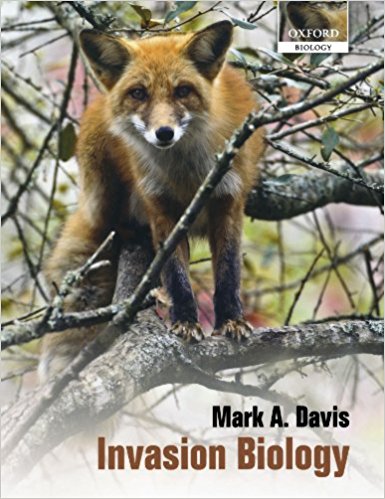
Mark Davis is Professor of Biology at Macalester College in St. Paul, Minnesota.  He is one of the first academic ecologists to publicly express skepticism of invasion biology.  His book, Invasion Biology, was published by Oxford University Press in 2009.  It was the first critique of invasion biology written by an academic scientist. Professor Davis cites the many empirical studies that find little evidence supportive of the hypotheses of invasion biology. 

In 2011, Nature magazine published an essay written by Professor Davis and 18 coauthors entitled, “Don’t Judge Species on their Origins.”  This essay suggested that conservationists evaluate species based on their ecological impact, rather than whether or not they are natives.  The essay initiated an intense debate in the academic community of ecologists that continues today. 
Professor Davis spoke at the Beyond Pesticides conference in Minneapolis at the end of April 2017. (Video available HERE) He described invasion biology as an irrational ideology that is based on nostalgia for the past and a belief that wildlands are being damaged by “alien invaders.”  In fact, the perceived damage is largely in the eye of the beholder, depending largely on one’s membership in a group benefiting from the nativism paradigm, such as chemical manufacturers, conservation organizations, government agencies, and employees.  Some academic careers are also at stake.  Futile attempts to re-create historical landscapes always have the potential to make things worse.  In many instances, it is more sensible to change one’s attitude about the changing landscape than trying to change nature.
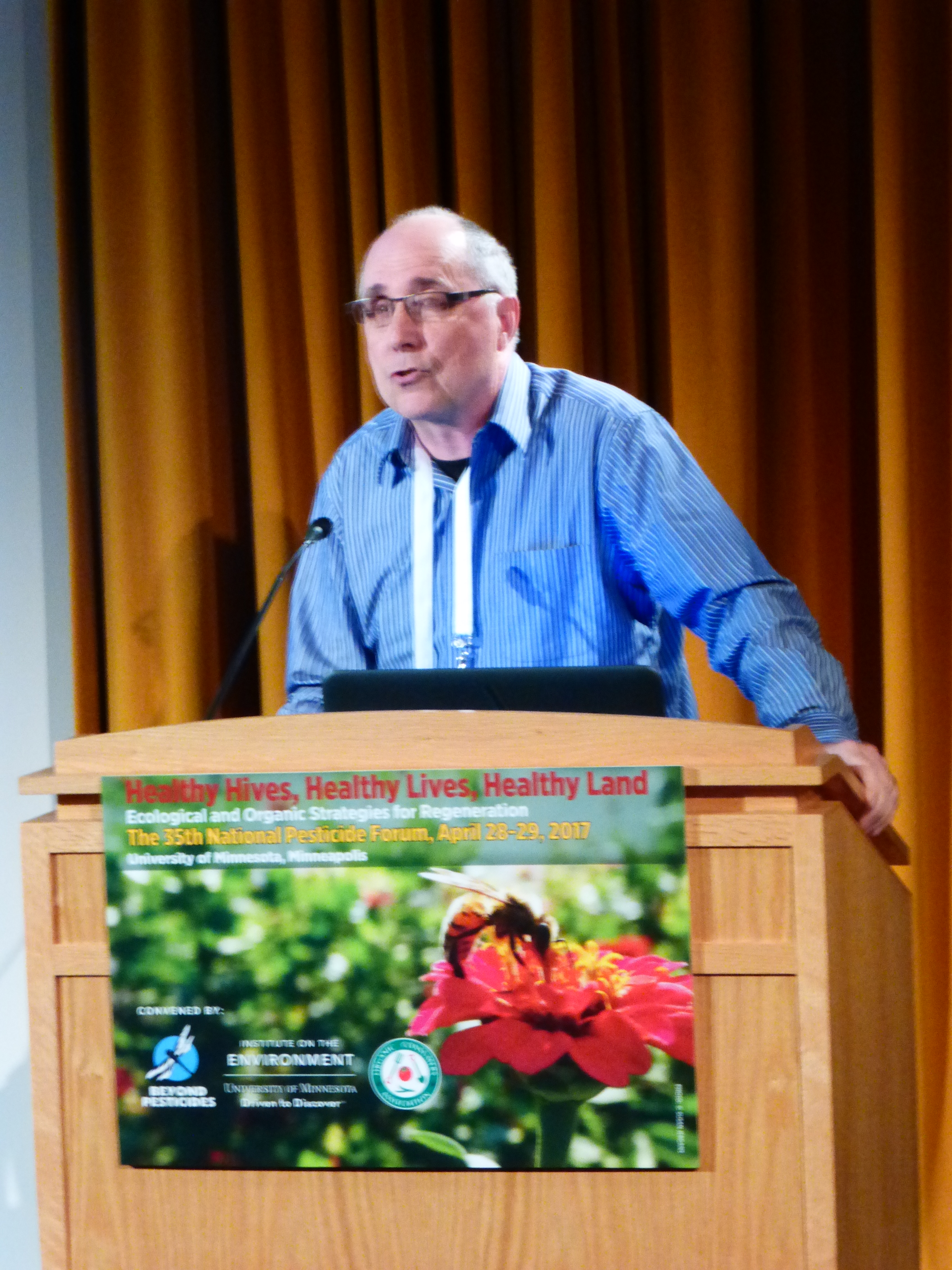
Mark Davis speaking at Beyond Pesticides conference, April 2017

We invited Professor Davis to write a guest post for publication on Million Trees.  We asked him to express his opinion on these questions: 

  • Has the status of invasion biology changed much since Nature published your essay 2011?
  • Has increased knowledge of climate change had an impact on the status of invasion biology in academia?
  • What do you think is the future of invasion biology both as an academic discipline and as public policy?

Professor Davis’s guest post addresses these questions.  We are grateful to Professor Davis for his many contributions to our understanding of the fallacies of invasion biology and for his thoughtful guest post.

Million Trees


Competition to define nature

In the past few years, a new perspective has been taking hold in the field of ecology.  Referred to as ‘ecological novelty’ it emphasizes that many factors are producing ecologically novel environments.  Climate change (which includes changes in temperatures and patterns of precipitation), increased atmospheric carbon dioxide, which affects photosynthetic rates, increased atmospheric deposition of nitrogen (the whole earth is being fertilized due to the increased nitrogen we are pouring into the atmosphere), and the introduction of new species are all rapidly changing our environments.

A strength of the term ecological novelty is that unlike the invasion vocabulary it is simply descriptive.  It simply states that ecosystems are changing and are different than they were in the past, even the recent past.  It says nothing about whether this change is good or bad.  In this paradigm, species can be referred to as novel species, new arrivals, or long-term residents.

The less biased ecological novelty paradigm differs dramatically from the more ideological nativism paradigm.  It differs in the language it uses and it differs in the implied direction that land management should proceed.  More generally, it forsakes the normative atmosphere that permeates restoration ecology, conservation biology, and invasion biology, all of which have been substantially guided by the nativism paradigm.
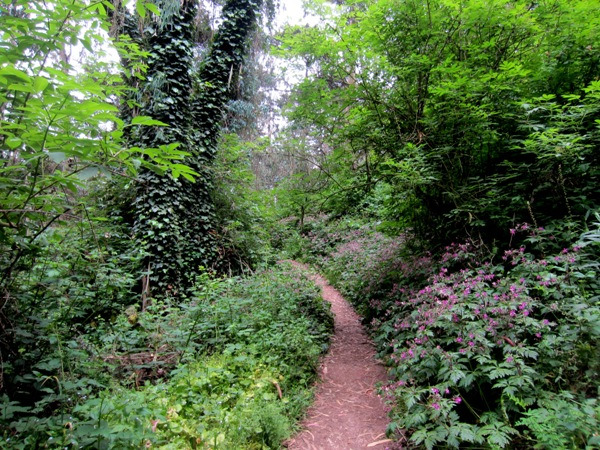
The Sutro Forest in San Francisco is a good example of a novel ecosystem. It is a thriving mix of native and non-native species. Much of it will be destroyed by the irrational belief that native species are superior to non-native species.  Million Trees

Currently, invasion biologists are trying to discredit ecological novelty as a valid or valuable perspective.  This is hardly surprising since the ecological perspective would displace the nativism paradigm, and many stakeholders have much to lose if the nativism paradigm were abandoned, e.g. chemical companies, restoration and management companies, local, state, and national agencies, to name just a few.  Not surprisingly, articles trying to shore up invasion ecology and to keep it relevant have been common in recent years.

While the public may not be aware of it, there exists a heated competition to define natureWhich side wins will significantly determine how nature is managed.  Given that the redistribution of species is only going to increase in upcoming decades, it is hard to imagine that people will still be so preoccupied with origins by the middle of the century.  Like the notion of wilderness, the nativism paradigm is more of a twentieth century concept, while the construct of ecological novelty is more fitting for the twenty first century.

Undoubtedly, nativist groups will still exist and will still be preoccupied with trying to restore their vision of the past.  But, due to the number of species being moved to new regions, much more attention likely will be given to the function of species than their origins, if only for pragmatic reasons.  For people coming of age now, cosmopolitanization is the new normal, both with respect to people and other species.  We will still carry our predispositions to divide the world into us and them, but it should be clear to most that the nativism perspective will be obsolete and that beyond the creation of museums, restoring the past will not be possible, whether a city or a forest.
Currently Earth is the only planet we know of where life exists.  In this context, the desire and practice of declaring some species as aliens, exotics, or invaders seems sadly provincial and even unseemly.  Roman playwrite Publius Terentius Afer (aka Terence) wrote in his play Heauton Timorumenos, “Homo sum, humani nihil a me alienum puto”, or “I am human, and nothing of that which is human is alien to me.” To those who still see such value in distinguishing native from alien species, I say, “I am of the planet Earth and nothing of that which is earthly is alien to me.”

Mark Davis
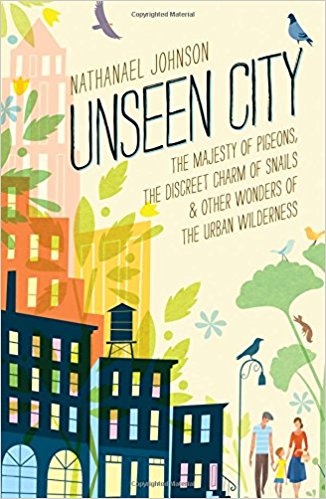
Unseen City: A tribute to urban nature

It was pure pleasure to read Unseen City (1).  Unlike most nature writing, Nathanael Johnson asks readers to notice and appreciate the urban nature that we tend to take for granted.  Ironically, the plants and animals that we see every day and in great numbers do not get the attention they deserve.  Most nature writing tends to focus on rare and remote species to which we have little access and often laments their absence where we live.  Conservationists often advocate for expensive programs to reintroduce rare species to urban centers where they haven’t lived for decades, if not centuries.

Johnson’s focus on the ordinary species around us is refreshing.  We were happy to take a break from the usual hand-wringing about loss of biodiversity and instead enjoy the richness and beauty of the nature we have.  It is our loss when we ignore the nature we have. Johnson’s intense focus on urban species reveals that they are every bit as interesting as the rare species we seldom see.  Johnson’s approach to nature is analogous to the optimist’s “glass-half-full” approach to life.

Another appealing aspect of Johnson’s approach is that his story is told from the perspective of a young father, introducing his toddler daughter to the mysteries of nature.  One of our primary concerns about the museumification of our parks by native plant advocates is that children are being deprived of the opportunity to interact with nature.  Being required to stay on trails or observe from behind fences is no way for children to appreciate the complexity and beauty of the natural world.  Johnson takes his daughter deep into the weeds to experience nature in a physical, tactile way. 

A few examples of the homely creatures in our cities

Johnson wrote his book while living in San Francisco and then in Berkeley.  So, the species he encounters and studies are those with which we are all familiar.  Here are some of the creatures he tells us about, with a few of the interesting things we learn about them.

  • Pigeons are reviled by many serious bird watchers. In fact, they are remarkable creatures in many ways.  They mate for life and they are extremely devoted parents.  They tend to nest in the same place and their ability to find and return to that nest from long distances is one of the reasons why humans have formed intense relationships with them.  There is a long tradition of keeping homing pigeons that are raced by their keepers in competitions that occur all over the world.  The pigeons are taken long distances from their nests and then timed on how long it takes them to return home.  Johnson tells remarkable stories about how pigeons overcome challenging attempts to prevent them from finding their way home.
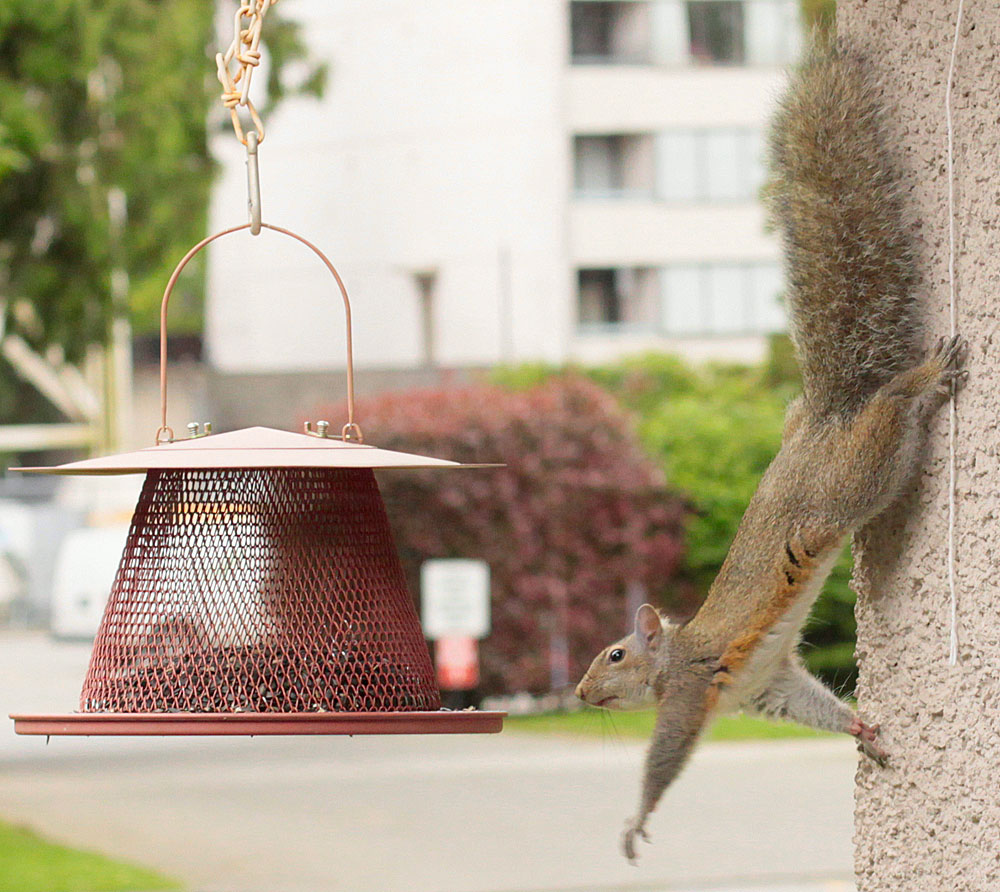
  • Eastern grey squirrel. Creative Commons

    Squirrels are both extremely agile and very resourceful. Here is an example of how squirrels defeated an attempt to keep them out of a bird feeder: “…squirrels had to climb up through a vertical pipe, leap onto a blade of a spinning windmill, cling to it, and then sail off on the right trajectory to land on a platform.  Then they had to go paw over paw upside down along a suspended chain that passed through a series of spinning disks, negotiate a revolving door, run through a slack canvas tube, and keep their balance while crossing a pole covered with slick spinning rollers.  From there, it was a six-foot jump to another tunnel, through which they had to ride a sliding vehicle made to look like a rocket ship by pushing it along with their paws.  Finally, there was an eight-foot jump to the food.” (1)  I retell this to story to spare our readers the pointless effort of trying to prevent squirrels from raiding their bird feeders.

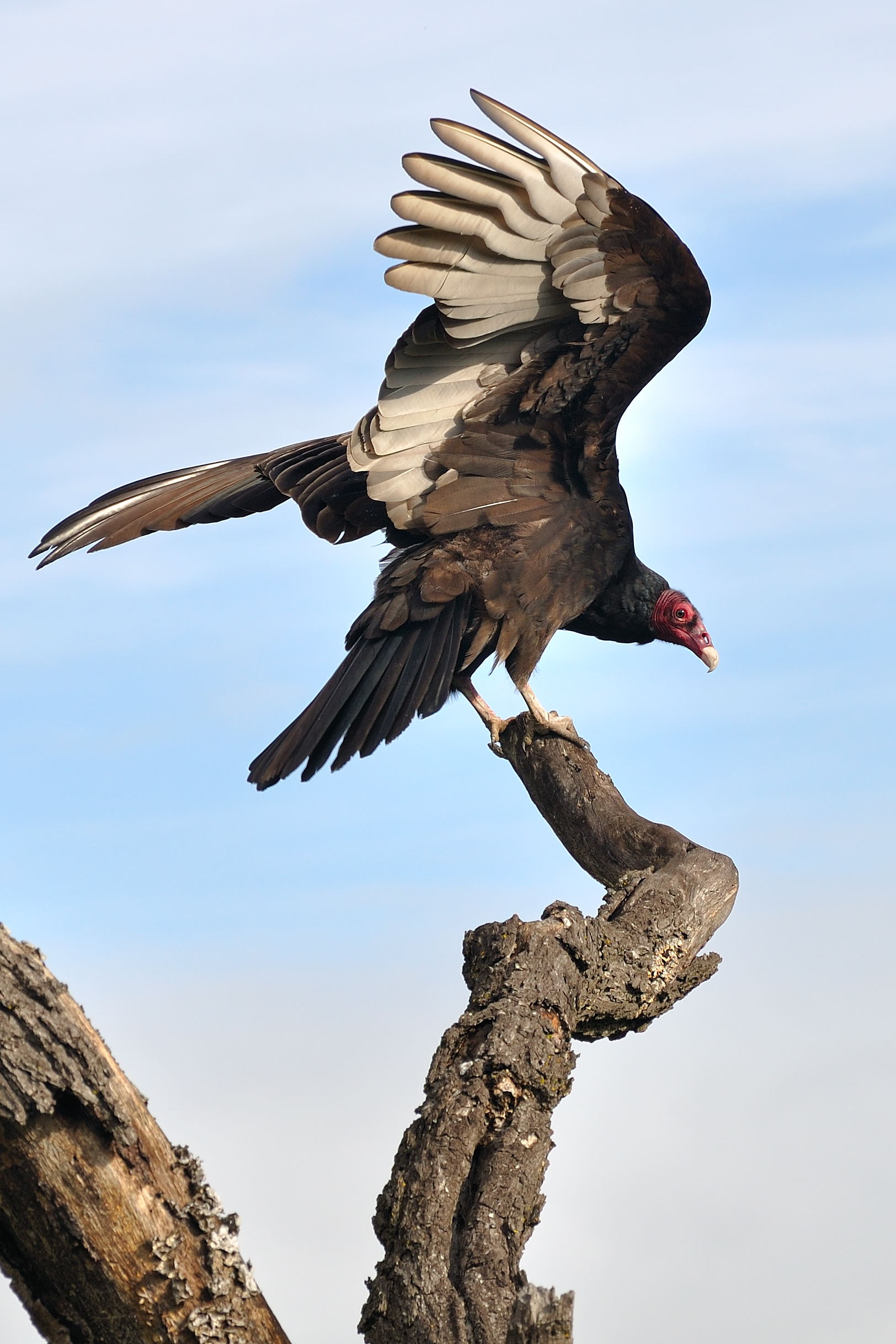
  • Turkey vulture in San Jose, California by Dan DeBold. Creative Commons

    The turkey vulture is another underappreciated bird. They eat primarily dead animals and many of those animals died of diseases or toxic chemicals and are rotten and maggot infested when they are finally found (by smell) and eaten by the vulture.  The digestive and immune system of the vulture is capable of detoxifying chemicals and killing bacteria and viruses in the dead animal.  In other words, the vulture is cleaning up the remains of dead animals.  India has learned the value of vultures the hard way.  They killed many of their vultures with an anti-inflammatory drug they were feeding to their livestock.  When their vulture population dwindled, they were buried in dead animals, many dangerously diseased and toxic.  We eradicate animals at our peril because we often don’t understand the roles they are playing in the ecosystem.

Defending novel ecosystems

In addition to asking his readers to appreciate the positive qualities of the creatures in our cities, he also asks us to reconsider the deep prejudice against them that has become the conventional wisdom.  Plants and animals that people believe were transplanted by humans into places where they did not exist in the distant past are considered “alien invaders” that dominate their predecessors, driving them out and reducing biodiversity.

This narrative, which originated in academic science as “invasion biology” in the 1960s, has become a popular story with the media, which is always attracted to scary stories.  The media is significantly less interested in the peaceful resolution of their horror stories.  With few exceptions, an introduced species that initially seems to be a problem eventually fades into the woodwork to become just another player in the ecosystem.  Johnson uses the Argentine ant as one of many examples of an introduced species that spread rapidly, but 20 years later has nearly disappeared.  In other cases, a species initially considered an unwelcome intruder becomes a valuable asset, such as zebra mussels which filter pollution from lakes and have become a source of food for diving birds.

Novel ecosystems are the future

Johnson concludes his book with this reminder that novel ecosystems have been created by human disturbance and that we should be grateful for the plants and animals that are capable of surviving our abusive treatment of the planet:

“The species that I’ve written about here are, at best, invisible, and at worst, reviled.  We honor least the nature that is closest to us.  As Courtney Humphries put it in Superdove, ‘We create and destroy habitat, we shape genomes, we aid the worldwide movement of other species.  And yet we seem disappointed and horrified when those plants and animals respond by adapting to our changes and thriving in them.’

“Because they are associated with human disruption, the organisms that spring up from our footprints look like corruptions of nature.  But I’ve come to see it the other way around:  These species represent nature at its most vital and creative.

“Nature never misses an opportunity to exploit a catastrophe.  When humans bulldoze and pave, nature sends in a vanguard of species that can tough it out in the new environment.  These invasive species are not nature’s destroyers, but rather its creators.  They begin setting up food webs, they evolve and diverge into new species.  Because humans purposefully import exotic plants—along with the insects, seeds, and microbes we accidentally bring in from around the world—cities are remarkable centers of biodiversity.  These creatures crossbreed, hybridize, eat one another, form cooperative relationships, and evolve.  And so, at a time when thousands of species are at risk of extinction because of our destruction of wilderness, new species are springing up in the new habitats we have created.” (1)

Worshipping the rare at the expense of the common

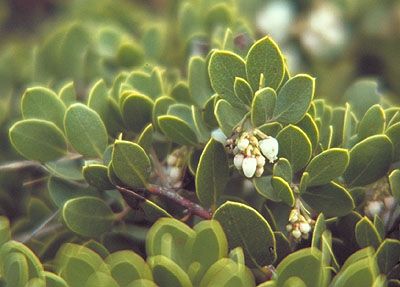
The ONLY known Raven’s manzanita plant is in the San Francisco Presidio. Its exact location is a secret to protect it.

Vast sums of money are being spent in often futile attempts to reintroduce rare plants and animals to urban environments where they have not lived for a long time.  The National Park Service and San Francisco’s Natural Resources Division are having little success with their efforts to reintroduce Mission Blue butterflies.  After over 30 years, the National Park Service has still not successfully germinated endangered Raven’s manzanita from seed.  These fruitless efforts are not just wasteful of resources, they also inflict damage on the environment by using pesticides and setting fires to eliminate competition and destroying trees to increase sunlight on rare plants and host plants of rare insects.

The veneration of rare plants and animals is often at the expense of the plants and animals that are adapted to present environmental conditions.  In Unseen City Nathanael Johnson invites us to place greater value on the ordinary creatures who are capable of living with us.  We can treat them with the respect they deserve by not destroying them in pursuit of a fantasy landscape populated by fantasy creatures that are not capable of surviving the changes we have made in the environment.


  1. Nathanael Johnson, Unseen City: The majesty of pigeons, the discreet charm of snails and other wonders of the urban wilderness, Rodale Wellness, 2016