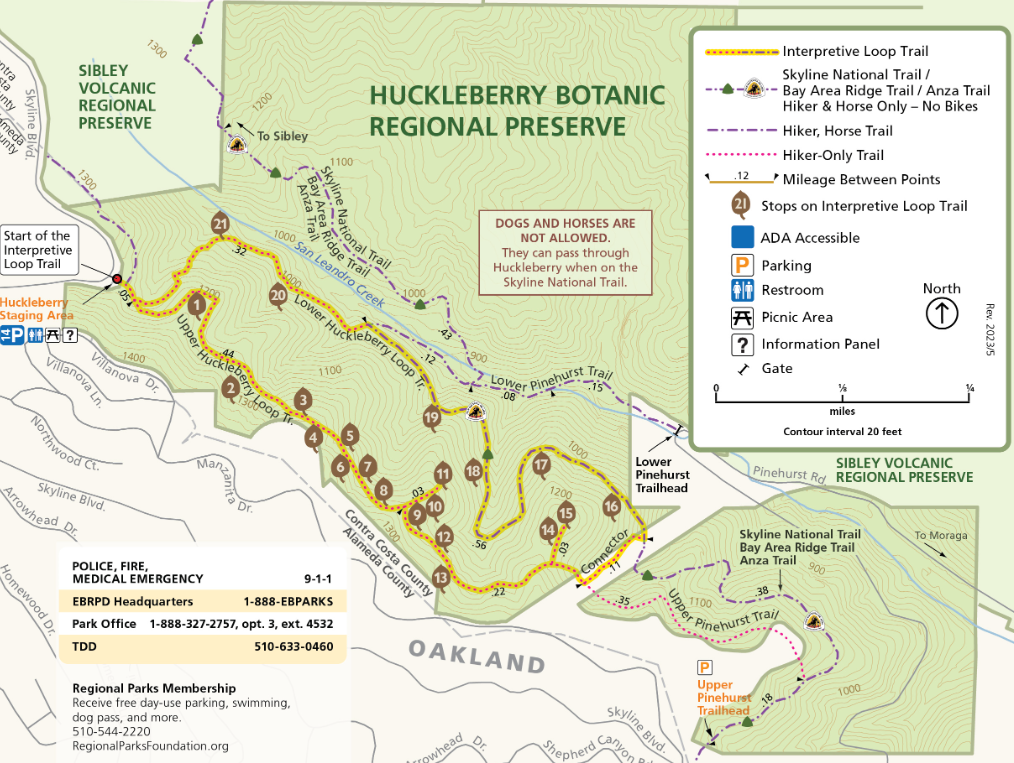
We celebrated July 4th with a walk in the woods. Huckleberry Botanic Regional Preserve in Oakland is a true remnant of native vegetation that is unique among the collection of 73 parks of the East Bay Regional Park District. The trail guide describes the conditions that created this ecosystem and enabled its survival while other native ecosystems have not survived:
Huckleberry is “a relic plant association found only in certain areas in California where ideal soil and climatic conditions exist. The vegetation association finds its roots in past climates and geologic history. The plants originated in the distant past along the southern coast of California when the climate was more moist and tempered by the cool coastal fog. Today, similar vegetation is found on the islands off the Santa Barbara coast and in isolated pockets on the mainland coast from Point Conception to Montara Mountain south of San Francisco.”
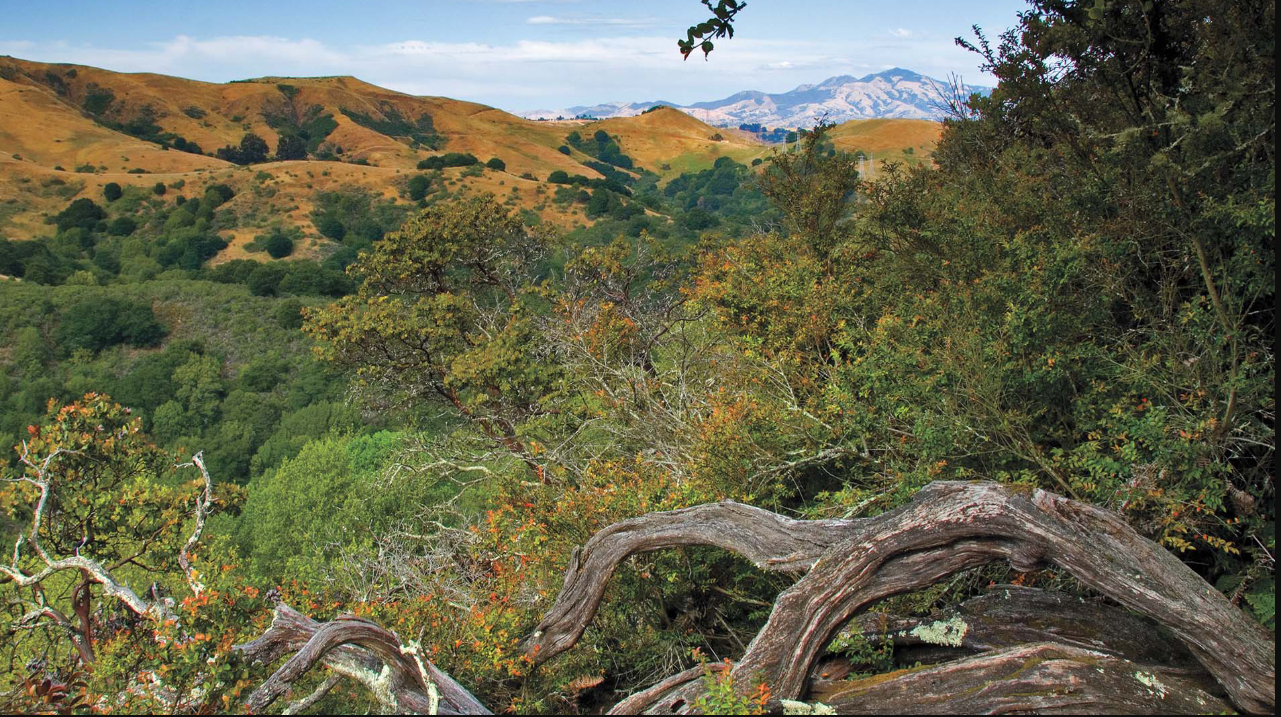
The preserve was created partly to protect an endangered species of manzanita, specifically pallid manzanita. There are 107 species and sub-species of manzanita, of which 95 are native to California. The ranges of most of these species are extremely small because manzanita hybridizes freely and therefore adaptive radiation has resulted in a multitude of species, sub-species, and varieties that are adapted to micro-climates. Many of these species are locally rare and 10 species of manzanita have been designated as endangered, two of which are limited to the San Francisco peninsula: Raven’s manzanita and Franciscan manzanita.
Manzanita is vulnerable to extinction partly because its ranges are small and partly because it is an “obligate seeder,” which means it can only be propagated in the wild from seed. The seed of manzanita is germinated by fire. However, the exact relationship between fire and germination is not known. Many complex experiments have been conducted on the few viable seeds produced by Raven’s manzanita, which was designated as endangered in 1979. Various combinations of fire, heat, cold, smoke, liquid smoke, etc., were tried and failed to determine exactly what triggers germination of manzanita seeds. The suppression of fire in the past 150 years has contributed to the decline of small manzanita populations in California.
Some endangered species of manzanita are available in commercial nurseries because they can be easily cloned, which means they are genetically identical. These commercially available manzanita species remain technically endangered because the criteria for endangered status requires that they be grown from seed in the wild to be eligible for removal of endangered status.
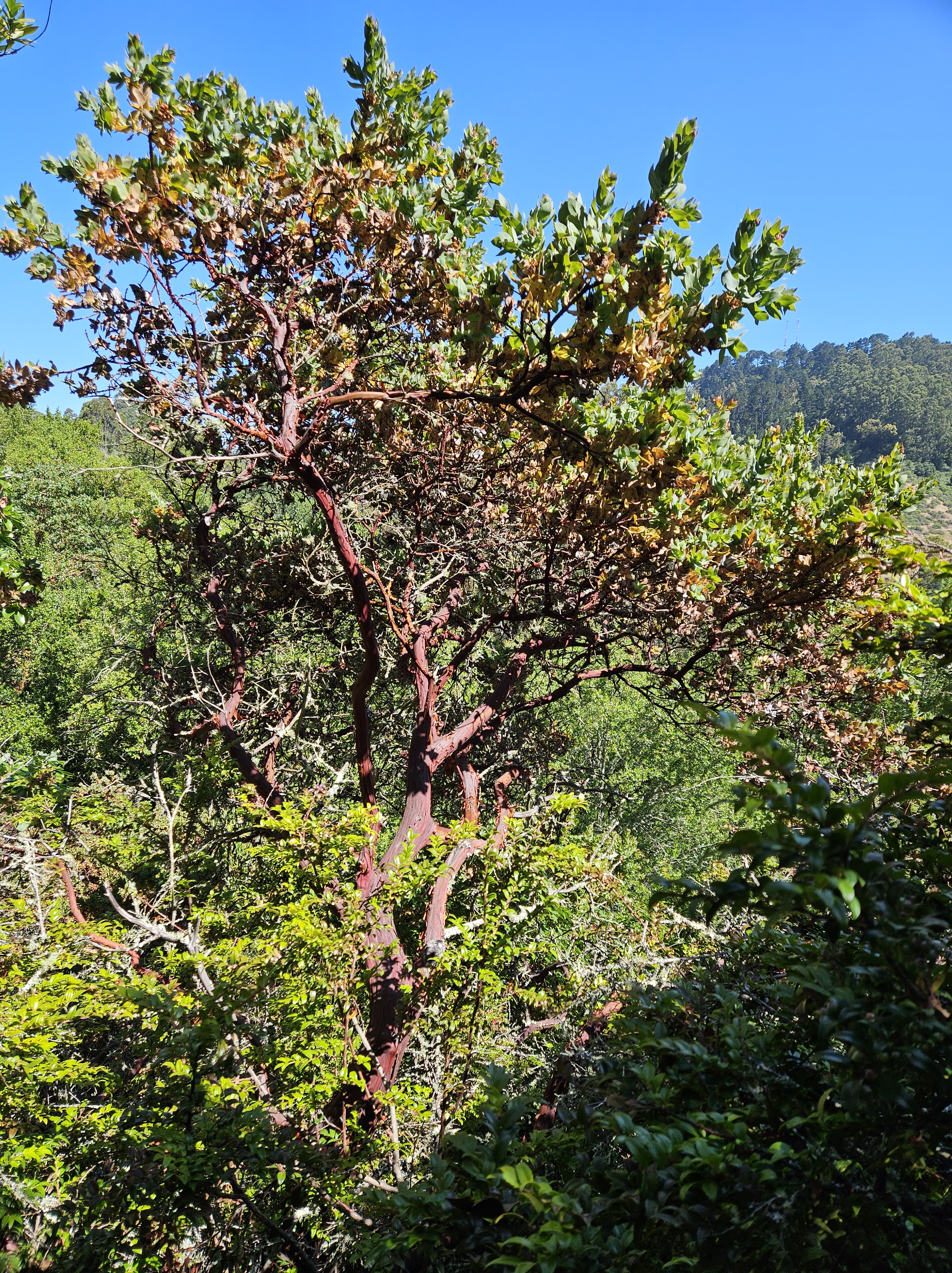
Pallid manzanita in the Huckleberry Botanic Reserve are not doing well:
And some pallid manzanita is dead:
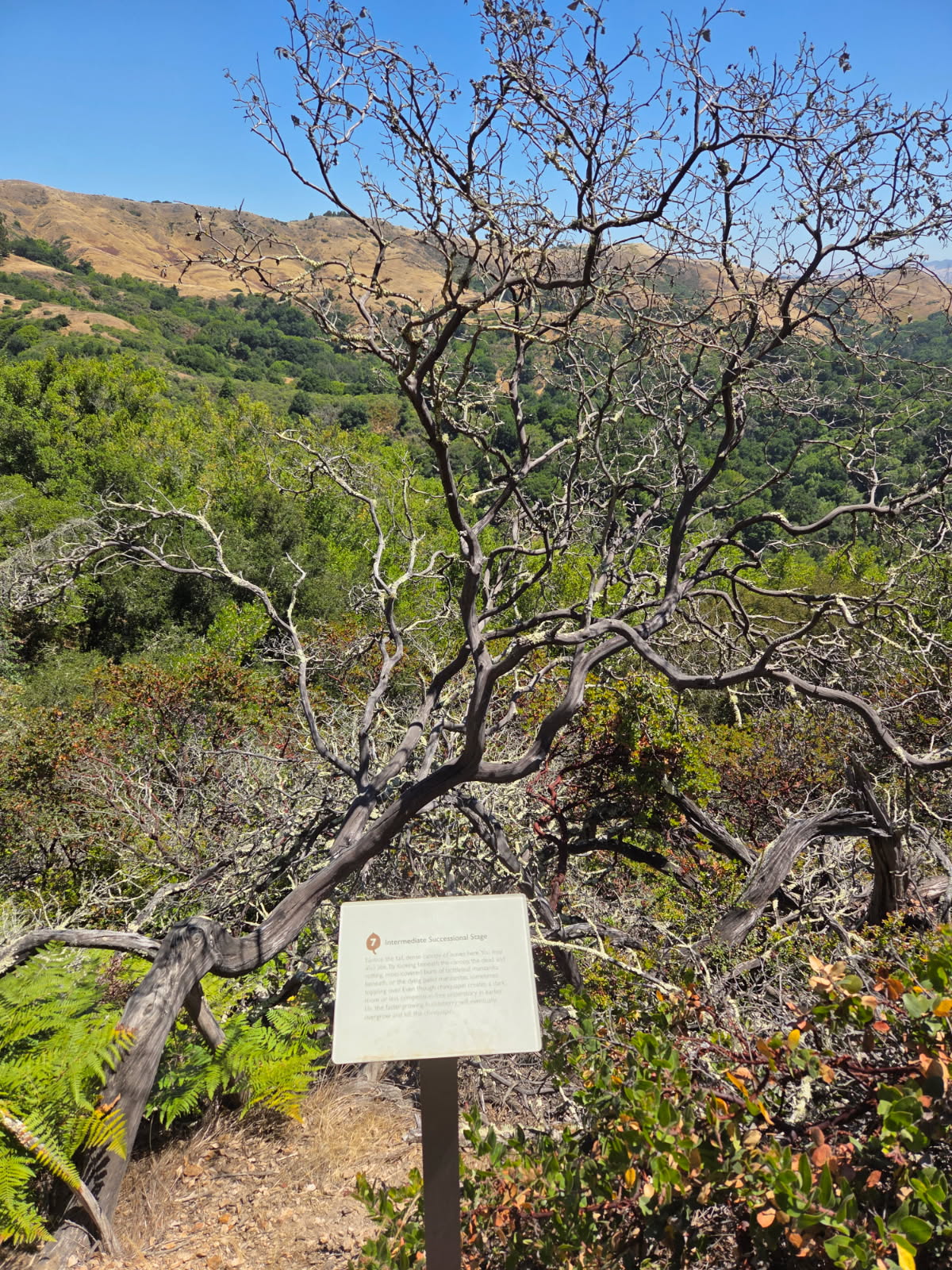
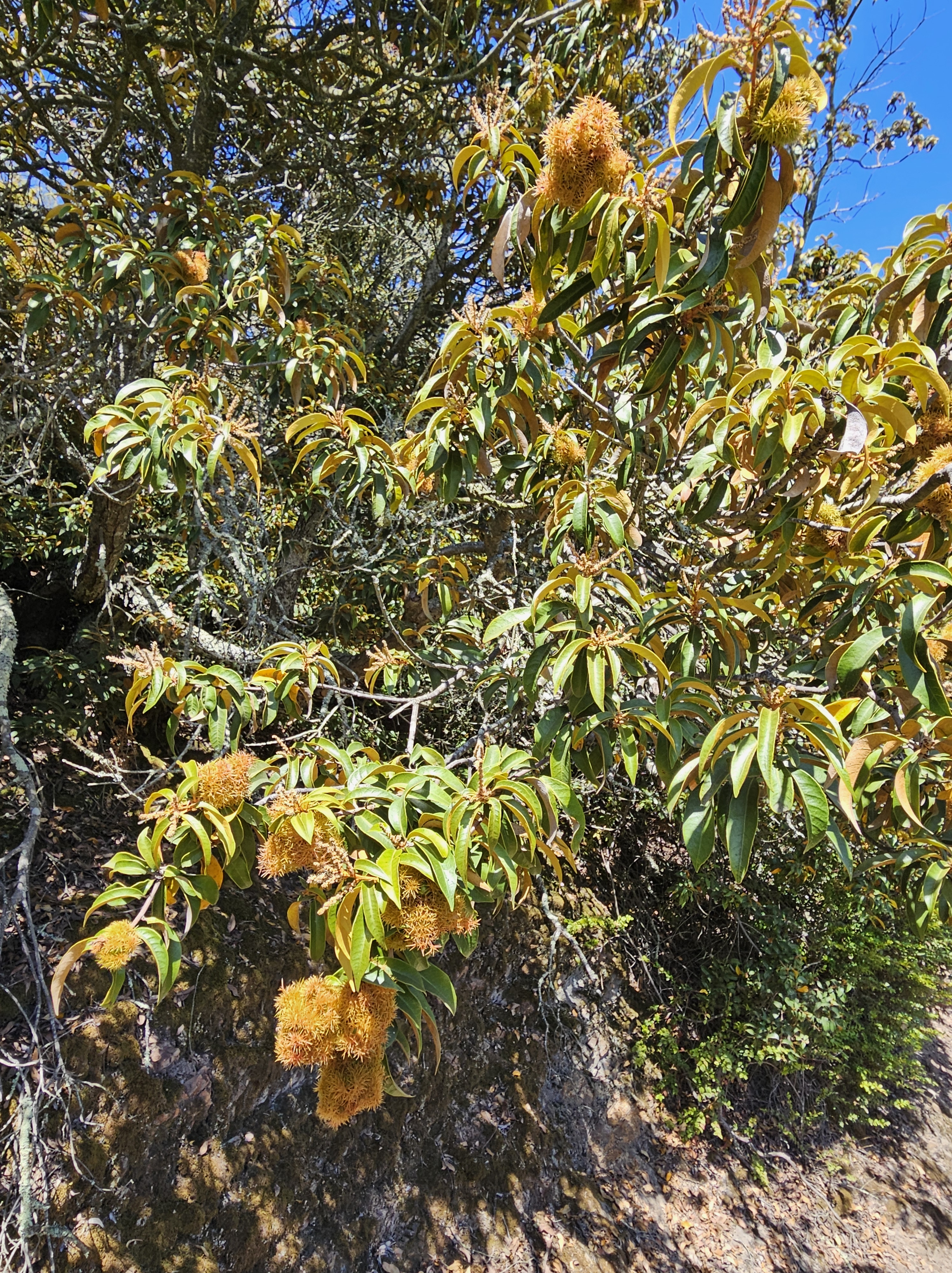
The sign explains that as pallid manzanita dies, it creates space in the understory for chinquapin and it predicts that more competitive huckleberry will eventually “overgrow and kill” chinquapin. The sign describes this process as natural succession. It doesn’t accuse huckleberry of being invasive. If huckleberry were non-native, it probably would be considered “invasive.”
Chinquapin has a distinctive nut, which is encased in a bristly shell. My hiking companion said he and his brothers used to eat the tasty nut when camping in Mineral King in Sequoia National Park. The bristly shell doesn’t make it easy to access the nut, but birds and wildlife find a way:
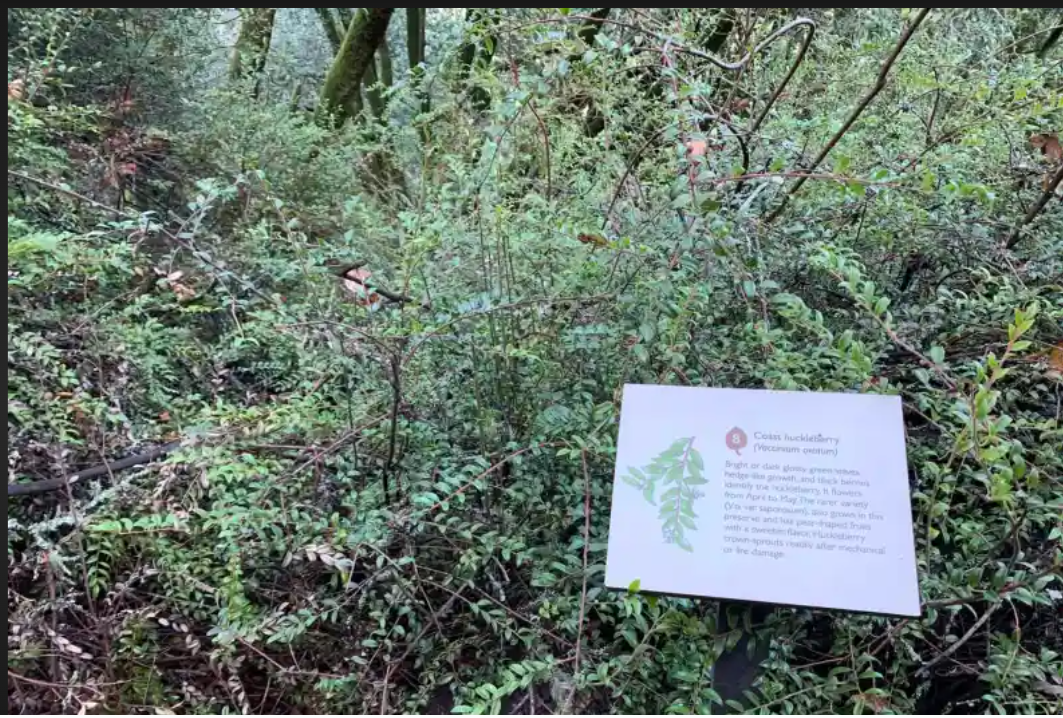
Huckleberry is appropriately the namesake of this botanic reserve. In some portions of the narrow trail huckleberry creates tall, dense hedges on either side of the trail:
Because the Huckleberry Botanic Preserve is a relic of native vegetation that has been undisturbed by fire and development for hundreds of years, it is an excellent place to see huge native trees compared to much younger and therefore smaller native trees in other public parks in the San Francisco Bay Area.
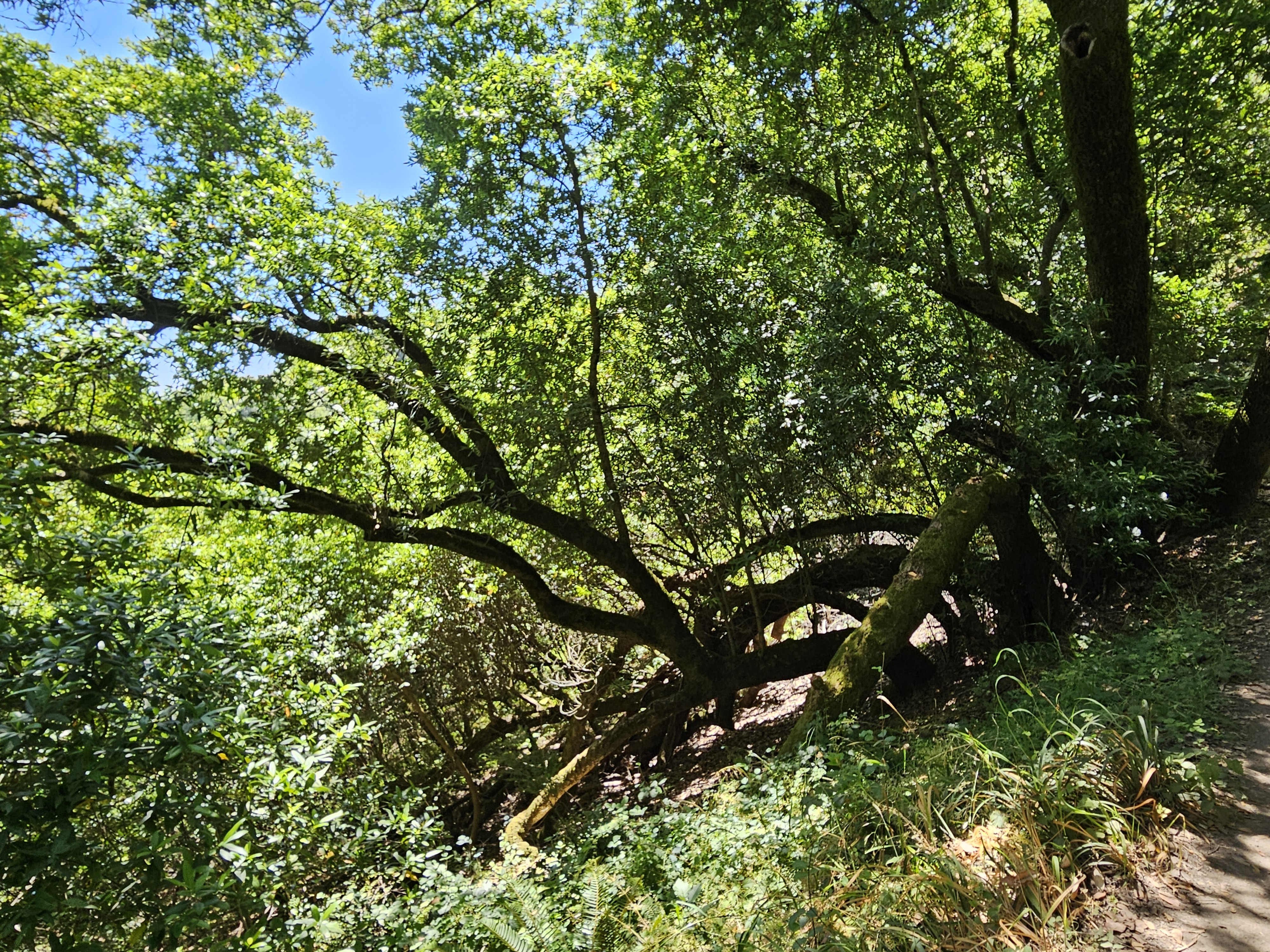
Mature bay laurel trees in Huckleberry Preserve are an opportunity to witness the competitive strategy of this tree species. When it achieves some height as it grows, its branches fall over and often put down new roots that grow new vertical trunks. This prostrate posture of bay laurels gives them a competitive advantage over other plants in the understory. Mature bay laurels occupy huge expanses of space around them that create shade and make it difficult for other plants to become established in the shade. The prostrate posture of bay laurels also makes it more flammable because the fire ladder to its canopy extends to the ground. Crush a bay laurel leaf in your hands to smell its aromatic oils that also contribute to the flammability of bay laurels:
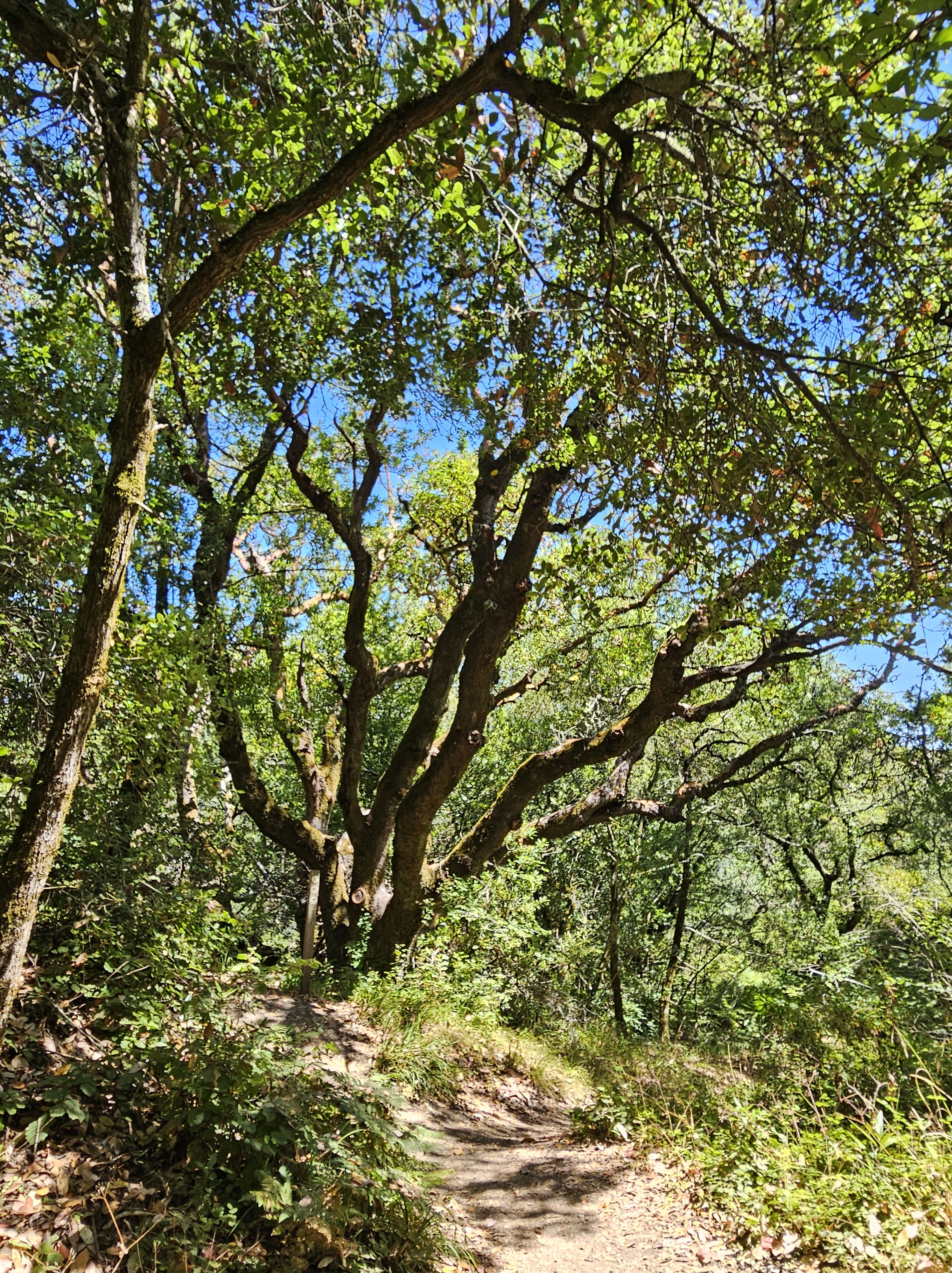
This madrone tree in Huckleberry Reserve is the biggest I’ve ever seen:
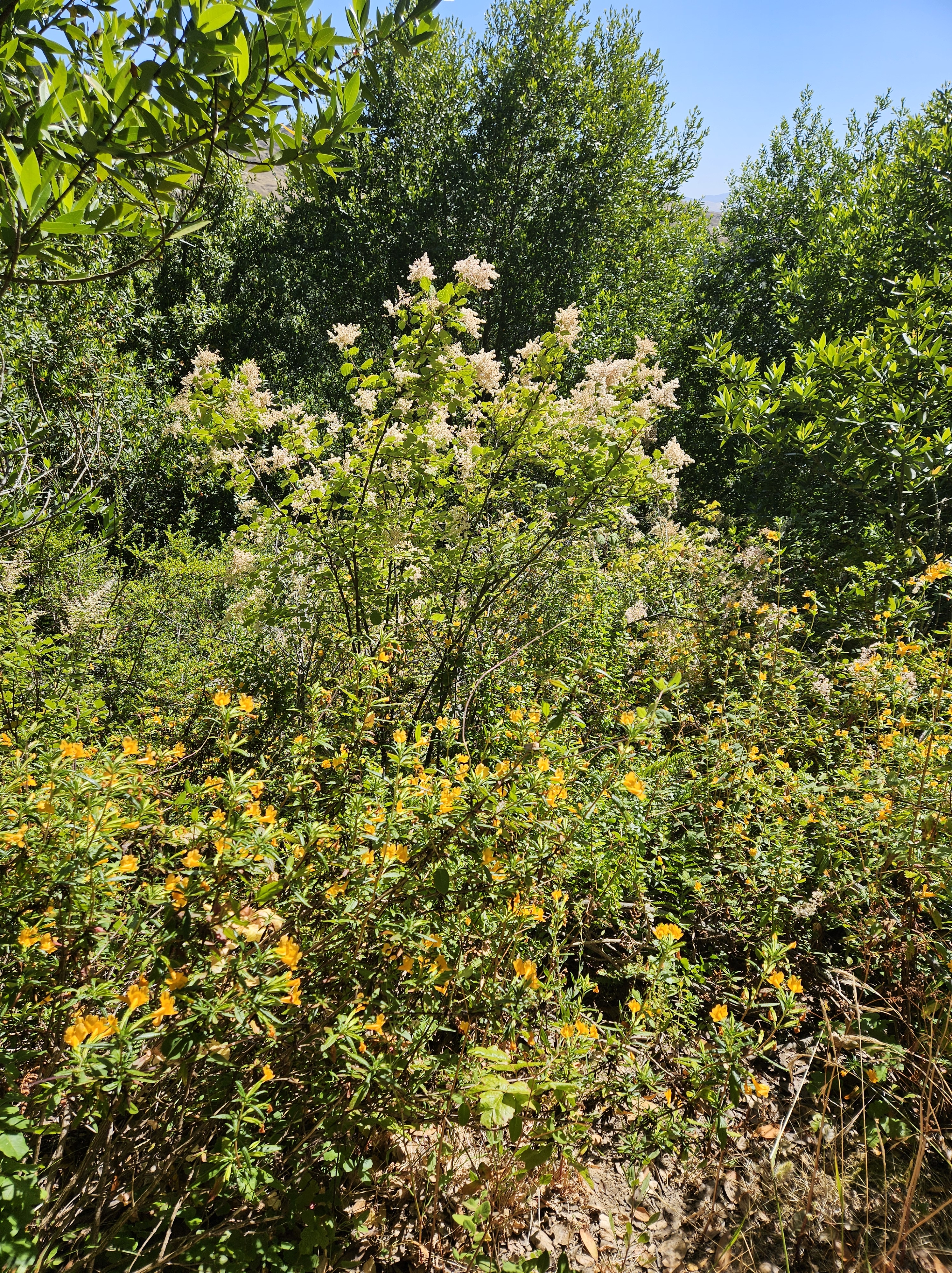
In early July some woody and herbaceous shrubs were still blooming. In this case, sticky monkey flower in the foreground and pink flowering current in the background:
Huckleberry Botanic Reserve is a unique gem in East Bay Regional Park District. I hope you will have an opportunity to see it and that you will appreciate it as much as I do.
 Conservation Sense and Nonsense