In a recent post we considered the changes in our landscape that have occurred as a result of climate change. In this post we examine more historical sources of change in the landscape.
Native plant advocates in the Bay Area choose to replicate the “pre-settlement” landscape that existed in the late 18th century. The arbitrary selection of this date does not take into account that Native Americans had lived in the Bay Area for approximately 10,000 years. Throughout that period Native Americans altered the landscape by setting fires to promote food production as well as to provide materials for cultural activities such as basket weaving. Fires were used to improve forage for the animals they hunted and visibility during the hunt, and to funnel animals into their hunts. Fires also promoted the growth of their food sources such as acorn production. (1)
Unlike some parts of California, fire ignition in the San Francisco Bay Area is rarely caused by lightening, making this anthropogenic (caused by man) source of fire the predominant cause of fire historically. (2)
After the arrival of the Spanish in the late eighteenth century, cattle and sheep grazing was the predominant economic activity in California and continued to be an important activity into the early 20th century. These early ranchers also introduced non-native grasses which had greater nutritional value for their herds. The non-native annual grasses out-competed the native bunch grasses, resulting in California grassland that is 99% non-native today (3).
The fires set by Native Americans and the cattle grazing of the early Californians were both instrumental in preventing the natural succession of grassland to chaparral and scrub and subsequently to woodlands. Modern land use and management policies have suppressed fire and reduced grazing in the Bay Area. Consequently grasslands are succeeding to chaparral and scrub. Although managers of public lands often describe these changes in the landscape as “invasions,” Jon Keeley (Ph.D. biologist, USGS) considers them a natural succession:
“These changes are commonly referred to as shrub invasion or brush encroachment of grasslands. Alternatively, this is perhaps best viewed as a natural recolonization of grasslands that have been maintained by millennia of human disturbance.” (4)
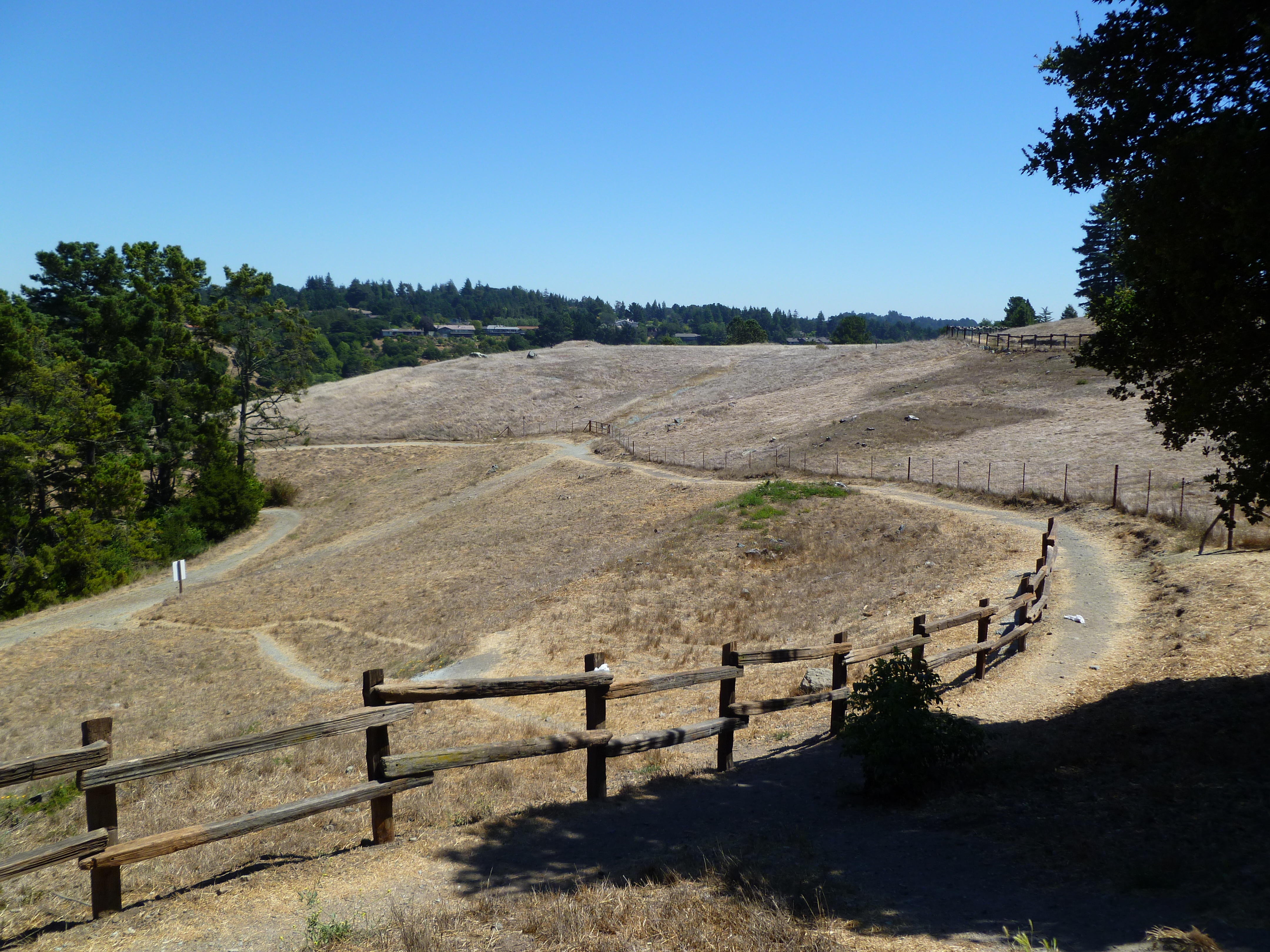
Serpentine Prairie restoration. East Bay Regional Park District
So, if the succession of grassland to shrubland is natural, why do managers of public lands believe it is necessary to prevent—or even reverse– this succession?
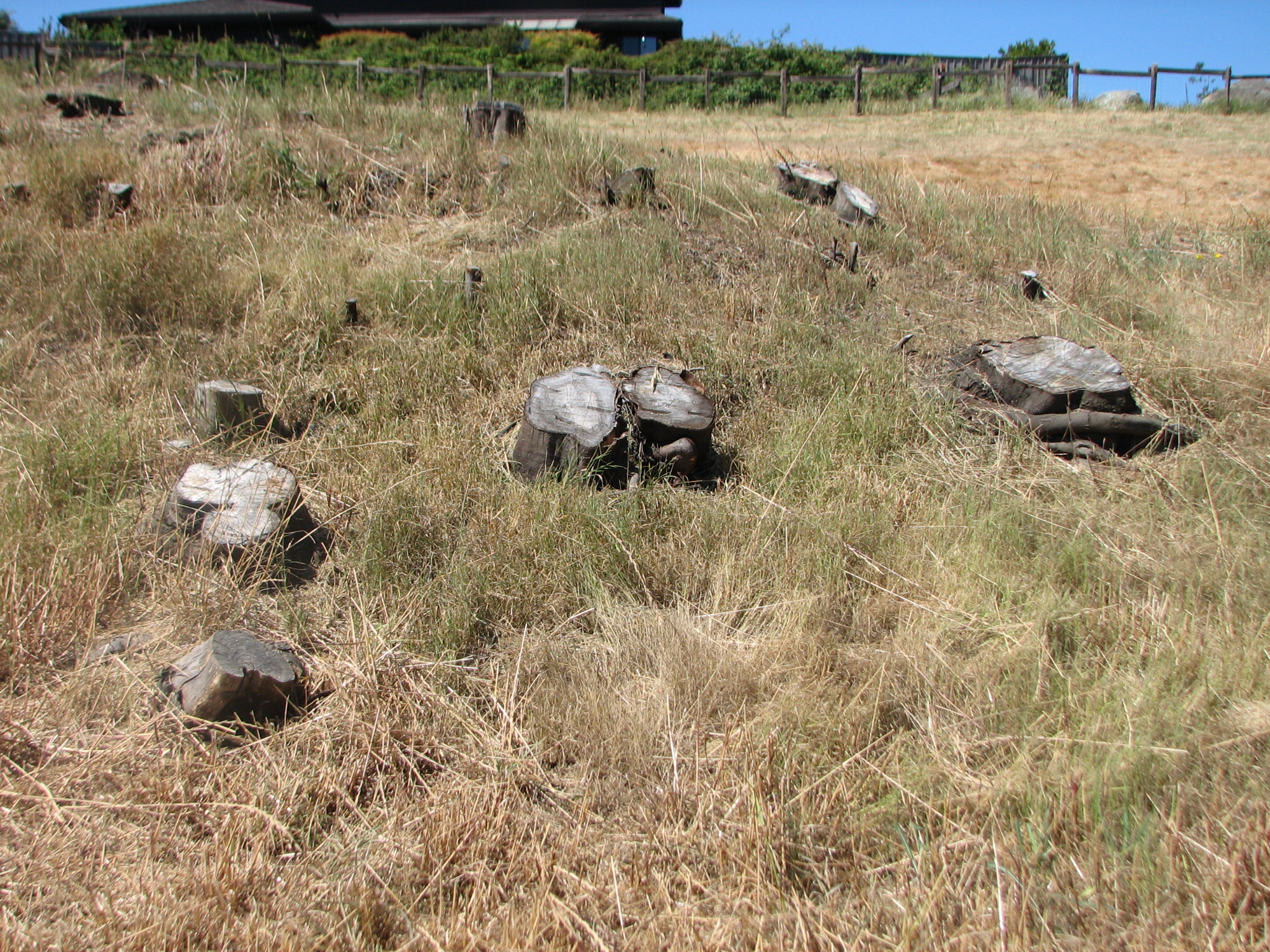
Serpentine Prairie. 500 trees were destroyed, including many oaks.
For example, the “Wildfire Plan” of the East Bay Regional Park District is even more ambitious than halting natural progression of the landscape. In many instances it proposes to return the landscape to an earlier version of the native landscape. Here are a few examples of management actions in the “Wildfire Plan” that are intended to roll back biological time to sustain native landscapes from an earlier period:
“[Native] Grasslands and Herbaceous Vegetation…these widely-spaced trees will not cause an active crown fire because of the discontinuity of tree crowns. They could, however, provide a seed source for invasion of grassland habitats by woodland species and should be considered for removal to maintain desirable and declining grassland habitat.” (page 131)
“[Native] Maritime Chaparral…Favor chaparral community by removing oak, bay, madrone buckeye, and other trees under 8 inches diameter at breast height that are encroaching upon the maritime chaparral.” (page 136)
“[Native] North Coastal Scrub…Shift species composition towards native scrub species or consider conversion to grasslands, where appropriate on historic grassland sites…” (page 140)
“[Native] Coyote Brush Scrub…In most treatment areas, encourage conversion to grasslands by reseeding with native grasses…after brush removal.” (page 149)
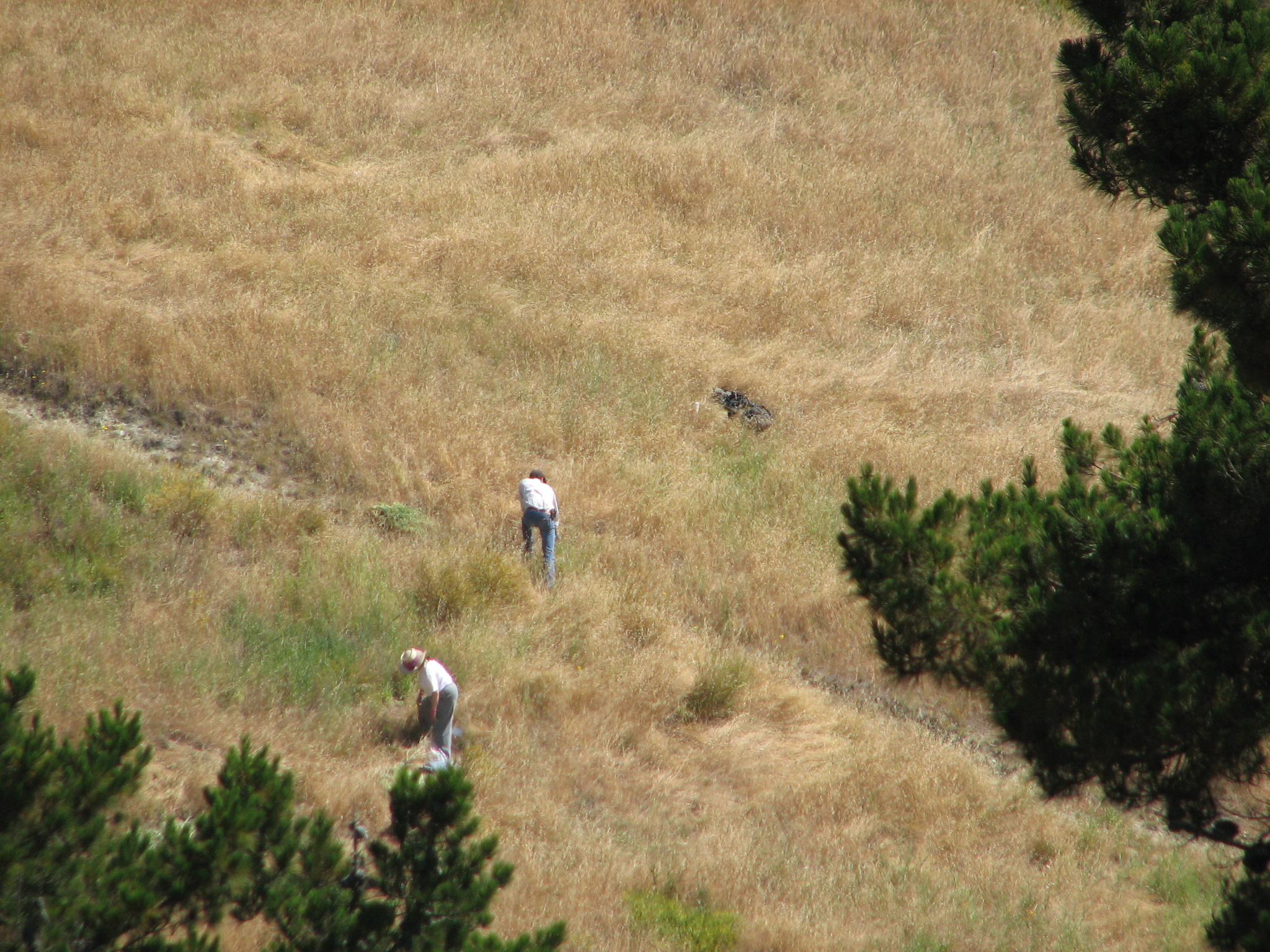
Serpentine Prairie being weeded by hand. Mowing will be required during the restoration. Prescribed burns will be required to maintain it as prairie.
The return of the existing landscape to earlier, historical versions requires the removal of native trees and shrubs, as well as dangerous, polluting prescribed burns. In so doing, a permanent commitment to periodic prescribed burns is made to maintain the landscape as grassland. And what will this accomplish? If this strategy is successful the landscape would be returned to a version of the landscape in the late 18th century, even though that landscape was actually created by the Native Americans and maintained by subsequent grazing by early European settlers.
As we often do on Million Trees, we ask the managers of our public lands to explain their strategy for artificially maintaining our landscape at an arbitrarily selected point in time. Should we run the risks of prescribed burns for the sole purpose of replicating an 18th century landscape that was created by Native Americans? Since California grassland is now almost entirely non-native, what is the point of preventing its succession by destroying native plants? We don’t understand what would be accomplished by such artificial manipulation of the landscape.
(1) “The Use of Fire by Native Americans in California,” M. Kat Anderson in Sugihara, Fire in California’s Ecosystems, 2006.
(2) “Central Coast Bioregion,” Frank Davis & Mark Borchert in Sugihara, Fire in California’s Ecosystems, 2006.
(3) Natural History of California, Schoenherr, UC Press, 1992
(4) “Fire history of the San Francisco East Bay region and implications for landscape patterns,” Jon E. Keeley, International Journal of Fire, 2005.
A recent trip to the Channel Islands off the coast of California inspires us to consider the pros and cons of restorations. Islands are particularly attractive targets for restorations. They often contain endemic species that do not exist anywhere else because they have adapted to unique conditions in isolation. And the relative isolation of islands implies that once non-native species of plants and animals are eradicated, re-introduction of those species can be prevented.
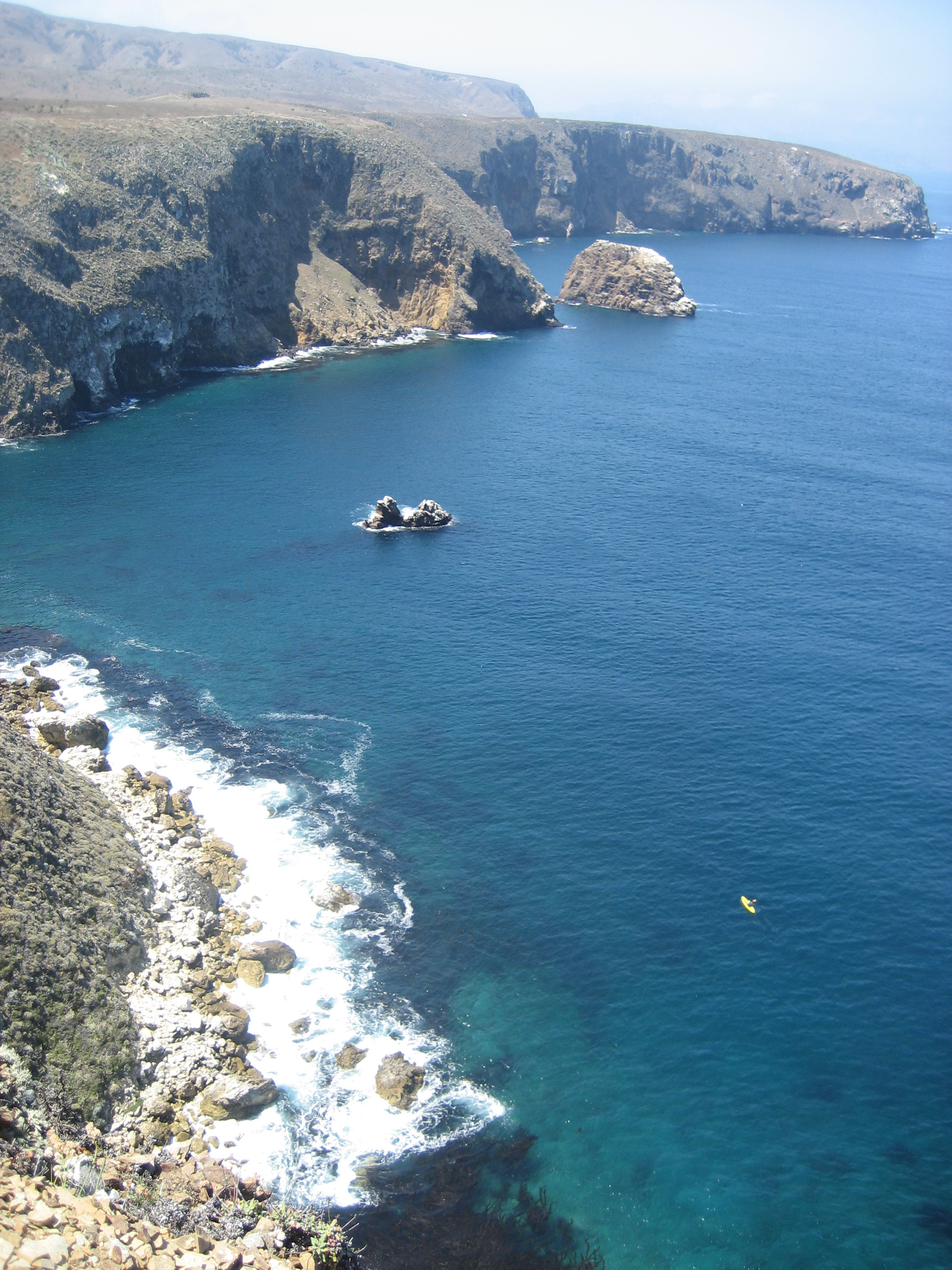
Santa Cruz Island, Wikimedia Commons
Some of the Channel Islands were inhabited by Native Americans as long as 13,000 years ago. Ranching by Europeans began on some of the islands in the 1850s. Europeans brought sheep, cattle, pigs, mule deer, and elk to some of the islands. Five of the eight Channel Islands were designated as a National Park about 30 years ago.
Restoration began in earnest in the 1990s when ranching operations were ceased and tens of thousands of sheep and cattle were either removed from the islands or destroyed. Black rats were eradicated from some islands after native mice were herded into protective enclosures so the rats could be poisoned. Rabbits were eradicated from another island. We don’t know how that was achieved.
The next big effort was the eradication of about 6,000 feral pigs. When this was accomplished by sharp shooters, the first unintended consequence of this ambitious restoration was revealed. It seems that the feral pigs had been the chief diet of a population of Golden Eagles, considered non-native to the Channel Islands. When the pigs were removed from their menu, they turned to the rare, endemic Channel Island Fox.
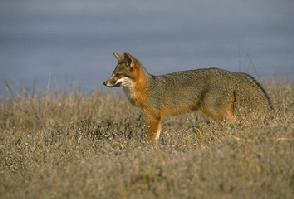
Channel Island Fox, Wikimedia Commons
The population of Channel Island Foxes plummeted. Those that remained were captured so they could breed in protected conditions while the Golden Eagles were captured and removed to a remote location. The Channel Island Fox is making a come-back, but the Golden Eagles are apparently gone for good.
The eagle considered native to the Channel Island, the Bald Eagle, has been reintroduced. It apparently lives in peace with the Channel Island Fox because it eats fish.
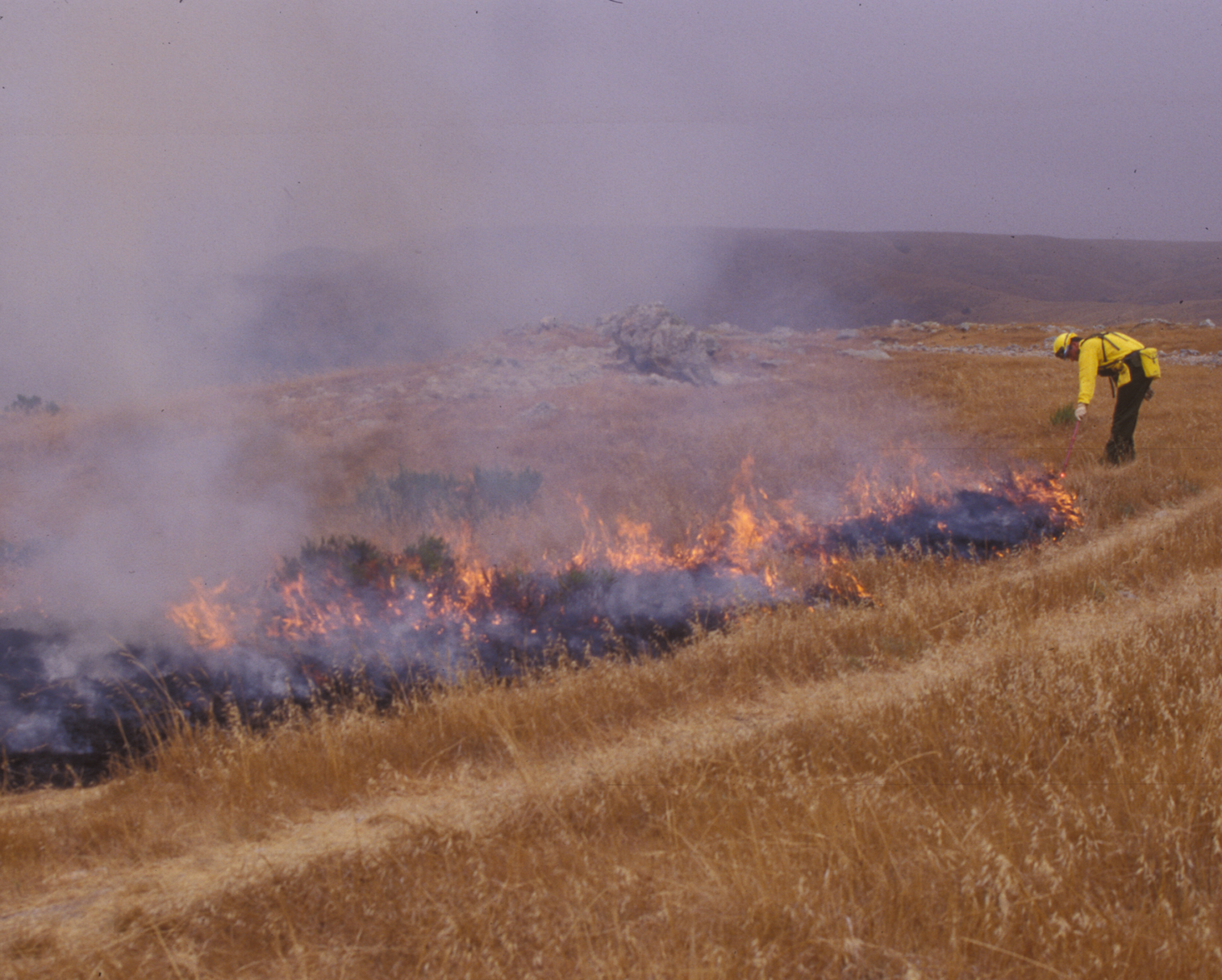
Mule deer and elk are next up on the eradication agenda for fauna. Non-native plants are also doomed. Ice-plant and fennel are the top priorities for eradication by 2011. Herbicides and prescribed burns are used for this purpose.
Prescribed burn, Santa Cruz Island, NPS photo
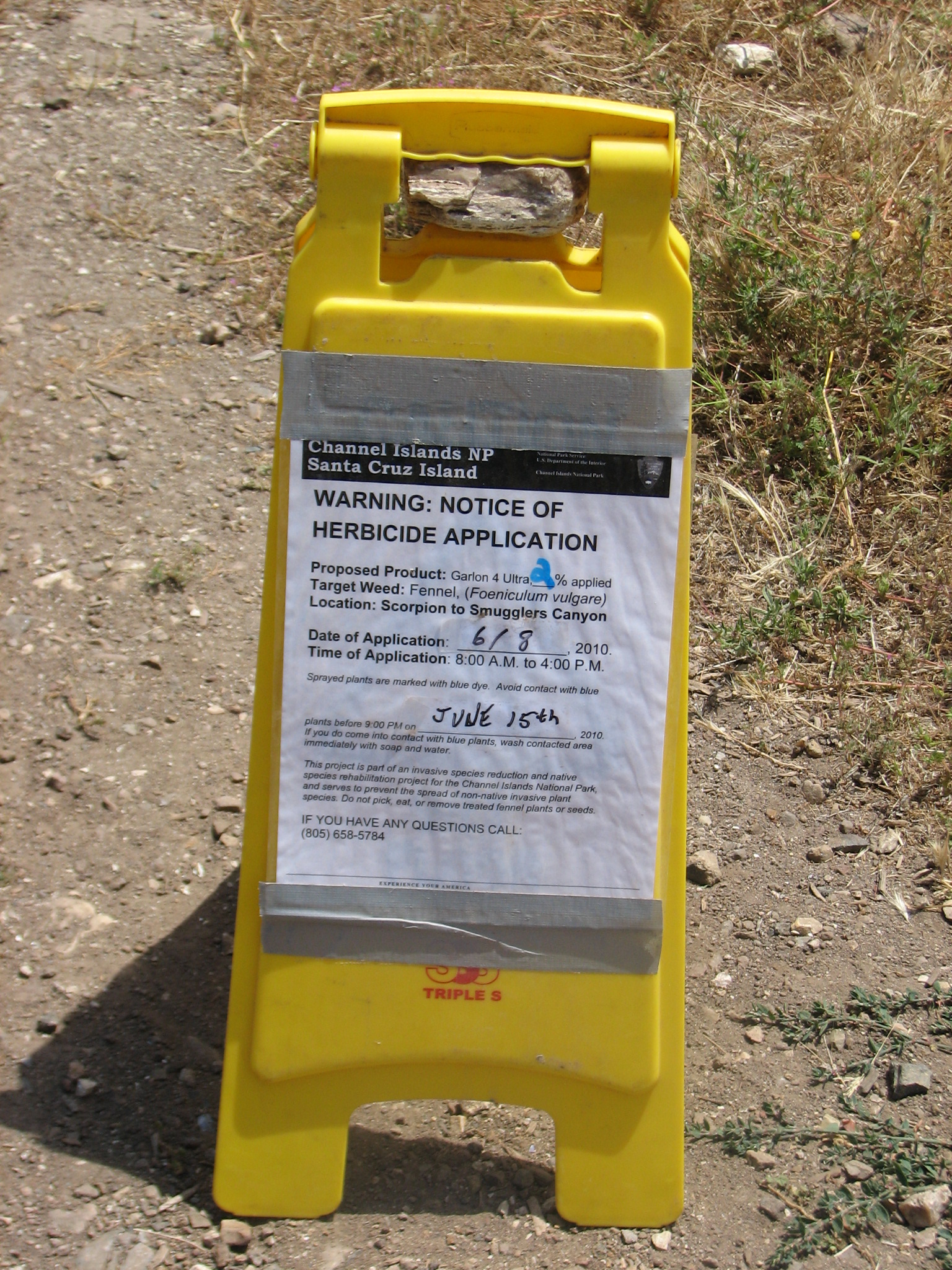
We were surprised to see notice of herbicide application for Garlon 4 Ultra during our visit to this fragile place. Someone dressed from head to toe in protective clothing was spraying this chemical on a steep hillside. We have reported the toxic effects of Garlon in our post about herbicides.
This is a complex ecosystem in which simplistic solutions—such as killing all the non-natives—can result in a big mistake. For example, do we know if there are native Anise Swallowtail Butterflies on the islands that are now dependent upon non-native fennel for their survival? Do we know how the application of Garlon will impact the survival of the rare, endemic Island Jay? The US Forest Service found in its risk assessment done for the EPA that the application of Garlon had a significant negative impact on the reproductive success of birds. Are those who decided to spray Garlon aware of this study?
Herbicide application notice, Santa Cruz Island
We went to the Channel Islands with open minds. We thought the strongest arguments could be made for restorations on islands. However, when we learned of the thousands of animals who were sacrificed to this effort and the dangerous and toxic methods used to accomplish the restorations, we were not convinced. We nearly lost the Channel Island Fox because of the unforeseen consequences of killing feral pigs. Man would like to believe that he is capable of managing nature. But can he do so without causing more harm than good?
 Conservation Sense and Nonsense