North Woods was written by Daniel Mason. He is a physician and assistant professor of psychiatry at Stanford University. He is the author of several works of fiction. In North Woods he demonstrates his knowledge of human behavior and his interest in the spiritual and natural worlds, which are the backdrop for his story.
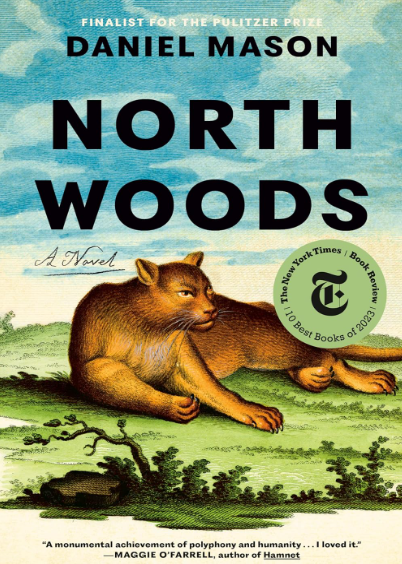
He traces the 400 year story of human occupation of a small patch of land in Western Massachusetts, beginning with a young eloping couple, escaping the conventions of puritan society.
Each occupant uses the land in a different way. An apple orchard sustains the family of an English soldier during the Revolutionary War. His children replace some of the apple trees to create a pasture for Merrino sheep when their father dies.
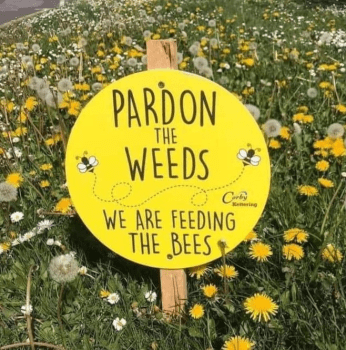
When the sheep are killed by subsequent land owners, you might expect the land to return to “some ungrazed Eden,” but you would be wrong, because human occupation has put the land on a different trajectory. This creates an opportunity for Daniel Mason to demonstrate his interest in ecology:
“But lo! For while there is wisdom to this old saying, what now rises in the field is not a gentle return to some ungrazed Eden, but, rather the irruption of a strange, besieging army that has been lying in wait.
“For this particular pasture, the invasion can be said to have begun one autumn morning two centuries before the birth of the Merrino Cristobal, when a ship departs from Yarmouth on the Isle of Wight. To keep steady through the North Atlantic, the sailors fill the hold with ballast from the wastelands near the Yarmouth docks. There are stones and loam and sand, insects and earthworms, bird bones and crushed snail shells, roly-polies and tufts of grass that wilt within the darkness beneath the deck. There is a half-decayed mole, and a live one, broken jugs, a Roman coin that will be rediscovered by a young boy walking on the shoreline 317 years later, and another, a “crown of the double rose” bearing an image of Edward VI on horseback, that will sift down into the silty depths of Massachusetts Bay and disappear forever. There is a beaded necklace dropped by a longshoreman’s wife during a moment of indiscretion, a splintered lens from a bookkeeper’s spectacles, stray curls blown from a barber’s market stall by an offshore breeze, peach pits, rotting broadsheets of forgotten songs. And there are seeds, uncountable, scattered in the humid loam: red clover, groundsel, spurrey, trefoil, meadow fescue, dandelion, hedge parsley, nonesuch, plantain.
“The voyage takes two months. On landing, the ballast is removed and dumped into the harbor. Much of it—the stones, the shells, the beads, the spectacles—sinks to the bottom of the bay. But the seeds, many of the seeds, enough of the seeds, rinsed loose of their swaddling earth, are freed into the breakers and float to shore.
“It is warm: within weeks, they have germinated, begun to grow, to flower, to set seed of their own.
“Then, one by one, and by the millions, they make their way west.
“In the felted boots of a young girl, traveling to Albany with her mother: hedge parsley.
“In a hemp sack, dropped by a Dutch settler, after his murder on a lonely road near Hoosick Falls, and then on the wind: common groundsel.
“In feed sold one late September to a farmer passing through the Deerfield market, who spills some from his carriage: meadow fescue.
“In the ticking of a mattress discovered by a minister to be the locus of his wife’s betrayal, fury-scythed to pieces and released from the Plymouth field: Scotch thistle.
“In the pocket of a milkmaid who had thought it was a carrot: Queen Anne’s lace.
“In the cracks of an old shoe, and the hem of a skirt, and the stockings of a soldier: The seeds that to the soil take, will presently our pasture make.
“One by one they nestle in among the native grasses, some so swiftly that it will seem like they have always been there (for it is hard to imagine there was a time before dandelions, before thistle) Others creep up the valley slowly, field by field, until they reach the yellow house. Where they grow, unnoticed, humbled by the constant grazing of the Merinos, waiting in the soil for the cat.”
A landscape painter is a subsequent owner of the land and its yellow house. He makes a detailed record of the vegetation on the land because he is an astute observer and faithful renderer of nature. Some two-hundred years later, his paintings become the basis for a museum exhibit of how the landscape has been changed by its occupants, but also by the natural succession of nature. Chestnut trees are killed by blight. Elms are killed by disease. Ash trees are killed by insects. And so on. It’s a story of change that will not end.
Daniel Mason’s story ends with the brief visit of an ecologist who studies trees. Trees are her passion and she has made sacrifices to follow that passion. Her life ends shortly after participating in creating the virtual reality depiction of the transition of the forest to treeless meadows of wild flowers for a museum exhibit of the painter’s work. While helping to create the exhibit, the ecologist suddenly realizes that the forests that have sustained her are doomed:
“She felt as if she had fallen in love with someone only to learn that they were dying. She could recall the winter day in the forest outside the library at Amherst when she first began to sense the possibility of an enchantment. And a decade had passed, and every day she’d felt the wonder grow deeper, and every day, reading the journals, attending conferences, she found herself confronted by the mounting evidence that she was losing the very thing that had saved her. Standing in the museum and looking skyward, she realized that even she had never really grasped how astonishing these forests were.”
We rarely notice the arrival of a new plant or the disappearance of another and when we do it is only within the context of our brief lives. North Woods gives us a rare opportunity to “see” the landscape over 400 years. We see how the human occupants of the land interact with the land and how the land is impacted by those interactions.
North Woods is a brilliant book, written by a remarkable person. The story is a subtle reminder of how our lives are intertwined with nature. We influence nature and nature influences us. Nature is our partner and our sustenance.
 Conservation Sense and Nonsense