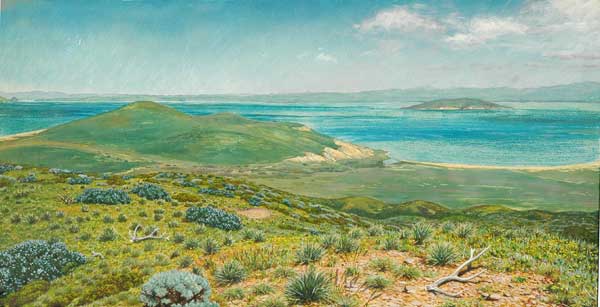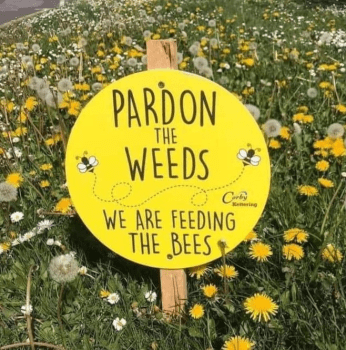
Evolution didn’t stop in 1492

One of the most appealing of the many arguments used by native plant advocates in support of their ideology is the evolutionary concept of “co-evolution.”  Co-evolution is defined by Forgotten Pollinators(1) as “The idea in evolutionary ecology that certain mutualistic organisms have directed or redirected each other’s evolutionary trajectory.”  The implication of this theory is that plants and animals that have evolved together are interdependent and that loss of a particular plant will result in the loss of the animals with which it evolved.  Native plant advocates sometimes describe these relationships as “a lock and key,” implying that native plants and animals fit together in a mutually beneficial relationship which is exclusive. 

Those who believe this theory are obviously deeply committed to saving all native plants because they believe the loss of any single plant would inevitably lead to the loss of the animals that are dependent upon it.  Likewise, non-native animals are often exterminated based on the assumption that they compete with native animals and that loss of native animals will lead to the loss of native plants.

There are three problems with this theory. First, while there are some examples of truly exclusive co-evolved relationships in which both species cannot survive without the presence of the other, the number of such relationships is quite small.  Second, even these relationships are not immutable because evolution has not stopped, and therefore other species may develop mutualistic relationships with the prior exclusively mutualistic species.  And third, organisms are opportunistic and are quick to take advantage of any new opportunities, meaning that many interactions observed between species in the wild are not co-evolved at all.  For example, the honeybee pollinates hundreds of species of North American plants and it didn’t evolve with any of them (since honeybees were introduced into North America from Europe, which had introduced them from Africa).

Why is “co-evolution” rare in nature?

When defining “co-evolution” Forgotten Pollinators adds this caveat, “Good examples of truly reciprocal coevolution are difficult to find.”  Although the concept of “co-evolution” has a certain logical appeal, the explanation for why it is rare in nature is even more logical:  it is a risky survival strategy in a world that is constantly changing.  If, for example, the specific plant upon which a specific animal depends doesn’t bloom or doesn’t return from its dormant phase because of a sudden, even temporary, change in the climate, the animal that is dependent upon that plant is out of luck.  Since such fluctuations of environmental conditions are common, natural selection does not favor the animal that is restricted to a single plant for which there is no substitute.  Such exclusive relationships therefore do not persist in nature.

Nature provides “back-ups” that will enable plants and animals to respond to fluctuating environmental conditions.  For example, few plants have a single pollinator.  Most have several, usually of several different types.  One bee may be a particularly effective pollinator of a particular plant, but that plant is probably also visited by a fly, a butterfly, a bird, a beetle, etc.  As humans do, plants and animals don’t just give up when conditions change.  We all look for and usually find other alternatives. 
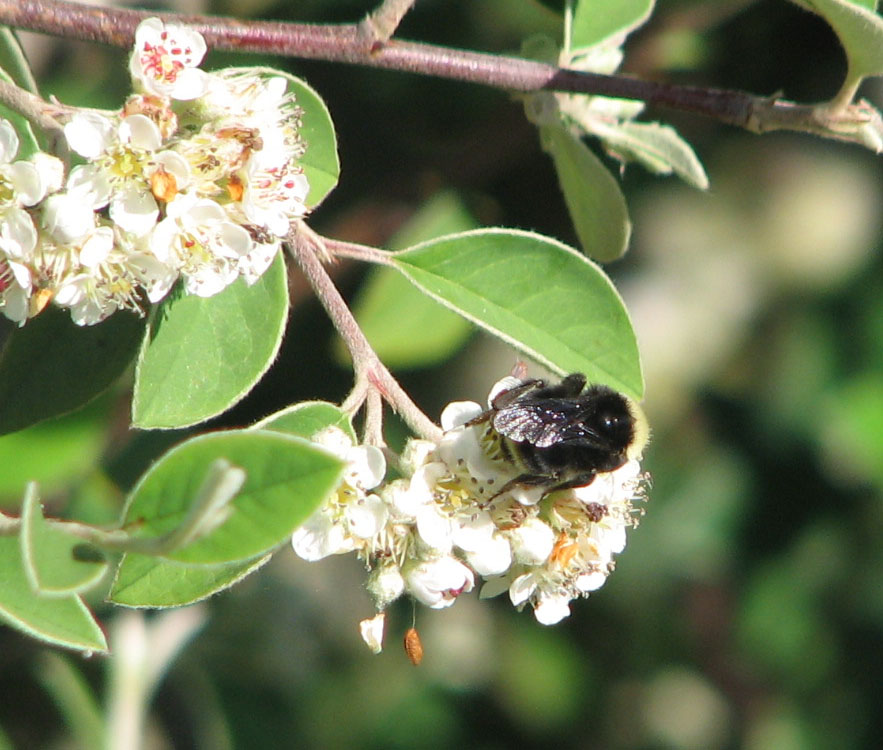
Native bumblebee gathering nectar and/or pollen from non-native cotoneaster. Albany Bulb, Albany, California

“Evolution right under our nose”

The Science Section of yesterday’s New York Times features an article about evolution of animals in New York City In the most densely populated city in the country, founded nearly 400 years ago, 74% of the native plant species that existed when the city was founded in 1624, still exist there.(2)  San Francisco has an even lower rate of extirpation of its native plants since it was founded in 1850.  Ninety-seven percent of the 714 plant species known to exist in San Francisco in 1850 are still found in San Francisco

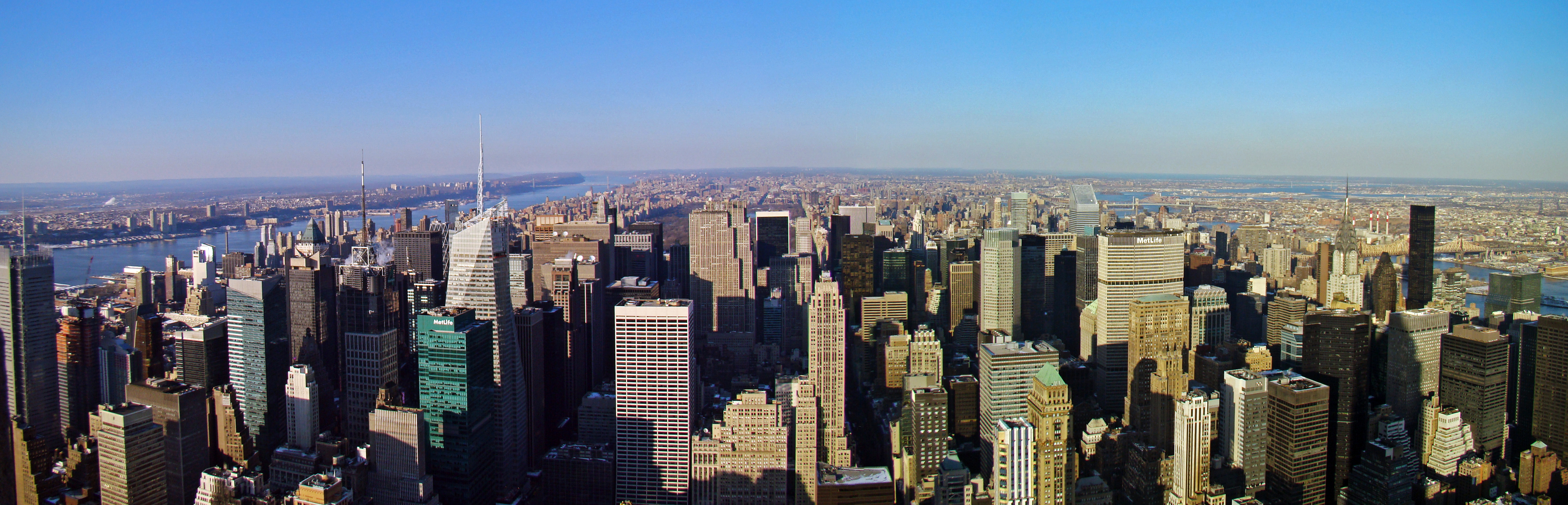
Midtown Manhattan as seen from the Empire State Building. Creative Commons Attribution Share Alike

The fascinating article in the New York Times reports that the ability of animals to evolve in response to changing environmental conditions has enabled their survival in the urban environment. 

The white-footed mouse is an example of a native animal that is thriving in New York City.  The urban environment creates isolated urban islands, such as parks.  Scientists find that virtually every park in New York City has a population of genetically unique white-footed mice.  In fact, “The amount of [genetic] differences you see among populations of mice in the same borough is similar to what you’d see across the whole southeastern United States,” according to the scientist studying this mouse in New York City.

It’s difficult to imagine a more altered, artificial environment than the road medians on Broadway on the Upper West Side of Manhattan, which are composed of landfill used to cover the subway tunnel.  However, scientists have found 13 species of ants living in some of these medians.  Nine of the thirteen species are native. 

Nature is opportunistic and resilient.  It isn’t necessary to eradicate non-native plants and animals to ensure the survival of native plants and animals.  What greater laboratory to illustrate the resilience of nature than New York City? 


(1) Buchmann and Nabhan, The Forgotten Pollinators, Island Press, 1996

(2) Duncan et al, “Plant traits and extinction in urban areas:  a meta-analysis of 11 cities,” Global Ecology and Biogeography, July 2011
The Sierra Club redefines “recreation”

In the current edition of the newsletter of the local chapter of the Sierra Club, the Club explains why it doesn’t like the revised Recreation and Open Space Element (ROSE) of San Francisco’s General Plan.  The Club has a long list of complaints about the new ROSE, but the one that caught our eye was this particular criticism:

“The draft ROSE talks about the benefits of open space for physical fitness through exercise and recreation, but these one can do on city streets and in gyms.”

–          The Yodeler, June 29, 2011

In the same article, the Sierra Club redefines “recreation” as follows:

“…the draft [ROSE] neglects the values of respite, quiet contemplation, and undisturbed wildlife viewing… The document does not talk about the one thing that only parks can provide, the experience of nature.”  Ibid.

In other words, in the opinion of the Sierra Club, public parks are for the benefit of plants and animals.  The public is welcome to look at the plants and animals, so long as they do not disturb them in doing so.  However, if the public seeks more active forms of recreation, such as playing ball, hiking, or riding a bike, the Club invites them to take to the streets or join a gym.

Having debated park issues with the leadership of the Sierra Club many times and observing their advocacy closely, we are well aware of their rather narrow view of the purpose of parks.  However, we think it is unlikely that most Sierra Club members realize that their organization is actively trying to prevent all traditional forms of recreation in their parks.  We therefore shine a bright light on the role that the Sierra Club plays in turning urban parks into native plant museums.  In “Fortress Conservation:  The loss of recreational access” we described three specific examples of parks in the San Francisco Bay Area in which recreational access has been restricted as the result of advocacy and lawsuits by the Sierra Club and other organizations which share their view.

“Active” vs “Passive” Recreation

We were originally introduced to the Sierra Club’s objectives for our urban parks in the Bay Area with the terms, “active” and “passive” recreation.  The Sierra Club advocates for “passive” recreation, which it defined in its article about the ROSE as “respite, quiet contemplation, and undisturbed wildlife viewing.”

The Berkeley Meadow

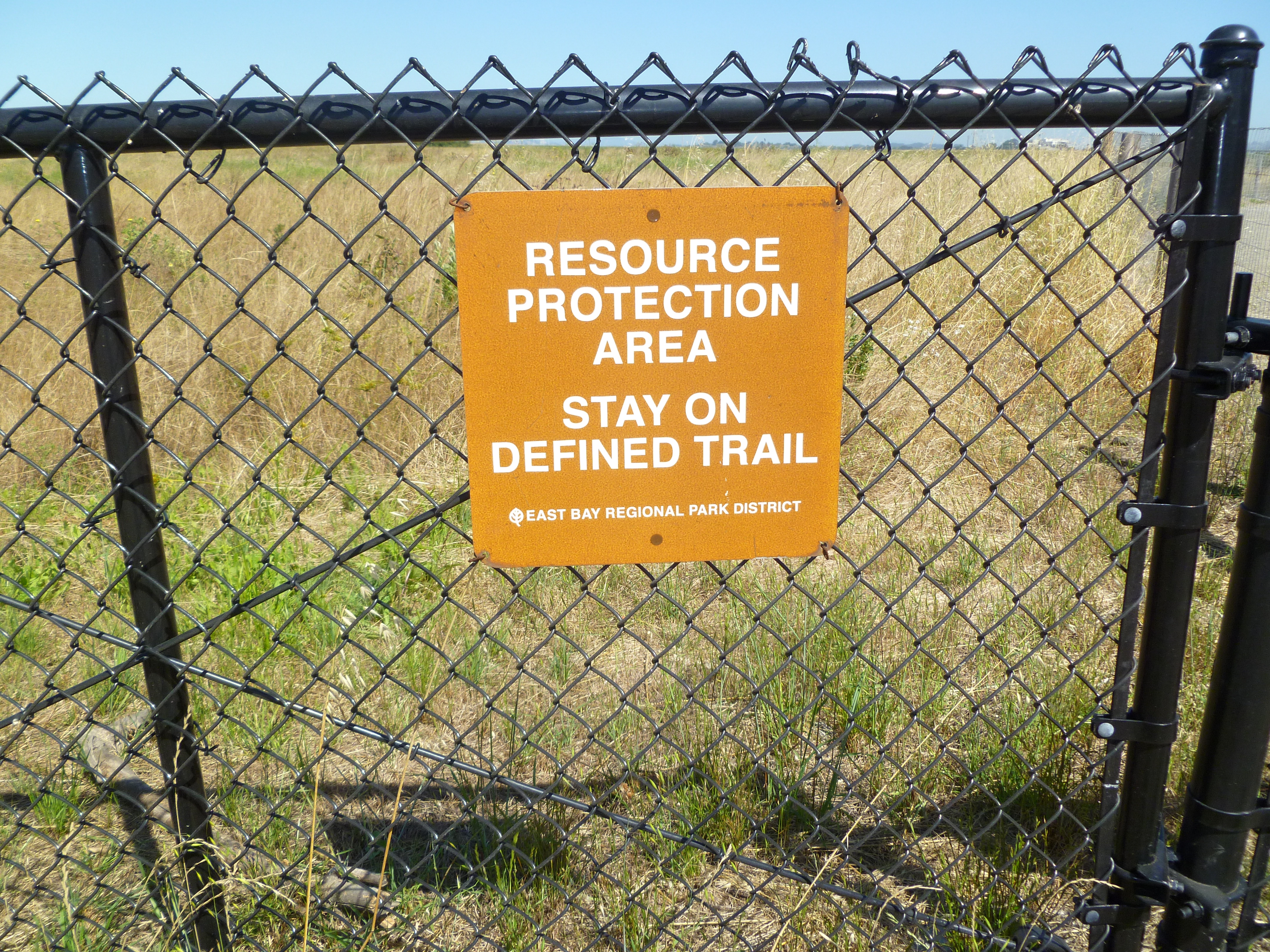
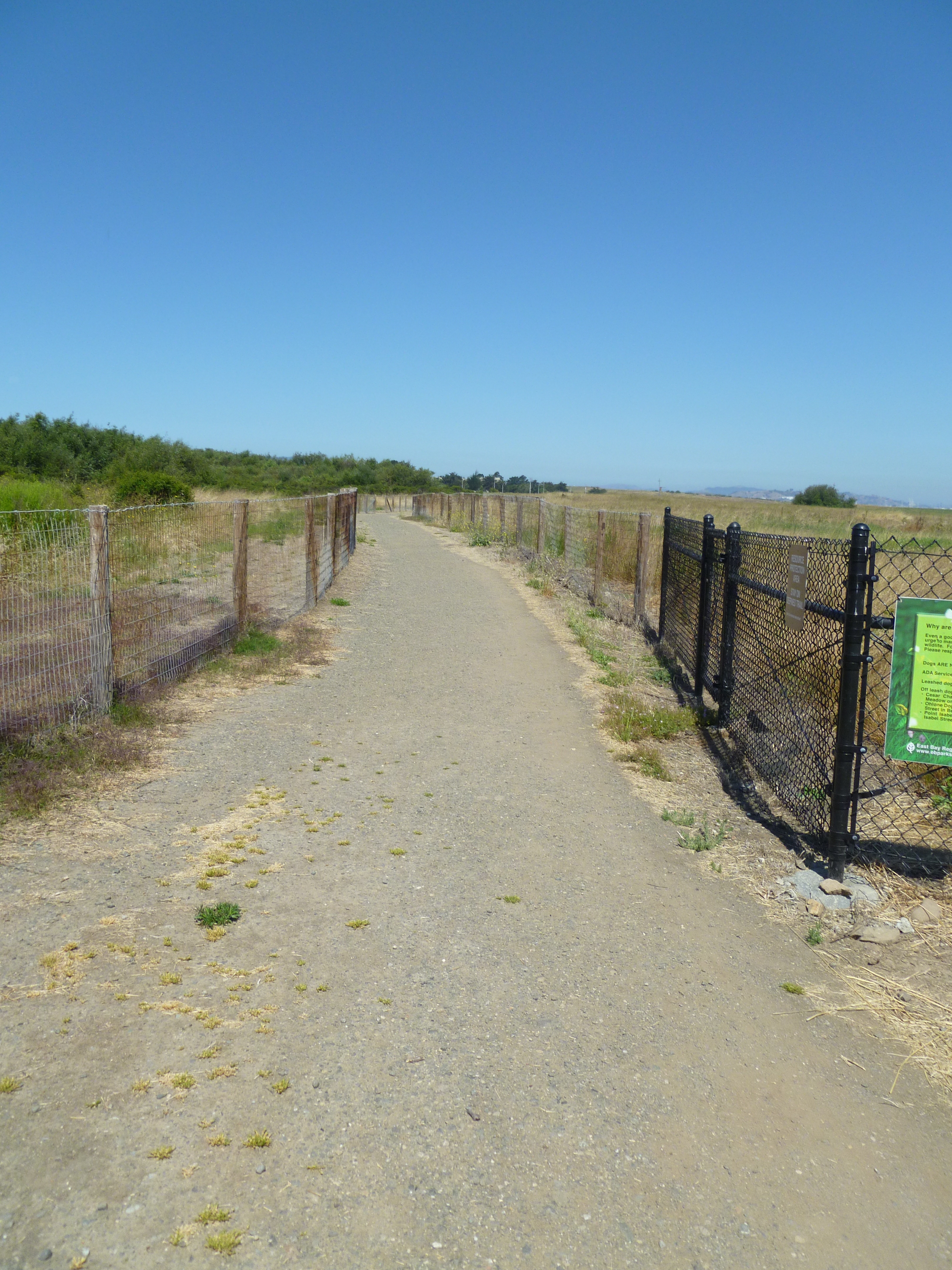
We visited a park today which is an example of what the Sierra Club has in mind.  The 72-acre Berkeley Meadow at the foot of University Ave in Berkeley is one of many parks in the Bay Area that reflects the wishes of the Sierra Club.  The Berkeley Meadow is part of the Eastshore State Park that is owned by the State of California, but operated by East Bay Regional Park District.  The Berkeley Meadow was at one time part of the San Francisco Bay, until it was created with landfill and used as a city dump until the 1960s.  The East Bay Regional Park District “restored” the meadow over a period of 5 years at a cost of $6 million.  It is now a huge fenced pen with a fenced trail running diagonally through it.  Bicycles and dogs on leash are both prohibited from using this fenced path.  One wonders what harm could come to the plants and animals that reside on the other side of the fence.  The meadow is predominantly non-native annual grassland, with willows in wetter portions of the meadow and some coyote bush scrub in the grassland.  (see video cartoon about the Berkeley Meadow:  “Grandpa takes the kids to the plant zoo.”)

The Berkeley Meadow

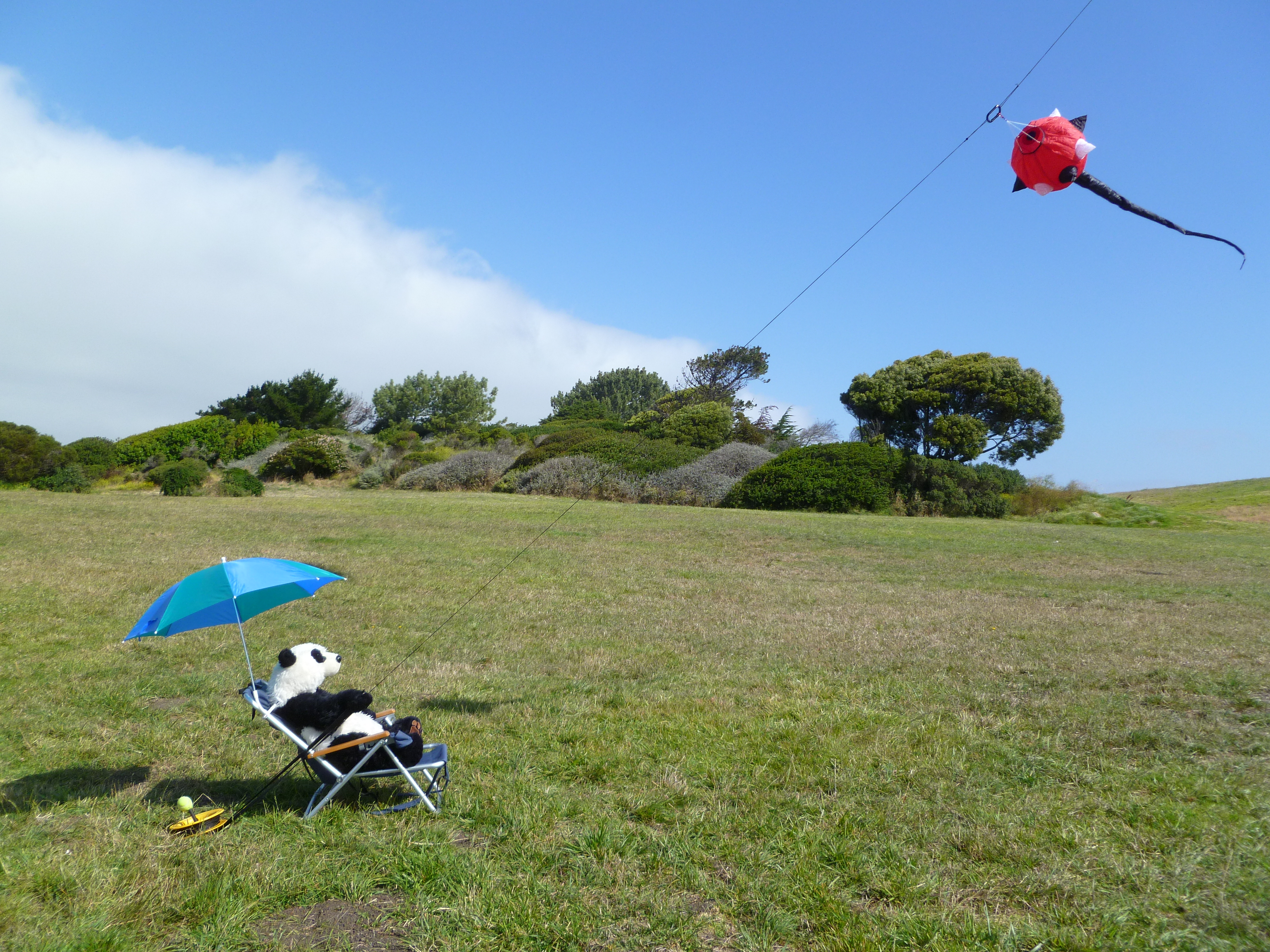
Cesar Chavez Park due west of the Berkeley Meadow provides a multiuse contrast.  Cesar Chavez Park is a Berkeley city park, NOT a park owned by East Bay Regional Park District.  This 90-acre park provides a wide variety of recreational opportunities, including a popular kite-flying area, an off-leash dog park, a restricted “natural area” (predominantly non-native plants), and a fenced area in which burrowing owls nest half of the year.  The unfenced paths are used by bicycles, joggers, people walking, some with dogs on leash.  Cesar Chavez is a successful park, enjoyed by a wide variety of visitors every day.  The Sierra Club made every effort to prevent this multi-use park from accommodating all forms of “active” recreation.

Multiuse recreation at Cesar Chavez Park: a panda flying a kite

Environmentalism has been hijacked by extremists

Let us be perfectly clear about our opinion of “active” vs “passive” recreation.  We do not object to parks such as the Berkeley Meadow in which human access is severely restricted.  What we object to is that the Sierra Club wishes to turn all parks in the Bay Area into native plant and animal reserves in which humans are not welcome, except as passive observers.  This is an example of the extremism that has earned environmentalists the reputation of being unreasonable.

In 2004, the authors of the controversial paper entitled, “Death of Environmentalism” reported that “The number of Americans who agreed that, ‘Most of the people actively involved in environmental groups are extremists, not reasonable people,’ leapt from 32 percent in 1996 to 41 percent in 2000.”  Peter Kareiva, Chief Scientist of the Nature Conservancy, in his recent talk in San Francisco sponsored by the Long Now Foundation (a summary of this talk is available on the Save Sutro website), reported that over half of those surveyed in 2011 now agree that “environmental groups are extremists, not reasonable people.”  This loss of support for environmentalism is a great tragedy, for there is much legitimate work to be done by environmental organizations which are now distracted by tangential issues such as creating native plant museums in our urban parks.

Contradictory Mission of the National Park Service

As we have reported on Million Trees, the National Park Service (NPS) is eradicating most non-native trees on its properties in the Bay Area.  (see “Our Mission”)  We were therefore taken aback when we stumbled on a news report in the Martinez News-Gazette about the NPS destroying 20 redwoods at the John Muir National Historic Site, which is an NPS property.  It seems these redwoods are the victim of the confused, sometimes contradictory mission of the NPS.

Update:  The links in this article are no longer functional.  We therefore provide a new link that corroborates the statements we have made in this article:  “John Muir National Historic Site:  Strentzel-Muir Gravesite Plan”

Redwoods are, of course, one of California’s most revered native trees.   However, in this particular location, the NPS chooses to destroy them because they were not planted by Muir’s family.  Therefore, the NPS does not consider them “historically accurate.”  NPS says their mission requires that they cut them down.

Ironically, it is the NPS that planted those particular redwoods only 20 years ago.  They planted them after destroying the non-native eucalyptus trees that were in fact historically accurate because they were planted during Muir’s lifetime.  The eucalyptus trees were presumably destroyed because they aren’t native to California.  The redwood trees were planted in their place because NPS says their policies require them to replace every tree they destroy.

Are you confused by this story?  So are we.  We think NPS must be confused as well.  They seem to have several contradictory policies.  Their obsession with native vegetation required them to destroy eucalyptus trees 20 years ago.  Their policy requiring them to replace every tree they destroy obligated them to plant native redwoods.  Twenty years later their policy requiring them to adhere to the historical record has obligated them to cut the redwoods down.  Presumably, that same policy will require them to replant eucalyptus trees.  Where will they go from there?  One wonders.

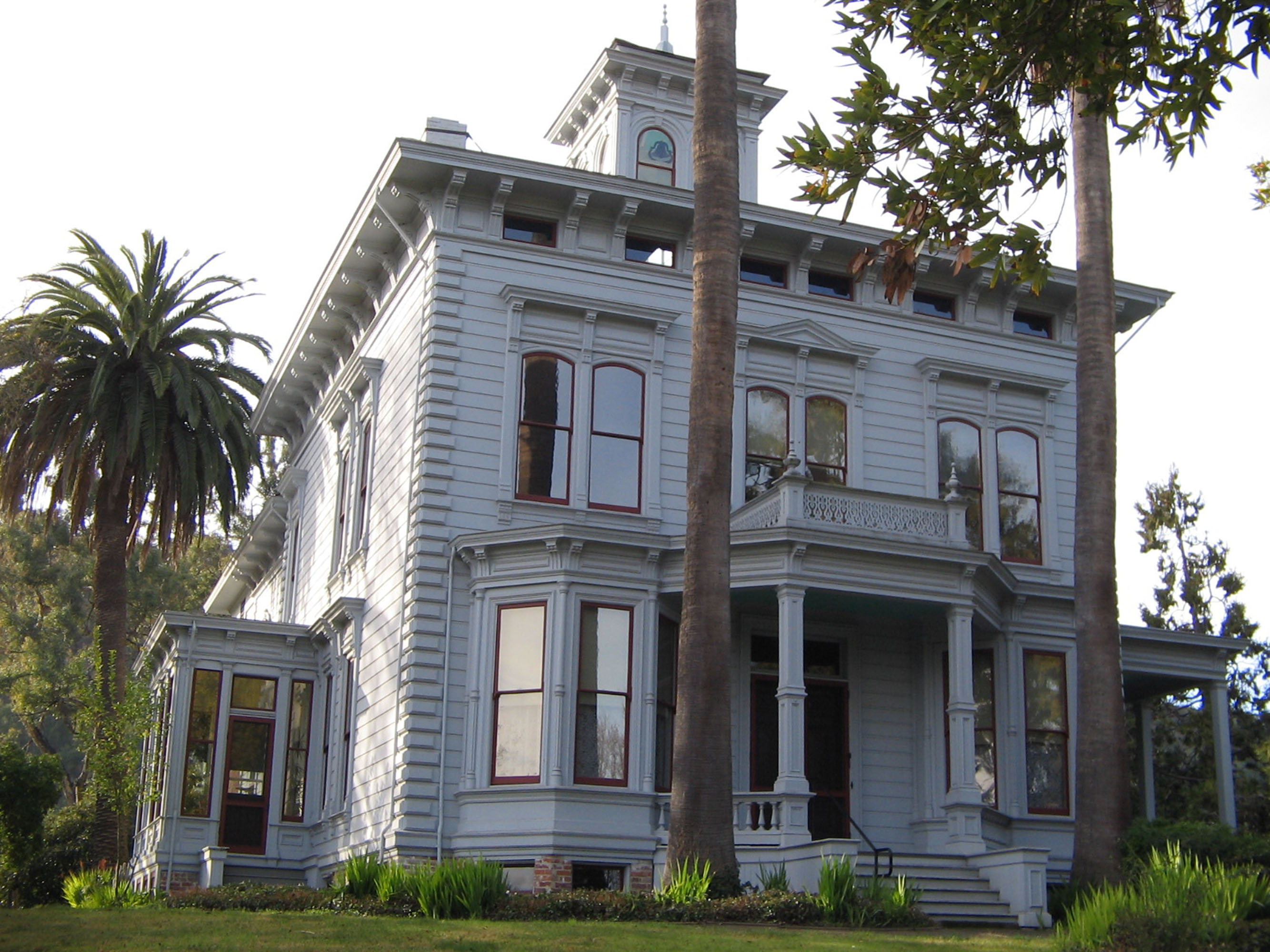
John Muir National Historical Site, NPS photo

A little historical perspective

The NPS website for the John Muir National Historic Site describes John Muir as the “Father of the National Park Service.”  They also credit him with the creation of the Sierra Club and as the person who convinced President Teddy Roosevelt to create many of our most famous national parks:  Yosemite, Grand Canyon, Sequoia, and Mt. Rainier.  Is the destruction of two generations of mature trees any way for the NPS to honor its father?

The John Muir National Historic Site in Martinez is the home that was built by Muir’s wife’s parents in 1882.  Muir and his wife moved into the home in 1890 after his wife’s father died.  Muir lived in the home for the last 24 years of his life.

Muir’s daughter reported that her father bought about a dozen different varieties of eucalyptus from a neighbor and she helped to plant them on the property.  The property was planted with many non-native plants and trees, including palms that now tower over the property.  Clearly, the Muir family didn’t share the NPS obsession with native plants.  Nor did he think too highly of those who destroy trees:

Any fool can destroy trees.  They cannot run away; and if they could, they would still be destroyed, chased and hunted down as long as fun or a dollar could be got out of their bark hides, branching horns, or magnificent bole backbones.”

–John Muir, Our National Parks, pg 364

As public policy and horticultural fads lurch from one extreme to another, the trees are the losers in man’s conceit.   And those who love trees stand helplessly by, watching the destruction, powerless to prevent it, although we pay for it with our taxes.

The aesthetics of native plant restorations in the San Francisco Bay Area

The goal of native plant restorations in the San Francisco Bay Area is to replicate the landscape prior to the arrival of Europeans.  This strategy is based on the assumption that the landscape was not radically altered by  Native Americans that lived in the Bay Area for approximately 13,000 years before Europeans arrived.

Though there were a few early explorers sailing along the coast of California, none were known to have entered the bay or set foot on the San Francisco peninsula until Don Gaspar Portolá in 1769.  Portolá, a captain in the Spanish army, was appointed governor of Alta and Baja California and assigned the task of establishing colonies here.

When Portolá set out on that mission in 1769, his destination was Monterey, which had been described in “glowing terms” by an explorer 167 years earlier.  Only because Portolá lost his way, did his party travel further north to stumble onto San Francisco Bay.  When Portolá realized he had gone too far north, he sent his men ahead.  They walked along Ocean Beach until they reached the Golden Gate, where they could see from the headland cliffs the entire panorama of San Francisco Bay in November 1769. (1)

This was not the destination Portolá was looking for.  They quickly turned around and left.  San Francisco was not occupied by Europeans until 1776 when the presidio (Spanish for “fort”) and mission were established.  Ironically, the same year that America declared its independence from Britain on the East Coast, the West Coast was just being occupied by the Spanish. 

The first European settlement on the East Coast was in Jamestown, Virginia in 1607, nearly 200 years earlier than the West Coast.  Therefore the target landscape of native plant restorations on the East Coast is nearly 200 years earlier than those on the West Coast.

These pre-settlement dates are selected by native plant advocates as the “ideal landscape” based on their assumption that the population of Native Americans was small and their impact on the landscape minimal.  However, many archaeologists have concluded that by the time of the first European settlement on the East Coast in 1607, the native population had been nearly eradicated by disease brought to them by the earliest European explorers over one hundred years earlier.  This suggests that the landscape found in 1607 was in fact not the pristine landscape it is presumed to have been because the Native American population had been significantly larger than that which early settlers found when they arrived. (2)

Although there is less evidence of such early epidemics on the West Coast, archaeologists speculate that there may have been a similar decimation of the native population by disease introduced by early explorers before European settlement of the Bay Area in 1776.

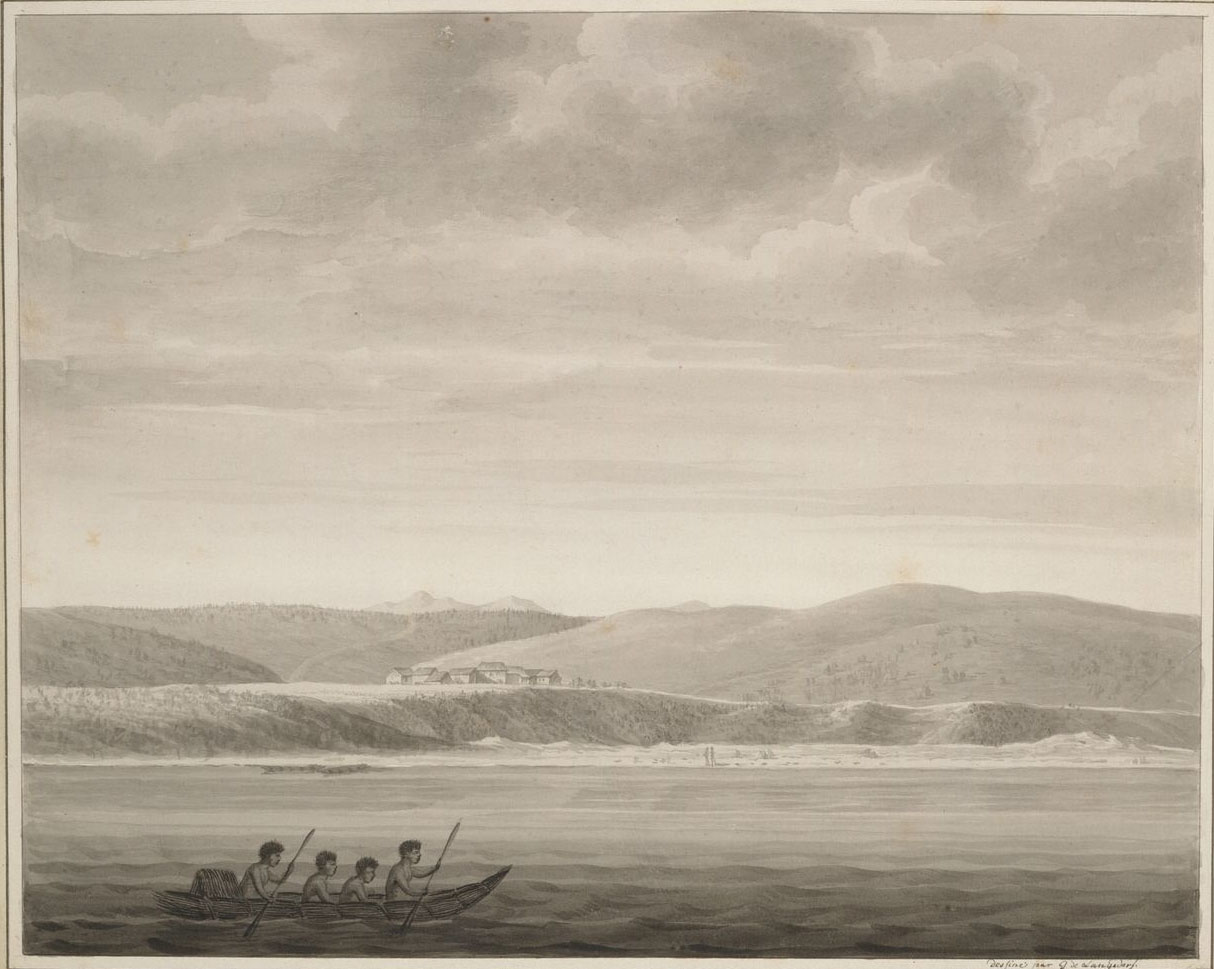
We have an interest in what Bay Area landscape looked like in 1769/1776 because this is the landscape that native plant restorations are aiming for.  The oldest surviving description of the San Francisco Bay is by a sailor into San Francisco Bay, Don José Canizares in August 1775. He described the East Bay as “broken hill country with very little woodland, bay trees and oaks here and there making up what there is.”   He described San Pablo Bay asbordered by rough hill country without trees except for woodlands in two coves to the southwest, the rest is barren, irregular, and of melancholy aspect.” (3)


“Spanish establishment of San Francisco in New California” artist to von Langsdorff expedition, 1806. Bancroft Library

Other early visitors to San Francisco described the landscape they saw:

“…the sides of the hills, though but moderately elevated, seemed barren, or nearly so; and their summits were composed of naked uneven rocks.”

–          George Vancouver, 1792

“…we rode onward to the Mision [sic].  The road thither is through loose sand, and is not good for either walking or riding.  The surroundings are mostly bare, and the hills covered in places with low shrubs, afford but little of anything interesting.”

–          George Heinrich von Langsdorff, 1806

“The fogs, which the prevailing sea-winds blow over the coast, dissolve in summer over a heated and parched soil, and the country exhibits in autumn only the prospect of bare scorched tracts, alternating with poor stunted bushes, and in places with dazzling wastes of drift sand.”

–          Otto von Kotzebue, 1815

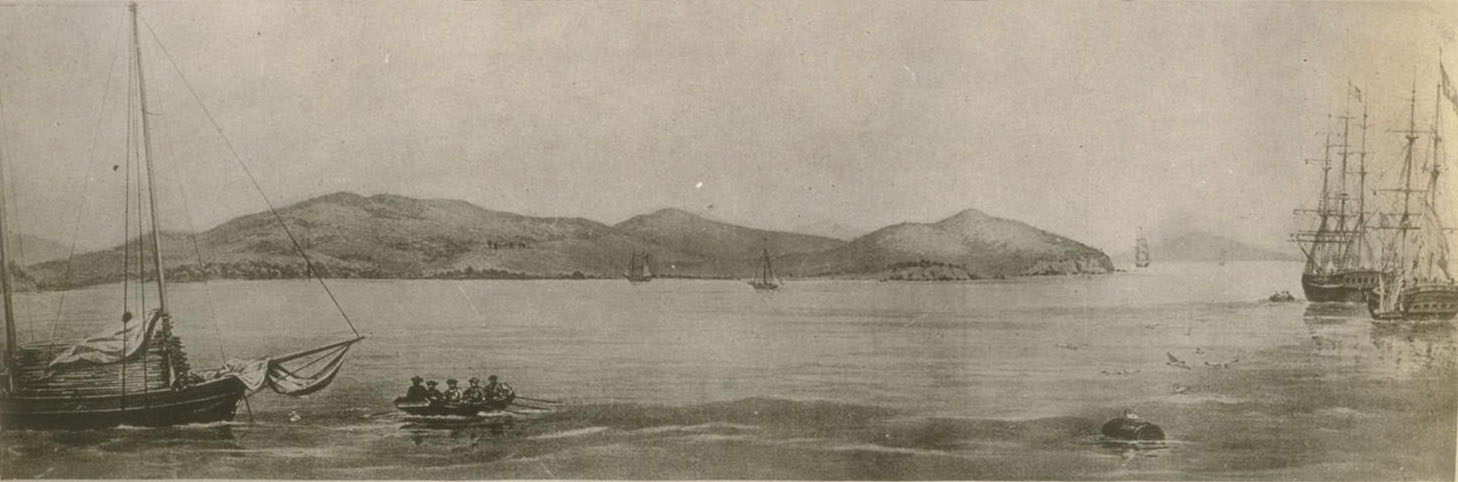
Yerba Buena (now San Francisco) in the Spring of 1837. First known print of San Francisco. Bancroft Library

 “Beyond, to the westward of the landing-place, were dreary sand-hills, with little grass to be seen, and few trees, and beyond them higher hills, steep and barren, their sides gullied by the rains.”

–          Richard Henry Dana, in Two Years Before the Mast, 1835

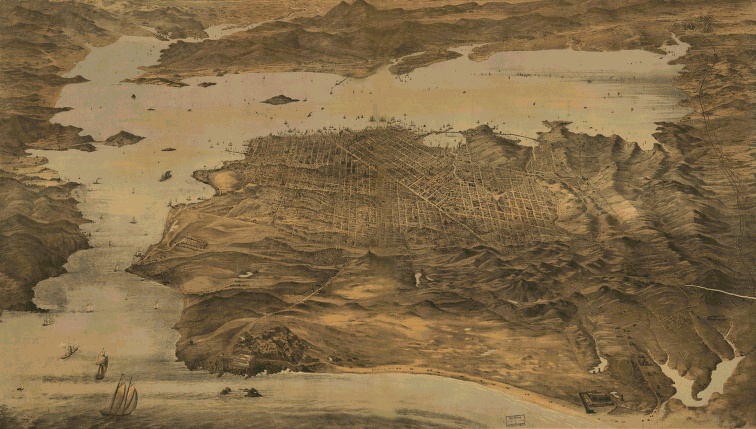
Bird’s eye view of San Francisco in 1868. US Library of Congress

These historical facts and observations of early visitors to the San Francisco Bay Area raise these questions in our minds:

  • Is there any historical or horticultural logic in selecting the landscape of 1769/1776 as the goal of native plant restorations?
  • Is the landscape of 1776 more aesthetically pleasing than the landscape of today?
  • Does the landscape of 1776 seem to be more “biodiverse” than the landscape of today?
  • How have conditions changed since 1776?  How do air quality, climate, and soil conditions compare to those that existed at that time? 
  • If growing conditions have changed significantly since then, can we expect the same plants to survive?


(1) Lewis, Oscar, San Francisco:  Mission to Metropolis Howell-North Books, Berkeley, CA, 1966

(2) Mann, Charles, 1491:  New Revelations of the Americas Before Columbus, Vintage Books, New York, 2005

(3) Cunningham, Laura, A State of Change:  Forgotten Landscapes of California, Heydey Books, Berkeley, CA, 2010

California: A State of Change

Laura Cunningham’s book, A State of Change*  is a remarkable achievement, reflecting a lifetime of observing nature, informed by formal training in paleontology and biology and finally depicting that knowledge in oil paintings of the historical ecology of California. 

Ms. Cunningham introduces her theme with the title of her book.  California is the state that changes and is always in a state of change.  She acknowledges the physical forces of geology and climate as well as the biological interactions of plants and animals as she describes the dynamic qualities of nature.  She treats the complexity of these interactions with respect, frequently declining to reach conclusions because of the speculation that would be required to do so. 

Although we will touch on just a few themes of her book which are relevant to the mission of the Million Trees blog, we encourage readers to give this book the complete read it deserves. 

Sustainability of native plant gardens

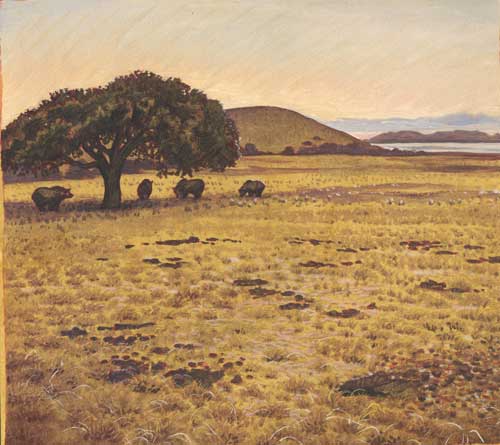
Site of the El Cerrito Plaza with the Albany Hill in the background, centuries ago. Oil painting by Laura Cunningham, with permission

Ms. Cunningham tells the charming story of her first experience with native plant restorations as a teenager in the hills of Berkeley/Richmond in the mid-1980s.  With her parents’ permission, she dug up the lawn in their backyard so that she could plant native grassland.  She started with the seeds of native grasses that she collected locally and later transplanted native bunch grasses from nearby properties slated for development.  After several years of regular weeding and new planting, her small plot resembled the grassland she had envisioned.

When she finished her education at UC Berkeley and began to work further away, her grassland slowly succeeded to shrubs and non-native plants, a process she describes as follows: 

“Visiting deer brought weed seeds in on their fur, scrub jays planted live oak seeds into the grass, and flying finches dropped the seeds of Himalayan blackberry in the yard.  The latter, a thick, tenacious vine, slowly formed great thickets over the grasses, shading them out in places.  The food web had won, although I had learned a lot in the process.  I dug up the yard again, back to bare dirt, and gave it back to my parents.” 

This personal story is consistent with other local experiences reported on the Million Trees blog:

 Fire Ecology of California

Those who continue to believe that non-native plants are more flammable than native plants should read Ms. Cunningham’s book, which describes at length the important role that fire plays in California’s ecology.  She introduces this topic with the heading, “Chaparral:  Burning Like a Torch of Fat.”  Charcoal deposits in ancient sediments prove that wildfires in California’s brushlands have occurred frequently for hundreds of thousands of years.  Some shrubs, such as chamise, contain resinous leaves that encourage burning.  Others, such as ceanothus and manzanita require the intense heat of a fire to germinate.  Others will germinate only in the ashes of a fire.  As we have said repeatedly on the Million Trees blog, eradicating non-native plants and trees will not eliminate fire from California.

Ms. Cunningham also reports on the modern debate about reducing wildfires in California.  Although we are very familiar with this debate, we have not read so clear a presentation of it as Ms. Cunningham provides. 

One “camp” in this debate believes that the suppression of wildfires in California has resulted in fuel loads that are much greater than in the past and therefore result in bigger, more damaging fires.  This camp believes that fire danger can be reduced by allowing smaller fires to burn and conducting periodic prescribed burns. 

The opposing view is that fire suppression has been largely unsuccessful and therefore fuel loads are not substantially greater than they were historically.  Wildfires are attributed to hot, wind-driven fire in which fuel load is irrelevant; that is, everything will burn in a wind-driven fire.  Although this is the historical fire regime, fires are causing more loss of lives and property in modern times only because of the development of residential communities in the wildland-urban interface.  This camp therefore sees no point in prescribed burns and proposes to reduce risk to lives and property by limiting residential developments in wildlands and creating defensible space around residences by eliminating most vegetation. 

With humility, Ms. Cunningham declines to choose a side in this debate, acknowledging there is much compelling evidence to support both views. 

The Million Trees blog prefers the theory that wildfires are caused by hot winds rather than accumulated fuel loads because our perspective is limited to the San Francisco Bay Area.  We don’t think prescribed burns are appropriate in a densely populated urban setting where both pollution and risk of wildfire are major concerns.  And, based on our local experience, the only fires that have become raging wildfires are those that were wind-driven.   We advocate for reducing fire hazards by creating defensible space and routine maintenance of flammable vegetation litter.   

Historical Ecology

San Francisco 500 years ago, looking eastward from the top of Nob Hill. Oil painting by Laura Cunningham, with permission

We are grateful to Ms. Cunningham for giving us permission to publish two of her historical paintings of California.  These paintings enable us to confirm that trees were not a conspicuous part of the landscape of the Bay Area.  The dominant landscape was grassland and shrubs.  Although there may have been more trees if the landscape had not been frequently burned by Native Americans, based on our knowledge of horticultural requirements of native trees, we believe that even in the absence of fire there would have been few trees.  The native trees will not tolerate the wind on the hills of San Francisco.  Even in places where trees are sheltered from the wind, they must have access to sufficient water to become established. 

When native plant advocates demand that non-native trees be destroyed, they frequently claim that non-native trees will be replaced by native trees (even without being planted in some cases).  We assume their claims are based either on strategy (i.e., promising “replacement” trees in order to diffuse the opposition of those who like trees) or on ignorance of California’s natural history. 

With deep respect, we acknowledge Ms. Cunningham’s impressive knowledge of California’s ecological history and the accomplishment which her book represents.  Our thanks to Ms. Cunningham for sharing her lifetime of study and observation of nature with us and rendering that knowledge so beautifully in her paintings. 


* Cunningham, Laura, A State of Change:  Forgotten Landscapes of California, Heydey Books, Berkeley, California, 2010