“Ecosystems persist because they are capable of transformation, not because they resist.”

Please join me in welcoming Megan Bonnett to the team of contrarians who don’t believe that native plants are the salvation of nature. Nature will be its own savior, if we let it.  With Megan’s permission, we publish one of the articles on her Substack, “Here and There.”  Megan takes us, step-by-step through the processes of evolution that enable life on Earth to survive the radical changes that Earth has endured for 3.5 billion years without the “assistance” or interference of humans.

Megan Bonnett is a naturalist, independent ecology researcher, and science communicator whose work explores ecological theory, the history of invasion biology, and the philosophical assumptions that shape modern conservation.

She grew up in central Texas in a family of nature lovers, where countless hours spent outdoors cultivated both a deep affection for the living world and an insatiable curiosity about how it works. She later studied wildlife biology at Texas State University and spent more than a decade working as a naturalist and outdoor educator for organizations throughout the Austin area.

Long before ecology became the focus of her research, Megan developed what she can only describe as a calling to investigate incongruities–to follow the places where accepted narratives and observable reality don’t quite align. Through many challenging experiences in her young life and a propensity for deep observation of the goings-on around her, she became acutely aware of the gap that can exist between what people profess and what they practice. Rather than extinguishing that instinct by outsourcing her intellectual autonomy to the people who professed and practiced different things, she embarked on a path in the sciences and simply redirected it. The same habit of carefully examining assumptions, asking uncomfortable questions, and comparing ideas with evidence became the foundation of her work as a naturalist and researcher.

After another decade as an independent outdoor educator and guide, that curiosity led her to ask why so many aspects of invasion biology seemed internally inconsistent. What began as a handful of questions grew into a years-long investigation of ecological research, the history of the discipline, and the philosophical frameworks that have shaped modern conservation. When the COVID lock downs began and she could no longer teach in the field, she began to communicate her findings by various other means, turning her in-person outdoor education into online science communication.

Today, her work seeks not only to better understand ecological systems, but also to examine the assumptions that guide how humans interpret and manage them. She believes that every scientific discipline benefits from thoughtful self-examination, and that questioning long-held ideas is an essential part of scientific progress. Her writing explores where evidence, philosophy, history, and ecology intersect, inviting readers to look beyond familiar narratives and reconsider the questions themselves.

Conservation Sense and Nonsense


Post-Anthropocentric Ecology

Abstract

Conservation biology has long framed non-native species as symptoms of ecological degradation, positioning extinction, migration, and novel species assemblages as failures requiring correction. This paper advances a post-anthropocentric ecological framework that challenges these assumptions by re-centering ecosystems as self-organizing, adaptive systems operating across deep evolutionary time. Drawing on disturbance ecology, niche construction theory, and emerging work on novel ecosystems, it argues that migration and species replacement are not pathologies but core mechanisms through which ecosystems heal, reorganize, and persist under changing constraints. Extinction, while affectively charged for humans, is reframed as a natural–often necessary–component of systemic adaptation rather than an intrinsic ecological wrong. By interrogating the moral, temporal, and ontological assumptions embedded in invasive species discourse, this critique proposes a shift from origin-based conservation toward functional, process-oriented stewardship grounded in humility, restraint, and trust in the adaptive intelligence of living systems.

Introduction: The Limits of Anthropocentric Conservation

Modern conservation biology presents itself as a science of protection, yet its foundational assumptions remain deeply anthropocentric. Despite rejecting overt human dominance over nature, conservation practice continues to privilege human temporal scales, moral intuitions, and historical preferences when defining ecological harm. Ecosystems are treated as if they possess an optimal past state to which they ought to be returned, and deviation from this state–particularly through the arrival of non-native species–is framed as ecological error.

Nowhere is this framing more pronounced than in “invasive” species discourse. Migrant species are routinely characterized as threats, symptoms of degradation, or agents of collapse, with management efforts focused on eradication and control. Yet this perspective sits uneasily with what ecology itself reveals: that ecosystems are non-equilibrial, historically contingent, and fundamentally shaped by disturbance, dispersal, and replacement (Pickett & White 1985; Wu & Loucks 1995).

This paper argues that the invasive species paradigm reflects not ecological necessity but a residual anthropocentrism- an insistence that ecosystems conform to human concepts of order, identity, and permanence. A post-anthropocentric ecology, by contrast, would evaluate ecological change in terms of process, function, and adaptive emergence across deep time, rather than fidelity to culturally salient baselines.

Ecosystems as Self-Organizing Processes

Ecological systems are not archives of species composition but dynamic processes involving flows of energy, nutrients, organisms, and information. The persistence of ecosystems arises not from stasis but from continuous reorganization under changing conditions. Disturbance is not an interruption of ecological order but one of its primary drivers (Holling 1973).

The historical baseline model of conservation presumes that a particular moment in ecological history–often coinciding with early modern human observation–represents a normative state. Yet paleobiology and disturbance ecology reveal no such equilibrium. Species assemblages have always been provisional, repeatedly dismantled and reassembled through climatic shifts, geological events, and biotic interactions (Benton 2009).

From this perspective, ecological change is not a deviation to be corrected but an expression of systemic responsiveness. Ecosystems persist because they are capable of transformation, not because they resist it.

Migration as an Adaptive Response, Not a Pathology

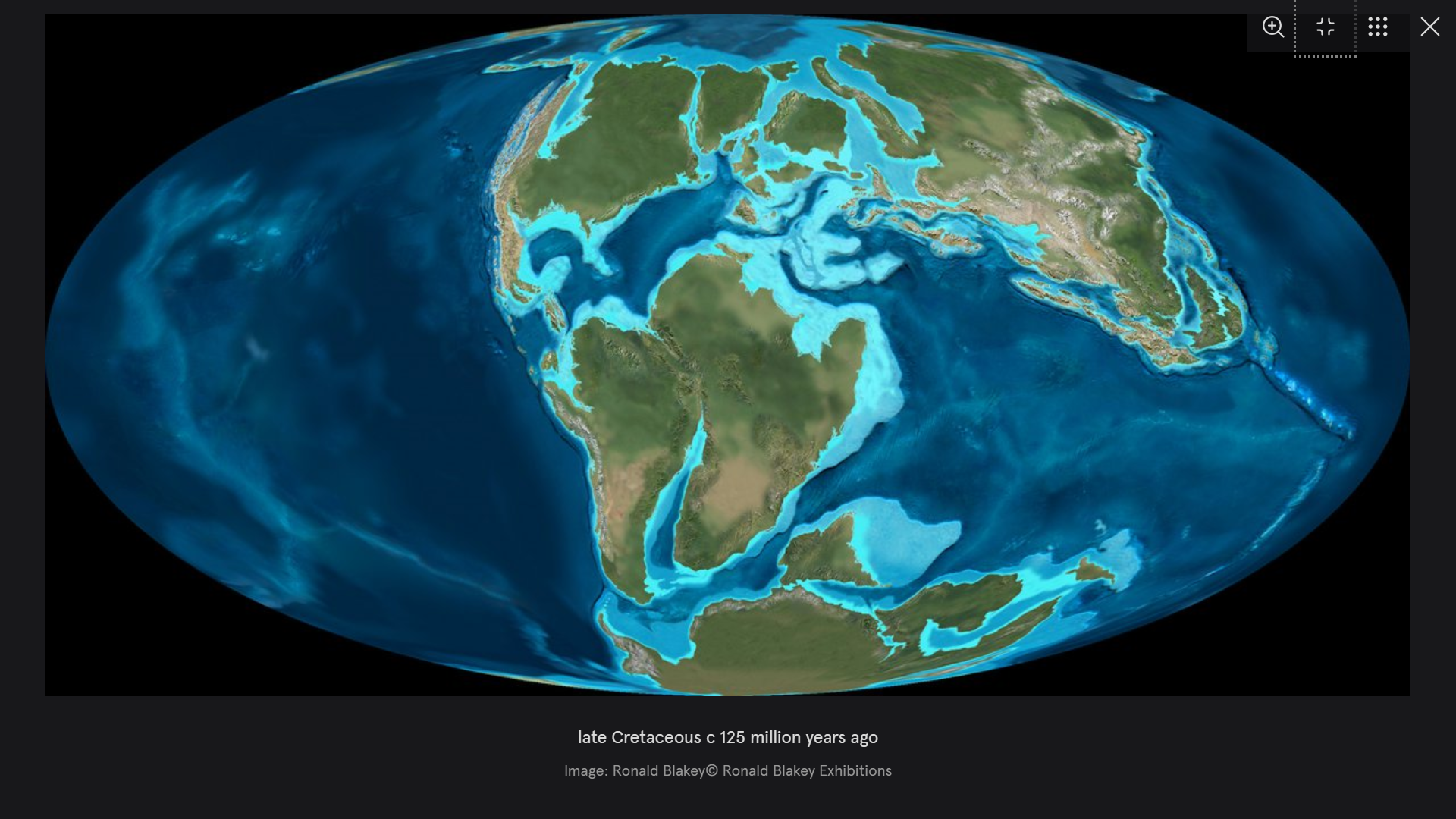
Species dispersal has been the primary mechanism by which life responds to environmental change throughout Earth’s history. Ice ages, continental drift, mass extinctions, and atmospheric transformations all produced waves of migration and novel assemblages, none of which were constrained by notions of nativeness or historical fidelity.

Contemporary migration is often treated as uniquely pathological because it occurs within human-altered landscapes. Yet this framing introduces a qualitative distinction unsupported by ecological theory. While human activity accelerates change, ecosystems respond to altered constraints in the same way they always have–through redistribution, replacement, and innovation.

The emerging literature on novel ecosystems acknowledges this reality, recognizing that many contemporary ecosystems have crossed thresholds beyond which historical restoration is neither possible nor ecologically meaningful (Hobbs et al. 2006; Hobbs et al. 2013). In such contexts, migrant species often function not as disruptors but as pioneers and engineers facilitating system-level reorganization.

Case Studies in Functional Emergence

  • Nitrogen-Fixing Trees in Degraded Tropical Landscapes

In post-agricultural and post-mining tropical soils, native forest species frequently fail to re-establish due to severe nutrient depletion. Non-native nitrogen-fixing trees such as Leucaena, Acacia, and Albizia often colonize these landscapes rapidly, restoring nitrogen availability, increasing soil carbon, and facilitating successional processes that would otherwise stall.

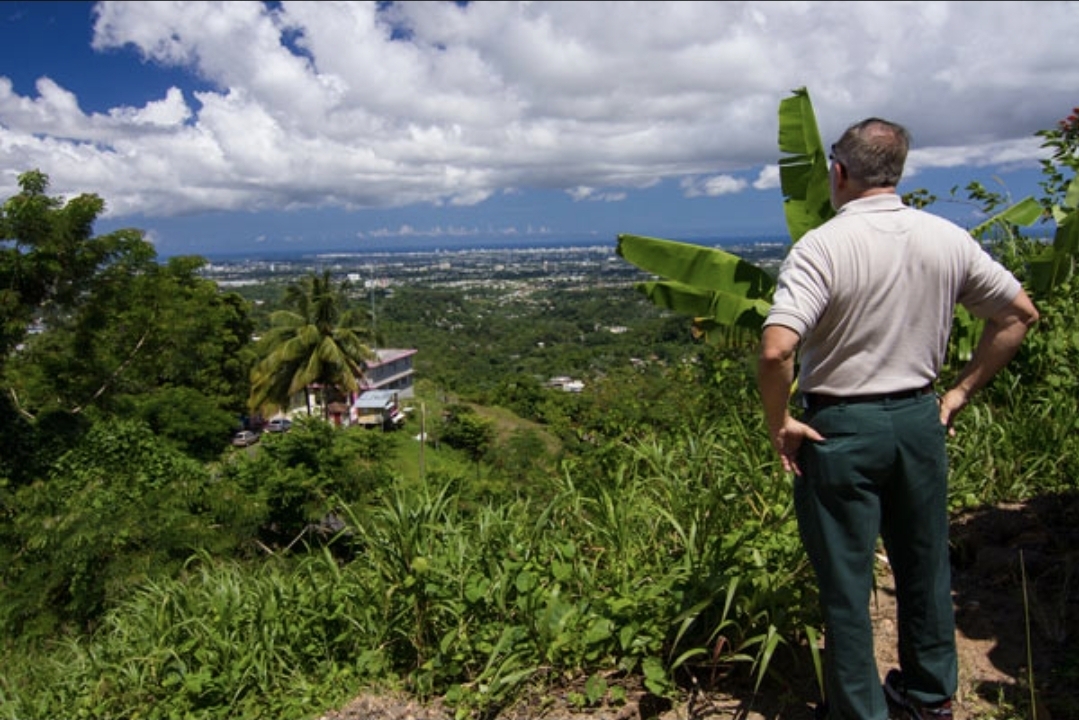
Studies in Puerto Rico demonstrate that such species do not necessarily suppress biodiversity long-term, but instead enable the emergence of stable, productive forest systems that differ compositionally from historical baselines yet function ecologically (Lugo 2004). Here, migrant species act as metabolic catalysts, repairing biogeochemical cycles rather than displacing intact systems.

Ariel Lugo overlooking an urban watershed in Puerto Rico. Photo courtesy of Ariel Lugo.
  • Tamarisk and Riparian Reorganization in the American Southwest

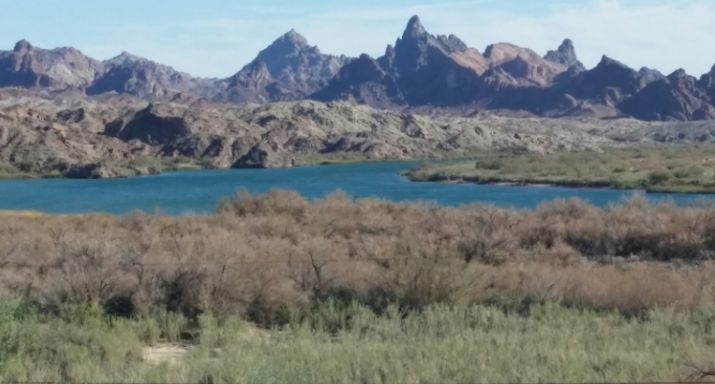
Tamarisk (Tamarix spp.) has long been framed as an invasive villain in the Southwestern United States. However, research reveals that its dominance coincides with dam-altered hydrology that prevents the regeneration of native cottonwoods and willows. In the absence of natural flood pulses, the historical riparian system is no longer viable.

Tamarisk defoliated by intentionally introduced tamarisk leaf beetle along Colorado River, near Needles, California.  Source:  https://www.al-ipc.org/wp-content/uploads/2017/12/Norelli.pdf
  • Climate-Driven Mangrove Expansion

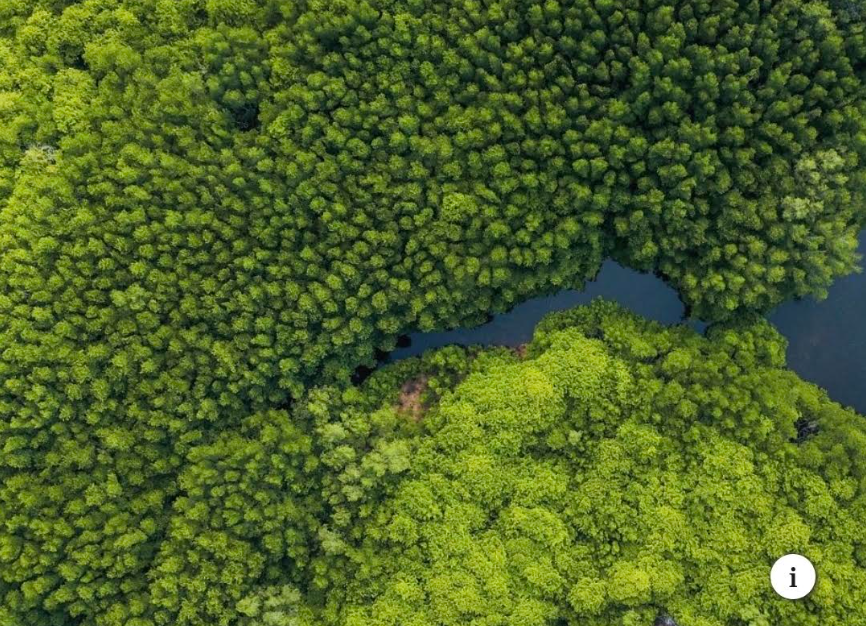
Poleward mangrove expansion into salt marsh ecosystems is frequently described as biological invasion. Yet this process reflects climate-driven adaptation rather than ecological breakdown. Mangroves increase coastal carbon sequestration, enhance shoreline stability, and replace marsh functions under warming conditions (Saintilan et al. 2014).

In this context, nativeness dissolves as a meaningful category. What persists is function- coastal protection, productivity, and resilience- carried forward by different species under new constraints.

Mangrove Forest from Above. An aerial view of the dense mangrove forest on Nusa Lembongan, Indonesia. © Joel Vodell

Extinction, Replacement, and the Myth of Ecological Wrongness

Extinction occupies a privileged moral position in conservation discourse, treated as the ultimate ecological harm. Yet extinction is neither anomalous nor avoidable; it is a fundamental mechanism of evolutionary change (Raup 1991; Jablonski 2004). Species that fail to adapt do not disappear suddenly but undergo prolonged decline characterized by starvation, disease, and reproductive failure.

From a systems perspective, artificially sustaining such species through intensive management may delay adaptation while prolonging suffering. Extinction is tragic from a human emotional standpoint, but it is not intrinsically wrong nor necessarily maladaptive at the ecosystem level.

Importantly, extinction does not signify emptiness but transition. Ecosystems respond through functional replacement, niche reconfiguration, and the emergence of new associations–processes observed repeatedly throughout deep time.

Biodiversity, Simplification, and Temporal Bias

Conservation biology frequently equates ecosystem health with high species richness. Yet many naturally occurring ecosystems are characterized by low visible diversity or monodominance, particularly during early successional stages or under extreme conditions.

Migrant species often simplify ecosystems initially, acting as structural or metabolic scaffolding upon which complexity can later emerge. Short-term declines in species richness may therefore reflect transitional dynamics rather than endpoints. The privileging of immediate diversity metrics reveals a temporal bias aligned with human observation cycles rather than ecological reality.

As Davis et al. (2011) argue, judging species by origin rather than effect obscures functional contributions and reinforces static conceptions of nature.

Moral Projection and the Illusion of Ecological Control

As far as we can perceive, nature does not possess moral categories. Concepts such as harm, value, and responsibility arise within human cognition and culture. Conservation biology often obscures this fact by presenting value-laden decisions as scientific imperatives.

The prioritization of native species reflects cultural nostalgia, aesthetic preference, and a desire for control rather than ecological necessity (Chew & Hamilton 2011; Sagoff 2005). Moreover, eradication campaigns justified in the name of conservation frequently involve large-scale killing and system disruption, raising ethical contradictions even within human moral frameworks.

A post-anthropocentric ecology does not deny human values but refuses to universalize them. It calls for ethical humility: recognizing that ecosystems do not require our permission to change, nor our correction to persist.

Toward a Post-Anthropocentric Ecological Framework

A post-anthropocentric ecology rests on several principles:

  • Function over origin; ecological roles matter more than historical nativeness.
  • Processes over states; ecosystems are defined by flows, not snapshots.
  • Deep time over immediacy; adaptation unfolds across evolutionary scales.
  • Restraint over control; intervention should be exceptional, not reflexive.
  • Trust over mastery; ecosystems possess adaptive intelligence exceeding human prediction.

This framework does not reject conservation but reframes it as facilitation rather than correction.

This perspective does not argue against conservation action per se, nor does it suggest that all species introductions are benign from a human perspective. In closed or evolutionarily naïve systems, or where extinction risk is acute and replacement processes are deemed unlikely, intervention may, on occasion, be justified. However, in open, heavily altered systems where historical conditions no longer exist, reflexive opposition to migrant species may increase ecological harm. Conservation, in such contexts, must shift from enforcing historical fidelity to supporting functional resilience.

Conclusion: Letting Living Systems Lead

The persistence of life across billions of years testifies to its capacity for self-organization, adaptation, and repair. Migrant species are not ecological errors but expressions of this adaptive intelligence operating under novel constraints.

Post-anthropocentric ecology asks not how ecosystems can be made to resemble the past, but how they are already responding to the present. In an era of rapid planetary change, the most ethical and ecologically grounded response may not be to intervene more aggressively, but to listen more carefully–to learn when healing is already underway, even if it does not look like what we expected.

Megan Bonnett
megan.bonnett@gmail.com


Benton, Michael J. 2009. “The Red Queen and the Court Jester: Species Diversity and the Role of Biotic and Abiotic Factors Through Time.” *Science* 323 (5915): 728–732. https://doi.org/10.1126/science.1157719.

Chew, Matthew K., and Andrew L. Hamilton. 2011. “The Rise and Fall of Biotic Nativeness: A Historical Perspective.” In *Fifty Years of Invasion Ecology: The Legacy of Charles Elton*, edited by David M. Richardson, 35–47. Chichester, UK: Wiley-Blackwell. https://doi.org/10.1002/9781444329988.ch4.

Davis, Mark A., Matthew K. Chew, Richard J. Hobbs, Ariel E. Lugo, John J. Ewel, Geerat J. Vermeij, James H. Brown, Michael L. Rosenzweig, Mark R. Gardener, Scott P. Carroll, Ken Thompson, Steward T. A. Pickett, Juliet C. Stromberg, Peter Del Tredici, Katharine N. Suding, Joan G. Ehrenfeld, J. Philip Grime, Joseph Mascaro, and John C. Briggs. 2011. “Don’t Judge Species on Their Origins.” *Nature* 474 (7360): 153–154. https://doi.org/10.1038/474153a.

Hobbs, Richard J., Salvatore Arico, James Aronson, Jill Baron, Peter Bridgewater, Valerie A. Cramer, Paul R. Epstein, John J. Ewel, Carlos A. Klink, Ariel E. Lugo, David Norton, Dennis Ojima, David M. Richardson, Eric W. Sanderson, Fernando Valladares, Montserrat Vila, Roger Zamora, and Michael Zobel. 2006. “Novel Ecosystems: Theoretical and Management Aspects of the New Ecological World Order.” *Global Ecology and Biogeography* 15 (1): 1–7. https://doi.org/10.1111/j.1466-822X.2006.00212.x.

Hobbs, Richard J., Eric S. Higgs, and Carol M. Hall, eds. 2013. *Novel Ecosystems: Intervening in the New Ecological World Order*. Chichester, UK: Wiley-Blackwell.

Holling, C. S. 1973. “Resilience and Stability of Ecological Systems.” *Annual Review of Ecology and Systematics* 4: 1–23. https://doi.org/10.1146/annurev.es.04.110173.000245.

Jablonski, David. 2004. “Extinction: Past and Present.” *Nature* 427: 589. https://doi.org/10.1038/427589a.

Lugo, Ariel E. 2004. “The Outcome of Alien Tree Invasions in Puerto Rico.” *Frontiers in Ecology and the Environment* 2 (5): 265–273.

Pickett, Steward T. A., and Peter S. White, eds. 1985. *The Ecology of Natural Disturbance and Patch Dynamics*. Orlando, FL: Academic Press.

Raup, David M. 1991. *Extinction: Bad Genes or Bad Luck?* New York: W. W. Norton.

Sagoff, Mark. 2005. “Do Non-Native Species Threaten the Natural Environment?” *Journal of Agricultural and Environmental Ethics* 18 (3): 215–236. https://doi.org/10.1007/s10806-005-1500-y.

Saintilan, Neil, Nicholas C. Wilson, Kerrylee Rogers, Anusha Rajkaran, and Ken W. Krauss. 2014. “Mangrove Expansion and Salt Marsh Decline at Mangrove Poleward Limits.” *Global Change Biology* 20 (1): 147–157. https://doi.org/10.1111/gcb.12341.

Shafroth, Patrick B., James R. Cleverly, Tom L. Dudley, John P. Taylor, Charles van Riper III, Edwin P. Weeks, and James N. Stuart. 2005. “Control of *Tamarix* in the Western United States: Implications for Water Salvage, Wildlife Use, and Riparian Restoration.” *Environmental Management* 35 (3): 231–246. https://doi.org/10.1007/s00267-004-0099-5.

Stromberg, Juliet C., Matthew K. Chew, Pamela L. Nagler, and Edward P. Glenn. 2009. “Changing Perceptions of Change: The Role of Scientists in *Tamarix* and River Management.” *Restoration Ecology* 17 (2): 177–186. https://doi.org/10.1111/j.1526-100X.2008.00514.x.

Wu, Jianguo, and Orie L. Loucks. 1995. “From Balance of Nature to Hierarchical Patch Dynamics: A Paradigm Shift in Ecology.” *The Quarterly Review of Biology* 70 (4): 439–466. https://doi.org/10.1086/419172.

“Nature’s Best Hope” is Evolution, Not Native Plants

Six months ago, an ecologist friend and mentor alerted me that Ferris Jabr was writing an article about Doug Tallamy for The New York Times Magazine. They spoke by phone for about an hour, during which my friend recommended that Jabr also speak with me. I was hopeful that the Times would publish an even-handed assessment of Doug Tallamy’s nativist ideology. I’m a subscriber who trusts NYT to report fairly on controversial issues. I’m sorry to say that in this case, NYT let its readers down. (1)

In contrast to that brief phone interview, Jabr reports spending several days visiting Doug Tallamy at his home in Delaware, months before he spoke with dissenting voices. That disproportionate time shows in the resulting article, which lands firmly in Tallamy’s camp. Jabr also spoke by phone with several other academic ecologists whom I know, but quoted none of them.

Preparation

I began preparing for an interview I hoped to be granted by Ferris Jabr. I read his book, Becoming Earth: How Our Planet Came to Life, about how life and Earth coevolved. It examines the concept that our world is a single, interconnected, self-regulating living system, and argues that all living things are not just inhabitants, but active participants in the planet’s evolution.

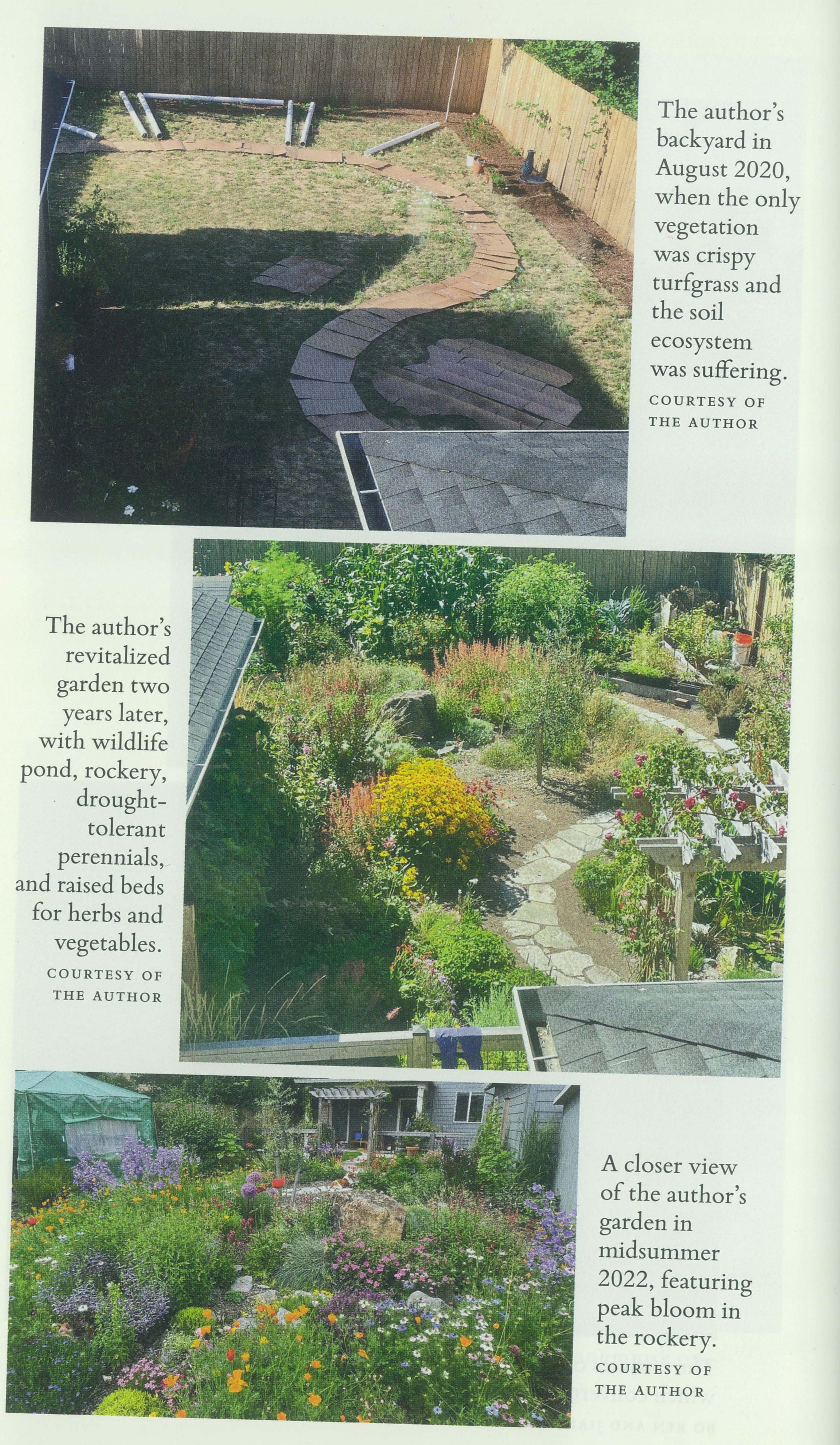
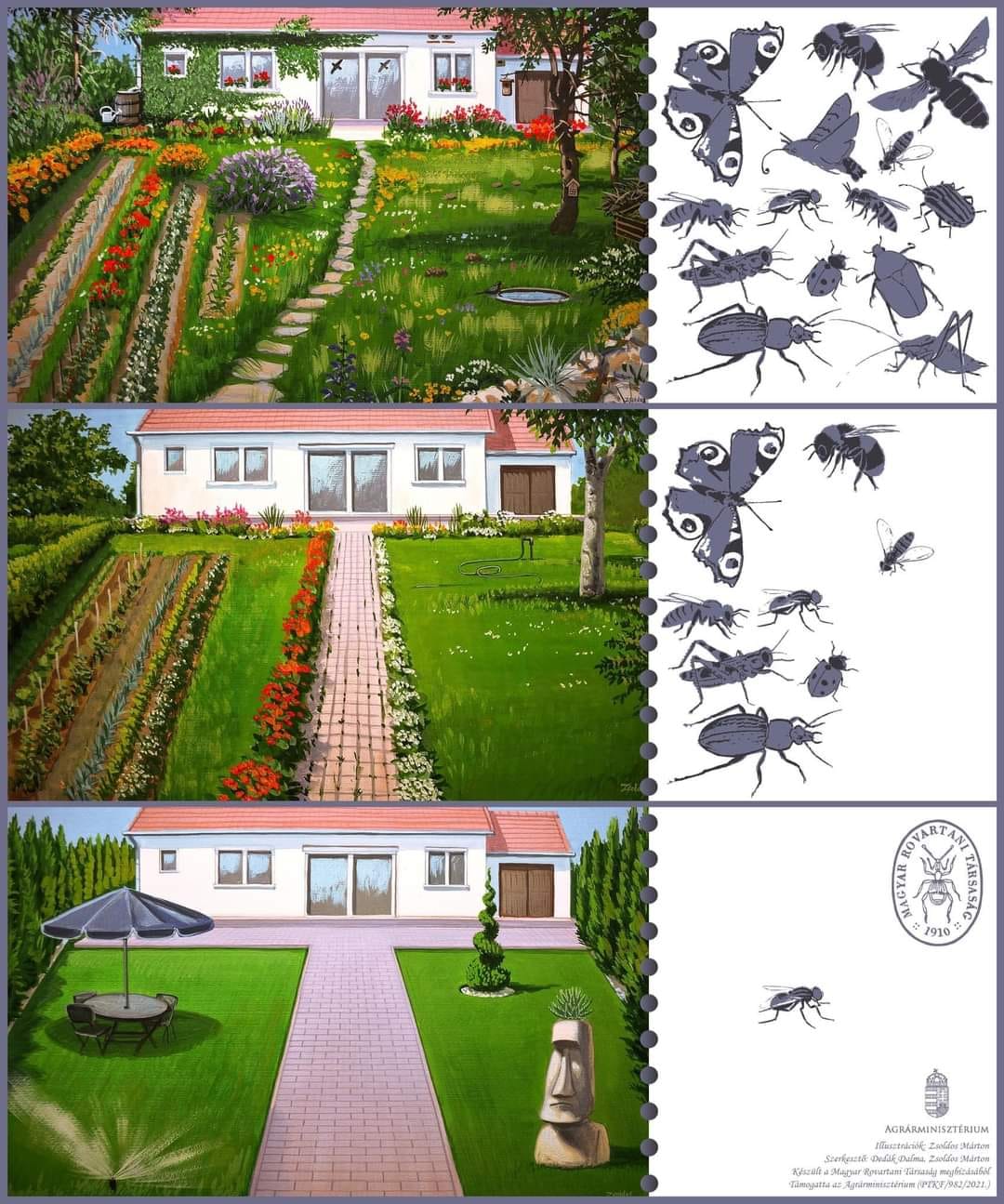
Jabr’s life-long interest in gardening contributed to his understanding of the intertwined fates of life and Earth.  He describes how he transformed the barren lawn of his new home into diverse wildlife habitat, with the help of contractors and tons of soil amendments, shown in before, transition, and after photos (see below). He says he and his partner planted native species and a vegetable garden, but he also mentions planting traditional ornamentals such as peonies and dahlias.

Ferris Jabr’s garden. Source: Becomiing Earth

The book demonstrates a solid grasp of evolution and events in deep time that illustrate how life changes as the environment changes.  I was hopeful that knowledge would enable him to write a balanced article about Tallamy’s nativist ideology in which evolution plays no role.  The public’s poor understanding of evolution is the main obstacle to grasping a simple truth: when the climate changes, vegetation must move, adapt, or die.

Plants that lived in pre-European America 500 years ago are unlikely to be the best adapted to our changed and changing climate. I encourage home gardeners to plant whatever they want, but be prepared to watch plants die if you insist on exclusively species native to your region. I wince when Tallamy rails against hybrid plants, which he insists must be eradicated. Hybridization is one of the most powerful evolutionary tools that enables life to adapt to environmental change.

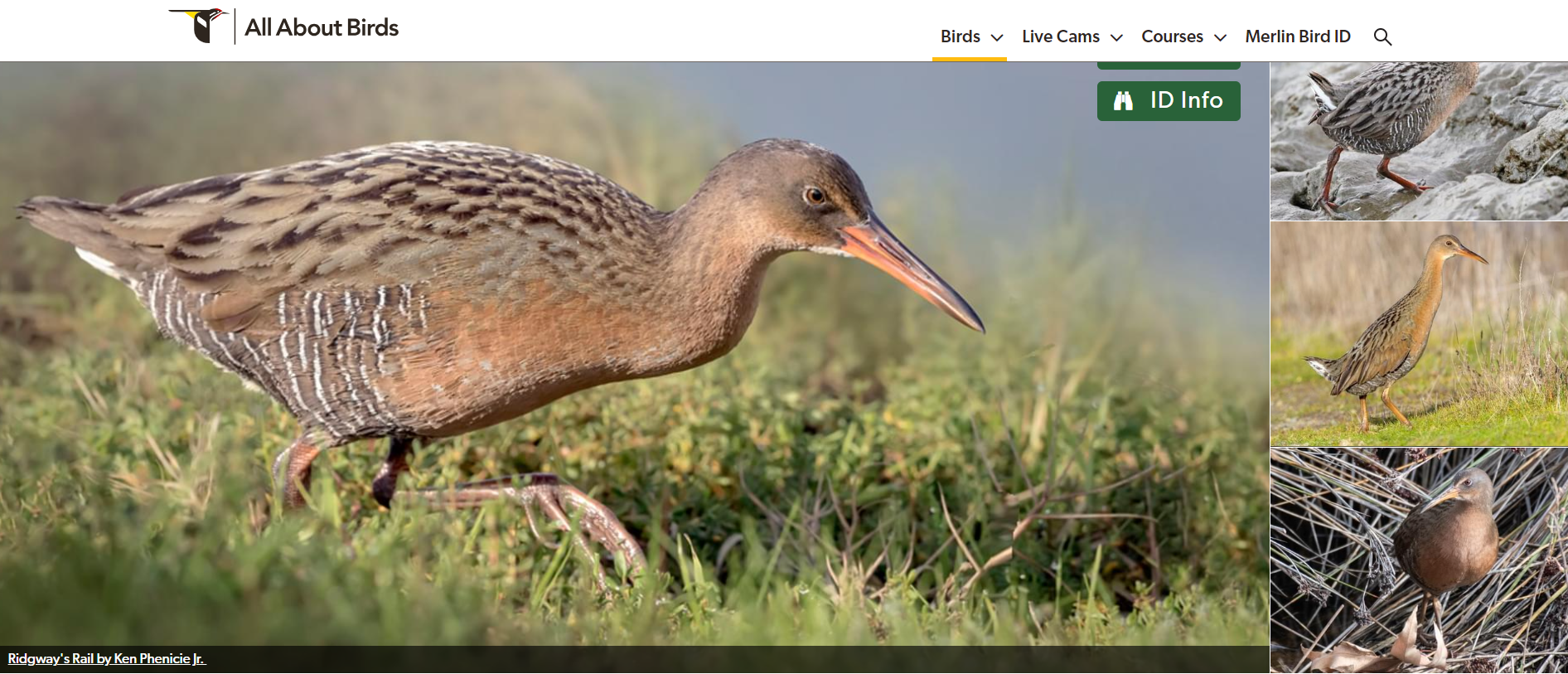
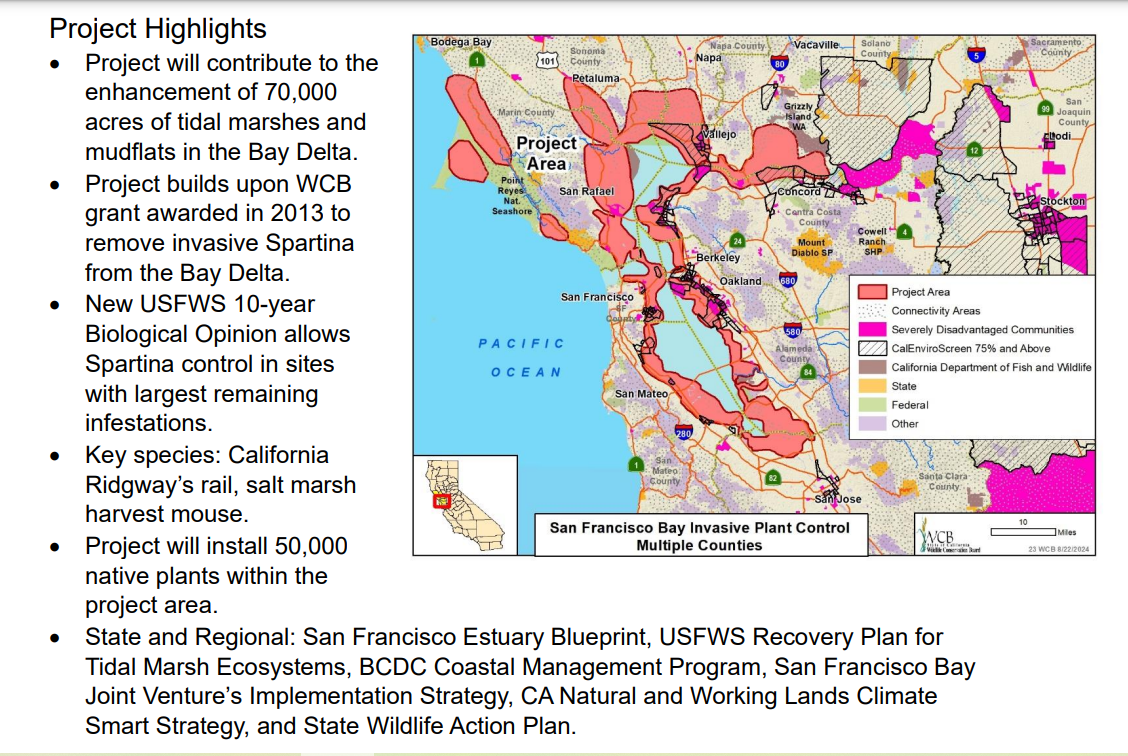
Over 20 years ago the governors of California, Oregon, and Washington made a commitment to eradicate non-native spartina marsh grass on the entire West Coast.  Intensive aerial spraying of herbicide killed more than 95% of non-native spartina over 10 years ago, but the project continues in the San Francisco Bay.  The project killed 600 endangered Ridgway rails, because non-native spartina was denser and did not die back in winter.  The goal is now the eradication of hybrid spartina that grows at the same marsh elevations as native spartina and is so visually similar that it requires 500 genetic tests every year to determine that it is a hybrid before it is sprayed with herbicide. Funding for the project was recently renewed.  Source:  https://milliontrees.me/2021/10/15/spartina-eradication-is-now-a-zombie-project/

I watched a video of Jabr presenting his book at Yale Law School.  When he gave the same talk at a Bioneers Conference at UC Berkeley in March, I asked to speak with him there. It became clear he wouldn’t speak with me. He implied I lacked the required “credentials.”  I changed tactics.

Bringing the Mountain to Mohammed

I asked a collaborator with unimpeachable credentials — a horticultural professional and university instructor — to reach out to Jabr. She did, but he did not interview her.

I also recruited an academic botanist to write a guest post for my website about data manipulation he’d found in one of Tallamy’s studies, manipulation that effectively hid the many contributions non-native plants make to lepidoptera (butterflies and moths). Nathan Lambstrom is a busy university lecturer and designer of ecological gardens, but he wrote the piece, published here. Jabr interviewed Lambstrom after that article ran, but didn’t quote him, nor did he mention the data manipulation underlying Tallamy’s ideology in his article.

Where Does Jabr Land?

Jabr’s article centers on Tallamy’s thirty-year transformation of his 10-acre Pennsylvania farm into a native garden. To his credit, Jabr offers some mild qualifiers to Tallamy’s version of nativism:

  • Despite applying herbicides, Tallamy was unable to eliminate all introduced species: multiflora rose still forms a few thickets, and Japanese stiltgrass carpets the forest floor. As a witness to such attempts to eradicate non-native plants on public land, I can confirm that they are rarely successful.
Coyote in Oxalis pes-caprae in a San Francisco public park. Herbicides have been used on Oxalis pes-caprae in San Francisco’s parks for over 25 years. Over 20% of all herbicide spraying by the Natural Resources Division (NRD) of the Recreation and Park Department was applied to kill oxalis in “natural areas” in 2022. NRD sprayed oxalis 35 times in 2021 and 38 times in 2022. Bees love oxalis.  Oxalis pes-caprae is native to South Africa, but there are 4 species of oxalis native to Northern California.  Source:  https://milliontrees.me/2023/02/28/the-oxalis-obsession/
  • Tallamy concedes that “on average just 14% of the natives in a given region feed more than 90% of local butterflies and moths.” That’s a striking admission: it means a small set of keystone natives is doing nearly all the ecological work, while the remaining 86% of native species contribute comparatively little. That’s hard to square with the blanket claim that gardeners must plant natives indiscriminately.  The data suggest that keystone status, not native origin itself, is what matters.
  • Jabr takes issue with some of Tallamy’s “grandiose claims” and notes that “polarized attitudes toward native and introduced species” are controversial. He says that “introduced species have few noticeable effects or provide ecological benefits” and names a few examples.
  • He quotes Professor Emeritus Art Shapiro as saying that more than 30% of California’s butterfly species use introduced plants as hosts for their larvae, because those plants have leaf chemistry similar to their native hosts, and that “some North American butterflies have even expanded their geographic ranges and reproductive seasons by adapting to foreign plants.”
  • Jabr also quotes Professor Emily Meineke (UC Davis) about a project seeking the most suitable street trees from warmer regions to tolerate the warming, drier climate in Davis, California.
  • Jabr acknowledges that “all life is equally Earthly” because all “extant species are branches of a single ancient trunk.” That’s the fundamental truth missing from Tallamy’s ideology: all life on Earth is related. Jabr also advises ecologically minded gardeners to focus on what plants do rather than where they’re from.

Ultimately, Jabr lands firmly in Tallamy’s camp. His concluding paragraphs describe how, after visiting Tallamy, he began replacing introduced plants in his own garden with natives and he believes the swap has brought more wildlife to his yard.

An Alternative Perspective

Two days after the Times published Jabr’s article, Garden Rant published a piece by Nathan Lambstrom, the same academic botanist who reported data manipulation in a Tallamy study. “The War on Invasive Species” offers a contrasting view of nativist purism.  It is grounded in extensive, cited documentation and provides numerous examples of non-native plants’ contributions to wildlife. It also documents the harmful consequences — especially from herbicide use — of attempts to eradicate non-native plants.

Lambstrom concludes, in his usual even-handed way: “I do not dispute that invasive plants and animals, especially predators, are associated with ecological change, sometimes quite significant. Though we often must intervene to mitigate that change, my hope is that we can move past a dichotomous framing of natives versus non-natives and invasives, and move towards recognizing ecological value wherever it occurs, responding carefully and appropriately while our ecosystems adapt to the presence of these new residents. I believe this is the soundest and only realistic way forward.”

Jabr interviewed Lambstrom for his Times article, but didn’t quote him or mention the data manipulation in Tallamy’s study. Times readers were denied the chance to learn more about a genuinely controversial issue.

Public Reaction

Comments on Jabr’s article are overwhelmingly favorable.  Most are from gardeners thrilled with the results of replacing their lawns with native plants. It stands to reason that more plants bring more life to a garden.  It’s less obvious that a purely native garden brings more life than a diverse garden that prolongs blooming and provides a bigger menu for wildlife. Native vegetation looks dead during our long California summer dry season.  A few all-native gardens in my neighborhood look more like vacant lots than intentional gardens from May to November.  Many of my neighbors have made a transition to drought and heat tolerant succulents and cactus, not native to our region. 

Many commenters are angry about Jabr’s few mild misgivings about Tallamy’s version of nativism. Their comments display the kind of bullying that less purist gardeners find intimidating.

What’s Missing

Here’s what I think is missing from Jabr’s article.  I offer what I believe are the strongest arguments against Tallamy’s version of nativism in the natural world.

Global warming is a far greater threat to life on Earth than any single plant species, native or not. All plants — native and non-native alike — remove carbon dioxide from the atmosphere, store carbon in the soil, and emit oxygen. Tallamy’s ideology encourages gardeners, and the public land managers who’ve adopted his approach, to eradicate non-native plants in favor of natives. But public land managers rarely have the resources to replace what they remove, and eradication on public land is typically done with herbicides. Herbicides kill the fungi and microbes in the soil that facilitate carbon storage and plant growth. In that sense, Tallamy’s ideology, as currently practiced on public land, contributes to the very climate change that threatens plant and animal life with extinction.

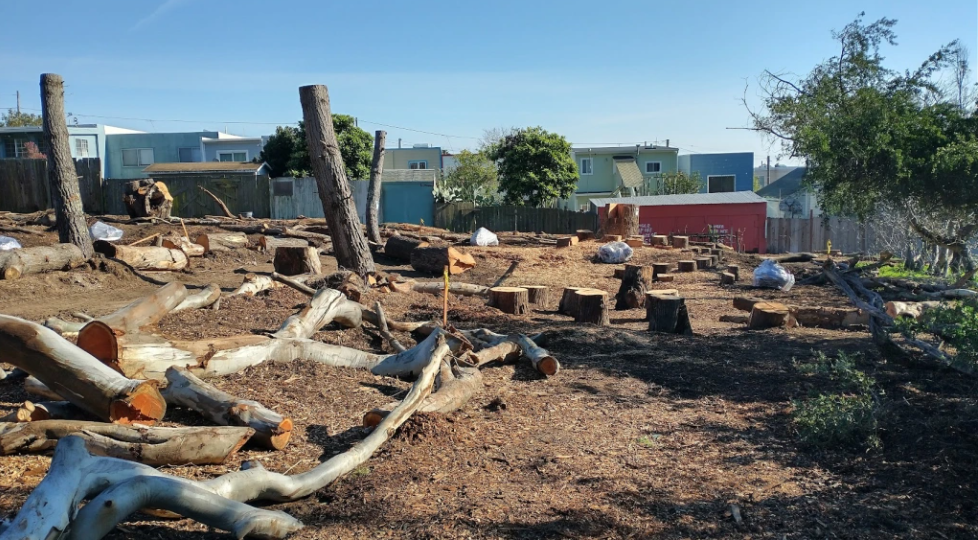
This is one of many tree graveyards in San Francisco’s public parks.  Nearly 30 years ago, San Francisco’s park department designated one-third of their parkland as “natural areas,” about 1,100 acres.  Because pre-settlement San Francisco was mostly treeless, the creation of the so-called Natural Areas Program obligated San Francisco to destroy much of its urban forest, which is predominantly non-native.  In the case shown, the trees were mostly Monterey pines, which are native in Monterey, California, less than 150 miles away.  There is also fossil evidence that Monterey pines lived in the San Francisco Bay Area in the distant past.  Source: https://milliontrees.me/2022/08/01/creating-tree-graveyards-in-san-francisco/

I encourage home gardeners to plant whatever they want. If they prefer an exclusively native garden, that’s their prerogative. The native plant movement becomes controversial only when it drives destructive eradication projects on public land — parks, in particular — that rely on herbicides because herbicides require less labor and cost less. Such projects expose the public to toxic chemicals and damage the soil by killing beneficial fungi and microbes. Non-selective herbicides such as RoundUp are as likely to kill natives as non-natives.

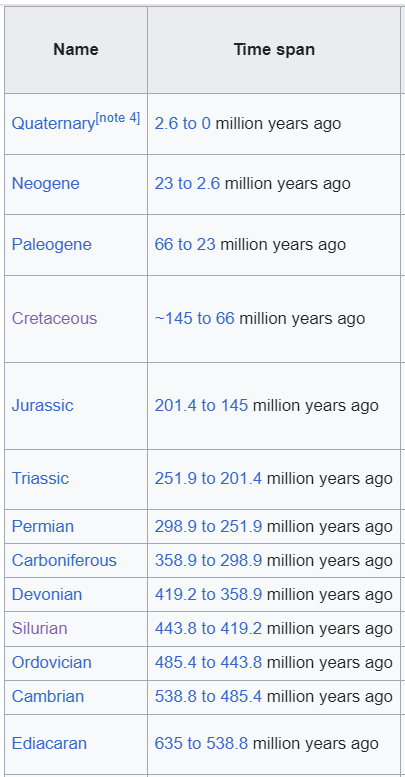
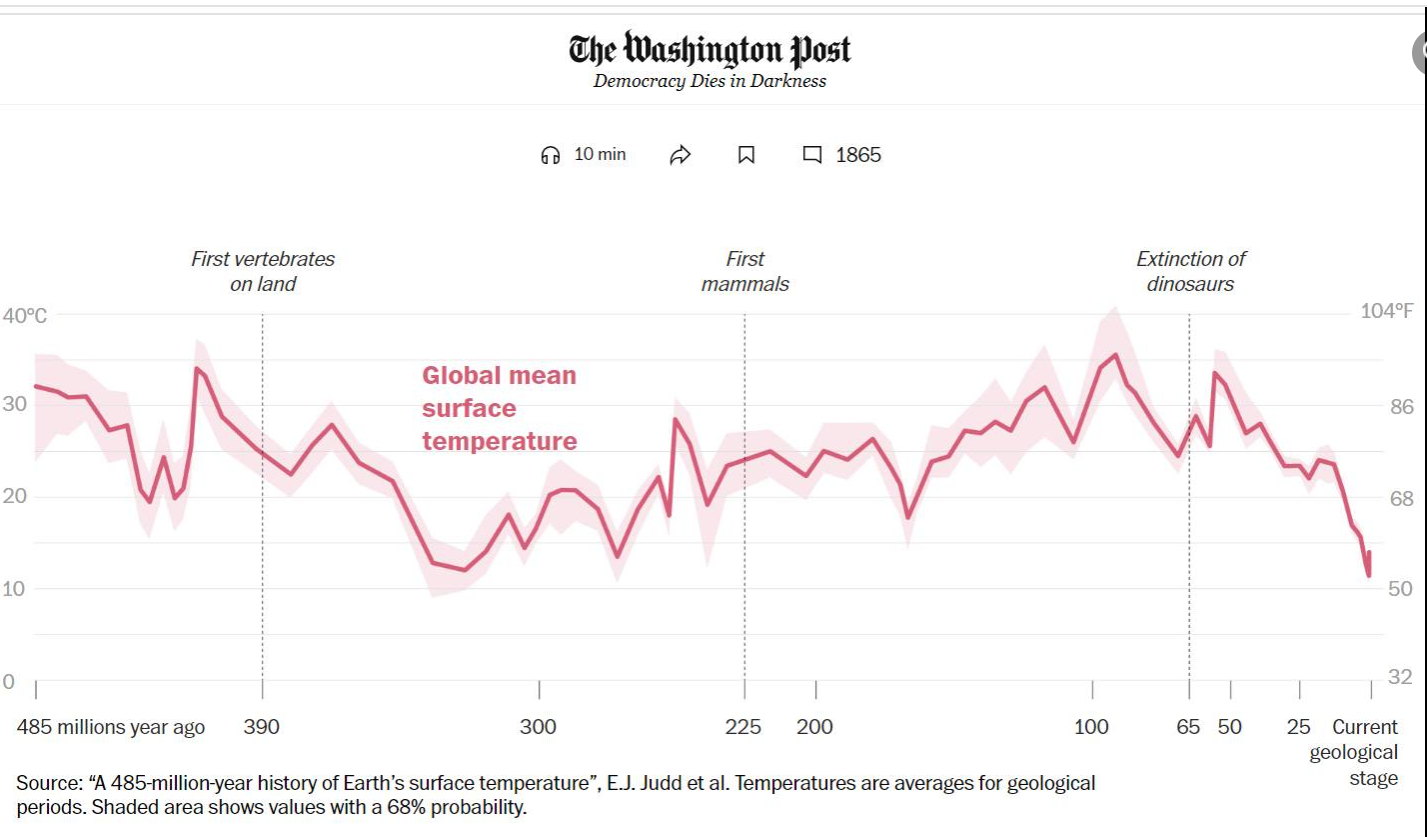
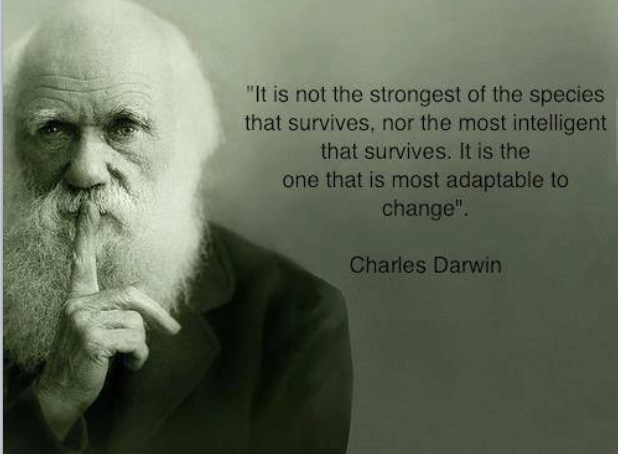
“Nature’s Best Hope” is evolution, not native plants. For roughly 3.5 billion years — since not long after Earth itself formed, 4.6 billion years ago — life has survived by evolving adaptations to changing climate and environmental conditions, including cataclysmic events like the asteroid that struck Earth 66 million years ago, wiping out the dinosaurs and accelerating the evolution of mammals. It is not the strongest or most intelligent species that survives, but the one most able to adapt to change. Ninety-eight percent of all plant and animal species that have ever existed on Earth have gone extinct as the Earth continuously changes. What exists here now is adapted to present conditions that are now undergoing rapid, accelerating change.

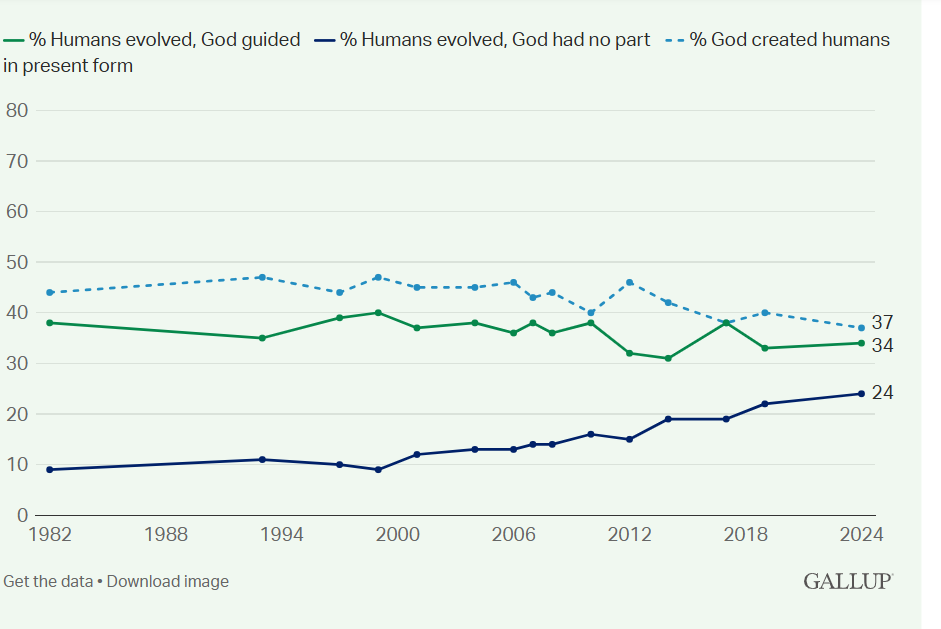
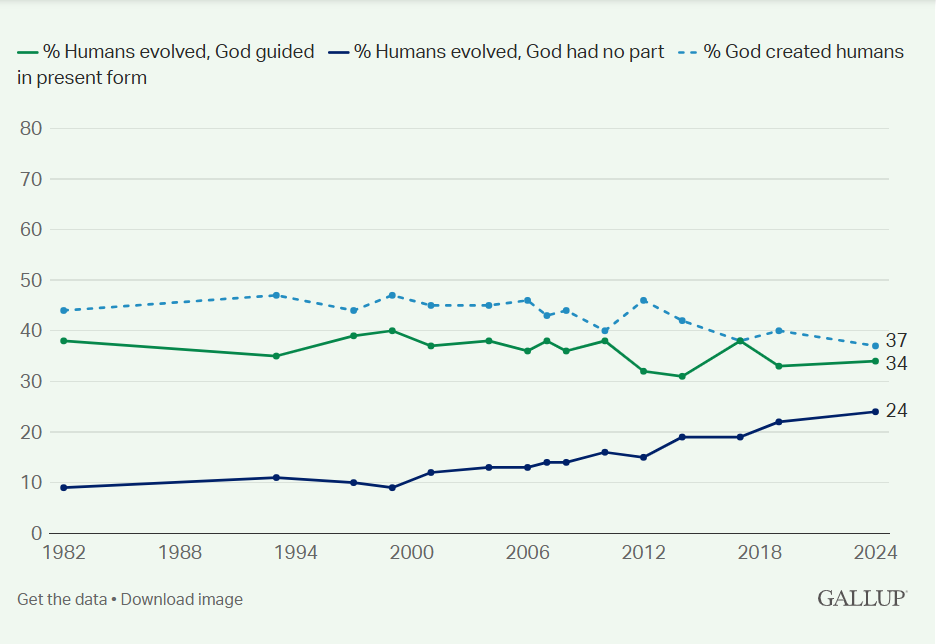
In a rapidly changing climate, it’s unlikely that plants native to pre-European, pre-industrial North America 500 years ago are best adapted to current conditions. That fiction is sustained by American ignorance of evolution. In 2024, a Gallup poll found that only 24% of Americans believe humans evolved without God’s involvement, a share that has risen steadily since 2000. Thirty-seven percent of the public still believes that God created humans in their present form. That ignorance of evolution also obscures how closely related plants are: entire plant families, most containing both native and non-native species, share similar chemistry, enabling insects to use both natives and non-natives within the same family.

Humans cannot stop evolution, nor should we try. Doug Tallamy has won this round. The ultimate victor will be climate change, because we’ve decided to do nothing about it.  Unless we get a grip on climate change, it’s senseless to quibble about native plants. 


(1) “I Wanted an Ecologically Responsible Garden. It Was Harder Than I Thought,” Ferris Jabr, New York Times Magazine, July 7, 2026

Luther Burbank: The Plant Inventor

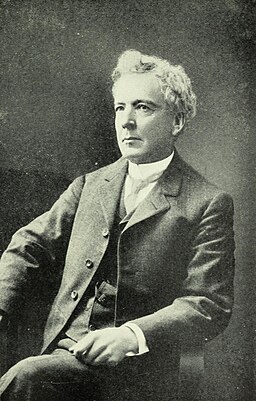
Luther Burbank was born in Massachusetts in 1849, the 13th of 15 children.  As a child, he had an interest in nature.  With an inheritance from his father, who died when Burbank was 18 years old, he purchased a 17-acre farm in Massachusetts. 

Luther Burbank, ca. 1915

Burbank bought his small farm intending to be a market farmer, selling seasonal fruits and vegetables.  He was handicapped by challenging climate and growing conditions and competition from other market farmers with a head start.  He could see that he would have to produce the best produce and offer it before his competitors could, which pushed him down the path of improving the plants he grew.

Burbank’s methods for improving plants

Burbank found his inspiration as a breeder of improved plants in his local library where he found the writings of Charles Darwin.  He could see that the concept of natural selection described by Darwin, applied equally to breeding plants.  He wrote, “It opened a new world to me.  It told me, in plain simple sentences, as matter-of-fact as though its marvelous and startling truths were commonplace that variations seemed to be susceptible, through selection, of permanent fixture in the individual…I doubt if it is possible to make anyone realize what this book meant me.” (1)

Burbank quickly put his new understanding of selection to use as a means to improve the food crops he grew.  He developed the Burbank potato that is known today as the Burbank russet potato.  He found a seed ball on his potato plants containing 23 seeds.  He grew the seeds, selecting the plants that produced the best potatoes in successive crops until he had a potato with smooth skin and few eyes that tasted good and stored well. It was also mildly resistant to the blight that caused the potato famine in Ireland, which killed one million people and caused a mass exodus from Ireland.

He understood that he had created a valuable commodity, but he couldn’t see how he could profit from it because he couldn’t produce it at scale on his small property and he didn’t have the commercial infrastructure to market it widely.  At the time, it wasn’t possible to patent new plant varieties, so he sold his new variety to an established seed merchant for $150. It was a paltry sum, even at the time, but it was the beginning of a business model that financed most of Burbank’s career as a plant inventor. 

Charles Darwin also introduced Burbank to another method of improving plants in his publication, “The Effects of Cross and Self-Fertilization in the Vegetable Kingdom.”  Burbank described how Darwin led him to the realization that hybridization is another means of improving the quality and performance of plants:  “One sentence in the very introductory chapter of that volume opened the door of my mind and took possession of my fancy.  After discussing briefly the marvel of cross- and self-fertilization in plants, Darwin said: ‘As plants are adapted by such diversified and effective means for cross-fertilization, it might have inferred from this fact alone that they derive some great advantage from the process; and it is the object of the present work to show the nature and importance of the benefits thus derived [from hybridization].’” (1)

Darwin identified natural selection and hybridization as tools of evolution that produced plants and animals best adapted to current environmental conditions.  When environmental conditions changed, as they have constantly over 4.6 billion years of the Earth’s existence, natural selection and hybridization enabled the survival of plants and animals best adapted to changed conditions. Using the same methods, but different criteria, Burbank bred the plants that conformed to the needs of humans:  the most flavorful fruit, sturdy enough to be transported from fields to tables and the most beautiful flowers, in the opinion of humans.  Burbank directed and accelerated evolution to serve humans, using the tools of natural evolution. 

Grafting the branches of one type of fruit onto the root stock of another species of tree was the third method Burbank used to create new plants.  Most orchard fruit is grown from grafting because growing fruit trees from seeds is unpredictable.  The seeds of a flavorful apple, don’t necessarily grow into a tree that produces an equally flavorful apple.  It takes years for some fruit trees to produce fruit, which can ultimately produce disappointing fruit.  Grafting is a means of reducing risk and accelerating production.

California’s Bounty

After years of economic hardship, Burbank moved to California in 1875 at the age of 26 to join his brothers.  Instantly, he was an enthusiastic promoter of the ideal climate and growing conditions of his new home in Santa Rosa. He bought 4 acres of land where he built a greenhouse, nursery, and experimental fields.  Later, he bought an 18-acre plot of land in nearby Sebastopol he called the Gold Ridge Farm, where his experiments expanded.

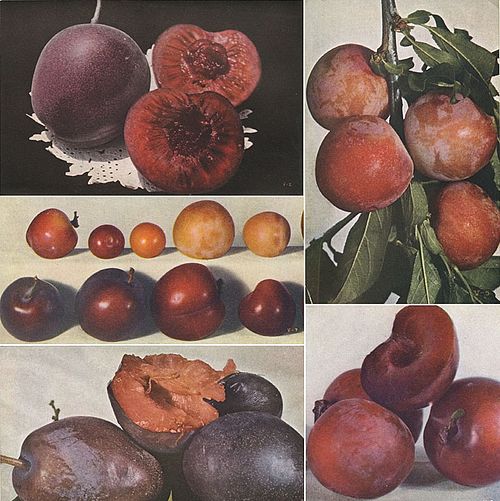
In California, Burbank had the climate and the acreage needed to run many experiments on fruit and nut trees as well as vegetables and flowers simultaneously.  Each experiment required planting thousands of individual plants, grown through many generations.  These experiments produced hundreds of varieties of many species of plants:

Fruits
113 plums and prunes
69 nuts
35 fruiting cactus
16 blackberries
13 raspberries
11 quinces
11 plumcots
10 cherries
10 strawberries
10 apples
8 peaches
6 chestnuts
5 nectarines
4 grapes
4 pears
3 walnuts
2 figs
1 almond
Grains, grasses, forage
9 types
Vegetables
26 types
Ornamentals
91 types
Source:  Wikipedia

Cross between Burbank and Satsuma plums

Finding His Tribe:  Scientist or Businessman?

By the turn of the century, Burbank had made his reputation as the creator of new plant varieties.  He captured the attention of scientists who wanted to adopt him into their community, learn his methods, and teach them to their students:  “The San Francisco Chronicle advocates the seizing of Luther Burbank at his home in Santa Rosa and placing him in a chair at Stanford University….The main thing is to get the recluse away from his practical experiments long enough to tell people what he has done.”  Los Angeles Times, June 7, 1901.

Burbank was invited to give a series of lectures at Stanford University at a time when botanical scientists were newly influenced by the discovery of the role of genetics in producing individual variations in plants and animals. Gregor Mendel’s studies of genetic variation done in the 1860s was buried in the archives of Mendel’s local botanical society until 1900, when they were rediscovered.

Burbank’s audience at Stanford was expecting his lecture to reflect the mechanistic determinism of Mendelian genetics.  Instead, they got a dose of Burbank’s almost mystical view of the workings of nature “…as an intricate web of vibrations and magnetic forces where ‘all motion, all life, all force, all so-called matter are following the same law of heredity found in plants and animals, a forward movement toward attraction through lines of least resistance.’” (1)

Today, our understanding of genetics is more nuanced than it was over one hundred years ago and it is more consistent with Burbank’s observations.  With the help of molecular analysis, we now know that there are hundreds of unexpressed genes that are latent unless triggered in response to specific growing conditions as well as random mutations.  Burbank’s view of variation in nature was based on close, persistent observation and his own subjective intuition, based on decades of experience.

The Carnegie Institute of Technology tried to bridge this gap between science and Burbank’s art of creating new plant varieties by giving him a generous grant of $10,000 per year on the condition that a botanical scientist would trail Burbank in the field and turn his art into a data-driven algorithm capable of replicating Burbank’s accomplishments. 

The scientist assigned to that task was immediately frustrated by the haphazard jumble of Burbank’s sketchy record-keeping.  Watching Burbank in the field was equally frustrating.  Burbank couldn’t translate the choices he made into words because his judgment was intuitive.  Finally, The Carnegie Institute lost patience with the project and terminated the grant.

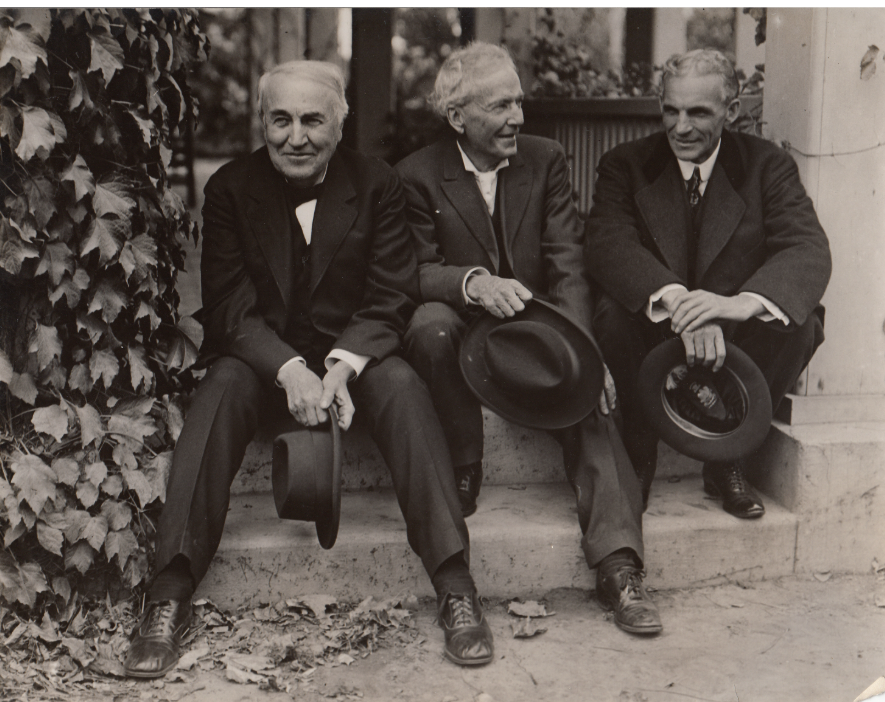
Henry Ford and Thomas Edison came to visit Luther Burbank in 1915 after their visit to the Panama-Pacific Exposition in San Francisco.  It was a meeting of the minds and kindred spirits. They were businessmen whose commercial success was based on tireless effort, continuous incremental improvement, and practical invention. They were Burbank’s tribe, who became fast friends for the rest of their lives. 

Thomas Edison, Luther Burbank, Henry Ford.  Santa Rosa, 1915

Burbank Defends Evolution

It took Charles Darwin nearly 20 years to publish his treatise on evolution, On the Origin of Species, partly because he knew it challenged some of the basic premises of organized religion to which his family was committed.  The evidence that life on Earth evolved over millions of years directly contradicted the religious belief that God created all life on Earth, as it presently exists, only 6,000 years ago.  Evolution is also inconsistent with the religious belief that humans are chosen by God to rule the world and that all other creatures are subservient to our command. 

In fact, pushback to the concept of evolution was minimal in the 19th century after Origin of Species was published in 1859.  Full-throated opposition to evolution emerged in the 20th century and is epitomized by the Scopes trial that occurred in 1925, just one year before Burbank’s death. 

The Scopes trial occurred because the state of Tennessee banned the teaching of evolution in public schools. The ACLU persuaded a high school teacher, John Scopes, to test the law.  Two of the greatest orators of the time, stepped forward to try this important case.  Clarence Darrow, defended Scopes for the ACLU.  William Jennings Bryon was the prosecutor for the state of Tennessee. 

Both Darrow and Bryon asked Luther Burbank to appear as a witness at the trial, which was an indication that the public was confused about Burbank’s close relationship with the natural world.  Much to the disappointment of William Jennings Bryon, who considered himself a personal friend of Burbank’s, Burbank came down unequivocally in support of the teaching evolution.

In a letter submitted as evidence in the trial, Burbank said, “Those who would legislate against the teaching of evolution should also legislate against the teaching of gravity, electricity, and the unreasonable velocity of light, and also introduce a clause to prevent the use of the telescope, the microscope…or any other instrument of precision which in the future may be invented…for the discovery of truth.” (1)

Despite Burbank’s effort, Scopes was found guilty and the ban on teaching evolution in Tennessee remained in effect until 1967.  In 2024, the Gallup Poll reported that only 24% of Americans believe in evolution unguided by God, a percentage that has increased steadily since 2000.  The dominate view—at 37%–is that humans were created by God in their present form:

In a series of interviews with the news media, Burbank expressed his doubts about the afterlife and his admiration and kinship with Christ as a man rather than a deity:  “[Christ] was an infidel of his day because he railed against the prevailing religions and his government.  I am a lover of Christ as a man, and his work and all things that help humanity, but nevertheless just as he was an infidel then, I am an infidel today.” (1)

Burbank’s Last Success

By any measure, Burbank must be considered a success.  Although he managed to make a living, he was not wealthy because his plant inventions could not be patented.  Without patent protection, profits were realized by seed merchants, nurseries, and agricultural operations. 

Burbank made many appeals to the US Patent Office for patent protection.  His appeals sounded desperate and angry about the unfairness that often threatened him with economic ruin.  His death in 1926 at the age of 77 sparked another campaign by other plant breeders to extend patent law to the development of new plant varieties. 

The effort to extend patent law to plants was boosted by the Great Depression, which began in 1929.  Farmers are always in debt as they must borrow money to plant their next crop.  When commodity prices collapsed during the depression, many farmers lost their farms. 

The proposal to extend patent law to plant “inventions” was perceived by many politicians as a way to help farmers, although the logic of that connection is questionable because patented seeds are likely to be more expensive.  Despite that concern, the Plant Patent Act was passed with little opposition in 1930.  There were many limitations on the first patent law, many of which have since been revised.

Sixteen of Burbank’s creations received patents, a small fraction of the plants being developed at the time of Burbank’s death.

We can still learn from Luther Burbank

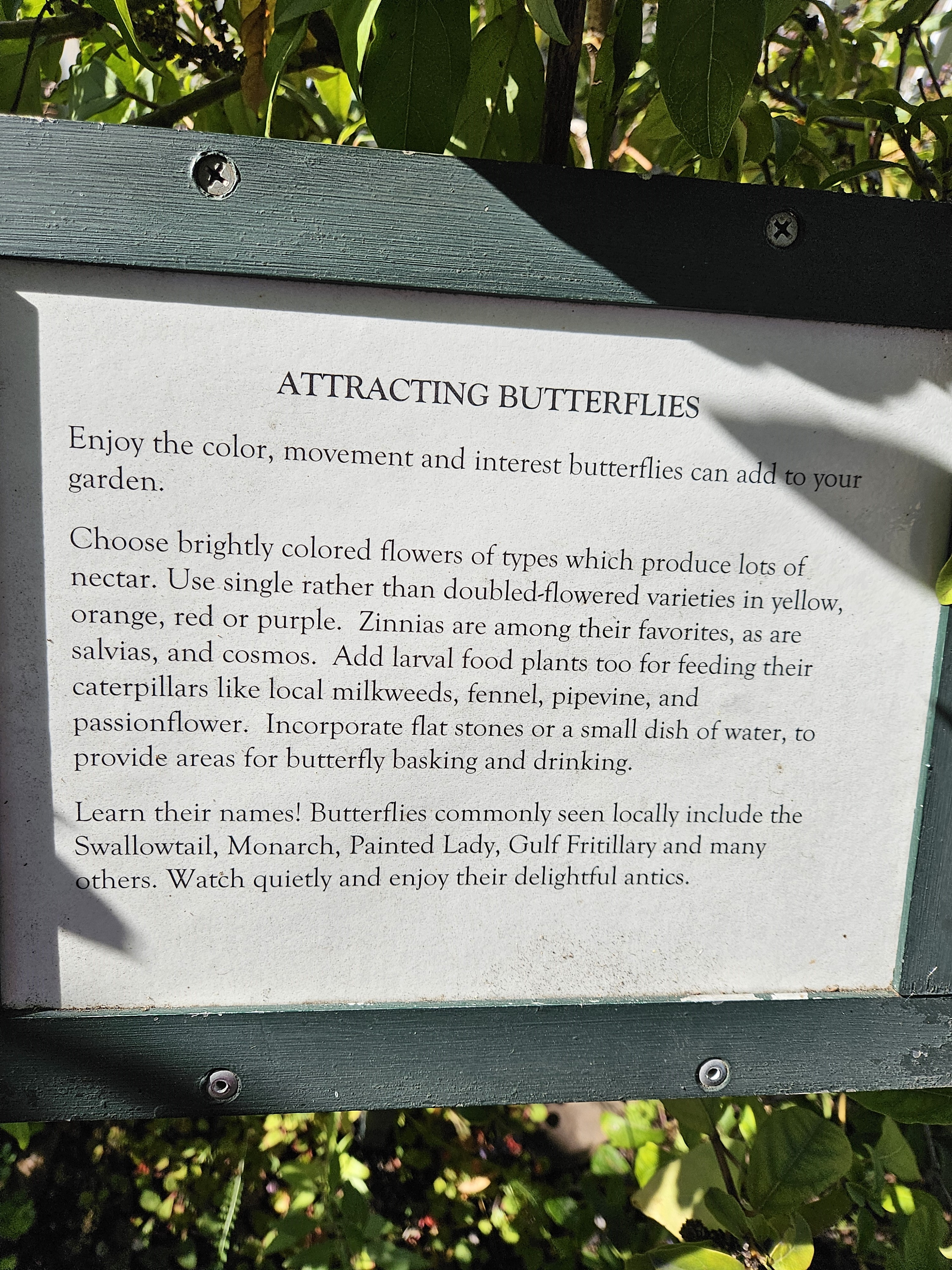
I encourage readers to visit Luther Burbank’s home and garden in Santa Rosa, which is now a free public park, and the museum that is open during summer months.  You will find many informational signs throughout the garden about Burbank’s inventions.  You won’t find any hint of a nativist bias in the signs.  This sign about creating a garden for butterflies makes it clear that these lovely creatures have no preference for native plants:

Luther Burbank Garden, Santa Rosa, CA. 2025

(1) The Garden of Invention:  Luther Burbank and the Business of Breeding Plants, Jane S. Smith, Penguin Books, 2009

California’s Wildlife Conservation Board needs to hear from you!

Although I have stopped writing original articles for Conservation Sense and Nonsense, I am still actively engaged in local environmental issues.  When there are opportunities to influence public policies that affect the environment, I often participate. 

Today, I am sharing my public comment on the update of the strategic plan of California’s Wildlife Conservation Board (WCB) in the hope that it might inspire you to write your own comment on the draft plan, which is available HEREThe deadline for submitting comments is May 16, 2025.  Comments may be sent to this email address:  wcb@wildlife.ca.gov

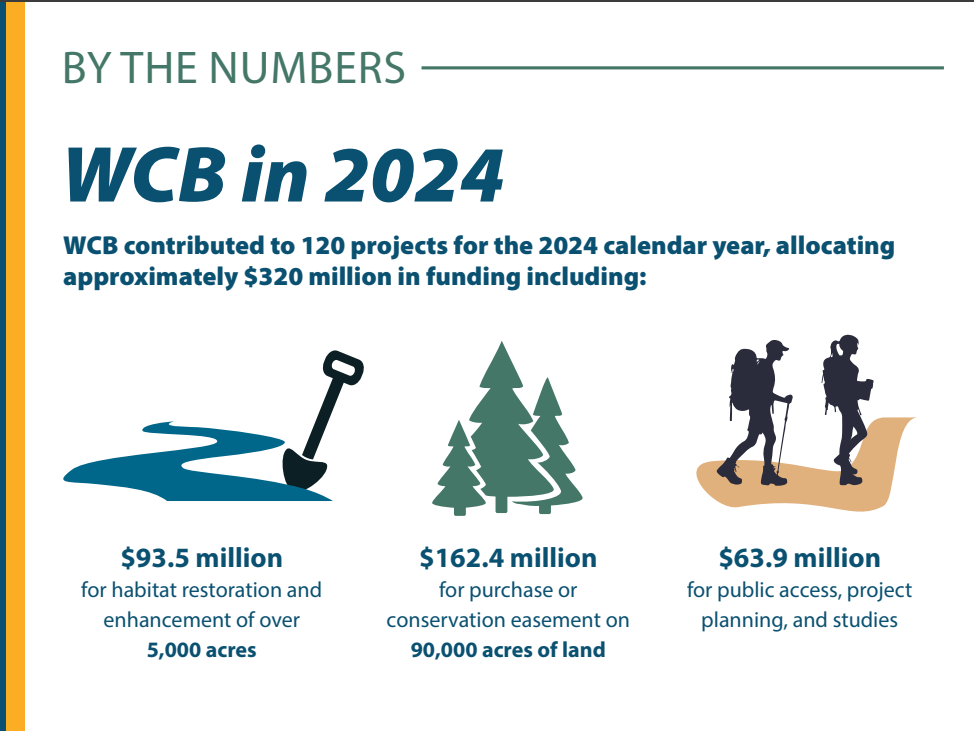
The mission of the Wildlife Conservation Board is to “protect, restore and enhance California’s spectacular natural resources for wildlife and for the public’s use and enjoyment…”  In service of that mission, WCB awards grants of millions of dollars every year for “restoration” projects.  According to WCB’s annual report for 2024, WCB awarded $93.5 million for “habitat restoration and enhancement of 5,000 acres” of land in California in 2024.

Source: “WCB 2024 Year in Review”

Over the life of the updated strategic plan, from 2025 to 2030, the Wildlife Conservation Board will distribute grants of $1.02 billion ($204 million per year) from funding made available by Proposition 4, the $10 billion “California Climate Bond,” which was approved by voters in November 2024.   Because most federal funding of climate and ecological restoration has been cancelled by the Trump administration (and being litigated, as we speak), the “California Climate Bond” will be one of the few sources of funding for these projects. 

This is my public comment on the strategic plan update for California’s Wildlife Conservation Board:


WCB Strategic Plan Update

Thank you for this opportunity to comment on the draft of WCB’s update of its strategic plan (SP).  I am writing to suggest that WCB consider the addition of a few over-arching principles that would apply to all of its programs.  These principles would enhance the plan’s stated goals of climate resilience and biodiversity protection by ensuring projects are evaluated based on their actual ecological outcomes rather than adherence to historical conditions.

  • All projects funded by WCB should be more constructive than they are destructive.  For example, a project that proposes to destroy more habitat than it creates should be less competitive than a project that will create more habitat than it destroys. A project that reduces carbon storage by destroying vegetation does not “reduce and remove carbon pollution,” as the SP proposes.
  • Projects that do not propose to use pesticides to destroy habitat should be more competitive than those that use pesticides because pesticides damage the soil and are harmful to wildlife and human life.   The success of projects is jeopardized by pesticide use.
  • Projects that apply for additional funding for a continuing project must address the fundamental question of the viability of the project.  In other words, if a project has been funded for 20 years, WCB should consider if the goals of the project are still realistic in a rapidly changing climate and environment (e.g., Invasive Spartina Project).
  • Projects should be consistent with the basic principles of science, such as:
    • The scientific definition of biodiversity includes both native and non-native plants and animals.
    • Hybridization is one of the tools of evolution that enables adaptation and speciation in response to changes in the climate and the environment.
    • The flammability of vegetation varies, but the variation is unrelated to the nativity of the plant.  Native plants are not inherently less flammable than non-native species.
    • The native ranges of California’s native plants have changed in response to the changing climate and they must continue to change if they are to survive.
    • Our changing environment dictates that historical landscapes cannot be replicated.  Humans cannot stop evolution, nor should we try.

I recommend that the WCB consider incorporating these principles into its project evaluation criteria to ensure that funded projects align with current ecological knowledge and maximize benefits for California’s biodiversity in a changing climate. Incorporating these principles into the SP would strengthen the plan’s objectives related to climate resilience (C2.1, C2.2), biodiversity protection (B1.1, B2.1), and program evaluation (D2.1, D2.2).

In support of these principles, I offer the following scientific studies for your consideration:

On pesticides damaging soil and harming wildlife and human health

  • Wan et al. (2025):  Pesticides affect a diverse range of non-target species and may be linked to global biodiversity loss. This study presents a synthesis of pesticide (insecticide, herbicide and fungicide) impacts on multiple non-target organisms across trophic levels based on 20,212 effect sizes from 1,705 studies. For non-target plants, animals (invertebrate and vertebrates) and microorganisms (bacteria and fungi), we show negative responses of the growth, reproduction, behavior and other physiological biomarkers within terrestrial and aquatic systems. Negative effects were more pronounced in temperate than tropical regions but were consistent between aquatic and terrestrial environments.  Results question the sustainability of current pesticide use and support the need for enhanced risk assessments to reduce risks to biodiversity and ecosystems.
  • Klein et al. (2024):  New Roundup formulations are 45 times more toxic to human health,on average, following long-term, chronic exposures. The study identified eight Roundup products in which Bayer has replaced glyphosate with combinations of four different chemicals: diquat dibromide, fluazifop-P-butyl, triclopyr, and imazapic. All four chemicals pose greater risk of long-term and/or reproductive health problems than glyphosate, based on the EPA’s evaluation of safety studies. Diquat dibromide and imazapic are banned in the EU. Diquat dibromide – present in all the new formulations – is 200 times more toxic than glyphosate in terms of chronic exposure and is classified as a highly hazardous pesticide.  New Roundup formulations pose significantly more harm to the environment. The chemicals replacing glyphosate in Roundup are significantly more likely to harm bees, birds, fish, earthworms, and aquatic organisms, on average. They are also significantly more persistent in the environment and more likely to leach down into groundwater, increasing the risk of contaminating waterways and drinking water.

On biodiversity including non-native species:

  • Schlaepfer et al. (2011): This pivotal paper challenges the automatic negative classification of non-native species by documenting their potential conservation benefits. The authors present evidence that some non-native species provide ecosystem services, habitat, and resources for native species, particularly in human-modified landscapes where native species may struggle. They advocate for conservation approaches that evaluate species based on their ecological functions rather than origin alone.
  • Mascaro et al. (2012): This study examines novel forests in Puerto Rico dominated by the non-native Castilla elastica tree. The research demonstrates that these novel ecosystems maintain key ecological processes such as productivity, nutrient cycling, and carbon storage at levels comparable to native forests. The findings suggest that novel ecosystems composed of non-native species can maintain essential ecosystem functions even after native tree species decline.

On hybridization as an adaptive mechanism:

  • Hamilton & Miller (2016): This paper reframes hybridization as a potential adaptive resource rather than a conservation threat. The authors present evidence that hybridization can introduce genetic variation that helps species adapt to changing environmental conditions, particularly relevant in the context of climate change. They suggest that conservation strategies should sometimes protect hybrid zones as sources of evolutionary potential rather than trying to eliminate them.
  • Fitzpatrick et al. (2015): This study examines how hybridization challenges traditional conservation approaches based on species preservation. The authors argue that hybridization is a natural evolutionary process that can generate biodiversity and adaptive potential. They present a framework for evaluating conservation value that considers genetic, ecological, and evolutionary factors rather than focusing solely on taxonomic “purity.”

On flammability unrelated to nativity:

  • Zouhar et al. (2008): This comprehensive technical report examines relationships between non-native plants and fire regimes. While acknowledging that some non-native plants can alter fire behavior, the report emphasizes that flammability is determined by plant structure, chemistry, and arrangement rather than nativity status. It provides detailed case studies showing both native and non-native plants can increase or decrease fire risk depending on specific traits.
  • Pausas & Keeley (2014): This study documents abrupt changes in fire regimes that occur independently of climate changes. The authors demonstrate that shifts in vegetation structure and fuel characteristics—which can be caused by both native and non-native species—are often more important determinants of fire behavior than plant origin. The research challenges simplistic assumptions about the relationship between native plants and fire resilience.

On changing native ranges:

  • Pecl et al. (2017): This influential paper documents how species are naturally shifting their ranges in response to climate change. The authors present global evidence of species redistributions across latitudinal, longitudinal, and elevational gradients. The study emphasizes that these range shifts are necessary adaptations to changing conditions and argues that conservation strategies need to accommodate these natural movements rather than trying to maintain historical distributions.
  • Bonebrake et al. (2018): This paper synthesizes research on climate-driven species redistribution and its implications for conservation. The authors highlight how traditional conservation approaches focused on preserving species in their historical ranges are becoming increasingly unviable under climate change. They advocate for more dynamic approaches that facilitate range shifts and species movements as adaptive responses to changing conditions.

On novel ecosystems and historical conditions:

  • Hobbs et al. (2014): This seminal paper introduces a framework for categorizing landscapes as historical, hybrid, or novel ecosystems. The authors argue that many ecosystems have been irreversibly altered by human influences and climate change, making restoration to historical conditions impossible in many cases. They advocate for pragmatic management approaches that focus on ecosystem functions and services rather than historical composition.
  • Stralberg et al. (2020): This study examines climate refugia in North America’s boreal forests. The research demonstrates that even supposedly pristine ecosystems will undergo significant changes due to climate change, with some areas serving as temporary refugia. The authors emphasize that conservation strategies need to recognize the transient nature of these refugia and plan for ongoing ecological transitions rather than static preservation.

In Conclusion

As you know, the mission of the Wildlife Conservation Board is to “protect, restore and enhance California’s spectacular natural resources for wildlife and for the public’s use and enjoyment…”  In addition, the Wildlife Conservation Board “envisions a future in which California’s wildlife, biodiversity and wild places are effectively conserved for the benefit of present and future generations.”  My suggestions for improvements in the draft strategic plan are consistent with the mission of the WCB. 

There was a time when academic scientists believed that the goal of conservation was to replicate historical landscapes by destroying plants and animals that were not here prior to European settlement.  Although many of these plants and animals found their way to California by natural means, without human assistance, they were perceived as “alien invaders” that didn’t belong here.  The assumption was that ecosystems can achieve an equilibrium state that represents an ideal that can be sustained by preventing change.  Science has long ago abandoned that notion in favor of acknowledging that nature is constantly changing in response to constant change in the environment. 

The belief that destroying such “alien invaders” would restore the landscape persisted for decades.  In many cases, no replanting was done after introduced plants were destroyed.  After poisoning our public land for decades, it has become clear to those who are not ideologically committed to historical landscapes that the original goal is not attainable because the plants and animals that survive are those that are best adapted to current environmental conditions, particularly the rapidly changing climate that is expected to continue to change.  In most cases, the newcomers are performing the same ecological functions of their predecessors and the harm that was presumed is usually balanced by benefits of their existence. 

Most academic scientists acknowledge this reality, but cultural lag has left the public behind as science has moved on.  Non-profit organizations that survive by the grace of their donors, have contributed to the pressure on public land managers such as the Wildlife Conservation Board.  Academic scientists are unwilling to participate in such grass-roots policy politics and their publications are often incomprehensible and inaccessible to the public and public land managers, leaving public land managers at the mercy of those with the least amount of information and the most amount of passionate belief.

The Wildlife Conservation Board has a responsibility to the public to inform itself of the consequences of conservation practices that are damaging the environment and are no longer realistic.  I respectfully ask that the WCB read the scientific studies I have provided and take them into consideration as it distributes over a billion taxpayer dollars made available by the passage of Proposition 4. 

Conservation Sense and Nonsense
May 1, 2025

References for cited studies

On pesticides harming soil and damaging wildlife and human health:

On biodiversity including non-native species:

  • Schlaepfer, M.A., Sax, D.F., & Olden, J.D. (2011). The potential conservation value of non-native species. Conservation Biology, 25(3), 428-437.
  • Mascaro, J., Hughes, R.F., & Schnitzer, S.A. (2012). Novel forests maintain ecosystem processes after the decline of native tree species. Ecological Monographs, 82(2), 221-228.

  On hybridization as an adaptive mechanism:

  • Hamilton, J.A., & Miller, J.M. (2016). Adaptive introgression as a resource for management and genetic conservation in a changing climate. Conservation Biology, 30(1), 33-41.
  • Fitzpatrick, B.M., Ryan, M.E., Johnson, J.R., Corush, J., & Carter, E.T. (2015). Hybridization and the species problem in conservation. Current Zoology, 61(1), 206-216.

  On flammability unrelated to nativity:

  • Zouhar, K., Smith, J.K., Sutherland, S., & Brooks, M.L. (2008). Wildland fire in ecosystems: fire and nonnative invasive plants. General Technical Report RMRS-GTR-42-vol. 6. USDA Forest Service.
  • Pausas, J.G., & Keeley, J.E. (2014). Abrupt climate-independent fire regime changes. Ecosystems, 17(6), 1109-1120.

  On changing native ranges:

  • Pecl, G.T., et al. (2017). Biodiversity redistribution under climate change: Impacts on ecosystems and human well-being. Science, 355(6332).
  • Bonebrake, T.C., et al. (2018). Managing consequences of climate-driven species redistribution requires integration of ecology, conservation and social science. Biological Reviews, 93(1), 284-305.

  On novel ecosystems and the impossibility of recreating historical conditions:

  • Hobbs, R.J., et al. (2014). Managing the whole landscape: historical, hybrid, and novel ecosystems. Frontiers in Ecology and the Environment, 12(10), 557-564.
  • Stralberg, D., et al. (2020). Climate-change refugia in boreal North America: what, where, and for how long? Frontiers in Ecology and the Environment, 18(5), 261-270.

“Speaking for the Trees, No Matter Where They’re From”

When I announced my intention to quit publishing articles on Conservation Sense and Nonsense in December 2024, I invited like-minded allies to send me guest posts for publication.  I also recommended several trusted sources of information about invasion biology and related issues.

I am publishing a guest article by one of those trusted sources today, with permission.  Kollibri terre Sonnenblume is the author of “Speaking for the Trees, No Matter Where They’re From,” available on Substack.  He introduces himself on that website:  “Writer, photographer, tree-hugger, animal lover, occasional farmer, cultural dissident. Author of several books on ecology, human culture, and their intersections. Podcaster on the side.”

For readers who love all plants, both native and non-native, I recommend the Substack of Kollibri terre Sonnenblume.  His articles are deeply researched, informative, and beautifully written.  His knowledge of plants far exceeds anything I have learned about plants because he works directly with them as an integral part of his life and he is an astute observer. 

Conservation Sense and Nonsense


What is a “native” plant in a changing world?

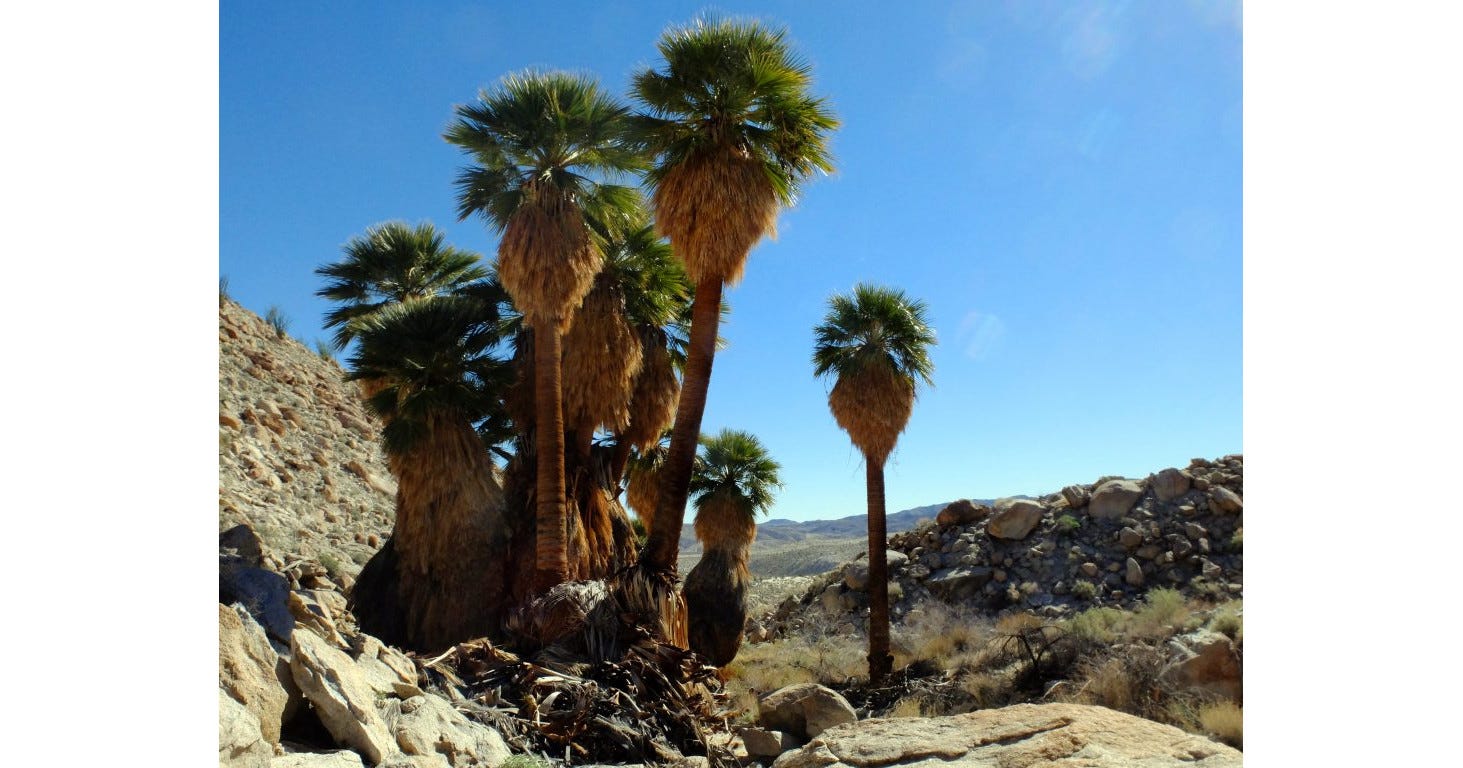
California Fan Palms in Anza-Borrego State Park in California (Photo by author)

The term “native plant” has become a common one, and many people probably assume that the definition is clear cut. However, like many other seemingly simple designations, that’s not the case.

It was in the UK in the mid-19th century where the concept of “native” as opposed to non-native was first proposed by Hewett Coltrell Wallace, who borrowed the terms “native” and “alien” from British immigration law. His definition of “native” also included “naturalized” species, which humans had introduced but that have come to live without them unaided.

Nowadays, whether a given plant is considered “native” where it is found growing is dependent on the interpretation of the interrelation of three factors: time, place and human involvement. There is no agreed-upon global definition.

So currently in the United States, a plant is generally considered native only if it grew here before European colonization. On the East Coast, that’s the 1500s and in California, that’s 1769. Plants introduced since then, whether deliberately or by accident, are labeled “non-native,” “introduced,” “exotic,” or in some cases, “invasive.”

In the UK, though the year 1500 is often cited too, some would set the date at the end of the last glacial maximum, 16,000 years ago, others at ~8000 years ago, when rising sea levels made those landmasses islands, and still others at the Roman invasion in 43 CE. Species introduced by the Romans can also be called “archaeophytes,” which inhabits a middle ground.

Other countries have their own cut-off dates, or, like China seem to still be working it out. Some have none at all, defining “non-native” only in terms of whether the species was introduced by humans, but not when. South Africa has a designation of “native-alien” referring to species that are native to one part of the nation but not to others.

Given that the term is so unstandardized, it’s impossible to make generalized statements about “native species” at the international level.

Plants on the move

The “native range” of any plant is not a static thing. Historically, plant ranges have always been in flux, often in response to climatic shifts, a process which continues in the present day more rapidly because of climate change. Had European colonization never occurred in the Americas, the ranges of plants today would not be the same as they were in 1492, which is a fact that’s not often considered in these discussions.

Fossils and phytogenetics are two things that can show us where plants used to live and where they came from. For example, when Spanish colonists arrived in California in the 18th Century, Coast Redwoods (Sequoia sempervirens) grew in a strip nearly 500 miles long and 5-47 miles wide from what is now Monterrey County in the south to Curry County (Oregon) in the north. Since then, over 95% of them have been cut down. The grievous sin of destroying so many Redwoods in California is compounded by the fact that much of their former habitat is now so altered by land use conversion and ecological changes like erosion that it won’t be home to these grand trees for the foreseeable future.

Only 10,000 years ago—a blip in geological time—Redwoods grew as far south as Los Angeles, and five million years ago, they were found in Europe and Asia. The species has also been spread around the world by humans, including to New Zealand, where a 15 acre grove has been growing for over a century. Due to favorable differences in soil and rainfall there, the trees happen to grow faster there than on the US West Coast.

We can ask, then: how should we define the current “native range” of Redwoods? Are the degraded places where they recently grew but now won’t still part of their “native range”? What about portions of the Oregon Coast immediately north of their most recent range, which they would naturally be moving into because of climate change, both anthropogenic and natural? What about New Zealand where the tree is thriving because the conditions for the tree are so appropriate? Is a Redwood grown today within its historic range in Europe truly “alien” or is it just coming home? By the narrowest definition of “native” these questions are absurd, but of course definitions too are always in flux.

For many, the salient point is “human interference” as opposed to “natural dispersal.”

In this way of thinking, the Creosote Bush (Larrea tridentata), the dominant and emblematic plant of the US Southwest’s Mojave Desert is native even though it arrived from South America as recently as 14,000 years ago, because its means of conveyance over those many thousands of miles was non-human; possibly in the tail feathers of migrating plovers.

But this way of thinking also tends to ignore an important element: the influence of indigenous humans over history, which definitely impacted the “native ranges” of many plants and animals.

Indigenous Land Management Practices

Controlled burns by Indians on the Great Plains expanded prairies at the expense of forests, which led to the spread of Buffalo.

Similar techniques on the West Coast maintained Oak Savannah and suppressed the growth of Firs and Hemlocks.

Seeds, bulbs, corms and other plant material for propagation were collected, transplanted and traded far and wide among tribes in North America. Some species (such as certain Mariposa Lilies in the genus Calochortus) may have dwindled in number to the point of being endangered these days in part because they are no longer actively tended by humans.

The case of the California Fan Palm is particularly intriguing. For years, it was believed that the iconic species was a millions-of-years-old relict, left over from when its current desert home in southern California was much moister. However, phytogenetic analysis proved that the species emerged quite recently, since the last glaciation period 11,000 years ago.

It’s long been known that Indians made use of Fan Palms and their groves for food, craft material, and as places to live. They planted trees and they also set fire to them to clear away the dead leaves so they would be easier to climb to collect the dates. (Fan Palms are fire tolerant.) However, it also appears that they might have been responsible for introducing them to the majority of locations within their “natural range” beyond the small area in Baja California where they originated. (See my Did Native Americans introduce Fan Palms to California?)

If this is the case, then the groves that remain are not the result of “natural dispersal” as that term is usually understood and are more akin to abandoned agricultural sites than to “wilderness.” What, then, is the best way to treat them? I mean, if we’re not going to allow tribes to maintain and use them as they did which is obviously the right answer? Burning is prohibited, as is harvesting and planting the fruits when the trees are on public land. Our current policy aims to protect the trees (which is understandable) but perhaps the actual result is neglect.

California Fan Palms are not the only trees that humans have moved around. In Asia, the “native range” of the Carpathian Walnut coincides with the route of the Silk Road. The distribution of food plants within the forests of the Amazon are anthropogenic. Polynesians brought plants with them as they made new homes on islands throughout the Pacific Ocean. In eastern North America, the “native ranges” of Black Walnut, Pawpaw, Persimmon, Chestnut, and Shellbark Hickory and other food plants are also the result of indigenous human influence. (h/t to Zach Elfers for this info.) They are all considered to be “in the right place” because that’s where they were before a particular calendar date.

Point being, ecosystems that we consider to be “wild” or plant ranges we consider to be “natural” are in many cases human-made or human-impacted. Some would go so far as to say that the very concept of “wilderness”—as in “untouched by humans”—is tantamount to indigenous erasure.

We are a plant-moving species, like many other animals. That settler-colonialism has wreaked havoc on the ecosystems of the Americas is all too clear but to conclude that all the introduced plants who live here now “don’t belong” because “we” brought them here is, I would argue, a step too far, much in need of nuanced examination. The idea that they should be eradicated purely on the basis of place of origin is not merely misguided, but dangerous, given the collateral damage that such efforts inevitably cause, such as disrupting beneficial relationships between native and non-native species that have since formed. Fortunately, the conversation does not need to be so limited.

“Novel Ecosystems” & Ecological Succession

Often, native plants are valorized and non-natives villainized in a reflexive manner that belies the facts on-the-ground. How well an introduced plant has integrated into its new setting is rarely considered by many people (though some invasion biologists do). Or the question of whether plants can become “native.”

“Novel ecosystems” are mixes of native and non-native species. Though formerly ignored by most researchers, they are now garnering more attention because it’s recognized that they operate like any other ecosystem, with their constituent species interacting and adapting and filling different roles just like happens anywhere else.

In California, approximately 1/3 of native butterfly species now use non-native plants as food sources and as egg-laying sites. The range of some of these butterflies has expanded as a result. (See: “Exotics as host plants of the California butterfly fauna“) This has been fortunate for the butterflies, since so much of the habitat that previously provided for them has been destroyed by human activity since 1769, through activities including agriculture, ranching, deforestation, mining, urban sprawl andmost recentlyindustrial-scale “green” energy installations. The butterflies are adapting to novel ecosystems.

Saltcedar/Tamarisk (Tamarix sp. and Russian Olive/Oleaster (Elaeagnus angustifolia) are oft-maligned as “invasive plants” that should be eradicated. But in the western United States, these two trees are now the third and fourth most frequently occurring woody riparian plants, and the second and fifth most abundant species along rivers. To kill them all would entail destroying a significant amount of healthy vegetation (with no small amount of collateral damage to other flora) and would incur an ecological cost. Their prevalence is due mostly to the thousands of dams that have disrupted most riparian areas in the West, making them less hospitable to the original natives like Cottonwoods and Willows. Novel ecosystems are emerging.

Fifty kinds of birds nest in Tamarisk, including the Southwestern Willow Flycatcher, which is endangered because of habitat loss. At least 44 kinds of birds, as well as various native mammals, eat Russian Olives as winter hardy food. Given the prevalence the introduced trees now, and the dearth of the natives, many animals are now dependent on them. Spraying the trees with herbicides has not, and will not, change the fact the dams are responsible for the altered landscape, not the trees themselves.

At some point, do we recognize that the Tamarisk and the Russian Olive are de facto “native” even if they’re not de jure? For what it’s worth, all those birds have already cast their vote. Additionally, from a taxonomic perspective, hybridization among various introduced Tamarisk species have produced fertile offspring that may be declared a new species, Tamarix americana [reference]. Since this species is found only in the US, isn’t it “native” here?

Additionally, “novel” aspects might be temporary after the process of “succession” advances. “Succession” is a common ecological process in which the dominant flora of a landscape changes over time due in part to the ways that landscape is changed by the flora itself. So, after a disturbancesuch as a landslide or the building of a roadthe first wave of plants (which are sometimes called “pioneer species”) are often annuals that quickly fill the space. They will produce a profusion of flower that attract pollinators and seeds that feed animals. Such pioneers can be thorny, which is nature’s way of saying, “Keep out while I fix this!” A hallmark of this stage is the rebuilding fertility in the soil.

The annuals might be followed by shrubs, including berry bushes, which attract yet more animals, including birds. The scat left by these animals enriches the soil more. The bushes provide shelter for trees to germinate, and in time, the trees shade out the berries.

There are cases where disturbed landscapes “invaded” by non-native plants have been left untouched, and the exotics have ended up doing nothing more than fulfilling the role of pioneer species, and the area has returned to “natives” over time. So, when “invasives” are constantly beaten back in a given location, it’s possible that this interference is holding back the natural process of succession and ironically working against the intended goal of bringing back natives.

Novel ecosystems demonstrate nature’s inherent resilience. What we need to do is recognize them as ecologically legitimate and work with them from there. As time goes on, we’ll certainly have more opportunities.

Climate Change

According to National Geographic, “Half of All Species Are on the Move.” This is because, as the climate changes, so do ecosystems. With temperatures rising, species are moving further north or higher in elevation. As time goes on, this means that more and more species will migrate “outside their natural range” thereby becoming “non-native” or evento some“invasive.”

Those that can migrate, that is. Many plants will become, as wildtending guru Finisia Medrano used to say, “refugees without legs,” unable to flee fast enough and far enough to find safe haven. If that’s the case, then we must help them, Finisia repeatedly counseled.

The biologists call this “assisted migration” and it’s a topic that coming up more frequently as time goes on. Some of the strongest arguments against it come from the anti-“invasive” crowd, but many native plant lovers are in favor.

Does It Matter?

The term “native” can have utility; it tells you that a plant was well-adapted to a given place in a given time period because of the conditions that existed there then, and this can be helpful in understanding a species or an ecosystem. But it’s not an ancient, universal concept among all humans by any means, and ultimately it’s just a label of no account whatsoever to the big mover and shaker of life, Mother Nature.

Kollibri terre Sonnenblume

My transition from activist to observer

This is my last article of 2024, and the last for the foreseeable future.  However, I still welcome guest posts that are consistent with the mission of my website.  If you have a story to tell, please contact me at mildredtrees@gmail.com.

Clarification:  I published this article prematurely on November 28th in error.  I republish the article today to clarify my intentions.

Although I have accomplished little in 25 years of environmental activism, I can point to a few achievements that I am proud of. 

  • I was successful in getting the “invasiveness” of eucalyptus downgraded from “Moderate” to “Limited” by the California Invasive Plant Council.  There were a few specific issues that were deleted from Cal-IPC’s assessment of eucalyptus.  The assessment no longer claims that eucalyptus kills birds.  Cal-IPC also removed the claim that eucalyptus leaves are allelopathic, i.e., they do not emit a chemical that suppresses the growth of an understory.  However, these improvements in Cal-IPC’s assessment of eucalyptus had no apparent effect on the demands of native plant advocates to destroy all eucalyptus in California.
  • I am proudest of our achievements to improve pesticide applications by the supplier of our drinking water in the East Bay, EBMUD.  With the help of a video and a photo, a small team of collaborators convinced the leadership of EBMUD that their staff did not know how to apply herbicides.  The leadership of EBMUD deserves equal credit for this accomplishment because they listened and they acted.  EBMUD is now conducting annual training of its staff about proper application of pesticides, herbicide application notices are being posted, and an annual report of pesticide use is presented to the Board and posted on-line for the public to see.  As a result of these efforts, herbicide applications were reduced by one-third, but have since plateaued. 
  • When the SelecTree website published by CalPoly San Louis Obispo claimed that blue gum eucalyptus lives only 50 years, it became another tool nativists used to support their demands to destroy blue gums in California.  I was able to give CalPoly the evidence needed to disprove this inaccurate claim.  Blue gums have lived in California since the 1860s and many of the original plantations are still alive.  Eucalypts are known to live in Australia from 200-400 years.  It’s difficult to determine the age of eucalyptus because trees growing in mild climates such as ours do not have clear growth rings used to determine age.  SelecTree initially changed the lifespan estimate to 150 years, which was the maximum lifespan for the entire SelecTree database of trees in California.  Since then, SelecTree has deleted all lifespan estimates because they weren’t able to find reliable sources of this information.  The correction of blue gum lifespan on SelecTree relieved some of the pressure to destroy them. 
  • I also claim small credit for the final version of Oakland’s Vegetation Management Plan, which is a compromise with native plant advocates who wanted all non-native trees on public land in Oakland to be destroyed and replaced with native trees.  The consultant who wrote the plan also deserves credit for listening and reading studies I sent to him about the flammability of trees.  Non-native plants and trees are not inherently more flammable than native trees. We live in a Mediterranean climate in which vegetation is fire adapted and fire dependent.  It took 7 years and 4 revisions to reach a compromise that satisfied the nativists.  The plan will destroy all eucalyptus less than 31” in circumference on 2,000 acres of public land and 300 miles of roadside.  The plan will also use herbicides on public land where it has been prohibited since 1998, when herbicide spraying was confined to road medians.  Although the plan is destructive, its approval after 7 years of pointless delay will finally enable Oakland to mitigate fire hazards with fuels reduction without destroying all non-native trees on public land.

These were small victories and they were difficult to accomplish. I won’t bore you with a list of hundreds of my failed efforts to protect public lands from needless destruction.  My most recent failure was an appeal to California’s Wildlife Conservation Board, which is theoretically responsible for protecting California’s wildlife. Despite the effort of a small team of collaborators, the WCB granted another 10 years of funding for an eradication project that has killed over 50% of an endangered bird species in the San Francisco Bay after 20 years of spraying herbicides, destroying the bird’s habitat and its food. 

I hope these few achievements and multitudes of failures will help to convey why I am pulling back from my 25-year effort to defend our urban forest and our public lands.  In a word, it is unrewarding work.

Good sources of information about invasion biology and the “restoration” industry

I have 535 subscribers on Conservation Sense and Nonsense and over 1,000 followers on Meta (Facebook).  In addition, my articles on Conservation Sense and Nonsense have been read by over 500,000 people who found them with internet searches over the 15 years that Conservation Sense and Nonsense has existed. 

I intend to keep posting occasional news items to Facebook and I welcome my readers to follow me there.  I also encourage my readers to follow other sources of reliable information about the issues I have covered.  I leave the field in the good hands of those who still have the courage to fight what seems like a losing battle:

  • Beyond Pesticides is a reliable source of information about pesticides.  I recommend that you subscribe to BP’s Action Alerts that inform us of opportunities to engage with decision makers about new policy decisions regarding pesticides. 
  • For home gardeners looking for advice about creating gardens that are beautiful as well as respectful of the environment and the animals that live in our gardens, I recommend that you subscribe to Garden Rant.
  • For readers who love all plants, both native and non-native, I recommend the Substack of Kollibri terre Sonnenblume.  His articles are deeply researched, informative, and beautifully written.  His knowledge of plants far exceeds anything I have learned about plants because he works directly with them as an integral part of his life and he is an astute observer.

Right turn at the crossroads

After a long, bumpy trip to the crossroads of the 2024 presidential election, the American people made a hard right turn on Election Day.  Voters have re-elected President-elect Donald Trump and given him control of all branches of government with which to implement his agenda. 

As Trump approached the crossroads he also acquired some allies who will be influential in crafting his agenda.  Wunderkind Elon Musk, who is already a major government contractor in space exploration and telecommunications, is likely to influence and benefit from policies in those—and other—areas. Billionaire “tech-bros” have convinced Trump to promote crypto currency.  Robert F. Kennedy, Jr. is likely to influence the future of our policies regarding health, such as the availability of drugs and vaccines. 

This is to say that although we can’t predict specific policy decisions, we can predict that there will be significant changes in the functioning of the federal government.  We know that Republicans have been trying for years to defund, if not eliminate, many federal agencies.  

The Environmental Protection Agency and the Department of the Interior have long been Republican targets for budget cuts.  And the US Supreme Court has collaborated with this effort by reducing the power of federal agencies to implement policies that aren’t specifically authorized by federal laws.

We should probably expect that federal funding for many so-called “restoration” projects will evaporate, such as the USFWS plan to shoot 500,000 barred owls in Western Forests or the USFWS plan to dump rodenticides on hundreds of off-shore islands to kill non-native animals.  Likewise, the theoretical ability of the EPA to evaluate new pesticides for access to the market is likely to end altogether, to the extent that regulation exists at all.

On the other hand, State funding of “restoration” projects is unlikely to decrease.  California voters have approved Proposition 4, which will provide $10 billion of bonds for water, wildfire, and land protection in California.  The federal government is expected to withdraw funding for ecological “restoration” while California state government is likely to replace the lost federal funding.

Becoming an observer

We are headed into a long period of radical change.  It is an opportunity to hunker down and watch the changes play out. That is my plan for the foreseeable future.

Although environmentalism had little explicit role in the rightward shift in American politics, it probably played a role on the margins.  The electorate’s rejection of environmentalism as a priority policy goal requires some deep reflection. 

Does environmentalism contribute to the political divide between urban and rural voters?

  • For example, urban environmentalists support the reintroduction of top predators, such as wolves, into rural communities, where they become predators of domesticated animals.  Rural communities resent that their livelihoods are threatened by decisions made by urban policy makers who are not impacted by the decisions they make. 
  • Proposition J in Sonoma County would have shut down many agricultural operations that raise animals.  Most of these agricultural operations are certified organic and they are central to the economy of Sonoma’s rural community. Proposition J was easily defeated by an agricultural community that could have been destroyed by an extremist version of environmentalism.  However, a similar Proposition DD in Berkeley passed narrowly in a community with a more diverse economy. 

Has environmentalism contributed to the high cost of housing and the growing homeless population?

  • The San Francisco Bay Area Chapter of the Sierra Club has a track record of suing to prevent the building of new housing.  The Chapter’s support for this agenda reflected the opinions of entrenched elected leaders who were recently displaced by a coalition of housing advocates.  One of the displaced leaders explained how this coup has changed the Chapter’s approach to new housing.  The changed leadership is now reflected in the Chapter’s political endorsements of housing advocates, such as State Senator Scott Wiener.
  • The insurance industry in California is in trouble.  Major insurance companies have left California.  Some have quit insuring homes.  The companies that remain have cancelled thousands of policies insuring homes. Premiums of the policies that remain have increased significantly and are expected to increase further.  California’s wildfires have increased the costs of the insurance industry and California has not allowed the insurance industry to anticipate increased risks of wildlife in setting premium prices for home insurance.  Insurance is required to finance new building and home buyers cannot get a mortgage without property insurance.  The 7-year delay of Oakland’s Vegetation Management Plan is an example of how extreme versions of environmentalism have handicapped fire hazard mitigation. 

Statement of Purpose

I am a moderate Democrat who voted for the Democratic candidate for president in 2024.  I am disturbed by the sudden and extreme lurch to the political right.  I also see it as an opportunity for all Americans to think deeply about how we reached this point.  I intend to do more listening and less talking.  I hope to find something more rewarding to do. 

I leave the field knowing that nativism in the natural world will be defeated eventually by evolution, as natural selection “chooses” the plants and animals capable of surviving in a radically altered climate.  Nativism in the natural world is ultimately a dead end.  Nature moves forward, not backward.  Activism, such as mine, will not successfully deliver that message to the ideologues who continue to destroy the plants and animals most likely to survive, but nature will, because nature always bats last. 

Thank you for your readership.  Best wishes for happy holidays and a more peaceful new year in 2025.

Invasion Biology: “We can do whatever we want”

Macaylla Silver discovered Conservation Sense and Nonsense on Facebook.  We instantly recognized one another as kindred spirits, battle scarred by our attempts to protect nature from pointless destruction in service of the ideology of invasion biology and the native plant movement it spawned. 

When confronted with the destruction of wild places we love, our reaction was very similar, and responses to our efforts were also similar.  First we turned to public policy for protection:  Are they really allowed to poison our public lands with pesticides to destroy harmless plants? With a few targeted “exceptions” to policy, the answer was always, “We can do whatever we want.”

Then we both decided the best course of action was to become experts about the “science” that is used to justify destroying harmless vegetation with herbicides.  And so, we took to the books and armed ourselves with the science that refutes invasion biology.  Once again, we hit the brick wall of “We can do whatever we want.”

And there Macaylla’s experience as an activist diverges with mine.  He has successfully stopped the poisoning of Leverett Pond (for the time being) by showing the neighbors of Leverett Pond with videos, the consequences of poisoning the pond. 

However, he concludes his story with the astute observation that stopping the destruction of Leverett Pond is unlikely to be the end of the story.  Life in the pond will continue to evolve, as it must.  As long as people continue to believe that evolution must be stopped, the futile attempt to prevent change will continue. Macaylla is hopeful that mistaken belief will fade.  I hope he is right.

We thank Macaylla for his efforts.  We wish him luck in preventing more herbicide applications in Leverett Pond.

Conservation Sense and Nonsense


“Let the Pond Be a Pond”

Massachusetts Wetlands Protection Act was created for the protection of the state’s wetlands. The goals of the law are to prevent pollution, maintain habitats for plants and wildlife, and protect groundwater, public and private water supplies.

Our Town Bylaws in Leverett, Massachusetts also included a ban on the use of herbicides for any use outside of domestic and agricultural use since 1973.

There are five colleges in the area. The town is filled with highly educated academics and retired academics. Leverett is quite ecologically minded in my opinion, this hill town of 2,000 people.

Leverett Pond, circa 1860-1880, Erastus Salisbury Field.  Public domain.

One day back in 2018, I found that the large body of water at the town’s center, Leverett Pond, was under ecological attack. Somehow, some way, a handful of land abutters on the shallow side of the pond were trying to rid the pond of “noxious weeds.”  This included floating leaved Waterlilies and Watershield, plants such as rootless carnivorous plants like Bladderworts, submerged weeds like Coontail, Waterweed and Milfoils.  Even Cattails and other plants growing on the pond’s edges were considered for removal.

Act One:  Isn’t there a law against this?


I thought I could stop this. I thought once the town’s people knew what was happening they would be outraged. I thought the state would step in, prevent the further destruction and maybe even fine the people who were poisoning the area and dredging large sections, all so they could in their words “have crystal clear water to look at.”

I thought it would be easy.  I have never been so wrong in my life. 

It was five years of continual meetings, letter writing, publishing newspaper letters and articles, and a large portion of the town thinking that somehow I was just trying to cause trouble. Or maybe they didn’t think I knew what I was talking about. Sure, I saw the destruction, but I was misinformed. They believed in their intent and factual details of why they were on a campaign of eradication.

The details of destruction used to convince the town’s Conservation Commission, Select Board, and state agencies came from two retired professors, neither with a degree in Environmental Ecology. Their plan contained the curveball of being designed to show off knowledge of several obscure subjects unknown to nearly everyone:

1.Limnology: The science of fresh water systems
2.Pesticides and their application to aquatic environments
3.The botany and identification of aquatic plants

Act Two:  Countering Pseudoscience with Science


While the wordsmithing of the two PHDs had merit and flow, my own research quickly showed that they had only a surface understanding of subjects.  In order to counter their statements and proposals, I decided that I would deeply learn all I could about limnology, pesticides and the life of aquatic plants. I would become an expert, the old fashion way: I would purchase books. Lots of them. I read extensive science based articles on pesticide families, collecting hard data and staying away from anything that was too opinionated. 

People began to realize that I knew more than expected, so much more that it was easy to forget that the vocabulary was rarely understood. I presented myself on equal footing with proponents of the project.  I asked the community and its policy makers to consider that dumping herbicide on the pond might not be the best thing, creating aporia, lingering doubts that this handful of lakefront owners may have hidden motives.

Act Three:  Invasion Biology at Work

Then came the videos. I purchased two kayaks, an underwater camera, and I used cameras I had purchased for bird photography. The videos contrasted the “before and after” of the years of degradation in 2019, 2020 and 2022. The videos got the state involved.   The state permits for dredging that the project applied for in 2010 were never received. This meant that the project had to reapply for permits for any further work after 2020. 

Up to this point, I thought I was fighting against ignorance and arrogance from a few landowners who came late to the pond’s available real estate and bought lots that were undesirable because of their shallowness and large amounts of aquatic flora and fauna. I would have been in heaven if I bought such an area, but they looked to “improve it.”  So they had set out to “manage” the water’s surface.

The two professors contacted a professional who specialized in finding ways around what was allowed by the Wetlands Protection Act. Leverett’s Conservation Commission reviewed the law and found that there were no ways around the law because the plant abundance, oxygen levels and fish life were all healthy, vibrant. Graphs, data, reams of older regurgitated documentation pointed to the same conclusion I had reached: Let the pond be a pond.

To show the reason why no further “management” permits would be issued to continue the project, the head of the Conservation Commission submitted his own reason: the project violated Town Bylaws. Clearly. 

Then it happened. Three members of the Conservation Commission had what I thought were very strange ideas about conservation.  One had a pesticide license. One looked at the pond for recreation purposes rather than an interest in environmental issues. Another felt strongly about eradicating plants that they couldn’t identify if asked.  One said, in defense of using pesticides, the blithe motto “If you can choose it, you can use it,” while the other two nodded in agreement. “We have to stop the growth of these plants before they destroy the pond. It will reach a tipping point where there will be no return,” said one, with great conviction.  “It could in the future make the fishery less healthy,” said another, without a shred of data.  I had no idea why such people would be put on such a Commission. 

The Conservation Commission voted three to two to allow the project to continue for another five years. The state admonished but did not intervene. I had been angry at the professors and their allies for their lack of concern. Now the Conservation Commission had let me, and the pond, down.

The decision of the Conservation Commission gave the pond abutters cover, so they could remove all the plants they wanted. The Commission gave herbicide sprayers a welcome mat in Leverett to earn big money for the applicators and companies that make a variety of toxins.

The decision gave the Conservation Commission, not its local intended use, protecting wetlands and freshwater, but a zealous conviction that they were acting on a world saving mission.  It was Invasion Biology at work, masquerading as “restoration,” AKA the “native plant movement.” Invaders needed to be destroyed, regardless of recklessness, collateral damage, complete destruction.

So destroying acres of plant life, to get at one plant, that is okay now.  They were Crusaders with a capital “C.” And like all crusades…it rarely ends well.

Act Four:  Pictures are worth thousands of words

In 2022, the herbicide sprayers came back, on a very windy day, on an airboat. It appeared that the targeted areas were being sprayed, yet large amounts were misted and blowing in the air as the airboat itself churned the water’s surface. It was, in a word, sloppy.

From my kayak, I videoed the spraying of the pond with herbicides from an air boat: the before, during, and the after of floating masses of dead vegetation. I got the resulting video shown to many. It had few words, an eerie soundtrack that suited the unreal transformation, from living beauty to full degradation, death and decay.  (see below)

Leverett Pond after herbicide spraying in 2022. Entire video available HERE.

For the next year, and the next they stopped spraying. Sure, they hired an aquatic harvester to clean around the area of their docks, but that was it.

In 2024, the promoters of the deadly project were apologetic. They promised that “no herbicides” would be used. Even an attempt to hand pull marginal plants failed.

The pond will continue to respond to changing climate conditions, as it must.  Plants are likely to return and the fear-mongers are likely to demand their destruction again.

Fear of so-called “invasive species” is being used as an excuse to use herbicides in the futile attempt to freeze ecosystems that replicate historical landscapes.  As climate conditions continue to change, the fantasy that humans can prevent evolution is likely to fade.   Perhaps the restoration movement will begin to realize the folly of trying to sort plants and animals into two simplistic groups:  native vs. non-native.


Update July 1, 2026: “In a strange set of circumstances and hard work, the saga of Leverett Pond came to an end last month.  I had attended the last few meetings where once again the “Friends” of Leverett Pond, mainly two people, presented the idea of once again using herbicides in a campaign against “invasives.”  But I was fully prepared to respond to every lie, every false information and also provide supporting science against every “fact” they put forth.  On top of this, there were new ConCom members and a new agent that I had given a lot of research…

“For this year, the commission voted to allow mechanical and hand pulling Eurasian Milfoil, and no herbicides.  None.  Then they voted that the five year extension would be allowed for their management from now till 2031.  But without further use of herbicide.

“Yet I tell you this only because there is hope, and there is a feeling that people are starting to see “management” and “restoration” with a more skeptical eye.

“Nature wins.  At lease in this pond, after a fight that lasted nearly ten years”

Macallya Silver


As Charles Mackay said in a book written in 1841, ” Men, it is said, think in herds; it will be seen that they go mad in herds, while they only recover their senses slowly, one by one.”

Macaylla Silver
Leverett, Massachusetts
Contact:  artargentia@gmail.com

The Light Eaters: Plants will find a way to survive…if we let them

“Life finds a way, if given a chance.” – The Light Eaters

The Light Eaters was written by Zoë Schlanger, a science journalist who covered climate change before writing Light Eaters. (1)  She explains her pivot to botanical science as a retreat from the oppressive gloom of climate change.  It proved a wise choice, as she found much to cheer us in the remarkable capabilities of plants to adapt to challenges, defend themselves against their predators and competitors, and collaborate with their plant and animal neighbors. 

Ms. Schlanger believes that botanical research has lagged behind other biological inquiry partly because of a detour unwisely taken by journalists in the 1960s and 70s that projected human traits onto plants, such as intelligence and consciousness.  Humanizing animals and plants is considered a dangerous source of bias by scientists.  When scientists described plant behavior in human terms, they were often ridiculed by their colleagues and their research projects weren’t funded.  Researchers of the capabilities of plants have been trained to avoid anthropomorphic terms to describe plant behavior.  Although Ms. Schlanger tried to observe that rule, I will give myself more leeway because most of my readers are not scientists.

Plants don’t have the mobility that enables them to fly or run away from threats.  We might think of them as handicapped compared to the mobility of animals.  But what they lack in mobility, they more than make up for with their ability to make they own food from sunlight by photosynthesizing. And with the energy that sunlight provides, plants can create the food—such as pollen, nectar, and fruit—that entices insects and other animals to help them reproduce.  So how do plants protect themselves without fleeing from their predators?  That’s what Light Eaters is about.

I don’t know the source of this photo. It was sent to me in an email by someone who found it on Facebook.

How do plants perceive threats and react to them?

Plants can sense that they are being attacked by an insect in a variety of ways.  They can sense the vibration of the chewing, which is closely related to how animals hear.  The attack can also trigger an electrical impulse which can travel throughout the entire plant. 

Plants emit chemicals in response to the attack on their leaves and roots. The chemicals can repel the insect by making the plant unpalatable.  In a sense, the plant is producing its own pesticide, which has the potential to replace synthetic pesticides. 

The chemicals are also wafted into the air to serve as warning signals to their plant neighbors, who can then produce their own chemicals in preparation for attack. Some plants can distinguish between an attack that threatens individuals and those that threaten the entire community. They can tailor their warning messages accordingly, to send messages only to their relatives or to the entire plant community.  When plants are sprayed with herbicides, these chemical messages are masked by herbicides. (2)  Likewise, pollution can also muddle the chemical messages of plants and reduce their ability to perceive and respond to threats. (3)

Plants sometimes demonstrate a preference for their relatives in other functions as well.  They can make room for the roots of close by relatives and move branches to avoid shading their relatives.  They can also vary these accommodations depending on available resources, making room when there is plenty of water, nutrients, and light, but not when there’s not enough.

Such warning signals can also be sent via the underground root network, which connects plants in a community to one another through the network of mycorrhizal fungi that attach themselves to plant roots.  That network is also used by the community of plants to share resources, such as moisture and carbohydrates produced by photosynthesis.  The fungal network enables both communication and sharing of resources.  Herbicides that are carried to the roots of trees damage the fungal network, depriving trees of the nutrients they need to survive. (4) The widespread use of these herbicides by native plant “restorations” is one of many reasons why these projects rarely result in new landscapes of native plants. 

Can plants hear?

One of the first discoveries of the ability of plants to find what they need is the ability of tree roots to grow in the direction of water sources.  Mycorrhizal fungi attached to the roots of plants are clearly involved in guiding that connection.  Over 450 million years ago, the evolution of fungi enabled plants to move from water to land by delivering moisture from soil to roots of plants, greatly increasing abundance and diversity of plants. About 80% of plants today receive much of their nutrients and moisture through mycorrhizal fungi. (5)

Now there is evidence that plants may also be able to hear the sound of water to direct the growth of roots.  The researcher who made that discovery encased the roots of a plant in plastic pipe so that the roots could not sense the availability of moisture.  The plastic pipe formed a “Y” to give the roots the option of growing in one direction or the other.  The researcher played a recording of running water at the end of one pipe.  The roots grew in the direction of the recording of running water.  This is still a controversial discovery, because other researchers have found it difficult to replicate. 

The replication of breakthrough scientific discoveries is one of the ways that science moves forward.  It is a not a reliable method of confirming or rejecting a new discovery because there are always many variables operating simultaneously that are difficult to control, particularly in field studies, and researchers have rarely identified all the variables involved in the phenomenon they are observing.

The academic career of David Rhoades is an example of the dangers of being too far ahead of your academic colleagues and a reminder of the conservatism inherent in academic science.  Rhoades was a chemist at University of Washington and the author of a study that made the first report of warning signals that plants under attack send to their neighbors via volatile chemicals in the atmosphere. 

The forest on Rhoades’ campus was being killed by tent caterpillars.  He studied the spread of the caterpillars until the insect infestation was stopped by the chemicals that the unaffected trees infused into their leaves.  The chemicals killed the caterpillars and the spread of the insect in the forest was stopped.  Backed by a mountain of carefully accumulated data, Rhoades concluded:  “This suggests that the results may be due to airborne pheromonal substances!”

Rhoades was met with resistance to this new information from his colleagues.  Then he had trouble replicating his original study.  When his grant applications were rejected, he gave up.  He left academia and taught chemistry in a local community college to make a living.  Years later, other researchers figured out why he was unable to replicate his original study.  The airborne chemicals that trees produce are seasonal.   Rhoades’ original study was done in the spring and Rhoades was trying to replicate the study in the fall.  The scientists who eventually confirmed Rhoades’ finding did so in the laboratory where conditions are easier to control.

Plants collaborate with animals to protect themselves and reproduce

The Light Eaters reports many remarkable observations of interactions of plants and animals.  Here is a sampling of these stories:

  • If bumblebees emerge from hibernation before plants begin to bloom, the hungry bee bites the plant’s leaves to trigger the bloom that delivers the nectar the bees need.
  • Plants must use their limited resources to make pollen and nectar.  Some plants can ration the delivery of the pollen and nectar that attracts their pollinators by timing the delivery with the anticipated arrival of the pollinator.  The plant estimates the time of arrival of the insects based on its memory of past visits. 
  • Bats find the plants they pollinate by using echolocation sonar to locate them in the dark.  Some plants that are pollinated by bats have evolved saucer-like petals that act like a satellite dish to receive the sonar ping to help bats find them. 
  • Some corn, cotton, tomato and tobacco plants can emit chemical distress signals to summon tiny parasitic wasps to kill caterpillars such as tobacco budworm and corn ear worm.
  • Many orchids are pollinated by wasps.  Some orchids attract wasps by mimicking the chemical pheromones of the female wasp.  The orchid is pollinated by the attempt of the male wasp to mate with what he supposes is a female wasp.
  • Some plants form partnerships with ants by secreting a sugary substance that feeds the ants, who eat the insect predators of the plant. 

Can plants see?

The observation that plants are capable of mimicking animals and other plants is not new.  In the early 1900s, a Russian agronomist observed that weeds in food crops have sometimes mimicked the food crop and thereby evaded the hand-weeding that was the method used by farmers to eliminate competition for their crop.  Rye, oats, and lentils were initially considered weeds of wheat and rice.  Over time, they evolved the seed heads that qualified them as food crops. 

More recently, weeds that are killed by herbicides within crops that have been genetically modified to be resistant to the herbicide have engaged in mimicry at the biochemical level to also become resistant to the herbicide.  Those who engage in chemical warfare against plants do not seem to understand that it’s a war they can’t win because evolution will enable plants to develop resistance to their poison. 

Like many of the remarkable capabilities of plants, scientists can observe the phenomenon, but they are rarely able to explain the mechanism that makes it possible, beyond the evolutionary force of natural selection, which achieves a better adapted plant or animal through a series of mutations and genetic and epigenetic drift.  Each change in the species is a trial balloon.  If the change works, it’s a keeper.  If it doesn’t, it’s in the dustbin with some 99% of the estimated 5 billion species that have lived on Earth.  The dominant evolutionary force is random, irrepressible, complex change.  The notion that humans are capable of stopping evolution is absurd.

In 2014, a Peruvian ecologist discovered a vine in the Chilean rain forest that is capable of quickly taking on the shape of almost any plant that it grows beside.  Nicknamed the chameleon plant, many tests proved that the vine can mimic many different species of plants.  Presumably this mimicry enables the vine to become invisible in the sense that it blends in with whatever plants it grows amongst.  It’s a disguise, if you will, that protects the plant from its predators. 

The chameleon vine is able to mimic plants that are native to their locations as well as plants that are foreign to the region.  In other words, mimicry is not the result of a long evolutionary co-existence.  This finding is another blow to the nativist myth that plant and insect associations are the result of co-evolution that makes insects dependent on native plants.  The associations between plants and insects evolved long before the plants and insects moved into new regions.  Plants and insects retain that association as they change in response to their new environment and as the result of mutations and genetic drift. 

Until recently, there was a debate among scientists about how the chameleon plant morphs itself into an entirely different shape.  One school of thought speculates that plants have an organ that performs much like our eyes.  Another school of thought is that horizontal gene transfer (6) from the bacteria inhabiting the plant being copied to the plant doing the copying achieves this transformation. 

A study (7) published in 2022 seems to support the hypothesis that some plants have some type of organ that functions like our eyes.  The study found that the chameleon vine was capable of mimicking an artificial leaf.  The plastic leaf contains no chemicals or bacteria. 

In conclusion

The Light Eaters reports many other capabilities of plants that aren’t covered in this article.  If it’s a topic of interest to you, the book is well worth reading.  It’s well researched and well written.  It is also thoughtful because it asks us to ponder the philosophical question of whether or not this new(ish) knowledge of plants adds up to intelligence, consciousness, and agency.  Ms. Schlanger dodges that question by reminding us that there is not consensus agreement about what any of those descriptions actually mean.

Now we must add a few caveats that we hope will put this important topic into perspective:

  • Not every plant species has all of the capabilities described in The Light Eaters.
  • Those that do have such capabilities may not consistently use them because every plant is responding to a specific environment in a specific place.  Plants are inseparable from their environment.  A plant that has plenty of water and plenty of light behaves differently than plants with less resources.  Sweeping generalizations about plants are usually ridiculous.  For example, it makes no sense to claim that native berries are more nutritious than non-native berries. (8)
  • Plants have the potential to develop such capabilities, depending on their specific circumstances.
  • Without a brain or a nervous system, plants seem to organize a response to stimuli by functioning as a decentralized network.    

The Light Eaters says as much about science as it does about plants.  There are fads in science, just as there are fads in every human endeavor.  Presently, much scientific investigation of botanical phenomenon is focused on genetics, which has misled the public to underestimate the plasticity of plants and animals.  In fact, the genome of a species is a flexible repertoire, with many genes unexpressed until triggered by a change in the environment in which the plant lives.  For many characteristics of species, the environment is a more powerful influence than genes. 

Science is better at observing than it is at explaining.  Explaining requires speculation and academic science studiously avoids speculation.  The reader of scientific studies is often left in a quandary.  Conclusions are often a contradictory list of maybes with a plea for funding for further investigations. That’s one of many reasons why science journalism is important to the general public’s understanding of scientific issues.  Ms. Schlanger goes out on a limb for us by speaking in comprehensible terms that many scientists refuse to use.  Thank you, Ms. Schlanger, for helping the public understand the plant world.


Shortly before publishing this article and after I had drafted my article, I received the following review of The Light Eaters from Arthur M. Shapiro, Professor Emeritus of Ecology and Evolution, UC Davis.  He has given permission to add his review to my article.
– Conservation Sense and Nonsense

Elizabeth Kolbert has a collective review of Schlanger and two other, similar books–“The Nation of Plants” by Gregory Conti and “Planta Sapiens” by Calso and Lawrence–in the new NY Review of Books (Oct.3). Her review is only lightly snarky because it’s clear she doesn’t know quite what to make of the “plant neurobiology” fad.

“When I read Schlanger (I haven’t read the others) I dug back into my library to find my copy of “The Secret Life of Plants” by Peter Tompkins and Christopher Bird (1973). I doubt that Kolbert realizes that the current fad is a rerun of the 70s!  Unlike Schlanger and perhaps the others reviewed by Kolbert, Tompkins and Bird is packed with overt woo-woo and makes little attempt to be “science-based.” The frank woo-woo is very 70s. But the underlying motivation for both waves is the same: philosophical panpsychism, the notion that consciousness is ubiquitous in Nature.

“There is nothing in the actual data discussed by Schlanger that obliges one to embrace panpsychism. The main reason to do so is that one WANTS to. That is, for some (many?) people it is very reassuring to believe that at least the biosphere, if not the entire universe, is sentient. (This has resonances with the Gaia Hypothesis.) This notion is an integral part of a number of cultural cosmologies, of which the most familiar to most Americans is probably Native American, broadly speaking. In the 70s many hippies embraced the Native American notions of “tree people,” “stone people,” etc. Some still do.

“Remember that I have taught community ecology for some 50 years, with an emphasis on coevolution. Things like inducible anti-herbivore defenses (chemical or morphological) and communicable defensive messages (plant pheromones, if you will) come as no surprise. Rather, they are predictable consequences of natural selection: if something can evolve, it probably will.  There is no logical necessity to invoke intelligence or consciousness to account for them. If you want to, go right ahead. But don’t call it science!

“I have never had a chance to pull up a mandrake plant. In the Middle Ages it was widely believed that if you did it would shriek, and the sound if heard would drive one mad. Thus one must cover one’s ears when doing so. Now, that is framed as a testable hypothesis!

“Are you familiar with the walking fern? If not, Google it. I am very fond of it, but never for a moment would I claim it has the property of wanderlust.

Arthur M. Shapiro, Professor Emeritus of Ecology and Evolution, UC Davis


  1. Zoë Schlanger, The Light Eaters: How the Unseen World of Plant Intelligence Offers a New Understanding of Life on EarthHarper Collins, 2024. The Light Eaters is the source of information in this article unless otherwise noted.
  2. Behrend*, J.E., & A.L. Rypstra (2018) Contact with a glyphosate-based herbicide has long-term effects on activity and foraging of an agrobiont wolf spider.  Chemosphere 194:714-721   doi: 10.1016/j.chemosphere.2017.12.038
  3. “Polluted Flowers Smell Less Sweet to Pollinators,” New York Times, February 16, 2024
  4. K. Hage-Ahmed, “Arbuscular mycorrhizal fungi and their responses to pesticides,” Pest Management Science, September 25, 2018
  5. Thomas Halliday, Otherlands, A Journey Through Earth’s Extinct Worlds, Random House, 2023
  6.  Conservation Sense and Nonsense, “All Life on Earth is Related
  7. Jacob White and Felipe Yamashita, “Boquila trifoliolata Mimics leaves of an artificial plastic host plant,” Plant Signaling Behavior, 2022
  8. Conservation Sense and Nonsense, “Baseless Generalizations in Doug Tallamy’s Nature’s Best Hope”

The Forever War on Non-Native Plants

I spoke to California’s Wildlife Conservation Board at their August 2024 meeting about the Invasive Spartina Project. I asked the Board not to fund the eradication of non-native spartina and its hybrid, using herbicide. This project, which began 20 years ago, had cost over $50 million by 2023. (1)  Non-native spartina, native to the East and Gulf coasts (2), provides crucial habitat for Clapper rails (3), closely related to our endangered Ridgway rails.

Source: Cornell Laboratory of Ornithology

Non-native spartina grows taller, denser, and doesn’t die back in winter as native spartina does. Because early aerial spraying of herbicide eradicated most non-native spartina by 2010, Ridgway rail populations declined by 50% due to habitat loss. (4)

The project was temporarily paused in 2014 to plant native marsh plants and stabilize rail populations. When the project was resumed in most places the rail population continued to decline from 2018-2023. There were approximately 1,200 Ridgway rails in the Bay estuary before the project began. (5)  The most recent survey in 2022 found about 500. (6)

Native pickleweed was planted based on the mistaken assumption it would benefit endangered salt marsh harvest mice.  Recent studies show there are more mice in areas with less pickleweed and they eat both native and non-native plants. (7)

For the past 10 years, the focus has been on eradicating a hybrid of spartina, though it is indistinguishable from native spartina and 7,200 genetic tests were required from 2010 to 2022 to identify it. Hybridization is a natural evolutionary process that supports natural selection. (8)

Hybrid spartina could help to protect the Bay’s shoreline as sea level rises and extreme storm events cause erosion.  Where it is eradicated, gaps in vegetation are difficult to revegetate because the herbicide (imazapyr) that is used is very mobile and persistent in the soil. Imazapyr is also a non-selective herbicide that kills both native and non-native plants growing closely together, as they do in the San Francisco Bay Estuary. (9)

Although others spoke with me, there were an equal number of people who spoke in favor of granting nearly $7 million to continue the project for another 10 years. Some of the funding is granted to California Invasive Plant Council to administer the grants. Several of those speakers (including Marin Audubon) actually claimed that the project is benefiting endangered Ridgway rails, despite the fact that the project has killed at least 600 of them by destroying their nesting habitat and probably contaminating the food they eat, such as crustaceans and mollusks.

You might wonder why an organization such as Marin Audubon, which is committed to protecting birds, would advocate to continue a project that has killed at least 600 endangered birds, until you remember that Marin Audubon is also supportive of the project that plans to kill 500,000 barred owls. Marin Audubon also wants the Barred Owl Management Strategy to be mandatory instead of voluntary as proposed by USFWS.

Source: Staff Report for Invasive Spartina Project, WCB Board Meeting, August 22, 2024

The Wildlife Conservation Board approved grants to the Invasive Spartina Project with one dissenting vote. The dissenting Board member voted, “Hell, NO!” Her term on the Board will end after the May 2025 meeting.  She does not expect to be reappointed.  Her departure will be the end of the effort to prevent the Wildlife Conservation Board from granting funds to projects that use pesticides.  It’s another dead end for those who advocate on behalf of wildlife and against the use of pesticides on public lands.

Funding sources to continue the Invasive Spartina Project are the Greenhouse Gas Reduction Act and Climate Change Resilience fund. These funding sources are as inappropriate as the project itself.  Destroying vegetation does not reduce greenhouse gas emissions.  Destroying non-native vegetation that grows taller, denser, and doesn’t die back in winter does not make our shoreline more resilient as sea-levels rise and winter storms become more intense.

Invasive Spartina Project is typical, not unique

The Invasive Spartina Project is typical of other “restoration” projects in California that have been trying, unsuccessfully, to eradicate non-native plants for 20 years and more.  Thanks to the California Invasive Plant Council (Cal-IPC), we now have survey data that tells us where these projects have been done and for how long. (10)

Cal-IPC sent more than 300 survey questionnaires to “practitioners” who had registered for Continuing Education credits for Cal-IPC classes and “land manager staff of organization throughout California.”  Over 100 practitioners replied to the survey.  This graph depicts their replies to the question, “Approximately how many total years have you applied herbicides throughout your career?”

Source: California Invasive Plant Council

Clearly, the Invasive Spartina Project is one of many “restoration” projects that have been applying herbicides for 20 years or more.  And the Invasive Spartina Project has secured State funding to continue spraying herbicides for another 10 years.  Spraying herbicides on public lands has created stable, life-long employment for an army of weed warriors. 

The survey also tells us where herbicides are being sprayed:

Source: California Invasive Plant Council

Virtually all (89%) herbicide applicators are spraying herbicides in “natural areas”—which we assume are wildlands—where no attempt has been made to plant native plants.  Most projects are more destructive than they are constructive. Nearly 50% of herbicide applicators are spraying in public parks.  70% of herbicide applicators spray in “restoration areas,” presumably to sustain the native plants that were planted.  If they are using non-selective herbicides, such as glyphosate and imazapyr, they are probably killing native plants too.

There are many other revelations in this survey and the details are available in the Cal-IPC publication (10):

  • Only 1.9% of respondents had not used herbicides or been part of a project that used herbicides.
  • The top three application methods were spot spraying (100%), cut stump (87%), and broadcast spray (70%).
  • 40% of respondents were not calibrating their herbicide use.  “Calibration is the process of adjusting and measuring the amount of pesticide that a piece of equipment will apply to a target area. It’s an important step in the pesticide application process to ensure that the equipment is applying the correct amount of pesticide at the right rate and in a uniform manner.” (Google search)
  • 28% of respondents had never received calibration training.  20% of respondents said they did not calibrate their herbicide application because “they did not know how.” Cal-IPC often claims that herbicides are being applied “judiciously.” If you don’t know how to apply herbicides, you are unlikely to apply them “judiciously.”

The Forever War on Non-Native Plants

Cal-IPC’s survey of “restoration” practitioners confirms our observations of their efforts in the past 25 years in the San Francisco Bay Area:

  • Attempts to eradicate non-native plants are a Forever War that has poisoned our public lands without eradicating non-native plants or restoring native vegetation, in most cases.
  • The war is futile because it is attempting to stop evolution, which is trying to help flora and fauna adapt to the changing climate and environment.  Humans cannot stop evolution, nor should we try.  The Forever War is a losing battle against evolution, which has sustained life on Earth for 3.7 billion years, without human “assistance.” 
  • The plants that we are trying to kill are also adapting to the poisonous war we pointlessly wage against them.  They have evolved and will continue to evolve resistance to the poisons we spray on them. Herbicides are less effective than they were 40 years ago and they will be continuously less effective. 
  • We are poisoning ourselves and other animals in our futile attempt to kill the plants that feed them.  Claims that wildlife eat only native plants is a fiction and a lie that sustains an industry with vested economic interests in that myth.
  • Many pesticide applicators are not properly trained or they are not following legally mandated instructions for pesticide applications on product labels. They are hurting themselves when they don’t wear legally required personal protection equipment. They are hurting the environment and everyone who lives in it when they use too much pesticide because they have not calibrated their applications as required by the product label. When they don’t post pesticide application notices in advance of their applications, they deprive the public of the opportunity to protect themselves by avoiding the area.  Even when they do, such signs would not be helpful to wildlife.
  • The money that is wasted on this Forever War could be used to address a multitude of other pressing needs.  For example, the lead pipes in Oakland that are delivering drinking water contaminated with lead to children in our public schools could be replaced with a fraction of what has been spent to eradicate non-native spartina marsh grass in the past 20 years. (11)  It’s no wonder that the public does not trust the American government:
Source: Economist Magazine

References:

  1. San Francisco Estuary News, “The Battle for Native Cordgrass,” Jacoba Charles, March 2023
  2. USDA Plant Database:  Spartina alterniflora  When the Invasive Spartina Project began, the USDA Plant Database  map of this species indicated that the species was introduced on the West Coast.  The current version of the map shows that this species is now native to the West Coast.
  3. Clapper rail, Cornell Laboratory of Ornithology  Status of Clapper rail is “Low Concern”
  4. Adam Lambert et.al., “Optimal approaches for balancing invasive species eradication and endangered species management,” Science, May 30, 2014, vol. 344 Issue 6187
  5. “Effects of Predation, Flooding, and Contamination on Reproductive Success of California Clapper Rails (Rallus Longirostris Obsoletus) in San Francisco Bay,” Steven E. Schwarzbach, Joy D. Albertson, Carmen M. Thomas, The Auk, 1 January 2006
  6. 2023 California Ridgway’s Rail Surveys for the San Francisco Estuary Invasive Spartina Project  (page 9)
  7. “Evaluating the plasticity of a ‘specialized’ rodent in a highly-invaded estuary,” Katie R. Smith, et.al.,  Presentation to California Invasive Plant Council Symposium, October 2023
  8. San Francisco Estuary Invasive Spartina Project   2021‐2022 Monitoring and Treatment Report (Appendix II, page 3)
  9. Journal of Pesticide Reform: https://assets.nationbuilder.com/ncap/pages/26/attachments/original/1428423389/imazapyr.pdf?1428423389#:~:text=Imazapyr%20can%20persist%20in%20soil,aerial%20and%20ground%20forestry%20applications
  10. Dispatch, Newsletter of California Invasive Plant Council, Spring 2024  (page 10-11)
  11. “In 2018, Oakland Unified School District (OUSD) estimated that it would cost $38 million to fix lead contamination in its schools. This included $22 million to replace water lines and $16 million to replace drinking water and sink fixtures. The OUSD blamed the aging infrastructure for the high lead levels and sought help from the state and federal government.” (Google Search)

Taxonomy: Past, Present, and Future

Taxonomy is the naming and classification of life.  Although it is now considered a scientific endeavor, it began as the hobby of naturalists who worked independently, outside the confines of academia, at a time when botany and biology were not scientific disciplines. 

This is not to say that naturalists who created the classification system in the 18th century, and which is still used today, were without social constraints.  Their work was influenced by and sometimes constrained by religion.  We will trace the nearly 300-year history of taxonomy, from its inception to modern analytical methods, within the context of social change.

Linnaen Taxonomic System

Carl Linnaeus is considered the creator of the taxonomic system.  He was born in Sweden in 1707 to a family of modest means, unlike most naturalists of the time who were typically members of wealthy families, with freedom to pursue their personal interests. 

Linnaeus had an intense interest in nature, particularly plants, from an early age.  He was a mediocre student, who mastered Latin and Greek in preparation for a career as a pastor, but he spent his time in nature, where he developed deep observational knowledge of plants.  After failing to achieve credentials as a pastor, his knowledge of plants suggested a career as a doctor because the use of medicinal plants was the primary method of medical treatment. 

Technically, Linnaeus qualified to practice and teach medicine after a brief 2-day visit to a diploma mill of the time, but he never practiced medicine.  At a time when he was extremely poor, nearly destitute, his knowledge of plants came to the attention of wealthy mentors who took him in and gave him the opportunity to begin his life’s work as the classifier of life.

Linnaeus was a person of supreme confidence in his own abilities as well as a shameless self-promoter of his accomplishments.  He set himself the ambitious task of naming and classifying all kingdoms of life known at the time.  That may seem an arrogant goal, but at the time it seemed entirely doable because the Bible told Linnaeus the task was finite and static. 

According to the Bible, God created the Earth in 7 days.  Everything God created was assumed to be perfect and therefore unchanged from the time of its creation.  Nature was considered static and the possibility of extinction was blasphemy.  Theologians of the time calculated that a maximum of 2,000 animals could have been accommodated on Noah’s Ark, saved from the impending Great Flood. There were presumed to be similar limitations on the number of plants carried on the ark to feed the animals. 

An index of all known plants published in 1703 identified about 18,000 plants.  However, new plants discovered by early explorers of the New World were arriving in the Old World in greater numbers, creating pressure to name them and fit them into the known natural order.  The time was right for Linneaus to set his life’s goal that seemed possible at the time, within the confines of religious dogma. 

The scale of the task did not seem to be an obstacle, but the dispersal of species was.  Linneaus himself took only one field trip to Lapland to collect specimens.  He hated the uncomfortable conditions of the journey, found little of interest, and his report of his trip was ignored, despite his exaggerated telling of the story.  Linneaus sent 17 of his students and collaborators, whom he called his apostles, on ill-fated expeditions to collect specimens.  Many of them died and others returned empty-handed. 

Linneaus commissioned this portrait of himself wearing a hat from Lapland to illustrate the report of his trip.  Unfortunately, the hat is typically worn only by women in Lapland.  Public domain.

Linnean taxonomy is based entirely on observation of the physical characteristics of plants that were known at the time, such as shape, form, texture, odor, taste, etc.  His system emphasized reproductive organs of plants, such as the number of stamens and pistils.

Source: Oregon State University

Linneaus named each species with binomial nomenclature, of which genus is the first word, and species is the second.  His system nested species into a hierarchy of 5 groups of similar species:  species/genus, family, order, class, and kingdom.  At that time, there were only 3 identified kingdoms:  plants, animals, and minerals.  Linneaus planned to catalogue all three kingdoms, although plants were his primary interest.

The first edition of Linneaus’s Systema Naturae was published in 1735.  It was a mere 15 pages long, more pamphlet than book.  In addition to a list of species, nested in their families, orders, classes, and kingdoms, he provided brief descriptions of species as well as rules for naming new species. 

By including the name of the discoverer of the species, Linneaus motivated early plant explorers to give their specimens to him for naming. This arrangement also resulted in the duplication of many species that had already been classified. He wrote lavish praise for his book in anonymous reviews and distributed them to book sellers.

The 12th and last edition of Linneaus’s Systema Naturae was published in 1765, when Linneaus was 58 years old. It was 2,600 pages long compared to the first edition with only 15 large pages.  Altogether, Systema Naturae described 10,000 organisms, of which about 6,000 were plants. He was beginning to show signs of mental deterioration by then.  By the time he died at the age of 71, he was unable to speak or communicate.   

Critics of Linnean Taxonomy

Although Linneaus’s classification system was well received in Europe, it was not universally praised.  The British were resistant to the sexual metaphors used by Linneaus to describe plant species, but the chief critic of Linnean taxonomy was Georges-Louis LeClerc de Buffon, usually called simply, Buffon. 

Buffon was born in 1707, the same year as Linneaus and there the similarity ends.  He was independently wealthy and a person of wide-ranging interests, from mathematics to all natural sciences. 

He is best known as the chief of the king’s Parisian garden, Jardin du Roi.  The garden was the king’s personal apothecary and natural history museum.  It was not part of the Sorbonne, the French university (much to the chagrin of the Sorbonne), which gave Buffon greater independence in his research and publications.

Buffon dismantled the Linnean system in a point-by-point critique delivered to the French Academy of Sciences in 1743.  He described the system as an artificial human construct that over-simplifies the complexity of nature.  He said Linnean categories are abstractions, created for convenience, rather than naturally occurring categories. 

The first 3 volumes of Buffon’s competing description of nature, Histoire Naturelle, were published in 1759.  In contrast to Linneaus’s brief Systema Naturae, the first installment was 1,600 pages long, beginning with a critique of Linnean taxonomy.   

Buffon’s 4th volume, published in 1753, described just 3 domesticated animals—the horse, the donkey, and the bull—in 544 pages.  He began with domesticated animals because of their close relationship with humans, presumed to be of most interest to the public.  Each animal was depicted in engravings of the animal’s skeletal structure as well as in its habitat and described in detail.  He gave equal attention to the temperament of each animal. 

36 volumes of Histoire Naturelle were published between 1749 and 1789.  Eight more volumes by his collaborators were published after his death.  He died at the age of 81 in 1788, just one year before the French Revolution. Buffon’s life’s work was no simple list of species.  Rather it reported all available knowledge about the natural sciences, including physics, chemistry, and metallurgy.  It broke new ground by offering many novel interpretations of Buffon’s observations.

Buffon stepped on the toes of theologians several times in his long career.  He described the creation of Earth and other planets as a lengthy process, which is in “gradual decay” and he predicted that “the sun will die out probably for the same reason in some future age.”  This prediction contradicts religious dogma about the time-scale of creation and its permanence.  He was promptly scolded and he promptly apologized: “I disapprove of my behavior and I repent, by covering myself with dust and ashes.” 

He learned from that experience.  In later volumes of Histoire Naturelle, he was vaguer when contradicting religious dogma.  Still, later generations of naturalists recognized the first known explanation of evolution in Buffon’s work: “…we should not be wrong in supposing that she [nature] knew how to draw through time all other organized forms from one primordial type.”  This carefully worded speculation was a thinly disguised statement that all species can be traced back to a common ancestor, which is the core of evolutionary theory, but the process is unseen because of its slow pace:  “Nature’s great workman is Time.  He marches ever with an even pace, and does nothing by leaps and bounds, but by degrees, gradations and succession he does all things; and the changes which he works—at first imperceptible—become little by little perceptible, and show themselves eventually in results about which there can be no mistake.”

Buffon recognized fossils as the remains of living species, of which many were now extinct:  “…it is these petrifications that we recognize her [nature’s] oldest productions, and that we have an idea of these species now annihilated, whose existence preceded that of all beings now living…” 

Taxonomy meets evolution

Charles Darwin had not read Buffon’s Histoire Naturelle before sailing around the globe from 1831-1836 to study nature in distant places. He arrived at his conclusion that natural selection is the mechanism driving the evolution of life on Earth independently, based on what he saw on his journey down the coast of Africa, across the Atlantic, down the coast of South America, around the horn, to many islands in the Pacific Ocean, to New Zealand, Australia, islands in the Indian Ocean, and around the horn of Africa to home.

Voyage of the HMS Beagle, 1831-1836. Creative Commons – Share Alike

Darwin collected plant and animal specimens during his journey, including many fossils that suggested to him the existence of animals no longer occupying the land.  He also observed many similar plants and animals with slightly different forms around the world.  These similarities suggested a common ancestry to Darwin. 

After experimental testing of his theories, such as the ability of plants to be dispersed by wind, ocean currents, and animals, Darwin shared his theories with close friends long before he was willing to publish them. One of his readers, Thomas Henry Huxley, had read Buffon’s Histoire Naturelle and alerted Darwin to its similarity to Darwin’s theory.  After reading Histoire Naturelle himself, Darwin agreed that his theory was “laughably similar” to Buffon’s. 

Although Darwin was confident of the accuracy of his theory, he delayed publication of his master work, Origin of Species, until 1859, over 20 years after his return from his voyage.  He understood the implications of evolution, which removed humans from our previously exalted status as separate and above all other forms of life.  He knew that the suggestion that humans are the descendants of primates, would outrage the church and the academic establishment.  He wasn’t wrong in that prediction and was therefore overly cautious. Fortunately, Darwin was finally pushed to publish Origin when he received a letter from Alfred Russel Wallace about reaching the same conclusions about natural selection and evolution during his foreign travels as a collector of specimens.   

Evolution revises taxonomy

Darwin believed that taxonomy would need to be revised to reflect evolutionary relationships.  Categories should group together all the descendants of a single, common ancestor.   Once evolution was accepted, he expected that knowledge to “clear away an immense amount of rubbish” in taxonomy.  The morphological variations among individuals of a single species that had mistakenly been seen in the past as different species, would be recognized as the natural variation of individual members of a species on which natural selection operates. 

Buffon had speculated that variations between individuals of a species create opportunities for natural selection to identify the individuals best adapted to specific environmental conditions, who will successfully reproduce.  He called that unidentified hand an “internal shaping matrix,” yet to be identified. 

The invisible hand that produces variation among individuals in the same species was revealed by the work of Gregor Mendel, an Austrian monk whose gardening experiments in the 1860s demonstrated the operation of genetics. 

Once again the church got in the way of scientific advancement when Mendel was ordered out of his garden into church administration by his superiors.  A report of his findings was buried deep in the archives of his local botanical society and found in 1900 by a botany professor who tried to appropriate it as his work, but didn’t get away with it.

Genetics explains why species that are dispersed to new locations by natural and human means are different from the individuals they left behind because of genetic drift of isolated populations, mutations, and natural selection operating in different environmental conditions.  The classic example of genetic divergence of closely related, but widely dispersed animals is a family of large, flightless birds:  the ratite family. 

Family of ratite birds

Taxonomy becomes a modern science

The development of new analytical tools in the 20th century has enabled the revision of traditional taxonomy to reflect evolutionary relationships:

  • Computers have removed some of the subjective judgements of human taxonomists.  Numerical taxonomy uses the same lists of observed characteristics of closely related species to find the most similar species.  Although the results of these calculations are in most cases similar to those of traditional taxonomy, in some cases the results have been illuminating.
  • DNA analysis has revealed some close evolutionary relationships that were previously unknown.  Molecular analysis has been particularly helpful when morphology was misleading in the past.
  • Cladistics radically altered the schematic of the “tree of life.”   Each branch, or clade (Greek for “branch”), includes a group of species with one common ancestor and excludes those that are not descendants of that ancestor. Cladistics has organized these branches into three domains of life that finally reveal the importance of fungi and microbes on the “tree of life.”  Cladistics has done for biology what plate tectonics did for geology.
Domains of life according to cladistics

However, traditional taxonomy continues to exist, more or less unchanged.  Perhaps corrected on the margins by modern analytical methods.  The designation of new species remains largely a matter of opinion as “splitters” and “lumpers” debate where to draw the nebulous line between similar species.

The public continues to use the traditional system and refer to it when identifying species.  It’s the system the public knows and it is based on observable characteristics the public can understand, as opposed to modern methods based on computer and laboratory analysis. Although there is some coincidental correspondence of evolutionary taxonomy with cladistics, traditional taxonomy is not based on evolutionary relationships.

As our knowledge of the complexity of life has increased, a great number of new boxes in which to nest species into larger categories have been created, in addition to Linnaeus’s original 5.

Taxonomic categories of International Code of Cultivated Plants.  Source:  Wikipedia

Religion remains an obstacle to the public’s understanding and acceptance of evolution as the natural process that enables life to change in response to changes in the environment: “The status of creation and evolution in public education has been the subject of substantial debate and conflict in legal, political, and religious circles.  In the United States, creationists and proponents of evolution are engaged in a long-standing battle over the legal status of creation and evolution in the public school science classroom” (3)  In 2019, only 22% of Americans believed that “humans evolved but God had no part in the process” compared to 40% of Americans who believed that “God created humans in present form.” 

Source: Gallup Poll

It is the public’s deep ignorance of evolution that explains the nativist ideology, which assumes that species are immutable, native plants are inherently different from non-native plants, and that plants and insects co-evolved their relationships long after native plants diverged from their ancestors, now considered non-native.  All of these assumptions are mistaken.  While nativists wish to divide all life into just two categories—native and non-native—none of the existing taxonomic systems even mentions that meaningless distinction. 

Traditional taxonomists are a dying breed.  Retiring taxonomists are not being replaced and academic taxonomy programs are disappearing, as are herbarium collections.  The recent closure of the herbarium at Duke University is a case in point.  Duke tried unsuccessfully to find a new home for the collection before deciding to close it.

Academic scientists are using modern analytical techniques to categorize species according to their evolutionary relationships.  Given the new understanding of the colossal task of collecting rapidly evolving life, most accept that it can’t be done.  About 1.2 million species have been identified and named.  Estimates of the total number of species range from 8.7 million to 3 trillion.  More importantly, species of life are constantly changing and dying out as they try to adapt to a rapidly changing world.  Naming dynamic life is a constantly moving target, a task that is never done because life never stops evolving. 

Many academic scientists believe that traditional taxonomy should be abandoned and replaced by a new system that reflects evolutionary relationships.  But neither of the books on which this article is based (1,2) is specific about what form that would take and neither suggests that such a transition is imminent. 


This article is based on these (1,2) books.  All quotes in this article are from these sources:

  1. Every Living Thing, Jason Roberts, Random House, 2024
  2. Naming Nature, Carol Kaesuk Yoon, W.W. Norton, 2009
  3. Wikipedia, “Creation and evolution in public education”