The Grand Delusion: Controlling Nature

“This is a book about people trying to solve problems created by people trying to solve problems.”

Elizabeth Kolbert’s earlier book, The Sixth Extinction was ground-breaking, not because it described the consequences of climate change in the 21st Century, but because it put modern climate change into the context of similar events in the past 500 million years of life on Earth.  Although the current episode of climate change is man-made, five previous mass extinctions were natural events.  What past extinction events have in common with the sixth extinction is the inevitable consequence of such changes in climate:  when the climate changes, all life on Earth changes with it.  Plants and animals will adapt, change, or they will go extinct as they have for 500 million years. (1)

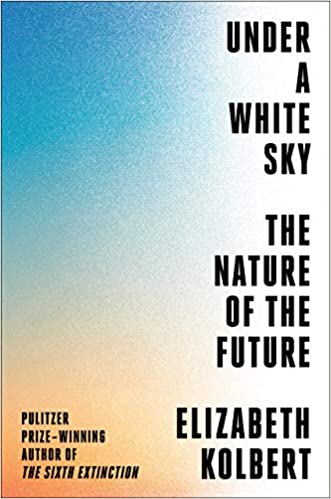
Kolbert’s new book, Under a White Sky, turns the page on this cataclysmic event in the Earth’s history to focus on the efforts being made to control nature to address environmental problems, including climate change.  To say that Kolbert is skeptical of those efforts is to understate her critical evaluation of them. 

Controlling Nature

In 1990, I was introduced to the human delusion that we can control nature by John McPhee’s The Control of Nature.  His book had a profound influence on my thinking about nature.  It was the basis for my belief that attempts to turn back the botanical clock to 500 years ago to a pre-settlement landscape, mistakenly believed to be pristine, are futile, misguided, and often damaging.  Kolbert’s latest book is written from the same perspective as McPhee’s seminal work and she gives him credit for his pioneering work.
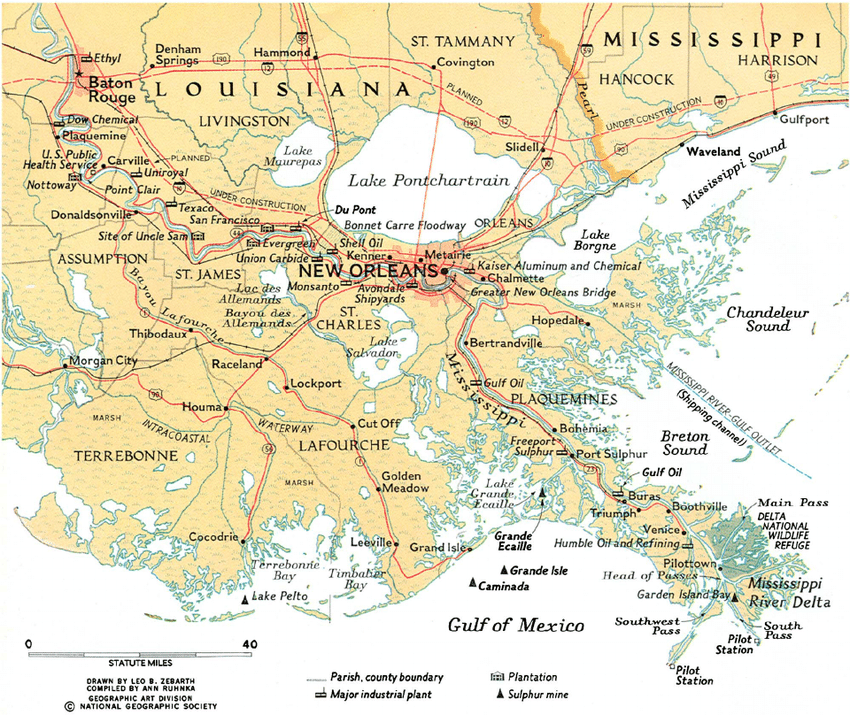
Map of Mississippi River Delta

McPhee’s book predicted the catastrophic flooding of New Orleans by hurricane Katrina in 2005.  Human engineering of the Mississippi River for over 100 years set the stage for that disaster.  New Orleans sits at the Gulf end of the Mississippi River.  Historically, the river flowed from Minnesota to the Gulf, accumulating sediment along its way and depositing it as it entered the Gulf, fanning out into streams and swamps that created the Mississippi Delta.  The labyrinth of land and marsh created by the sediment deposited by the river created a barrier that protected New Orleans from storms. 

However, the uncontrolled and episodic flow of the river caused periodic flooding that was not convenient for the human inhabitants of New Orleans and the Delta community.  So, the flow of the river was controlled by levees and pumps were used to return water from the land to the river.  Sediment from the river could no longer replenish the land because it was confined to the constrained river, which put the human engineers onto a never-ending treadmill of building higher levees and bigger pumps.  It was inevitable that the river would eventually overwhelm the defenses built by the engineers and so it did during Katrina in 2005.

Kolbert updates this untenable situation in the Mississippi Delta in her new book.  The underlying cause, as told by McPhee is recapped by Kolbert.  Then new manmade environmental issues are added to the catastrophic circumstances that will inevitably doom the human inhabitants.  Rising sea levels caused by climate change are one factor.  The incursion of salt water into fresh water swamps killed vegetation that acts as a buffer during storms. Oil and gas exploration and extraction in the Delta has caused the land to drop further. 

Many Delta communities and some neighborhoods in New Orleans have been abandoned because they are essentially underwater.  Since Katrina, no serious effort has been made to change the approach to the issues.  Bigger, more powerful pumps have been built and levees have been made higher and stronger.  No one is seriously considering the need to relocate New Orleans or surrounding communities to higher ground.  The delusion that humans can outsmart the river continues. 

A comedy of errors

Kolbert introduces the many projects that are trying to solve problems that were created by bad decisions made earlier by other humans with a quote from Albert Einstein: “We cannot solve our problems with the same thinking we used when we created them.”  These wise words from a wise man are clearly not being heeded by the masterminds of the projects Kolbert describes in her book:
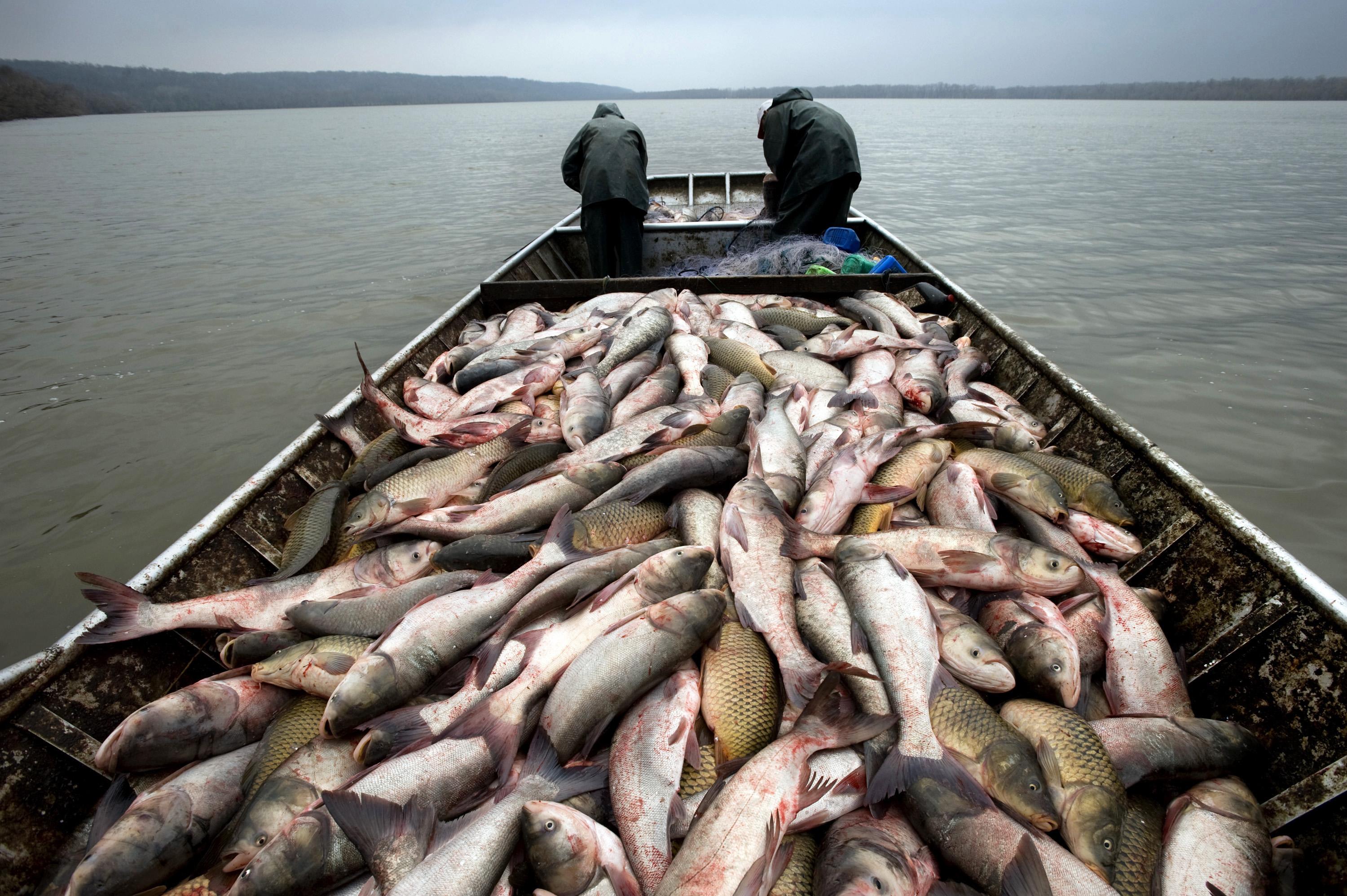
Dead carp
  • High on the list of projects in which society is heavily investing is the attempt to prevent carp from entering the Great Lakes from the Mississippi River.  After many different approaches were tried and failed, the current strategy is an electrified fence separating the Chicago River (connecting to the Mississippi River) from Lake Michigan that kills untold thousands of fish every day.  This deadly project is the end stage of previous bad decisions.  A link between Lake Michigan and the Mississippi River was created by a massive engineering project that reversed the flow of the Chicago River in 1887.  Later, carp was introduced to the Mississippi River from China as biological control to address pollution issues.  One species of carp was introduced to control aquatic weeds and another carp species was introduced to consume nutrients in sewage ponds.  Kolbert says such biological controls became popular after Silent Spring was published because Rachel Carson considered pesticides a curse and biological control a panacea. (Which is not to say that pesticides aren’t a curse.) In other words, we traded one problem for another.
  • Island eradications of introduced mammals such as rats and mice are also popular projects (with some people).  Genetic engineering is being aggressively pursued as a possible substitute for the rodenticides that are being used for these projects.  These projects have the potential to drive an entire species into extinction or alter their physiology such that they could become killers or prevent them from being killers.  Kolbert buys a genetic engineering kit for $209 from a young entrepreneur in Oakland that enables her to make E.coli cells resistant to an antibiotic.  E.coli is a deadly bacteria that can be fatal if untreated by antibiotics.  In other words, anyone with $209 can turn bacteria into killers with no special training or equipment.  What could possibly go wrong, Kolbert asks rhetorically.

The promise and threat of geoengineering

Kolbert visits several different geoengineering projects that are trying to prevent the consequences of climate change without reducing greenhouse gas emissions, the underlying cause of climate change.  One such project is turning CO₂ into stone.  Apparently it CAN be done, but to do it on a scale that would actually prevent climate change would be to devote much of the surface of the Earth to that purpose. 

Kolbert visits a project that believes injecting aerosols into the atmosphere to block the sun is the best bet to stop climate change.  The proposal strikes Kolbert as both preposterous and dangerous.  The researcher detects her skepticism and retorts, “People think of all the bad examples of environmental modification.  They forget all the ones that are more or less working.  There’s a weed, tamarisk, originally from Egypt.  It’s spread all around the desert Southwest and has been destructive.  After a bunch of trials, they imported some bug that eats the tamarisk, and apparently it’s kind of working.” 

Tamarisk defoliation along Colorado River, near Needles, California

In fact, the introduced tamarisk beetle is working too well.  It has spread far beyond the regions where it was introduced and produced wastelands of dead trees in Arizona and Southern California.  Since one of the rarest desert birds depends upon tamarisk there isn’t much to celebrate about this over-achiever beetle.

Compounding the problem

Instead of addressing the source of environmental issues, we compound them by creating new problems with our theoretical “fixes.”  The native plant movement, in their zeal to save native plants, sprays herbicides that kill as many native plants as non-native plants and poison the soil while doing so, stunting all new growth, both native and non-native. 

I share Kolbert’s skepticism about the projects she describes for the same reasons she gives.  Every “fix” has the potential to create new problems that could be more disastrous than the problems they are meant to resolve.  And the resources used to develop new techniques such as massive geoengineering projects could be used instead to address the underlying cause of the problem, which is the greenhouse gas emissions causing climate change.  We don’t want to give up our fossil-fuel driven economy, so instead we conjure up even more damaging ways to ameliorate the inconveniences of climate change.  It’s a fantasy that prolongs and exacerbates the consequences of climate change.

Finally, let’s give Kolbert the last word:  “This has been a book about people trying to solve problems created by people trying to solve problems…Geoengineering may be ‘entirely crazy and quite disconcerting,’ but if it could slow the melting of the Greenland ice sheet, or take some of ‘the pain and suffering away,’ or help prevent no-longer-fully-natural ecosystems from collapsing, doesn’t it have to be considered?…But to imagine that ‘dimming the fucking sun’ could be less dangerous than not dimming it, you have to imagine not only that the technology will work according to plan but it will be deployed according to plan.  And that’s a lot of imagining…But let’s just say the record here isn’t strong.”  (2)

Thank you, Elizabeth Kolbert, for calling out the grand delusions of humans who mistakenly believe it is possible to control nature to avoid inconveniencing human society. 


  1. Elizabeth Kolbert, The Sixth Extinction, Henry Holt and Co., 2014
  2. Elizabeth Kolbert, Under a White Sky, Crown New York, 2021
What does this mean: “Nature-based solutions to achieve California’s climate change and biodiversity goals”?

In October 2020, Governor Newsom signed Executive Order N-82-20 “enlisting California’s vast network of natural and working lands – forests, rangelands, farms, wetlands, coast, deserts and urban greenspaces – in the fight against climate change. A core pillar of Governor Newsom’s climate agenda, these novel approaches will help clean the air and water for communities throughout the state and support California’s unique biodiversity.”

The California Natural Resources Agency has invited the public to tell them what you think that means.  They are holding a series of virtual on-line workshops (register here) and they are inviting the public to complete a survey (available here) by the deadline of May 14, 2021.  Recordings of workshops that have already taken place are available HERE.   Email address for feedback and questions is californianature@resources.ca.gov.

Click on picture to see San Francisco Bay Area regional workshop

I attended one of the workshops and I’ve read the material available on their website.  This is what little I can tell you about the project.  There seem to be three elements to this initiative:

  • The Natural and Working Lands Climate Smart Strategy will “expand climate smart land management across California to achieving carbon neutrality and reduce climate risks to communities and ecosystems and build climate resilience across California.”
  • The 30X30 initiative establishes a state goal of conserving at least 30 percent of California’s land and coastal waters by 2030, while “safeguarding our State’s economic sustainability and food security, protecting and restoring biodiversity.” Conservation measures will focus on a “broad range of landscapes, including natural areas and working lands, in partnership with land managers and natural resource user groups while building climate resilience and reducing risk from extreme climate events.”  Projects will also “expand equitable outdoor access and recreation for all Californians.”  Approximately 22% of land in California is presently protected, but only 16% of our coastal waters. 
  • “The California Biodiversity Collaborative will bring together groups and leaders from across our state to take bold action to maintain California’s extraordinary natural richness. This Collaborative was a directive set forth in Governor Newsom’s 30×30 Executive Order and is the next generation of the State’s Biodiversity Initiative.”

I have no idea what these vague commitments mean when they are translated into specific land acquisitions and funded projects, but I know that non-governmental organizations see this as an opportunity to obtain funding for what they want. 

Only 10% of the audience for the San Francisco Bay Region workshop was the general public. Over 50% of the 280 people at the workshop (by far the largest constituency at the workshop) I attended were employees of non-governmental organizations.  The California Invasive Plant Council (Cal-IPC) asked their members to attend the workshops and participate in them:  “This is a critical opportunity to make sure the need for invasive plant management is heard, loud and clear. We encourage you to attend to learn more about 30×30 and share your ideas.”  These are Cal-IPC’s suggestions for participants:  “Several points to consider making: (1) the definition of “protected” — and the metrics used to measure 30×30 success — need to include adequate funding for ongoing stewardship; (2) funding for the Weed Management Area (WMA) program is critical for county collaborations staying on top of high priority invasive plants across jurisdictional boundaries; (3) wildfire fuels reduction should follow best practices, including control of invasive plants, so that habitat is enhanced, not damaged.” California Native Plant Society is also asking its membership to participate in the 30 X 30 public outreach effort in support of CNPS objectives.

If you have your own priorities for how your tax dollars are used, you may want to participate in this public process as well because the projects will have an impact on land management practices throughout the State of California.  Please consider attending a workshop and completing the long, complex, and vague on-line survey by May 14, 2021.  I have no idea if the California Natural Resources Agency will take the public’s input into consideration, but I know this:  If you don’t participate, you will take whatever you get. 

What I WANT it to mean

This initiative is going to be a major public investment and non-governmental non-profit organizations see it as an opportunity to fund their projects.  The disparate goals of this initiative are often in conflict.  If climate change solutions and related wildfire hazard reduction goals conflict with biodiversity goals, addressing climate change hazards must be the top priority because all life is threatened by the consequences of climate change.  The public must understand that when the climate changes, the vegetation changes.  The ranges of native plants and animals have changed and will continue to change in response to climate change.  Native vegetation is not inherently less flammable than non-native vegetation.

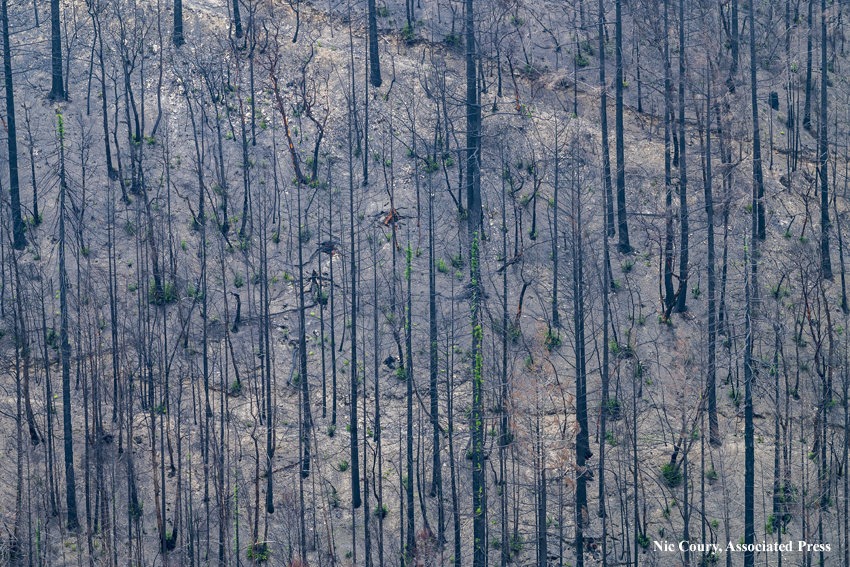
On August 18, 2020, the CZU Lightning Complex Fire swept through Big Basin Redwoods State Park, burning over 97% of the land, forested in native redwood trees. (AP Photo/NicCoury published by CA State Parks)

The native plant movement is a form of climate change denial.  We cannot replicate the landscape of 250 years ago, as native plant advocates wish, because it is not adapted to the current and anticipated climate.  Biodiversity is appropriately defined as all species of plants and animals, regardless of their origins.  Forests are major carbon sinks, whether they are native or considered non-native by people with a short-term perspective of nature and evolution.

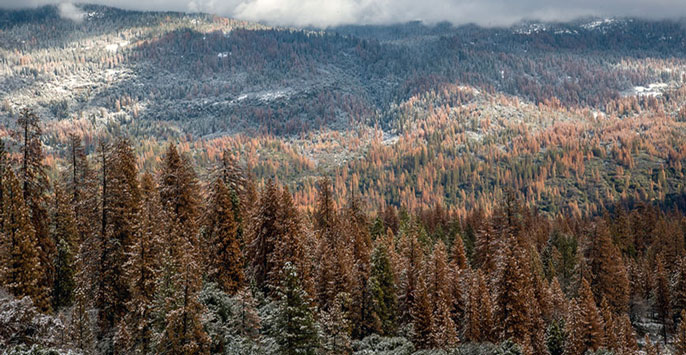
Over 160 million native conifers have died in California in the past 8 years. They were killed by high temperatures, drought, and native bark beetles. All of these factors are consequences of climate change.

The survey for this project is not user friendly.  Within its constraints, here is a sample of the specific points I was able to make:  “Do not fund projects that use pesticides, including herbicides.  Do not replace established vegetation that does not require irrigation with vegetation that will require irrigation to become established.  Do not fund projects that will require recreational access restrictions. Stop eradicating non-native spartina marsh grass with herbicides because it protects wetlands year around from storm surges.  Where afforestation is possible, plant only trees that are adapted to the current and anticipated climate. Fund projects that protect residential communities from coastal flooding and salt-water incursion into ground water. Fuels management projects must assume that native and non-native vegetation is equally flammable because flammability is unrelated to the origin of plants.  If climate solutions conflict with biodiversity goals, climate solutions should be the top priority because all life is threatened by climate change.  If fuels management goals conflict with biodiversity goals, fire safety should be the top priority.”

Michael Soulé: The consequences of crisis conservation

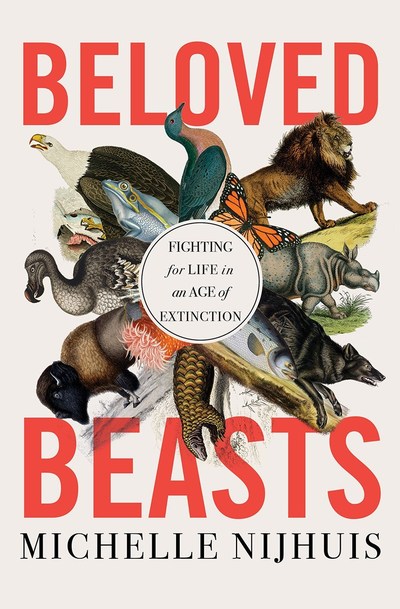
Recently published Beloved Beasts is a collection of brief biographies of major figures in conservation, starting with Carl Linnaeus, the creator of the system of classifying plant and animal species in the 18th Century that is still used today.  I was most interested in the chapter about Michael Soulé because I knew the least about him.  I heard Soulé speak at the California Native Plant Society conference in 2015.  He was very angry about the criticism of invasion biology that had recently emerged and was getting louder.  He wasn’t having it!

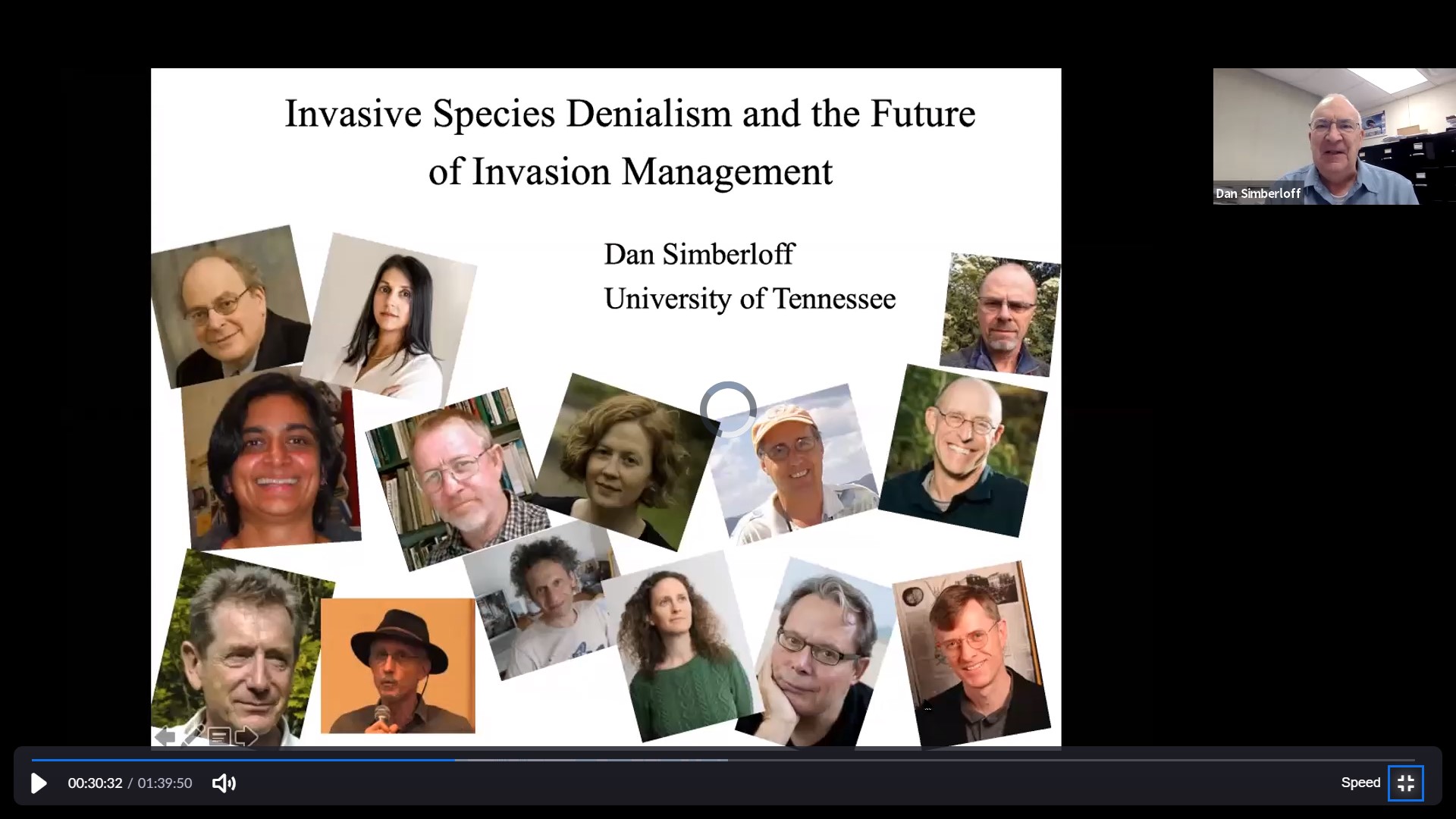
Daniel Simberloff is an ally of Michael Soulé’s. This is Simberloff’s rogues gallery of critics of invasion biology shown at the most recent conference of the California Invasive Plant Council in October 2020. The chorus of critics is bigger than it was in 2015 when Soulé spoke to the California Native Plant Society.

Beloved Beasts explained that Soulé was one of the first academic scientists to engage in political activism in support of his beliefs about conservation and he was an active participant in the major turning points in conservation science and practice.  His approach was unique at the time because data and analysis took a back seat to what he called “crisis conservation.”  Most academic scientists are reluctant to take their knowledge into the realm of public policy.  As a student of Paul Ehrlich, the author of Population Bomb, Soulé was a member of the doom and gloom crowd.  He and his colleagues believed that human population was devouring the planet.  They said we can’t wait for careful analysis, we must act.

Crisis Conservation

Crisis conservation requires a top-down strategy.  The “experts” want the authority to dictate conservation strategies so they can be implemented quickly without the interference of the public who is considered the source of environmental problems, not the solution.  I encountered this attitude over 20 years ago when I objected to plans to transform the public parks of San Francisco into native plant gardens in which the public was not welcome.  In a heated debate over the 700-page plan for this transformation, the leading light of the native plant movement in San Francisco admitted that he had not read the plan and did not intend to read it.  He said, “We know what needs to be done and we just want to be left alone to do it.” He was as angry about the public’s interference as Michael Soulé was about other academic scientists questioning his opinion that non-native plants and animals must be eradicated.

The author of Beloved Beasts explains the disadvantages of the top down approach to conservation in a chapter about conservation projects in Namibia.  The goal of these projects is to preserve wildlife, including critically endangered animals such as rhinos.  Initially, protected areas were created that excluded indigenous people and rangers were hired to patrol and enforce prohibitions against hunting.  It quickly became apparent that the people who lived there could not be prevented from hunting, particularly during extreme droughts in which starvation was the only alternative to hunting.  A handful of rangers were no match for a much larger population of residents who were more familiar with the land and the animals living there. 

Over time, project leaders realized that a new strategy was needed that would include the participation and accommodation of the people.  The residents were given the authority to organize themselves into community conservation groups that set hunting quotas and enforced them themselves.  Cooperative relationships with hunting tourism organizations provided revenue to the residents to compensate them for the loss of some of the food they had hunted in the past.  These conservations groups were possible because indigenous people usually care as much about wild animals as foreign visitors do. 

The tragedy of the commons

The narrative of the tragedy of the commons was central to the beliefs of Soulé and his allies and it supported their authoritarian approach to conservation projects.  The tragedy of the commons assumes that a shared resource will be depleted by its users absent legal regulation and enforcement.  As popularized by Garrett Hardin in 1968, “Ruin is the destination toward which all men rush, each pursuing his own best interest in a society that believes in the freedom of the commons.  Freedom in a commons brings ruin to all.”  That viewpoint justifies authoritarian control over the people who share a resource, who are presumed to be irresponsible users of the resource.

Community conservation projects in Namibia are not consistent with the dire predictions of the tragedy of the commons because the indigenous people cared as much about the wild animals as the foreign visitors of the animals.  Many examples have existed and still do exist where members of a community with regulated access to a common resource co-operate to exploit those resources prudently without collapse. Elinor Ostrom was awarded the 2009 Nobel Prize in Economic Science for demonstrating this concept in her book Governing the Commons, which included examples of how local communities were able to do this without top-down regulations or privatization.

Elinor Ostrom had a unique understanding of the complexity of human society and she was deeply suspicious of conservation strategies portrayed as a magic bullet.  According to Beloved Beasts, “She knew how corrosive panaceas could be; all her data could not dislodge Hardin’s metaphor from the public imagination, and the tragedy of the commons remains a powerful panacea for optimism.”  Beloved Beasts endorses Ostrom’s viewpoint:  “The great challenge of conservation is to sustain complexity, in its many forms, and by doing so protect the possibility of a future for all life on earth.  And for that, there are no panaceas.”

At the core of the native plant movement is the mistaken belief that the existence of non-native plants is the sole obstacle to the survival of native plants.  This is an oversimplification of complex ecosystems that are undergoing rapid change and are evolving and adapting to those changes.  Eradicating non-native plants and animals is not a panacea.  In fact, in many cases futile attempts at eradication are doing far more harm than good. 

Unintended Consequences

The unintended consequences of many conservation projects are the cost of the top-down strategies used to design the projects.  The “experts” frequently do not realize the limits of their knowledge. The “crisis” mentality prevents the careful analysis needed to prevent disastrous outcomes.

green crab

A failed effort to eradicate green crabs in a lagoon in Marin County is a case in point.  After years of killing adult green crabs, the total crab population exploded to 30 times its original size.  The failure of the project was studied by scientists who were not responsible for the original project.  They knew that adult crabs eat their young.  When the adults were killed, the unchecked population of young crabs exploded.  Genetic studies also determined that the green crabs in the lagoon are related and connected to green crab populations in adjacent bodies of water.  The green crab population in the Bay Area is a regional, not a local issue.  Taking a longer view of the issue also revealed fluctuations in the population over the long-term, suggesting that a crisis response is inappropriate over time.  Such fluctuations in abundance are common in nature.  The second team of scientists recommended a new, much less aggressive management approach that aims to keep the population below 40% capacity.

The professor and ecologist who revised the strategy explained what he learned from the experience:  “A failure in science often leads to unexpected directions. We slapped our foreheads at the time, but with thought and understanding, it’s told us a lot about what we shouldn’t be doing and provided a way forward for us. The world should get less focused on total eradication and work toward functional eradication.”

Sacrificing common animals in service of rare animals

Crisis conservation is committed to preserving species rather than individual animals.  Those who subscribe to that agenda are willing to sacrifice individual lives. For example, native barred owls are being shot because they are perceived to be competitors of rare spotted owls.  We are sacrificing common animals to save rare animals. 

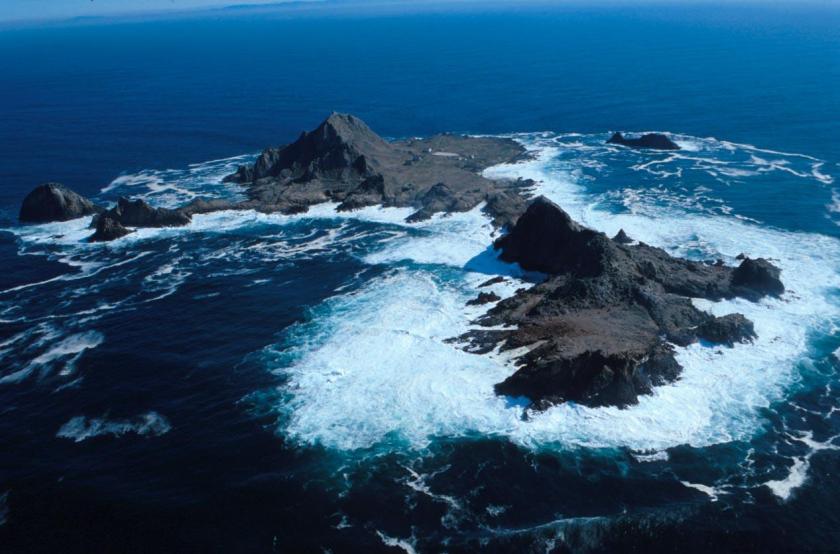
Farallon Islands, NOAA. Click on the picture to see a brief video about the Farallons eradication project and the email address of the California Coastal Commission to comment on the project.

A proposed project on the Farallon Islands is an example of a project that will sacrifice hundreds of individual birds and marine mammals based on the belief that one species of rare sea bird will benefit.  The project will aerial drop 1.5 tons of rodenticide on the Farallon Islands with the intention of killing mice.  The mice don’t eat birds or chicks, but they are the preferred prey of a small population of burrowing owls who eat chicks of the rare sea bird.  The project claims that the burrowing owls won’t visit the Farallons if the mice are eradicated.  The project admits that there will be “collateral” damage from the rodenticide that is likely to be eaten by hundreds of non-target birds and marine mammals.  This loss seems worthwhile to the promoters of this project.  It seems entirely unjustified to me and many others. 

The message of Beloved Beasts

Beloved Beasts makes a strong case for a conservation strategy that considers the needs of humans and values the lives of individual animals.  Such a strategy requires greater appreciation of the complexity of nature and animal societies, including human society.  It is suspicious of simple solutions that often have unintended consequences.  For all these reasons Beloved Beasts is entirely consistent with the mission of Conservation Sense and Nonsense.  I recommend it to you with enthusiasm.