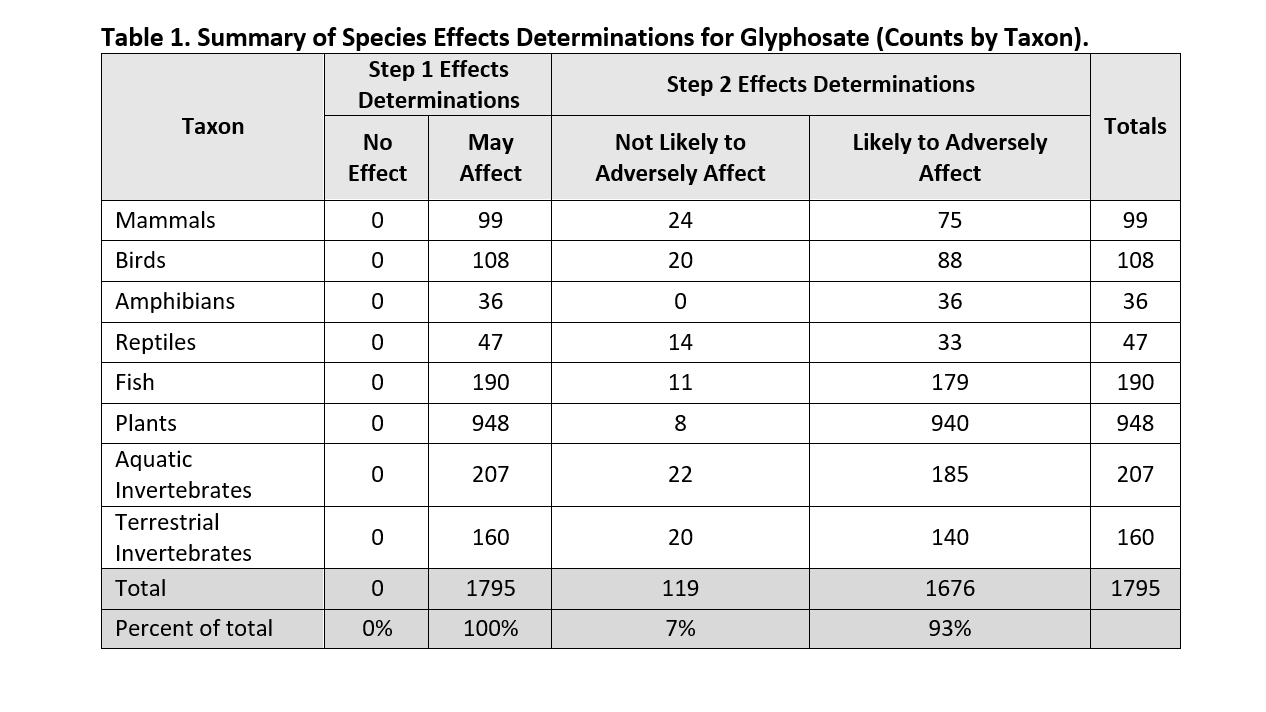
The Endangered Species Act requires that the Environmental Protection Agency (EPA) conduct biological evaluations (BE) of the impact of pesticides on threatened and endangered species protected by the ESA. For example, when the EPA published its final evaluation of glyphosate in 2021, it informed us that glyphosate is “likely to adversely affect” 93% of legally protected endangered and threatened plants and animals.
The EPA published a draft of a biological evaluation (BE) of 11 rodenticides in November 2023, which is a free gift to the island eradication industry. The deadline for making comment on this draft is February 13, 2024. Public comment can be made HERE.
The EPA’s biological evaluation for rodenticides reached the conclusion that rodenticides used in island eradications have “no effect” on any aquatic plant or animal, including birds in the aquatic food web and amphibians with a fully aquatic lifestyle. They made this “no effect” determination without evaluating any of those species, based on their claim that the Product Label for the rodenticide used in island eradications prohibits its use in water, which is not true. EPA also extended this “no effect” determination to all species under the jurisdiction of National Marine Fisheries Services. (1)
In fact, the standard Product Label for brodifacoum does not explicitly prohibit the use of the product in water. It merely warns of the deadly consequences for aquatic species if used in water: “This product is extremely toxic to birds, mammals, and aquatic organisms. Predatory and scavenging mammals and birds might be poisoned if they feed upon animals that have eaten bait. Runoff may be hazardous to aquatic organisms in water adjacent to treated areas. DO NOT contaminate water when disposing of equipment wash water or rinsafe.” The standard Product Label also explicitly allows aerial broadcast of rodenticides for island eradications. (2) In other words, it’s dangerous to apply rodenticides to water, but, in fact, it often happens during island eradications. The biological evaluation asks the public to believe the EPA’s claim that rodenticides are not used in water despite ample evidence that rodenticides land in water during aerial broadcasts on islands.
Although the standard Product Label acknowledges the potential that rodenticide runoff “may be hazardous to aquatic organisms in water adjacent to treated areas,” EPA’s biological evaluation dismisses that possibility by claiming that “use patterns preclude spray drift and runoff exposure.” EPA’s biological evaluation provides no evidence in support of that claim and that claim is explicitly contradicted by the EPA in its evaluation of the proposed island eradication on the Farallon Islands as well as the considerable record of contamination of the aquatic food web during completed island eradications, as explained below.
Supplemental Product Labels are required for island eradications because they require greater quantities of rodenticide bait than allowed by standard Product Labels and modifications in application methods. The Supplemental Product Label required for island eradications explicitly permits the use of brodifacoum on water (3):
- Elevated and floating bait stations are allowed in intertidal zones above the mean low tide mark and below the mean high tide water mark.
- Broadcast applications are allowed in coastal areas above the mean high tide water mark. Conversely broadcast applications are prohibited below the mean high tide water mark.
The cited Supplemental Product Label for Wake Island was recently published in preparation for a second attempt to eradicate rats on Wake and 2 adjacent islands. The first attempt in 2012 was a failure. Here is a photo of this complex of islands:
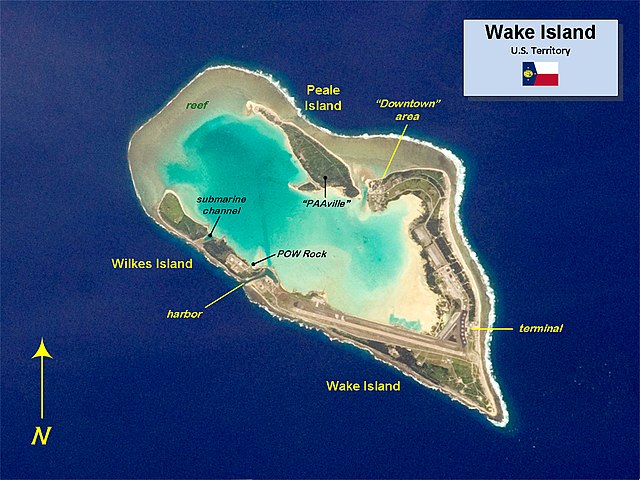
As you can see, Wake Island is a narrow strip of land surrounding a lagoon that is open to the ocean. Two-thirds of the island is surrounded by sandy, tidal beaches. Scrub vegetation is in the intertidal zone. A portion of the island’s vegetation is wetland. It defies belief that it is possible to aerial broadcast rodenticide from helicopters (or float bait boxes in the intertidal zone) on Wake Island without getting rodenticide in the water.
The published study about the failure of the first attempt to eradicate rats on Wake Island was written by the organizations that conducted the project. It reports that rats were found on the island less than a year after the aerial broadcast and supplemental hand-applications were done. The study makes no mention of non-target deaths of any animals. The study speculates that the failure of the attempt was the result of not applying the rodenticide everywhere rats were living. They will soon try again, using the same methods. Rodenticide bait will surely end up in the water. More non-target animals will undoubtedly be killed. But the public will not learn about either of those issues, because the monitoring and reporting is entirely controlled by the perpetrators of these projects. (4)
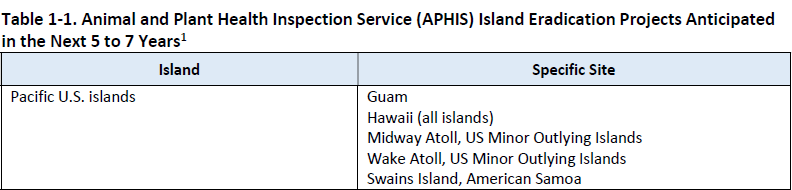
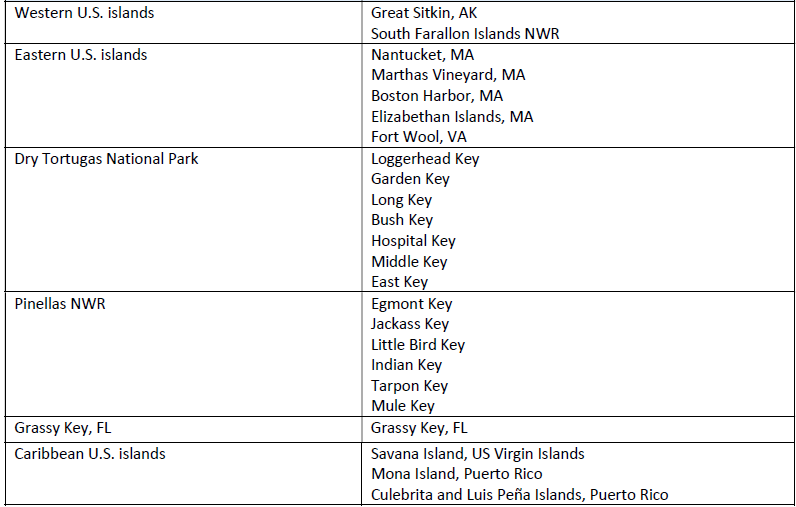
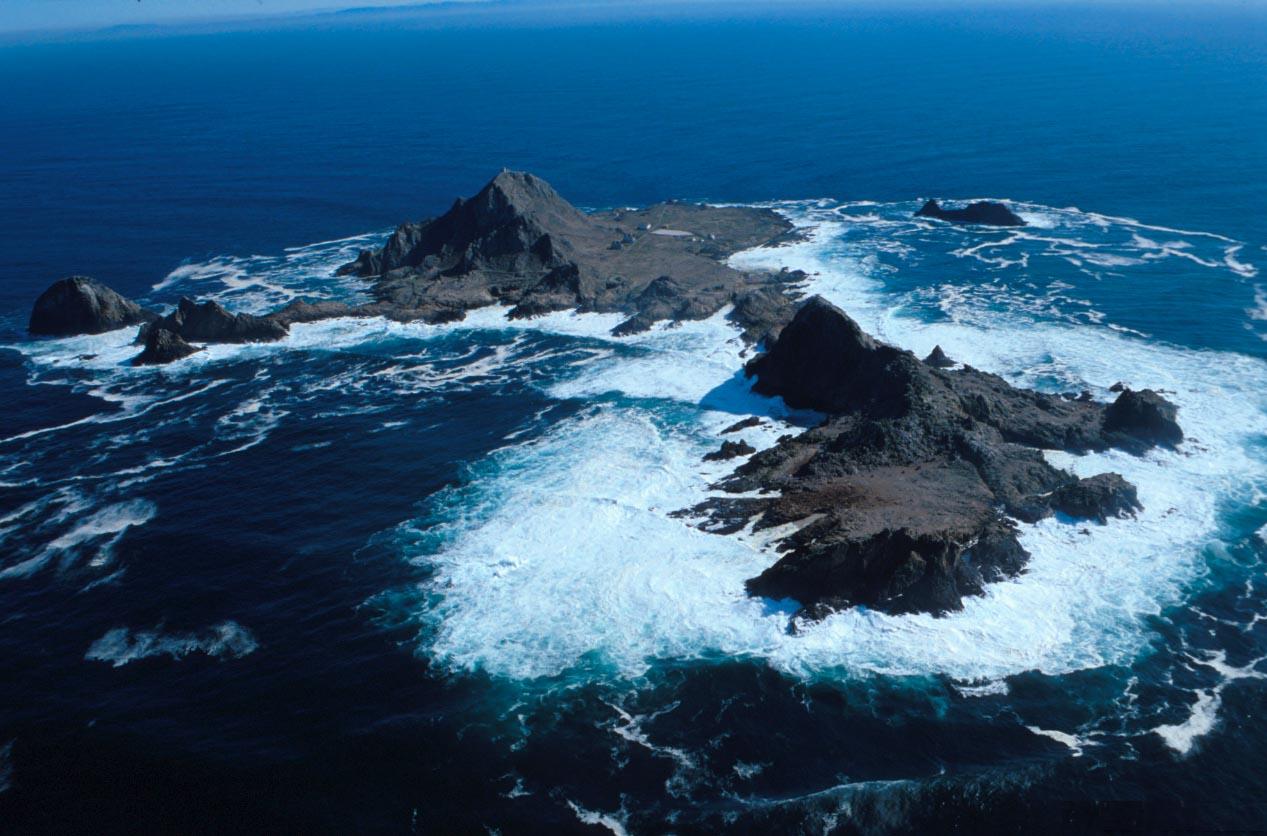
Keep in mind that there are 239 taxa living in the intertidal zone around the Farallon Islands, according to Appendix J of the Final Draft of the Environmental Impact Statement for the proposed Farallon Islands. No Supplemental Product Label has been granted yet for the proposed island eradication on the Farallon Islands, but the Farallones are included on the list of 29 island eradications (below) in the EPA’s biological evaluation, which the BE says will be done within the next 5-7 years.
Contamination of the aquatic food web during island eradications is inevitable
EPA made a public record of its concerns about contaminating the aquatic food web during island eradications in its letter of December 9, 2013 regarding “EPA comments on the Revised Draft Environmental Impact Statement for the South Farallon Islands Invasive House Mouse Eradication Project.” (5) In response to the claims of the DEIS for the proposed island eradication that “the bait deflector will minimize, and in several places, prevent bait drift into the marine environment,” the EPA said, “The EIS should be clear that bait drift would occur.”
The EPA’s letter of December 9, 2013, goes on to report previous experience with aerial broadcast applications on Palmyra Island and states: “For future operations, the potential for bait to enter the marine environment must be a factor in the aquatic risk assessment and further methods to minimize the amount of bait entering the marine environment should be fully explored. The amount of bait that enters the aquatic environment from an aerial broadcast depends on shoreline configuration, island topography, overhanging vegetation, bird activity affecting flight lines, wind strength and direction, weather conditions, and pilot experience. On islands where these factors increase the potential for bait to enter marine environments, additional mitigation measures may be needed to protect sensitive marine environments.” (5)
Based on those concerns about contamination of the marine food web, the EPA’s letter of December 9, 2013 expresses these specific concerns about the proposed aerial broadcast application on the Farallon Islands: “Discuss and consider the factors that increase the potential for bait to enter marine environments that are identified above. Especially relevant are the irregular shoreline, the excessive bird activity from gulls, and the proposal to fly steep areas a second time (shorelines on the Farallones are steep) to increase the application rate in these areas.” (5)
Given the EPA’s explicit admission that aerial broadcast of rodenticides on islands have contaminated the marine food web in the past and are likely to do so in the future, the EPA is not in a position to now categorically deny that “use patterns preclude spray drift and runoff exposure,” as it attempts to do in the draft biological evaluation. Nor is the EPA in a position to categorically deny that aquatic species will be adversely affected by rodenticide bait that will inevitably land in the water surrounding the Farallon Islands, as it attempts to do in the draft biological evaluation.
The deadly track record of island eradications
The aerial application of rodenticide to kill rats on Anacapa Island in 2001-2002 was the first of its kind in North America. The project was complicated by the need to spare a population of endemic native mice on Anacapa. Over 1,000 native mice were captured before the aerial application of rodenticide and released back on the island after the poison was no longer effective. Clearly, mice aren’t considered a problem on islands, unless they have the bad luck of being non-native. Whether native or non-native, they are prey for many bird species.
Most of the raptors on Anacapa were removed before the rodenticide drop. Of those that were left behind, 3 barn owls, 6 burrowing owls, and a kestrel likely died from rodenticide bait or eating poisoned mice. 94 seed-eating birds were also found dead after the poison drop. The study says that these collateral kills were consistent with other similar projects.
Bird scavengers such as gulls, vultures, and condors are also vulnerable to secondary poisoning by poisoned rodents. Shortly after the Anacapa poison drop, dead seabirds washed up on the shore near the Santa Barbara harbor. UC Santa Barbara’s daily newspaper said, “…a strong correlation exists between the National Park Service’s most recent airdrop of pesticide on Anacapa Island and the dead birds.” These deaths weren’t reported by the study of the success of the poison drop. As usual, the study was done by supporters of the project, with little interest in finding more collateral death from the drop. The public is not allowed to observe island eradications. Therefore, the public’s only source of information is those who are directly involved in the aerial application of rodenticides.
“In October 2008, two helicopters dropped approximately 46 metric tons of Brodifacoum 25-W bait on Rat Island’s 2800 hectares, supplemented by hand application of bait around the island’s freshwater lakes. This rodenticide is known to be highly toxic to birds. Some nontarget mortality was expected, but the actual mortality exceeded the predicted mortality. Forty six Bald Eagles died (exceeding the known population of 22 Bald Eagles on the island); toxicological analysis revealed lethal levels of brodifacoum in 12 of the sixteen carcasses tested. Of the 320 Glaucous winged Gull carcasses, toxicology tests implicated brodifacoum in 24 of the 34 tested. Carcasses of another 25 bird species were found; of these 54 individuals, three were determined by necropsy to have died of brodifacoum poisoning.” (6)
Palmyra Atoll was aerially broadcasted twice with brodifacoum rodenticide in 2011 as well as a follow-up hand broadcast application. The study of that project reported: “We documented brodifacoum residues in soil, water, and biota, and documented mortality of non-target organisms. Some bait (14–19% of the target application rate) entered the marine environment to distances 7 m from the shore. After the application commenced, carcasses of 84 animals representing 15 species of birds, fish, reptiles and invertebrates were collected opportunistically as potential non-target mortalities. In addition, fish, reptiles, and invertebrates were systematically collected for residue analysis. Brodifacoum residues were detected in most (84.3%) of the animal samples analyzed. Although detection of residues in samples was anticipated, the extent and concentrations in many parts of the food web were greater than expected.”
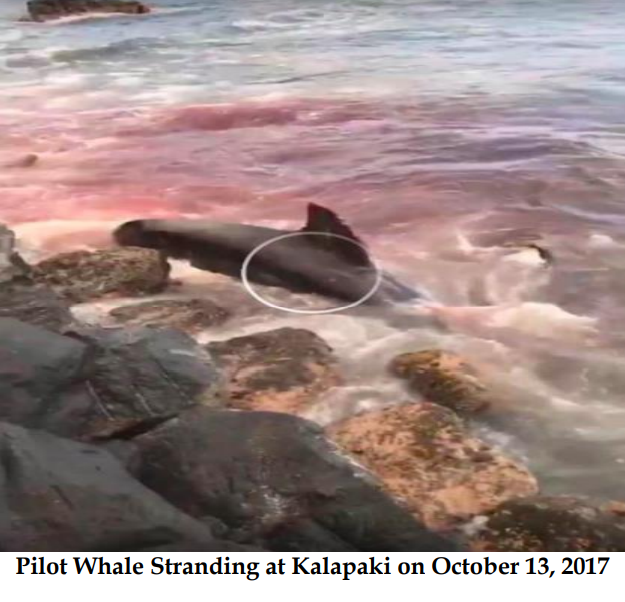
These published studies are helpful to understand the scale of water contamination and collateral deaths of non-target animals, including aquatic animals. However, they are just the tip of the toxic iceberg because little monitoring and testing is done on the many marine animals that have been killed in proximity of these projects. Robert Boesch is a retired pesticide regulator for the EPA and the Hawaii Department of Agriculture. Presently, he is Visiting Colleague at University of Hawaii at Manoa. He has written an unpublished discussion paper (7) that reports:
- Strandings of whales, some hemorrhaging, occurred within 60 days following anticoagulant bombardment.
- Unusual mass strandings of hemorrhaging dolphins occurred in San Diego and Hawaii years after anticoagulant bombardment.
- There is very little known about the fate of anticoagulant residues in the oceans.
.
The documented deaths of non-target animals caused by island eradications are direct poisonings by eating bait on the ground or by secondary poisoning by eating poisoned rodents. The EPA biological evaluation attempts to dismiss the potential for secondary poisonings by citing a study (Baldwin 2021) that claims most rodents die in their burrows after eating the poison, making them unavailable to be eaten by other animals. This study is not relevant to island eradications because it was conducted on ground squirrels (not rats or mice), it used a first generation rodenticide (diaphacinone) which is not used in island eradications, and most applications were burrow baits, rather than aerial broadcast.
What’s at stake?
About 1,200 island eradications have been done all over the world over the last 30 years, with mixed success. The EPA’s biological evaluation announces the intention to approve 29 new island eradications in US waters within the next 5-7 years, including the Farallones. In the case of Hawaii, the list says “all islands.” Many of the listed islands are actually a complex of islands, such as those in Boston Harbor. Many of the islands are residential communities, such as Nantucket and Martha’s Vineyard. As presently drafted, the biological evaluation will make it possible to approve those projects without addressing the considerable evidence that these projects are killing thousands of birds and animals and contaminating the ocean surrounding island eradications.
The Bottom Line
The draft biological evaluation is unacceptable because it gives the public the false impression that island eradications with rodenticides are harmless, when they clearly are not. It confers EPA’s blessing on island eradications by refusing to evaluate endangered species that may be harmed by island eradications. It ignores the evidence that rodenticide applications have killed many terrestrial and aquatic animals and contaminated the water.
The biological evaluation must be revised to correct these flaws in the present draft:
- Exposure to rodenticides during island eradications must be based on Supplemental Product Labels for island eradications, not standard Product Labels that do not apply to island eradications.
- The revised biological evaluation must evaluate all legally protected animals exposed to rodenticides during island eradications, including aquatic animals. Both bioconcentration and bioaccumulation must be considered in the determination of exposure to rodenticides. “No effect” cannot be assumed without such evaluation.
- The revision must provide evidence in support of the claim that there is no drift or run-off of pesticide from aerial broadcasts done on islands or delete that claim, which is contradicted by actual experience with island eradications.
- The revision must remove the claim that rodents die in their burrows after eating rodenticide bait (Baldwin 2021) because the study was done on a different animal, using a different rodenticide, and a different application method.
Update: The final version of the EPA biological evaluation of rodenticides is unchanged from the draft. It continues to make “no effect” determinations for all aquatic species and critical habitats under the jurisdiction of the National Marine Fisheries Service. It continues to list the same off-shore islands (including the Farallons) where “APHIS is planning to conduct rodent eradication projects for the benefit of seabirds and other wildlife on these islands in the next five to seven years.”
The only changes it acknowledges making are the removal of some of the mitigation measures from the draft. December 9, 2024
- EPA Biological Evaluation of Rodenticide
- Label Amendment for Brodifacoum -25W Conservation, November 12, 2019
- Supplemental Label for second attempt to eradicate Polynesian rates on Wake Atoll following previous attempt in 2012, December 6, 2021
- “The Wake Island Rodent Eradication: Part Success, Part Failure, but Wholly Instructive,” Island Conservation, et.al., Proc. 26th Vertebr. Pest Conf. Published at Univ. of Calif., Davis. 2014
- “EPA comments on the Revised Draft Environmental Impact Statement for the South Farallon Islands Invasive House Mouse Eradication Project.” December 9, 2013
- “The rat island rat eradication project: A critical evaluation of nontarget mortality,” prepared by The Ornithological Council, December 2010
- See attached file:
 Conservation Sense and Nonsense
Thank you for a brilliant , thorough treatment of this ecological hypocrisy. Please begin your info next time with a summation of the events and substances in ordinary English because the latinate, technical, and administrative presentation is too densely convoluted to follow without a guide. Again, I do appreciate your passionate devotion to truth and justice. Sincerely, Richard