Jared Diamond’s History Lesson for Us

In Collapse:  How Societies Choose to Fail or Succeed, Jared Diamond reviews the histories of societies that have failed in climates as diverse as Polynesia and the Arctic North.  He identifies a handful of factors that were instrumental in those failures, but only one of those factors is shared by all the examples he describes:  deforestation.

In every case deforestation reduced agricultural productivity by causing soil erosion and reducing rainfall.  The roots of trees hold soil in place and absorb rainfall which would otherwise wash over the surface of the soil, flushing it into watersheds where it increases turbidity and destroys fisheries.  The rainfall that is absorbed by the roots of trees is transpired by the leaves into the air where it rejoins the water cycle to be returned to the land as rainfall.  When the trees are destroyed, the water cycle is interrupted in that location and rainfall is reduced. 

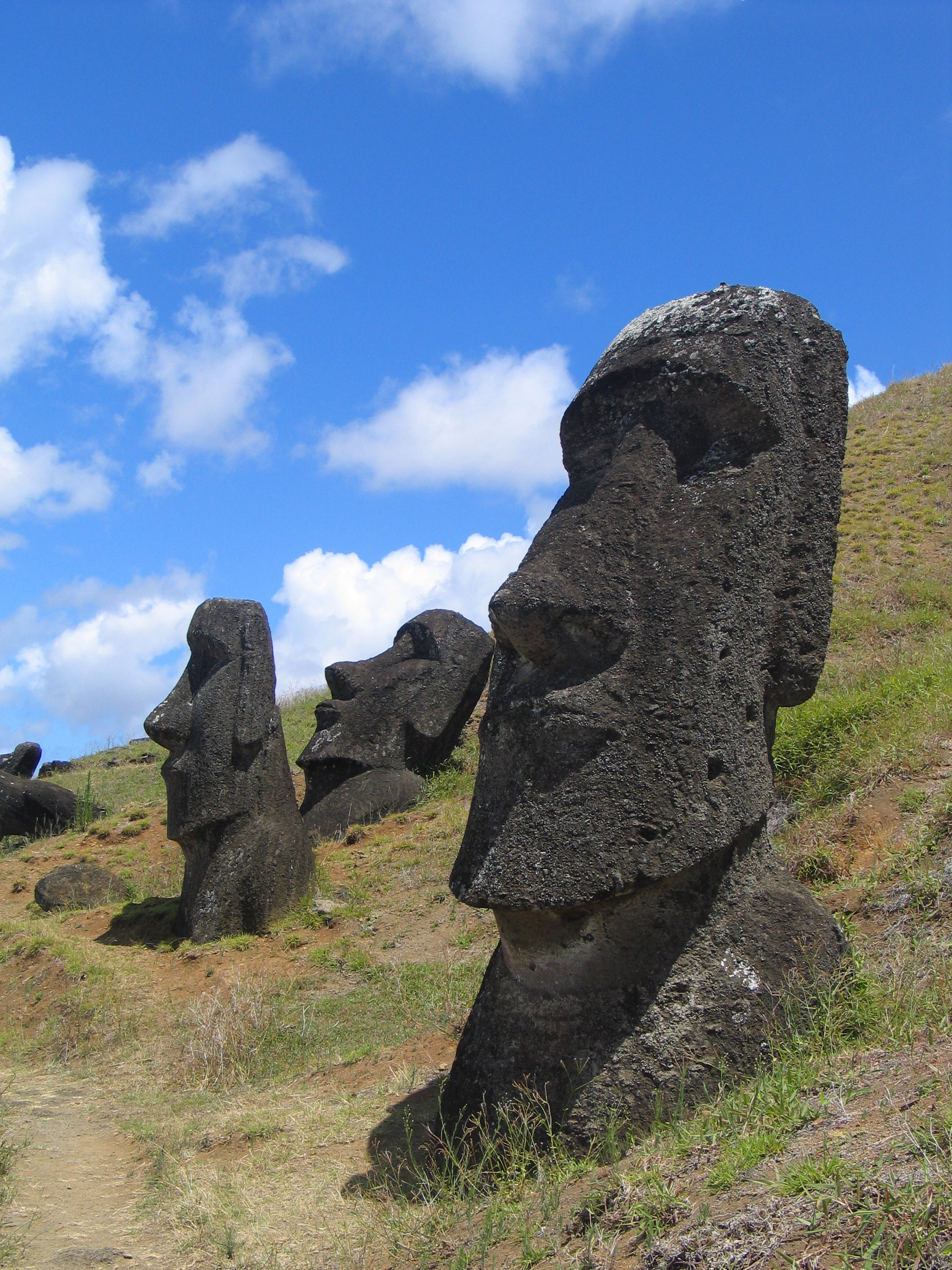
In some cases, the loss of trees had a more immediate, observable effect on the society.  On Easter Island, for example, the loss of trees quickly meant the loss of their main source of food:  fish.  Easter Island was the most easterly of the islands inhabited by Polynesians.  It was far from any other island.  Therefore, when their trees were gone and their boats eventually fell apart and could not be replaced, they had no means of fishing from their rocky shores.  (see video)

Likewise, the Norse population in Greenland eventually starved to death when they could no longer grow the hay needed to keep their cows alive.  In this frigid climate, they had used all of their trees as fire wood for warmth and to pasteurize the milk that was their principle food source.  As their fuel source diminished, they burned the peat that fed their cows. 

In both cases, as well as in others, these societies made choices that eventually contributed to their demise.  The failure of their societies was not inevitable.  On Easter Island, for example, the Polynesians chose to cremate their dead, unlike other Polynesians who bury their dead.  And they devoted much of their time, effort, and resources to building the gigantic stone tributes to their ancestors.  These stone sculptures were carved in quarries and then transported many miles by rolling them on logs.  These cultural uses of wood were not essential to the islanders’ physical survival.

Easter Island, Wikimedia Commons

In Greenland, the Norse brought the cows from their homeland that were central to their culture.  Their lives were devoted to keeping their cows alive by spending the brief summer growing the hay to feed the cows during the long winter in the huge stone barns in which the cows were protected from the extreme cold.  The milk had to be boiled to prevent it from spoiling.  As they depleted the wood needed to boil the milk, they simultaneously destroyed the land needed to grow the hay to feed the cows by burning the peat and causing erosion. 

Meanwhile, the Inuit neighbors of the Norse made other choices that enabled them to survive in the harsh climate.  They hunted whales and seals that were their principle food as well as the source of oil that heated their homes.  The Norse considered the Inuit enemies with whom they did not interact or trade.  Therefore, they were unable to learn these survival skills from them. 

Diamond contrasts these histories with those of cultures that have made other choices.  One of the most dramatic examples is the island of Hispaniola, shared by the nations of Haiti and the Dominican Republic.  Haiti is almost entirely deforested and its ability to feed itself is destroyed by erosion.  In contrast, the Dominican Republic is heavily forested because of a strong commitment to its forests made by its leadership.  There are intervening factors, to be sure, but the deforestation of Haiti is a major factor in its impoverishment. 

Diamond’s book intends to challenge us to look at the choices we are making for our own society.  He asks and answers the rhetorical question, “Why did these societies make choices that contributed to their failure?”  The short answer to that question is that long-term goals were sacrificed to short-term goals and that entrenched cultural practices were incapable of responding to changed conditions.  When you are freezing cold today, you might choose to burn your last tree even if it means you don’t have any wood tomorrow.  And when your entire diet is based on milk you can’t conceive that eating whale blubber may be a better choice for your long-term survival.

Million Trees sees these poor choices made by failed societies as similar to the poor choice that is now being made here in the Bay Area to destroy our non-native trees because we prefer native plants and trees. 

We live in a place in which there were few trees prior to the arrival of Europeans.  The landscape goal of native plant restorations is therefore grassland, scrub, and chaparral.  Native trees are unlikely to survive in most of the places which are now forested by non-native trees.  Native trees are being killed by Sudden Oak Death and bark beetle. Their historic ranges are changing in response to climate change.    Releasing carbon sequestered in the trees and eliminating that source of carbon storage in the future will contribute to the greenhouse gases that result in climate change.  Erosion is a likely consequence.  Rainfall could be reduced by the absence of trees.  Denuding our landscape of non-native trees is likely to result in a barren, weedy mess.

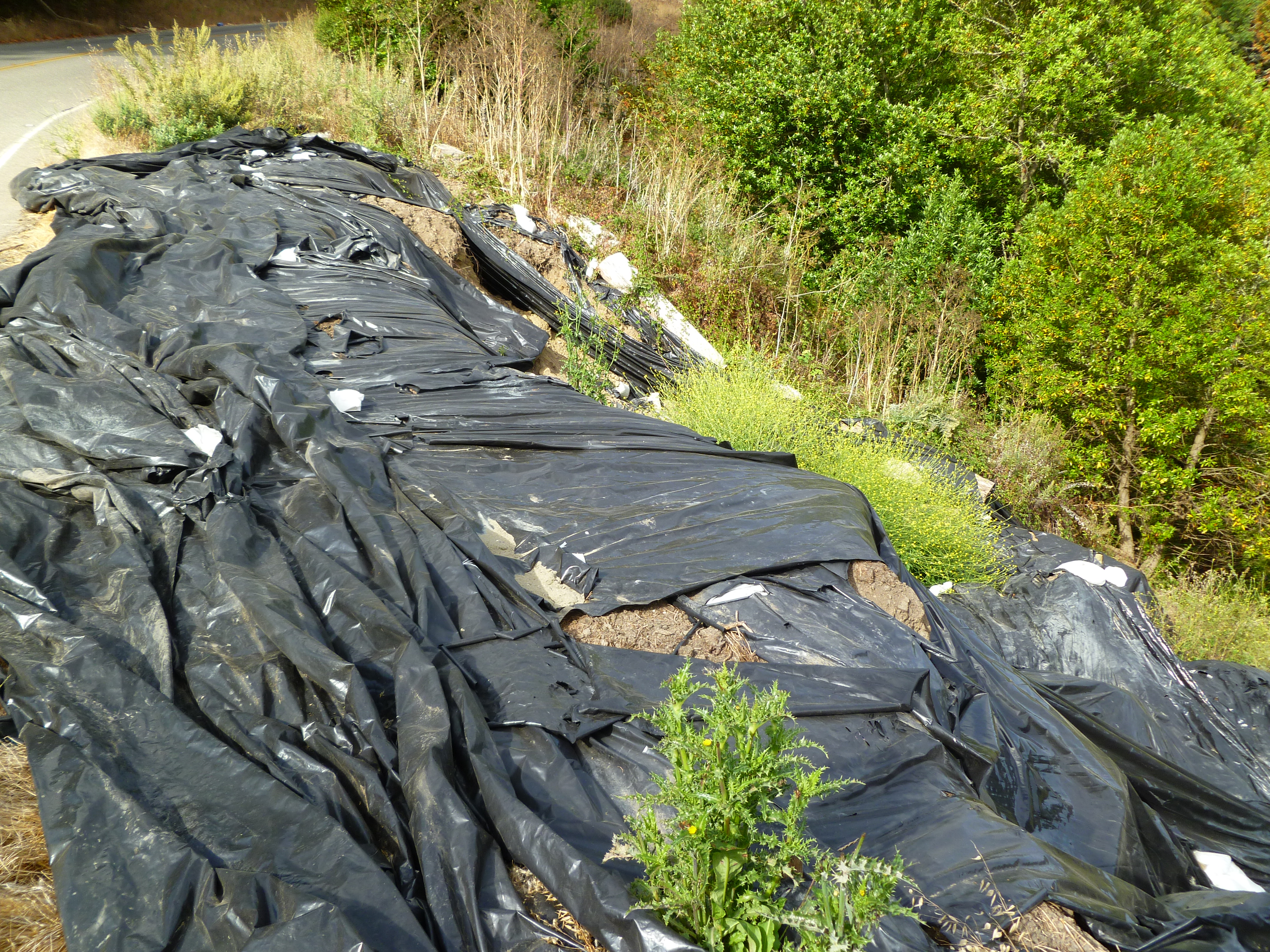
Grizzly Peak Blvd is being undermined by erosion resulting from clear-cutting of non-native trees

We urge native plant advocates to re-examine their demands for the destruction of non-native trees and plants in light of the changing climate which is exacerbated by deforestation.  As Jared Diamond says as he concludes his book, “The other crucial choice illuminated by the past involves the courage to make painful decisions about values.  Which of the values that formerly served a society well can continue to be maintained under new changed circumstances.”  

We do not ask that native plant advocates abandon their preference for native plants.  We encourage them to plant more native plants.  We ask only that they quit destroying those that are not native. 

Losing Battles to Save our Trees

In our posts “They can destroy your trees”   and “KILLER TREES!! Scare Tactic #3”  we told you about two efforts to save eucalyptus trees that were threatened with destruction.  Today we must tell you that those battles have been lost.

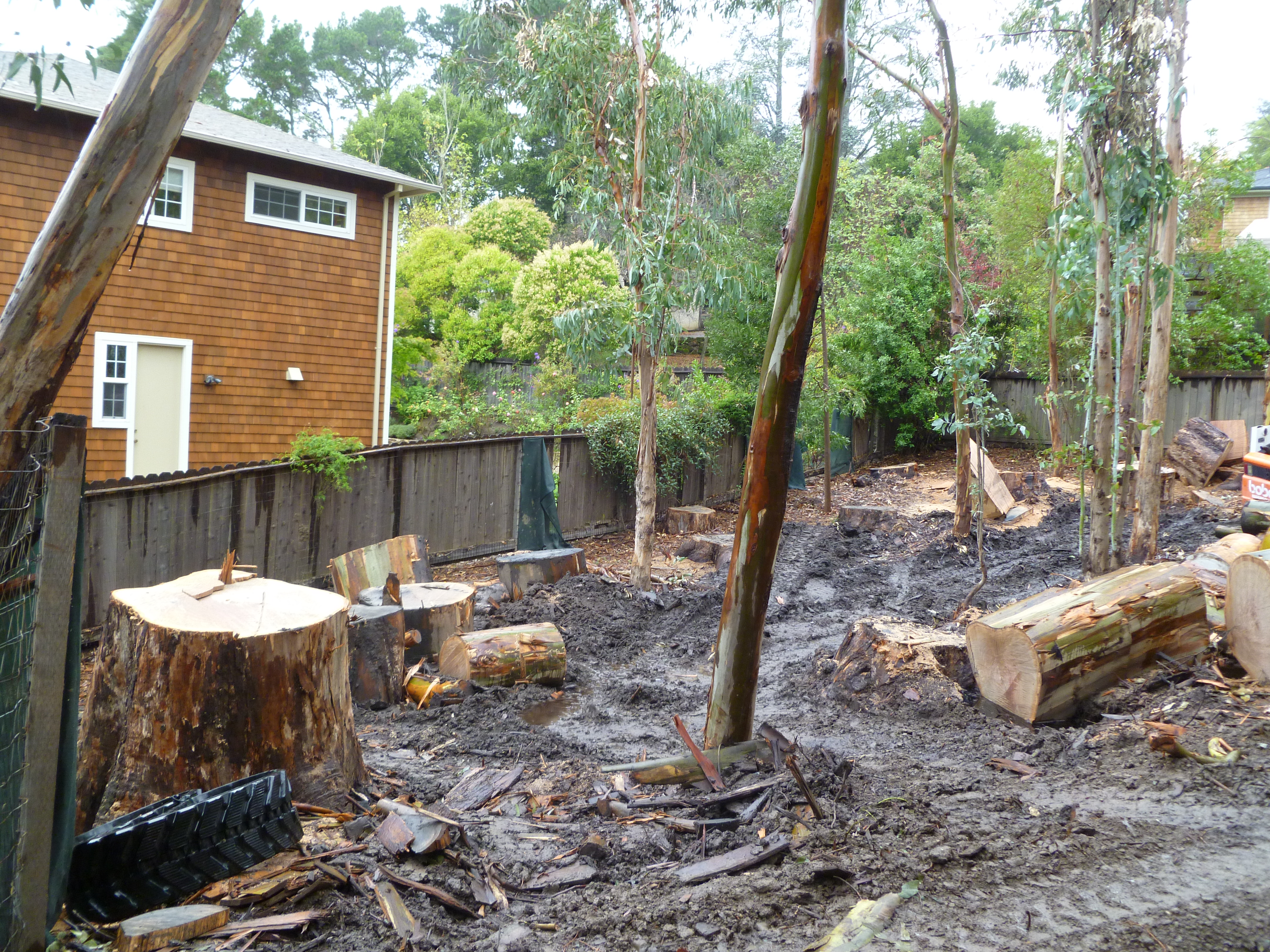
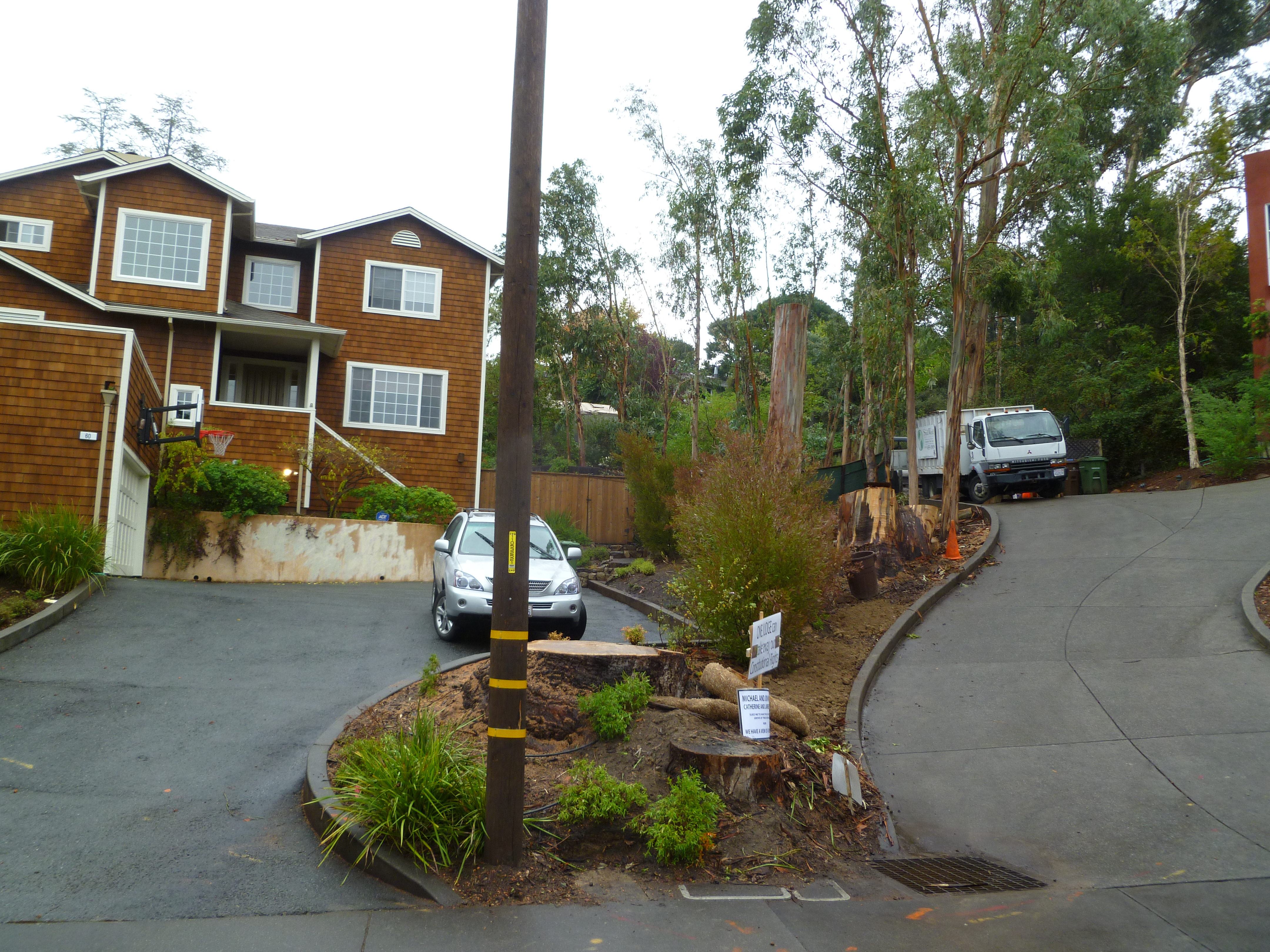
In Larkspur, 25 trees that have been destroyed were on private property.  The owner of that property was sued by her neighbors who demanded that the trees be destroyed because they believed them to be dangerous.  The owner of the trees made every effort to save her trees, even appealing unsuccessfully to the California Supreme Court for reversal of the court order to destroy most of her trees.  She organized demonstrations in a fruitless effort to interest local politicians to come to the defense of her trees.  Finally, when she was cited for contempt of court, she had her beautiful trees cut down.  

Before
After


Yesterday we attended a memorial for her trees.  We find it hard to believe that her neighbors would prefer the barren landscape that remains or the PG&E pole that was installed to hold the electrical wires that had previously been held by the trees. 

In San Leandro, the neighbors worked equally hard to save the eucalyptus trees on the banks of the San Leandro Creek from being destroyed.  They faithfully attended a series of community meetings which were theoretically an opportunity for them to defend the health, safety, and beauty of their trees.  As is often the case when we advocate on behalf of our trees, we may be successful in demanding a public process, but that rarely seems to save our trees.

 That was the case in San Leandro.  Neighbors were informed at the last public meeting that 31 of the 47 trees originally in jeopardy will be removed and 2 will be “trimmed” to stumps, but allowed to regenerate (1).  After months of effort, neighbors have saved only 14 of their trees and the assumption is that the remaining 1,000 eucalypts on the banks of the creek remain in jeopardy. 

However, the county has made a commitment to an environmental review, which it had originally intended to avoid by destroying the trees piecemeal.  This environmental review will give the neighbors another opportunity to document the negative environmental impacts of tree destruction, whether the trees are native or non-native. 

As the needless destruction of non-native trees continues unabated, millions of native  oaks are being killed by Sudden Oak Death, millions of native pines are being killed by bark-beetles, and the ranges of native plants and trees are shifting to higher elevations as the climate changes.  Those who demand the destruction of non-native trees which are adapted to current climate, soil, and air quality conditions will doom us to a barren, treeless environment. 

It is long past time for environmentalists to reorder their priorities to put climate change mitigation ahead of their commitment to native plants.  Their crusade against non-native trees is contributing to climate change by releasing tons of sequestered carbon into the atmosphere.  Ironically, as the climate changes, the native plants to which they are devoted are dying.  In other words, they are shooting themselves and the plants they prefer in the proverbial foot.

 (1) San Leandro Times, 9/2/10

Eucalyptus and Poppies

Have you visited the Oakland Museum since it reopened this summer after extensive renovation?  It looks pretty spiffy and continues to be a valuable resource for our community.

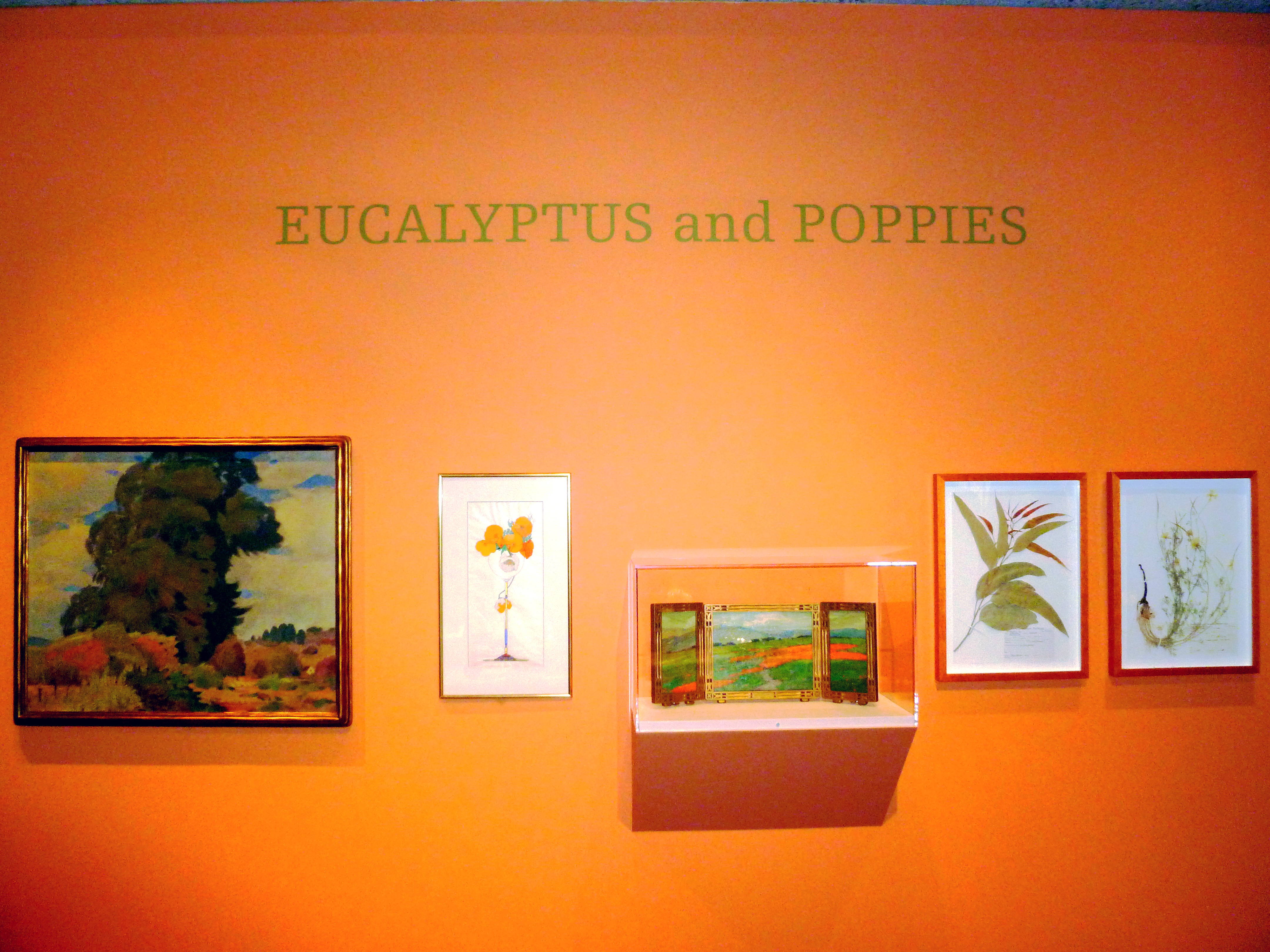
The museum’s collection of California art and design represents “the region’s creative output and its relationship to, and influences on, the nation and the world from the mid-1800 to the present,” according to its website.  And so, as we would expect, the exhibit includes a fitting tribute to one of California’s iconic landscapes, “Eucalyptus and Poppies.”

Oakland Museum
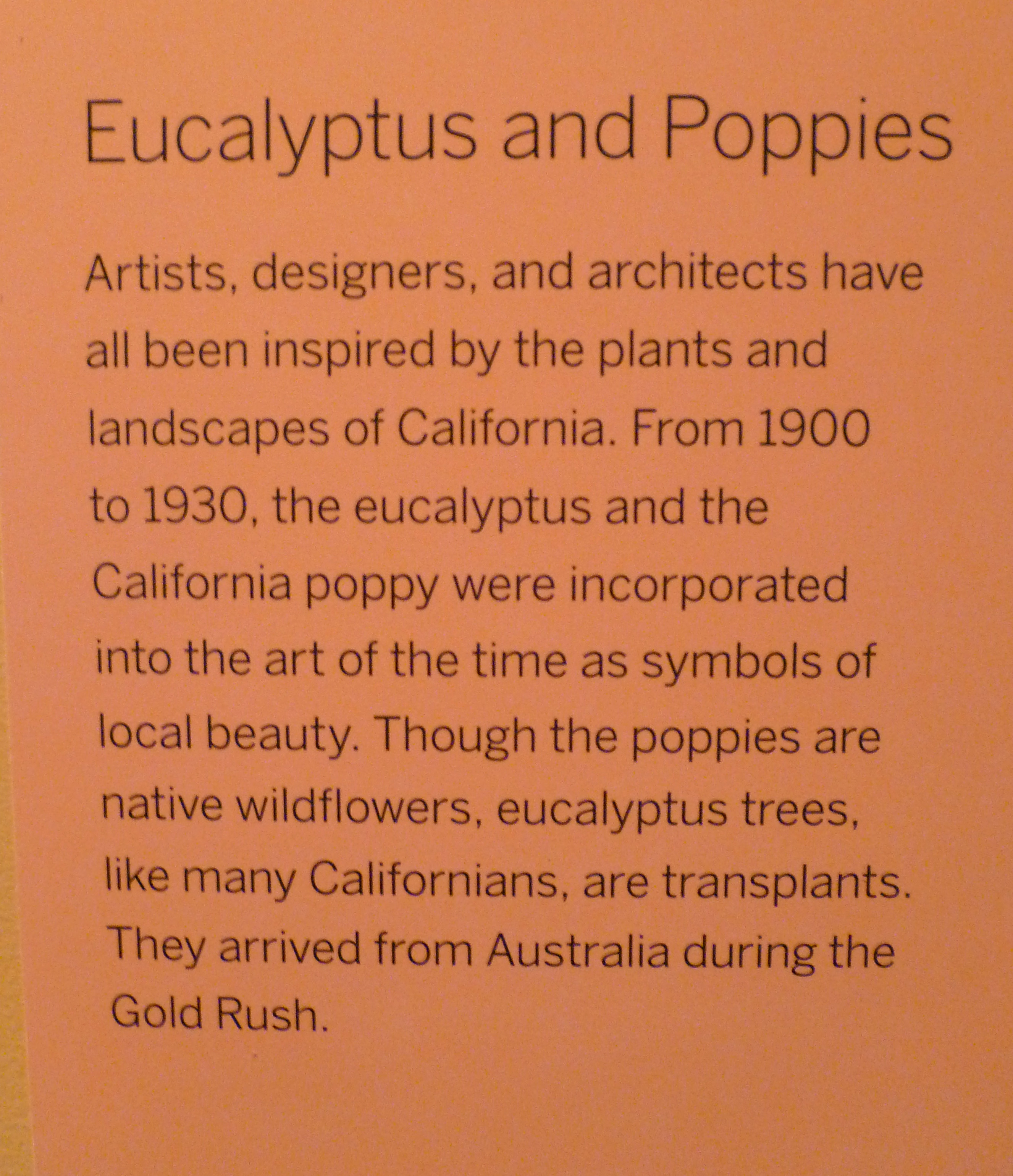
Description of exhibit

The artworks in this exhibit were created from 1916 to 1940, a period when eucalypts were popular.  They are out of fashion now, as are leisure suits and beehive hairdos.  Will they make a comeback, as did bell bottoms and hip hugger jeans?

There was a time, not so long ago, when Californians thought eucalypts fit in just fine with our native poppies.  Are they really the destructive intruders that native plant advocates make them out to be?  We don’t think so.  We believe that eucalypts are the victims of a “bad rap,” scapegoats for a fire they didn’t cause and a dwindling native landscape that is succumbing to climate change and other factors unrelated to the existence of eucalypts.

CHANGE….the only constant

The conventional wisdom amongst native plant advocates is that native plants will return to the landscape if non-native plants are eradicated.  In this post, we will examine this assumption and refute it.

Several different methods are used to eradicate non-native plants, but it doesn’t matter which method is used because the results are the same:  native plants do not return when non-native plants are removed. 

Spraying herbicides is a popular method of eradicating non-native plants because it is considered the most cost-effective method. In addition to the obvious health risks, the downside of herbicide use is that they are as likely to kill the natives as the non-natives.  This problem is illustrated by a USDA study of the effects of a one-time aerial spraying of herbicides on grassland after 16 years.  Although the herbicide is assumed to “dissipate” within a few years, the negative effect on the natives persisted 16 years later:  “…the invasive leafy spurge may have ultimately increased due to spraying.  Conversely, several desirable native herbs were still suffering the effects of the spraying,,,” 

Even when native plants are removed, non-native plants occupy the cleared ground.   Environmental scientists at UC Berkeley removed native chaparral from experimental plots in Northern California to test fuel reduction techniques using two different methods (prescribed burns and mechanical), in different seasons, over a period of several years.  In every test, the result was on average from 23% (for prescribed burns)to 61%  (for mechanical methods) non-native plants where they had not previously existed.  

Jon E. Keeley (USGS) finds the same tendency for non-natives to replace natives in forests:  “Forest fuel reduction programs have the potential for greatly enhancing forest vulnerability to alien invasions.” (1)

A scientist (2) arrived at the same conclusion after attempting to restore an oak-studded grassland on Vancouver Island.  He tried several different methods of removing invasive grasses for several years only to find that “…the decline of the native plant species accelerated…” 

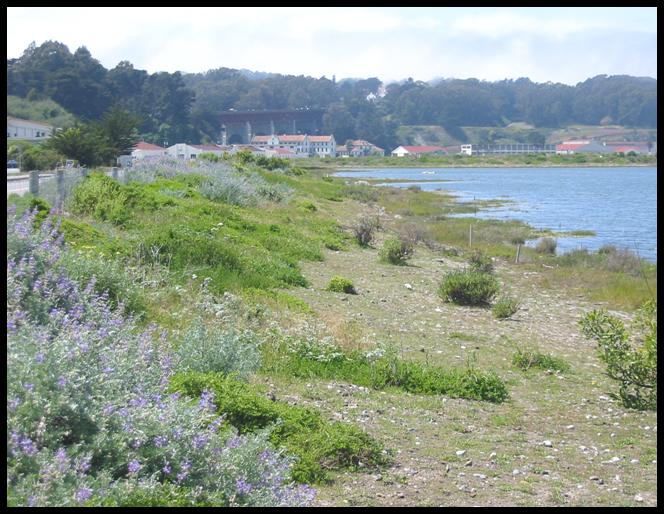
Crissy Field, NPS photo

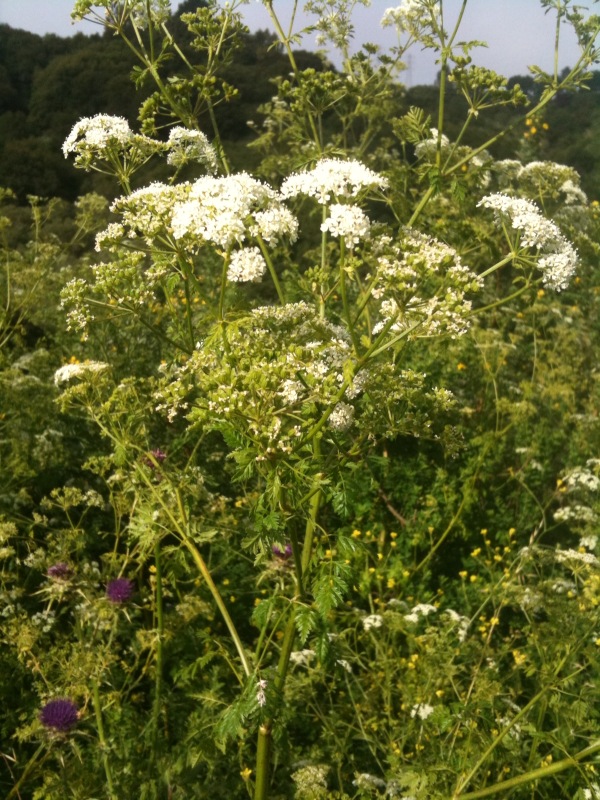
Those who observe native plant restorations in the San Francisco Bay Area aren’t surprised by these studies.  We know that native plant restorations are unsightly failures unless they are aggressively planted, irrigated for several years, and fenced.  Examples of successful restorations can be seen at Crissy Field and the summit of Mt. Sutro.  The East Bay hills provide examples of the opposite strategy.  Where UC Berkeley has clear-cut all non-native trees and vegetation, non-native weeds quickly occupied the barren ground.    After a particularly wet winter, the non-native poison hemlock in the East Bay hills is 6 feet tall along the roads. 

Poison hemlock, East Bay hills

Why are non-native plants apparently more competitive than native plants?  Because the conditions that supported native plants 250 years ago, prior to the arrival of Europeans, have changed.  The native plants are no longer well adapted to the current conditions.

Higher levels of CO2 and the associated climate change are promoting the growth of non-native plants.  A USDA “weed ecologist” (3) studied the effects of higher temperatures and CO2 on the growth of non-natives (AKA weeds) by growing identical sets of seeds in a rural setting and an urban setting with higher temperatures and CO2 levels.  Seeds grown in the urban setting produced substantially larger plants with much more pollen and therefore greater reproductive capability. 

Other scientists reach the same conclusions by studying the changing ranges of native plants and insects.  An ecologist at UC Berkeley (4) says that “California’s flora face a potential collapse…as the climate changes, many of these plants will have no place to go.”   A scientist at the California Academy of Sciences (5) predicts that redwoods will disappear from California by the end of the century.

As the plants move, so do the insects and animals that need them.    A study published in Nature magazine in December 2009 found that plants and animals must move as much as 6 miles every year from now to the end of the century to find the habitat they occupy now.  An ecologist at UC Davis (6) has been studying native butterflies for over 35 years.  He recently reported that native butterflies are moving to higher elevations, where temperatures are lower, but that ultimately, “There is nowhere else to go, except heaven.”

The local environmental organizations and public policy-makers must wake up to this reality and reorder their priorities.  Instead of demanding that all non-native plants and trees be eradicated and that native plants be restored where they are no longer sustainable, they must make climate change their highest priority.  The easiest and cheapest step to take to address this issue is to quit destroying healthy trees—just because they are non-native–that are sequestering tons of carbon.

(1) “Fire Management Impacts on Invasive Plants,” USGS, Jon E. Keeley, April 2006

(2) Andrew MacDougall, University of Guelph, Ontario, Canada, NY Times Magazine, 6/29/08

(3) Lewis Ziska, USDA, Beltsville, MD

(4) David Ackerly, UC Berkeley, Los Angeles Times, 6/25/08

(5) Healy Hamilton, Cal Academy, Center for Biodiversity Research

(6) Arthur Shapiro, UC Davis, Contra Costa Times, 1/19/10

What is natural?

The branch of San Francisco’s Recreation and Park Department dedicated to the preservation and restoration of native plants to the city’s parks calls itself the Natural Areas Program (NAP).  And the 32 parks or portions of parks within NAP’s jurisdiction are called Natural Areas.  In this post we will visit a few of these areas to ask if they are accurately described as “natural.”

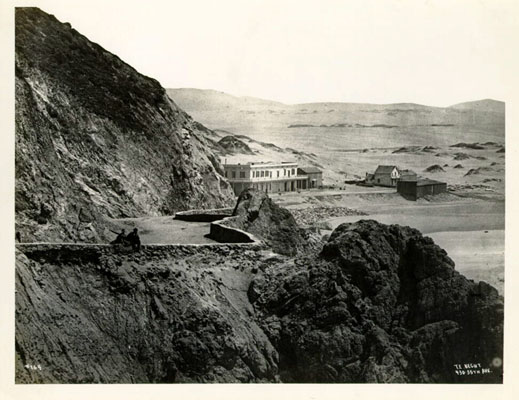
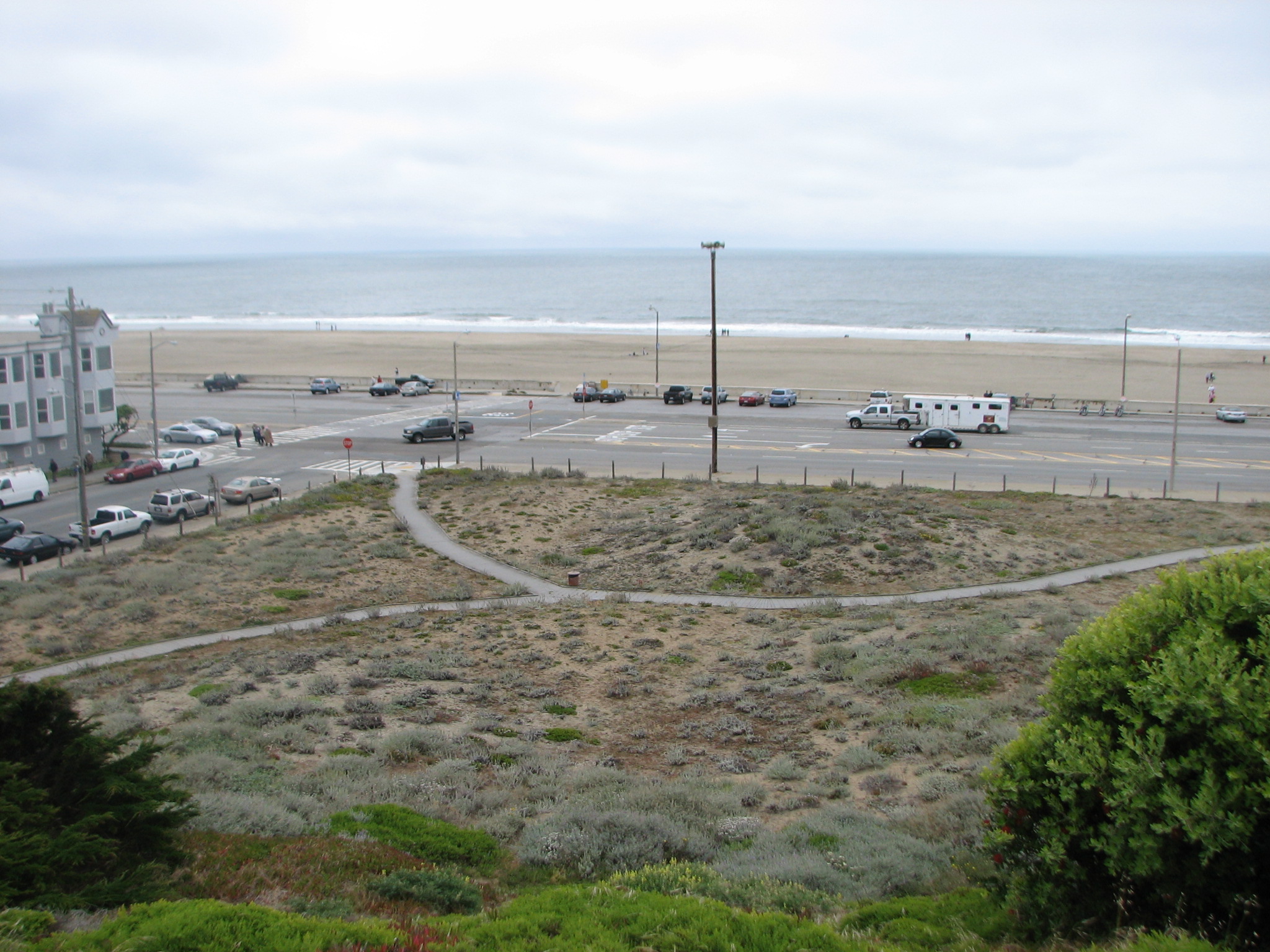
Parcel 4, Balboa & Great Highway, 1868

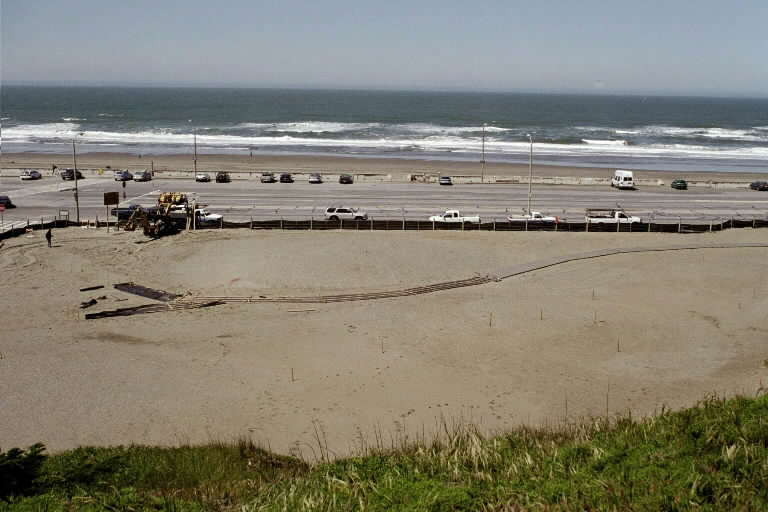
The Natural Area known as Parcel 4 is at the corner of Balboa and the Great Highway.  A photograph taken in 1868 of that location indicates that it has been continuously built upon for nearly 150 years.  Long-term residents of San Francisco will remember it as the location of Playland by the Beach.  After Playland was closed, the city purchased the property for $3.05 million in 1993 with the intention of putting a sewer pipe under it, then restoring it to dune vegetation.  The soil was essentially building rubble, so the city had to buy $47,000 of sand and disk it down 18 inches to amend the soil in preparation for planting dune vegetation.  The sand was bulldozed into simulated dune shapes and planted in 2002.  The restoration was described in the newsletter of the Coalition of San Francisco Neighborhoods in April 2003, in an article entitled “Sand Francisco.”  Does this sound “natural” to you?

Parcel 4 under construction, 2002
Eight years later, 2010

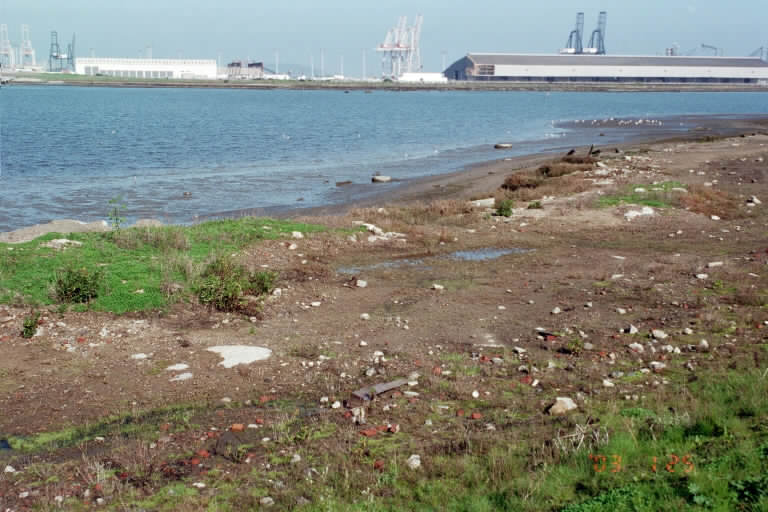
India Basin is a Natural Area on the east side of the city, on the bay.  The east shore of the city was where most industrial development was located until industry left the city beginning in the 1960s.  Much of the soil was landfill.  Like Parcel 4, the landfill was bull-dozed into a simulated wetland, hoping to restore tidal action.  Native pickle-weed was planted several times in the mud-filled basins.  We haven’t visited this area for several years.  Perhaps they have finally been successful in that effort.  This is what we found there on our last visit:  native plants along the trail, surrounded by plastic and woodchips to discourage weeds and huge, empty, mud basins off shore.    It didn’t look natural to us.

India Basin, 2003

Many of the Natural Areas in San Francisco are less artificial than these two extreme examples.  Some of the Natural Areas weren’t built upon in the past, but had no native plants in them when they were designated as Natural Areas.  Pine Lake is an example of such a Natural Area.  Even where native plants actually existed, their populations were small and isolated in comparison to the acreage designated as a Natural Area.  Over 1,000 acres of city-managed parkland have been designated as Natural Areas, 25% of all parkland in San Francisco and 33% if Pacifica is included in the calculation.

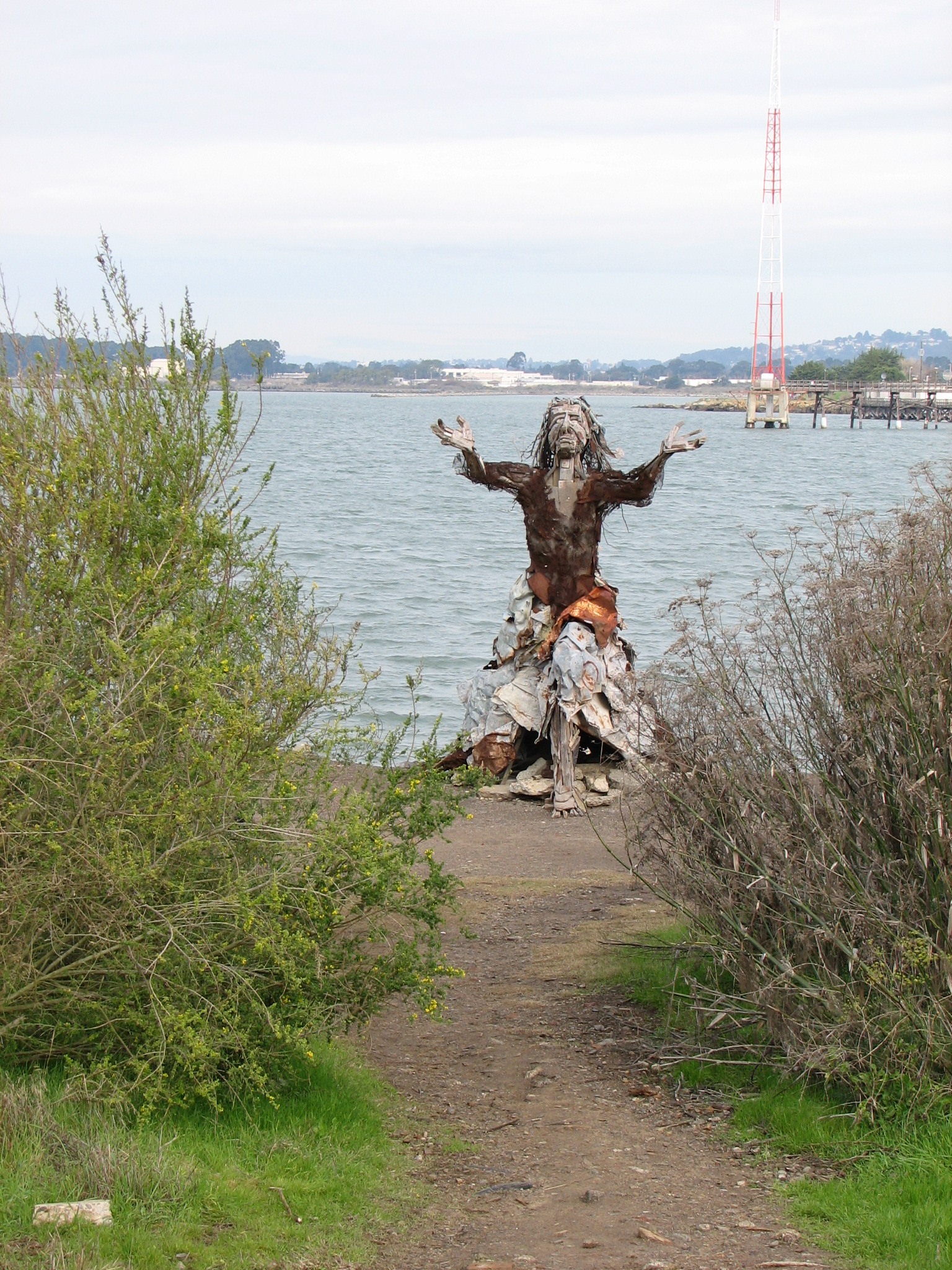
Sculpture of “Albany Bulb Greeter”

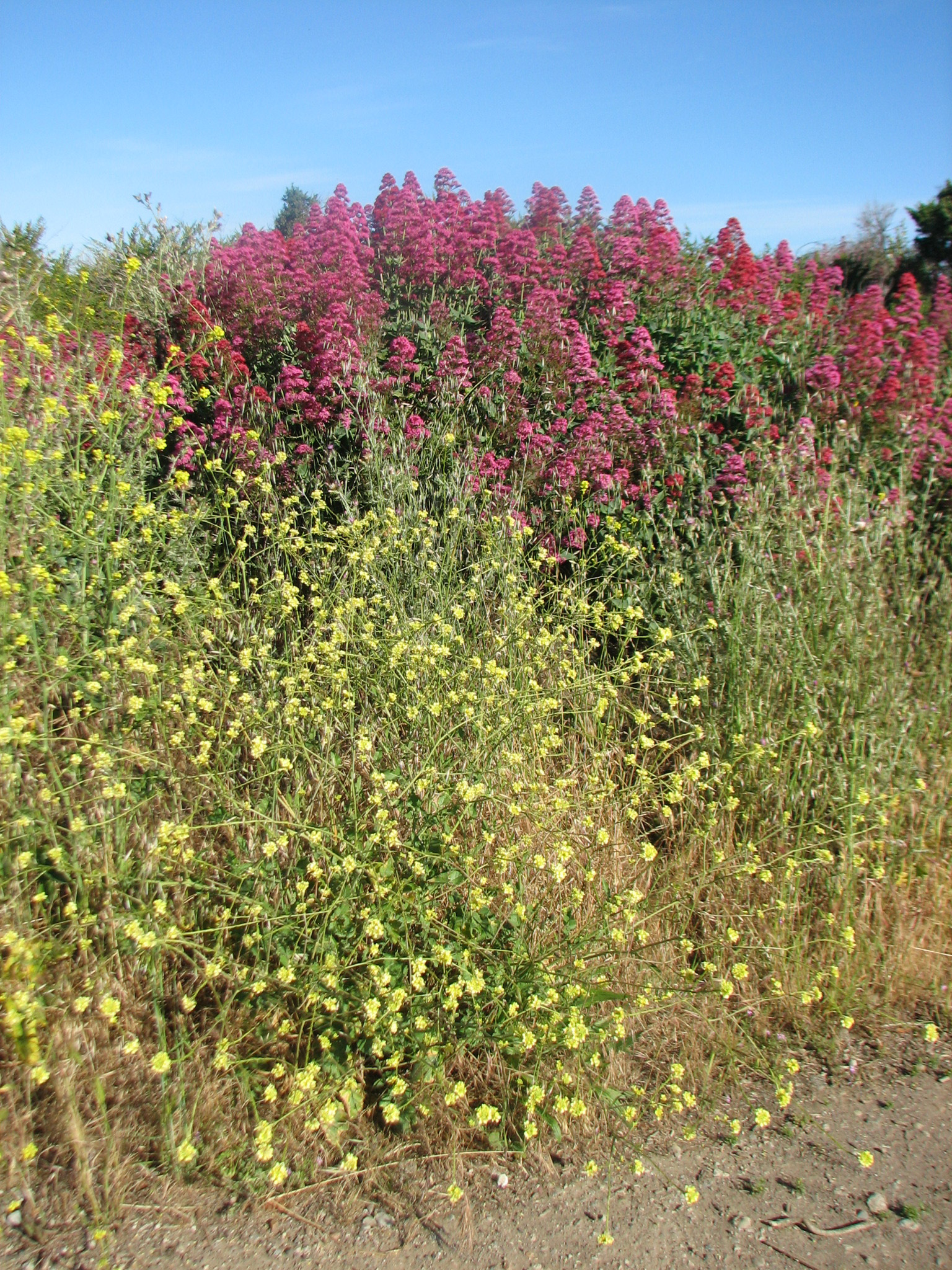
Now we will visit the Albany Bulb for contrast.  Albany Bulb is also landfill that was for many years the Albany city dump.  When the dump was closed, the Bulb became a park.  It is a wild and wonderful place.  There are few native plants, other than the ubiquitous coyote bush that seems to thrive almost anywhere.  In the spring, Albany Bulb is a riot of color.  These are the competitive non-natives that native plant advocates wring their hands about.  They are there because they are best adapted to the current conditions in this location…the heavily amended soil, the higher levels of CO₂, the warmer climate, the use by humans and their animal companions. 

Valerian and wild mustard, Albany Bulb. Both are non-native plants.

If all of these non-native plants and trees were eradicated from the Albany Bulb, would native plants magically appear?  Based on our experience, we don’t think so.  The conditions that supported the plants that are native to the Bay Area are gone for good.  It is a fantasy that the existence of non-native plants is the only obstacle to the return of the natives.  Visiting a few places where this strategy has been tried will confirm this.  Unless the natives are aggressively planted, irrigated for several years, fenced for protection, weeded or sprayed with herbicides regularly, they do not return.  Can such intensive gardening be called “natural?”