The horrific wildfire in Los Angeles in January 2025 has spawned another round of panic throughout California, as we try to come to terms with our increasing vulnerability to fire caused by the rapidly changing climate. It was another opportunity for Jake Sigg to gin up support for his life-long campaign to destroy all eucalyptus trees in San Francisco. He wrote a letter* to the new Mayor and Fire Chief in San Francisco making exaggerated claims of fire hazards in San Francisco and asking, once again, that San Francisco destroy all eucalyptus in the city. I wrote my own letter* to the Mayor and Fire Chief, debunking Jake’s exaggerations and shared my letter with Jake.
This exchange was a continuation of a debate that Jake and I have engaged in for 25 years. I wrote an article about this issue 15 years ago for Death of a Million Trees, the predecessor to Conservation Sense and Nonsense. Friends in San Francisco have asked me to republish that article to reassure San Franciscans that Jake’s alarming claims can be safely ignored. I am glad to oblige today.
Conservation Sense and Nonsense
Fire!!! The Cover Story
Native plant advocates have used many different arguments to justify the destruction of non-native trees (eucalypts are the primary target) and we will examine them all on Death of A Million Trees. However, their most effective argument has been a bogus claim that non-native trees and plants are more flammable than native vegetation. This justification has been effective because fear is a powerful motivator for all public policy.
Perhaps, if this generalization about the flammability of non-native plants and trees were true, we wouldn’t be having this debate. However, it isn’t true and we will explain why it isn’t.
The most frequently cited “evidence” of the flammability of eucalypts is the 1991 firestorm in the Oakland/Berkeley hills. The conventional wisdom is that eucalypts were the cause of that fire. The role the eucalypts played in the 1991 fire in the East Bay is greatly exaggerated.
As FEMA notes in its analysis of that fire, the fire started in dry grass (“On…October 19, 1991…a brush fire was reported…the vegetation on the slope was mostly grass with some brush and a few trees.”) and only leapt out of control when a spark reached nearby brush (On October 20, 1991, “Very suddenly, the fire flared up…Burning embers had been carried from one of the hot spots to a patch of tinder dry brush.”). When a wildfire is accelerated by high wind, everything will burn, including eucalyptus. That does not mean the eucalypts were the cause of the fire.

FEMA identified the sources of fuel for the fire as follows: “The northeast portions of the fire area had more wildland fuels, while in the south and western areas, the homes were the major fuels. In effect, the more severe slopes in the north and eastern portions of the fire area required the use of native species. The more moderate slopes and deeper soil in the south and southwest areas allowed for the introduction of more ornamental type species.” In other words, FEMA considered native chaparral and the homes themselves the primary fuel source for the fire.
Nor does the FEMA report identify the eucalypts as the sole source of the flaming brands and embers that helped to spread the fire: “The Oakland hills are covered with dense growths of trees, supplemented by grasses and thick brush. The east face is exposed to the more arid climate…and is predominantly covered by grasslands and brush. These particular trees and brush are highly vulnerable to rapid fire spread and release massive amounts of thermal energy when they burn. They also create flying brands, which are easily carried by the wind to start new spot fires ahead of a fire front.” Whenever the FEMA report mentions these fire brands as factors in the spread the fire, the eucalypts are not specifically identified as the source.
Addendum, 3/1/25: Jake Sigg has variously reported that eucalyptus embers have started spot fires 12, 18, and most recently 24 miles from the fire front. Sigg’s claim that eucalyptus bark can carry fire long distances is not supported by fire science research. A comprehensive US Forest Service study of spotting ignition by lofted firebrands, which examined 245 extinguished fires, experiments, and observations of 48 wildfires worldwide (including the 1991 Oakland Hills fire), found that the maximum spotting distance ever observed was 2.4 kilometers (approximately 1.5 miles).
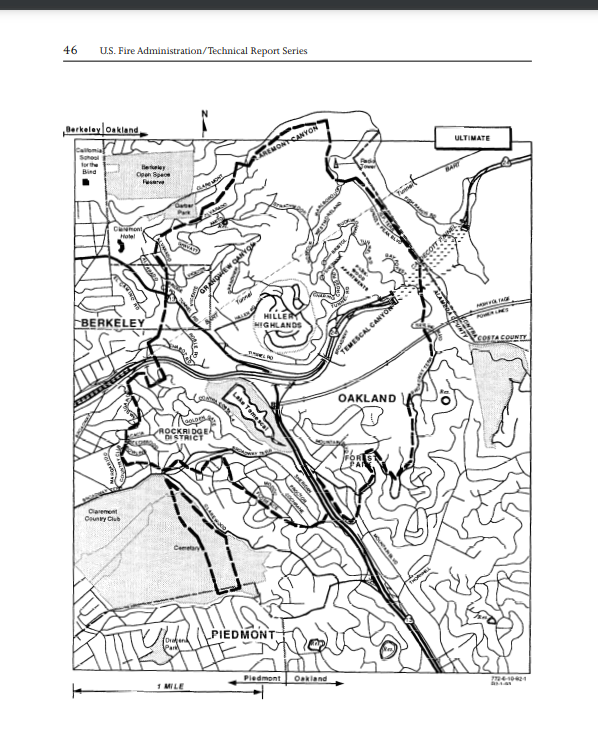
The FEMA Technical Report on the 1991 fire in Oakland and Berkeley includes a map of the ultimate size of the burn area, which was 2 miles long and 1-1/2 miles wide. No spot fires were started outside the burned area (see map below).
The only specific mention of eucalypts as a factor in the 1991 fire in the FEMA report is related to the deep freeze that occurred the winter preceding that fire: “The unprecedented drought was accompanied by an unusual period of freezing weather, in December 1990, which killed massive quantities of the lighter brush and eucalyptus. Dead fuel accumulated on the ground in many areas and combined with dropped pine needles and other natural debris to create a highly combustible blanket. Due to the fiscal cutbacks, governmental programs to thin these fuels and create fuel breaks were severely curtailed, so the fuel load was much greater than normal by the second half of 1991.” Such freezes, sufficiently deep and sustained, causing eucalypts (and other plants) to die back are very rare in the Bay Area and have not occurred since 1991.
Weather is an important factor in creating the conditions for fires. In addition to deep freezes resulting in dead leaf litter, high winds from the hot interior—called Diablo winds in the Bay Area—are an important factor. As a peninsula surrounded by water on three sides, San Francisco is not subject to the same severe wind conditions experienced in other parts of California where wind-driven catastrophic fires have occurred. The wind causing wildfires in coastal California blow from the hot interior and are funneled by the steep canyons of coastal mountain ranges. The San Francisco Bay acts as a shield to protect San Francisco from these Diablo/Santa Ana winds. The prevailing wind in San Francisco comes from the ocean, creating a climate that is milder and moister than places East of San Francisco Bay, with a history of wind-driven wildfires.
University of California at San Francisco (UCSF) applied for a FEMA pre-disaster mitigation grant to remove eucalypts from Mt. Sutro, based on a claim that these trees are a fire hazard. FEMA’s scientists were able to evaluate UCSF’s grant applications. Their knowledge of the local conditions led to questions about the grant applications which ultimately resulted in UCSF’s withdrawal of their applications for fire mitigation grants.
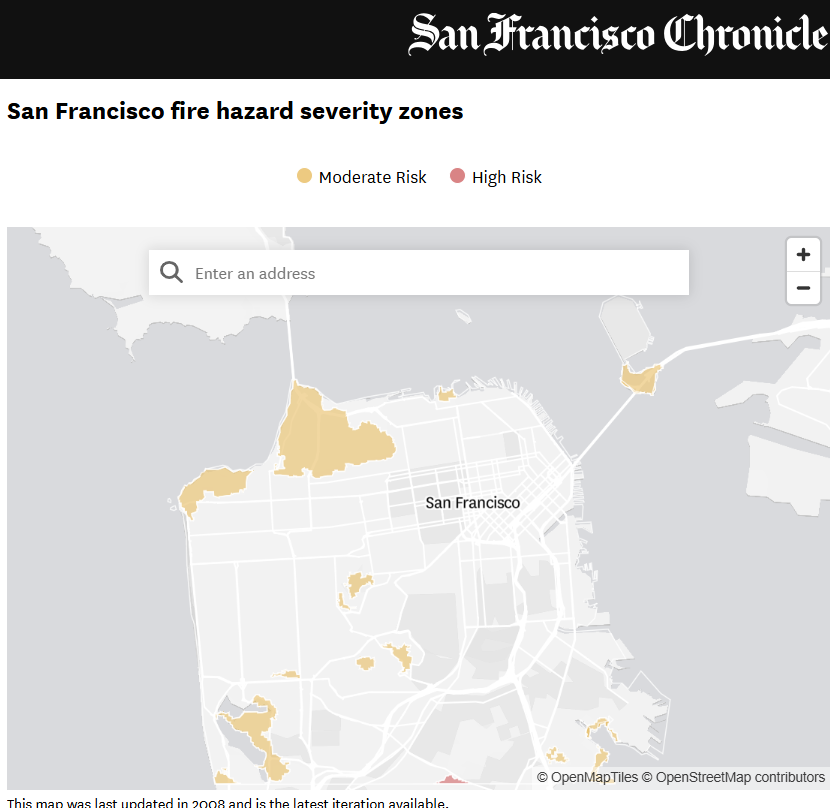
Addendum, 3/1/25: The map of San Francisco pictured below is from a recent Chronicle article about limited fire hazards in San Francisco. Crocker-Amazon neighborhood at the southern border of the city is the only small area considered a “high fire hazard” by Cal-Fire. There are NO “very high fire hazard” zones in San Francisco. New stricter vegetation clearance standards proposed by Governor Newsom applies only to very high fire hazard zones.
Cal Fire is updating the official maps of fire hazard severity zones. The SF Chronicle reported: “In Berkeley, Cal Fire’s new modeling decreased the number of acres listed as “very high” fire risk from 1,269 to 454.” However, Berkeley’s fire chief took issue with some of the changes. Cal Fire’s revised map is a draft and local jurisdictions may challenge some of the changes. The final version of the maps is expected at the end of the year.
Berkeleyside reported similar reductions in very high fire hazard zones in Oakland: “While Berkeley and neighboring Oakland saw their overall hazard acreage significantly reduced — Oakland by nearly 35%…” These are the cities where the fire in 1991 destroyed 3,400 homes and killed 25 people. The revised fire maps of fire severity zones show increased acreage of very high fire hazards in other cities in the Bay Area, such as San Jose, Half Moon Bay, Orinda, Sausalito, as well as Sonoma and Napa counties.
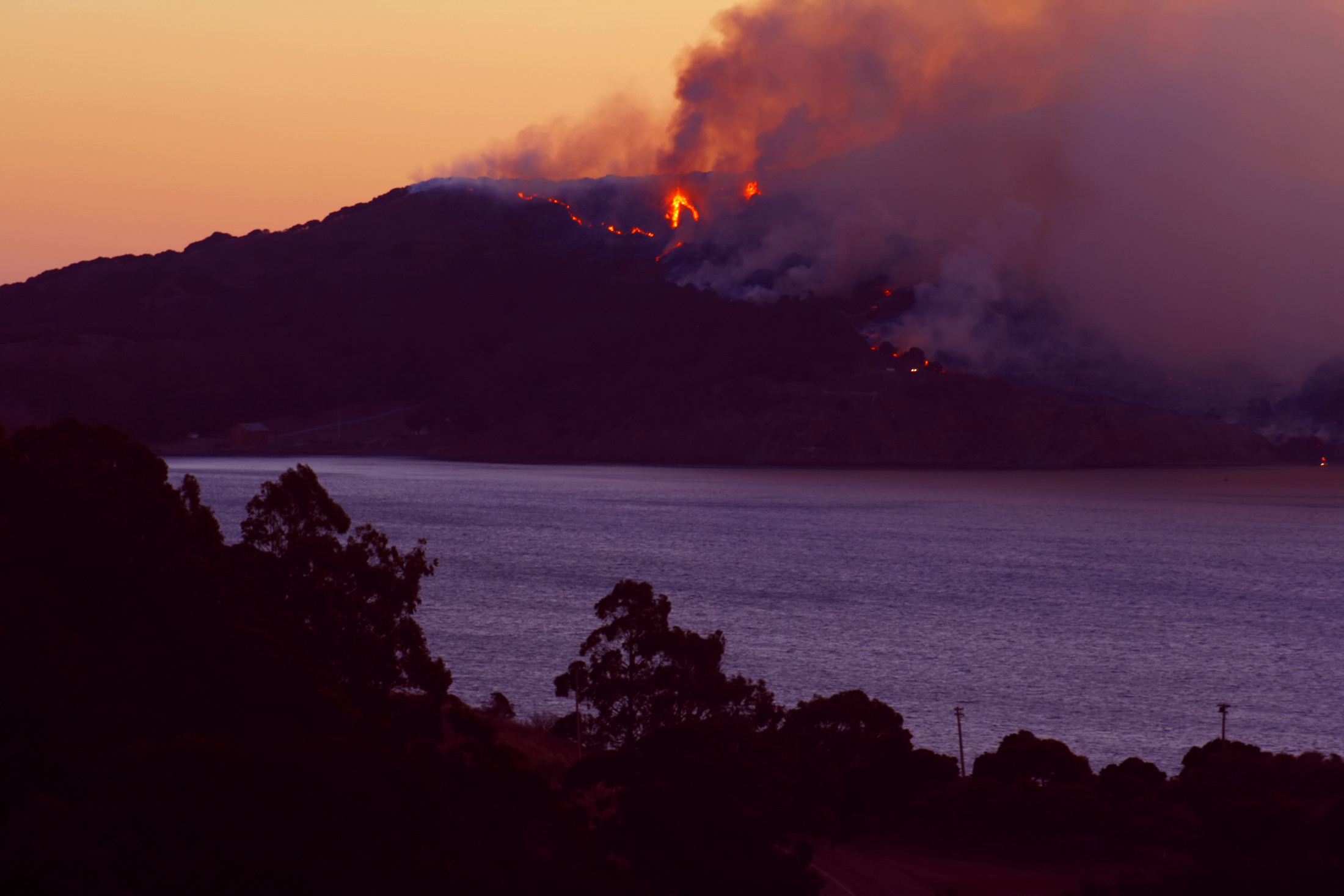
The fire on Angel Island in October 2008, is an example of the bogus claims of the flammability of eucalypts. According to an “environmental scientist” from the California state park system, 80 acres of eucalypts were removed from Angel Island over 12 years ago. Only 6 acres of eucalyptus remain. (“Rains expected to help heal Angel Island,” SF Chronicle, October 14, 2008). The fire that burned 400 acres of the 740 acres of Angel Island stopped at the forest edge: “At the edge of the burn belt lie strips of intact tree groves…a torched swath intercut with untouched forest.” (“After fire, Angel Island is a park of contrasts,” SF Chronicle, October 15, 2008). It was the grassland and brush that burned on Angel Island and the park rangers were ecstatic about the beneficial effects of the fire: “The shrubs—coyote brush, monkey flower and California sage—should green up with the first storms…The grasses will grow up quickly and will look like a golf course.” Ironically, the “environmental scientist” also tells the Chronicle that the eucalyptus forest was highly flammable, though it played no part in this fire and there was no history of there ever having been a fire in the eucalypts prior to their removal.
Although the Chronicle was determined to blame the fire on the eucalypts, the Marin Independent Journal reported otherwise: “All the oaks up there were burning,” said the 28-year veteran of the department. “It was an ember shower that just rained on the entire building, and all around us was burning.”
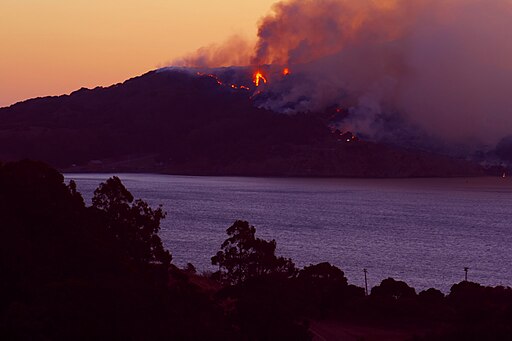
The fire on Angel Island is not an isolated event. Rather it is typical of recent wildfires throughout California: “It is estimated that no more than 3 percent of the recent 2007 fires…occurred in forests…the remaining 97 percent occurred in lower elevation shrublands and urban areas, burning native shrublands such as chaparral and sage scrub, non-native grasslands and urban fuels…” (Statement by Jon E. Keeley, USGS, before agencies of the US Senate, 2007)
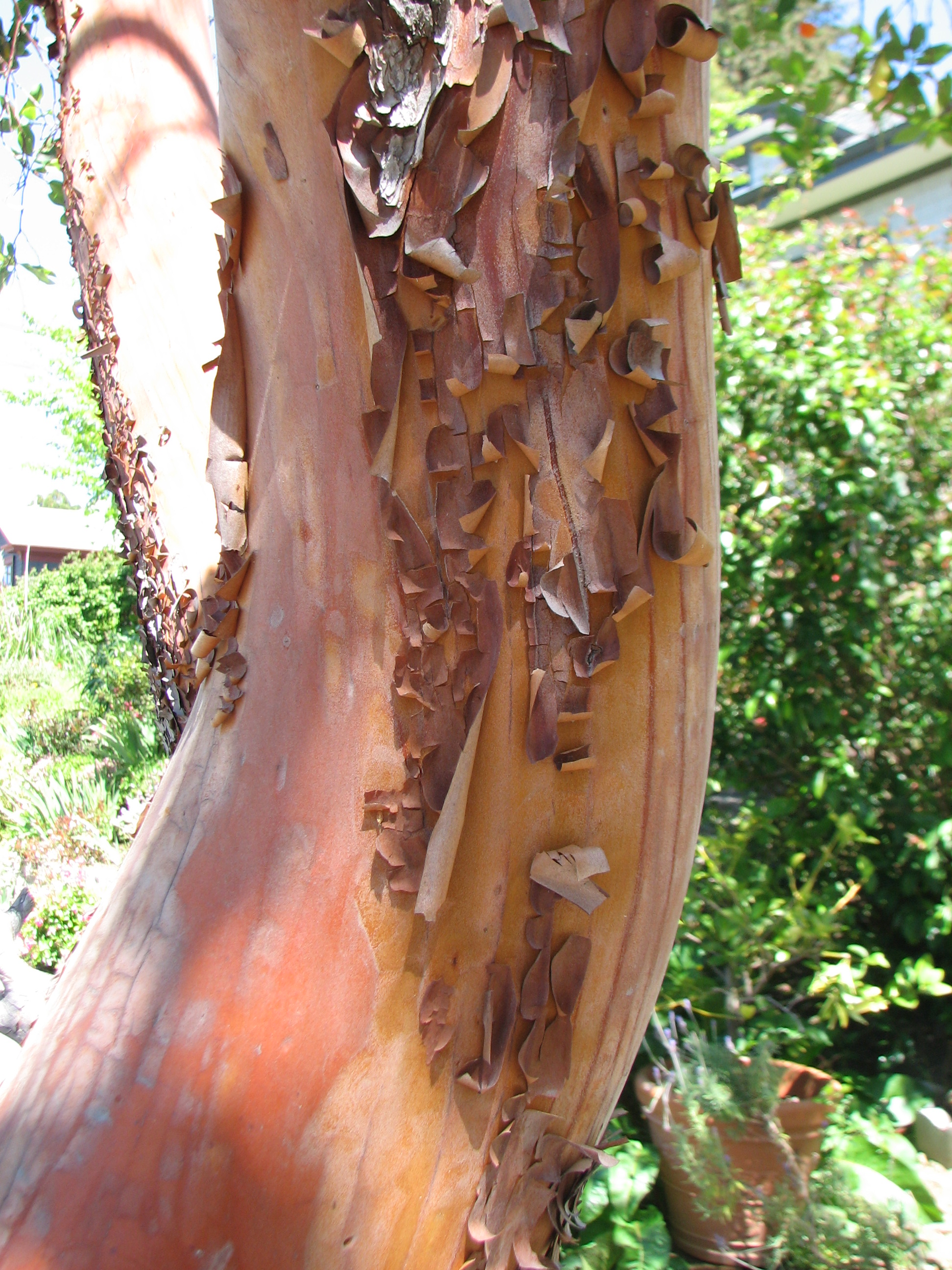
Native plant advocates attempt to support their assumption about the flammability of eucalypts by citing specific characteristics such as shreddy bark and volatile oils. Shreddy bark and volatile oils are characteristics of many plants, both native and non-native. They are not characteristics exclusive to eucalypts: “The [chaparral] community has evolved over millions of years in association with fires, and in fact requires fire for proper health and vigor…Not only do chaparral plants feature adaptations that help them recover after a fire, but some characteristics of these plants, such as fibrous or ribbonlike shreds on the bark, seem to encourage fire. Other species contain volatile oils.” (A Natural History of California, Schoenherr, UC Press, 1992)
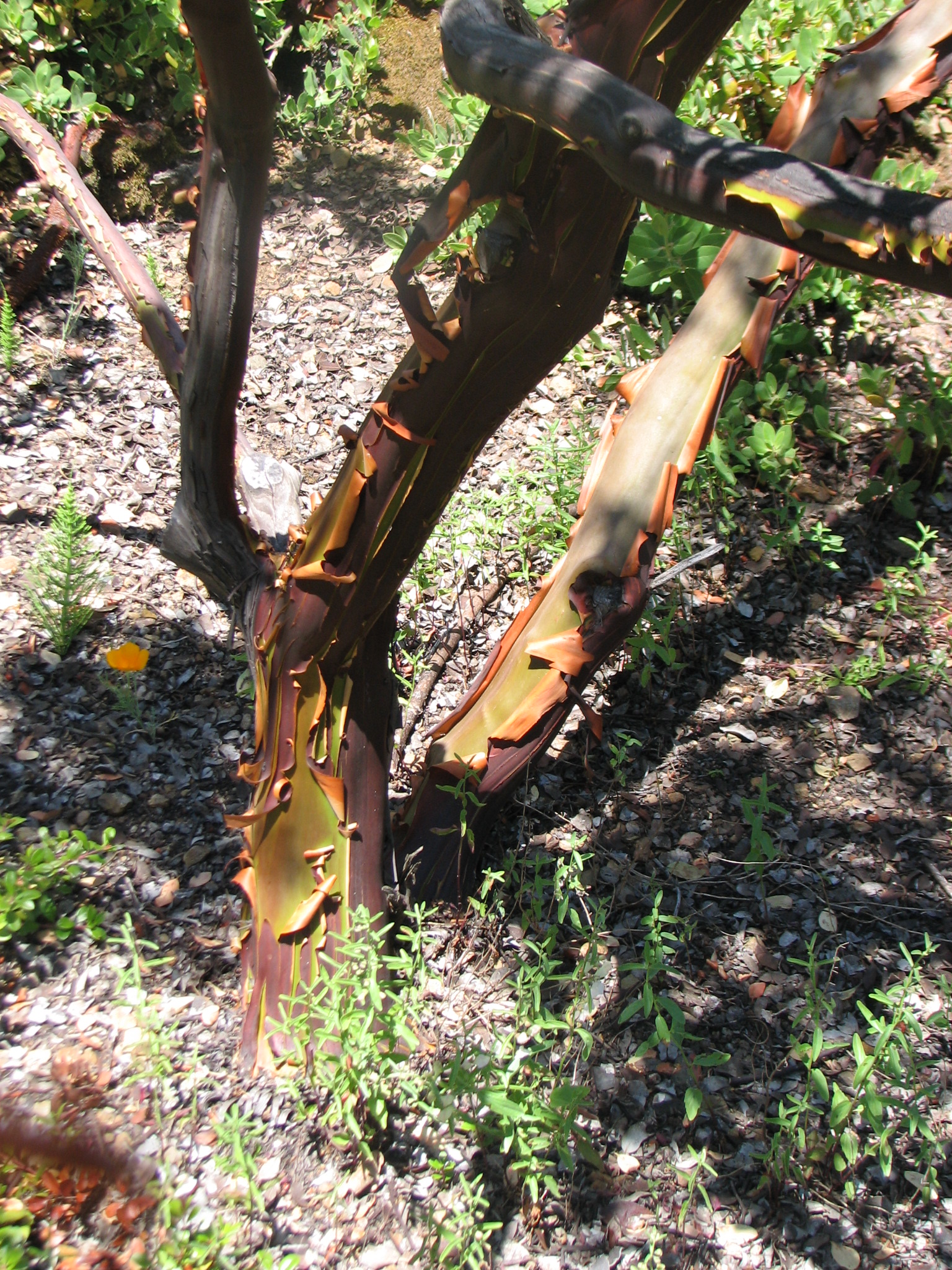
Madrone and Manzanita are examples of native plants with “ribbonlike shreds on the bark” that are highly flammable. Coyote brush and bay laurels are examples of native species that contain highly flammable oils.
A book about the 1991 wildfire in the Oakland/Berkeley hills illustrates the power of the legend that non-natives are more flammable than natives. In Firestorm: the study of the 1991 East Bay fire in Berkeley (Margaret Sullivan, 1993) states repeatedly that native plants and trees were involved in that fire. Every tree mentioned in the following quotes from that book is native to the Bay Area:
- “…flames surging through the dry underbrush and live oaks that line the street…”
- “…neighborhoods…are built into the contours of the grassy hills and live-oak-and-laurel studded canyons…”
- “…hillsides covered in seasonal grasses or had overlooked ravines of oak and madrone…were devastated by the fire.”
- On Vicente Road, “Two redwoods up the street caught fire like matchsticks.”
- “Roble Road and… Roble Court, derive their name from the…Spanish word for the live oak tree that grows densely there…the devastation on lower Roble…was fairly complete…”
In the single mention of the role of eucalypts in the fire, the fire skips over the tree canopy: “The fire swept right over [the houses] scorching the crowns of surrounding eucalyptus trees.” And the Monterey pine—also targeted for eradication by native plant advocates—plays a similar role in a nearby location: “Across the street a grove of Monterey pines shields the white clapboard buildings of the private Bentley School…”
After presenting all this evidence about the role of native plants in the fire, the book concludes with the legend that non-natives are more flammable than natives: “Gardens of drought tolerant and fire-resistant California native plants have become symbols of the rebirth of the fire communities.” This statement is illustrated with a photo of native chamise. Chamise is one of the most flammable plants in the native chaparral community:
“The relationship between fire and Chamise is illustrated by the plant’s tendency to ‘encourage’ burning. A thermometer was placed within a Chamise shrub as a fire approached, and the following changes were documented. At about 200⁰F the plant began to wilt as its temperature approached the boiling point of water. At about 400⁰F the plant began to emit combustible gases such as hydrogen, alcohol, and methane. At about 600⁰F the shrub smoldered and began to turn black. At about 800⁰F the plant burst into flames! This species must have evolved in association with frequent fires to have reached the point where it seems to encourage burning.” (A Natural History of California, Schoenherr)
Anyone with a rudimentary knowledge of the natural history of California could provide any number of such invidious comparisons between native and non-native plants with respect to their flammability. We hope the examples we have provided illustrate that flammability characteristics of plants are unrelated to whether the plants are native or non-native. The assumption that non-native plants are more prone to fire than native plants is fallacious.
*These letters to Mayor Lurie and Fire Chief Crispen are available on the Facebook page of Conservation Sense and Nonsense.
 Conservation Sense and Nonsense