Taxonomy is the naming and classification of life. Although it is now considered a scientific endeavor, it began as the hobby of naturalists who worked independently, outside the confines of academia, at a time when botany and biology were not scientific disciplines.
This is not to say that naturalists who created the classification system in the 18th century, and which is still used today, were without social constraints. Their work was influenced by and sometimes constrained by religion. We will trace the nearly 300-year history of taxonomy, from its inception to modern analytical methods, within the context of social change.
Linnaen Taxonomic System
Carl Linnaeus is considered the creator of the taxonomic system. He was born in Sweden in 1707 to a family of modest means, unlike most naturalists of the time who were typically members of wealthy families, with freedom to pursue their personal interests.
Linnaeus had an intense interest in nature, particularly plants, from an early age. He was a mediocre student, who mastered Latin and Greek in preparation for a career as a pastor, but he spent his time in nature, where he developed deep observational knowledge of plants. After failing to achieve credentials as a pastor, his knowledge of plants suggested a career as a doctor because the use of medicinal plants was the primary method of medical treatment.
Technically, Linnaeus qualified to practice and teach medicine after a brief 2-day visit to a diploma mill of the time, but he never practiced medicine. At a time when he was extremely poor, nearly destitute, his knowledge of plants came to the attention of wealthy mentors who took him in and gave him the opportunity to begin his life’s work as the classifier of life.
Linnaeus was a person of supreme confidence in his own abilities as well as a shameless self-promoter of his accomplishments. He set himself the ambitious task of naming and classifying all kingdoms of life known at the time. That may seem an arrogant goal, but at the time it seemed entirely doable because the Bible told Linnaeus the task was finite and static.
According to the Bible, God created the Earth in 7 days. Everything God created was assumed to be perfect and therefore unchanged from the time of its creation. Nature was considered static and the possibility of extinction was blasphemy. Theologians of the time calculated that a maximum of 2,000 animals could have been accommodated on Noah’s Ark, saved from the impending Great Flood. There were presumed to be similar limitations on the number of plants carried on the ark to feed the animals.
An index of all known plants published in 1703 identified about 18,000 plants. However, new plants discovered by early explorers of the New World were arriving in the Old World in greater numbers, creating pressure to name them and fit them into the known natural order. The time was right for Linneaus to set his life’s goal that seemed possible at the time, within the confines of religious dogma.
The scale of the task did not seem to be an obstacle, but the dispersal of species was. Linneaus himself took only one field trip to Lapland to collect specimens. He hated the uncomfortable conditions of the journey, found little of interest, and his report of his trip was ignored, despite his exaggerated telling of the story. Linneaus sent 17 of his students and collaborators, whom he called his apostles, on ill-fated expeditions to collect specimens. Many of them died and others returned empty-handed.
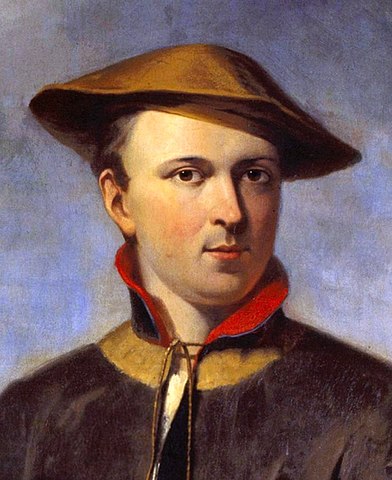
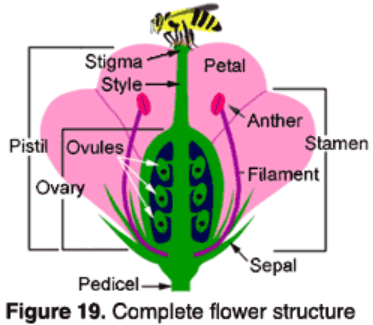
Linnean taxonomy is based entirely on observation of the physical characteristics of plants that were known at the time, such as shape, form, texture, odor, taste, etc. His system emphasized reproductive organs of plants, such as the number of stamens and pistils.
Linneaus named each species with binomial nomenclature, of which genus is the first word, and species is the second. His system nested species into a hierarchy of 5 groups of similar species: species/genus, family, order, class, and kingdom. At that time, there were only 3 identified kingdoms: plants, animals, and minerals. Linneaus planned to catalogue all three kingdoms, although plants were his primary interest.
The first edition of Linneaus’s Systema Naturae was published in 1735. It was a mere 15 pages long, more pamphlet than book. In addition to a list of species, nested in their families, orders, classes, and kingdoms, he provided brief descriptions of species as well as rules for naming new species.
By including the name of the discoverer of the species, Linneaus motivated early plant explorers to give their specimens to him for naming. This arrangement also resulted in the duplication of many species that had already been classified. He wrote lavish praise for his book in anonymous reviews and distributed them to book sellers.
The 12th and last edition of Linneaus’s Systema Naturae was published in 1765, when Linneaus was 58 years old. It was 2,600 pages long compared to the first edition with only 15 large pages. Altogether, Systema Naturae described 10,000 organisms, of which about 6,000 were plants. He was beginning to show signs of mental deterioration by then. By the time he died at the age of 71, he was unable to speak or communicate.
Critics of Linnean Taxonomy
Although Linneaus’s classification system was well received in Europe, it was not universally praised. The British were resistant to the sexual metaphors used by Linneaus to describe plant species, but the chief critic of Linnean taxonomy was Georges-Louis LeClerc de Buffon, usually called simply, Buffon.
Buffon was born in 1707, the same year as Linneaus and there the similarity ends. He was independently wealthy and a person of wide-ranging interests, from mathematics to all natural sciences.
He is best known as the chief of the king’s Parisian garden, Jardin du Roi. The garden was the king’s personal apothecary and natural history museum. It was not part of the Sorbonne, the French university (much to the chagrin of the Sorbonne), which gave Buffon greater independence in his research and publications.
Buffon dismantled the Linnean system in a point-by-point critique delivered to the French Academy of Sciences in 1743. He described the system as an artificial human construct that over-simplifies the complexity of nature. He said Linnean categories are abstractions, created for convenience, rather than naturally occurring categories.
The first 3 volumes of Buffon’s competing description of nature, Histoire Naturelle, were published in 1759. In contrast to Linneaus’s brief Systema Naturae, the first installment was 1,600 pages long, beginning with a critique of Linnean taxonomy.
Buffon’s 4th volume, published in 1753, described just 3 domesticated animals—the horse, the donkey, and the bull—in 544 pages. He began with domesticated animals because of their close relationship with humans, presumed to be of most interest to the public. Each animal was depicted in engravings of the animal’s skeletal structure as well as in its habitat and described in detail. He gave equal attention to the temperament of each animal.
36 volumes of Histoire Naturelle were published between 1749 and 1789. Eight more volumes by his collaborators were published after his death. He died at the age of 81 in 1788, just one year before the French Revolution. Buffon’s life’s work was no simple list of species. Rather it reported all available knowledge about the natural sciences, including physics, chemistry, and metallurgy. It broke new ground by offering many novel interpretations of Buffon’s observations.
Buffon stepped on the toes of theologians several times in his long career. He described the creation of Earth and other planets as a lengthy process, which is in “gradual decay” and he predicted that “the sun will die out probably for the same reason in some future age.” This prediction contradicts religious dogma about the time-scale of creation and its permanence. He was promptly scolded and he promptly apologized: “I disapprove of my behavior and I repent, by covering myself with dust and ashes.”
He learned from that experience. In later volumes of Histoire Naturelle, he was vaguer when contradicting religious dogma. Still, later generations of naturalists recognized the first known explanation of evolution in Buffon’s work: “…we should not be wrong in supposing that she [nature] knew how to draw through time all other organized forms from one primordial type.” This carefully worded speculation was a thinly disguised statement that all species can be traced back to a common ancestor, which is the core of evolutionary theory, but the process is unseen because of its slow pace: “Nature’s great workman is Time. He marches ever with an even pace, and does nothing by leaps and bounds, but by degrees, gradations and succession he does all things; and the changes which he works—at first imperceptible—become little by little perceptible, and show themselves eventually in results about which there can be no mistake.”
Buffon recognized fossils as the remains of living species, of which many were now extinct: “…it is these petrifications that we recognize her [nature’s] oldest productions, and that we have an idea of these species now annihilated, whose existence preceded that of all beings now living…”
Taxonomy meets evolution
Charles Darwin had not read Buffon’s Histoire Naturelle before sailing around the globe from 1831-1836 to study nature in distant places. He arrived at his conclusion that natural selection is the mechanism driving the evolution of life on Earth independently, based on what he saw on his journey down the coast of Africa, across the Atlantic, down the coast of South America, around the horn, to many islands in the Pacific Ocean, to New Zealand, Australia, islands in the Indian Ocean, and around the horn of Africa to home.
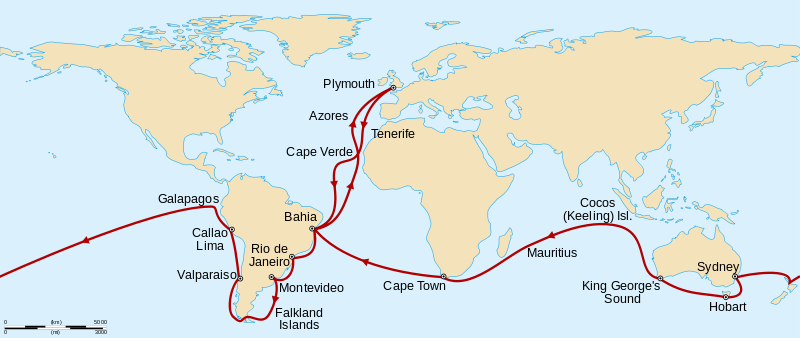
Darwin collected plant and animal specimens during his journey, including many fossils that suggested to him the existence of animals no longer occupying the land. He also observed many similar plants and animals with slightly different forms around the world. These similarities suggested a common ancestry to Darwin.
After experimental testing of his theories, such as the ability of plants to be dispersed by wind, ocean currents, and animals, Darwin shared his theories with close friends long before he was willing to publish them. One of his readers, Thomas Henry Huxley, had read Buffon’s Histoire Naturelle and alerted Darwin to its similarity to Darwin’s theory. After reading Histoire Naturelle himself, Darwin agreed that his theory was “laughably similar” to Buffon’s.
Although Darwin was confident of the accuracy of his theory, he delayed publication of his master work, Origin of Species, until 1859, over 20 years after his return from his voyage. He understood the implications of evolution, which removed humans from our previously exalted status as separate and above all other forms of life. He knew that the suggestion that humans are the descendants of primates, would outrage the church and the academic establishment. He wasn’t wrong in that prediction and was therefore overly cautious. Fortunately, Darwin was finally pushed to publish Origin when he received a letter from Alfred Russel Wallace about reaching the same conclusions about natural selection and evolution during his foreign travels as a collector of specimens.
Evolution revises taxonomy
Darwin believed that taxonomy would need to be revised to reflect evolutionary relationships. Categories should group together all the descendants of a single, common ancestor. Once evolution was accepted, he expected that knowledge to “clear away an immense amount of rubbish” in taxonomy. The morphological variations among individuals of a single species that had mistakenly been seen in the past as different species, would be recognized as the natural variation of individual members of a species on which natural selection operates.
Buffon had speculated that variations between individuals of a species create opportunities for natural selection to identify the individuals best adapted to specific environmental conditions, who will successfully reproduce. He called that unidentified hand an “internal shaping matrix,” yet to be identified.
The invisible hand that produces variation among individuals in the same species was revealed by the work of Gregor Mendel, an Austrian monk whose gardening experiments in the 1860s demonstrated the operation of genetics.
Once again the church got in the way of scientific advancement when Mendel was ordered out of his garden into church administration by his superiors. A report of his findings was buried deep in the archives of his local botanical society and found in 1900 by a botany professor who tried to appropriate it as his work, but didn’t get away with it.
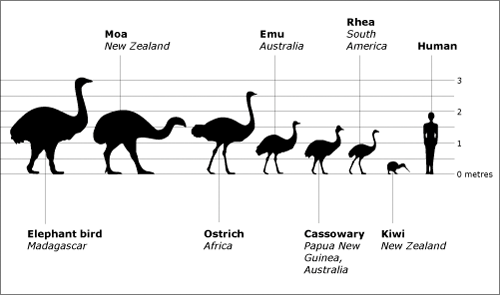
Genetics explains why species that are dispersed to new locations by natural and human means are different from the individuals they left behind because of genetic drift of isolated populations, mutations, and natural selection operating in different environmental conditions. The classic example of genetic divergence of closely related, but widely dispersed animals is a family of large, flightless birds: the ratite family.
Taxonomy becomes a modern science
The development of new analytical tools in the 20th century has enabled the revision of traditional taxonomy to reflect evolutionary relationships:
- Computers have removed some of the subjective judgements of human taxonomists. Numerical taxonomy uses the same lists of observed characteristics of closely related species to find the most similar species. Although the results of these calculations are in most cases similar to those of traditional taxonomy, in some cases the results have been illuminating.
- DNA analysis has revealed some close evolutionary relationships that were previously unknown. Molecular analysis has been particularly helpful when morphology was misleading in the past.
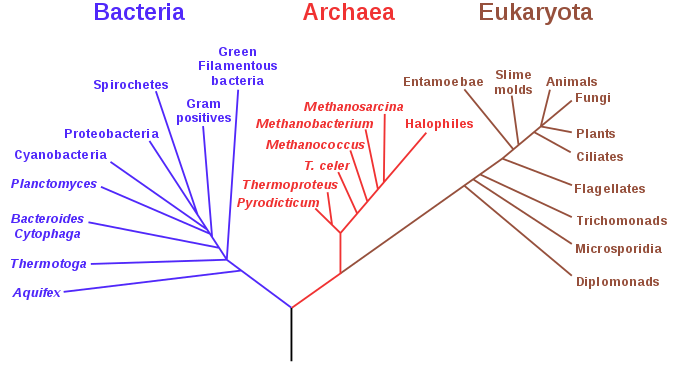
- Cladistics radically altered the schematic of the “tree of life.” Each branch, or clade (Greek for “branch”), includes a group of species with one common ancestor and excludes those that are not descendants of that ancestor. Cladistics has organized these branches into three domains of life that finally reveal the importance of fungi and microbes on the “tree of life.” Cladistics has done for biology what plate tectonics did for geology.
However, traditional taxonomy continues to exist, more or less unchanged. Perhaps corrected on the margins by modern analytical methods. The designation of new species remains largely a matter of opinion as “splitters” and “lumpers” debate where to draw the nebulous line between similar species.
The public continues to use the traditional system and refer to it when identifying species. It’s the system the public knows and it is based on observable characteristics the public can understand, as opposed to modern methods based on computer and laboratory analysis. Although there is some coincidental correspondence of evolutionary taxonomy with cladistics, traditional taxonomy is not based on evolutionary relationships.
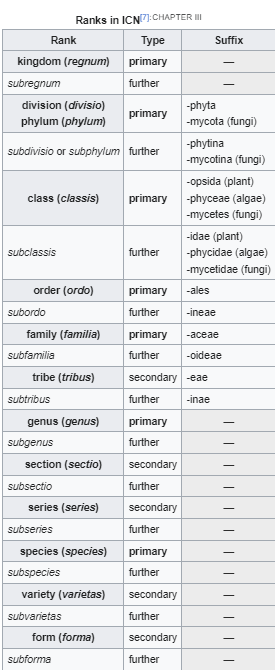
As our knowledge of the complexity of life has increased, a great number of new boxes in which to nest species into larger categories have been created, in addition to Linnaeus’s original 5.
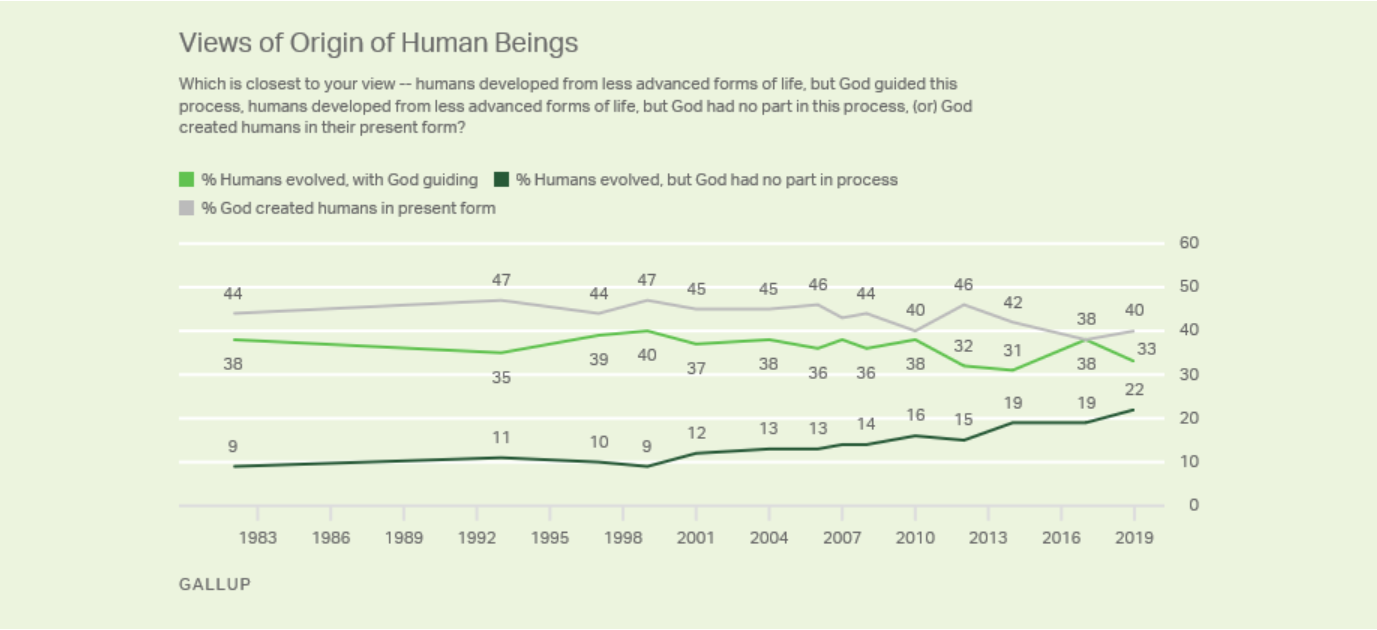
Religion remains an obstacle to the public’s understanding and acceptance of evolution as the natural process that enables life to change in response to changes in the environment: “The status of creation and evolution in public education has been the subject of substantial debate and conflict in legal, political, and religious circles. In the United States, creationists and proponents of evolution are engaged in a long-standing battle over the legal status of creation and evolution in the public school science classroom” (3) In 2019, only 22% of Americans believed that “humans evolved but God had no part in the process” compared to 40% of Americans who believed that “God created humans in present form.”
It is the public’s deep ignorance of evolution that explains the nativist ideology, which assumes that species are immutable, native plants are inherently different from non-native plants, and that plants and insects co-evolved their relationships long after native plants diverged from their ancestors, now considered non-native. All of these assumptions are mistaken. While nativists wish to divide all life into just two categories—native and non-native—none of the existing taxonomic systems even mentions that meaningless distinction.
Traditional taxonomists are a dying breed. Retiring taxonomists are not being replaced and academic taxonomy programs are disappearing, as are herbarium collections. The recent closure of the herbarium at Duke University is a case in point. Duke tried unsuccessfully to find a new home for the collection before deciding to close it.
Academic scientists are using modern analytical techniques to categorize species according to their evolutionary relationships. Given the new understanding of the colossal task of collecting rapidly evolving life, most accept that it can’t be done. About 1.2 million species have been identified and named. Estimates of the total number of species range from 8.7 million to 3 trillion. More importantly, species of life are constantly changing and dying out as they try to adapt to a rapidly changing world. Naming dynamic life is a constantly moving target, a task that is never done because life never stops evolving.
Many academic scientists believe that traditional taxonomy should be abandoned and replaced by a new system that reflects evolutionary relationships. But neither of the books on which this article is based (1,2) is specific about what form that would take and neither suggests that such a transition is imminent.
This article is based on these (1,2) books. All quotes in this article are from these sources:
- Every Living Thing, Jason Roberts, Random House, 2024
- Naming Nature, Carol Kaesuk Yoon, W.W. Norton, 2009
- Wikipedia, “Creation and evolution in public education”
 Conservation Sense and Nonsense