EPA’s Biological Evaluation of Rodenticides is Green Wash for Island Eradications

The Endangered Species Act requires that the Environmental Protection Agency (EPA) conduct biological evaluations (BE) of the impact of pesticides on threatened and endangered species protected by the ESA.  For example, when the EPA published its final evaluation of glyphosate in 2021, it informed us that glyphosate is “likely to adversely affect” 93% of legally protected endangered and threatened plants and animals.
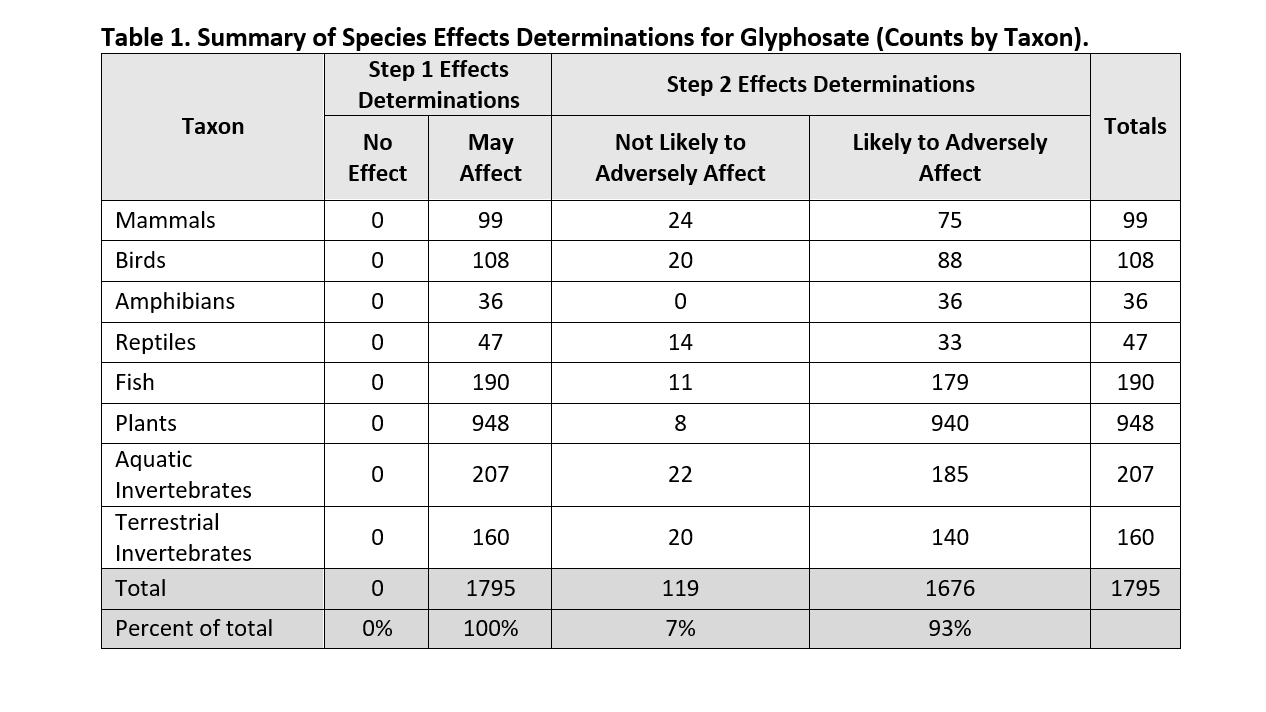
Source: EPA Biological Evaluation for Glyphosate

The EPA published a draft of a biological evaluation (BE) of 11 rodenticides in November 2023, which is a free gift to the island eradication industry.  The deadline for making comment on this draft is February 13, 2024.  Public comment can be made HERE

The EPA’s biological evaluation for rodenticides reached the conclusion that rodenticides used in island eradications have “no effect” on any aquatic plant or animal, including birds in the aquatic food web and amphibians with a fully aquatic lifestyle.  They made this “no effect” determination without evaluating any of those species, based on their claim that the Product Label for the rodenticide used in island eradications prohibits its use in water, which is not true.  EPA also extended this “no effect” determination to all species under the jurisdiction of National Marine Fisheries Services.  (1)

In fact, the standard Product Label for brodifacoum does not explicitly prohibit the use of the product in water.  It merely warns of the deadly consequences for aquatic species if used in water:  “This product is extremely toxic to birds, mammals, and aquatic organisms.  Predatory and scavenging mammals and birds might be poisoned if they feed upon animals that have eaten bait. Runoff may be hazardous to aquatic organisms in water adjacent to treated areas.  DO NOT contaminate water when disposing of equipment wash water or rinsafe.”  The standard Product Label also explicitly allows aerial broadcast of rodenticides for island eradications.  (2)  In other words, it’s dangerous to apply rodenticides to water, but, in fact, it often happens during island eradications.  The biological evaluation asks the public to believe the EPA’s claim that rodenticides are not used in water despite ample evidence that rodenticides land in water during aerial broadcasts on islands.

Although the standard Product Label acknowledges the potential that rodenticide runoff “may be hazardous to aquatic organisms in water adjacent to treated areas,” EPA’s biological evaluation dismisses that possibility by claiming that “use patterns preclude spray drift and runoff exposure.”  EPA’s biological evaluation provides no evidence in support of that claim and that claim is explicitly contradicted by the EPA in its evaluation of the proposed island eradication on the Farallon Islands as well as the considerable record of contamination of the aquatic food web during completed island eradications, as explained below.

Supplemental Product Labels are required for island eradications because they require greater quantities of rodenticide bait than allowed by standard Product Labels and modifications in application methods. The Supplemental Product Label required for island eradications explicitly permits the use of brodifacoum on water (3):

  • Elevated and floating bait stations are allowed in intertidal zones above the mean low tide mark and below the mean high tide water mark.
  • Broadcast applications are allowed in coastal areas above the mean high tide water mark.  Conversely broadcast applications are prohibited below the mean high tide water mark. 

The cited Supplemental Product Label for Wake Island was recently published in preparation for a second attempt to eradicate rats on Wake and 2 adjacent islands.  The first attempt in 2012 was a failure.  Here is a photo of this complex of islands:
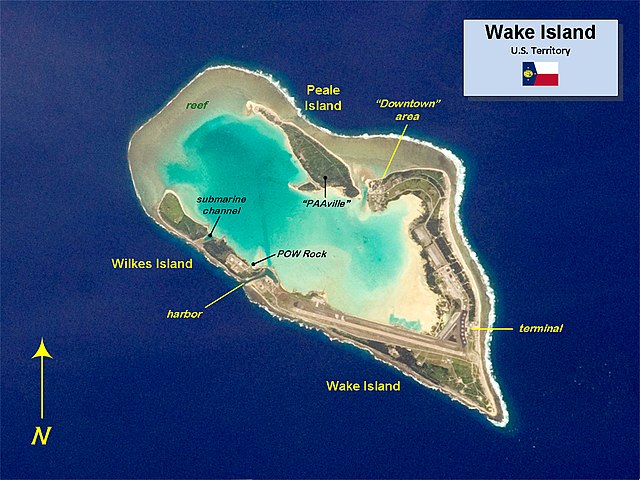
Wake Island. Source: NASA

As you can see, Wake Island is a narrow strip of land surrounding a lagoon that is open to the ocean.  Two-thirds of the island is surrounded by sandy, tidal beaches.  Scrub vegetation is in the intertidal zone.  A portion of the island’s vegetation is wetland.  It defies belief that it is possible to aerial broadcast rodenticide from helicopters (or float bait boxes in the intertidal zone) on Wake Island without getting rodenticide in the water. 

The published study about the failure of the first attempt to eradicate rats on Wake Island was written by the organizations that conducted the project.  It reports that rats were found on the island less than a year after the aerial broadcast and supplemental hand-applications were done. The study makes no mention of non-target deaths of any animals.  The study speculates that the failure of the attempt was the result of not applying the rodenticide everywhere rats were living.  They will soon try again, using the same methods.  Rodenticide bait will surely end up in the water.  More non-target animals will undoubtedly be killed.  But the public will not learn about either of those issues, because the monitoring and reporting is entirely controlled by the perpetrators of these projects. (4)

Keep in mind that there are 239 taxa living in the intertidal zone around the Farallon Islands, according to Appendix J of the Final Draft of the Environmental Impact Statement for the proposed Farallon Islands.  No Supplemental Product Label has been granted yet for the proposed island eradication on the Farallon Islands, but the Farallones are included on the list of 29 island eradications (below) in the EPA’s biological evaluation, which the BE says will be done within the next 5-7 years.
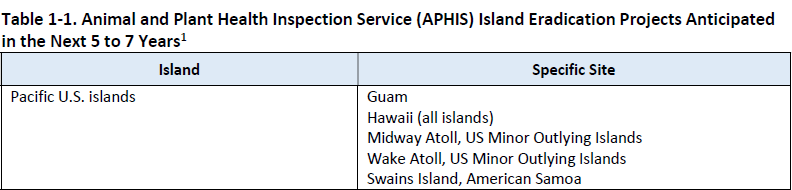
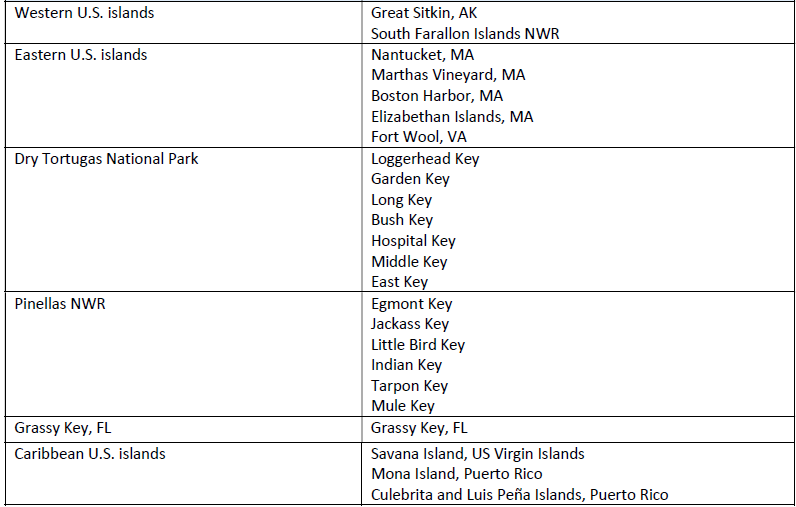
Source: EPA Biological Evaluation of Rodenticides

Contamination of the aquatic food web during island eradications is inevitable

EPA made a public record of its concerns about contaminating the aquatic food web during island eradications in its letter of December 9, 2013 regarding “EPA comments on the Revised Draft Environmental Impact Statement for the South Farallon Islands Invasive House Mouse Eradication Project.” (5)  In response to the claims of the DEIS for the proposed island eradication that “the bait deflector will minimize, and in several places, prevent bait drift into the marine environment,” the EPA said, “The EIS should be clear that bait drift would occur.”

The EPA’s letter of December 9, 2013, goes on to report previous experience with aerial broadcast applications on Palmyra Island and states:  “For future operations, the potential for bait to enter the marine environment must be a factor in the aquatic risk assessment and further methods to minimize the amount of bait entering the marine environment should be fully explored. The amount of bait that enters the aquatic environment from an aerial broadcast depends on shoreline configuration, island topography, overhanging vegetation, bird activity affecting flight lines, wind strength and direction, weather conditions, and pilot experience. On islands where these factors increase the potential for bait to enter marine environments, additional mitigation measures may be needed to protect sensitive marine environments.” (5)

Based on those concerns about contamination of the marine food web, the EPA’s letter of December 9, 2013 expresses these specific concerns about the proposed aerial broadcast application on the Farallon Islands:  “Discuss and consider the factors that increase the potential for bait to enter marine environments that are identified above. Especially relevant are the irregular shoreline, the excessive bird activity from gulls, and the proposal to fly steep areas a second time (shorelines on the Farallones are steep) to increase the application rate in these areas.” (5)

Given the EPA’s explicit admission that aerial broadcast of rodenticides on islands have contaminated the marine food web in the past and are likely to do so in the future, the EPA is not in a position to now categorically deny that “use patterns preclude spray drift and runoff exposure,” as it attempts to do in the draft biological evaluation.  Nor is the EPA in a position to categorically deny that aquatic species will be adversely affected by rodenticide bait that will inevitably land in the water surrounding the Farallon Islands, as it attempts to do in the draft biological evaluation.
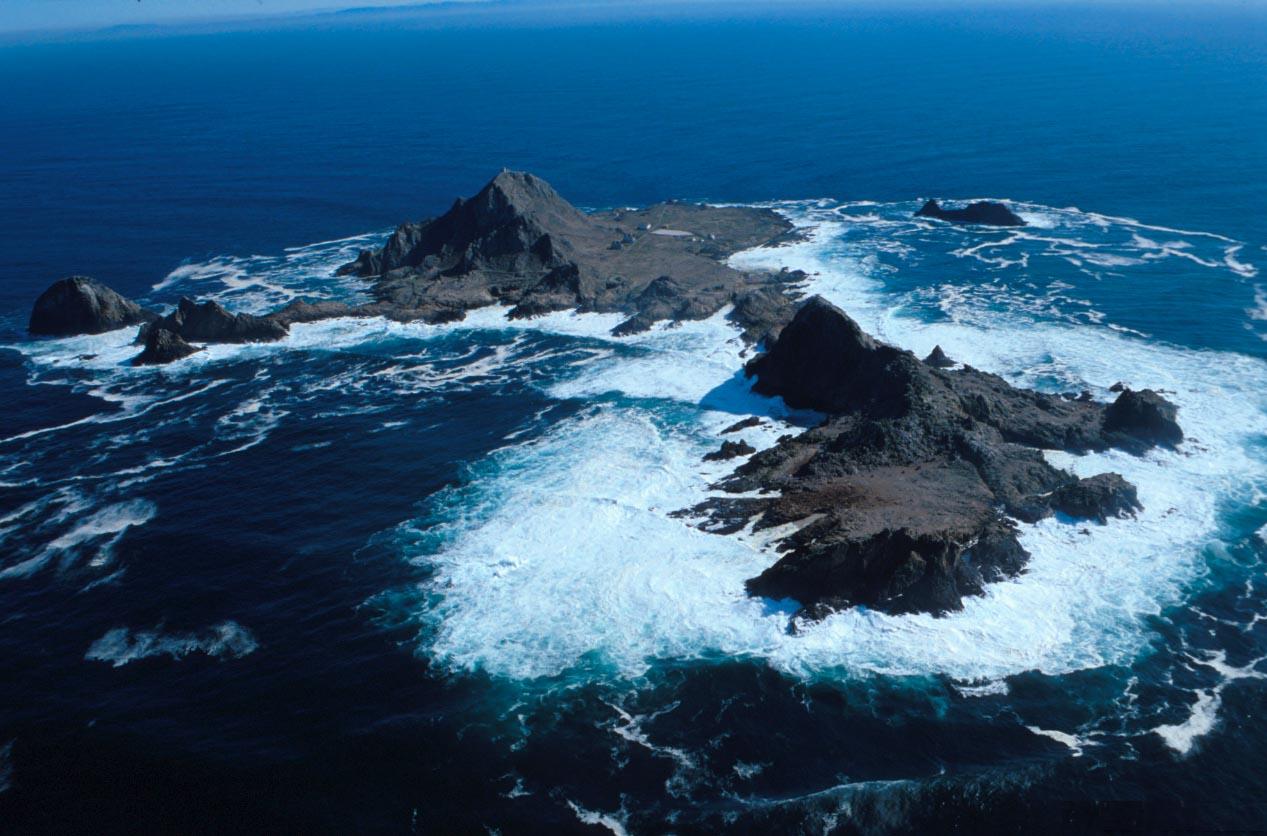
Farallon Islands, NOAA

The deadly track record of island eradications

The aerial application of rodenticide to kill rats on Anacapa Island in 2001-2002 was the first of its kind in North America. The project was complicated by the need to spare a population of endemic native mice on Anacapa.  Over 1,000 native mice were captured before the aerial application of rodenticide and released back on the island after the poison was no longer effective. Clearly, mice aren’t considered a problem on islands, unless they have the bad luck of being non-native.  Whether native or non-native, they are prey for many bird species.

Most of the raptors on Anacapa were removed before the rodenticide drop.  Of those that were left behind, 3 barn owls, 6 burrowing owls, and a kestrel likely died from rodenticide bait or eating poisoned mice.  94 seed-eating birds were also found dead after the poison drop.  The study says that these collateral kills were consistent with other similar projects.

Bird scavengers such as gulls, vultures, and condors are also vulnerable to secondary poisoning by poisoned rodents.  Shortly after the Anacapa poison drop, dead seabirds washed up on the shore near the Santa Barbara harbor.  UC Santa Barbara’s daily newspaper said“…a strong correlation exists between the National Park Service’s most recent airdrop of pesticide on Anacapa Island and the dead birds.”  These deaths weren’t reported by the study of the success of the poison drop.  As usual, the study was done by supporters of the project, with little interest in finding more collateral death from the drop.  The public is not allowed to observe island eradications.  Therefore, the public’s only source of information is those who are directly involved in the aerial application of rodenticides. 

“In October 2008, two helicopters dropped approximately 46 metric tons of Brodifacoum 25-W bait on Rat Island’s 2800 hectares, supplemented by hand application of bait around the island’s freshwater lakes. This rodenticide is known to be highly toxic to birds. Some nontarget mortality was expected, but the actual mortality exceeded the predicted mortality. Forty six Bald Eagles died (exceeding the known population of 22 Bald Eagles on the island); toxicological analysis revealed lethal levels of brodifacoum in 12 of the sixteen carcasses tested. Of the 320 Glaucous winged Gull carcasses, toxicology tests implicated brodifacoum in 24 of the 34 tested. Carcasses of another 25 bird species were found; of these 54 individuals, three were determined by necropsy to have died of brodifacoum poisoning.” (6)

Palmyra Atoll was aerially broadcasted twice with brodifacoum rodenticide in 2011 as well as a follow-up hand broadcast application.  The study of that project reported:  “We documented brodifacoum residues in soil, water, and biota, and documented mortality of non-target organisms. Some bait (14–19% of the target application rate) entered the marine environment to distances 7 m from the shore. After the application commenced, carcasses of 84 animals representing 15 species of birds, fish, reptiles and invertebrates were collected opportunistically as potential non-target mortalities. In addition, fish, reptiles, and invertebrates were systematically collected for residue analysis. Brodifacoum residues were detected in most (84.3%) of the animal samples analyzed. Although detection of residues in samples was anticipated, the extent and concentrations in many parts of the food web were greater than expected.”

These published studies are helpful to understand the scale of water contamination and collateral deaths of non-target animals, including aquatic animals.  However, they are just the tip of the toxic iceberg because little monitoring and testing is done on the many marine animals that have been killed in proximity of these projects.  Robert Boesch is a retired pesticide regulator for the EPA and the Hawaii Department of Agriculture.  Presently, he is Visiting Colleague at University of Hawaii at Manoa.  He has written an unpublished discussion paper (7) that reports:

  • Strandings of whales, some hemorrhaging, occurred within 60 days following anticoagulant bombardment.
  • Unusual mass strandings of hemorrhaging dolphins occurred in San Diego and Hawaii years after anticoagulant bombardment.
  • There is very little known about the fate of anticoagulant residues in the oceans.
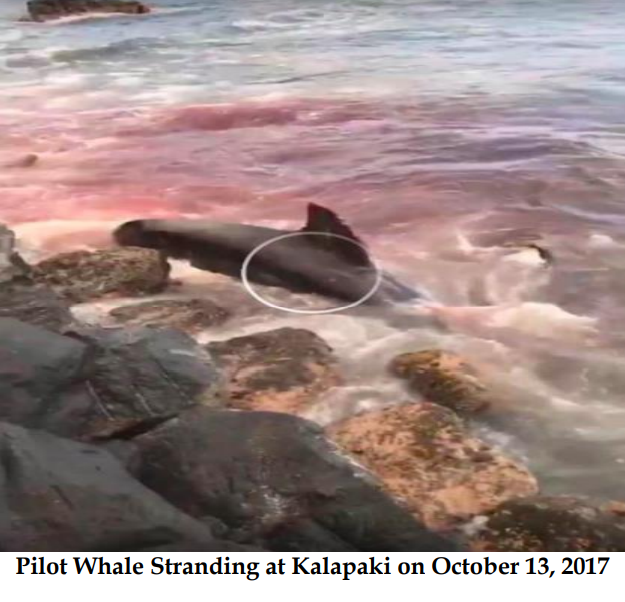
Source:  Robert Boesch discussion paper available HERE
.

The documented deaths of non-target animals caused by island eradications are direct poisonings by eating bait on the ground or by secondary poisoning by eating poisoned rodents.  The EPA biological evaluation attempts to dismiss the potential for secondary poisonings by citing a study (Baldwin 2021) that claims most rodents die in their burrows after eating the poison, making them unavailable to be eaten by other animals.  This study is not relevant to island eradications because it was conducted on ground squirrels (not rats or mice), it used a first generation rodenticide (diaphacinone) which is not used in island eradications, and most applications were burrow baits, rather than aerial broadcast. 

What’s at stake?

About 1,200 island eradications have been done all over the world over the last 30 years, with mixed success. The EPA’s biological evaluation announces the intention to approve 29 new island eradications in US waters within the next 5-7 years, including the Farallones.  In the case of Hawaii, the list says “all islands.”  Many of the listed islands are actually a complex of islands, such as those in Boston Harbor. Many of the islands are residential communities, such as Nantucket and Martha’s Vineyard. As presently drafted, the biological evaluation will make it possible to approve those projects without addressing the considerable evidence that these projects are killing thousands of birds and animals and contaminating the ocean surrounding island eradications.

The Bottom Line

The draft biological evaluation is unacceptable because it gives the public the false impression that island eradications with rodenticides are harmless, when they clearly are not. It confers EPA’s blessing on island eradications by refusing to evaluate endangered species that may be harmed by island eradications.  It ignores the evidence that rodenticide applications have killed many terrestrial and aquatic animals and contaminated the water.

The biological evaluation must be revised to correct these flaws in the present draft:

  • Exposure to rodenticides during island eradications must be based on Supplemental Product Labels for island eradications, not standard Product Labels that do not apply to island eradications. 
  • The revised biological evaluation must evaluate all legally protected animals exposed to rodenticides during island eradications, including aquatic animals.  Both bioconcentration and bioaccumulation must be considered in the determination of exposure to rodenticides.  “No effect” cannot be assumed without such evaluation.
  • The revision must provide evidence in support of the claim that there is no drift or run-off of pesticide from aerial broadcasts done on islands or delete that claim, which is contradicted by actual experience with island eradications. 
  • The revision must remove the claim that rodents die in their burrows after eating rodenticide bait (Baldwin 2021) because the study was done on a different animal, using a different rodenticide, and a different application method. 

Update:  The final version of the EPA biological evaluation of rodenticides is unchanged from the draft.  It continues to make “no effect” determinations for all aquatic species and critical habitats under the jurisdiction of the National Marine Fisheries Service.  It continues to list the same off-shore islands (including the Farallons) where “APHIS is planning to conduct rodent eradication projects for the benefit of seabirds and other wildlife on these islands in the next five to seven years.”

The only changes it acknowledges making are the removal of some of the mitigation measures from the draft.  December 9, 2024


  1. EPA Biological Evaluation of Rodenticide
  2. Label Amendment for Brodifacoum -25W Conservation, November 12, 2019
  3. Supplemental Label for second attempt to eradicate Polynesian rates on Wake Atoll following previous attempt in 2012, December 6, 2021
  4. “The Wake Island Rodent Eradication: Part Success, Part Failure, but Wholly Instructive,” Island Conservation, et.al., Proc. 26th Vertebr. Pest Conf. Published at Univ. of Calif., Davis. 2014
  5. “EPA comments on the Revised Draft Environmental Impact Statement for the South Farallon Islands Invasive House Mouse Eradication Project.” December 9, 2013
  6. “The rat island rat eradication project:  A critical evaluation of nontarget mortality,”  prepared by The Ornithological Council, December 2010 
  7. See attached file:

Environmental Protection Agency acknowledges that herbicides harm wildlife

“Restoration” professionals aggressively defend their use of herbicides because it is their preferred method to eradicate non-native plants.  Herbicides are the primary method of killing non-native plants because it is the cheapest method.  When the California Invasive Plant Council conducted a survey of land managers about the methods they use, they learned that 62% of those surveyed reported using herbicides regularly.  Only 6% of land managers said they don’t use herbicides.

The public usually accepts this poisoning of their parks and open spaces because they believe that wildlife benefits from the eradication of non-native plants.  Although there is little scientific evidence that supports that opinion, it is widely considered the conventional wisdom.  Now we have scientific confirmation that wildlife is harmed by the herbicides used to kill non-native vegetation.  That new evidence is the focus of today’s report on the Conservation Sense and Nonsense blog.

EPA Biological Evaluation of Glyphosate and Atrazine

The U.S. Environmental Protection Agency has published the final version of its biological evaluation of the most commonly used herbicide by the managers of our public lands, glyphosate.  EPA reports that glyphosate is “likely to adversely affect” 93% of legally protected endangered and threatened plants and animals.  EPA also published similar findings for atrazine that is available HERE. 

Source: EPA biological evaluation of glyphosate

This evaluation is the result of a long-fought battle with the EPA.  The settlement of a lawsuit brought by Center for Biological Diversity and Pesticide Action Network in 2016 required the EPA to conduct this evaluation.  A draft of the biological evaluation was published about one year ago and the final version one year later confirms the findings reported by the draft version.  Thank you CBD and PAN for your persistence!

Significance of EPA’s biological evaluation

The public tends to believe the law protects all wildlife, but that is not the case. The fact is, legal protection only applies to species designated by US Fish & Wildlife Service as threatened or endangered.  If a project is known to kill wildlife, there is no legal recourse unless the species has been officially designated as endangered or threatened. 

The more herbicide we use, the more likely wildlife is to become endangered and therefore eligible for endangered status.  Monarch butterflies are a case in point.  Their dwindling population is attributed to the widespread use of herbicides on weeds that provide nectar and pollen needed by all pollinators, including monarchs.  Monarchs and bees are also directly harmed by insecticides such as neonicotinoids.    

Hence, the EPA’s responsibility to conduct a scientific evaluation of the effect of herbicides on wildlife applied only to legally protected species.  However, it is essential to understand that the finding applies equally to all plants and animals, whether they are legally protected or not because the physiological processes of all species are similar.  For example, all legally protected amphibians are “likely adversely affected” by glyphosate, according to the EPA’s biological evaluation.  We must assume that all amphibians—whether protected or not—are also adversely affected by glyphosate.

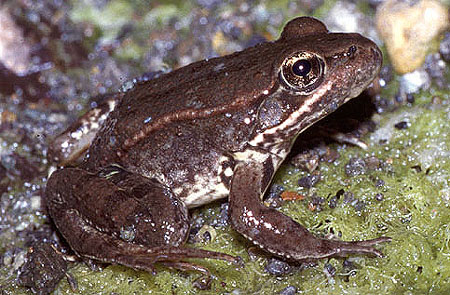
California red-legged frogs are legally protected as an endangered species. Source: USGS
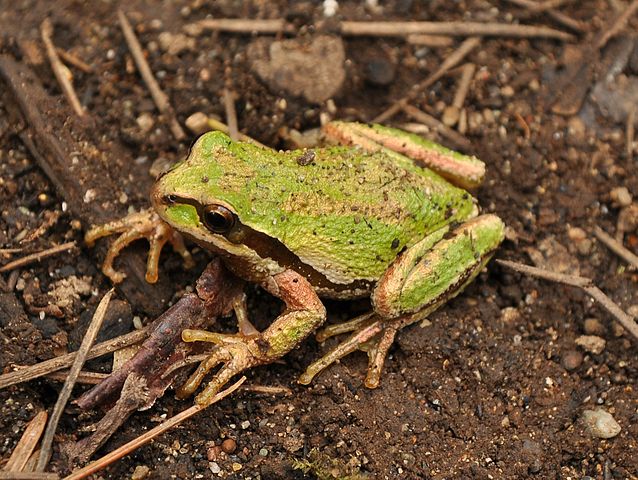
Pacific chorus frogs are not legally protected because they aren’t designated as threatened or endangered. Attribution

What’s to be done about pesticides that harm wildlife?

According to Sustainable Pulse the next official step is:  “The EPA’s evaluations now go to the U.S. Fish and Wildlife Service and National Marine Fisheries Service in the final step of the consultation process to determine what on-the-ground conservation measures are needed to minimize harm to these species and ensure these pesticides do not push any endangered species towards extinction” 

Defenders of wildlife and the public lands on which they live should not stop there.  These are the logical consequences of the fact that the most widely used herbicides should not be used on our public lands:

  • Where pesticides have been banned, they are often accompanied by exemptions for ecological “restorations.”  For example, when rodenticides were banned in California in 2020, exemptions were made for projects claiming to “restore” habitat.  When UC Berkeley banned the use of glyphosate on lawns and playing fields, they exempted glyphosate use off-campus to “restore” habitat.  When East Bay Regional Parks banned glyphosate for use in developed areas such as parking lots and picnic areas, they exempted glyphosate use to “restore” habitat.  These exemptions should be rescinded because they are harmful to wildlife living on undeveloped public land.  Wildlife does not live on parking lots and playing fields.  Wildlife lives in undeveloped areas vegetated with both native and non-native plants. 
  • The State of California recently granted a 3-year exemption from CEQA requirements for environmental impact review for projects claiming to “restore” habitat. Available HERE; see (11) This exemption should be revised so that projects that use pesticides are not eligible for exemption from CEQA requirements. 
  • Native plant advocates and “restoration” professionals must quit claiming that projects using herbicides will benefit wildlife, because clearly, they DON’T!

American corporations prevent the regulation of pesticides

This is the story of the persecution of Tyrone Hayes, Professor of Biology at UC Berkeley, by the manufacturer (Syngenta) of an herbicide (atrazine).  Professor Hayes was asked by Syngenta to conduct research on atrazine in 1999.  Fifteen years later, New Yorker magazine has published a detailed account of Professor Hayes’ painful experience. (1)

Although Hayes was well aware of what Syngenta was doing to discredit him and his research, his suspicions have now been confirmed because of documents revealed by a legal battle.  Specifically, 23 Midwestern cities sued Syngenta for “concealing atrazine’s true dangerous nature” and contaminating their water supply.  The documents subpoenaed in those class-action suits revealed Syngenta’s campaign to undermine Professor Hayes’ credibility.  In 2012, Syngenta settled those suits (without admitting wrongdoing) by giving $105 million to 1,000 water districts to filter atrazine from their drinking water.

Science for sale

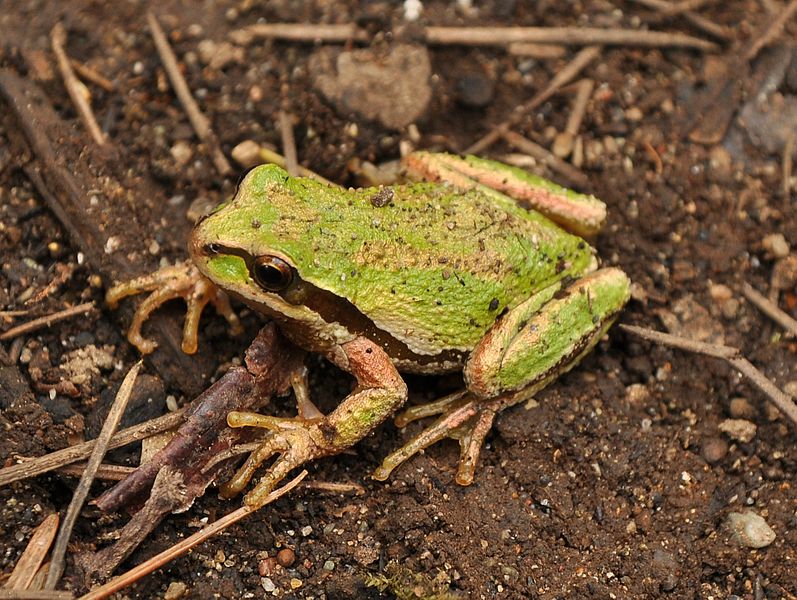
Pacific Chorus Frog, Creative Commons

Professor Hayes has had an interest in frogs since he was a child in rural South Carolina.  He was fascinated by the transformation from tadpole to frog.  That childhood interest led to his primary research interest in amphibians.  So, when Syngenta asked him to study the affect of atrazine on frogs, it seemed to be an opportunity to improve and expand his research program.  Some of his graduate students were wary, but Hayes assured them that his work could not be compromised by the acceptance of the small fee ($125,000) from Syngenta.

It was not until Hayes and his team began to observe and report birth defects in the reproductive organs of frogs exposed to atrazine that he began to understand the risk he had taken in accepting that funding.  His formerly collaborative relationship with Syngenta scientists quickly deteriorated when he reported his findings.  He ended his formal relationship with Syngenta in November 2000, when it became apparent they were trying to prevent him from pursuing his research.

Then Syngenta began a relentless assault on his research and he, just as relentlessly, pursued his inquiries.  While Syngenta hired other “scientists” to discredit his research, Hayes and his team traveled the Midwest to gather samples of contaminated water to analyze in his laboratory.  They sent 300 pails of frozen water to Berkeley from Illinois, Iowa, Nebraska, and Wyoming.  The more tests they conducted, the more evidence they found that atrazine caused profound deformities of the reproductive organs of frogs such as hermaphroditism which is the expression of both male and female organs resulting in sterility.  These deformities were observed at atrazine concentrations 30 times less than allowed by the Environmental Protection Agency.

Dirty tricks

Here is an incomplete list of some of the things that Syngenta did to discredit Professor Hayes’ research.  These activities were documented in the evidence subpoenaed during the atrazine suit.

  • Syngenta sent its employees to Hayes’ public presentations to ask rhetorical questions which cast doubt on the accuracy of his work, such as “Why can’t anyone replicate your research?”  Hayes says the answer to that question is that no one has tried.  Syngenta hired “scientists” who altered Hayes’ research methods and reported that their findings were evidence that replication was not possible.
  • Syngenta purchased search words on the internet so that any searches for Hayes’ research would send people to an advertisement that says “Tyrone Hayes Not Credible.”  Ironically, Syngenta is now using that same tactic to discredit the article in the New Yorker.  A search for “atrazine” sends the searcher to the “Atrazine Facts” website with leading articles attacking the veracity of the New Yorker article. 
  • The work journal of Syngenta’s head of “communications” contained a list of plans to ruin Hayes’ reputation.  One entry said, “set trap to entice him to sue.”  Another entry said, “investigate wife.”  Syngenta claims that some of the strategies on that list were not implemented.

The vast financial resources of Syngenta help to put these efforts into perspective.  Syngenta’s sales of seeds and pesticides are worth $14 billion per year and atrazine sales are $500 million annually.  They have the resources and the motivation to protect their product in the marketplace. 

The evidence against atrazine mounts

Meanwhile, more scientists began to report evidence that atrazine causes birth defects.  An epidemiologist reported that children conceived during the seasonal application of atrazine are statistically more likely to be born with genital defects.  Shortly after the publication of that paper, the New York Times published a big study about the extent to which the nation’s drinking water is contaminated with atrazine.  Both of these studies endured media attacks from Syngenta.

Jason Rohr, ecologist at University of South Florida and a member of the EPA panel which evaluated atrazine, criticized the “lucrative ‘science for hire’ industry.”  He wrote for Policy Perspective that “…a Syngenta-funded review of the atrazine literature had arguably misrepresented more than fifty studies and made a hundred and forty-four inaccurate or misleading statements, of which 96.5% appeared to be favorable to Syngenta.” (1)

Two other members of the EPA scientific advisory panel for atrazine review have written a paper (not yet published) complaining that the recommendations of the panel are ignored and that the EPA is placing “human health and the environment at the mercy of the industry.”  They conclude that “the single best predictor of whether or not the herbicide atrazine had a significant effect in a study was the funding source.”  (1) 

Getting away with it

Since Professor Hayes began to report the results of his study of the effects of atrazine on frogs there have been several reviews of atrazine by the Environmental Protection Agency.  Hayes and other researchers participated in those reviews.  The EPA has approved the continued use of atrazine after each review, most recently in 2012.  The next review is scheduled for this year.

The European Union banned atrazine in 2003.  The European Union uses the “Precautionary Principle” to evaluate pesticides for approval:  if an action or policy has a suspected risk of causing harm to the public or to the environment in the absence of scientific consensus that the action or policy is harmful, the burden of proof that it is not harmful falls on those taking an action.”  (2)  In other words, the manufacturer of the pesticide must prove it is NOT harmful.  (Ironically, the city of San Francisco is legally obligated to use the Precautionary Principal for approved use of pesticides, although the city is using pesticides which the EPA considers “hazardous.”)

American federal law uses the opposite approach.  The Environmental Protection Agency must prove that a pesticide is harmful before banning that product.  The New Yorker explains in detail all of the legal limitations on the EPA in establishing such proof.  For example, the EPA is legally obligated to involve the industry in establishing the criteria for the review.  They are also legally obligated to conduct a cost-benefit analysis.  Syngenta claims that corn production in the United States would be drastically reduced if atrazine were banned.  Proving health and environmental consequences of continued atrazine use of equal economic value to corn production would be difficult.

These and other legal obstacles have rendered the EPA nearly impotent to regulate pesticides.  While it may be tempting to blame the EPA, lawmakers are largely responsible for tying their hands.  There are some 80,000 chemicals in the environment.  The EPA has banned only 5 chemicals since its inception in the 1970s (PCBs, chlorofluorocarbons, dioxin, asbestos, and hexavalent chromium; the ban on asbestos was overturned in 1991 [2]).

Syngenta is now represented on the federal Invasive Species Advisory Committee, which puts them in a position to influence the country’s policies regarding the eradication of non-native species using their products.  This seems to us a flagrant conflict of interest and a clear indication of the extent to which our government is controlled by industry.  Such appointments are discretionary and therefore cannot be blamed on legal requirements.  Rather they are more a reflection of the way money influences politics in our country.

The consequences

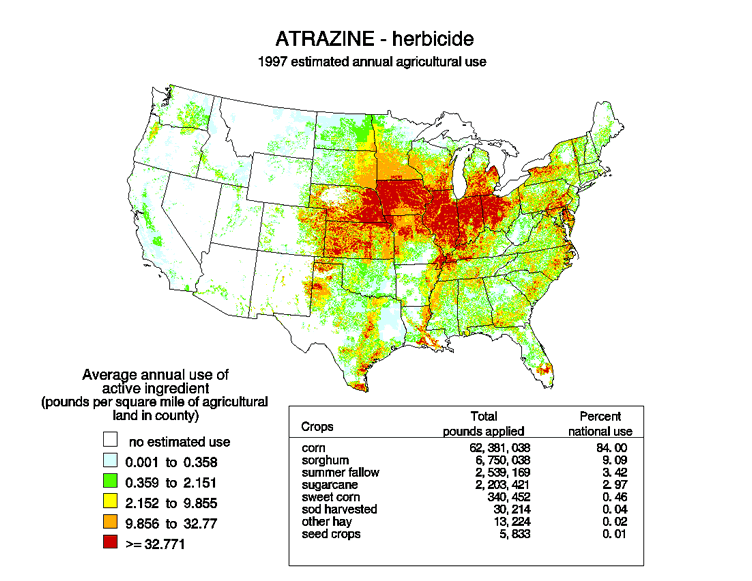
Atrazine is the second most widely used herbicide in the United States.  Only glyphosate (Roundup etc.) is used more often.  Atrazine degrades slowly in the soil and washes into streams and lakes where it does not dissolve.  An estimated 30 million Americans are drinking water contaminated with trace amounts of atrazine.

Atrazine use 1997
Atrazine use 1997

To our knowledge, atrazine is not being used by any of the ecological “restorations” of the public lands in the Bay Area.  Atrazine is used primarily—but not exclusively—for agricultural crops, most notably corn.  In California, about 23,000 pounds of atrazine (active ingredient only) were used on over 1 million acres in 2011. (3)

The fragility of truth

We can empathize with Professor Hayes.  Like him, we have been engaged in the effort to inform the public of the destruction of our public lands for 15 years.  And like him, we have been on the receiving end of a campaign to discredit and intimidate us into abandoning our effort.

The February 6, 2014 meeting of the Integrated Pest Management Program in San Francisco provides a recent example.  The director of San Francisco’s so-called Natural Areas Program told a roomful of her colleagues that criticism of her program’s herbicide use is “frankly nonsense.”  Since our sources of information about herbicides are exclusively Material Safety Data Sheets mandated by the EPA and the manufacturers’ labels, we consider this statement groundless defamation.  Admittedly, this is a trivial example, compared to the harassment endured by Professor Hayes.  The analogy is that both are an attempt to discredit and dismiss critics of pesticide use.

Professor Hayes’ reaction to his experience is similar to ours.  The more they attack him, the more determined he is to make his case.  He has been vindicated by being promoted to full professor in 2003 and other researchers have reported similar findings in humans.  Although he told the New Yorker that “the tide is turning,” atrazine is still on the market.

Likewise, we tenaciously pursue our mission to stop the destruction of our public lands.  It is now clear that our opinion of these projects is shared by the public as well as many scientists.  But we are not there yet.

 **************************

(1)    Rachel Aviv, “A Valuable Reputation,” New Yorker, February 10, 2014

(2)    Wikipedia; “pesticides” is a global term that includes herbicides, insecticides, fungicides, rodenticides, etc.

(3)    “Summary of Pesticide Use Report Data, 2011,” California Department of Pesticide Regulation