Californian-Australian Exchange

With a little help from our friends, we have discovered a new resource to help us understand why Blue Gum eucalyptus was brought to California from Australia.  True Gardens of the Gods:  Californian-Australian Environmental Reform 1860-1920 was written by an Australian historian, Ian Tyrrell.  Although we have read other accounts of the introduction of eucalyptus to California (most recently Jared Farmer’s Trees in Paradise), the perspective of an Australian on this history was new to us.

Those who despise eucalyptus often portray its introduction to California as a horrible mistake to be regretted and reversed.  Ian Tyrrell helps us to understand that there are actually good reasons for the introduction of eucalyptus that make sense in the context of the geographic and cultural realities of the historical period in which it was introduced. 

Historical geography of eucalyptus introduction

The gold rush in California and Australia occurred nearly simultaneously in 1849.  As these gold rushes played out, there was considerable travel of hopeful miners and their support structures between the two continents.  Naturally, they brought things with them that they considered useful to their enterprises and seeds of the Blue Gum were amongst their baggage from Australia to California.  Although there is speculation about the precise time and means of initial introduction, they remain theories.

Presently we think of Australia as being far away because our primary means of transportation is air travel and that trip is much longer than the trip to the East Coast of the US.  However, at the time of the gold rush, travel by ship was the primary means of transportation and the trip to Australia by ship was much shorter than the trip to our East Coast.  The trip around the horn of South America was both long and extremely dangerous.  In Richard Henry Dana’s Two Years Before the Mast, we share his terror during that voyage in the 1830s.
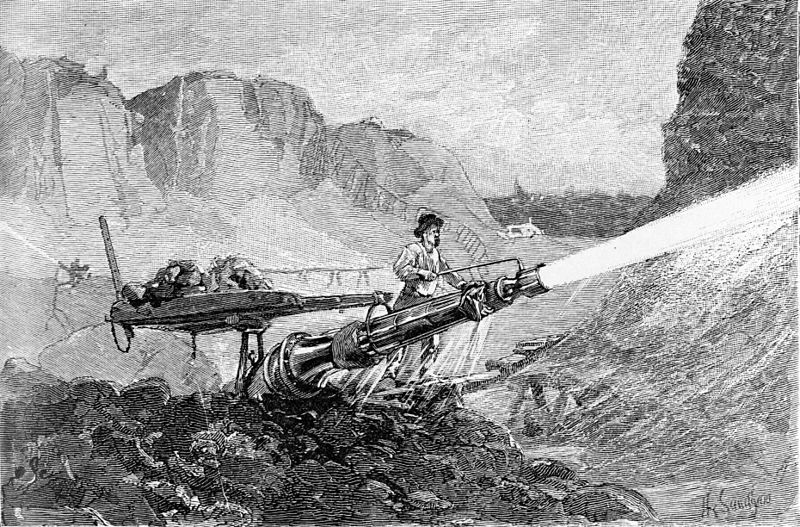
Hydraulic gold mining in California.

This shared experience of a gold rush meant that California and Australia also shared the environmental damage caused by the methods used to extract gold from the land.  Hydraulic mining was the primary method of extraction.  This method uses high-powered water pumps to erode riparian corridors to expose the gold in the soil.  Erosion is the result of this method of mining.

Ian Tyrrell tells us that the initial motivation for planting eucalyptus in California was to heal environmental damage caused by the gold rush.  Eucalyptus was an attractive choice for this task because it grows quickly and is well adapted to California which shares the same Mediterranean climate as much of Australia.  It seems ironic that the initial motivation for planting eucalyptus in California was to repair environmental damage, given that today the same trees are blamed for environmental damage by native plant advocates and mainstream environmental organizations such as the Sierra Club.

Our East Coast remained inaccessible to California until the completion of the transcontinental railroad in 1869.  The Panama Canal (completed in 1914) accommodated movement of large shipments of goods between the West and East coasts.

The cultural context

Tyrrell also introduces us to the intellectuals on both continents who were the environmentalists of the era of the gold rush.  George Perkins Marsh in America and Baron Ferdinand von Mueller in Australia were the environmental leaders of that period.  They were both committed to introducing species to their respective countries to improve the environment by creating “gardens of the gods”:  “These were pragmatic thinkers who leaned toward afforestation rather than preservation when the opportunity presented itself.  Early conservationists were, at bottom, advocates of a constructed landscape that would improve nature, not preserve.  In short, they were advocates for the garden concept.”   (1)
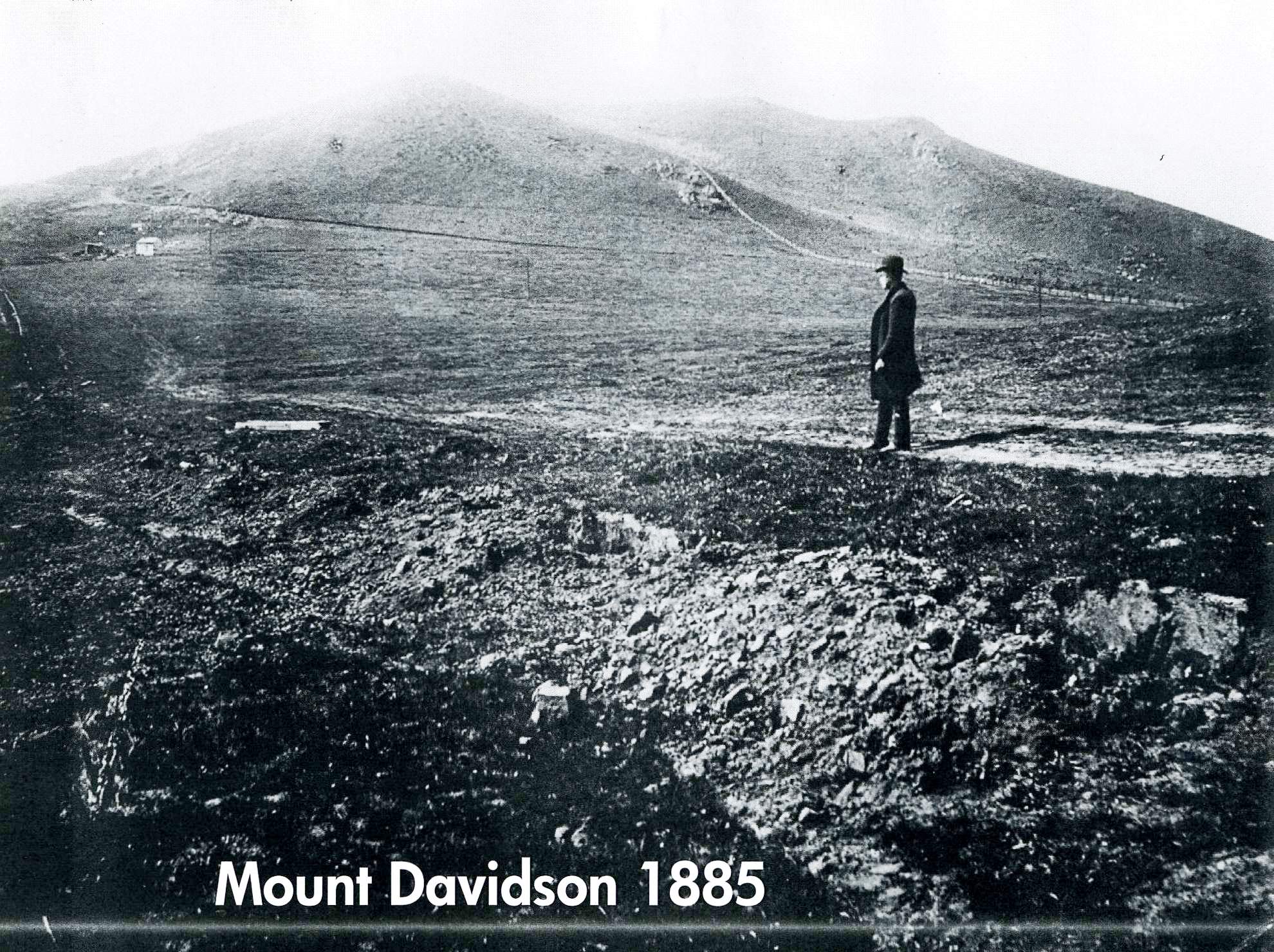
Mount Davidson, San Francisco, 1885.

In California, the desire to import tree species from outside California was supported by the fact that much of California is naturally treeless.  Many species of trees that are native to California are not well adapted to many microclimates.  For example, if you want trees on a windward facing hill along the coast of California, you must plant a non-native.  So, cultural preference for introduced trees was supported by horticultural requirements of native tree species.

Timber famine

A second phase of afforestation with eucalyptus occurred towards the end of the 19th century when there was widespread fear in America that we had severely depleted our timber resources and would soon experience a shortage of timber needed to build our new communities.  Eucalyptus was considered an attractive substitute for native timber sources because it grew quickly.  Plantations of eucalyptus were planted throughout California based on the belief that a valuable market for the timber was just around the corner.

This period of speculative investment in eucalyptus came to an abrupt end around 1914 for several reasons:

  • Young eucalyptus does not make suitable lumber for building purposes.  We have since learned that eucalyptus makes valuable lumber at about 80 years of age.  We have also perfected kiln-drying techniques that produce high-quality eucalyptus lumber.
  • The economic value of eucalyptus forest for timber was also reduced because of the limited ability of eucalyptus to regenerate naturally:  “The eucalyptus bore ‘seeds abundantly, but apparently the latter does not find, as a rule, the proper conditions for germination…Except with the aid of the hand of man, therefore, the eucalyptus will not sensibly encroach upon the treeless area’” (1)  (This is yet more evidence that eucalyptus is NOT invasive, as native plant advocates claim.)
  • The demand for timber declined precipitously when alternative building materials were developed such as iron and cement.

Australia on the receiving end
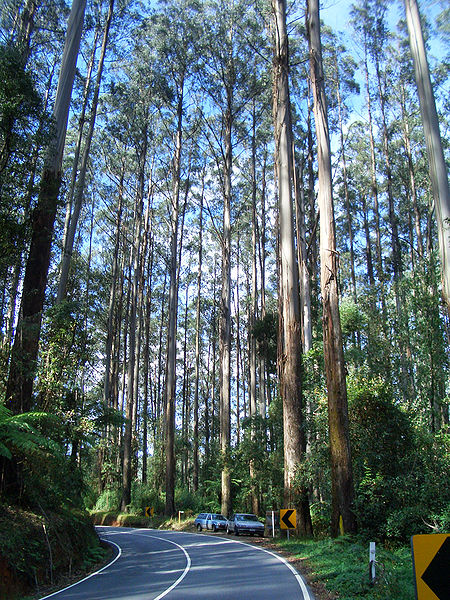
Australian eucalyptus forest (Eucalyptus regnans). Victoria, Australia

As eucalyptus was introduced to California, Australians were importing the Monterey pine for timber.  Monterey pine is planted all over the world for timber.  It is the predominant timber species in New Zealand, but it never became as popular in Australia because it is softwood.  Eucalyptus is a hardwood and Australian’s developed a preference for hardwood that could not be satisfied with Monterey pine.  Unfortunately, that preference for hardwood has decimated the old-growth eucalyptus forests of Australia.

There is a lesson in this for us.  One of the advantages of introducing non-native trees is to protect native forests.  If we use our non-native trees to fulfill practical needs such as lumber and firewood, we are taking the pressure off the need to destroy our native forests.  Eucalyptus is still planted in many developing countries where firewood is still needed for fuel.  Wouldn’t we rather that these countries burn fast-growing eucalyptus than their native forests?

What can we learn from the Californian-Australian exchange?

Environmentalism is a cultural construct.  Its meaning has changed and will undoubtedly continue to change because culture is dynamic, just as nature is dynamic.  Mid-Nineteenth Century environmentalism was not wedded to native species, as is contemporary environmentalism.  Fifty years ago, when Rachel Carson’s Silent Spring was published, pesticide use was considered harmful to the environment.  Now we find that mainstream environmental organizations are actively promoting the use of pesticides to support their demands for eradication of non-native plants and trees.

We tend to look back at historical ways of doing things—such as planting eucalyptus—with a condescending attitude: “How could they be so stupid?”  Another way to look at the past is to look at the historical context in which those choices were made.  If we had sufficient knowledge of the historical context, perhaps those choices would make good sense.

Finally, if we look around the world at what is being planted today, we must acknowledge that planting non-native tree species often has practical advantages.  Non-native tree species might grow where native species won’t grow and where we need trees for windbreaks, visual and sound screens, erosion and pollution control, carbon sequestration, etc.  Or non-native tree species might protect native species by fulfilling specific needs that would otherwise require the use of native species.

As we often do on Million Trees, we reach the conclusion that more knowledge often results in more tolerance.  Thanks to Ian Tyrrell for these insights and to our friends for alerting us to this valuable resource.


(1) Ian Tyrrell, True Gardens of the Gods:  Californian-Australian Environmental Reform, 1860-1930, University of California Press, 1999

“The Fanaticism of the Apocalypse”

Fanaticism of the ApocalypseThe Fanaticism of the Apocalypse:  Save the Earth, Punish Human Beings is a critique of modern environmentalism by a French philosopher, Pascal Bruckner. (1)  I read it slowly and thoughtfully, savoring its eloquence that is a testament to the elegance of the French language.  However, because it is so close to the center of my advocacy, I don’t have confidence that I can do it justice in a description for our readers.  Therefore, I quote this brief review from the Amazon website:

“The planet is sick. Human beings are guilty of damaging it. We have to pay. Today, that is the orthodoxy throughout the Western world. Concern about the environment is legitimate, but catastrophism transforms us into cowering children. Distrust of progress and science, calls for individual and collective self-sacrifice to “save the planet” and cultivation of fear: behind the carbon commissars, a dangerous and counterproductive ecological catastrophism is gaining ground.

Bruckner locates the predecessors of today’s ecological catastrophism in Catholicism’s admonishment to give up joy in the present for the sake of eternal life and in Marxism’s demand that individuals forsake personal needs for the sake of a brighter future. Modern society’s susceptibility to this kind of catastrophism derives from what Bruckner calls the “seductions of disaster”, as exemplified by the popular appeal of disaster movies. But ecological catastrophism is harmful in that it draws attention away from other, more solvable problems and injustices in the world in order to focus on something that is portrayed as an Apocalypse. Rather than preaching catastrophe and pessimism, we need to develop a democratic and generous ecology that addresses specific problems in a practical way.

This sharp and contrarian essay on one of the great issues of our time will be widely read and discussed.”

Here are a few of the themes in this thought-provoking book that struck a chord with us:

Pervasive pessimism of extreme environmentalism

It was some comfort to know that we are not unique in our reaction to the extreme negativity of the branch of environmentalism that is driving the native plant movement in the San Francisco Bay Area.  When we walk in the urban forest, which we often do, we enjoy the bird song, the rustle of the wind in the trees that surround us, the flicker of sunlight through the leaves, and the lush green of the understory in places like Mount Sutro.  When native plant advocates describe the same places, we often wonder if they inhabit a dark, parallel universe.  They see a degenerate, dying forest, being strangled by vegetation, inhabited solely by rats.  Destruction is the only cure for the catastrophic disease they see.

We laboriously try to change their perception by providing them with what seem to us irrefutable facts:  the opinions of scientists about the health of the forest, including a local professor of urban forestry, detailed censuses of the birds and animals that live in the forest conducted by reputable scientists, the scientific studies about changes in our urban ecosystem that are an inevitable consequence of the rapidly changing environment, the photographic evidence that non-native forests have not “invaded” our open spaces.

Pascal Bruckner explains why these facts fall on the deaf ears and blind eyes of native plant advocates.  In an increasingly secular world, extreme environmentalism satisfies many of the same human needs that were satisfied by religious belief in the past.  The appeal of religion starts with the deep guilt we often feel for the failings that are an inevitable part of life.  Religion offers redemption from guilt, but first it asks us to pay a price in the form of penance for our sins. 

Extreme environmentalism derives from our guilt for the damage humans have done to the Earth.  Redemption requires that we heal that damage.  In the case of native plant advocates, the damage to the Earth is symbolized by the demise of native plants.  The restoration of native plants is the penance they believe we must pay to expiate our guilt. 

We are unable to convince these true believers that these projects inflict more damage on the Earth in the fruitless attempts to restore native plants where they are no longer adapted, by destroying healthy trees and spraying our public lands with herbicides because their belief is based on faith and faith cannot be swayed by facts.  No price is too great to pay for the restoration of native plants.  Any damage inflicted in the process is incidental to their quest for redemption.   

The seductive appeal of having an enemy

Bruckner also reminds us of the appeal of having a clearly defined enemy.  For most of the 20th century, the ideological enemy of the West was Communism.  The Cold War satisfied the need for an enemy.  The West was defined by anti-communism.  We were united in our opposition to a common enemy.  The ideological waters have been muddied by the demise of Communism. 

Bruckner believes that extreme environmentalism has satisfied the need for an enemy for some people.  Consumption and materialism are the enemies of extreme environmentalism.  If you have engaged in the debate with native plant advocates in the past 15 years, you will know what we mean.  We have been called “selfish nature haters” and “creepy imbeciles” in those debates.  Comments on this blog have accused us of being funded by the Koch brothers, of sounding like Fox News, and of being as uncompromising as the NRA.  We are mystified by the association with right-wing politics. 

However, we take Bruckner’s observation to heart.  We are a part of a large community of people who are opposed to the destruction associated with native plant “restoration” projects in the San Francisco Bay Area.  We know that people come to that conclusion from a variety of perspectives.  Some are primarily concerned about the destruction of healthy trees.  For others, the use of herbicides is the primary issue.  The impact on wildlife living in our open spaces is sometimes the chief concern. 

Just as we are a diverse coalition of people, who come to this issue from a variety of perspectives, we must make every effort to treat native plant advocates as the individuals they surely are.  We must listen to their opinions with an open mind, look for ways to compromise with them, and treat their concerns with respect.  We will not be seduced into treating native plant advocates as enemies.   

Looking for the light in Bruckner’s thesis

We share many of the concerns of extreme environmentalists about the future of the Earth.  Although we agreed with Bruckner’s cautionary tale about the hopeless negativity of extreme environmentalism, we found little to reassure us about an alternate course.  Bruckner merely reminds us that dark predictions about the fate of humans are not new.  The end has been prophesied many times in human history.  And the way forward was not predictable before it materialized in the form of the technological innovations that resolved each existential crisis.  Our adaptability has been repeatedly demonstrated and we trust that it will be again, though we are unable to foresee it at the present time.

Darwin2

********************

(1) Pascal Bruckner, The Fanaticism of the Apocalypse:  Save the Earth, Punish Human Beings, Polity Press, Cambridge, England, 2013

Bowling Alone with the Sierra Club

In 2000 Robert Putnam’s (Harvard University) masterpiece of American social science, Bowling Alone* was published.  He reported the significant decline of all forms of civic participation in American society and politics from the P.T.A. to voting.  Religious participation is the notable exception to this trend. 

We are deeply concerned about the increasing isolation of Americans from one another and we believe that the polarization of viewpoints, particularly in politics, is one of the consequences of this trend.  Only the highly motivated extremes of opinion are still engaged in the civic dialogue.  The middle ground is no longer represented in the debate.  However, we will focus on the topic that is relevant to Million Trees, that is, the implications for the environmental movement. 

Bowling Alone. Attribution: Xiaphias

Membership in environmental organizations reached its peak in 1995, according to Bowling Alone after decades of enormous growth since the 1960s.  This peak was consistent with public opinion regarding environmentalism.  In 1990 three-quarters of Americans considered themselves “environmentalists.”  By the end of the decade, that percentage had dropped to only 50%. 

The growth in membership was achieved by the use of a new marketing tool known as direct mail.  Think about it.  How many invitations do you receive in the mail from non-profit organizations, asking you to contribute to a wide-range of worthy causes?   Typically these organizations spend between 20-30% of their budgets on such fund raising and the rate of return on these solicitations is only 1-3% of the cost depending upon the quality of the mailing list.  Using this technique, Greenpeace tripled its membership between 1985 and 1990 to 2.35 million.

What does “membership” mean?

After tripling its membership, Greenpeace lost 85% of its members in the next 8 years.  The drop-out rate after the first year is typically 30% in these organizations.  

In fact, most contributors to these organizations don’t even consider themselves “members” in the usual sense of that word.  The commitment to the organization doesn’t extend far beyond writing a check.  Only 8% of contributors to the Environmental Defense Fund, for example, described themselves as “active” in the organization. 

These organizations are therefore distinctly different from their historical antecedents.  Participants in the civil rights movement frequently put their lives on the line.  The social lives of Rotary Club members revolved around the Rotary lodge. 

Since few people are active participants in environmental organizations, they have become “bureaucratized,” meaning they are run by and for paid professionals.  Most members have little idea what policies the professional staff has adopted on their behalf. 

The Sierra Club

In 1989, a survey of Sierra Club members determined that only 13% of its members had attended even one meeting of the Sierra ClubThe Bay Area Chapter of the Sierra Club claims to have 10,000 members, but chapter leadership of a group (the chapter is broken into many geographical groups, such as the San Francisco Group)was elected by as few as 59 votes.  The top vote-getter in the Club’s most recent election received 327 votes in a Chapter-wide race, but only one chapter group (Northern Alameda County) had more candidates than there were available seats.  In other words, there was no competition for most of the leadership seats. 

Yet, the incumbents in these leadership positions are free to determine the local policies of the Sierra Club.  Here are a few recent examples of positions taken by the Bay Area Chapter of the Sierra Club:

The opinion of the membership is not asked when these policy positions are taken by the leadership.  However, if members read the chapter’s quarterly newsletter (The Yodeler) they have the opportunity to learn about them after the fact.

The influence of the Sierra Club

We believe that the influence of the Sierra Club exceeds the size of its membership.  The Sierra Club endorses candidates for political office.  These endorsements are highly sought after because politicians believe that the endorsement confers the votes of its membership.  This belief was recently tested in the race for mayor of San Francisco. 

State Senator Leland Yee sought and received the endorsement of the Sierra Club in his bid for mayor of San Francisco.  In the past, he had been critical of the Natural Areas Program.  His stated reason for that criticism was that the veneration of native plants was offensive to his roots as an immigrant.  In particular, the Chinese community suffered horrendous discrimination in California in the 19th Century.  The rhetoric of the native plant movement is reminiscent of the xenophobia from which the Chinese community has suffered historically. 

It seems unlikely that Senator Yee’s emotional reaction to nativism changed when he sought the endorsement of the Sierra Club, but he had to disavow that opinion in order to receive the Club’s endorsement.  He did so because he believed that the votes of Sierra Club members would help him to be elected mayor of San Francisco.  His bet did not pay off.  He did not win.  In fact, he came in fourth. 

We hope that political candidates in the future will heed this warning.  The Sierra Club may have many “members” but that membership does not necessarily confer votes.  The vast majority of “members” have no commitment to the policy positions taken by the Club.

An appeal to Sierra Club members

There were over 4,000 public comments on the Environmental Impact Study for the Dog Management Plan of the Golden Gate National Recreation Area (GGNRA).  The Dog Management Plan proposes to eliminate about 80% of existing off-leash areas, which are now only 1% of the 74,000 acres of GGNRA property.  The Sierra Club supports that plan.  There were thousands of comments from people with dogs who are presently enjoying the small areas now available to them for off-leash recreation.  Sixty-four of those people said they are Sierra Club members.  That’s enough members to elect someone to a leadership position in the Club.

If you are a member of the Sierra Club, here’s what you can do to influence the Club’s policies:

  • Inform yourself of the policies of the Sierra Club. 
  • If you don’t agree with those policies, we urge you to vote in the election of officers to the leadership positions in the Sierra Club.
  •  If you don’t know the policies of the candidates, ask them. 
  •  If there are no candidates that represent your viewpoint, find candidates who do.
  • If you can’t find a candidate you can support, it’s time to vote with your feet.
  • If you leave the Club tell them why. 

Quit Bowling Alone!

Attribution: GNU Free Documentation

*Putnam, Robert, Bowling Alone:  The Collapse and Revival of American Community, Simon & Schuster, New York, 2000.  All quotes in this post are from Bowling Alone unless otherwise noted.

Our cosmopolitan viewpoint embraces ALL nature

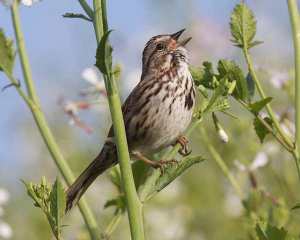
Song Sparrow in non-native wild radish

Many passionate, well-informed comments were sent to San Francisco’s Planning Department about the Draft Environmental Impact Report (DEIR) for the Natural Resources Areas Management Plan (SNRAMP).  Today we’re celebrating the end of the comment period by telling you about one of our favorite comments.

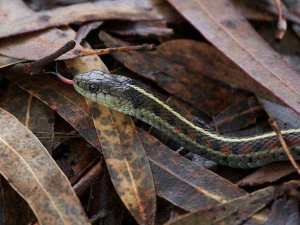
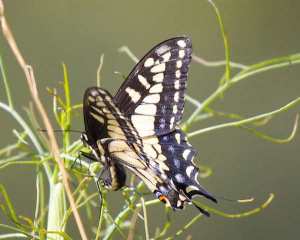
This comment was written by a talented photographer of wildlife in San Francisco’s parks who prefers to remain nameless.  She has exhibited her photos in several venues around town, including San Francisco’s Main Library.  She wrote her comment primarily on behalf of the wildlife that lives in our parks and she illustrated it with beautiful photographs of the birds, insects, amphibians, reptiles, and mammals that she has photographed nesting, hiding, hunting, roosting, slithering in non-native plants and trees.

Garter snake in eucalyptus leaf litter

We will share the heart of her comment with you.  The soul of her comment is her photographs which were all taken in the parks of San Francisco.

“NAP is actually harming the environment by destroying trees, established habitat, and established ecosystems which include our existing wildlife. NAP wants to recreate our environment as one of native grasses which might have existed in the area in 1776 — in very delimited spaces this seems fine, but they should not be taking over our parks which have evolved on all levels since that time. The grasses were native to a sand-dune ecology, but that is no longer the case within the city, and the grasses provide no protective habitat to the animals which now occupy these spaces — animals which are not on NAP’s “specified” or “endangered” lists. There has been an alarmingly high rate of failure when “endangered” species have been introduced — this is because they are no longer suited to this environment which has evolved and changed since 1776. NAP is a political program, not a program based on science, and one which is hampering people’s enjoyment and use of their parks.”

Anise Swallowtail butterfly in non-native fennel

Although we have been engaged in this debate about destructive native plant “restorations” in the Bay Area for many years, we are still shocked by some of the arguments used to defend them.  Nature in the City is one of many organizations in San Francisco which considers itself an “environmental” organization.  In its latest newsletter, recruiting comments in support of the Environmental Impact Report, Nature in the City characterized critics of the Natural Areas Program and the DEIR as the “anti-nature forces.”  As we have said before, “environmentalism” has been stolen from us by the native plant movement, which we firmly believe is doing more harm than good to our environment. 

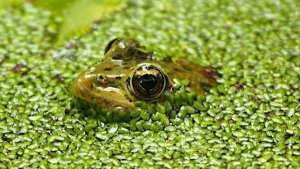
Frog hiding in pond plants

When was “nature” redefined exclusively as “native?”  We didn’t get that memo.  We are committed to preserving the habitat of all animals that live in San Francisco, whether the animals are native or non-native or the habitat that shelters and feeds them is native or non-native.  How does that make us “anti-nature?”

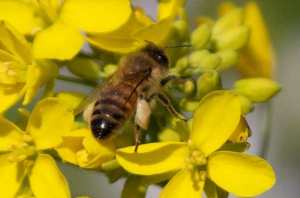
Honeybee in non-native wild mustard