The Living Roof: A failed experiment in native plant gardening

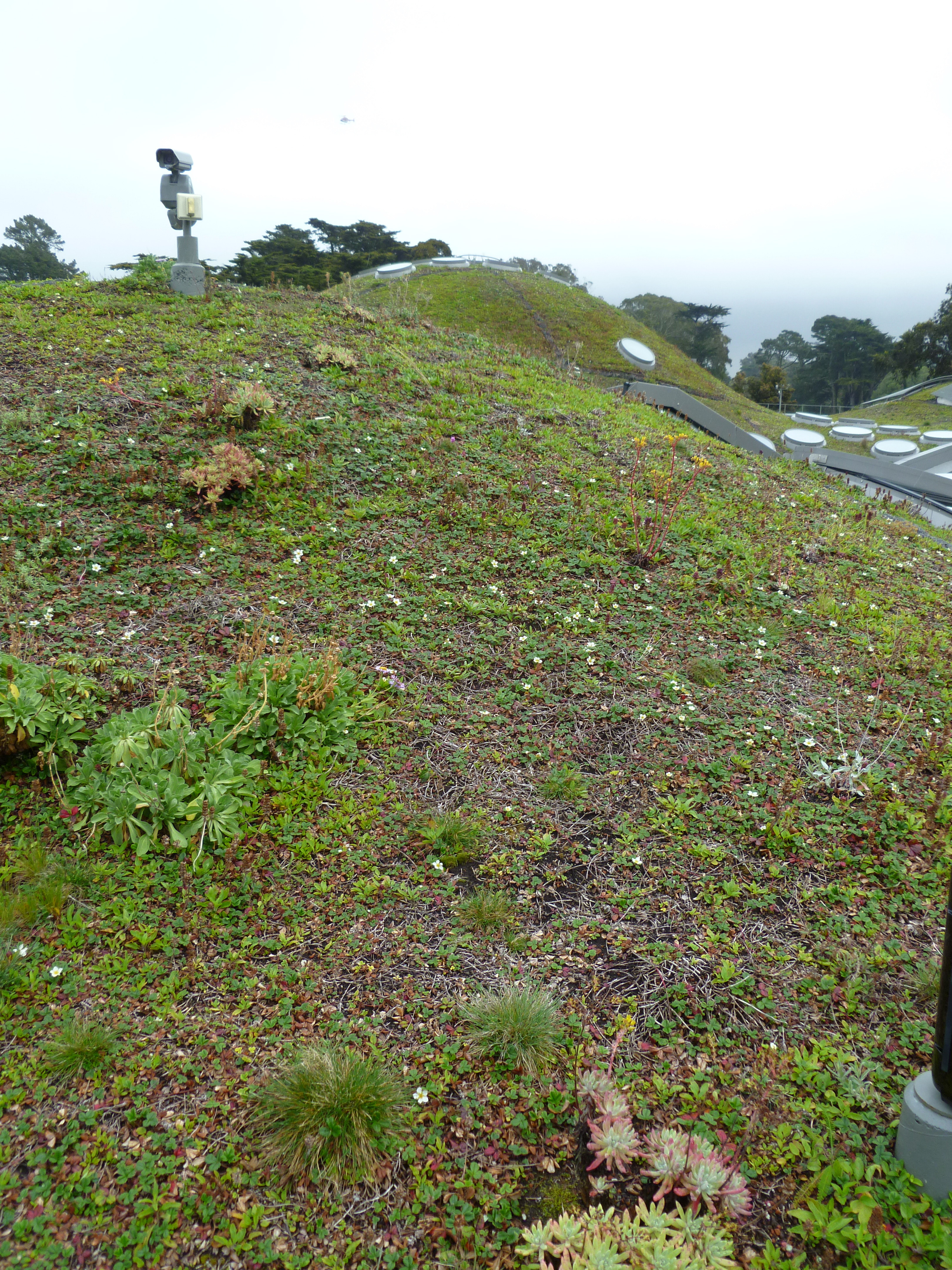
Living Roof, California Academy of Sciences, March 2011

When the California Academy of Sciences reopened in San Francisco in August 2008, its “living roof” was considered its most unique feature.  Thirty species of native plants were candidates for planting on the roof.  They were planted in test plots with conditions similar to the planned roof and monitored closely.  Only nine species of native plants were selected for planting on the roof because they were the only plants that were capable of self-sowing from one season to another, implying that they were “sustainable.”  A living demonstration of “sustainability” was said to be the purpose of the living roof. 

So, 2-1/2 years later, what have we learned from the living roof about the sustainability of native plants in San Francisco?  The results of monitoring the roof since June 2009, are reported on the “fromthethicket” blog about Golden Gate Park.

Two of three of the predominant species on the roof after 2-1/2 years are native.  The third–moss–is not.  It is described by “fromthethicket” as “varieties of early succession mosses, the types that commonly show up in disturbed soil.”

The monitoring project has divided the roof into four quadrants.  Non-natives now outnumber natives in two of the quadrants, those which are not being weeded.  Although natives outnumber non-natives significantly in the other two quadrants, non-natives are also growing in these quadrants.
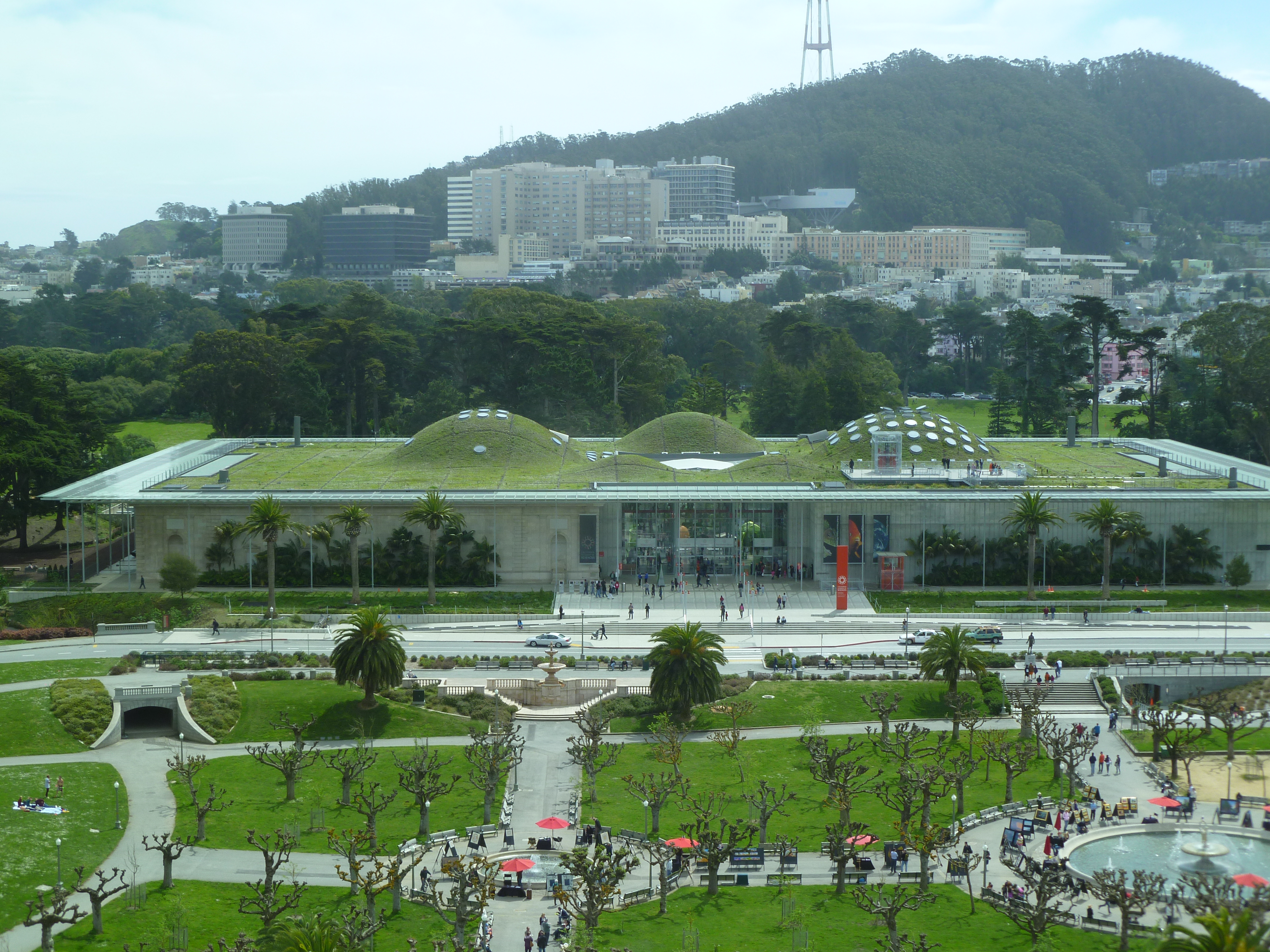
California Academy of Sciences, April 2011

We had the privilege of meeting the ecology consultant who designed the plant palette for the  living roof for the academy and many other institutions around the world.  He would not be surprised by this monitoring report.  He advised the Academy to walk the streets of San Francisco and identify the plants growing from the cracks in the sidewalks.  These are the plants he advised the academy to plant because these are the plants that are adapted to current conditions in the city.  The Academy rejected this advice because they were committed to planting exclusively natives on the roof.

The designer also advised the academy not to irrigate the roof, because the point of the roof is that it is a demonstration of sustainability.  Again, the Academy refused because they knew that without irrigation most of the native plants would be brown during the dry season, roughly half the year.  They wanted the public to believe that the plants that are native to San Francisco are beautiful year around.

There is a lesson to learn here for anyone who is willing to learn from it.  The living roof is not natural because it is irrigated and intensively gardened (e.g., weeded, fertilized, replanted, reseeded), yet non-natives not only found their way there on their own, but are dominating it within only 2-1/2 years.  Native plants are not sustainable in San Francisco without intensive gardening effort.

Peter Del Tredici has been telling us this for several years.  He is a Senior Research Scientist at the Arnold Arboretum at Harvard University and a Lecturer in the Department of Landscape Architecture at the Harvard Graduate School of Design.

In a recent publication*, he advises the managers of public lands in urban areas to abandon their fantasy that native plants are sustainable in urban settings:

“The notion that self-sustaining, historically accurate plant associations can be restored to urban areas is an idea with little credibility in light of the facts that 1) the density of the human populations and the infrastructure necessary to support it have led to the removal of the original vegetation, 2) the abiotic growing conditions [e.g., temperature, salinity, moisture, etc.] of urban areas are completely different from what they were originally; and 3) the large number of non-native species that have naturalized in cities provide intense competition for the native species that grew there prior to urbanization.”

Sure, he says, we can grow native plants, but they require at least the same amount of effort as growing any other plant and are therefore just another form of gardening:  “Certainly people can plant native species in the city, but few of them will thrive unless they are provided with the appropriate soil and are maintained to the same level as other intentionally cultivated plants.”

He concludes that native plant advocates are making a “cultural value judgment:”

“…people are looking at the plant through the subjective lens of a cultural value judgment which places a higher value on the nativity of a given plant than on its ecological function.  While this privileging of nativity may be appropriate and necessary for preserving large wilderness areas or rare native species it seems at odds with the realities of urban systems, where social and ecological functionality typically take priority over the restoration of historic ecosystems.”

We hope that the managers of our public lands in the San Francisco Bay Area will soon catch up with the scientific literature as well as acknowledge the actual experience of years of failed “restorations.”  Aside from the waste of scarce resources, these efforts are poisoning our parks with toxic herbicides and destroying beautiful and healthy plants and trees to no useful purpose. 


* “Spontaneous Urban Vegetation:  Reflections of Change in a Globalized World,” Nature and Culture. Winter 2010, 209-315.
Climate Change: Not just global warming anymore

When climate change first became a hot topic (pardon the pun) about 10 years ago, it was consistently described as “global warming.”  When scientists observed the effect that global warming was having on plants and animals in California, they reported that the ranges of native plants and animals were moving to higher elevations and northern latitudes in search of cooler temperatures. 

A study published in Nature magazine in December 2009 found that plants and animals must move as much as 6 miles every year from now to the end of the century to find the conditions they occupy now. When the plants move, the animals that depend on them must adapt or move with them to survive.  Professor Art Shapiro (UC Davis) has been studying California butterflies for over 35 years.  He reported (1) that native butterflies are moving to higher elevations, where temperatures are lower, but that ultimately, “There is nowhere else to go, except heaven.”

More recently we have experienced extreme weather that cannot be adequately described as “global warming.”  We have seen epic storms that have resulted in unprecedented flooding, while other places have experienced prolonged drought.  We are as likely to have an extremely cold winter as we are to have an extremely hot summer.  So the phrase “global warming” has evolved into the more accurate description:  “climate change.”  Aside from our anecdotal observations of these extreme weather events, science is beginning to catch up to provide an analytical understanding of our observations.  The story of climate change is now much more complex and the challenges it presents have become correspondingly more difficult and unpredictable.

Changes in Precipitation

Although places like Pakistan, Australia and some states in the US have recently experienced more rain and flooding than history has recorded, scientists have been reluctant to attribute this to climate change until very recently.  Computer modeling of nearly 50 years of weather data has finally enabled scientists to confirm that these increases in precipitation are the result of “…the effects of greenhouse gases released by human activities like the burning of fossil fuels.” (2)

And, like increases in temperature, changes in precipitation also result in the movement of plants and animals to “find” the conditions to which they are adapted.  Scientists have recently challenged previous assumptions about the movement of plants and animals to higher elevations.  They now report (3) that in some places in California in which precipitation has increased, plants have responded by “moving” to lower elevations.  Scientists acknowledge that the affect on the animal populations in their historic ranges is unpredictable because insects, for example, are more sensitive to changes in temperature and may not be able to move downhill with the plants they presently depend upon. 

Changes in Fog Patterns

Fog is another weather event that is important in California, particularly along the coast, where the warm air from the interior meets the cold air from the ocean.  The result of this confluence of cold and warm air is fog, particularly during the summer when the difference in temperatures is greatest. 

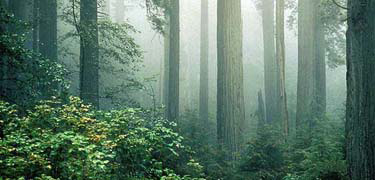
The redwood is our native tree that is closely associated with the foggy coastal conditions in California.  The redwood requires the fog drip to irrigate it during the dry California summer and its range is limited to sheltered areas because it does not tolerate wind.  The range of the redwood in California is therefore limited to a few hundred miles along the coast.  Its narrow range makes it particularly vulnerable to climate change. 


Redwood National Park, NPS photo


In Muir Woods, for example, higher temperatures have reduced coastal fog by 30% in the past century.  Scientists expect this loss of summer fog drip to result in a significant loss of water to the trees and they predict that it will affect the survival of the redwoods in the long-run.(4)

Implications of climate change for native plants?

Clearly, we still have much to learn about climate change:

  • Which weather events are indicators of long-range trends?
  • Climate change is apparently not just one trend, such as increased temperatures.  It is probably many different types of weather events, such as increases or decreases in snow and rainfall, hurricanes and typhoons, fog and wind.  Obviously, we don’t yet have the complete picture of what or where long-range changes have occurred or which are likely in the future. 
  • We know little about the affect that climate change will have on the natural world.  How will plants and animals respond to climate change?  Which plants and animals will survive and, if so, where will they survive?

We marvel at the confidence that the local native plant advocates have in their agenda.  How did they select the pre-European landscape of the late 18th century to replicate?  What makes them think that plants and animals that lived here 250 years ago are still sustainable here, let alone that they will be sustainable in the future? 

These are rhetorical questions, which we will presume to answer for our readers:  Native plant advocates may compensate for radically changed environmental conditions by using intensive gardening methods.  The use of herbicides, irrigation systems, prescribed burns, constant weeding, soil amendments, fences and boardwalks, etc., may artificially mimic the conditions of 250 years ago.  However, the result is a native plant garden that is neither natural nor more biodiverse than what can be achieved with less effort, with less toxicity and fewer scarce resources.  While we can see the value of a native plant garden to preserve our horticultural heritage, we find it more difficult to justify the large-scale efforts that we currently find in all of our public lands.  Is it realistic to garden all of our public lands in perpetuity? 


(1) Arthur Shapiro (UC Davis), Contra Costa Times, 1/19/10

(3) “Mountain plant communities moving down despite climate change, study finds,” Los Angeles Times, 1/24/11

http://www.latimes.com/news/local/la-me-climate-trees-20110121,0,4119552.story

(4) “Fog burned off by climate change threatens to stunt Muir Wood’s majestic redwood,” Marin Independent Journal, 2/5/11   http://www.marinij.com/marinnews/ci_17297751?IADID=Search-www.marinij.com-www.marinij.com

Stephen Jay Gould examines the concept of “native plants”

The native plant ideology is inconsistent with the basic principles of evolutionary theory and has dangerous political implications which have been applied in the past.  In his article (“An Evolutionary Perspective on Strengths, Fallacies, and Confusions in the Concept of Native Plants”), published by Arnoldia, the journal of Harvard University’s arboretum, Stephen Jay Gould describes the concept of “native plants” as “a notion [which] encompasses a remarkable mixture of sound biology, invalid ideas, false extensions, ethical implications and political usages both intended and unanticipated.”(1)

First, who is Stephen Jay Gould and why should we care what he thinks about the ideological construct of “native plants?”  Professor Gould taught geology and paleontology at Harvard University and biology and evolution at New York University, while also working at the American Natural History Museum in New York.  His most significant achievements as a scientist were in the field of evolutionary theory.  He is one of the most frequently cited scientists in the field of evolutionary theory.  But he is best known as a writer of essays and best-selling books on natural history for the general public.  Incidentally, he had a life long interest in civil rights and he brought that interest to his scientific inquiries with his abiding opposition to the use of pseudoscience to promote racism or sexism.(2) It is that interest that led him to his analysis of the concept of “native plants.”

Native plant advocates believe in the inherent superiority of native plants.  This belief is based on an assumption that native plants “belong” in a particular place and that their presence in the proper location represents an “optimal” landscape for that place.  This belief is based on a lack of understanding of the concept of natural selection. 

As Gould explains, “Natural selection does not preferentially lead to plants that humans happen to regard as attractive.  Nor do natural systems always yield rich associations of numerous, well-balanced species.  Plants that we label ‘weeds’ will dominate in many circumstances…weeds often form virtual monocultures, choking out more diverse assemblages than human intervention could maintain.”   The mechanism of natural selection does not produce the optimal adaptation, but only the adaptation that is better than its competitors at any particular point in time, which is why introduced plants are frequently more competitive than their predecessors deemed “native.” 

The argument that native plants “belong” in a particular place is equally fallacious because it assumes that the plants are there because they are best suited to conditions in that location.  In fact, plants are “products of a history laced with chaos, contingency, and genuine randomness.”  Plants have been moved—and continue to be moved—about the planet by weather, by birds and animals, including humans.  “’Natives’, in short, are the species that happened to find their way…not the best conceivable for a spot.”  (see video, “The Fallacy of Native Plants“)

A closely related argument used by native plant advocates to justify their crusade against non-native plants and trees is that the natives have “co-evolved” with other species of plants and animals and that they therefore fit together like some magic puzzle, implying that if the native plants disappear, native animals will also disappear because they are dependent upon the plants.  Gould says, “this notion, however, popular among ‘new agers,’ must be dismissed as romantic drivel.” 

Gould credits the native plant movement for efforts to preserve biodiversity, a goal that is defeated if other plants are simultaneously eradicated by their efforts.  He counsels native plant advocates to balance their efforts to achieve an inclusive biodiversity and we share that view.  We encourage native plant advocates to preserve the plants they prefer and plant more if they wish, but to quit destroying the plants they do not prefer.

But Gould does not come to this topic solely from his knowledge of the principles of evolution and his desire for the public to correctly understand its mechanisms.  He is also concerned about the “slippery slope” of nativist ideology from application to plants to application to humans.  This is not a theoretical anxiety on his part.  It is based on historical precedents. 

Wikimedia Commons

In Nazi Germany and in the United States around the same time, horticultural theories abounded about the superiority of native landscapes and those theories were inextricably linked to the belief that non-native humans were also inferior.  For example, “In 1942 a team of German botanists made the analogy explicit in calling for the extirpation of Impatiens parviflora, a supposed interloper:  ‘As with the fight against Bolshevism, our entire Occidental culture is at stake, so with the fight against this Mongolian invader, an essential element of this culture, namely, the beauty of our home forest, is as at stake.’”   And similar sentiments from an American horticulturalist, Jens Jensen, “’The gardens that I created myself shall…be in harmony with their landscape environment and the racial characteristics of its inhabitants.  They shall express the spirit of America and therefore shall be free of foreign character as far as possible…Latin spirit has spoiled a lot and still spoils things every day.”

Having debated many times with native plant advocates about their plans to eradicate non-natives, and listened to their justifications for those plans, we know that no counter argument inflames them more than the suggestion that their plans are reminiscent of similar efforts to eradicate human non-natives.  However, for the vast majority of the public who have not engaged in this debate, we provide the scientific evidence that the native plant movement is an ideology not based on scientific principles which has been associated in the past with horrific discrimination against non-native humans. 

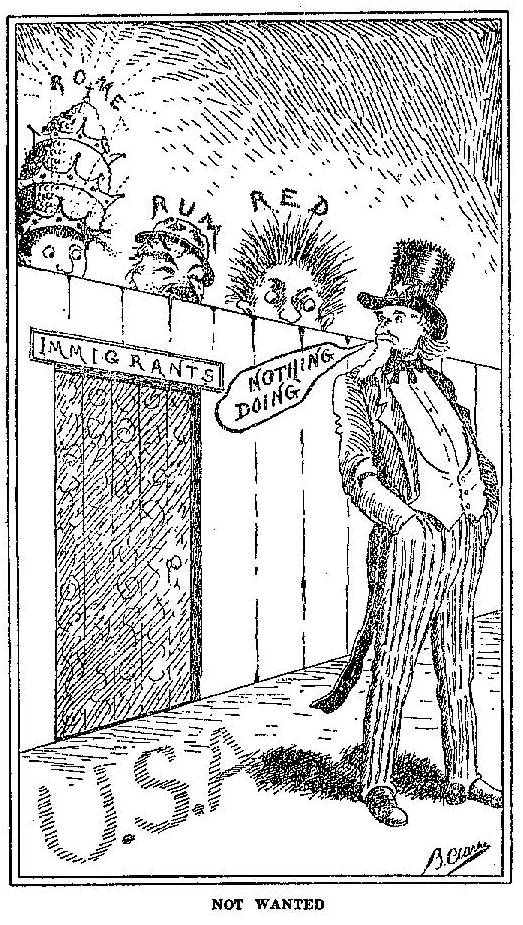
"The New Case Against Immigration: Both Legal and Illegal" Book cover in the public domain

 We cannot dismiss these historical precedents as irrelevant at a time when anti-immigration sentiments are rampant in our society.

————————————————————————

(1) All quotes are from “An Evolutionary Perspective….” 

CHANGE….the only constant

The conventional wisdom amongst native plant advocates is that native plants will return to the landscape if non-native plants are eradicated.  In this post, we will examine this assumption and refute it.

Several different methods are used to eradicate non-native plants, but it doesn’t matter which method is used because the results are the same:  native plants do not return when non-native plants are removed. 

Spraying herbicides is a popular method of eradicating non-native plants because it is considered the most cost-effective method. In addition to the obvious health risks, the downside of herbicide use is that they are as likely to kill the natives as the non-natives.  This problem is illustrated by a USDA study of the effects of a one-time aerial spraying of herbicides on grassland after 16 years.  Although the herbicide is assumed to “dissipate” within a few years, the negative effect on the natives persisted 16 years later:  “…the invasive leafy spurge may have ultimately increased due to spraying.  Conversely, several desirable native herbs were still suffering the effects of the spraying,,,” 

Even when native plants are removed, non-native plants occupy the cleared ground.   Environmental scientists at UC Berkeley removed native chaparral from experimental plots in Northern California to test fuel reduction techniques using two different methods (prescribed burns and mechanical), in different seasons, over a period of several years.  In every test, the result was on average from 23% (for prescribed burns)to 61%  (for mechanical methods) non-native plants where they had not previously existed.  

Jon E. Keeley (USGS) finds the same tendency for non-natives to replace natives in forests:  “Forest fuel reduction programs have the potential for greatly enhancing forest vulnerability to alien invasions.” (1)

A scientist (2) arrived at the same conclusion after attempting to restore an oak-studded grassland on Vancouver Island.  He tried several different methods of removing invasive grasses for several years only to find that “…the decline of the native plant species accelerated…” 

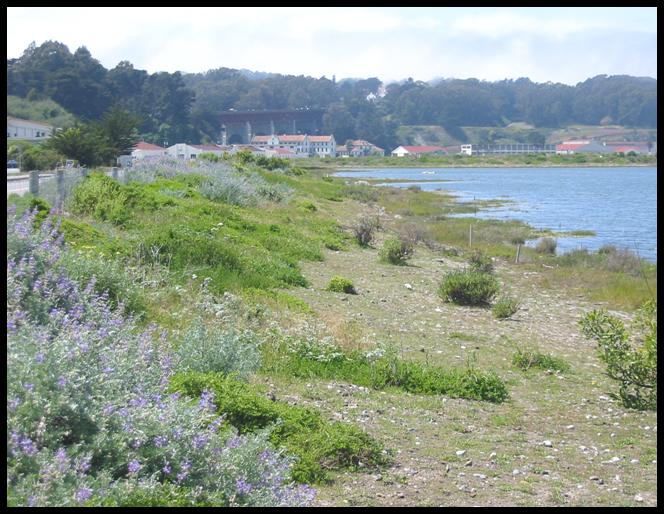
Crissy Field, NPS photo

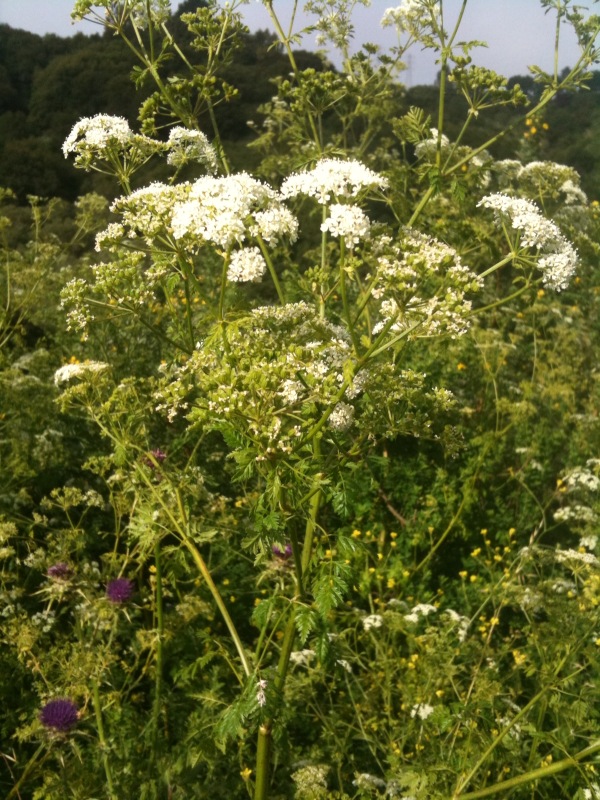
Those who observe native plant restorations in the San Francisco Bay Area aren’t surprised by these studies.  We know that native plant restorations are unsightly failures unless they are aggressively planted, irrigated for several years, and fenced.  Examples of successful restorations can be seen at Crissy Field and the summit of Mt. Sutro.  The East Bay hills provide examples of the opposite strategy.  Where UC Berkeley has clear-cut all non-native trees and vegetation, non-native weeds quickly occupied the barren ground.    After a particularly wet winter, the non-native poison hemlock in the East Bay hills is 6 feet tall along the roads. 

Poison hemlock, East Bay hills

Why are non-native plants apparently more competitive than native plants?  Because the conditions that supported native plants 250 years ago, prior to the arrival of Europeans, have changed.  The native plants are no longer well adapted to the current conditions.

Higher levels of CO2 and the associated climate change are promoting the growth of non-native plants.  A USDA “weed ecologist” (3) studied the effects of higher temperatures and CO2 on the growth of non-natives (AKA weeds) by growing identical sets of seeds in a rural setting and an urban setting with higher temperatures and CO2 levels.  Seeds grown in the urban setting produced substantially larger plants with much more pollen and therefore greater reproductive capability. 

Other scientists reach the same conclusions by studying the changing ranges of native plants and insects.  An ecologist at UC Berkeley (4) says that “California’s flora face a potential collapse…as the climate changes, many of these plants will have no place to go.”   A scientist at the California Academy of Sciences (5) predicts that redwoods will disappear from California by the end of the century.

As the plants move, so do the insects and animals that need them.    A study published in Nature magazine in December 2009 found that plants and animals must move as much as 6 miles every year from now to the end of the century to find the habitat they occupy now.  An ecologist at UC Davis (6) has been studying native butterflies for over 35 years.  He recently reported that native butterflies are moving to higher elevations, where temperatures are lower, but that ultimately, “There is nowhere else to go, except heaven.”

The local environmental organizations and public policy-makers must wake up to this reality and reorder their priorities.  Instead of demanding that all non-native plants and trees be eradicated and that native plants be restored where they are no longer sustainable, they must make climate change their highest priority.  The easiest and cheapest step to take to address this issue is to quit destroying healthy trees—just because they are non-native–that are sequestering tons of carbon.

(1) “Fire Management Impacts on Invasive Plants,” USGS, Jon E. Keeley, April 2006

(2) Andrew MacDougall, University of Guelph, Ontario, Canada, NY Times Magazine, 6/29/08

(3) Lewis Ziska, USDA, Beltsville, MD

(4) David Ackerly, UC Berkeley, Los Angeles Times, 6/25/08

(5) Healy Hamilton, Cal Academy, Center for Biodiversity Research

(6) Arthur Shapiro, UC Davis, Contra Costa Times, 1/19/10

What is natural?

The branch of San Francisco’s Recreation and Park Department dedicated to the preservation and restoration of native plants to the city’s parks calls itself the Natural Areas Program (NAP).  And the 32 parks or portions of parks within NAP’s jurisdiction are called Natural Areas.  In this post we will visit a few of these areas to ask if they are accurately described as “natural.”

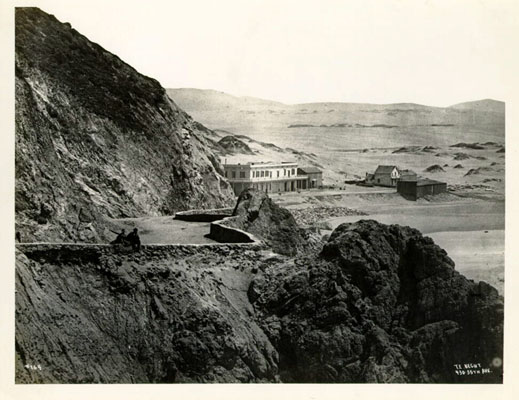
Parcel 4, Balboa & Great Highway, 1868

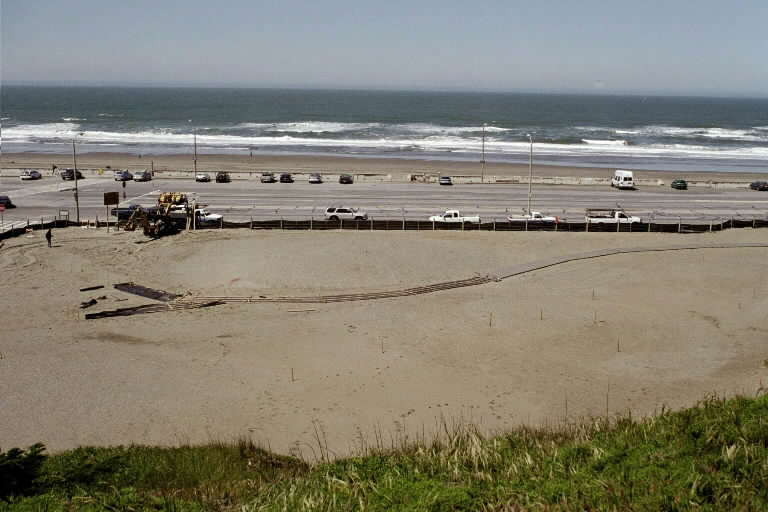
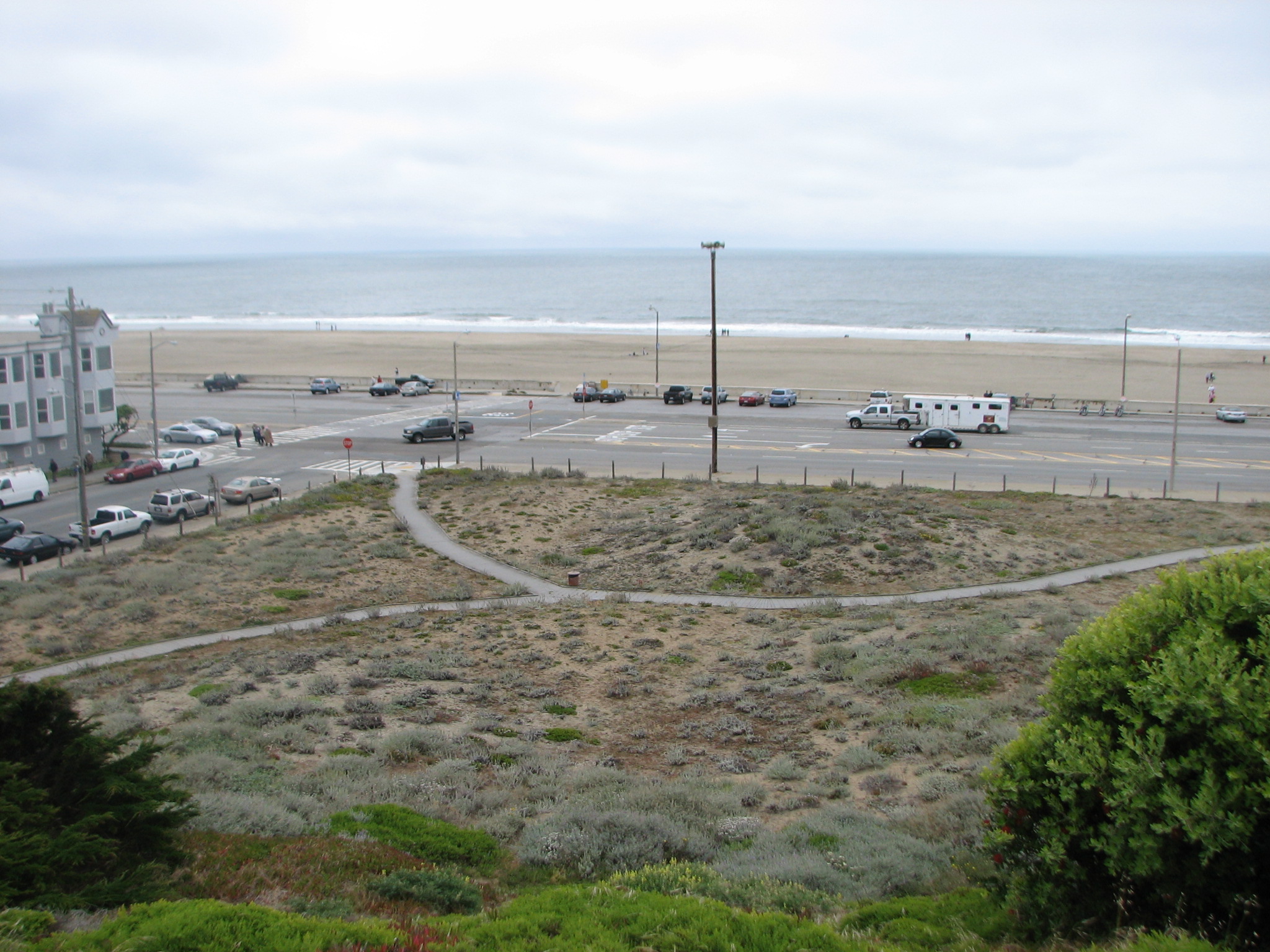
The Natural Area known as Parcel 4 is at the corner of Balboa and the Great Highway.  A photograph taken in 1868 of that location indicates that it has been continuously built upon for nearly 150 years.  Long-term residents of San Francisco will remember it as the location of Playland by the Beach.  After Playland was closed, the city purchased the property for $3.05 million in 1993 with the intention of putting a sewer pipe under it, then restoring it to dune vegetation.  The soil was essentially building rubble, so the city had to buy $47,000 of sand and disk it down 18 inches to amend the soil in preparation for planting dune vegetation.  The sand was bulldozed into simulated dune shapes and planted in 2002.  The restoration was described in the newsletter of the Coalition of San Francisco Neighborhoods in April 2003, in an article entitled “Sand Francisco.”  Does this sound “natural” to you?

Parcel 4 under construction, 2002
Eight years later, 2010

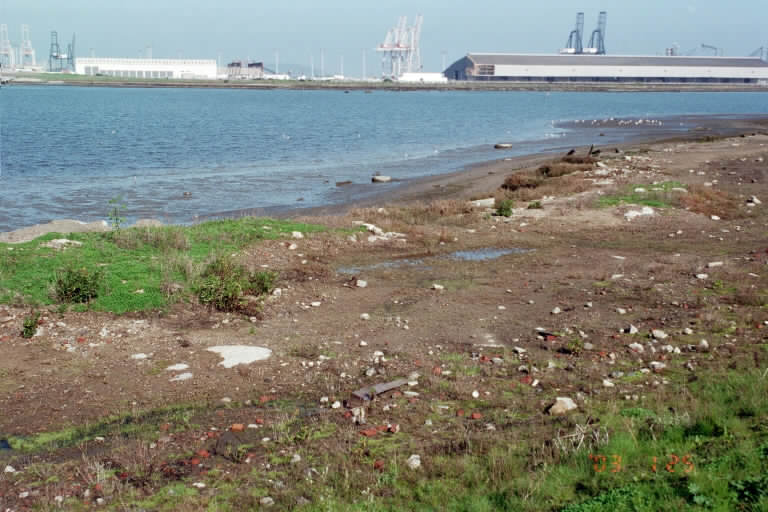
India Basin is a Natural Area on the east side of the city, on the bay.  The east shore of the city was where most industrial development was located until industry left the city beginning in the 1960s.  Much of the soil was landfill.  Like Parcel 4, the landfill was bull-dozed into a simulated wetland, hoping to restore tidal action.  Native pickle-weed was planted several times in the mud-filled basins.  We haven’t visited this area for several years.  Perhaps they have finally been successful in that effort.  This is what we found there on our last visit:  native plants along the trail, surrounded by plastic and woodchips to discourage weeds and huge, empty, mud basins off shore.    It didn’t look natural to us.

India Basin, 2003

Many of the Natural Areas in San Francisco are less artificial than these two extreme examples.  Some of the Natural Areas weren’t built upon in the past, but had no native plants in them when they were designated as Natural Areas.  Pine Lake is an example of such a Natural Area.  Even where native plants actually existed, their populations were small and isolated in comparison to the acreage designated as a Natural Area.  Over 1,000 acres of city-managed parkland have been designated as Natural Areas, 25% of all parkland in San Francisco and 33% if Pacifica is included in the calculation.

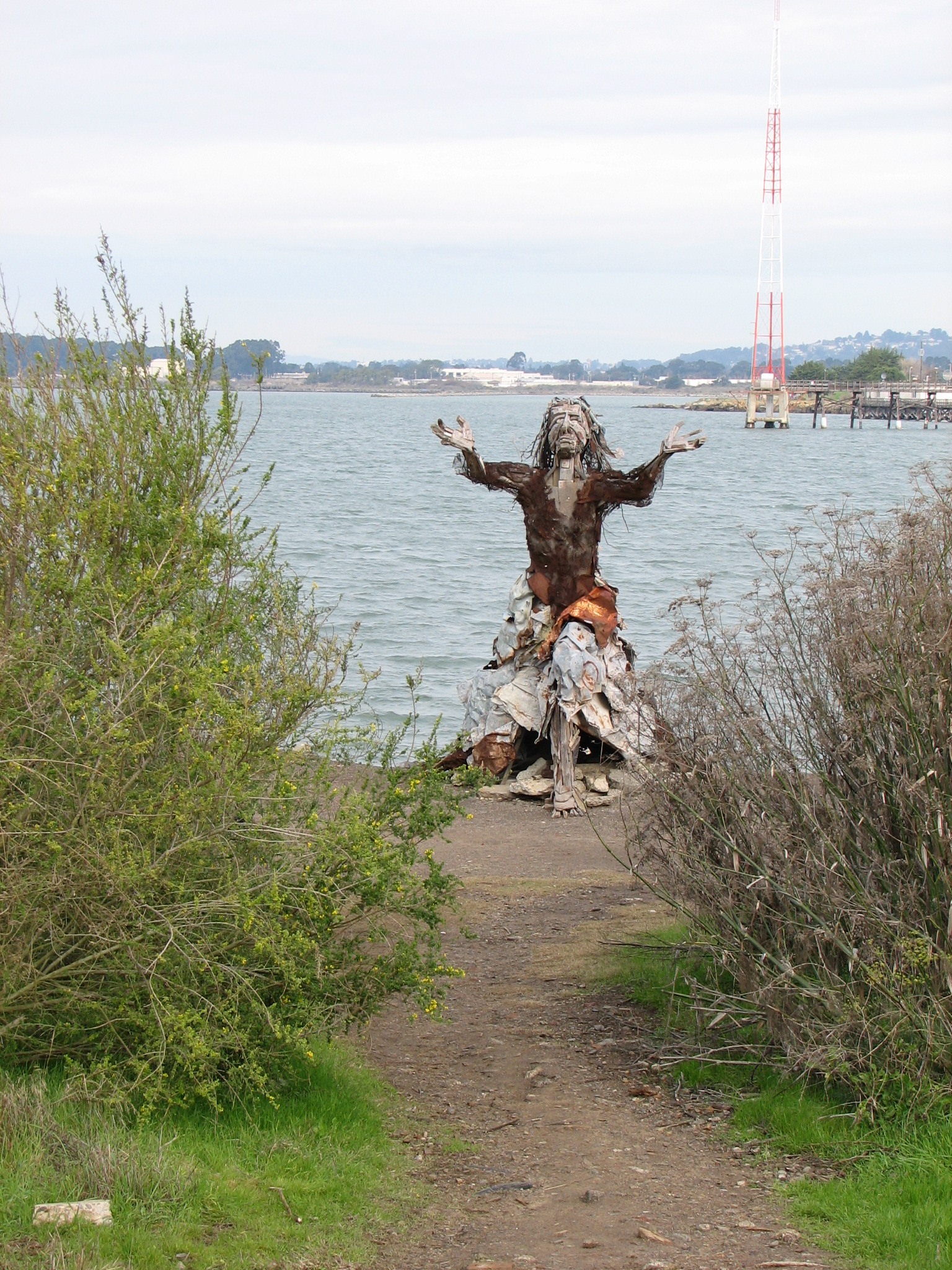
Sculpture of “Albany Bulb Greeter”

Now we will visit the Albany Bulb for contrast.  Albany Bulb is also landfill that was for many years the Albany city dump.  When the dump was closed, the Bulb became a park.  It is a wild and wonderful place.  There are few native plants, other than the ubiquitous coyote bush that seems to thrive almost anywhere.  In the spring, Albany Bulb is a riot of color.  These are the competitive non-natives that native plant advocates wring their hands about.  They are there because they are best adapted to the current conditions in this location…the heavily amended soil, the higher levels of CO₂, the warmer climate, the use by humans and their animal companions. 

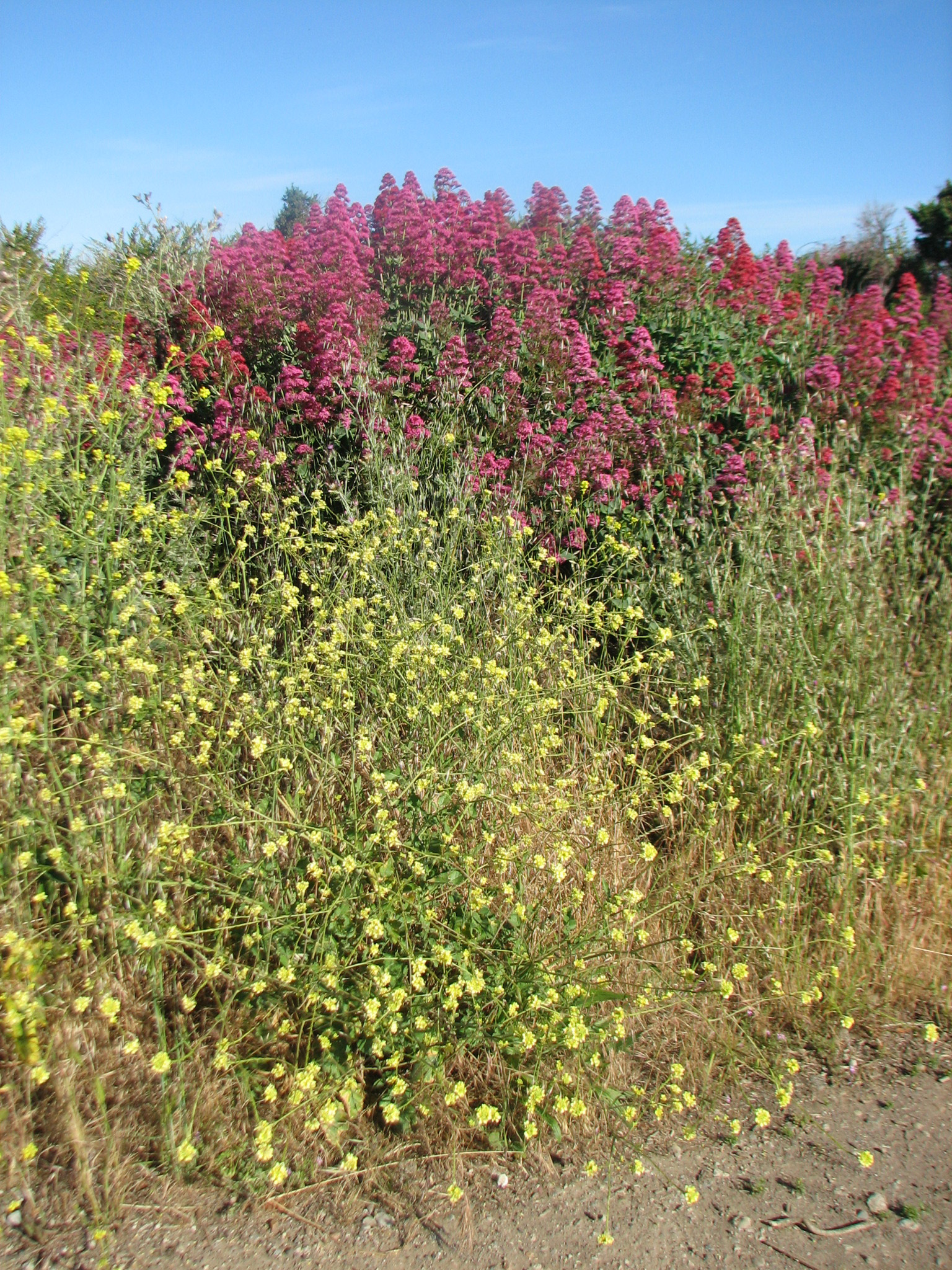
Valerian and wild mustard, Albany Bulb. Both are non-native plants.

If all of these non-native plants and trees were eradicated from the Albany Bulb, would native plants magically appear?  Based on our experience, we don’t think so.  The conditions that supported the plants that are native to the Bay Area are gone for good.  It is a fantasy that the existence of non-native plants is the only obstacle to the return of the natives.  Visiting a few places where this strategy has been tried will confirm this.  Unless the natives are aggressively planted, irrigated for several years, fenced for protection, weeded or sprayed with herbicides regularly, they do not return.  Can such intensive gardening be called “natural?”

(UN)controlled Burns

Today’s SF Chronicle reports that yet another “controlled” (AKA “prescribed”) burn is responsible for a wildfire in California.  This fire in the Santa Cruz Mountains burned 485 acres in October 2009, injuring 4 of the 1,700 firefighters who fought it at a cost of $4 million.  That cost doesn’t include the claims for damages of the property owners who lost their homes.

This isn’t the only controlled burn that has caused major wildfires in California and elsewhere.  For historical perspective, let’s start with the Bandelier Monument Fire in New Mexico.  This fire, began in May 2000 as a prescribed burn and eventually burned over 45,000 acres, threatened the Los Alamos National Laboratory and destroyed 235 structures.  The Department of the Interior suspended all prescribed burns while an inquiry was conducted and policy was revised to theoretically prevent similar accidents.

Did revision of policy stop so-called controlled burns from causing wildfires in our national parks?  No, it did not.  In October 2009, the Big Meadow Fire in Yosemite began as a prescribed burn and eventually burned 7,425 acres.  NPS apparently hadn’t learned much from their bad experience 9 years earlier at the Bandelier Monument.

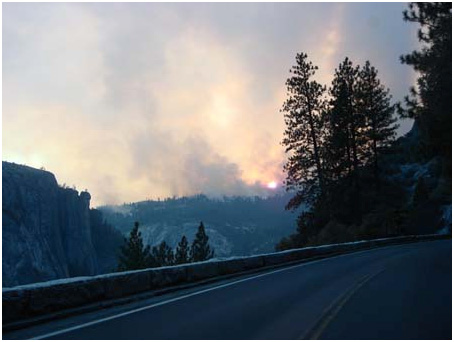
Yosemite Big Meadow Fire, NPS photo

The National Park Service isn’t the only manager of public land that has had bad luck with controlled burns.  In 2003, the California State Park Department was responsible for starting a fire on San Bruno Mountain in South San Francisco intended to burn 6 acres that eventually burned 72 acres and came perilously close to homes, according to the SF Chronicle.

We should not be surprised by the unpredictable results of prescribed burns.  Fire scientists at UC Berkeley conducted a series of experimental prescribed burns in chaparral in Northern California, hoping to arrive at a model of fire behavior that would improve the predictability of such burns.  They arrived at the conclusion that “…it is extremely difficult to predict with certainty where the fire will spread…For more than half of the transects installed, the flaming front did not traverse the transects as predicted…” (1)

You might ask, “If these prescribed burns keep causing major wildfires, why do we continue starting them?”  Good question, and we are going to answer that.  The conventional wisdom is that because fires have been suppressed in the past century or so, fuel has built up that has become extremely dangerous.  Theoretically, we must restore the “natural” fire cycle to prevent this dangerous build up of fuel that will inevitably cause a huge wildfire if we don’t reduce the fuel load with smaller (hopefully) fires.  Sounds like a good argument, but is it true?  Some scientists say it isn’t.

Jon E. Keeley, Ph.D. (Biologist, US Geological Service) says in “Fire Management in the California Shrublands,”

“Fire management of California shrublands has been heavily influenced by policies designed for coniferous forests, however, fire suppression has not effectively excluded fire from chaparral and coastal sage scrub landscapes and catastrophic wildfires are not the result of unnatural fuel accumulation. There is no evidence that prescribed burning in these shrublands provides any resource benefit and in some areas may negatively impact shrublands by increasing fire frequency. Therefore, fire hazard reduction is the primary justification for prescription burning, but it is doubtful that rotational burning to create landscape age mosaics is a cost effective method of controlling catastrophic wildfires.”

Obviously, there isn’t scientific consensus that prescribed burns reduce fire hazard, so perhaps there is another reason why we pursue this dangerous course.  Yes, there is, and once again we turn to the native plant movement to explain why we are harming our environment and posing unnecessary dangers to animals, including humans.

The scientific literature is rampant with evidence that periodic fire is essential to the health of native plants.  Here is an example from a renowned academic book about California’s ecology that has the status of a standard textbook:

“The [chaparral] community has evolved over millions of years in association with fires, and in fact requires fire for proper health and vigor.  Thus it is not surprising that most chaparral plants exhibit adaptations enabling them to recover after a burn.  Many species are sprouters; the aboveground parts may be killed, but new growth arises from roots or buds at the base of the stem…Other species have seeds that require fire in order to break dormancy; they will not germinate unless they have been heated.  The cones of some chaparral conifers open only after they have been heated.  Some herbaceous species will not germinate unless there is ash on the ground when it rains…In the absence of fire, a mature chaparral stand may become senile, in which case growth and reproduction are reduced.”  (Schoenherr, A Natural History of California, 1992, UC Press)

This is also an opportunity to show how the native plant agenda has been adopted by local managers of our public lands. The “Wildfire Hazard Reduction and Resource Management Plan” of the East Bay Regional Park District announces its intention to conduct prescribe burns for the following purposes:

  • “Grassland and Herbaceous Vegetation…broadcast burns in the summer or early fall [fire season] are known to favor native plants.” (page 128)
  • “Maritime Chaparral…This [native] vegetation type and the Manzanita it supports are also fire dependent. Without disturbance by fire the Manzanita does not reproduce, becomes decadent, and is replaced by shade tolerant species.” (page 132)
  • “North Coastal Scrub…This plant community [of native plants] is adapted to natural fire cycles, and most species found within this plant community resprout easily to rejuvenate individual specimens after fire, or require fire to trigger germination.”  (page 139)
  • “[Native] Coyote Brush Scrub…is adapted to natural fire cycles.  Most species resprout easily to rejuvenate individual specimens after fire, or requires fire to trigger germination.” (page 149)

Are any of these purposes related to reducing fire hazard?  You be the judge.

The management plan of San Francisco’s Natural Areas Program also announces its intention to use prescribed burns in the Initial Study (the first stage of environmental review under CEQA) of the program, but offers no information about the effect of these burns on the environment.  In a city such as San Francisco, in which there is no history of wildfire, we must assume that the sole purpose of these burns will be to benefit native plants.

Clearly controlled burns frequently cause major wildfires.  Fires, whether intentional or not, also release harmful particulates into the air and reduce air quality.  There is no evidence that controlled burns prevent wildfires.  Yet, there is considerable evidence that they benefit native plants.  We conclude that the primary purpose of controlled burns is to benefit native plants. 


(1) Scott Stephens, et. al., “Measuring the rate of spread of chaparral prescribed fires in Northern California,” Fire Ecology, Vol. 4, No. 1, 2008

ALIEN INVADERS!!! Another scary story about non-native trees

As we have said before in “FIRE!!! The Cover Story,”  fear is a powerful motivator of public policy.  The fear of fire is not the only tool in the toolbox of native plant advocates.  They would also like the public to believe that non-native plants are invasive, that they will overwhelm the environment if they are not promptly eradicated.  So, we will take a closer look at this claim and show that non-native trees are not invading Bay Area open spaces.

In “Vegetation Change and Fire Hazard in the San Francisco Bay Area Open Spaces,”  William Russell (USGS) and Joe McBride (UC Berkeley) used aerial photos of Bay Area parks taken over a 60 year period from 1939 to 1997, to study changes in vegetation types.  They studied photos of 3 parks in the East Bay (Chabot, Tilden, Redwood), 2 parks in the North Bay (Pt Reyes, Bolinas Ridge), and one on the Peninsula (Skyline).

These photos revealed that grasslands are succeeding to shrubland, dominated by native coyote brush and manzanita.  Eucalyptus and Monterey pine forests actually decreased during the period of study.  In those cases in which forests increased in size, they were native forests of oaks or Douglas fir.  In other words, they found no evidence that non-native trees are invading native trees or shrubs. 

They also studied the implications of these changes in vegetation types for fire hazard by measuring surface biomass for each vegetation type as an indicator of fuel load and by using a computer model (FARSITE) to simulate the speed of spread of a fire.  They concluded,

“A significant increase in the cover of shrublands was apparent in the general analysis…The results from the fuel and fire hazard analysis suggest that the succession from grasslands to Baccharis [coyote brush] shrublands indicates dramatic increase in fire hazard for those areas.  Fire line intensity, flame length, and total biomass were found to be significantly higher with the shrub dominated areas.  In the context of the landscape matrix as a whole this increased hazard indicates a greater possibility of fire being spread into adjacent forested areas and residential communities.”

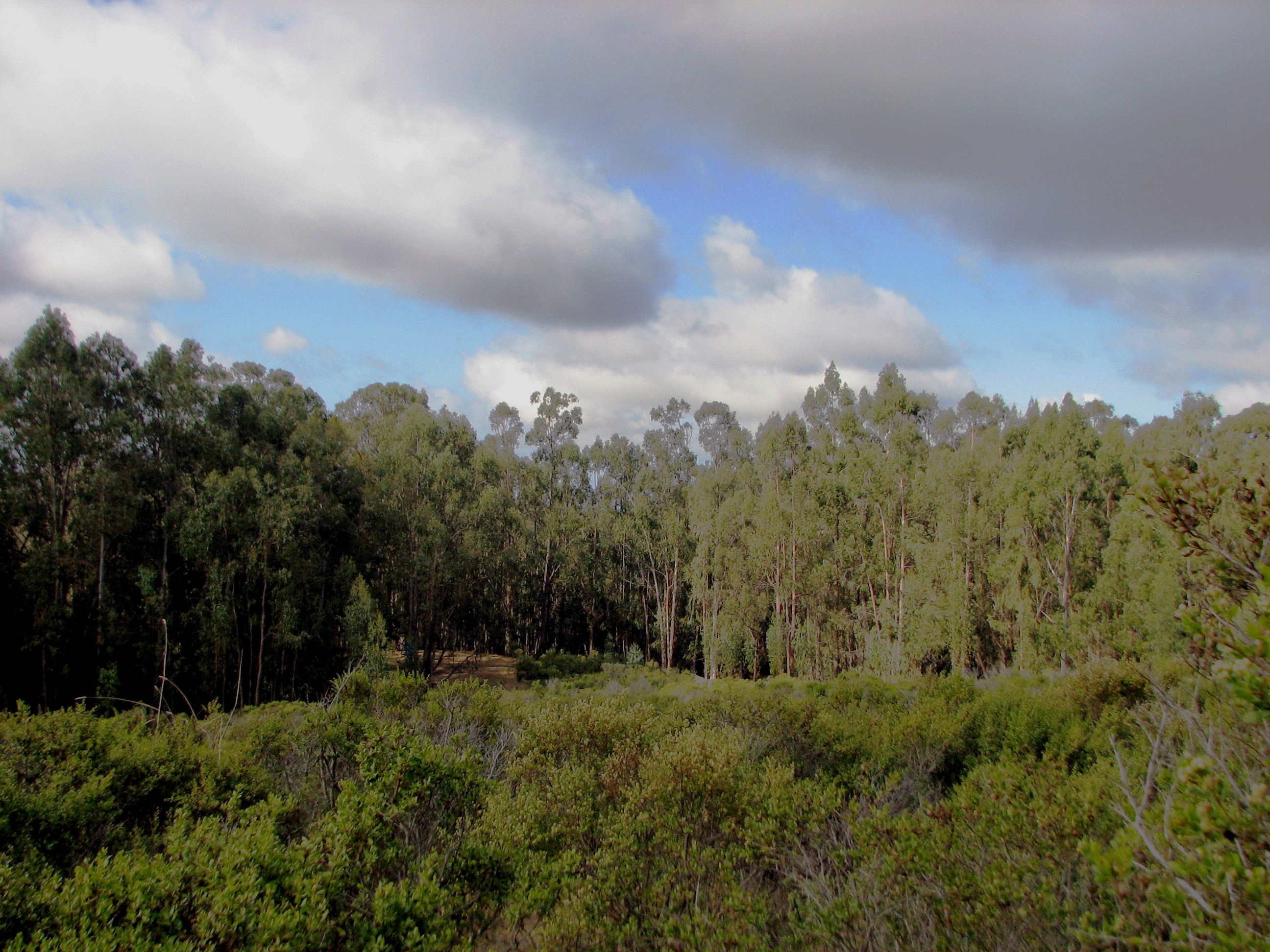
This is a view of one of the "recommended treatment areas" in the East Bay Regional Park District's "Wildfire Plan" in Anthony Chabot Park. In the foreground are many acres of coyote brush that are about six feet tall. The plan does not propose any "treatments" in these acres of highly flammable coyote brush. In the background is the eucalyptus forest that will be thinned in some places and removed in others. This is not a plan that will reduce fire risk.

This study, based on actual aerial photos, tells us that native shrublands are increasing in size while non-native forests are actually decreasing in size.  It also tells us that this succession of vegetation types from grassland to native shrubland is increasing fire hazard.  There is no evidence that non-native forest is invading the open spaces of the San Francisco Bay Area.  The public has no reason to fear that non-native trees will overwhelm our environment.

Common Characteristics

Native plant advocates attempt to support their claim about the flammability of eucalypts by citing specific characteristics such as shreddy bark and volatile oils. Shreddy bark and volatile oils are characteristics of many plants, both native and non-native.  They are not characteristics exclusive to eucalypts: 

“The [chaparral] community has evolved over millions of years in association with fires, and in fact requires fire for proper health and vigor…Not only do chaparral plants feature adaptations that help them recover after a fire, but some characteristics of these plants, such as fibrous or ribbonlike shreds on the bark, seem to encourage fire.  Other species contain volatile oils.”  (page 341, A Natural History of California, Schoenherr, UC Press, 1992)

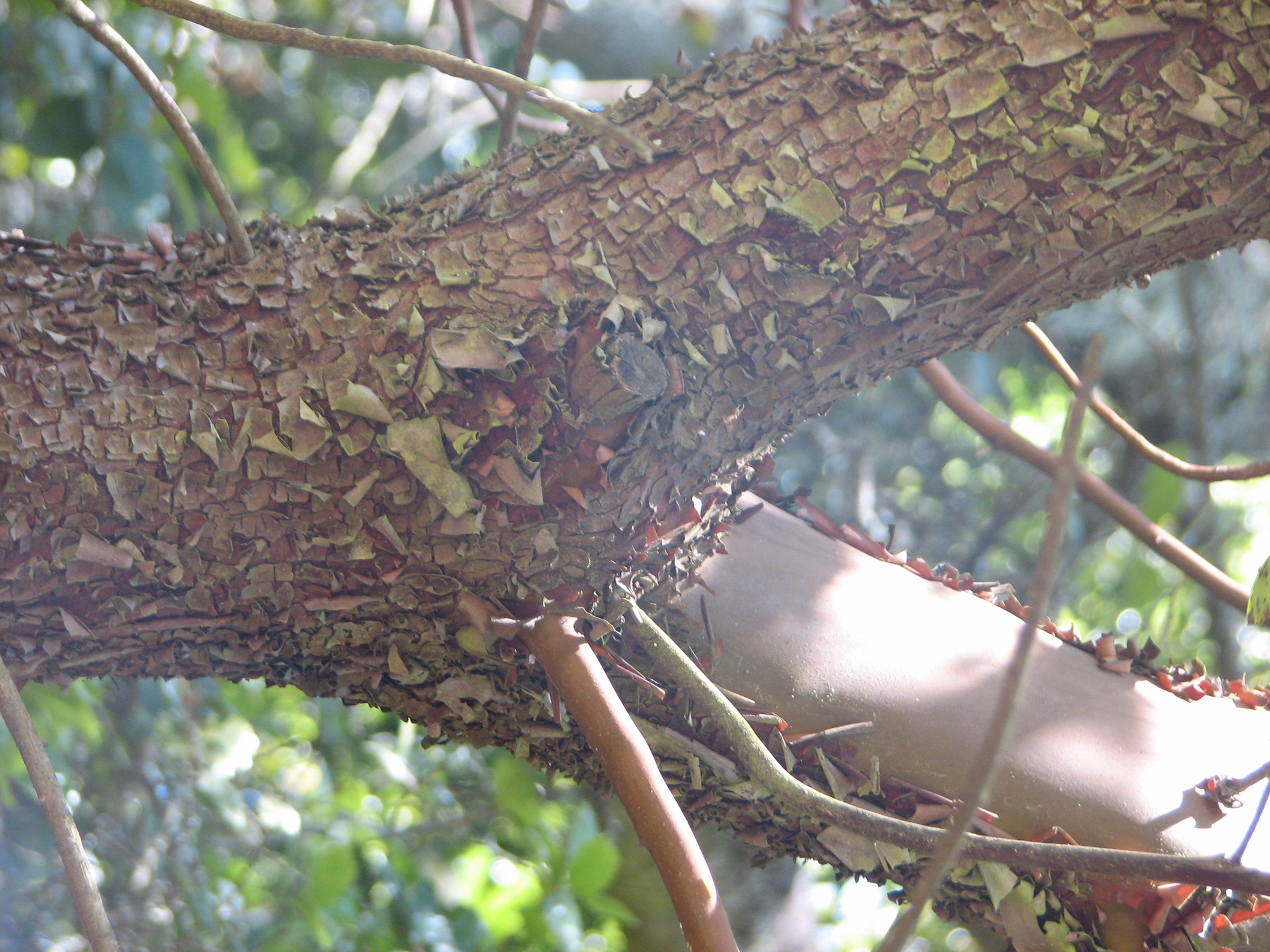
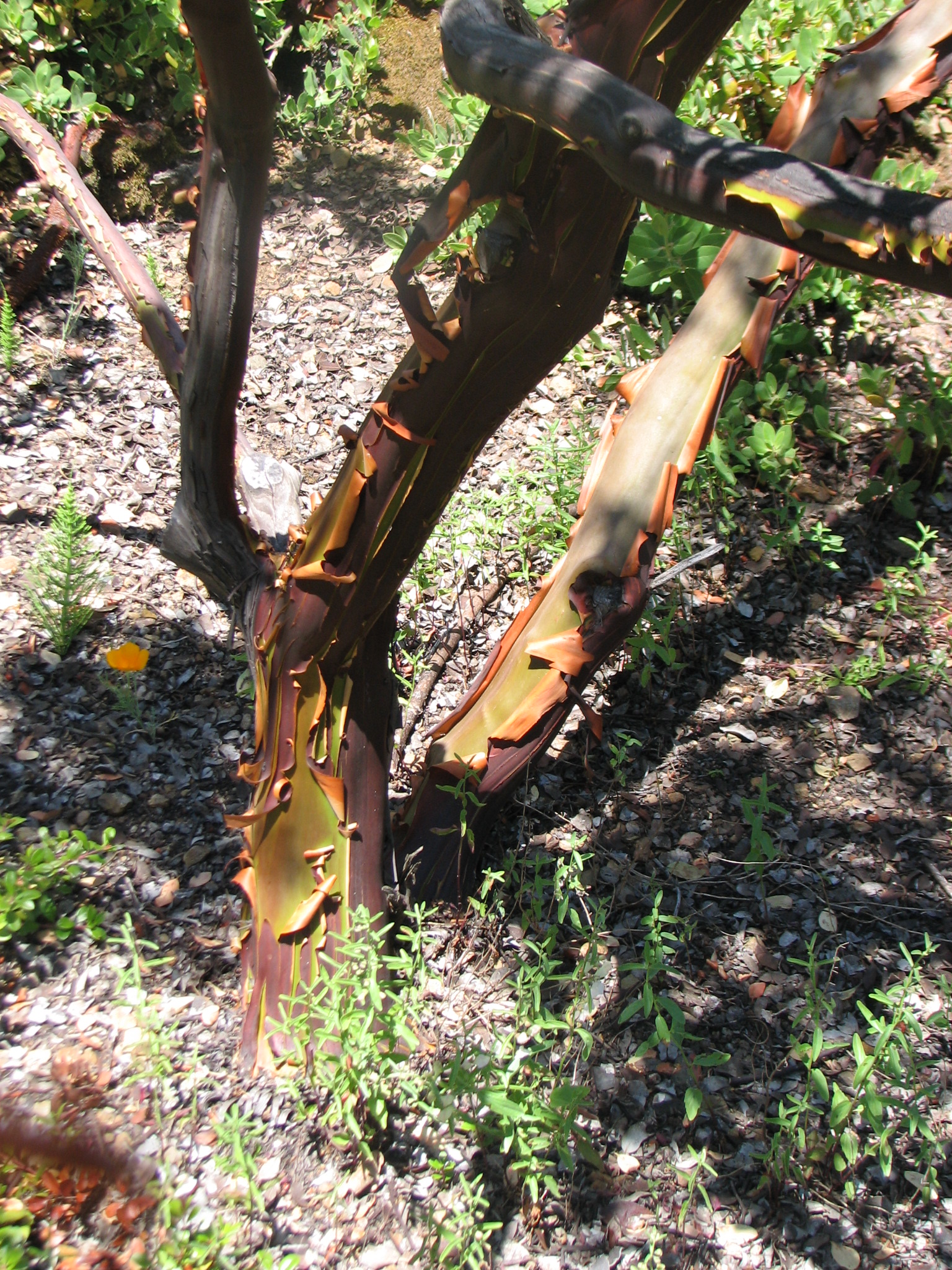
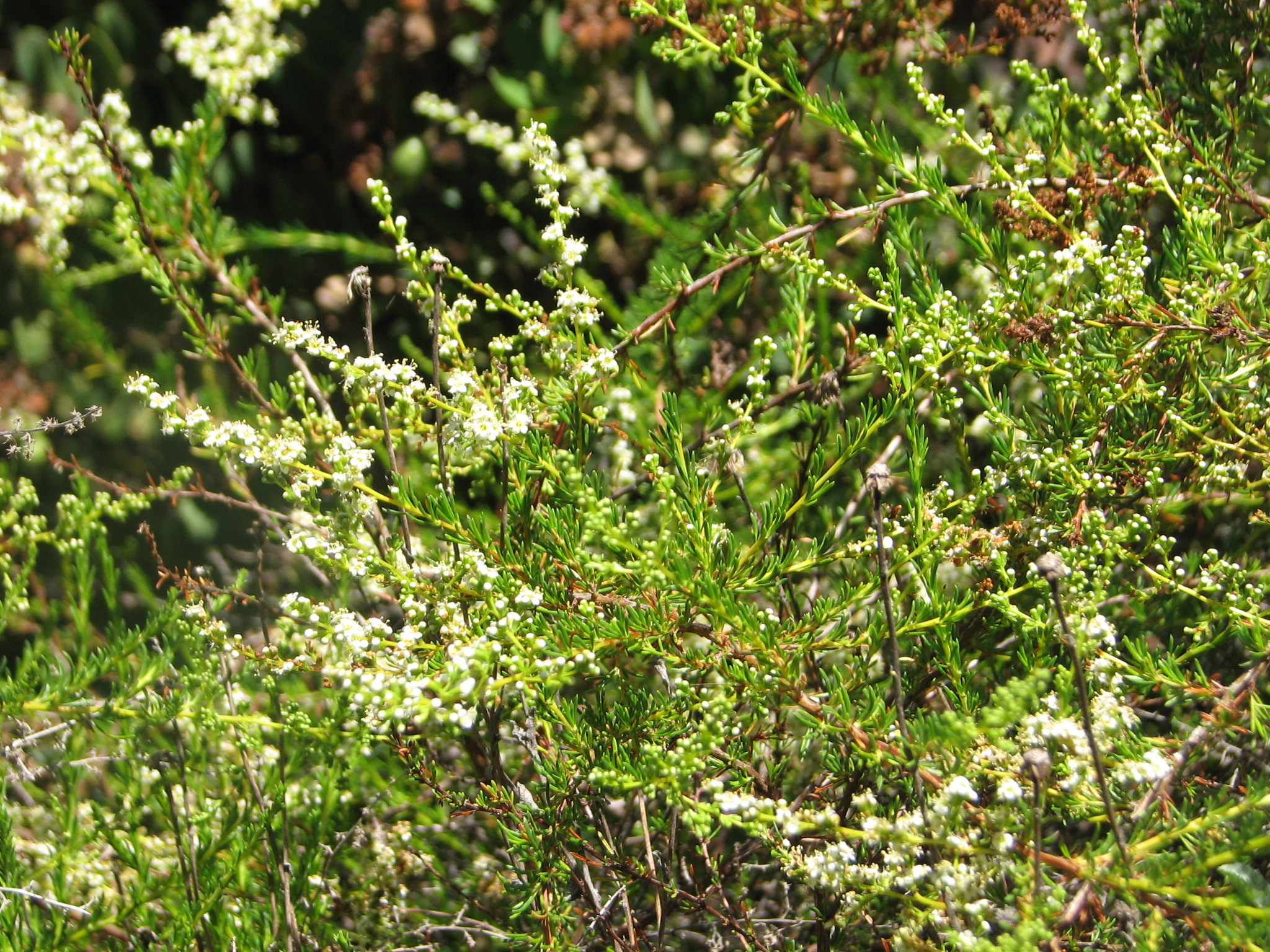
Madrone and Manzanita are examples of native plants with “ribbonlike shreds on the bark” that are highly flammable.  Coyote brush and bay laurels are examples of native species which contain highly flammable oils.

Shreddy bark of Madrone


Shreddy bark of manzanita

Anyone with knowledge of the natural history of California could provide any number of such invidious comparisons between native and non-native plants with respect to their flammability.  We hope the examples we have provided illustrate that flammability characteristics of plants are unrelated to whether the plants are native or non-native.  The claim that non-native plants are more prone to fire than native plants is fallacious.

Nativist myths die hard

A book about the 1991 wildfire in the Oakland/Berkeley hills illustrates the power of the legend that non-natives are more flammable than natives.  In Firestorm:  the study of the 1991 East Bay fire in Berkeley (Margaret Sullivan, 1993) the author states repeatedly that native plants and trees were involved in that fire.  Every tree mentioned in the following quotes from that book is native to the Bay Area:

  • “…flames surging through the dry underbrush and live oaks that line the street…”
  • “…neighborhoods…are built into the contours of the grassy hills and live-oak-and-laurel studded canyons…”
  • “…hillsides covered in seasonal grasses or had overlooked ravines of oak and madrone…were devastated by the fire.”
  • On Vicente Road, “Two redwoods up the street caught fire like matchsticks.”
  • “Roble Road and… Roble Court, derive their name from the…Spanish word for the live oak tree that grows densely there…the devastation on lower Roble…was fairly complete…”

In the single mention of the role of eucalypts in the fire, the fire skips over the tree canopy:  “The fire swept right over [the houses] scorching the crowns of surrounding eucalyptus trees.”  And the Monterey pine—also targeted for eradication by native plant advocates—plays a similar role in a nearby location:  “Across the street a grove of Monterey pines shields the white clapboard buildings of the private Bentley School…”

After presenting all this evidence about the role of native plants in the fire, the book concludes with the legend that non-natives are more flammable than natives:   “Gardens of drought tolerant and fire-resistant California native plants have become symbols of the rebirth of the fire communities.”  This statement is illustrated with a photo of a native plant garden.

Chamise is an example of a native plant in the chaparral community that is extremely flammable.

“The relationship between fire and Chamise is illustrated by the plant’s tendency to ‘encourage’ burning.  A thermometer was placed within a Chamise shrub as a fire approached, and the following changes were documented.  At about 200⁰F the plant began to wilt as its temperature approached the boiling point of water.  At about 400⁰F the plant began to emit combustible gases such as hydrogen, alcohol, and methane.  At about 600⁰F the shrub smoldered and began to turn black.  At about 800⁰F the plant burst into flames!  This species must have evolved in association with frequent fires to have reached the point where it seems to encourage burning.” (A Natural History of California, Schoenherr, page 344)

Chamise, Tilden Park Botanical Garden

As Mark Twain said, “A lie can get halfway around the world while the truth is still putting its boots on.”