A new study reported changing public and scientific interest in biodiversity compared to climate change. Using reports in the media and scientific journals in the United Kingdom and the US, as well as funding of scientific studies by the World Bank and the National Science Foundation, the study reports that the interest in climate change has increased and the interest in biodiversity has decreased in the past 25 years.
This analytical approach seems to suggest that these two environmental issues are mutually exclusive, that the interest in one is at the expense of the other. We find this both unfortunate and unnecessary because we consider these two issues intimately related. Climate change is increasingly the biggest threat to biodiversity. If plants and animals are unable to adapt to climate change, they are doomed to extinction.
Therefore, we believe that science should study these topics together. In fact, the study on which we are reporting acknowledges the relationship between these topics: “Dual-focus projects are being funded more often, but… ‘this is relatively small and does not mitigate the plateauing expenditure on biodiversity research.’” (1)
Conservation in a changed climate
As long as conservation and “restoration” projects are devoted to replicating historic landscapes, they are likely to be unsuccessful. The climate, atmosphere, and soil conditions are no longer suited to a landscape that existed hundreds of years ago, particularly in urban environments. Therefore, if biodiversity is to be preserved by conservation and restoration, such projects must look forward, not backwards.
We have been watching the Nature Conservancy closely for signs that it is adapting to climate change. We look to the Nature Conservancy to lead the way because they employ hundreds of scientists. In contrast, many mainstream environmental organizations employ more lawyers than scientists.
We have reported that the Conservancy’s Chief Scientist, Peter Kareiva, is at least paying lip service to an approach to conservation that takes into consideration the profound changes in the environment caused by the activities of man. This acknowledgement of the irreparably altered environment is encapsulated by the proposal to name a new geologic era, the Anthropocene.
Unfortunately, the old guard of conservation biology has engaged in a vigorous campaign to silence the Conservancy’s new approach. This conflict between the old guard and scientists who have proposed a more realistic approach to conservation was recently reported by the New Yorker. (2) According to that article, Peter Kareiva has made a commitment to the old guard to quit publishing anything regarding the Anthropocene and its implications for conservation practices.
The Nature Conservancy has responded to the article in the New Yorker in its on-line blog. It doesn’t explicitly address the question of whether or not a commitment has been made to quit advocating for a more realistic approach to conservation. However, it implies that the Conservancy plans to continue on a course of scientific innovation and experimentation, which it describes as “practical.” Here is a specific choice made by the Conservancy that typifies this approach:

“We know it was worth spending millions of dollars to rid Santa Cruz Island of non-native pigs. But we are pretty sure it would not be worth spending what could be hundreds of millions of dollars to rid California of non-native Eucalyptus trees (which also happen to harbor wildlife and monarch butterflies.)” (3)
Although the Nature Conservancy’s Chief Scientist may have agreed to “shut up,” we see signs of the Conservancy’s new approach in its latest magazine. In a brief article entitled “Forests of the Future,” the magazine reports that they are no longer planting the species of trees that existed in the past in one of their properties in Minnesota, because they don’t believe that species is adapted to current or predicted future conditions. Instead they are actively engaged in reforestation of the land with new species:
“Over the past two springs, the team planted 88,000 tree seedlings across 2,000 acres in the northeastern corner of the state. The seedlings consisted of species that should survive better in a warmer and drier climate—trees, such as red oak, found in higher numbers just south of the area. For a team accustomed to restoring forests to match historical landscapes, helping the North Woods [of Minnesota] adapt to a predicted future climate is a new but necessary idea. [The Conservancy’s science director in Minnesota] says, ‘All of our modeling is saying the same thing,’ she adds, ‘We needed someone to actually go out and start trying some of this stuff.’” (4)
Looking forward not back
We are very encouraged by the Conservancy’s new approach and we hope that other land managers will be inspired by it. We are also reminded of a recent visit to a nature reserve near San Luis Obispo managed by the local chapter of the Audubon Society. We reported about this reserve in a recent article because the land managers had planned to destroy all eucalyptus trees on that property but were forced to scale back their plans in response to a noisy negative reaction from the public.
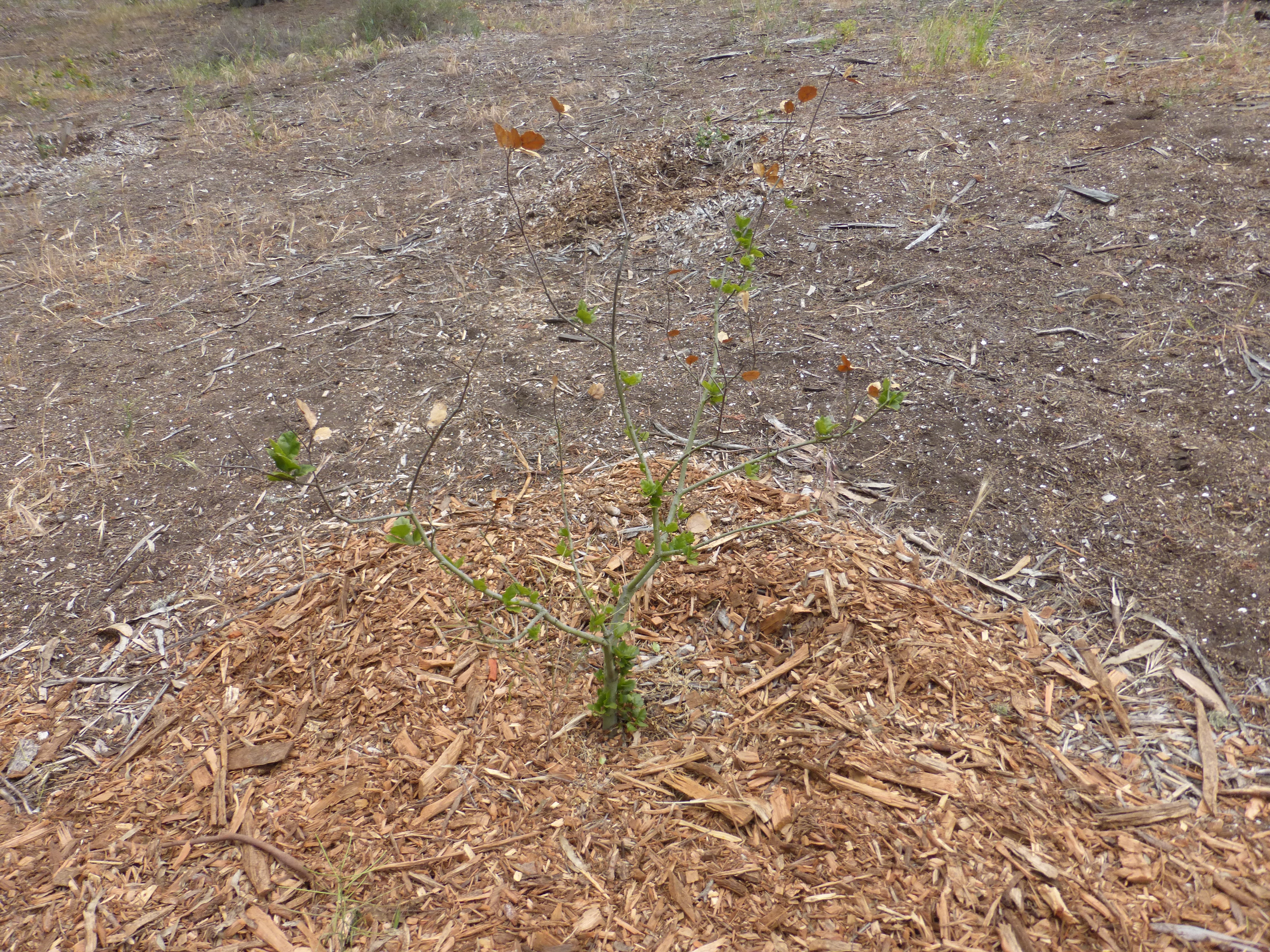
On our recent visit, we learned that this was a wise choice because many of the oak trees that were planted on this reserve by those who wish to “restore” it are quite dead despite the fact that the reserve has an extensive irrigation system. These land managers looked back and the result of that retrospective thinking is a landscape of dead native trees.
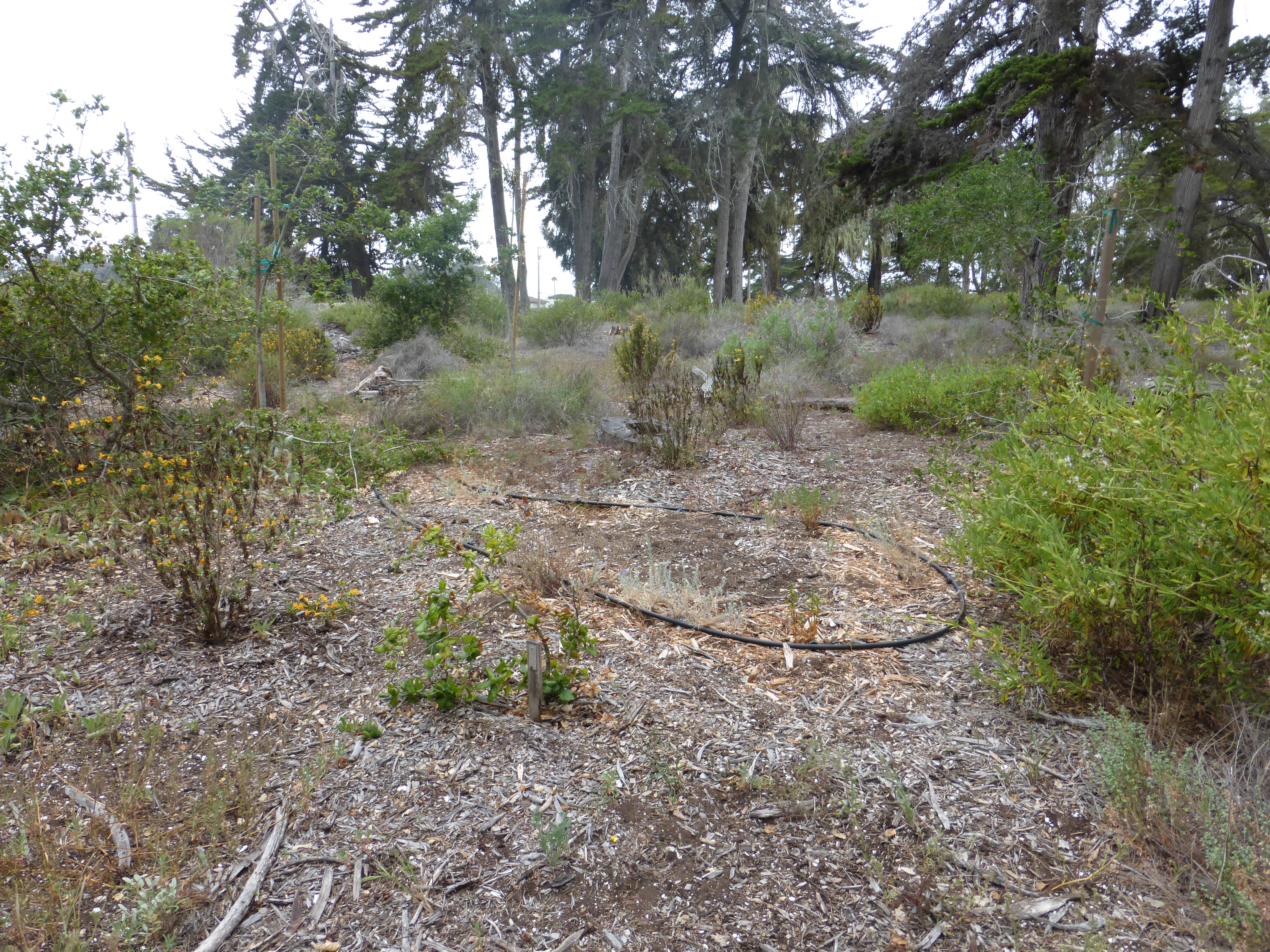
Climate change requires land managers to wake up to the realities of what will grow where. Land managers in the San Francisco Bay Area appear to be blind to that reality. They repeatedly plant species where they grew hundreds of years ago and we are forced to watch the plants die repeatedly.
(2) D.T. Max, “Green is Good,” New Yorker, May 12, 2014
(3) Mark Tercek and Peter Kareiva, “Green is Good: Science-Based Conservation in the 21st Century,” May 5, 2014
(4) “Forests of the Future,” Nature Conservancy, June/July 2014
 Conservation Sense and Nonsense