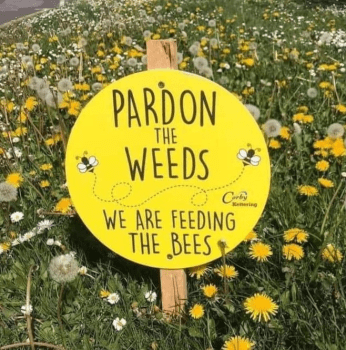
I am pleased to publish a guest article about a grassroots effort to reduce the use of pesticides in Malibu, California, a community of about 10,000 on the coast of Southern California. Malibu is famous as the residence of Hollywood celebrities and executives and surfers attracted by 21 miles of beaches with world-class surfing conditions.
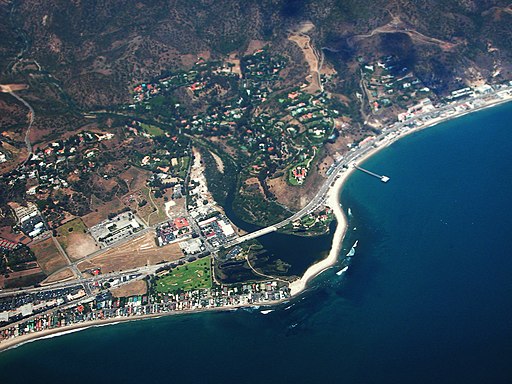
The author, Kian Schulman, and her husband, Joel Schulman, are founding members of the Malibu-based nonprofit Poison Free Malibu, a group that has had much success protecting local wildlife, children and pets in the Santa Monica Mountains and throughout California by educating the public and policy makers about the dangers associated with pesticides.
I hope the impressive accomplishments of Poison Free Malibu will inspire readers to participate in such efforts in your community in 2025.
Happy New Year! Best wishes for a more peaceful 2025.
Conservation Sense and Nonsense
Grassroots Power is a Strong Voice!
In the fight against harmful pesticides, the coastal community of Malibu, California is a model for the power of grassroots activism and persistent community engagement, which has significantly reduced the use of pesticides in Malibu.
Chemical companies like Bayer (Monsanto), Dow, Syngenta, and others have expanded beyond agricultural markets, targeting “invasive” and “non-native” species in nature preserves with toxic pesticides. The Santa Monica Mountains surrounding Malibu are replete with “invasive species,” targets for eradication with herbicides, downplayed by claims of so-called Integrated Pest Management policies.
The Santa Monica Mountains are wildfire prone. In December 2024, the Franklin Fire threatened the campus of Pepperdine University in Malibu, burned over 4,000 acres, multiple homes, and displaced many residents. Various methods of fuels management are available, but herbicide is the primary tool because it is the cheapest method. I ask, “What is the price tag to our health and the entire ecosystem?”
The Pesticide Problem
The impacts of pesticide exposure on our health are profound. Pesticide exposure has been linked to a rising tide of serious health problems, including cancer, Parkinson’s disease, diabetes, reproductive failures, developmental disorders, and autism. (1)
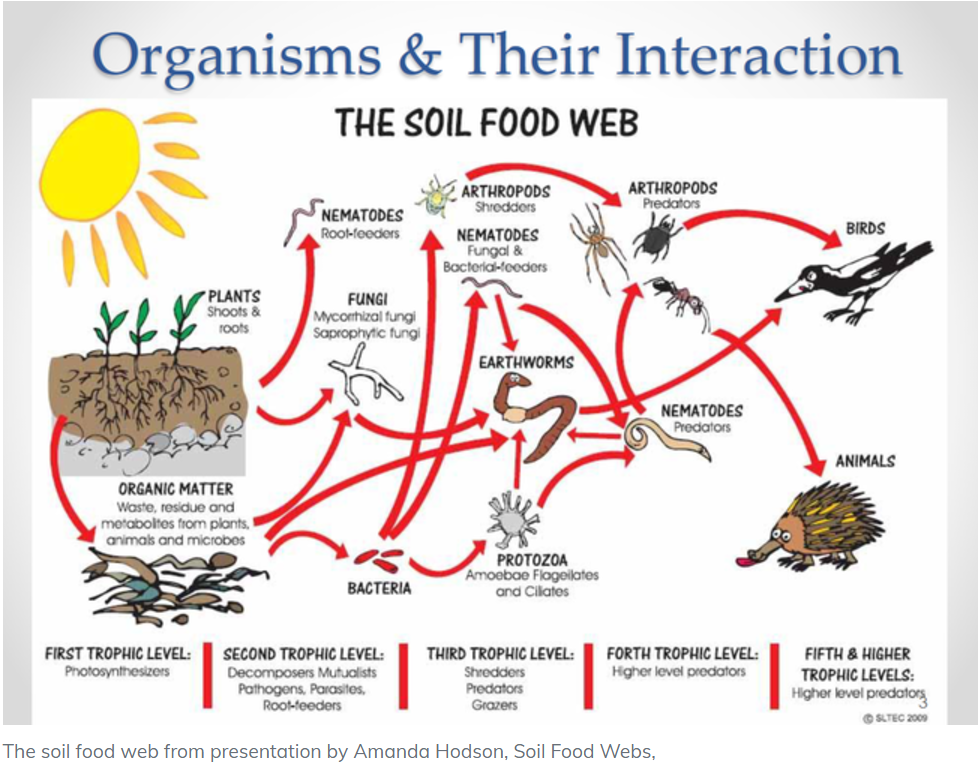
Pesticides and other chemicals can persist in soil for decades, contaminating soil and watersheds with toxic breakdown products. In 2021, Scientific American published an article about a meta-analysis of nearly 400 studies that examined 275 soil organisms and 294 different pesticides. In 70% of those experiments, pesticides were found to harm the organisms that are critical to maintaining healthy soils. Tens of thousands of subterranean species of invertebrates, nematodes, bacteria and fungi are filtering our water, recycling nutrients, and helping to regulate the planet’s temperature. The EPA, which is responsible for approving chemicals for the market, is not presently required by law to test the effects of chemicals on the soil.
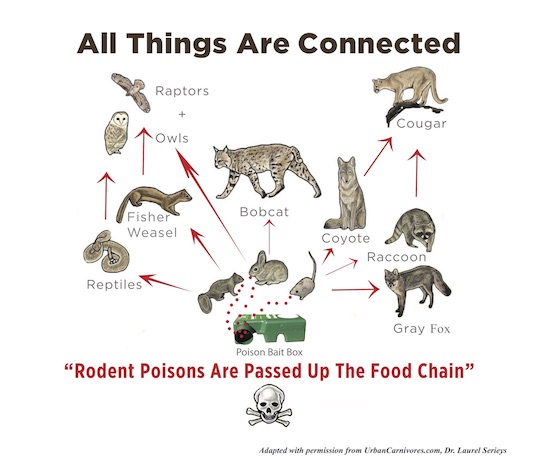
The widespread use of these poisons are also harming wildlife. Rodent poisons used to kill small rodents don’t stop there. Other non-target animals are often killed as well, either by eating the bait directly or eating the poisoned rodents. Many top predators, such as mountain lions and bald eagles, have been killed by rodent poisons that work their way up the food chain.
Malibu’s Transformative Journey
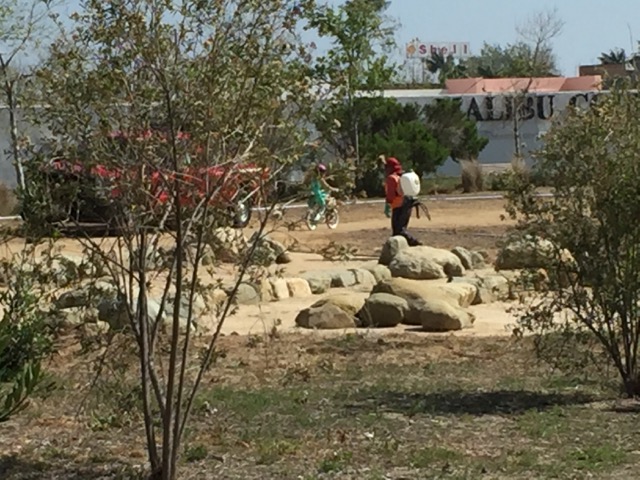
In 2012, local activists began investigating the city’s pesticide use, discovering a shocking reality. Malibu’s parks and public spaces were being treated with a cocktail of toxic chemicals, including glyphosate (RoundUp), 2,4-D, triclopyr (Garlon), pre-emergents and others, often applied in areas where children and pets play.
Protecting Wildlife
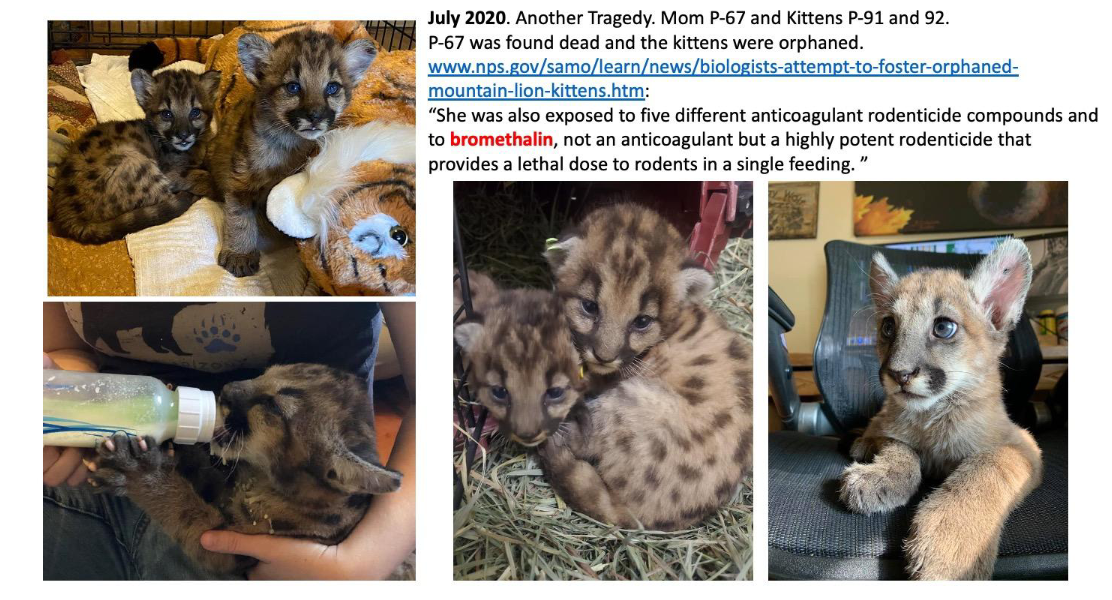
Poison Free Malibu was activated in 2012, after a mountain lion was found dead in a local park with rodent poison detected in the autopsy. Reducing rodent poison exposure has always been one of our primary objectives. All top predators of rodents are at risk of rodent poisoning: “The vast majority of bald and golden eagles in the United States are contaminated with toxic anticoagulant rodenticides…” (2)
Poison Free Malibu addressed this issue in a variety of ways:
- We asked local businesses selling rodent poisons to quit selling them. No stores in Malibu now sell rodent poisons.
- We asked businesses and organizations to remove bait boxes from their premises.
- We approached 10 neighboring cities to suggest that they pass resolutions banning the use of rodent poisons in their communities. Animals are on the move, so broader protections are needed for them.
- We helped pass three state bills to prohibit the use of 3 specific rodent poisons in California. Unfortunately, these laws have exceptions, including one for using rodent poisons on off-shore islands to kill rodents. The pesticide industry was quick to respond to the new restrictions by promoting other, still allowed but extremely dangerous rodent poisons such as bromethalin and cholecalciferol. Both of these have NO antidote, endangering wildlife and pets. According to the National Park Service, bromethalin was detected in 10 out of 16 mountain lions tested in the Santa Monica Mountains from July 2020 to August 2022.
- We helped to pass a Dumpster Lid Lock Ordinance in Malibu. In both commercial and residential areas, this ordinance was key to eliminating rodent issues.

Changing Public Policy
As we learned about the extensive use of a wide range of pesticides in Malibu it became clear that a broader effort was needed. We petitioned our city for an Earth Friendly Management Policy, which bans the use of all toxic chemical pesticides in EPA 1, 2, and 3 categories of toxicity. The city now relies on organic solutions, environmental enrichment, and “Expel, Deter, and Repel” tactics.
There is a National Park and a State Park in Malibu that also use pesticides on our public lands. We had to negotiate directly with those organizations that are not subject to our city policies. Following numerous meetings with State and National officials, we reached an agreement to establish hand weed-pulling events. This initiative has proven highly successful.
Public Education
The support of the public is needed to achieve changes in public policy. Educating the public about the dangers of pesticides is therefore an important part of our strategy:
- We reached out to school systems, other local cities, and counties, to bring these issues to their attention. Many have adopted pesticide-free policies, most recently Ojai just on December 10, 2024.
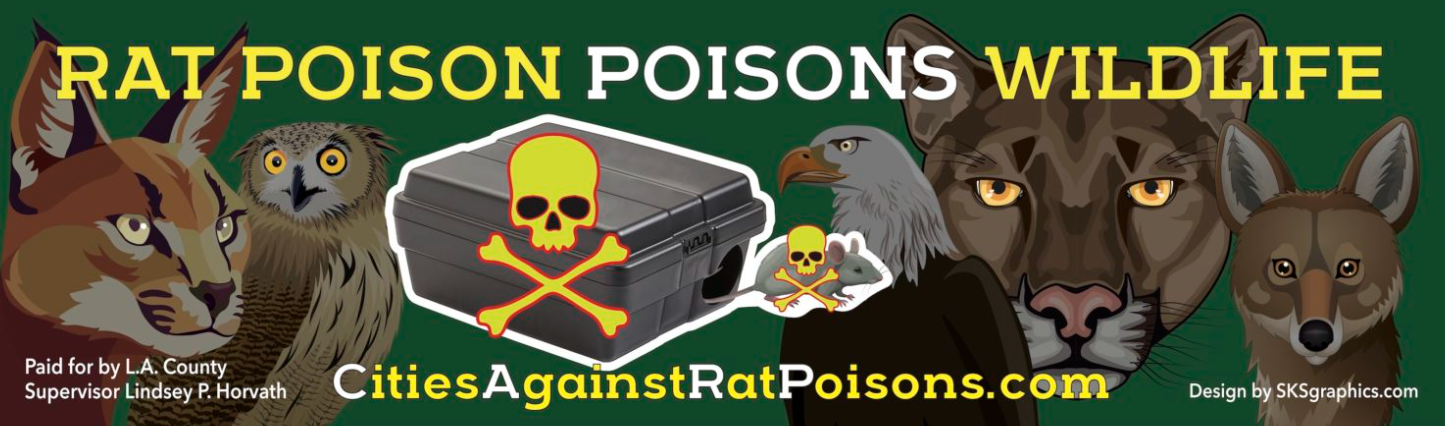
- We received grants from our city and county to help us with our outreach efforts, such as developing coloring books, distributing hundreds of yard signs, and putting up billboards throughout Los Angeles.
Not the end of the story
Despite these many important accomplishments, our work is never done. Legislative hurdles to our progress exist because of opposition from various government agencies, such as the Wildlife Conservation Board, the Department of Pesticide Regulation, the Environmental Protection Agency, CalTrans, and the California Department of Food and Agriculture. There is regrettable opposition from many non-profit organizations that champion the use of pesticides to kill so-called “invasive” species, such as the California Invasive Plant Council and the American Chemistry Council, a trade association representing manufacturers of chemicals.
Our work is never done, but the grassroots movement in Malibu proves that collective action can transform seemingly insurmountable challenges into opportunities for positive change.
Kian Schulman, RN, MSN
Director, Poison Free Malibu
Contact: PoisonFreeMalibu@gmail.com | 310-456-0654
Website: PoisonFreeMalibu.org
(1) “Wide Range of Diseases Linked with Pesticides,” Pesticides and You, Summer 2010
 Conservation Sense and Nonsense