Over 10 years ago, Mark Speyer wrote one of the first guest articles for Conservation Sense and Nonsense about mulberry trees, one native to North America and the other introduced by American colonists because it is the host plant of silk worms. That article was a hit! It has been viewed by over 8,600 readers. It is still entirely relevant to the mission of Conservation Sense and Nonsense and I recommend it to you. You will find it HERE.
I am grateful to Mark for giving me this opportunity to publish his guest article about willows, some native to North America and one introduced. As in the case of introduced mulberry trees, some willow species are native to China.
Much of China and North America have been in the same latitude since the evolution of angiosperms. As a result of climate similarity and geographic proximity, many of our plant species considered native in Eastern North America are also native to China. These paired species in the same genus are called disjuncts. There are many woody disjuncts in China and North America (magnolias, persimmons, hickory, catalpa, dogwood, sweetgum, tuliptree, tupelo, sassafras, Virginia creeper, etc) as well as many herbaceous disjuncts (ginseng, lopseed, mayapple, skunk cabbage, etc.).
They are different species from their Chinese counterparts because they have been separated long enough to change as a result of genetic drift and in response to a new environment, but are in the same genus and plant lineage and therefore chemically similar. These plant species made their way from China to North America by natural means, such as being carried by birds, animals, wind and ocean currents.
In contrast, Chinese species of mulberries and willows were intentionally introduced to North America. Mulberries were brought with the hope of making silk and weeping willows were brought to grace our gardens with their beauty. Some say they don’t belong here because they were brought by humans. Others say that is a meaningless distinction. Whether brought by birds or brought by humans it is a distinction without a difference because humans are as much a part of nature as birds.
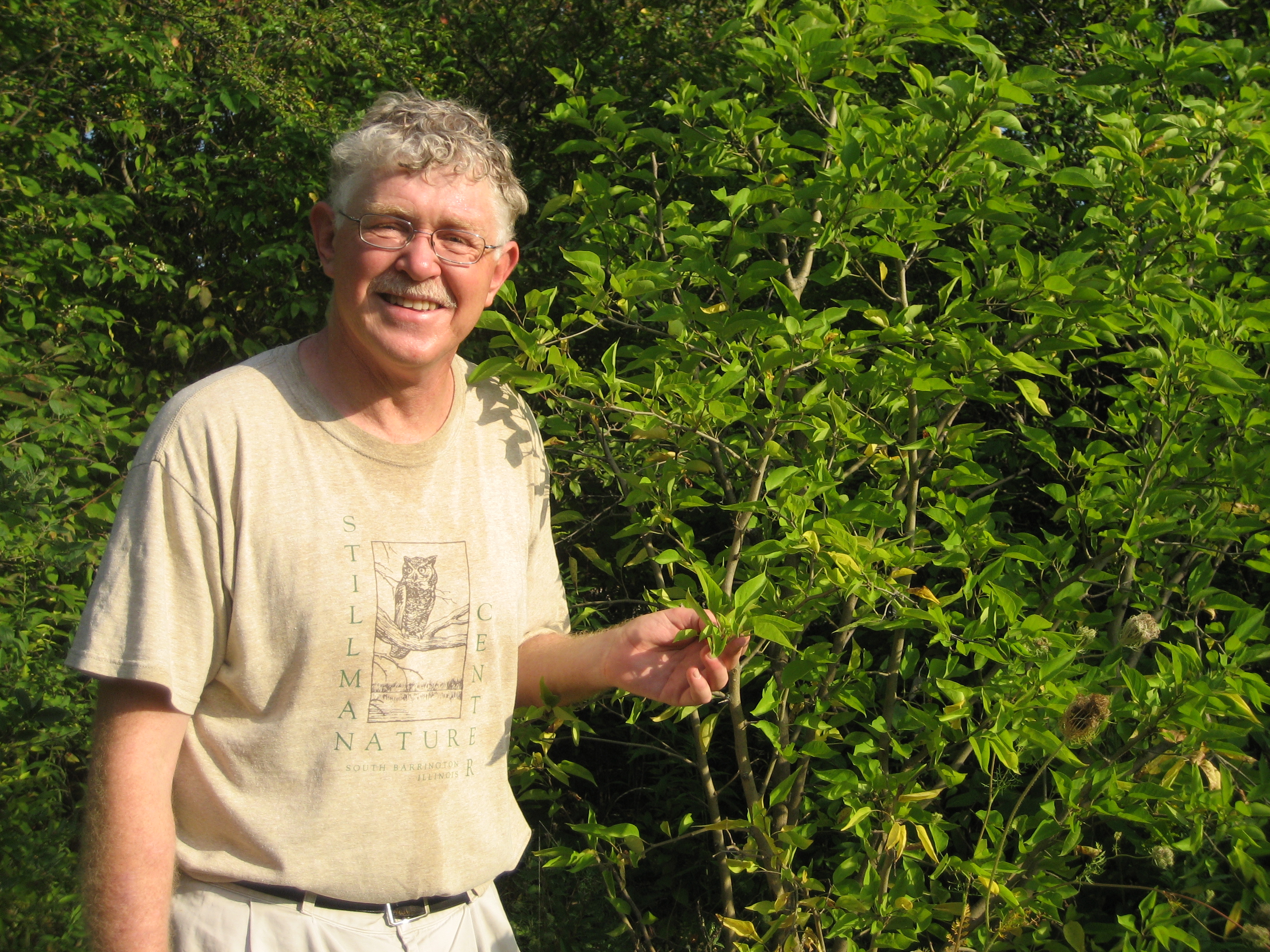
Mark Speyer is the Executive Director of the Stillman Nature Center in Barrington, Illinois. He can be reached at: stillmangho@gmail.com.
WILLOWS IN THE WIND ©
I’ve been writing nature columns for many years and I hope to write them for years to come but sometimes, the writing doesn’t come easy. The other evening, was one of those difficult times.
As I reached for a bottle of aspirin to alleviate a headache, it hit me– willows.
You see the scientific name for the willow genus is Salix and the main ingredient in the original 1899 aspirin was salicin, an extract from willows.
I’m not going to attempt to sort through the dozens of North American willows and their confusing hybrids. I don’t have enough aspirin for that. I’d like to concentrate on two of the willow trees, weeping and black, as well as a few of the willow shrubs.
Weeping Willow (Salix babylonica)
Unlike black willows, weeping willows aren’t native to this continent. The scientific name is somewhat misleading. This species originates from northern China, not the Middle East. Examples of Salix babylonica can be found growing along the famed Silk Road trade routes between China and Europe. The weeping willow arrived in Europe around 1730. It traveled to N. America courtesy of colonization. The weeping willow also landed on the W. Coast via Japan.
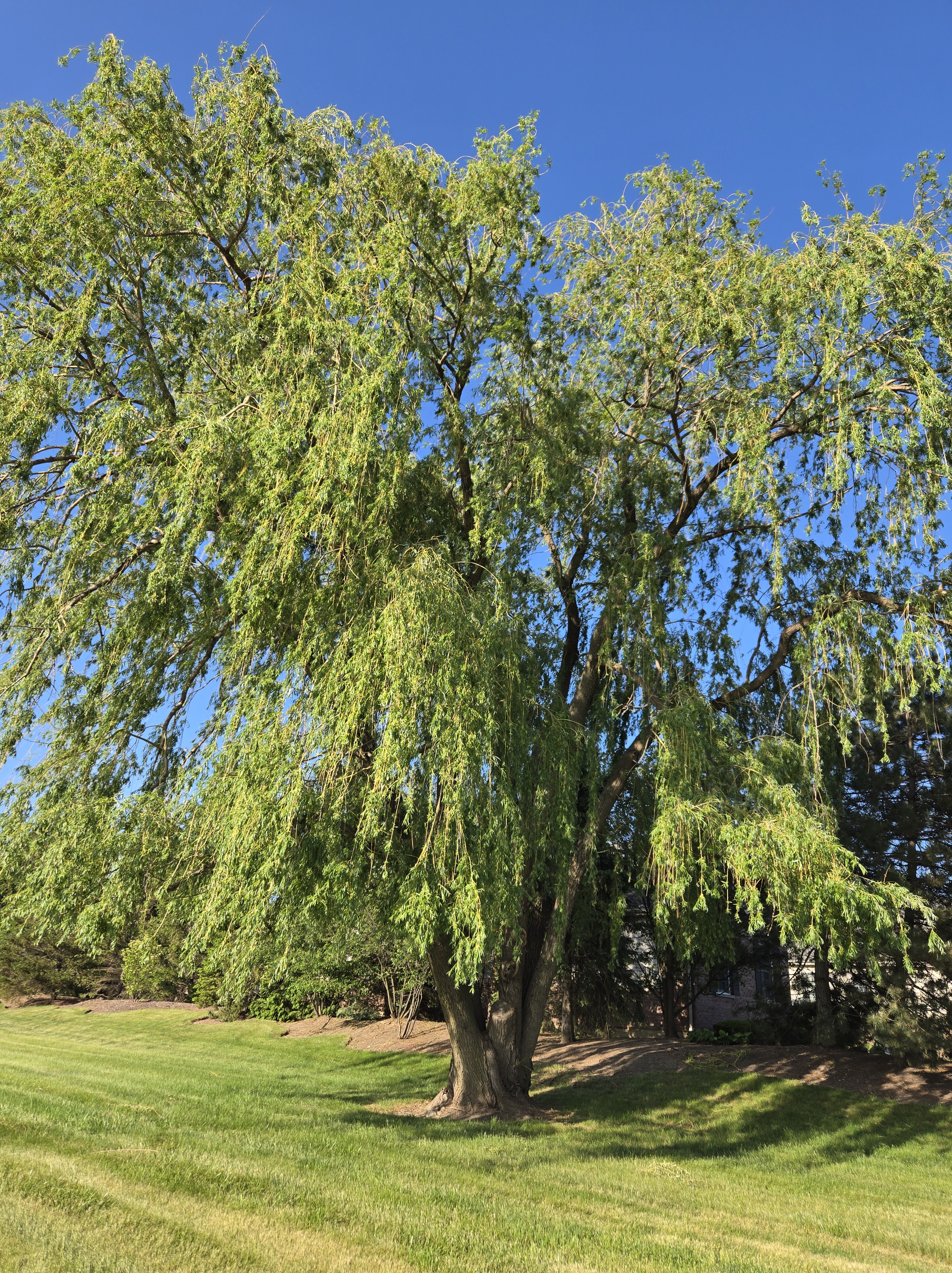
Its graceful, long, slender, drooping branches makes the weeping willow an easy tree to identify. This pendulous growth habit earned this willow its common name. Not surprisingly, the tree is a popular choice for landscapers and gardeners. It is also the choice of pollinators such as specialized bees and butterflies. If planted in full sun, this rapid grower can reach a height of sixty feet.
In addition, weeping willow tolerates soils that are somewhat acidic to alkaline. Finally, it thrives in low areas and wet spots where other trees might drown. Decades ago, my father and I planted two weeping willows in a sunny wet pocket on the property. They grew fast and sucked up the water, just as we had hoped. You see they are designed to do just that.
Like all willows, weeping willows are easily started from a sprig. Just stick it in some water and watch the rootlets sprout. When you think of where willows grow– along rivers, streams and other places prone to flooding– this asexual method of reproduction is a handy adaptation.
If a flood washes away a bank and the willow that grew on it, odds are one of its branches will end up on a spit of mud or in a shallow pool downstream. With the passage of time, that branch will take root and a new willow will be on its way.
In this country, most weeping willows are male clones and thus produce no fruit. Since reproduction for a willow is as easy as dropping a twig in running water, these clones can be found growing where no human planted them.
Black Willow (Salix nigra)
Rather plant a native species? Then, this next tree is for you. While some may appreciate the graceful form of a weeping willow, give me the craggy old coot of the willow family, the black willow. One of the world’s largest willows, it varies in appearance with where it is growing. Along an eastern seaboard stream, it is a tree reaching a height of forty to fifty feet. In the southern reaches of the Mississippi River’s floodplain, a black willow can reach a height of 100 feet in a mere forty years.
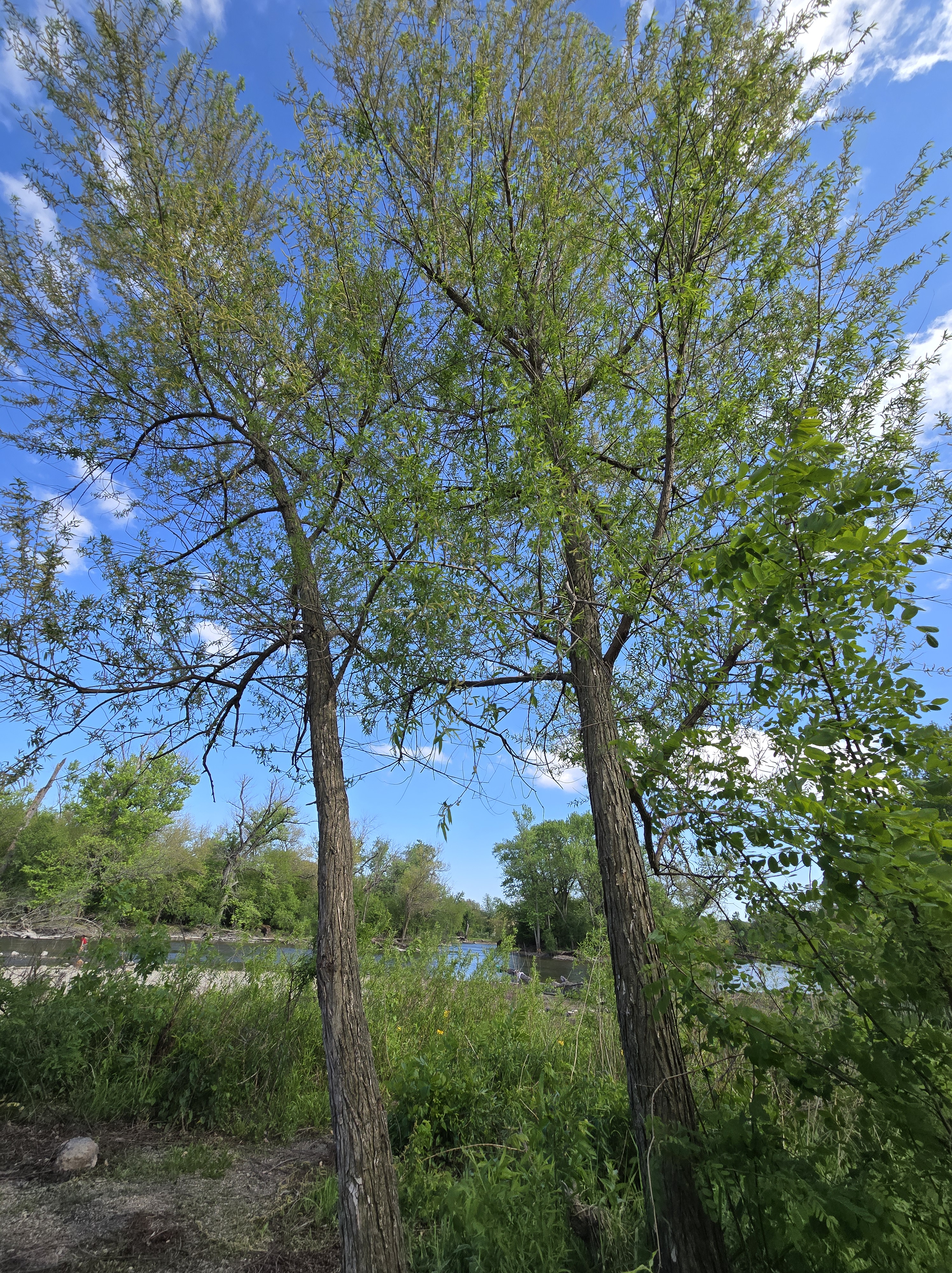
Here at the Stillman Nature Center we had a couple of sprawling specimens of our own. They had large forks, beginning low down, each fork leaned outward giving the tree a “slouching picturesqueness” as Donald Culross Peattie wrote.
Black willow has many alternate names such as American, brittle, and, a favorite of mine, scythe-leaved willow. I like it because the botanical term for willows’ long narrow leaves is lanceolate or lance-shaped. Lances and scythes belong together, don’t you think?
Brittle is another appropriate name. Its slender reddish-brown twigs are flexible at first. As they age, the twigs become darker and brittle at the base. Anyone who has sat at a picnic table or parked a boat under a large black willow, will soon find these items decorated with fallen black willow twigs.
Unfortunately, willows are short-lived, rarely living past 85. But, as I’ve watched our willows here at Stillman, I have some questions about that figure.
For example, one of our largest black willows came down in a heap some years ago. After the chainsaws were done, all that was left was the short, thick trunk and a few feet of each main branch that the trunk divided into.
Was the tree dead? Not quite. As the years passed, flexible yellow branches grew from one of the large “dead” arms. Nutrients and water were obviously flowing from the roots and through the tissues of this “goner.”
So when is a tree dead? A newspaper story provided an answer that fits our willows. The article was about the fate of a sequoia. At the time, the tree was at least 2,500 years old, “We don’t know if it’s dying or not,” said an interpretive ranger at Sequoia National Park, “One branch with green leaves connected by live tissue to one root is all that’s needed for a tree to be considered alive.”
Of course, the Sequoia’s trunk remained standing unlike our willow’s old trunk that was down and decomposing.
Shrubby Willows
Most willows don’t have large trunks since they exist as shrubs. This is not the place to sort through them all. A partial list would include goat, Bebb, narrowleaf, sandbar, and, the florists’ favorite, pussy willow.
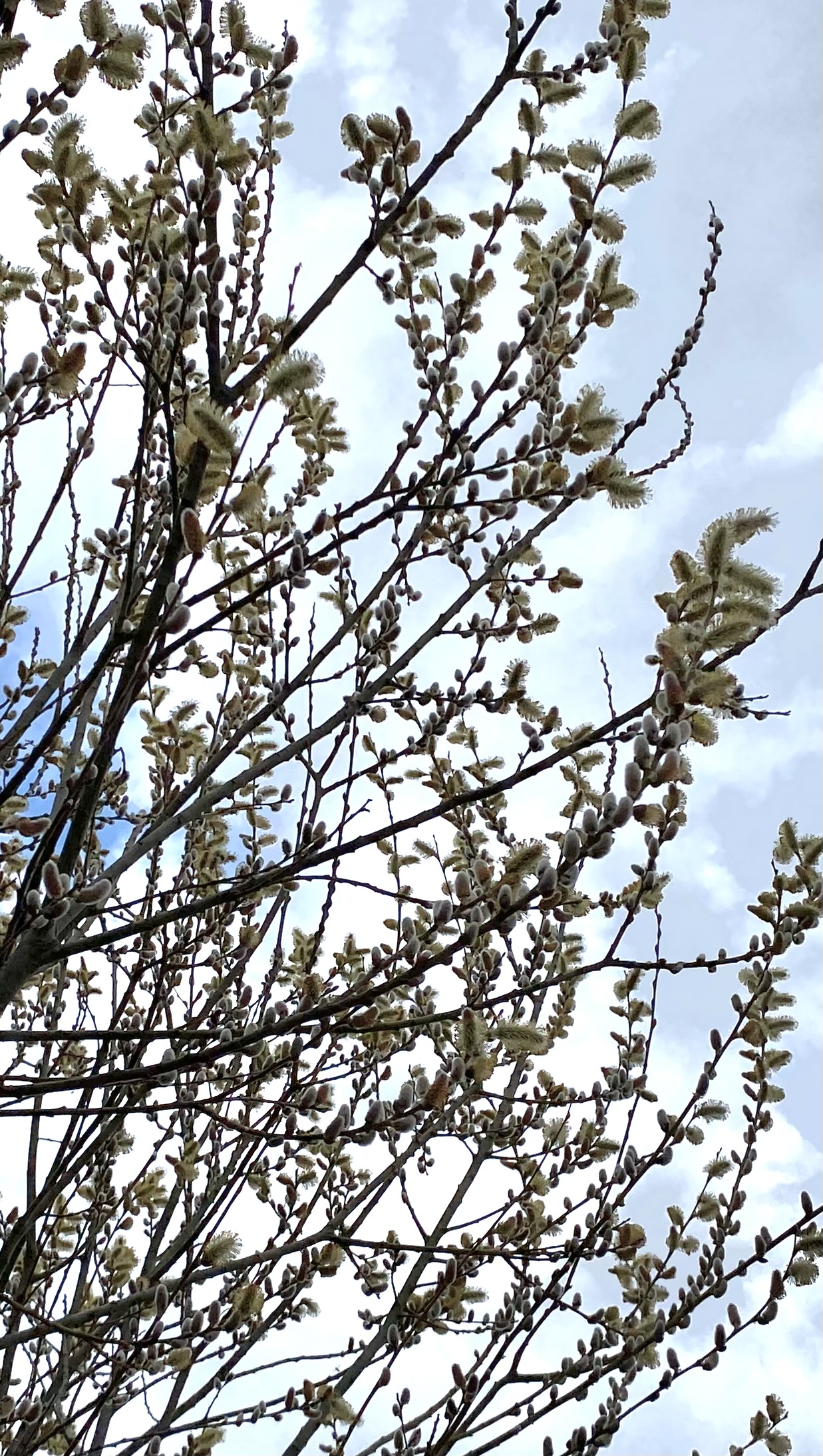
The native pussy willow (Salix discolor) is a boreal species that can occasionally be found growing in northeastern Illinois. As you might have guessed, it inhabits wet areas such as floodplain forests, marshes, and shrubby swamps.
Because willow thickets are within reach, deer, elk and domestic livestock will feed on willow leaves and twigs. This brings me back to where I started. Peoples from N. America to ancient Greece made teas and other medicines from willow bark to treat joint pain and other ailments. So, are animals eating willows just to fill their stomachs or to ease their aches and pains as well? The next time I run into a talkative deer, I’ll ask.
Mark Speyer, Summer 2025

 Conservation Sense and Nonsense