Concern about herbicide use: Legitimate or “chemophobia”?

Recently there was a brief dialogue about herbicide use in San Francisco’s so-called “natural areas” in Jake Sigg’s Nature News that was of some interest to those who consider such use a contradiction in a public park designated as a “natural area”:

  •  Jake Sigg:  “Spurious, damaging information being circulated regarding herbicide use in our open spaces:  Mischievous people…are circulating false information…whipping up fears that have no foundation”  (Nature News, February 14, 2011)
  • Reader:  “…Garlon is legally classified as a hazardous chemical.  I am therefore writing to supply you with information from reputable sources.  I ask that in your future communications on this subject, you accurately describe the facts that are known about this chemical.” (Nature News, February 18, 2011)
  • Jake Sigg:  “The chemophobia rampant in this country is primarily based on emotion and anxiety, and does us a great disservice.” (Nature News, February 18, 2011)
  • Jake Sigg:  “The anti-herbicide crazies quickly seize on articles like this NYT one as proof of their contentions…” (Nature News, March 30, 2011)

This dialogue and the positive feedback that Mr. Sigg reported from his readers in support of herbicide use, suggest that herbicides are an important tool for the native plant movement.  They are anxious not to lose this tool in their crusade to eradicate non-native plants and trees.  After researching how much herbicide is being used by the Natural Areas Program, we can understand why they angrily defend its use.

Herbicide use by San Francisco’s Natural Areas Program

The Natural Areas Program (NAP) reports having used herbicides 69 times in 2010:  36 applications of Garlon, 31 applications of Roundup, and 2 applications of Milestone.  Putting those numbers into perspective, other areas (those not designated as “natural areas”) in the Recreation and Park Department sprayed Garlon, the most hazardous chemical, only a few times in 2010.

About 20% of these herbicide applications were done by a contractor who was paid $9,000 per application.  The employees of this contractor are therefore equally committed to this source of revenue, contributing to the economic interest that is a motivating factor in the native plant movement.

Not all of the “targets” of these sprayings are identified, but those that are include:  oxalis, blackberry, ivy, fennel, cotoneaster, hemlock, pampas grass, broom, erharta grass, mustard, and thistle.  Blackberry is an important source of food for wildlife in the city. We hope that children in the park do not graze on the blackberries.  Garlon was also sprayed on Scabiosa, which has not been identified as an “invasive plant” by the California Invasive Plant Council.

Glen Canyon, with a creek running through it and a year-around day care center adjacent to that creek, was sprayed 12 times.  Twin Peaks, the watershed to that creek, was sprayed 16 times.  Lake Merced was sprayed 3 times, despite the fact that it has been officially designated as red-legged frog habitat.

What is known about these chemicals?

The City’s policy regarding “Integrated Pest Management” classifies the chemicals used on city properties in terms of the risks associated with their use.  Here is how the City’s policy classifies these chemicals: 

  • Garlon:  Tier I, Most Hazardous.  Use Limitations:  “Use only for targeted treatments of high profile or highly invasive exotics via dabbing or injections.  May use for targeted spraying only when dabbing or injection are not feasible and only with use of a respirator.  HIGH PRIORITY TO FIND ALTERNATIVE.”
  • Roundup:  Tier II, Less Hazardous.  Use Limitations:  “Spot application of areas inaccessible or too dangerous for hand methods, right of ways, utility access, or fire prevention.  Use for cracks in hardscape, decomposed granite and edging only as last resort.  OK for renovations but must put in place weed prevention measures.  Note prohibition on use within buffer zone 60 feet around water bodies in red-legged frog habitat.”
  • Milestone:  Tier I, Most Hazardous

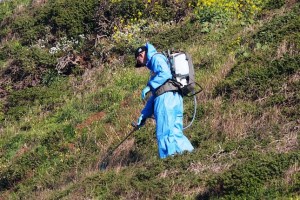
    Spraying Garlon on Twin Peaks without use of the respirator required by City policy, February 2011

Federal law also requires that chemicals be evaluated by the Environmental Protection Agency (EPA) before being commercially available to consumers.  The EPA conducts a number of tests of toxicity, reports the results of those tests on a mandated Material Safety Data Sheet (MSDS), and classifies the chemical with respect to its relative toxicity.  Here are a few highlights from the MSDS for these chemicals:

  • Garlon 4 Ultra is defined as a “Hazardous Chemical” according to the OSHA Hazard Communication Standard.  “Material is highly toxic to aquatic species” and “slightly toxic to birds.”
  •  Roundup Pro is defined as a “Hazardous Chemical” according to the OSHA Hazard Communication Standard. Toxicological effects in rats:  “decrease in body weight gain; histopathologic effects.”  “Moderately toxic” to aquatic life.

The Marin Municipal Water District (MMWD) quit using all herbicides in 2005 in response to the public’s protests.  They have been engaged in a process of evaluating herbicides for possible use in the future.  In 2008, MMWD contracted for a risk assessment of 5 herbicides they were considering for possible use.  That risk assessment determined that Garlon 4 Ultra is the most hazardous of the 5 chemicals that were evaluated.    MMWD is not considering the use of Garlon in the future. 

Does NAP’s herbicide use conform to the City’s Integrated Pest Management Law?

 San Francisco’s Integrated Pest Management Ordinance makes the following commitments regarding pesticide use on the city’s properties:

  • 300a “…the policy of the City..to eliminate or reduce pesticide applications on City property to the maximum extent possible.”
  • “The City…shall assume pesticides are potentially hazardous to human and environmental health.”
  • “The City shall give preference to reasonably available nonpesticide alternatives when considering the use of pesticides.”
  • “Consider the use of chemicals only as a last resort.”
  • “This Chapter applies the Precautionary Principle to the selection of reduced risk pesticides and other pest management techniques.”

The City’s ordinance that obligates the City to follow the Precautionary Principle makes this commitment:

“A central element of the precautionary approach is the careful assessment of available alternatives using the best available science. An alternatives assessment examines a broad range of options in order to present the public with the consequences of each approach. The process takes short-term versus long-term effects or costs into consideration, and evaluates and compares the adverse or potentially adverse effects of each option, giving preference to those options with fewer potential hazards. This process allows fundamental questions to be asked: ‘Is this potentially hazardous activity necessary?’ ‘What less hazardous options are available?’ and ‘How little damage is possible?’”

We do not believe that herbicide use by the Natural Areas Programs meets the standards of either the City’s ordinance about pesticide use or its commitment to the Precautionary PrincipalThese laws are theoretically rigorous, but the enforcement of those laws is not.  The Natural Areas Program is using an herbicide (Garlon) categorized by City policy as the “Most Hazardous” most of the time.  They are using that chemical in sensitive areas in which water can be contaminated and in which children can be exposed.  Their use of that hazardous chemical has increased over time and they have been using that chemical for at least 5 years, perhaps longer (the 2006 management plan for the Natural Areas Program reports the use of this chemical).  If Garlon has not been capable of eradicating in 5 years, the non-native plants that are the target of the Natural Areas Program, it is not likely to do so in the foreseeable future.  

Legitimate concern or “chemophobia”?

Let the reader be the judge.  Given what we know about these chemicals, the frequency of their use, the length of that use, and the locations of that use:

  • Do you think there is reason to be concerned about the herbicides that are being sprayed on our public parks? 
  • Do you think that places that have been designated as “natural areas” should be sprayed with herbicides which are legally and officially designated as hazardous chemicals? 
Hybridization: “Genetic pollution” or a natural process?

 
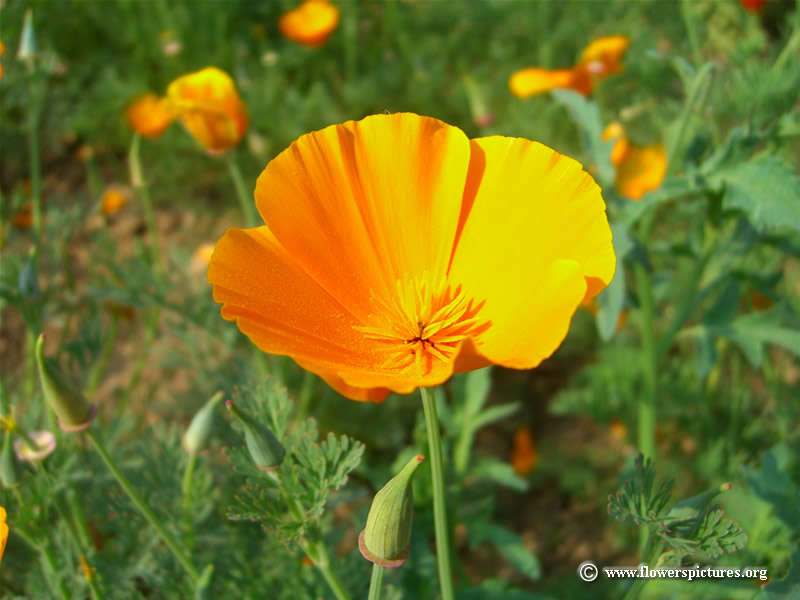
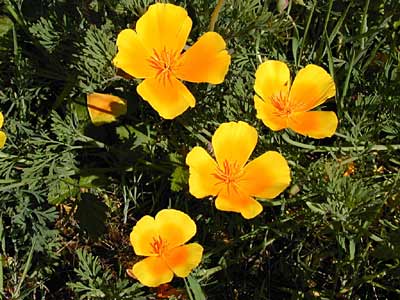
Presidio variety of California poppy. NPS photo

The San Francisco Chronicle’s gossip columnist, Leah Garchik, recently published a story about California poppies in the Presidio.  Apparently, someone planted the “wrong” poppy, or it migrated there.  The poppy that is native to the Presidio is small and yellow.  This “alien” poppy is the large orange poppy that most of us consider the classic California poppy.  The historical record indicates that this classic poppy grew elsewhere in San Francisco, but since it didn’t grow in the Presidio it must be removed because the Presidio’s Vegetation Management Plan “contains the requirement to remove any plants that could jeopardize the integrity of the genetics of native plants in the Presidio.” 

The “wrong” poppy

This incident reminded us of an article published in the newsletter of the local chapter of the California Native Plant Society several years ago, entitled “Contaminating the Gene Pool.”  In this article Jake Sigg instructs gardeners to beware of planting the wrong variety of a native plant because it will cause “genetic pollution.”  The California poppy is one of the examples he gives of a variety of California native being planted in San Francisco that doesn’t belong here.  It isn’t sufficient in his opinion, to plant a California native if that specific variety of the species didn’t historically occur in San Francisco.  He asks gardeners to “think in terms of preserving the genetic integrity of the local landscape.”  And he speculates many negative consequences of selecting the wrong variety, such as “genetic swamping, you’ve got all these foreign genes that are going to overwhelm the native population.”  We were reminded of Mr. Sigg’s vocal opposition to human immigration. 

For the benefit of our readers who aren’t gardeners, we should explain what Jake Sigg and the Presidio are worried about.  In a word, they are worried about hybridization, defined as “to breed or cause the production of a hybrid,” which is defined as “the offspring of two animals or plants of different breeds, varieties, or species.”  Hybridization is as likely to occur between two native plants as two non-native plants, but native plant advocates are concerned about the possibility of a native and a non-native plant producing a hybrid variety that is distinct from the native plant.  Hybridization is not inevitable, but it does occur naturally as well as through human manipulation.  The “From the Thicket” blog recently told the fascinating story of the development of a valuable garden cultivar variety of a favorite California native, ceanothus or California Lilac. 

Aside from the unpleasant association with eugenics, Mr. Sigg’s advice raises several practical questions.  How is the gardener supposed to know exactly which variety of a native plant “belongs” in San Francisco or even in a specific neighborhood within San Francisco, such as the Presidio?  And, in the unlikely event that gardeners might have such esoteric knowledge, where would they get the seeds of this specific variety?  Jake Sigg acknowledges this practical obstacle, but advises gardeners to get their seeds and plants only from the annual plant sale of the local chapter of the California Native Plant Society.  One wonders how many gardeners will follow this rather restrictive advice.

However, the more important question is the scientific question.  Is hybridization an inherently harmful process that always reduces species diversity?    We turn to Mark Davis for a less gloomy view of hybridization.  Like most scientific questions, there is evidence of both positive and negative effects of hybridization on species diversity.  Since you’ve heard the negative view from Mr. Sigg, we’ll let Mark Davis speak for the positive view.  Professor Davis reports in his book Invasion Biology* that “the fossil record generally shows that following the invasion of new species, the number of species resulting from adaptive radiations and evolutionary diversification exceeds the number of extinctions.”   And he concludes his discussion of hybridization and evolution by saying, “…a fair appraisal must also acknowledge that species introductions can enhance diversity as well, through hybridization, and the creation of new genotypes.”

The native plant movement has a narrow view of nature, which we do not share.  Their ideology is based on dire predictions of ecological disaster if we don’t follow their restrictive advice.  And when the managers of public lands choose to follow their advice, the consequences are usually the destruction of plants and animals that we value, in this case a field of California poppies. 


* Mark Davis, Invasion Biology, Oxford University Press, 2009, page 78-82.

Broom: “I’m ba-ack”

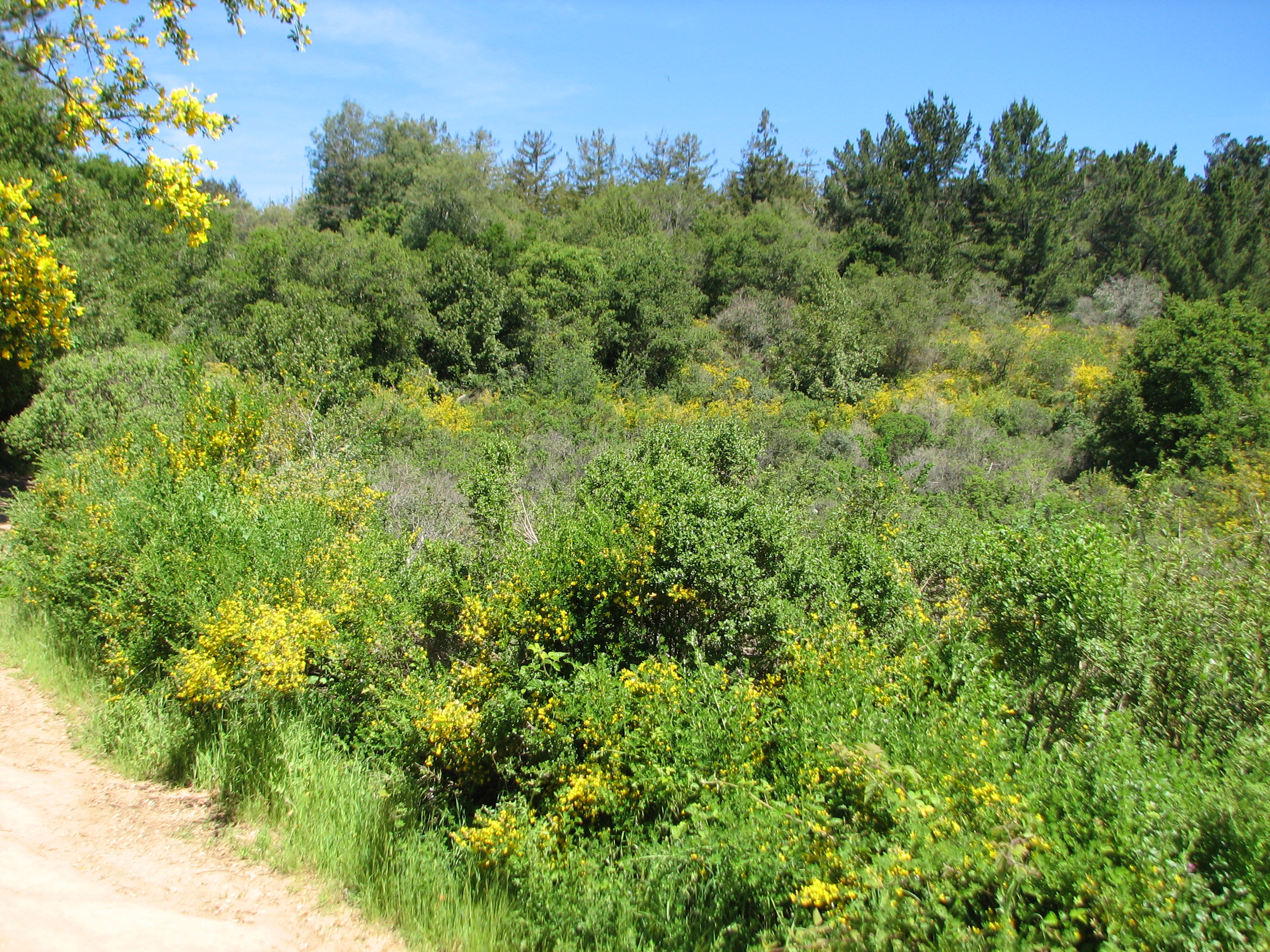
Leona Canyon, Spring 2011

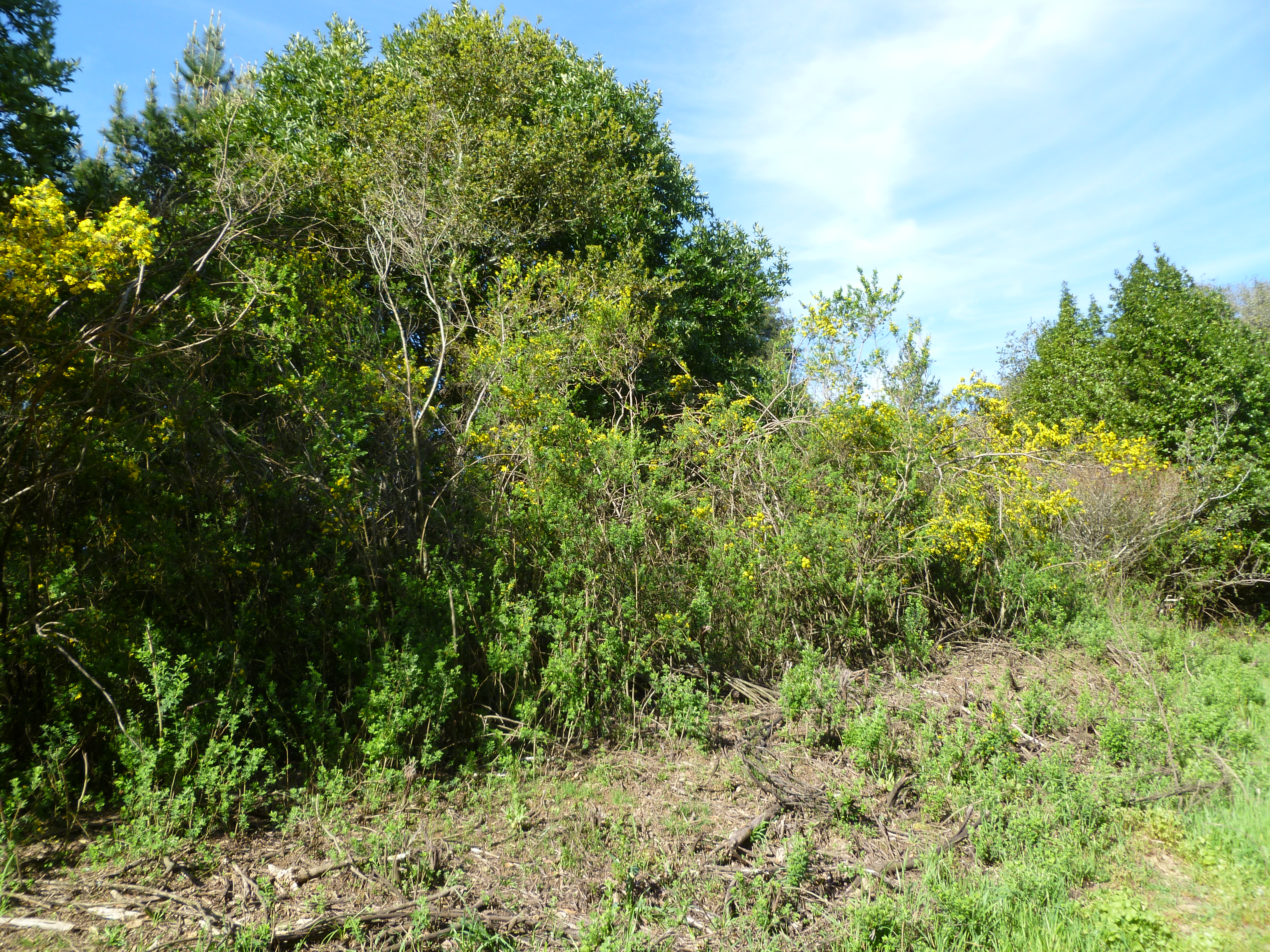
One of our first posts, nearly one year ago, was about attempts to eradicate broom (see “Broom:  I’ll be back!”).  It’s that time of year again, when the broom is blooming around the Bay Area, adding a dash of bright yellow color to our public lands.

Despite continuing efforts to eradicate broom, it makes this annual comeback, regardless of the method used to kill it.  Mechanical destruction is one of the methods used.  In the photograph taken in fall 2010 of a trail in Redwood Park we see the unsightly result of such an attempt to eradicate the broom shown in our first post about broom in spring 2010.

Redwood Park, Spring 2010
Redwood Park, Fall 2010

The UC Davis Statewide Integrated Pest Management Program  predicts the results of this effort to eradicate broom:  “Brush rakes and bulldozers often leave pieces of rootstalks that readily can resprout…using large equipment to clear land creates a perfect environment for new seedling establishment, making follow-up control essential.”  So, we shouldn’t be surprised when we revisit this same site the next spring to find that although it is still unsightly, it is also covered with the resprouts of the broom.

Broom resprouts, Redwood Park, Spring 2011

Herbicides are also used to eradicate broom.  The East Bay Regional Park District uses Garlon for foliar spraying of broom, despite the public’s concern about herbicide use in our parks.  In contrast, Marin Municipal Water District (MMWD) has not used herbicides on its properties since 2005, in response to public protests.  In December 2010, the Marin Independent Journal reported that MMWD is considering using Roundup (which is considered less toxic than Garlon) for broom control, but that a proposal will not be made until 2012 at the earliest, after an environmental impact study that will consider all alternatives for “pest management.”

Even if we are willing to accept the health and environmental risks associated with herbicides, they are not a guarantee of success.  According to UC Davis, “One application of an herbicide does not always completely control brooms…Watch treated areas closely for at least a year, and retreat as necessary.”


Since the seeds of broom are known to live in the ground from 50 to 60 years, we should expect that it is very difficult to eradicate.  Unless we make a commitment to kill the plant above the ground every year for as long as the seeds live in the ground, we cannot expect to be successful in that effort.

We were therefore amused by this exchange that Jake Sigg had with one of the readers of his “nature newsletter” (December 20, 2010):

Reader:  “…We have been up there every year for about 3-1/2 years now…It has been quite instructive about how flat out difficult it is to reverse the process [of “displacement” of native plants].  Like most invaders, the non-native plants like it here and want to stay.  The broom in particular are [sic] astoundingly persistent in holding whatever territory that they have gained.  It sounds strange to say, that sometimes I think the project is an exercise in futility while at the same time is extremely satisfying work and will continue it into the indefinite future.”

Jake Sigg:  “…It is such a lop-sided struggle…And yet, we all keep going.  It is a paradox that I don’t understand.  While working I’m fully aware of the seeming futility of what we’re doing, and yet keep going—and enjoying it!!”

Jake Sigg and his readers would benefit from the advice of Mark Davis in his book, Invasion Biology.*  Professor Davis suggests that unless a non-native species causes great health or economic harm, we adopt the “LTL approach” i.e., “Learn to love ‘em” or at least “Learn to live with them.” 

If it is futile to eradicate a plant we don’t like, if that plant isn’t doing us or any other plant any harm, and if we are damaging our environment in our futile attempt, let’s change our attitude toward that plant.  If we can’t change the plant, it is still within our power to change ourselves.  Surely we can find something more fruitful to do that is equally satisfying such as planting more native plants rather than destroying non-native plants.

Broom is an especially good candidate for LTL.  It is green all year around.  It requires no care whatsoever.  And in the spring it treats us to a lovely carpet of bright yellow.   What’s not to love?


* Mark Davis, Invasion Biology, Oxford University Press, 2009, page 150

Oyster Bay: A preview of plans for the Albany Bulb

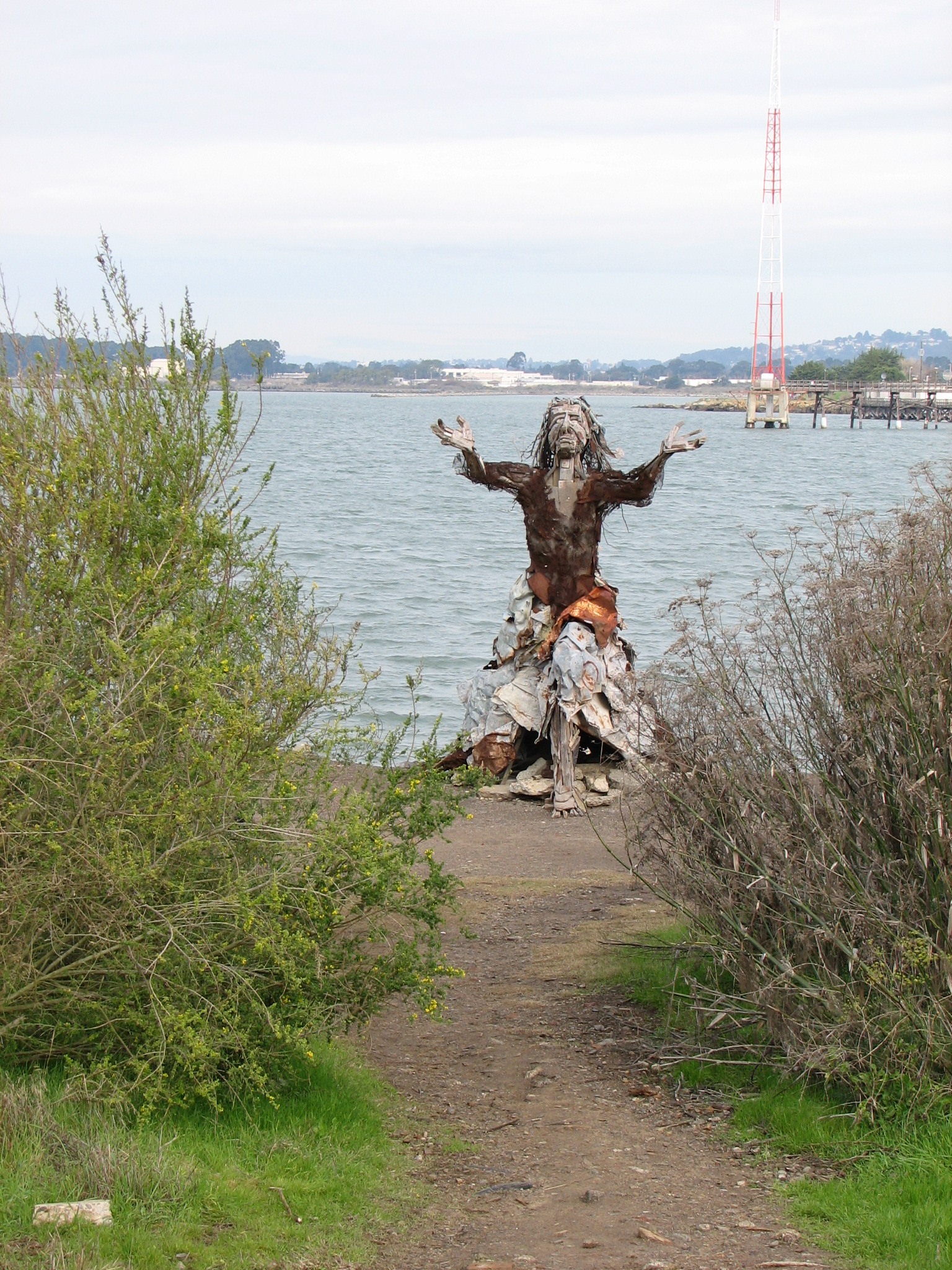
The Albany Bulb is the former dump of the city of Albany, CA.  It was built on landfill.  The East Bay Regional Park District (EBRPD) recently announced its intention to “restore” it as a native plant garden, though it admits that the word “restore” is a misnomer for a place that was never populated by native plants.  Presently, the Bulb contains an eclectic collection of art built from the junk that remains from the dump.  Non-native plants and trees thrive there with no care.  Please visit our post about the Albany Bulb for photos of this colorful and unique recreational and artistic resource. 

We recently had the opportunity to express our opinion of plans for the Albany Bulb in a conversation with the Assistant General Manager of Planning/Stewardship & Development of EBRPD.   We told the manager that it is pointless to destroy the Albany Bulb because it is an artificial place in which native plants are not more native than what grows there now without any care.  It is a heavily used place that does not require any “improvements.”  It is therefore a waste of money to destroy something that everyone loves just as it is.

The manager told us that we would also love the native plant garden once it is done.  He said that visitors often object to plans for changes in their park, but that when the project is done, they are always happy with it.  He urged us to visit Oyster Bay, a former dump for the city of San Leandro, also built on landfill.  He said it is now a beautiful native plant garden that everyone is delighted to visit.  And so, of course, we had to see this transformation because we want to know what is in store for the Albany Bulb.

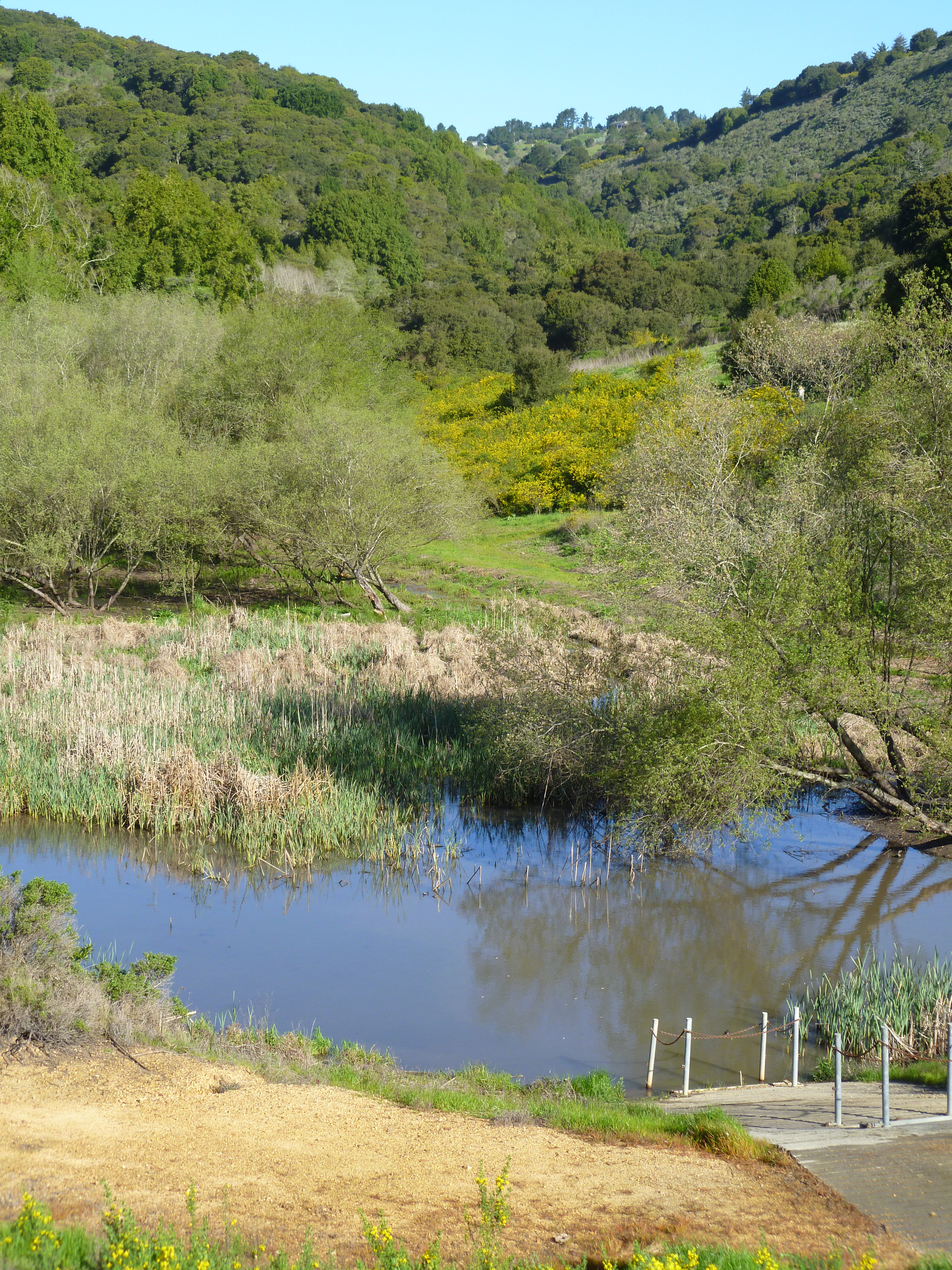
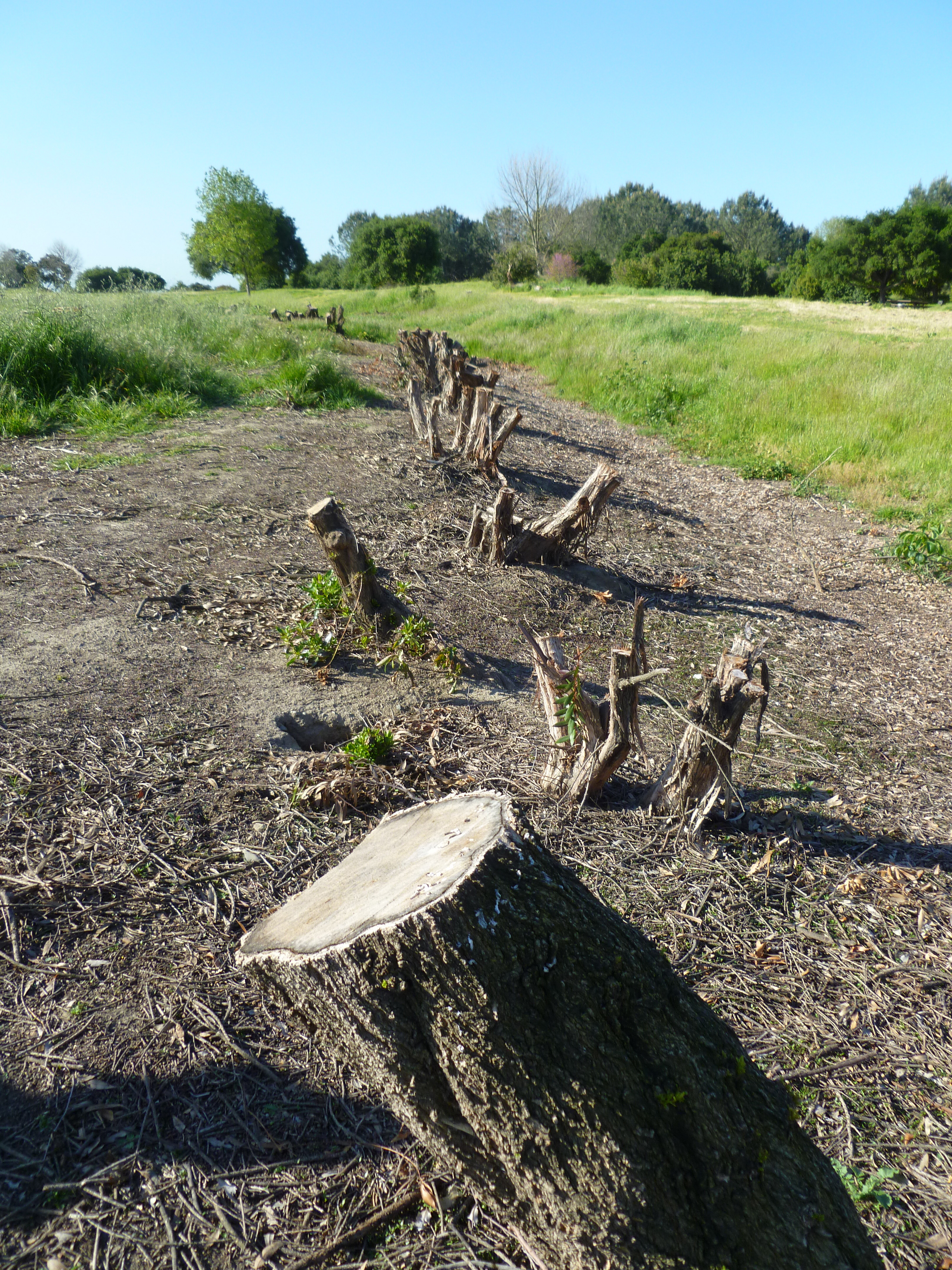
This is what we found at Oyster Bay. 

Oyster Bay, April 2011

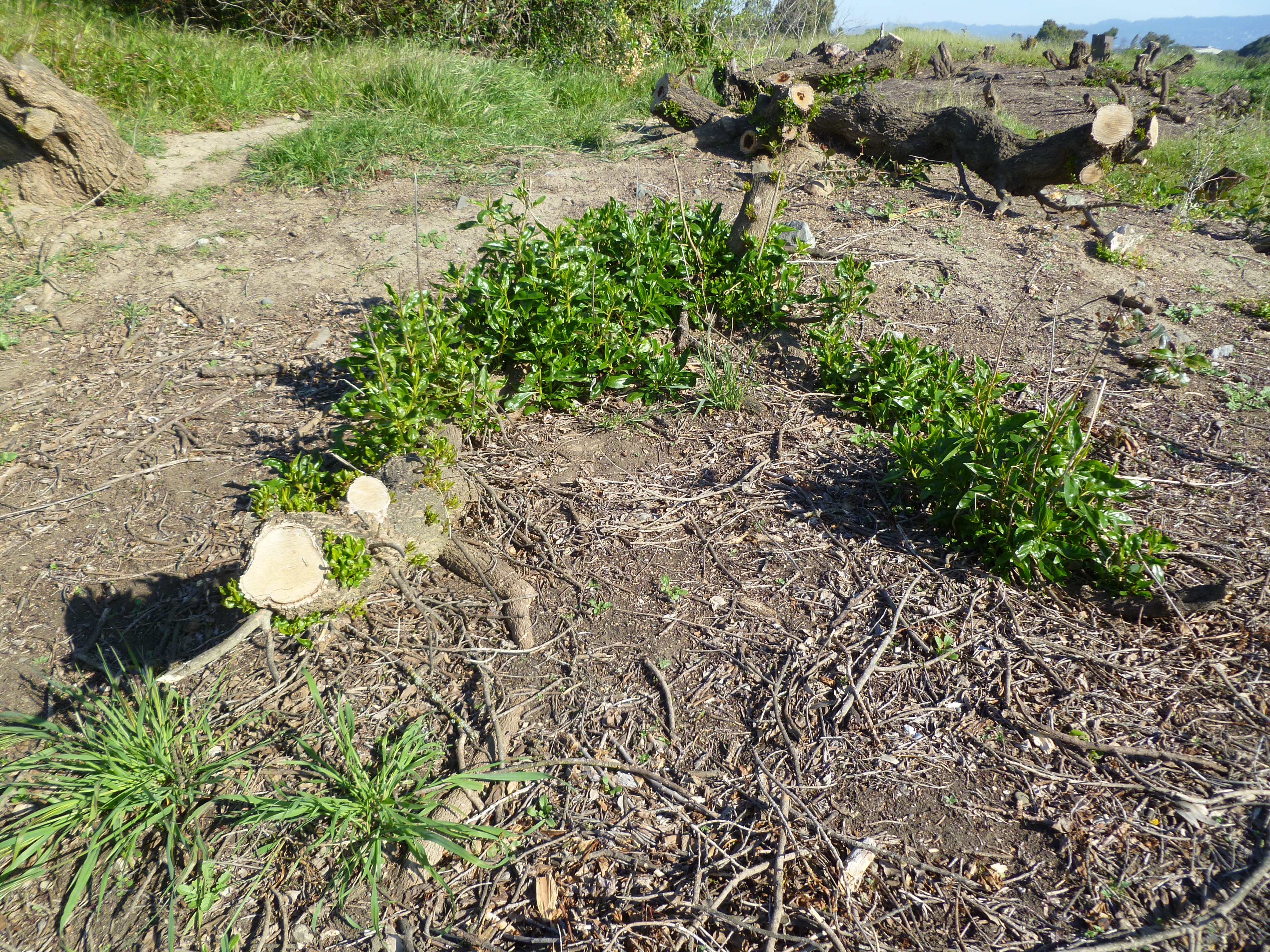
We found hundreds of stumps of trees that have been destroyed.  Many of the trees are now resprouting.  We wondered if the resprouts would be poisoned to prevent the trees from regenerating.  If not, we wondered how long it would take for the trees to return. 

Resprouts

The ground around the tree stumps was a labyrinth of the holes made by animals that had lived in them in the past.  The animals have moved on, perhaps to the cover provided by trees nearby. 

Pittosporum, Oyster Bay

We found a green sea of non-native grass.

Non-native annual grass

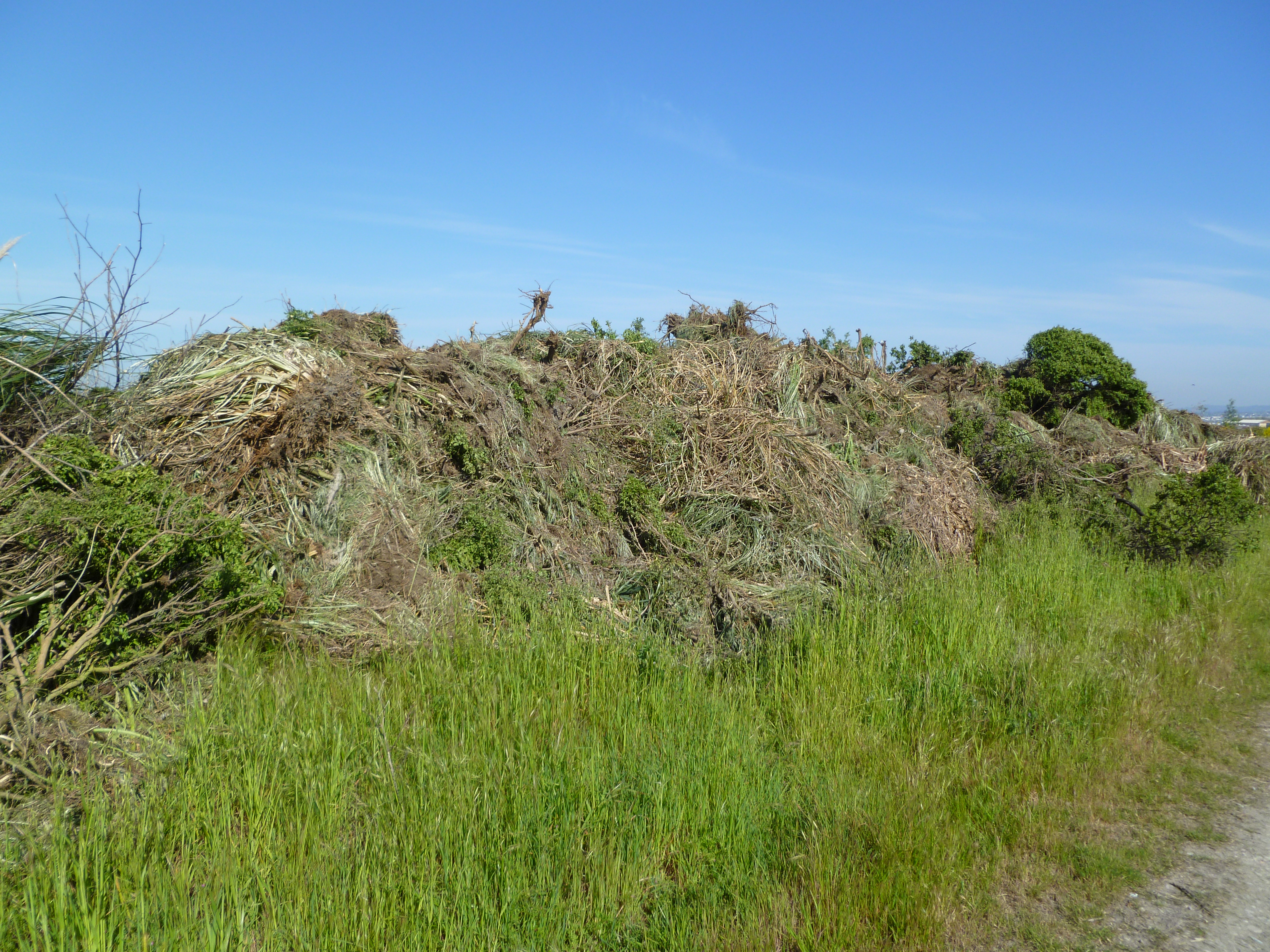
We found non-native broom and native coyote brush and close by huge piles of those same shrubs that have been mechanically cleared.  We don’t know why they have been mowed down.  We doubt that anyone would consider these debris piles a “park improvement.”

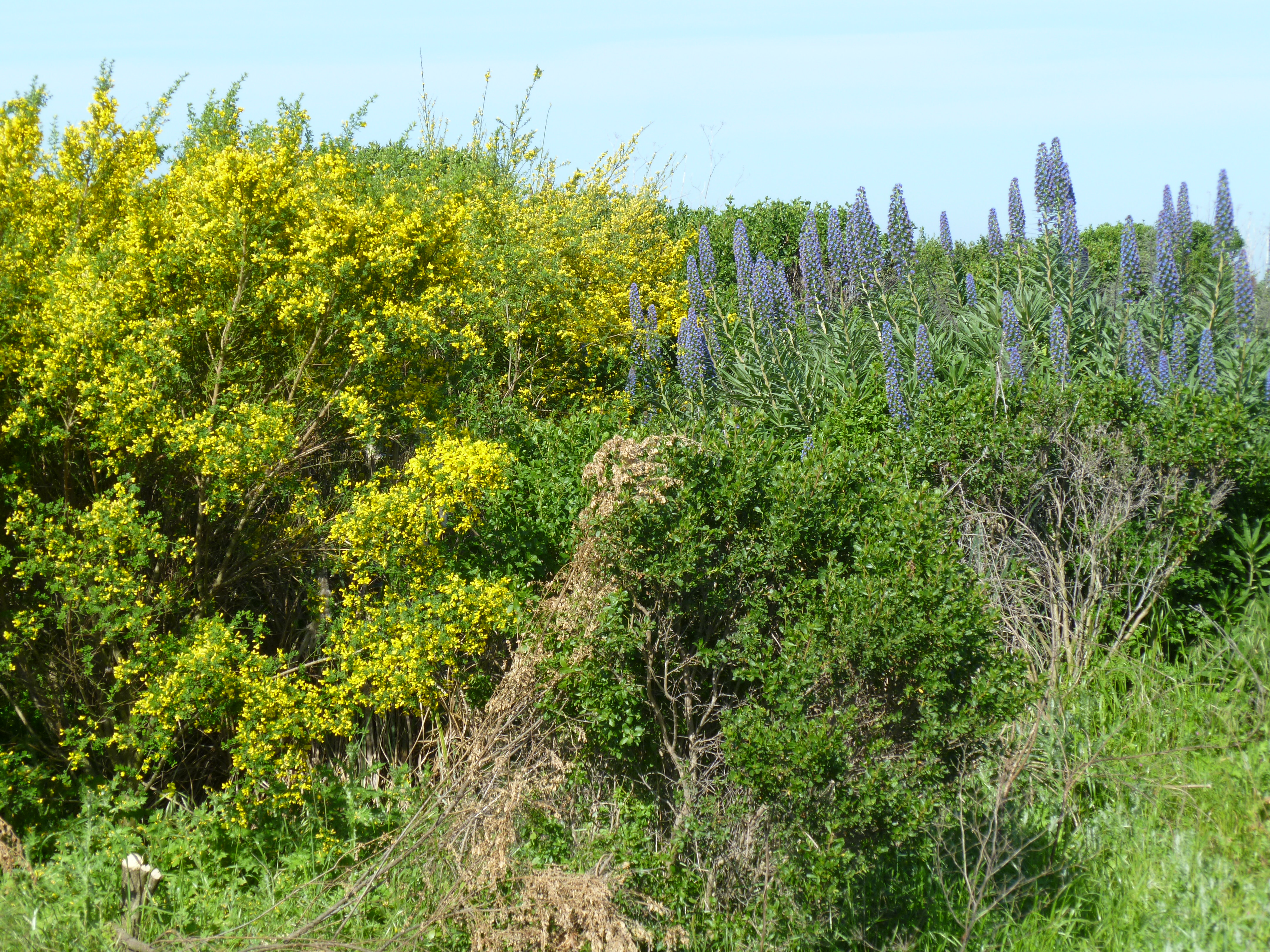
Non-native broom & Pride of Madeira, native coyote brush
One of many piles of destroyed vegetation

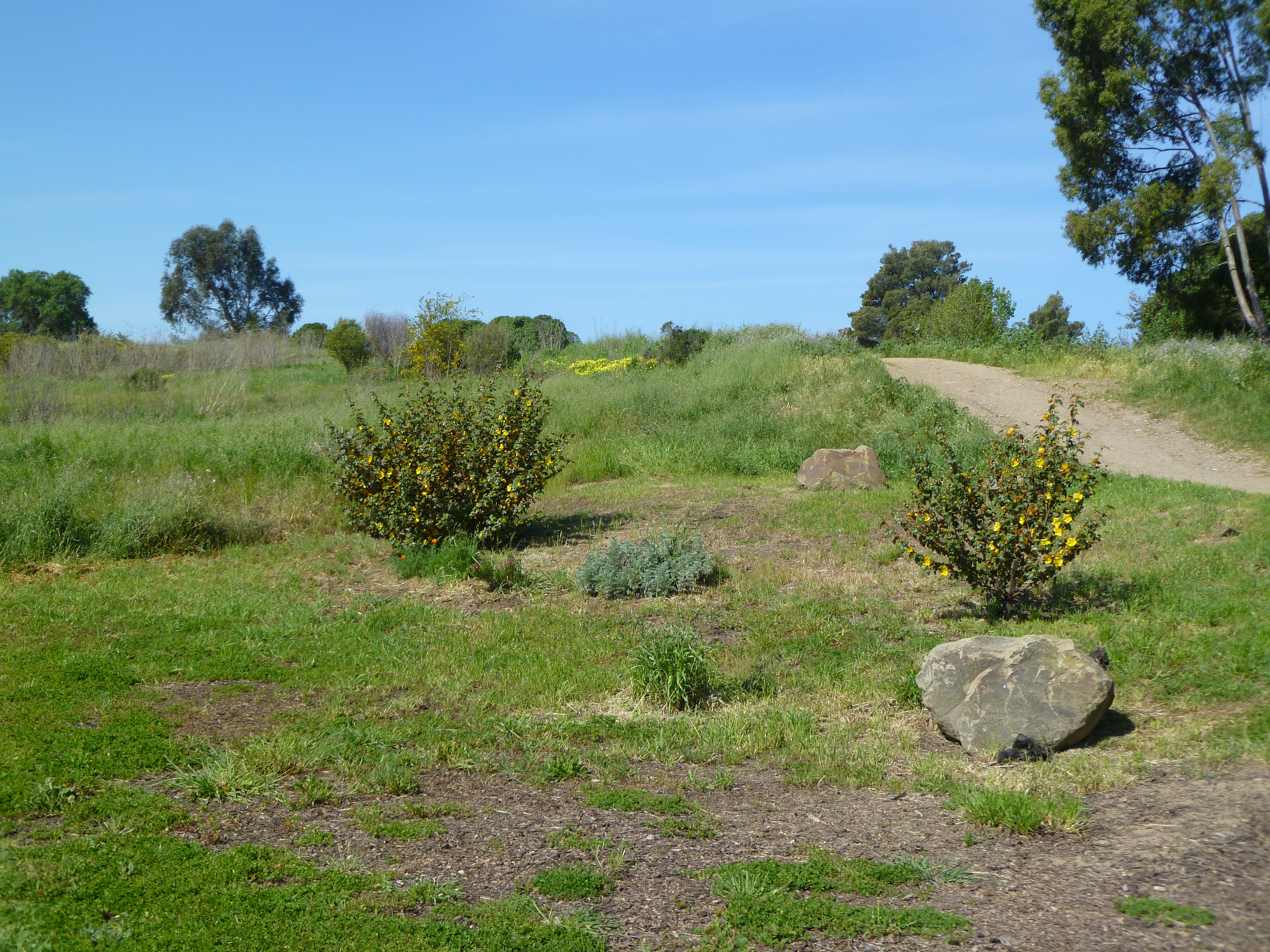
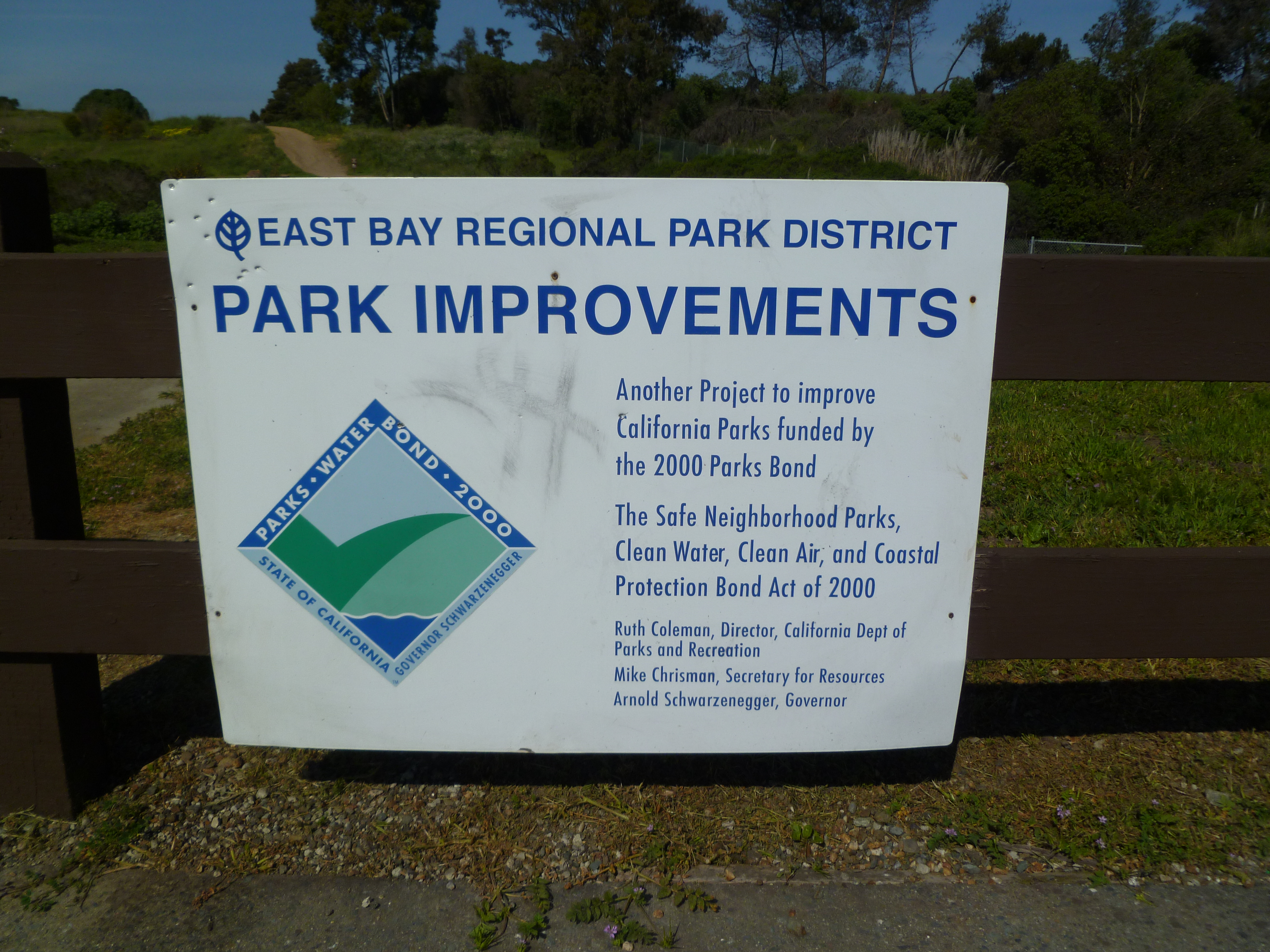
We found a small patch of native plants at the entrance of the park and a sign informing us that this scene of destruction is a “park improvement” project.

We also spoke to one of the few visitors we encountered on this beautiful spring Saturday.  We asked if they had been coming to the park for a long time.  They said that had.  We asked how they felt about the changes in the park, without giving them any clues as to our own assessment.  They readily volunteered that they didn’t understand why the trees were destroyed. 


A few native plants at the park entrance

Once again, we are reminded that beauty is in the eye of the beholder.  Assuming that the park manager with whom we spoke about Oyster Bay has actually seen this park, and that he sincerely believes that it is a lovely native plant garden, we must beg to differ.  Although it is a beautiful park, it has not been improved by the needless destruction of trees and vegetationThe beauty of this park derives from its diverse collection of predominantly non-native plants and trees.  We hope that it will not be further damaged by an agenda that is devoted to native plants, not to the enjoyment of park visitors. Likewise, the Albany Bulb is unlikely to be improved by destroying plants, trees, and art that is all doing just fine without any intervention by the East Bay Regional Park District.  We urge the Park District to LET IT BE! 

We don't think so!

“Mother Nature’s Melting Pot”

The Sunday New York Times of April 3rd published an op ed in defense of non-native plants.  In “Mother Nature’s Melting Pot” Professor Hugh Raffles (New School) reminds us that our country was built by immigrants.  Despite our origins, we also have a long tradition of opposition to immigration.  As each generation becomes established, it wishes to pull up the welcome carpet to new immigrants.  During times of economic crisis this anti-immigration sentiment is particularly strong.

Professor Raffles notes the extension of this anti-immigration sentiment to non-native plants and animals.  Just as immigrants have contributed to the dynamism and creativity of our society, non-native plants are contributing to our natural world as, “They arrive unannounced, encounter unfamiliar conditions and proceed to remake each other and their surroundings.” (1)

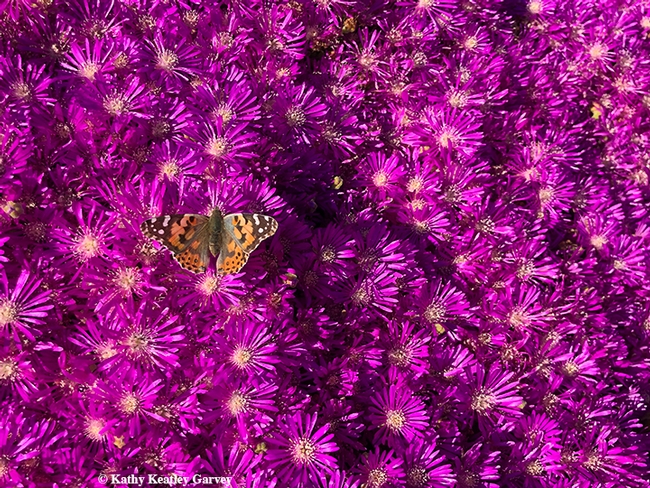
He provides many examples of non-native plants and animals that benefit both humans and native animals, including several examples that are locally relevant.  He reminds us that the eucalyptus is a rare source of winter nectar for the honeybees that were imported in the 1600s and now pollinate about one-third of our food crops.  He also reminds us that ice plant can stabilize sandy soils that might otherwise inundate our roads and neighborhoods as they shift in the wind.

Painted Lady butterfly on ice plant. Bug Squad, UC Davis

He notes that attempts to eradicate non-native plants and animals are often futile once the species become firmly established and that attempts to do so often harm the environment.   Here in the San Francisco Bay Area we are acutely aware of the harm being done by attempts to eradicate non-native plants.  We witness hundreds of thousands of healthy, mature trees being needlessly destroyed.  We see acres of park land being sprayed with toxic herbicides.  We watch precious recreational space being fenced off for “restorations” in places that are completely artificial, yet also entirely natural in the sense that they are sustained without being actively gardened.

The most recent example is the announcement that the Albany Bulb (in Albany, CA) will soon be transformed into a native plant garden.  The Albany Bulb is composed of landfill that was used for decades as a city dump and is now a heavily used park, populated by art created from the junk that remains from the dump.  Non-native plants and trees thrive there without any care.  It is pointless to destroy this valuable artistic and recreational resource, yet native plant advocates demand its “restoration.”

Sculpture of “Albany Bulb Greeter”

Professor Raffles makes the logical connection between anti-immigration sentiment and the native plant movement’s commitment to the eradication of non-native plants and animals.  This connection is relevant in the Bay Area because a prominent leader of the native plant movement here is strongly opposed to immigration.

Jake Sigg has been an officer in the local chapter of the California Native Plant Society for many years.  He was a gardener in San Francisco’s Recreation and Park Department for 31 years.  He was awarded the “Jake Sigg Award for Vision and Dedicated Service” by the California Invasive Plant Council in 2003.  This award was named for him, “For years of tireless service and leadership on invasive plant issues in California.”

For many years, Mr. Sigg has published a “Nature News” newsletter several times each week.  This newsletter is widely distributed throughout the Bay Area and is a valuable source of information about nature-related activities.  It is also Mr. Sigg’s podium from which he expresses his opinion on a range of topics.  In most issues, he expresses his deep concern about immigration, both legal and illegal.

“Virtually All Of California’s Problems Can Be Traced Back To Too Many People…Virtually All Of California’s Population Growth In The Last 10 Years Was Due To Immigration…If We Don’t Do Something About Immigration, Our Problems Will Get Much Worse.”  April 2, 2011, Nature News

He is equally concerned about related issues such as granting visas to workers with unique skills and granting citizenship to children born to undocumented immigrants.

“The Ever Expanding Pool of Cheap Labor and the Case For Fewer Visas By Joe Guzzardi”  January 25, 2011, Nature News

“Current U.S. policy results in over 300,000 additional citizens from anchor babies each year.  The demographic impact is far greater because their families stay and bring in additional relatives. Anchor babies are eligible to sponsor their illegal alien parents and other relatives when they turn 21. Moreover, taxpayers pick up the tab for the medical costs and subsequent welfare outlays because of the child’s citizenship status. ACTION NEEDED  Please ask your Congressional representative to co-sponsor HR 140.”  January 13, 2011, Nature News

And so, we conclude that Professor Raffles is not making an idle philosophical connection between the native plant movement and anti-immigration sentiment.  There IS a connection because we see it discussed repeatedly by a prominent voice in the community of native plant advocates.  Occasionally, one of Mr. Sigg’s allies challenges his opinion on this subject.  However, such a debate is apparently rare in his community of interests.

We thank Professor Raffles for making explicit what is implicit in the native plant movement.  We believe that the connection between the eradication of non-native plants and animals and opposition to immigration should be acknowledged and discussed.  The desire to be rid of immigrants—both plants and animals, including humans—is grounded in a need to find someone or something to blame for problems that we are unprepared to face or are powerless to change. 

In the case of human immigration, our living standards are declining primarily because of the globalization of the economy.  Building a wall around our country will not isolate us from the fact that developing countries with lower standards of living are presently more economically competitive.

Likewise, eradicating non-native plants and animals will not prevent the climate change and associated changes in air and water quality that make those newcomers more competitive than the natives that thrived in a different environment, one that is gone and is unlikely to return.    In fact, the destruction of healthy, mature non-native trees is exacerbating the climate change that will ultimately exterminate many species of native plants and animals.(2)


(1) Hugh Raffles, “Mother Nature’s Melting Pot,” New York Times, April 3, 2011

(2) “Multitude of Species Face Threat of Warming,” New York Times, April 4, 2011

House burns without igniting eucalypts

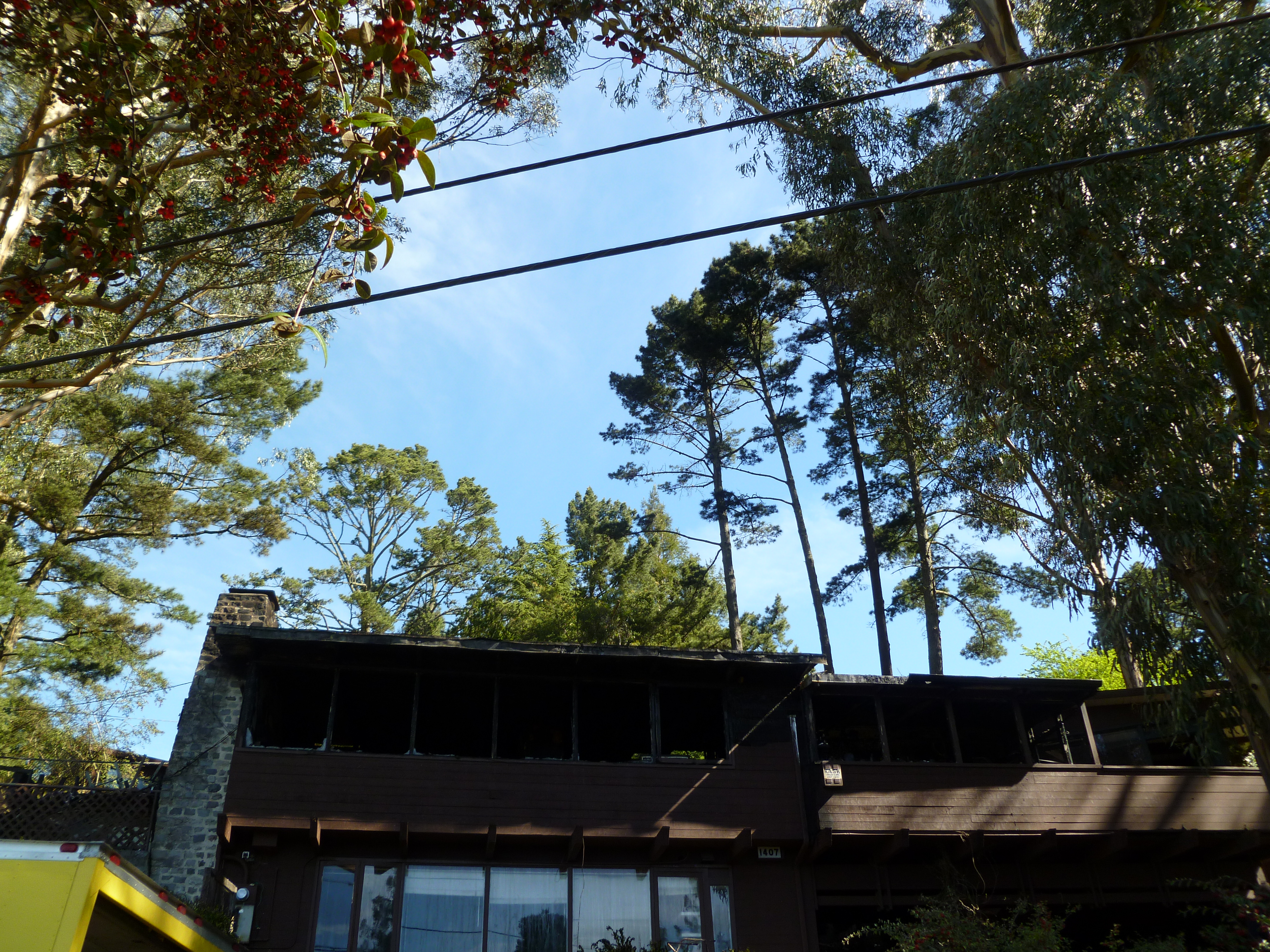
There was a fire in the Berkeley hills yesterday.  A home in the 1400 block of Queens Drive was gutted by the fire.  The home was completely surrounded by eucalyptus trees, some branches overhanging the home.  The trees did not ignite.  The leaves do not appear to be scorched by the fire.

Fire on Queens Road
Despite the fact that the trees didn’t burn, the news coverage of the fire focuses on the flammability of the trees:  “Eucalyptus trees are especially flammable and often used for kindling because of their oils.”  The accusation of flammability is not new.  We see it in any news story in which eucalypts are mentioned in any context, even those unrelated to fires. 

The claim that eucalyptus is used as kindling is something we have not heard before.  In fact, it makes no sense since the oil in eucalyptus is contained in the leaves, not in the wood, which is the usual definition of kindling.  However, we are accustomed to new anti-eucalyptus stories being fabricated at every opportunity.

We won’t repeat all the evidence that eucalyptus is not more flammable than other trees in this post because our readers have heard it all before.  We will just remind you that all reputable sources of information about preventing wildfires inform homeowners that the species of plants and trees are irrelevant to fire safety. 

All species of plants and trees will burn under certain circumstances, such as a wind-driven fire on a hot, dry day.  Property owners can reduce their risks of wildfire with appropriate maintenance, such as removing lower limbs on all trees, pruning trees and shrubs away from structures, and removing accumulated leaf litter.

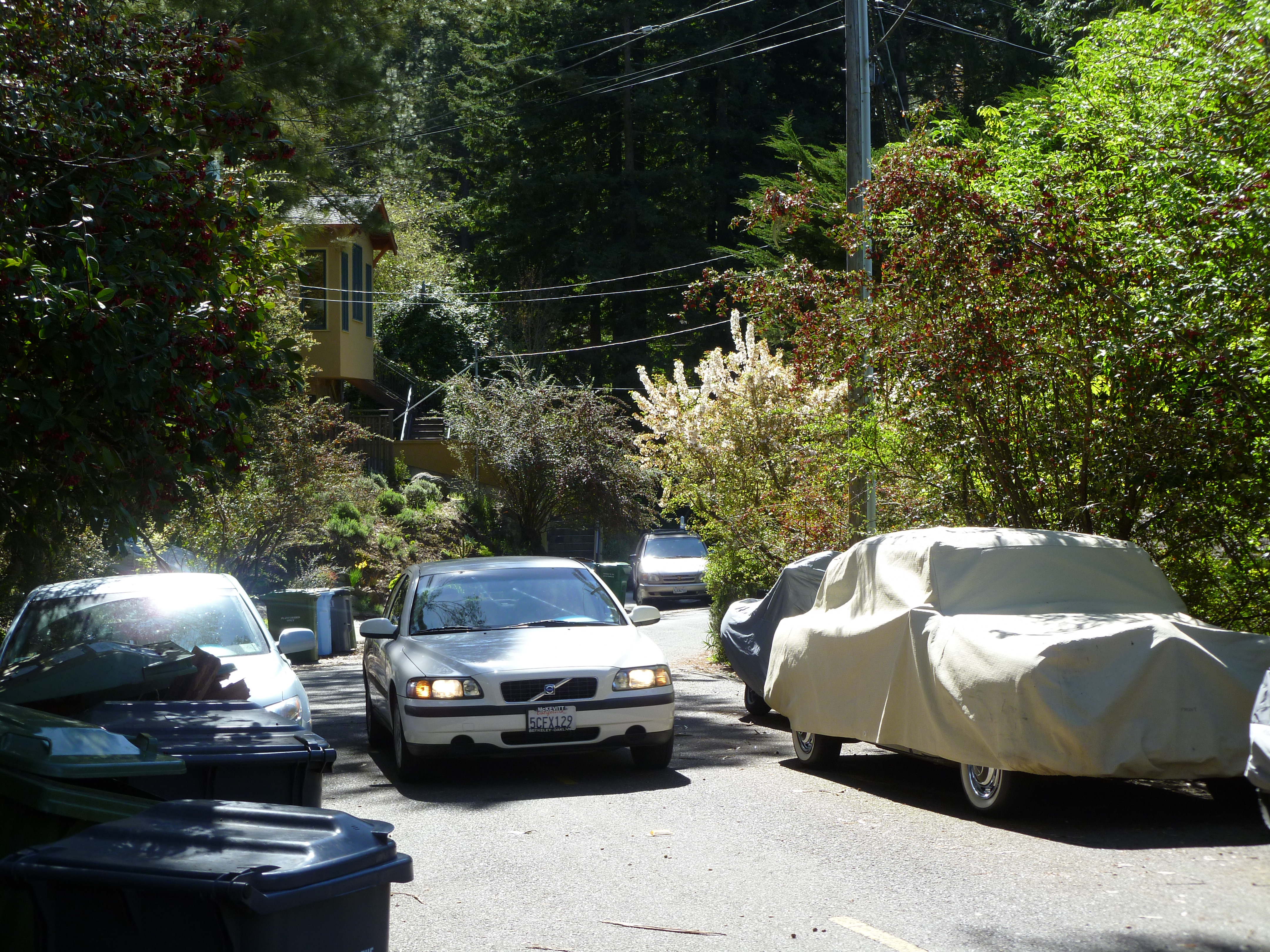
In the case of the fire on Queens Road, the neighbors put themselves in harm’s way by parking cars on both sides of a narrow street, narrowing the road to one-lane which severely restricted access to the home by fire trucks. 

Parked cars restrict access on Queens Road

As usual, humans are always looking for a non-human scapegoat for the risks they choose to take.  Rather than taking care of the vegetation around their home and reducing the number of cars parked on a narrow road, they prefer to blame the trees.  In this case the trees had nothing to do with this fire.