Regretting the use of pesticides

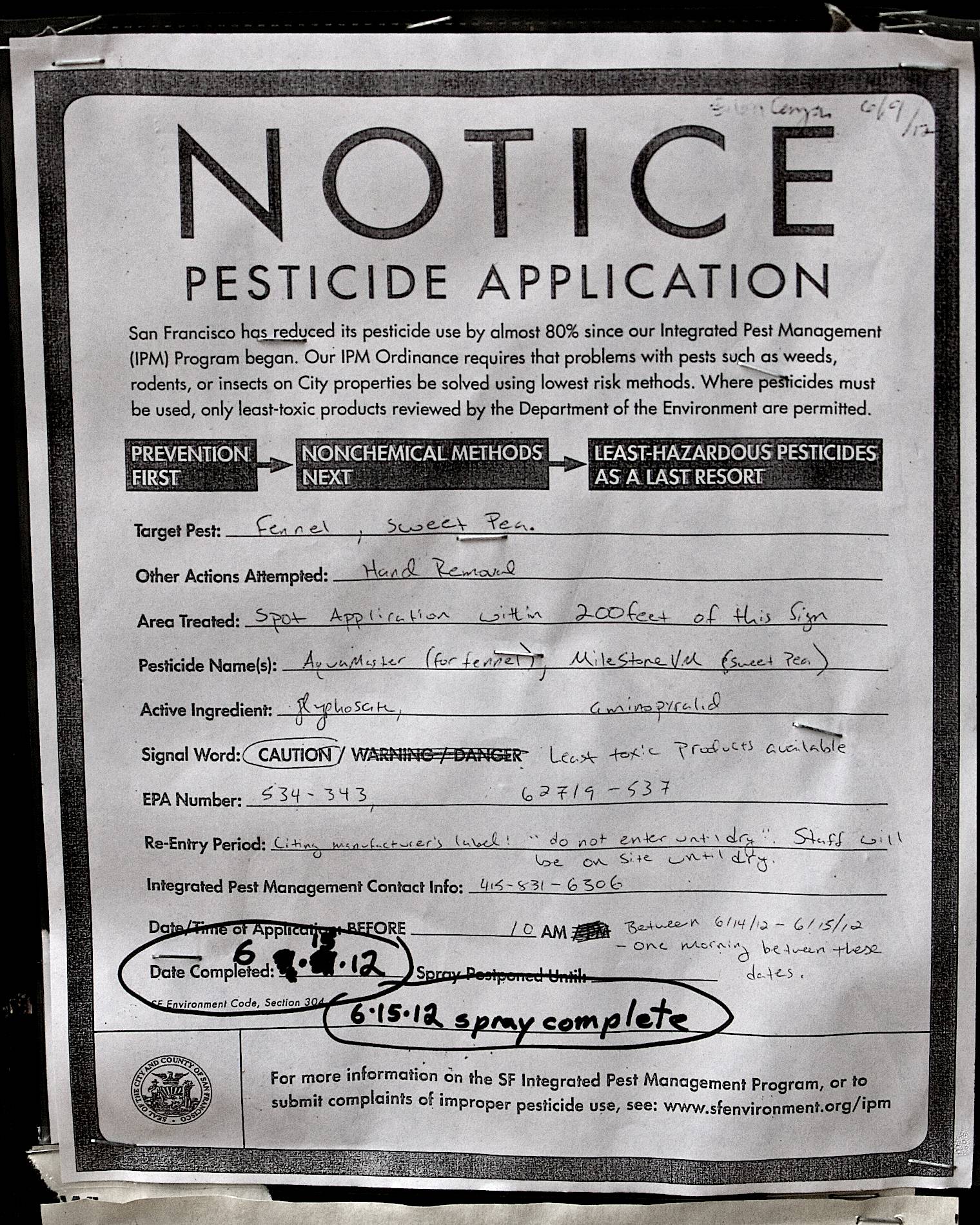
Spraying Milestone in Glen Canyon Park, June 2012

Recently visitors to Glen Canyon Park in San Francisco spotted a Pesticide Application Notice in their park, which states that Milestone herbicide was used on “sweet pea.”  Sweet pea is not classified as an invasive plant by the California Invasive Plant Council.  Milestone herbicide is classified as Tier I “Most Hazardous” pesticide by San Francisco’s IPM program because it persists in the ground for a long time.  The City’s IPM policy states that it is approved for use on “invasive species.”  Since sweet pea is not an invasive plant, we assume this pesticide application violated San Francisco’s IPM policy.

The federally mandated Material Safety Data Sheet (MSDS) for Milestone advises users to, “Prevent [Milestone] from entering into soil, ditches, sewers, waterways and/or groundwater.”  The MSDS also says that Milestone “is not readily biodegradable according to OECD/EEC guidelines.”

For these reasons, the manufacturer of Milestone herbicide withdrew its application to sell Milestone in the State of New York, after the State of New York determined, “The [New York State] Department [of Environmental Conservation] could not ensure that the labeled use of aminopyralid [the active ingredient in Milestone] would not negatively impact groundwater resources in sensitive areas of New York State.”  In other words, the sale of Milestone herbicide is banned in the State of New York.
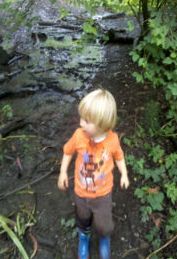
Kid playing in Glen Canyon Park. Courtesy San Francisco Forest Alliance

Since Glen Canyon is a watershed to Islais Creek, we believe it is irresponsible to use Milestone in that park.  And clearly there is no justification for using this persistent herbicide on a plant as benign as sweet peas.  Since Glen Canyon park is the home of a year-round day care center as well as a summer camp which leads children throughout the park, it is outrageous that these pointless risks were taken there.

We have learned nothing….

As we celebrate the 50th anniversary of Rachel Carson’s ground-breaking book, Silent Spring, there is renewed media interest in this issue.  We welcome this reminder that Rachel Carson informed the public in 1962 that DDT was having a devastating impact on wildlife.  DDT had been used for about 20 years, but it took that long for us to notice that some species of birds had been poisoned nearly to extinction.  And it took another 10 years for DDT to finally be banned in 1972.

Rachel Carson was vilified for her revelations, just as critics of the so-called Natural Areas Program are being vilified by supporters of that program.  We have been called “chemophobes” and “anti-chemical crazies.” 

Frank Graham, editor of Audubon Magazine, recently wrote an article for Yale University’s “environment 360” blog about the abuse that Rachel Carson endured after the publication of Silent Spring.  He recounts several anecdotes about the attacks on her character.  For example, “An official with the federal Pest Control Review Board drew laughter from his audience when he remarked, ‘I thought she was a spinster.  What’s she so worried about genetics for?’”

Forty years after DDT was banned in the United States we have a local example of the persistence of this dangerous chemical in our environment.  From 1947 to 1966, several companies on the harbor in Richmond, California formulated, packaged, and shipped pesticides, including DDT.  The site was designated a State Superfund site in 1982, and in 1990 the EPA placed the site on a national priorities list for clean up.  “Remedial actions took place on the site from 1990 to 1999.”  Twelve years later, the EPA tells us, “Although actions were taken to reduce the risk from the pesticides found on site…sediments and the water [in that location] are still contaminated with pesticides, primarily DDT and dieldrin.”

In other words, we fouled our water with dangerous pesticides; we then spent many years and probably a lot of money trying to clean up after ourselves, and 40 years later we are still living with the consequences of our foolishness.

What have we learned from that experience?  Now we are using a very persistent chemical (Milestone) on a benign plant (sweet pea) in our public parks.  We have learned nothing.  And those who have some economic gain from poisoning our parks—or are clueless about the risks they are taking—are defending the use of pesticides and trying to shut us up, just as they tried to shut Rachel Carson up 50 years ago.  We are proud to be in her company and we are inspired by her leadership.

Some people have learned
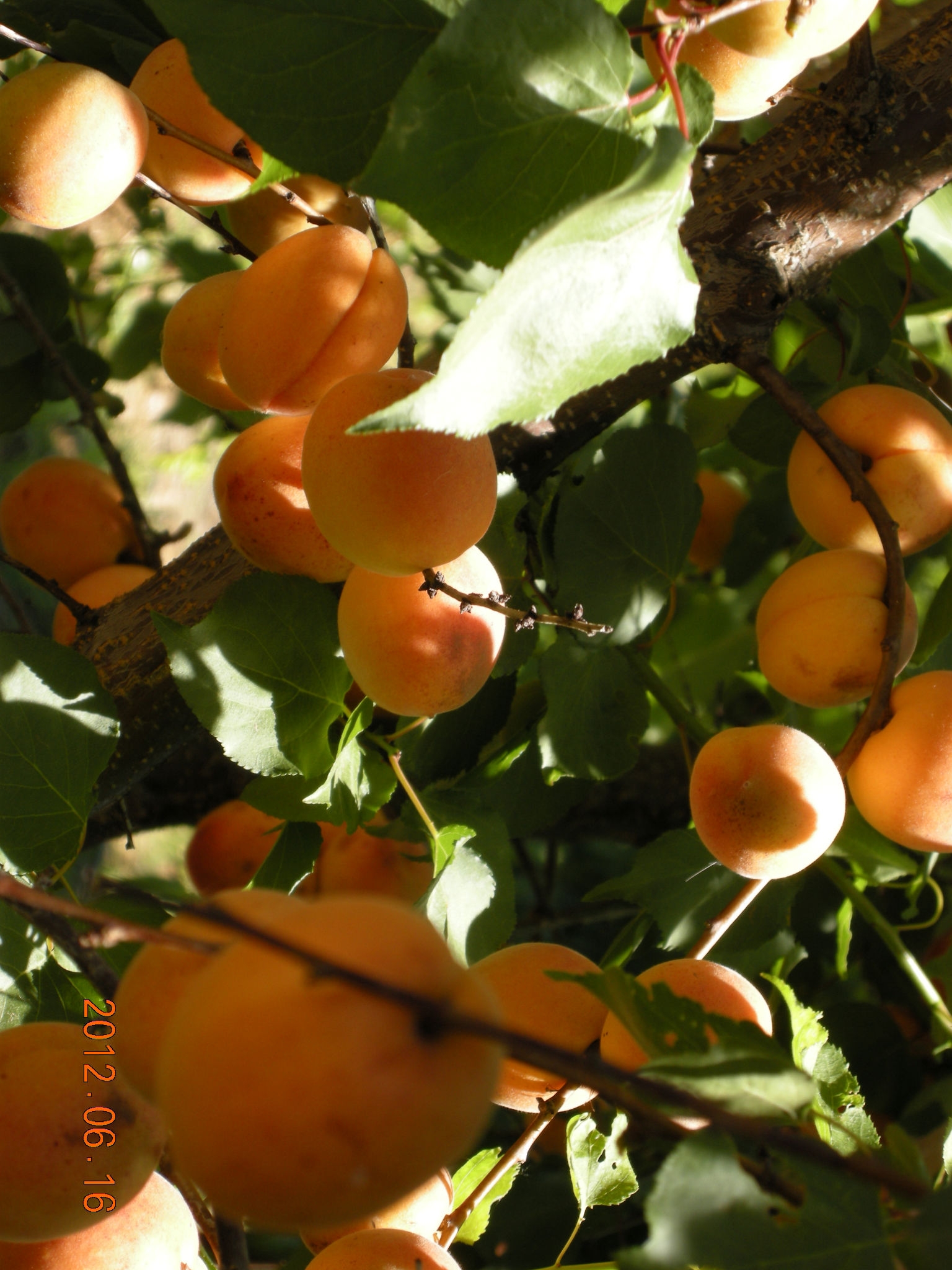
Peaches at “Organic U-Pick” Courtesy Arnita Bowman

We prefer to end our stories on a positive note when we can, so we turn to a book we read recently about a fruit farmer in California’s Central Valley.  David Mas Masumoto wrote Epitaph for a Peach to tell us about his transition from the traditional farming methods used by his father to organic methods.  He has abandoned rigorous weed and pest control and he is learning to live in harmony with his orchards rather than fighting against nature.  He tells us about the difficult decision to quit using pesticides:

“I am reminded that in some valley wells they have found traces of a chemical called DBCP in ground water aquifers.  DBCP was linked to sterility in males and is now banned in the United States.  My dad used some DBCP years ago…No one knew it would contaminate drinking water.  Neighboring city folks are angry with farmers for damaging their water supply.  ‘How could you farmers poison the water?’ they ask.  My dad didn’t choose to pollute the water table.  He did nothing illegal.  He simply trusted the chemical company and the governmental regulatory agencies.

Mr. Masumoto has learned from bitter experience.  What we know about pesticides today is not necessarily what we will learn about them tomorrow.  We often look back on our use of pesticides with regret.  So, shouldn’t we at least avoid using them when we don’t need to—such as on flowers just because they aren’t native—or in places where the risks are great—such as public parks occupied by children?

Let’s turn that rhetorical question into the affirmative statement that it deserves to be:  We should not be using pesticides in our public parks or on plants that aren’t doing any harm.  We will live to regret it when we do.  And let’s express our gratitude to Rachel Carson for inspiring us to keep informing the public of the needless risks that are being taken in their parks. 
The Ruth Bancroft Garden where plants from all over the world are welcome

The Ruth Bancroft Garden in Walnut Creek, California, is a 3-acre remnant of a 400-acre fruit farm started in the 1880s by Hubert Howe Bancroft.  Bancroft is a familiar name in the Bay Area because Mr. Bancroft was also a famous historian and publisher who amassed a huge collection of documents about the American West.  He donated that collection to University of California at Berkeley, which is the origin of the Bancroft Library there.  The Bancroft Library is California’s greatest repository of California history.

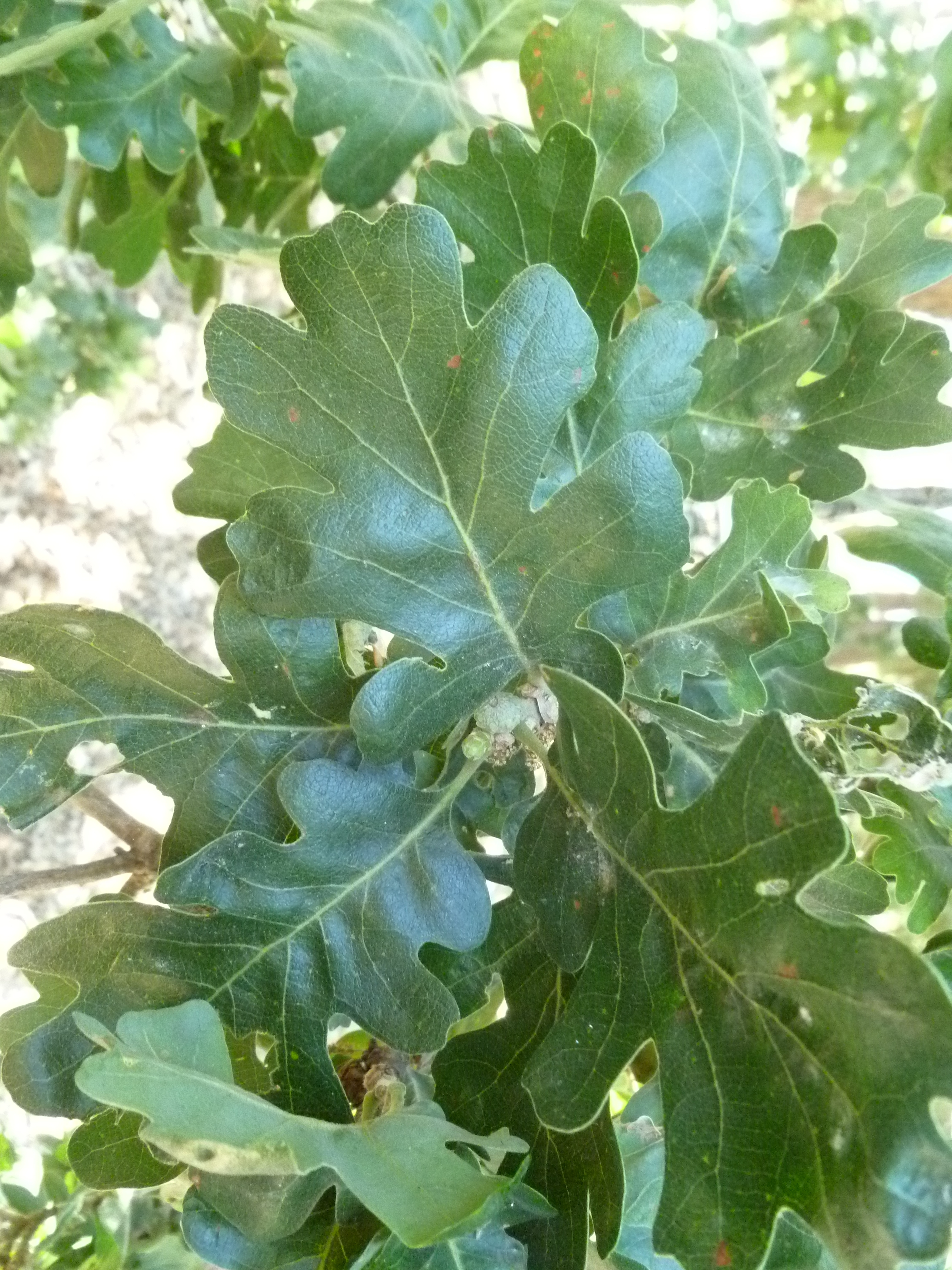
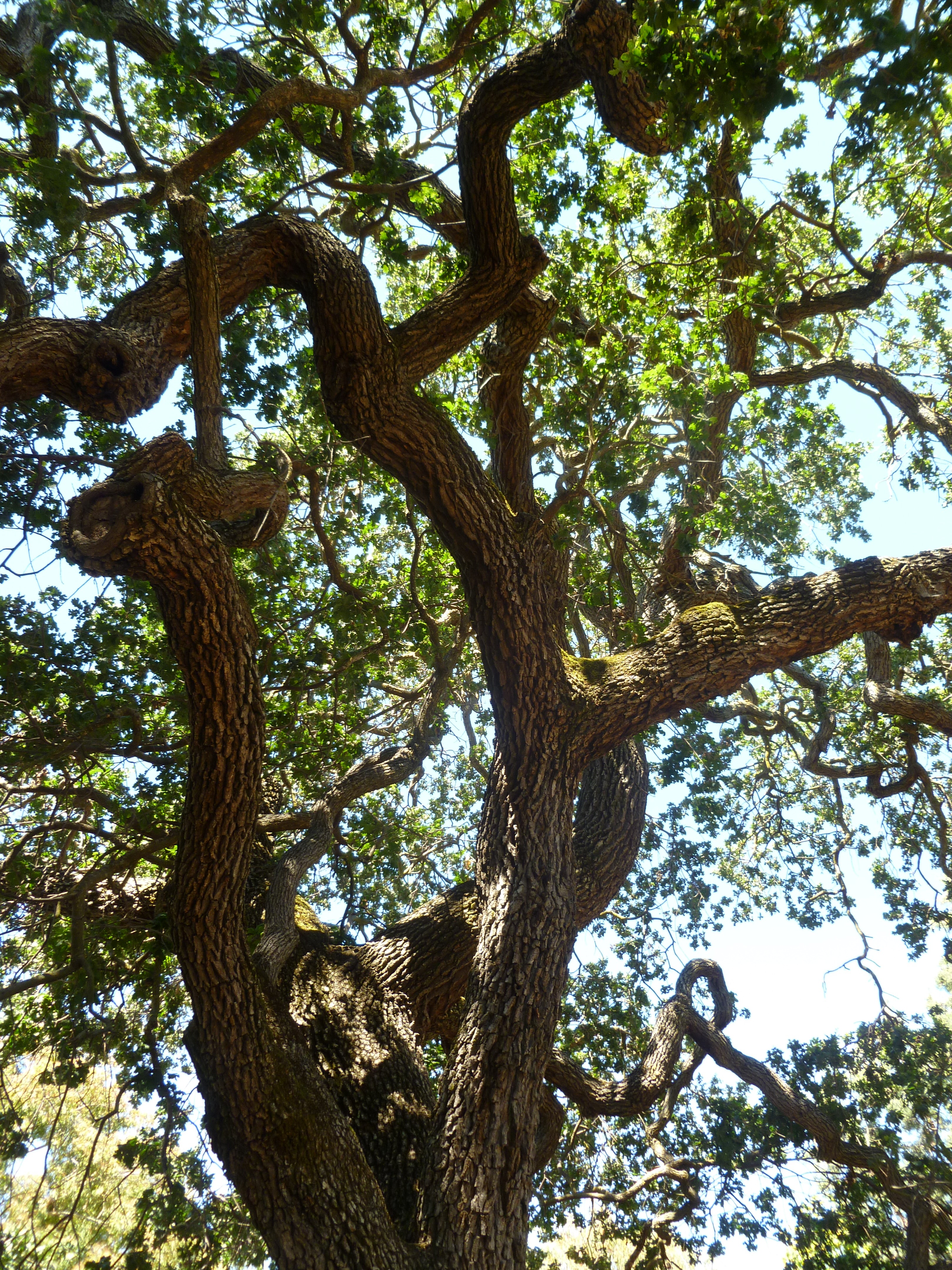
Valley Oak, Bancroft Garden

When Mr. Bancroft purchased his property, it was oak woodland.  These were the venerable valley oaks (Quercus lobata), the largest oak in Northern California.  Only one of these oaks remains in the garden.  It is estimated to be 350 years old.  Its contorted branches create an enormous tent of shade, reaching to the ground.  There is not a more beautiful tree, in our opinion.

Quercus lobata, named for its deeply lobed leaves

Mr. Bancroft’s granddaughter-in-law, Ruth Bancroft started planting her garden in 1972.  She had a life-long interest in cactus and succulents, so it wasn’t a good year to begin that venture. The hard freeze of the winter of 1972-73 killed many of the young plants which are not hardy in temperatures below freezing.  Fortunately, such hard freezes are rare in the Bay Area and the garden has suffered significant losses only once since then, in winter 1990.

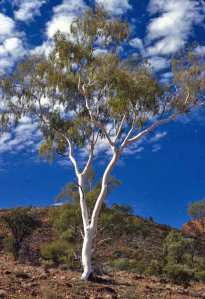
Ghost Gum. Courtesy Cynthia Clampitt, Waltzing Australia

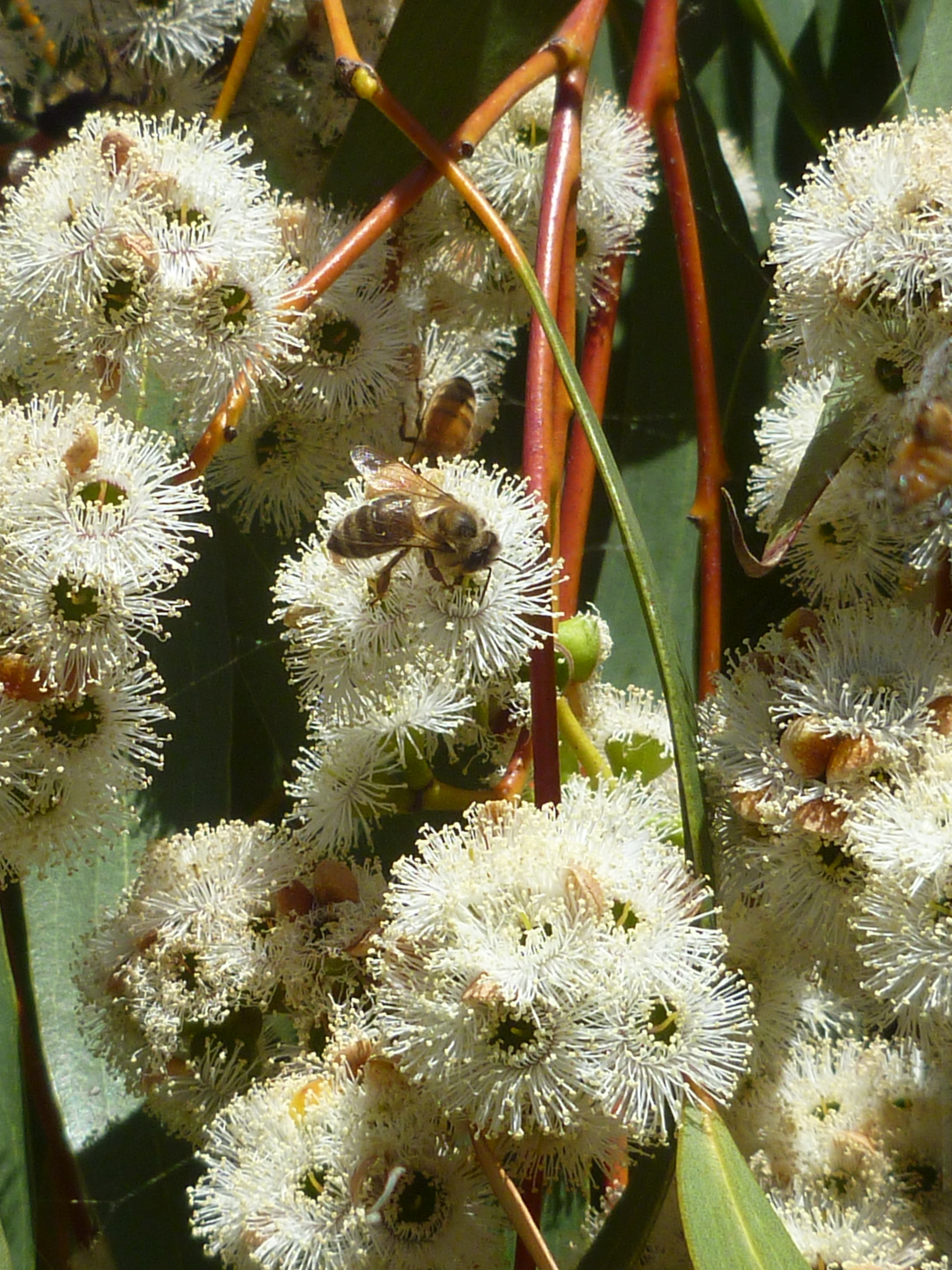
There are several eucalyptus trees in the garden, but one is a stand-out.  The ghost gum (Eucalyptus pauciflora) is aptly named for its white bark.  Coincidentally its ancestral home is the Snowy Mountains in Australia where it is often found standing in the snow.  It is one of the few cold-tolerant species of eucalypts.  Our opinions of eucalypts are heavily influenced by one particular species, the blue gum eucalyptus, because it is the predominant eucalypt in California.  We often forget that there are actually 700 species of eucalyptus and therefore there are a wide variety of forms and horticultural characteristics.  The ghost gum in the Bancroft Garden was flowering and swarming with bees collecting pollen and/or nectar.  The flowers were close to the ground so we were able to confirm that the nectar was not at all sticky, as critics of eucalyptus often claim.

Flowers of Ghost Gum with visiting bee

Touring the garden, we were reminded of many of the themes of the Million Trees blog.

Planting species outside of their range is insurance

The plants in the Bancroft Garden are from all over the world, particularly similar climates such as Australia, South Africa, and Mediterranean countries.  Many of the plants come from drier desert climates.  Several of the plants in the garden are extinct or nearly so in their native ranges.  They continue to exist in the world only because they were exported to new locations before they disappeared from their ancestral homes. 

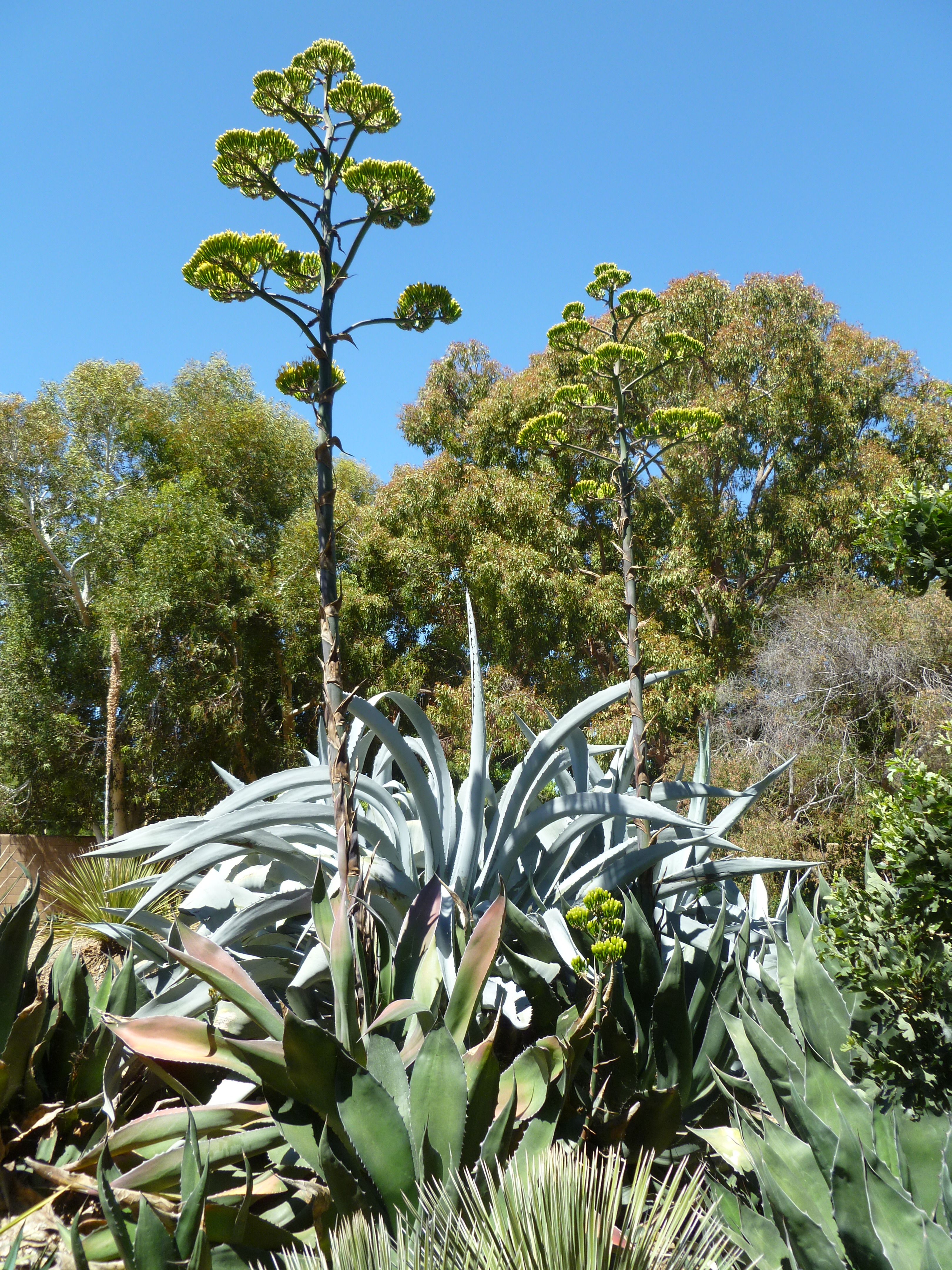
Agave franzosinii is no longer found in the wild in Mexico
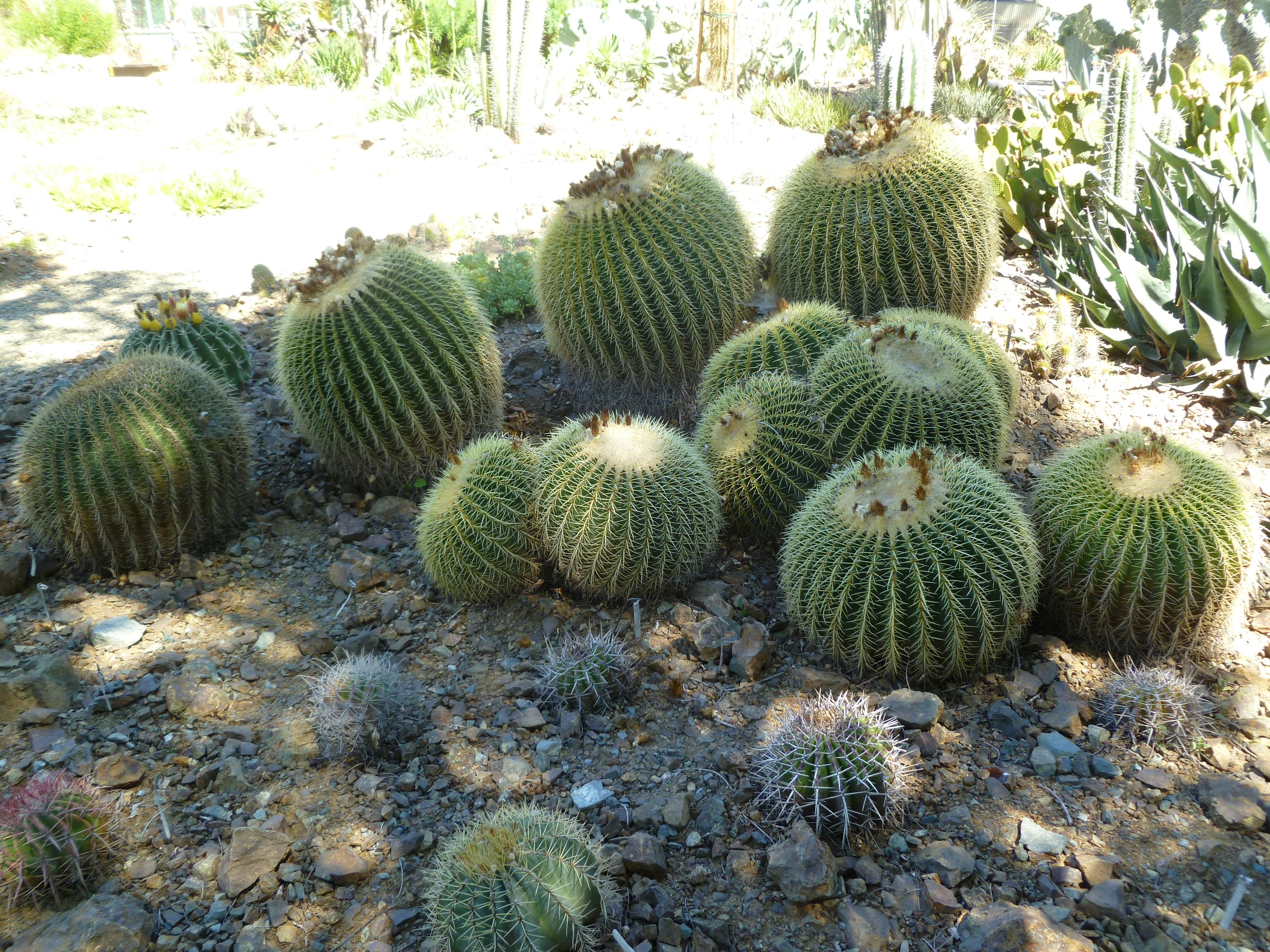
Golden Barrel cacti are endangered in the wild due to unscrupulous collectors and the flooding of their habitat by a hydroelectric project,

This is one of many reasons why we do not share the purist vision of the native plant movement, that only plants native to a particular location be allowed to exist in that location.  In a changing climate, it is particularly important that plants and animals be allowed to remain where they have been introduced.  Their new homes are insurance against their extinction from the Earth.

The characteristics that native and non-native plants have in common

Although most of the plants in the Bancroft Garden are not native to California, there is a section of the garden that is devoted to native plants.  Ruth Bancroft had some difficulty establishing that portion of the garden:  “When Ruth Bancroft decided to experiment with native California penstemons…many of her plants died.  She added even more rock to the bed and planted again.  In the improved drainage, that this rocky bed now provides, penstemons thrive alongside such other California native perennials as woolly blue curls and…buckwheats.”

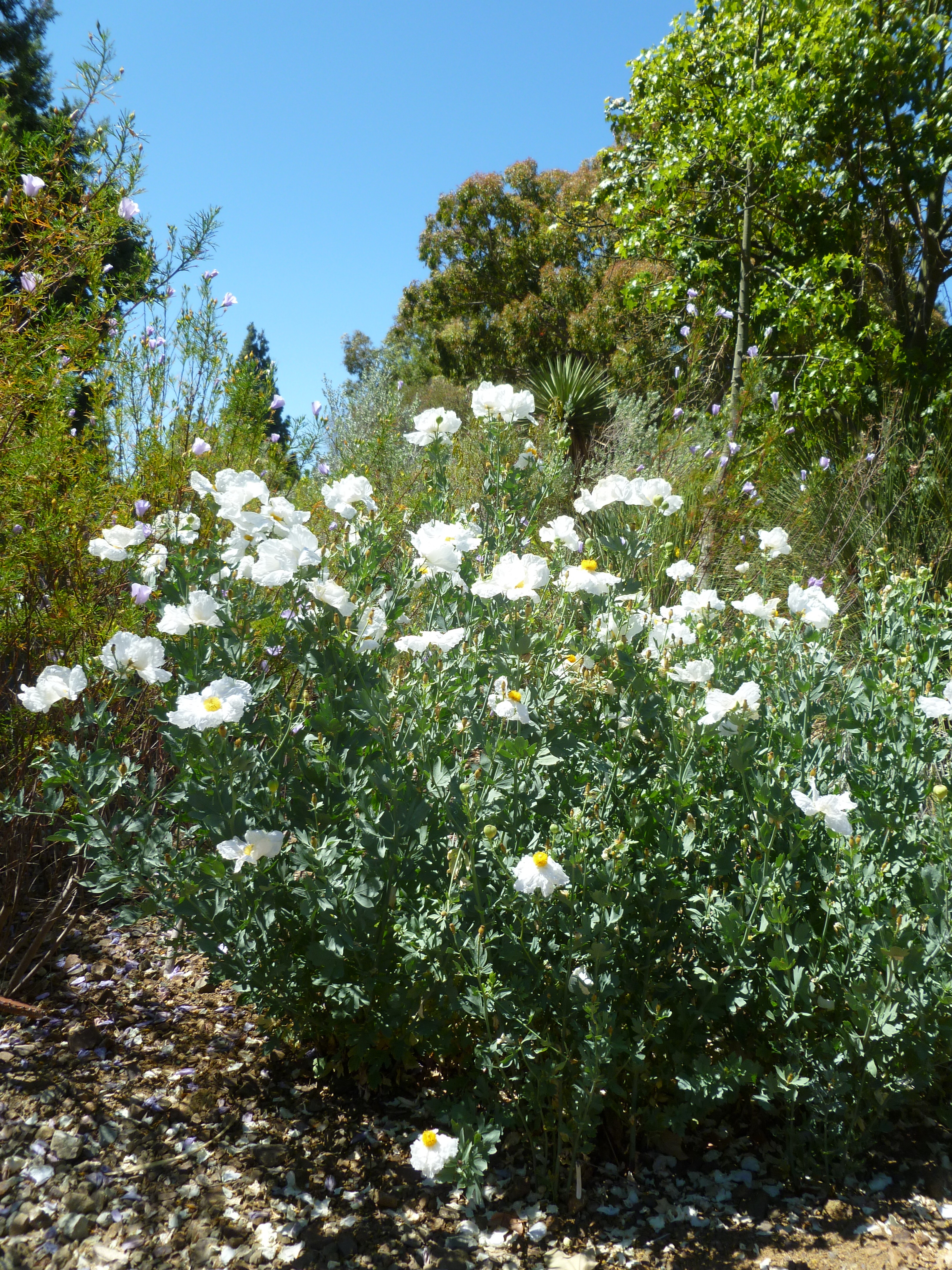
Mitilija poppy, Bancroft Garden

Matilija poppy (Romneya coultera), is another California native in the Bancroft garden, but one which must be watched closely because, “…its major problem is that it spreads underground and can be invasive.”   This is a description often applied to non-native plants.  However, when the author is a horticulturalist, rather than a nativist, it is sometimes applied to native plants as well.

There is also a native Manzanita in the garden which is a hybrid descendent of two unrelated Manzanita species which have long since disappeared from the garden.  Hybrids of native plants are often eradicated by native plant advocates who want to freeze all native species into place.  Hybridization represents change and abhorrence of change is a basic tenet of nativism.  The existence of this hybrid in the Bancroft Garden is an example of why we are opposed to nativism in its purest form.  The hybrid survives, but its two ancestors are gone.  Aren’t we better off with this survivor in the Bancroft Garden than with no Manzanita at all?

The Bancroft Garden was an opportunity to revisit these themes of the Million Trees blog:

  • Native plants are as likely as non-native plants to require tending in the garden, such as soil amendments
  • Both native and non-native plants are sometimes invasive
  • Hybridization is another means of insuring the survival of plant genes

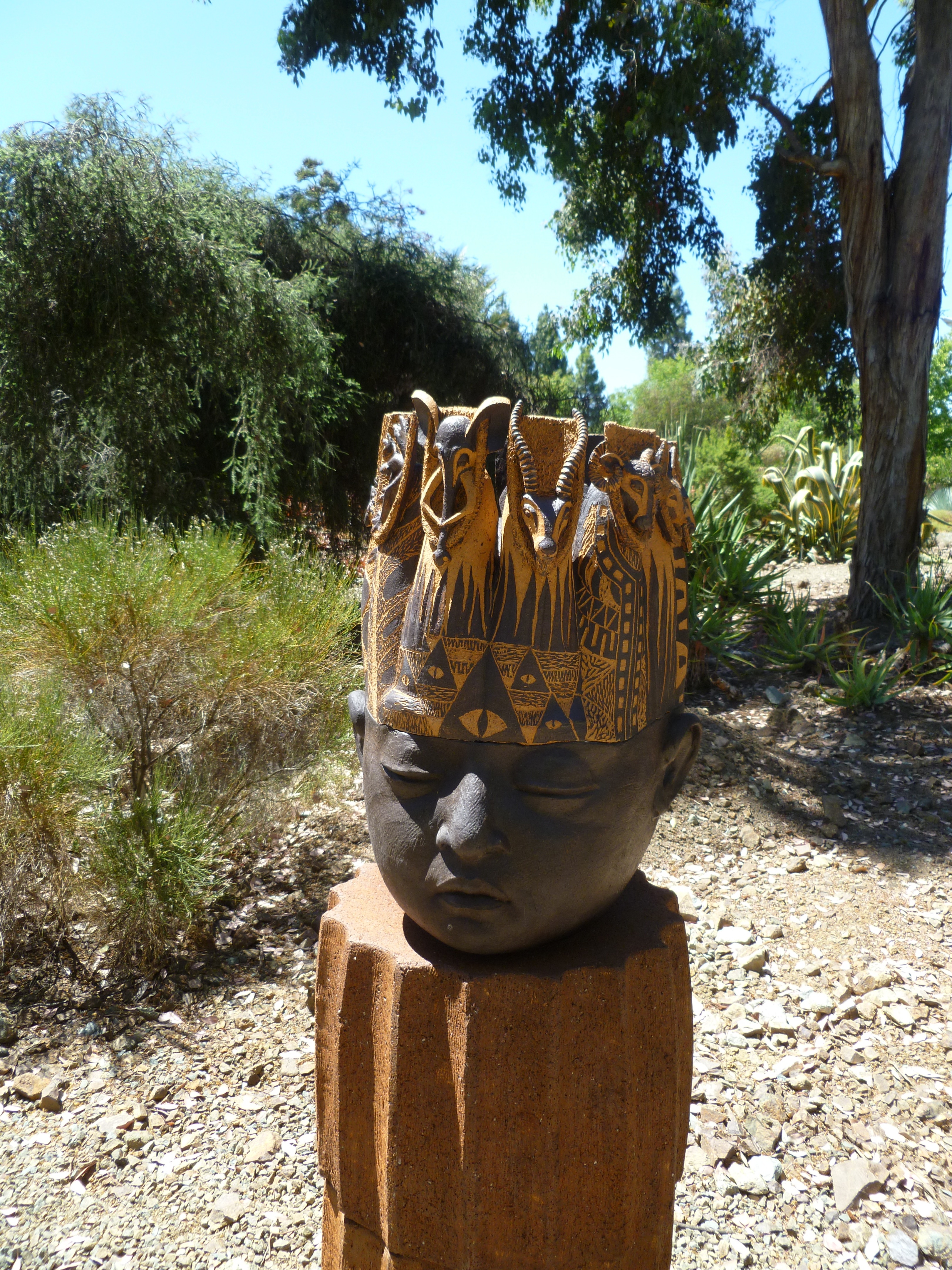
This is a particularly good time to visit the Bancroft Garden.  There is an exhibit of sculpture by artists from all over the West Coast in the garden until July 14, 2012.  It is an interesting and lovely garden which is rich in California history.

Sculpture in the Bancroft Garden

California Academy of Sciences: “Evolution in the Park”

In 2003, when the great debate with native plant advocates about the future of San Francisco’s public parks reached a fever pitch, the California Academy of Sciences stepped into the fray by publishing this article in their quarterly publication, California Wild.  This article was written by Gordy Slack, free lance science writer and former editor of California Wild

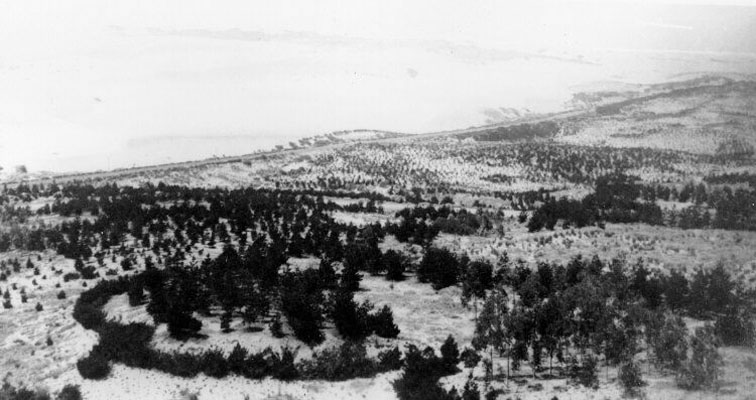
Golden Gate Park in 1880. The trees are about 10 years old. In the distance, looking south, we see the sand dunes of the Sunset District. That’s what most of Golden Gate Park looked like before the trees were planted.

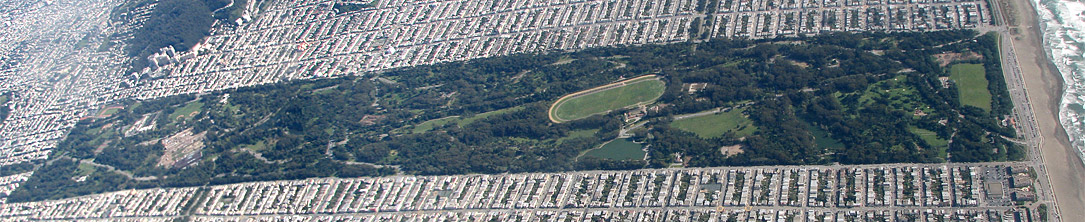
As you will see, “Evolution in the Park”  (1) urges the public to consider that the parks of San Francisco have been transformed over the past 150 years from predominantly barren sand dunes to green oases of non-native trees and plants.  Using Golden Gate Park as an example, Mr. Slack reminds us that the non-native trees provided the windbreak needed to protect the entire landscape which we admire today.  The park has changed and it will continue to change, because nature is dynamic.  The forces of evolution are stronger than human desires to freeze-frame our world.

At the time, we were deeply grateful to Mr. Slack and to the Academy of Sciences for taking a position on the controversy.  We remember thinking that the opinion of this prestigious institution would surely settle the controversy.  But we were mistaken, because native plant advocates would not even read this article, let alone heed its message.

As the Environmental Impact Report for the Natural Areas Program undergoes revision and the controversy heats up again, we reprint “Evolution in the Park.”  We can only hope that someday reason will prevail.

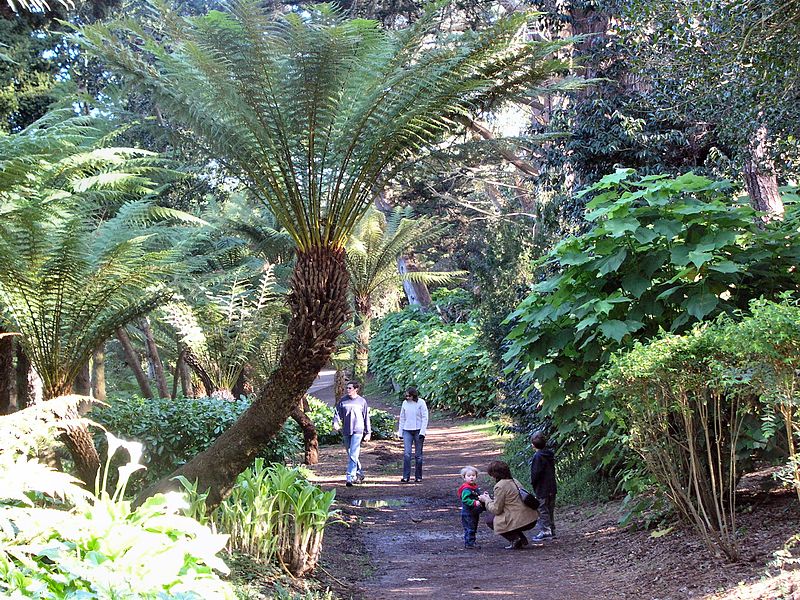
Tree ferns from New Zealand are one of many species of non-native trees that make Golden Gate Park the beautiful place it is today. Creative Commons

******************************

“When San Francisco officials asked the great nineteenth-century landscape architect Frederick Law Olmstead how to turn the wind-scoured dunes of the western half of the city into a green, rambling park, he was happy to offer advice: Don’t bother, he said, it’ll never work.

They went ahead anyhow, establishing three-mile-long, 1,107-acre Golden Gate Park on April 4, 1870. The decades that followed saw an almost unbelievable transformation under the strong hand of the park’s first superintendent, William Hammond Hall. He shaped glades and grew forests, dug lakes and planted lawns, until people nearly forgot that under the acres of grass and trees and shrubs lay mountains of sand.

The invention of Golden Gate Park was an amazing engineering and horticultural accomplishment, but it was not an environmental one—at least not in the sense of conserving native natural resources. If the California Native Plant Society (CNPS) had existed then, it would never have allowed Hall to spread tons of exotic barley seed over the dunes as part of his plan to “reclaim” them. The barley achieved what Hall wanted—to create favorable conditions for the thousands of alien trees and shrubs he would soon plant. And yet the CNPS now meets in Strybing Arboretum and botanists love the park. Everyone does. It would seem as silly to criticize the park’s blue gum trees for being out-of-towners as it would be to criticize most of us for being exotics. The park is as much an urban invention as the parking lot or the shopping mall, only much better. There is nothing wild about it…except what goes on there.

Nancy de Stefanis is the Director of San Francisco Nature Education, a group that leads nature studies in Golden Gate Park. She is perhaps best known for her discovery in 1993 that great blue herons were nesting in the park’s Stow Lake, and for her efforts to protect those nests from raccoons and other threats (California Wild, Summer 2002). A few days ago, on an early morning walk in the park, she saw a great blue plucking endangered red-legged frogs out of a pond. She saw feral cats, gray squirrels, and a three-foot-long box turtle. All this, and she had intended to look for birds! She saw those, too: an albino robin, varied thrushes, ravens, white- and gold-crowned sparrows, and a courting pair of red-tail hawks doing loopty-loops and dives. She saw a bevy of seven California quail running through Strybing Arboretum, the only population of quail left in the park. “It was incredible,” she said. “We saw 25 bird species easy.”

Anyone who’s spent much time in Golden Gate Park has wild stories to tell. My own favorite took place a few years ago, after I’d pulled an all-nighter at the magazine and was tired enough to sleep dangling off of Half Dome. Half Dome was too far away, so I walked a few hundred yards east on Middle Drive and up a tiny path back to Lily Pond. I walked the perimeter looking for a place to sleep. The pond had steep vegetated banks all around except for a small, reasonably sloped patch of dirt on the east side. I kicked away some guano, put a newspaper under my head, and fell asleep.

I woke up half an hour later; something soft was tickling my arm. I raised my head slowly to find myself surrounded by mallards. There must have been 20 and they filled every inch of the dirt patch around me. One nestled comfortably between my outstretched arm and my torso.

Each duck had its head swiveled and tucked into the feathers on its back. When I lifted my own head, the birds next to me raised and turned theirs as well, and a couple of them stirred, causing a chain reaction of awakenings in the ultimate morning-after surprise. No one lost his or her cool, though. I tiptoed out of their realm and headed back to work, downy feathers clinging to my sweater and my hair. That was how I became the Man Who Sleeps with Ducks.

Raymond Bandar, a field associate in the Academy’s Department of Ornithology and Mammalogy, grew up in Golden Gate Park and has a thousand wild stories to tell. He says that in the 1940s, when he was a boy, it was a “biologist’s paradise.” He spent long summer days hunting for garter snakes, alligator and fence lizards, bush rabbits, Pacific pond turtles, weasels, and red-legged frogs. Peacocks roamed free in the park, and there Bandar courted his wife, Alkmene. They took long, moonlit walks from the beach to the park’s entrance on Stanyan, stopping to spoon in the Valley of the Moon.

Most old-timers like Bandar long for the good old days, when the park was “less manicured.” It’s hard to tell if this is because the park used to be wilder, or because the old-timers were. But there’s no doubt that the park refuses to cooperate by holding still. As Heracleitus said, “You can’t step into the same river twice.” (Or as Cratylus, Heracleitus’s follower, trumped, ‘You can’t step into the same river once.’)

The park’s “ecosystems” are a moving target, changing with park administrations and larger cycles of growth and death. In recent years, the Parks Department has cleared away much of the undergrowth that had been protecting ground-nesting birds—and homeless humans. Other forces originate outside the park but have an influence by increasing, diminishing, or eliminating the animals that live within. If there are no peregrines anywhere else in California, there aren’t going to be any in Golden Gate Park either.

Late Academy ornithologist Luis Baptista used to talk about the 1980s in the park. California quail were common then, running here and there on urgent business. Native bush rabbits lived here, too. The rabbits are now gone and the quail nearly so. I’ve heard speculation that the rabbit population may have collapsed partly under predation by humans, too. But both are most likely victims of the park’s shifting food web.

Raptors returned when their populations rebounded from the DDT poisoning that largely ended four decades ago. Recently, red-tailed, red-shouldered, and Cooper’s hawks have moved in, according to Douglas Bell, a biology professor at California State University in Sacramento. The park is now “probably a sink for white-crowns” he says. “It draws them in, but because of the intense predation, their survivorship is very low.” But even bigger players in the songbird and quail equation are the park’s resident feral cats. According to Baptista and Bell, white-crowned sparrow deaths in the park are probably due mostly to cats.

In addition to feral cats and other predators, floral changes affect park wildlife as well. Many of the Park’s trees are reaching climax now, says Peter Dallman, who is writing a natural history guide to Strybing Arboretum. The big trees are falling or are being cut down in anticipation of their natural collapse. The pygmy nuthatch, a bird that nests in the park’s climax Monterey pine forest, will likely flee the park when those trees come down.

Today, raccoons are plentiful. So are ravens, though Bell remembers that not long ago no ravens nested here. Exotic cowbirds have arrived, too; they lay their eggs in the nests of other birds, which then raise ravenous cowbird chicks, often at the expense of their own young. Squirrels are multiplying out of control, says Dallman.

Cat populations are strong, but not as strong as their political lobby. The bison herd, introduced to the park in 1894, remains stable at eleven. But the reintroduced grizzly bears (Bandar remembers when there were at least two sad grizzlies in cages in the park’s southeast corner) are long gone. The last Golden Gate grizzly, Monarch, is now stuffed and on exhibit in the Academy’s Wild California Hall.

These changes and conflicts raise some uncomfortable questions about the park and its mission. By what standard can the costs or benefits of these changes be measured? Should we be trying to restore Golden Gate Park systems and populations that are at bottom artificial? Should we simply maintain the species we prefer, and get rid of, or let slip away, the unpopular ones? Should “maximum diversity” be the goal, and mandate mediations of conflicts that arise between incompatible species, such as cat and quail?

To maintain quail in the park for the long term, for instance, would require “intensive and sustained human intervention,” says Bell. “We’d have to rely on the full range of wildlife management techniques.” Predation would have to be monitored and protective habitat cultivated. New quail stocks would have to be introduced, and electrically charged wire cages (through which the quail could fit, but not cats or ravens or raptors) could be built around nesting areas. But without heroic and constant human support, the quails’ days in the park are numbered.

Like its creation, the park’s future will be shaped by human invention, its progression determined by our priorities.”

Golden Gate Park, aerial view. Gnu Free Documentation

(1) Gordy Slack, “Evolution in the Park,” California Wild, Spring 2003 [reprinted with permission of author]

Bluebirds are nesting in Golden Gate Park!

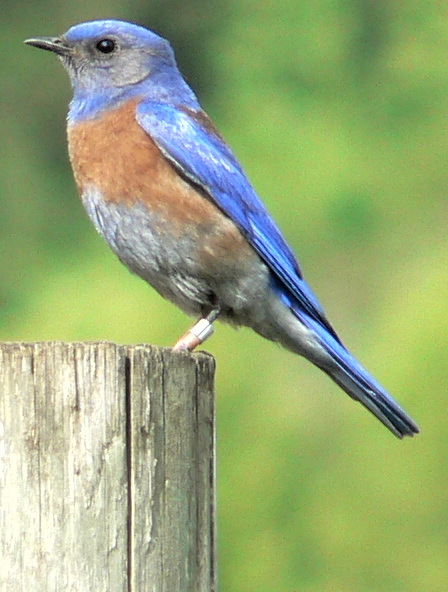
Western Bluebird. Creative Commons

The community of serious birders is very excited about the Western Bluebirds that are raising their chicks in Golden Gate Park:  “This afternoon, I went to check up on the Western Bluebirds nesting near the Bison Paddock [in Golden Gate Park].  I’m thrilled to report that I saw two youngsters poking their heads out of the nest hole, and both parents assiduously feeding.”  (1)  According to the San Francisco Breeding Bird Atlas, Western Biuebirds have not been reported breeding in San Francisco since 1936! (2)

However, the birding community is less thrilled about where the Bluebirds chose to build their nest:  in a cavity in a eucalyptus tree created by a woodpecker that had nested there previously.  Adding insult to injury, this particular eucalyptus tree is also adjacent to the off-leash dog play area in Golden Gate Park:  “The nest is in an old woodpecker hole in a big eucalyptus that overhangs the dog run at the back of the paddock.”  (1)

The nesting Bluebirds have violated two sacred tenets of the local birding community, i.e., that birds don’t use non-native plants and trees and that birds are harmed by dogs. 

Do our birds use non-native plants and trees?

We are often impressed by the efforts of native plant advocates to convince us that birds don’t use non-native plants and trees.  There seems to be no end to the inventive arguments they use to convince us our belief in the value of non-native plants is misguided.  We recently had an on-line dialogue with a native plant advocate who responded to our citation of a study that reported equal numbers of species of plants and animals in the understory of eucalyptus forest and oak woodlands by saying that the animals found in the eucalyptus forest were “on their way to the oak woodland.” 

One of the most famous birders in San Francisco led a walk on Mt. Davidson last weekend that was sponsored by the local chapter of the California Native Plant Society.  When this walk was announced to the public, the birder promised to “discuss how birds preferentially use native plant communities over introduced plants.”  Since Mt. Davidson is heavily forested exclusively with non-native trees (eucalyptus, Monterey pine and cypress), we wondered how he was going to successfully make that point.  He didn’t.  These are the birds he reported seeing on Mt. Davidson during that walk and the San Francisco Breeding Bird Atlas tells us where these birds are found:

  • Band-Tailed Pigeon      “…inhabits oak woodlands and coniferous forests”
  • Olive-sided Flycatcher   “…prefers wooded canyons”
  • Western Wood- Pewee    “…found in a variety of woodland and forest habitats”
  • Hairy Woodpecker    “…preferring well-forested habitats…”
  • Swainson’s Thrush   “…prefers well-shaded moist canyons and humid, dense forest”                     

In other words, he set out to prove that the birds on Mt. Davidson prefer native plants, but all the birds he reports having seen are there because of the non-native forest.  He makes no mention of this in his report of what he has seen.  He apparently walks away from this experience with his beliefs unshaken by reality. 

Are birds harmed by dogs?

Native plant advocates claim that dogs are extremely damaging to the environment.  That they harm birds is only one of many accusations.  Here’s a typical quote about dogs from a reader of Jake Sigg’s Nature News:  “Considering the hugely negative environmental impact that dogs cause (holes dug, plants torn up, dog poop everywhere, dogs running into playgrounds, dog foods made from huge numbers of ocean fish) I feel that if dog owners wish to speak on matters related to dogs they should first license their dogs to support the fix-up of the damage caused by dogs in our City parks & streets.”  

When a dog owner walked away from a Park Ranger after a confrontation about his off-leash dog, the ranger shot him in the back with a taser.  Since this incident occurred in a place where off-leash recreation had been permitted as recently as one-month before, many people believed the Ranger’s action was a bit extreme.  Not so in the community of native plant advocates.  Here’s a quote from a regular reader of Jake Sigg’s Nature News:  “All hail the ranger with the Taser!  Finally, a national park employee doing her job…We should build a bronze statue of this ranger.  I hope that one electrical shock makes all dog owners think.”

Yes, indeed.  It does make us think.  It makes us think that there is a great deal of conflict in our public parks and that much of it seems to be on behalf of the animals who can’t speak for themselves.  What would the Western Bluebirds nesting in a eucalyptus tree next to an off-leash dog run tell us?  Might they advise us to “Chill!  We can take care of ourselves.  You need not fight amongst yourselves on our behalf.  We will find a suitable home.  We don’t care if a tree is native or non-native if it provides the shelter we need.  Nesting near the dogs hasn’t harmed us or our chicks.”

We wish the birds could speak for themselves. 

**************************************

(1) SF Birds email list by subscription only

(2) “San Francisco Breeding Bird Atlas,” San Francisco Field Ornithologists, June 2003.