Polarized views of nature mirror our politics

We recently posted an article about our on-going debate with the Audubon Society regarding its misguided support for the projects that are destroying the urban forest in the San Francisco Bay Area.  That article provided a few examples of our widely divergent views of nature:

  • We don’t see how birds will benefit from the destruction of tens of thousands of trees and countless plants that provide food and cover for birds and animals.
  • We don’t enjoy walking in nature with a judgmental eye, which points fingers at plants and animals that others claim “don’t belong there.” We are unwilling to divide nature into “good” and “bad” categories.
  • We don’t think humans have the right to pass a death sentence on wild animals because they prefer another animal, which they claim will benefit from the death of a potential competitor.
  • We don’t consider a “managed” forest a “more natural forest.” We don’t think humans are capable of improving what nature can accomplish without our interference.  We don’t think a public park that is routinely sprayed with herbicides can be accurately described as a “natural area.”
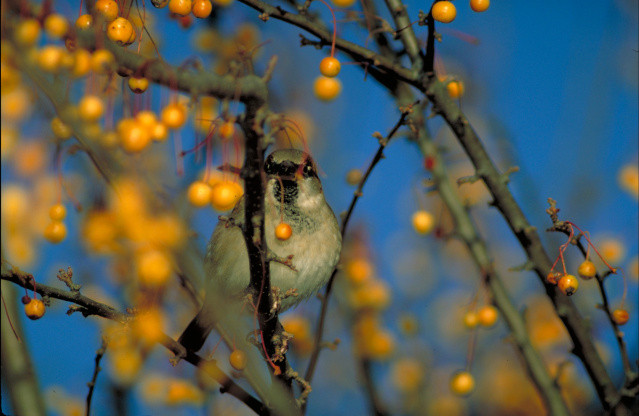
English sparrow.  US Fish & Wildlife photo
English sparrow. US Fish & Wildlife photo

However, these widely divergent viewpoints about nature are not inconsistent with the extremes of our polarized politics in America.  Just as we don’t expect to change the minds of those at the opposite end of the political spectrum, we don’t expect to change the minds of those who view nature through the darkly colored lens of nativism.  Just as elections for public office are decided by the independents in the middle of the political spectrum, the debate about the future of our public lands will be decided by those who have not yet formed an opinion about what is best for nature.  Today’s post is addressed to them.  We will tell the “independents” about two recent op-eds published by The New York Times which represent the two extreme viewpoints about nature.  Both op-eds use sparrows as representatives of the natural world, which we hope will make the differences in these viewpoints starker and therefore clearer.

First a word about how important the “independents” are to the debate about the ecological “restorations” which are dictated by invasion biology.  Political independents are usually not more than a third of the electorate.  But, a survey conducted by University of Florida suggests the majority of the public are still open to learning more about “invasive species.”  They report that 62% of Floridians they surveyed said they are not knowledgeable or only slightly knowledgeable about invasive species.  Ironically, the same survey claimed that “a majority voiced support for raising sales tax to combat invasive species.”  One wonders why voters who acknowledge that they know nothing or next to nothing about invasive species would be willing to tax themselves to combat something they don’t understand.  In any case, if Floridians are typical, the majority of the public needs to know more about invasion biology.  We hope they have access to balanced information that is not written by those who make their living killing animals and poisoning our public lands.  Million Trees was created over four years ago for that purpose.

“The Truth About Sparrows”

Some time ago, we told the story of how sparrows were brought to America in the 1850s by people who believed they would eat the insects that were killing trees.  We concluded that article by saying that 150 years later house sparrows are no longer despised as alien intruders.  We were wrong.

In May 2014, the New York Times published an op-ed entitled “The Truth About Sparrows.”  The op-ed was written by Peyton Marshall, whose mother was an exterminator of house sparrows.  This was no idle pastime for Ms. Marshall’s mother.  It was her mission.
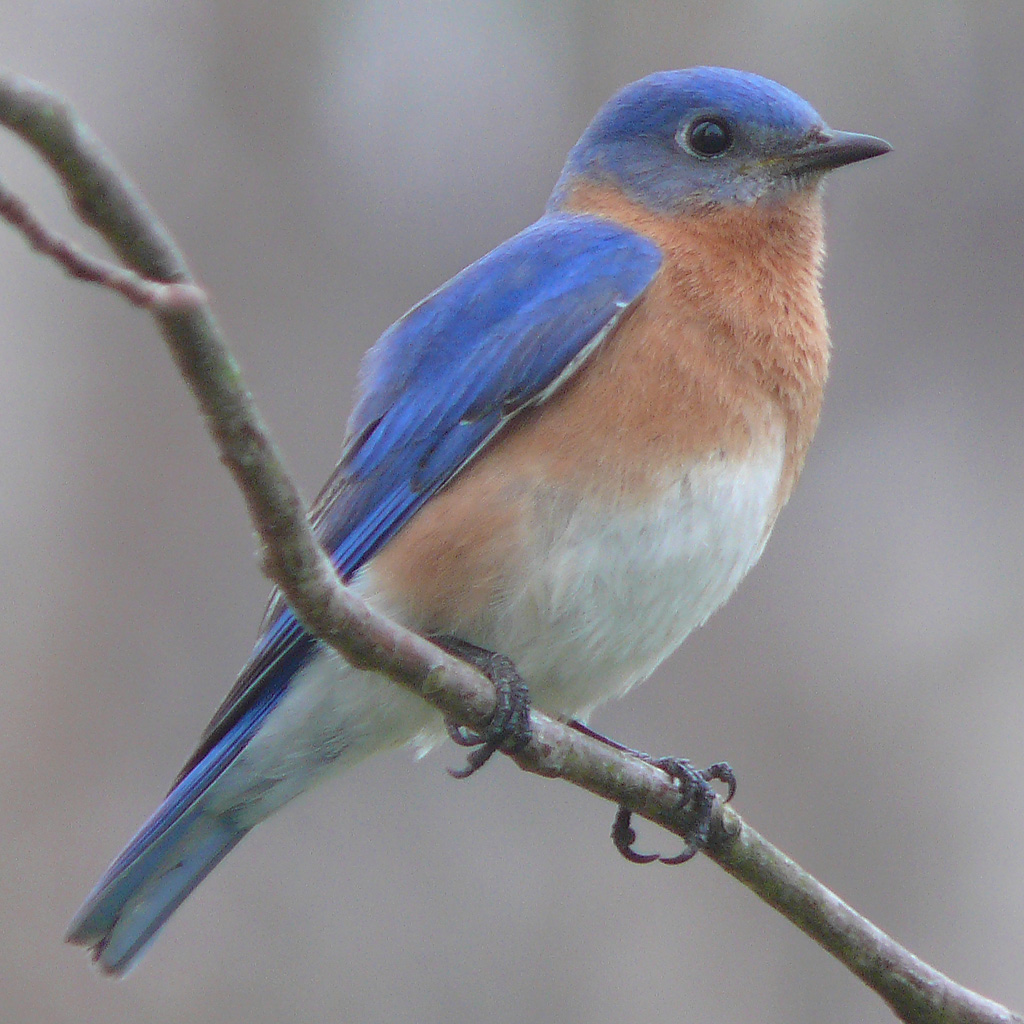
Eastern bluebird, public domain

Mom’s crusade against house sparrows began when Ms. Marshall was a child.  Mom loved bluebirds at a time when their population was dwindling in the east where they lived.  Mom decided that house sparrows were to blame and so she took it upon herself to kill every house sparrow that had the misfortune of entering her yard or within reach of it.

Mom began by trapping the house sparrows.  “Good” birds caught in the traps were freed, but the house sparrows were put into plastic garbage bags and asphyxiated.  Mom started the family car in the garage and wrapped the open end of the garbage bag around the tailpipe.  When the birds did not die, she consulted her husband who informed her that the car was a diesel and would not produce enough carbon monoxide to kill the birds.

So, mom took her operation on the road.  She helped elderly ladies with their groceries in the parking lot in exchange for a shot at their tailpipe.  When dropping off her children for play dates and birthday parties, she asked their parents if she could make brief use of their cars to kill birds.  Polite parents watched in horror as they became accessories to this execution.

Ms. Marshall concludes her story by noting that the population of bluebirds has rebounded since she was a child.  But mom continues to trap house sparrows in her yard and now uses a less public means of killing them:  “Now, she uses a carving knife and cutting board, at her leisure, in the privacy of her own kitchen.”

Although Ms. Marshall doesn’t say so, we doubt that the recovery of the bluebird population has much to do with the extermination of house sparrows in her mother’s backyard.  The recovery of the bluebird population is attributed to building nest boxes that substitute for the dead trees which are their preferred nest sites.  There are few dead trees in urban and suburban areas because people consider them hazardous and unsightly.  Once again, animals pay the price for the choices of humans.

“What the Sparrows Told Me”

The New York Times published “What the Sparrows Told Me” in August 2014.  It is a fitting antidote to the grisly tale of the sparrow exterminator.

Trish O’Kane, the author, was a human rights investigative journalist in Central America for 10 years before moving to New Orleans to teach journalism.  Less than a month after arriving in New Orleans, she and her family were displaced by hurricane Katrina in 2005.  Four months after the hurricane, she rented a room in a dry part of town so that she could return to her teaching job.  It was a hard time for everyone in New Orleans, but her gloom was deepened by learning of her father’s terminal cancer which would kill him in a matter of months.

Ms. O’Kane had never had an interest in birds before, but she knew she needed “to focus on something beautiful, something positive, something alive,” and so she did:

“I bought two bird feeders.  Each morning I sat on that back stoop and watched those sparrows.  Instead of wondering what was going to happen to the city, to the Gulf Coast, to the planet, I started wondering why one sparrow was hogging all the seed.  I started thinking about their resilience, their pluck, their focus on immediate needs.  If they couldn’t find food, they went somewhere else.  If they lost a nest, they built another.  They had no time or energy for grief.  They clung to the fence in raggedy lines heckling one another like drunken revelers on Bourbon Street.  Their sparring made me laugh.“
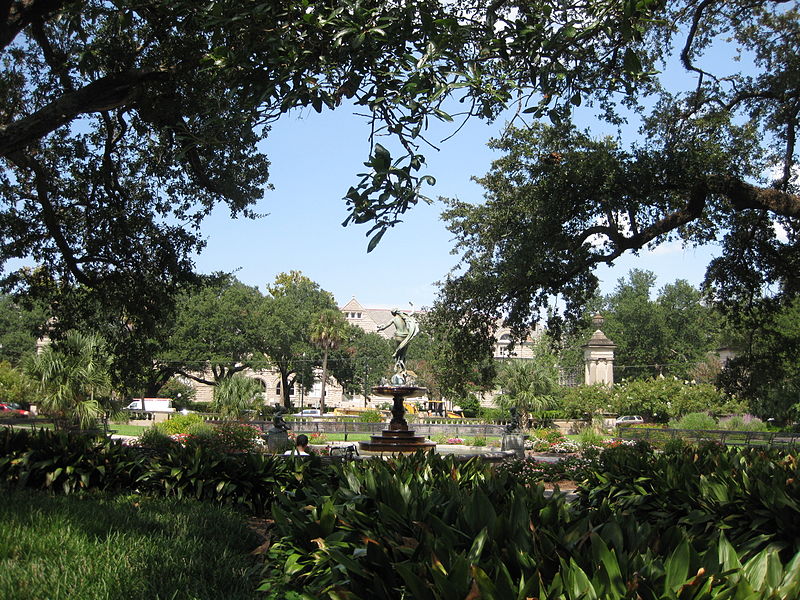
Audubon Park, New Orleans.  Public domain
Audubon Park, New Orleans. Public domain

Ms. O’Kane started holding her classes in Audubon Park, named for John James Audubon.  Her students began to find the same solace in watching the birds going about their business, finding a way to survive, carrying on.  And that gave her and her students the strength and the will to do the same at a time when life was hard in New Orleans.

Ms. O’Kane is now a doctoral student in environmental studies at University of Wisconsin, Madison.  She has found a way to connect her interest in human rights with her new found interest in birds.  She teaches an undergraduate course in environmental justice in which she pairs undergraduate students with middle school students in a mentoring program called Nature Explorers.  Many of the middle school children are immigrants from Central America.  She finds that they enjoy learning about the birds that migrate between Central America and Wisconsin, just as their families did.  The birds, like the people of America, are citizens of the world.

Ms. O’Kane tells us that many of her undergraduate students are frightened of the future of our planet.  She likes to start each new class with the story of the sparrows in New Orleans:  “I tell them that the birds are a gift to help them get through each day, a way to enjoy the world while we change it so that young people, everywhere, have a chance.”

Whose eyes do you choose to look through?

It’s no secret that our viewpoint regarding nature is more closely aligned with Ms. O’Kane’s.  If you haven’t yet taken a stand on the issue of what plants and animals are welcome in your ideal nature, think for a moment.  Which of these starkly different viewpoints do you prefer?

Understanding the eucalyptus forest – Professor Joe R. McBride

This article has been republished from the  website of Save Mount Sutro Forest, with permission.


Dr. Joe McBride of UC Berkeley spoke at the Commonwealth Club in April 2014 as part of the series “The Science of Conservation and Biodiversity in the 21st Century.” His main message:

  • Eucalyptus groves in California provide habitat for as many native species as do most ‘native’ habitats.
  • They grow well at high densities and an average spacing of 8 feet between trees is quite typical.
  • They have relatively high fuel loads, but the cool and damp dense eucalyptus forests reduce the risk of fire.
  • Eucalyptus is subject to few diseases or pests, and parasitic wasps provide pest control.
  • It provides a host of ecosystem services including carbon sequestration, pollution reduction, slope stabilization, windbreaks, wildlife habitat, and recreational value.

Dr. Joe R. McBride was Professor of Landscape Architecture and Environmental Planning, Department of Environmental Science, Policy, and Management, UC Berkeley. (He has since retired.)

Read on for notes from Dr. McBride’s talk. (There are also links to his Powerpoint presentation.)

—————————————

sutro forest with dappled sunlight

THE HISTORY, ECOLOGY AND FUTURE OF EUCALYPTUS PLANTATIONS IN THE BAY AREA

Notes From a Talk By Dr. Joe R. McBride

Dr McBride’s wide-ranging talk covered a lot of ground. He talked about the ecology of the eucalyptus forest in the Bay Area: its structure, the variety of plants and animals that live within it, its health and the ecological functions it performs; the dynamics within these forest stands; and their invasive potential.

WHY EUCALYPTUS CAME TO CALIFORNIA

Eucalyptus was first planted in California during the Gold Rush, possibly for oil to use in eucalyptus king of the forest smgold-mining and in medicine.

In the 1870s, eucalyptus planting was encouraged for many objectives: to beautify cities, to improve farmland, as windbreaks, and to dry out swamps to combat malaria.

It was grown in woodlots for firewood, but as people switched to natural gas and other fossil fuels this became rare. Later, it was planted for timber – which didn’t work out because the trees were harvested too young; and still later for bio-fuel, which did not become commercially attractive.

By the 1950s, it had become an integral part of the California landscape. Six species were planted, primarily blue gum in Northern California, and red gum and river gum in Southern California. (Worldwide, there are perhaps 640 species.)

Eucalyptus beautifies our cities, and helps stabilize soil on steep hills. The surface area of the leaves, broader than those of conifers, help trap particulate pollution. Unlike deciduous trees, the evergreen foliage of eucalyptus removes pollutants all year long.

HOW DENSE MAKES SENSE?

The density of eucalyptus plantations in Bay Area ranges from 150-160 trees per acre to about 1700 trees per acre. mt davidson understory(The highest density resulted from a freeze in 1970s: trees were cut down because of the perceived fire hazard, but the trees presumed dead later resprouted.) On Angel Island, the normal density was 8ft spacing (about 680 trees per acre) but it ranged to 30 feet between trees.

In the East Bay, 8 ft. x 8 ft. is quite typical eucalyptus plantation density. Left to grow naturally, stands become denser through in-growth, mainly by sprouting and also by sibling establishment.

Is management by thinning necessary for the health of the forest, someone asked, and what density is ideal?

Dr McBride had seen no examples of stands that could be improved by thinning. Eucalyptus grows well with a high density at an average of 8 ft x 8ft spacing between trees. In Australia and New Zealand no one thins; they just harvest the trees and let them regrow from sprouts.

In the US, eucalyptus was not marketable, so there’s no history of managing eucalyptus plantations. Also, until recently there were no diseases or insects. The long-horned borer and the psyllid have now appeared in some places, and thinning is not seen as a solution to these insect problems; they are better controlled by certain predatory wasps.

Logging eucalyptus would mean a lot of ground disturbance and erosion. If the logs are removed, the skid trails can destabilize the soil.

MUCH GROWS UNDER EUCALYPTUS – NATIVE AND NOT

Contrary to popular belief, eucalyptus forests have as many species (or more!) growing in their understory as do oak woodlands. A 1990 survey in Tilden Park found 38 species in the understory of eucalyptus forests (24 native plants; 14 introduced plants), while the oak woodland had 18 species in understory (14 native plants; 5 introduced plants). Only the riparian woodlands in Murray Park are somewhat richer in species than riparian eucalyptus forest (58 species vs 34).  In East Bay eucalyptus forests, California Bay, Coast live oak, poison oak, bedstraw, California blackberry, and chickweed were ubiquitous. The amount of light reaching the ground influences which species can be found in the understory.ferns and blackberry and poison oak

What about allelopathy? Under experimental conditions, eucalyptus litter inhibited germination and growth of cucumber seeds, so eucalyptus litter may be somewhat allelopathic to some plants. But a study from UC Santa Barbara indicates that if eucalyptus litter is removed, within 2 years there’s no inhibitory effect on other plants germinating. And clearly, it isn’t allelopathic to all the species mentioned earlier.

Someone asked whether it would be advisable to “manage eucalyptus stands that have an invasive understory.”

Dr McBride responded: “I have no prejudice against invasive plants. I am an invasive Californian myself.” (There was amused applause.) He continued that each eucalyptus grove is different, so it’s important to look at it on a stand-by-stand basis and measure the fire hazard of eucalyptus plantations against the value of each stand for wildlife habitation, recreation, and wind break functions.

eucalyptus trees in Sutro Forest

In response to a question about whether ivy kills eucalyptus trees, Dr McBride said he has not seen evidence the ivy shades the foliage of eucalyptus trees. He’s seen no evidence of ivy killing eucalyptus, although on Mt. Davidson, he did see ivy growing over trees that had been killed by girdling with an axe or chainsaw.

INSIDE A EUCALYPTUS FOREST

Shading and leaf litter changes the microclimate of a eucalyptus grove. As you move in from the edge to the interior of the forest, conditions change. The species change from the edge to the interior of the forest as the amount of light decreases, so there are different species at the edge of the forest and inside it. A 1980s study in the Presidio compared conditions outside a eucalyptus forest and inside it. It showed:

  • Temperature moderation: Daytime temperature fell an average of 10%, and night-time temperature rose an average of 5%
  • Windbreak: Wind velocity dropped 40%
  • Relative humidity was 5% higher (from the edge to the interior).
  • Shade: Light intensity was 90% lower.
  • Moisture: Precipitation (rain) decreased 12%; but fog-drip (i.e., moisture precipitated from the fog) increased 300%

EUCALYPTUS STORES CARBON

Eucalyptus increases the carbon content in the soil compared to grasslands (Zinke et al, 1988). Its fast growth and large size means it sequesters a lot of carbon in its trunk and root systems.

EUCALYPUS SUPPORTS WILDLIFE

Owlets in an eucalyptus tree nest

Again, contrary to belief, eucalyptus provides a good environment for a wide variety of wildlife. A number of studies demonstrate this.

  • A 1970 study showed many birds make “moderate use” of eucs as habitat and a few birds make “great use” of eucs. (Almost all these species are native.) Birds that make most use: mourning doves; Great Horned Owls, whose range has been extended by CA eucalyptus; Stellar’s jays; yellow-bellied sapsuckers; Allen’s hummingbirds; olive-sided flycatchers; brown creepers; dark-eyed juncos; Audubon warblers.
  • Some reptiles make great use of eucalyptus groves: Southern Alligator lizard and the slender salamander. Among mammals, deer mice make “heavy” use of eucalyptus.
  • photo credit: Janet Kessler
    photo credit: Janet Kessler

    Robert Stebbins’ monumental 1978 study on the attractiveness of eucalyptus for habitat in the East Bay found that all species making use of eucalyptus for habitat found eucalyptus about the same as grasslands in attractiveness, but oak/bay woodlands were even more attractive.

  • Monarch butterflies most commonly use eucalyptus trees in state parks. But some of the insects in eucalyptus hurt the trees. One is the eucalyptus long horned borer – but can be controlled by a parasitic wasp. The red gum lerp psyllid is more of a problem in Southern California, which has more red gum. However, it’s part of the food chain: woodpeckers and other bird species feed on their larvae.
  • A study showed that eucalyptus in a riverside environment doesn’t impact species diversity of stream insects or pollution tolerance compared with native riparian environments.

NATURAL SUCCESSION IN EUCALYPTUS?

Over the next 200-300 years, the eucalyptus forests in the East Bay could gradually – and naturally – shift to oak-bay woodlands. In the East Bay (though not at Mt. Davidson or Mt. Sutro), the eucalyptus plantations have California Coast live oaks and California bay trees in the understory, and they are doing well. The live oaks are “tolerant” of shade and the bays are “very tolerant” of shade. If they aren’t disturbed, the oaks and bays regenerate well in the understory, and being even longer-lived than the eucalyptus trees, they will eventually naturally succeed the eucalyptus. The bay tree is higher in regeneration than the Coast live oak in Tilden Park (McBride, 1990).

WHAT ABOUT FIRE HAZARD?

fog in mt sutro cloud forest sept 2013Eucs support considerable fuel load on the ground because of rapid decay of foliage and shredding of its bark. They have a higher fuel load than California bays or Coast live oaks. They release an aromatic compound that can ignite with sparks, and they burn hot.

However, while the tree density of eucalyptus plantations can mean a greater accumulation of fuel in the understory, the higher density means a cooler, wetter understory that might not dry out as fast. Three risk factors in fire risks of any tree: amount of fuel it produces; tissue moisture content; fuel ladder based on presence of other plants in its understory.

IS EUCALYPTUS INVASIVE?

Under certain circumstances, eucalyptus can spread – for instance, on Angel Island, some stands spread through road cuts and prescribed burns (which destroyed competing vegetation). However, in most cases they don’t: aerial photographs show that boundaries are stable. The eucalyptus forests on Mount Davidson and in Tilden Park show stable boundaries.

mt D comparison 1927 -2010In the Bay Area, Dr McBride found eucalyptus forest area declined between 1939 and 1997. The natural spread hasn’t increased the area of eucalyptus groves.

DO TREES DEPLETE AQUIFERS?

Someone mentioned attending a talk where the speakers said that tree removal would help to replenish aquifers. Was that true? Dr McBride thought it very unlikely; most aquifers are much deeper than tree roots.

WHAT ABOUT PESTICIDES?

Someone speaking for people with disabilities owing to chemicals said herbicide use in these areas violated their right to access, and wondered how “environmental” organizations – like the Sierra Club – could support this. Dr McBride sympathized, said he was also concerned about toxic herbicide use. He mentioned that the East Bay tree-felling project is on hold owing to a number of unanswered questions that would need further research.

Here are links to his Powerpoint presentation in ppt and pptx formats.
PPT: McBride Presentation – Eucalyptus
PPTX: McBride Presentation – Eucalyptus

Here is a link to the audio notes taken by a member of the audience


Global increases in biodiversity resulting from new species

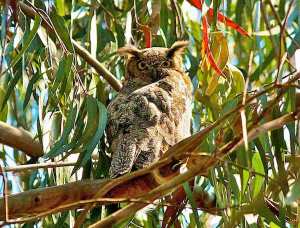
Great horned owl in eucalyptus.  Courtesy urbanwildness.org
Great horned owl in eucalyptus. Courtesy urbanwildness.org

One of the most popular justifications for eradicating non-native plants is the claim that they will out-compete native plants, ultimately causing their extinction.  Innumerable studies have found no evidence to support that claim, but the belief persists amongst those who demand the eradication of non-native plants.

Islands have been considered particularly vulnerable to extinctions because they contain many endemic species (found only on that island) that have evolved in physical isolation from their ancestors from other places and become unique species.  And there were many animal extinctions–particularly of flightless birds–with the arrival of humans who were both their predators and brought predators with them.

However, despite the conventional wisdom that the introduction of new species of plants to islands would result in extinction of their predecessors, there is no evidence that this is indeed the case with introduced plants.  In 2008, Dov Sax and Steven Gaines published a study of species diversity on islands.  This is what they found:

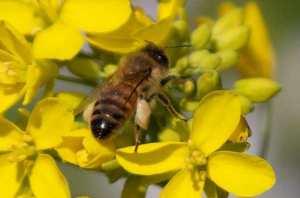
Honeybee on wild mustard.  Courtesy urbanwildness.org
Honeybee on wild mustard. Courtesy urbanwildness.org

Predation by exotic species has caused the extinction of many native animal species on islands, whereas competition from exotic plants has caused few native plant extinctions…By analyzing historical records, we show that the number of naturalized plant species has increased linearly over time on many individual islands. Further, the mean ratio of naturalized to native plant species across islands has changed steadily for nearly two centuries. These patterns suggest that many more species will become naturalized on islands in the future.” (1)

In other words, the introduction of new plants to islands has not resulted in extinctions of the plants that preceded them.  Therefore, the result of plant introductions has been greater plant diversity on islands.

But what about the continents?

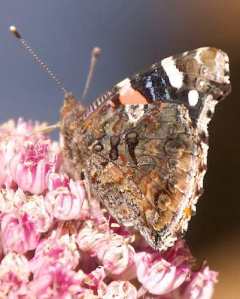
Painted lady butterfly on Weigela.  Courtesy urbanwildness.org
Painted lady butterfly on Weigela. Courtesy urbanwildness.org

Recently a new study was published that asked the same question on a global scale:  Has the introduction of new plants and animals resulted in the extinction of their predecessors?  The answer is a resounding NO!  (2)

The study was conducted on a huge scale by an international team of scientists:

  • “6.1 million species occurrence records from 100 individual time scales”
  • “35,613 species were represented…including mammals, birds, fish, invertebrates, and plants”
  • “The geographical distribution of study location is global, and includes marine, freshwater, and terrestrial biomes, extending from the polar regions to the tropics in both hemispheres.”
  • “The collective time interval represented by these data is from 1874 to the present, although most data series are concentrated in the past 40 years.”

Like most scientists who expect to find evidence of decline, this team of researchers was surprised to find little evidence of loss.  Here are some of their key findings:

  • “Surprisingly, we did not detect a consistent negative trend in species richness or in any of the other metrics of α diversity.”
  • “There is no evidence of consistent loss of biodiversity among terrestrial plants.”
  • “Time series for terrestrial plants exhibit, on average, a positive slope for species richness.”
  • “Collectively, these analyses reveal local variation in temporal α diversity but no evidence for a consistent or even an average negative trend.”  (Alpha diversity is species richness at the local level.)
  • “An analysis of slopes by climate regions reveals that temperate time series have a significantly positive trend…”

In other words, new plants result in more plants, particularly where we live, in the temperate zone.  There is no empirical evidence that new plants have resulted in the loss of the plants that were there before they arrived.

So what’s the beef?

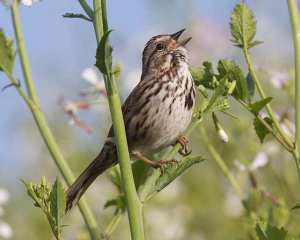
Song sparrow in wild radish.  Courtesy urbanwildness.org
Song sparrow in wild radish. Courtesy urbanwildness.org

You might think that this huge new study would put the controversy to rest.  You would be wrong.  For every answer we find, there is a new question from nativists.  The response of native plant advocates to the good news that the plants they prefer will not disappear if new plants are allowed to live in their company is that the plant world is being “homogenized.”  They say that if new plants are permitted to remain, all landscapes will become the same, resulting in the loss of unique landscapes that existed in the past.

They are, of course, mistaken.  Their dire prediction will not come to pass because the biotic and abiotic conditions of every landscape are unique.  The climates are different.  The soils are different.  The atmosphere is different.  The plants and animals that are there when they arrive are different.  If the new plant survives in its new home, it will be capable of adapting to these local conditions and over time it will change, ultimately becoming a unique species.  When the first family of monkeys made the voyage from Africa to South America, they were the same species as those they left behind.  Now they are unique species as a result of genetic drift and genetic divergence.

The process of adaptation and evolution is often more rapid than we expect.  Sometimes such changes have occurred within the lifetimes of scientists who were able to witness these changes.  More often, the changes occur more slowly and are only visible in museum collections or fossil records.

Consider the consequences

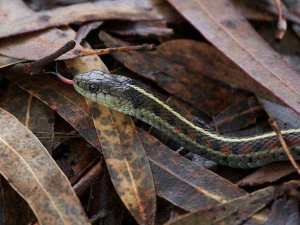
Garter snake in eucalyptus leaf litter.  Courtesy urbanwildness.org
Garter snake in euclypatus leaf litter

It is physically impossible to prevent the arrival of new species.  Even when they are not intentionally introduced they find a way to piggy back on the daily activities of humans.  They arrive on our airplanes and cargo ships.  We aren’t going to stop importing or exporting our products all over the world.  Nor are we going to quit traveling.  We must accept the consequences of the way we live and quit blaming plants and animals for their passive participation in our movements.

Aside from the question of whether or not it is physically possible to stop the arrival of new plants and animals, let’s acknowledge that at least in the case of plants no great harm has come from their introductionSince we now enjoy more plants than were here when they arrived, just what is it that we’re griping about?  We seem to be griping about change.  Change will occur whether we like it or not.  We can’t prevent change, so we must quit fighting against something that we are powerless to prevent.  That is the definition of wisdom.

Finally, we must consider the consequences of trying to eradicate non-native plants that are firmly entrenched in our landscapes.  Huge amounts of herbicide are being used in the futile attempt to eradicate them.  Fires that pollute the air and endanger our homes are set for the same purpose.  Trees that are performing valuable ecological functions are being destroyed.  The animals that use these plants and trees for food and cover are being deprived of their homes and their food.  We are doing more harm than good.


  1. Dov Sax and Steven Gaines, “Species invasions and extinctions: The future of native biodiversity on islands,” Proceedings of the National Academy of Sciences, August 12, 2008
  2. Maria Dornelas, et. al., “Assemblage times series reveal biodiversity change but not systematic loss,” Science, April 18, 2014

Open letter: Does Audubon Society advocate for birds or birders?

Our family was a member of the Audubon Society for decades because we love birds and birding all over the world is our primary hobby.  So, it was painful to give up that membership a few years ago when we were unable to convince the Bay Area chapter of Audubon (Golden Gate Audubon Society (GGAS)) that its support for the projects that are destroying hundreds of thousands of trees, are harmful to birds.  We didn’t give up easily.  We tried for many years to convince GGAS that their policy is harmful to birds.  Since leaving Audubon, the GGAS has become progressively more aggressive in its support for these projects.  Here are a few recent examples of policy decisions they have made:

  • GGAS signed a letter of support for the planned project that proposes to aerial bomb 1.3 metric tons of rodenticide on the Farallon Islands to kill mice.  You can read about that horrible project HERE.
  • GGAS is also supporting the US Fish & Wildlife project that is shooting barred owls based on the belief that another native bird will benefit.  Read about that project HERE.
  • Recently they sent a letter to University of California, San Francisco, asking them to proceed with their original plans to destroy approximately 30,000 trees on Mount Sutro.  These plans are presently on hold in response to the objections of the public.

Today, we are going to take a closer look at Audubon’s support for the destruction of most trees on Mount Sutro.  Jack Dumbacher, member of the GGAS Board of Directors and Chairman of the GGAS “Conservation” Committee, has written an article for the GGAS blog about that project, which gives us this opportunity.

Who are “WE?”

Mr. Dumbacher’s article begins with a litany of “what WE want:”

  •  “We understand that just seeing birds is not enough – we want diversity. It is not enough to have a life list of one species that you’ve seen really well.
  • We want a long life list with many species. We want to count as many species as we can on each field trip.
  • We want to see birds doing a variety of interesting things.
  • We want reasons to visit a variety of habitats and regions. And we love seeing that occasional rare, out-of-place species.”

Many birders and Audubon members have tried unsuccessfully to engage Mr. Dumbacher in a dialogue, so we are resorting to this “open letter” venue to ask these questions:

  • Who are “WE” in this list of what Mr. Dumbacher claims “WE want?”  Does he speak for you?  Does he speak for the birds?  If not, is he speaking for himself?  Is he speaking for all Audubon members?  If you are an Audubon member, is he speaking for you?
  • If this isn’t a list that speaks for you, what do YOU want?  Do you want to be able to walk in a forest in which many birds live now?  Or do you prefer grassland and dune scrub, which is what the forest in San Francisco is being converted to by native plant advocates?
  • If Mr. Dumbacher’s wish list doesn’t speak for the birds, what do you think the birds want?  Where do you think the owls and raptors will nest if all the tall trees are destroyed?  Where do you think the bats will live if the tall trees are destroyed?  What do you think the hummingbirds will eat in the winter if all the eucalypts that flower in the winter are destroyed?
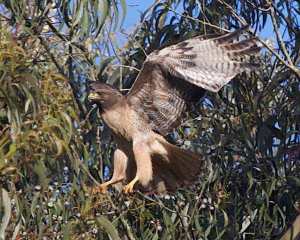
Red-tailed hawk nesting in eucalyptus.  Courtesy urbanwildness.org
Red-tailed hawk nesting in eucalyptus. Courtesy urbanwildness.org

We are too ignorant to understand what THEY want

Mr. Dumbacher wonders how those who share his opinions regarding nature can convince us to want what they want:  “…how do we make the case for diversity?”  Then he proceeds to try to make the case, by looking back on his childhood experiences in nature and passing judgment on them: 

“My father spent much of his spare time in open green spaces. Sometimes I would go with him, and we heard birds and saw squirrels and geese, and we believed that we loved and understood nature. After spending many more years of my life studying biology, I realized that we were just golfers on a relatively impoverished golf course landscape.”

It struck us as unspeakably sad that he would look back on his childhood experience in nature with such condescension.  It seems that each of us should have the right to enter nature with whatever level of knowledge we can bring to that experience.  Mr. Dumbacher has a Ph.D. degree.  Does he think a Ph.D. degree is required to appreciate nature?  Such a prerequisite would leave most of us out.  Don’t we have a right to enjoy nature too?

Burdened with too much knowledge

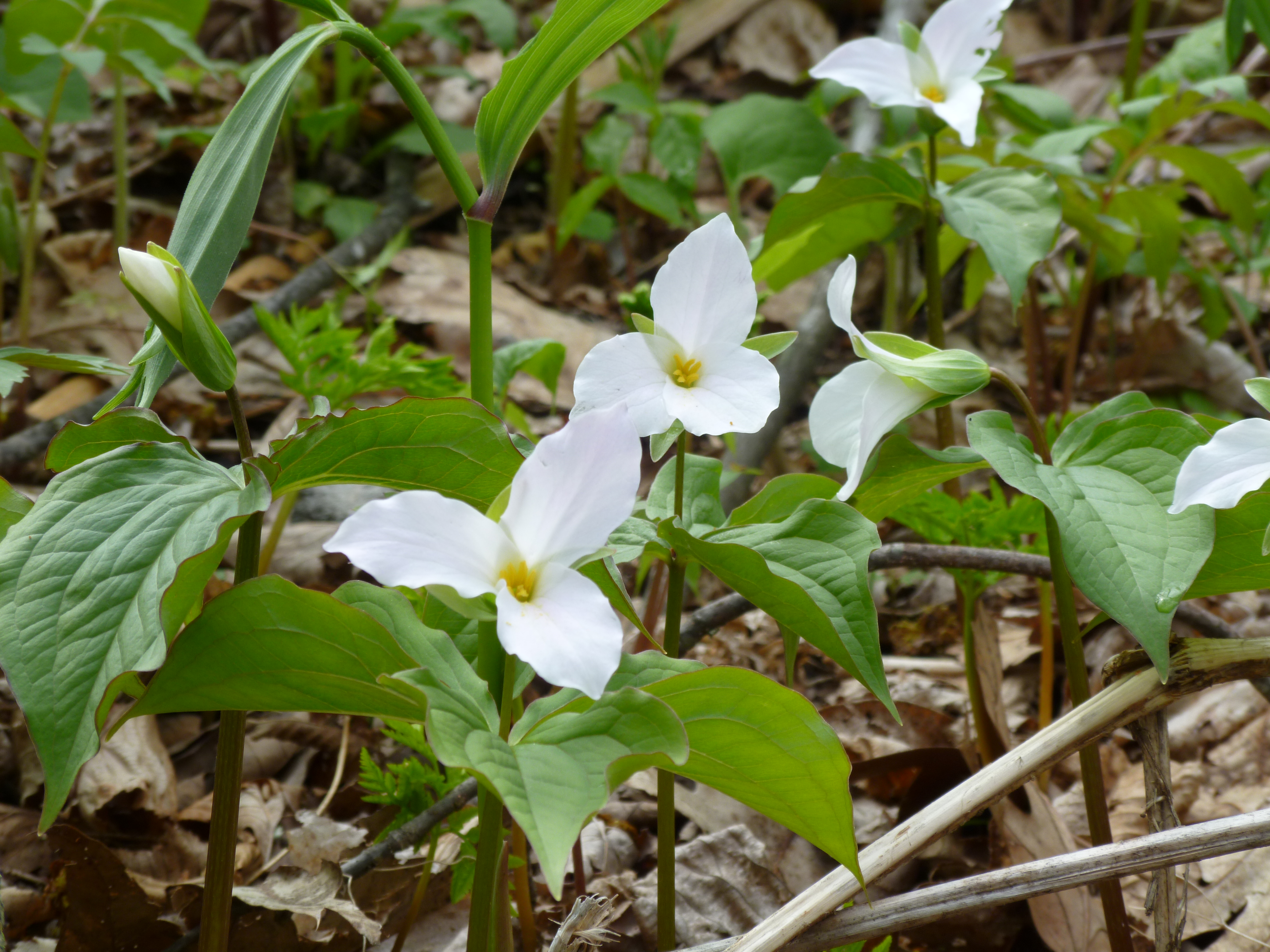
Trilium in Virginia
Trilium in Virginia

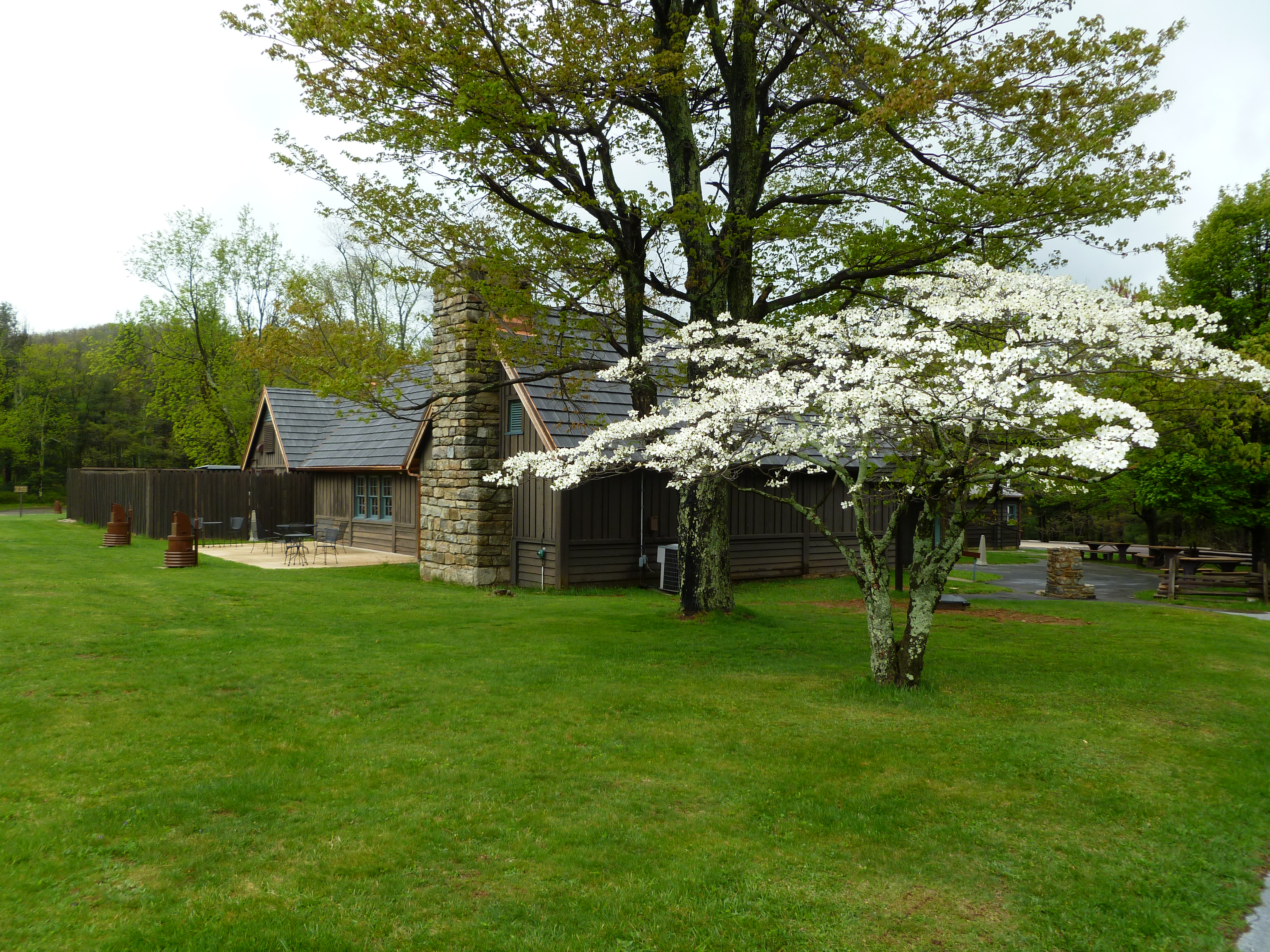
We will use our personal experience to present a contrarian viewpoint.  A few years ago we had the opportunity to drive the length of the Blue Ridge Highway from the Shenandoah Valley in northern Virginia to the heart of Tennessee.  Of course, we had many walks in the woods.  It was early spring.  The dogwoods were blooming.  The birds were actively starting their nesting season.  As much as we enjoy a walk in the woods here in California, there was even greater pleasure in those walks in the eastern woods because we have almost no knowledge of what is native or non-native there.  It was a great relief to be able to walk without passing judgment, as we have been taught to do in California.  There was no need to point fingers and declare that something “doesn’t belong there.”  We could accept the beauty of everything we saw on equal terms.  Ignorance was bliss.

Dogwood, Virginia
Dogwood, Virginia
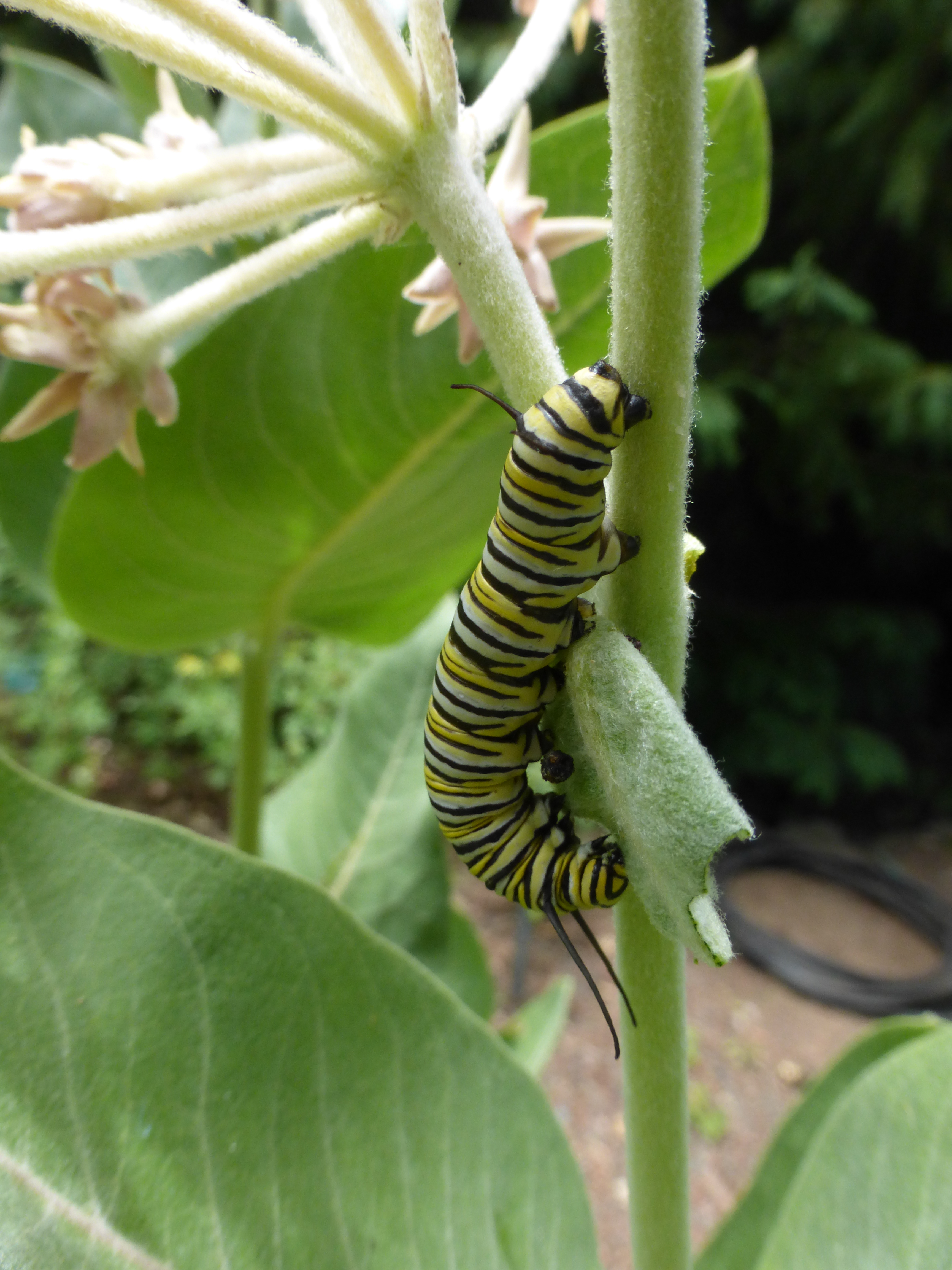
Monarch caterpillar on milkweed.  Tilden Botanical Garden
Monarch caterpillar on milkweed. Tilden Botanical Garden

We will contrast that experience with a more recent experience in the East Bay Regional Park District Botanical Garden in Tilden Park.  We were taking a course in which several participants in the class were members of the California Native Plant Society.  You might think that a botanical garden in which solely natives are planted, would be a pleasant place for them to walk.  It wasn’t.  They were outraged by the few non-native “weeds” we saw.  They crawled over the plantings to pull the uninvited plants from their roots.  One was a lovely scarlet pimpernel, blooming in its bright coral amongst native plants in their dormant, brown phase.   Their destructive attitude detracted from our enjoyment of the garden.

The “tiny minority” myth

As the “restoration” projects in the Bay Area have become progressively more destructive, the public has become progressively more opposed to them.   Mr. Dumbacher calls us a “vocal minority” in his article.  He is mistaken.  We consistently outnumber native plant advocates (sometimes ten to one) whenever we have an opportunity to express our opinion in a public venue:  in public hearings, on petitions, during written public comment periods.  We are not a minority.

Mr. Dumbacher is also mistaken in his description of the project which he is defending in his article.  He says, “…a Sutro Management Plan was formed that balanced incremental thinning with incremental planting of native species, in order to increase diversity and reduce the fire threat.”  We will give Mr. Dumbacher the benefit of the doubt by assuming that he has not read the Environmental Impact Report of February 2013, in which the project was described in detail.  Within a year five years, that project would have destroyed 90% of the trees (about 30,000 trees) and understory on 75% of the acres of Mount Sutro.  It proposed no planting of native plants, with the exception of a few small areas if money became available to pay for them.   The word “thinning” is used by native plant advocates to describe their plans to destroy the forest because it sounds less destructive.  However, it is not a word that accurately describes the destruction of 90% of the forest.

What happens to the birds that are there now?

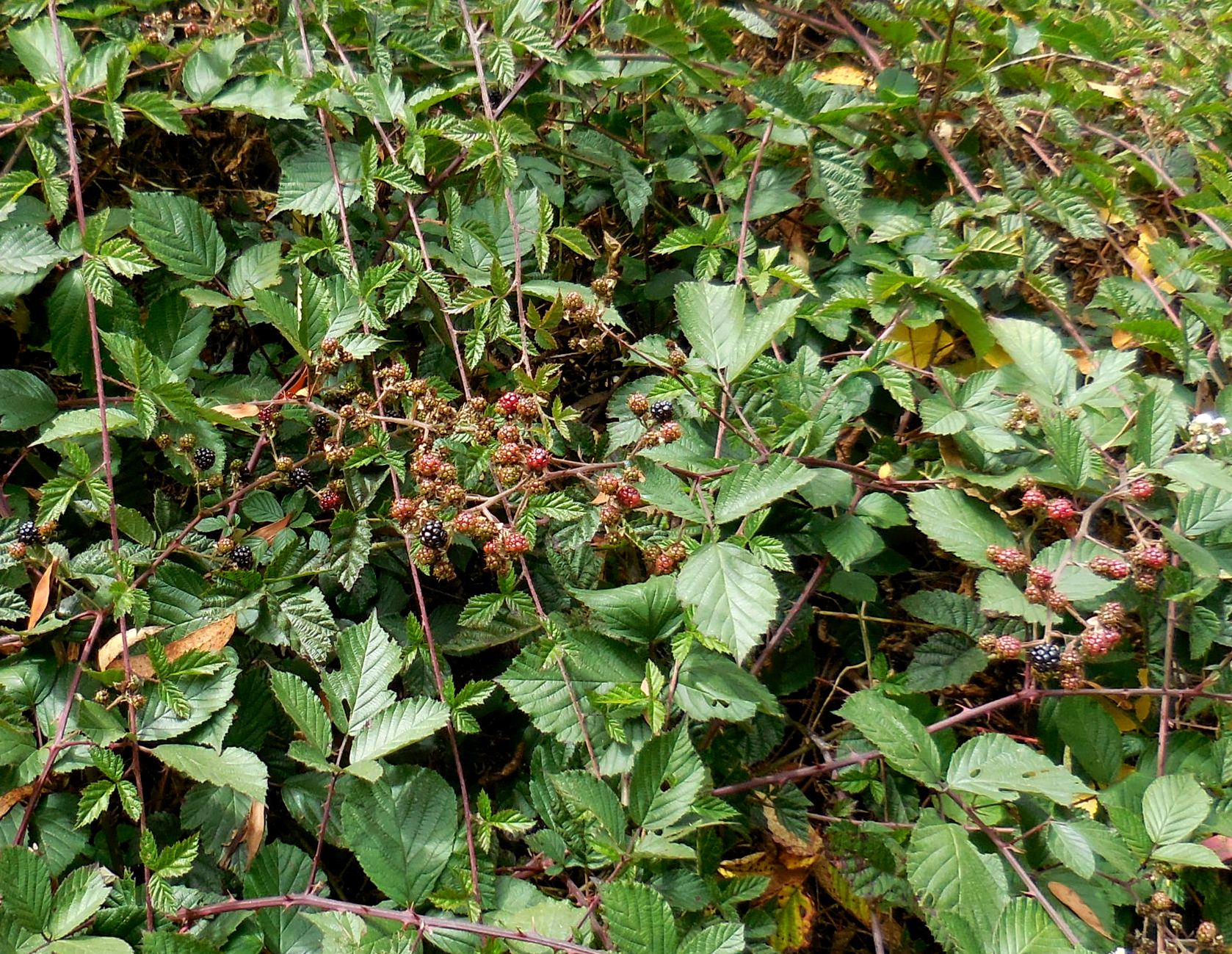
Blackberries in the Sutro forest.  Courtesy Save Sutro Forest
Blackberries in the Sutro forest. Courtesy Save Sutro Forest

Unfortunately, we can’t share with our readers the lovely pictures in Mr. Dumbacher’s article because we don’t have permission, although you can visit the article to see for yourself.  You will see beautiful birds sitting on plants that exist now on Mount Sutro and Mount Davidson.  They are native plants that thrive in the understory of the forest and are unlikely to survive the devastation of the destruction of the trees and understory.  There are also non-native plants in the understory.  Many of them, such as blackberry, are valuable sources of food for birds.  There is no evidence, and no reason to believe, that destroying the Sutro forest will increase the number of bird species in San Francisco. 

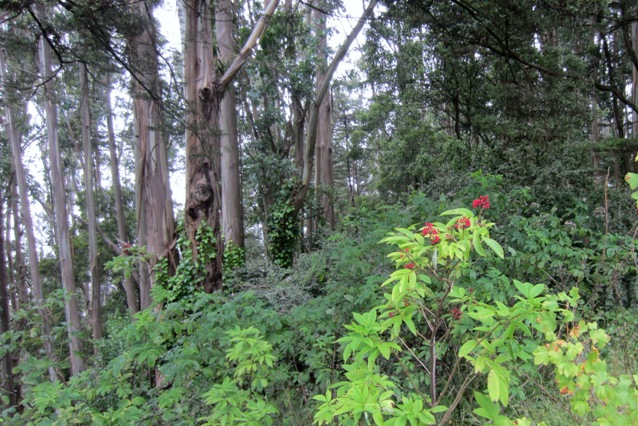
Native red elderberry on Mount Sutro.  Courtesy Save Sutro Forest
Native red elderberry on Mount Sutro. Courtesy Save Sutro Forest

One wonders if Mr. Dumbacher isn’t aware of this obvious contradiction:  he illustrates his article with birds that live in the forest now while trying to make the case that the forest must be destroyed so he can see more birds.  Perhaps the answer is that he doesn’t really want more birds, he is only interested in certain birds:  “But If you want migrants to visit your city, if you want rare birds to breed in your local parks, and if you want a county list that exceeds 200 species, then please get involved in local habitat management and restoration, and be ready to speak up for nature in your city.”

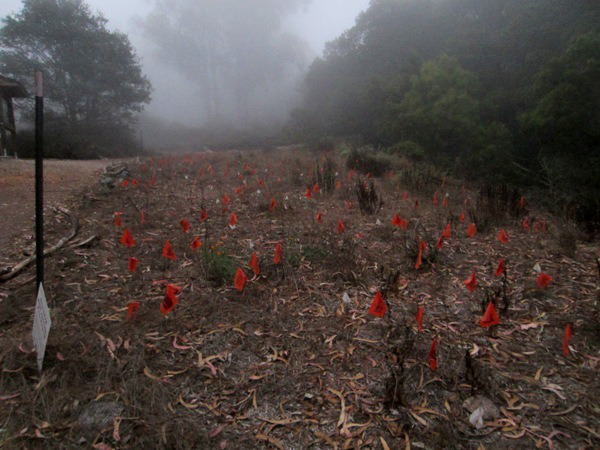
The "managed" portion of the Sutro forest:  orange flags and weeds
The “managed” portion of the Sutro forest: orange flags and weeds

Here is another contradiction in Mr. Dumbacher’s appeal for your support for destroying most of the Sutro forest:  “we should try to manage a more natural forest.” In what sense is a “managed” forest also a “more natural” forest?  The Sutro forest is natural now, wild and unmanaged, a delightful mess.  We see no benefit in “managing” it.  Our experience with the managed summit of Mount Sutro is herbicide use (in the past), irrigation, wood chips, and dry weeds populated with colored flags where someone has apparently planted something that didn’t emerge from the wood chips.

Does Mr. Dumbacher speak for you?  Do you share his view of “nature?”

Postscript:  Mr. Dumbacher’s viewpoint is particularly troubling because he is Chair of the Department of Ornithology and Mammalogy at California Academy of Sciences, the Bay Area’s leading institution of science education.    It seems that there is little science in Mr. Dumbacher’s viewpoint as expressed in his article.

Invasive Species?

We spent nearly two months analyzing the California Invasive Plant Council’s draft reassessment of blue gum eucalyptus and informing our readers of the fallacious reasoning used to continue its classification of blue gum as “invasive.”  We are badly in need of comic relief and we assume our readers could use some as well.  We are republishing with permission an article by Robert Platt Bell from his blog, “Living Stingy.”  Mr. Platt is a patent attorney on Jekyll Island, Georgia. His blog gives advice about “how to live a better life with less money.”  

His sarcastic criticism of invasion biology reveals that he is a man of considerable good sense.  Although we tend to use scientific arguments on Million Trees to critique invasion biology, Mr. Platt’s article demonstrates that a little common sense is really all that’s needed.  Mr. Platt ends his article with the disclaimer that he doesn’t have a cat and we will do the same.  We don’t have a cat, never have, never will. 


Some folks claim that the ordinary house cat is an "invasive species"
Some folks claim that the ordinary house cat is an “invasive species”

Your tax dollars at work.   Here on the island, they have attached little cameras to cats to monitor their behavior.  The University of Georgia is funding the study, which in turn is funded by your taxes.

They also have sent out a “feral cat awareness survey” to everyone on the island, and again, this is funded by UGA.   The “survey” is more of a “push-poll” in that it asks questions that are more answers than questions.  “Did you know that cats are responsible for killing billions of songbirds every year?” – that sort of thing, courtesy of the bureau of specious statistics.

Actually, the results of “kitty-cam” so far are that cats (1) lick themselves a lot, (2) sleep, and (3) eat cat food.   Only one cat has been caught killing for food, and no word on whether it was a rodent or a bird.

But the oddest thing about this “poll” was that they were trying to characterize house cats as “invasive species” by the way the questions were asked.

“Invasive Species”  is the hot, new, trendy term for biologists and wildlife managers to use – and one they use to justify poisoning the air, water, and soil, all in the name of “preserving nature”.

We are told (get this) that some species are “native” and others are “invasive” and that the latter need to be slaughtered, as they will push out the “native” species over time.

This may or may not be true.   The point is, the species doesn’t consider itself “invasive” anymore than the species it is displacing (which at one time was no doubt “invasive” as well).

Some try to put a spin on this based on a human vector.   If the species is relocated due to some act of mankind, then it is “invasive”, whereas if it just migrated here, I guess it is natural.  This also is a load of hooey, as the vectors that move species from one area to another have little to do with whether the species would eventually get there under its own power, or whether it would adapt to the new environment.

And speaking of “invasive species,” this sort of discussion usually neglects to address the most invasive species on the planet – a species that has occupied every ecological nook and cranny on the planet and adapted itself to harsh environments and even space.

Yea, I’m talking about you and me – human beings.   We have over-run the planet, but no one talks about euthanizing or neutering people on a massive scale.

On the other hand, we can poison some trees or a carp or whatever, and that’s going to fix everything up just Jim-Dandy!

I think biologists who believe that have their head up their ass, or are just looking for grant money.

In the Northeast, we are told the Zebra Mussel is “invasive” – but it has turned murky brown lakes crystal clear.   The powerplant that has to clean its inlet screens, we are told, is justification for dumping poison in the water, or for fining some unwitting fisherman hundreds of dollars for dragging a piece of seaweed on his boat trailer.  The upshot is, the zebra mussels are winning, much as the lamprey eels are (and the snakehead fish).

In the Everglades, we watched as “wildlife managers” drilled holes in trees and filled them with poison.   Their crime?  Being non-native.   Whether this will permanently kill off these trees is debatable, and the long-term effect of poisoning nature is something not studied.   And the cost of this “cure” is pretty staggering.

Nature expands into environments where it can adapt, and you can’t stop that.  It is like Boyle’s law about gas – it expands to fill a vessel.   Trying to hold back the tide of species is pointless and fruitless (pardon the pun) as nature will sneak around at every turn, as soon as you let your guard down.

Yes, it is bad there are Boas in the Everglades.   It is also irrelevant whether they got there as escaped pets or were dropped from an airplane or swam over from South America.   They are there, and trying to extinguish them is going to be a long, difficult, and expensive job that will never get done.

Here on the island, a couple runs a program that captures and neuters cats and then releases them.  It has been effective as the cat population has plummeted from the 1990’s until today.   (They did a similar thing in Key West, and now there is no cat problem, just a chicken problem).

But on the other hand, we are being overrun by deer – and not in the sense that “the deer ate my flowers” nonsense.   We simply have more deer than the island can support, and they are becoming smaller and more sickly as a result (and more brave, as they are not afraid of humans at all).   New breeding stock was brought in to try to reverse the trend, but it has not really helped.   Talk of managing the deer population or relocating deer is shouted down as “inhumane”.

But apparently, it is open season on cats.

(Disclaimer:  I do not presently own any cats.  I like them, but don’t like cleaning out litter boxes.  Hence I have no cats).