This post is an introduction to Bev Wanlin, who is writing a guest article for Conservation Sense and Nonsense about her family’s long relationship with eucalyptus. Her story begins in Chile, where her ancestors lived before coming to the East Bay in 1849, but I must not steal her thunder with more than that tidbit. Stay tuned for the full story.
While Bev completes her guest article, I am publishing her brief report about the many old eucalypts that have been saved in Pinole, where she lives. Bev’s narrative also explains the many important roles that eucalyptus plays in California. Thanks, Bev, for keeping tabs on the eucalyptus forests in Pinole that are constantly threatened by the hardcore nativists who demand that they be destroyed.
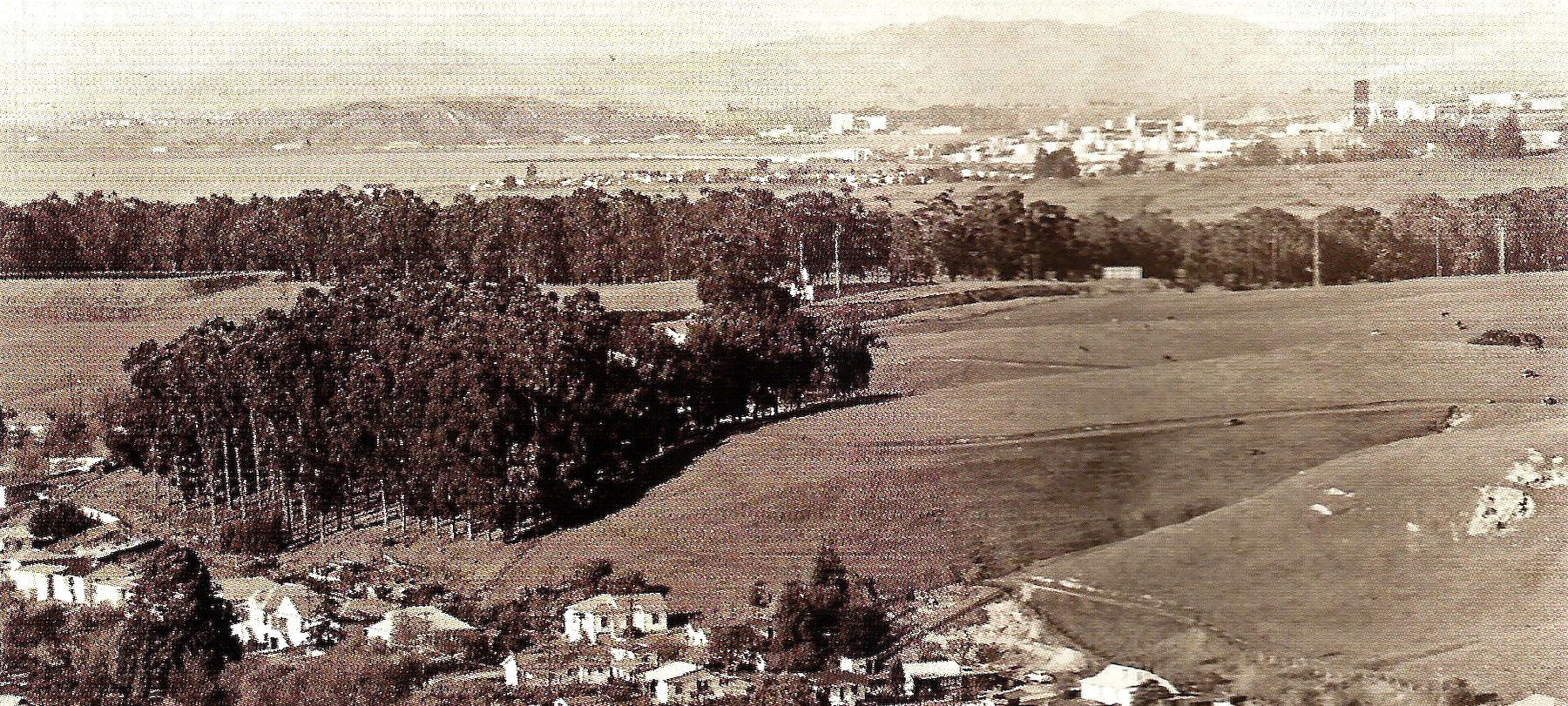
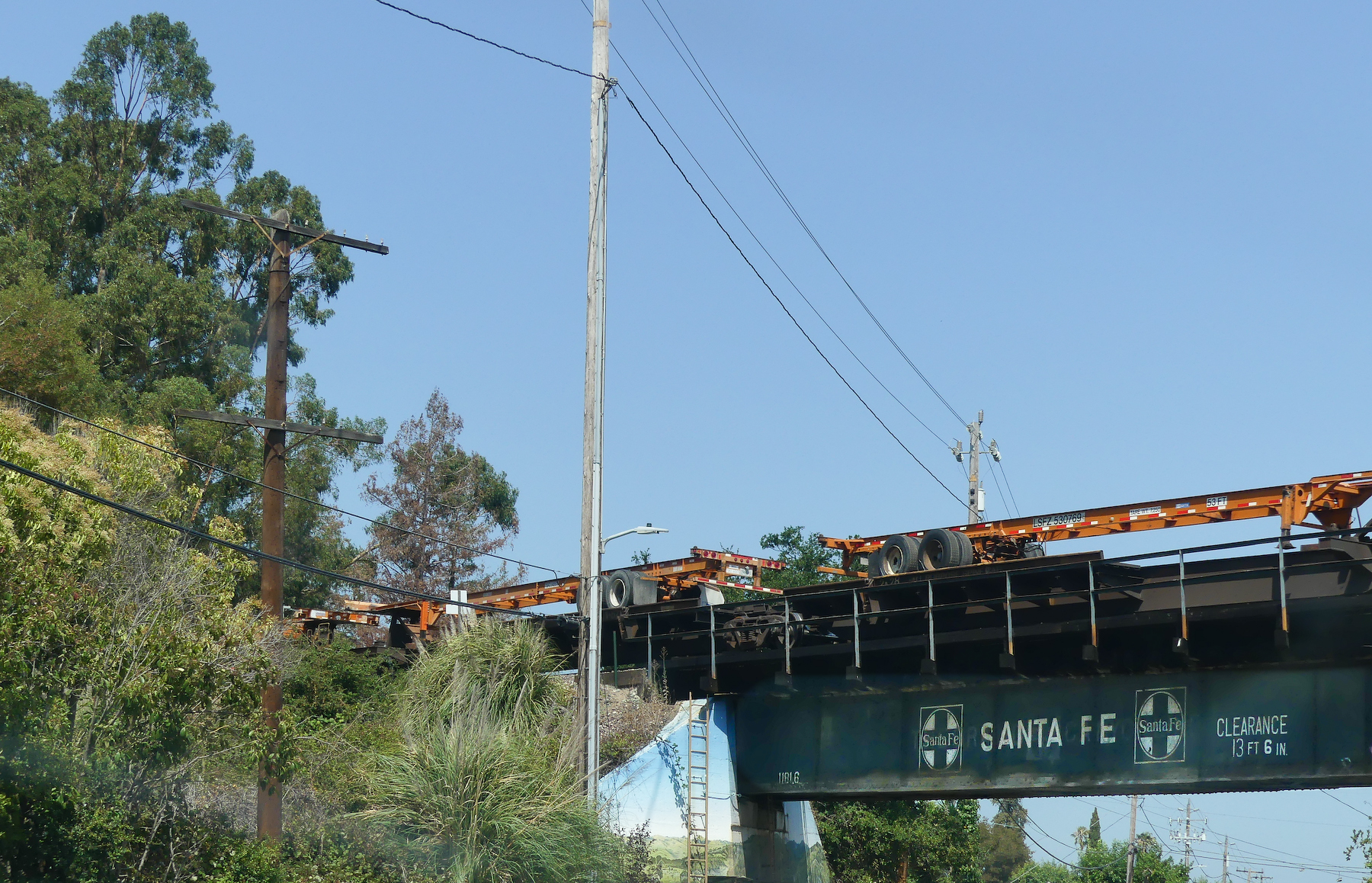
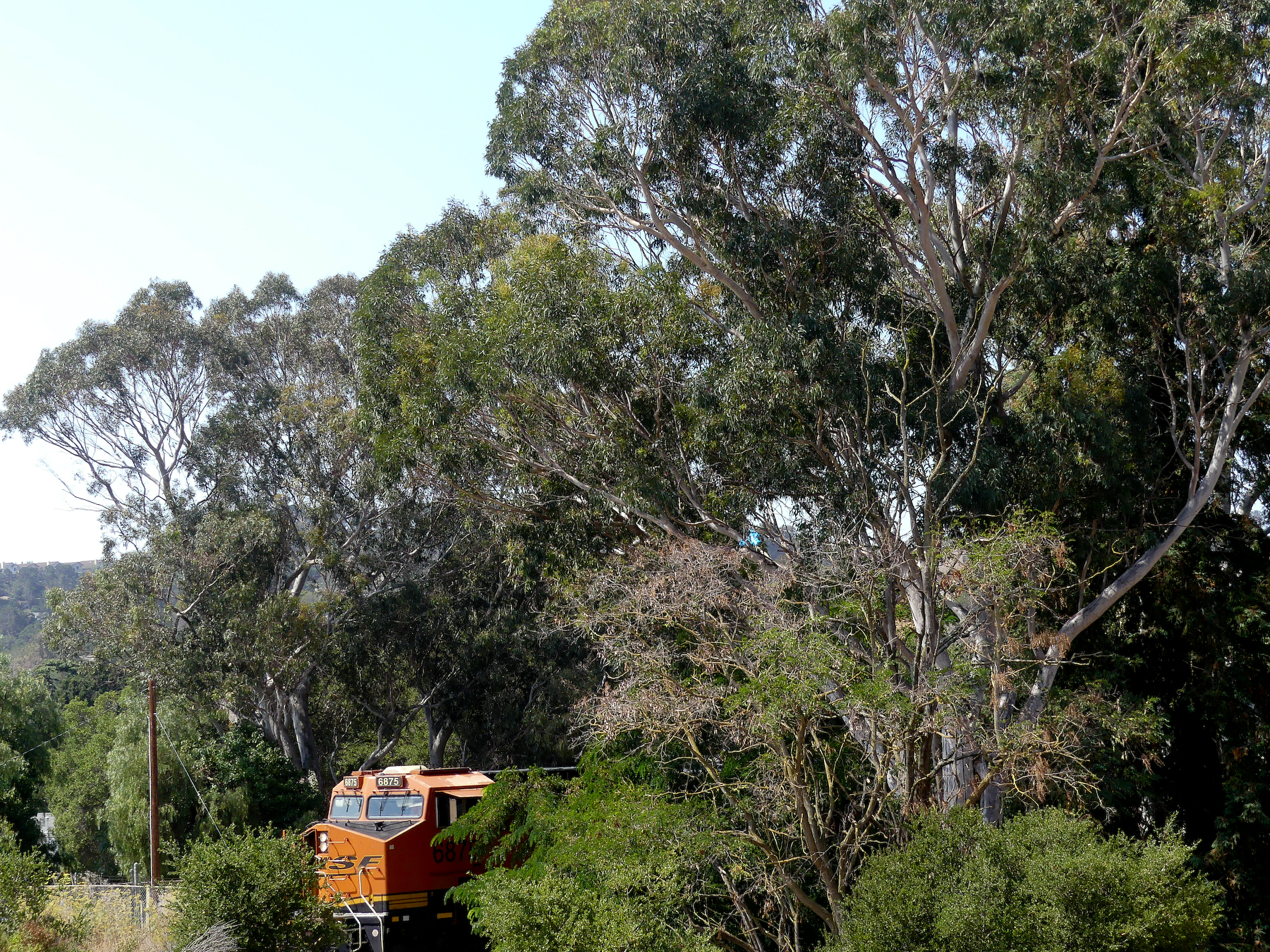
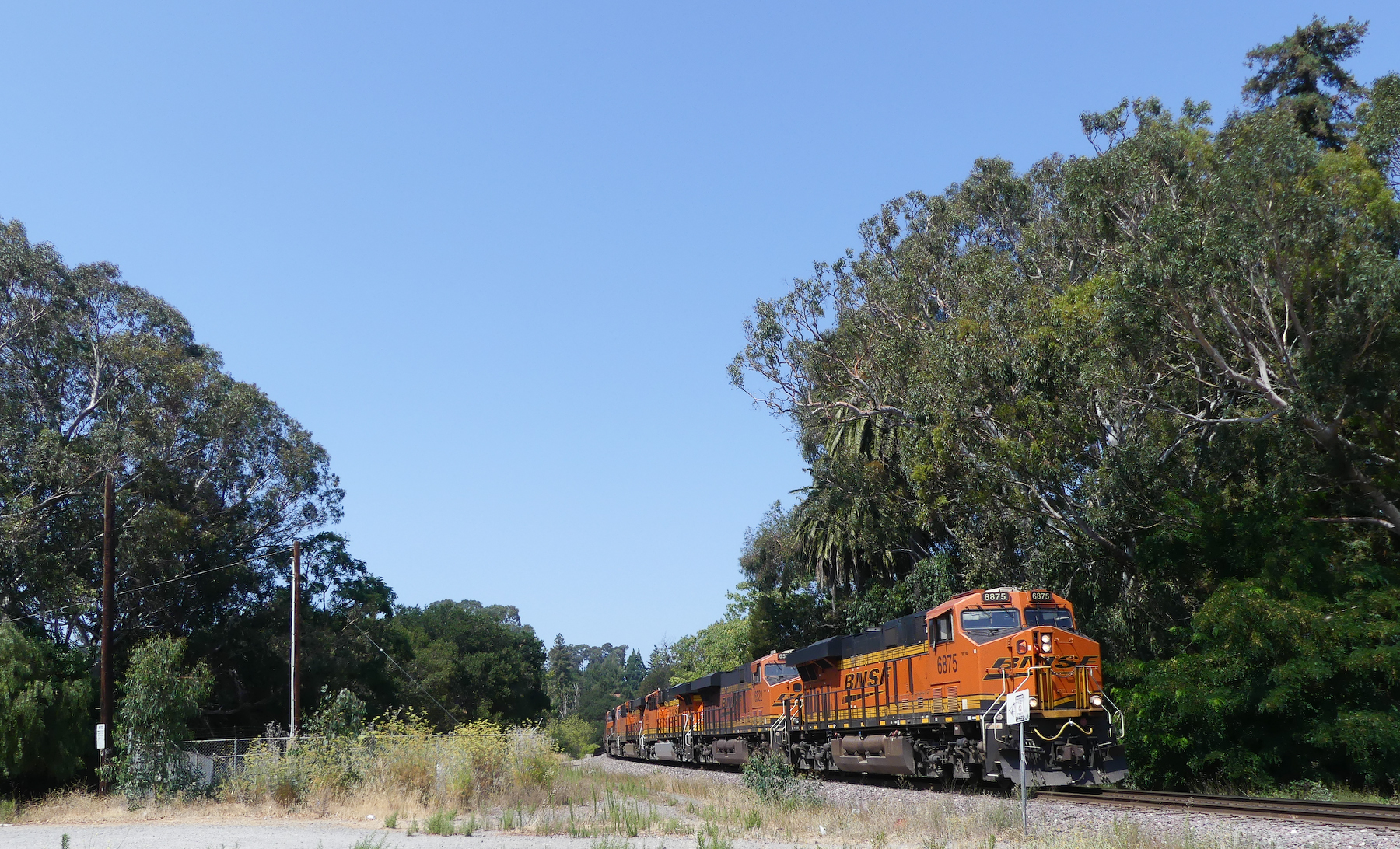
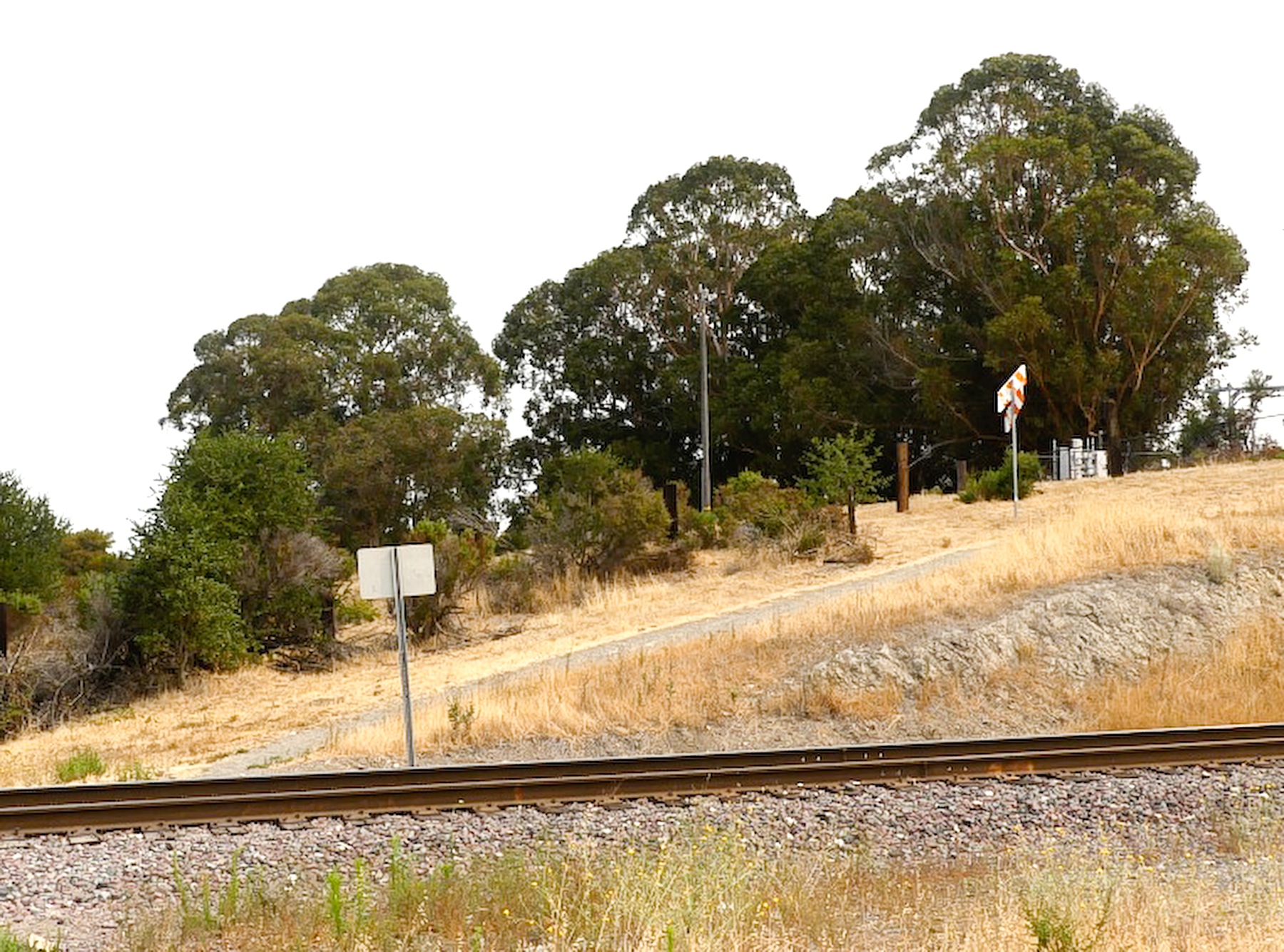
View of downtown area of Pinole, CA, in 1960. Noticing the long line of Eucalyptus trees going west to east towards the top of the photo, I decided to search the area and try to locate what was left of them. Courtesy of Pinole Historical Society I found an old Blue Gum Eucalyptus stand above the Sante Fe Trestle built of wood in 1899-1900 on Tennent Ave. between San Pablo Ave. and the Bay. The Sante Fe ran through Pinole early on. The Eucalyptus trees were planted on each side of the railroad tracks. This BNSF train seems like it’s emerging from a Eucalyptus forest. But taken from a different angle, (#4) you can see how far apart the rows are. The rows of trees possibly were planted as a windbreak, or maybe to muffle the noise from the train engines. [Webmaster: I have taken the Capital Corridor Amtrak train to UC Davis many times and am familiar with that stretch of the trip. It is always a treat to pass through that small forest of old trees.]
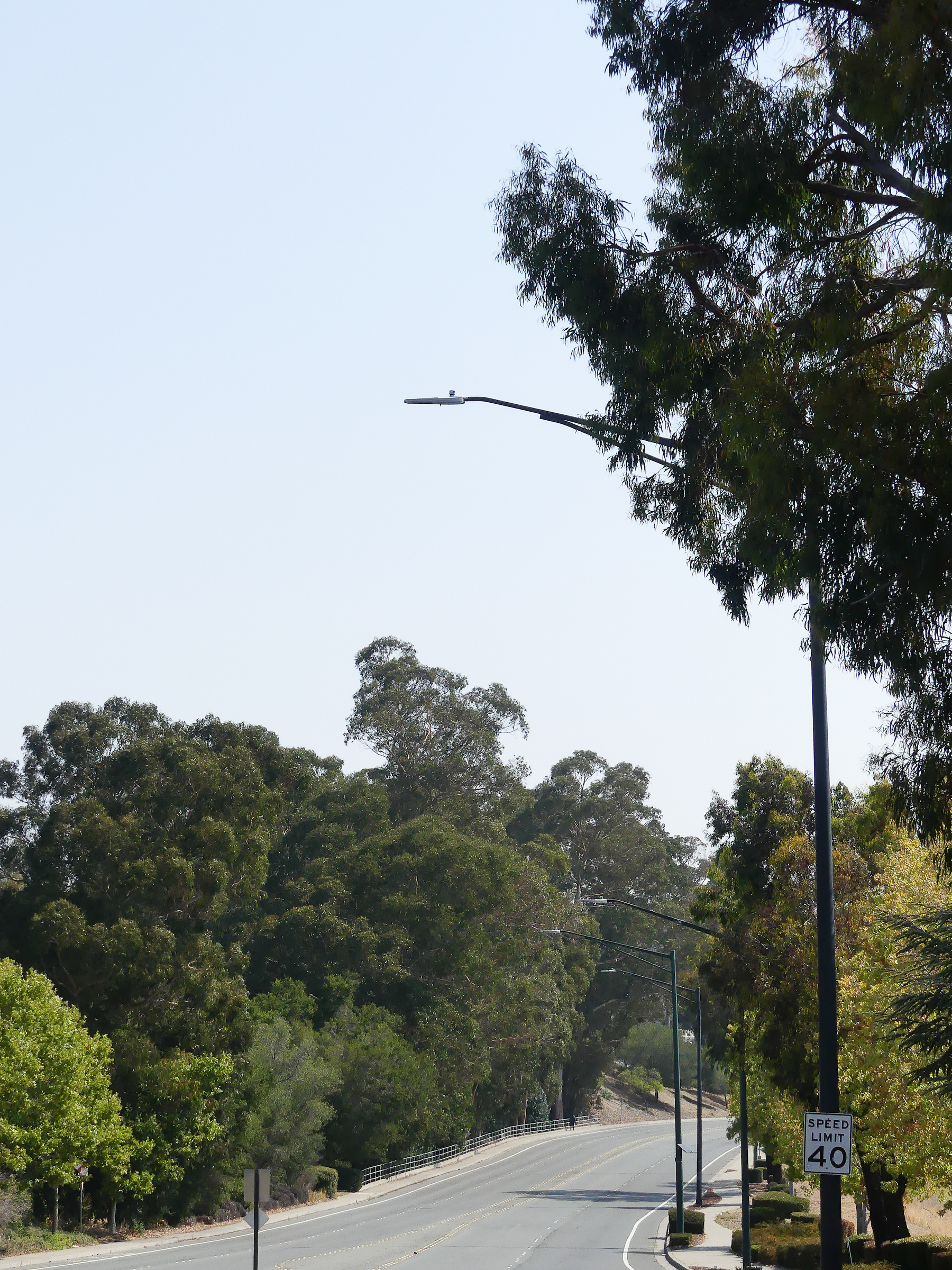
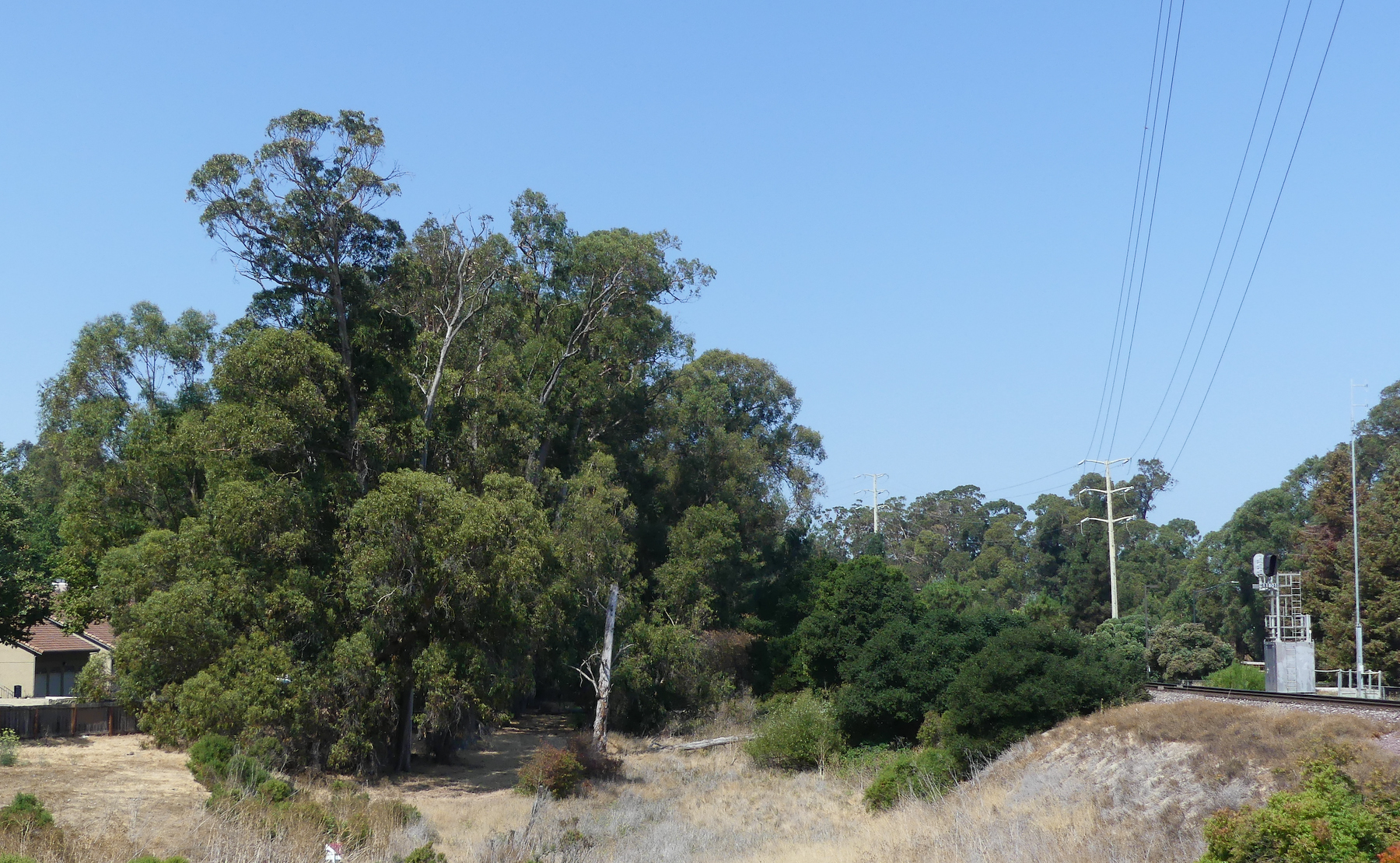
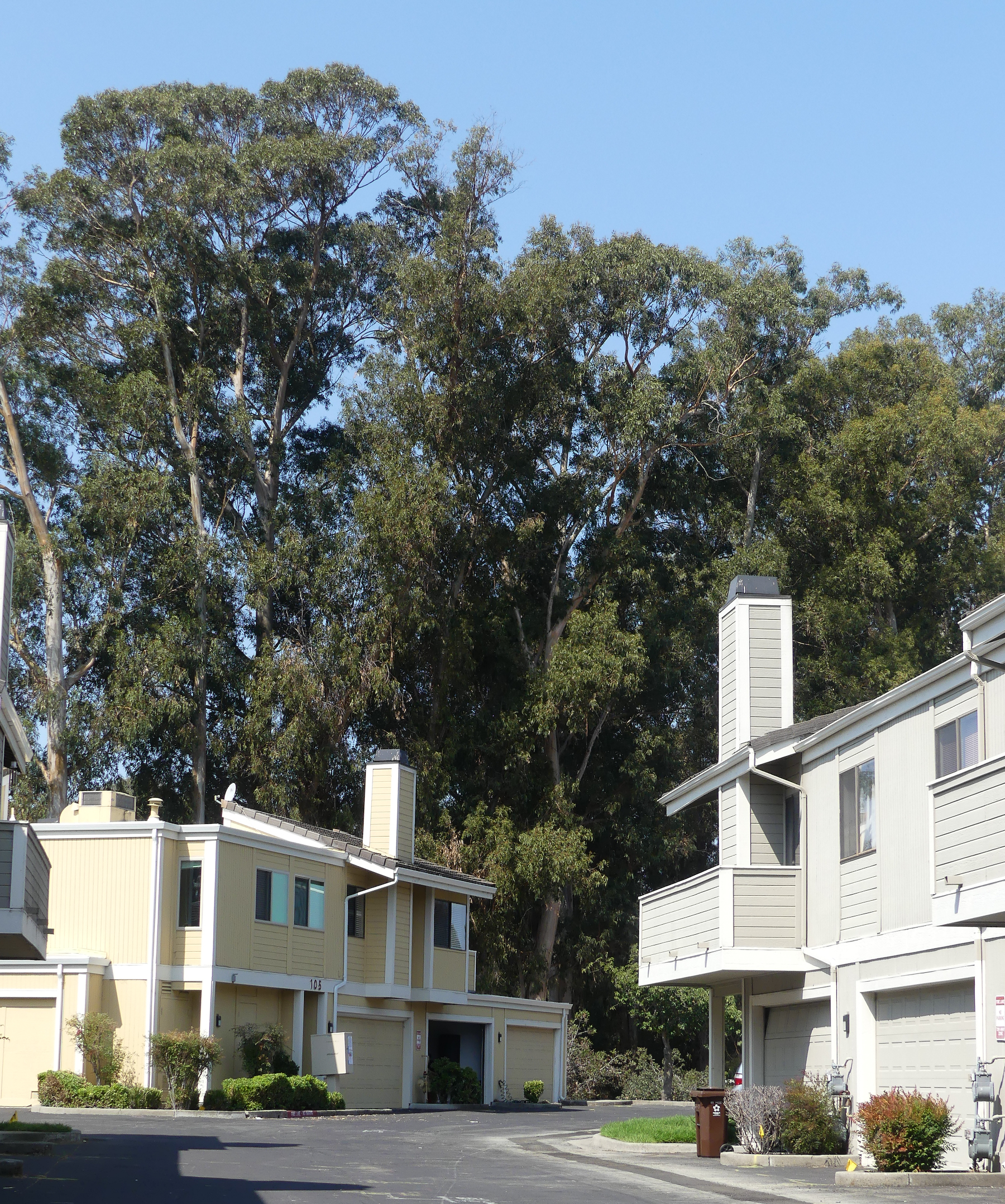
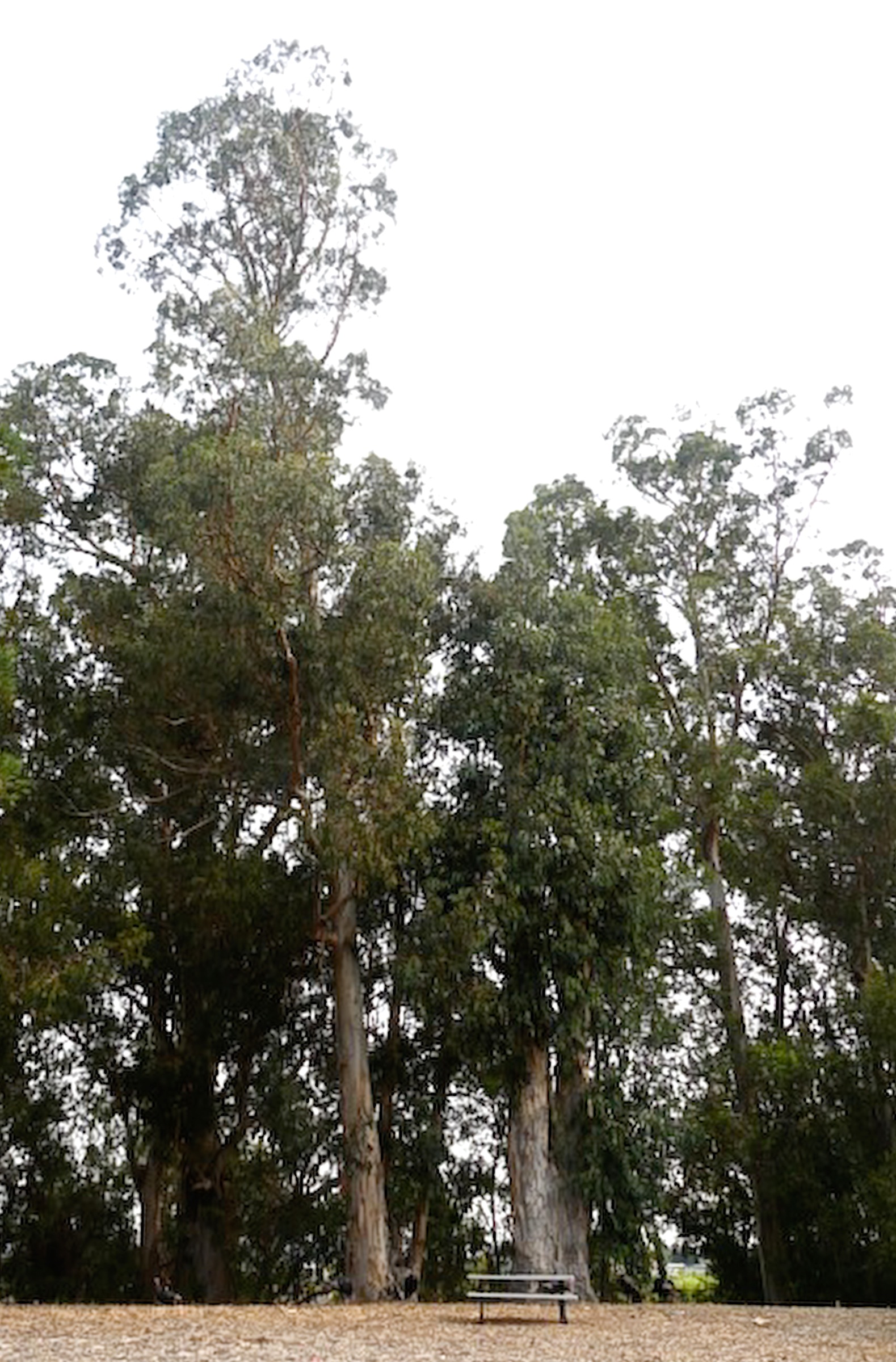
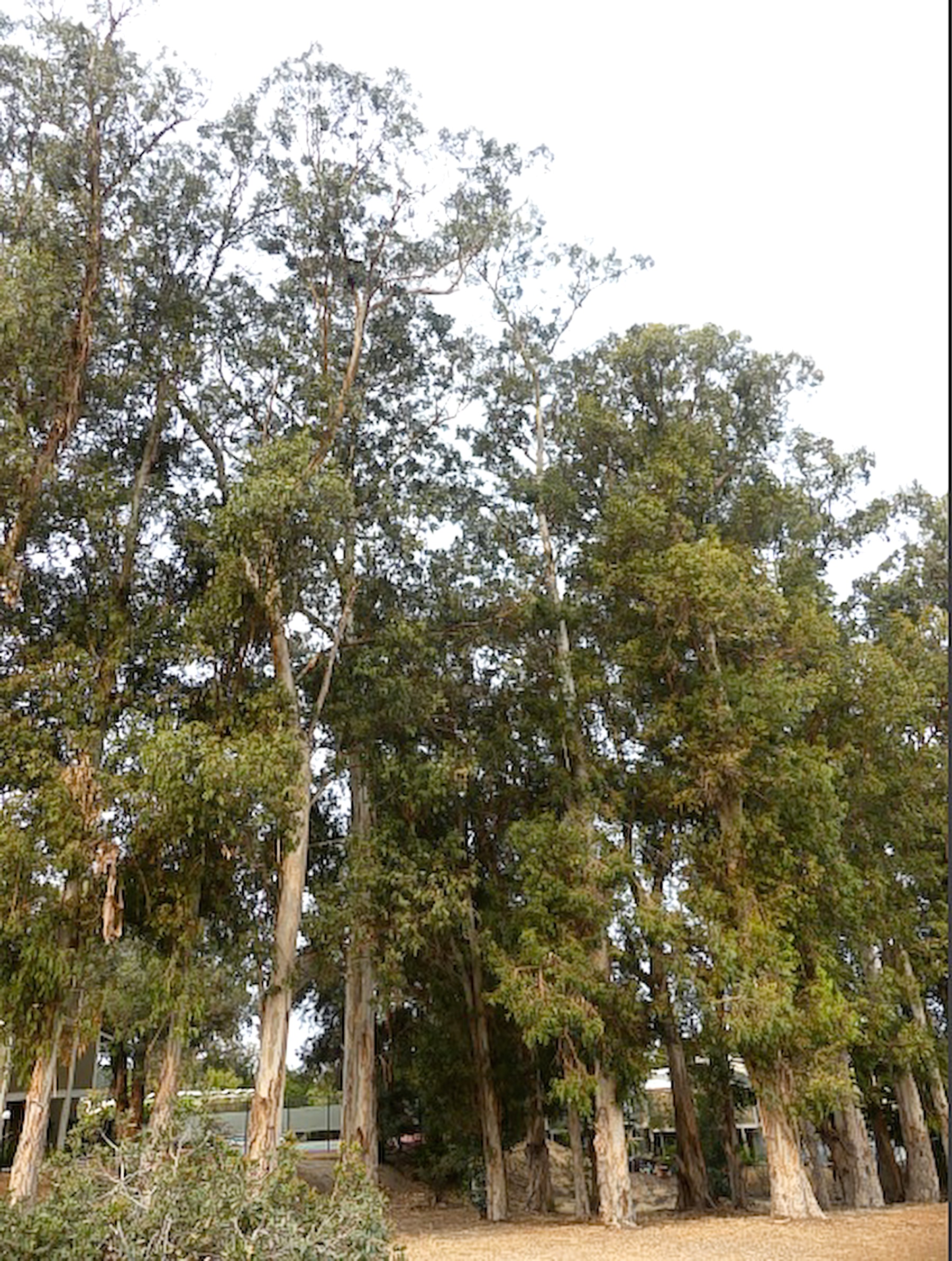
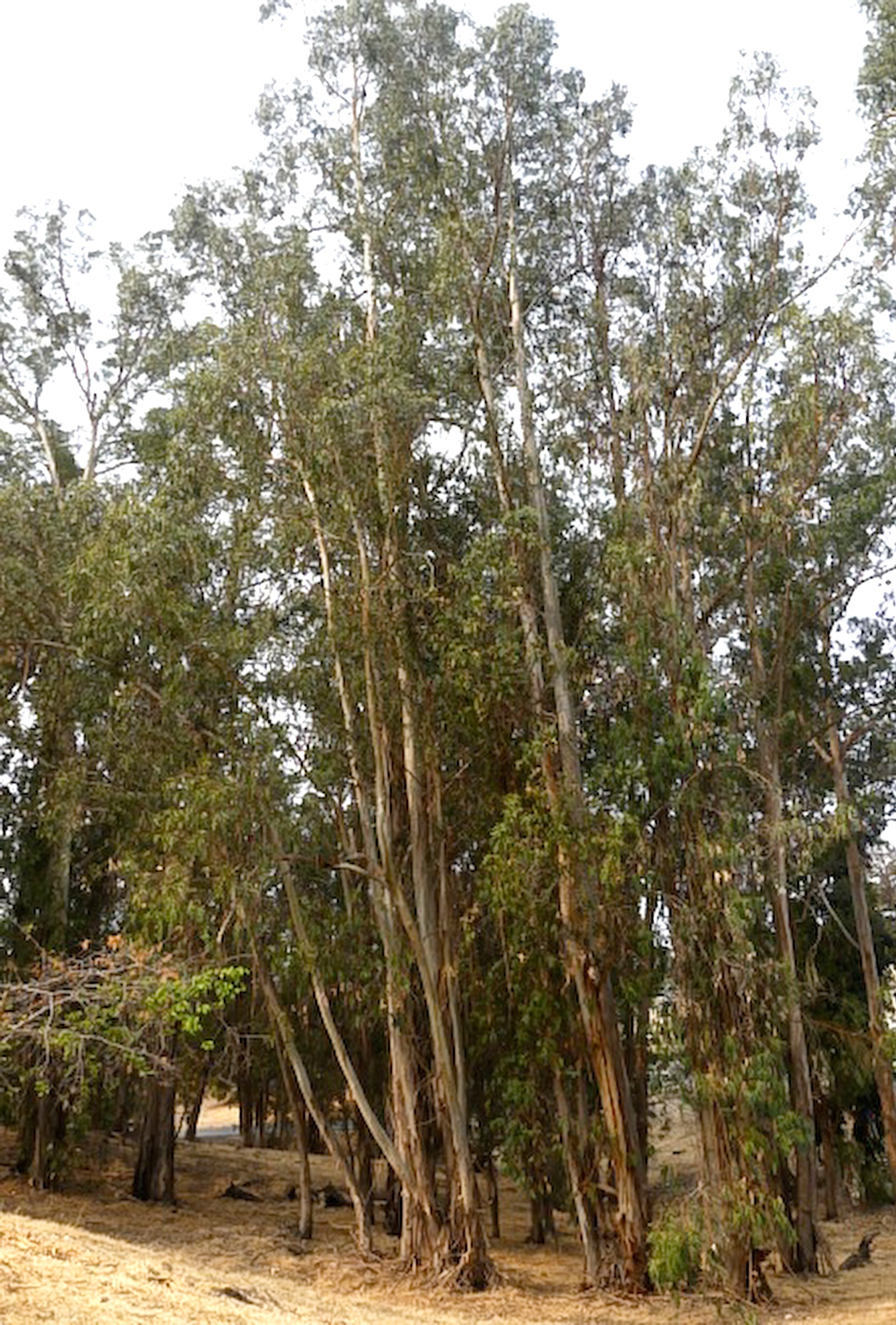
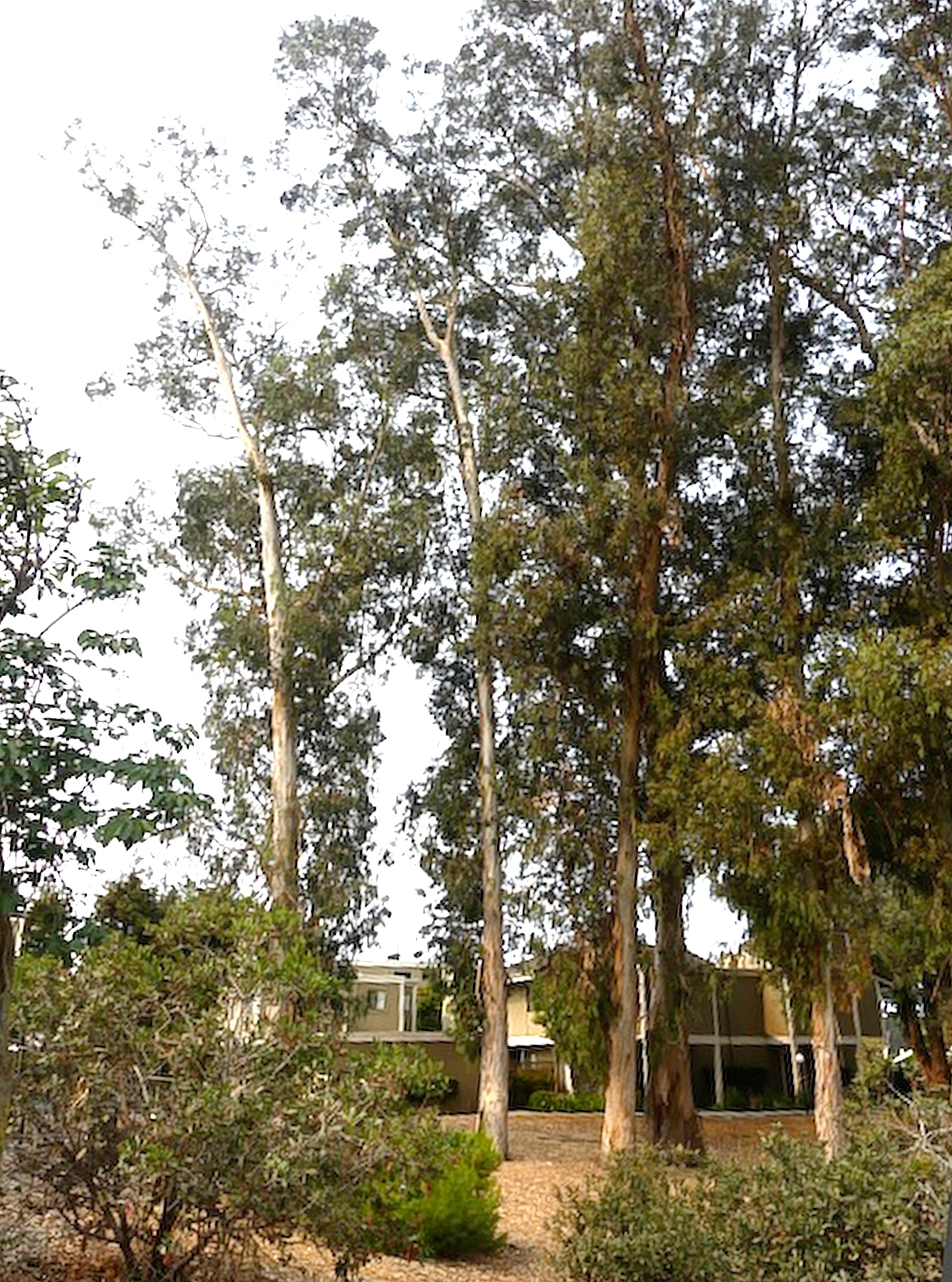
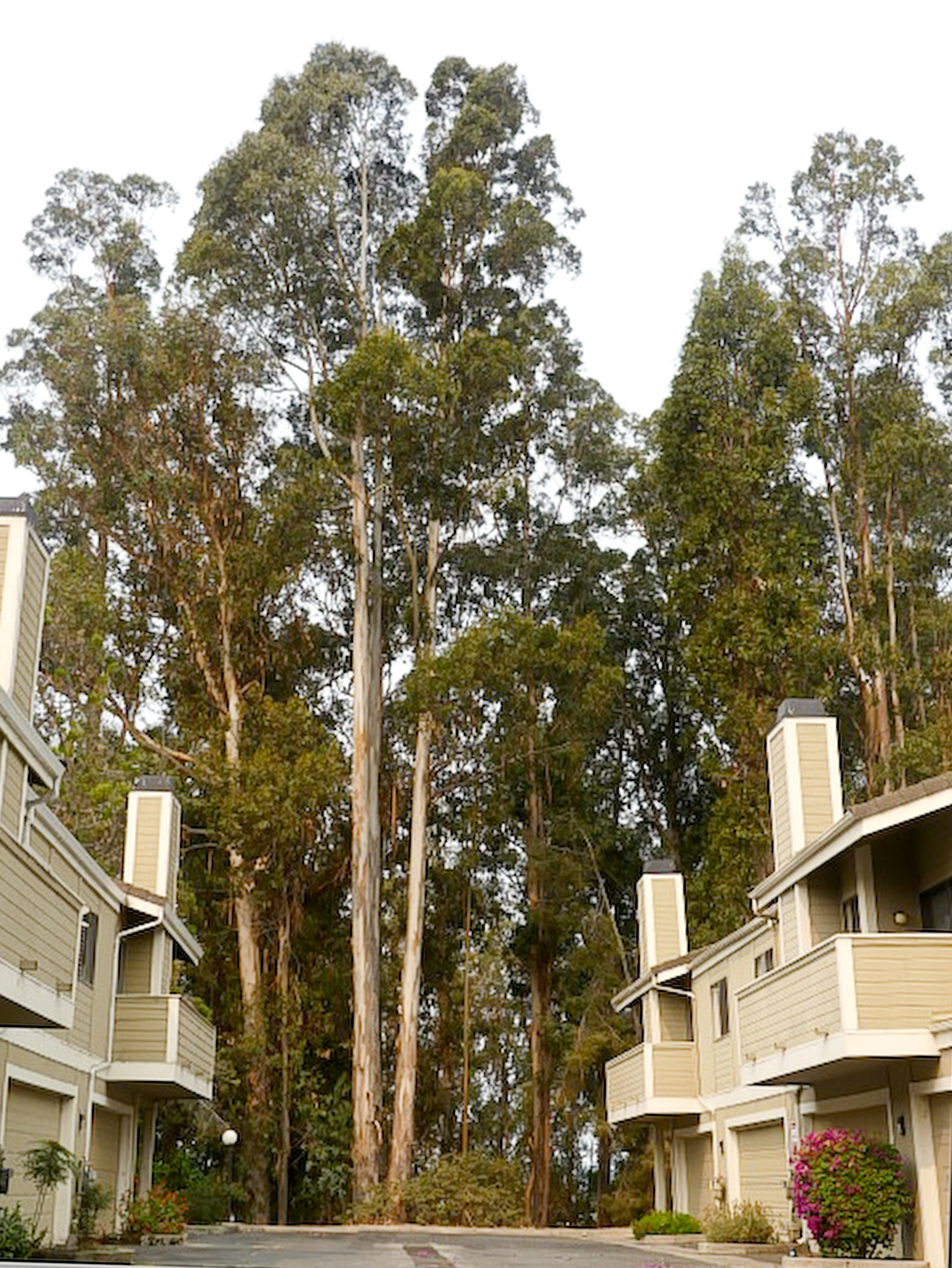
Very close to the tracks in Pinole (#5) a double row of trees has been converted to a very nice walking trail behind houses in the city of Hercules.The old trees now line San Pablo Ave. that runs through Hercules to the town of Rodeo. The train tracks, still in use today, run along side.The RR tracks run through Hercules where nearby town homes have been built (on the left).Nearby off of Hercules Ave (heading north, then turning right onto Zeus) you’ll find an interesting condo community (150+) that chose not to cut down the old growth Eucalyptus trees (possibly offspring from the original Eucalypts planted next to the tracks). The condo development is called Olympian Hills. I found it to be a wonderful combination of conservation and beauty!They left the Eucalyptus stand to form a natural fence line for their community park/playground.They left the lineup of Eucalyptus to act as a windbreak and to provide much needed shade for their tennis courts.They left stands of Eucalyptus around the condos for wildlife cover and a great view from their windows!On the hillsides next to the condo buildings, they left the old growth not only to provide a windbreak, but erosion control and soil stability.A Grand Ol’ Blue Gum standing tall — Beauty and Conservation all in the same place!! [Webmaster: Pictures were taken at OlympianVillage just 2 weeks ago. It’s wonderful to see them thriving at a time of severe drought, when most trees are showing signs of stress.]
Photos and captions by Bev Wanlin, Pinole, California
“Consistently rated the most peaceable of all countries in the world by the global peace index, Iceland has reduced its military expenditure to zero, has no armed forces, and has reduced the inequality gap between rich and poor.” – Scilla Elworthy
We were traveling when the pandemic began in 2020. We felt lucky to get home on one of the last flights to leave Buenos Aires on March 15, 2020, before Argentina locked down. The first stay-at-home order in the Bay Area was announced a few hours after we arrived home on March 16th. Since then it was never clear when we would be able to travel again. Frankly, it still isn’t, but we signed onto a trip to Iceland in July anyway because it was the first trip that looked relatively safe and I guess it was. We were allowed to visit 3 ports before one positive Covid test on our ship cancelled visits to the remaining 3 ports.
Iceland is one of the most geologically interesting places on the planet. It is equally interesting culturally because it is a highly functioning society and one of the oldest democracies in the world. I’ll share a few tidbits about what we learned in Iceland because some are relevant to my interest in natural history.
A New Land
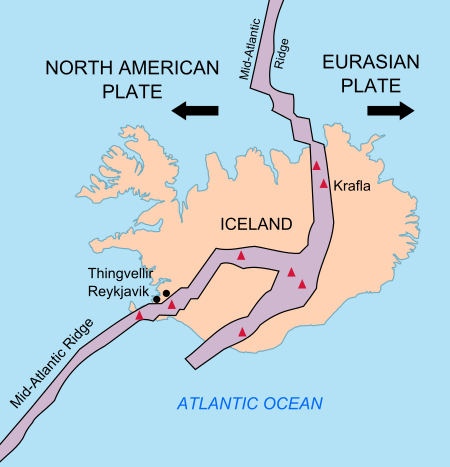
Geologically, biologically, and culturally, Iceland is a new land. It was created about 18 million years ago by molten rock arising from the great rift of the North American and European tectonic plates. Unlike the junctures of most of the tectonic plates that form the surface layer of Earth, the North American and European tectonic plates are separating, which creates an escape route for the molten material below the surface of the Earth. This rift is thought to have separated the fused, singular continent of Pangea, creating the Atlantic Ocean. This separation of the continents began some 180 million years ago, putting the relative youth of Iceland into time perspective.
red triangles are active volcanoes
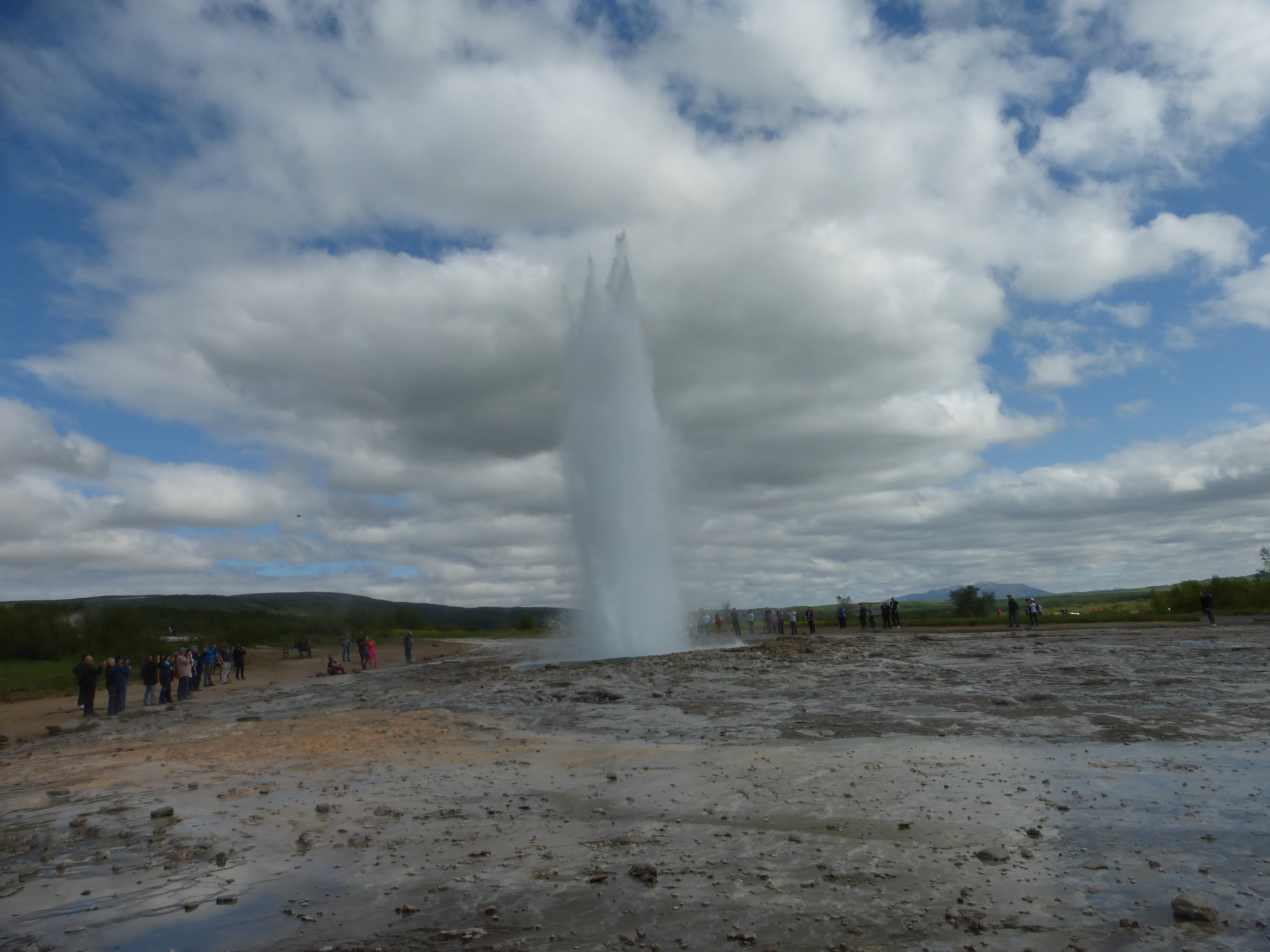
Iceland remains a geologic hot spot where volcanic eruptions, lava flows, and earthquakes are frequent occurrences. Geysers, hot springs, and fumaroles are constant reminders that Iceland sits on a rift in the Earth’s crust that provides immediate access to the Earth’s molten interior. Icelanders heat their homes with geothermal hot water and their electricity is generated hydrologically. Their air is cleaner because they are burning little fossil fuel.
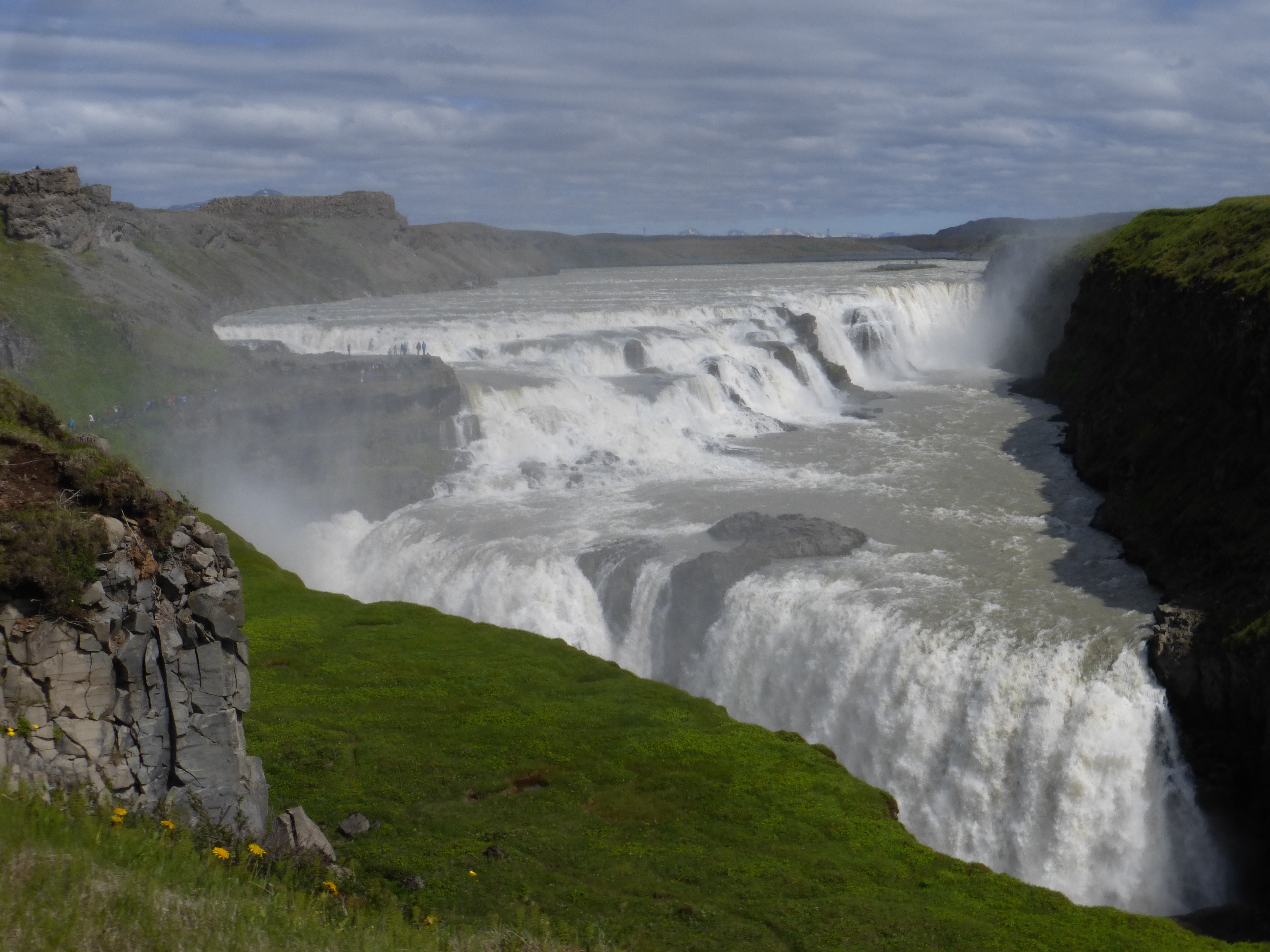
Geothermal geyser in IcelandGeothermal hot spring in IcelandOne of many huge waterfalls in Iceland
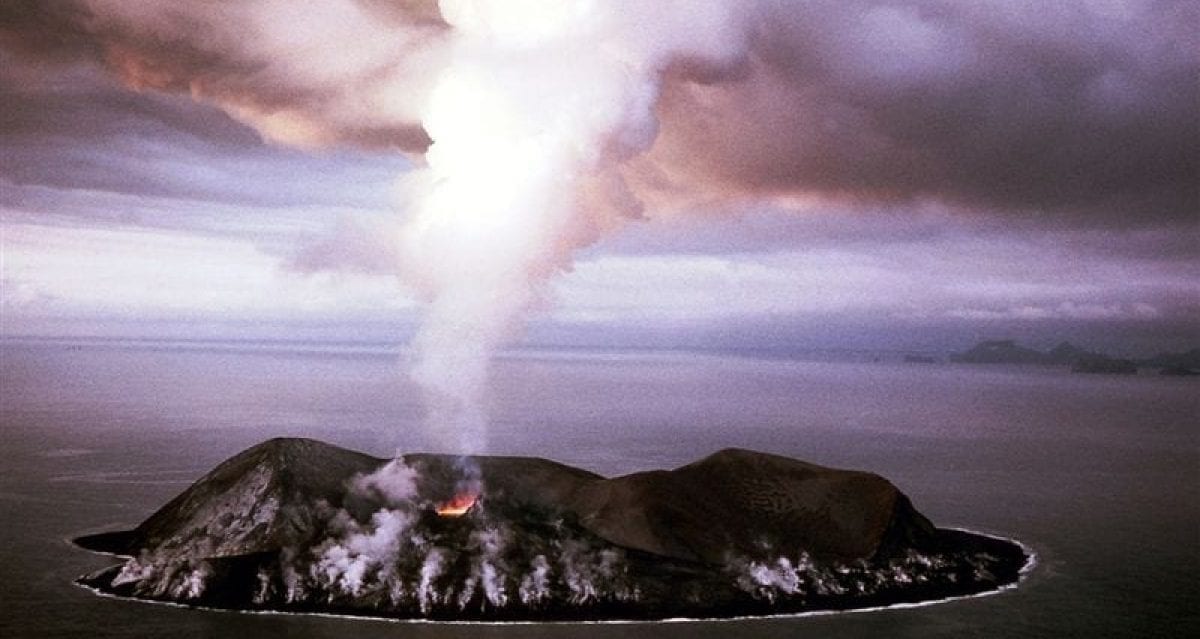
Land created by volcanic eruptions is composed of barren rock. Turning rock into soil is a slow process, typically taking thousands of years. Every new volcanic eruption on Iceland adds more barren rock. A series of volcanic eruptions that began in 1963 created the island of Surtsey on the southern coast of Iceland. It was immediately designated as a nature reserve that prohibits all but scientists from visiting. It is therefore a laboratory to study the lengthy process of colonizing barren rock with plants and animals.
Surtsey, 1963. VisitWestmanIslands.com
The first terrestrial plant was found on Surtsey in 1965, while the eruption was still active. Mosses were found in 1967 and lichens in 1970. Mosses and lichens now cover much of the island. Although 20 plant species were observed over the first 20 years, only 10 species became established in the nutrient-poor soil.
Soil conditions began to improve when birds began nesting on the island. By 2008, 69 plant species had been found on Surtsey, of which 30 species were established. More species continue to arrive at the rate of 2-5 species per year, but Surtsey’s plant life is a small fraction of the 490 plant species found on mainland Iceland.
Scientists give the birds on Surtsey credit for much of its flora: “Birds use the plants for nesting material, but also continue to assist in the spreading of seeds, and fertilize the soil with their guano. Birds first began nesting on Surtsey three years after the eruptions ended…Twelve species are now regularly found on the island.” This is a reminder that humans are not the sole dispersers of plants to new locations.
Insects were first detected on Surtsey in 1964. “The original arrivals were flying insects, carried to the island by winds and their own power. Some were believed to have been blown across from as far away as mainland Europe. Later insect life arrived on floating driftwood, and both live animals and carcasses washed up on the island. When a large, grass-covered tussock was washed ashore in 1974, scientists took half of it for analysis and discovered 663 land invertebrates, mostly mites and springtails, the great majority of which had survived the crossing. The establishment of insect life provided some food for birds, and birds in turn helped many species to become established on the island.” Wind, storms, ocean currents are other methods of natural dispersal of species to new locations.
Although we saw many cosmopolitan plant species on Iceland that are found all over the world, such as dandelions and clover, only one introduced plant seemed to be controversial. Lupine was introduced to Iceland in about 1970 to deal with soil erosion in coastal areas. It has spread far beyond where it was introduced and has earned a reputation as an “invader.” That reputation can be the beginning of a poisonous eradication campaign.
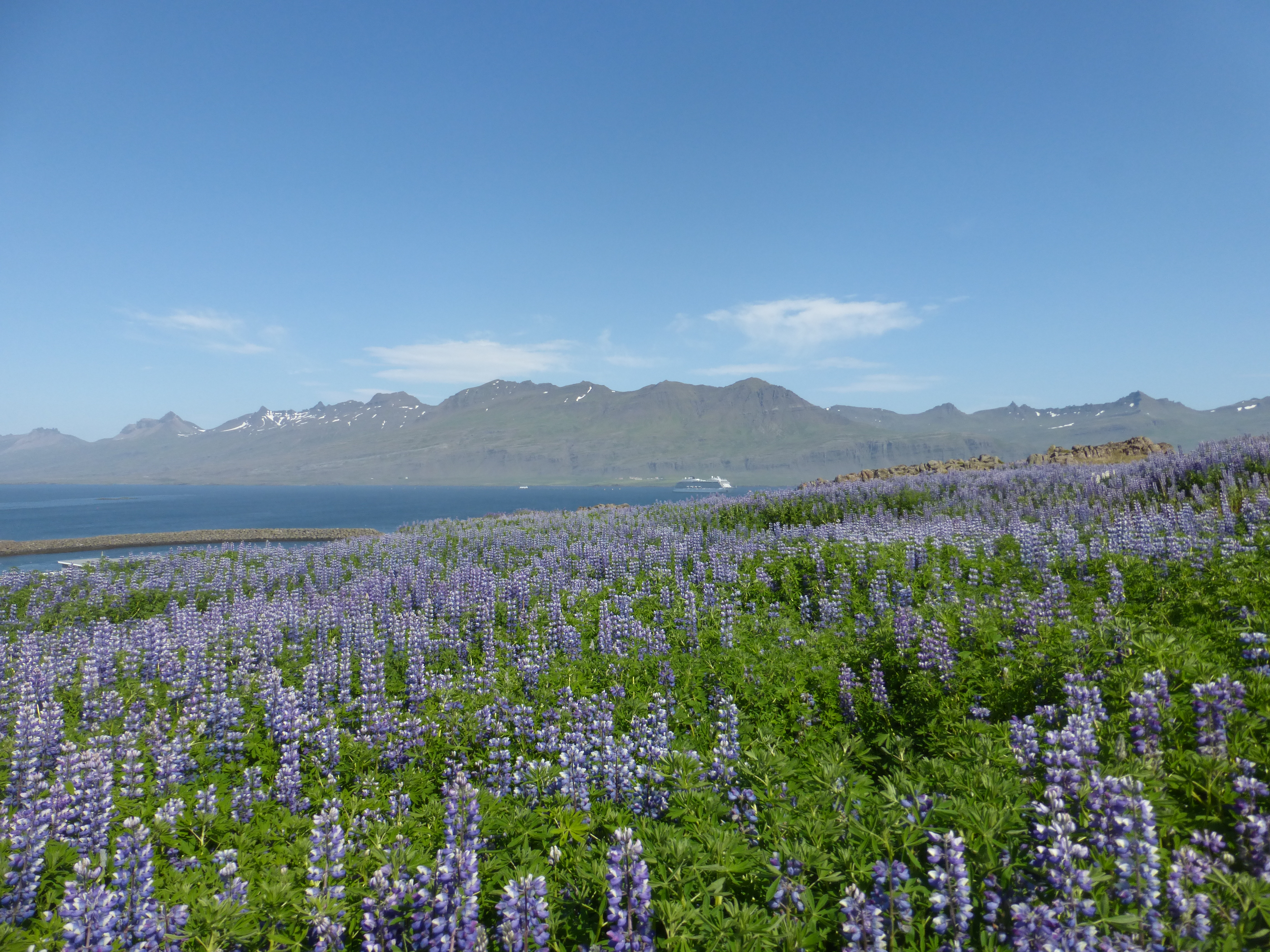
Lupine blooming in Iceland. Our cruise ship can be seen in the distance.
However, although we saw lupine wherever we went, most of our guides and lecturers were more positive than negative about it. They acknowledged that some people don’t like the spreading lupine, but they explained that lupine is a nitrogen-fixing plant that builds soil in a place that is dominated by rocky, nutrient-poor soil. Based on our limited experience in Iceland it seems that lupine is selling itself to the people of Iceland as a non-native plant that brings more benefits than problems.
Update: Adalsteinn Sigurgeirsson is the Deputy director of the Icelandic Forest Service. He has given his permission to publish his Facebook comment to this article: “I fully agree with you, in your analysis of the discourse in Iceland on the Nootka lupin. The general public favors the plant, as it is able to “invade” derelict soils on eroded land and replenish the nitrogen stocks in the soils. However, as elsewhere in Western societies, “people who favor native plants are invading our local, state, and national governments, spending taxpayer dollars on the destruction of our environment.” (http://lazycompost.com/the-invasiveness-of-native…/…).
“Iceland’s history since settlement in the 9th century is one of nearly wholesale deforestation, soil erosion and ecosystem destruction. A likely underlying reason for this state of affairs is the lack of nitrogen-fixing plants in our native flora (lack of biodiversity in general, on a remote island in the N-Atlantic). The few native nitrogen-fixers have been introduced since settlement and these can only grow if fenced off from the omnipresent, free-roaming TGBs (tree-gobbling bastards, i.e. sheep). Icelandic volcanic soils are rich in all plant nutrients, save nitrogen.” https://www.skogur.is/…/history-of-forests-in-iceland
A new culture and an old democracy
Iceland was inhabited by humans about 1,100 years ago, one of the last patches of land on Earth to be colonized by humans. Our hominoid species, Homo sapiens evolved in Africa over 300,000 years ago and began migrating out of Africa shortly after. Humans occupied Australia, another island nation, about 60,000 years ago and one of the most recent human migrations occurred about 13,000 years ago to North America. In other words, Iceland is one the last places on Earth occupied by humans.
This is the narrow canyon created by the rift between the North American and European tectonic plates, where the Iceland parliament, called the Althing, first met in 930 A.D.
Shortly after being colonized by Vikings, Iceland formed one of the first parliamentary bodies in the world. The first meeting of the Althing was in 930. Ironically, it occurred in one of the most geologically interesting places in Iceland where the rift separating the North American and European tectonic plates forms a narrow canyon. The early settlers had no way of knowing they were meeting in a place of great geologic importance. They selected it because the towering walls of the canyon provided shelter in an extreme climate for their annual meeting that required a temporary encampment of chieftains coming from all over Iceland.
A highly functioning society
The population of Iceland is less than 360,000, less than the population of my hometown, Oakland, where about 425,000 people live and actively participate in a complex, diverse society where democratic decisions are made, but not without heated debate and frequent conflict. Based on my experiences at home, I admire Icelandic culture.
The unique manner in which Iceland dealt with the economic collapse of 2008 that caused financial hardship all over the world is one example of how problems are solved in Iceland. Bankers in Iceland engaged in the same risky borrowing and lending that caused the financial collapse in the US and the government was complicit because it did not enforce the laws that could have prevented some of those risks. However, Iceland is the only country that reacted to that collapse by replacing the government, closing the banks, prosecuting and jailing the bankers who broke the laws. Once again, Iceland’s economy is strong despite 18 months of collapse of their tourist industry, which is second only to the fishing industry in creating jobs in Iceland.
Cemetery in Iceland
On the last day of our visit to Iceland we had our only opportunity to wander freely in Reykjavik before boarding our plane. We were able to visit a cemetery close to the museum that was functioning as our waiting room before our flight. Early on a Saturday morning a large group of people was visiting the grave of family or friend. It seemed to be a festive occasion for them and their mood was consistent with the cemetery itself. Every gravesite was decorated with a small garden of blooming annual plants that must be planted every year after their extreme winters. Every gravesite said that families and ancestors are respected and loved. We are regular visitors to a historical cemetery in our neighborhood in Oakland. Although it is well tended by cemetery staff, there is little evidence of the active participation by the families of those buried there.
Gravesite in Iceland
One of the gravestones in the Icelandic cemetery was inscribed with “I did it my way,” a clue to the influence of America in Iceland where we have had a strategically important military presence since World War II. Iceland is the midpoint on the flyway between Europe and North America and therefore crucially important militarily.
Thank you, Iceland, for graciously hosting our first voyage back into the world.
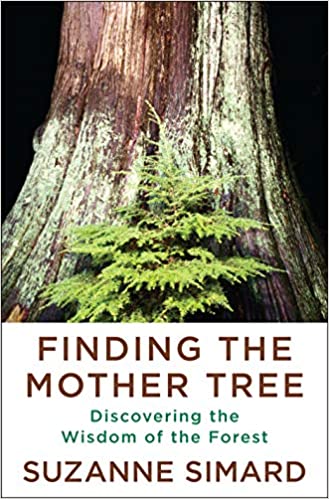
“Ecosystems are so similar to human societies—they’re built on relationships. The stronger those are, the more resilient the system.” Suzanne Simard, Finding the Mother Tree
Suzanne Simard is an academic scientist of forestry of some renown because her research has revealed that the forest is a community of plants and trees that share resources to their mutual and communal benefit. Her recently published memoir, Finding the Mother Tree, about her 40-year career in forestry is deeply personal and informative.
Simard grew up in the forests of British Columbia in an extended family of traditional loggers who used manual methods to selectively remove individual trees, leaving forests intact. This is physically demanding and dangerous work, making it a predominantly male occupation.
After her education as a forester, Simard joined the Canadian Forest Service and a profession dominated by men and committed to maximizing profit by clear cutting patches of forest with mechanized methods. This policy requires the destruction of all vegetation in clear cuts considered potential competition for the next crop of timber. After mechanical removal, the ground is sprayed with herbicide from helicopters before being replanted with tree seedlings. This policy is called “free to grow,” a misnomer that was eventually revealed by Simard’s research. The plant and tree neighbors of the seedlings are their collaborators in the enterprise of the entire forest, functioning as an ecosystem that creates a home for every life form in the community.
Suzanne Simard’s lonely professional journey in forestry
One of Simard’s first assignments as a forester was to assess the health of seedlings planted in a clear cut. The seedlings were not doing well. It became her mission to find out why. A lifetime of observing healthy forests had taught her that the soil is occupied by vast networks of fungi that connect the plants and trees.These mycorrhizal fungi transfer moisture and nutrients from the soil to the trees and plants, to their benefit. She speculated that the destruction of all vegetation in clear cuts was eliminating that support structure and she designed experiments to test her hypothesis.
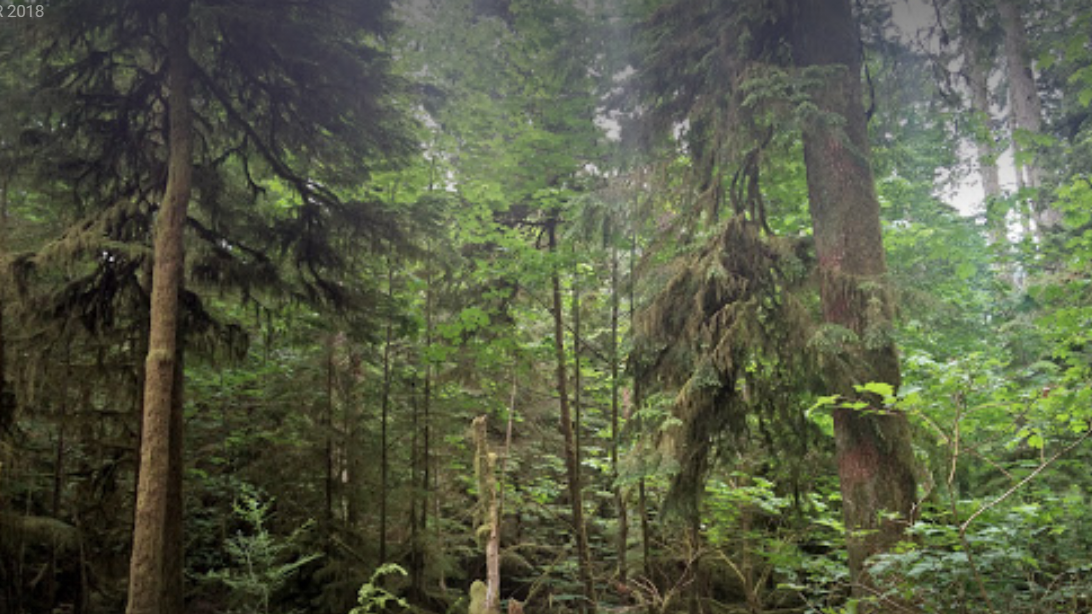
Douglas fir forest, MacMillan Provincial Forest, Vancouver, British Columbia
Her experimental plots were divided into areas with varying degrees of vegetation clearance. At one extreme, seedlings were isolated by sheets of metal buried deep into the soil that prevented development of mycorrhizal networks to support the seedlings. Decades later, these isolated seedlings were the most likely to have died. The seedlings that survived most often were on the perimeter of clear cuts, with access to the surrounding intact forest.
The relationships between tree and plant species and their mycorrhizal networks vary by plant and fungi species. There are thousands of mycorrhizal fungi species associated with trees and about half are generalists that associate with most tree species. Specialist species of fungi are confined to a narrower range of tree species, genera, or families. There are fewer species of mycorrhizae associated with plants and most are generalists.
The specifics of fungal associations between trees also varies, which requires that we describe a specific relationship. Simard’s original studies focused on the fungal associations between Douglas fir and birch trees. Birch trees were destroyed in the clear cuts that were then planted with Douglas fir seedlings that were not doing well. Simard’s experiments eventually revealed that birch trees and firs mutually benefit one another through their fungal networks. Carbon stored and the sugar produced by photosynthesis by firs are shared with deciduous birch during winter months while they are leafless. In summer months when birch are foliated, they store more carbon that is shared with firs. Birch is resistant to a root pathogen to which firs are susceptible. In a sharing fungal relationship between birch and firs, birch confers some of that resistance to the root pathogen onto their fir neighbors.
Nitrogen is essential to plant and tree health, but not all species are capable of converting atmospheric nitrogen to soil nitrogen available to plants. When a nitrogen-fixing plant is associated with a plant without that capability, it can share its nitrogen with its neighbor through their fungal network.
A mature tree can store more moisture than its young seedlings without extensive root structure. The mature tree can share its stored moisture with struggling seedlings through its fungal network. Seedlings with access to that network are more likely to survive while establishing their own root structures. Research of Simard’s graduate students and collaborators eventually found that such sharing of resources between mature and young trees occurs more frequently within the same species, but sharing also occurs with unrelated tree species. The mature trees nurture their offspring, enabling their survival and the survival of the species. They are, in effect, Mother Trees.
MacMillan Provincial Forest, Vancouver, British Columbia
Herbicides used to kill vegetation in clear cuts
Another early assignment by the forest service required that Simard determine the most effective herbicide regimen to kill plants in clear cuts perceived to be potential competitors of the seedlings of the next timber crop. Simard and her sister applied several different concentrations of herbicide to vegetation and predictably determined that the most concentrated formulation of herbicide was the most deadly. Glyphosate is the most commonly used herbicide for this purpose.
This particular episode in Simard’s early career was disturbing in view of the fact that she eventually developed breast cancer that nearly killed her. Simard and her sister were uncomfortable about their assignment and they suited up cautiously as best they knew how while applying herbicide. The Simard sisters felt ill after an application and they sought medical help from whom they learned that their masks did not contain the necessary filters. Required safety measures for herbicide applicators are only as good as the knowledge on which they are based. That knowledge moves slowly forward and becomes more alarming as we learn more.
What has the timber industry learned from Simard’s research?
The short answer to that question is very little. The strategy of the timber industry in both Canada and the US remains clear cuts that destroy all trees and vegetation followed by herbicide application by helicopter to kill all herbaceous vegetation before seedlings are planted. Simard reports that concentrations of herbicide have been reduced recently. She also says that a few large, mature trees are sometimes spared by clear cuts.
Strangely, none of these reports of reduced herbicide use by the timber industry mention that herbicides are known to damage mycorrhizae. Health concerns are cited as the sole reason for reducing herbicide use despite the fact that we now know the importance of mycorrhizal networks to the health and survival of forests. While Simard opposes the use of herbicides in forests, she does not explicitly connect herbicides with the destruction of mycorrhizal networks that enable the survival of tree seedlings.
Are these studies relevant to our urban forest?
Those who are looking for support for our urban forest in Simard’s work will be disappointed. Her focus is on the health and preservation of native forests. In fact, she has harsh words for “exotic weed invasions:” She says they are accelerating the decline of native grassland “possibly by sending the native grasses some poisons or an infection to finish the murder. Or starving them, taking over their energy, degrading the native prairie. Like the invasion of the body snatchers. Or the colonization of the Americas by Europeans.” Note that her indictment is speculative and not the conclusion of an empirical study.
But the principles of Simard’s findings are relevant to our concerns for the destruction of our urban forests and the herbicides used for that purpose. Mycorrhizal fungi are as essential to urban forests as they are to native forests. Herbicides used in our urban forests are as damaging to fungal networks as they are to clear cuts of native forests.
Trees, Truffles, and Beasts (1) was written by academic foresters in Oregon and Australia who are primarily concerned about the destructive consequences of destroying native forests and replacing them with timber plantations, often of another, faster growing species. Ironically, in the case of old growth eucalyptus forests in Australia, the choice of replacement species is often Monterey pines. Since some species of mycorrhizal fungi are specific to certain species or types of trees, this change of species is not successful without the inoculation of appropriate species of fungi. For example, some of the mycorrhizal fungi that grow on the roots of conifers are not found on eucalyptus species.
I corresponded with the authors of Trees, Truffles, and Beasts to confirm that fungi are found in the eucalyptus forests of California. Since eucalyptus was brought to California as seeds, rather than potted plants, I needed confirmation that our eucalyptus forests are also enjoying the benefits of mycorrhizal fungi. We are grateful that the authors replied. They report that eucalyptus forests in California are indeed populated with generalist fungi, including some species that are native to Australia. Therefore, we can assure our readers that our description of how the forest functions as a community applies to the eucalyptus forest in California, as well as in Australia.
When eucalyptus is destroyed in California their stumps are immediately sprayed with herbicide (usually Garlon) so the tree does not resprout. The herbicide is carried into the roots of the tree through the cambium layer that is briefly functional after the tree is destroyed. Garlon is known to damage mycorrhizal fungi.
Before leaving the Canadian Forest Service, Suzanne Simard made every effort to inform her colleagues of the damage being done by the timber industry and the potential for more successful planting of a new generation of timber if policy and practice were revised to preserve soil health. In a male-dominated profession that was committed to the methods being used, her message fell on deaf ears. In fact, her colleagues were openly hostile to her message, making the offer of an academic position welcome relief that gave her more freedom to conduct research and deliver her message.
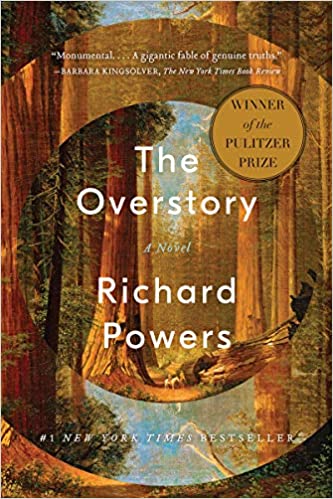
After recovering from a nearly fatal bout of breast cancer, Simard became more committed to bringing her research to the attention of the public. She has delivered inspiring and wildly successful TED talks and she was immortalized as the heroine of The Overstory (2), the barely fictional account of defenders of the forest that made Simard’s research accessible to the general public.
Finding the Mother Tree, Suzanne Simard’s memoir, is a sad reminder of the difficulty of bucking conventional wisdom that is deeply rooted in the profit motive. In the case of the timber industry, competition remains the dominant narrative that drives policy and the consequences of that approach are unnecessarily destructive.
Chris Maser, Andrew W. Claridge, James M. Trappe, Trees, Truffles, and Beasts, Rutgers University Press, 2008
The Overstory, Richard Powers, W.W. Norton and Company, 2019.




 Conservation Sense and Nonsense