“A history of food, from sustainable to suicidal”

“A brilliant and insightful explanation of the food system. Bittman’s writing is succinct and entertaining, and his recommendations are spot on.” –David Kessler, MD, former FDA commissioner

Mark Bittman’s new book, Animal, Vegetable, Junk, is best described by its subtitle, A history of food, from sustainable to suicidal.  Bittman starts the story at the beginning, nearly 300,000 years ago when humans were hunter/gatherers.  The transition from a hunter/gatherer to an agricultural society began only 10,000 years ago.  It was a long, slow transition that happened unevenly all over the world.  Hunter gatherer societies still exist in the Amazon and perhaps elsewhere.  Where nature was generous, hunting/gathering persisted longer.  For example, indigenous people in California were still hunters/gatherers when Europeans arrived and indigenous people on the East coast had developed agricultural societies.

The conventional wisdom has been until recently that sedentary agriculture is superior to hunting/gathering as a lifestyle and a producer of food.  Bittman and Yuval Harari in Sapiens—the sweeping history of human civilization—disagree.  The diets of hunters/gatherers are more diverse, which makes them healthier and less vulnerable to famine.  If you can’t find what you need in one place, you move to another.  Families of hunter/gatherer societies are small because mothers can’t carry more than one child at a time, so there is no advantage to the large families required by farming.  Women’s role as gatherer is as important as man’s role as hunter, making the family less patriarchal than agriculture societies.  A mobile society has less impact on the land and is less likely to deplete resources, such as water and soil.  Communities were smaller, making them less vulnerable to communicable diseases.

The invention of the plow more than 2,000 years ago was one of the first significant turning points in the development of agriculture.  The plow requires the strength of men to operate, making the participation of women in food production less important.  A division of labor between the genders developed, along with the gender power hierarchy that persists today.  This division of labor was consistent with the need for families to have more children and therefore more farm hands. 

As the population of humans in agricultural society increased, so did the pressure on the land to be more productive.  Farmers knew and still know that the soil requires regeneration if it is to remain fertile.  Such practices as planting cover crops between cash crops to return vegetation to the soil, are not new.  Farmers also knew that leaving land fallow for a season or two enables the soil to recover from the loss of nutrients required to grow crops.  Rotating crops helps to control pests and diseases that are usually associated with one type of crop, but not another.  But the pressure to produce more food as the population increases puts pressure on farmers to squeeze more from the soil than it has to give in the long term.

Mechanization of agriculture

Mechanization was the most significant incremental step on the long road to the dead end that we now face in agriculture.  John Deere introduced his steel-bladed plow in the middle of the 19th century that was capable of breaking the tough sod of the Mid-Western prairie.  Deere mass-produced the steel plow using the assembly-line methods of the industrial revolution.  By 1859 John Deere was making 10,000 plows in a year. 

Although the Deere plow was a significant invention, the advent of the steam and then gas-powered tractor shortly thereafter were the true game changers that started the transition from family farms to the corporate agriculture of today:  “In 1830 it took a farmer and a horse at least seventy-five hours to produce a hundred bushels of corn.  BY 1930 that same task took as little as fifteen hours.  Production grew in parallel, from 173 million bushels of wheat in 1859 to 287 million by the century’s end.  The big difference was the tractor.”

The tractor was only the beginning of mechanization of agriculture.  There are now enormous machines, such as harvesters that cost half a million dollars and more.  Family farmers can’t afford to buy these machines.  They aren’t useful to small land-holders because huge farms are needed to pay for the cost of these machines.  Farmers who tried to stay in the game took huge loans to buy them.  Agriculture is risky business because the climate is changeable and unpredictable.  In drought years, many farmers with small holdings lost their land because they couldn’t repay their loans. 
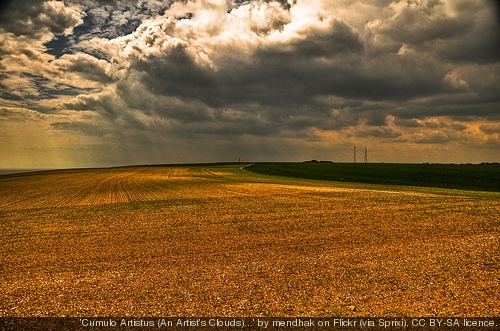
Cornfield

Corporate interests are in a position to obtain the necessary loans and buy out the small land-holders.  Family farms are a thing of the past.  The romanticized notion of family farms is a fiction. Family farmers understand that destroying their soil is not in the interests of their family. Corporate interests have a short-term perspective when making business decisions.  Therefore, regenerative agricultural methods such as cover crops, rotating crops, and leaving land fallow are also a thing of the past.   

The Green Revolution

The so-called “green revolution” was the response to the destruction of agricultural land.  By the 1930s, the soil in agricultural America was exhausted.  The result of a century of short-term perspective agriculture that didn’t give back to the soil what was taken from it was the Dust Bowl of the 1930s. 
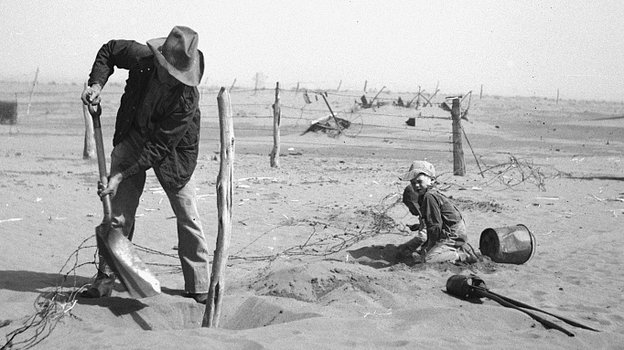
The Dust Bowl

Instead of returning to regenerative agricultural methods, the response was the introduction of chemical fertilizers and pesticides. Sixty years of pesticide use has bred many weed and insect species that are resistant to pesticides because no amount of chemistry can outwit evolution. In addition to introducing toxic chemicals into the environment, these chemicals exacerbated the trend toward bigger, corporate-owned agricultural lands because chemicals are expensive.  They must be purchased in advance of realizing the income of selling a crop, requiring bigger loans. According to Bittman, John Deere company makes four times as much money from financing these loans as from selling farm equipment. More family farms failed and their land was consolidated into huge acreages owned by corporate interests with short-term goals for higher profits.

The chemical warfare waged by industrial agriculture escalated greatly when Monsanto’s Roundup Ready seeds were introduced in 1996.  These genetically modified seeds enabled the indiscriminate spraying of the non-selective herbicide, glyphosate on commodity crops.  The seeds are expensive and their patents require that they only be used once.  They greatly increased farmer’s dependence on loans to finance the planting of their crops.  This indiscriminate spraying of glyphosate on commodity crops used in all processed food and animal feed means that we are now eating and drinking food laced with glyphosate, a probable carcinogen.

Chemical fertilizers deliver phosphorous to the soil, needed for plant growth.  Run off from agricultural land pollutes our lakes and rivers, killing fish and making water unsafe to drink or swim in.  Pesticides are indiscriminately killing insects, many of which are beneficial, such as our pollinators.  Pesticides are found in our water, our soil, and our food.  Little is known about the effects of these chemicals on our health or on wildlife, but what we know suggests they are probably more dangerous than we realize.  For example, recent research suggests that chemicals that disrupt our endocrine systems are probably reducing fertility, causing birth defects and contributing to gender dysphoria. 

Consequences of agricultural surpluses

Bigger is not better in agriculture because bigger also means that only a handful of crops are grown on huge corporate farms.  It is more expensive to grow diverse crops, requiring different cultivation methods and inputs.  Huge machines are operated more efficiently on huge plots of land.  Most agricultural land in America is devoted to growing crops of corn, soy beans, and wheat.  So much of America’s farm land is devoted to these commodity crops that they produce huge surpluses that require a global market to sell them to.

The global marketplace for commodity agricultural crops has fundamentally changed many countries.  The North American Free Trade Agreement (NAFTA) forced farmers in Mexico to abandon their small farms and move to cities to take low-paying manufacturing jobs because they could not compete against cheaper American corn.  The diet and health of the Mexican people has deteriorated significantly because they no longer have access to the variety of fruit and vegetables their small properties produced.  Their healthy fruit juices have been replaced by sodas made from corn syrup, resulting in high rates of obesity and diabetes.

Children’s cereals. Glyphosate residues are found in most cereal.

The diet of Americans has also been changed radically by the marketing campaigns designed to sell surplus commodities.  A surplus of milk produced the “Got milk?” advertising campaign that sold milk to adults for whom milk is rarely healthy.  Bittman says that 65% of adults are lactose intolerant, which he knows from personal experience.  He was forced to drink milk until he left home.  He was plagued by indigestion until he was able to quit drinking milk as an adult. 

Far more pernicious, is the advertising campaign that convinced mothers to quit breast feeding in favor of feeding formula.  This insidious campaign used guilt to pressure mothers by making the inaccurate claim that formula is healthier for their babies.  Breast feeding is the primary means that a baby’s immune system develops.  Formula contains higher levels of sugar that sets the stage for life-long eating habits that are not healthy.  High levels of obesity and diabetes begin at childhood and are very difficult to change later in life.  The advertising campaign was global and it did more damage in undeveloped countries where the water needed to dilute formula is often not safe.  Although the health consequences of using formula are well known, the advertising campaign continues to this day.  The New York Times ran a full-page advertisement for formula recently, using convenience as its approach, suggesting that modern mothers should not be guilt-tripped into breast feeding. 

Not the end of the story

We landed in this dietary and environmental disaster zone over thousands of years of small, incremental changes that were imperceptible at the time.  We could not foresee the consequences of the cumulative effect of each small step along the road to this dead end.  And Bittman says we can back out of this dead end in the same way, by making small steps back to regenerative farming.  Bittman’s final chapters are devoted to the many projects all over the world devoted to restoring our agricultural land, our diets, and our health. 

This brief summary of Bittman’s book does not do it justice.  There are a multitude of other important factors to consider, such as the huge contribution that industrial agriculture is making to climate change and the changes in raising animals that are just as unhealthy as how we are growing our plant-based food.  I can’t say that Bittman’s book is a pleasant read, but I assure you that it is important. 
Update on California’s 30X30 initiative: The good, the bad, and the ugly

In May 2021, Conservation Sense and Nonsense introduced California’s $11 billion investment in addressing climate change and protecting biodiversity by protecting 30% of land and coastal waters by 2030 (30X30). Since then, the California Natural Resources Agency (CNRA) held a series of workshops to explain the initiative and give the public an opportunity to provide feedback to CNRA.  Sixteen hundred Californians participated in those workshops, including me. Today I am reporting what I learned about the initiative and tell you my opinion of what I learned.

Update: The final California budget commits $15 billion for climate change and protecting biodiversity.

Good news always comes first

The Land Conservation Panel identified the opportunity to remediate degraded spaces that will address many of the objectives of the 30X30 initiative.  Many degraded spaces are found in poor communities that are exposed to toxic waste and pollution.  Eliminating public health hazards in these communities will not only improve their health, it will make those spaces available for recreational and other purposes.  Here are just a few of many such opportunities in California:

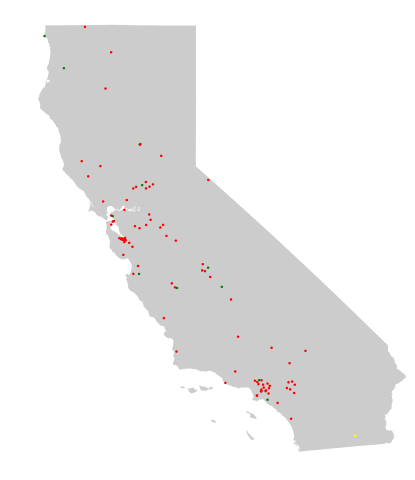
Superfund sites in California as of 2013. Source: Environmental Protection Agency
  • There are 94 toxic waste Superfund sites in California.  Where these sites are threatening the health and safety of the public they should be high priorities for remediation.  For example, nearly 30,000 corroding barrels of DDT were recently found on the ocean floor near Catalina Island.  The extent of that particular toxic dump was not known at the time the LA Times reported it, but investigating scientists speculated that as many as half a million barrels may have been dumped by the manufacturer of DDT.
  • There are 47,000 abandoned mine sites in California, according to the Bureau of Land management.  84% of those sites present physical safety hazards and 11% of the sites present environmental safety hazards.  Abandoned mine sites that are potential recreational areas in underserved communities should be considered high priorities for remediation.
  • The California Clean Water Act identifies “impaired waters.”  The list of impaired waters is long and it is alarming.  It identifies pollution with toxic substances such as mercury, diazinon, sewage from leaking septic tanks, sedimentation from erosion, run off of agricultural chemicals, etc.  Addressing these issues will reduce public health hazards and improve fish and wildlife habitat.  Most rivers in California are ultimately watersheds into the ocean, therefore cleaning up these “impaired waters” will also improve ocean health.  At this time of extreme drought and the expectation of continuing drought, water quality should be a high priority for the 30X30 initiative.
  • There are over 5,000 orphan oil wells in California with no known responsible operator.  Capping and retiring these oil wells would reduce health hazards and make the land available for recreational and other uses.  These abandoned oil wells are frequently found in economically disadvantaged areas such as Bakersfield and poor areas in the Los Angeles basin, which is all the more reason to remediate this blight on the landscape. 

The remediation of hazardous pollution would benefit Californians, reducing health hazards for humans and wildlife and potentially making land available for other useful purposes.  Remediating polluted, dangerous land must be a higher priority than funding the horticultural preferences of hobbyists with romantic notions about recreating a landscape that is long gone and cannot be replicated.  If we are to achieve durable objectives, we must have realistic expectations and goals that are consistent with current and anticipated climate conditions.  Thriving landscapes that do not require irrigation should not be replaced with fragile landscapes that require irrigation and access restrictions.  No land that requires pesticides to accomplish “conservation” goals can legitimately be called “conserved.”

Not so good indicators of destructive projects

Although the Summary Document of the Panel for Coastal Waters made vague references to the importance of “Linking protection of land and coastal ecosystems through adjacent terrestrial and marine protected areas,” the words “watershed” and “wetlands” do not appear in the Summary Document.  No specific suggestions were made to address the close relationship between coastal land and coastal waters.

The preservation and expansion of wetlands will reduce the flow of pollution from land to ocean by acting as a filter of runoff from the land.  Wetlands are also one of our chief defenses against rising sea levels if they are expanded to perform that function.  Wetlands are the nurseries of our fisheries and they provide essential habitat for wildlife.  Wetlands are also significant carbon sinks.  Yet the Summary Document makes no mention of these essential functions that contribute to healthy oceans.

Cleaning up the watersheds that are now draining toxic pollutants into the ocean is a more worthwhile endeavor than anything suggested by the Coastal Waters Summary Document. Most rivers in California are ultimately watersheds into the ocean, therefore cleaning up these “impaired waters” will also improve ocean health.  Many important fish species that migrate from ocean to rivers are killed or harmed by these hazardous contaminants.  The ocean is only as healthy as its watersheds.

Instead of addressing the opportunities to expand wetlands and cleaning up watersheds, the Coastal Waters Panel is proposing an outdated “restoration” approach that begins with killing plants and animals. The attempt to “restore” kelp forests is one of the few specific examples of possible projects that is mentioned in the Panel’s Summary Document.  Like most of these futile projects, that project begins by killing thousands (millions?) of the chosen scapegoat, purple urchins, predators of kelp.  Where urchins are killed kelp is being replanted.  Like most of these projects, the chosen method does not address the underlying causes for declining kelp forests that were killed by ocean heat waves.  Ocean heat waves are a consequence of inexorable climate change.  It is delusional to assume that the heat waves that killed the kelp will not occur again.  Furthermore, the massive die-off of sea stars from a mysterious “wasting syndrome” is an important factor in the explosion of urchin populations that are prey of sea stars.  As you might know, sea stars are making a comeback.  Sea Otters are also predators of urchins.  If their populations weren’t repeatedly suppressed by commercial fishing interests, urchins would have more predators.  In other words, present methods of “restoring” kelp forests are based on inadequate understanding of the food web and the underlying causes of the loss of kelp forests.  Is anyone trying to breed a more heat-tolerant variety of kelp?  Is anyone looking for a functional equivalent in warmer waters?  In other words, the loss of kelp forests is a serious problem, but the methods being used to address it are amateurish and futile.

The Ugly:  Composition of 30X30 panels is deeply flawed

There are representatives of organizations on two 30X30 panels that promote and participate in island eradication projects such as the Farallon Islands project that proposes to kill mice by aerial bombing 1.5 tons of rodenticide on the islands.  One representative on the Biodiversity Panel identifies himself as a “conservation entrepreneur” and the founder of Island Conservation, the organization that has conducted more than 350 island eradications in 65 countries around the world and is participating in the Farallons project.  One member of the Coastal Waters Panel represents Point Blue, an organization that has participated in many deadly projects.  Point Blue actively promotes the Farallons project and has participated in its development. 

The Farallon Islands project is another example of a project that has selected an animal scapegoat for eradication without addressing the underlying cause of the perceived problem, which is a dwindling population of ashy storm petrels.  Mice are the chosen scapegoat despite the fact that they do not harm any birds or their chicks.  The mice are blamed because they are the preferred prey of a small number (8-10) of burrowing owls that prey on the petrel chicks when mice are not available.  The burrowing owls could easily be non-lethally removed from the island (Try walking up to a burrowing owl.  Chances are it won’t flinch.)  The National Park Service removed 44 Golden Eagles from the Channel Islands because they were preying on Channel Island Foxes (after NPS eradicated sheep and goats from the islands that were the Eagles’ preferred prey).  USFWS proposes to kill the mice by aerial bombing 1.5 tons of rodenticides on the Farallons and they acknowledge that hundreds (thousands?) of non-target birds are likely to be collateral damage, as they have been in hundreds of similar projects all over the world.  USFWS claims that the burrowing owls will “go away” if their preferred prey is eliminated.  It seems more likely that the burrowing owls will either be killed by the rodenticide or will eat more birds if that’s all there is to eat.  Second-generation rodenticides were recently banned in California because they are killing non-target birds and mammals.  Unfortunately an exemption for projects considered ecological “restorations” was carved out of that ban. Why the proposed Farallons project is considered a “restoration” is a mystery to me. 

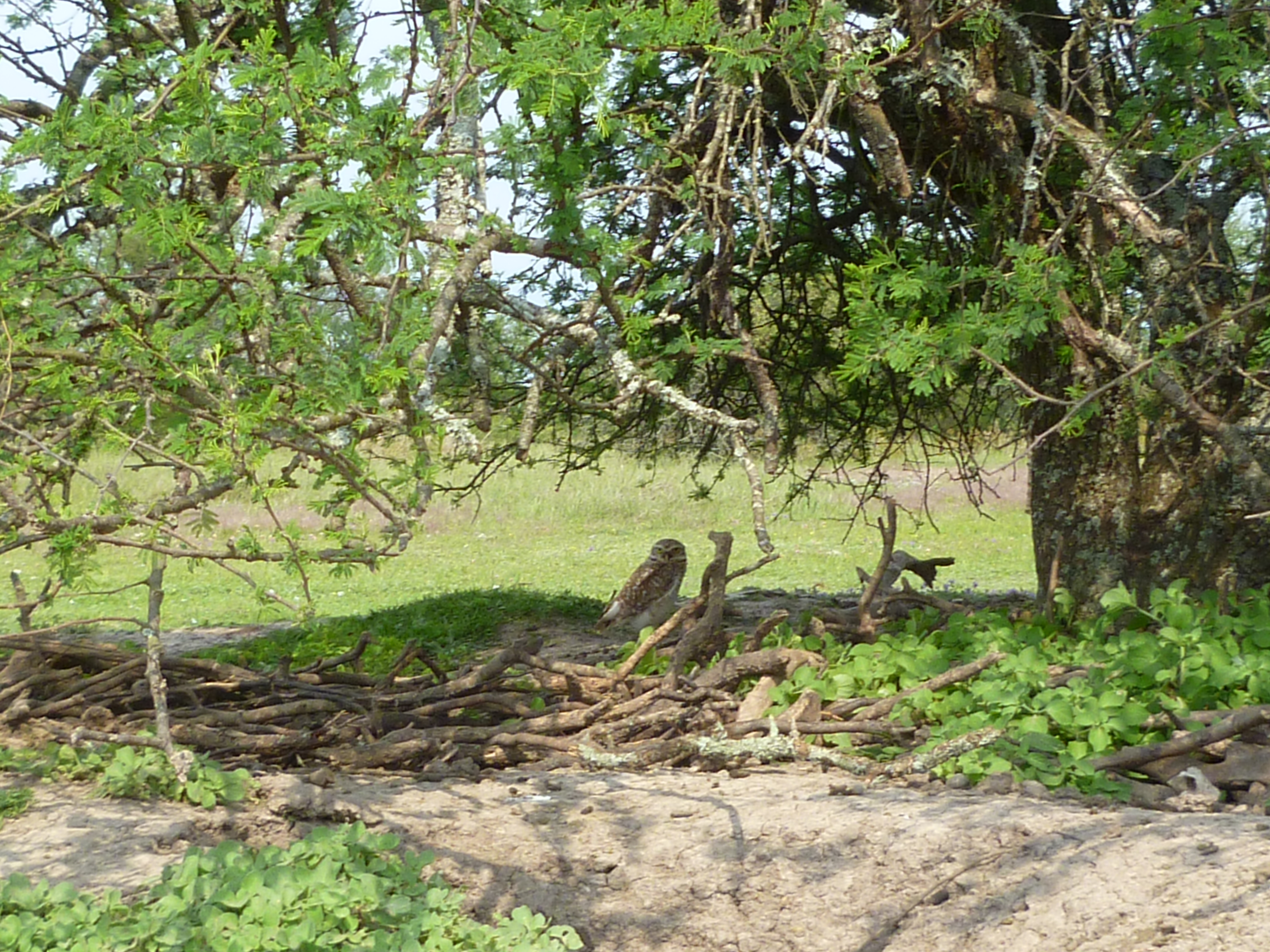
We saw burrowing owls in Argentina in 2010. We walked up to them to test the claim that they are easily disturbed by people. We got even closer than this before the owl reacted.

Similar island eradications have been completed all over the world.  Rats are the usual target of those projects and unlike the mice on the Farallons, there is evidence that rats are capable of harming birds.  However, a significant portion of those projects were unsuccessful because rats are resourceful creatures capable of reproducing quickly after their population is reduced.  More importantly, those projects have killed thousands of non-target birds who ate the poison (or poisoned rats) and contaminated the water around the islands, harming fish and marine mammals that live around the islands.

Island eradications done by Island Conservation

As I told California Natural Resources Agency in my written public comments, Point Blue and Island Conservation should not be represented on 30X30 panels because they are likely applicants for projects that will be funded by the state.  This is a serious conflict of interest.  Point Blue is involved in hundreds of destructive projects all over California, including surveying barred owls in preparation for shooting them. Island Conservation has published a study that identified other islands off the coast of California for potential island eradications.  If these organizations are in a position to influence the types of projects that are funded by the 30X30 initiative, they will be in a position to profit from creating projects they can perform. 

Several of the public commenters at the Coastal Waters workshop on August 17th mentioned that there is no representation on the Coastal Waters Panel of recreational and commercial fishermen.  Other panels include representation of recreational interests because increasing recreational opportunities is one of the primary goals of the 30X30 initiative.  Point Blue should be replaced on the Coastal Waters Panel by representation of recreational and commercial fishermen. 

Where do we go from here?

You can view the 30X30 workshops on CNRA’s You Tube Channel. You can read the recommendations of the 30X30 panels on CNRA’s website.  And you can respond to CNRA’s invitation to send them pictures of successful restoration projects:

“If you or your organization has images of before and after climate smart land management projects, successful nature-based solutions; or iconic California landscapes we would love to feature them!…If your organization is interested in sharing pictures, please email them to Heather Williams at the California Natural Resources Agency (CNRA) by September 17. Please include a description/caption of the image, the organization’s name, and the image date(s). Send only high-resolution images (1200×800 or larger). By emailing these pictures, you give CNRA the right to use these images in our nature-based solutions and climate-smart land efforts.”

Organizations that will compete for $11 billion of grant funds will undoubtedly provide many beautiful pictures of their projects.  If you have pictures of projects that were not successful, you may send them as well. 

There will be another round of workshops to review draft plans in Fall 2021.  You can ask to be notified of those workshops and register to attend them by sending an email to californianature@ca.gov.  Plans will be finalized for implementation in January 2022. 

The 30X30 initiative has the potential to be constructive by addressing important issues with viable projects.  It also has the potential to be destructive by destroying harmless plants and animals, poisoning our land, and installing replacement landscapes that are not adapted to current and anticipated environmental conditions.  Our participation in the development of the plans is our only means of influencing the outcome.  California taxpayers will pay for these projects, whether we like them or not.  It is in our hands.