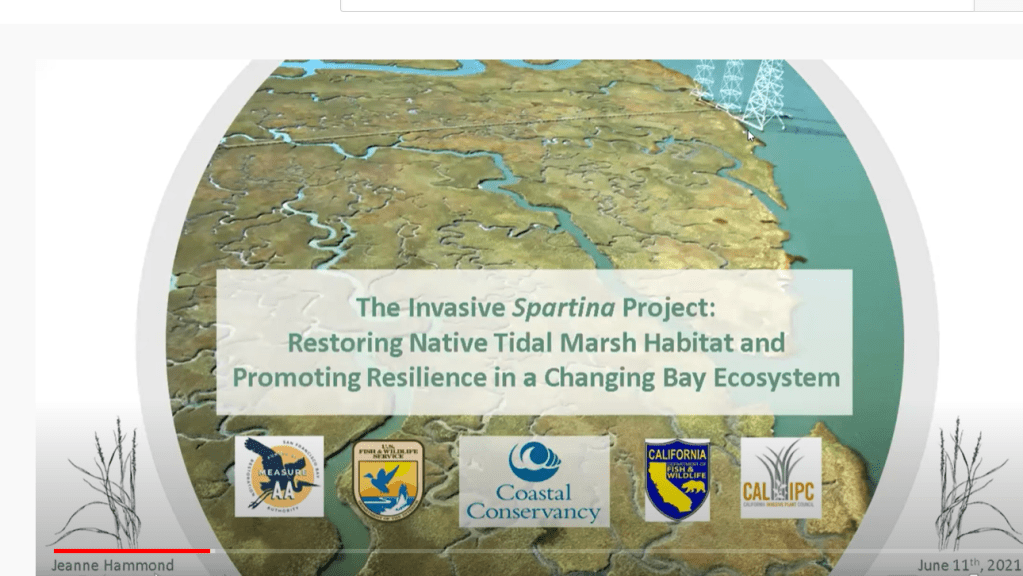
Over 20 years ago the governors of California, Oregon, and Washington made a commitment to eradicate non-native spartina marsh grass on the entire West Coast of the country. Intensive aerial spraying of herbicide killed over 95% of non-native spartina about 10 years ago, but the project continues in the San Francisco Bay. The goal is now the eradication of hybrid spartina that grows at the same marsh elevations as native spartina and is so visually similar that it requires 500 genetic tests every year to determine that it is a hybrid before it is sprayed with herbicide (1). This article will explain why the Invasive Spartina Project in the San Francisco Bay Estuary is now a zombie project, a project that is dead, but is not being allowed to rest in peace.
Hybridization is the boogey man of plant nativism
Hybrid spartina is being hunted because it outcompetes native spartina. Nativists fear the loss of native spartina as a distinct species. Rather than seeing the potential for a new, improved species of spartina, they see it as a loss of biodiversity, rather than an increase in biodiversity.
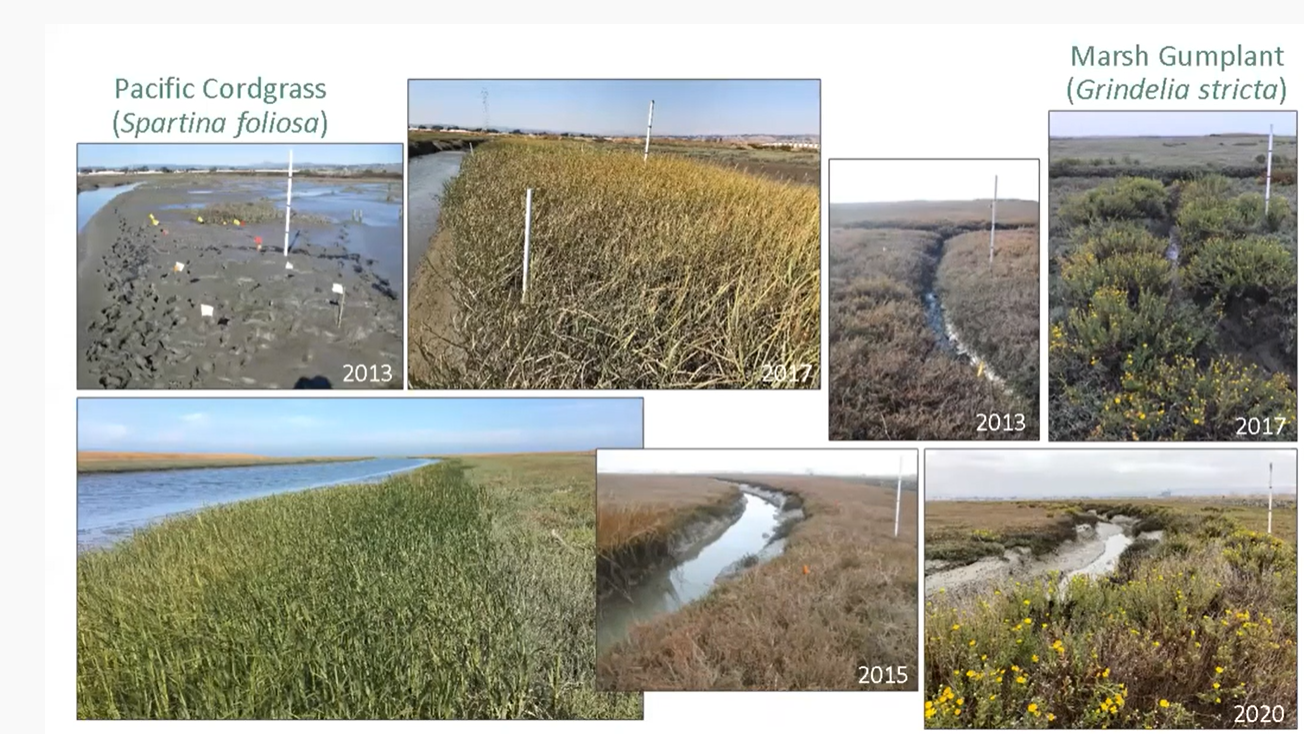
Hybridization is an important evolutionary tool that frequently increases biodiversity by creating new species on the margins of ranges where closely related species encounter one another. For example, hybridization is credited with creating over 500 species of oaks all over the world that are well-adapted to their respective microclimates. The rapidly changing climate and the globalization of trade have created more opportunities for hybridization and resulting speciation.
Advances in molecular analysis has informed us of the frequency of hybridization and its benefits to biodiversity:
“With the growing availability of genomic tools and advancements in genomic analyses, it is becoming increasingly clear that gene flow between divergent taxa can generate new phenotypic diversity, allow for adaptation to novel environments, and contribute to speciation. Hybridization can have immediate phenotypic consequences through the expression of hybrid vigor. On longer evolutionary time scales, hybridization can lead to local adaption through the introgression of novel alleles and transgressive segregation and, in some cases, result in the formation of new hybrid species.”
Restoration and expansion of wetlands is extremely important as we prepare for anticipated rising sea levels. If hardier, denser, stronger hybrid species of marsh grass are available why would we reject that opportunity? Nativist ideology should not deprive us of this opportunity.
Native species are not inherently superior to species that are better adapted to present environmental conditions. The rapidly changing climate requires corresponding changes in vegetation to adapt to present conditions. Extreme weather events are natural selection events that kill species that are no longer adapted to the climate. We cannot stop evolutionary change, nor should we try.
Why does this matter?
If herbicides were not required to eradicate hybrid spartina perhaps I could shrug and move on. Hundreds of gallons of imazapyr herbicide were used by East Bay Regional Park District to aerial spray non-native spartina for the first few years of the eradication project. In 2020, EBRPD used 43 gallons of imazapyr for “ecological function,” a nebulous category that includes spartina eradication.
When the Invasive Spartina Project (ISP) made a presentation to the California Invasive Plant Council in June 2021, the public asked several questions about the toxicity of the herbicide (imazapyr) that is used to eradicate spartina (1). The ISP mistakenly claimed that imazapyr is not harmful to humans and wildlife because it uses a different metabolic pathway to kill plants that does not exist in animals. They probably believe that claim, but they are wrong.
A similar claim was made for glyphosate for 40 years. We now know that the claim about a “unique pathway” for glyphosate existing only in plants is not true. In 2020, plaintiffs in a class-action suit against Monsanto alleging that it falsely advertised that the active ingredient in Roundup only affects plants were awarded $39.5 million. The settlement also requires that the inaccurate claim be removed from the labels of all glyphosate products: “…[plaintiff] says Monsanto falsely claimed through its labeling that glyphosate, the active ingredient in Roundup, targets an enzyme that is only found in plants and would therefore not affect people or pets. According to the suit, that enzyme is in fact found in people and pets and is critical to maintaining the immune system, digestion and brain function.”
I asked Beyond Pesticides for help to determine if the exclusive pathway claim was true of imazapyr. Beyond Pesticides informs me that both imazapyr and glyphosate use metabolic pathways that exist in animals. I summarize their response: “You asked about the ALS pathway that is the target of imazapyr—is there a comparison to glyphosate? [According to] the research I found, I think the comparison is valid. This early paper appears to clearly state that ALS is a pathway found in yeast and bacteria as well as plants (2). Another early paper which identified ALS as coming from bacteria, fungi, and plants (3).” These pathways exist in bacteria that reside in our bodies and perform important functions, particularly in our digestive and immune systems. When we damage those bacteria, we are damaging our health.
Please note that both of these studies of imazapyr are nearly 40 years old. If pesticides were being evaluated and regulated, the public and the users of imazapyr might know that it is harmful to animals. I provided this information to the Invasive Spartina Project. They responded that their use of imazapyr is legal. Unfortunately, they are right. Because there is no regulation of pesticide use in the United States, the Invasive Spartina Project has the legal right to use it. But is it ethical? I asked the Invasive Spartina Project to quit making the inaccurate claim that imazapyr kills plants, but cannot harm animals. They did not respond to that request.
Unfortunately the judicial system is our only recourse to take dangerous chemicals off the market. For example, chlorpyrifos that is known to damage children’s brains was finally banned as the result of a court order. The EPA refused to ban chlorpyrifos, but a lawsuit finally resulted in a judge requiring that the EPA either provide studies proving its safety or ban its sale. The EPA could not prove its safety, so it had no choice but to finally ban it.
What about the animals?
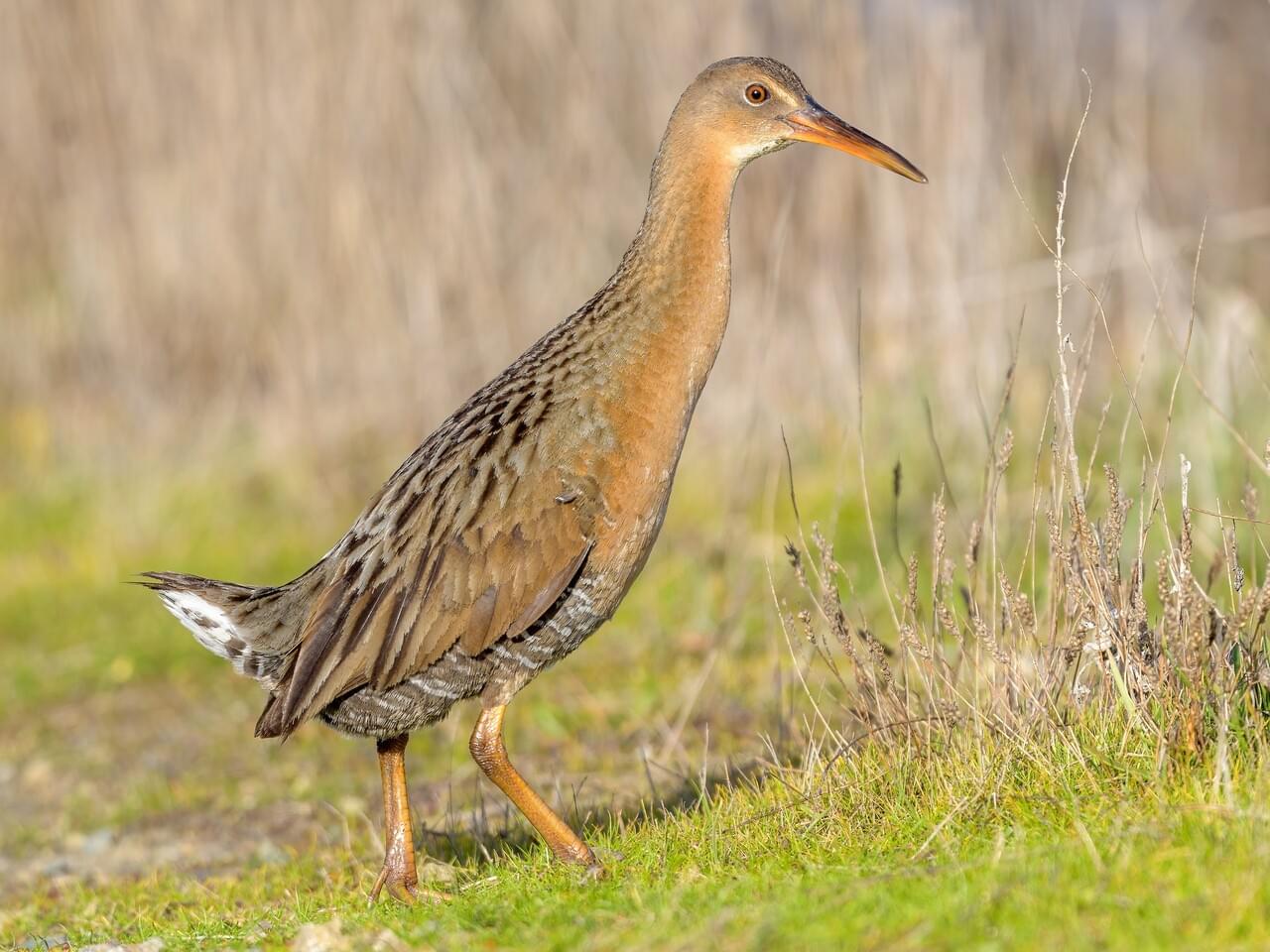
The only issue that temporarily brought the spartina eradication project to a halt was the impact it has had on endangered Ridgway rail. Ridgway rail is a close relative to the Clapper rail on the East and Gulf coasts where the spartina species considered non-native here (S. alterniflora) is native. Clapper rails are abundant where S. alterniflora resides.
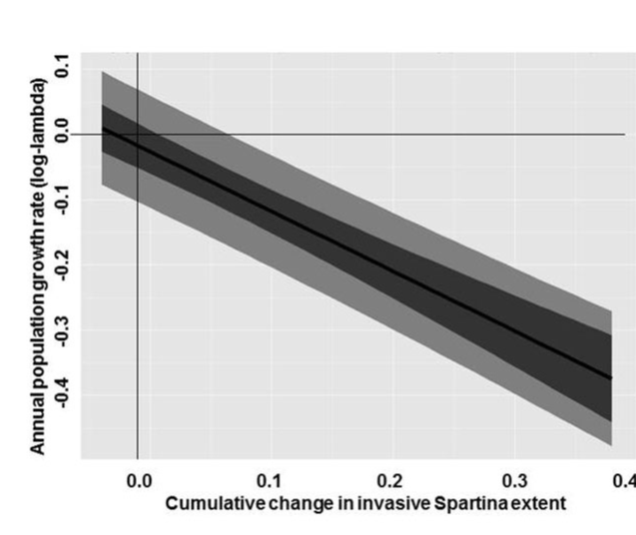
The eradication of Ridgway rail breeding habitat in the San Francisco Bay reduced the rail population significantly by 2011, according to the US Geological Service and the US Fish and Wildlife Service (4). The loss of rails was greatest where the most non-native spartina was killed with herbicide. In response, USFWS mandated a moratorium on eradication in areas where rails were nesting (5). According to the ISP 2020 survey of rails in the project areas, the rail population rebounded where eradication was stopped. When treatment resumed in 2018, the number of Ridgway rails in the previously restricted areas declined by 9% in the following year. That outcome was predicted by the USFWS Biological Opinion: “In the 2018 Biological Opinion, the Service estimated that rails inhabiting the nine previously-restricted sub-areas may be lost due to mortality or exhibit decreased reproductive success due to loss of hybrid Spartina cover when treatment of these sub-areas resumed.”
Clearly, the endangered Ridgway rail has been harmed by spartina eradication, as USGS and USFWS concluded in their analysis that was published in 2016 (4):
“California [now known as Ridgway rail] rail survival was higher prior to invasive Spartina eradication than after eradication or compared to survival in a native marsh. The combined indication of these studies is that tall vegetation structure provides California rails with both higher quality nesting substrate and refuge cover from predation, particularly during high tides. Thus, habitat structure provided by invasive Spartina in heavily infested marshes may facilitate California rail survival, and continued efforts to remove invasive Spartina from tidal salt marshes could lead to further California rail population declines….” (4)
Given that Ridgway rail is protected by the Endangered Species Act, it is difficult to understand why this project is allowed to continue. Much like the unregulated use of pesticides, it will probably take a lawsuit to enforce the Endangered Species Act on behalf of endangered Ridgway rail. When government is not functional, the judicial system can sometimes compensate.
Let’s bury this zombie project
The US Geological Service and the US Fish and Wildlife Service have put their finger on the failure of the Invasive Spartina Project. The same could be said of many other pointless eradication projects:
“Removing the source of that novel habitat without addressing pre-existing native habitat quality limitations threatens to re-create an ailing landscape for California rails by dogmatically adhering to specific management approaches. In essence, the conservation community is choosing the winners and losers in this ecosystem by failing to solve the underlying problems that will support a healthy species community with all constituent members.” (4)
The spartina eradication project serves no useful purpose. In fact, it damages the environment and the animals that live in it. We cannot stop evolution, nor should we try. Let natural selection determine the plant species that are best adapted to our environment and the animals that live in it. Not only would we benefit from better protection for our coastline from rising sea levels, we could reduce our exposure to dangerous pesticides that are harmful to our health, as well as improve habitat for wildlife. This project is doing more harm than good.
- Presentation of Invasive Spartina Project to California Invasive Plant Council, June 2021
- Falco, S.C., Dumas, K.S. and Livak, K.J., 1985. Nucleotide sequence of the yeast ILV2 gene which encodes acetolactate synthase
- LaRossa, R.A. and Smulski, D.R., 1984. ilvB-encoded acetolactate synthase is resistant to the herbicide sulfometuron methyl. Journal of bacteriology, 160(1), pp.391-394.
- M.L. Casazza, et.al., “Endangered species management and ecosystem restoration: finding the common ground,” Ecology and Society, 2016, 21(1):19. http://dx.doi.org/10.5751/ES-08134-210119
- Adam Lambert et.al., “Optimal approaches for balancing invasive species eradication and endangered species management,” Science, May 30, 2014, vol. 344 Issue 6187


 Conservation Sense and Nonsense