Open Letter to California Native Plant Society

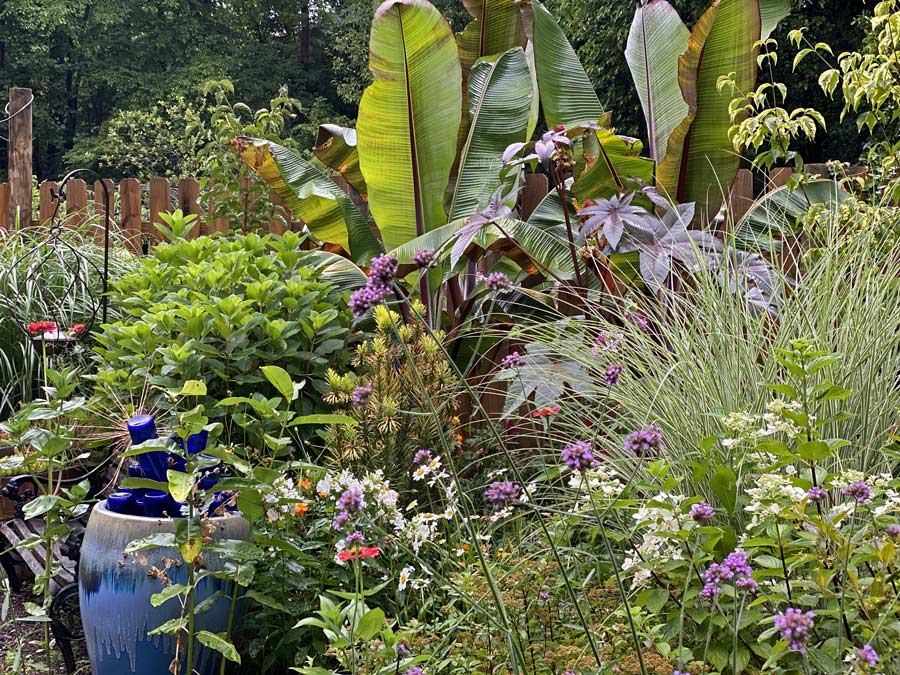
A diverse garden of native and non-native plants will be the most resilient to climate change. Photo credit Marianne Willburn, Garden Rant

In a recent edition of Nature News, Jake Sigg published an announcement of a new publication and a brief description of it that was apparently written by Susan Karasoff, Outreach Chair of the Yerba Buena Chapter of the California Native Plant Society:

San Francisco Estuary Institute (SFEI) developed Making Nature’s City: A Science-based Framework for Building Urban Biodiversity, which summarizes the key indicators supporting urban biodiversity. Local native vegetation is the base of the food web for our wildlife, including our local native pollinators, our native bees, butterflies and hummingbirds.

Biodiversity is biosecurity. Biodiversity only applies to locally native plants and wildlife. Introduced, invasive and non-local native plants contribute to landscape diversity, not to biodiversity. Our pollinators eat local native plants and pollen as caterpillar food. Introduced plant leaves feed few, if any, caterpillar species. Caterpillar species feed the rest of our local food web. Healthy urban ecosystems are measured by the health of contributors to their biodiverse food web and habitat.

Native plants planted in plant communities are resilient to climate change. Introduced and non-local native plants and trees are not resilient to climate change. San Francisco benefits from native plants planted in plant communities. San Francisco Estuary Institute (SFEI)’s Hidden Nature project, done in conjunction with the Exploratorium, maps the locations of plant communities in San Francisco prior to European arrival.

Jake Sigg’s Nature News, February 18, 2022

I compared the description to the SFEI document because the description contains several counterintuitive statements.  Although the SFEI document reflects a clear preference for native plants, it does not corroborate these specific statements:

  • “Biodiversity only applies to locally native plants and wildlife. Introduced, invasive and non-local native plants contribute to landscape diversity, not to biodiversity.”
  • “Introduced plant leaves feed few, if any, caterpillar species.”
  • “Native plants planted in plant communities are resilient to climate change. Introduced and non-local native plants and trees are not resilient to climate change.”

Here are a few studies, references, and public policies that explicitly contradict these counterfactual statements.

Biodiversity is not confined to native plants

“Biodiversity is the biological variety and variability of life on Earth. Biodiversity is a measure of variation at the genetic, species, and ecosystem level.” (Wikipedia)  The Simpson index and the Shannon-Weaver index are the two most commonly used measures of biodiversity by ecological scientists.   Neither index makes a distinction between native and non-native species.  In fact, such a distinction is difficult to make and is often hotly debated. 

In San Francisco, home of the Yerba Buena Chapter of the California Native Plant Society, public policy explicitly acknowledges that non-native species contribute to local biodiversity:  “Parks and open spaces in San Francisco include both native and non-native species, both of which can contribute to local biodiversity.” (Policy 4.1, Recreation and Open Space of San Francisco General Plan)

 Non-native plants are host to many butterflies in the Bay Area

Butterflies lay their eggs on plants called their host plants. The eggs develop through several larvae stages into caterpillars that feed on the host plant that is often confined to a particular plant genus or family.  Few butterflies are confined to a single plant species. For example, plants in the milkweed genus are the host of monarch butterflies.  There are many species within the milkweed genus and many are not native to the San Francisco Bay Area.  An introduced milkweed species, tropical milkweed, is a particular favorite of monarchs and it has the advantage of being available throughout the year, unlike native milkweed species that are dormant during winter months. Some have attributed the recent comeback of the California monarch migration to the widespread planting of tropical milkweed in residential gardens.

This article from the UC Davis Bug Squad says they plant tropical milkweed and two species of native milkweed in their experimental garden. Monarchs show a strong preference for tropical milkweed in their experimental garden: “In July, we collected 11 caterpillars from the narrowleaf [native] milkweed; we rear them to adulthood and release them into the neighborhood. But in the numbers game, the tropical milkweed [A. curassavica] won. From July through today, we have collected a whopping 43 eggs or caterpillars from A. curassavica. How many from [native] A. speciosa? Sadly, none.”

Anise swallowtail butterfly is another common butterfly species in the Bay Area that is dependent upon a non-native host plant.  Before non-native fennel was introduced to California, anise swallowtail bred only once each year. Now it is able to breed year around on non-native fennel and is therefore more plentiful than it was in pre-settlement California.

These butterfly species in the San Francisco Bay Area are not unique with respect to their need for non-native plants:  “California butterflies, for better or worse are heavily invested in the anthropic landscape [altered by humans].  About a third of all California butterfly species have been recorded either ovipositing [laying eggs] or feeding on nonnative plants.  Roughly half of the Central Valley and inland Bay Area fauna is now using nonnative host plants heavily or even exclusively.  Our urban and suburban multivoltine [multiple generations in one year] butterfly fauna is basically dependent on ‘weeds.’  We have one species, the Gulf Fritillary that can exist here only on introduced hosts.  Perhaps the commonest urban butterfly in San Francisco and the East Bay, the Red Admiral is overwhelmingly dependent on an exotic host, pellitory.  And that’s the way it is.” (1)
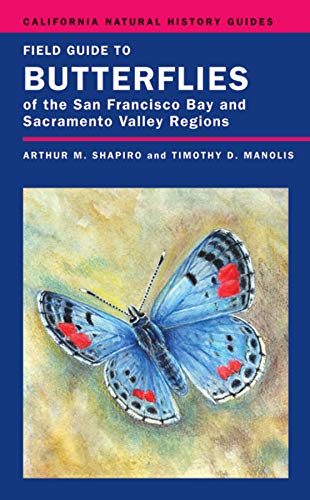
During the butterfly phase of life, butterflies eat pollen and nectar of many different plants, not just its host plant.  When native plant advocates eradicate important sources of food for butterflies, they aren’t helping butterflies.  For example, butterfly bush (buddleia) is as popular with butterflies as they are unpopular with native plant advocates because they aren’t native.  Butterflies don’t care if they are native because they are an important source of food. 
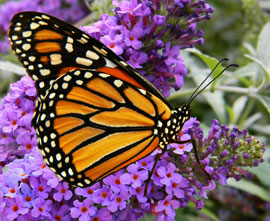
Butterfly bush is the host plant of Variable checkerspot butterflies. It is also an important source of nectar for butterflies and bees. It is being eradicated on public land because it is not a native plant. butterflybush.com

Native plants are NOT more resilient to climate change

The most dangerous of the counter-factual statements by the spokesperson for the California Native Plant Society is the claim that native plants are resilient to climate change, but non-native plants are not.  That claim defies reality and it prevents us from responding effectively to climate change. 

Here are a few samples from scientific literature that contradict this inaccurate claim about native plants.  There are many others, just Google “Are native plants more resilient to climate change.” 

  • “As spring advances across the Midwest, a new study looking at blooming flowers suggests that non-native plants might outlast native plants in the region due to climate change.”
  • “Warming temperatures affect native and non-native flowering plants differently, which could change the look of local landscapes over time, according to new research.”
  • ”Whether in natural areas or in our gardens, climate change is affecting native plants. According to the Maryland Climate Summary, our temperatures are expected to increase 5⁰ F to 11⁰ F by 2100.
    1. “Higher temperatures cause native plants to experience more heat-related stress. Heat stress causes higher water demand, a situation made worse by longer droughts.
    2. “Higher atmospheric carbon dioxide (CO2) levels preferentially promote the growth of invasive plant species, decreasing the space needed to support natural areas.
    3. “Elongated growing seasons cause earlier leaf out and bloom times, which in turn affects the animal species synchronized to the life cycles of native plants, especially pollinators.”

An appeal to native plant advocates

I am publishing this article today as an open letter to the California Native Plant Society as an appeal to their leadership to make a new commitment to accuracy.  CNPS and native plant advocates enjoy a vast reservoir of positive public opinion.  However, they put their reputation in jeopardy by advocating for policies that are not consistent with reality, with science, or with public policy.  CNPS can’t distance itself from the Yerba Buena Chapter of CNPS because Susan Karasoff has made several presentations for CNPS that are available on its website.  Native plant advocates can best promote their agenda by providing accurate information.

Where do squirrels live? Wherever they can.

We have always had a big population of squirrels in our neighborhood, probably because we have many big trees, including our coast live oak.  Oaks in California had a big mast year in 2021, which means they produced many more acorns than usual.  The population of squirrels increased significantly, which is typical of mast years.

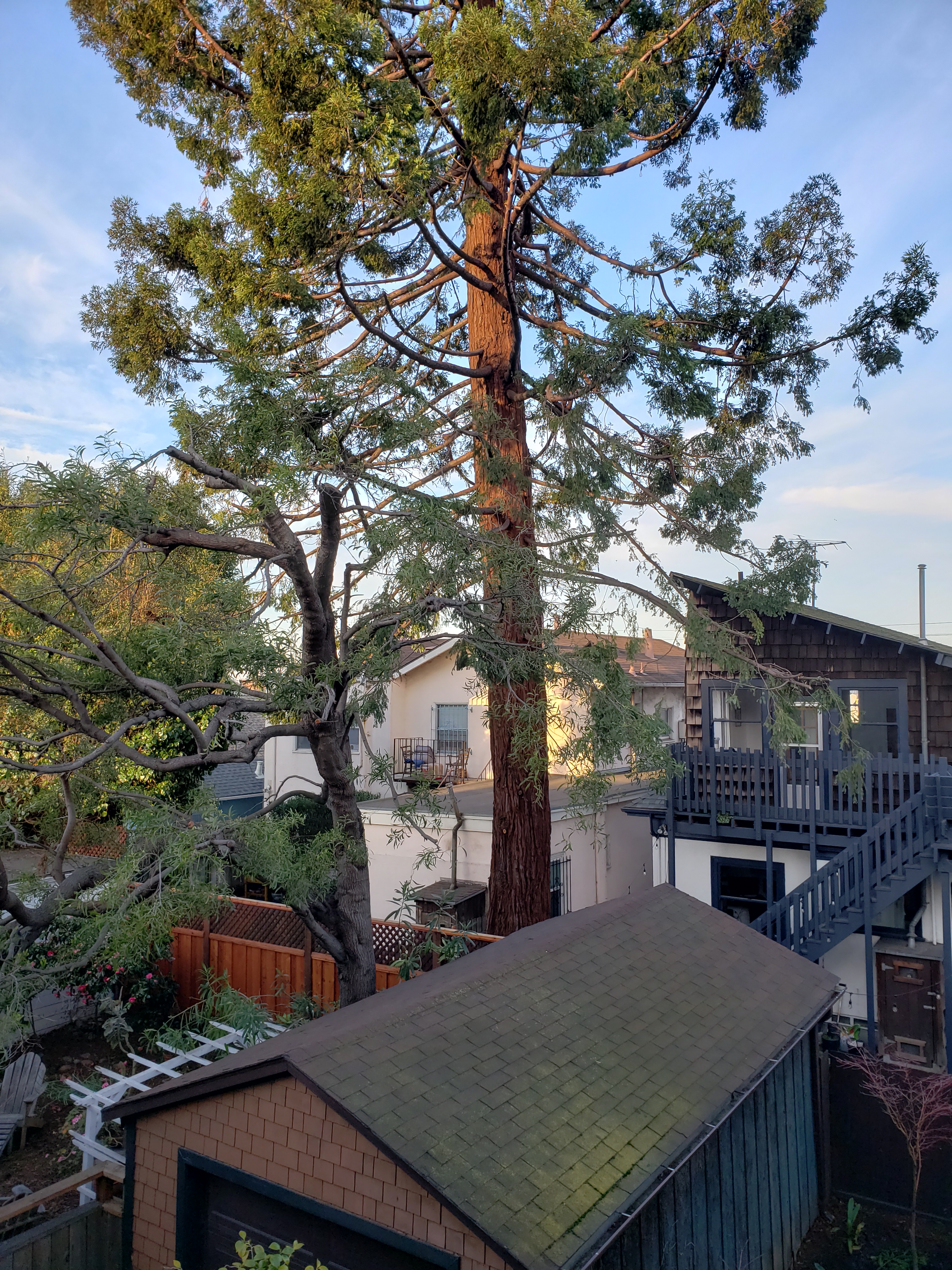
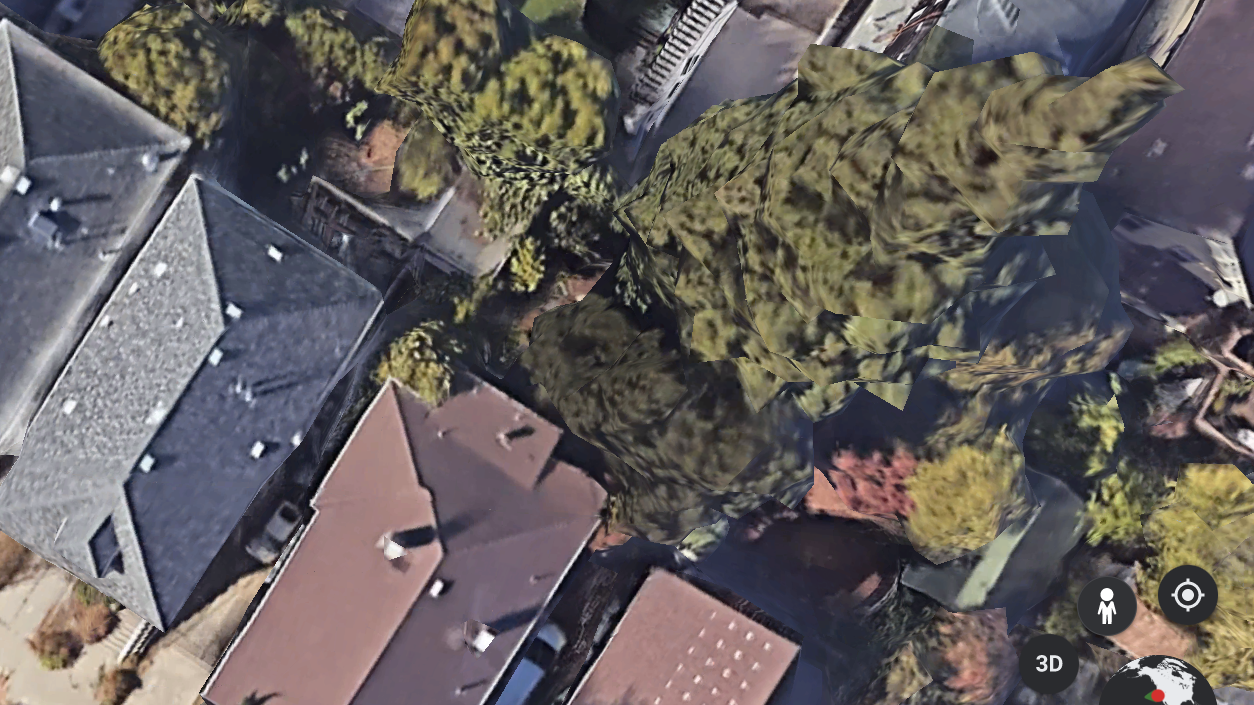
Some of the big trees in our neighborhood before they were pruned or removed. Google Earth

In the fall of 2021, several of our neighbors radically pruned their trees, presumably because they wanted more light in their yards and their homes. They also cut down several trees including a big, old tree behind us and several fruit-bearing trees down the street from us.   

Same trees after pruning.

We didn’t give it a lot of thought when that happened.  We respect the rights of our neighbors to do what they think is best on their property. I remember thinking it wasn’t nesting season for the birds, but I also should have given some thought to the squirrels. (California Department of Fish and Wildlife biologists have defined the nesting season as February 1st through August 15th.) Even if I had, I doubt that I would have objected because it wouldn’t have been neighborly.  I have always confined my activism on behalf of trees and wildlife to public land that belongs to everyone (although I have also tried to help property owners to save their trees at their request).  

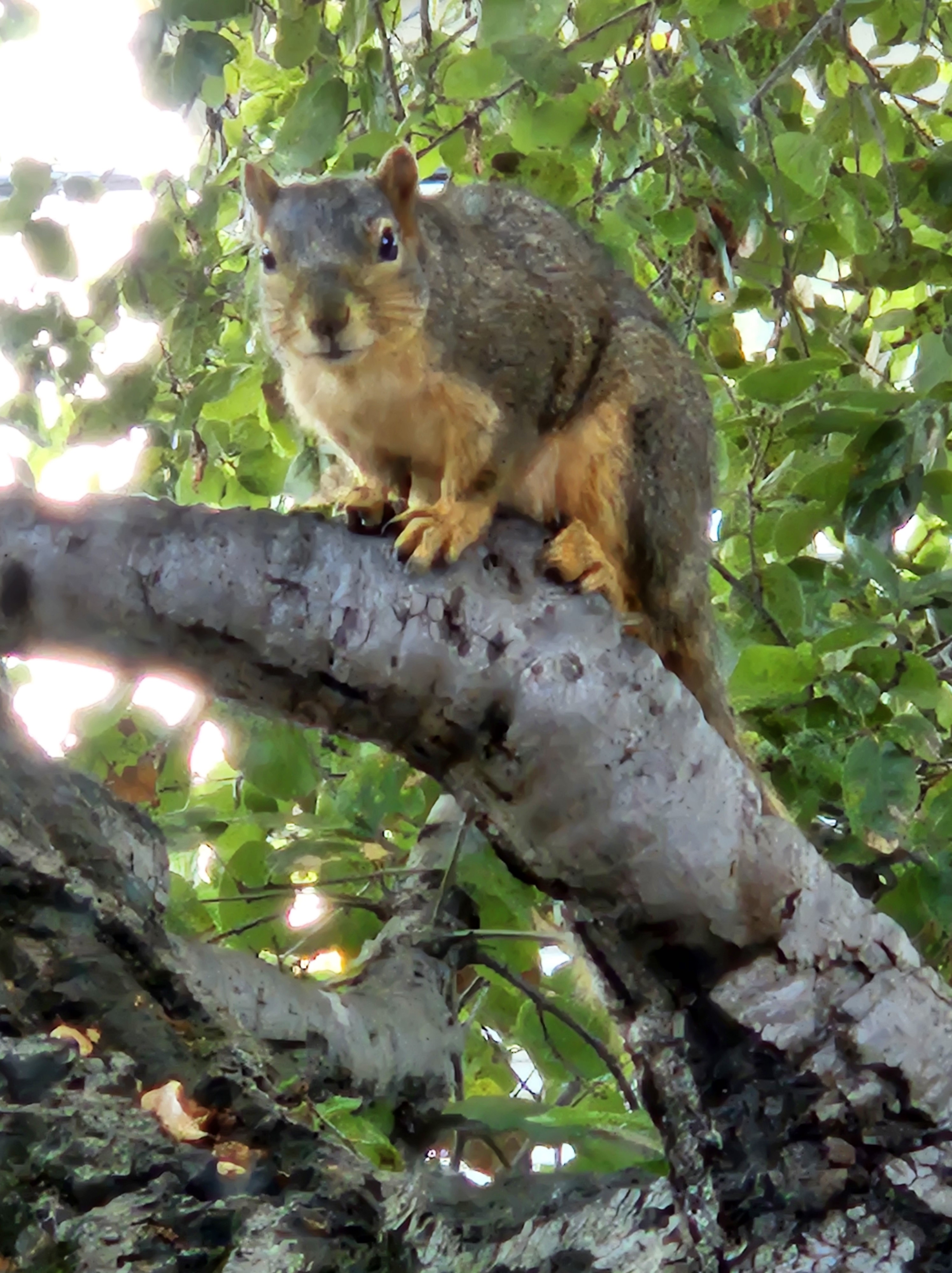
Fox squirrel in our Coast Live Oak, one of many that live in our yard.

 We didn’t realize that our neighbors’ trees were the homes of many of the squirrels who are now searching for new homes.  Squirrels have gnawed holes into the eaves of our roof and the wood shingled siding of our home.  They are living in the walls of our home.  If we can’t move them on to new homes, they will soon have their babies inside our home. 

We have found a service that uses humane methods to coax the squirrels out of one-way doors and seal their holes behind them. If you have a similar problem, I recommend the Wildlife Detectives in San Rafael. 

I had not predicted the impact of tree pruning and removal in my neighborhood.  As we try to deny squirrels access inside our home, it only recently occurred to me why the squirrels are seeking refuge inside our home and our neighbor’s home after 15 years of living in peace with them. 

This has been a humbling experience because I considered myself fairly knowledgeable about both trees and wildlife.  Apparently I’m not.  Humans aren’t very good at anticipating the consequences of the choices we make in nature and our choices rarely take wildlife into consideration because our understanding of their needs is limited.  That’s one reason why I often advocate for the “leave it alone” approach to land management.

The Big Picture

The squirrels looking for new homes in our neighborhood are a reminder to keep wildlife in mind when making changes in our gardens and homes.  Our gardens are food and habitat for wildlife. 

But protecting wildlife goes far beyond our own homes because the activities of humans have an impact on wildlife on a population level.  Here are a few examples of projects that have kept wildlife in mind…or NOT!

  • The federal infrastructure bill includes $350 million to construct wildlife road crossings.  Such road crossings help to prevent serious accidents caused by cars hitting animals and save animal’s lives.  California is building a wildlife bridge over the 101 freeway to connect split portions of the Santa Monica Mountain National Recreation Area.  A vegetation bridge is also being built over the Ventura freeway in California.  These wildlife corridors benefit wildlife populations by preventing genetic isolation that can weaken the species. The California Governor’s budget for 2022-2023 includes funding to build more wildlife corridors. 
  • Scientists have learned it is possible to relocate burrowing owls before their underground burrows are destroyed to build new developments.  The owls are enticed into their new homes by surrounding them with the poop of other burrowing owls.  The owls are more willing to stay in their new homes if they believe other owls are living there.  Just like people, they want to live among friends.
  • We must convince native plant advocates to quit destroying important food and habitat for wildlife.  The birds don’t care if Himalayan blackberries are not native.  It is a primary food source that is more productive than its native relative.  When Himalayan blackberries are sprayed with herbicides—as they are regularly in San Francisco—the birds are being poisoned as well.   

There are many more opportunities to take wildlife into consideration in everything we do.  Please write a comment to add more examples. 

The Global War on Non-Native Trees

“In some cases, removal of urban trees because they are non-native may represent an ‘over-shoot’ where the removal of non-natives becomes an end unto itself… the non-native trees being removed are not necessarily highly invasive, and removal is more driven by a desire for native species rather than any real or perceived problems caused by the non-native species.”

An international team of academic scientists studied the many conflicts around the world between those who find value in introduced trees and those who demand their destruction. (1) Team members were from Australia, France, New Zealand, and South Africa.  Professor Marcel Rejmanek at UC Davis was the only American on the team.

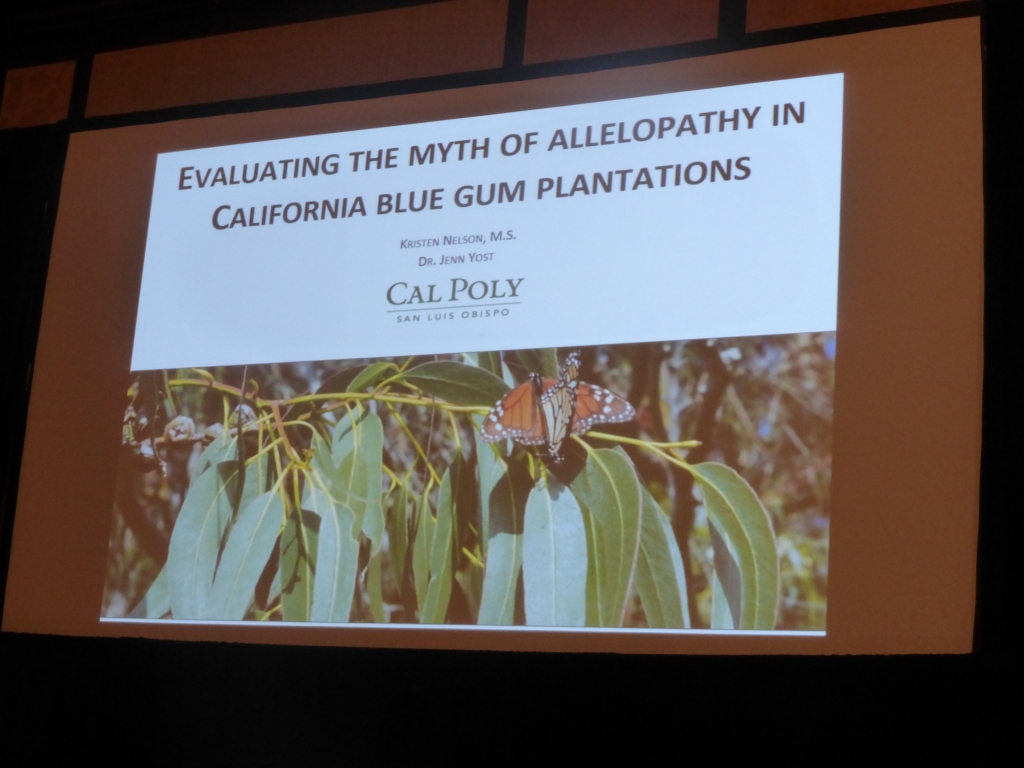
Professor Rejmanek is well known to us as the author of the chapter about eucalyptus in Daniel Simberloff’s encyclopedic tome about biological “invasions.”  Rejmanek said, “…eucalypts are markedly less invasive than many other widely cultivated trees and shrubs…they have been orders of magnitude less successful as invaders than pines and several other widely planted trees…Where eucalypts have invaded, they have very seldom spread considerable distances from planting sites, and their regeneration is frequently sporadic.  He noted that eucalyptus is useful to bees and hummingbirds and I add here that it blooms throughout winter months when little else is blooming in California.  He said,  “Conclusions about positive or negative environmental and economic impacts of eucalypts are often anecdotal, highly controversial and context dependent.”    Professor Rejmanek’s assessment was instrumental in my effort to convince the California Invasive Plant Council to remove blue gum eucalyptus from its list of invasive species.  Cal-IPC downgraded its assessment of invasiveness of blue gum eucalyptus from “medium” to “limited” in response to my request. 

Professor Rejmanek is also the author of the most recent report on plant extinctions in California, published in 2017.  At that time there were 13 plant species and 17 sub-species native to California known to be globally extinct and another 30 species and sub-species extirpated in California but still found in other states.  Over half the globally extinct taxa were reported as extinct over 100 years ago.  Although grassland in California had been converted to Mediterranean annual grasses by grazing domesticated animals nearly 100 years before then, most of the plants now designated as “invasive” in California were not widespread over 100 years ago.  Only one extinction mentions “invasive species” as one of the factors in its disappearance.  Rejmanek speculates that livestock grazing is the probable cause.  He said, “Indeed, one needs quite a bit of imagination to predict that any native plant species may be driven to extinction by invasive plants per se.”

This recap of Rejmanek’s expertise about so-called “invasive” trees and plants establishes his credentials as a reliable witness as the co-author of “Conflicting values:  ecosystem services and invasive tree management,” which I will summarize for readers today.

Setting the stage for conflict

As Europeans colonized the new world in the 18th and 19th centuries, they often brought trees from home with them, motivated primarily by an aesthetic preference. When the colonial era came to an end, nationalism during the 19th century encouraged a new appreciation of indigenous flora.  When planting their own gardens and farms, America’s founding fathers had a strong preference for planting native trees.  While fighting the Revolutionary War, George Washington wrote to the caretakers of his farm at Mount Vernon instructing them to plant NO English trees, but rather to transplant trees from the surrounding forests.

Sources of conflict

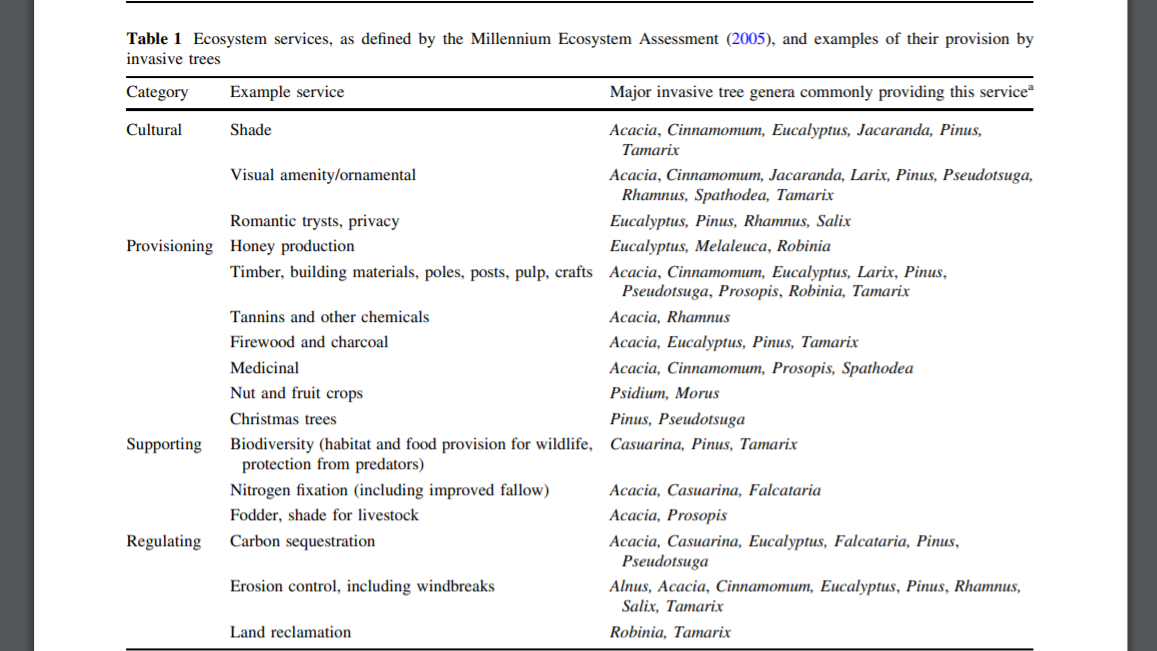
By mid-20th century, this preference for indigenous trees escalated to the current belief that non-native trees are threatening indigenous ecosystems.  Conflict arises when there is a “failure to account for, assess, and balance trade-offs between the eco-system services or, at times, a failure to agree on the relative value of particular services.” (1) The study identifies the tree species that are the focus of such conflicts around the world and the ecosystem services those species provide:

Conservation Sense and Nonsense has reported on many of these conflicts around the world:

  • The stated purpose of the destruction of forests in Chicago was the “restoration” of grassland that existed prior to the arrival of Europeans.  Conservation Sense and Nonsense described the conflict regarding that destruction in one of my first articles in 2011 because the issues were similar to those in the San Francisco Bay Area. The debate raged in Chicago for over 15 years, but the destruction of the forest was finally accomplished, despite opposition.  Likewise, in San Francisco after 20 years of conflict, the eradication of eucalyptus forests is being achieved.
  • In 2012, we republished an article by Christian Kull about the practical value of acacia trees to Vietnamese farmers and their opposition to the attempt to destroy them.
  •  We republished an article in 2014 about opposition to the destruction of willow trees in Australia that were planted to control erosion.  Willows are one of many examples of a tree that is considered valuable in North America where it is native and hated in Australia where it is not. The authors of the article described the arguments used to justify the project, ‘Sure, it makes a big mess and causes erosion, and nutrient release, and carbon emissions, and local temperature increases, and loss of habitat, but it’s necessary because we’re going to make Australia a place for natives-only again.’
  • Conservation Sense and Nonsense published a guest post by Matt Chew in 2017 about the eradication of tamarisk trees that were introduced for erosion control in southwestern US.  In that case, the survival of an endangered bird is threatened by this misguided attempt to eradicate tamarisk by introducing a non-native insect.
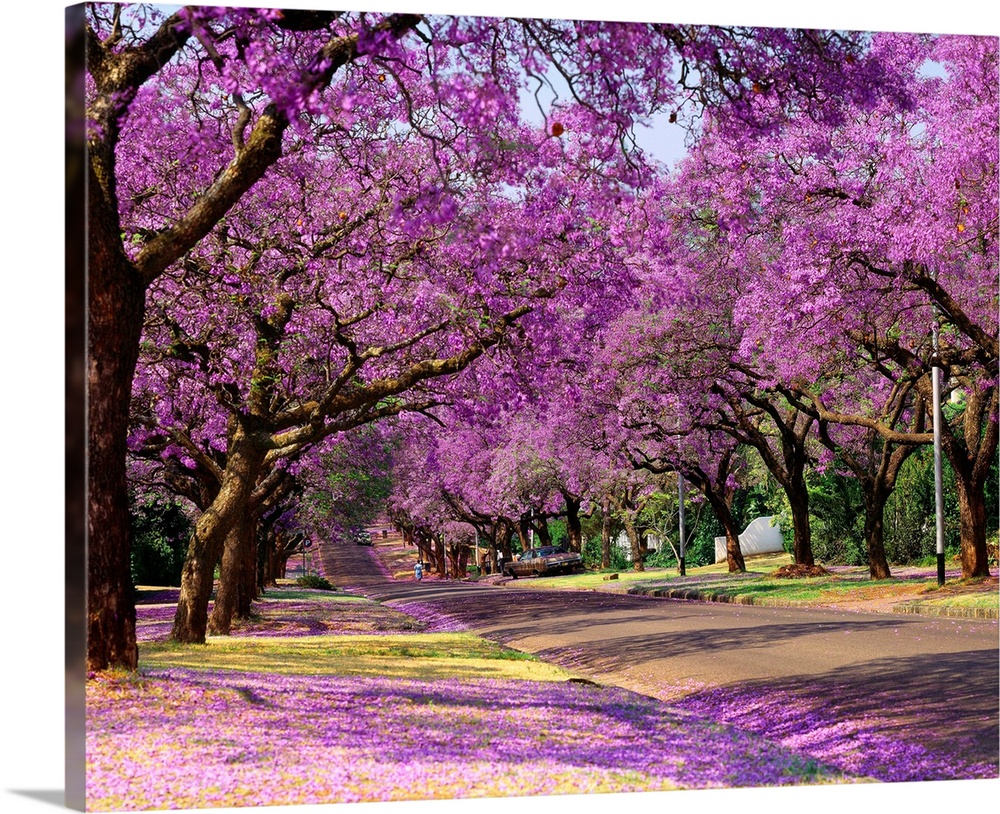
  • Conservation Sense and Nonsense published a guest post in 2015 by a South African who objected to the destruction of jacaranda trees.  In that case, the beauty of these iconic trees was the primary objection to their destruction.
Jacaranda trees in Pretoria, South Africa

Many similar conflicts around the world are described by the study, which categorizes the conflicts as focused in three areas:  urban and near-urban trees; trees that provide direct economic benefits; and invasive trees that are used by native species for habitat or food.  I will focus on conflicts in urban and suburban areas because they are close to home.

Where is conflict greatest?

The study searched for examples of such conflicts around the world and found that most were in developed countries where ecological knowledge has suggested that eradication is necessary and democracy is strong enough to enable dissent.  Such conflicts are well documented in urban areas where many non-native trees have been introduced. Based on my experience with many of these urban conflicts, I can agree with the authors of the study that they are “frequently vitriolic, as seen in letters to editors, public protests, websites, and blogs.” (1)

How NOT to reduce conflict

The authors of this study dismiss suggestions that “educating” those who object to eradication projects can reduce conflict.  Their assessment of why that approach intensifies conflict is consistent with my own reaction to being lectured about the claimed benefits of eradication projects:

“However, the concept of ‘education’ implies that opponents of tree removal are inherently ignorant or unaware and discounts the importance of their views and values.  Sceptics of environmental issues are frequently highly educated and scientifically literate, with conflict driven by fundamental values, not lack of knowledge.  Further, what one party in a conflict views as education can be viewed as propaganda by those with opposing priorities.” (1)

The authors suggest that the planning process for such projects must be a two-way dialogue that recognizes shared values, such as a strong commitment to conservation of the environment.  The authors describe some of my own reservations about eradication projects:

“In some cases, removal of urban trees because they are non-native may represent an ‘over-shoot’ where the removal of non-natives becomes an end unto itself…Objective evaluation of the ecological services affected may not result in the removal of non-native trees being justified.  Indeed, in some cases the non-native trees being removed are not necessarily highly invasive, and removal is more driven by a desire for native species rather than any real or perceived problems caused by the non-native species.” (1)

There is no doubt that the demand to destroy eucalyptus in California is a case in which removal has become an end in itself that is not justified.  These are some of the accusations used to justify the destruction of eucalyptus that have been disproven by academic scientists without getting eucalyptus off nativists’ hit list.

Source: Conference of California Native Plant Society, 2018

Pessimistic conclusion

The study concludes that we should expect plant invasions around the world to increase and that increased wealth and democracy will make conflicts about tree eradications more widespread.  The authors “suggest that conflict should be seen as a normal occurrence in invasive species removal…Avoiding conflict entirely may be impossible…”

I can’t disagree with the authors of this study about the poor prospects of resolving conflict regarding the destruction of non-native trees that are the heart of our urban forest in California.  However, I am grateful to the authors for their understanding of the issues and their respect for introduced trees as well as those who advocate for their preservation. They understand that lectures by those who demand that trees be destroyed despite the functions they perform are condescending and exacerbate conflict rather than resolving it. 

A Postscript

Jake Sigg has been the leader of the crusade to destroy eucalyptus forests in the San Francisco Bay Area for over 30 years.  He and I have debated this issue many times, without resolution.  In his newsletter of January 20th, Jake seems to acknowledge the futility of our debate as well as his motivation to create a native landscape. It seems he has reached the same conclusion as the authors of the international study of the inevitability of conflict about the destruction of non-native trees, although he concedes that he won’t quit trying…and neither will I. 

“For years I’ve been fighting tree huggers, who understandably don’t want to cut healthy trees down.  The blue gums are handsome brutes.  In my eye I see the rich diverse native biological communities that they displaced; those I fight with don’t see that and don’t value that.  So you can see the communication problem at the beginning.  The same consideration plagues many contentious issues in the world.

How do you explain this to them?  Mostly, you can’t; you do what you are able to do.  This is not an age for listening to fellow beings.  I find it hard to do.  David Brooks, a favorite, wrote a fraught opinion piece in today’s 
NYT.  He has just about thrown up his hands, as have I—except that I can’t—and neither can Brooks.”

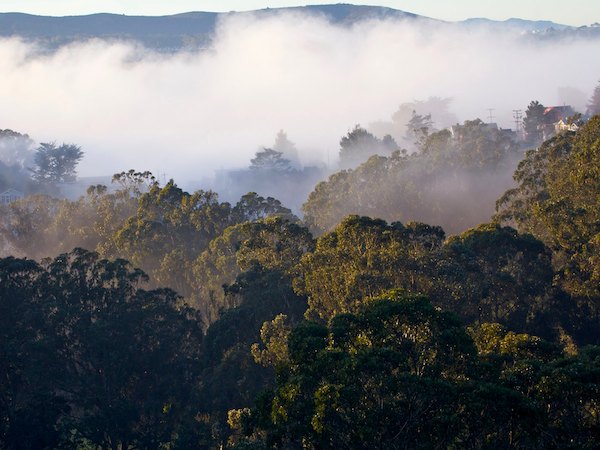
Eucalyptus canopy on east side of Glen Canyon Park, taken from Turquoise Way December 2012, before tree destruction escalated beyond riparian areas. Glen Cayon Park is one of 33 parks in San Francisco where most eucalyptus trees are being destroyed because they are not native. Courtesy San Francisco Forest Alliance

  1. Ian Dickie, et. al., “Conflicting values:  ecosystem services and invasive tree management,” Biological Invasions, 2014.