Beyond the War on Invasive Species: Interview with Tao Orion

I am republishing with permission a portion of Kollibri terre Sonnenblume’s interview of Tao Orion.  Kollibri is a writer, photographer, tree hugger, animal lover, and cultural dissident. Kollibri was born and raised in Nebraska, earned a Bachelor of Arts in Writing at the St. Olaf Paracollege, and lived in the Twin Cities and Boston before moving to Portland in 2001. Since 2011, Kollibri has lived predominantly in rural areas in the Western US, working in agriculture and exploring wildtending. Kollibri has published several books, including The Troubles of ‘Invasive’ Plants (with Nicole Patrice Hill), originally a zine and soon to be published as a book.  Kollibri has also recorded interviews available as podcasts, “Voices for Nature & Peace,” which can be found at radiofreesunroot.com.

Conservation Sense and Nonsense


Tao Orion, author of “Beyond the War on Invasive Species”

Tao Orion is the author of “Beyond the War on Invasive Species: A Permaculture Approach to Ecosystem Restoration.” She is a permaculture designer, teacher, homesteader, and mother living in the southern Willamette Valley of Oregon. I interviewed her on May 18, 2020, for my podcast, “Voices for Nature & Peace.” What follows is a partial transcript of that conversation, edited for clarity. [Listen to the entire interview here]

Kollibri terre Sonnenblume, macska moksha press

K: A lot of people have heard the term, “invasive species” and most of them of course are assuming it’s something bad, but when it comes right down to it, it’s actually very difficult to define the term and we could even say that there isn’t one definition of that term.

T: Yes, that’s something that I found really interesting as I was researching my book, because I was really trying to find out if there was a clear, objective description of what an invasive species is, and I found that even the National Invasive Species Council—which in the US is the federal government level board that looks at invasive species issues—spent years on deliberating on the definition and even so, they weren’t able to come up with something that I felt was purely an objective description that could be [applied] in all contexts. It seemed to vary from place to place and time to time.

K: Monsanto was one of the companies involved in setting [that council] up.

T: That’s another disturbing element about how the big frenzy around invasive species and the purported damage that they do came to be so popular; a lot of that was informed and funded by pesticide interests to spur the sale of products, herbicides in particular, to deal with species invasions.

K: I think that most people are probably not aware of the fact that the use of pesticides and herbicides has been rising over the last 20 years, not falling. I think people hear about organic agriculture and they think we must be on the right path. But due in part to the war on invasives and also due to genetically modifying crops to be Round-up Ready so they can survive the use of pesticides—these two things seem to have driven an increase in the use of pesticides over the last 20 years.

T: Yes, it’s definitely alarming. My background is in organic agriculture. I was immersed in that world. Even before writing this book, I was under the impression that herbicides were somewhat less toxic in the realm of pesticide toxicity [as opposed to insecticides or fungicides, for example]. In researching herbicides more for invasive species management and agriculture in general, I learned a lot more about their toxicity and insidious toxicity to insects and mammals and other lifeforms that I don’t think gets talked about enough. People assume they’re more ecologically benign, but really they’re not, and that’s important to bring to the table.

K: One thing you mentioned in your book that I hadn’t thought about much before is that it’s not only the active ingredient in a pesticide, but also the adjuvants—the things that they add to the active ingredient to help it stick to plants or to help make it soluble in water, etc.

T: Yeah, that was a big realization for me too. We talk about these two different terms: “Round Up” is the trade name of the herbicide, of which “glyphosate” is considered the active ingredient. Glyphosate is the ingredient that’s tested for pesticide registration purposes, but that might be only ten percent of a mixture that’s sold in the bottle. The rest of that solution is made up of other ingredients that help the herbicide stay on the plant if it rains or if its windy, or help the herbicide active ingredient penetrate the cells of the plant. A lot of these are trade secrets so they’re not tested and the manufacturers don’t have to say what’s in there. But one compound that has been pulled out and studied by independent researchers is POEA [polyoxyethyleneamine], which has been shown to make glyphosate penetrate human placental cells. So even if you come into contact with glyphosate itself, that wouldn’t necessarily happen, but if you come into contact with Round Up, which contains this adjuvant, POEA, it can actually then allow the glyphosate to enter into the cell. Because that’s what it’s in there to do.

K: The reason we’ve been talking about pesticides because herbicides are such a big part of getting rid of “invasive” species… But your book tries to turn things on its head and to question the concept of whether we should be trying to eradicate them.

T: Yes. I was shocked when I started working in the field of ecological restoration, coming from a background in organic agriculture. I had heard of “invasive species” before but when I got into this context, I was around people who did this professionally, it was just assumed that I was going to use herbicides and I would be totally fine with that, because that’s just what everybody did. The whole context was, “we have to get rid of these plants at all costs, and if we do, everything will be okay.” [Laughs.] That’s the the framework in which we’re approaching ecosystem restoration, and to me, I was amazed because from a more holistic perspective, I could see right off the bat that in every case where invasive species were thriving, there were other things going on in the ecosystem that pesticides weren’t going to address.

It’s the same in conventional agriculture. If you’re having, quote, pest pressure issues, the issue isn’t the pest, the issue is the soil or the plant stress or drought stress. There’s all these different things playing into the manifestation of pest pressure in the ecosystem. So, taking that knowledge a few steps further to ecosystem restoration I think is really necessary. A lot of people involved in these contexts are really highly trained ecologists and it’s still hard for me to square that with the belief that herbicides, pesticides are the only solution. These are often people who are shopping at organic food markets, and only buy organic food, and believe really strongly in that framework for food production, and yet are making decisions about ecosystem restoration outside of agricultural contexts that rely on pesticides and I just think that really needs to be questioned.

I had some very interesting discussions over the years and maybe the needle is starting to shift a little bit, although as you mention, sometimes these discussions flare up online where people are really quite defensive about their position and belief around this.

K: The issue tends to infect any discussion around plants. I’ve been using a couple of plant ID groups on Facebook because I’m in a new area and I’m seeing things coming up and I’m like, “What is this?” Of course if you’re in a native plant group, that’s definitely going to be someplace where [the invasive framework] is strong. You know, a native-plants-equals-good, non-native-plants-equals-bad, black and white paradigm. Which brings us around to looking at the invasive plant not being a problem in and of itself but of being a symptom of something going on.

T: That’s a huge part of the conversation that a lot of folks really aren’t willing to easily engage in, but the design of our livelihood system has really degraded ecosystems to a place where native flora and fauna aren’t thriving. You know, to really sit with that, and acknowledge it, think about how we might approach things differently as a basis for our understanding is challenging. It’s a lot easier to blame the messenger. Also I think one of the things that’s really missing from the discussion of native plants is the fact that native ecosystems were or are managed by indigenous people. They don’t just exist in a vacuum, free from people’s influence and the whole idea of this “pristine” wilderness is very much a western, colonial thought pattern that definitely needs to be disrupted.

K: What you’re referring to in part is that when people are designating a plant as invasive or non-native, there’s a point in time they’re referring to, and that might be different from place to place, but it’s generally accepted in the United States that anything anything that showed up after 1492 is not native. There are people who are willing to describe most non-native plants as “invasive” or throw them in that bin as soon as possible, and then the poisons come out, so this is an important issue.

T: Yes, but we don’t really know the social, ecological, economic context that was going on at that point in time that led to a particular assemblage of plants. There’s no doubt that the floral and faunal assemblies were different, but we should think really hard about why they’ve changed. Draining the wetlands of the Sacramento and San Joaquin valleys in California has major ecological implications. Damming the Colorado River for hydro-power and irrigation capacity has major ecological implications. These bigger scale things that we do—that we support—are going to change the surrounding ecosystem. If we can acknowledge that and observe what’s happening because of those major shifts, I think we’ll be in a better position to understand so called “invasions” from a more holistic perspective.

K: Because the entry of an invasive plant or animal into a landscape is in virtually all cases preceded by a human-caused disturbance of some kind.

T: It’s interesting. When I was writing, [I wondered if I] should I put forward the idea of reclaiming a different name because “invasive species” has kind of this negative connotation, but the more I looked into evolutionary biology and some of the ways—in the deep time perspective—how systems have changed, “invasion” is one of these processes and it’s not unnatural. Taking that longer term perspective is important as well. That’s how plants came to be on land. There were marine beds of algae hanging out in the shallow seas a couple billion years ago and eventually, speciation happened because of changing conditions and the land was “invaded” by those plants. You just see that change over time leading to the type of biodiversity that we have now, punctuated by other kinds of events of course, but it’s not something that’s “outside the realm of nature,” which is how invasive species are situated in a lot of discussions.
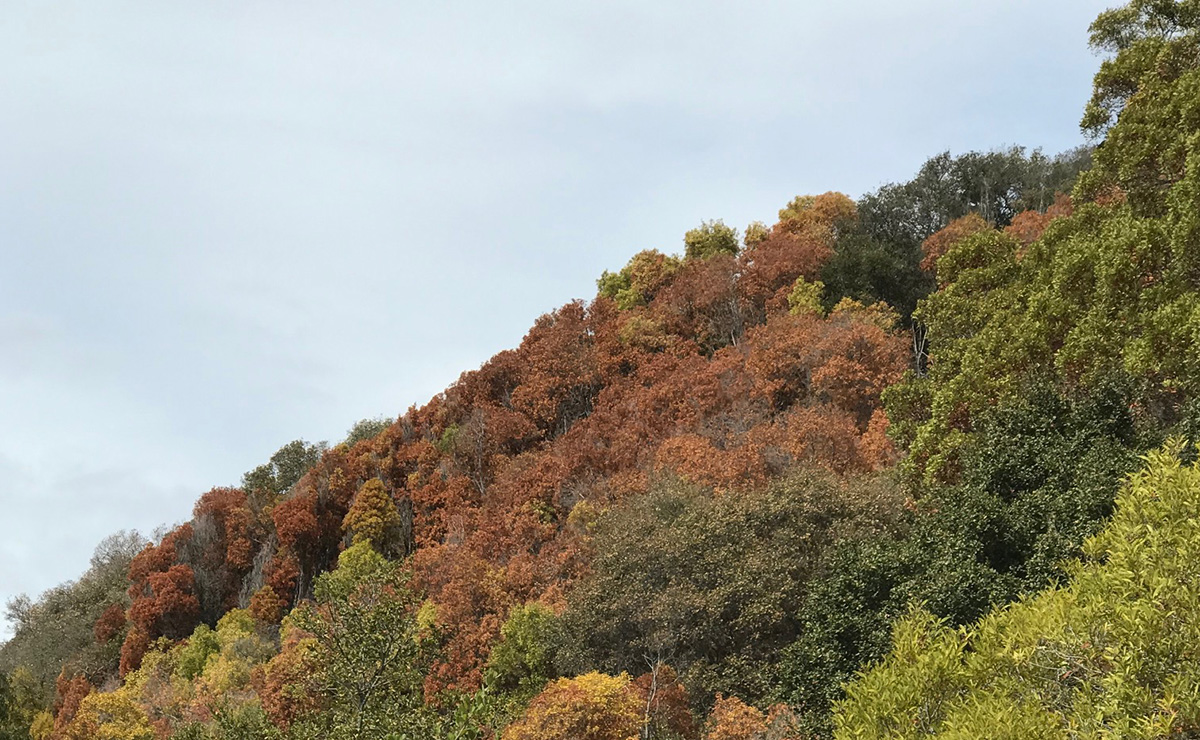
Words Matter: “Die-Off” vs. “Die-Back”

California has been in severe drought conditions for over 10 years.  Climate change is the underlying reason for the extremity of the drought.  Maintaining our carbon sinks that sequester greenhouse gases causing climate change is one of our most important defenses against climate change and forests are one of our primary carbon sinks.  Unfortunately, California’s forests are dying of drought and associated insect infestations. You might think that given these conditions, we would try to preserve our forests. 

In fact, the drought has accelerated the war on our non-native urban forest in the San Francisco Bay Area.  All trees and plants have suffered during our prolonged drought.  Where trees are not irrigated in our parks and open spaces, signs of drought stress are visible.  Today, I am publishing my letter to the IPM Director and Fire Chief of East Bay Regional Park District about the need to make a distinction between dead trees and trees that are not dead, but showing symptoms of prolonged drought. My letter explains why we must distinguish between dead (described as “die-off”) and living trees (described as “die-back”) when making commitments to destroy trees that we desperately need during this climate crisis.

Links are provided to email addresses of recipients of my letter.  Please consider writing a letter of your own.


To:   Pam Beitz, Aileen Theile

CC:  Natural and Cultural Resources Committee, Matteo Garbelotto

As you know, the Park District hired the Garbelotto Lab at UC Berkeley to evaluate two species of trees in the parks, acacia and eucalyptus.  The reports of the Garbelotto Lab were recently published on the Lab’s website.  I am writing to ask that responsible staff read those reports and make adjustments in plans to remove trees as needed, based on those reports. 

Source: Report of Garbelotto Laboratory
Acacia die-off in Leona Canyon, East Bay Regional Park District. Source: US Forest Service

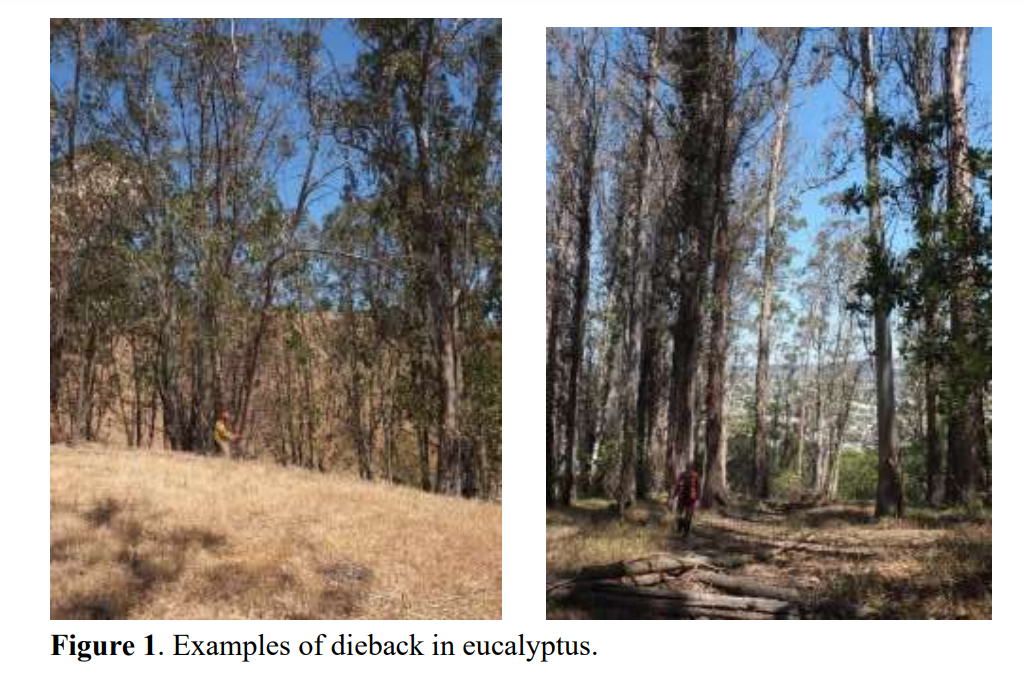
The diagnoses for acacia and eucalyptus are entirely different.  The pathogens are different in the two tree species.  The pathogens killing acacia are new and they are lethal.  The pathogens found in eucalyptus are not new.  They have been latent and asymptomatic in eucalyptus for decades and have only become symptomatic because of the stress of drought. The pathogens found in eucalyptus disfigure leaves and twigs, but are not fatal. 

Much like the microbes (bacteria, viruses, fungi, parasites) in our bodies that outnumber human cells, every tree is inhabited by microbes that are usually asymptomatic.  If similar tests were done on other tree species in the Bay Area, similar results would be found where trees are not irrigated.  The pathogens are always there.  Drought has made them visible.  If we were obligated to destroy every tree in the parks showing signs of drought stress, we would be required to remove most trees in the parks. 

There are significant disadvantages to destroying living trees:

  • A dead tree is not capable of resprouting, but a living tree is capable of resprouting unless it is a species that is not capable of resprouting. Eucalyptus, acacia, redwoods (not candidates for removal, but dying of drought nonetheless) and bay laurels are all vigorous resprouters.  The stumps of these living tree species will require herbicide applications to prevent them from resprouting. 
  • The herbicides used to prevent resprouting travel through the roots of the tree to kill the roots. Herbicides used to prevent resprouting damage the roots of neighboring plants and trees connected by their mycelium networks. 
  • The trees that are destroyed release their stored carbon into the atmosphere contributing to the greenhouse gasses causing climate change. In the absence of those trees, less carbon dioxide is removed from the atmosphere in the future.  Since the underlying cause of increased frequency and intensity of wildfires is the warmer/drier climate, removing living trees increases wildfire risks in the future.
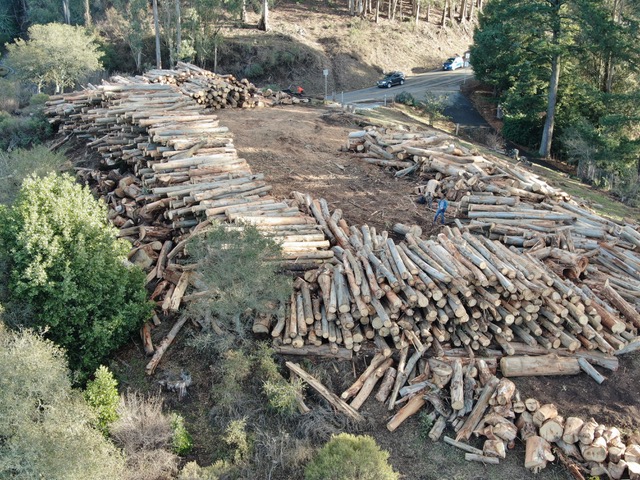
  • As more trees die, wood debris has accumulated to the point that there isn’t sufficient disposal capacity. When roadsides in the Berkeley hills were clearcut over one year ago, it took 9 nine months to dispose of the wood debris.  Huge piles of wood debris were stacked on roadsides, creating a fire hazard.  The more trees that are destroyed, the more wood debris is created.
One of many piles of logs, Claremont Ave, November 2020. Photo by Doug Prose, courtesy Hills Conservation Network.

I am therefore concerned about the Park District’s plans to remove one million trees from parks in the East Bay, according to press coverage: “In consultation with academics and state experts, they’ve identified a mass die-off of trees in the parks as a result of stress from drought, climate change and a proliferation of non-native species. Now they estimate they need to remove more than 1 million trees on their land, at a cost of $20 million to $30 million in one park alone. One area of the die-off, located between Mt. Diablo and communities in Oakland and Berkeley, is particularly concerning to Fire Chief Aileen Theile.”  

In an earlier media interview Fire Chief Theile included eucalyptus in the list of dead trees: “The die-off, first noticed last October, has mostly hit eucalyptus, acacias, pines and bay laurels and has expanded this summer amid an exceptional drought.”  Oaks are strangely absent from that list of dead trees, although it is well known that there are thousands of dead oaks in the Park District that have not been removed.

In summary, I ask for your reconsideration of Park District plans and public communications regarding tree removals in the parks:

  • The Park District should confine plans for tree removals to dead trees. Dead trees are public safety risks that should be mitigated. Drought stressed trees that may be unsightly are not a priority for removal.  Given our heavy rains in December, it is still possible that many will recover.
  • Park District communications with the public should make a distinction between “die-off” and “die-back.” Acacias are accurately described as experiencing a die-off.  Eucalyptus are accurately described as experiencing a die-back.

Thank you for your consideration.

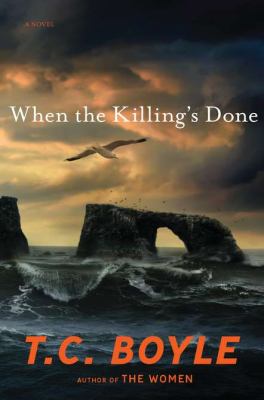
“When the Killing’s Done” Maybe never.

I have few opportunities to read fiction because most of my time is spent trying to keep up with rapidly evolving ecological science.  I was grateful for the chance to read the fictional account of island eradications on the Channel Islands because it closely relates to my interest in the planned eradication of mice on the Farallon Islands, which is still pending and as controversial as similar projects on the Channel Islands.  TC Boyle’s book foretells the Farallones project as he sends a member of the fictional project team to the Farallon Islands after completion of the project on the Channel Islands.

When the Killing’s Done by TC Boyle is not entirely fictional. (1)  It is impressively accurate in its description of the eradication projects themselves, but Boyle weaves a tight fictional plot around the key players who implemented the project and those who fought like hell to prevent it from happening.  Like other books by Boyle that I have read, When the Killing’s Done creates intense suspense that moves the reader along at top speed.  His characters are vivid and complex. 

Boyle lives in Montecito, near Santa Barbara, close to the Channel Islands.  No doubt he followed the projects closely as they were debated and resisted by opponents, who were primarily animal rights activists according to Boyle’s account.  In interviews after the publication of the book in 2011, Boyle claimed not to have a personal opinion of the projects:  “I’m not an activist in any way. With certain exceptions, I don’t think politics and art mix very well.”  He sees value in both sides of the debate and the characters in his story have much in common.  The antagonists are vegetarians who value nature and care deeply about the environment and the animals who live in it.  I believe this common ground is also true of the adversaries in the debate about the Farallones project and others like it.

However, the ending of the book suggests that Boyle doubts the ability of humans to control nature.  Although the projects on the Channel Islands were completed to the satisfaction of the land managers–National Park Service and The Nature Conservancy—the final image in Boyle’s story is of animals considered non-native on the Islands making their way to the shore of the Island.  The implication is that maybe the killing is never done and that is the crux of the problem with island eradications in general and the planned mice eradication on the Farallon Islands in particular.

Rat eradication on Anacapa Island

The aerial application of rodenticide to kill rats on Anacapa Island in 2001-2002 was the first of its kind in North America.  The project was also unique because it was complicated by the need to spare a population of endemic native mice on Anacapa.  Over 1,000 native mice were captured before the aerial application of rodenticide and released back on the island after the poison was no longer effective. 

Anacapa Island is the usual success story cited by supporters of the Farallones project where non-native mice are the target for eradication.  Native mice on Anacapa were not considered a threat to birds, but non-native mice on the Farallones are, although there is no evidence that mice actually harm birds on the Farallones either.  The operative word here is “native.”  The mice on the Farallones are targets only because they aren’t native.  The mice on Anacapa undoubtedly eat vegetation too, but that’s not considered a problem so long as they are native.   The mice on Anacapa are probably an important source of food for birds, just as they on the Farallones. 

If mice are not harmful to birds, there is no legitimate reason to poison them, along with untold numbers of non-target animals.  The mice on the Farallones are targets only because they aren’t native. 

Killing of non-target animals

Rodenticides are indiscriminate killers of warm blooded animals, including birds.  An animal who eats rodenticide slowly bleeds to death.  The grisly process of dying takes about 10-20 days.  If poisoned mice are eaten by other animals that animal is also poisoned.  It is therefore inevitable that non-target birds who are predators of mice will be killed by widespread dispersal of rodenticide pellets on the ground that can also be directly eaten by birds and other animals.  This deadly sequence of events has been demonstrated many times by island eradications using rodenticides all over the world and the project on Anacapa Island is no exception. 

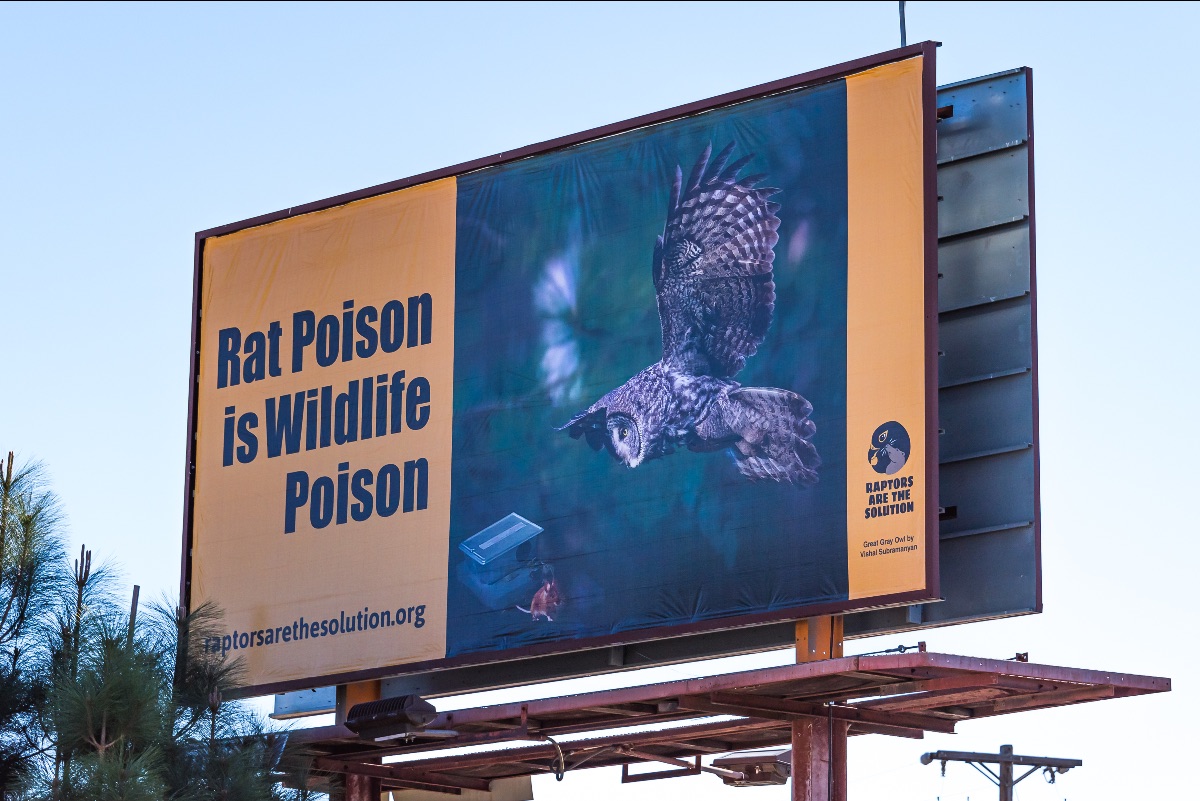
Billboard sponsored by Raptors Are The Solution (RATS)

Raptors are the main predators of mice.  Therefore, 63% of raptors on Anacapa Island (37 of 59 individual birds) were captured and either relocated or kept in captivity until the project was done, according to the first study of the project published in 2005. According to that study, “The fate of the remaining birds of prey on the island is unclear. There is evidence that some birds survived the bait application… However, three barn owls, six burrowing owls and an American kestrel either died while in captivity or were found dead on the island. The American kestrel and a burrowing owl that were captured in 2001, after the bait application, likely died from brodifacoum poisoning.” The analysis of the project considers these deaths “negligible.”

A total of 94 seed-eating birds were also found dead after the poison drop.  Most were song birds, but an additional 6 birds were too decomposed to identify the species.  The study notes that these collateral kills were consistent with other similar projects.

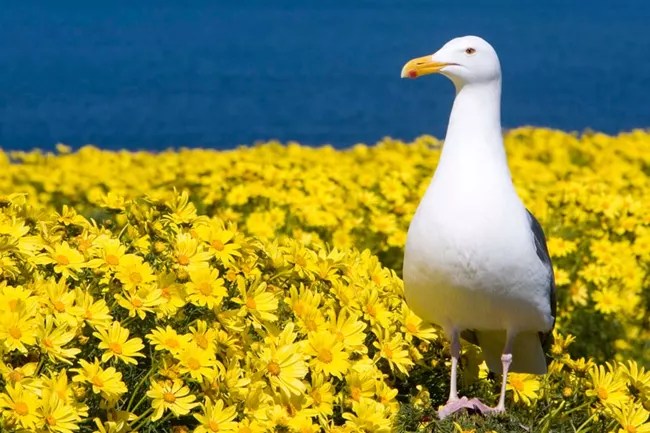
Western Gull on Channel Islands. NPS photo

The study makes no mention of gulls that were undoubtedly killed by the project.  Gulls are omnivorous scavengers for whom dead and dying mice are ideal food, preferable to dive bombing for French fries on your picnic table.  According to the National Park Service, “Western gulls are the most abundant breeding seabird in the Channel Islands National Park, with a population estimated at more than 15,000.” Shortly after the poison drop, dead seabirds washed up on the shore near the Santa Barbara harbor.  UC Santa Barbara’s daily newspaper said, “…a strong correlation exists between the National Park Service’s most recent airdrop of pesticide on Anacapa Island and the dead birds.”

In other words, those who implemented the eradication project on Anacapa are probably not telling the full story about the death of non-target birds.  The death of hundreds of gulls is anticipated by the promoters of the project on the Farallones.  If the organization that implements the project is the same organization that monitors and reports on the project (as was the case for the projects on the Channel Islands), we may never know the actual impact on the birds living on the Farallones.

Those who promote these poisonous projects justify the death of non-target birds by saying they are “incidental” and have no lasting impact on the species population.  They will apply for and receive “incidental take permits” in advance of the Farallones project that will satisfy legal requirements of the Migratory Bird Treaty Act and the Endangered Species Act.  The lawsuit that was filed to prevent the Anacapa project was overturned on those grounds.

The killing is never done

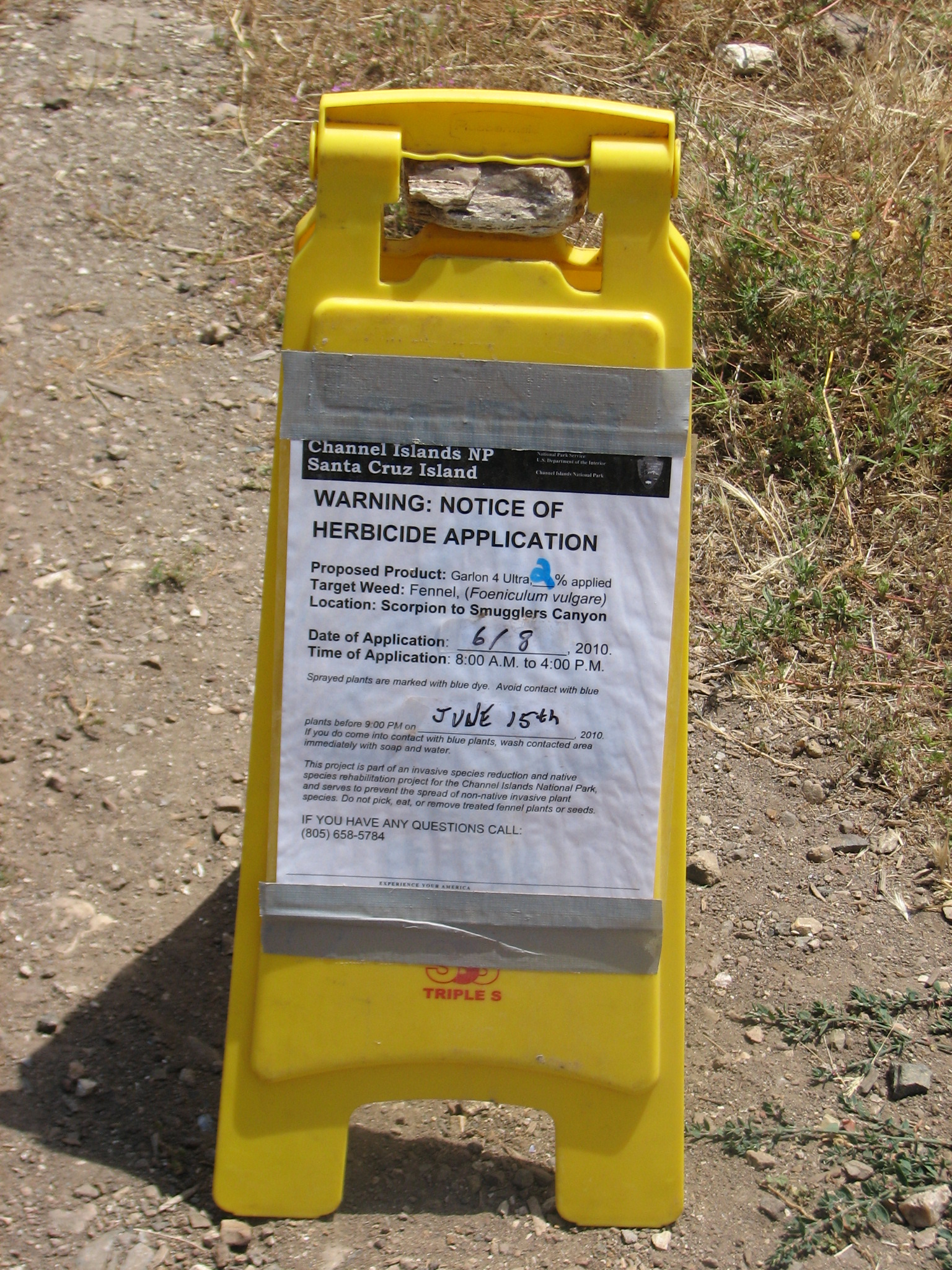
Rat eradication on Anacapa and pig eradication on Santa Cruz (where over 5,000 pigs were shot by sharpshooters and 54 Golden Eagles were removed because they were predators of endemic foxes) are the focus of TC Boyle’s masterful book.  Both were implemented and considered successful by the organizations that implemented the projects.  Although land managers are no longer killing animals (to our knowledge) in the Channel Islands they are waging a continuous war on non-native plants by spraying them with herbicide.  When we visited Santa Cruz Island in 2010, we witnessed the application of Garlon on non-native fennel.

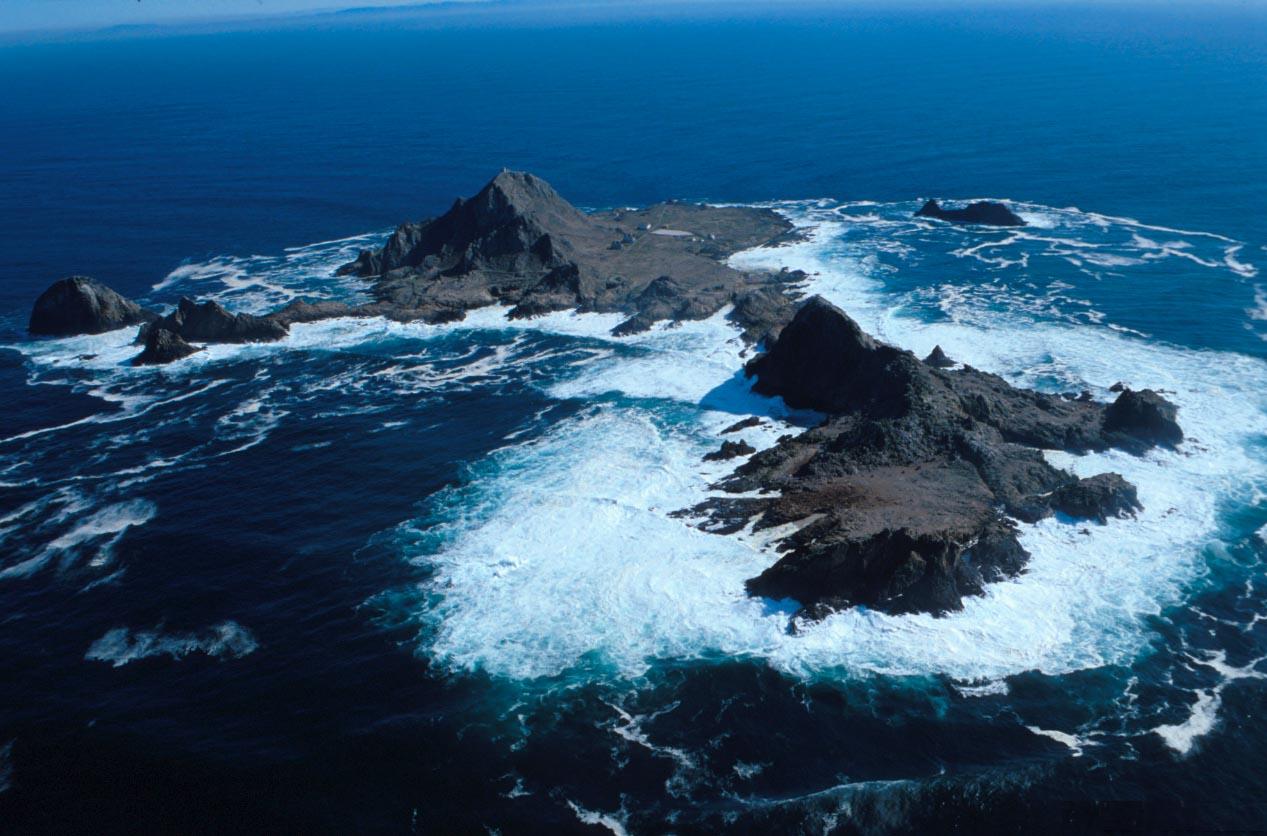
Roundup (glyphosate) has been used on the Farallon Islands every year since 1988.  Between 2001-2005, an average of 226 gallons of herbicide were used annually (5.4 gallons per acre per year), according to the annual report of the Farallon National Wildlife Refuge.  Given that these islands are not far from the California coast and are visited by thousands of migratory birds every year, we must expect that the arrival of new plants to the islands will be continuous: seeds are eaten and carried by birds; seeds are carried by birds in their feathers and feet; wind and storms carry seeds to the islands, etc.

The Environmental Protection Agency recently published a Biological Evaluation of glyphosate products.   EPA reports that glyphosate is “likely to adversely affect” 93% of legally protected endangered and threatened plants and animals. That finding applies equally to all plants and animals, whether they are legally protected or not because the physiological processes of species in the same order are similar.

The Environmental Impact Statement for the Farallones project accuses mice of eating vegetation, although far more vegetation is probably killed by herbicides.  Non-native vegetation arrives on the Farallones partly because birds eat it and carry it to the Farallones.  Animals do not care if edible vegetation is native.  Nativism is a human prejudice not shared by animals who seek food and shelter wherever they can find it.

The constant poisoning of plants is perhaps a trivial consideration in comparison to the futility of trying to eradicate mice.  Although rats have been successfully (leaving aside the death of non-target animals) eradicated by some projects, attempts to eradicate mice have been significantly less successful. 

A study of 139 attempted eradications on 107 Mediterranean islands in eight countries, with Greece, Italy, and Spain accounting for the highest number found that eradication projects targeted 13 mammal species. The black rat was the target of over 75% of the known attempted eradications in the Mediterranean Basin; other species targeted were feral goat, house mouse, European rabbit, and domestic cat. The most widely used technique was poisoning (77% of all eradications), followed by trapping (15%) and hunting (4%).  Techniques were largely target-specific.

The average failure rate of the projects was about 11%, but success was defined only as the death of animals living on the islands at the time of the project. However, this percentage varied according to species. The failure rate of house mouse eradication was 75%. Reinvasion occurred after 15% of eradications considered initially successful. 

Farallon Islands, NOAA

The proposed project on the Farallon Islands is a dead end in many ways.  It will kill many non-target animals. It will probably not be successful in the short run or the long run.  Every time it is repeated it will kill more animals. Furthermore, it is pointless because mice do not harm birds on the Farallon islands. 


  • T.C. Boyle, When the Killing’s Done, Viking, 2011.