We are republishing an article from the Garden Rant blog with permission of the author, Susan Harris. Susan is a professional garden writer who lives in the Washington DC area. Garden Rant is an award-winning garden blog with a huge readership of garden writers, landscape professionals, and home gardeners. They report over 80,000 readers per day.
In this article, Garden Rant enters the controversial debate about the arbitrary use of the word “invasive.” We agree that this word is both over-used and misused. However, this is more than a semantic debate. It’s an important debate because the word is being used to justify huge destructive projects that are damaging the environment by needlessly attempting to eradicate non-native plants, using polluting methods such as herbicides and prescribed burns.
If you have never debated with native plant advocates, you might find the comments posted to this article of interest. They are typical of the many dialogues we have had with native plant advocates in the past.
*********************************
This is a long-simmering rant about the many ways the term “invasive” causes confusion, and more. DO weigh in with alternatives, pushback, and rants of your own.
“Invasive” as synonym for “nonnative”
Google “native versus invasive” and the 5.6 million hits confirms my observation that this is a common usage, and it’s led to a common misperception in the public that the opposite of native is indeed invasive. QED: nonnatives ARE invasive. Even regular garden writers sometimes use this juxtaposition, which should more accurately be “native versus nonnative” or I guess, “exotic.”
That great leveler, Wikipedia, confirms this problem about the term “invasive”: “The first definition, the most used, applies to introduced species (also called “non-indigenous” or “non-native”) that adversely affect the habitats and bioregions they invade economically, environmentally, and/or ecologically.” At least their second definition is more accurate and even includes native species like deer. No argument there.
Defining away the invasive behavior by natives
Can native plants be invasive? Sure, as evidenced by the above-mentioned deer or in the plant world, wild grape. But when native plants are termed invasive someone invariably pipes up to correct the writer because by definition, they’re nonnatives only. And sure enough, legally, by the official U.S. government definition, only nonnative plants can be deemed invasive – for purposes of qualifying for money to remove them. The 1999 Federal Executive Order on Invasive Species defines an invasive species as a “species that is not native to a particular ecosystem…”
Invasive plant lists covering large regions – even continents!
We all know that plant behavior depends on the exact conditions the plant is growing in, as well as more broadly, the region. So some plants that behave well in the North are overly vigorous in the South. Or some, like the infamous purple loosestrife, are vigorous in wet spots, not in dry ones. Examples abound.
Spirea and Doublefile Viburnum (L), Lespedeza (R)
Yet this site by the U. Georgia and many other sources, including the National Park Service, don’t distinguish by region, and the resulting list of “invasives” includes these surprises to gardeners near me: several viburnums, two verbascums, several veronicas, red and white clo0ver, Japanese yew, 3 spireas (MOST on the market), various salvias, willows, nandina, grape hyacinth, Miscanthus sinensis (without specifying that it’s only the early-bloomers that spread), Lespedeza thumbergii, Pee Gee Hydrangea, cotoneaster, and strangely, littlestem bluegrass (Andropogonvirginicus). Yet native thugs like trumpet creeper are encouraged and they’re not invasive?
That designation of Spirea really bothers me because it’s such a self-sustaining, easy, low-maintenance and well behaved shrub, one I’ve grown for 30+ years with no signs of trouble. And yet another source – the USDA National Invasive Species Information Center – also targets Spirea Japonica and says this about it: “Spreads rapidly and forms dense stands that crowd out native species.” This and other contradictions between official reports and in-garden experiences growing targeted plants is puzzling to me.
Adding to the overly broad regionality of invasive-plant designations, there’s a new book on invasive plants, written for a national audience.
Shouldn’t invasiveness be designated locally? And sometimes, for certain conditions?
“Invasive” used instead of “spreading”
I’ve heard garden-club members describing their passalong plants at plant swaps as “invasive” if they spread at all. Which leads to said garden club being accused of encouraging the use of “invasives,” among other things.
Methods of “invasion” all lumped together
Mature Ivy
The USDA lists these characteristics of invasive plants: “produce large numbers of new plants each season; tolerate many soil types and weather conditions; spread easily and efficiently, usually by wind, water, or animals; grow rapidly, allowing them to displace slower growing plants; spread rampantly when they are free of the natural checks and balances found in their native range.”
Yet some of those qualities are valued in the garden – especially tolerance of many conditions. And for the gardener on a budget, especially one trying to replace their lawn with another groundcover, spreading is a good thing and it’s usually described more positively as “fills in quickly.”
What if the standard were: Does the plant spread in a way that causes harm to natural areas? For example, plants that are spread by birds, like English ivy, so that the seeds can go everywhere and harm natural areas. Unlike Spirea and Nandina that spread by rhizome and produce a couple of offspring every year, if that – just like Itea does? Or if it’s simply spreading in the garden, is it impossible to control, like running bamboo?
For example, “Invasive Species of Concern” in Maryland includes mostly plants we’d all agree are thugs and not even considered garden plants, but daylily? As a sun-lover, it won’t spread into the woods and even out in the sun, how hard is it to dig up?
Or a plant could be harmless in a townhouse garden on Capitol Hill but potentially harmful if planted on the edge of a forest.
I wish there were several terms used to describe spreading behavior by plants, rather than the single term “invasive.” How’s a gardener to choose between groundcovers like pachysandra, periwinkle and English ivy, when they’re lumped together as equally thuggish when only one of them will grow virtually to strangle trees, set seed and spread indiscriminately?
More science-based info, please
In researching the topic of “native versus exotic” I came across one example of the type of reporting on invasive species I’d like to see more of – based on research, not scare tactics. Just one quote from this article by Cornell will piss off some readers, but here goes: “A small percentage of plants exhibit invasive tendencies, while the majority of plant introductions are benign or beneficial.”
Solutions for “invasiveness” coming?
Plant breeders are hard at work breeding out invasiveness in popular garden plants, as reported on the Native Plants and Wildlife Gardens blog. Though controversial, especially among native-plant advocates, this type of breeding is recognized by pragmatists as a step in the right direction.
Because our mission is to inform our readers of the many projects all over California that are destroying non-native trees and vegetation in order to “restore” the native landscape of grassland and dune scrub, we are obligated to tell many sad stories. So, we are always pleased when we have the opportunity to relay some good news for a change. In this post we will tell you about several articles in the media that have treated our non-native landscape, as well as those who defend it, with more respect.
High Country News
Taking these articles in chronological order, we’ll start with an article in the High Country News which was published December 23, 2013. (1) We considered it our Christmas present!
The article was informed by Jared Farmer’s Trees in Paradise. We have reported extensively about this book, so we’ll leave that information aside to focus on what is new in this article. It is written in the context of a specific project which had originally planned to destroy about 120 of 450 eucalypts on a 32-acre preserve managed by the Morro Coast Audubon Society. The Sweet Springs Nature Preserve is in Los Osos, California, near San Luis Obispo.
Sweet Springs Nature Preserve, Los Osos, California
When the project was announced, defenders of eucalyptus objected: “the Morro Coast Audubon Society was so stunned by the outcry when it filed for a county permit to remove some of the…blue gums that they put the project on hold,” The defenders of the eucalypts are treated with respect by the author of the High Country News article. She portrays the controversy as a question of different conservation priorities. The eucalypts are serving a population of monarch butterflies and raptors. Those who want to destroy the eucalypts believe they are shading out rare native plants that would theoretically serve a different species of native butterfly. The author implies that these are all worthy goals.
She seeks the advice of a local scientist, Matt Ritter of Cal Poly State University in San Luis Obispo. He tells us that of the 38 species of eucalyptus that are widespread in California, only 18 have naturalized and only two—blue gums and red gums—are considered “moderately invasive, and then only in places refreshed by perennial moisture in the form of streams, springs or summer fog. “ He shows the author photographs of a place where eucalypts spread at a rate of 2 feet per year during the period 1931 to 2001. Mr. Ritter concedes that that isn’t a particularly fast rate of spread compared to other plants. For example, we wonder how it would compare to the spread of coyote brush into grassland that isn’t burned periodically to prevent natural succession to shrubs.
The article isn’t specific about the location of the photographs except to say it is “150 miles north” of San Luis Obispo. That would put the location south of Santa Cruz. That technique was also used In “Vegetation Change and Fire Hazard in the San Francisco Bay Area Open Spaces” by William Russell (USGS) and Joe McBride (UC Berkeley). (2) They used aerial photos of Bay Area parks taken over a 60 year period from 1939 to 1997, to study changes in vegetation types. They studied photos of 3 parks in the East Bay (Chabot, Tilden, Redwood), 2 parks in the North Bay (Pt Reyes, Bolinas Ridge), and one on the Peninsula (Skyline). These photos revealed that grasslands are succeeding to shrubland, dominated by native coyote brush and manzanita. Eucalyptus and Monterey pine forests actually decreased during the period of study. In those cases in which forests increased in size, they were native forests of oaks or Douglas fir. In other words, they found no evidence that non-native trees are invading native trees or shrubs.
The High Country News article ends with this happy ending: “…the Morro Coast Audubon Society board backpedaled on its plan to remove blue gums. While approving the removal of small trees—those with trunk diameters of eight inches or less—it took the larger trees off the table. Flagged as exceptions to be considered on a case-by-case basis were trees that pose risks to life or property.” This is the kind of compromise that we hope will ultimately resolve this conflict. This particular compromise is especially welcome because a chapter of the Audubon Society made this decision. We hope that the Bay Area chapter of the Audubon Society—Golden Gate Audubon—will note this compromise and learn from it. To date, they have reflexively supported every destructive project in the Bay Area.
High Country News is often quoted in Jake Sigg’s Nature News, which suggests it is influential with native plant advocates. We hope this even-handed treatment of those who object to the destruction of eucalyptus will come to their attention.
San Francisco Chronicle
Trees in Paradise, by Jared Farmer
On Sunday, January 12, 2014, the San Francisco Chronicle published an op-ed by Jared Farmer, the author of Trees in Paradise. (3) It was also a balanced article that treated both sides of the debate about eucalyptus with respect. We won’t describe the op-ed in this post because we have covered the book extensively in earlier posts.
To date, the article has drawn 115 on-line comments and three letters to the editor. They are typical of the highly polarized debate about eucalyptus. Here is the letter to the editor from the “other side:”
“I have never read such unsubstantiated, unscientific, navel-gazing in 50 years of reading The Chronicle. The logic of celebrating this invasive human-introduced species is the same as celebrating the hydraulic mining of the Sierra foothills or the decimation of the native Californians by disease and organized murder. We may never be able to restore our oaks and redwoods to their previous place, but a euke is as natural as a strip mine – and even more dangerous to life through falling limbs and fire.”
The commenter equates “human-introduced” trees to genocide and “organized murder” of Native Americans. My, my…such hyperbole. “Euke” rhymes with “nuke”…how clever. He also reveals his ignorance of our natural history in the Bay Area where eucalyptus did not displace oaks and redwoods because there were virtually no trees here. We won’t be looking to this person for the compromise that we seek. This is the religious fervor which is standing in the way of compromise.
Bay Nature
The following day, January 13, 2014, Bay Nature published an excellent article about eucalyptus, featuring the reforestation effort at the Presidio in San Francisco. (4) The article informs readers of Bay Nature of these facts which we know to be true:
Pre-settlement San Francisco was virtually treeless: “Looking out along the high western ridge of the vista would have unfolded in rolling waves of sand and grass, dotted with scrubby plants that unfurled all the way to sea. A few oaks lined the creek beds, and everything was bent to the wind and salt air.”
Non-native trees were planted to provide protection from the wind which enabled establishment of the entire landscape: “The native oaks that grew in the area were too short to serve as protection from the wind and sand, and the dune habitat looked nothing like the forests that Easterners knew and loved. And after the dunes of Golden Gate Park were forested in the 1880s, confidence mounted that the same transformation could take place at the Presidio.”
Non-native trees and native plants can and do thrive together: “Like sentinels [cypresses planted just a few years ago] preside over the Presidio, but they also co-exist with the original settlers of the area: native plants.”
Non-native trees provide valuable habitat for native birds: “…the forest has also increased habitat for native species of birds that wouldn’t normally be able to nest here…”
The San Francisco Presidio, painting by Richard Beechey, 1826
Bay Nature is also widely read by native plant advocates and it often defends their destructive projects. This article represents a significant change of tune, one that is very welcome. We hope it predicts the compromise we are seeking.
San Francisco Examiner
On Sunday, January 19, 2014, the San Francisco Examiner published an op-ed by Joel Engardio about San Francisco’s Natural Areas Program. (5) In a perfectly balanced article, he accurately describes the two sides of the conflict about the destruction of trees by the Natural Areas Program. Frankly, Mr. Engardio implies that he thinks the passion of the conflict is a bit silly, but he also makes it perfectly clear that he considers it a waste of taxpayers’ money to engage in needless tree destruction on the scale proposed by the plans of the Natural Areas Program.
A particularly nasty on-line comment on the article ends with this sentence: “Not only does it display an impossible amount of ignorance, but a complete lack of ethics or morality.” Having lost the debate on scientific grounds, native plant advocates now resort to self-righteous moral arguments. Surely that is weaker ground. Managers of our public lands are not obligated to deliver the moral imperatives of a particular interest group.
What does all this add up to?
Together, these articles represent a sea change of attitude on the part of publications that in the past were consistently supportive of the ecological “restorations” that are destroying much of our urban forest. Critics of these projects have not been treated with such respect in the past. Supporters of the projects were called “environmentalists” in the past. Now the conflict is portrayed as a conflict amongst environmentalists. That is a big step forward.
We hope that this significant improvement in media coverage of this controversy will create the atmosphere needed to find a compromise with which we can all live in peace. We won’t predict the exact nature of that compromise because we know there is a range of opinions. Speaking for the Million Trees blog—and no one else—we will say that the word “eradication” must be expunged from the debate and whatever the compromise is, it must include a commitment to quit using pesticides in our public parks for the sole purpose of killing non-native vegetation.
We are grateful to all of these publications for their participation in this debate. That is the balanced reporting we are looking for from a socially responsible media.
2) Russell, W. H., and J. R. McBride. 2002. “Vegetation change and fire hazard in the San Francisco bay area open spaces.” Pages 27-38 in: Blonski, K.S., M.E., and T.J. Morales. Proceedings of the California’s 2001 Wildfire Conference: Ten Years After the East Bay Hills Fire; October 10-12, Oakland California. Technical Report 35.01.462. Richmond CA: University of California Forest Products Laboratory.
As we said in our most recent post, we respect Jared Farmer’s comprehensive history of eucalyptus in California as told in his book, Trees in Paradise. However, we take issue with several of his assessments of projects that are still on the drawing board. Since these projects have not yet been implemented and final approval of them is still pending, for the record we will detail our quibbles in this post.
San Francisco’s Natural Areas Program
Farmer trivializes the plans of San Francisco’s Natural Areas Program to remove 18,500 trees over 15 feet tall and countless smaller trees on 1,100 acres of park property managed by San Francisco’s Recreation and Park Department. This is his description of their plans:
“Unfortunately, poor PR and misinformed criticism initially created the impression that the greenery of Golden Gate Park would be clear-cut. In truth, less than 5 percent of the city’s crown jewel had been rezoned. Even so, some neighborhood groups opposed any cuts anywhere; they wanted to ‘integrate’ the blue gums instead of “exterminating” them. (And they didn’t want to give up any place where they could take their dogs off-leash.)
Most of these trees on Mount Davidson will be destroyed if the plans of the Natural Areas Program are implemented.
Mr. Farmer has not done his homework about San Francisco’s Natural Areas Program. The disputed tree removals are not in Golden Gate Park. He’s right that few acres of Golden Gate Park have been designated as “natural areas.” Most of those acres are oak woodland, which no one would dispute are appropriately designated for preservation of native species. There aren’t many tree removals planned in Golden Gate Park. It therefore has not been one of the areas that are disputed by critics of the Natural Areas Program. The most controversial “natural areas” are places like Mount Davidson where the plans propose to destroy 1,600 trees, including many Monterey cypresses, of which even eucalyptus-haters are fond. Mr. Farmer chooses to defend a “natural area” that isn’t being disputed.
Mr. Farmer repeats one of the accusations of native plant advocates that critics of the Natural Areas Program “oppose any cuts anywhere.” This is an exaggerated description of most critics of the Natural Areas Program. Those who have been engaged in the 15-year effort to negotiate for a less destructive program have offered many compromises over the years. The number of planned tree removals have not been reduced during that long debate. It would be more accurate to say that supporters of the Natural Areas Program do not want any trees in the “natural areas.”
He also repeats one of the most popular “cover stories” of native plant advocates in San Francisco that all criticism of their plans originates with dog owners.In fact, NAP is controversial among dog owners and for good reason. There are only 118 acres of legal off-leash areas in the 3,500 acres of San Francisco’s park land. The Natural Areas Program claimed 80% of those acres as “natural areas:” “Approximately 80 percent of the SFRPD off-leash acreage is located within Natural Areas.” (SNRAMP, page 5-8). The Draft Environmental Impact Report (DEIR) for the Natural Areas Program proposes to close or reduce the size of several off-leash areas. The DEIR provides no evidence that these areas have been negatively impacted by dogs. It also states that all off-leash areas in the natural areas are subject to closure in the future if it is considered necessary to protect native plants. Since NAP has offered no evidence that the proposed immediate closures are necessary, it is reasonable to assume it will offer no evidence if it chooses to close the remainder of the 80% of all off-leash areas in San Francisco located in “natural areas.” We know from the DEIR public comments that NAP supporters demand their closure.
There are many reasons why people are opposed to the Natural Areas Program (NAP) and similar native plant “restoration” projects. The loss of access to parks for walking one’s dog is only one of them. It is the reason most often cited by defenders of NAP because there is little sympathy for that particular use of parks; it is a way of belittling our concerns. In fact, this isn’t an issue in some of the most controversial “restoration” projects, such as Mount Sutro where no effort is being made to restrict access to hikers accompanied by dogs. Yet, opposition to that project is even greater than opposition to NAP because more trees are in jeopardy.
About 50 trees were destroyed in the Interior Greenbelt, the “natural area” on Mount Sutro, in 2010
The most common reason for opposition to NAP is the removal of healthy trees. A closely related reason which motivates many others is that large quantities of herbicides are being sprayed in our parks for the purpose of killing non-native vegetation. Herbicides are also needed to prevent eucalypts from resprouting after they are cut down. Mr. Farmer makes no mention of the huge quantities of herbicides that are required by the “restoration” projects that destroy eucalyptus. Some critics of these projects are primarily concerned about the loss of habitat for the animals that live in and/or use the existing vegetation.
According to the US Forest Service, San Francisco has one of the smallest tree canopies in the country. Only 12% of San Francisco is covered by a tree canopy. Only Newark, New Jersey has a smaller tree canopy.San Francisco is an extremely cold and windy place. As Mark Twain famously said, he had never been colder in his life than he had been in San Francisco on a summer day. Our trees are our protection against that wind. Destroying them will make San Francisco an even more uncomfortable place. Trees are an asset everywhere, but in San Francisco they are more than that. They make an inhospitable climate livable. The completely artificial landscape of Golden Gate Park would not exist without the windbreak of non-native trees at its Western, windward edge that enabled the transformation of barren sand dunes into a verdant park.
Golden Gate Park in 1880. The trees are about 10 years old. In the distance, looking south, we see the sand dunes of the Sunset District. That’s what most of Golden Gate Park looked like before the trees were planted.
Despite Mr. Farmer’s inaccurate assessment of San Francisco’s Natural Areas Program, we consider his chapters about eucalyptus in California very informative and we recommend Trees in Paradise to our readers. The controversy regarding eucalyptus in California is complex and we cannot expect to agree with everyone about every facet of the issue. Critics of ecological “restorations” in the San Francisco Bay Area are a broad coalition with a range of opinions. We welcome Mr. Farmer into our big tent.
Eucalypti, painting by Guiseppe Cadenasso (1858-1918)
There is much to like in Jared Farmer’s chapters in Trees in Paradiseabout eucalyptus in California. He begins with a comprehensive history of when, where, why, and by whom eucalypts were planted in California. The history begins in the 1870s: “Planters believed variously that the exotic trees would provide fuel, improve the weather, boost farm productivity, defeat malaria, preserve watersheds, and thwart a looming timber famine. First and foremost, settlers propagated them to domesticate and beautify the land, to give it more greenery.” (1)
Although eucalyptus proved to be a disappointment as a source of timber, it continued to be widely planted in California until about 1913 because it was so well adapted to California’s climate, readily available, and grew quickly: “In 1924 a botanical investigator estimated that the state contained 40,000 to 50,000 acres of solid eucalyptus, broken down as 80 percent blue gum, 15 percent “red gums,” 4 percent sugar gum, and 1 percent others.” In 1927, the Los Angeles Times said of eucalyptus, “[it] seems more essentially California than many a native plant; so completely has it adopted California, and so entirely has California adopted it, that without its sheltering beneficence our groves and vineyards would be like Home without a Mother.’” (1)
Well into the 1960s eucalypts were still considered a valuable asset in California. Harold Gilliam, the nature writer for the San Francisco Chronicle, said, “’The Eucalyptus seems an indispensable element of this State’s landscapes, as indigenously Californian as the redwoods, the poppy fields, the long white coastal beaches, the gleaming granite of the High Sierra,’” (1)
Exhibit at Oakland Museum of California
The tide turns against eucalyptus in California
Jared Farmer dates the reversal of the reputation of eucalyptus in Northern California to 1972, when an unusually deep and prolonged freeze caused eucalyptus to die back. Because this was a unique event in California, with which there was little experience, the initial assumption was that the eucalypts were dead. Thus began a concerted effort to remove the dead trees that were presumed to be a fire hazard. Before the question of who would pay for this massive clean-up could be resolved, it became clear that the trees weren’t actually dead and would resprout. The removal effort was abandoned for the time being. This was an early lesson in the indestructibility of eucalyptus that would prove central to the debate in the future. Eucalypts resprout regardless of how they are destroyed; whether they are burned by fire or frost or cut down, they will resprout unless their roots are repeatedly poisoned with herbicide (usually Garlon).
Shortly after this episode, the managers of our public lands began to adopt policies requiring the removal of non-native species based on an assumption that native species would benefit from their removal.In 1982, the Golden Gate National Recreation Area (GGNRA), properties managed by the National Park Service, adopted a policy of destroying all blue gum eucalyptus on 600 acres of park property in Marin County. Ironically, they chose to announce their intention to destroy the trees on Arbor Day in 1986. They were flabbergasted by the public’s response to their announcement. They received letters from 350 members of the public and petitions from hundreds more, virtually all adamantly opposed to the proposed plan. Marin County supervisors were also opposed to the plans. Farmer says the GGNRA was forced to scale-back their plans to a single demonstration area. (Farmer doesn’t mention that subsequently GGNRA has destroyed tens of thousands of eucalypts using a variety of justifications including fire hazard. (See “Our Mission.”)
The State Parks Department adopted the same policy to remove all blue gum eucalyptus from State parks around the same time. They started with Angel Island in the San Francisco Bay and the reaction of the public was much the same as it had been to the plans of the GGNRA. This time the State Parks Department didn’t back down. They did a complete Environmental Impact Report in response to public demands and then they removed virtually all the eucalyptus on the island in 1990, with the exception of 6 acres deemed to have historic value. Eucalyptus has been removed from two other State Parks: Annadel in Sonoma County and Montana de Oro in San Luis Obispo County. (If the State of California hadn’t experienced severe budgetary difficulties, this list of parks in which eucalyptus was eradicated would undoubtedly be longer.)
Public opinion about eucalyptus changed radically after the fire in the Berkeley-Oakland hills in 1991. It is important to note that the managers of public land had adopted the native plant ideology that requires the removal of non-natives such as eucalyptus prior to that fire. The fire was an opportunity for the managers of public lands to justify their projects based on a claim that the trees are a fire hazard.
Is it accurate to blame eucalyptus for the 1991 fire? Although Farmer says the eucalypts were not the cause of the fire, he claims there were eucalypts on only 20% of the burned area but that eucalyptus was 70% of the fuel in the fire. These statistics are new to us and are not consistent with FEMA’s technical report which says that the homes destroyed by the fire were the biggest fuel source. The primary reason there was so much eucalyptus leaf and bark litter was that there had been another deep, prolonged freeze the winter before the fire that caused the eucalyptus to die back as it had in 1972. As in 1972, no coordinated civic effort was made to clean up the dead tree litter.
Such deep freezes are rare in the San Francisco Bay Area. The freeze in 1990 was the first and only freeze since 1972 and there has not been another since 1990. The current balmy and dry winter is a harbinger of the warming climate. Such freezes in the future are unlikely. If there were another freeze, would we have the sense to clean up the dead litter next time? We would like to think so.
NY Times reported that 150 homes were burned in the Scripps Ranch fire in 2003, but none of the eucalyptus surrounding the homes caught fire.
Farmer identifies other factors in the reversal of the reputation of eucalyptus in California. There have been a few fatalities caused by falling limbs and trees, although Farmer rejects the suggestion that eucalypts are inherently more dangerous than other trees.Available databases and media reports of tree failures and fatalities don’t support the claim that eucalypts are more hazardous than other trees.
Farmer also reports insect infestations in eucalyptus, particularly in Southern California. He dances around the question of whether or not these insect predators of eucalyptus were imported from Australia by native plant advocates for the purpose of killing the trees. We have reported on a study by an entomologist at UC Riverside that supports that theory and we have witnessed native plant advocates bragging about having a hand in that scheme.
Farmer ultimately concludes that eucalypts in California are dying of old age, implying that this will be the graceful resolution of the conflict about their existence in California. We believe he is mistaken in that judgment. Blue gum eucalyptus lives in Australia from 200-500 years, towards the longer end of that range in milder climates such as the San Francisco Bay Area. Our blue gums haven’t been here that long, so we don’t yet know how long they will live here. However, many professional arborists with no vested economic interest in their destruction have judged our eucalyptus forest in the Bay Area to be healthy.
We don’t advocate for planting blue gum eucalyptus. In any case, they aren’t available in nurseries in California any more. We ask only that existing trees be allowed to die of natural causes because of the environmental damage that would be done by destroying them prematurely: the release of millions of tons of carbon dioxide into the atmosphere, the spraying of herbicides to prevent them from resprouting, the loss of the habitat they provide.
We are grateful to Jared Farmer for his book about the trees of California. Mr. Farmer is a professor of history at State University of New York, Stony Brook. He is the author of a favorably-reviewed book about Utah where he grew up and received his graduate education. He has done a prodigious amount of research of both scientific and historical documents about the trees of California. His writing style is engaging and he steps back from his subject to muse about the philosophical issues raised by his findings. His book deserves the respect of both tree and native plant advocates.
*******************************
(1) Jared Farmer, Trees in Paradise: A California History. W.W. Norton & Company, 2013
We are republishing the following article published by Huffington Post on January 7, 2013, with permission of the author, Maggie Sergio. Maggie has done some impressive research about the appalling project to aerial bomb the Farallon Islands with rodenticides to kill mice. We shudder to think about how many other animals will be killed by this project. Please sign the petition to US Fish and Wildlife to abandon this horrible plan. The petition is available HERE.
*************************************************
I first heard the term “island eradication” back in 2011, when a colleague sent me an email that contained a project scoping notice from U.S. Fish & Wildlife (USFWS), San Francisco Bay National Wildlife Refuge Complex. This public notice announced a non-native mouse eradication project for the Farallon Islands, which are located 27 miles off the coast of San Francisco. The solemn tone of his words — “Have you seen this?” — quickly caught my attention.
As I read the document I couldn’t believe what was being contemplated. USFWS wants to use helicopters to drop 1.3 metric tons of brodifacoum (in the form of loose rat poison pellets) over the Farallon Islands, an area that has been designated as a National Wildlife Refuge. Nonnative mice are the issue. The ashy storm-petrel, a seabird that is considered a species of special concern, is being indirectly impacted by the presence of mice.
Photo of ashy storm-petrel courtesy of Wikipedia images. Photo taken by Duncan Wright
It is Fish and Wildlife’s assumption that the population of the ashy storm-petrel, a bird that is naturally a slow breeder, would recover if the mice could be eliminated. The rationale being used is that the mice are the food source that attracts an average of six burrowing owls–which also eat petrels–to the Farallon Islands every year. USFWS scientists believe the burrowing owls are staying longer than they normally would if the mice were not there. It is believed that the owls show up to feast on the mice when the mouse population spikes during the fall and early winter. The burrowing owl is also a species of special concern.
Photo of burrowing owl courtesy of Wikipedia images. Photo taken by Dori Merr
When the mouse population dips during the winter months, the few burrowing owls that remain on the island can, and do, turn to eating the chicks of the ashy storm-petrel. In reading the data provided by USFWS, I found it very interesting that out of 1,618 prey items analyzed in 679 owl pellets, only 82 storm-petrels were found. Based on the data from USFWS the majority of the owls’ diet appears to be invertebrates and mice.
It is important to add that the owls are not the only animals consuming the ashy storm-petrel chicks. Western gulls, one of the most opportunistic birds I have ever worked with as a wildlife rehabilitator, also consume ashy storm-petrel chicks. I can’t help but wonder when the Western gulls or any other species on the Farallones will be targeted next by USFWS in this unsettling fable of environmental ethics that pitches one species of animal against another.
If this 1.3 metric ton poison drop is allowed to move forward, thousands of wild animals will be inhumanely poisoned, and in turn, those killed become a poisoned food source for other animals. This is how the food web becomes contaminated. Since USFWS is chartered with the mission to protect ALL living resources within the public trust, the casual tone conveyed by this agency regarding collateral damage and “non-target species” is deplorable and unacceptable. I reached out to USFWS and asked for a comment with respect to that mission and how this project is contradictory. I have yet to receive a response.
There is also the potential for long term damage to the environment. Sub lethal impacts of anticoagulant rodenticides on wildlife are a threat that has the potential to impact future generations of birds, fish, sea lions, elephant seals, raptors, sharks, insects, crabs and other marine life. If the poison does not kill them outright, it can affect their behavior, reproduction, and survivability. Information on sub lethal poisoning was completely bypassed in the revised draft environmental impact statement (RDEIS) released this past October. Page 139 contains the statement that “Adverse effects as a result of possible sub-lethal exposure are unknown for brodifacoum or diphacinone.” The EPA also makes mention of this omission on page 11 of their 18 page comment letter found here
Information on sub lethal impacts of anticoagulants is readily available to anyone with access to the internet and web browser. This report tells the story of a dog exposed to brodifacoum at one point in her life, though her owners don’t know when, as this dog never displayed any acute symptoms of exposure. This dog was bred and the result was eight of her eleven puppies died soon after birth. Three were necropsied. Two of the puppies were found to be bleeding internally and brodifacoum was detected in the livers of two of the dead puppies. This is how brodifacoum and other anticoagulant rodenticides work. After animals ingest the poison, the animal bleeds to death because the active ingredient interferes with the blood’s natural ability to clot. This is the type of scientific documentation that is required to be disclosed in an environmental impact statement. The exclusion of this critical information equates to “cherry picking” of science. What happened to this dog has the potential to be replicated by a number of species that live in, or close to the fragile ecosystem of the Farallon Islands, if brodifacoum or other anticoagulants were to be aerially broadcast across the terrain.
Here’s the really scary thing. If this same event were to occur in nature as the result of brodifacoum permeating the food chain, the public and scientific community would not even be aware of it since the post project monitoring does not include monitoring for the presence of rodenticides or residues in the environment, except for intertidal invertebrates and then ONLY ‘If greater than negligible bait drift into the marine environment is detected.” (pg. 72 of the DEIS)
I started researching island eradication projects over two years ago and quickly learned of what happened on Rat Island in Alaska, a previous rodent eradication project that resulted in the poisoning of at least 46 bald eagles and over 420 seabirds. I found this highly critical report written by the Ornithological Council of USFWS and Island Conservation, and this story by Nature magazine.
I also received several emails urging me to investigate what was happening with the eradication project at Palmyra Atoll, which is located about 1000 miles from Hawaii. I have since learned that the eradication attempt at Palmyra Atoll resulted in bait getting into the water and fish becoming a contaminated food supply. The final report is available here.
I first wrote about this topic for the Huffington Post back in 2011, after members of the public were denied the opportunity to make public comments at the first public scoping meeting held in Fort Mason, San Francisco in May of 2011. We were given a presentation by the officials about the problem of non-native mice on the island, and the indirect impact these mice were having on the ashy storm-petrel, the farallon arboreal salamander, and the caramel cricket. We learned that an environmental impact statement was underway and that USFWS had engaged with two partners for this project; Island Conservation and PRBO (now Point Blue Conservation Science). After a presentation on how these projects are carried out and why one is needed at the Farallon Islands, we were divided into groups and sent to separate corners of the large room. Without a doubt, this was a technique for crowd control. There was a healthy turnout of concerned citizens and most were shocked and opposed at the prospect of using helicopters to carpet bomb the Farallones with a type of rat poison (brodifacoum) that has come under heavy scrutiny from the EPA and the California Dept of Pesticide Regulation.
In each of the room corners were representatives from USFWS, Island Conservation and Point Blue Bird Science. They had flip charts and wrote down questions, concerns and suggestions. In speaking with one representative from USFWS, I raised the question of other animals being poisoned in the process, something continually referred to as “non-target species.” The response was casual and dismissive. “Nobody likes it, but it happens” one USFWS employee shrugged.
Conflict of Interest
Fast forward to the fall of 2013 and a 741 page Revised Draft Environmental Impact Statement (RDEIS) is released. Written by Island Conservation under two Cooperative Agreements found here, and here. The creation of the environmental impact statement netted the Santa Cruz based nonprofit a total of $481,883. Island Conservation is also the contractor that will get the eradication business if the decision is made to move forward with this project. And since Island Conservation is a registered 501c3, income earned from eradication projects is tax free. Details surrounding the financial relationship between Island Conservation and USFWS didn’t surface until I asked Gerry McChesney, USFWS Refuge Manager for the Farallon Islands, how much Island Conservation has been paid to write the environmental impact statement. My request was handled under the Freedom of Information Act.
The blatant conflict of interest is disturbing, but what angers me is that it took my questioning before this information became public knowledge. Island Conservation has been paid $481,883 by USFWS to write the environmental impact statement for an eradication project they will be awarded worth approximately 1.3 million dollars. This explains the end result of a highly biased and misleading environmental impact statement.
According to NEPA’s (National Environmental Policy Act) rules of engagement, financial interests of parties involved need to be disclosed in the environmental impact statement. This is something the EPA pointed out in their lengthy comment letter dated 12/09/13.
” In our scoping comments, we raised potential conflict of interest issues if Island Conservation were to prepare the impact assessment and also carry out the eradication project. Since the DEIS does not include the disclosure statement, required by 40 CFR 1506.5(c), specifying that Island Conservation has no financial or other interest in the outcome of the project, it is unclear whether this issue has been addressed.” ~ EPA comment letter on the Farallones mouse eradication project, 12/09/13
Speaking of the EPA…..When they write an 18 Page Comment Letter with Concerns, We Need to Listen
This letter dated 12/09/13 from the EPA identified the numerous issues the EPA has with the draft environmental impact statement. What is unfortunate is that the EPA has no jurisdiction to stop this project. Only to give opinion and point out any potential NEPA violations, such as the conflict of interest issue.
The tone of the EPA’s letter was serious and expressed great concern about this project moving forward. Points raised by the EPA include the fact that the amount of bait proposed for use violates federal law, that predictions with respect to the success of hazing of wildlife are overly optimistic and do not mention how hazing activities would affect the mice, and fails to include any information about the failures of several previous island eradication projects.
“Much information can be obtained from previous rodent eradication attempts and it is not clear that lessons learned from these projects have been integrated into the planning for the proposed project. We are aware that three recent rodent eradication attempts – Wake Atoll, Henderson Island, and Desecheo Island – have failed. These efforts all attempted to eradicate rat species. The Wake Atoll Rat Eradication Review concluded that planning and associated research did not seem to adequately address some of the key issues and the general complexities of the project, and that the number of information gaps noted during the planning process should have led to serious consideration of postponing the project until those issues were more fully addressed. This is our main concern for the Farallon project.” ~ EPA comment letter, 12/09/13
Retired USFWS Biologist Weighs In
Biologist Sonce DeVries recently retired from USFWS after 22 years. During her tenure as Acting IPM Coordinator from 2010-2012, she reviewed proposals for a number of island eradication projects. While she fully agrees that invasive species are an issue that need to be addressed, she feels strongly that the approach that has been used in the past by USFWS and Island Conservation is not the way to do it. Her six page comment letter found herereflects many of the same concerns I have regarding the inaccurate and misleading science behind this proposed project.
“My review of the references cited in this DEIS shows that some significant misinterpretations of the original references have occurred. The authors of this environmental impact statement must accurately quote the scientific literature and not insert words or phrases that imply or state a different conclusion from that of the original reference being cited. While the DEIS states that no choice of alternatives has been made, the text clearly indicates that the reader is being strongly encouraged to select Alternative B, the use of Brodifacoum as the preferred alternative. Well written EISs go to great lengths to present a completely neutral discussion of the facts and allow the reviewer to reach their own conclusions. The DEIS does not meet that requirement.” ~ Sonce DeVries, retired biologist and former Acting IPM Coordinator, USFWS.
Richard has many concerns about the proposed project that he outlined in this four page comment letter here from the Ocean Foundation. Richard has a wealth of experience surrounding Natural Resource Damages Assessments (NRDA) and has requested that USFWS and/or Island Conservation post a surety bond in the event of accidental rat poison spills into the ocean (which occurred during a New Zealand project) and the inevitable deaths of non-target animals due to exposure to brodifacoum.
“The Revised DEIS is inadequate in reflecting a casual and dismissive attitude throughout the document regarding the inevitable mortality of public trust living resources, such as numerous non-target species, including birds and marine life, in a manner which hardly presents a fairly-considered cost-benefit analysis. Throughout the DEIS the document instead attempts to rationalize the unnecessary killing of a lot of innocuous wildlife in the process of eradication of one species – the mice – but the document provides no conclusive evidence that the Ashy Storm Petrel will benefit over the long term from all of this collateral damage throughout the overall ecosystem.” ~ Richard Charter, Senior Fellow, The Ocean Foundation.
American Bird Conservancy
American Bird Conservancy is the only bird conservation organization that hasn’t been drinking the USFWS/Island Conservation Kool-Aid about this proposed project. I think they are the only birding group that took the time to read and think critically about what USFWS wants to do. Below is a quote from the ten page comment letter submitted last month.
“American Bird Conservancy is concerned about the tenuous and indirect connection between the stated goals of the Project and the proposed means of achieving them. The conclusions in the RDEIS are founded on what we deem to be a faulty and incomplete analysis. We are concerned about poisoning the Farallon food web, including migrating raptors, sea birds, native terrestrial species, and marine mammals, and about what we consider an unacceptable level of projected incidental mortality of Western Gulls. We are also worried about the potential to cause long-term damage to the very practice of eradication of non-native mammals from islands. Related concerns include, but are not limited to, the inflated projection of effectiveness of gull hazing operations, the inadequate consideration of alternative methods of bait delivery, the biased selection of modeling assumptions, the exclusion of data from Rat Island, the under-estimation of brodifacoum toxicity, and the unorthodox and potentially biased risk assessment assumptions for diphacinone.” ~ George H. Fenwick, PhD, American Bird Conservancy
Dolphins and Penguins Die Following Drops in New Zealand
To better understand what happens with island eradication projects, watch this news report which tells what happened on two islands in New Zealand after brodifacoum was aerially dropped over two islands. Notice how Richard Griffiths with the New Zealand Department of Conservation dances around the repeated question with respect to the testing of dead dolphins and penguins for exposure to brodifacoum. Richard is now employed by Island Conservation.
Despite the critical data and the many voices of opposition, USFWS may still decide to move forward. My plea to USFWS is to remember the work of one of their own most influential biologists, Rachel Carson. Her revolutionary book, Silent Spring, published in 1962, sounded the alarm about the environmental impacts of pesticides and the penetrating influence the chemical industry has on commercial agriculture. Fifty two years later, the dominion of the pesticide industry continues and has now expanded beyond the confines of agriculture to include invasive species as another market opportunity to exploit. With respect to the South Farallon Islands Mouse Eradication Project, this is the “con” in conservation.
Update: The Final Environmental Impact Statement for the mouse eradication project on the Farallon Islands was published on March 15, 2019. The Final Environmental Impact Statement recommends the original plan as the “preferred alternative.” In other words, despite intense opposition to this plan, its implementation is now eminent.
No public comments are allowed on a Final Environmental Impact Statement, so there’s nothing further we can say about what seems to be an unnatural disaster in the making. At this stage of a project, lawsuits are the only way to stop it. I don’t know if anyone is willing and able to sue.
In The New Nature, Australian ecologist Tim Low takes us on a tour of his continent/country to make the point that every nook and cranny has been impacted by the activities of humans. (1) It is a dizzying adventure because it challenges many of our assumptions about nature:
Human civilization has benefited many plant and animal species in Australia. For example, places such as garbage dumps and sewage treatment plants are sources of food for many species, from the bottom of the food web to the top. Many animals hang out in the company of humans where they find housing, food, and protection from their predators.
However, there are “winners” and “losers” in the changed environment. Not all species benefit equally from the resources provided by humans and not all species are equally adaptable to change.
When “winners” dominate at the expense of rare species, the “winners” are nearly always native species, according to Low. Non-native “invaders” are hardly mentioned in Low’s tour of Australia.
Low defines “conservation” as active management of ecosystems, including aggressive culling (AKA killing) of native species as needed to prevent extinction of rare species. He acknowledges that these massive killings are controversial in Australia, which was some comfort to us.
Eucalyptus forests in Australia are in serious trouble. There is no evidence in Australia that they are the aggressive “invaders” they are labeled in California.
The Australian eucalyptus forest as painted by Hans Heysen: Mystic Morn, 1904
As ecologists tend to do in the United States, Low uses pre-European Australia as the baseline from which changes in ecosystems are judged. The Aborigines of Australia were hunter/gatherers, like many Native American tribes in North America. Like our Native Americans, they used fire to support their hunting. Periodic burning of grassland promotes the growth of new grass which attracts the grazing animals they hunted. In Australia, the grazing animals were marsupials, such as kangaroos, rather than the ungulates in North America. Periodic burning also prevented natural succession from grassland to forests.
When Europeans arrived, the population of Aborigines plummeted as it did in North America and the remaining population was displaced from most of their homelands. Their way of life was radically altered and hunting was no longer their primary means of living. That was the end of the annual grassland fires that had maintained the grassland.
Australian eucalyptus forest as painted by Frederick McCubbin: The Pioneer, 1904
The Europeans brought sheep and cattle that partially replaced the function of the Aboriginal fires to maintain grassland. However, there is a fine line between over-grazing and grassland maintenance. Many native grasses were replaced by annual grasses introduced with the livestock of the Europeans, just as it was in North America. Europeans in Australia actively suppressed fire for safety reasons.
Here is a brief summary of the consequences of these changes in human use of the land:
Koala and joey. Creative Commons
There were few koala bears in Australia when Europeans arrived at the end of the 18th century. They were easy marks for Aboriginal hunters because they sleep in the canopy of trees during the day. When Aboriginal hunting stopped, the population of koalas skyrocketed. Because they are so cute, humans love them and they want them everywhere, so they have been introduced into parks where they had not lived in the past. Now they are killing eucalyptus forests in those parks. Park managers want to cull them and sometimes they do, but Australians strenuously object to these efforts to balance the population of koalas with available resources. When managers are prevented from culling, the forests die and the koalas eventually starve. This makes for disturbing reading.
Kangaroos in native grassland
Kangaroo populations have benefited from both the disappearance of Aboriginal hunters and the eradication of dingoes by cattle and sheep ranchers. The large species of kangaroos now have no natural predators so their populations have destroyed much of the grassland that they graze. Kangaroos are also aggressively culled and Australians aren’t happy about that either.
Insect predators of eucalyptus forests have increased because they are “fed” by the fertilizer in stock paddocks.
The absence of fire has also radically altered many ecosystems. Where kangaroos and stock have overgrazed, the fires that start aren’t sustained because there isn’t sufficient fuel. When there are no fires to reduce the understory, the forest retains more moisture. The forest gradually converts from dry forests to tropical forests and the trees cannot regenerate in the wet, dense understory: “If you take eucalypt forest, add fertilizer and water, you have the recipe for rainforest.” This is another factor in the decline of the eucalyptus forest in Australia.
The changes in these ecosystems reverberate throughout the food web. The insects, birds, and animals that lived in one type of ecosystem aren’t necessarily adapted to the changes. Some species disappear and others arrive that often compete with their predecessors in the ecosystem, further diminishing rare species.
Although there are North American counterparts to most of these changes in the environment, the concluding chapters of Low’s remarkable book are entirely foreign to us. He is unequivocal in his assessment that human attempts to compensate for the damage that has been done to Australian ecosystems in their residential gardens inflicts even greater damage by helping “winners” displace “losers.” Bird boxes and feeders benefit only the most aggressive birds which give them an even greater advantage over the forest birds that are in decline. Likewise, garden ponds are occupied by only a few species of the toughest frogs. His assessment of native plant gardening is so surprising that we will quote it directly:
“One tenet of wildlife-friendly gardening is that native plants be used, but often that’s not what animals want. Growing native plumbago for native butterflies doesn’t help as much as growing the exotic equivalent, which sprouts hundreds more flowers. And switching native animals over to native plants is often harder than it sounds.”
We visited Australia as tourists for a month, but that is nearly the limit of our understanding of its ecology. It felt much like home inasmuch as it’s another of the five Mediterranean climates in the world. We can’t claim that this experience is sufficient to question Tim Low’s description of Australian ecology. So, until we learn otherwise, we must say that the drivers of environmental change in Australia are primarily anthropogenic and the existence of non-native species plays little role. However, we can’t help but wonder if a difference of perception accounts for the radically different assessment of American ecologists. In other words, are American ecologists blaming non-native species for environmental changes that are just the consequence of human activities? That seems another equally logical explanation for the radical difference in American and Australian assessments of non-native species.
******************************
(1) Tim Low, The New Nature: Winners and Losers in Wild Australia, Penguin Books Australia, 2002
The year’s winding down, and many of us are making plans for the next few months. An email from the Commonwealth Club told us of an interesting new series of lectures in January, March and April of 2014. It’s the Science of Conservation and Biodiversity in the 21st Century series, from three professors each giving one talk in San Francisco.
According to the email: “This series of lectures will present a new way of looking at public issues in conservation. The things we’ve assumed as facts often are not. Traditional approaches are losing ground as science illuminates new pathways for framing and achieving conservation goals.”
This is important thought leadership that could shift the way San Francisco manages its wild spaces. A good turnout would encourage the Commonwealth Club to have more such talks. Please do attend if you can.
JANUARY 30, 2014, 6 PM: DR SCOTT CARROLL ON CONCILIATION BIOLOGY
Native bumble-bee on non-native Strawberry Tree
Dr Scott Carroll is the Founding Director, Institute for Contemporary Evolution and Department of Entomology at UC Davis. He will talk about Conciliation Biology: An Approach to Conservation that Reconciles Past, Present and Future Landscapes in Nature.
Here’s what the Commonwealth Club website says: Biologists are now considering the “conciliatory approach.” This approach recognizes that mutual adaptation of native and non-native species is changing best practices for promoting biodiversity. Dr. Carroll investigates how organisms respond to human-caused environmental change. Carroll advocates for interdisciplinary solutions to problems of environmental conservation.
Dr. Arthur M. Shapiro is Distinguished Professor in the Department of Evolution and Ecology, College of Biological Sciences, at UC Davis. He’s speaking on Ecological Communities and the March of Time.
Gulf Fritillary butterfly breeds on non-native passionflower – wikimedia
From the website: “Ecological communities as we know them are similar to freeze-frames from a long movie. Associations among species are very dynamic on millennial scales, as demonstrated by the evidence since deglaciation 15,000 years ago. Coevolution of species occurs locally in geographic mosaics, and can be extremely dynamic as well. Frederic Clements, the father of American community ecology, had a holistic vision. He saw communities as super-organisms. He was wrong.”
WEDNESDAY APRIL 9, 12 NOON: DR JOE MCBRIDE ON EUCALYPTUS IN THE BAY AREA
Eucalyptus forest understory on Mt Sutro
Dr. Joe R. McBride is Professor of Landscape Architecture and Environmental Planning, Department of Environmental Science, Policy, and Management, UC Berkeley. His talk is about The History, Ecology and Future of Eucalyptus Plantations in the Bay Area.
The website says: “McBride will explain the ecology of the eucalyptus forest in the Bay Area. He will discuss its structure, the variety of plants and animals that live within it, its health and the ecological functions it performs. There will be a description of the dynamics within these forest stands (such as whether they are successional or a climax-species that replace themselves over time without human input) and about their invasive potential.”
The WordPress.com stats helper monkeys prepared a 2013 annual report for this blog.
Here’s an excerpt:
The concert hall at the Sydney Opera House holds 2,700 people. This blog was viewed about 35,000 times in 2013. If it were a concert at Sydney Opera House, it would take about 13 sold-out performances for that many people to see it.
We are pleased to publish a guest post by Moro Buddy Bohn, who is trying to save a forest of Monterey Cypress and his home of 55 years from being inundated by sand. The sand lying between his beachfront home and the ocean has been destabilized by the removal of European beach grass at Salmon Creek State Beach by the US Army Corps of Engineers (and local State Park refusal to replant it). Moro tells us about this issue in the hope of finding help to save what’s left of the bird and animal-habitat beach forest being destroyed by runaway sand. Please contact him at moro@moromusic.com if you would like to participate in his advocacy effort or volunteer to help shovel sand away from the trunks of trees that can still be saved.
Moro is a professional classical guitarist-composer and author of Kin to the Wind, the story of his youthful round-the-world travels through 50 nations that included an Arabian Desert crossing by camel in the company of Bedouin smugglers. Visit his website for a sampling of his music and a description of his book.
**********************************
Endangered oceanfront Monterey cypress trees along Sonoma Coast
Northern California’s coastal cypress trees are endangered by nativists in control of State Parks. Entrusted to look after our trees, they’re actually destroying them. They employ slow suffocation as opportunities arise, for it’s cheaper than clear-cutting. They’ve allowed a sand dune tsunami to form and swallow our mini forest of Monterey cypress trees at Sonoma Coast’s South Salmon Creek Beach State Park near Bodega Bay.
Their ecological thought is presently gripped by an ideology espoused in WWII Germany known as nativism, understandably dubbed a pseudoscience by horrified witnesses to the destruction. Nativists protect life forms they think are “native.” They treat other forms as “exotic alien invaders” and destroy them on public lands when/as funds are available.
I watched our Salmon Creek cypress tree saga begin more than 50 years ago. Human encroachment had destroyed our “native” grass, destabilizing the sand dunes. So the deeper-rooting European grass was chosen, after years of study, and planted to save our homes, the fishing industry, and Salmon Creek itself. The sand having been re-stabilized, a forest of Monterey pine and cypress trees, together with other coast-enhancing flora now considered “exotic alien invaders,” were then planted by Park rangers who understood that these were the only plants proven capable of withstanding beach abuse.
But nativism took control of ecological thought in the early eighties, causing ecologists in charge at State Parks to begin orchestrating the destruction of these same “alien exotics.”
Nativists are now actually destroying the tougher species they planted in Salmon Creek, attempting to replace them with the weaker, shallower-rooting “native” species that died out because they couldn’t coexist with 20th-century human invasion.
So beach forest endangerment isn’t from man generally, but from this new breed of men who’ve taken over California’s coasts, beaches and parks and practice nativism. They’ve dubbed Monterey cypress trees unlucky enough to be outside the Monterey Bay Area as “non-native scrub.” But Sonoma Coast’s “non-native scrub” lucky enough to be on private property is often highly prized and cared for by residents who consider cypress trees among the most exquisite of nature’s creations.
Much admired by State Highway 1 motorists, this Monterey cypress graces a Sonoma coast property.“Non-native scrub” (Monterey cypress) adorning the Bodega Harbor Clubhouse parking lot.
These photos generate a question. Why can’t Sonoma Coast State Parks people express as much pride in their cypress trees as Sonoma Coast property owners do, and treasure them as do the State Parks people at Pt. Lobos State Park south of Carmel?
Is it because nativist pseudoscientists say the trees are “invading” from Monterey and Carmel? Is that the reason they’re dubbed “alien scrub” and being allowed to be buried by windblown sands? Incredibly the answer is yes, based on my interviews with them.
The obvious flaw in nativism is that no one can define what’s “native” and what isn’t. For species migration has been going on since life began on the earth. The question, “native to when,” is therefore begged, and nativism’s hollow sophistry is thus exposed.
How did cypress trees get to Monterey initially? Were they not invaders there too at some point when nativists weren’t around to mourn losing the area’s treeless heritage and combat them with mass arborcide campaigns?
Nativists claim “invader” plants threaten biodiversity, but the opposite is often true. For example, studies show “invading” eucalyptus trees are home to 47 native California bird species, host an understory of 36 plant species, and are preferred by wintering monarch butterfly congregations. Author, lecturer and conservationist J.L. Hudson says,
“The ‘anti-exotics’ movement is a growing threat to biodiversity conservation efforts. In the past 10 years, the mythology of ‘invasive non-native species’ has spread from a minor pseudoscience indulged in by the gullible fringe, to a growing extremist movement uncritically embraced by otherwise responsible environmental groups…It is ominous.. that during Adolf Hitler’s Third Reich, the National Socialists (Nazi Party) had a program to rid the landscape of ‘foreign’ plants.”
“We should recognize nativism shows no respect for the sanctity of life, all life…”
So it would appear Sonoma Coast is far from alone in the abuse it receives at the hands of nativists in charge who’ve been entrusted by the public to protect it. The resurgence of nativism during the 1980s has become, in fact, an issue of worldwide concern.
At Sonoma Coast’s Salmon Creek Beach, a moving dune (now known as the big South Salmon Tsunami) began in the early 1980s when the U.S. Army Corps of engineers used heavy equipment to re-float a beached Coast Guard ship. The cranes and tractors tore out a healthy section of European grass that had been planted by a massive cooperative effort between Parks, citizen volunteers and the US Dept. of Agriculture in the ‘50s and ‘60s after native grass and shrubs had been destroyed by normal beach abuse of human influx.
The Army offered to replant the grass. But State Parks, while vowing to take care of the forest, took no action and allowed the Army’s 5-year Statute of Limitations of Liability to expire. For nativism had by then taken a stranglehold on ecological thought, and replanting of “invading” European grass was unthinkable.
So the multi-acre South Salmon Tsunami began. It has swallowed much of the beach’s thriving mini forest that was planted, prior to the rise of nativism, by predecessors of the current regime at State Parks. The forest that still remains is endangered by the runaway tsunami of sand.
Some of the endangered mini beach forest during a golden afternoon at Salmon Creek Beach
This endangered forest mingles the bouquet of fresh salty air, flowering blossoms, rosemary, and pine cones. A virtual oceanfront paradise, it’s enjoyed by birds who sing to the accompaniment of gentle surf sound.
Little passageways lead through friendly tree branches to quiet mini sanctuaries where beachgoers meditate, and quail, jackrabbits, raccoons, deer, possums and birds make their nests, relate in privacy, and munch on seeds or succulent blossoms.
But the runaway South Salmon Tsunami—now a 30-foot-high wall of sand moving (by State Parks measurement) at 12-plus feet per year (about 3 inches per week)—will soon bury it. It has already buried dozens of cypress trees and now threatens homes.
The big South Salmon Tsunami
The tsunami slowly suffocates the trees at 3 inches per week as seen below.
Current cypress tree victim breathing its last
If not followers of Pythagoras who described trees and plants as ensouled entities, many local residents view the mass arborcide—death by suffocation at 3 inches per week—as macabre and immoral. A Bodega Bay resident recently declared that when she sees a tree destroyed for no good reason, she feels “…a deep pain, like a stabbing in the heart. By allowing the harming of trees, we destroy a part of ourselves. And that’s immoral.”
The trees could be saved by stabilizing the tsunami with European grass, the one ground cover determined by the USDA, after extensive study, to root deeply enough to withstand modern beach abuse and hold the sand in place. But nativists in charge won’t consider it. And along rural, less frequented, less windy coastal areas, they’re actually destroying the European grass at considerable public expense and replacing it with weaker native grass that will hold only so long as those areas remain less frequented.
It’s logical that when an ecosystem can no longer survive, owing to a newly arrived hazard such as human beach abuse, a new ecosystem capable of living with that environmental abuse needs to be introduced. But the nativists at State Parks want only to reestablish the failed ecosystem.
Their most recent planting of the shallow-rooting native grass at Salmon Creek Beach parking lot in 1993 has failed, having been torn out by log-dragging bonfire builders and children playing.
So the nativists are fully aware native grass no longer survives here. But they still cannot rationalize planting a so-called “alien species” (European grass) to benefit other “aliens” such as Monterey cypress and pine trees, ice-plant, lupine, possums (“invaders” from Georgia), deer, jackrabbits and raccoons (all of them “invaders” of sorts—some from far away) who take sanctuary among “alien” trees to enjoy “alien invader” birds singing.
Homes Threatened
Below is a view from atop South Salmon Tsunami’s cutting edge, looking toward its next victims—trees and homes in its path.
South Salmon Tsunami, having swallowed dozens of trees, is now approaching homes.
Salmon Creek Itself—and Children—Jeopardized Too
Extreme abuse by man and horse has also destroyed marsh vegetation alongside Salmon Creek itself, about 300 yards north of the great South Salmon Tsunami.
This destruction has created another runaway dune, encouraging tunnel digging that proved fatal for a Tucson ten-year-old over Labor Day Weekend, 2007. He crawled into the tunnel he’d dug, and it collapsed on him. His 15-year-old brother, digging near him, couldn’t get to him in time. Locals hope his death won’t be in vain or go unheeded.
Two years earlier, in 2005, a Salmon Creek homeowner had written to the local State Parks resource ecologist, “We feel that the dune poses an attractive nuisance to the many small children who play on it and fear that they will either be injured by hidden broken glass/rusty nails, etc. or by becoming buried in the unstable sand or by having a spinal cord injury secondary to jumping off the steep dune.”
That same ecologist met with Salmon Creek homeowners shortly after getting the letter. Ironically he told us that loose sand poses no threat to children playing, or to the park.
But ten-year-old Andrew Waldrup of Tucson, AZ, was killed within two years, and windblown sand is now being pushed into the creek by foot traffic of man and horse. This affects the fishing industry, for salmon need the creek for their annual migrations.
In the face of all this, State Parks continues to dodge requests that they terrace the sand, plant vegetation proven to withstand modern beach abuse, and thus end the ecological disaster, public nuisance and danger the unstabilized sand poses.
Loose sand, pushed by foot traffic, sloughing off into Salmon Creek
So there’s been no meaningful action—only broken promises, false starts, and plantings of native grasses that couldn’t and didn’t last because native grass cannot withstand modern beach abuse as has long been proven.
Still More Trees Being Buried at South Salmon Parking Lot
Still more bird-habitat Monterey cypress trees, about 200 yards north of the great South Salmon Tsunami, are now also endangered, being directly in the path of the Parking Lot Tsunami that killed Andrew. This new tsunami, made from loose sand alongside the creek, is being allowed to advance from the creek and bury a stand of cypress trees at the South Salmon Creek Beach parking lot entrance.
Volunteers with shovels might still be able to save some of these half-buried trees if something is done soon. But there’s no chance of that until nativism is challenged and replaced by common sense. Park ecologists don’t consider the arborcide immoral at all. So loss of the Monterey cypress continues as trees are victimized by pseudoscience.
Cutting edge of Parking Lot Tsunami burying cypress trees at South Salmon parking lot entrance
Source of the Tsunami
The denuded bank of Salmon Creek, shown below, provides the sand that’s burying these trees. This photo looks down the tsunami’s windward side toward uncovered sand that will need stabilization to protect the creek, its inhabitants, the trees, and children playing.
Source of the Parking Lot Tsunami–a vast area of grassless dune alongside Salmon Creek
Snowy Plover Endangered by Loss of European Grass
Beach vandals harass even the bravest surviving snowy plovers, stealing their driftwood logs behind which they nest out of the wind, to make bonfires. Unleashed dogs have all but annihilated this tiny bird whose one last refuge, paradoxically, is in the concealment provided them by the tall, coastal European grass that State Park nativists are actively destroying at many beaches while simultaneously bemoaning the plover’s demise.
Spotted Owl Endangered by Loss of European Grass and Tree Burial
European grass, when maintained, serves trees by stabilizing the sand, preventing our uniquely fierce, prolonged, Sonoma Coast windstorms from creating tsunamis. The trees in turn serve birds and man with homes and shade.
A spotted owl, former resident of a Salmon Creek cypress tree, recently became a refugee when the big South Salmon Tsunami swallowed his abode. So he came to live with me for awhile, perching on a 4×12 beam out of the wind along the leeward side of my home. He’d swoop down on suspicious wiggles in the European grass to gather his meals. I owe the honor of his visit to nativists who willfully let the tsunami bury his natural home.
Monterey Pine Falsely Accused of Being Non-native
Monterey Pines, like Monterey Cypress, are also considered “invading, alien scrub” when outside Monterey County. But Connie Millar, U.S. Forest Service ecologist, advocates planting them where fossils found throughout California prove they lived during the middle Miocene and Pleistocene Ages and are of late returning home.
She tells the tragic story of a No. Calif. state park where a forest of Monterey pines considered “alien invaders” was cut down by nativists ignorant of our natural history, the philosophy of the sanctity of life, and the common sense realization that even if there are no fossils proving “native” status, a tree or plant serving birds, man, and environment with its beauty and function—and harming no one—should be saved whenever possible.
Driftwood Road Arch, below, is artfully created by two “alien invader” Monterey pines reaching out over Driftwood Road. The arch gives welcome shade on hot days. But this pair of “invaders,” directly in the dune’s path, will be buried if public apathy continues.
Driftwood Rd. Arch, artfully providing shade, is in line to be swallowed by the moving dune
Invasion a Mythology
To prevent still further destruction of our forests, the mythology of “invasion” needs to be recognized for what it is—mythology. An old ranger I met at the beach once told me there’s no reason for nativism in Salmon Creek. For tourist abuse at this beach is so harsh, even European grass, the world’s toughest, is severely challenged.
Like me, he loves all trees, grasses and shrubs. He says the anti-exotic programs looked harmless enough at the start. “But people just weren’t thinking,” he said, and that’s how nativism, with its mass arborcide and other beach forest destruction, gained momentum and became established. But now he agrees it needs to be stopped. So I propose a five-step plan to save Salmon Creek’s trees and mini forest:
Five-Step Plan
1) Get applicable nativist policies overridden (an exception granted for heavily abused public land) so that the planting of European grass for long-term dune stabilization (followed by replacement of the buried trees, flowers and shrubs capable of withstanding Salmon Creek’s uniquely tough beach abuse) will be permitted here again.
2) The moving dune’s steep slopes need to be reshaped, creating flat terraces that will discourage sand surfers and prevent windswept sands from covering the newly planted baby shoots of European grass.
3) Then, according to the USDA brochure, Sand Dune Control Benefits Everybody—The Bodega Bay Story (circulated in 1967), the entire dune should be planted with shoots of European beach grass during December and January—18-inch pre-started clones—75,000 clones per acre at nine-inch depth with spacing of 12 to 15 inches between clones.
4) Fence off the dune to protect baby shoots from abuse by vandals, sand surfers, run-jump-and-sliders, log draggers and jackrabbits. 1000-dollar-fine signs for fence violators could be posted along the fence and enforced by rangers (a source of much-needed income for State Parks!).
5) Per USDA instructions, apply a 20-20-0 fertilizer at 200 lbs. per acre each February, for 3 years, on the new plantings.
Nativists Will Fight All Rescue Attempts
Stimulus Funding will need to be applied for and received by benignly motivated, clear thinkers at State Parks.
Nativists everywhere will certainly object to the rescuing of “alien” trees and will fight it. But assuming enough of them can be convinced to help put an end to the arborcide of Salmon Creek’s remaining forest, there will still be the taking and approving of bids, and time-consuming greenhouse preparation of the 18-inch clones. So constructive litigation will need to begin soon, for sand is already climbing the trunks of remaining trees.
Nativism’s Further Devastation in Nahcotta, WA
In Willapa Bay, Nahcotta, WA, the state and county are implementing the current West Coast Governor’s Action Plan by spraying imazapyr-glyphosate-containing herbicides along the tidal flats to eradicate “invading” spartina grass. But Spartina is considered precious along the Atlantic Coast. Dr. James Morris, Director of Baruch Institute of Marine and Coastal Science, showed in his 2011 PIEL Conference discourse that spartina isn’t harmful and provides economic benefits that dwarf the $25M taxpayer dollars so far spent on local spraying that primarily serves the toxin makers. “Not all ‘invasives’ are troublesome—some are beneficial,” he says. He recommends action against “invasives” be taken on a case by case basis. Author-Professor Michael Pollan recently remarked, “the war on ‘invasive species’ has been founded more on ideology than science.”
*********************************
Although we are unfamiliar with this specific project, we are well aware of the consequences of removing non-native vegetation which stabilizes the coastal dunes of California. The first book we read about ecological “restorations” was Ecology and Restoration of Northern California Coastal Dunes by Andrea Pickart and John Sawyer (Sacramento: California Native Plant Society, 1998). Ms. Pickart was the manager of the Lanphere Dunes near Arcata, California. She acknowledges in that book that native dune plants do not stabilize sand. In fact, many native dune plants require transporting dunes for propagation and long-term survival. We have visited that project which is open to the public on a very limited basis because of the fragility of a native dune landscape.
We have not verified any of the factual information in Moro’s article. However, Moro has provided the following bibliography of his sources.
Recommended reading/viewing: (Below are 12 data sources for this article)
Axelrod, D.I., and F. Govean. 1996. An early Pleistocene closed-cone pine forest at Costa Mesa, southern California. International Journal of Plant Science 157(3):323–329.
Millar, C.I. 1998. Reconsidering the Conservation of Monterey Pine. Fremontia 26(3):12–16.
USDA Brochure 1967 Sand Dune Control Benefits Everybody—The Bodega Bay Story.
On December 14, 2013, the New York Times published an article entitled “The Selling of Attention Deficit Disorder.” Attention Deficit Hyperactivity Disorder (ADHD) is a neurological disorder that was identified about 50 years ago. The number of children taking medication for ADHD has soared from 600,000 in 1990 to 3.5 million presently.
Advertising in popular magazines such as People and Good Housekeeping suggest that medication for ADHD is needed to cure childhood forgetfulness and impatience and promises that schoolwork will improve and family tensions will be reduced. These are empty promises for symptoms that are normal child behavior. One of the manufacturers of ADHD medication recently paid to publish 50,000 copies of a comic book that uses superheroes to convince children that these medications will make life easier for them.
These seductive promises have proved very profitable for the pharmaceutical industry: “Sales of stimulant medication in 2012 were nearly $9 billion, more than five times the $1.7 billion a decade before.” But the industry is not satisfied with these results. Now they are marketing these medications to adults. Sixteen million prescriptions for ADHD medications were written for adults between the ages of 20-39 in 2012, nearly triple the number of prescriptions written just five years before.
As disturbing as this example of the insidious power of advertising is to convince us that we need something they are selling, it is hardly an isolated example. On a typical evening in front of the TV, men are told that a variety of medications will improve their sex lives and women will be told that a good night’s sleep is just a pill away.
Advertising is also used to improve the image of industries that the public would otherwise think badly of. For example, energy ratepayers are paying for a television campaign that tells us how much P.G. & E.– the monopoly provider of electricity and natural gas in Northern California–cares about our safety. Yet, the mainstream media informs the public of the many breaches of public safety by P.G. & E. In 2010, 37 homes and 8 lives were lost in San Bruno when an underground gas pipeline exploded. The pipeline had been badly built, not inspected, and not repaired. Subsequent investigations of P.G. & E.’s records proved that such neglect and incompetence is rampant throughout their system and continues to this day. Money that could be spent on our safety is being spent on advertising. Such manipulation of the public’s attitudes with advertising is the American industry standard.
Is the pesticide industry fueling the demand for ecological “restorations?”
Readers are surely wondering by now what this has to do with the mission of Million Trees. Clearly the manufacturers of pesticides are the beneficiaries of the ecological “restorations” that destroy non-native vegetation with herbicides (herbicides are one type of pesticide). From the standpoint of the industry, the more plants that are labeled “invasive” the better. And since new plants are always being introduced—either intentionally or unintentionally—it’s a winning business model to label every new plant “invasive.”
We don’t have a lot of evidence to support our theory that the pesticide industry is one of the sources of support for invasion biology and ecological “restorations.” Two of the 31 members of the National Invasive Species Advisory Committee are employed by companies that manufacture pesticides. One member is employed by Dow AgroSciences which manufactures Garlon, the most frequently used herbicide to prevent the resprouting of non-native trees after they are destroyed. The other member is employed by Syngenta which manufactures pesticides and biocontrols which are another method used to destroy vegetation by introducing insects or plant diseases.
Is it inappropriate for the pesticide industry that benefits from the designation of “invasive” species to participate in setting federal policy regarding those species? Undoubtedly there are arguments on both sides of that question.
Shelterbelt began the eradication of non-natve vegetation in Glen Canyon in November 2011
Admittedly, it’s a stretch to say that invasion biology was created to increase demand for pesticides and other products and services needed for ecological “restorations.” We can’t and won’t say that. But we invite our readers to wonder with us if some aggressive investigative reporting would find more evidence that it’s a factor. Wouldn’t it help to explain why invasion biology persists despite the lack of scientific evidence to support it?
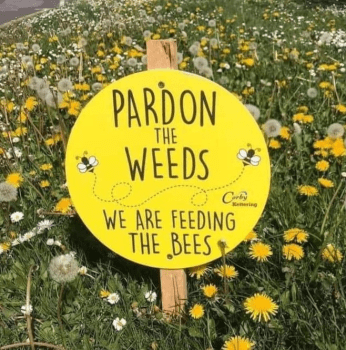

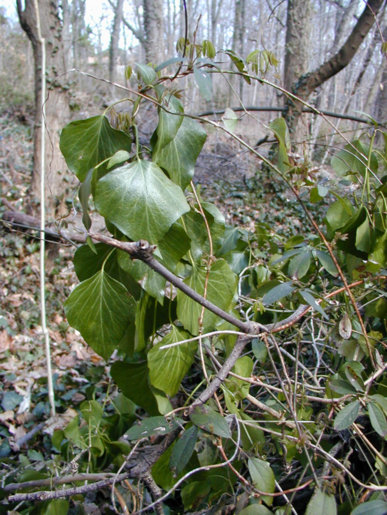
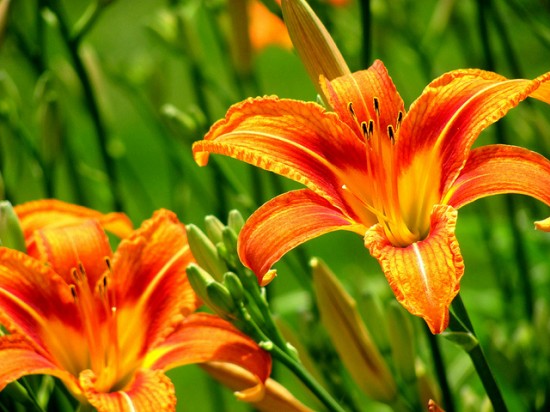 For example, “Invasive Species of Concern” in Maryland includes mostly plants we’d all agree are thugs and not even considered garden plants, but daylily? As a sun-lover, it won’t spread into the woods and even out in the sun, how hard is it to dig up?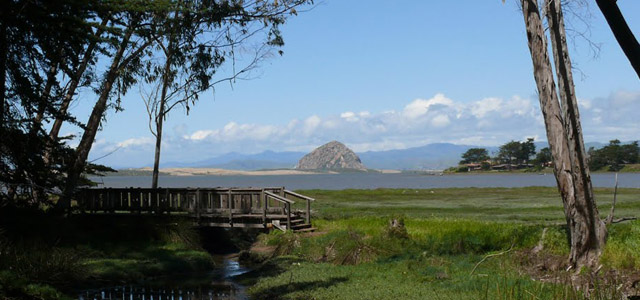
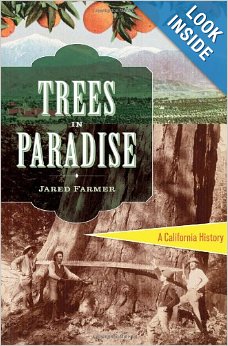
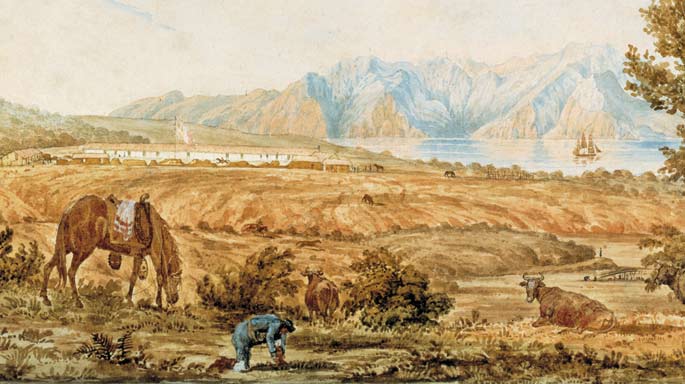
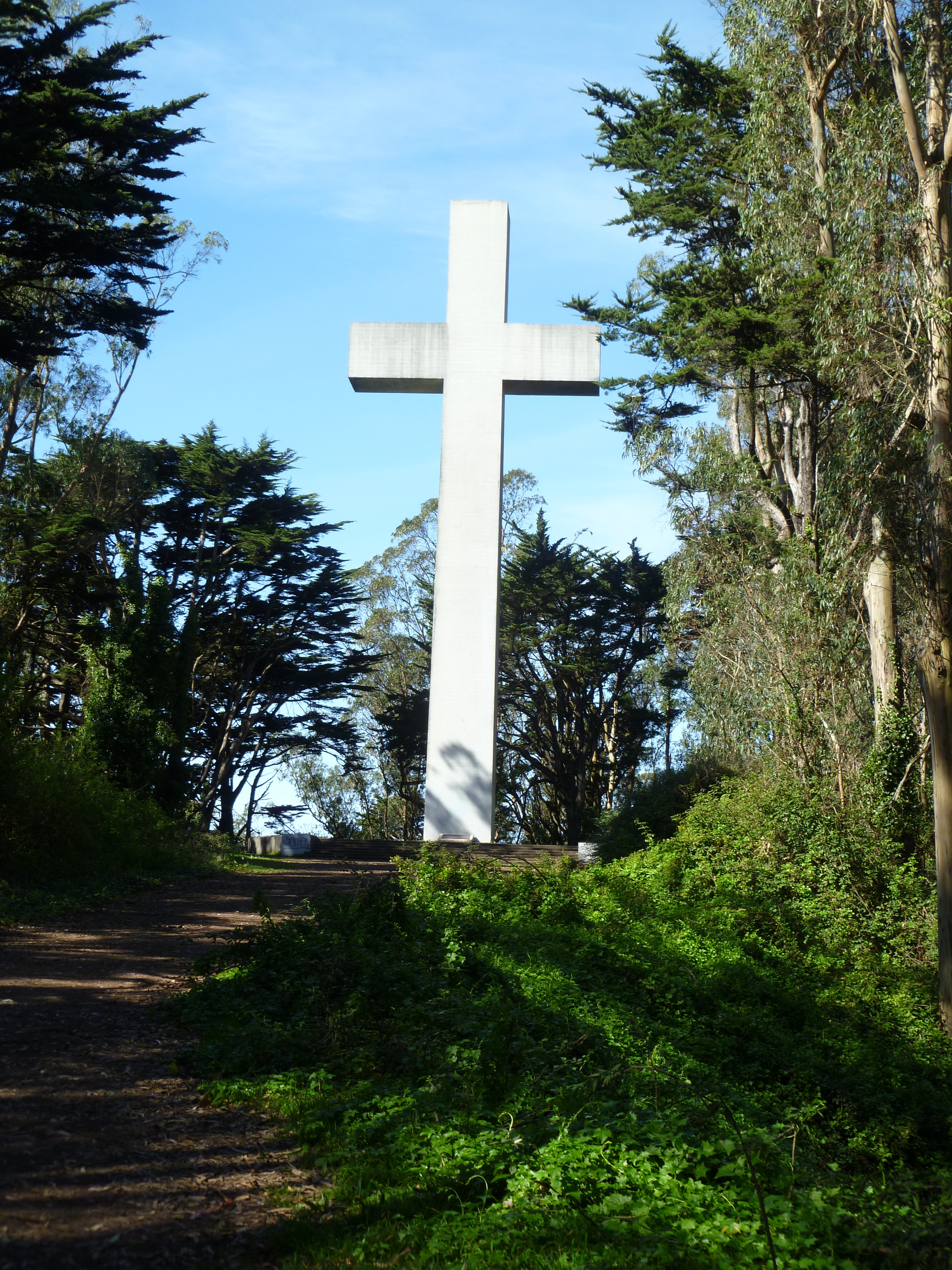
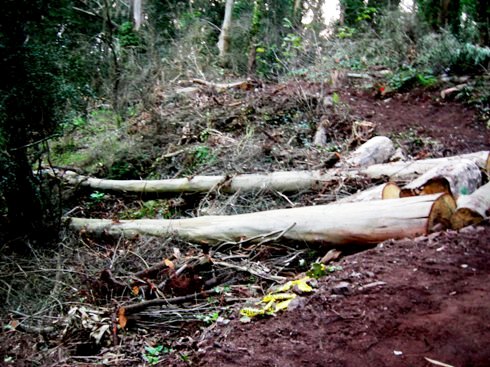
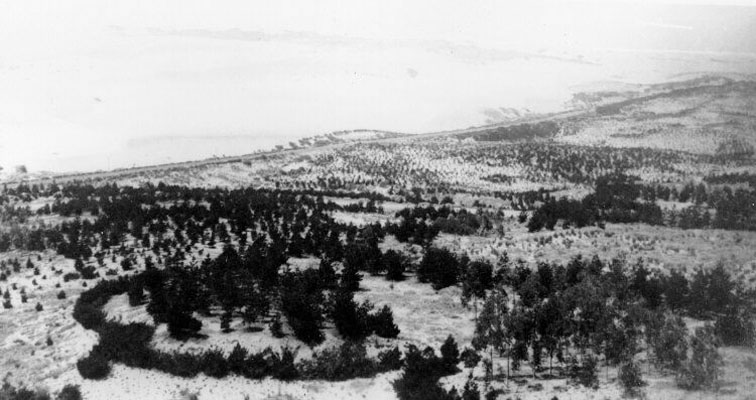

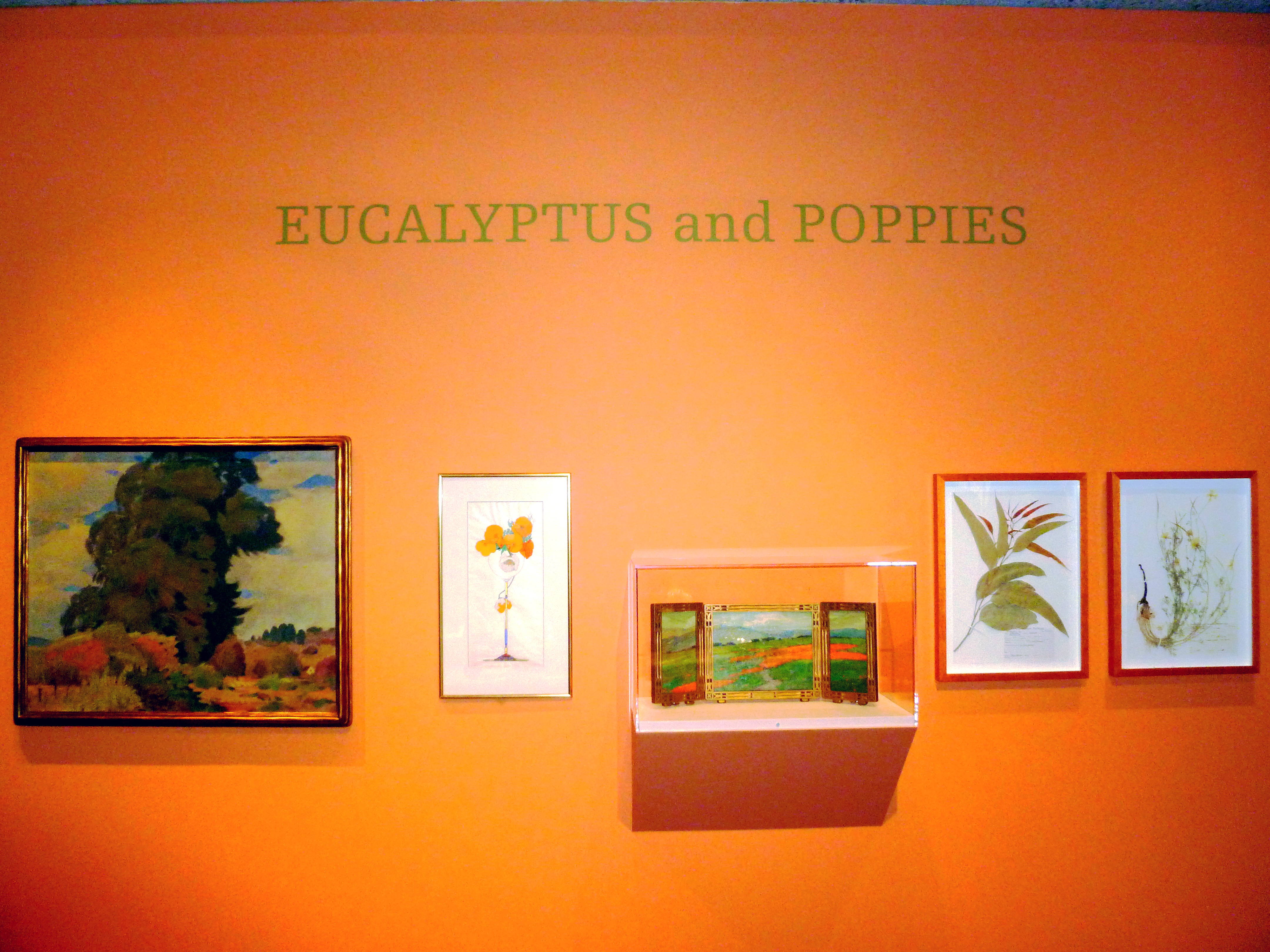


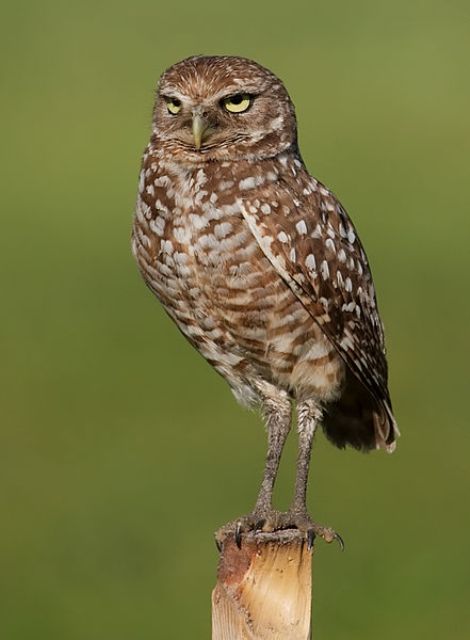
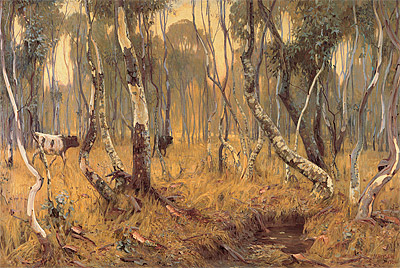
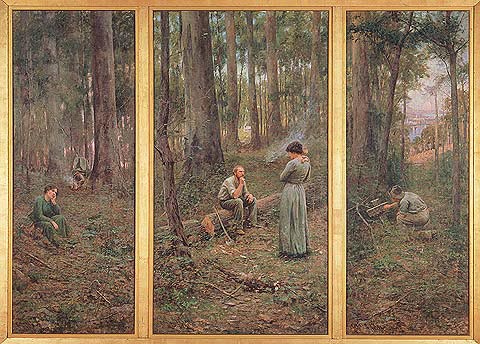

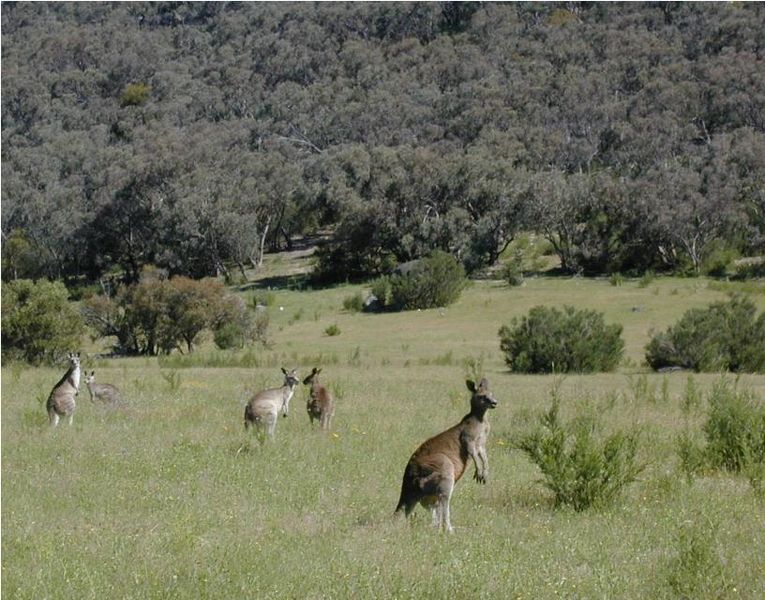


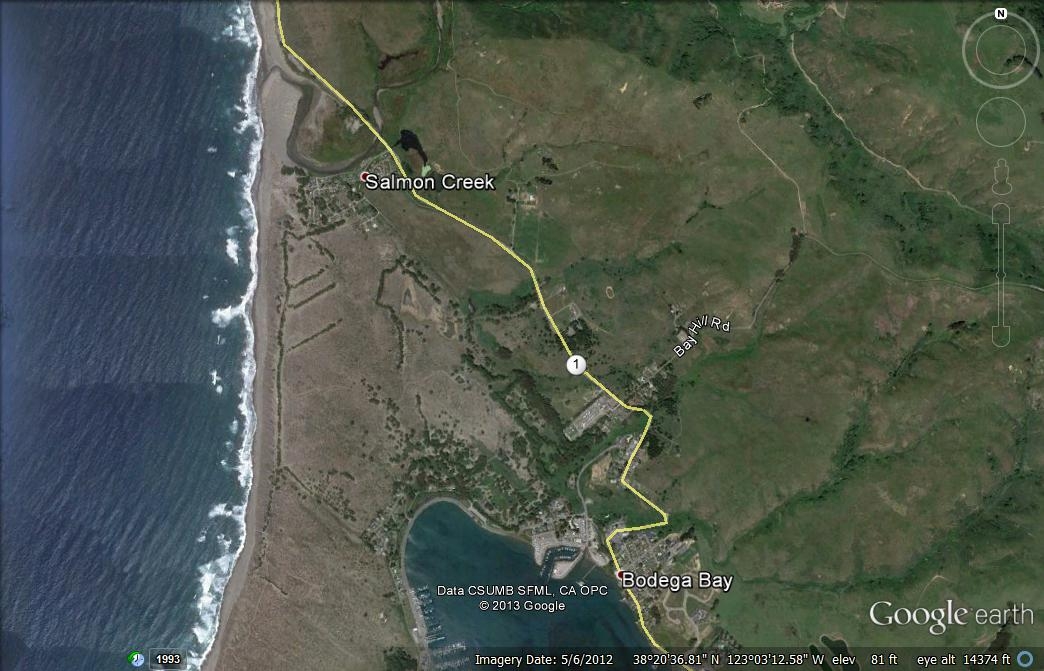
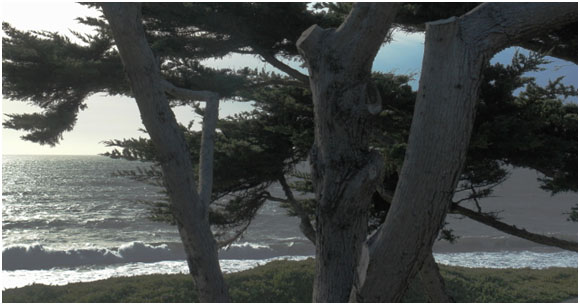
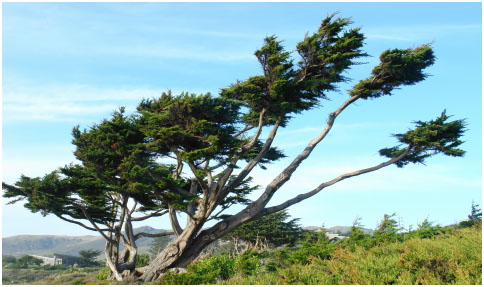
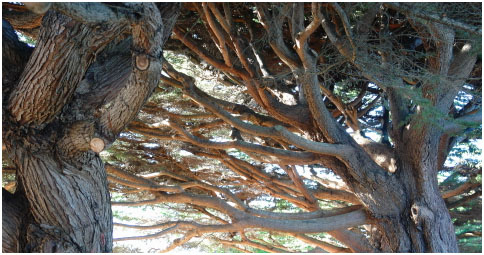
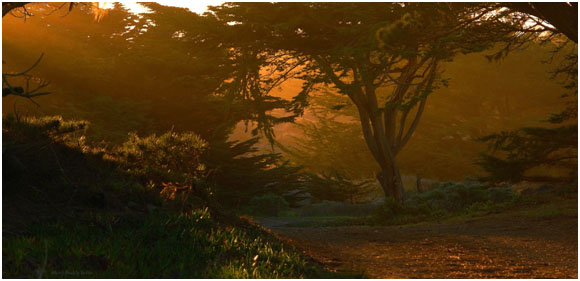
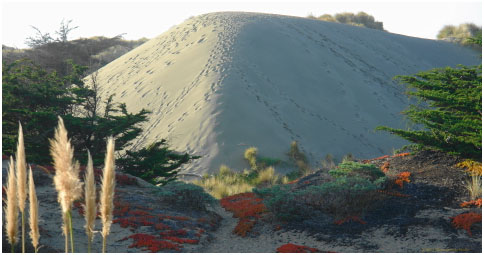
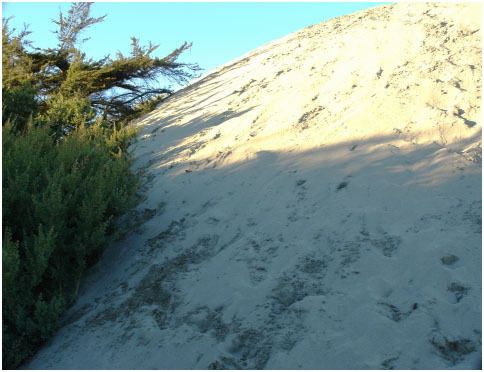
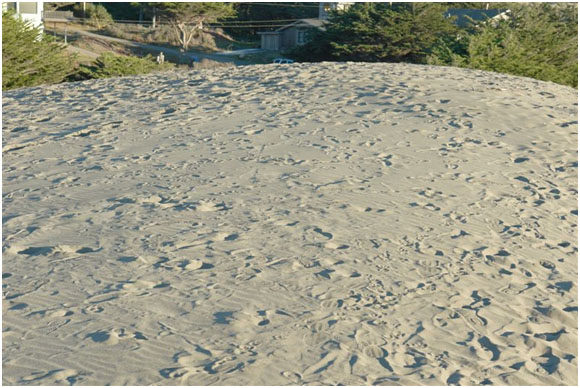
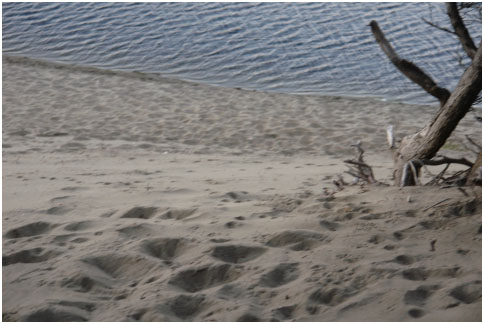
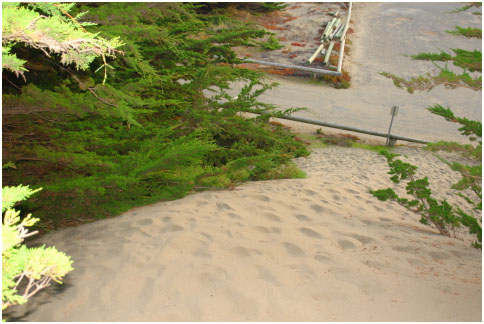
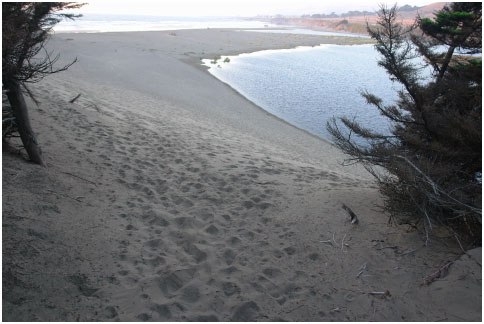
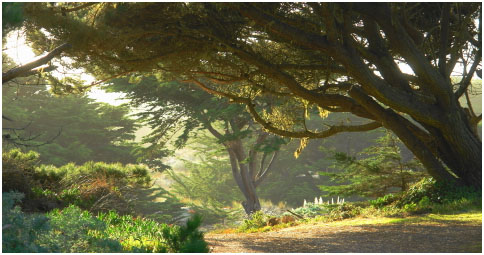


 Conservation Sense and Nonsense