More Fire Factors: Fire Ladders and Embers

Recently, a local news program broadcast an interview about the legal suit filed by the Hills Conservation Network (HCN) against the “Wildfire Hazard Reduction and Resource Management Plan” of the East Bay Regional Park District (EBRPD).  Although both HCN and EBRPD are committed to reducing fire hazard, they disagree about how to achieve that goal.  The spokesperson for HCN said there is no “scientific or factual evidence” that eliminating the canopy of non-native trees will reduce fire hazard.  The spokesperson for EBRPD said the trees will be removed because they “burn intensely” and “loft embers into the wind, causing spot fires downwind” when their crowns begin to burn.  

Is there scientific or factual evidence to support the claims of EBRPD?  Are non-native trees more likely to burn than native trees and if so do they burn more intensely than native trees?  Are non-native trees more likely to loft embers than native trees?  This post will document the answers to these questions:  NO, NO, and NO!

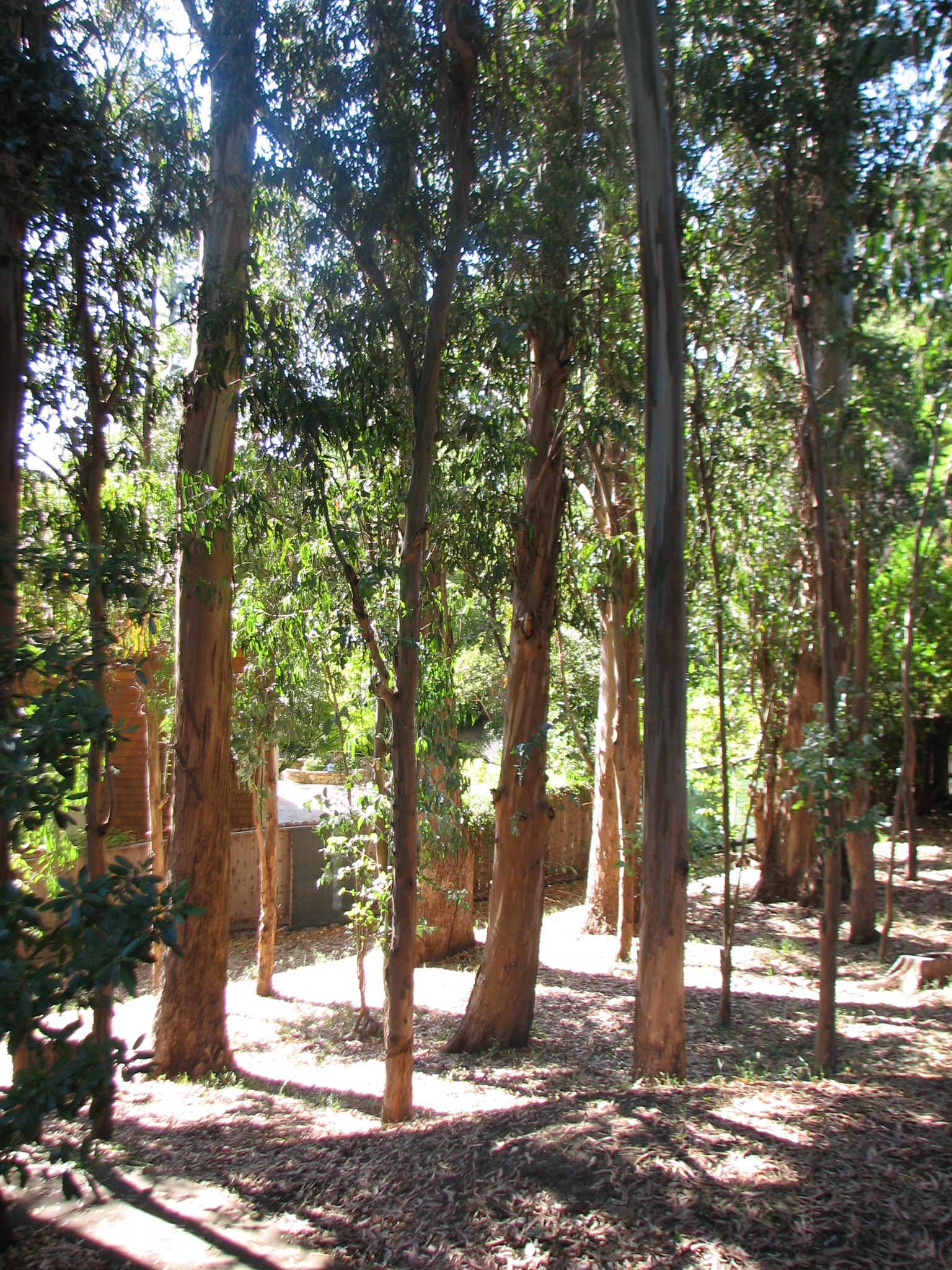
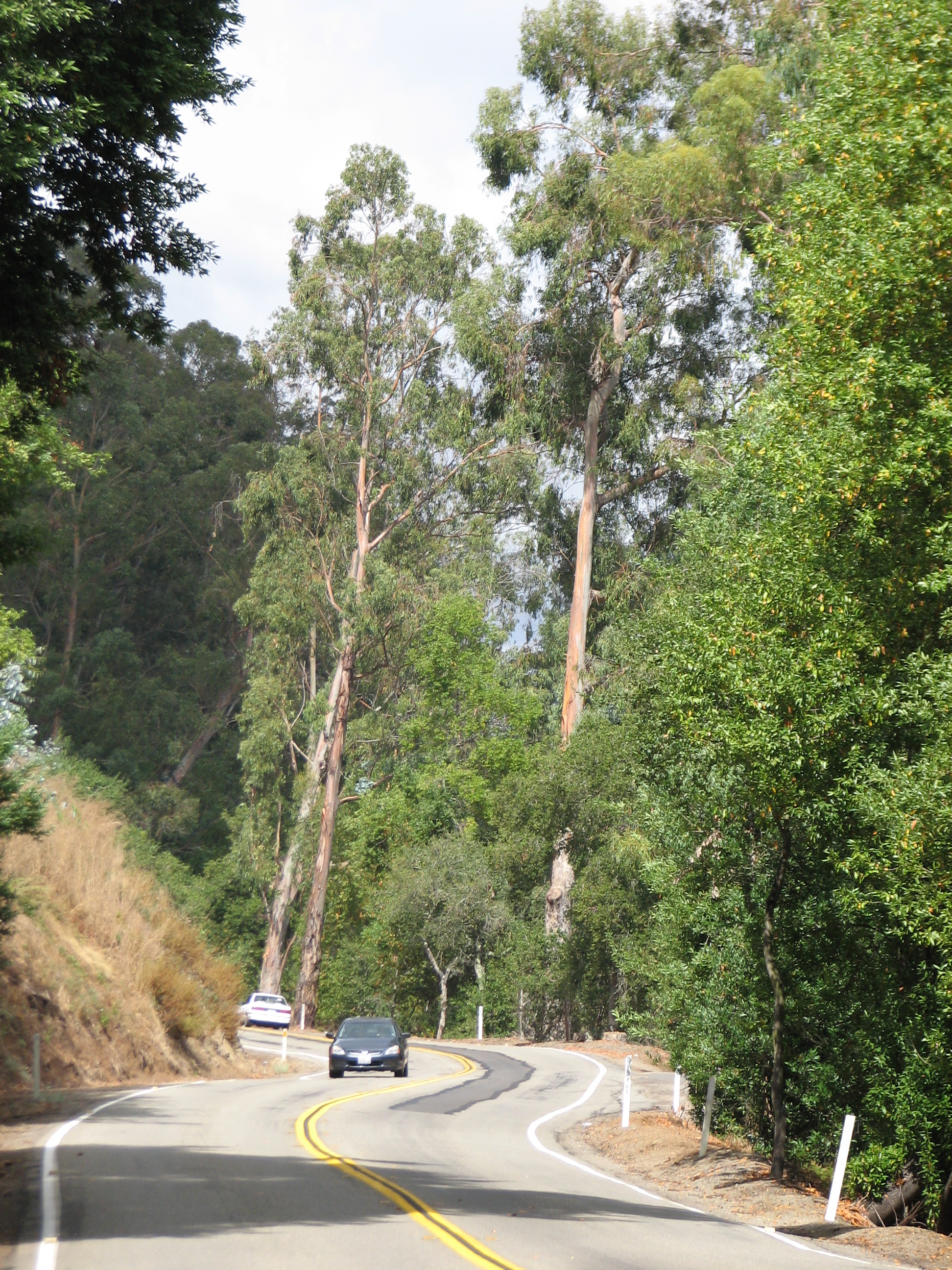
When fire spreads on the ground, through fine fuels such as grass, it bypasses trees unless there is a fire ladder to their canopy.  The fire ladder is composed of low branches that extend from the ground, into the canopy of the tree.  Tall eucalyptus trees usually do not provide such a fire ladder to their canopy.

We see a few of the eucalypts in the distance that EBRPD intends to destroy in Lake Chabot park. We notice that they are very tall and there is no fuel ladder to their canopy. In the foreground, on the right, we see some of the native bay laurels that EBPRD plans as replacements for the eucalypts. We notice that the bays are close to the road and that they grow to the ground, providing a fuel ladder to adjacent vegetation.

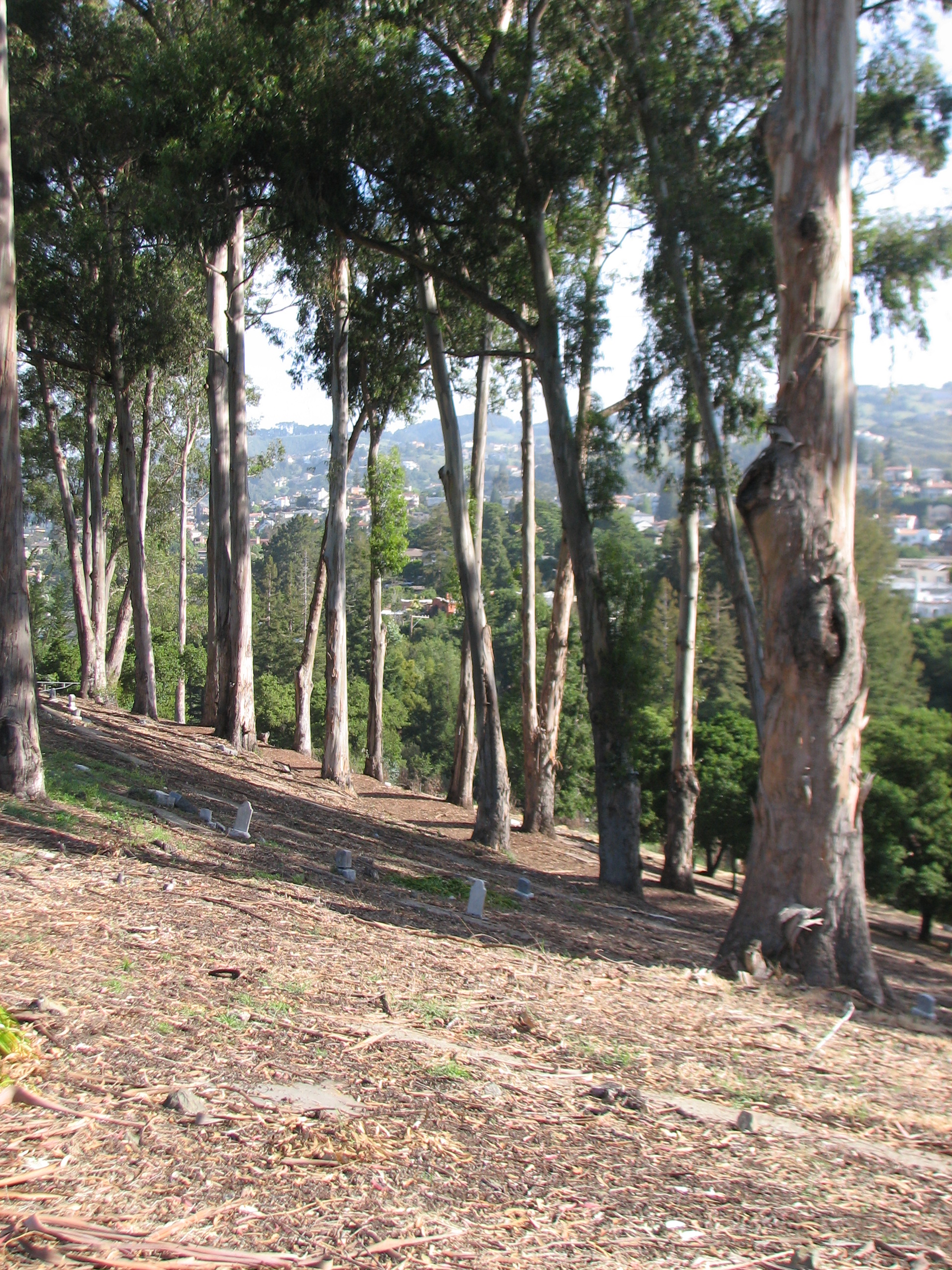
When tall trees, such as eucalypts have a fire ladder to their canopy, their lower limbs can be removed without harming the tree.  This method of reducing fire hazard has been used effectively in the Mountain View Cemetery in Oakland.  Obviously, this method of reducing fire hazard is cheaper and less destructive than destroying the trees and then killing their roots with poison.  This was one of the strategies suggested by the Hills Conservation Network during negotiations with EBRPD before they filed suit after negotiations failed.

The fire ladders on these eucalypts have been removed in the Mountain View Cemetery.

In a wind-driven firestorm the fire may rapidly spread high above the ground.  In that case, how likely is the canopy of eucalypts to ignite compared to other trees?  The firestorm of 1991 in the Oakland/Berkeley hills is an example of such a fire.  In our posts “FIRE!!! The Cover Story” and “The Power of a Legend” we have reviewed two official documents and one book about the 1991 fire which contain no evidence that eucalypts were responsible for that fire.   

Please click here to see a picture of an entire neighborhood of homes destroyed by a wildfire in the Scripps Ranch in 2003..  The burned homes are entirely surrounded by tall eucalyptus trees that are untouched by the fire.  Despite this obvious evidence that the eucalypts were blameless in this fire, native plant advocates seized upon this fire to demand that the eucalypts be destroyed.  The residents of Scripps Ranch fought back and for the moment, they have succeeded in preventing the destruction of their eucalyptus forest. 

The National Park Service is one of many managers of public lands that are engaged in massive restorations of native plants that frequently result in the destruction of non-native trees.  And as most managers of public lands, it attempts to justify the destruction of the trees by claiming that they are a fire hazard.  Reading the fine print of its literature about eucalyptus,  we find that their claims are not supported by the evidence.  Studying the table comparing the fuel loads of eucalyptus with native oaks and bays, we find that the table has been carefully constructed to support their case.  If logs–which would take 1,000 hours to ignite*–are removed from this table, the available fuel load of eucalyptus is not greater than that of native oaks.  Also, deeply embedded in the fine print, you find that the park service admits that the leaves of the eucalyptus are resistant to fire (“The live foliage [of the eucalypts] proved fire resistant, so a potentially catastrophic crown fire was avoided.”) 

We conclude that all evidence from past fires indicates that eucalypts are unlikely to ignite in a wildfire.  If they don’t ignite, they obviously will not “loft embers” to spread the fire.  The final question is, in the unlikely event that there is a crown fire in eucalyptus, how likely is it that embers will be produced that spread the fire downwind?  Although we don’t know the answer to that question, we have both scientific and experiential evidence that native trees are also capable of producing embers.

In “Ignition Behavior of Live California Chaparral Leaves,”  Steven Smith, Joshua Engstrom, Jordan Butler, Thomas Fletcher (Brigham Young University, Provo, Utah) and David Wiese (USDA, Forest Service) report the results of laboratory tests on four species of native plants and trees, including oaks.  They find that both native chamise and oaks loft embers absent any wind.  In the case of oaks, they report that “Many of the oak leaves had sharp points (i.e., spines) around the outer edge.  The oak leaves would ignite at these points, sometimes accompanied by small explosions of the points that led to the ejection of small brands.” 

The Marin Independent Journal in its report of the Angel Island Fire of 2008 tells us that embers from the burning oaks were responsible for nearly igniting the historic buildings on the island:  “’All the oaks up there were burning,” said the 28-year veteran of the department. “It was an ember shower that just rained on the entire building, and all the vegetation around us was burning.’”  As we reported in our post about the Angel Island Fire, most of the eucalyptus had been removed from the island about 12 years before the fire in 2008.  The fire stopped at the edge of the remaining 6 acres of eucalyptus.

There is overwhelming evidence that eucalyptus is not more flammable than native trees and has not played a role in the many wildfires in California.  The myth that eucalypts are responsible for wildfires is propagated by native plant advocates who use the fear of fire to justify the destruction of eucalypts.  Those who are willing to look closely at the evidence will see through this carefully constructed myth to the reality that destroying non-native trees will not reduce fire hazard.

*For a technical explanation of timelag, we quote from Sugihara’s Fire in California Ecosystems:  “The proportion of a fuel particle that contains moisture is a primary determinant of fire behavior…Timelag is the amount of time necessary for a fuel component to reach 63% of its equilibrium moisture content at a given temperature and relative humidity……1,000-hour fuels reflect seasonal changes in moisture.  The firewood analogy applies here as well.  Your large logs would take several months to dry if left out in the rain for the winter, yet kindling, if brought inside, would dry in a few hours.”

Fire Factors: #1 Moisture

There are many factors involved in predicting fire hazard, such as:

  • How easily the fuel ignites
  • How quickly the fire spreads
  • How hotly the fire burns as measured by “flame lengths”

 And there are many variables within these parameters.  One of the variables that determine how easily fuel ignites is the amount of moisture both within the fuel and in the environment in which the fire occurs.  At the most hazardous end of the spectrum, the driest fuel in the landscape is dead vegetation during our dry season on a hot day.  At the least hazardous end of the spectrum is vegetation with high moisture content on a rainy day. 

Using these variables we will consider how likely eucalypts and other non-native trees are to ignite compared to native trees.  We were inspired to consider this topic today by a foggy morning in the East Bay.  Foggy mornings are frequent events in the Bay Area, particularly during the summer months.  When the interior valleys heat up, the hot air collides with the cool air from the ocean, producing fog.  The hotter the air is in the interior, relative to the cool ocean air, the more fog we experience along the coast. 

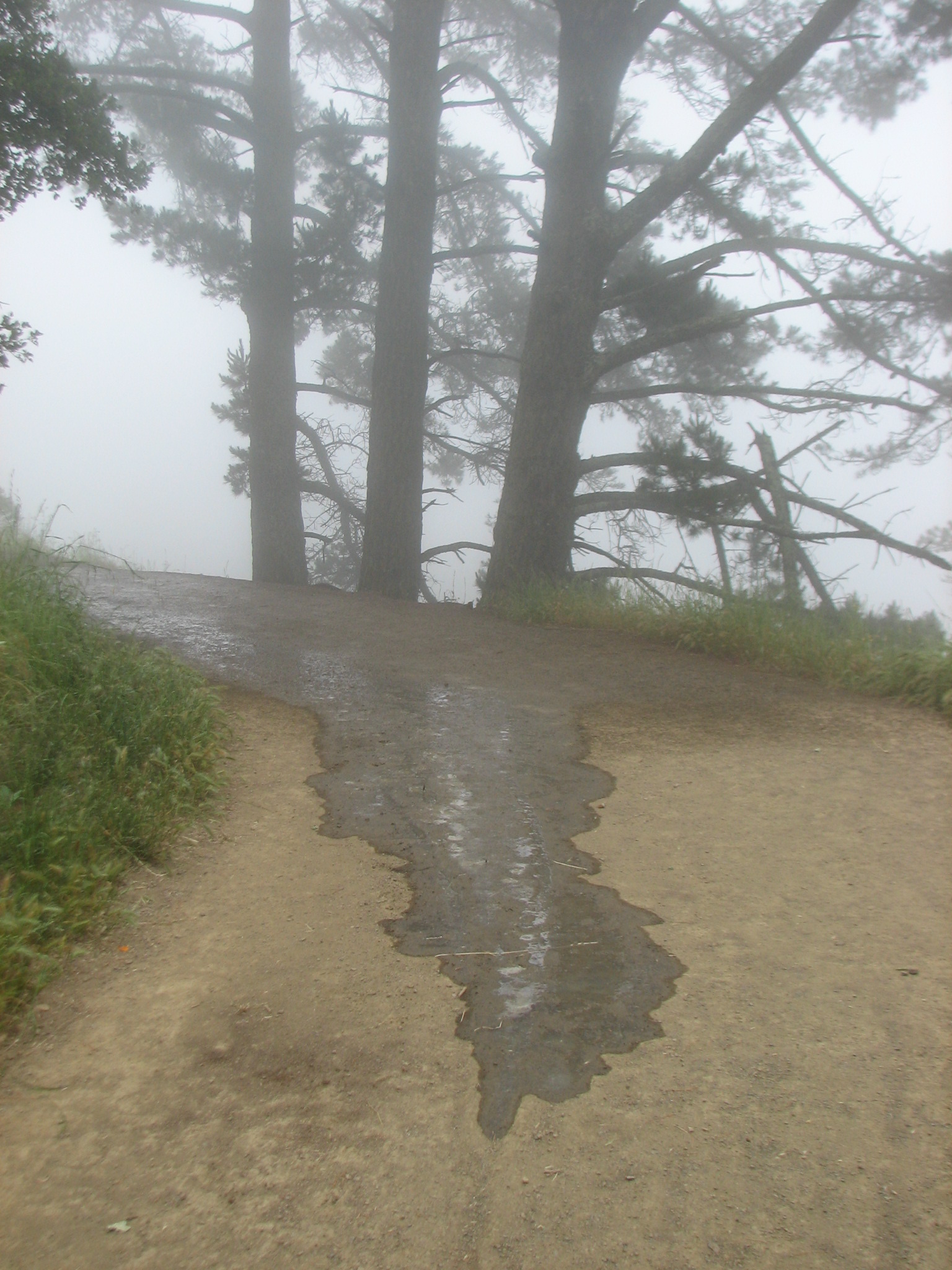
Foggy morning, Redwood Park

Walking a favorite trail in Redwood Park this morning, the fog shrouded the valley below us.  It was otherwise a dry day.  The dirt trail was dry except under the Monterey pines along the trail.  The pines “caught” the fog and dripped water onto the trail, making puddles on the trail.

 Although there are oaks and bays alongside the trail as well, they don’t condense as much fog because they are not as tall.  Harold Gilliam in Weather of the San Francisco Bay Area is specific in crediting the tall, non-native trees for their ability to condense the fog drip:  “Eucalyptus and pine groves planted there long ago intercept large amounts of fog and cause a rainlike deposit of moisture. The fog drip during the summer months has been measured at a surprising 10 inches, an amount nearly half as great as the total rainfall…”  Average rainfall in the East Bay is 22 inches per year, so this fog precipitation adds nearly 50% to total precipitation.  By contributing moisture during the otherwise dry time of the year, tall non-native trees reduce fire danger.

The moisture content of the vegetation itself is another factor in how easily it will ignite.  Other conditions being equal, the more moisture within the vegetation the less likely it is to ignite.  Carol Rice is a credible source of information about the moisture content of native vegetation in the East Bay hills because she is one of the authors of the East Bay Regional Park District’s “Wildfire Hazard Reduction and Resource Management Plan.”  Ms. Rice monitored 7 species of native plants and trees in the North Coastal Scrub and Oak-Bay vegetation types for her Master’s Degree.  Here are quotes from her Master’s Degree dissertation (“Live Fuel Moisture, Fuel Bed Characteristics, and Fire Vegetation in the Berkeley/Oakland Hills,” UC Berkeley, 1987).  

  • “The dead to live fuel ratios [of the vegetation] were high:  46%…on the west aspect was dead, 60%..on the east aspect was dead.”  Recall that dead vegetation is drier than living vegetation and is therefore easier to ignite.
  • “…the [moisture] of the live oak was fairly constant throughout the fire season and at a lower moisture content than the other species…the lowest moisture content was [47%] on September 30th…” (1)

We don’t have comparable information regarding moisture for the eucalyptus because moisture content varies by specific location and climate conditions.  However, the literature generalizes the moisture content of the eucalyptus leaf as roughly 50%, which suggests that the eucalyptus leaf does not contain less moisture than an oak leaf.

Another factor in the likelihood of ignition is the degree to which the leaf litter and duff layers under the trees absorb moisture.  Generally, the more moist the leaf litter and duff layers, the more difficult they are to ignite by embers or fire spreading through the understory of the forest. 

Robert Shroeder and Robert Martin (UC Berkeley) studied the ignitability of leaf litter and duff layers of Monterey pine and Redwood in the laboratory.  In “Ember Ignitability of Pinus Radiata and Sequoia Sempervirens Litter:  Methodology and Results” (in “Proceedings of California’s 2001 Wildfire Conference:  10 Years After the 1991 East Bay Hills Fire”) they report that although the litter of the Monterey pine is slightly more likely to ignite than equally moist litter of the Redwood, the litter of the Redwood is more resistant to moisture and is therefore more likely to ignite.

Isolating just one of many factors in predicting wildfire hazard–moisture– we conclude that there is no evidence that non-native trees are more likely to ignite than native trees in comparable conditions.  We will examine other factors in determining fire hazard in later posts. 

 (1)  Ms. Rice expressed percent of moisture as a ratio of (moisture plus dry weight) divided by dry weight.  The more usual expression of moisture content is a ratio of moisture divided by dry weight.  We have converted her numbers to conform to this standard method of describing moisture content of leaves.

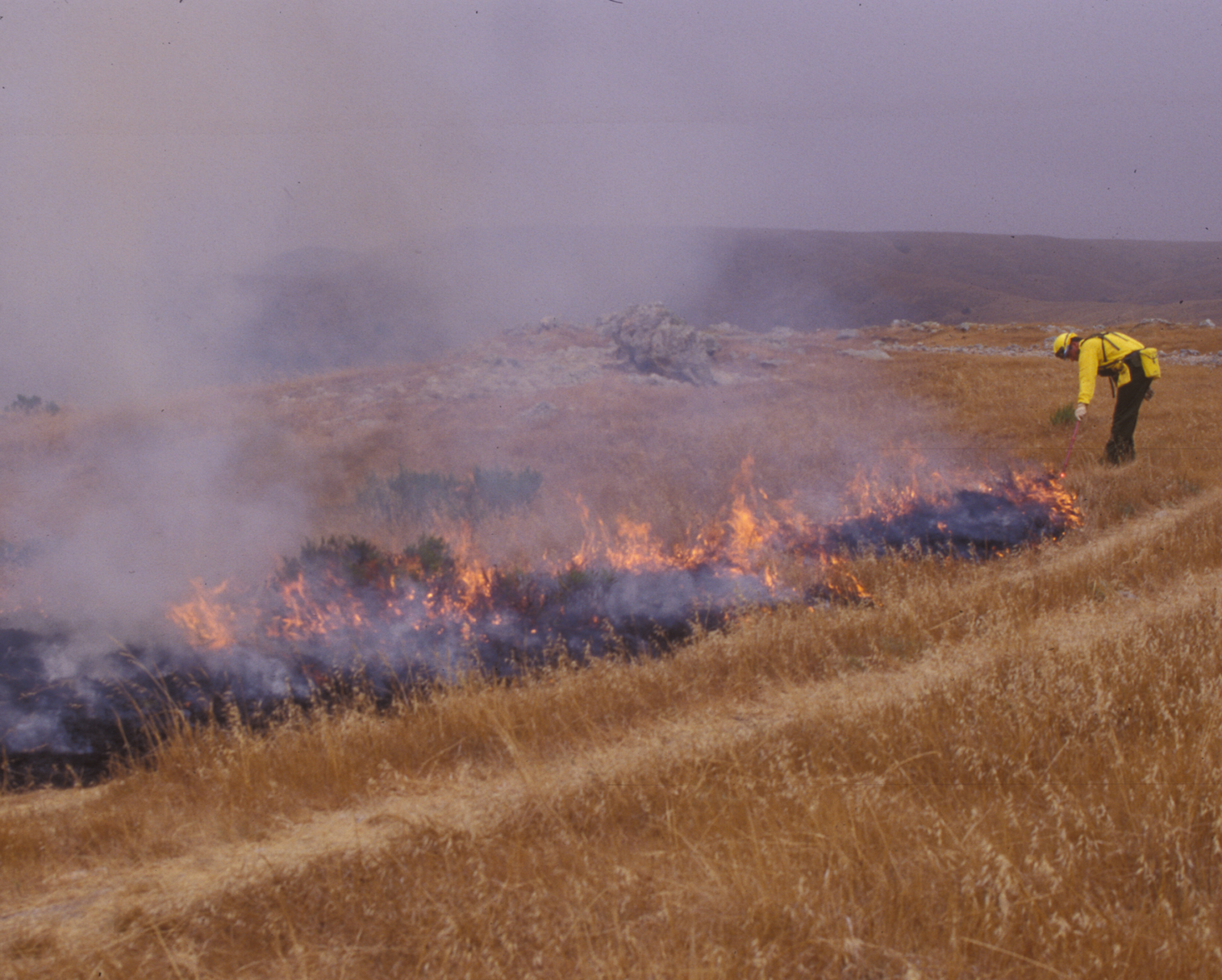
(UN)controlled Burns

Today’s SF Chronicle reports that yet another “controlled” (AKA “prescribed”) burn is responsible for a wildfire in California.  This fire in the Santa Cruz Mountains burned 485 acres in October 2009, injuring 4 of the 1,700 firefighters who fought it at a cost of $4 million.  That cost doesn’t include the claims for damages of the property owners who lost their homes.

This isn’t the only controlled burn that has caused major wildfires in California and elsewhere.  For historical perspective, let’s start with the Bandelier Monument Fire in New Mexico.  This fire, began in May 2000 as a prescribed burn and eventually burned over 45,000 acres, threatened the Los Alamos National Laboratory and destroyed 235 structures.  The Department of the Interior suspended all prescribed burns while an inquiry was conducted and policy was revised to theoretically prevent similar accidents.

Did revision of policy stop so-called controlled burns from causing wildfires in our national parks?  No, it did not.  In October 2009, the Big Meadow Fire in Yosemite began as a prescribed burn and eventually burned 7,425 acres.  NPS apparently hadn’t learned much from their bad experience 9 years earlier at the Bandelier Monument.

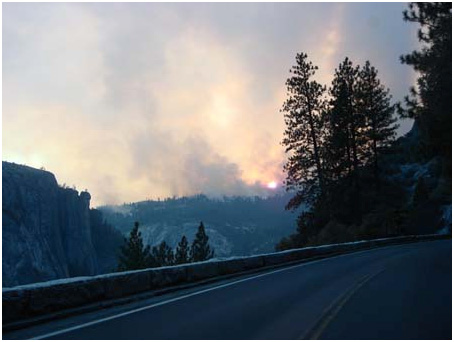
Yosemite Big Meadow Fire, NPS photo

The National Park Service isn’t the only manager of public land that has had bad luck with controlled burns.  In 2003, the California State Park Department was responsible for starting a fire on San Bruno Mountain in South San Francisco intended to burn 6 acres that eventually burned 72 acres and came perilously close to homes, according to the SF Chronicle.

We should not be surprised by the unpredictable results of prescribed burns.  Fire scientists at UC Berkeley conducted a series of experimental prescribed burns in chaparral in Northern California, hoping to arrive at a model of fire behavior that would improve the predictability of such burns.  They arrived at the conclusion that “…it is extremely difficult to predict with certainty where the fire will spread…For more than half of the transects installed, the flaming front did not traverse the transects as predicted…” (1)

You might ask, “If these prescribed burns keep causing major wildfires, why do we continue starting them?”  Good question, and we are going to answer that.  The conventional wisdom is that because fires have been suppressed in the past century or so, fuel has built up that has become extremely dangerous.  Theoretically, we must restore the “natural” fire cycle to prevent this dangerous build up of fuel that will inevitably cause a huge wildfire if we don’t reduce the fuel load with smaller (hopefully) fires.  Sounds like a good argument, but is it true?  Some scientists say it isn’t.

Jon E. Keeley, Ph.D. (Biologist, US Geological Service) says in “Fire Management in the California Shrublands,”

“Fire management of California shrublands has been heavily influenced by policies designed for coniferous forests, however, fire suppression has not effectively excluded fire from chaparral and coastal sage scrub landscapes and catastrophic wildfires are not the result of unnatural fuel accumulation. There is no evidence that prescribed burning in these shrublands provides any resource benefit and in some areas may negatively impact shrublands by increasing fire frequency. Therefore, fire hazard reduction is the primary justification for prescription burning, but it is doubtful that rotational burning to create landscape age mosaics is a cost effective method of controlling catastrophic wildfires.”

Obviously, there isn’t scientific consensus that prescribed burns reduce fire hazard, so perhaps there is another reason why we pursue this dangerous course.  Yes, there is, and once again we turn to the native plant movement to explain why we are harming our environment and posing unnecessary dangers to animals, including humans.

The scientific literature is rampant with evidence that periodic fire is essential to the health of native plants.  Here is an example from a renowned academic book about California’s ecology that has the status of a standard textbook:

“The [chaparral] community has evolved over millions of years in association with fires, and in fact requires fire for proper health and vigor.  Thus it is not surprising that most chaparral plants exhibit adaptations enabling them to recover after a burn.  Many species are sprouters; the aboveground parts may be killed, but new growth arises from roots or buds at the base of the stem…Other species have seeds that require fire in order to break dormancy; they will not germinate unless they have been heated.  The cones of some chaparral conifers open only after they have been heated.  Some herbaceous species will not germinate unless there is ash on the ground when it rains…In the absence of fire, a mature chaparral stand may become senile, in which case growth and reproduction are reduced.”  (Schoenherr, A Natural History of California, 1992, UC Press)

This is also an opportunity to show how the native plant agenda has been adopted by local managers of our public lands. The “Wildfire Hazard Reduction and Resource Management Plan” of the East Bay Regional Park District announces its intention to conduct prescribe burns for the following purposes:

  • “Grassland and Herbaceous Vegetation…broadcast burns in the summer or early fall [fire season] are known to favor native plants.” (page 128)
  • “Maritime Chaparral…This [native] vegetation type and the Manzanita it supports are also fire dependent. Without disturbance by fire the Manzanita does not reproduce, becomes decadent, and is replaced by shade tolerant species.” (page 132)
  • “North Coastal Scrub…This plant community [of native plants] is adapted to natural fire cycles, and most species found within this plant community resprout easily to rejuvenate individual specimens after fire, or require fire to trigger germination.”  (page 139)
  • “[Native] Coyote Brush Scrub…is adapted to natural fire cycles.  Most species resprout easily to rejuvenate individual specimens after fire, or requires fire to trigger germination.” (page 149)

Are any of these purposes related to reducing fire hazard?  You be the judge.

The management plan of San Francisco’s Natural Areas Program also announces its intention to use prescribed burns in the Initial Study (the first stage of environmental review under CEQA) of the program, but offers no information about the effect of these burns on the environment.  In a city such as San Francisco, in which there is no history of wildfire, we must assume that the sole purpose of these burns will be to benefit native plants.

Clearly controlled burns frequently cause major wildfires.  Fires, whether intentional or not, also release harmful particulates into the air and reduce air quality.  There is no evidence that controlled burns prevent wildfires.  Yet, there is considerable evidence that they benefit native plants.  We conclude that the primary purpose of controlled burns is to benefit native plants. 


(1) Scott Stephens, et. al., “Measuring the rate of spread of chaparral prescribed fires in Northern California,” Fire Ecology, Vol. 4, No. 1, 2008

KILLER TREES!!! Scare Tactic #3

We have recently learned of another tree removal project in the Bay Area.  In this case, the San Leandro Creek Tree Management Project by the Alameda County Flood Control & Water Conservation District proposes to destroy about 50 eucalypts in the short run and approximately 1,000 more in the long run.  All eucalypts will be removed.  All other species of trees will remain.

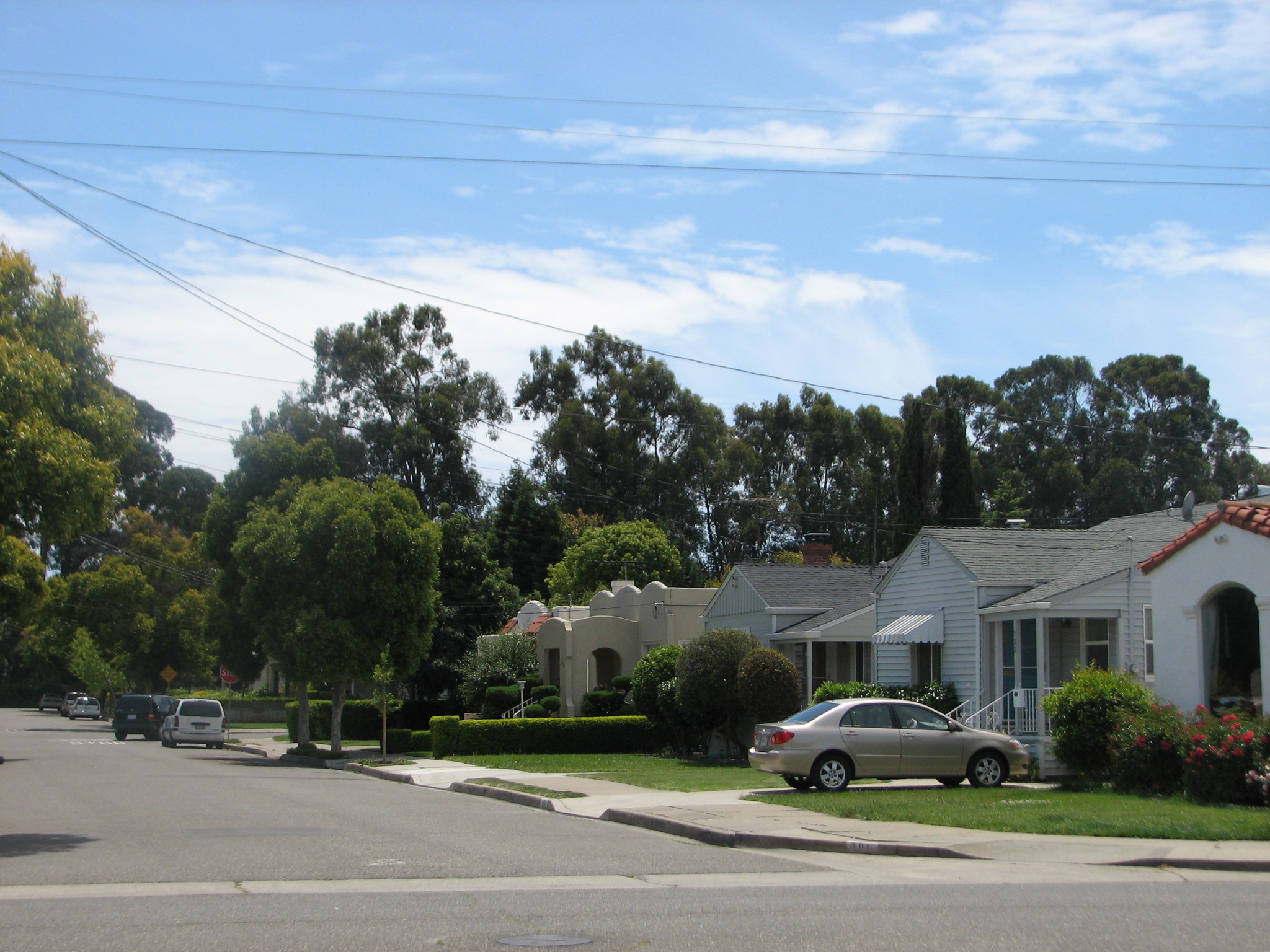
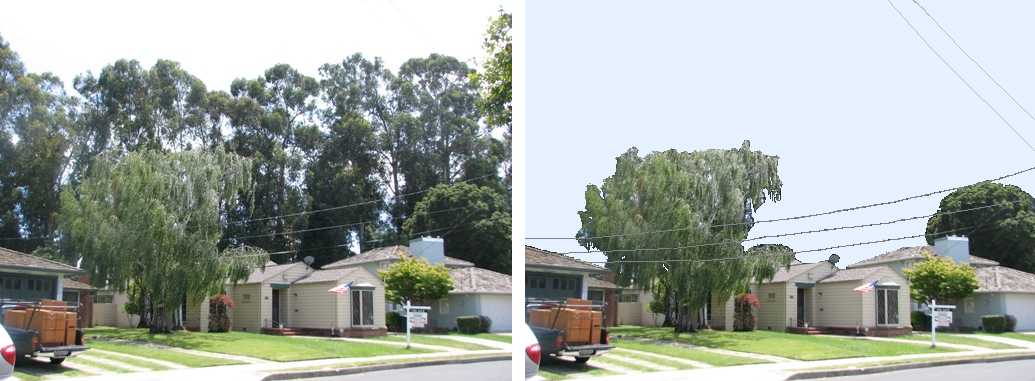
St. Mary’s Ave: Try to picture this neighborhood without any of the tall trees in the background.

In this case the apparent “cover story” for yet another native plant restoration is that the trees are hazardous.  As we have said in other posts, native plant advocates have had difficulty convincing the public—and therefore their political representatives–of the need to destroy non-native trees and plants and so they have frequently resorted to scary cover stories.   Particularly in the East Bay, the most powerful argument has been the claim that the trees are flammable.  The argument heard more commonly in San Francisco, where there is no history of wildfire, is that the trees are invasive and are killing native plants.  Fortunately, there is scientific evidence that these claims are not accurate.

Native plant advocates also claim that eucalypts are more dangerous than other trees.  However, the public record indicates that every species of tree—both native and non-native—can fall.  The most recent “death-by-tree”  in San Francisco occurred on April 14, 2008, when a visitor to Stern Grove was killed by a huge branch from a Redwood tree that had been judged to be hazardous by a certified arborist 5 years earlier.  Unfortunately, the arborist’s report was ignored, resulting in the needless death of a young woman in the prime of her life.  The City of San Francisco paid her family $650,000 for their negligence…a waste of a life and the taxpayer’s money for a death that could have been easily prevented.

Tragic events such as this make it clear that we should not oppose the destruction of hazardous trees.  Unfortunately, that is a judgment that is not clear-cut or irrefutable.  When native plant advocates demand the destruction of non-native trees, we are deeply suspicious of the claim that the trees are hazardous.  In the case of the San Leandro Creek project, it is simply not credible that every eucalyptus is hazardous, but not any other species of tree in the watershed. 

After many years of being put in the awkward position of evaluating the truth of such claims, we have concluded that we trust only the judgment of certified arborists, but not those paid to destroy the trees.  There are a handful of arborists whom we know not to be biased against non-native trees, especially eucalypts.  If we are told by these arborists that a particular tree is hazardous, we accept that judgment.

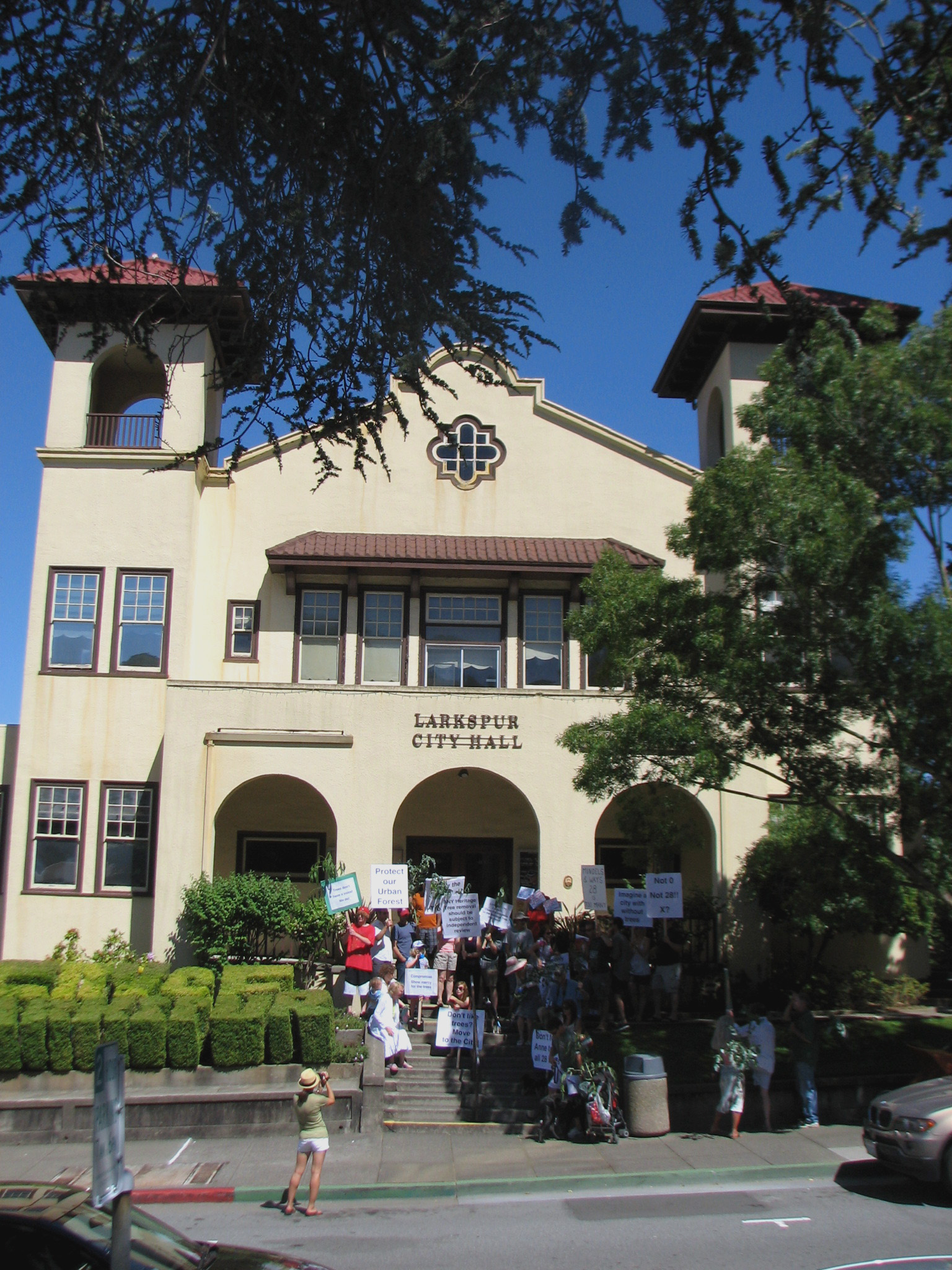
The neighbors of the San Leandro Creek who were about to lose many of the trees they love, organized and fought back.  They protested the removals not just because they love their trees, but also because the project was invisible to them until the Alameda County Flood Control & Water Conservation District granted itself a categorical exemption from California Environmental Quality Act (CEQA) requirements for an environmental review.  Short of a legal suit there was little that could be done to stop the project except scream.  So, that’s what they did.

What is unique about this project is that the neighbors have prevailed.  For the moment, it appears that this project has been halted.  The Flood Control District has apparently agreed to step back, start over, and involve the neighbors before implementing their plans.  We should all learn from this experience.  We must speak up for our trees when they are threatened with needless destruction.
Million Trees usually reports such projects directly from the public record.  In this case, we have access to little of the public record.  We have asked the Water District’s representative for answers to many questions about this project, but have not received answers.  We are therefore reporting based on what little documentation is available on line, reports of the neighbors, and one media report .  We invite any needed corrections to this report and we will correct any errors, based on verifiable documentation.
Update:  We are pleased to tell you that this controversy was finally resolved to the satisfaction of the neighbors of San Leandro Creek.  Neighbors forced the county to do another evaluation of the trees in the creek.  As a result, plans to destroy as many as 1,000 eucalyptus trees were finally reduced to a total of 17 trees deemed hazardous. 
Glen Drive: What will this property be worth after the tall trees are removed? Significantly less.

ALIEN INVADERS!!! Another scary story about non-native trees

As we have said before in “FIRE!!! The Cover Story,”  fear is a powerful motivator of public policy.  The fear of fire is not the only tool in the toolbox of native plant advocates.  They would also like the public to believe that non-native plants are invasive, that they will overwhelm the environment if they are not promptly eradicated.  So, we will take a closer look at this claim and show that non-native trees are not invading Bay Area open spaces.

In “Vegetation Change and Fire Hazard in the San Francisco Bay Area Open Spaces,”  William Russell (USGS) and Joe McBride (UC Berkeley) used aerial photos of Bay Area parks taken over a 60 year period from 1939 to 1997, to study changes in vegetation types.  They studied photos of 3 parks in the East Bay (Chabot, Tilden, Redwood), 2 parks in the North Bay (Pt Reyes, Bolinas Ridge), and one on the Peninsula (Skyline).

These photos revealed that grasslands are succeeding to shrubland, dominated by native coyote brush and manzanita.  Eucalyptus and Monterey pine forests actually decreased during the period of study.  In those cases in which forests increased in size, they were native forests of oaks or Douglas fir.  In other words, they found no evidence that non-native trees are invading native trees or shrubs. 

They also studied the implications of these changes in vegetation types for fire hazard by measuring surface biomass for each vegetation type as an indicator of fuel load and by using a computer model (FARSITE) to simulate the speed of spread of a fire.  They concluded,

“A significant increase in the cover of shrublands was apparent in the general analysis…The results from the fuel and fire hazard analysis suggest that the succession from grasslands to Baccharis [coyote brush] shrublands indicates dramatic increase in fire hazard for those areas.  Fire line intensity, flame length, and total biomass were found to be significantly higher with the shrub dominated areas.  In the context of the landscape matrix as a whole this increased hazard indicates a greater possibility of fire being spread into adjacent forested areas and residential communities.”

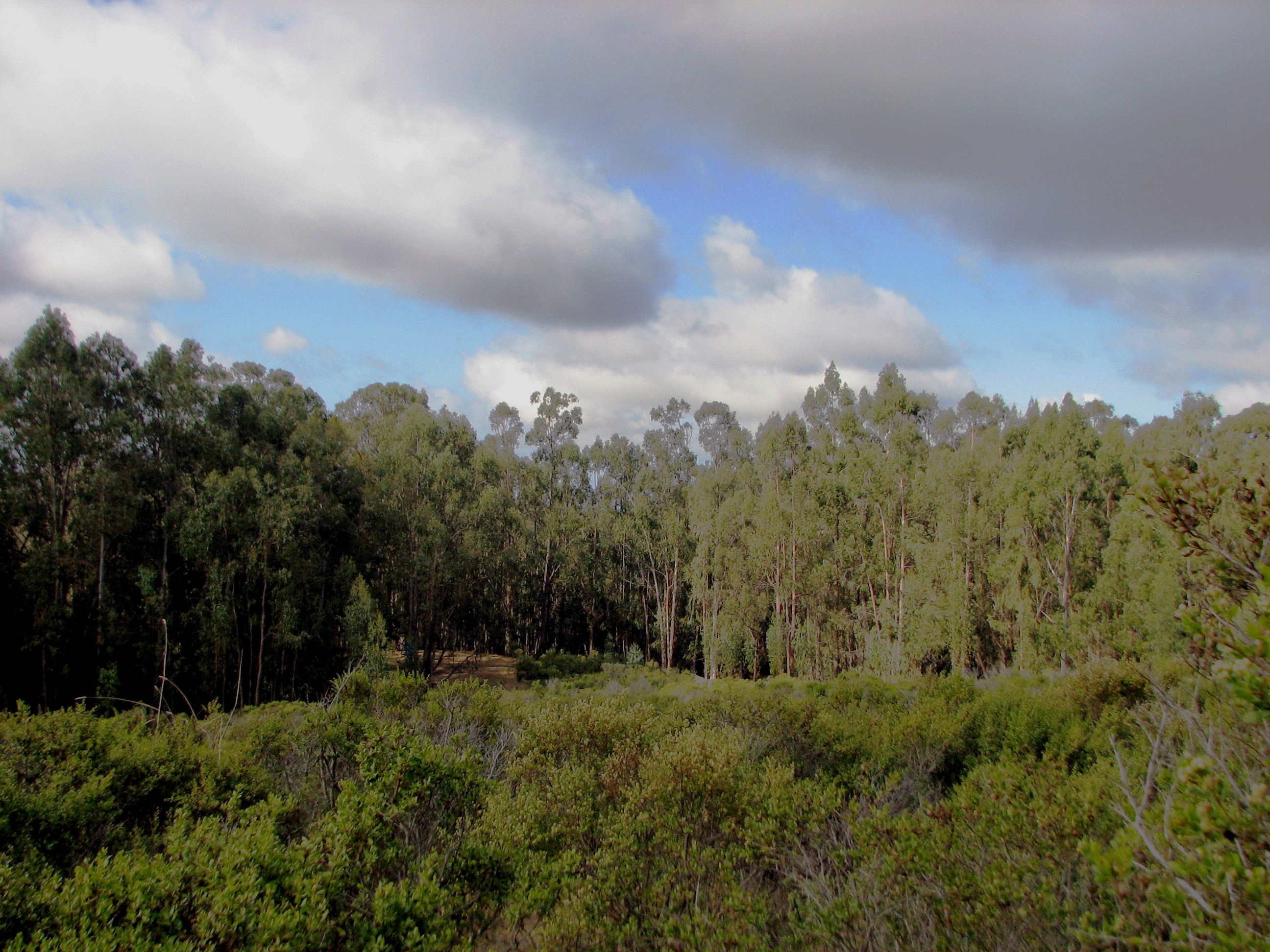
This is a view of one of the "recommended treatment areas" in the East Bay Regional Park District's "Wildfire Plan" in Anthony Chabot Park. In the foreground are many acres of coyote brush that are about six feet tall. The plan does not propose any "treatments" in these acres of highly flammable coyote brush. In the background is the eucalyptus forest that will be thinned in some places and removed in others. This is not a plan that will reduce fire risk.

This study, based on actual aerial photos, tells us that native shrublands are increasing in size while non-native forests are actually decreasing in size.  It also tells us that this succession of vegetation types from grassland to native shrubland is increasing fire hazard.  There is no evidence that non-native forest is invading the open spaces of the San Francisco Bay Area.  The public has no reason to fear that non-native trees will overwhelm our environment.

Herbicide Subterfuge

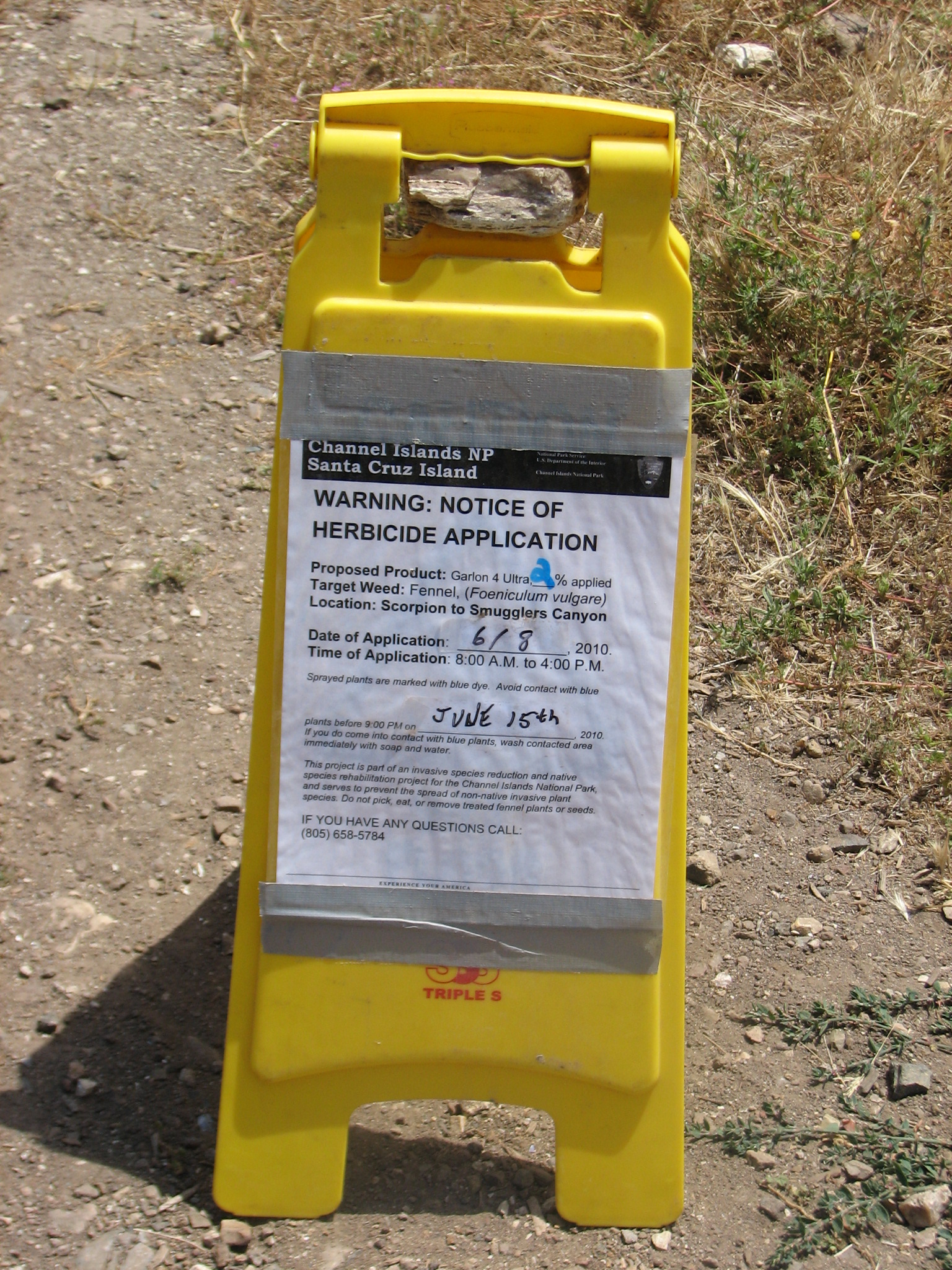
The public is unaware of the scale of herbicide use in our parks and public lands.  Nor are they aware of the toxicity of herbicides to humans and animals.  We will describe just two examples of the subterfuge that is used by “restorationists” to hide the use of herbicides.

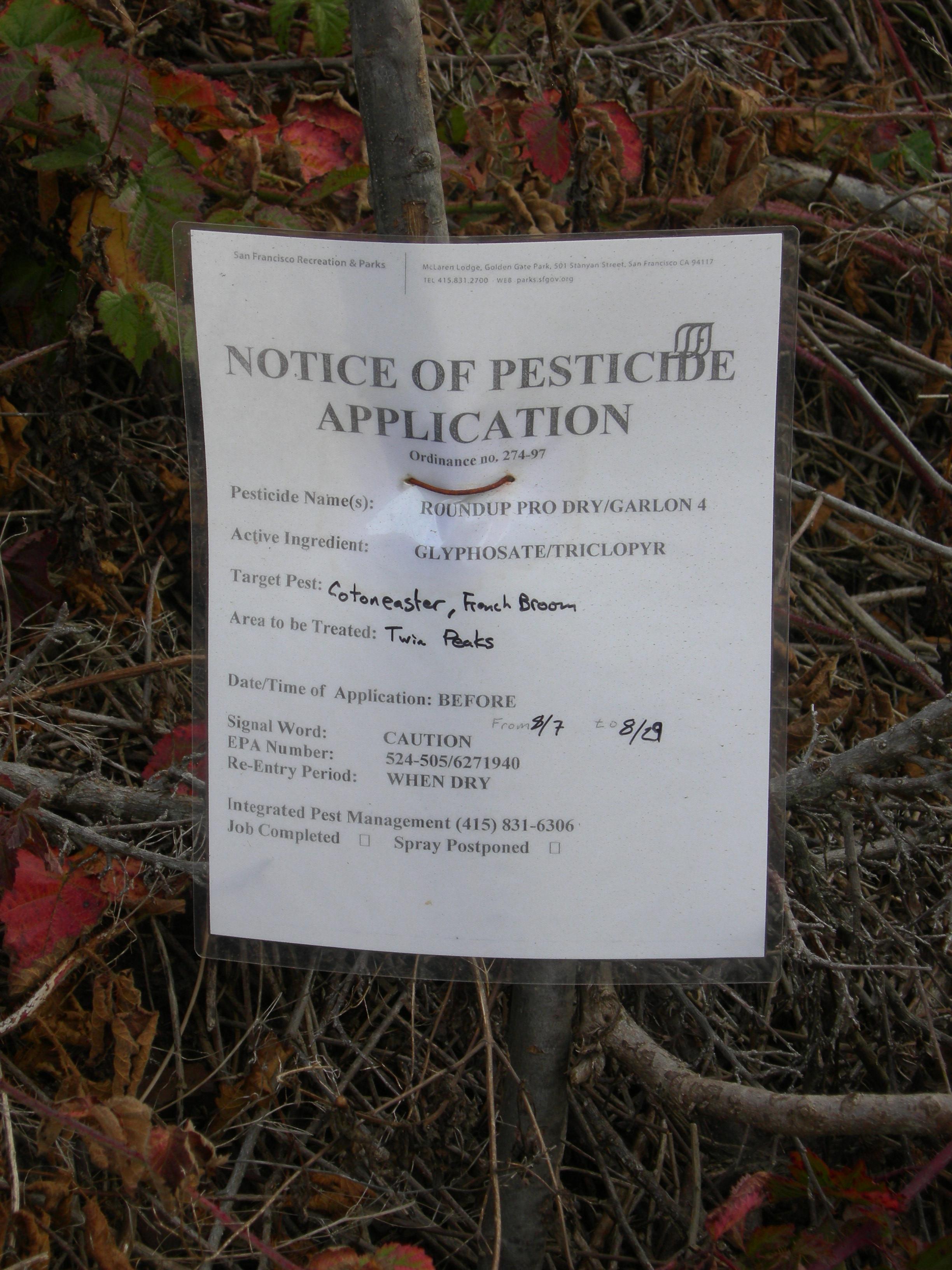
The management plan of San Francisco’s Natural Areas Program (NAP) includes a description of the NAP’s herbicide use. Table 4-2 of the plan identifies 16 species of non-native plants and trees on which herbicides (Roundup and Garlon) are used.  Although the plan states specifically that herbicides are used, the Initial Study of environmental impact of the program says absolutely nothing about the use of herbicides. It does not acknowledge that herbicides are used or analyze their impact on the environment and its inhabitants.

Twin Peaks, San Francisco

The use of herbicides by a program calling itself the “Natural Areas Program” is particularly ironic in San Francisco, a city that has officially adopted the Precautionary Principle.  The PP theoretically obligates the city of San Francisco to ban any substance that might harm the environment or its inhabitants, even if there is not yet scientific evidence of that harm.  In the case of herbicides, there is plenty of evidence of the harmful effects on humans and other animals.

The East Bay Regional Park District is also using herbicides without acknowledging the risks in doing so.  In its Wildfire Plan, EBRPD misinforms the public that the Marin Municipal Water District is using herbicides:  “Using herbicides to control invasive [AKA non-native] plant species…can be an efficient and cost-effective method…Recent studies conducted by the Marin Municipal Water District (MMWD)  confirm this approach; the results of their studies on the use of non-chemical control methods for the control of invasive non-native plants indicated that non-chemical alternatives are ineffective for large-scale vegetation management projects. (see Appendix H…)”  (page 92) .  In other words, EBRPD in its Wildfire Plan is inaccurately claiming that MMWD is using herbicides when they are not.  MMWD has confirmed in writing that they have not used herbicides since 2005.

But, EBRPD doesn’t stop there.  When the public pointed out to EBRPD during the public comment period on the Environmental Impact Review (EIR) that MMWD is not using herbicides, EBRPD responded (Response to Comments) as follows:  “As of March 2010, MMWD’s draft reports and analyses have shown no significant risk associated with the use of the chemicals studied on human health, animals or non-target plants, and a greatly increased average annual cost for eradicating 100 acres of the 750 acres of broom without the use of herbicides…”  (page 394) Whoever wrote that sentence has either not read MMWD’s risk assessment of herbicide use or is misrepresenting it.  In fact, MMWD’s risk assessment is perfectly clear in describing significant harm to the environment caused by herbicide use.

No wonder the public is in the dark about the use of herbicides.  Every effort is being made to keep them in the dark.

Broom: “I’ll be back…”

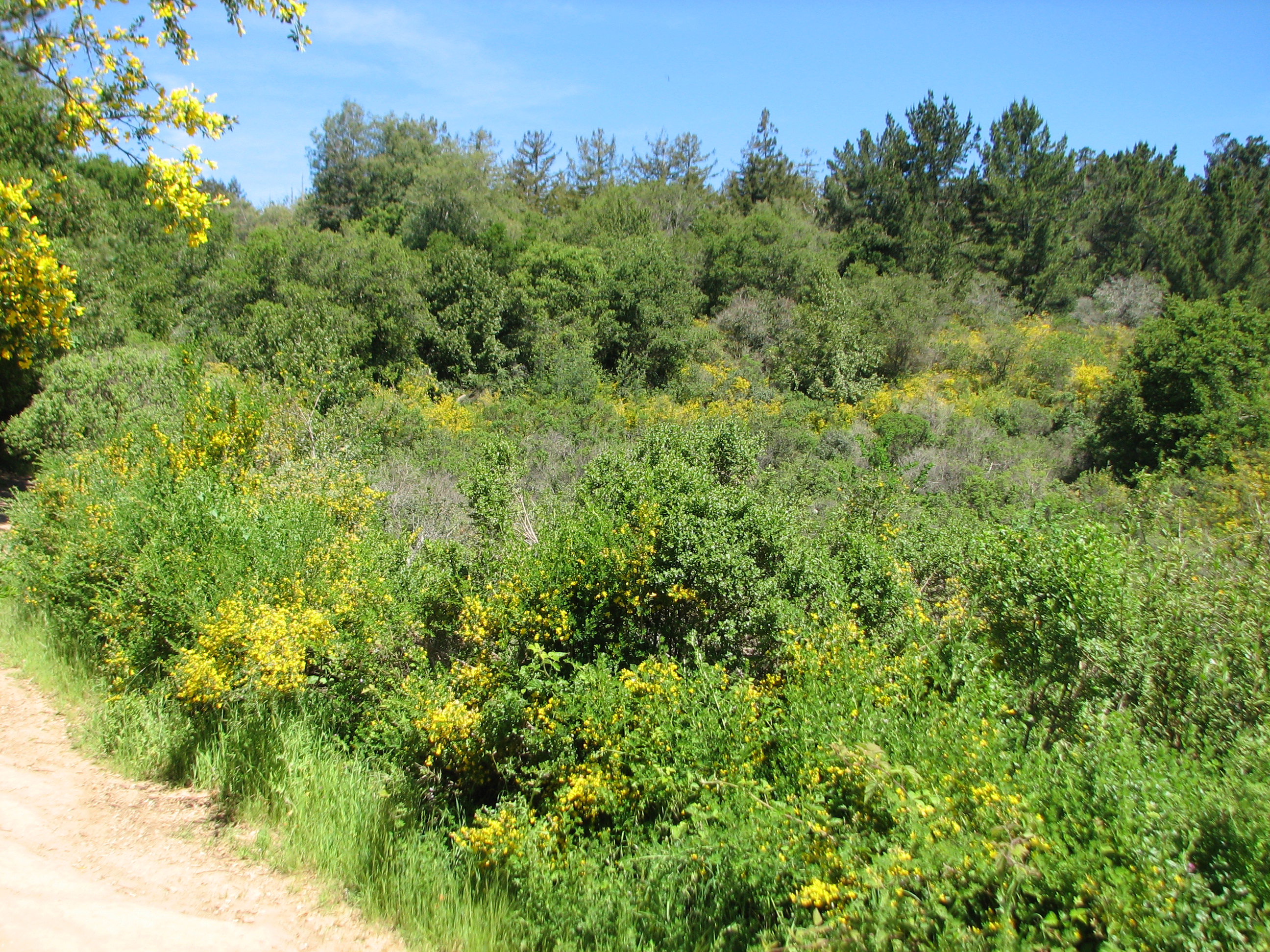
Broom is a non-native shrub frequently targeted for eradication in native plant restorations. Its seedbed lives in the ground for up to 60 years.  If broom is not eradicated before every bloom cycle, that 60 year seed-cycle continues ad infinitum.   Foliar spraying of glyphosate (Roundup) is the preferred method of eradication because it is the cheapest.  Although trees are the main focus of A Million Trees, we will talk about broom because it illustrates two important issues:  (1) The futility of trying to eradicate a completely entrenched non-native species, and (2) the largely unknown risks of using herbicides.

 
How much Roundup will it take to eradicate this broom?

We know that Roundup is harmful to amphibians.  This fact was established by a suit brought by the Center for Biological Diversity on behalf of the Red-Legged frog (RLF), an endangered species.  As a result of that suit, US Fish and Game has banned the use of Roundup in proximity of known populations of the RLF (and more recently extended to other herbicides in proximity of other endangered amphibians).

However, the Center for Biological Diversity is closely allied with the native plant movement.  Therefore, when negotiating for a ban on the use of toxic herbicides in proximity of endangered amphibians, they also negotiated for an exception to the ban when the herbicides are used  for the purpose of eradicating invasive plants, as defined by the California Invasive Plant Council.  Broom is one of hundreds of plants deemed invasive by that council, which is dominated by native plant advocates.   

Recent research has found evidence that Roundup may also be harmful to humansScientific American reports, “But now researchers have found that one of Roundup’s inert ingredients can kill human cells, particularly embryonic, placental and umbilical cord cells…scientists found that Roundup’s inert ingredients amplified the toxic effect on human cells—even at concentrations much more diluted than those used on farms and lawns.”

This research has implications for other pesticides and herbicides.  Presently, the EPA does not require that the manufacturers of these chemicals list all the inert ingredients.  If the inert ingredients in other herbicides were known to us, we would be in a better position to assess the potential danger.

Common Characteristics

Native plant advocates attempt to support their claim about the flammability of eucalypts by citing specific characteristics such as shreddy bark and volatile oils. Shreddy bark and volatile oils are characteristics of many plants, both native and non-native.  They are not characteristics exclusive to eucalypts: 

“The [chaparral] community has evolved over millions of years in association with fires, and in fact requires fire for proper health and vigor…Not only do chaparral plants feature adaptations that help them recover after a fire, but some characteristics of these plants, such as fibrous or ribbonlike shreds on the bark, seem to encourage fire.  Other species contain volatile oils.”  (page 341, A Natural History of California, Schoenherr, UC Press, 1992)

Madrone and Manzanita are examples of native plants with “ribbonlike shreds on the bark” that are highly flammable.  Coyote brush and bay laurels are examples of native species which contain highly flammable oils.

Shreddy bark of Madrone


Shreddy bark of manzanita

Anyone with knowledge of the natural history of California could provide any number of such invidious comparisons between native and non-native plants with respect to their flammability.  We hope the examples we have provided illustrate that flammability characteristics of plants are unrelated to whether the plants are native or non-native.  The claim that non-native plants are more prone to fire than native plants is fallacious.

Fire on Angel Island 2008

The fire on Angel Island in October 2008, is an example of the bogus claims of the flammability of eucalypts.  According to an “environmental scientist” from the California state park system, 80 acres of eucalypts were removed from Angel Island over 12 years ago.  Only 6 acres of eucalyptus remain.  (“Rains expected to help heal Angel Island,” SF Chronicle, October 14, 2008 ).  The fire that burned 400 acres of the 740 acres of Angel Island stopped at the forest edge: “At the edge of the burn belt lie strips of intact tree groves…a torched swath intercut with untouched forest.” (“After the fire, Angel Island is a park of contrasts,” SF Chronicle, October 15, 2008).

Wikimedia Commons/Mila Zinkova
 The fire on Angel Island is not an isolated event.  Rather it is typical of recent wildfires throughout California: 
“It is estimated that no more than 3 percent of the recent 2007 fires…occurred in forests…the remaining 97 percent occurred in lower elevation shrublands and urban areas, burning native shrublands such as chaparral and sage scrub, non-native grasslands and urban fuels…”  (Statement by Jon E. Keeley, USGS, before agencies of the US Senate, 2007)

Nativist myths die hard

A book about the 1991 wildfire in the Oakland/Berkeley hills illustrates the power of the legend that non-natives are more flammable than natives.  In Firestorm:  the study of the 1991 East Bay fire in Berkeley (Margaret Sullivan, 1993) the author states repeatedly that native plants and trees were involved in that fire.  Every tree mentioned in the following quotes from that book is native to the Bay Area:

  • “…flames surging through the dry underbrush and live oaks that line the street…”
  • “…neighborhoods…are built into the contours of the grassy hills and live-oak-and-laurel studded canyons…”
  • “…hillsides covered in seasonal grasses or had overlooked ravines of oak and madrone…were devastated by the fire.”
  • On Vicente Road, “Two redwoods up the street caught fire like matchsticks.”
  • “Roble Road and… Roble Court, derive their name from the…Spanish word for the live oak tree that grows densely there…the devastation on lower Roble…was fairly complete…”

In the single mention of the role of eucalypts in the fire, the fire skips over the tree canopy:  “The fire swept right over [the houses] scorching the crowns of surrounding eucalyptus trees.”  And the Monterey pine—also targeted for eradication by native plant advocates—plays a similar role in a nearby location:  “Across the street a grove of Monterey pines shields the white clapboard buildings of the private Bentley School…”

After presenting all this evidence about the role of native plants in the fire, the book concludes with the legend that non-natives are more flammable than natives:   “Gardens of drought tolerant and fire-resistant California native plants have become symbols of the rebirth of the fire communities.”  This statement is illustrated with a photo of a native plant garden.

Chamise is an example of a native plant in the chaparral community that is extremely flammable.

“The relationship between fire and Chamise is illustrated by the plant’s tendency to ‘encourage’ burning.  A thermometer was placed within a Chamise shrub as a fire approached, and the following changes were documented.  At about 200⁰F the plant began to wilt as its temperature approached the boiling point of water.  At about 400⁰F the plant began to emit combustible gases such as hydrogen, alcohol, and methane.  At about 600⁰F the shrub smoldered and began to turn black.  At about 800⁰F the plant burst into flames!  This species must have evolved in association with frequent fires to have reached the point where it seems to encourage burning.” (A Natural History of California, Schoenherr, page 344)

Chamise, Tilden Park Botanical Garden

As Mark Twain said, “A lie can get halfway around the world while the truth is still putting its boots on.”