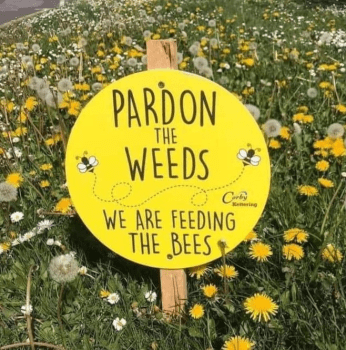
Please join me in welcoming Megan Bonnett to the team of contrarians who don’t believe that native plants are the salvation of nature. Nature will be its own savior, if we let it. With Megan’s permission, we publish one of the articles on her Substack, “Here and There.” Megan takes us, step-by-step through the processes of evolution that enable life on Earth to survive the radical changes that Earth has endured for 3.5 billion years without the “assistance” or interference of humans.
Megan Bonnett is a naturalist, independent ecology researcher, and science communicator whose work explores ecological theory, the history of invasion biology, and the philosophical assumptions that shape modern conservation.
She grew up in central Texas in a family of nature lovers, where countless hours spent outdoors cultivated both a deep affection for the living world and an insatiable curiosity about how it works. She later studied wildlife biology at Texas State University and spent more than a decade working as a naturalist and outdoor educator for organizations throughout the Austin area.
Long before ecology became the focus of her research, Megan developed what she can only describe as a calling to investigate incongruities–to follow the places where accepted narratives and observable reality don’t quite align. Through many challenging experiences in her young life and a propensity for deep observation of the goings-on around her, she became acutely aware of the gap that can exist between what people profess and what they practice. Rather than extinguishing that instinct by outsourcing her intellectual autonomy to the people who professed and practiced different things, she embarked on a path in the sciences and simply redirected it. The same habit of carefully examining assumptions, asking uncomfortable questions, and comparing ideas with evidence became the foundation of her work as a naturalist and researcher.
After another decade as an independent outdoor educator and guide, that curiosity led her to ask why so many aspects of invasion biology seemed internally inconsistent. What began as a handful of questions grew into a years-long investigation of ecological research, the history of the discipline, and the philosophical frameworks that have shaped modern conservation. When the COVID lock downs began and she could no longer teach in the field, she began to communicate her findings by various other means, turning her in-person outdoor education into online science communication.
Today, her work seeks not only to better understand ecological systems, but also to examine the assumptions that guide how humans interpret and manage them. She believes that every scientific discipline benefits from thoughtful self-examination, and that questioning long-held ideas is an essential part of scientific progress. Her writing explores where evidence, philosophy, history, and ecology intersect, inviting readers to look beyond familiar narratives and reconsider the questions themselves.
Conservation Sense and Nonsense
Post-Anthropocentric Ecology
Abstract
Conservation biology has long framed non-native species as symptoms of ecological degradation, positioning extinction, migration, and novel species assemblages as failures requiring correction. This paper advances a post-anthropocentric ecological framework that challenges these assumptions by re-centering ecosystems as self-organizing, adaptive systems operating across deep evolutionary time. Drawing on disturbance ecology, niche construction theory, and emerging work on novel ecosystems, it argues that migration and species replacement are not pathologies but core mechanisms through which ecosystems heal, reorganize, and persist under changing constraints. Extinction, while affectively charged for humans, is reframed as a natural–often necessary–component of systemic adaptation rather than an intrinsic ecological wrong. By interrogating the moral, temporal, and ontological assumptions embedded in invasive species discourse, this critique proposes a shift from origin-based conservation toward functional, process-oriented stewardship grounded in humility, restraint, and trust in the adaptive intelligence of living systems.
Introduction: The Limits of Anthropocentric Conservation
Modern conservation biology presents itself as a science of protection, yet its foundational assumptions remain deeply anthropocentric. Despite rejecting overt human dominance over nature, conservation practice continues to privilege human temporal scales, moral intuitions, and historical preferences when defining ecological harm. Ecosystems are treated as if they possess an optimal past state to which they ought to be returned, and deviation from this state–particularly through the arrival of non-native species–is framed as ecological error.
Nowhere is this framing more pronounced than in “invasive” species discourse. Migrant species are routinely characterized as threats, symptoms of degradation, or agents of collapse, with management efforts focused on eradication and control. Yet this perspective sits uneasily with what ecology itself reveals: that ecosystems are non-equilibrial, historically contingent, and fundamentally shaped by disturbance, dispersal, and replacement (Pickett & White 1985; Wu & Loucks 1995).
This paper argues that the invasive species paradigm reflects not ecological necessity but a residual anthropocentrism- an insistence that ecosystems conform to human concepts of order, identity, and permanence. A post-anthropocentric ecology, by contrast, would evaluate ecological change in terms of process, function, and adaptive emergence across deep time, rather than fidelity to culturally salient baselines.
Ecosystems as Self-Organizing Processes
Ecological systems are not archives of species composition but dynamic processes involving flows of energy, nutrients, organisms, and information. The persistence of ecosystems arises not from stasis but from continuous reorganization under changing conditions. Disturbance is not an interruption of ecological order but one of its primary drivers (Holling 1973).
The historical baseline model of conservation presumes that a particular moment in ecological history–often coinciding with early modern human observation–represents a normative state. Yet paleobiology and disturbance ecology reveal no such equilibrium. Species assemblages have always been provisional, repeatedly dismantled and reassembled through climatic shifts, geological events, and biotic interactions (Benton 2009).
From this perspective, ecological change is not a deviation to be corrected but an expression of systemic responsiveness. Ecosystems persist because they are capable of transformation, not because they resist it.
Migration as an Adaptive Response, Not a Pathology
Species dispersal has been the primary mechanism by which life responds to environmental change throughout Earth’s history. Ice ages, continental drift, mass extinctions, and atmospheric transformations all produced waves of migration and novel assemblages, none of which were constrained by notions of nativeness or historical fidelity.
Contemporary migration is often treated as uniquely pathological because it occurs within human-altered landscapes. Yet this framing introduces a qualitative distinction unsupported by ecological theory. While human activity accelerates change, ecosystems respond to altered constraints in the same way they always have–through redistribution, replacement, and innovation.
The emerging literature on novel ecosystems acknowledges this reality, recognizing that many contemporary ecosystems have crossed thresholds beyond which historical restoration is neither possible nor ecologically meaningful (Hobbs et al. 2006; Hobbs et al. 2013). In such contexts, migrant species often function not as disruptors but as pioneers and engineers facilitating system-level reorganization.
Case Studies in Functional Emergence
- Nitrogen-Fixing Trees in Degraded Tropical Landscapes
In post-agricultural and post-mining tropical soils, native forest species frequently fail to re-establish due to severe nutrient depletion. Non-native nitrogen-fixing trees such as Leucaena, Acacia, and Albizia often colonize these landscapes rapidly, restoring nitrogen availability, increasing soil carbon, and facilitating successional processes that would otherwise stall.
Studies in Puerto Rico demonstrate that such species do not necessarily suppress biodiversity long-term, but instead enable the emergence of stable, productive forest systems that differ compositionally from historical baselines yet function ecologically (Lugo 2004). Here, migrant species act as metabolic catalysts, repairing biogeochemical cycles rather than displacing intact systems.

- Tamarisk and Riparian Reorganization in the American Southwest
Tamarisk (Tamarix spp.) has long been framed as an invasive villain in the Southwestern United States. However, research reveals that its dominance coincides with dam-altered hydrology that prevents the regeneration of native cottonwoods and willows. In the absence of natural flood pulses, the historical riparian system is no longer viable.

- Climate-Driven Mangrove Expansion
Poleward mangrove expansion into salt marsh ecosystems is frequently described as biological invasion. Yet this process reflects climate-driven adaptation rather than ecological breakdown. Mangroves increase coastal carbon sequestration, enhance shoreline stability, and replace marsh functions under warming conditions (Saintilan et al. 2014).
In this context, nativeness dissolves as a meaningful category. What persists is function- coastal protection, productivity, and resilience- carried forward by different species under new constraints.

Extinction, Replacement, and the Myth of Ecological Wrongness
Extinction occupies a privileged moral position in conservation discourse, treated as the ultimate ecological harm. Yet extinction is neither anomalous nor avoidable; it is a fundamental mechanism of evolutionary change (Raup 1991; Jablonski 2004). Species that fail to adapt do not disappear suddenly but undergo prolonged decline characterized by starvation, disease, and reproductive failure.
From a systems perspective, artificially sustaining such species through intensive management may delay adaptation while prolonging suffering. Extinction is tragic from a human emotional standpoint, but it is not intrinsically wrong nor necessarily maladaptive at the ecosystem level.
Importantly, extinction does not signify emptiness but transition. Ecosystems respond through functional replacement, niche reconfiguration, and the emergence of new associations–processes observed repeatedly throughout deep time.
Biodiversity, Simplification, and Temporal Bias
Conservation biology frequently equates ecosystem health with high species richness. Yet many naturally occurring ecosystems are characterized by low visible diversity or monodominance, particularly during early successional stages or under extreme conditions.
Migrant species often simplify ecosystems initially, acting as structural or metabolic scaffolding upon which complexity can later emerge. Short-term declines in species richness may therefore reflect transitional dynamics rather than endpoints. The privileging of immediate diversity metrics reveals a temporal bias aligned with human observation cycles rather than ecological reality.
As Davis et al. (2011) argue, judging species by origin rather than effect obscures functional contributions and reinforces static conceptions of nature.
Moral Projection and the Illusion of Ecological Control
As far as we can perceive, nature does not possess moral categories. Concepts such as harm, value, and responsibility arise within human cognition and culture. Conservation biology often obscures this fact by presenting value-laden decisions as scientific imperatives.
The prioritization of native species reflects cultural nostalgia, aesthetic preference, and a desire for control rather than ecological necessity (Chew & Hamilton 2011; Sagoff 2005). Moreover, eradication campaigns justified in the name of conservation frequently involve large-scale killing and system disruption, raising ethical contradictions even within human moral frameworks.
A post-anthropocentric ecology does not deny human values but refuses to universalize them. It calls for ethical humility: recognizing that ecosystems do not require our permission to change, nor our correction to persist.
Toward a Post-Anthropocentric Ecological Framework
A post-anthropocentric ecology rests on several principles:
- Function over origin; ecological roles matter more than historical nativeness.
- Processes over states; ecosystems are defined by flows, not snapshots.
- Deep time over immediacy; adaptation unfolds across evolutionary scales.
- Restraint over control; intervention should be exceptional, not reflexive.
- Trust over mastery; ecosystems possess adaptive intelligence exceeding human prediction.
This framework does not reject conservation but reframes it as facilitation rather than correction.
This perspective does not argue against conservation action per se, nor does it suggest that all species introductions are benign from a human perspective. In closed or evolutionarily naïve systems, or where extinction risk is acute and replacement processes are deemed unlikely, intervention may, on occasion, be justified. However, in open, heavily altered systems where historical conditions no longer exist, reflexive opposition to migrant species may increase ecological harm. Conservation, in such contexts, must shift from enforcing historical fidelity to supporting functional resilience.
Conclusion: Letting Living Systems Lead
The persistence of life across billions of years testifies to its capacity for self-organization, adaptation, and repair. Migrant species are not ecological errors but expressions of this adaptive intelligence operating under novel constraints.
Post-anthropocentric ecology asks not how ecosystems can be made to resemble the past, but how they are already responding to the present. In an era of rapid planetary change, the most ethical and ecologically grounded response may not be to intervene more aggressively, but to listen more carefully–to learn when healing is already underway, even if it does not look like what we expected.
Megan Bonnett
megan.bonnett@gmail.com
Benton, Michael J. 2009. “The Red Queen and the Court Jester: Species Diversity and the Role of Biotic and Abiotic Factors Through Time.” *Science* 323 (5915): 728–732. https://doi.org/10.1126/science.1157719.
Chew, Matthew K., and Andrew L. Hamilton. 2011. “The Rise and Fall of Biotic Nativeness: A Historical Perspective.” In *Fifty Years of Invasion Ecology: The Legacy of Charles Elton*, edited by David M. Richardson, 35–47. Chichester, UK: Wiley-Blackwell. https://doi.org/10.1002/9781444329988.ch4.
Davis, Mark A., Matthew K. Chew, Richard J. Hobbs, Ariel E. Lugo, John J. Ewel, Geerat J. Vermeij, James H. Brown, Michael L. Rosenzweig, Mark R. Gardener, Scott P. Carroll, Ken Thompson, Steward T. A. Pickett, Juliet C. Stromberg, Peter Del Tredici, Katharine N. Suding, Joan G. Ehrenfeld, J. Philip Grime, Joseph Mascaro, and John C. Briggs. 2011. “Don’t Judge Species on Their Origins.” *Nature* 474 (7360): 153–154. https://doi.org/10.1038/474153a.
Hobbs, Richard J., Salvatore Arico, James Aronson, Jill Baron, Peter Bridgewater, Valerie A. Cramer, Paul R. Epstein, John J. Ewel, Carlos A. Klink, Ariel E. Lugo, David Norton, Dennis Ojima, David M. Richardson, Eric W. Sanderson, Fernando Valladares, Montserrat Vila, Roger Zamora, and Michael Zobel. 2006. “Novel Ecosystems: Theoretical and Management Aspects of the New Ecological World Order.” *Global Ecology and Biogeography* 15 (1): 1–7. https://doi.org/10.1111/j.1466-822X.2006.00212.x.
Hobbs, Richard J., Eric S. Higgs, and Carol M. Hall, eds. 2013. *Novel Ecosystems: Intervening in the New Ecological World Order*. Chichester, UK: Wiley-Blackwell.
Holling, C. S. 1973. “Resilience and Stability of Ecological Systems.” *Annual Review of Ecology and Systematics* 4: 1–23. https://doi.org/10.1146/annurev.es.04.110173.000245.
Jablonski, David. 2004. “Extinction: Past and Present.” *Nature* 427: 589. https://doi.org/10.1038/427589a.
Lugo, Ariel E. 2004. “The Outcome of Alien Tree Invasions in Puerto Rico.” *Frontiers in Ecology and the Environment* 2 (5): 265–273.
Pickett, Steward T. A., and Peter S. White, eds. 1985. *The Ecology of Natural Disturbance and Patch Dynamics*. Orlando, FL: Academic Press.
Raup, David M. 1991. *Extinction: Bad Genes or Bad Luck?* New York: W. W. Norton.
Sagoff, Mark. 2005. “Do Non-Native Species Threaten the Natural Environment?” *Journal of Agricultural and Environmental Ethics* 18 (3): 215–236. https://doi.org/10.1007/s10806-005-1500-y.
Saintilan, Neil, Nicholas C. Wilson, Kerrylee Rogers, Anusha Rajkaran, and Ken W. Krauss. 2014. “Mangrove Expansion and Salt Marsh Decline at Mangrove Poleward Limits.” *Global Change Biology* 20 (1): 147–157. https://doi.org/10.1111/gcb.12341.
Shafroth, Patrick B., James R. Cleverly, Tom L. Dudley, John P. Taylor, Charles van Riper III, Edwin P. Weeks, and James N. Stuart. 2005. “Control of *Tamarix* in the Western United States: Implications for Water Salvage, Wildlife Use, and Riparian Restoration.” *Environmental Management* 35 (3): 231–246. https://doi.org/10.1007/s00267-004-0099-5.
Stromberg, Juliet C., Matthew K. Chew, Pamela L. Nagler, and Edward P. Glenn. 2009. “Changing Perceptions of Change: The Role of Scientists in *Tamarix* and River Management.” *Restoration Ecology* 17 (2): 177–186. https://doi.org/10.1111/j.1526-100X.2008.00514.x.
Wu, Jianguo, and Orie L. Loucks. 1995. “From Balance of Nature to Hierarchical Patch Dynamics: A Paradigm Shift in Ecology.” *The Quarterly Review of Biology* 70 (4): 439–466. https://doi.org/10.1086/419172.


Truly excellent and deeply thoughtful article. The future of conservation requires this kind of profound perspective shift and respect for long-term ecological processes. This should be required reading for students of invasion biology.
I am both humbled and bolstered by your response. For many years, I walked the dissenter’s road alone. It is an honor to join forces with such folks as you and the author of this blog who are doing such meaningful and impactful work. I hope to continue in this work alongside both of you into the future!
Megan Bonnett
Yes! Yes! Yes!
So excellent! Too many fanatics don’t think through the consequences of what they promote, including nativism. If they eliminated just one introduced species, the honeybee, food production would be devastated. Or they accept a few species they like, but should remember all the species who are helping and loved by the native animals (and us!)
I tried again to comment support and praise but it would not work. I don’t have trouble at any other site.
This is so important, as is your entire site. Thank you so much!
For those who can help, it seems that poisoning the needed Spartina has increased at the San Leandro Marina to where it’s said to look horrifying. I haven’t been able to go recently, but bird community friends are very upset. That is the place we have seen the most Ridgway Rails, including 11 one day. They need the Spartina and we all need no more poison. I know you’ve posted such good information about Spartina, which I’ve been sharing.