In recent weeks we have had a discouraging barrage of comments on Million Trees from someone who does not believe that the climate has changed. We responded within the limitations of our research tools because such disbelief is an obstacle to the public policy needed to address the problem. We are now pleased to inform our readers that such disbelief is dwindling and that only a small minority of Americans continues to disbelieve in the reality of climate change.
The majority (57%) of those who think the temperature has increased are extremely or very sure about it, while only 31% of those who don’t believe the temperature has increased are extremely or very sure about their opinion. In other words, a small minority of Americans doesn’t believe that the climate has changed and they aren’t as confident about their opinion as those who do believe that the climate has changed
Also, most (80%) Americans who think the climate has changed, consider it a serious problem and a growing majority (57%) think the U.S. government should do something about global warming.
Trusting our eyes and ears
The most fascinating aspect of the study was that science apparently does not deserve the credit for this growing acknowledgement of the reality of climate change. Only 31% of those surveyed said they “trust the things scientists say about the environment” completely or a lot. This is actually a small decrease from the percentage (32%) of Americans who said that at the time of the last survey in 2009.
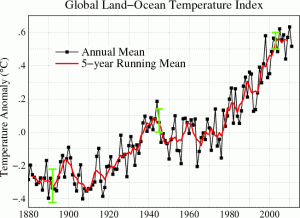
Source: NASA
Apparently, the increasing numbers of Americans who now believe in the reality of climate change are primarily using their own eyes and ears to reach this conclusion. Jon Kronick, social psychologist and pollster at Stanford University, advised the Associated Press on the poll. He said of those who have become believers in the past two years, “They don’t believe what the scientists say, they believe what the thermometers say…Events are helping these people see what scientists thought they had been seeing all along.” (1)
Taking action
We are encouraged by this news. We hope that it will give our politicians the courage to start taking action to address the causes of climate change. An easy and painless place to start is to quit destroying the trees that are storing tons of carbon solely because they aren’t native. When those trees are destroyed, the stored carbon is released into the atmosphere as carbon dioxide as the wood decays. Carbon dioxide is the predominant greenhouse gas which is contributing to climate change.
Creative Commons
Happy New Year! May 2013 bring to the San Francisco Bay Area saner, less destructive management of our public lands. Thank you for your readership in 2012.
***************************
(1) Associated Press, “More in U.S. believe in global warming,” San Francisco Chronicle, December 15, 2012.
Last week we published an article about how plants are responding to climate change. We received a comment from Don E that questioned the accuracy of the climate data in the study in Ohio which found a relationship between increased temperatures and earlier blooming times. We didn’t have access to the information needed to respond to that comment, but we were unwilling to publish it without verifying its claims because we do not want to misinform our readers.
So, we asked the author of the study in Ohio, Kellen Calinger, if she could help us verify the accuracy of the comment. Ms. Calinger has generously obliged us with a detailed critique of the comment. With her permission, we are now publishing her reply in its entirety.
*************************************
Don E: “There are controlled laboratory experiments to show that temperature, moisture, and CO₂ effect plant growth. The Ohio study was not a controlled study and the temperature data are questionable.”
Ms. Calinger: There are indeed controlled laboratory experiments regarding impacts of temperature, moisture, and CO2 on plant growth and my study was not controlled. My study falls under the broad heading of observational science. Observational and experimental studies are both extremely common and each has pros and cons. The pros of experiments include a high degree of control over the system allowing you to focus on impacts of your variable of interest while the cons include less realistic description of a natural system. The pros and cons of observational studies are essentially the opposite of an experiment; I didn’t control environmental variables in my study, but it likely reflects the reality of what’s happening in ecosystems far more than an experiment. Again, these are both accepted methods of the scientific community.
Don E: .”USHCN makes a huge TOBS adjustment in Ohio between 1979 and 1988. The justification for this is that they claim people in Ohio switched from reading temperatures in the afternoon, to reading them in the morning. That would theoretically push measured temperatures progressively down from 1979 to 1988. The Ohio raw data does not provide any support for the TOBS theory. In the middle of a long term cooling trend, measured temperatures rose very quickly from 1979 to 1988.”
Ms. Calinger: The TOBS adjustment (time of observation adjustment) is essentially to control for the time of day that temperature measurements were taken. A simple example would be that if I measured temperatures at noon from 1980-1990 and the next observer measured temperatures at 6AM from 1991-2000, it would probably seem like it was cooler in the ’90’s since 6AM is typically cooler than noon. If you don’t correct for the time of observation, the actual temperature trend would be obscured by daily variation in temperatures based on time of observation.
The U.S. Historical Climatology Network is part of the Carbon Dioxide Information Analysis center, and they lay out exactly how they treat data on their website–here’s the link: http://cdiac.ornl.gov/epubs/ndp/ushcn/monthly_doc.html
Don E: “In addition Ohio Valley Summer Temperatures have been plummeting for 80 years. July of 2009 was the coldest on record in the Ohio Valley, and July temperatures have been plummeting in that region since 1930. July 1934 and 1936 were both much hotter – even after NCDC adds 1.5 degrees on to recent temperatures relative to the 1930s.”
The blog presents a plot of temperature data for the Ohio Valley that starts in 1930 and runs until 2011 that indicates an overall trend of temperature decrease by 0.19 degrees Fahrenheit per decade. While I can’t know the intentions of the author of this blog, this seems to be a case of data manipulation to mislead. I went to the NCDC website used by the blog author and made an identical plot of Ohio Valley temperature data for July, but I didn’t restrict my plot to 1930-2011. Instead, I used the full temperature data set from 1895-2012 and found NO indication of temperature decrease. An extremely common tactic among climate change skeptics is to restrict a data set to a small subset of the total data that shows a cooling trend even though this is not indicative of the long term pattern.
Don E: “I would never call anyone a denier. That is an ugly term intended to denigrate skeptics by associating them with holocaust deniers. There are many highly regarded climate and physical scientists not funded by the fossil fuel industry that don’t accept the hypothesis that CO2 is the primary cause of climate change. BTW there has been no global warming in 16 years.”
Of 13, 950 scientific papers, 24 reject climate change. That’s pretty clearly an overwhelming majority.
Also, there has most definitely been warming in the past 16 years. This past summer was the 3rd hottest on record in the U.S. and seven of the 10 hottest summers in U.S. history have occurred since 2000.
**************************
Webmaster: We are grateful to Ms. Calinger for her help to respond to Don E. We have certainly learned something from her and we hope that Don E has as well.
We take the time and trouble to research the claims of those who choose to deny the reality of climate change because we believe that it is presently the most serious threat to our environment. Human civilization is currently unwilling to take needed action to reverse this dangerous trend. Those who refuse to believe that it is necessary to take action are at least partly to blame for this. We hope that if and when human civilization acknowledges climate change and its consequences, we will finally make the tough decisions that are needed.
Postscript: The word “denier” is defined by Webster’s Unabridged Dictionary as “one who denies.” It is not used exclusively to describe those who deny that the holocaust occurred. In fact, it doesn’t even imply that the denier is denying something that actually exists. It is a neutral term that applies to any person who denies anything. For example, I deny that I am fabricating information about climate change. Therefore I am a denier of that accusation.
Although we do not use the word “denier” in order to denigrate those who choose not to believe in climate change, we are frankly mystified by their motivation.
Despite a minority of die-hard deniers and their corporate enablers in the fossil fuel industry, most scientists have quit debating that the climate has changed and will continue to change. Nor is there much doubt that the primary cause of climate change is the significant increase in the greenhouse gases that trap heat on the Earth’s surface. Scientists have now turned their attention to the huge task of understanding the consequences of a changed climate and predicting its future course. Our best hope is that such knowledge can help us to devise strategies for coping with the consequences.
In this post, we will share with our readers some of the recent research about how plants and trees are responding to climate change.
Non-native plants are more responsive than natives to higher temperatures
The State of Ohio has one of the most complete climate records in the country. They have had weather stations in stable locations throughout the state since 1895. From 1895 to 2009, these weather stations reported an average increase in temperature of 1.7 degrees Fahrenheit. All of the weather stations were outside of urban areas, so we can be confident that the data were not confused by the separate, but associated, phenomenon of the urban heat affect as population and development in urban areas increased during this period.
These data were combined with an equally rich source of information, the herbarium of the University of Ohio which contains 500,000 plant specimens. These two sources of information enabled a graduate student, Kellen Calinger, to assemble “one of the six-largest such data sets in the world tracking the history of the wildflower life cycle in response to climate change.” (1)
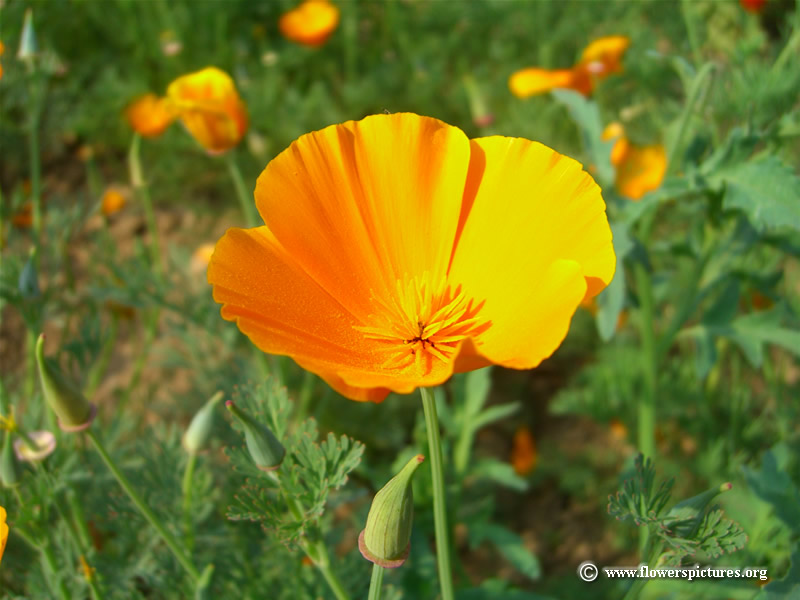
When is the California poppy blooming?
Ms. Calinger compared the bloom time of 141 species of plants with the temperature at the time of bloom. She reports that “…46% of the 141 species showed significant advancement in flowering in response to increased temperatures. And more of this advancement was seen in introduced species [AKA non-natives] than in native plants.”
Ms. Calinger predicts that the non-native plants that bloom before their native neighbors have a competitive advantage. Presumably, they are growing and occupying ground prior to the natives. If, indeed, climate change is giving non-native plants an advantage that would help to explain why attempts to eradicate non-native plants and replace them with native plants are often unsuccessful.
However, the report of this research then enters muddy territory. It speculates, but without offering evidence, that there may also be disadvantages to blooming earlier:
Is the flower blooming prior to the arrival of its pollinator thereby decreasing its reproductive success?
Will the early bloom only become the victim of a subsequent frost because the growing season is not yet stable?
Will migrating birds pass through only to find that the nectar sources they have depended upon in the past have now completed their blooming period?
What do we know about the response of plants in urban areas?
So, how does this information apply to our urban area? In general, temperatures in urban areas are higher than in rural areas because so much of our ground is covered with buildings and hardscape that absorb and retain heat. This is called the urban heat affect. It seems logical to assume that what has been observed in the rural setting would be exaggerated in the urban setting. That is, plants in urban areas are likely blooming even earlier because the temperatures are higher, although there is probably an upper threshold, beyond which there is no growth benefit.
However, there are other factors in climate change that are more important in urban areas which are also affecting the growth of plants and trees. Greenhouse gases are greater in urban areas than in rural areas because of industrial and transportation emissions.
Carbon dioxide concentrations have increased 24% globally since 1960. We should assume that increase is greater in urban areas. Carbon dioxide is the primary fuel of photosynthesis, so we should not be surprised to learn that higher concentrations of carbon dioxide are associated with faster plant growth. (2)
Are the oaks growing faster?
Kevin Griffin (Columbia University) compared the growth of the native red oak in rural New York with their brethren in New York City over a period of 8 years. The average minimum temperature in August was 71.6 degrees at the city site and 63.5 degrees in the country. He also found elevated levels of nitrogen in the leaves of the trees in the city. Nitrogen is a plant nutrient. Griffen reported that, “The urban oaks, harvested in August 2008, weighed eight times as much as their rural cousins, mostly because of increased foliage.” (2)
Unfortunately, like most stories about climate change, this one is also a mixed blessing. While carbon dioxide and higher temperatures may benefit plants in the city, other elements in urban air do not. Higher levels of ozone can severely damage plant pores, which slows their growth and some trees are more susceptible to this damage than others. Cottonwoods are particularly susceptible to ozone damage. Ironically, ozone levels are actually higher in rural areas than in urban areas because some of the ozone is converted to oxygen in the city, while the remaining ozone “blows out to the country.” (2)
What are the implications for readers of Million Trees?
Here’s our take-away message from these research reports:
The consequences of climate change are complex and are incompletely understood.
Climate change and air quality conditions in the urban setting are probably giving non-native plants a competitive advantage over native plants which helps to explain the frequent failures of attempts to eradicate non-native plants.
There are pros and cons to every change in the environment. To call change “good” or “bad” is to over-simplify the complexity of nature.
Finally, our usual rhetorical question, “Do the managers of native plant installations understand the complexity of their undertaking?” We don’t think they do.
***********************************
(1) “Non-native plants show a greater response than native wildflowers to climate change,” October 5, 2012. Available here.
(2) Guy Gugliotta, “Looking to Cities, in Search of Global Warming’s Silver Lining,” New York Times, November 26, 2012. Available here.
The urban forest on Mt. Davidson is slated for destruction.
According to California Trees (1) the US Forest Service has determined that tree cover in the country’s urban areas is decreasing by 4 million trees a year. Although no research has been done on tree loss throughout California, the US Forest Service reported a one-percent decline in trees and shrubs in Los Angeles despite a big campaign to plant one million trees there.
You might think that the loss of trees in urban areas is the result of increasing development and you would probably be at least partially correct. But many trees are lost for more trivial reasons that we think could be easily prevented. Here are some local examples of trees in the Bay Area that were needlessly destroyed or soon will be.
The City of Oakland has a “view ordinance” which guarantees homeowners the preservation of their view at the time they purchased their home. This view ordinance was invoked by a resident in the Oakland hills who demanded that her neighbor and the City of Oakland destroy trees obstructing her view. Her neighbor purchased her house because of its forested view. Yet, the desire for a forested view was trumped by her neighbor’s desire for a treeless view. The law required that 25 trees be destroyed on private property and 21 trees on city property in order to restore the view of a 95-year old property owner who no longer lives in her home. When trees are destroyed for such trivial reasons, we should not be surprised by the following compendium of absurd excuses to destroy trees. (The story is here.)
The people of San Francisco are trying to prevent the destruction of their urban forest which is almost entirely non-native. The City of San Francisco is systematically destroying non-native trees in order to return the landscape to its historical origins as grassland and dune scrub. The latest battle in this long war is a particular park, Glen Canyon, in which the City proposes to destroy about 160 trees in the short -run and 300 trees in the long-run. A handful of the trees are hazardous and aren’t disputed, but most have been evaluated as “poor suitability” which is the latest euphemism used by native plant advocates to describe non-native trees. They propose to replace most of the trees with native shrubs and a few tall trees that are native to California, but not to San Francisco, such as Douglas Fir and Cottonwoods. It remains to be seen if either of these species will survive in San Francisco. Douglas Fir requires more rainfall than San Francisco receives and Cottonwoods are hot-climate trees which don’t tolerate mild temperatures without seasonal fluctuations. We suspect that is the strategy, i.e., to plant trees for the sole purpose of placating the public without any intention that the trees will survive. (The story is here.)
The space shuttle Endeavor was recently retired from service. Its permanent home is now a museum in Los Angeles, where 400 street trees were destroyed to accommodate the delivery of the space shuttle from the airport to the museum. The neighbors were not pleased, as you might imagine. They unfortunately live in a blighted part of Los Angeles, so they didn’t have the clout needed to save their trees. Do you think these trees would have been destroyed in Beverly Hills? We doubt it. (The story is here.)
The neighbors of Dimond Park in Oakland are trying to save the trees in their park from being destroyed by a “restoration.” We often marvel at the use of the word “restoration” to describe projects which are more accurately described as “destruction.” This is yet another native plant project, which is hell bent to remake nature to its liking. In this case 42 trees would be destroyed, of which 27 are native, including 17 redwood trees. Please help the neighbors save their trees by signing their petition which is available here.
Finally, we share the story of a property owner on 65th St in Oakland who with a great deal of courage and tenacity was able to save most of the street trees on her block from being destroyed by the City of Oakland. The trees weren’t posted as required by Oakland’s ordinance. The crew who came to cut them down couldn’t tell her why they were being cut down, nor could they tell her who owned the trees. We encourage you to read her story because it will give you a brief lesson on the difficulty of advocating against the needless destruction of trees.
Deforestation causes climate change
We have been accumulating these stories in the past few months, but are finally inspired to share them with our readers because of the recent storm on the East Coast, Sandy, which caused over $50 billion in damage and the lives of over 100 people. What’s the connection? The connection is that Sandy has finally forced people to take the threats of climate change more seriously.
When will this new interest in climate change translate to an interest in saving our trees? Probably not soon, because few people understand that globally, deforestation contributes 20% of greenhouse gases that cause climate change. The public and its elected representatives are focused primarily on transportation as the source of climate change. Transportation contributes only 10% of greenhouse gases globally.
Here in California, we are gearing up to put our climate change law (AB 32) into action by creating a cap and trade auction which will enable emitters of greenhouse gases to purchase carbon offsets. Ironically, one of the things that carbon emitters can do to offset their contribution to greenhouse gases is to plant trees. Yet, those who destroy trees are not being required to purchase carbon offsets. Until the people who destroy trees are required to pay for the damage they do to the environment, we are unlikely to see a change in the cavalier attitude that governments seem to have about destroying trees.
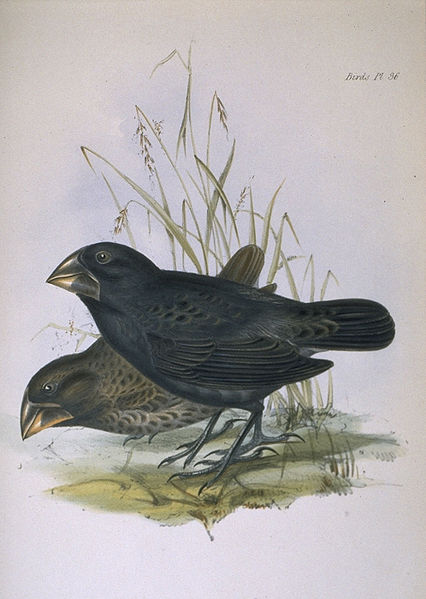
We introduced Darwin’s finches to our readers in our previous post. We told you about the research of Rosemary and Peter Grant on the Galápagos Islands that documented the rapid adaptation of the finches to radical changes in their food sources resulting from extreme weather events. In this post we will continue the story by telling you about another of the amazing discoveries of the scientists studying the finches over a period of nearly 30 years.
Natural selection resulted in the survival of finches with body sizes and shapes that were best suited to the availability and type of food. Sexual selection enhanced those physical characteristics during periods in which females had more choice because they were greatly outnumbered by males. In addition to these adaptations, the birds increased their cross-breeding with other species and the resulting hybrids actually had a survival and breeding advantage over their species “pure” parents.*
In the first five years of the research study, there was little evidence of different finch species interbreeding, known as hybridizing. On those rare occasions when species interbred, the resulting generation was not as successful as their parents, with respect to finding a mate and raising another generation.
Such lack of success of hybrids is considered the norm in nature. In fact, many hybrids are sterile, incapable of reproducing. Think of the sure-footed but sterile mule—the offspring of a horse and a donkey—as the classic example of a hybrid.
After the severe drought of 1977 and the flood of 1983, the Grants began to notice an increasing number of cross-breeding birds. It seemed that the resulting hybrids were having more breeding success than the pre-drought hybrids and the data confirmed their observation.
This counter-intuitive conclusion required some careful consideration and the conclusion is a valuable lesson in our rapidly changing environment. The environment on the islands was radically transformed by the severe drought and subsequent flood. The cactus was overwhelmed by a vine that smothered it. The plants with big, hard seeds were attacked by a fungus that decimated the population. The small seeded plants thrived and became the dominant food source.
The rapidly changing environment was causing more rapid evolution and the genetic variability of hybrids was giving them an advantage. If the environment is changing rapidly in unpredictable ways, the birds could increase the odds of finding a winning strategy by increasing the variability of their genes, sometimes resulting in novel traits.
We cannot and should not, however, anthropomorphize the birds by imputing motives to the selection of a mate of another species. The starving cactus finch probably observes that a male of another species—a seed-eating ground finch, for example—appears to be more fit than a male of her own species. She is not thinking of the odds of increasing genetic variability. Natural selection operates without the conscious effort of species.
The implications of hybridization
We are experiencing a period of rapid change because of the anthropogenic (caused by humans) impacts on the environment, most notably climate change, but surely many other impacts which we don’t necessarily understand. These would seem the ideal conditions for the hybridization of species which speeds up evolution by increasing genetic variability.
Unfortunately, one of many strategies of the native plant movement and nativism in the animal kingdom is to prevent hybridization because it is perceived as a threat to native plants and animals. We have reported to our readers some examples of such attempts to prevent hybridization and there are many more in the literature:
Are efforts to prevent hybridization depriving plant and animal species of opportunities to adapt to the rapidly changing environment? We don’t know the answer to that question, but we find it a provocative line of inquiry.
***************************
*This information is drawn from: Jonathan Weiner, The Beak of the Finch, Vintage Books, 1994
Cheatgrass is one of the non-native grasses that have essentially replaced native grasses throughout the United States. It was probably introduced with ship ballast and wheat seed stock in about 1850. As we have reported, native grasses were quickly replaced by the non-native grasses which tolerate the heavy grazing of domesticated animals brought by settlers. Native Americans had no domesticated animals.
Biological controls have frequently caused more serious damage than the problems they were intended to solve. Therefore, we would hope that their intended target is doing more damage than the potential damage of its biological control. We must ask if the cure is worse than the disease. And in this case, we don’t think the damage done by cheatgrass justifies inflicting it with the Black Fingers of Death.
The track record of biological control
Biological control is the intentional introduction of animals, pests, microbes, fungi, pathogens, etc., for the purpose of killing a plant or animal which is perceived to be causing a problem. The ways in which some of these biocontrols have gone badly wrong are as varied and as many as the methods used.
Introduced species of plants are said to have an initial advantage in their new home because their pests and competitors are not always introduced with them. This is the “enemy release hypothesis” popular amongst native plant advocates to explain the tendency of non-native plants to be invasive. However, this is usually a temporary advantage which is exaggerated by native plant advocates who do not seem to recognize the speed with which native species can adapt to new species, and vice versa.
Therefore, a popular method of biological control is to import the predator or competitor of the non-native species which is considered invasive. This is only effective if the pest is selective in its host. There are many examples of such introductions which did not prove to be selective: “For the United States mainland, Hawaii, and the Caribbean region, Pemberton (2000) listed 15 species of herbivorous biocontrol insects that have extended their feeding habits to 41 species of native plants…” (1) Although most of the unintended hosts were related to the intended hosts, some were not.
Similar shifts from target to nontarget species have occurred for biocontrol agents of animal pests: “For parasitoids introduced to North America for control of insect pests Hawkins and Marino (1997) found that 51 (16.7%) of the 313 introduced species were recorded from nontarget hosts. For Hawaii, 37 (32.3%) of 115 parasitoid species were noted to use nontarget hosts…biological control introductions are considered to be responsible for extinctions of at least 15 native moth species [in Hawaii].” (1)
There are also several cases of biological controls escaping from the laboratory setting before they had been adequately tested and approved for release. A virus escaped the laboratory in Australia and killed 90% of the rabbits in its initial spread through the wild population. Very quickly, the virus evolved to a less fatal strain that killed less than 50% of the rabbits it infected. A second virus was then tested and also escaped its laboratory trial and has spread through the rabbit population throughout Australia.
A fly being considered for introduction to control yellow starthistle apparently escaped and damaged a major cash crop of safflower in California according to a study published in 2001, illustrating the risks of biocontrols to agriculture.
This is but a brief description of the diverse ways in which nature has foiled the best efforts of the scientists designing biological controls for non-native species of plants and animals. The source of this information (1) therefore concludes, “…many releases of species have inadequate justification…The first goal of research must be to show that the introduced biological control agent will not itself cause damage.” Given this wise advice, we will return to the question, “What damage is being done by cheatgrass and does that damage justify the introduction of The Black Fingers of Death?”
Why is cheatgrass considered a problem?
Cheatgrass is one of the many non-native annual grasses which have replaced the native grasses which were not adapted to the grazing of domesticated animals. Cheatgrass is a valuable nutritional source for grazing animals when it is green and loses much of its nutritional value when it dries.
Grazing is only one of the types of disturbance which create opportunities for non-native grasses to expand their range into unoccupied ground. Fire is another disturbance which gives cheatgrass a competitive advantage over native grasses because it uses available moisture and germinates before native grasses can gain a foothold on the bare ground cleared by fire.
Cheatgrass is said to increase fire frequency by increasing fuel load and continuity. Unfortunately, increasing levels of CO₂ (carbon dioxide) in the atmosphere is increasing the fuel load of cheatgrass: “…the indigestible portion of aboveground plant material [of cheatgrass] …increased with increasing CO₂.” (2)
Carbon dioxide is the predominant greenhouse gas which is contributing to climate change. And increasing frequency of wildfires is one of the consequences of the higher temperatures associated with climate change. Therefore, one of the causes of the expanding range of cheatgrass is increasing levels of the greenhouse gases contributing to climate change. Rather than address the underlying cause, we are apparently planning to poison the cheatgrass with a deadly fungus.
If we are successful in killing the cheatgrass, what will occupy the bare ground? Will native grasses and shrubs return? Will whatever occupies the bare ground be an improvement over the cheatgrass which has some nutritional value to grazing animals? The US Forest Service plant database gives us this warning, “Care must be taken with methods employed to control cheatgrass so that any void left by cheatgrass removal is not filled with another nonnative invasive species that may be even less desirable.”
Recapitulating familiar themes
The project to develop a deadly fungus to kill cheatgrass is another example of the issues that we often discuss on Million Trees:
Are the risks of the methods used to eradicate non-native species being adequately assessed and evaluated before projects are undertaken?
Are the underlying conditions—such as climate change–that have contributed to an “invasion” being addressed by the methods used to eradicate them? If not, will the effort be successful?
Is the damage done by the “invasion” greater than the damage done by the methods used to eradicate the invader? Is the cure worse than the disease?
We do not believe that these questions are being addressed by the many “restoration” projects we see in the San Francisco Bay Area. Consequently, we believe that these projects often do more harm than good.
*************************
(1) Cox, George W., Alien Species and Evolution, Island Press, 2004
(2) Ziska, L.H.; Reeves III, J.B.; Blank, R.R. (2005), “The impact of recent increases in atmospheric CO2 on biomass production and vegetative retention of cheatgrass (B. tectorum): Implications for fire disturbance.”, Global Change Biology.11 (8): 1325–1332,
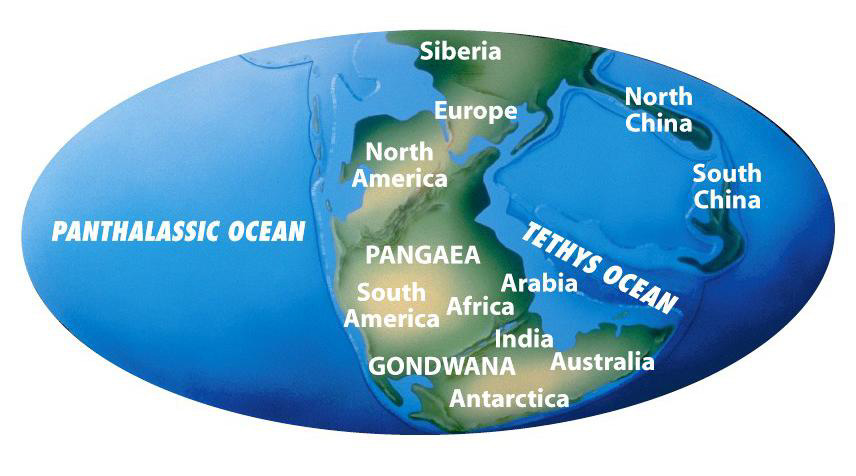
The continents have been sliding about on the Earth since it was “created”(1) approximately 4.5 billion years ago. Although geologists tell us that the continents came together and broke apart several times prior to the formation of the supercontinent geologists call Pangaea, this is the geologic period of most interest to us because life forms were sufficiently complex by that period that we can recognize their modern counterparts.
The supercontinent Pangaea
Pangaea is said to have been assembled about 237 million years ago, during the Early Triassic Period, shortly after the great Permian extinction, the period of the most extensive extinctions of plant and animal species in the history of the Earth. Pangaea began to break apart about 50 million years later, but the African and South American continents remained fused–into a continent dubbed Gondwana–until about 100 million years ago. (1)
During that period of nearly 160 million years, many new life forms emerged and others died out. Cone-bearing plants replaced some spore-bearing plants before Pangaea formed and dominated the Earth during much of Pangaea’s existence. The first true mammals, flowering plants, birds, lizards, and salamanders appeared before the break up of Pangaea was complete.
What are the implications of the development of new species of life on Earth at a time when there was a single, unified continent? That is the question we are considering today. Obviously, the transport of plant and animal species into new territories is facilitated by their proximity. Seeds are more easily transported by wind and animals if they need not cross barriers such as oceans, as they must today. As a result there was greater homogeneity of species during the geologic periods of Pangaea. And species diversified rapidly when Pangaea broke up into the 7 continents of today. (2) These diversified species have common ancestors.
Even after Pangaea began to break up into separate continents, there were land bridges between some of the continents during periods of glaciations when water was locked into ice, draining the oceans. Animals could travel over these land bridges from one continent to another, often bringing plant species with them, usually unwittingly. That’s how the first humans in North America and ultimately South America traveled from Asia about 13,000 years ago at the time of the last ice age.
The common ancestry of many plants and animals is one of many reasons why the concept of “native” is ambiguous and is often debated. We will consider a few examples in which the designation of a particular plant as native or non-native seems debatable.
Is the Dawn Redwood native to California?
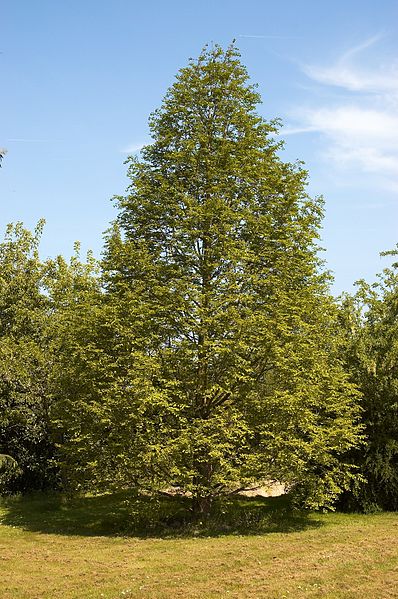
Dawn redwood (Metasequoia glyptostroboides) is closely related to our redwood trees, Coast Redwood and Giant Sequoia. Dawn redwood is unique in being a conifer that is also deciduous (loses its foliage in winter), unlike our redwood trees which are evergreen. Dawn redwoods were until recently considered native to remote regions of China where they are considered “critically endangered.”
Dawn redwood in spring. Wikimedia Commons
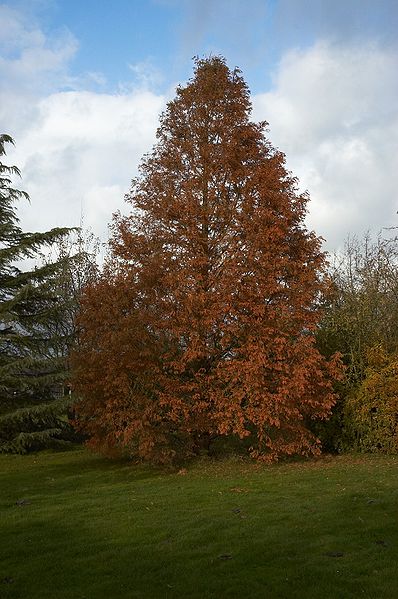
However, scientists at the Museum of Paleontology at UC Berkeley tell us that there is fossil evidence that dawn redwoods grew in California about 40 million years ago. Dawn redwoods now grow successfully in the Bay Area. There is a famous specimen in front of McLaren Lodge in Golden Gate Park, headquarters of San Francisco’s Recreation and Park Department. Every autumn, when the tree turns red, park staff receives calls from the public expressing their concern that the beautiful tree is dying.
Dawn redwoods died out in California during the last ice age because the climate was cooler than dawn redwoods could tolerate. So, now that the climate has warmed again, and dawn redwoods are back, why not welcome them as a “return of the natives?” That’s the kind of flexibility that makes sense to us, particularly in a time of rapidly changing climate.
Dawn redwood in autumn. Wikimedia Commons
Unfortunately, we don’t find such flexibility in the native plant ideology. Dawn redwoods are rare both in California and in China from which it was reintroduced, and it is therefore not one of the trees that native plant advocates demand be eradicated. Monterey pine and Monterey cypress are not so fortunate. These are also trees for which fossil evidence suggests that they lived in San Francisco in the distant past and their native range is less than 150 miles down the coast in Monterey. Both tree species are also considered threatened in their native range. Yet, native plant advocates demand their eradication in San Francisco.
This is an example of the rigidity of the native plant ideology that has earned them the reputation of fanatics.
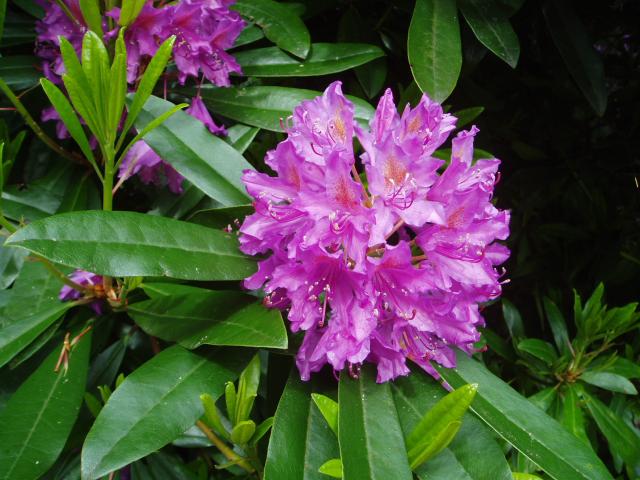
“The next most serious weed is probably rhododendron which, unusually, has the ability to invade existing ancient woodland, especially in the west of Britain. This may be because, if one employs a very long time scale, it is not strictly an alien. The species that forms impenetrable thickets in western Britain is Rhododendron ponticum, whose pollen remains have been found in deposits in Ireland dating back to the last interglacial. The species was plainly accustomed to growing in Atlantic woodland and may have retained a genetic “memory” of how to cope with this habitat and its competing species. But it didn’t grow spontaneously in Britain for the next 30,000 years, and all the current feral colonies are regarded as originating from garden escapes.”(3)
Rhododendron ponticum. Wikimedia Commons
Once again, we wonder if “welcome home” isn’t a more appropriate response to this beautiful plant. We find the definition of “native” as arbitrary as the definition of “invasive.” Both seem to be terms used by people who abhor change. And in a rapidly changing world, does such resistance to change make any sense? We don’t think so.
We have received many comments from native plant advocates regarding carbon storage. These comments defend projects in the Bay Area to destroy non-native forests and “restore” native plants by claiming that native plants will actually sequester more carbon than the forest that they propose to destroy. As always, we are grateful for comments that give us the opportunity to research the issues and report what we have learned about this complex and important subject.
Carbon cycling in a terrestrial plant-soil system
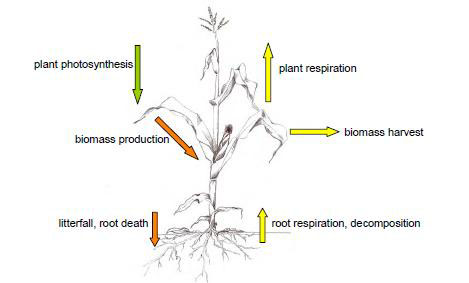
The storage of carbon in plants and soil occurs as plants and soil exchange carbon dioxide (CO₂) with the atmosphere as a part of natural processes, as shown in the following diagram (1):
Green Arrow: CO₂ uptake by plants through photosynthesis
Orange Arrows: Incorporation of Carbon into biomass and Carbon inputs into soil from death of plant parts
Yellow Arrows: Carbon returns to the atmosphere through plant respiration and decomposition of litter and soil Carbon. Carbon in plant tissues ultimately returns to atmosphere during combustion or eventual decomposition.
Rates of carbon uptake and emissions are influenced by many factors, but most factors are related to temperature and precipitation:
Higher temperatures are associated with faster plant growth, which accelerates photosynthesis and carbon uptake.
Higher temperatures also accelerate decomposition of plant materials, thereby accelerating the return of stored carbon into the atmosphere.
The effect of moisture in the soil on decomposition can be graphed as a “hump.” In extremely dry soils, decomposition is slow because the organisms that decompose vegetation are under desiccation stress. Conditions for decomposition improve as moisture in the soil increases until the soil is very wet when lack of oxygen in the soil impedes decomposition.
Although temperature and precipitation are important factors in carbon storage, they don’t change appreciably when one type of vegetation is replaced with another. Therefore, these factors aren’t helpful in addressing the fundamental question we are considering in this post, which is “Does native vegetation store more carbon than the forests that presently occupy the land in question?”
Where is carbon stored?
Source: U.S. EPA, 2018
Much of the carbon stored in the forest is in the soil. It is therefore important to our analysis to determine if carbon stored in the soil in native vegetation is greater than that stored in non-native forests. The answer to that question is definitely NO! The carbon stored in the soil of native vegetation in Oakland, California is a fraction (5.7 kilograms of carbon per square meter of soil) of the carbon stored in residential soil (14.4 kilograms in per square meter of soil). (9) Residential soil is defined by this study as “residential grass, park use and grass, and clean fill.” This study (9) reports that the amount of carbon stored in the soil in Oakland is greater after urbanization than prior to urbanization because Oakland’s “wildland cover” is associated with “low SOC [soil organic carbon] densities characteristic of native soils in the region.”
Native plant advocates have also argued that the carbon stored in the soil of perennial native grasslands is greater than non-native trees because their roots are deeper. In fact, studies consistently inform us that most carbon is found in the top 10 centimeters of soil and almost none is found beyond a meter (100 centimeters) deep. (1, 4) In any case, we do not assume that the roots of perennial grasses are longer than the roots of a large tree.
Another argument that native plant advocates use to support their claim that native perennial grasslands store more carbon in the soil than non-native trees is that native grasses are long-lived and continue to add carbon to the soil throughout their lives. In fact, carbon stored in the soil reaches a steady state, i.e., it is not capable of storing additional carbon once it has reached its maximum capacity. (1)
It is pointless to theorize about why grassland soils should store more carbon than forest soils. The fact is they don’t. In all regions of the United States forest soils store more carbon than either grassland or shrubland soils. (9, Table 5)
We should also describe Oakland’s native vegetation before moving on: “Vegetation before urbanization in Oakland was dominated by grass, shrub, and marshlands that occupied approximately 98% of the area. Trees in riparian woodlands covered approximately 1.1% of Oakland’s preurbanized lands…” (5) In other words, native vegetation in Oakland is composed of shrub and grassland. When non-native forests are destroyed, they will not be replaced by native trees, especially in view of the fact that replanting is not planned for any of the “restoration” projects in the East Bay.
The total amount of carbon stored within the plant or tree is proportional to its biomass, both above ground (trunk, foliage, leaf litter, etc.) and below ground (roots). Since the grass and shrubs that are native to the Bay Area are a small fraction of the size of any tree, the carbon stored within native plants will not be as great as that stored in the trees that are being destroyed.
Whether we consider the carbon stored in soil or within the plant, the non-native forest contains more carbon than the shrub and grassland that is native to the Bay Area.
Converting forests to grassland
If we were starting with bare ground, it might be relevant to compare carbon sequestration in various types of vegetation, but we’re not. We’re talking about specific projects which will require the destruction of millions of non-native trees. Therefore, we must consider the loss of carbon associated with destroying those trees. It doesn’t matter what is planted after the destruction of those trees, nothing will compensate for that loss because of how the trees will be disposed of.
The fate of the wood in trees that are destroyed determines how much carbon is released into the atmosphere. For example, if the wood is used to build houses the loss of carbon is less than if the wood is allowed to decompose on the forest floor. And that is exactly what all the projects we are discussing propose to do: chip the wood from the trees and distribute it on the forest floor, also known as “mulching.” As the wood decomposes, the carbon stored in the wood is released into the atmosphere: “Two common tree disposal/utilization scenarios were modeled: 1) mulching and 2) landfill. Although no mulch decomposition studies could be found, studies on decomposition of tree roots and twigs reveal that 50% of the carbon is lost within the first 3 years. The remaining carbon is estimated to be lost within 20 years of mulching. Belowground biomass was modeled to decompose at the same rate as mulch regardless of how the aboveground biomass was disposed” (8)
Furthermore, the process of removing trees releases stored carbon into the atmosphere, regardless of the fate of the destroyed trees: “Even in forests harvested for long-term storage wood, more than 50% of the harvested biomass is released to the atmosphere in a short period after harvest.” (1)
Will thinning trees result in greater carbon storage?
Native plant advocates claim that thinning the non-native forest will result in improved forest health and therefore greater carbon storage. In fact, the more open canopy of an urban forest with less tree density results in greater growth rates. (3) Although more rapid growth is associated with greater rates of carbon sequestration, rates of storage have little effect on the net carbon storage over the life of the tree. (6) Net carbon storage over the life of the tree is determined by how long the species lives and how big the tree is at maturity. These characteristics are inherent in the species of tree and are little influenced by forest management practices such as thinning. (6)
More importantly, even if there were some small increase in carbon storage of individual trees associated with thinning, this increase would be swamped by the fact that over 90% of the urban forest will be destroyed by the proposed projects we are evaluating in the East Bay. The projects of UC Berkeley and the City of Oakland propose to destroy all non-native trees in the project areas. The project of the East Bay Regional Park District proposes to destroy all non-native trees in some areas and thin in other areas from 25 to 35 feet between each tree, reducing tree density per acre by at least 90%. No amount of “forest health” will compensate for the loss of carbon of that magnitude.
Responding to native plant advocates
The vegetation that is native to the Bay Area does not store more carbon above or below the ground than the non-native forest.
Chipping the trees that are destroyed and distributing the chips on the ground will not prevent the release of carbon from the trees that are destroyed.
Thinning the trees in our public lands will not increase the capacity of the trees that remain to store carbon.
————————————————————————————————–
Bibliography
Anderson, J., et. al., “The Potential for Terrestrial Carbon Sequestration in Minnesota, A Report to the Department of Natural Resources from the Minnesota Terrestrial Carbon Sequestration Initiative, February 2008.
Birdsey, Richard, “Carbon storage and accumulation in United States Forest Ecosystems,” USDA Forest Service, General Technical Report WO-59, 1992
Environmental Protection Agency, “Inventory of U.S. Greenhouse Gas Emissions and Sinks: 1990-2008,” April 15, 2010., EPA 430-R-10-006
Fissore, C., et.al., “Limited potential for terrestrial carbon sequestration to offset fossil-fuel emissions in the upper Midwestern US,” Frontiers in Ecology and the Environment, 2009, 10.1890/090059
Nowak, David, “Historical vegetation change in Oakland and its implication for urban forest management,” Journal of Arboriculture, 19(5): September 1993
Nowak, David, “Atmospheric Carbon Reduction by Urban Trees,” Journal of Environmental Management, (1993) 37, 207-217
Nowak, David. Crane, Daniel, “Carbon storage and sequestration by urban trees in the U.S.A.,” Environmental Pollution, 116 (2002) 381-389
Nowak, David, et.al., “Effects of urban tree management and species selection on atmospheric carbon dioxide,” Journal of Arboriculture 28(3) May 2002
Pouyat, R.V. (US Forest Service)., et.al., “Carbon Storage by Urban Soils in the United States,” Journal of Environmental Quality, 35:1566-1575 (2006)
The Sunday New York Times of April 3rd published an op ed in defense of non-native plants. In “Mother Nature’s Melting Pot” Professor Hugh Raffles (New School) reminds us that our country was built by immigrants. Despite our origins, we also have a long tradition of opposition to immigration. As each generation becomes established, it wishes to pull up the welcome carpet to new immigrants. During times of economic crisis this anti-immigration sentiment is particularly strong.
Professor Raffles notes the extension of this anti-immigration sentiment to non-native plants and animals. Just as immigrants have contributed to the dynamism and creativity of our society, non-native plants are contributing to our natural world as, “They arrive unannounced, encounter unfamiliar conditions and proceed to remake each other and their surroundings.” (1)
He provides many examples of non-native plants and animals that benefit both humans and native animals, including several examples that are locally relevant. He reminds us that the eucalyptus is a rare source of winter nectar for the honeybees that were imported in the 1600s and now pollinate about one-third of our food crops. He also reminds us that ice plant can stabilize sandy soils that might otherwise inundate our roads and neighborhoods as they shift in the wind.
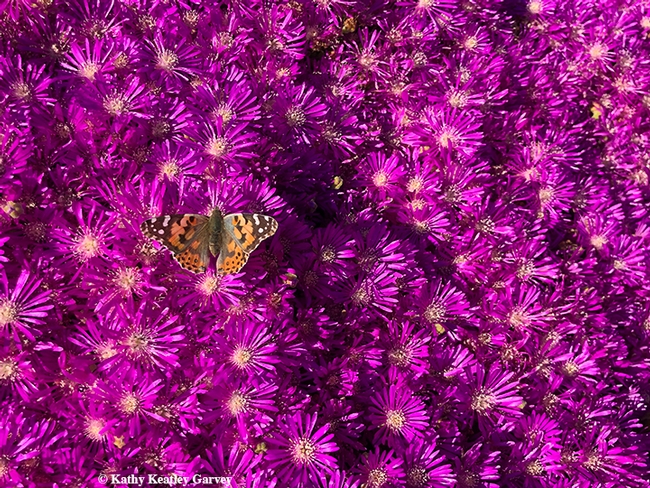
Painted Lady butterfly on ice plant. Bug Squad, UC Davis
He notes that attempts to eradicate non-native plants and animals are often futile once the species become firmly established and that attempts to do so often harm the environment. Here in the San Francisco Bay Area we are acutely aware of the harm being done by attempts to eradicate non-native plants. We witness hundreds of thousands of healthy, mature trees being needlessly destroyed. We see acres of park land being sprayed with toxic herbicides. We watch precious recreational space being fenced off for “restorations” in places that are completely artificial, yet also entirely natural in the sense that they are sustained without being actively gardened.
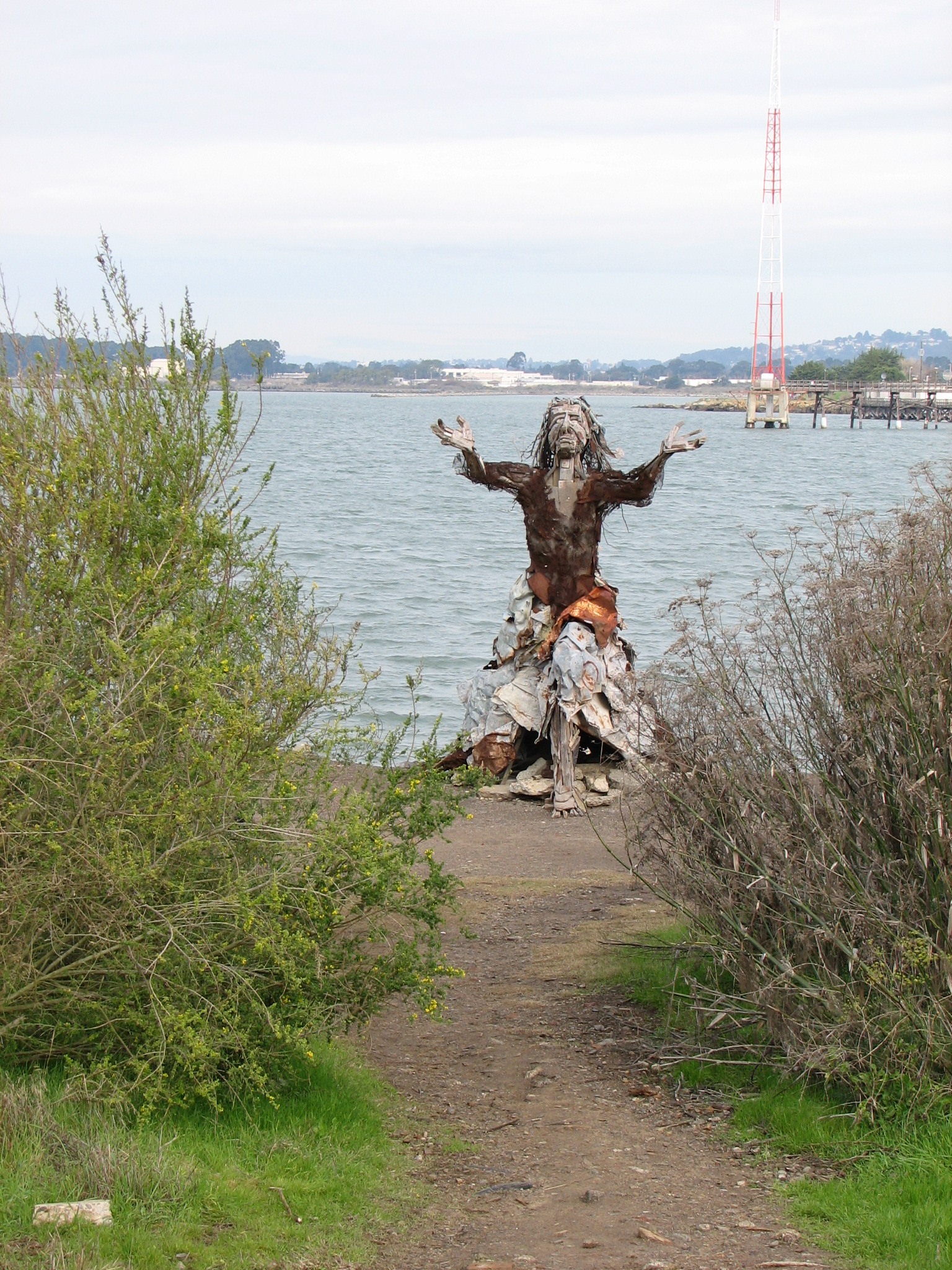
The most recent example is the announcement that the Albany Bulb (in Albany, CA) will soon be transformed into a native plant garden. The Albany Bulb is composed of landfill that was used for decades as a city dump and is now a heavily used park, populated by art created from the junk that remains from the dump. Non-native plants and trees thrive there without any care. It is pointless to destroy this valuable artistic and recreational resource, yet native plant advocates demand its “restoration.”
Sculpture of “Albany Bulb Greeter”
Professor Raffles makes the logical connection between anti-immigration sentiment and the native plant movement’s commitment to the eradication of non-native plants and animals. This connection is relevant in the Bay Area because a prominent leader of the native plant movement here is strongly opposed to immigration.
Jake Sigg has been an officer in the local chapter of the California Native Plant Society for many years. He was a gardener in San Francisco’s Recreation and Park Department for 31 years. He was awarded the “Jake Sigg Award for Vision and Dedicated Service” by the California Invasive Plant Council in 2003. This award was named for him, “For years of tireless service and leadership on invasive plant issues in California.”
For many years, Mr. Sigg has published a “Nature News” newsletter several times each week. This newsletter is widely distributed throughout the Bay Area and is a valuable source of information about nature-related activities. It is also Mr. Sigg’s podium from which he expresses his opinion on a range of topics. In most issues, he expresses his deep concern about immigration, both legal and illegal.
“Virtually All Of California’s Problems Can Be Traced Back To Too Many People…Virtually All Of California’s Population Growth In The Last 10 Years Was Due To Immigration…If We Don’t Do Something About Immigration, Our Problems Will Get Much Worse.” April 2, 2011, Nature News
He is equally concerned about related issues such as granting visas to workers with unique skills and granting citizenship to children born to undocumented immigrants.
“The Ever Expanding Pool of Cheap Labor and the Case For Fewer Visas By Joe Guzzardi” January 25, 2011, Nature News
“Current U.S. policy results in over 300,000 additional citizens from anchor babies each year. The demographic impact is far greater because their families stay and bring in additional relatives. Anchor babies are eligible to sponsor their illegal alien parents and other relatives when they turn 21. Moreover, taxpayers pick up the tab for the medical costs and subsequent welfare outlays because of the child’s citizenship status. ACTION NEEDED Please ask your Congressional representative to co-sponsor HR 140.” January 13, 2011, Nature News
And so, we conclude that Professor Raffles is not making an idle philosophical connection between the native plant movement and anti-immigration sentiment. There IS a connection because we see it discussed repeatedly by a prominent voice in the community of native plant advocates. Occasionally, one of Mr. Sigg’s allies challenges his opinion on this subject. However, such a debate is apparently rare in his community of interests.
We thank Professor Raffles for making explicit what is implicit in the native plant movement. We believe that the connection between the eradication of non-native plants and animals and opposition to immigration should be acknowledged and discussed. The desire to be rid of immigrants—both plants and animals, including humans—is grounded in a need to find someone or something to blame for problems that we are unprepared to face or are powerless to change.
In the case of human immigration, our living standards are declining primarily because of the globalization of the economy. Building a wall around our country will not isolate us from the fact that developing countries with lower standards of living are presently more economically competitive.
Likewise, eradicating non-native plants and animals will not prevent the climate change and associated changes in air and water quality that make those newcomers more competitive than the natives that thrived in a different environment, one that is gone and is unlikely to return. In fact, the destruction of healthy, mature non-native trees is exacerbating the climate change that will ultimately exterminate many species of native plants and animals.(2)
(1) Hugh Raffles, “Mother Nature’s Melting Pot,” New York Times, April 3, 2011
(2) “Multitude of Species Face Threat of Warming,” New York Times, April 4, 2011
When climate change first became a hot topic (pardon the pun) about 10 years ago, it was consistently described as “global warming.” When scientists observed the effect that global warming was having on plants and animals in California, they reported that the ranges of native plants and animals were moving to higher elevations and northern latitudes in search of cooler temperatures.
A study published in Nature magazine in December 2009 found that plants and animals must move as much as 6 miles every year from now to the end of the century to find the conditions they occupy now. When the plants move, the animals that depend on them must adapt or move with them to survive. Professor Art Shapiro (UC Davis) has been studying California butterflies for over 35 years. He reported (1) that native butterflies are moving to higher elevations, where temperatures are lower, but that ultimately, “There is nowhere else to go, except heaven.”
More recently we have experienced extreme weather that cannot be adequately described as “global warming.” We have seen epic storms that have resulted in unprecedented flooding, while other places have experienced prolonged drought. We are as likely to have an extremely cold winter as we are to have an extremely hot summer. So the phrase “global warming” has evolved into the more accurate description: “climate change.” Aside from our anecdotal observations of these extreme weather events, science is beginning to catch up to provide an analytical understanding of our observations. The story of climate change is now much more complex and the challenges it presents have become correspondingly more difficult and unpredictable.
Changes in Precipitation
Although places like Pakistan, Australia and some states in the US have recently experienced more rain and flooding than history has recorded, scientists have been reluctant to attribute this to climate change until very recently. Computer modeling of nearly 50 years of weather data has finally enabled scientists to confirm that these increases in precipitation are the result of “…the effects of greenhouse gases released by human activities like the burning of fossil fuels.” (2)
And, like increases in temperature, changes in precipitation also result in the movement of plants and animals to “find” the conditions to which they are adapted. Scientists have recently challenged previous assumptions about the movement of plants and animals to higher elevations. They now report (3) that in some places in California in which precipitation has increased, plants have responded by “moving” to lower elevations. Scientists acknowledge that the affect on the animal populations in their historic ranges is unpredictable because insects, for example, are more sensitive to changes in temperature and may not be able to move downhill with the plants they presently depend upon.
Changes in Fog Patterns
Fog is another weather event that is important in California, particularly along the coast, where the warm air from the interior meets the cold air from the ocean. The result of this confluence of cold and warm air is fog, particularly during the summer when the difference in temperatures is greatest.
The redwood is our native tree that is closely associated with the foggy coastal conditions in California. The redwood requires the fog drip to irrigate it during the dry California summer and its range is limited to sheltered areas because it does not tolerate wind. The range of the redwood in California is therefore limited to a few hundred miles along the coast. Its narrow range makes it particularly vulnerable to climate change.
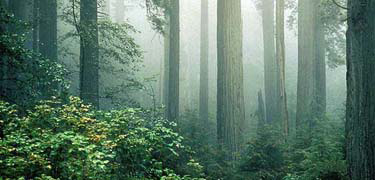
Redwood National Park, NPS photo
In Muir Woods, for example, higher temperatures have reduced coastal fog by 30% in the past century. Scientists expect this loss of summer fog drip to result in a significant loss of water to the trees and they predict that it will affect the survival of the redwoods in the long-run.(4)
Implications of climate change for native plants?
Clearly, we still have much to learn about climate change:
Which weather events are indicators of long-range trends?
Climate change is apparently not just one trend, such as increased temperatures. It is probably many different types of weather events, such as increases or decreases in snow and rainfall, hurricanes and typhoons, fog and wind. Obviously, we don’t yet have the complete picture of what or where long-range changes have occurred or which are likely in the future.
We know little about the affect that climate change will have on the natural world. How will plants and animals respond to climate change? Which plants and animals will survive and, if so, where will they survive?
We marvel at the confidence that the local native plant advocates have in their agenda. How did they select the pre-European landscape of the late 18th century to replicate? What makes them think that plants and animals that lived here 250 years ago are still sustainable here, let alone that they will be sustainable in the future?
These are rhetorical questions, which we will presume to answer for our readers: Native plant advocates may compensate for radically changed environmental conditions by using intensive gardening methods. The use of herbicides, irrigation systems, prescribed burns, constant weeding, soil amendments, fences and boardwalks, etc., may artificially mimic the conditions of 250 years ago. However, the result is a native plant garden that is neither natural nor more biodiverse than what can be achieved with less effort, with less toxicity and fewer scarce resources. While we can see the value of a native plant garden to preserve our horticultural heritage, we find it more difficult to justify the large-scale efforts that we currently find in all of our public lands. Is it realistic to garden all of our public lands in perpetuity?
(1) Arthur Shapiro (UC Davis), Contra Costa Times, 1/19/10



 Conservation Sense and Nonsense