Losing Battles to Save our Trees

In our posts “They can destroy your trees”   and “KILLER TREES!! Scare Tactic #3”  we told you about two efforts to save eucalyptus trees that were threatened with destruction.  Today we must tell you that those battles have been lost.

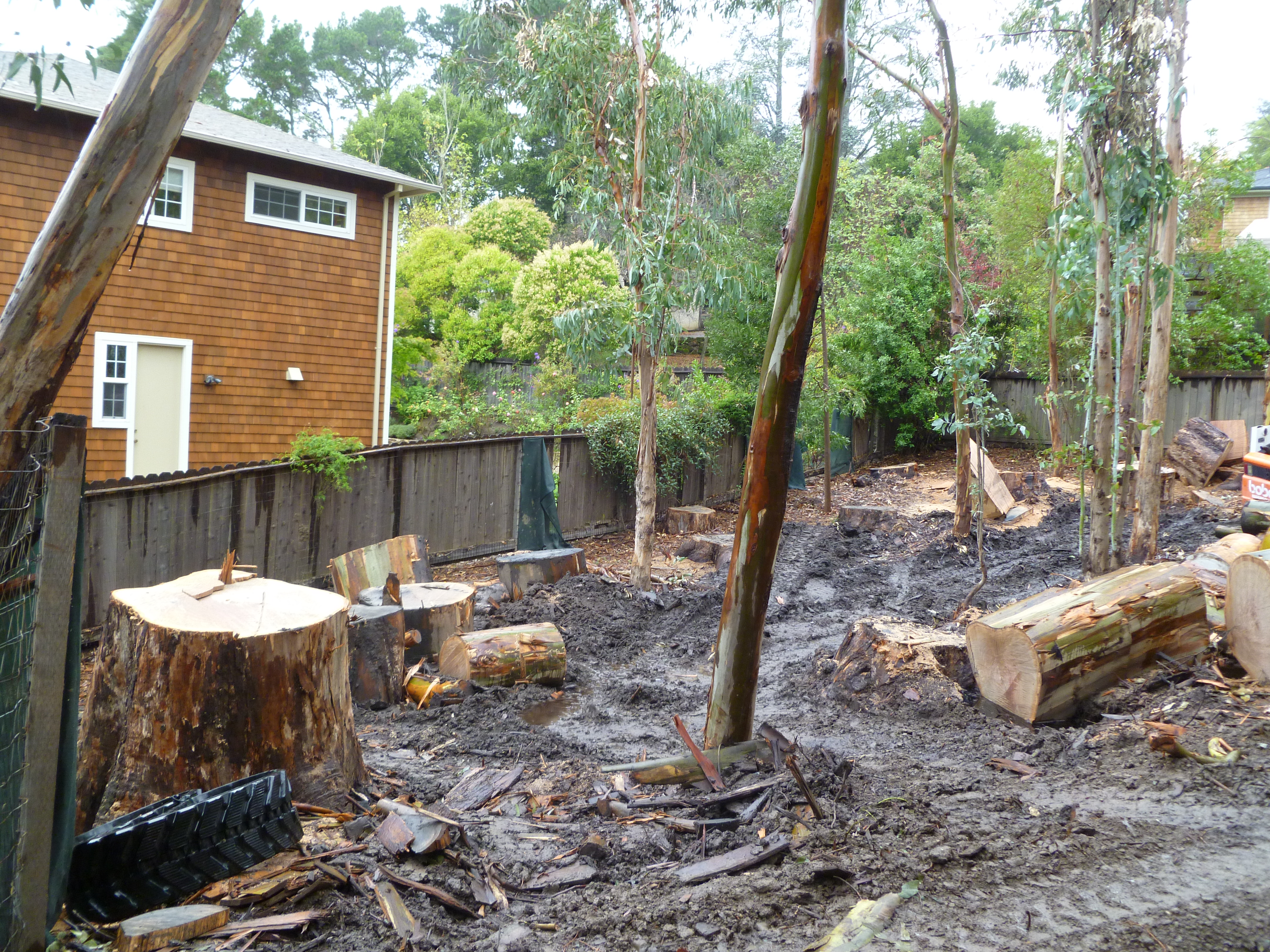
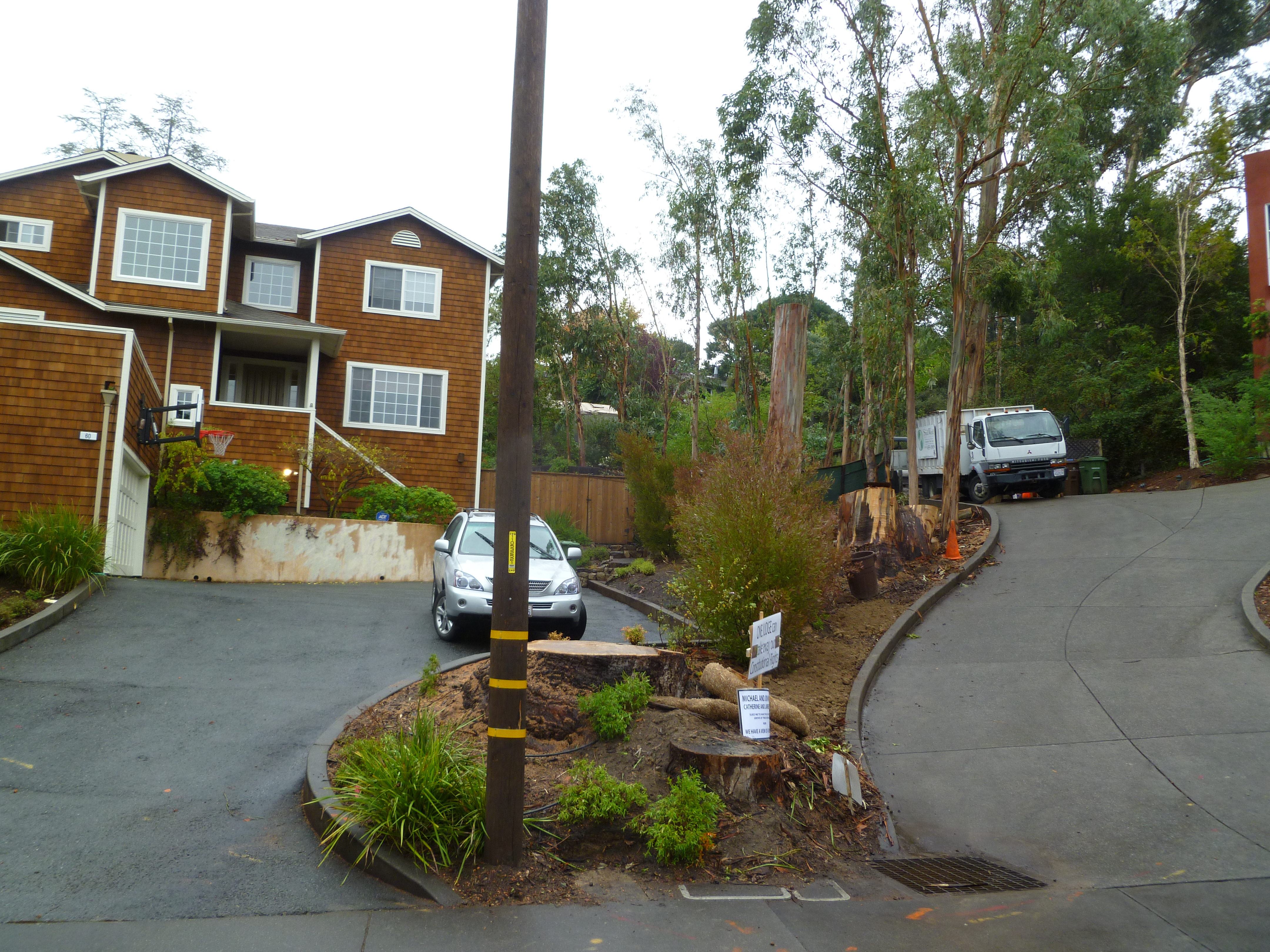
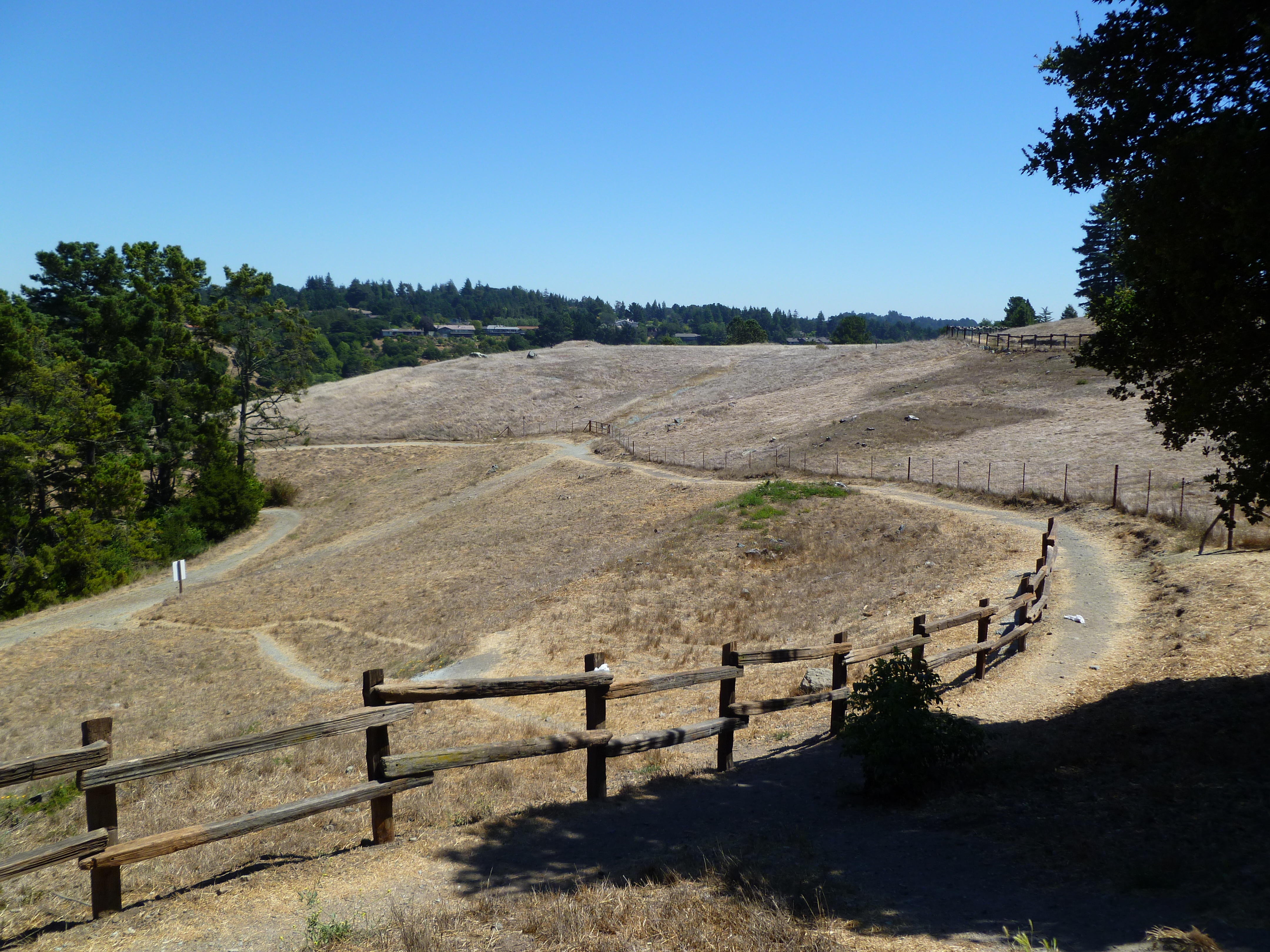
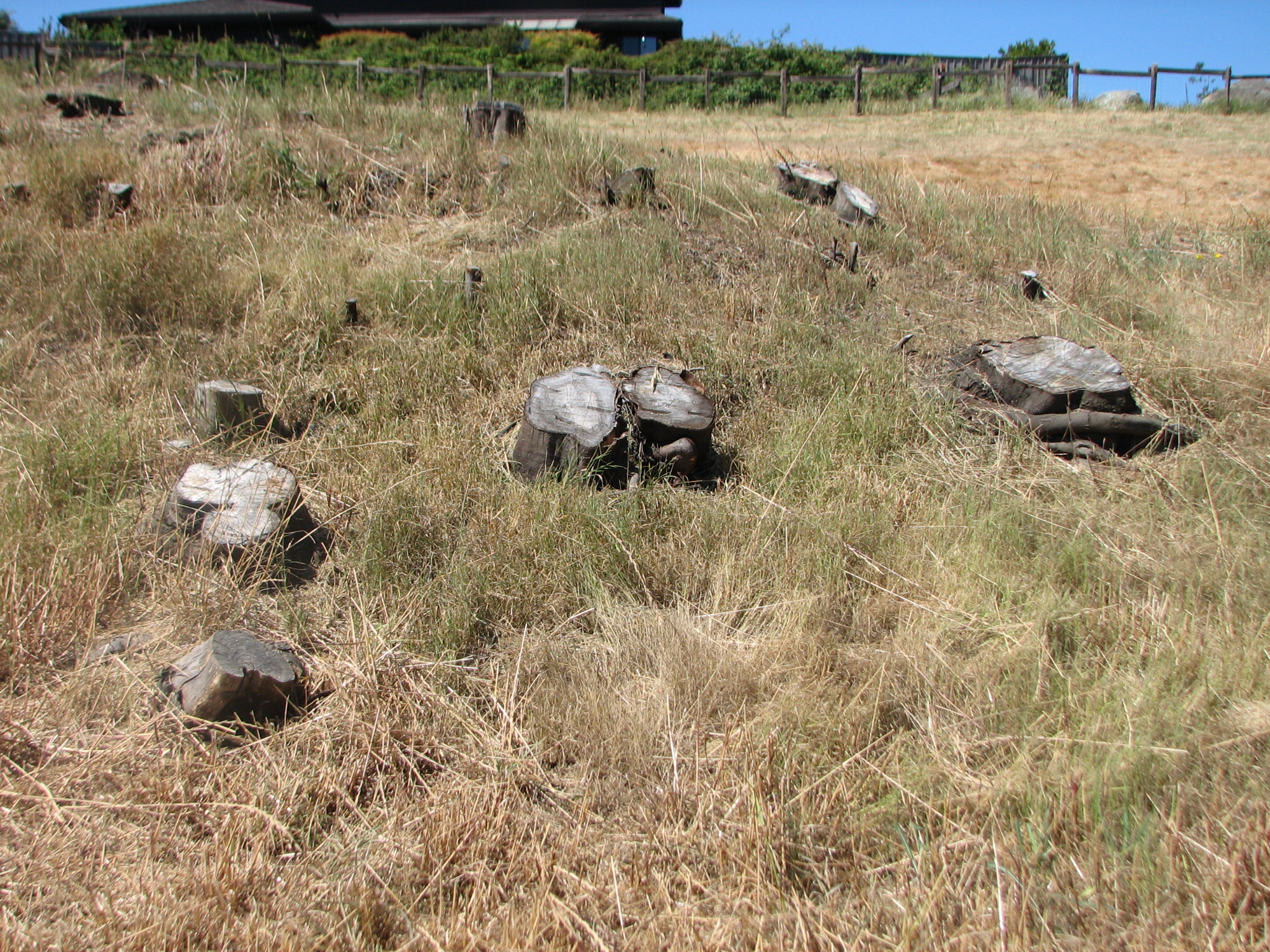
In Larkspur, 25 trees that have been destroyed were on private property.  The owner of that property was sued by her neighbors who demanded that the trees be destroyed because they believed them to be dangerous.  The owner of the trees made every effort to save her trees, even appealing unsuccessfully to the California Supreme Court for reversal of the court order to destroy most of her trees.  She organized demonstrations in a fruitless effort to interest local politicians to come to the defense of her trees.  Finally, when she was cited for contempt of court, she had her beautiful trees cut down.  

Before
After


Yesterday we attended a memorial for her trees.  We find it hard to believe that her neighbors would prefer the barren landscape that remains or the PG&E pole that was installed to hold the electrical wires that had previously been held by the trees. 

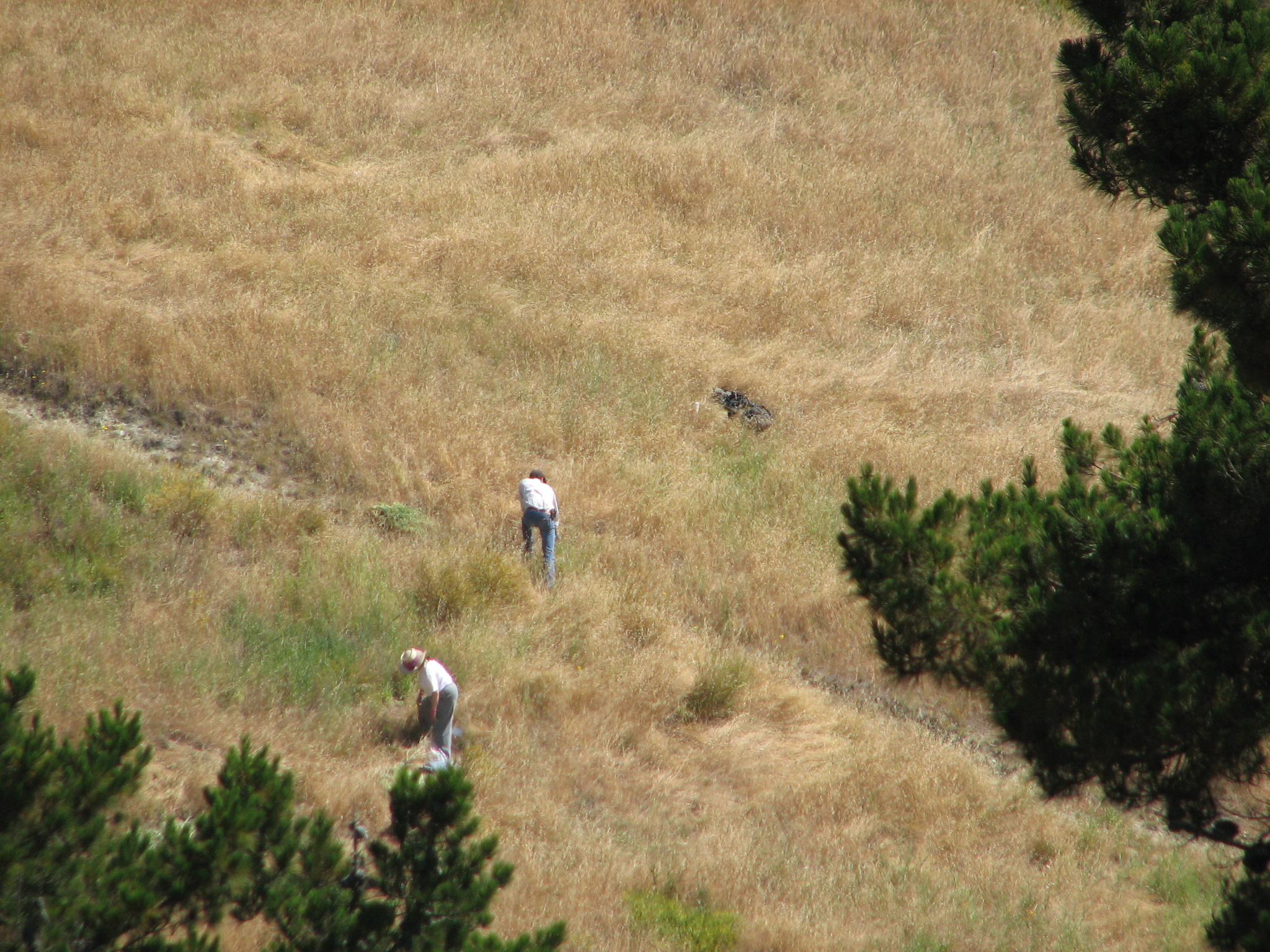
In San Leandro, the neighbors worked equally hard to save the eucalyptus trees on the banks of the San Leandro Creek from being destroyed.  They faithfully attended a series of community meetings which were theoretically an opportunity for them to defend the health, safety, and beauty of their trees.  As is often the case when we advocate on behalf of our trees, we may be successful in demanding a public process, but that rarely seems to save our trees.

 That was the case in San Leandro.  Neighbors were informed at the last public meeting that 31 of the 47 trees originally in jeopardy will be removed and 2 will be “trimmed” to stumps, but allowed to regenerate (1).  After months of effort, neighbors have saved only 14 of their trees and the assumption is that the remaining 1,000 eucalypts on the banks of the creek remain in jeopardy. 

However, the county has made a commitment to an environmental review, which it had originally intended to avoid by destroying the trees piecemeal.  This environmental review will give the neighbors another opportunity to document the negative environmental impacts of tree destruction, whether the trees are native or non-native. 

As the needless destruction of non-native trees continues unabated, millions of native  oaks are being killed by Sudden Oak Death, millions of native pines are being killed by bark-beetles, and the ranges of native plants and trees are shifting to higher elevations as the climate changes.  Those who demand the destruction of non-native trees which are adapted to current climate, soil, and air quality conditions will doom us to a barren, treeless environment. 

It is long past time for environmentalists to reorder their priorities to put climate change mitigation ahead of their commitment to native plants.  Their crusade against non-native trees is contributing to climate change by releasing tons of sequestered carbon into the atmosphere.  Ironically, as the climate changes, the native plants to which they are devoted are dying.  In other words, they are shooting themselves and the plants they prefer in the proverbial foot.

 (1) San Leandro Times, 9/2/10

SOD Update

The San Francisco Chronicle recently published an update  about Sudden Oak Death (SOD) that was both misleading and inaccurate.

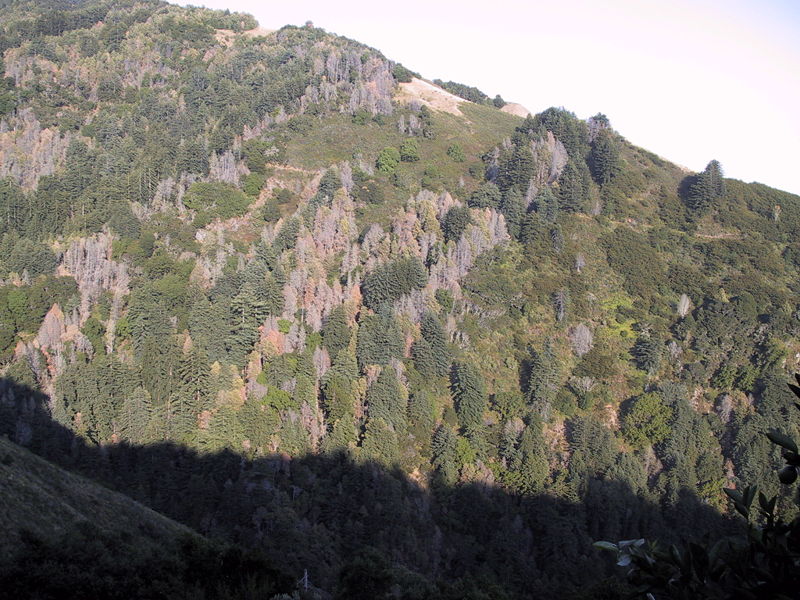
The article inaccurately claimed that “the mysterious pathogen…has killed tens of thousands of oak trees from Big Sur to southern Oregon.”  This is a gross underestimate of the number of trees that have been killed by SOD.   The California Oak Mortality Task Force reported in the announcement of their 2009 annual symposium that “Since the 1990s more than a million oak and tanoak trees have died from this pathogen and at least another million are infected.”  Since there is no known cure for the disease, we must assume those trees will die. 

Hillside in Big Sur, Wikipedia Commons

Secondly, the article quotes Matteo Garbelotto of UC Berkeley—who is described as “the nation’s foremost expert on sudden oak death”—as recommending that “homeowners in infected areas can remove bay trees…[to] increase the survival rate of nearby oaks.”   We doubt that this is an accurate quote because it is not consistent with the advice Garbelotto gave at one of his SOD workshops. 

One of the many professional gardeners attending that workshop asked if he should remove the bays in the gardens in which there are also oaks to protect the oaks from infection.  Mr. Gabelotto’s response was that the bays would resprout ten-fold and that the immature leaves of the resprouts would be more susceptible to infection than the mature leaves.  The gardener asked if he could prevent resprouts with Roundup.  Mr. Garbelotto replied that Roundup would not prevent resprouts. 

In other words, removing bay trees is easier said than done.  Attempts to do so can result in even more bay trees unless toxic chemicals such as Garlon are used repeatedly to prevent resprouts.  Since the immature leaves of the resprouts are more susceptible to SOD infection, this is not a wise strategy.

Garbelotto may have told the Chronicle that removing bay trees already infected with SOD may prevent the spread of the pathogen to oaks.  Although it seems to us a risky strategy, it is apparently being done in the Santa Cruz Mountains, according to the San Jose Mercury (“’Sorry baby, but you gotta go’,” December 17, 2009).  This is an important distinction:  removing healthy bay trees is likely to do more harm than good, while removing infected bay trees may make some sense, although we would prefer to avoid the use of toxic chemicals.   

Journalism is a powerful tool that can strengthen democracy if used responsibly, reporting the facts faithfully and balancing competing opinions when necessary.  The author of this article grossly underestimates the number of native trees killed by SOD and offers bad advice about killing healthy trees.  Those who still subscribe to the dwindling San Francisco Chronicle will not be surprised by such sloppy journalism.  It is an example of the death throes of the Bay Area’s local newspaper.

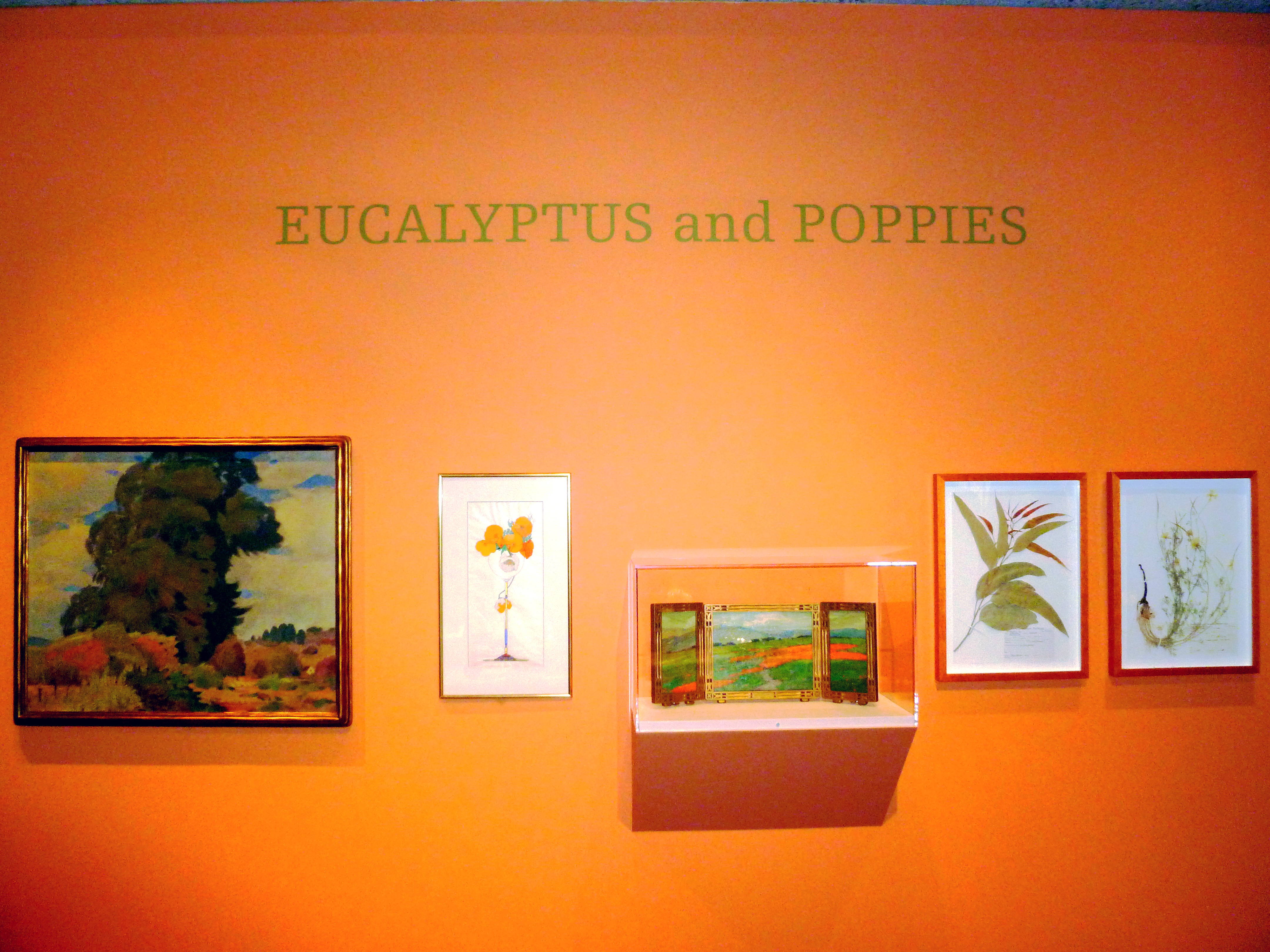
Eucalyptus and Poppies

Have you visited the Oakland Museum since it reopened this summer after extensive renovation?  It looks pretty spiffy and continues to be a valuable resource for our community.

The museum’s collection of California art and design represents “the region’s creative output and its relationship to, and influences on, the nation and the world from the mid-1800 to the present,” according to its website.  And so, as we would expect, the exhibit includes a fitting tribute to one of California’s iconic landscapes, “Eucalyptus and Poppies.”

Oakland Museum
Description of exhibit

The artworks in this exhibit were created from 1916 to 1940, a period when eucalypts were popular.  They are out of fashion now, as are leisure suits and beehive hairdos.  Will they make a comeback, as did bell bottoms and hip hugger jeans?

There was a time, not so long ago, when Californians thought eucalypts fit in just fine with our native poppies.  Are they really the destructive intruders that native plant advocates make them out to be?  We don’t think so.  We believe that eucalypts are the victims of a “bad rap,” scapegoats for a fire they didn’t cause and a dwindling native landscape that is succumbing to climate change and other factors unrelated to the existence of eucalypts.

Invasion or Natural Succession?

In a recent post we considered the changes in our landscape that have occurred as a result of climate change.  In this post we examine more historical sources of change in the landscape.

Native plant advocates in the Bay Area choose to replicate the “pre-settlement” landscape that existed in the late 18th century.  The arbitrary selection of this date does not take into account that Native Americans had lived in the Bay Area for approximately 10,000 years.  Throughout that period Native Americans altered the landscape by setting fires to promote food production as well as to provide materials for cultural activities such as basket weaving.  Fires were used to improve forage for the animals they hunted and visibility during the hunt, and to funnel animals into their hunts.  Fires also promoted the growth of their food sources such as acorn production.  (1)

Unlike some parts of California, fire ignition in the San Francisco Bay Area is rarely caused by lightening, making this anthropogenic (caused by man) source of fire the predominant cause of fire historically.  (2)

After the arrival of the Spanish in the late eighteenth century, cattle and sheep grazing was the predominant economic activity in California and continued to be an important activity into the early 20th century.  These early ranchers also introduced non-native grasses which had greater nutritional value for their herds.  The non-native annual grasses out-competed the native bunch grasses, resulting in California grassland that is 99% non-native today (3).

The fires set by Native Americans and the cattle grazing of the early Californians were both instrumental in preventing the natural succession of grassland to chaparral and scrub and subsequently to woodlands.  Modern land use and management policies have suppressed fire and reduced grazing in the Bay Area.  Consequently grasslands are succeeding to chaparral and scrub.  Although managers of public lands often describe these changes in the landscape as “invasions,” Jon Keeley (Ph.D. biologist, USGS) considers them a natural succession:

“These changes are commonly referred to as shrub invasion or brush encroachment of grasslands.  Alternatively, this is perhaps best viewed as a natural recolonization of grasslands that have been maintained by millennia of human disturbance.”  (4)

Serpentine Prairie restoration. East Bay Regional Park District

So, if the succession of grassland to shrubland is natural, why do managers of public lands believe it is necessary to prevent—or even reverse– this succession?  

Serpentine Prairie. 500 trees were destroyed, including many oaks.

For example, the “Wildfire Plan” of the East Bay Regional Park District is even more ambitious than halting natural progression of the landscape.  In many instances it proposes to return the landscape to an earlier version of the native landscape.  Here are a few examples of management actions in the “Wildfire Plan” that are intended to roll back biological time to sustain native landscapes from an earlier period:

  •  “[Native] Grasslands and Herbaceous Vegetation…these widely-spaced trees will not cause an active crown fire because of the discontinuity of tree crowns.  They could, however, provide a seed source for invasion of grassland habitats by woodland species and should be considered for removal to maintain desirable and declining grassland habitat.” (page 131)
  • “[Native] Maritime Chaparral…Favor chaparral community by removing oak, bay, madrone buckeye, and other trees under 8 inches diameter at breast height that are encroaching upon the maritime chaparral.”  (page 136)
  • “[Native] North Coastal Scrub…Shift species composition towards native scrub species or consider conversion to grasslands, where appropriate on historic grassland sites…” (page 140)
  • “[Native] Coyote Brush Scrub…In most treatment areas, encourage conversion to grasslands by reseeding with native grasses…after brush removal.”  (page 149)
Serpentine Prairie being weeded by hand. Mowing will be required during the restoration. Prescribed burns will be required to maintain it as prairie.

The return of the existing landscape to earlier, historical versions requires the removal of native trees and shrubs, as well as dangerous, polluting prescribed burns.  In so doing, a permanent commitment to periodic prescribed burns is made to maintain the landscape as grassland.  And what will this accomplish? If this strategy is successful the landscape would be returned to a version of the landscape in the late 18th century, even though that landscape was actually created by the Native Americans and maintained by subsequent grazing by early European settlers.

As we often do on Million Trees, we ask the managers of our public lands to explain their strategy for artificially maintaining our landscape at an arbitrarily selected point in time.  Should we run the risks of prescribed burns for the sole purpose of replicating an 18th century landscape that was created by Native Americans?  Since California grassland is now almost entirely non-native, what is the point of preventing its succession by destroying native plants?  We don’t understand what would be accomplished by such artificial manipulation of the landscape. 

(1) “The Use of Fire by Native Americans in California,” M. Kat Anderson in Sugihara, Fire in California’s Ecosystems, 2006.  

(2) “Central Coast Bioregion,” Frank Davis & Mark Borchert in Sugihara, Fire in California’s Ecosystems, 2006.

(3) Natural History of California, Schoenherr, UC Press, 1992

(4) “Fire history of the San Francisco East Bay region and implications for landscape patterns,” Jon E. Keeley, International Journal of Fire, 2005.

Sudden Oak Death

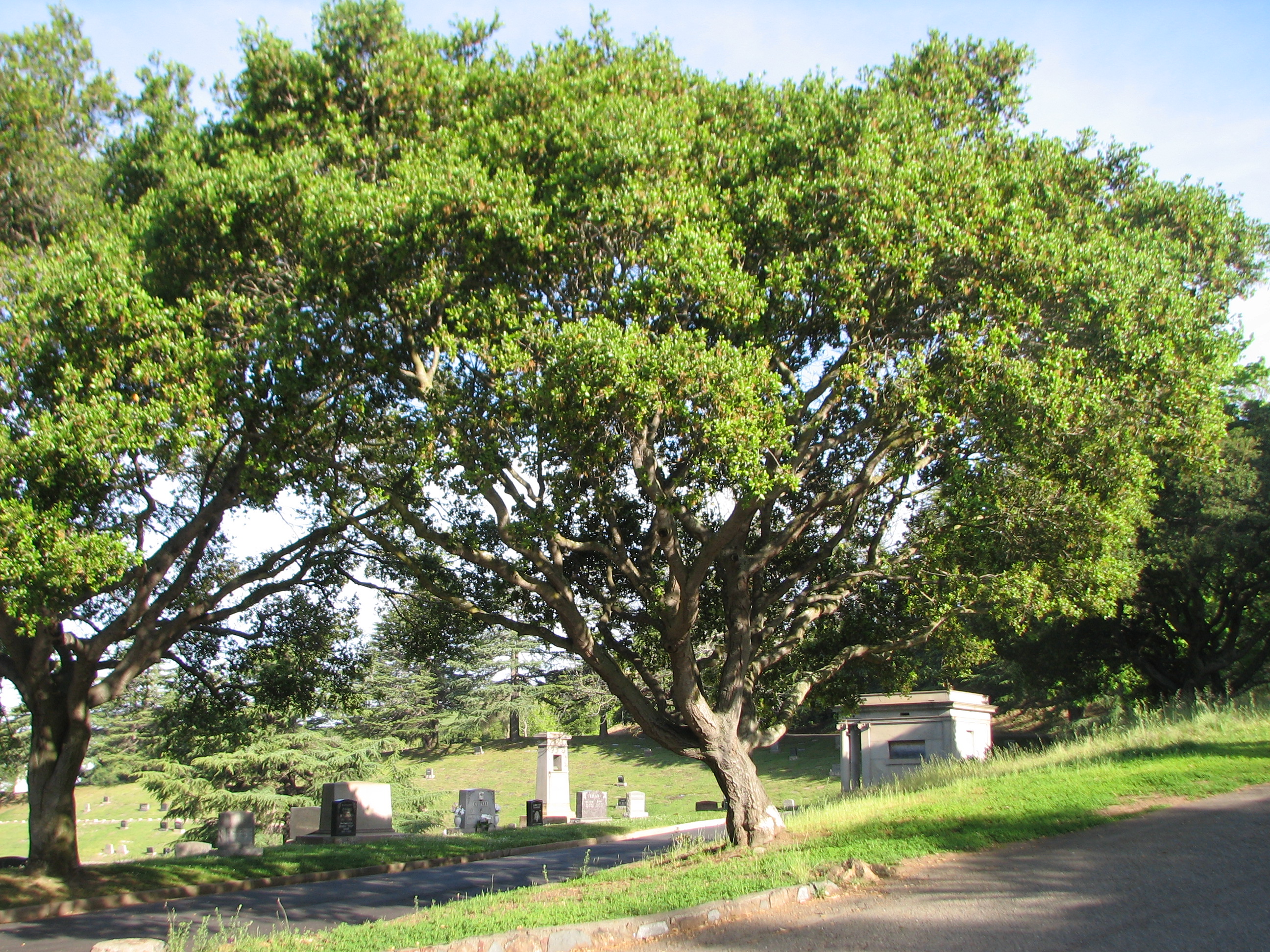
Coast live oak, Mountain View Cemetery, Oakland

The coast live oak that is native to the Bay Area is one of our favorite trees and we would be happy to see more of them.  However, the epidemic of Sudden Oak Death that is killing oaks in California and Oregon makes us question the wisdom of replacing non-native trees with oaks that may not survive that epidemic.  Since any dead tree is more flammable than any living tree, we are also skeptical about claims that restoration of the oak-studded grassland will reduce fire hazard in the Bay Area.

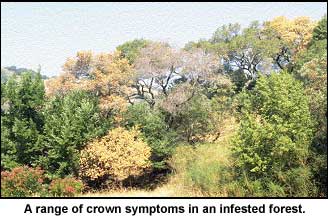
Sudden Oak Death, US Forest Service photo

 The pathogen (Phytophthora ramorum) that causes Sudden Oak Death (SOD) was reported  on the UC Berkeley campus in 2002.  At that time it also existed at the UC Botanical Garden and the researcher who identified the pathogen speculated that it probably existed throughout the East Bay.  By 2008, the SF Chronicle reported   that the infestation of SOD existed in several parks in the East Bay.  The researcher estimated that about 20% of all coast live oaks in the East Bay are infected with the pathogen that will eventually kill them.

In February 2008, the California Oak Mortality Task Force estimated  that ”millions of tanoak and coast live oak” have been killed by SOD in California.  Thirty four other species of trees and shrubs are also infected with the pathogen, including bay laurels and redwoods.  Although these species are not usually killed by the pathogen they are vectors of the disease.  The bay laurel is singled out by the scientific literature as being particularly effective at transmitting the pathogen to the oaks that are then killed.

The “Wildfire Hazard Reduction and Resource Management Plan” of the East Bay Regional Park District proposes to destroy most non-native trees on over 1,500 acres of parkland.  The “vegetation management goal” for most of these acres is the restoration of “oak-bay woodland.”  And so we ask these rhetorical questions:

  • What is the probability that coast live oak will survive the deadly SOD pathogen in the Bay Area?
  • Does the proximity of bay laurel to the local oak population increase the probability of infection?
  • If the oaks are killed by SOD will the risk of wildfire in the East Bay hills increase?
  • If the non-native trees are destroyed and the oaks are killed by SOD will the resulting landscape be entirely treeless?

We believe these are legitimate questions and when we have asked them of native plant advocates we have not heard an adequate answer.  We believe that eradicating non-native plants and trees without a clear understanding of the future of the natives, is irresponsible.

CHANGE….the only constant

The conventional wisdom amongst native plant advocates is that native plants will return to the landscape if non-native plants are eradicated.  In this post, we will examine this assumption and refute it.

Several different methods are used to eradicate non-native plants, but it doesn’t matter which method is used because the results are the same:  native plants do not return when non-native plants are removed. 

Spraying herbicides is a popular method of eradicating non-native plants because it is considered the most cost-effective method. In addition to the obvious health risks, the downside of herbicide use is that they are as likely to kill the natives as the non-natives.  This problem is illustrated by a USDA study of the effects of a one-time aerial spraying of herbicides on grassland after 16 years.  Although the herbicide is assumed to “dissipate” within a few years, the negative effect on the natives persisted 16 years later:  “…the invasive leafy spurge may have ultimately increased due to spraying.  Conversely, several desirable native herbs were still suffering the effects of the spraying,,,” 

Even when native plants are removed, non-native plants occupy the cleared ground.   Environmental scientists at UC Berkeley removed native chaparral from experimental plots in Northern California to test fuel reduction techniques using two different methods (prescribed burns and mechanical), in different seasons, over a period of several years.  In every test, the result was on average from 23% (for prescribed burns)to 61%  (for mechanical methods) non-native plants where they had not previously existed.  

Jon E. Keeley (USGS) finds the same tendency for non-natives to replace natives in forests:  “Forest fuel reduction programs have the potential for greatly enhancing forest vulnerability to alien invasions.” (1)

A scientist (2) arrived at the same conclusion after attempting to restore an oak-studded grassland on Vancouver Island.  He tried several different methods of removing invasive grasses for several years only to find that “…the decline of the native plant species accelerated…” 

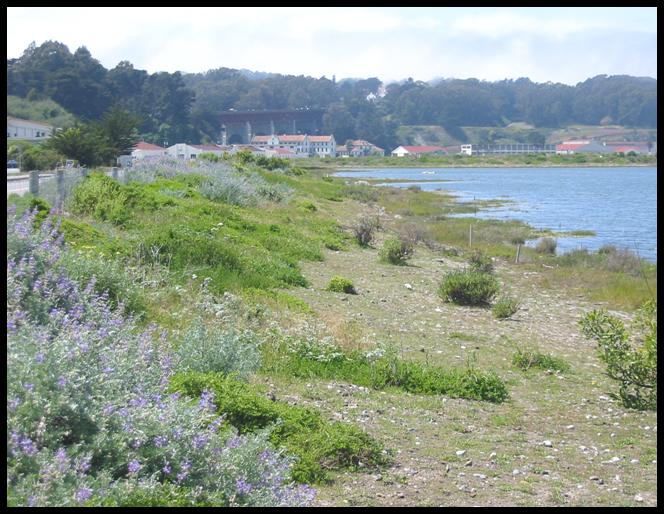
Crissy Field, NPS photo

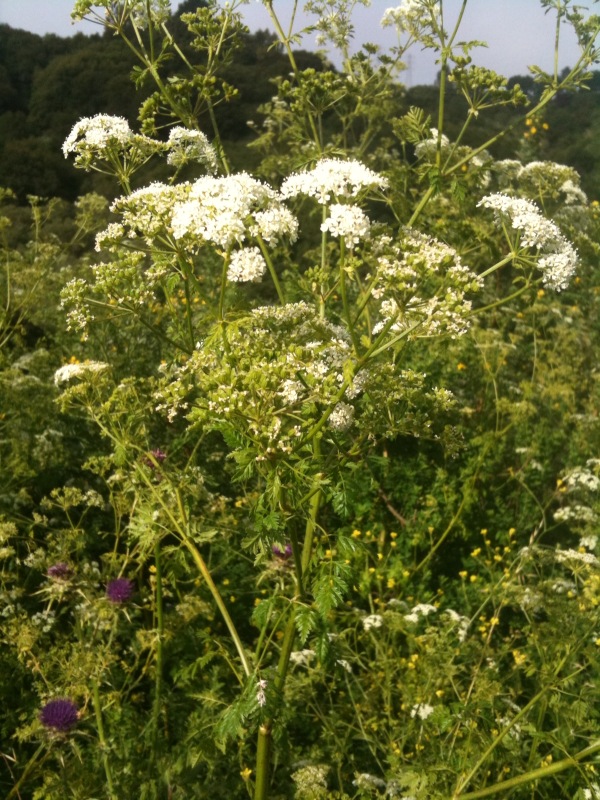
Those who observe native plant restorations in the San Francisco Bay Area aren’t surprised by these studies.  We know that native plant restorations are unsightly failures unless they are aggressively planted, irrigated for several years, and fenced.  Examples of successful restorations can be seen at Crissy Field and the summit of Mt. Sutro.  The East Bay hills provide examples of the opposite strategy.  Where UC Berkeley has clear-cut all non-native trees and vegetation, non-native weeds quickly occupied the barren ground.    After a particularly wet winter, the non-native poison hemlock in the East Bay hills is 6 feet tall along the roads. 

Poison hemlock, East Bay hills

Why are non-native plants apparently more competitive than native plants?  Because the conditions that supported native plants 250 years ago, prior to the arrival of Europeans, have changed.  The native plants are no longer well adapted to the current conditions.

Higher levels of CO2 and the associated climate change are promoting the growth of non-native plants.  A USDA “weed ecologist” (3) studied the effects of higher temperatures and CO2 on the growth of non-natives (AKA weeds) by growing identical sets of seeds in a rural setting and an urban setting with higher temperatures and CO2 levels.  Seeds grown in the urban setting produced substantially larger plants with much more pollen and therefore greater reproductive capability. 

Other scientists reach the same conclusions by studying the changing ranges of native plants and insects.  An ecologist at UC Berkeley (4) says that “California’s flora face a potential collapse…as the climate changes, many of these plants will have no place to go.”   A scientist at the California Academy of Sciences (5) predicts that redwoods will disappear from California by the end of the century.

As the plants move, so do the insects and animals that need them.    A study published in Nature magazine in December 2009 found that plants and animals must move as much as 6 miles every year from now to the end of the century to find the habitat they occupy now.  An ecologist at UC Davis (6) has been studying native butterflies for over 35 years.  He recently reported that native butterflies are moving to higher elevations, where temperatures are lower, but that ultimately, “There is nowhere else to go, except heaven.”

The local environmental organizations and public policy-makers must wake up to this reality and reorder their priorities.  Instead of demanding that all non-native plants and trees be eradicated and that native plants be restored where they are no longer sustainable, they must make climate change their highest priority.  The easiest and cheapest step to take to address this issue is to quit destroying healthy trees—just because they are non-native–that are sequestering tons of carbon.

(1) “Fire Management Impacts on Invasive Plants,” USGS, Jon E. Keeley, April 2006

(2) Andrew MacDougall, University of Guelph, Ontario, Canada, NY Times Magazine, 6/29/08

(3) Lewis Ziska, USDA, Beltsville, MD

(4) David Ackerly, UC Berkeley, Los Angeles Times, 6/25/08

(5) Healy Hamilton, Cal Academy, Center for Biodiversity Research

(6) Arthur Shapiro, UC Davis, Contra Costa Times, 1/19/10

What is natural?

The branch of San Francisco’s Recreation and Park Department dedicated to the preservation and restoration of native plants to the city’s parks calls itself the Natural Areas Program (NAP).  And the 32 parks or portions of parks within NAP’s jurisdiction are called Natural Areas.  In this post we will visit a few of these areas to ask if they are accurately described as “natural.”

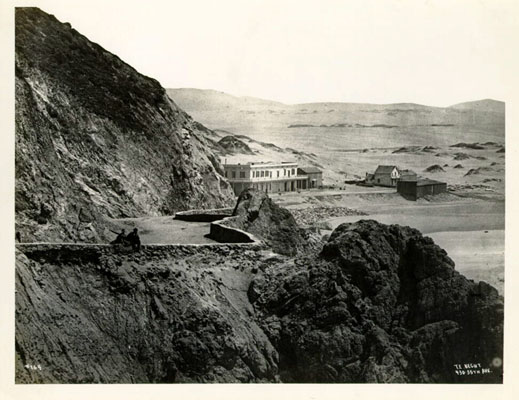
Parcel 4, Balboa & Great Highway, 1868

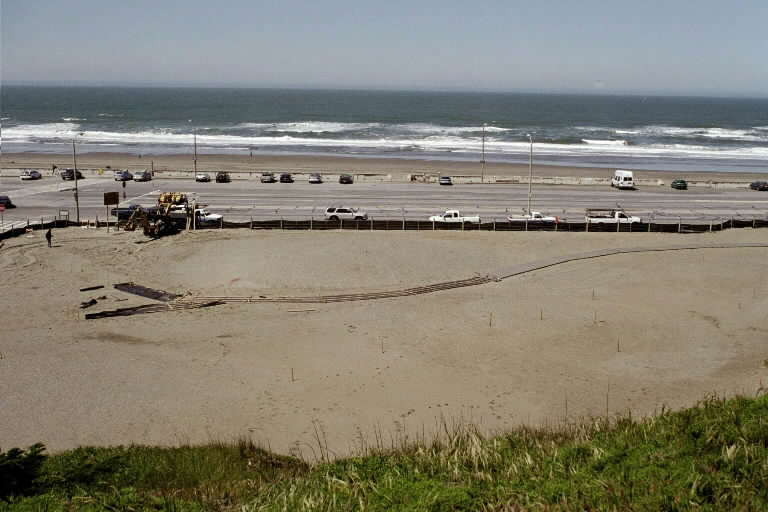
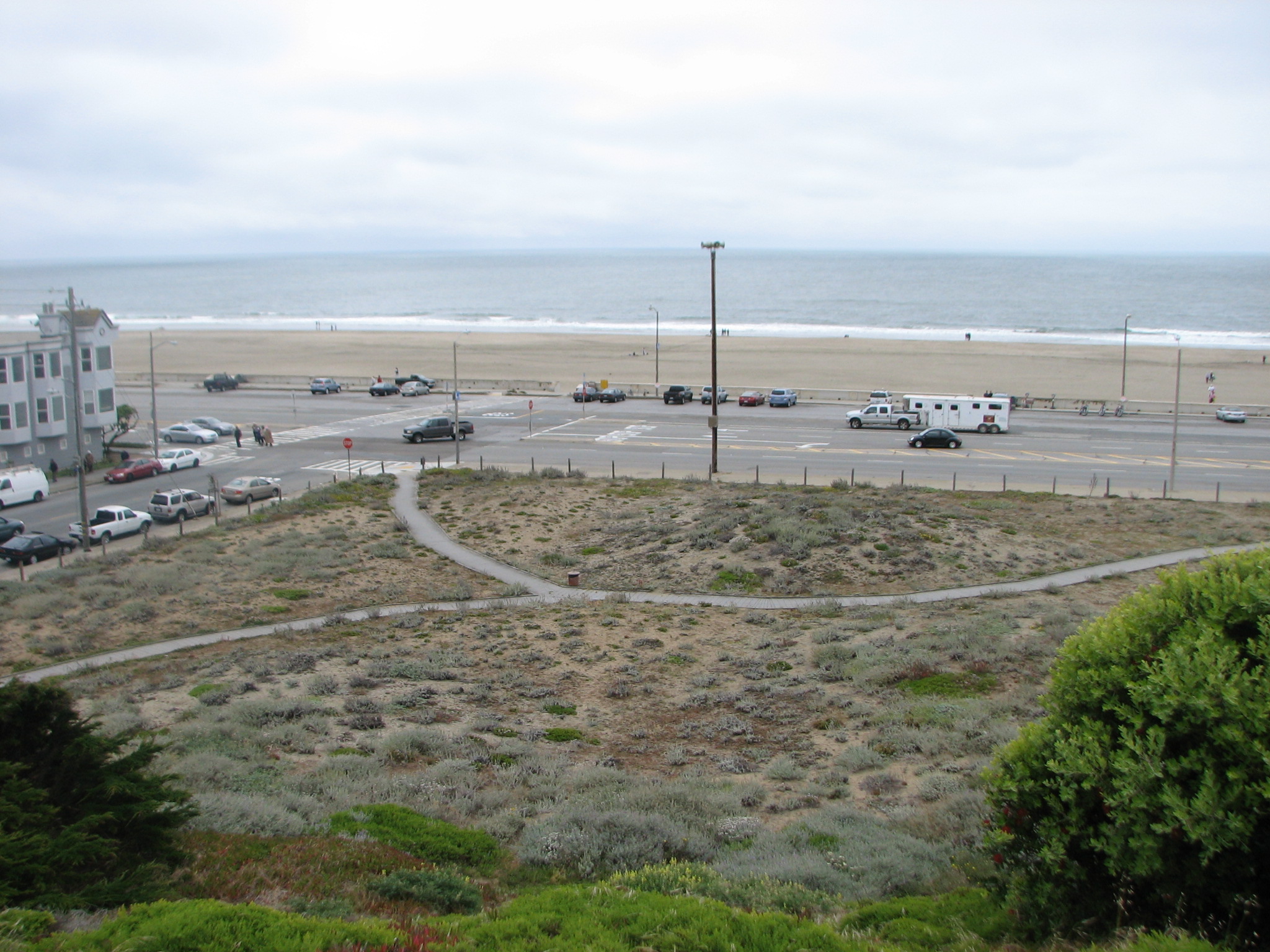
The Natural Area known as Parcel 4 is at the corner of Balboa and the Great Highway.  A photograph taken in 1868 of that location indicates that it has been continuously built upon for nearly 150 years.  Long-term residents of San Francisco will remember it as the location of Playland by the Beach.  After Playland was closed, the city purchased the property for $3.05 million in 1993 with the intention of putting a sewer pipe under it, then restoring it to dune vegetation.  The soil was essentially building rubble, so the city had to buy $47,000 of sand and disk it down 18 inches to amend the soil in preparation for planting dune vegetation.  The sand was bulldozed into simulated dune shapes and planted in 2002.  The restoration was described in the newsletter of the Coalition of San Francisco Neighborhoods in April 2003, in an article entitled “Sand Francisco.”  Does this sound “natural” to you?

Parcel 4 under construction, 2002
Eight years later, 2010

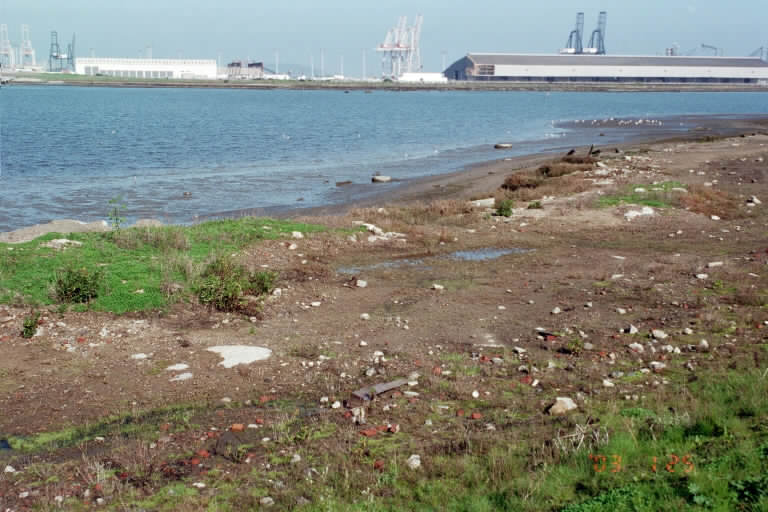
India Basin is a Natural Area on the east side of the city, on the bay.  The east shore of the city was where most industrial development was located until industry left the city beginning in the 1960s.  Much of the soil was landfill.  Like Parcel 4, the landfill was bull-dozed into a simulated wetland, hoping to restore tidal action.  Native pickle-weed was planted several times in the mud-filled basins.  We haven’t visited this area for several years.  Perhaps they have finally been successful in that effort.  This is what we found there on our last visit:  native plants along the trail, surrounded by plastic and woodchips to discourage weeds and huge, empty, mud basins off shore.    It didn’t look natural to us.

India Basin, 2003

Many of the Natural Areas in San Francisco are less artificial than these two extreme examples.  Some of the Natural Areas weren’t built upon in the past, but had no native plants in them when they were designated as Natural Areas.  Pine Lake is an example of such a Natural Area.  Even where native plants actually existed, their populations were small and isolated in comparison to the acreage designated as a Natural Area.  Over 1,000 acres of city-managed parkland have been designated as Natural Areas, 25% of all parkland in San Francisco and 33% if Pacifica is included in the calculation.

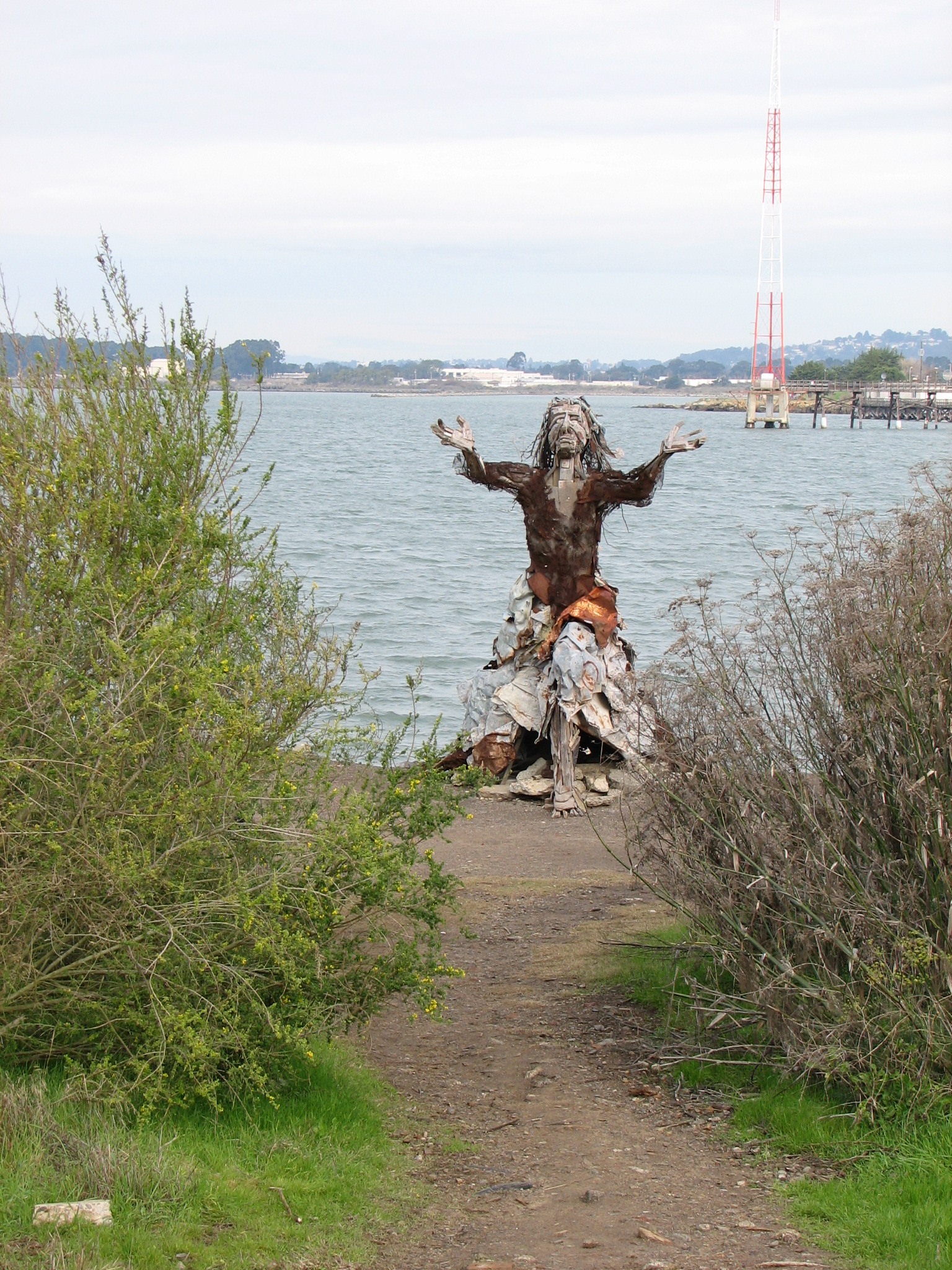
Sculpture of “Albany Bulb Greeter”

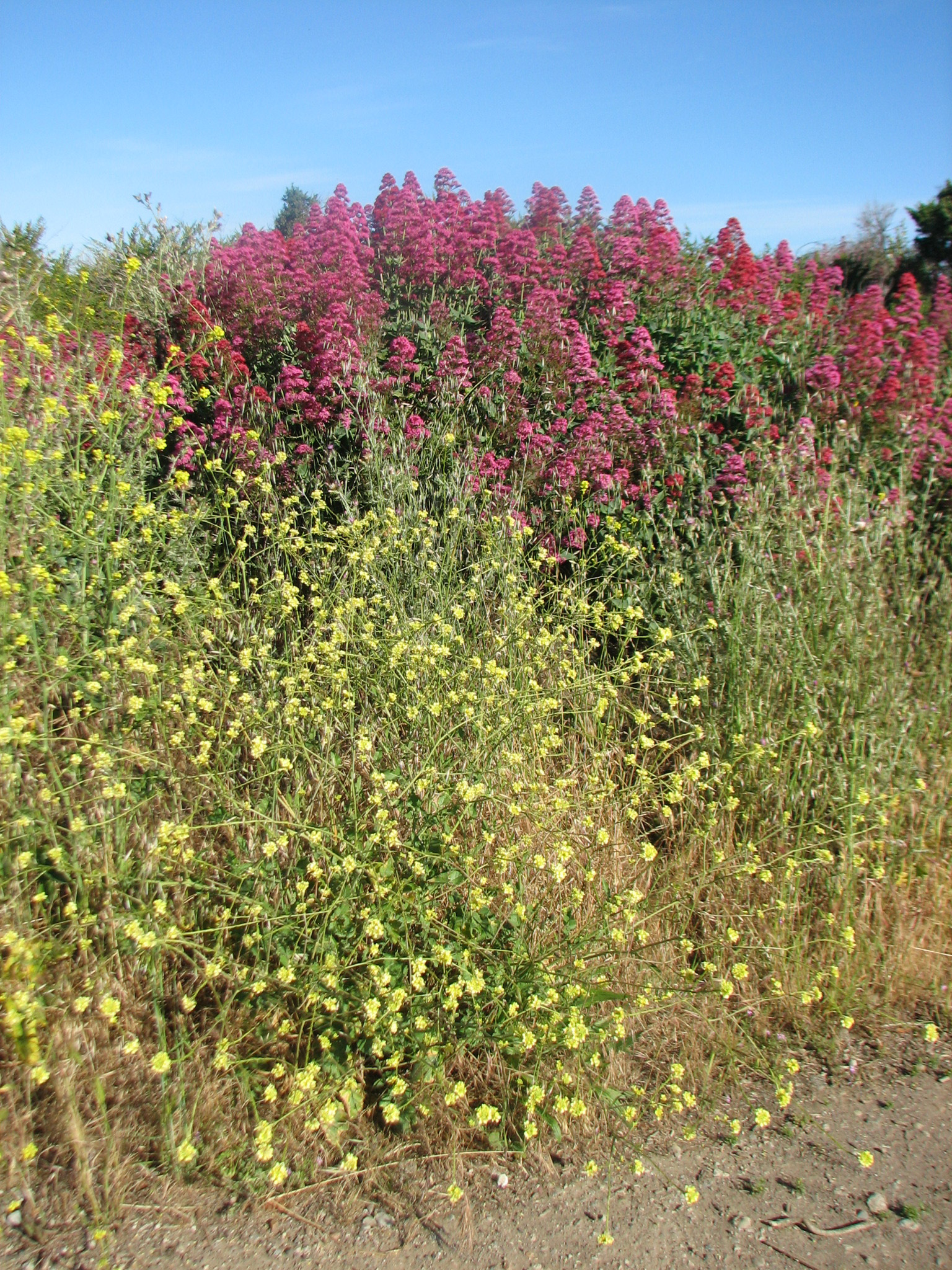
Now we will visit the Albany Bulb for contrast.  Albany Bulb is also landfill that was for many years the Albany city dump.  When the dump was closed, the Bulb became a park.  It is a wild and wonderful place.  There are few native plants, other than the ubiquitous coyote bush that seems to thrive almost anywhere.  In the spring, Albany Bulb is a riot of color.  These are the competitive non-natives that native plant advocates wring their hands about.  They are there because they are best adapted to the current conditions in this location…the heavily amended soil, the higher levels of CO₂, the warmer climate, the use by humans and their animal companions. 

Valerian and wild mustard, Albany Bulb. Both are non-native plants.

If all of these non-native plants and trees were eradicated from the Albany Bulb, would native plants magically appear?  Based on our experience, we don’t think so.  The conditions that supported the plants that are native to the Bay Area are gone for good.  It is a fantasy that the existence of non-native plants is the only obstacle to the return of the natives.  Visiting a few places where this strategy has been tried will confirm this.  Unless the natives are aggressively planted, irrigated for several years, fenced for protection, weeded or sprayed with herbicides regularly, they do not return.  Can such intensive gardening be called “natural?”

Restoration or Destruction?

A recent trip to the Channel Islands off the coast of California inspires us to consider the pros and cons of restorations.  Islands are particularly attractive targets for restorations. They often contain endemic species that do not exist anywhere else because they have adapted to unique conditions in isolation.  And the relative isolation of islands implies that once non-native species of plants and animals are eradicated, re-introduction of those species can be prevented.

Santa Cruz Island, Wikimedia Commons

Some of the Channel Islands were inhabited by Native Americans as long as 13,000 years ago.  Ranching by Europeans began on some of the islands in the 1850s. Europeans brought sheep, cattle, pigs, mule deer, and elk to some of the islands.  Five of the eight Channel Islands were designated as a National Park about 30 years ago. 

Restoration began in earnest in the 1990s when ranching operations were ceased and tens of thousands of sheep and cattle were either removed from the islands or destroyed.  Black rats were eradicated from some islands after native mice were herded into protective enclosures so the rats could be poisoned.  Rabbits were eradicated from another island.  We don’t know how that was achieved. 

The next big effort was the eradication of about 6,000 feral pigs. When this was accomplished by sharp shooters, the first unintended consequence of this ambitious restoration was revealed.  It seems that the feral pigs had been the chief diet of a population of Golden Eagles, considered non-native to the Channel Islands.  When the pigs were removed from their menu, they turned to the rare, endemic Channel Island Fox. 

Channel Island Fox, Wikimedia Commons

The population of Channel Island Foxes plummeted.  Those that remained were captured so they could breed in protected conditions while the Golden Eagles were captured and removed to a remote location.  The Channel Island Fox is making a come-back, but the Golden Eagles are apparently gone for good. 

The eagle considered native to the Channel Island, the Bald Eagle, has been reintroduced.  It apparently lives in peace with the Channel Island Fox because it eats fish. 

Mule deer and elk are next up on the eradication agenda for fauna.  Non-native plants are also doomed.  Ice-plant and fennel are the top priorities for eradication by 2011.  Herbicides and prescribed burns are used for this purpose.   

Prescribed burn, Santa Cruz Island, NPS photo

We were surprised to see notice of herbicide application for Garlon 4 Ultra during our visit to this fragile place.  Someone dressed from head to toe in protective clothing was spraying this chemical on a steep hillside.  We have reported the toxic effects of Garlon in our post about herbicides.

This is a complex ecosystem in which simplistic solutions—such as killing all the non-natives—can result in a big mistake.  For example, do we know if there are native Anise Swallowtail Butterflies on the islands that are now dependent upon non-native fennel for their survival?  Do we know how the application of Garlon will impact the survival of the rare, endemic Island Jay?  The US Forest Service found in its risk assessment done for the EPA that the application of Garlon had a significant negative impact on the reproductive success of birds.  Are those who decided to spray Garlon aware of this study?

Herbicide application notice, Santa Cruz Island

We went to the Channel Islands with open minds.  We thought the strongest arguments could be made for restorations on islands.  However, when we learned of the thousands of animals who were sacrificed to this effort and the dangerous and toxic methods used to accomplish the restorations, we were not convinced.  We nearly lost the Channel Island Fox because of the unforeseen consequences of killing feral pigs.  Man would like to believe that he is capable of managing nature.  But can he do so without causing more harm than good?

They can destroy your trees

Million Trees was created to inform the public of the many projects that have destroyed or plan to destroy non-native trees on public lands at every level of government from the federal government to local jurisdictions such as the Alameda County Water District.  However, private properties are not immune from such efforts to destroy non-native trees.  The legal battle to destroy 28 of 45 trees on private property in Larkspur is a case in point.

 We learned of this legal battle from the San Francisco Chronicle .  The property owner, Dr. Anne Wolff, was sued by her neighbors who claimed that her trees are hazardous.  When the judged ruled that her trees must be destroyed, she appealed that decision. 

 We attended the appeal hearing.  It was disturbing to hear the case law cited by the attorney representing the neighbors.  We learned that other property owners had been ordered by the court to destroy their trees for such frivolous reasons as “leaves in the rain gutters” of their neighbors.  One court ruling said that the “sheer size [of the tree] is a menace.”  In other words, neighbors have successfully forced the destruction of their neighbors’ trees without any evidence that the trees were dangerous.  The mere theoretical existence of danger was sufficient for the court to require the destruction of trees.

As we have reported in our post KILLER TREES!!!, arborists are sometimes willing to declare trees as hazardous if they are hired to do so. Therefore we are not convinced by the assessment that Dr. Wolff’s trees are hazardous.  If these trees are in fact hazardous, it is not visually apparent.

Trees on private property in Larkspur

Dr. Wolff told us she has received many calls from other property owners who did not have the financial resources to challenge the legal demands of their neighbors to destroy their trees.  

The California Supreme Court has refused  to hear Dr. Wolff’s appeal.   

Dr. Wolff is now hoping that the Larkspur City Council will invoke the city’s Heritage Tree ordinance to prevent the destruction of the largest trees.  We attended the demonstration on June 13, 2010, organized to appeal to the city council to save the trees.  About 50 people attended and the media reported on the demonstration.

Demonstration in Larkspur, June 13, 2010

If you would like to help Dr. Wolff save her trees, please send an email to the Larkspur City Council, asking them to invoke the city’s Heritage Tree ordinance on behalf of her treeslrifkind@larkspurcityhall.orglchu@larkspurcityhall.org, dhillmer@larkspurcityhall.orgjlundstrom@larkspurcityhall.org, lk_admin@larkspurcityhall.org, khartzell@larkspurcityhall.org

KILLER TREES!!! Scare Tactic #3

We have recently learned of another tree removal project in the Bay Area.  In this case, the San Leandro Creek Tree Management Project by the Alameda County Flood Control & Water Conservation District proposes to destroy about 50 eucalypts in the short run and approximately 1,000 more in the long run.  All eucalypts will be removed.  All other species of trees will remain.

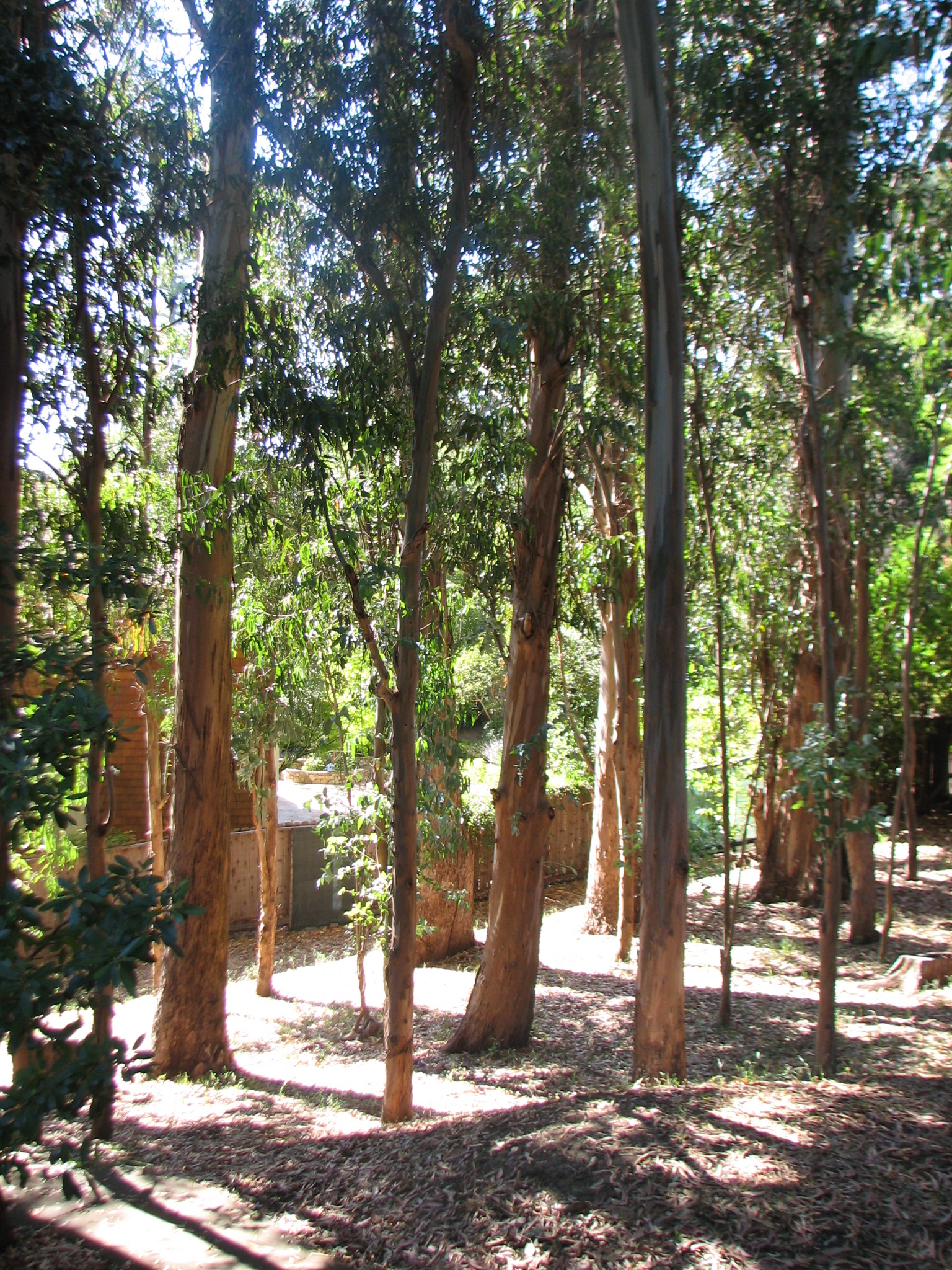
St. Mary’s Ave: Try to picture this neighborhood without any of the tall trees in the background.

In this case the apparent “cover story” for yet another native plant restoration is that the trees are hazardous.  As we have said in other posts, native plant advocates have had difficulty convincing the public—and therefore their political representatives–of the need to destroy non-native trees and plants and so they have frequently resorted to scary cover stories.   Particularly in the East Bay, the most powerful argument has been the claim that the trees are flammable.  The argument heard more commonly in San Francisco, where there is no history of wildfire, is that the trees are invasive and are killing native plants.  Fortunately, there is scientific evidence that these claims are not accurate.

Native plant advocates also claim that eucalypts are more dangerous than other trees.  However, the public record indicates that every species of tree—both native and non-native—can fall.  The most recent “death-by-tree”  in San Francisco occurred on April 14, 2008, when a visitor to Stern Grove was killed by a huge branch from a Redwood tree that had been judged to be hazardous by a certified arborist 5 years earlier.  Unfortunately, the arborist’s report was ignored, resulting in the needless death of a young woman in the prime of her life.  The City of San Francisco paid her family $650,000 for their negligence…a waste of a life and the taxpayer’s money for a death that could have been easily prevented.

Tragic events such as this make it clear that we should not oppose the destruction of hazardous trees.  Unfortunately, that is a judgment that is not clear-cut or irrefutable.  When native plant advocates demand the destruction of non-native trees, we are deeply suspicious of the claim that the trees are hazardous.  In the case of the San Leandro Creek project, it is simply not credible that every eucalyptus is hazardous, but not any other species of tree in the watershed. 

After many years of being put in the awkward position of evaluating the truth of such claims, we have concluded that we trust only the judgment of certified arborists, but not those paid to destroy the trees.  There are a handful of arborists whom we know not to be biased against non-native trees, especially eucalypts.  If we are told by these arborists that a particular tree is hazardous, we accept that judgment.

The neighbors of the San Leandro Creek who were about to lose many of the trees they love, organized and fought back.  They protested the removals not just because they love their trees, but also because the project was invisible to them until the Alameda County Flood Control & Water Conservation District granted itself a categorical exemption from California Environmental Quality Act (CEQA) requirements for an environmental review.  Short of a legal suit there was little that could be done to stop the project except scream.  So, that’s what they did.

What is unique about this project is that the neighbors have prevailed.  For the moment, it appears that this project has been halted.  The Flood Control District has apparently agreed to step back, start over, and involve the neighbors before implementing their plans.  We should all learn from this experience.  We must speak up for our trees when they are threatened with needless destruction.
Million Trees usually reports such projects directly from the public record.  In this case, we have access to little of the public record.  We have asked the Water District’s representative for answers to many questions about this project, but have not received answers.  We are therefore reporting based on what little documentation is available on line, reports of the neighbors, and one media report .  We invite any needed corrections to this report and we will correct any errors, based on verifiable documentation.
Update:  We are pleased to tell you that this controversy was finally resolved to the satisfaction of the neighbors of San Leandro Creek.  Neighbors forced the county to do another evaluation of the trees in the creek.  As a result, plans to destroy as many as 1,000 eucalyptus trees were finally reduced to a total of 17 trees deemed hazardous. 
Glen Drive: What will this property be worth after the tall trees are removed? Significantly less.