Photographic evidence that eucalypts are not invasive

One of native plant advocates’ favorite justifications for eradicating eucalypts is the claim that they are invasive.  But are they?  In one of our early posts (“ALIEN INVADERS!!  Another Scary Story”) we reported a scientific study, based on photographic evidence over a 60 year period, that eucalyptus and other non-native trees have not invaded public lands in Marin, Alameda and San Mateo counties.  In fact, the non-native forests in these public lands decreased in size, while native forests increased in size. 

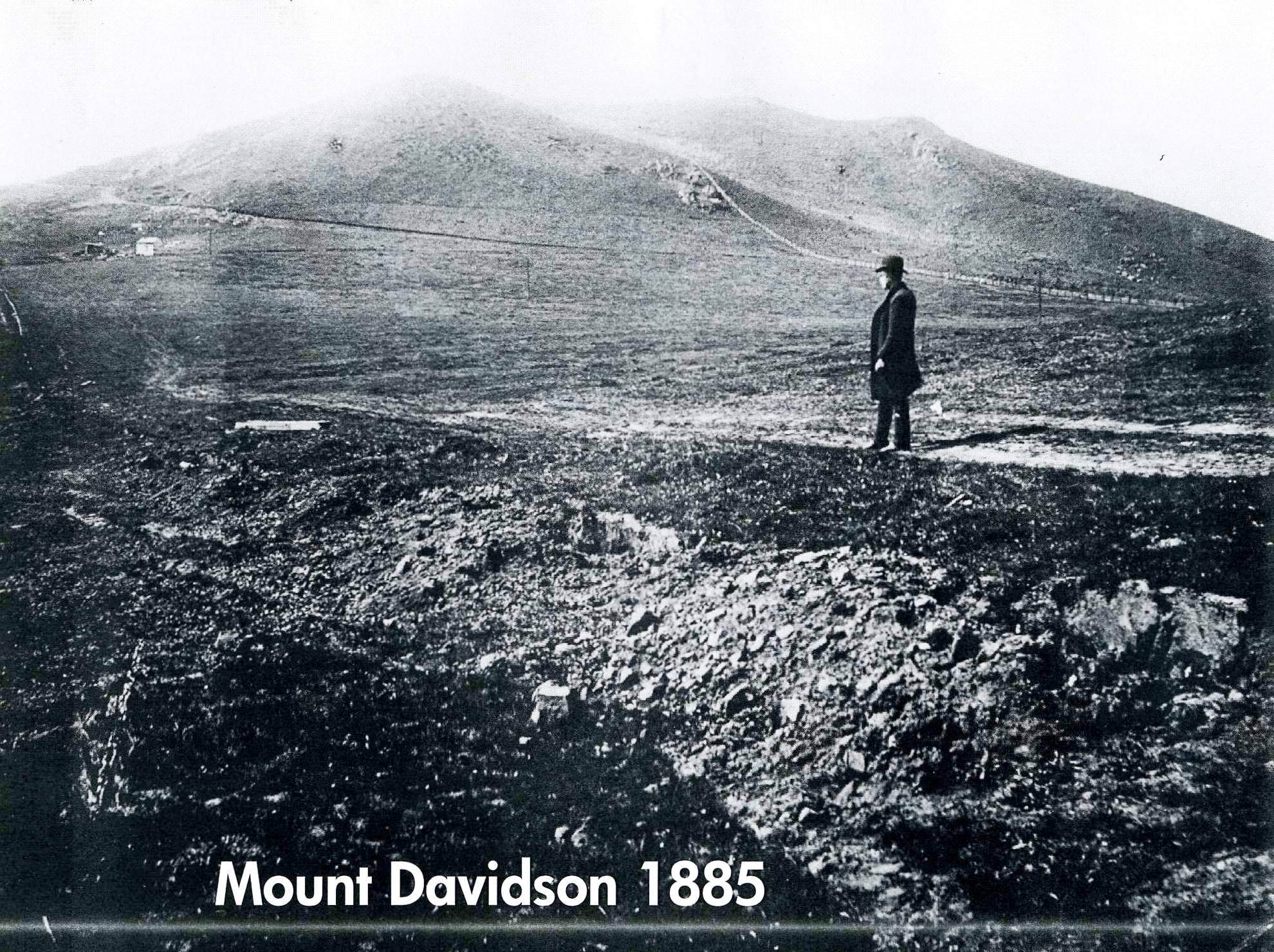
Now we have photographic evidence that eucalyptus has not been invasive when planted in San Francisco.  Adolph Sutro purchased Mt. Davidson in 1881.(1)  He planted it—and other properties he owned in San Francisco—with eucalyptus because he preferred a forest to the grassland that is native to the hills of San Francisco.  Here is a historical photo of what Mt. Davidson looked like in 1885:

Sutro foretold the future of his property:

“…people… will wander through the majestic groves rising from the trees we are now planting, reverencing the memory of those whose foresight clothed the earth with emerald robes and made nature beautiful to look upon.”(2)

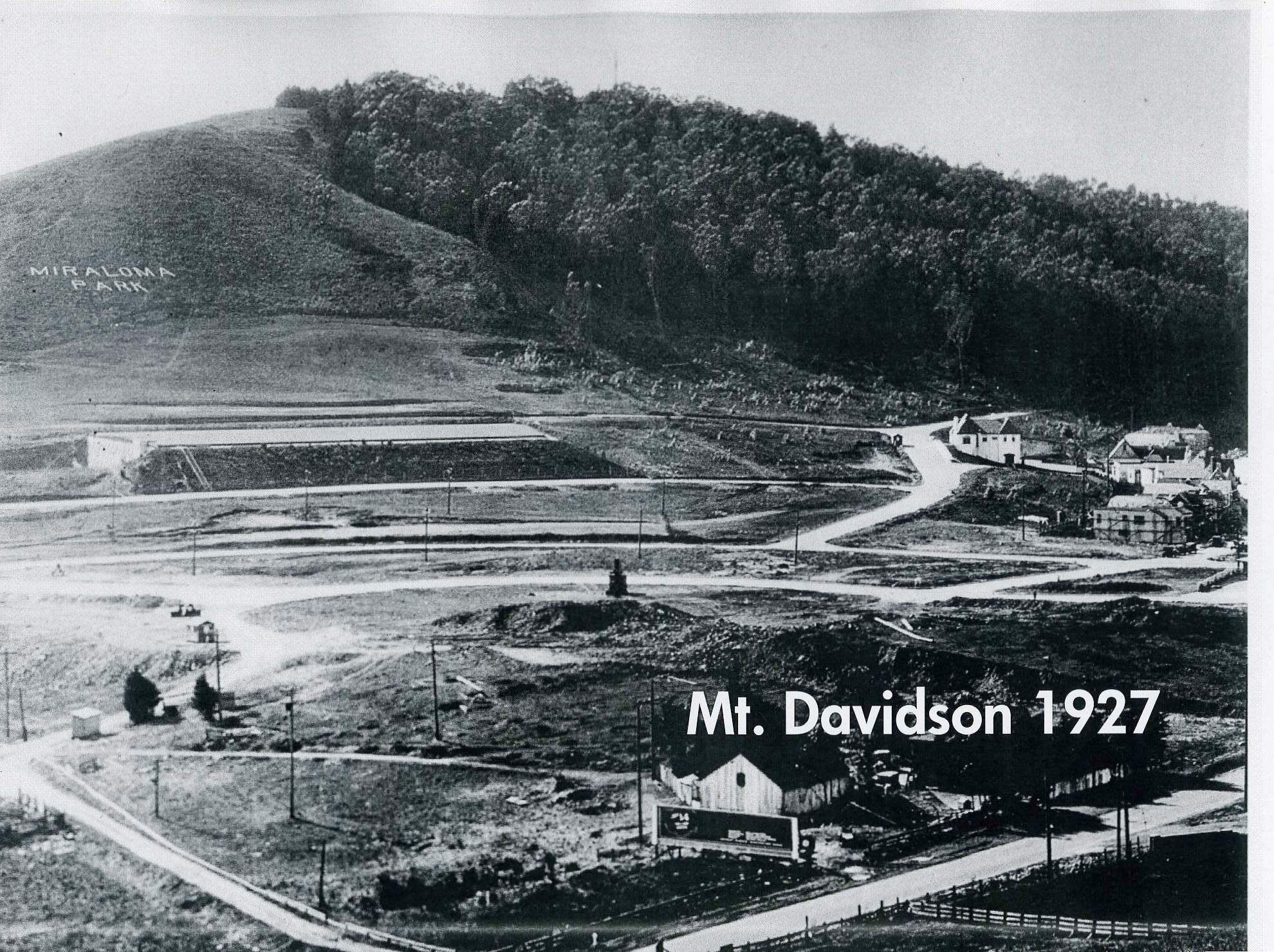
Since Sutro didn’t own all of Mt. Davidson, there was a sharp line between the forest he planted and the grassland when this photo was taken in 1927.

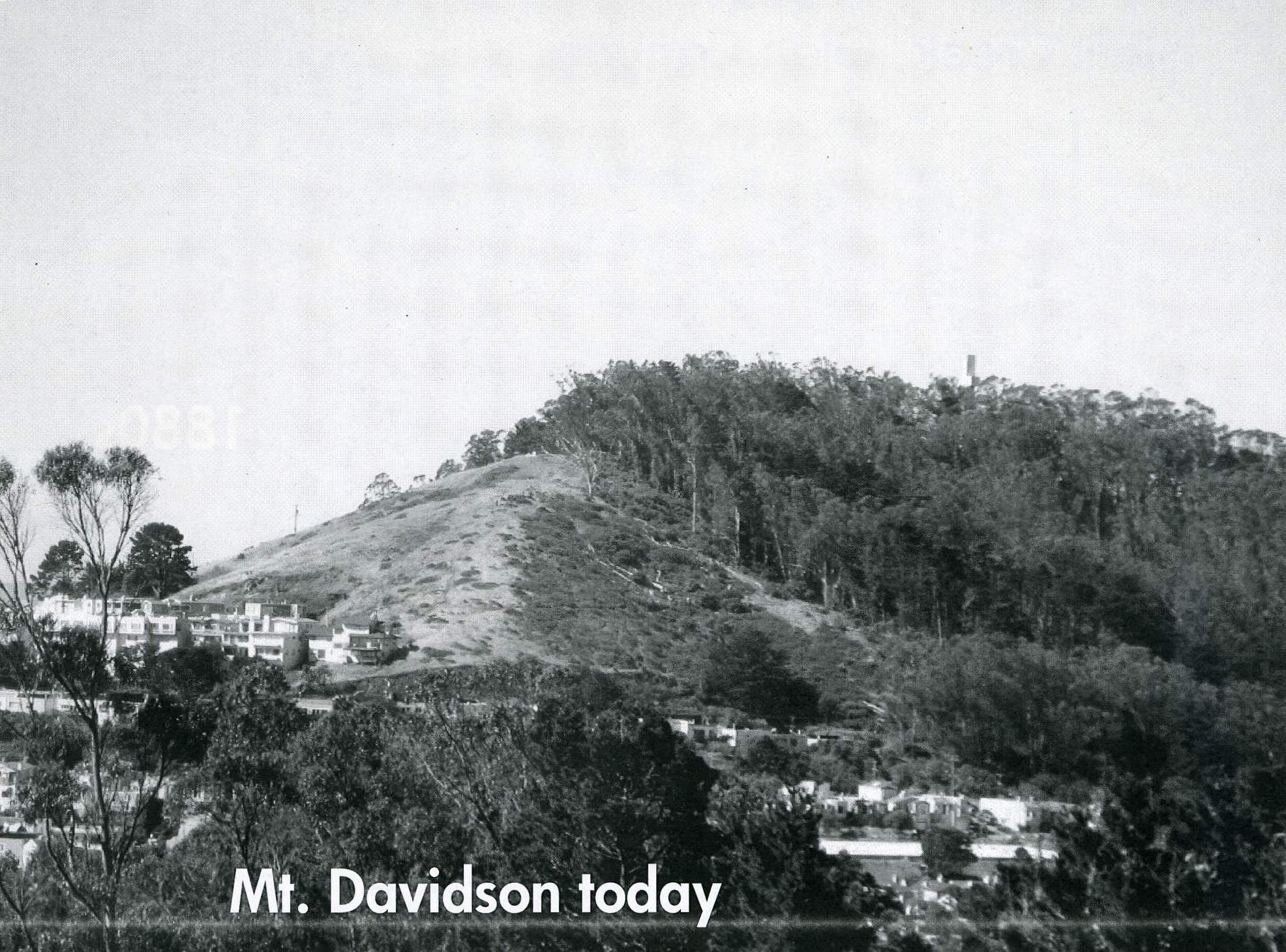
Over 80 years later, in a photo taken in 2010, there is still a sharp line between the forest and the grassland.  We see more trees in the foreground where residential areas have been developed and home owners have planted more trees, but the dividing line on the mountain is nearly unchanged.  The eucalyptus forest has not invaded the grassland.

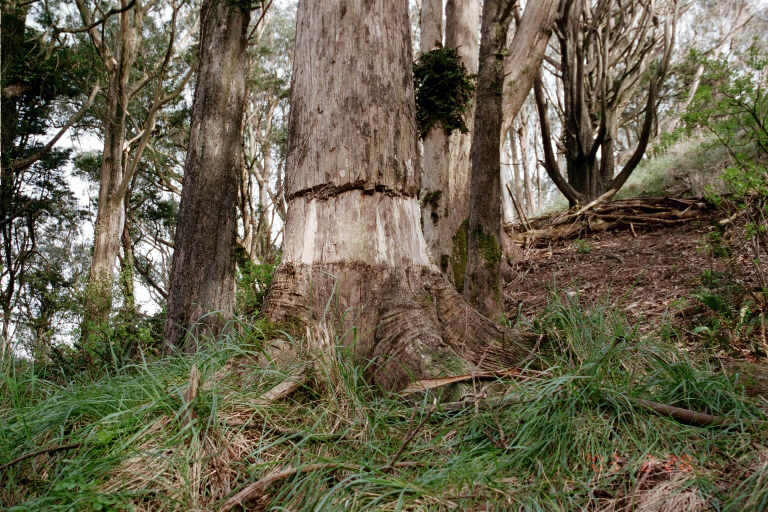
Adolph Sutro would be saddened by a walk in the forest on Mt. Davidson to see over 50 dead and dying trees that have been girdled by native plant advocates.  And the Natural Areas Program’s management plans for Mt. Davidson also announce the intention to destroy 1,600 more trees over 15 feet tall.  Smaller trees to be destroyed are not quantified by the plan. 

Despite the lack of evidence, the California Invasive Plant Council (CIPC) has designated both the eucalyptus and the Monterey pine as “moderately invasive.”  There is even less evidence that Monterey pine grow where not intentionally planted.  These trees and many of the nearly 200 plants on the CIPC “hit list” are on that list because they aren’t native, not because they are invasive.  Few of these plants are truly invasive, but CIPC designates them as such so that their eradication can be justified.  

The Living Roof: A failed experiment in native plant gardening

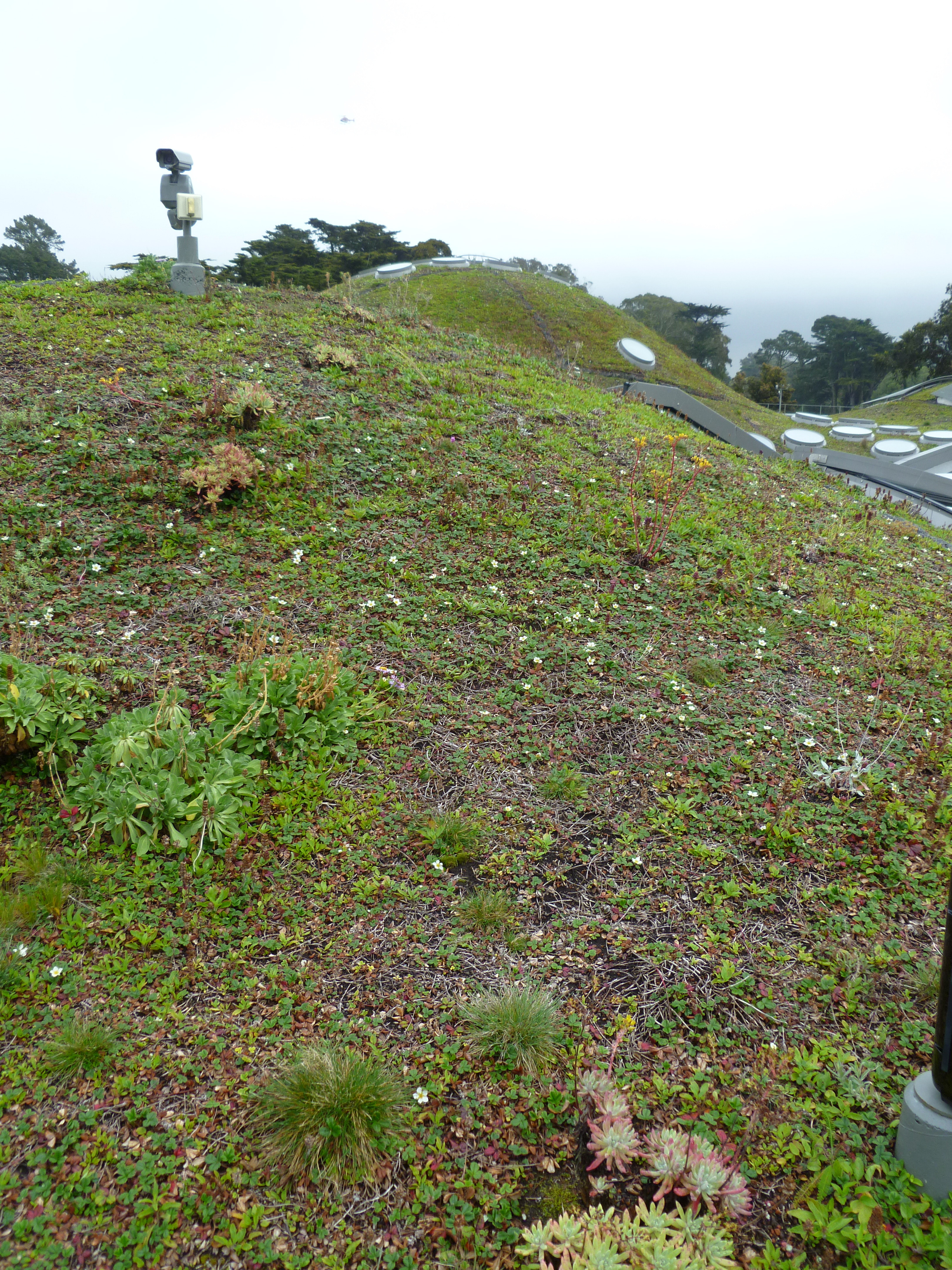
Living Roof, California Academy of Sciences, March 2011

When the California Academy of Sciences reopened in San Francisco in August 2008, its “living roof” was considered its most unique feature.  Thirty species of native plants were candidates for planting on the roof.  They were planted in test plots with conditions similar to the planned roof and monitored closely.  Only nine species of native plants were selected for planting on the roof because they were the only plants that were capable of self-sowing from one season to another, implying that they were “sustainable.”  A living demonstration of “sustainability” was said to be the purpose of the living roof. 

So, 2-1/2 years later, what have we learned from the living roof about the sustainability of native plants in San Francisco?  The results of monitoring the roof since June 2009, are reported on the “fromthethicket” blog about Golden Gate Park.

Two of three of the predominant species on the roof after 2-1/2 years are native.  The third–moss–is not.  It is described by “fromthethicket” as “varieties of early succession mosses, the types that commonly show up in disturbed soil.”

The monitoring project has divided the roof into four quadrants.  Non-natives now outnumber natives in two of the quadrants, those which are not being weeded.  Although natives outnumber non-natives significantly in the other two quadrants, non-natives are also growing in these quadrants.

California Academy of Sciences, April 2011

We had the privilege of meeting the ecology consultant who designed the plant palette for the  living roof for the academy and many other institutions around the world.  He would not be surprised by this monitoring report.  He advised the Academy to walk the streets of San Francisco and identify the plants growing from the cracks in the sidewalks.  These are the plants he advised the academy to plant because these are the plants that are adapted to current conditions in the city.  The Academy rejected this advice because they were committed to planting exclusively natives on the roof.

The designer also advised the academy not to irrigate the roof, because the point of the roof is that it is a demonstration of sustainability.  Again, the Academy refused because they knew that without irrigation most of the native plants would be brown during the dry season, roughly half the year.  They wanted the public to believe that the plants that are native to San Francisco are beautiful year around.

There is a lesson to learn here for anyone who is willing to learn from it.  The living roof is not natural because it is irrigated and intensively gardened (e.g., weeded, fertilized, replanted, reseeded), yet non-natives not only found their way there on their own, but are dominating it within only 2-1/2 years.  Native plants are not sustainable in San Francisco without intensive gardening effort.

Peter Del Tredici has been telling us this for several years.  He is a Senior Research Scientist at the Arnold Arboretum at Harvard University and a Lecturer in the Department of Landscape Architecture at the Harvard Graduate School of Design.

In a recent publication*, he advises the managers of public lands in urban areas to abandon their fantasy that native plants are sustainable in urban settings:

“The notion that self-sustaining, historically accurate plant associations can be restored to urban areas is an idea with little credibility in light of the facts that 1) the density of the human populations and the infrastructure necessary to support it have led to the removal of the original vegetation, 2) the abiotic growing conditions [e.g., temperature, salinity, moisture, etc.] of urban areas are completely different from what they were originally; and 3) the large number of non-native species that have naturalized in cities provide intense competition for the native species that grew there prior to urbanization.”

Sure, he says, we can grow native plants, but they require at least the same amount of effort as growing any other plant and are therefore just another form of gardening:  “Certainly people can plant native species in the city, but few of them will thrive unless they are provided with the appropriate soil and are maintained to the same level as other intentionally cultivated plants.”

He concludes that native plant advocates are making a “cultural value judgment:”

“…people are looking at the plant through the subjective lens of a cultural value judgment which places a higher value on the nativity of a given plant than on its ecological function.  While this privileging of nativity may be appropriate and necessary for preserving large wilderness areas or rare native species it seems at odds with the realities of urban systems, where social and ecological functionality typically take priority over the restoration of historic ecosystems.”

We hope that the managers of our public lands in the San Francisco Bay Area will soon catch up with the scientific literature as well as acknowledge the actual experience of years of failed “restorations.”  Aside from the waste of scarce resources, these efforts are poisoning our parks with toxic herbicides and destroying beautiful and healthy plants and trees to no useful purpose. 


* “Spontaneous Urban Vegetation:  Reflections of Change in a Globalized World,” Nature and Culture. Winter 2010, 209-315.

Chicago, another example of destructive “restorations”

We were first introduced to the native plant movement about 12 years ago when we began to notice that trees were being destroyed in our parks in San Francisco, but we couldn’t comprehend the scale of the project until we were finally successful in getting access to the first draft of the management plan for the Natural Areas Program in San Francisco.  Frankly, we were appalled by the planned destruction and restrictions on recreational access outlined in those plans. 

Hoping to understand the motivation for a project that didn’t make sense to us, we began to read about the native plant movement.  The first book we read was about “restoration” efforts in Chicago(1) which began in the late 1970s and apparently is one of the first projects in the country, influencing all others.  We were immediately struck by the similarities between our experiences in the Bay Area with those in Chicago.

  • The pre-settlement landscape was arbitrarily selected for replication in both places, despite an acknowledgement that the prairie and oak savannah were artificially maintained by frequent fires used by Native Americans.  Man had prevented the natural succession of grassland to shrubs and ultimately to forest.(2)
  • “Restorationists” in both places were essentially hobbyists, using trial-and-error strategies that rejected scientific methods of controlled experiments as too slow for their urgent mission.  The phrase “adaptive management” was adopted in San Francisco to describe these unscientific strategies.
  • Stealth methods were used in both places to hide controversial practices from the public.(3)  Trees (in Chicago, both native and non-native trees) were girdled to kill them and the scars hidden from view.  In Chicago, all activities (broadcast and brush pile burns, herbicide use, etc) were conducted behind visual screens.  In San Francisco, volunteers use herbicides they are not authorized to use.
Girdled tree, San Francisco
  • In both cases, “restorationists” developed a sense of ownership of the land that denied alternate views or even the authority of the theoretically official managers of the land.  As one of the local leaders said in a public hearing in San Francisco, “We know what to do and we want you to leave us alone to do what needs to be done.”

In Chicago and in the Bay Area, the criticisms of these “restorations” are also similar:

  • We do not want to destroy healthy trees whether native or non-native
  • We do not want to use toxic herbicides
  • We do not want to pollute our air or take the unnecessary risks associated with prescribed burns
  • We do not want to kill animals whether they are native or non-native
  • We value the landscape that exists and we do not consider a landscape that is exclusively native superior to it.  We have an inclusive view of nature, based on an acknowledgement of its dynamic quality.  We reject the arbitrary division of nature into “good” and “bad.” 
  • We believe that our public lands are owned by everyone, not just those who choose to volunteer in them

Ten years ago, we were encouraged to learn that the critics of the Chicago “restorations” were successful in getting a moratorium in 1996 on destruction in the areas being contested.  The moratorium was theoretically for the purpose of negotiating a compromise between “restorationists” and their critics. 

When we were recently contacted by restoration critics in Chicago, we weren’t at all surprised to learn that the effort to reach agreement had failed. The moratorium was lifted in most places in 1999 with the exception of a small, contested area where the moratorium was lifted in 2006.  We weren’t surprised because although we have participated in many efforts to negotiate with “restorationists” we have found that they are unwilling to compromise. 

Every scrap of park land originally claimed as a “natural area” in San Francisco is still under the jurisdiction of the so-called “Natural Areas Program.”  Nearly 15 years after the inception of the Natural Areas Program, there is still no environmental impact review, yet herbicide use continues unabated and trees are destroyed when funds are found to pay for their removal.   And in the East Bay, grant funding of restoration projects has been delayed for over 5 years because project managers will not budge from their demand to clear-cut all non-native trees.

Here are photos of the consequences of the “restoration” effort in Chicago:

Photos courtesy Natural Forest Advocates, Chicago

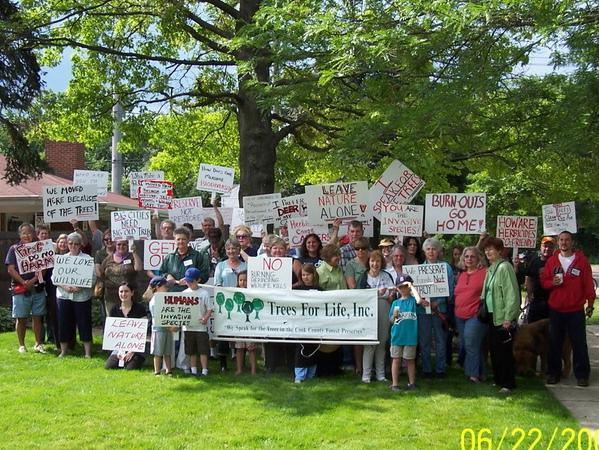
And here is a photo of one of the efforts to bring shame onto the destruction:

Since this photo was taken, the managers of public land have quit announcing prescribed burns and  work days in advance, hoping to prevent crowds such as this from gathering in protest.  Keeping their eyes and ears open, the critics gather as quickly as they can when they learn of a burn or a work day. 

We hope you will visit their website and sign their petition to encourage them in their challenging task. 

We are dedicated to preserving our public lands for the benefit of the animals that live in them and the humans who enjoy them.  We will use every means available to us to prevent as much destruction as we can.  We impatiently wait for science to catch up with our effort to bring this destructive movement to a halt by educating the public about the futility of trying to destroy deeply entrenched non-native species, the damage that is done in that futile effort, the value of a diverse ecology composed of both native and non-native plants and animals, and the changes in the environment that inevitably result in a changed landscape. 


(1) Restoring Nature, editors P. Gobster and B. Hull, Island Press, 2000

(2) Miracle Under the Oaks:  the revival of nature in America, William K. Stevens, Pocket Books, 1995

(3) Ibid.

Climate Change: Not just global warming anymore

When climate change first became a hot topic (pardon the pun) about 10 years ago, it was consistently described as “global warming.”  When scientists observed the effect that global warming was having on plants and animals in California, they reported that the ranges of native plants and animals were moving to higher elevations and northern latitudes in search of cooler temperatures. 

A study published in Nature magazine in December 2009 found that plants and animals must move as much as 6 miles every year from now to the end of the century to find the conditions they occupy now. When the plants move, the animals that depend on them must adapt or move with them to survive.  Professor Art Shapiro (UC Davis) has been studying California butterflies for over 35 years.  He reported (1) that native butterflies are moving to higher elevations, where temperatures are lower, but that ultimately, “There is nowhere else to go, except heaven.”

More recently we have experienced extreme weather that cannot be adequately described as “global warming.”  We have seen epic storms that have resulted in unprecedented flooding, while other places have experienced prolonged drought.  We are as likely to have an extremely cold winter as we are to have an extremely hot summer.  So the phrase “global warming” has evolved into the more accurate description:  “climate change.”  Aside from our anecdotal observations of these extreme weather events, science is beginning to catch up to provide an analytical understanding of our observations.  The story of climate change is now much more complex and the challenges it presents have become correspondingly more difficult and unpredictable.

Changes in Precipitation

Although places like Pakistan, Australia and some states in the US have recently experienced more rain and flooding than history has recorded, scientists have been reluctant to attribute this to climate change until very recently.  Computer modeling of nearly 50 years of weather data has finally enabled scientists to confirm that these increases in precipitation are the result of “…the effects of greenhouse gases released by human activities like the burning of fossil fuels.” (2)

And, like increases in temperature, changes in precipitation also result in the movement of plants and animals to “find” the conditions to which they are adapted.  Scientists have recently challenged previous assumptions about the movement of plants and animals to higher elevations.  They now report (3) that in some places in California in which precipitation has increased, plants have responded by “moving” to lower elevations.  Scientists acknowledge that the affect on the animal populations in their historic ranges is unpredictable because insects, for example, are more sensitive to changes in temperature and may not be able to move downhill with the plants they presently depend upon. 

Changes in Fog Patterns

Fog is another weather event that is important in California, particularly along the coast, where the warm air from the interior meets the cold air from the ocean.  The result of this confluence of cold and warm air is fog, particularly during the summer when the difference in temperatures is greatest. 

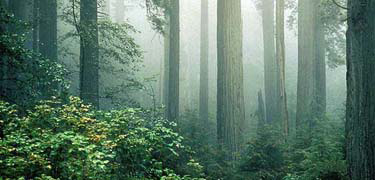
The redwood is our native tree that is closely associated with the foggy coastal conditions in California.  The redwood requires the fog drip to irrigate it during the dry California summer and its range is limited to sheltered areas because it does not tolerate wind.  The range of the redwood in California is therefore limited to a few hundred miles along the coast.  Its narrow range makes it particularly vulnerable to climate change. 


Redwood National Park, NPS photo


In Muir Woods, for example, higher temperatures have reduced coastal fog by 30% in the past century.  Scientists expect this loss of summer fog drip to result in a significant loss of water to the trees and they predict that it will affect the survival of the redwoods in the long-run.(4)

Implications of climate change for native plants?

Clearly, we still have much to learn about climate change:

  • Which weather events are indicators of long-range trends?
  • Climate change is apparently not just one trend, such as increased temperatures.  It is probably many different types of weather events, such as increases or decreases in snow and rainfall, hurricanes and typhoons, fog and wind.  Obviously, we don’t yet have the complete picture of what or where long-range changes have occurred or which are likely in the future. 
  • We know little about the affect that climate change will have on the natural world.  How will plants and animals respond to climate change?  Which plants and animals will survive and, if so, where will they survive?

We marvel at the confidence that the local native plant advocates have in their agenda.  How did they select the pre-European landscape of the late 18th century to replicate?  What makes them think that plants and animals that lived here 250 years ago are still sustainable here, let alone that they will be sustainable in the future? 

These are rhetorical questions, which we will presume to answer for our readers:  Native plant advocates may compensate for radically changed environmental conditions by using intensive gardening methods.  The use of herbicides, irrigation systems, prescribed burns, constant weeding, soil amendments, fences and boardwalks, etc., may artificially mimic the conditions of 250 years ago.  However, the result is a native plant garden that is neither natural nor more biodiverse than what can be achieved with less effort, with less toxicity and fewer scarce resources.  While we can see the value of a native plant garden to preserve our horticultural heritage, we find it more difficult to justify the large-scale efforts that we currently find in all of our public lands.  Is it realistic to garden all of our public lands in perpetuity? 


(1) Arthur Shapiro (UC Davis), Contra Costa Times, 1/19/10

(3) “Mountain plant communities moving down despite climate change, study finds,” Los Angeles Times, 1/24/11

http://www.latimes.com/news/local/la-me-climate-trees-20110121,0,4119552.story

(4) “Fog burned off by climate change threatens to stunt Muir Wood’s majestic redwood,” Marin Independent Journal, 2/5/11   http://www.marinij.com/marinnews/ci_17297751?IADID=Search-www.marinij.com-www.marinij.com

Estimates of economic impact of “invasive species” fail smell test

Native plant advocates use a variety of strategies to motivate public policy makers to invest in their “restorations.”  One of their rhetorical tools is the claim that “invasive alien species” cause economic harm.  They refer to a controversial study (1) that claims the economic impact of alien plant and animal species in the US is over $120 billion per year.  Since this figure always struck us as rather fantastic we weren’t surprised by this critique of it in a recent scientific publication:  “The study has been roundly criticized for ignoring major economic benefits [of non-native plants and animals] and for including the cost of controlling species that may not need controlling, as well as factoring in events of questionable relevance, such as bird deaths caused by domestic cats.”(2)  Since most of what is being done in native plant “restorations” seems unnecessary to us, we have always assumed these cost estimates are more a reflection of money wasted than a report of actual economic harm.  For example, if tons of herbicide are used to kill plants just because they aren’t native, the harm is more in the herbicide use, than in the money wasted on it, in our view.  In any case, the waste of money is not being caused by the non-native plants, but rather by the ideologues who choose to destroy them.

Wikimedia Commons, photo by Sage Ross

We were inspired to drill down into these estimates of alleged economic harm by non-native plants and animals by a recent “study” about feral cats by the University of Nebraska Extension which claims that feral cats cause $17 billion of economic damage every year.  This guesstimate is based on these assumptions:

  • Feral cats kill an estimated 480 million birds per year,  based on an assumption that there are 60 million feral cats and that each cat is estimated to kill 8 birds per year.
  •  The “value” of each bird is $30, based on an assumption that each bird is worth $.40 to a bird watcher, $216 to a hunter, and $800 to someone who raises birds.

[Addendum:  One of our readers has alerted us to the fact that the estimate of economic impact doesn’t compute.  See below*]

The estimate of the number of birds each feral cat kills is based on one study (3) done in Australia in 1996.  As native plant advocates are quick to tell you when they are advocating for the destruction of eucalyptus (which are native to Australia), Australia is a very different place.  Many questions would have to be asked and answered before we could assume that feral cats kill the same number of birds in Australia and the US.  For example:  (1) Is the ratio of birds to cats the same in Australia and the US?   (2) Are there the same percentages of ground-dwelling and nesting birds in both countries?  (3) Are there similar quantities of alternate food sources available to cats in both countries?  Etc.  In fact, since the answers to these questions also vary within the US, we don’t think it is justifiable to use the same “bird-kill-rates” for all locations within the US, let alone from another country.

We also turn to A. Starker Leopold’s book about the California quail (4) for a more benign view of the feral cat:

  • “Hubbs (1951) analyzed the stomach contents of 219 feral cats taken in the Sacramento Valley and recorded one California quail.  Feral cats, like bob-cats, prey mostly on rodents.” Page 142
  • “Feline pets that are fed regularly are not dependent upon catching birds for a living, but rather they hunt for pleasure and avocation.  They can afford to spend many happy hours stalking…birds around the yard, and hence they are much more dangerous predators than truly feral cats that must hunt for a living and therefore seek small mammals almost exclusively (wild living cats rarely catch birds).”  Page 212

The method used to assign a $30 “value” to each theoretical bird killed by a feral cat seems fanciful to us:

  • In what sense does it cost a birder $.40 for each bird that is theoretically missing?  The birder is unaware that a bird is absent.  Is the birder’s experience materially different whether he sees 25 birds or 24 birds on a walk in the forest?  It seems a philosophical question akin to “If a tree falls in the forest and there is no one there to hear it, does it make a sound?”
  • It seems even more absurd to assign a “value” of $216 to a hunter for each bird killed by a cat.  Since the hunter plans to kill the bird, how does it save $216 to prevent the bird from being killed by a cat?  A dead bird is a dead bird.
  • As for a bird breeder who spends $800 raising each bird, one must ask how a feral cat could gain access to birds which we assume are kept in cages.

In other words, valuing birds theoretically killed by feral cats seems a rhetorical, not a scientific undertaking; that is, a method of advocating for the extermination of feral cats.  And, as we would expect, that is exactly what the “study” published by the University of Nebraska Extension does.  It advocates for a variety of methods of eradicating feral cats, including shooting them from a distance with a rifle or trapping them in a trap that kills the animal instantly.

This publication makes the usual meaningless distinction between feral cats and cats that are pets.  It is a meaningless distinction because when cats are roaming free it is impossible to determine which it is.  The Nebraska project suggests protecting the pet cat by having it micro chipped for identification.  Even in the unlikely event that all owners of cats would have them micro chipped, one wonders how someone shooting a cat from a distance would be in a position to determine that the cat is micro chipped.  Nor would an “instant-death” trap be capable of identifying a micro chipped cat before it enters the death chamber.

And as with all eradication efforts of both plants and animals, there are unintended consequences of exterminating feral cats. 

  • “Only once conservationists had eliminated feral cats from Macquarie Island in the south-west Pacific did they realize that these non-native predators had become a vital link in the local food web.  Since the last cat was killed in 2000, exploding rabbit populations have eaten much of the island’s unique flora bare.”(5)


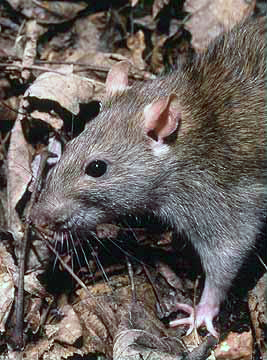
Brown (Norway) Rat, Wikimedia Commons


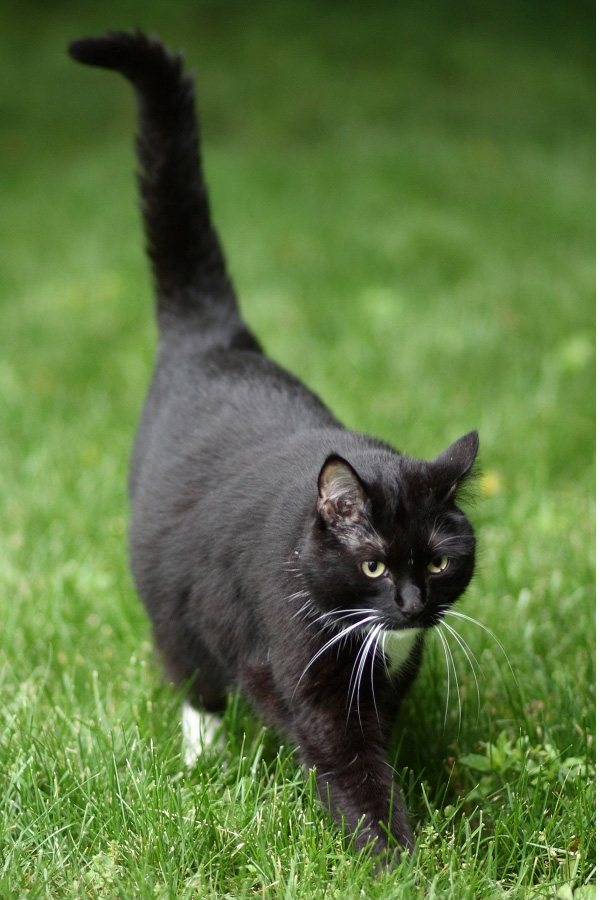
  • Cats are well-known predators of rats.   The University of Nebraska publication acknowledges this and proposes that increased use of rodenticides will compensate for the loss of cats and consequent increases in rat populations.  Ironically, rodenticides are known to kill birds of prey.    The East Bay Regional Park District used 1,509 pounds of rodenticide in 2008, so this is not an insignificant problem.  From the standpoint of the bird, or the birder, or the hunter, does it matter if the bird is killed by a cat or by rodenticide?   Another philosophical conundrum.

Finally, we must evaluate the credentials of the authors of the publication of the University of Nebraska.  The publication credits 22 undergraduate students of the University of Nebraska for “providing the preliminary information, photos, and resources used in developing this Neb-Guide.”  And the authors of the publication describe themselves as “technicians, coordinators, or specialists.”  Although the publication claims to be “peer reviewed,” if the peers were people with similar credentials, we can’t consider this a scientific study.  Rather it is typical of the hobbyist credentials of most native plant advocates.  A spokesman for the Veterinary Information Net said the report “…almost looks like a senior level wildlife and fishery sciences or ag science book report.”  When we drill down into the hype, we often find that information is manufactured by native plant advocates and their allies to support their mission, in this case exterminating feral cats.  In particular, we conclude that:

  • Estimates of the “economic damage” caused by  feral cats are propaganda not science.
  • Although we would not support extermination efforts in any case,  the unintended consequences of eradicating feral cats should be scientifically evaluated before any policy decision regarding feral cats could be considered.

*60 million cats times 8 birds per year equals 480 million birds killed.  However, 480 million birds times $30 per bird equals $14.4 billion NOT $17 billion.  Jeez, they can’t even do the math and we’re embarrassed to admit that we didn’t catch this.  Thanks to our readers for keeping their eyes on the ball.  


(1) Pimentel, David, “Update on the environmental and economic costs associated with alien-invasive species in the United States,” Ecological Economics, 52:273-288, 2005

(2) Hamilton, Garry, The New Scientist, January 20, 2011.  N.B. The article actually says that economic impact is estimated at $137 billion/year, but we are using the lower figure for which we can provide a reference.

(3) McKay, G.M., “Feral cats:  origins and impacts:  Unwanted Aliens?” Nature Conservation Council of New South Wales, Australia, 1996

(4) Leopold, A. Starker, The California Quail, University of California Press, 1977

(5) Hamilton, Garry, ibid.

Exterminating Animals: Wasted lives and money

While we object to the needless destruction of non-native plants and trees, we are even more concerned about the destruction of non-native animals.  Using the same justification, namely that non-native animals out-compete native species of animals, native plant advocates and their allies are equally committed to the eradication of non-native animals.  The list of targeted animals is long: e.g., non-native frogs, turtles, fish, bees, foxes, opossums, squirrels, deer, pigs,etc.  When populations of native animals increase in urban areas, they are called “subsidized predators” and added to the death list: e.g., raccoons, skunks, etc.  A native animal can land on the death list if its range expands, such that it becomes a competitor for a preferred, rare native animal.

First we will indulge in a brief digression on behalf of the non-native European honeybee, one of the few species of bee in the United States that produces honey.  If that’s insufficient reason to defend its existence, let us consider that the European honeybee is responsible for pollinating about one-third of all agricultural crops and orchards in our country(1).  Even without eradication efforts, the honeybee is in trouble.  In the past several years, about one-third of all hives have failed each year from multiple factors summarized as “Colony Collapse Disorder.”  Despite the obvious value of this non-native creature, it is being eradicated by the Nature Conservancy on its “restorations” in the United States because it is non-native and it is considered a competitor to native bees, which are not capable of pollinating many agricultural crops or making honey(2).  This seems to us a classic case of nativism shooting us in the collective foot.

Now we will turn to two efforts to exterminate animals that were both appallingly destructive, but more importantly, ineffective and clearly a waste of both lives and taxpayers’ money.  The first example is historical, illustrating that man’s efforts to manipulate nature to serve his purposes are not new and undoubtedly can be traced as far back as the historical record can take us.

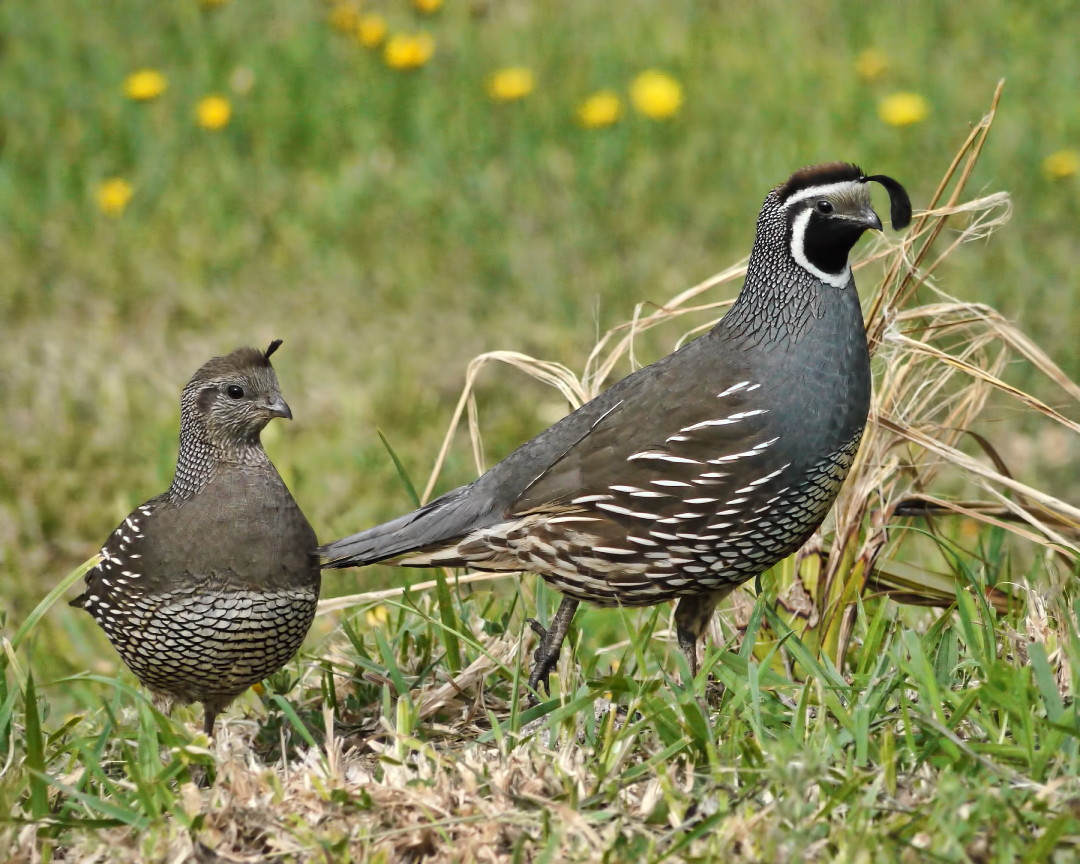
California Quail, Wikimedia Commons

In this case, we will look at the efforts of the California Division of Fish and Game to increase the population of quail(3).  Quail are native to California, but their population exploded with the arrival of Europeans whose agricultural and grazing practices increased the food supply of the quail.  The population of quail in California reached its peak during the period 1860 to 1895 and thereafter began to decline as non-native annual grasses began to dominate the non-native herbaceous and leguminous plants that preceded them.  Since man’s view of nature is rather narrow in time, limited by his brief lifetime compared to the more slowly moving forces of nature, the California Division of Fish and Game perceived the decline in the quail population as a problem requiring remediation.  One of their proactive efforts was to exterminate all animals believed to be predators of the quail.  This “predator control” effort was summarized for one six-month period as follows:

“…between January 1 and July 1, 1931, [deputies of the Division of Fish and Game] have destroyed…:  38 coyotes, 33 bobcats, 684 house cats, 35 foxes, 43 coons, 8 weasels, 2 opossums, 1 badger, 5 wild and unclaimed dogs…365 sharp-shinned and cooper hawks, 3972 blue jays, 293 magpies, 81 crows, 49 butcher birds, 2 great horned owls, and 47 snakes.”(4)

The Division of Fish and Game hired an army of 45 full-time men in 1948 to continue this war on the perceived enemies of quail.  This extermination effort was not abandoned until 1957, when the Division of Fish and Game concluded that the quail population was not benefitting from this animal holocaust and that reduced food sources and cover, resulting from changes in land uses and consequent vegetation types was the reason for the declining quail population.  In other words, hundreds of thousands of animals lost their lives over a period of over 25 years for no reason whatsoever.

So, did we learn anything from that experience?  Clearly not.  Today there are nearly as many programs to eradicate non-native animals as there are non-native species.  We choose the brown-headed cowbird as an example of modern eradication efforts because it is occurring in California (5).

Although the brown-headed cowbird is native, it is perhaps one of our most reviled birds because it is a nest parasite, which means that it lays its eggs in the nests of other birds.  Their egg is usually larger than the eggs of the “host” bird and it hatches earlier than its nest-mates.  The result of these advantages is that the off-spring of the nest owner usually does not survive, but the cowbird chick survives to repeat this trick.  Because the range of the cowbird has been expanding, it has been blamed for the declining population of songbirds.

But does the cowbird deserve to be blamed for the decline in the songbird population?  Professor Stephen Rothstein (Department of Ecology and Evolution, UC Santa Barbara) says, “NO.”  He tells us that the range of the cowbird is not larger than its historic range.  At the time of the megafauna (e.g., wooly mammoths), about 15,000 to 20,000 years ago, cowbirds probably occupied their current range.  When the megafauna disappeared, the range of the cowbird shrank.  As in the case of the quail, we look to man for the explanation for why its range has expanded again:  the introduction of large grazing animals by Europeans has provided the cowbird with a substitute for its prehistoric food source.

Professor Rothstein tells us of several efforts to exterminate cowbirds on behalf of declining populations of songbirds and concludes that although songbird populations may have recovered in some cases, the extermination of cowbirds is not the likely explanation for their recovery.

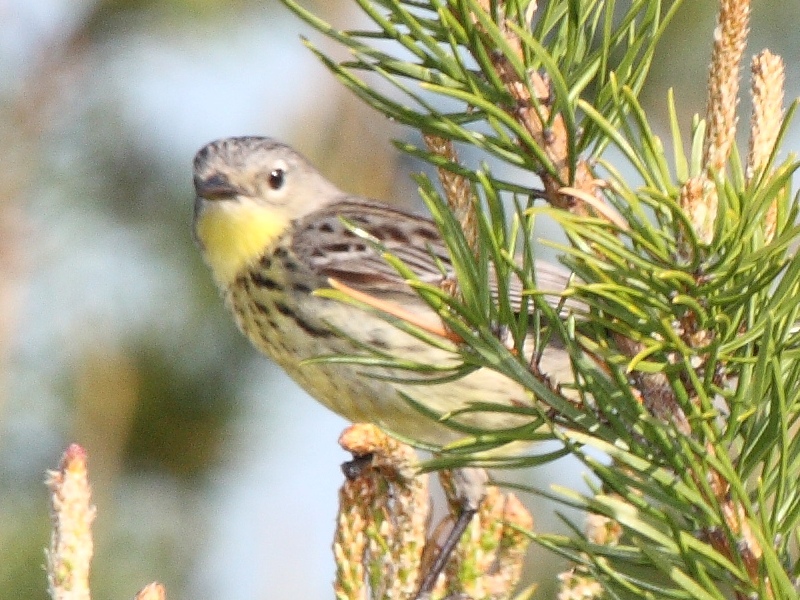
Kirtland’s Warbler, female, Wikimedia Commons

The recovery of the Kirtland’s Warbler in Michigan is a case in point.  The warbler’s nesting habitat was well known to require periodic fire.  Yet, the scientific managers of this recovery project preferred to kill cowbirds rather than to risk human life and property by not suppressing fire.  Nearly 125,000 cowbirds were destroyed in a portion of a small peninsula in Michigan during the period 1972 to 2002.  Although nest parasitism declined significantly, the population of Kirtland’s warbler did not increase until over 20 years later after a large accidental forest fire.  In other words, the cowbird is a scapegoat for the choices made by man, in this case the suppression of fire.

Like the predator control project on behalf of the quail, cowbird extermination projects create jobs.  The Kirtland’s Warbler project continues to cost about $100,000 per year, although there is no evidence that the warbler is benefiting from it.  Rothstein speculates:   ”The money spent on cowbird control every year may total more than one million dollars.”   This creates a profit motive which Rothstein says results in a “control lobby” that advocates for continuing the program whether or not it is effective.  He believes that this money would be put to better use by addressing the underlying problems, such as habitat loss to development or reduced water levels that change vegetation types, as in the case of the declining population of the Southwestern Willow Flycatcher.

These are familiar themes to the readers of Million Trees:

  • That native plant advocates and their allies frequently confuse cause and effect, e.g., cowbirds are not responsible for declining songbird populations.
  • That man finds it convenient to scapegoat plants and animals for changes in the environment that are caused by man.
  • That people who make their living in these misguided “restoration” efforts have a vested interest in their continuation whether or not they are effective
  • That the waste of money and scarce resources prevents us from addressing the real issues
  • That choosing to replicate nature at some specific point in historical time is illogical because nature is constantly changing, not always in response to the actions of man

Postscript:  Here is a link to a radio story about another episode in the attempt to save the Kirtland’s warbler.  After killing 125,000 cowbirds (according to the ABA article), US Forest Service changed its mind about why the population of Kirtland’s  warblers was dwindling.  They decided that the problem was that the warbler required young trees of a specific species, which is germinated by fire.  So, they set a prescribed burn that caused a wildfire on a windy day, burning over 20,000 acres, destroying 41 homes, and killing a young man who worked for the Forest Service.  The population of Kirtland’s warblers rebounded.  Now the Forest Service says they must continue to kill cowbirds and set prescribed burns every year forever if the Kirtland’s warbler is to survive.  This radio program poses the question:  does this make sense?    


(1) http://en.wikipedia.org/wiki/Bee

(3) A. Starker Leopold, California Quail, University of California Press, 1977. (N.B. A. Starker Leopold is Aldo Leopold’s son.)

(4) Ibid.

(5) Rothstein, Stephen, “Brown-headed Cowbird, Villain or Scapegoat?,” Birding [journal of American Birding Association], August 2004, 374-384.

Biodiversity: Another eucalyptus myth busted

Native plant advocates use many arguments to justify the destruction of non-native species and we have debunked many of those arguments here on Million Trees.  Now we will examine the claim that non-native species must be destroyed because their mere existence reduces biodiversity by out-competing native plants and animals.  Because eucalyptus trees are one of the primary targets for eradication, we will focus on the specific claim that the eucalyptus forest is a “biological desert.”   We are frequently told that “nothing grows” under the eucalypts and that they are not providing food or habitat to insects, birds, and other animals.

Professor Dov Sax (Brown University) tested these claims while a student at UC Berkeley.  He studied the eucalyptus forest in Berkeley, California, and compared it to native oak-bay woodland.  He found little difference in the species frequency and diversity in these two types of forest.
 
Eucalyptus forest and its thriving understory, Mt. Sutro, June 2009


He studied six forests of about 1 hectare each, three of eucalypts and three of native oaks and bays.  The sites were not contiguous, but were selected so that they were of similar elevation, slope, slope orientation, and type of adjacent vegetation.  He conducted inventories of species in spring and autumn.  He counted the number of:
  • Species of plants in the understory
  • Species of invertebrates (insects) in samples of equal size and depth of the leaf litter
  • Species of amphibians
  • Species of birds
  • Species of rodents

 He reported his findings in Global Ecology and Biogeography*:

“Species richness was nearly identical for understory plants, leaf-litter invertebrates, amphibians and birds; only rodents had significantly fewer species in eucalypt sites.  Species diversity patterns…were qualitatively identical to those for species richness, except for leaf-litter invertebrates, which were significantly more diverse in eucalypt sites during the spring.” 

Professor Sax also surveyed the literature comparing biodiversity in native vs non-native forest in his article.  He reports similar findings for comparisons between non-native forests and local native forests all over the world:

  • In Spain, species of invertebrates found in the leaf-litter of eucalyptus plantations were found to be similar to those found in native forests, while species richness of understory plants was found to be greater in the native forests.
  • In Ethiopia the richness of understory species was found to be as great in eucalyptus plantations as in the native forest.
  • In the Mexican state of Michoacán, species richness and abundance of birds were found to be similar in eucalyptus and native forests.
  • In Australia species richness of mammals and of soil microarthropods were found to be similar in native forests and in non-native forests of pine.

The only caveat to these general findings is that fewer species were found in new plantations of non-natives less than 5 years old.  This helps to illustrate a general principle that is often ignored by native plant advocates.  That is, that nature and its inhabitants are capable of changing and adapting to changed conditions.  In the case of non-native forests in the San Francisco Bay Area, they have existed here for over 100 years.  The plants and animals in our forests have “learned” to live in them long ago. 

  
Anise Swallowtail, Mt. Sutro, March 2010

We recommend that you visit the SaveSutro website   for a description of the richness of the non-native forest that thrives on Mount Sutro in San Francisco.  It is the perfect illustration of these scientific principles.  We can discuss scientific principles in the abstract, but there is no substitute for a walk in the forest to confirm with our eyes what science tells us.


*Dov Sax, “Equal diversity in disparate species assemblages:  a comparison of native and exotic woodlands in California,” Global Ecology and Biogeography, 11, 49-52, 2002.


Lies and Intimidation: SaveSutro receives apparent legal threat

The SaveSutro webmaster received a letter last week from a law firm representing the Sutro Stewards, apparently threatening to take legal action if the webmaster did not make the changes on the SaveSutro website that they demanded.  Please visit the SaveSutro website for the details of this apparent threat and the explanation of the SaveSutro webmaster about the posts in question, which makes it perfectly clear in our opinion, that such threats are unfair and without legal merit.

Although we consider this apparent threat of legal action against the SaveSutro webmaster appalling, we are not in the least surprised by it.  It is consistent with our long experience as critics of the destructive aspects of native plant “restorations.”  We have witnessed the heckling of critics at public hearings, even extending into the hallways of City Hall, where a critic was pursued by a name-calling native plant advocate.  We have heard a respected scientist from a reputable university accused of being “arrogant and condescending” by a native plant advocate reacting to the scientist’s assessment that local native plant restorations are not based on science and are unlikely to be successful.  After such public hearings, we have been called “nature haters” in a letter to the commissioners at the hearings and in media publications by native plant advocates pursuing their interests.

The “nature hater” accusation strikes us as being particularly ironic.  We have a more inclusive view of nature, even extending to humans who are as much a part of nature as any other animal or plant in our view.  We are unwilling to scapegoat immigrants for environmental problems and we consider “population control” inconsistent with the principles of our free society.  We are not comfortable with arbitrary divisions of nature into “good” and “bad” plants and animals.  And when these arbitrary classifications are extended to justify killing “bad” nature in the service of “good” nature, we are often horrified.  One native plant advocate, defending the use of toxic herbicides to kill non-native plants, explained that non-native plants are a “cancer on the land” and that native plant advocates are merely using “chemotherapy” to “cure” the environment.  Such a characterization of non-native plants makes us cringe.  And so, calling us “nature haters” seems to us an extreme case of psychological projection of the motives of native plant advocates onto the motives of their critics.

Unfortunately, such attacks are often successful with critics of native plant restorations because we have little at stake, besides our love of nature.  Many of us prefer to walk in peace in our park rather than to subject ourselves to the unpleasantness of advocating for its preservation.  Neither the SaveSutro webmaster, nor the MillionTrees webmaster receives any compensation for the information we provide to the public about the native plant movement.   We have only the satisfaction of knowing that we are performing a public service, while learning much interesting information about nature.

In contrast, many native plant advocates and their allies are earning their living from their involvement in the native plant movement.  Some are leaders or employees of non-profit and advocacy organizations such as the Sutro Stewards, Sierra Club, and Audubon Society.  Others are public employees of municipal, regional, or federal public lands, engaged in “restorations” and related activities.  Finally, there is an army of contractors servicing these organizations by taking down large trees with heavy equipment and spraying pesticides for organizations that don’t wish to expose their employees to the toxins.  They have much more at stake and they are therefore much more highly motivated.  So we should not be surprised at the lengths to which they are willing to go to protect their employment.

We will now tell the story of two businesses that were attacked by native plant advocates and their allies who tried to put them out of business.  They were not so easily intimidated because they had more to lose.  They fought back with facts and they were both vindicated, illustrating that although native plant advocates may have the upper hand strategically, they generally do not have the upper hand when it comes to the facts on the ground or the scientific principles to evaluate those facts.

In 2002 the Center for Biological Diversity (CBD) appealed a US Forest Service decision that renewed Arizona rancher Jim Chilton’s grazing permit on the Montana Allotment, a parcel of federal land in southern Arizona.  CBD included in their appeal, descriptions and photographs that purported to show extreme environmental degradation caused by Chilton’s grazing practices.  CBD’s allegations were also spread via a press release and their website, which included the photos.  Chilton responded that the photos were falsely labelled, often being of land not in his grazing allotment, including cows that were not his, and deliberately misled people about his management of land.

The US Court of Appeals said that the knowing misuse of this photograph was sufficient for the jury to find malice in the misrepresentation Source: Chilton Ranch website

One photo, taken of private land not in Chilton’s allotment, showed two cows lying on a dry, barren field, with a caption suggesting Chilton’s cattle caused the damage.  In fact, that field had hosted a three week long May Day festival about two weeks before the photo was taken.  Five to six hundred people attended the festival, some camping there. Several hundred cars, all-terrain vehicles, and recreational vehicles had used the location during the festival.  The CBD photographer knew this because he had attended the festival.

Chilton demanded the photos be taken down from CBD’s website.  CBD refused, and here they made their big mistake:  Chilton had the means to resist them.  He filed a defamation suit, and won.

The superior court judge and jury awarded him $600,000, including $500,000 punitive damages.  CBD appealed through the Arizona Court of Appeals (2006) and the Arizona Supreme Court (2007), but each level affirmed the decision:  CBD had lied about Jim Chilton in an attempt to throw him off the land he legally grazed by permit.

Kevin Lunny and his family operate the Drakes Bay Oyster Company (DBOC) at Drakes Bay in Marin County.  The National Park Service (NPS) wants him out of there.  To justify their position several NPS officials made public statements, and NPS published “Drakes Estero: A Sheltered Wilderness Estuary,” claiming scientific proof that the DBOC damaged the environment of Drakes Bay.  In particular, NPS alleged that DBOC caused sedimentation, damaged native eelgrass, caused a major decline in the harbor seal population, introduced exotic organisms, and adversely affected the species diversity of the bay.  Mr. Lunny, with the help of biologist Corey Goodman, disputed these NPS claims.

Following the intervention of Senator Dianne Feinstein, a committee of the National Academy of Sciences (NAS), composed of eleven eminent biologists from around the country, studied what was known scientifically about oyster culture in Drakes Bay.  In 2009 they issued a 128 page report, “Shellfish Mariculture in Drakes Estero, Point Reyes National Seashore, California.”    Their conclusion included:  “…the agency [NPS] selectively presented, over-interpreted, or misrepresented the available scientific information…” and, “…exaggerated the negative and overlooked potentially beneficial effects of the oyster culture operation.”  (p 72-73) This is the flat, understated way scientists write.  In everyday English, they found that NPS was using phony “science.”

The alleged disturbance of harbor seals by DBOC boats in Drakes Bay was particularly hotly contested.  Although the NAS committee found no evidence of DBOC disturbing the seals, they expressed a desire for more evidence, due to the “he said – she said” nature of volunteer monitoring reports.  They suggested time and date stamped photographs to document NPS claims. (p 47)  What they weren’t told by NPS was that NPS had such photographs.  NPS  had two and a half years of time and date stamped (once per minute) photographs of the operation of DBOC near the seals.  Those photographs were only revealed following a Freedom of Information Act request from Dr. Goodman.  The photographs show no disturbance of the seals by DBOC boats, and disturbances that NPS volunteers alleged were caused by DBOC boats were actually caused by kayaks.  (Point Reyes Light, Oct 21, 2010)  That is, NPS hid the clear-cut evidence that showed claims of harm caused by DBOC were false.

Drakes Estero. NPS photo

It remains to be seen if these revelations of fabricated “science” will save the oyster farm beyond 2012 when their lease ends.  However, if NPS chooses to close it down anyway, they will be unable to justify their decision by claiming that the oyster farm is damaging the environment.

We are confident that science will eventually prevail and we hope that the tide will turn before most of our trees, plants, and animals are destroyed.

Mark Davis, “A Friend to Aliens”

Mark Davis, Professor of Biology at Macalester College is interviewed in the February issue of Scientific American.  He tells us that invasion biology must distinguish between change and harm when labeling non-native species as “invasive,” a term which he believes should be used only in those rare cases when the non-native species pose “health threats” or economic harm.  With the exception of isolated places, such as islands, Mr. Davis tells us that non-natives have not been the cause of extinctions of native species.

 He believes it is irresponsible to label non-native species as “invaders” if they do not cause such harm because attempts to eradicate them are wasteful of scarce resources and often harm the environment more than the mere existence of non-natives.   He advises us to learn to live with those species that are not harmful. 

 He also points out that the eradication of non-natives is often futile and is likely to become even more futile in the future as global travel and commerce increase and the climate continues to change.  All species are going to move, both natives and non-natives and in fact, natives are as likely to cause problems in their expanded range as the non-natives in those regions.  He offers the example of the mountain pine beetle in Western coniferous forests, which is killing half the timber forest in British Columbia as it expands its range, probably in response to increasing temperatures.

Mr. Davis was also interviewed by Environment 360, a publication of Yale University, in November 2009.  In that interview, he is joined by Dov Sax, assistant professor of biology at Brown University, one of the growing number of biologists who are questioning the assumptions of invasion biology.  He provides a local example  of exaggerated claims of invasiveness:  “Dr. Sax says he began to question exotic species orthodoxy as an undergraduate at the University of California, Berkeley.  A professor leading a field trip described the Bay Area’s abandoned plantations of Australian eucalyptus trees as a “biological desert.”  Says, Sax, ‘There was all kinds of stuff growing in there.  I found there were really a similar number of species in both [native oak and eucalyptus] woodland types.  Exotics weren’t always doing the awful things people seemed to think they were doing.’” 

 
Owlets in eucalyptus, Claremont Canyon, Oakland

We attended a few lectures of an undergraduate course at UC Berkeley that fit with Dr. Sax’s experience.  Students in this undergraduate course were required to “volunteer” in a variety of different “restoration” projects in the Bay Area.  One of the projects on the property of UC Berkeley focused on the eradication of eucalypts.  The leader of this project and supervisor of the students who chose his project had an undergraduate degree in “natural resources” and an MBA in “operations management.”  He made a number of unsubstantiated claims to justify the eradication of eucalypts, but the most flagrantly stupid statement was this:  “The carbon sequestered in non-natives doesn’t count.  Only the carbon sequestered in natives counts.”  This statement has no scientific meaning.  We assume it is intended as a philosophical statement.  In any case, students aren’t learning any science from such a statement. 

Critics of native plant ideology are accustomed to criticism from true believers and Mark Davis is no exception.  In an interview available on the Macalester College website, Mr. Davis says he,  “…received rebuttals that, he felt, veered toward ad hominem attacks on his inexperience in the field.”  But he has not backed down and has come to view this debate as an example of the “values and age-old religious attitudes toward nature [that] frame scientific study and debates more than most scientists would acknowledge.”  He concludes that interview with this observation:  “People can get addicted to paradigms.  Then paradigms become an ideology.  Belief and conviction are very difficult adversaries since they are little affected by data and evidence.”   

Destruction of eucalyptus threatens bees

The Pt Reyes Light received a Letter to the Editor in response to its series about the destruction of eucalyptus trees.  The author of the letter explains that eucalypts are one of the few sources of nectar during the winter, that the nectar is vital to the survival of bees over the winter, and that the bees are essential to California agriculture.  The letter was published in the Light on January 6th and is reprinted here with permission:

Think before you cut

Dear Editor,

The recent articles in the Light regarding the Park’s and other’s plans to eradicate eucalyptus from California fail to take into consideration one critical aspect of the need for eucalyptus in the continuation of agriculture in the state.

The common honeybee was introduced to California in the mid-19th century, around the same time as Blue Gum Eucalyptus. Each spring and summer, honeybees gather huge amounts of nectar from flowers and store it in the form of honey so they will have enough food to make it through the winter, when the weather is too cold and rainy and flowers are too few to provide food for the bees. 

In autumn, each hive greatly reduces its number of bees in order to survive the winter on the honey they stored. This is done by the queen laying fewer eggs and thus not replacing the bees that naturally die. Hives of 40,000 to 50,000 bees in summer drop to 10,000 bees in winter.

During December and early January, bees hover in a tight cluster, keeping each other warm and living off the stored honey.  In early January the Queen again lays eggs in ever-increasing numbers each day; larvae and then newly-hatched bees must be fed huge amounts of honey to support rapid growth. The demand for honey increases exponentially and if honey stores are not enough, the hive can starve to death just before warmer, drier weather and its tons of flowering plants arrives. 

But in California we have periods of sunny, warm days, in January and especially February. These allow bees to forage for nectar to supplement depleted stores in their hives and insure their continuation.  But what is blooming in January and February, when bees are in desperate need of nectar plants? Acacia, almond, ceonothus, manzanita, mustard, rosemary and some fruit trees bloom for short periods of time, but their small number and smaller sizes do not always guarantee enough blossoms. And any hard rain or wind can destroy whatever blossoms there are. 

Eucalyptus, on average 100-feet high and 30 to 50-feet wide, has tens of thousands of nectar-filled blossoms per tree.  It blooms throughout California from late January through mid-May, ensuring an abundant supply of nectar for hives at the time of their most critical need.

Prior to the arrival of the honeybee in California, the state population was 1 million people and agriculture consisted of wheat, barley, cattle and sheep, all of which could easily survive without honeybees.  Today, with California growing much of the fruits, nuts and vegetables for the U.S., the honeybee is an intricate part of the continuation of agriculture. With the current problem of Colony Collapse Disorder, the fate of the honeybee is already precarious. Cut down all these Eucalyptus trees and the fate of thousands of hives of bees, and thus the continued pollination of our food crops, may be in serious jeopardy.  Think before you cut them down.

Cathleen Dorinson, Pt Reyes Station

Eucalyptus and Bee, painting by Brian Stewart
Research on Colony Collapse Disorder has identified reduced supplies of nectar as one of many factors in the failure of about 30% of commercial hives per year in the past few years.  Bees, already weakened by chronic exposure to pesticides and reduced food supplies, are unable to recover from the fungi, viruses, and parasites that are rampant in the “global diaspora of organisms.”

eucalyptus honey

Because of the role of pesticides in the death of bees, the eradication of eucalyptus exposes bees to  double jeopardy:  the loss of a major food source during the winter and exposure to the pesticides that are used to kill the roots of the eucalyptus trees.

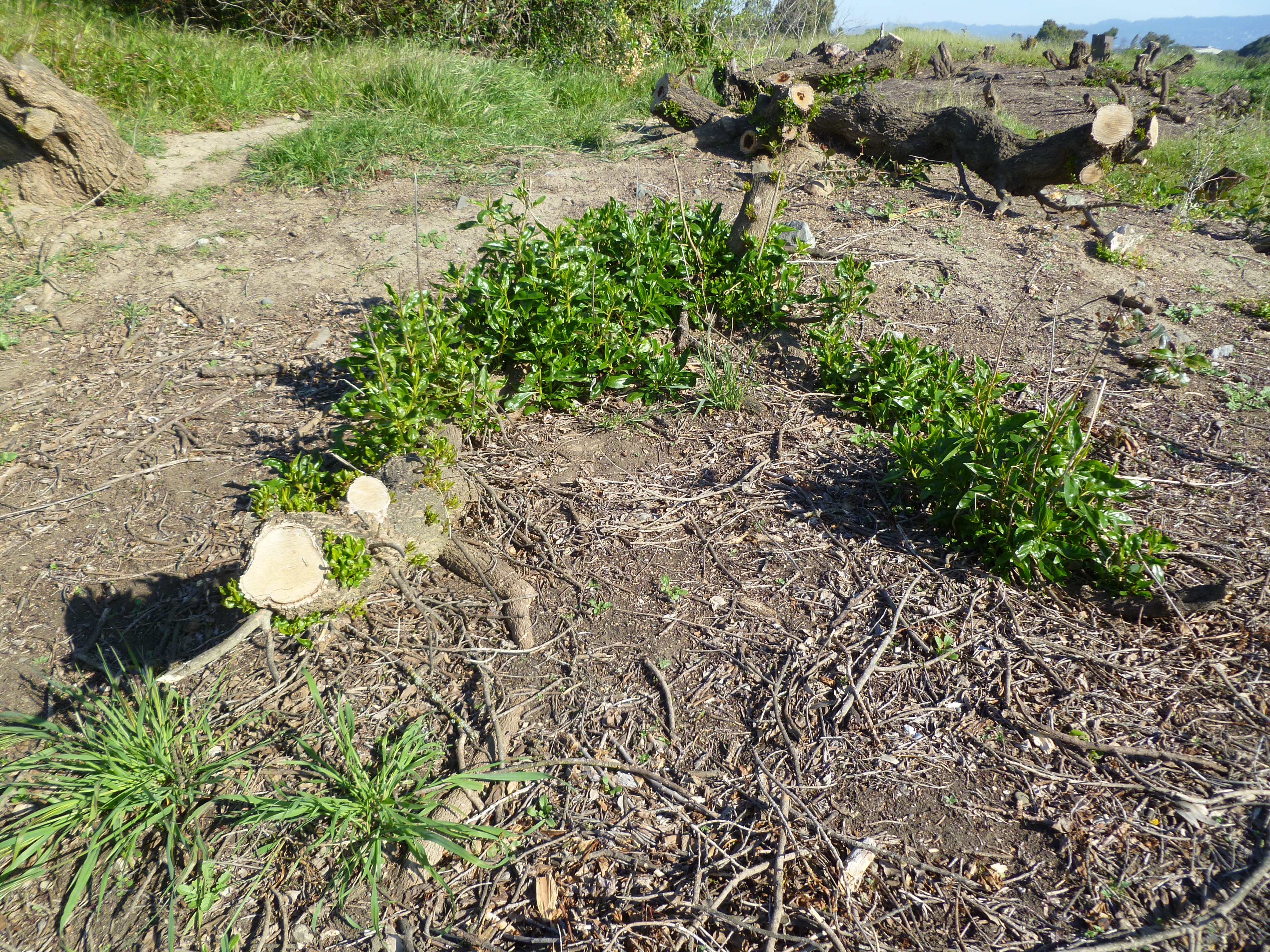
Garlon with the active ingredient triclopyr, is the pesticide used by most managers of public lands to kill the roots of the eucalyptus after the trees are cut down.  Eucalyptus is a vigorous resprouter.   Unless the stump is poisoned immediately with a toxic pesticide, it will return ten-fold after it is cut down, or in the unlikely event that it burns down, or after a freeze deep and long enough to cause the tree to die back.

Garlon is known to be toxic to bees.  The Marin Municipal Water District quit using all pesticides on its properties in 2005 in response to public protests.  It hired a consultant to evaluate 5 pesticides for potential use in the future.  The risk assessment published in 2008  stated that Garlon was the most toxic of the 5 pesticides studied and that it was the most toxic to bees. The Marin Municipal Water District is presently seeking approval to begin using Roundup again.  It does not propose to use Garlon.

The so-called Natural Areas Program in San Francisco, which is responsible for the care of approximately 1,000 acres of park land ironically called “natural areas” uses Garlon heavily.  About 75% of its pesticide applications (by volume and frequency) are of Garlon.  Could this be a factor in the collapse of several beehives recently reported in San Francisco?

The East Bay Regional Park District used 34 gallons of Garlon in 2008.  How many more gallons of Garlon will be used by these managers of public lands when they cut down the hundreds of thousands of eucalyptus trees which they have proposed to destroy in their official plans?

Once again, we can’t make sense of the destructive actions of those who are damaging nature in the name of “restoring” nature.  In our view, it is a fundamental contradiction.