The hero of Eradication: A Fable (1) is Adi, a jazz musician and 4th grade school teacher in an unnamed South American country. He has recently lost his 11-year old son, Jairo, who fell from the roof of their apartment building. Jairo was neuro-divergent, with an obsession with flying paper airplanes. Adi believes Jairo’s fall was accidental, but his wife believes he was pushed by neighborhood boys who habitually harassed Jairo. Adi’s wife, the daughter of a mob boss, insists that Adi kill the neighborhood boys in retribution. When Adi refuses, his wife leaves him. We understand that Adi is no killer.
Adi is bereft about the loss of his family when he notices an advertisement for a job that would send him to an uninhabited island in the Pacific Ocean for 6 weeks to “save the world.” This looks like an opportunity to heal his wounded soul in peace and quiet.
When Adi interviews for the position, he learns that the job is more complicated than camping on a tropical beach in solitude. The woman who interviews him works for a foundation (think Island Conservation) informs him that the job is to shoot and kill about 4,500 goats on the island. The foundation believes the goats are responsible for destroying vegetation on the island and causing rare animals to become extinct.
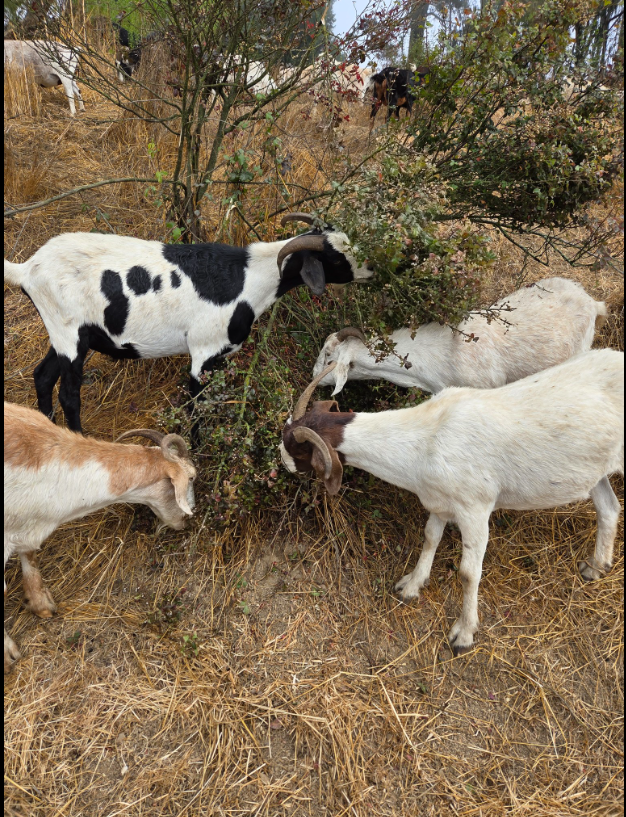
Over one hundred years ago, a pair of goats had been dropped off by whalers at the beginning of their hunt, expecting to pick up more goats to provision their trip home. The goat population initially exploded to about 40,000, but eventually reached a balance with available resources with a stable population of 4,500.
Adi has never shot a gun, nor does he have any interest in learning how to. Although he is woefully unqualified for the job, he is hired because he is the only applicant.
Not a Fable
The scenario is not a fable in the sense that it is not fiction. It is based on actual island eradications that have been done all over the world for over 100 years.
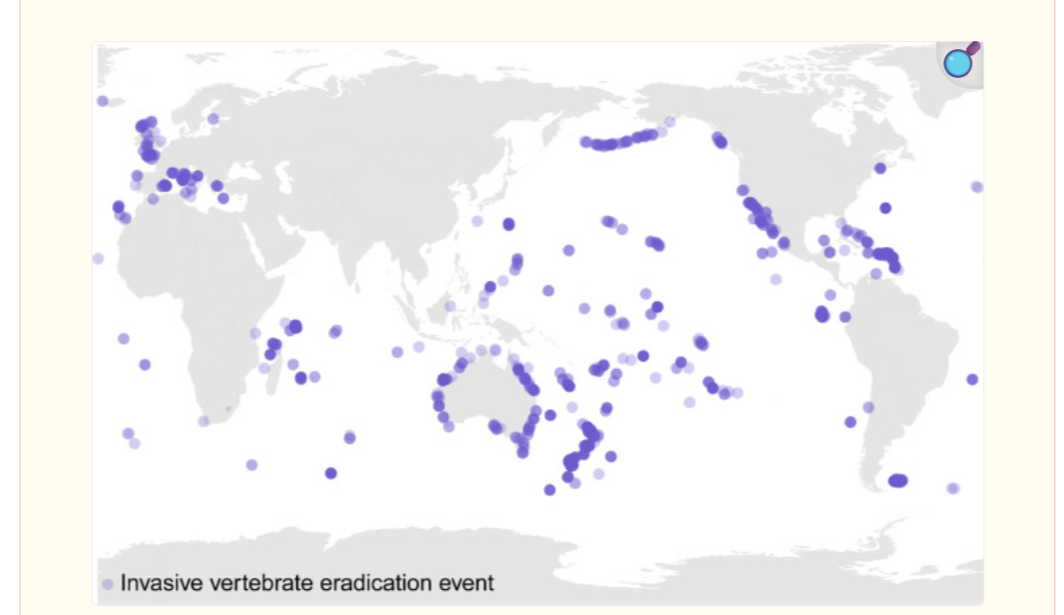
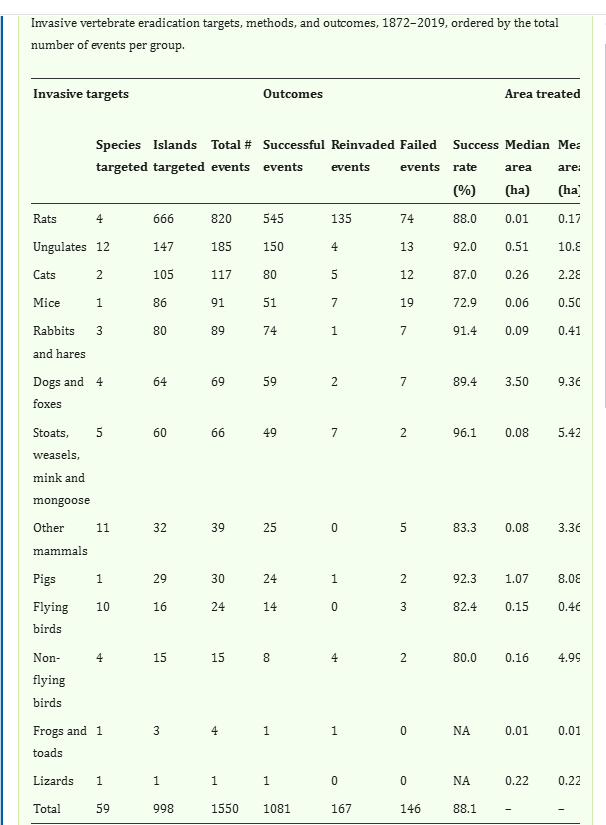
A peer-reviewed study published in 2022 reported that 1,550 attempts to eradicate “invasive” vertebrates have been conducted around the world in the past 100 years. The study reports an average success rate of 88% for all vertebrate species. Eradication of ungulates (such as goats) was most successful at 96% and eradication of mice least successful at 73%. The number of eradication attempts increased significantly since the 1980s and peaked in the mid-2000s, according to this study.
In January 2024, the EPA announced the intention of Animal and Plant Health Inspection Service (APHIS) to conduct eradications using rodenticides on 29 islands in US waters in the subsequent 5-7 years. In the case of Hawaii, the list of planned projects says “all islands,” which could apply to 137 individual islands comprising the state of Hawaii. Many of the listed 29 islands are actually complexes of islands, such as those in Boston Harbor. Many of the islands are residential communities, such as Nantucket and Martha’s Vineyard.
The biological evaluation of rodenticides used in these projects was finalized (and made more dangerous by the removal of mitigation measures) in December 2024, shortly before the Trump administration took office. Funding for the agencies responsible for conducting these projects has been drastically reduced and the priorities of the administration favor resource use rather than resource conservation.
There is no public record of these 29 projects moving forward, with one exception. Island Conservation reported the completion of a rat eradication on Wake Atoll on April 14, 2026. As usual, Island Conservation reports a complete success of the recently completed project. The first eradication attempt on Wake Island in 2012 was a partial failure. It failed to eradicate the Pacific rat from Wake and Wilkes islands, allowing populations to rebound.
This is a typical scenario for island eradications. Island Conservation conducted the project in collaboration with US Fish & Wildlife Service and Department of Agriculture and Island Conservation is reporting its success. There is no independent monitor for the project. The public is not allowed to observe, nor do we have access to the island when the project is done. The success is reported shortly after completion of the project and there is no planned independent follow-up monitoring. In other words, the success rate is not credible.
Eradication IS a Fable
A dictionary definition of fable is “a short, fictional story—often featuring anthropomorphized animals, plants, or forces of nature—that teaches a clear moral lesson, typically ending with a concise maxim.” (Wikipedia) At a mere 159 pages, Eradication: A Fable meets the first criterion. What about the “clear moral lesson?” Let’s return to the story to look for a moral lesson.
In challenging physical conditions, Adi manages to kill two goats and wound a third. He feels responsible for killing the wounded goat and pursues him to finish the job. The steep, densely vegetated terrain takes him far afield, where he stumbles into the camp of two drug-addicted criminals who make a meager living selling shark fins that they illegally hack off sharks. (I recommend skipping the grisly description of how sharks die without their fins.)
After Adi observes the shark fin-thieves shooting goats on the hillside from their small boat offshore, as though it’s a shooting gallery at a county fair, he decides it’s time to go home. He has an epiphany. He is doing the same thing as these criminals. It’s not company he wants to be in.
When Adi decides to leave the island and its goats behind, he briefly considers claiming that a serious injury requires him to leave. Then he thinks better of it: “Or maybe he would tell them the truth: that the goats weren’t to blame for what’s become of Santa Flora. That all they had ever done was refuse to stop living. They’d eaten because they were hungry. They’d mated because life is something you pass down. They’d sung because it pleased them, to mark the island with their voices before etching it with their bones. They weren’t a plague or a malignant growth or any of his interviewer’s other fuming metaphors; they weren’t metaphors at all. They were goats, nothing more, and their only crime had been to keep growing where we’d planted them. Santa Flora’s degradation was as much mankind’s doing as if we’d crop dusted with gales of poison or leveled it with bombs or stacked its shores with condominiums. We’d ditched the goats here for our convenience, just as we’d dumped the trash washed up along the windward shore, then ignored them for a century and a half. You could slaughter every last goat but you couldn’t eradicate the truth.” (1)
Several plotlines are not mentioned in my review. There are charming encounters with goats who qualify as a charismatic species. However, the ethical principles articulated by our hero apply to all species, in my opinion. I hope you will read it.
Adi Speaks For Us
When invasion biology was “invented” in the 1950s it started an era of defining conservation as killing. The primary message of Conservation Sense and Nonsense and the clear moral lesson of Eradication is very simple: just stop the killing!
(1) Eradication: A Fable, Jonathan Miles, 2026.

