What is Compassionate Conservation?

Matt Chew has written another guest post for Million Trees about the International Compassionate Conservation Conference that recently took place in Australia, where he gave a presentation.  Dr. Chew is a faculty member of Arizona State University’s Center for Biology and Society and an instructor in the ASU School of Life Sciences.  He has written two popular posts for the Million Trees blog about the “restoration” industry and about the controversial projects that are eradicating tamarisk trees.

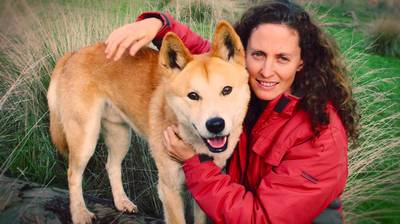
Arian Wallach, Dingo for Biodiversity Project

I was introduced to compassionate conservation by one of its proponents, Arian Wallach.  Dr. Wallach is the Project Director of the Dingo for Biodiversity Project in Australia.  Dingoes were the top predators of smaller animals in Australia for about 5,000 years until Europeans introduced new predators in the 19th century.  Colonists to Australia have been killing dingoes since they arrived because dingoes are also predators of their sheep. 

Eradicating top predators has serious consequences for the entire ecosystem.  In the case of dingoes, smaller predators introduced by colonists have taken that role and are now the target of poisonous campaigns to eradicate them.  For example, Australia recently made a commitment to kill 5 million cats with poison.  Killing dingoes has put Australia on the killing treadmill. 

We have examples in the United States of similar cascading effects of killing top predators.  When wolves and bears were killed in some of our national parks, populations of grazing animals such as deer and elk exploded.  Vegetation was browsed to death and ultimately the grazing animals were without sufficient food.

Dr. Chew tells us that defending top predators is one of several tenets of compassionate conservation.  Two important themes emerge from his description of the conference:

  • Traditional conservation tends to focus on the preservation of a species, sometimes at the expense of individual members of that species. Compassionate conservation invites us to re-evaluate that emphasis, to also take the lives of individual animals into consideration.  In an extremely individualistic society such as America, this would seem an entirely appropriate approach to conservation.
  • Modern methods of conservation tend to focus primarily on rare animals, sometimes at the expense of common animals. Common animals are often blamed for the fate of rare animals.  Shooting barred owls based on the belief that endangered spotted owls will benefit is an example of such projects. 

These are ethical questions that deserve our thoughtful consideration and Dr. Chew’s guest post invites us to think deeply about them.

Million Trees


The third International Compassionate Conservation Conference took place in Australia last November. Over 100 pre-registrants represented thirteen countries of current residence. Every occupied continent and a few archipelagoes were accounted for. Nearly half of the roster bore “Doctor” or “Professor” credentials. About two-thirds were Australian, one-sixth from the USA, and the remainder distributed in single digits. The final tally, including walk-in registrants, has not been compiled.

Some Background

Traditional resource conservationists and animal welfare advocates celebrate separate histories and espouse distinct philosophies. In a given circumstance their views may coincide, but they more often conflict. Sometimes it’s a mix of both. Professionals in either discipline are more attuned and (perhaps) committed to the distinctions than are members of the general public. Some advocates on both sides are more confrontational than others. Given all that, it may be unsurprising that the concept of compassionate conservation arose in the unique context of a British charity organized by the starring actors of the 1966 film Born Free. The predicament of Elsa the lioness they helped publicize provided a unique nexus of predator conservation and captive animal welfare to build on.  Their Born Free Foundation , which at one point actually trademarked the term “Compassionate Conservation” has helped underwrite three meetings: a symposium in Oxford, U.K. (2010); a conference in Vancouver, British Columbia (2015), and the most recent conference in Leura, New South Wales.

Leura, Australia

The latter two events were co-sponsored and organized by the Centre for Compassionate Conservation (Centre) at the University of Technology in Sydney (UTS). The Centre was founded in 2013 by UTS conservation biologist Dr. Daniel Ramp, who continues as its Director. His unusual goal, succinctly (indeed, laconically) stated, is “to better conserve nature by protecting the welfare of individual animals in captivity and in the wild.” The Centre currently lists a core management team of five, plus six affiliated researchers. Five conference attendees identified themselves as Centre Ph.D. candidates, and another as an unspecified Centre student. Before organizing the Centre, Daniel and most of his present colleagues comprised something called THINKK, focused more narrowly on ethical kangaroo conservation. Coincidentally, a documentary film emerging from that effort just opened in selected U.S. theaters.

Alloying animal welfare advocates and conservationists this way requires effort.  Alloying them into a fully coherent interest group is unlikely. Conservationists, including conservation biologists, are rarely concerned with the comfort or fates of individual organisms. For example, the Society for Conservation Biology is “dedicated to advancing the science and practice of conserving Earth’s biological diversity”. It emphasizes populations, species, biotic communities and other aggregations rather than individual organisms. This view accommodates Darwinian natural selection and economic sustainability of recreational and commercial exploitation, including so-called ecosystem services. Except where the population of some species is approaching zero and every extant individual contributes substantially to its genetic diversity, whether any of them are particularly well off beyond their ability to breed or produce gametes for propagation purposes is a subsidiary concern. By contrast, animal welfare begins with sentient organisms and recognizes fewer aggregate or emergent properties. Strictly speaking, to welfare advocates, preserving a species or population is secondary to protecting individuals from experiencing pain or suffering, especially that related to human actions or influences.

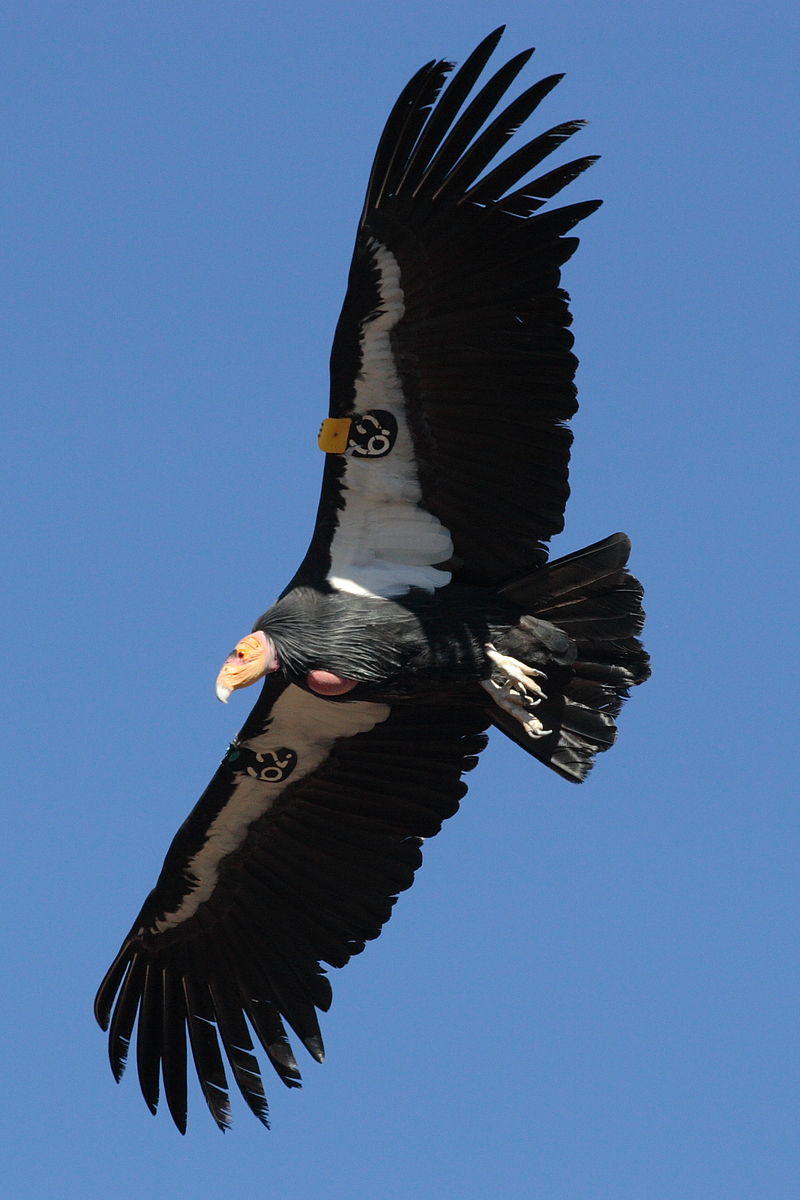
California Condor with tracking tags on wings

Logically extended, the difference between conservation and compassion can be illustrated by the California condor recovery effort. Condors incapable of breeding are useless to conservation biologists other than for public relations purposes. Any “display” animal is subject to the particular dangers inherent in repeated transportation and public contact. Presented as an example or representative of the taxon Gymnogyps californianus it nevertheless becomes a named or nicknamed individual entity in the minds of the people who “meet” it.  Once transferred permanently for display to (e.g.) a zoo, the welfare of a named, non-breeding condor takes on a significance that it never had before. Should it fall ill, hundreds or thousands of people will fret. Should it die unexpectedly, they will mourn and hold its keepers responsible. Meanwhile, potential breeding condors may be released to cope with hazards of “wild” survival their captive counterparts never face. The processes of breeding contribute further stresses and risks. The value of a display condor is tallied in goodwill and monetary contributions. The value of a breeder is tallied in viable offspring, much as the value of a laying hen is tallied in eggs produced. The contentment of a named bird is judged differently from that of a numbered one. Should “recovery” succeed, individual condors will someday become as anonymous as turkey vultures, their welfare officially unmonitored. With all that in mind, a compassionate conservation conference is necessarily a coalition exercise. A stable, hybrid entity like the UTS Centre remains exceptional.

In the Event

The three-day Leura schedule included ten presentation sessions, a poster session and six workshops. Each presentation session opened with a half-hour keynote talk from an invited speaker followed by a series of shorter contributions.

Presentations:

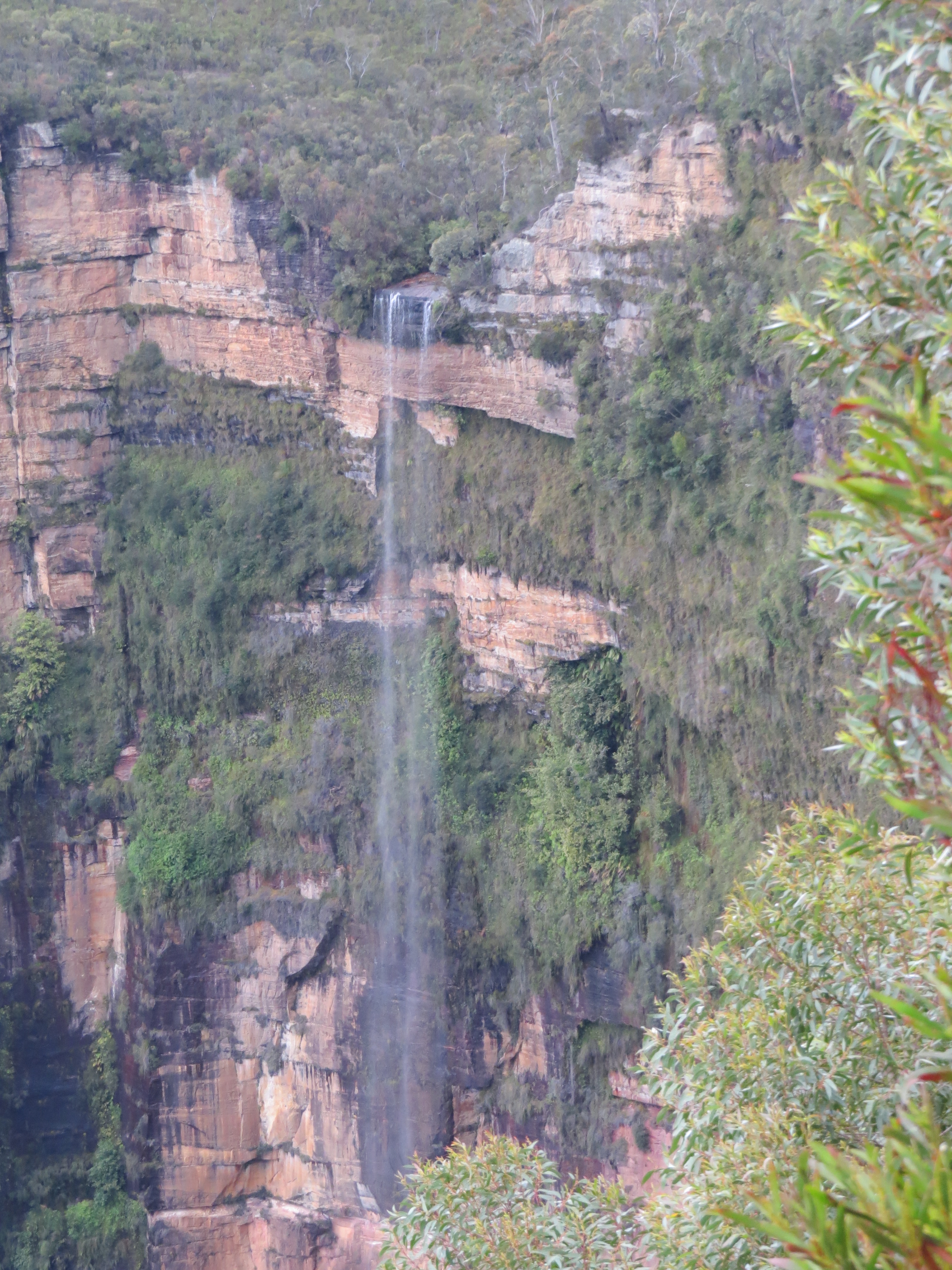
Australian waterfall

Presentation sessions were organized around conservation ethics (2); novel ecosystems (2); animal welfare science and issues (2); laws and policies; agriculture and wildlife, predator-friendly ranching and finally “cultivating compassion”. Keynote speakers (six men, four women) came from the USA (5), Australia (3), Malaysia (1) and the UK (1). Nine are university faculty or affiliates; two represent independent conservation NGOs (yes, we turned it up to 11). Few of us can comfortably label ourselves without hyphenating. Our credentials include (alphabetically) Animal Science, Conservation Biology, Ecology, English, Environmental Ethics, Environmental Science, Ethnography, Evolutionary Biology, History, Humanities, Law, Natural Resources, Philosophy, Wildlife Biology, and Zoology and doubtless some that I overlooked. Our keynote talks ranged from practical legal and management case studies to aspirational exhortations. That may not be a defensible continuum, but it will have to do.

A conference program with abstracts is available for download here. Since there were about sixty presentations over two and a half days, I can hardly even list them, much less say anything pithy about more than a few. Their diversity made for an intense, eclectic, even exhausting experience. The general quality of presentations struck me as higher than the average at many more traditional, disciplinary conferences. Perhaps it takes “more” of something or another to survive the rigors of interdisciplinary or multidisciplinary work.

What I can do is highlight a couple of impressive research projects of particular interest to Million Trees followers in the western U.S.  In his keynote address, Conservation as creative diplomacy: Raven and tortoise futures in the Mojave Desert, University of New South Wales Associate Professor of Environmental Humanities Thom van Dooren looked at “new technology” attempts to dissuade the big black birds from preying on juvenile, endangered reptiles. Artificial tortoises conceived as the equivalent to exploding, joke cigars featured heavily in this thought-provoking and entertaining analysis. Understanding introduced megafauna in the Anthropocene: Wild donkeys as ecosystem engineers in the Sonoran Desert by Arizona State University graduate turned Centre Ph.D. candidate Erick Lundgren showed how “feral” burros in western Arizona create water sources used by “native” wildlife by digging down to shallow aquifers in dry washes. Photos and infrared video made the case for this completely new and gratifying application of the term “ass holes” and discussion of the demonstrable positive effects of “alien” animals. An early presentation of Erick’s findings can be viewed here.

Posters:

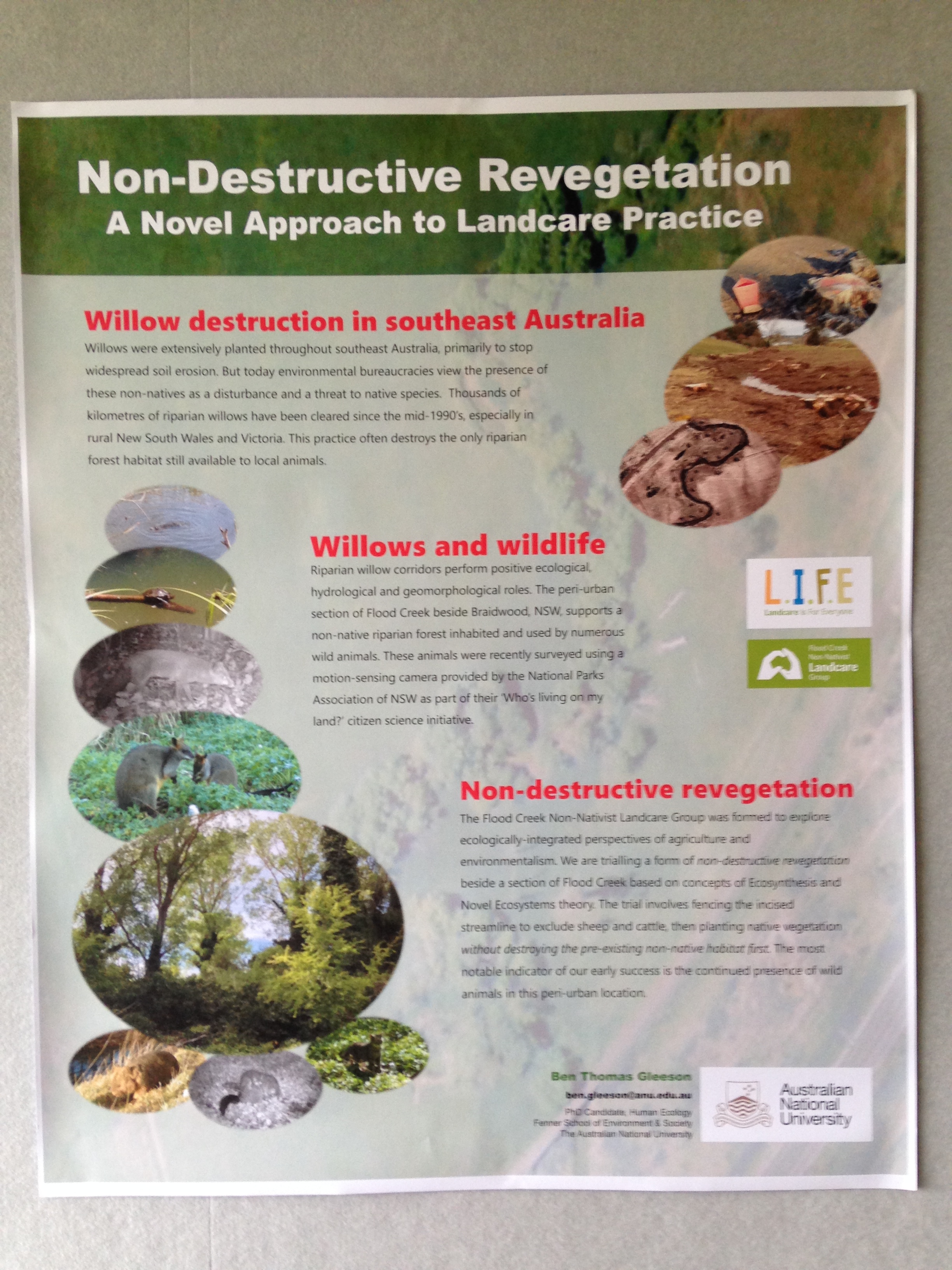
Poster of Non-Nativist Landcare

For readers unfamiliar with poster sessions, the basic idea is to summarize a project, argument or proposal in the minimum necessary words and graphics to convey the important ideas. Posters can be perused at the convenience of conference-goers, and (as in this case) can be strategically hung in proximity to coffee and snacks; but a period is usually specified for poster authors to literally stand by their work and answer questions. What constitutes a poster is evolving rapidly. Mechanically pasted-up arrangements have been superseded by single, large format prints, which in turn may soon give way to looped or even user-navigable videos on flat screen displays. Only a handful of posters were presented at Leura. One included a description of low-disturbance riparian revegetation techniques; another explained a new proposal to legally protect captive whales, porpoises and dolphins in the U.S.A.; a third took data-driven issue with Argentina’s official over(?)-emphasis on lethally suppressing European rabbit populations; and the fourth combined a poster with a video loop to demonstrate the surprising calmness of red foxes living in proximity to dingoes, their only wild predators.

Workshops:

Befitting a gaggle of academics, three of the six workshops initiated collaborations meant to produce papers for peer-reviewed publication. “Welfare in the wild” focuses on the challenges of assessing the condition of free-living wild animals, a necessity for practical compassionate conservation. “The Australian Wildcat Project” seeks to reframe feral cats as wild animals and find “compassionate and effective solutions” that supersede traditional (and ineffectual) lethal culling.  “Transforming wildlife management policies” envisions a compassionate alternative to the present Australian Pest Animal Strategy.

For attendees not leashed to the “publish or perish” treadmill, “A framework for human-wildlife health and coexistence in Asia” built on the related presentation session to propose guidelines for further research and development. “Predator friendly ranching skills and technologies” demonstrated an array of time-tested, new and proposed methods for keeping livestock without resorting to lethal predator control. “Bringing ethics into conservation with argument analysis” offered an introduction to rhetorical and logical analysis of the claims underlying conservation decision-making.

Reflections

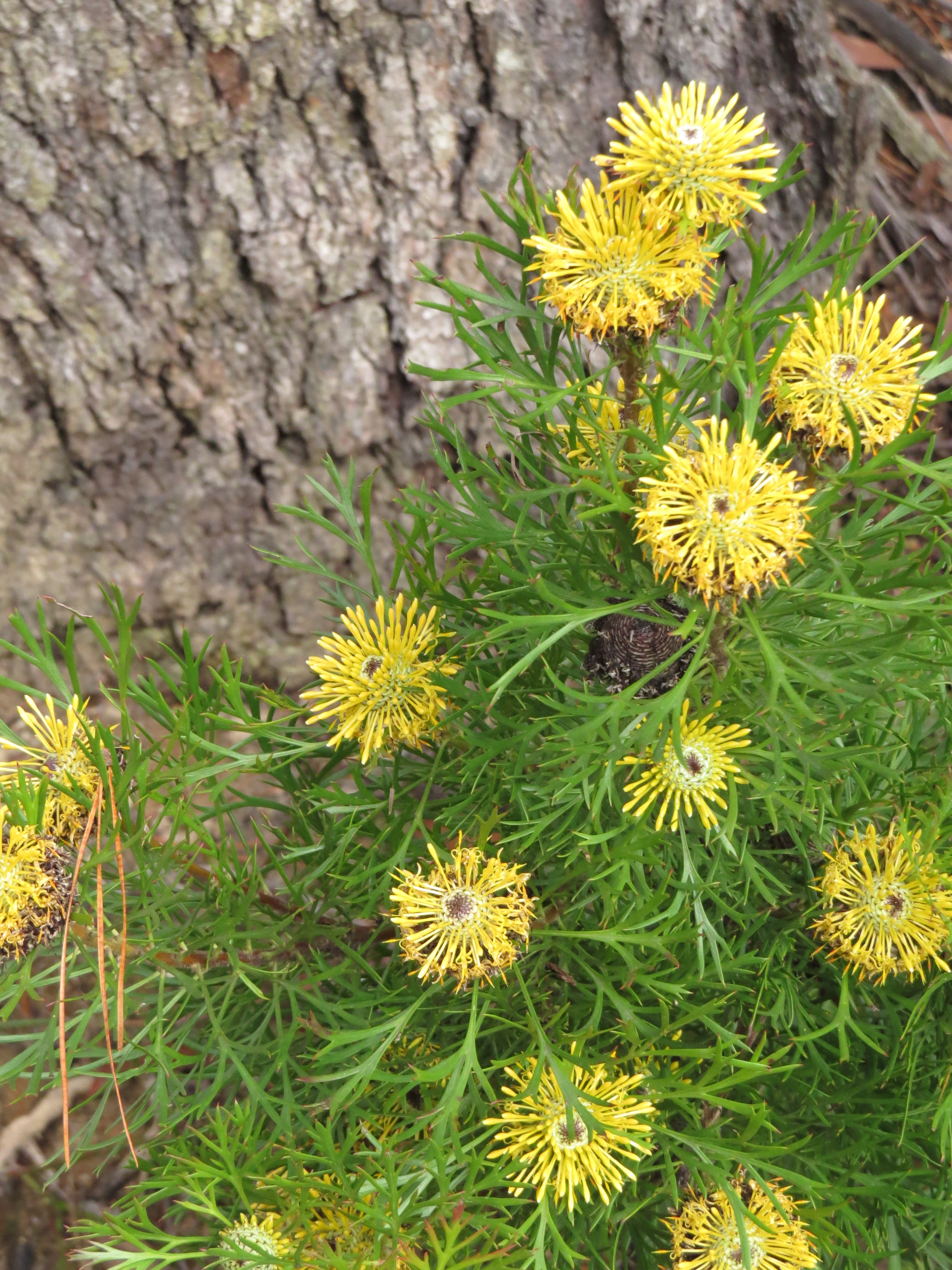
Banksia in Australia

On July 31, 1947, Aldo Leopold finalized a paragraph that appeared about seven eighths of the way through his introduction to a proposed book of essays. It began “One of the penalties of an ecological education is that one lives alone in a world of wounds.” There, Leopold styled himself as “the doctor who sees the marks of death in a community that believes itself well, and does not want to be told otherwise”. Perhaps ironically, less than nine months later (at age 61) he succumbed to heart failure aggravated by the exertion of fighting a grass fire, leaving the still unpublished anthology in other hands. Nearly two decades on, editors transplanted the paragraph into the much-revised text of a Leopold essay titled “The Round River” for re-publication by Oxford University Press, where his overwrought sentiment blossomed into a gnostic axiom of conservation biology.

Practically anyone could recognize an injured animal. Only Leopold, selected colleagues and their presumptive heirs could diagnose the arcane injuries of populations, species, communities or ecosystems. The welfare of an organism didn’t “amount to a hill of beans” next to the integrity of the greater collective. It was a more than convenient fit into the value system of academic biology, where individuals are traditionally considered mere examples of taxa, available for collection, experimentation, or “scientific” interference pretty much at will.

As a group, biologists have likely devised more (and more esoteric) ways than anyone else to kill, injure or discomfit organisms. Way back in 1865, physiologist Claude Bernard, fountainhead of the indispensable idea of homeostasis, reflected, “the science of life…is a superb and dazzlingly lighted hall which may be reached only by passing through a long and ghastly kitchen.” Recipes beyond his darkest dreams have since been tested there. In that regard, conservation biology is unexceptional. Conservation biology in practice consists largely of subsidizing the (Darwinian) fitness of too-rare species by forcibly taxing that of too-common ones. The move from culinary to macroeconomic metaphors indicates only that we are now cooking on a vast, institutional scale. Both figuratively and literally, conservation biologists break a lot of eggs in service of making too-rare species more common and supposedly too-common ones more rare. Consistent with basic economic wisdom, individuals of scarce species are more highly valued than those of common species. But much of biology is still concerned with examining formerly living objects to find out what experimenting on them accomplished. The drafters of laws like the U.S. Endangered Species Act made “experimental, nonessential” individuals or populations available for scientific “take”. At best, such exceptions allow for research that might stave of extinction. At worst, they provide cover for otherwise anathema activities like “scientific whaling.”

What will become of compassionate conservation? I can’t answer that question. Its advent represents an interesting cross-pollination among otherwise ramifying points of view. I’m sympathetic to the basic aims of its proponents. My own work wasn’t really conceived to abet them; but if it does, I say “well and good.” There’s more than enough casually rationalized cruelty in the world already. 

Matt Chew

“Tending the Wild:” Our changing relationship with nature

We recently introduced our readers to a book about the land management practices of Native Americans in California, Tending the Wild:  Native American Knowledge and the Management of California’s Natural Resources.  (1) Drawing from this valuable resource, we will describe how the relationship of humans with nature has changed several times since the arrival of humans in California approximately 12,000 years ago.  We will conclude by raising questions about our current relationship with nature, as reflected in our land management practices.

The relationship of Native Americans with nature

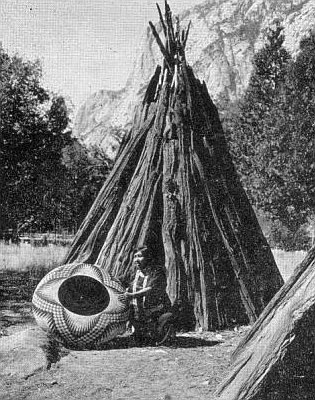
Basket CA Native AmericanWe will let the author of Tending the Wild speak for Native Americans, based on her extensive research of their culture and land-management practices:

“Although native ways of using and tending the earth were diverse, the people were nonetheless unified by a fundamental land use ethic:  one must interact respectfully with nature and coexist with all life-forms.  This ethic transcended cultural and political boundaries and enabled sustained relationships between human societies and California’s environments over millennia.  The spiritual dimension of this ethic is a cosmology that casts humans as part of the natural system, closely related to all life-forms.  In this view, all non-human creatures are ‘kin’ or ‘relatives,’ nature is the embodiment of the human community, and all of nature’s denizens and elements—the plants, the animals, the rocks, and the water—are people.  As ‘people,’ plants and animals possessed intelligence, which meant that they could serve in the role of teachers and help humans in countless ways—relaying messages, forecasting the weather, teaching what is good to eat and what will cure an ailment.” (1)

We emphasize that Native American culture considered humans a part of nature because this viewpoint provides contrast to modern interpretations of the relationship between humans and nature. 

Exploitation of nature by early settlers

When Europeans began to establish settlements in California in the late 18th century, they brought with them an entirely different viewpoint about their relationship with nature.  Natural resources were to be exploited and humans were the master of the natural world which was in their service.

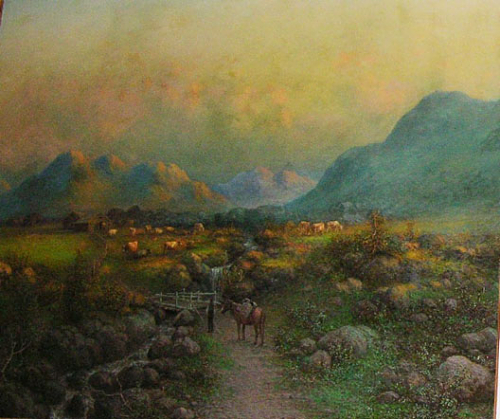
Western pioneer ranch
Western pioneer ranch. Painting by John Olson Hammerstad, 1842-1925.


The first phase of European settlement was the importation of huge herds of livestock by the Spanish coming from Mexico:

“During the Mission era…grazing was among the activities that caused the greatest damage.  Coastal prairies, oak savannas, prairie patches in coastal redwood forests, and riparian habitats, all rich in plant species diversity and kept open and fertile through centuries of Indian burning, became grazing land for vast herds of cattle, sheep, goats, hogs, and horses owned by Spanish missions and rancheros.  By 1832 the California missions had more than 420,000 head of cattle, 320,000 sheep, goats, and hogs, and 60,000 horses and mules…overgrazing eliminated native plant populations, favored alien annuals, and caused erosion…A great variety of alien [plant] species were introduced inadvertently during the Mission Period.  Research has shown that European forbs and grasses…were brought into California at this time, contained in adobe bricks, livestock feed, livestock bedding, and other materials.  Soon these alien [plants] overwhelmed the native species, markedly changing the character and diversity of grasslands and other habitats west of the inner Coast Ranges.”  (1)

Tending the Wild reports that during this early phase of European settlement, Native Americans were quick to adapt to the changing landscape.  They incorporated useful new plants into their diets.  Likewise, we see today new plants and animals quickly enter the food web.


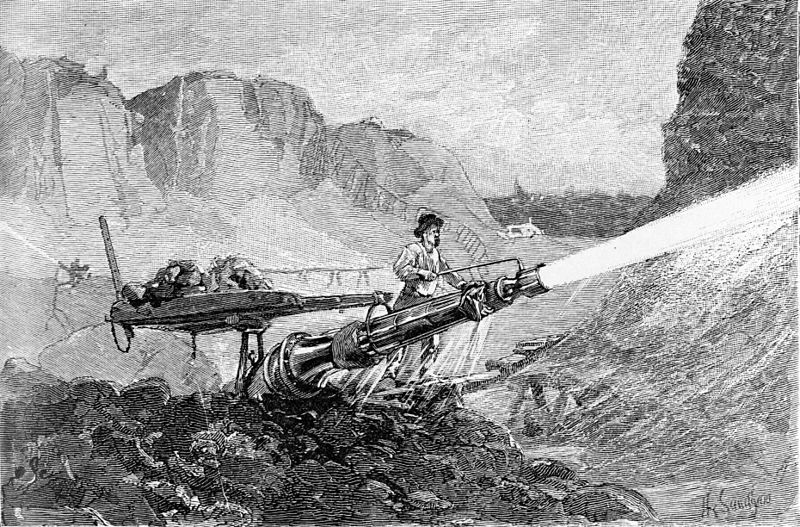
Hydraulic gold mining in California.

These changes in the landscape paled in comparison to the exploitation of the land that began in 1849 when gold was discovered in California and the huge influx of Americans of diverse European descent arrived.  Here are a few examples:

  • “…by the 1870s ‘more men made their living in the broader geography and economy of farming—48,000—than in all the mines of the Sierra footholls—36,000.’ To accommodate the acreage devoted to growing crops, marshes were drained, underground water was tapped by artesian wells, streams and rivers were dammed and diverted for irrigation, and lands were fenced.  In the process huge tracts of former native grasslands, riparian corridors, and vernal pools were converted to artificial, human-managed agricultural systems.” (1)
  • “Five million acres of wetland in California have been reduced by 91% through diking, draining, and filling for agriculture, housing, or other purposes.” (1)
  • By 1900, 40% of California’s 31 million acres of forest were logged.
  • “By the early 1900s, the numbers of marine mammals, wildfowl, elk, deer, bear, and other birds and mammals had been so drastically reduced that Joseph Grinnell would write, ‘Throughout California we had been forcibly impressed with the rapid depletion everywhere evident among the game birds and mammals.’” (1)
  • Between 1769 and 1845, the population of Native Americans in California dropped from an estimated 310,000 to 150,000. Between 1845 and 1855, the population of Native Americans dropped from 150,000 to 50,000.

Romanticizing Nature

Meanwhile, in Europe and the East Coast of the US, a new view of nature was being articulated.  The Romantic movement viewed nature as an escape from the stress of urban life, a tranquil retreat from civilization.  In California, John Muir was strongly influenced by Romanticism: 

“Muir and those with similar views responded to the destruction and exploitation of California’s natural resources with a preservationist ethic that valued nature above all else but which defined nature as that which was free of human influenceThus while he championed the setting aside of parks as public land, Muir also contributed to the modern notion that the indigenous inhabitants of the state had no role in shaping its natural attributes.” (1)

Muir was unable to fit Native Americans into his idealized view of nature.  He wrote this account of Miwok Indians in the Sierra Nevada in 1869:

“’We had another visitor from Browns’ Flat to-day, an old Indian woman with a basket on her back.  Her dress was calico rags, far from clean.  In every way she seemed sadly unlike Nature’s neat well-dressed animals, though living like them on the bounty of wilderness.  Strange that mankind alone is dirty.  Had she been clad in fur, or cloth woven of grass or shreddy bark, like the juniper or libocedrus mats, she might have seemed a rightful part of wilderness; like a good wolf at least, or bear.  But no point of view that I have found are such debased fellow beings a whit more natural than the glaring tailored tourists we saw that frightened the birds and the squirrels.’” (1)

Sharp Park, Pacifica, CA.  Photo by Erica Reder, SF Public Press
Sharp Park, Pacifica, CA. Photo by Erica Reder, SF Public Press

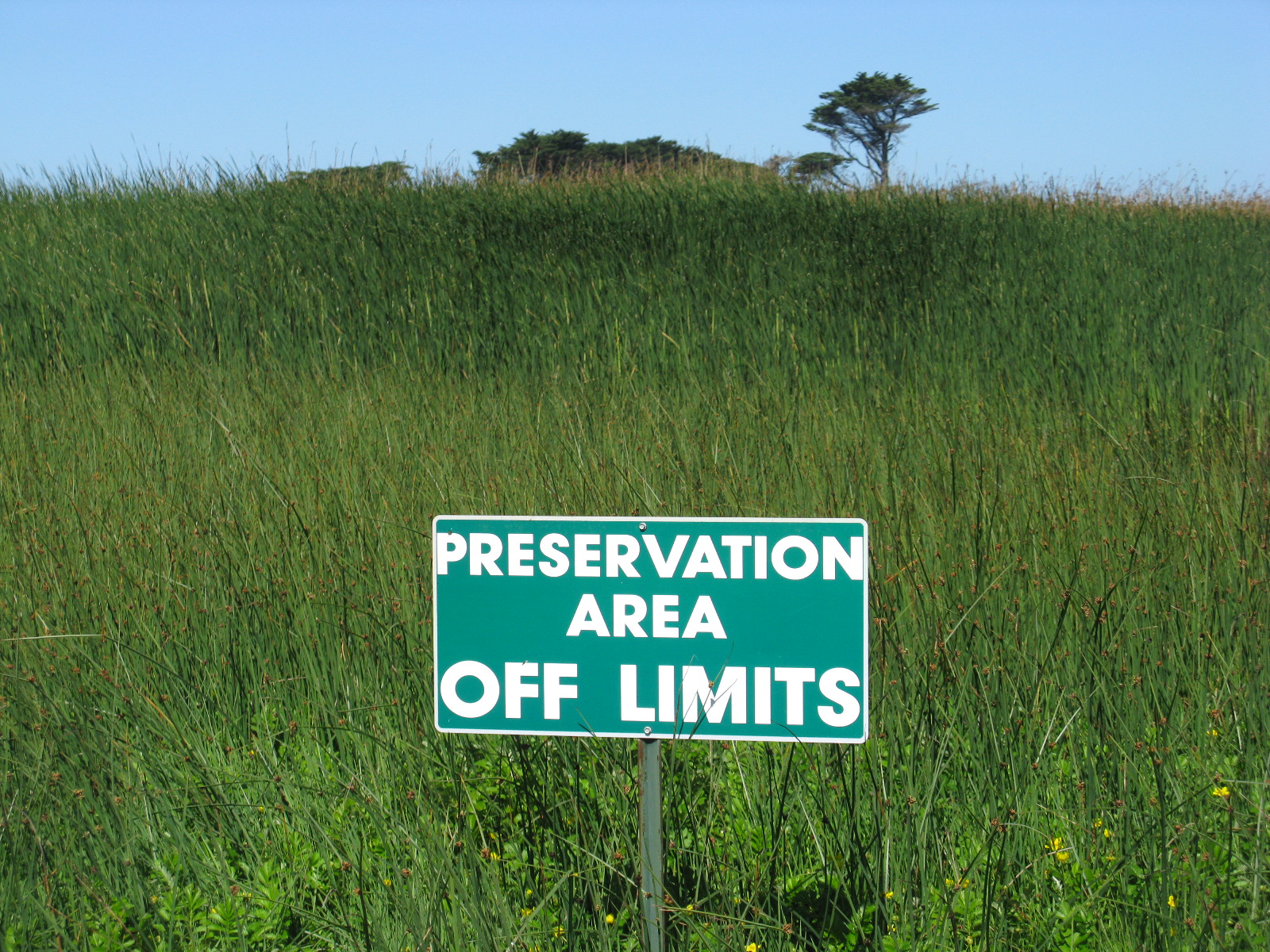
In this romanticized view of nature, humans are not welcome Humans defile the purity of nature.  This is the prevailing viewpoint today among those who consider themselves environmentalists, park advocates, and conservationists.  They advocate for “wilderness” where “humans may visit, but not remain.”  They post signs, advising visitors to look but not touch.  Their “restoration” projects put nature behind a fence.  They complain about immigration.

The condescending attitude articulated by John Muir toward Native Americans was instrumental in our ignorance of their land management practices.  Europeans considered Native Americans primitive and therefore did not expect to learn anything useful from them.  Europeans imported and grew their own food from their original homes because they were unaware of how local food sources could be grown and used.  Our knowledge of Native American culture is recent and it comes too late to ever be fully informed because those who tended the land are long since gone.  Furthermore, this new knowledge of land management practices of Native Americans is not well known, certainly not among native plant advocates who are attempting to re-create a landscape which was created by methods they do not understand.

Redefining ecological “restoration”

The author of Tending the Wild admires Native American culture as well as the landscape that was created by their land management practices.  Therefore, she concludes her book with a proposal that we adopt their land management methods:

“What then, should be the goal of ecological restoration?  Restoring landscapes and ecosystems to a ‘natural’ condition may be impossible if that natural condition never existed…Restorationists must at the very least acknowledge the indigenous influence in shaping the California landscape.  This chapter advocates an additional step—using indigenous people’s knowledge and methods to carry out the restoration process, to return landscapes to historical conditions and restore the place of humans in this continuing management.”  (1)

In our previous post, we described some of the land management practices of Native Americans, particularly the importance of setting fires.  Adopting these management practices for ecological restorations would require us to make a permanent commitment to setting fires.  Fires pollute the air, release greenhouse gases into the atmosphere, and endanger lives and property.  Therefore, this is surely not a proposition that can be reasonably applied to our densely populated urban parks.  The maximum population of Native Americans prior to the arrival of Europeans is estimated to have been 310,000.  The population of California was estimated to be over 38 million in 2013.  Land management practices that were appropriate for a human population of only 310,000 are not appropriate for a population of over 38 million.

Furthermore, the land management practices of Native Americans were useful for their culture.  They tended the landscape in order to feed, clothe, heal, and house themselves.  If that specific landscape is no longer useful for those purposes, why would we consider it an ideal landscape?  In what sense would it be superior to the landscape that occurs naturally without setting fires or intensively gardening our open spaces?

A more realistic paradigm is needed

We believe a more sustainable paradigm for managing nature is needed.  Although we won’t presume to define this new paradigm, we will suggest some parameters:

  • Humans are as much a part of nature as any other animal. Therefore, conservation goals must accommodate the presence of humans.  However, humans must respect plants and animals as equal partners in achieving conservation goals.
  • Since we live in a free society, we must assume that human populations will grow in proportion to the choices of humans. And since we are a nation of laws, we must assume that immigration will occur as allowed by our laws.  Conservation goals must be consistent with the realities of human population density.
  • Conservation goals should look forward, not back. Goals should reflect the changes in the environment that have already taken place and anticipate the changes that are expected in the future.
  • The distinction between native and non-native species should be only one of several criteria to determine whether a species “belongs here.” If plants and animals are sustaining themselves without human subsidy, we should acknowledge and appreciate the functions they perform in the ecosystem.  This approach will reduce the use of herbicides, now being used to eradicate plants perceived to be “non-native,” in our parks and open spaces.
  • Conservation goals should be realistic within the confines of available resources and in competition with other priorities.
  • There are pros and cons to every change we make in the landscape. Whenever we alter the landscape, if our land management methods damage the environment by using pesticides, killing animals or destroying their food resources and homes, contributing to greenhouse gases, restricting recreational access, etc., we must have solid evidence that the benefits to the environment will be greater than the damage we foresee.  If there is no net benefit, we should leave it be.

Can you add to or suggest revisions of this list of a new conservation ethic?  Surely there are as many opinions as there are readers of Million Trees.  We would like to hear your ideas.


  1. M. Kat Anderson, Tending the Wild: Native American Knowledge and the Management of California’s Natural Resources, University of California Press, 2005 (This is the source of most of the information in this article.)

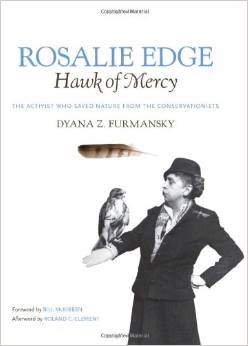
Rosalie Edge, conservation hero

Rosalie EdgeWe are grateful to Dyana Furmansky for turning a suitcase full of letters into a fascinating biography of an important conservationist, Rosalie Edge. (1) Rosalie Edge was one of the first ardent defenders of wildlife—particularly birds—in America.  She came to this mission late in life, from unlikely previous experience.  Her life is therefore an interesting story, but it also interests us because her experiences as a conservationist shed light on our struggle to preserve our urban forest.  Specifically her struggle with the Audubon Society foretold our attempts to convince the local chapter of the Audubon Society (Golden Gate Audubon Society) that some of their policies are harmful to birds.

From privilege to the trenches of conservation warfare

Rosalie was born Mabel Rosalie Barrow in New York City in 1877 into a family of great wealth and privilege.  She married Charles Noel Edge in 1909 and followed him around the Orient for several years while he earned his living as a civil engineer and then as an investor.

They returned home, where Rosalie joined the woman’s suffrage movement in 1915.  She wrote passionate pamphlets for the suffragists, which later became her hallmark as a conservationist.   When women won the vote in the United States in 1920 with the passage of the 19th Amendment to the Constitution, Rosalie didn’t have much time to find another mission.   Her husband fell in love with another woman, effectively ending their marriage, which continued in name only to their death.

At the age of 44, in 1921, Rosalie was grief-stricken about the failure of her marriage.  She found solace in walks in Central Park in New York City and soon discovered that watching the birds gave her comfort.  The birders of Central Park were a community in the 1920s as they still are today.  They took Rosalie under their wing.  Soon she was embroiled in the organizational politics of the National Association of Audubon Societies (NAAS), the precursor to the National Audubon Society.  She learned that NAAS was engaged in activities that some members considered harmful to birds:

  • The President of the NAAS was taking donations from manufacturers of guns in exchange for adopting policies that were supportive of hunting birds.
  • NAAS also refused to oppose policies and practices that are harmful to birds, such as:
    • Killing birds to use their feathers in women’s hats, and
    • The policy of the federal government that paid large bounties for dead birds of prey, such as bald eagles.
  • NAAS was trapping and selling fur-bearing animals on its bird reserve in Louisiana to pay the salaries of their staff.

With only the force of her strong personality, Rosalie tried to shame the NAAS into abandoning these practices by attending their annual meetings.  When that approach failed, she sued NAAS for its mailing list and won.  With the mailing list of the 11,000 members of NAAS, Rosalie was able to communicate directly with the membership.  This approach put substantially more pressure on NAAS leadership as well as reduced its membership.   She had very little help with this effort.  She named her operation the Emergency Conservation Committee (ECC), but she was a proverbial one-woman-band.

Many of the NAAS policies to which Rosalie objected where eventually changed.  However, she was alienated from most members of NAAS and its successor NAS, until shortly before her death in 1962 at the age of 85.  She attended their banquet in 1962, along with 1,200 conservationists, where she was given a standing ovation.  Rosalie said, “’I have made peace with the National Audubon Society.’” (1)

The accomplishments of the Emergency Conservation Committee

The accomplishments of the ECC are particularly impressive if you keep in mind that most were achieved in the 1930s and 40s.  In the 1930s, there was very little money for anything other than creating jobs and putting food on the table.  In the 1940s the cost of World War II was our highest national priority.  Conservation was perceived as a luxury by both the public and the government.  Yet, Rosalie and those who helped her, accomplished many great things.

  • Migrating hawks shot in one day prior to establishing sanctuary.  Courtesy Hawk Mountain Sanctuary Archives
    Migrating hawks shot in one day prior to establishing sanctuary. Courtesy Hawk Mountain Sanctuary Archives

    Hawk Mountain in Pennsylvania was a place where wind currents funneled tens of thousands of hawks during their fall migration. It was therefore a popular place for hunters to stand on the mountain and shoot the birds out of the air.  Tens of thousands of hawks were slaughtered every year, which was just too much to bear for Rosalie.  Nearly penniless during the deepest years of the depression, Rosalie borrowed $500 from a friend with an interest in the hawks to lease Hawk Mountain.  Fortunately the land wasn’t useful for most purposes and economic conditions depressed land values, so she was eventually able to buy it.  It was the first privately acquired property for the sole purpose of conservation.  It was considered the model for The Nature Conservancy by one of TNC’s co-founders, Richard Pough.  Today, Hawk Mountain is visited by tens of thousands of visitors every fall to witness the migration.  There are far more visitors to see the birds than there had been to shoot them in the past.  The data gathered at the Hawk Mountain Sanctuary about immature hawk and eagle migration were very helpful to Rachel Carson in making her case against DDT.

  • When Franklin Roosevelt became President, things got a little easier for Rosalie because his Secretary of the Interior, Harold Ickes, shared her interest in conservation. Together they collaborated to create Olympic National Park in Washington State, to incorporate a sugar-pine forest into Yosemite National Park, and to create King’s Canyon National Park in the Sierra Nevada in California.  None of these achievements was easy.  The story of how opposition was overcome would sound familiar today.  Timber and other economic interests had to be satisfied or neutralized by overwhelming public support.  Rosalie’s passionate pamphlets were instrumental in creating public support.
Olympic National Park.  NPS photo
Olympic National Park. NPS photo

Familiar themes

Rosalie’s experiences with the National Association of Audubon Societies sound familiar to us.  Despite the organization’s stated mission of protecting birds, economic interests sometimes influence its policies and practices.  The paid staff of an organization is under constant pressure to fund its salaries.  The temptation for quid pro quo arrangements is great, particularly during hard economic times.  Although Rosalie was successful in ending such arrangements, the temptation is always there.  Therefore, constant vigilance is required to prevent it from happening again.

Towards the end of her life, Rosalie’s unpublished memoir explains why her Emergency Conservation Committee was successful:

“In her memoir, she had commended volunteerism as the most meaningful way to bring about change.  ‘I beg each one to keep conservation as his hobby, to keep his independence, his freedom to speak his mind,’ she had written years before.  She had seen too many professionals become jaded or fall captive to special interests.  She, on the other hand, had spoken freely.  There would always be a need for those who could do that, she warned.” (1)

We believe that the local chapter of the Audubon Society (Golden Gate Audubon Society) is supporting projects that are harmful to birds.  We have detailed those projects in a recent post and won’t repeat them here.  The story of Rosalie Edge’s confrontation with the National Association of Audubon Societies warns us that changing those policies will not be easy.  However, we are inspired by Rosalie’s success and we follow her lead:  We are a loose confederation of volunteers who work collaboratively, but independently.   We are compensated solely by the occasional success of our venture to save our urban forest and the animals that live in it.  We cannot be compromised by any economic interests.


(1) Dyana Z. Furmansky, Rosalie Edge Hawk of Mercy, University of Georgia Press, 2009