Deadly Dogma:  Revisiting the Farallon Islands Unnecessary Eradication Project

“The more we know about plans to eradicate harmless mice on the Farallon Islands with rodenticide, the less sense it makes.” – Conservation Sense and Nonsense

Plans to eradicate mice on the Farallon Islands with rodenticide were approved by the California Coastal Commission (CCC) two years ago, on December 16, 2021.  Although CCC approval was contingent on a few conditions intended to reduce the inevitable death of non-target birds and marine animals, it is unclear if CCC will be able to enforce the conditions. Plans seem to be moving forward behind closed doors, so Conservation Sense and Nonsense continues to be concerned about this project. 

First a brief reminder of the project and our objections to it.  House mice were introduced to the Farallon Islands over 100 years ago by ships visiting the island.  There is no evidence that mice harm birds on the Farallons.  The mice are an integral part of the food web, eating primarily vegetation and supplementing that diet with insects during summer months when vegetation is sparse.  The mice are also the prey of hundreds of thousands of birds that live on the islands as well as birds that stop over on their migratory routes.  The mouse population varies throughout the year, dwindling during winter months and increasing in the fall.  When the mouse population declines, food sources for their predators also decline.  That’s when burrowing owls are said to prey on the nestlings of ashy storm petrels.  Though the mice are blameless, the project proposes to kill them all based on the assumption that burrowing owls will not overstay their migratory stop over if food sources are significantly reduced.  The project is expected to kill hundreds—perhaps thousands—of non-target birds who will eat poisoned pellets directly and/or poisoned mice.

The project has always seemed absurd and nothing we’ve learned about it in the past 2 years has made it seem otherwise.  Our last article of 2023 will report new information learned since the project was approved.

Contamination of the food web

Robert Boesch is a retired Pesticide Regulator for the Environmental Protection Agency, region 9 and the Hawaii Department of Agriculture.  Presently, he is Visiting Colleague at University of Hawaii at Manoa.  Based on his research and experience, he has written a discussion paper about island eradications using rodenticides, which he has shared with the California Coastal Commission and many other agencies and organizations.  This entire discussion document is available below as a footnote and this is his summary of “Eradication Programs Eliminating Invasives and their Predators and Scavengers!”

  • Eradication programs for mice and Polynesian Rats are planned for the Farallon Islands, Midway and Wake Island.
  • Brodifacoum, a potent, persistent and bioaccumulative anticoagulant poison is the toxicant. [This is the rodenticide that will be used on the Farallon Islands to kill mice. There are no rats on the Farallons.]
  • Brodifacoum residues have been detected in almost all fish that were collected following treatment of Palmyra, and trace levels were found in 10 percent of the fish after treatment of Wake.
  • Brodifacoum residues in fish caught at Wake increased from trace levels to detectable residues over 3 years.
  • Diphacinone is a greater threat of secondary poisoning to mammals than brodifacoum.
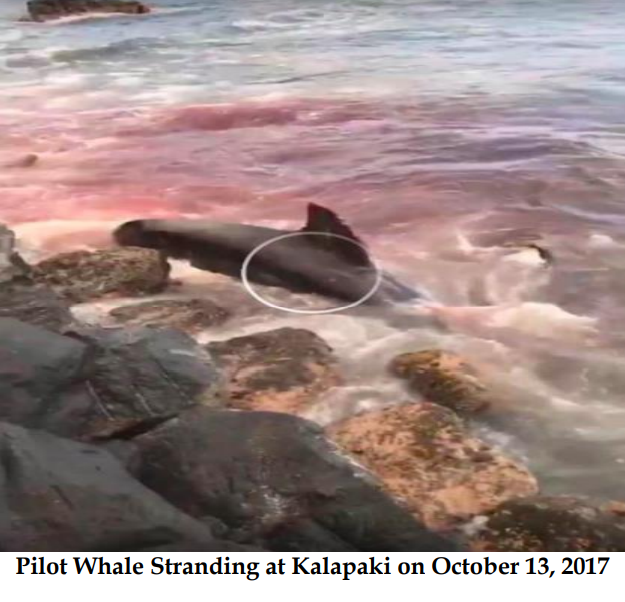
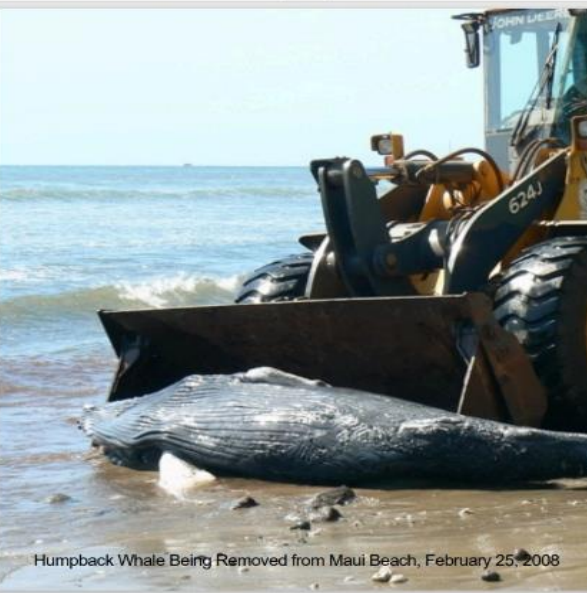
  • Strandings of whales, some hemorrhaging, occurred within 60 days following anticoagulant bombardment.
  • Unusual mass strandings of hemorrhaging dolphins occurred in San Diego and Hawaii years after anticoagulant bombardment.
  • There is very little known about the fate of anticoagulant residues in the oceans.

Our knowledge of contamination of the food web caused by rodenticide drops on islands is limited because monitoring is usually short-term and frequently done by the same contractors who implemented the project, with little motivation to report the extent or persistence of contamination.  For the same reasons, we have limited knowledge of how successful the projects are.
Track record of island eradications

About 1,200 island eradications have been done all over the world over the last 30 years.  Our evaluation of the proposed project on the Farallon Islands is based on the success or failure of those projects.

The aerial application of rodenticide to kill rats on Anacapa Island in 2001-2002 was the first of its kind in North America.  The project was also unique because it was complicated by the need to spare a population of endemic native deer mice on Anacapa.  Over 1,000 native mice were captured before the aerial application of rodenticide and released back on the island after the poison was no longer effective.  Although post-project monitoring reported successful eradication of rats, they were not confident that all of the mice that were left on the island had been killed. (1)

Attempts to eradicate mice have been consistently less successful than attempts to eradicate rats.  A study of 139 attempted eradications of animals on 107 Mediterranean islands in eight countries found that eradication projects targeted 13 mammal species. The black rat was the target of over 75% of the known attempted eradications in the Mediterranean Basin. The most widely used technique was poisoning (77% of all eradications), followed by trapping (15%) and hunting (4%).  Techniques were largely target-specific.

The average failure rate of the projects was about 11%, but success was defined only as the death of animals living on the islands at the time of the project. However, this percentage varied according to species. The failure rate of house mouse eradication was 75%. Reinvasion occurred after 15% of eradications initially considered successful. (2)

Island eradications considered initially successful, are often failures in the long run.  A recent visitor to Anacapa Island has reported seeing two dead rodents as her escorted group was leaving the island. One was identified as a deer mouse. The other rodent was not identified. Have rats returned to Anacapa?  Are native deer mice still being killed by residues of rodenticide? (3)

The eradication of rats on Anacapa Island is relevant to the planned project on the Farallon Islands because rats were killed, but mice were saved.  Although the Anacapa project considered rats a threat to birds, it did not consider mice a problem.  Rats were killed, but mice were saved by trapping and removing them from the island before the rodenticide was dropped.  Mice on the Farallon Islands are not a threat to birds.  They will be killed only because they are non-native.

Mice are members of the food web

Mice on the Farallon Islands are as much a part of the food web as they are on Anacapa Island.  They are prey of the birds and they are mainly predators of vegetation.  On the Farallon Islands, mouse predation of vegetation is considered a problem, but on Anacapa Island it is not considered a problem.  On the Farallon Islands, the study of the diet of mice reports that mice also eat insects when vegetation becomes scarce in the fall.  (4)

The study of the mouse diet on the Farallons also reports that 63%-80% of the vegetation on the Farallons is non-native.  That’s why Roundup (glyphosate) has been used on the Farallon Islands every year since 1988.  Between 2001-2005, an average of 226 gallons of herbicide were used annually (5.4 gallons per acre per year), according to the annual report of the Farallon National Wildlife Refuge. (5)
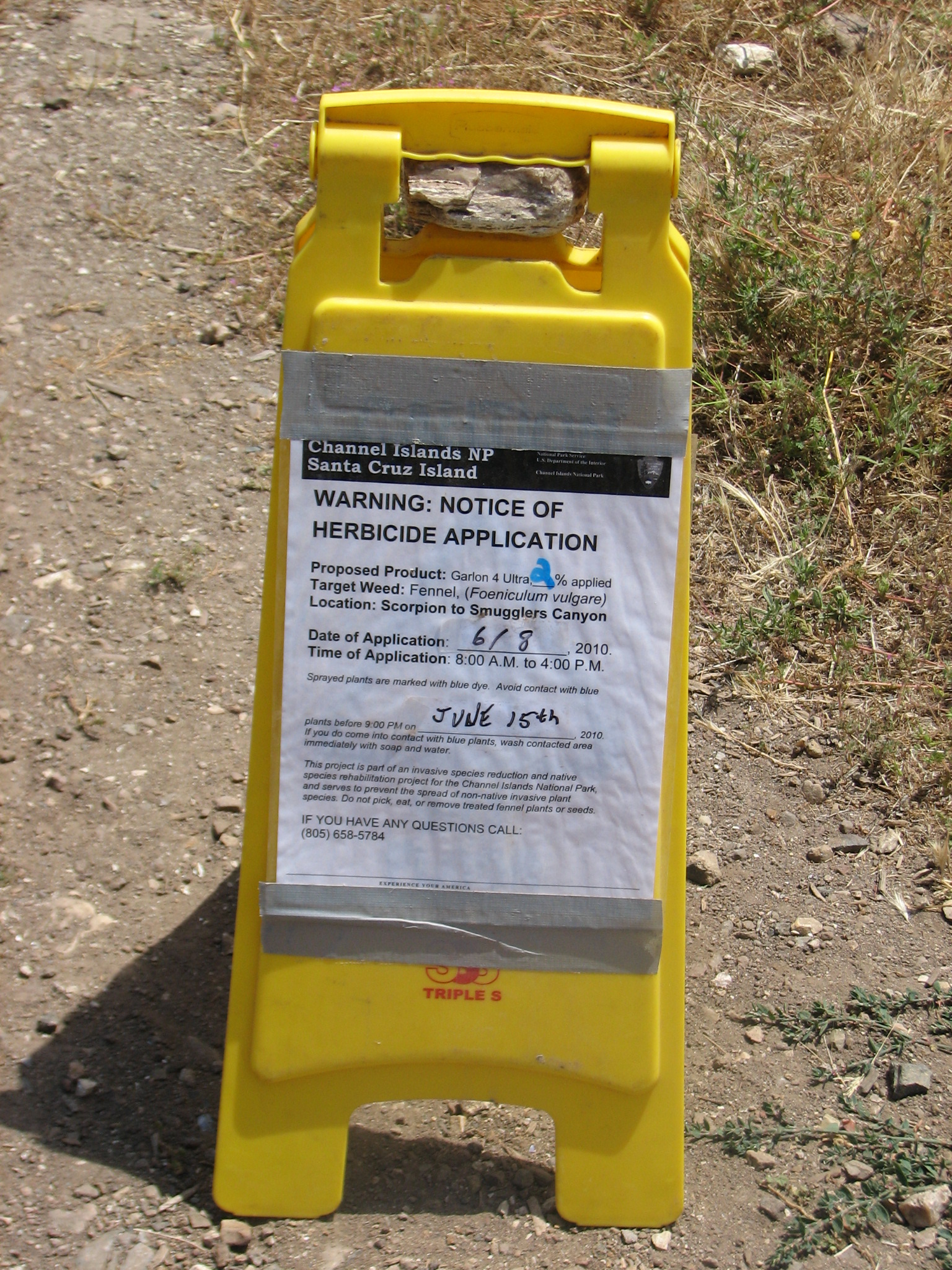
I took this photo on Santa Cruz Island in 2010, while visiting with an escorted group.

The Farallon Islands have never been inhabited and there has been no public access to the islands for over 100 years.  Non-native plants were not brought to the Farallons by humans.  Their seeds were brought by birds in their stomachs, in their feathers, on their feet and by wind and ocean currents.  Non-native plants dominate vegetation on the Farallons partly because non-native plants are eaten by birds.  The plants are members of the food web and their eradication is depriving birds and other animals in the ecosystem of food.  If non-native plants were not being eradicated with herbicides, it probably would not be necessary for mice to eat insects, which are not their preferred food.  We can safely assume that herbicides are harmful to the animals that consume plants that have been sprayed. (6)

Consequences of fiddling with the food web

There were also feral cats on the Farallons before they were killed.  Predictably, the population of mice increased after the cats were killed.  When 6,000 feral pigs were killed by sharp shooters on Santa Cruz Island, Golden Eagles substituted for that plentiful food source by preying on the rare, native Channel Island Fox.  Golden Eagles were captured and relocated to the mainland.  The fox population was restored to the island by a captive breeding problem.  The same could be done on the Farallons to eliminate the only known threat to ashy storm petrels.  The small population (approximately 6-10) of burrowing owls that are the only known predators of the petrels could be trapped and removed to the mainland as the Golden Eagles were on Santa Cruz Island.

Restoration plans for any ecosystem should begin with a thorough analysis of the food web.  Plucking single species of plants and animals out of complex ecosystems without understanding their role in the food web results in unintended and harmful consequences.

The Farallons project is based on mistaken assumptions

The Farallons project is based on the mistaken assumptions of invasion biology.  Most of the vegetation on the island is being killed with herbicide because it is non-native.  The vegetation is clearly essential to all the animals living on the island, but invasion biology asks us to believe that it is not, solely because it is non-native.  If the mice are killed on the island, it is only because they are non-native, not because they are harmful to birds.  They are an important source of food for the birds, but invasion biology asks us to believe they are not, solely because they are not native.  These assumptions are wrong, yet 50 years of nativist ideology still has a death grip on our public lands. 

This deadly dogma is losing its grip, but apparently too slowly to prevent the destruction of the food web on the Farallon Islands.  I always attend the conferences of the California Invasive Plant Council (Cal-IPC) and the California Native Plant Society (CNPS) to give native plant advocates every opportunity to convince me of their ideology.  Consistently, I find more support for my contrarian viewpoint than I do for invasion biology.  A presentation about the salt marsh harvest mouse at the Cal-IPC conference in October 2023, is an example.

California Department of Fish and Wildlife collaborated with UC Davis to study the food preferences of salt marsh harvest mouse (SMHM), an endangered native animal that lives in the wetlands of the San Francisco Bay. It has always been presumed to be entirely dependent on native pickleweed for food and habitat. The legally mandated recovery plan is based on that mistaken assumption.
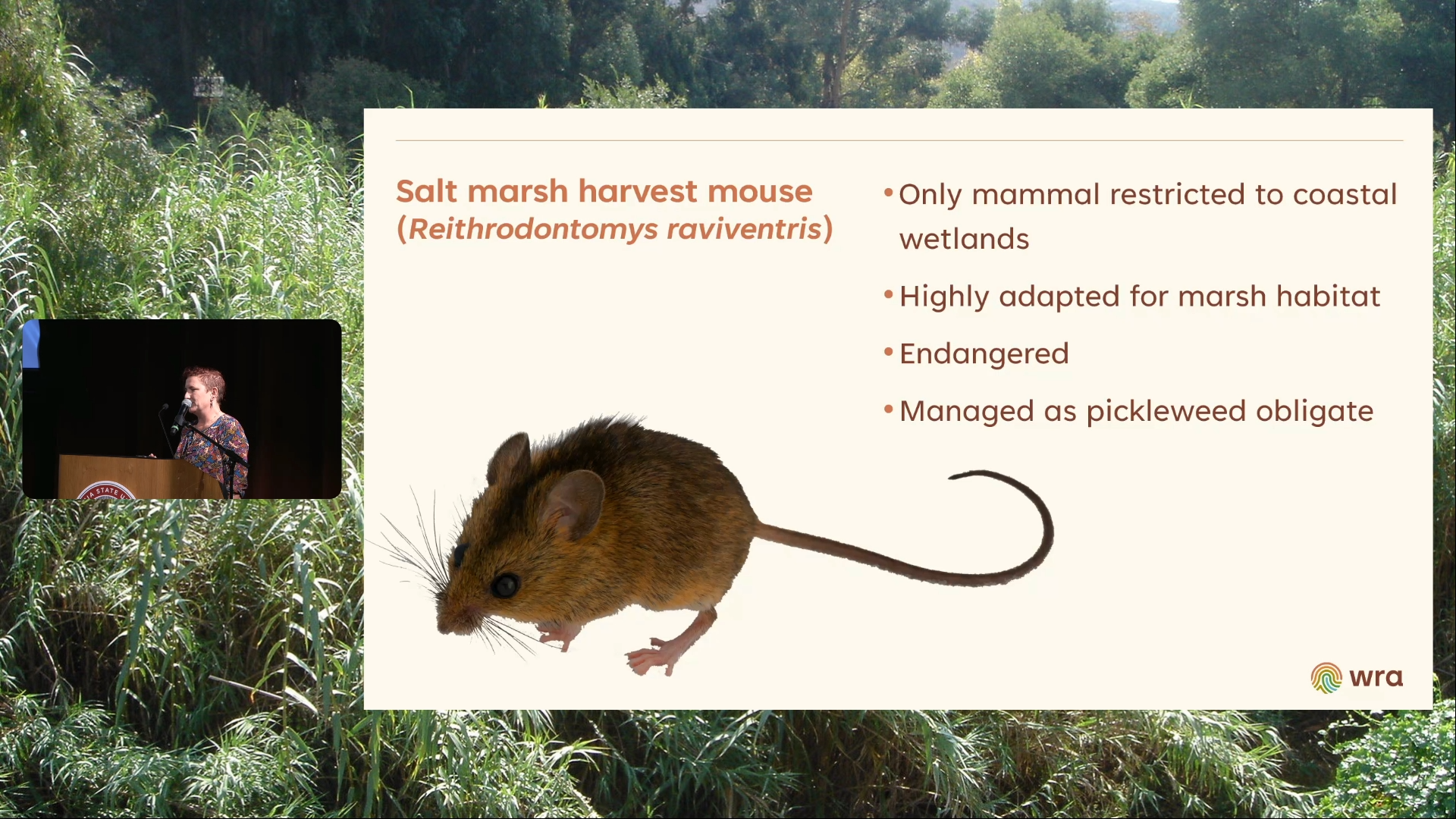
Presentation to California Invasive Plant Council conference in October 2023

The study reported to Cal-IPC shows clearly that SMHM is NOT dependent on pickleweed for either food or habitat. SMHM is an extreme omnivore. SMHM ate 39 species of native and non-native plants as well as insects in empirical trials. In fact, it ate EVERY plant it was offered. A fecal study of SMHM living in the wild confirmed that finding. Fecal analysis found SMHM had eaten 48 native and non-native plant genera as well as some insects.
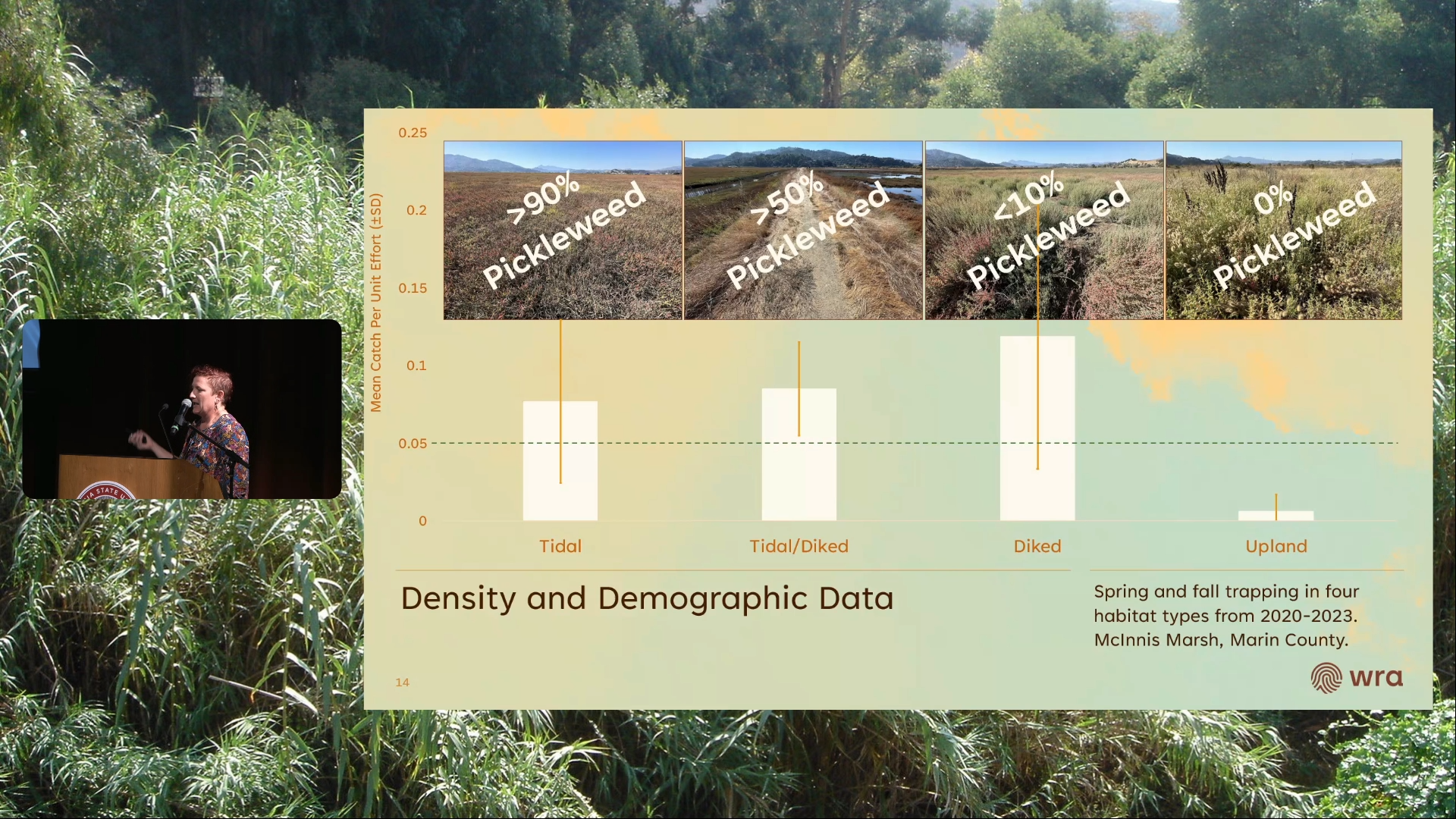
Presentation to California Invasive Plant Council conference in October 2023

SMHM have no preference for native plants for either food or nesting habitat. The most SMHM’s captured in the study were found where there was less than 10% pickleweed.

This was an absurdly simple experiment in which SMHM were captured and fed a variety of plants. It could have been done by anyone with little knowledge or fancy equipment. Why does this foolish mistake, caused by nativist bias, matter? Because “restoration” projects all around the San Francisco Bay have been eradicating non-native plants, claiming it would benefit the endangered SMHM.

For example, the spartina eradication project has been hunting for and poisoning hybrid spartina marsh grass for nearly 20 years, as well as planting pickleweed for SMHM. Since herbicides are used to kill non-native plants before pickleweed is planted, there’s little doubt that SMHM populations were harmed by the eradication of their food and shelter, if not directly harmed by the pesticides that are used.

Nativism in the natural world is not benefiting wildlife. Rather it seems to benefit only the army of “restorationists” who earn their living killing harmless plants and animals.  As long as they continue to receive public funding for their projects, they have job security because they have spent over 20 years trying to do something that cannot be done. Evolution moves inexorably forward. The puny efforts of humans to regress landscapes to arbitrarily selected historical standards cannot change the forward trajectory.

There were two presentations about difficulties with native plant restorations on Anacapa and Santa Rosa Islands at the CNPS conference in October 2022.  More than 20 years after non-native iceplant, rabbits, and rats were killed on Anacapa, native flora and fauna are still described as degraded, “Due to the cumulative and severe impacts to the soil and native seedbank, native vegetation communities have not recovered on their own…”  On Santa Rosa Island the “restoration” community has installed artificial fog fences to replicate a historical cloud forest to improve survival of native chaparral plants. (7)

Alternatives to rodenticide drop on Farallon Islands

It is not necessary to kill mice on the Farallon Islands because they are not harmful to birds.  If non-native vegetation weren’t killed with herbicides, there would probably be enough vegetation for omnivorous house mice as well as birds.  Both mice and vegetation are being killed only because they are non-native.  If the nativist ideology were removed from the agenda, dumping rodenticides on mice and herbicides on non-native vegetation would not be necessary.

If the protection of ashy storm petrels really were the goal of the proposed project on the Farallon Islands, the most obvious solution would be to remove the small population of burrowing owls that are the only known predators of the petrels.  Keep in mind that ashy storm petrels are not considered threatened or endangered and that two applications for protected status have been denied. (8)

There is a non-lethal alternative to reducing populations of rodents using rodenticides that kill non-target birds and other animals.  Academic scientists at Arizona State University have developed birth control for rodents that can be used on the Farallons to reduce the population of mice.  (WISDOM Good Works)

In Summary

Killing house mice on the Farallon Islands with rodenticide is unnecessary and will be harmful to the ecosystem and its inhabitants because:

  • Aerial dropping 1.5 tons of rodenticide will poison the entire ecosystem, killing hundreds of non-target birds and marine animals.
  • House mice on the Farallon Islands do not need to be killed because they are food for birds and they are harmless.
  • If burrowing owls are killing nestlings of ashy storm petrels, they could be removed and relocated.
  • The nearly 40-year attempt to kill non-native vegetation with herbicide should be stopped because the vegetation is a vital element in the food web of the Farallon Islands.

Happy Holidays and thank you for your readership.


  1. https://www.cambridge.org/core/journals/oryx/article/eradication-of-black-rats-rattus-rattus-from-anacapa-island/F1E46767D0EEC9A6357D414DD84ABE28
  2. https://onlinelibrary.wiley.com/doi/abs/10.1111/mam.12190
  3. https://myricopia.com/2023/11/21/anacapa-island-conservation/
  4. https://www.biorxiv.org/content/10.1101/2022.02.23.481645v1.full
  5. https://drive.google.com/file/d/1XoPcS104SeOUIyfbPT_NbardctNyWAgs/view
  6. https://www.nrdc.org/sites/default/files/opinion-glyphosate-20220617.pdf “As to ecological risk, it finds potential risks to animals and plants and ‘requires’ mitigation in light of those risks, laying out specific language for glyphosate product labels.”
  7. https://www.nps.gov/chis/learn/nature/cloud-forest.htm
  8. https://www.endangeredspecieslawandpolicy.com/u-s-fish-and-wildlife-service-denies-endangered-species-act-protection-for-ashy-storm-petrel

https://wisdomgoodworks.org/2023/10/611/

“What Agribusiness Doesn’t Want You to Know”

One of the arguments used by native plant advocates to defend the use of pesticides to eradicate non-native plants and trees is that this use is trivial in comparison to the volume of pesticides used by agriculture.  It’s not an argument that makes sense to us.  In fact, the opposite seems a stronger argument.  In other words, if it is necessary to use pesticides to produce our food, all the more reason to avoid the use of pesticides for other purposes, because the harm done by pesticides is cumulative.  Humans and other animals accumulate pesticides and other toxic substances in our bodies throughout our lifetimes so the fewer sources of toxic contamination, the better.

However, as we learn more about how pesticides are used by agriculture and how harmful pesticides are to us and other animals, the more we question the underlying premise.  That is, we wonder if it really is necessary to use pesticides to produce our food.  We have researched this question and we are reporting to our readers a brief history of pesticide use by agriculture, the consequences of this use, and finally, the growing evidence that present levels of pesticide use by agriculture isn’t necessary or justified.

The history of pesticide use by agriculture

The use of synthetic pesticides by agriculture began after World War II as a result of the development of new chemicals and the industry that produced them during the war.  Prior to WW II, farmers generally purchased raw chemicals to formulate primitive pesticides because ready-to-use pesticides were not available.  Here are some of the statistical trends that describe the use of pesticides by agriculture: (1)

  • Three-fourths of all pesticide use in the U.S. is by agriculture.
  • Pesticide use has been consistent at 2.6 to 2.7 pounds per acre of cropland per year for the past 25 years.
  • The volume of synthetic herbicide use has increased steadily since 1945, but the volume of insecticide use has declined after the 1980s as new low-dose products have been developed.
  • Fruits/nuts lead all other crops in terms of pesticide applications, with about 45 pounds of active ingredient per acre grown.  Vegetables receive about half that rate, but the rate nearly doubled from 13.4 to 23.7 pounds per acre from 1988-89 to 1996-97.

The expenditures for pesticides by agriculture are another way to understand the increased use of pesticides and their importance to both the agricultural industry and the chemical industry:  Farm expenditures on pesticides have increased from $296 million in 1929-31 to about $8.5 billion in 1995-97 in constant dollars. These are the factors that account for increased expenditures over seven decades:  (1)

  • The amount of active ingredient in pesticides usage increased during that period three fold (from 230 to 782 million pounds).
  • The replacement of low cost pesticides such as sulfur and petroleum by more expensive formulated pesticides.
  • From 1974-76 to 1995-97, the average expenditure per pound of active ingredient nearly doubled.
  • The average expenditure per capita for agricultural pesticides was reported as $32.10 in 2003.  That is, for every American, $32.10 was spent on pesticides for agriculture per year.

How does America’s pesticide usage compare to the rest of the world? (2)

  • World-wide expenditures on pesticides were $39.443 billion in 2007.  The United States bought one-third of all of the pesticides sold in the world in 2007.
  • The U.S. used 25% of all herbicides and 22% of all pesticides used in the world in 2007.

Changes in farming practices in the United States

Cornfield.  Creative Commons
Cornfield. Creative Commons

Farming in the United States has changed since World War II.  There are fewer farms and they are much larger than they were in the past.  Most farming is no longer done by the owner of the land.  This separation of farming and ownership has destroyed farming communities.  We no longer find farmers congregating in local cafes swapping tips at 5 am.  It has become an impersonal industry. (3)

Feedlot
Feedlot

Farming practices have changed to accommodate the industrial model.  Farms now grow only one or two crops which substantially reduces the traditional practice of crop rotation.  Animals are no longer found on farms because farming and raising livestock are now done separately.  Farms now specialize.

Increased pesticide use is both cause and effect of these changes in farming practices.  The drop in crop prices which made small farms unprofitable also motivated pesticide use to reduce labor costs.  Pesticides were also a substitute for the crop rotations which reduced insect populations by disrupting the relationship between predator and host.  Pesticides also compensated for the weed-suppressing effects of alfalfa grown to feed livestock now gone from the farm.  The loss of animal manure on the farm required the substitution of chemical fertilizers. The manure which had been useful in the past is now a waste product that pollutes water from run-off from industrial-size feed lots.  Separating farming from land ownership meant those using synthetic chemicals were no longer poisoning their own land and suffering the long-term consequences of their choices.

Traditional farming methods are equally effective and do less damage to the environment

The agriculture and chemical industries have been successful in convincing the public that the use of pesticides and associated farming methods were necessary to produce the food we need at the prices we are willing to pay.  This fiction has thus far sustained an industry that is clearly damaging the environment and exposing the public to environmental pollution.  There is growing evidence that traditional farming methods are equally effective and do less damage to the environment.

The results of a large-scale, long-term study comparing traditional farming methods with industrial farming methods were recently published.  The study was conducted by the US Department of Agriculture, University of Minnesota, and University of Iowa on the research farm of the University of Iowa.  They divided the research acres into three sectors and used three different farming methods to test and compare the efficacy of these methods:  (4)

  • Conventional method:  growing only corn and soybeans in a two-year rotation cycle, using synthetic fertilizers and pesticides.
  • Three-year rotation cycle, adding a crop of grains and clover.
  • Four-year rotation cycle, adding a crop of alfalfa plus livestock which was fed the alfalfa.

They conducted this test over a nine-year period from 2003-2011.  Here are the results of their study:

  • The longer rotations of more crops produced higher yields than conventional methods:  4% more corn and 9% more soybeans.  The longer rotations were also more profitable than conventional methods.
  • The longer rotations required less synthetic fertilizer than the conventional method.  The amount of fertilizer required by the longer rotations also decreased over time as the soil improved during the study.
  • The longer rotations reduced herbicide use by a whopping 88% with little increase in weediness.”  (4)
  • Longer rotations substitute labor for other inputs, but without reducing profitability.

Why aren’t traditional farming methods adopted?

As stunning as this information is, it is actually not new:  “In 1989, the National Research Council investigated alternative agricultural operations such as these and reported that U.S. farming could be shifted to more natural forms without losses to yields or profits, without significantly higher food prices, and with significant gains in health and environmental protection.”  (3) 

The Union of Concerned Scientists explains why the public is unaware of the superiority of traditional farming methods in their article about the new study done at the University of Iowa.  They tell us that the Economic Research Service of the US Department of Agriculture reports that 53% of all food and agriculture research is conducted by the private sector.  Clearly the agriculture and chemical industries would not fund a study that might conclude that conventional farming methods are harmful and/or uneconomical.  So, the availability of funding for such studies is limited.  (4)

In the event that such a study is conducted, what are the chances that it will be published?  The study done at the University of Iowa was rejected for publication by the journals Science and the Proceedings of the National Academy of Sciences.  It was finally accepted by PLOS One which is solely an on-line publication.  (5)

Finally, in the event that a farmer learns that traditional farming methods are less harmful to the environment and equally productive, what are the chances that he will adopt those methods?  The chances are small because the farmer probably does not own the land and is therefore unconcerned about polluting it and there is no cost to the farmer associated with polluting the environment. (5)

Pesticides are a public health risk whether they are used in agriculture or in our public parks.  In both cases, the good news is that it isn’t necessary to use pesticides.  If the public wants to reduce the public health risks of pesticide use, they will have to speak up.  Those who use pesticides are not going to stop using them unless they are forced to do so. 

*************************

(1)    Center for Integrated Pest Management, North Carolina State University, “Pesticide usage in the United States:  Trends during the 20th Century,” February 2003.  Available here.

(2)    Environmental Protection Agency, “Pesticide Industry Sales and Usage. 2006 and 2007 Market Estimates.” Available here.

(3)    Sandra Steingraber, Living Downstream, Addison-Wesley, 1997

(4)    Karen Stillerman, Union of Concerned Scientists, “Crop Rotation Generates Profits without Pollution (or, What Agribusiness Doesn’t Want You to Know,” October 11, 2012.  Available here.

(5)    Mark Bittman, “A Simple Fix for Farming,” New York Times, October 19, 2012.  Available here.

Why are we poisoning ourselves?

Americans banned DDT in 1972 and PCBs a few years later. We pat ourselves on the back for banning these and other toxic chemicals, but should we? Recent research suggests that though they were banned forty years ago, they are still making us sick.

Although these chemicals were banned, the chemical industry continues to churn out new products about which we know little. Will we find out decades later that these new chemicals are just as likely to poison us as their predecessors? The history of their predecessors suggests that is a likely outcome.

Living with the consequences of our folly

The National Research Council recently published a report (1) that informed us that at least 126,000 sites throughout the country have contaminated groundwater that requires remediation. About 10% of those sites are considered “complex” which is a euphemism for the fact that the technology required to clean them up does not presently exist, meaning that restoration is unlikely to be achieved in the next 50 to 100 years. The report estimates the cost of cleaning up these sites will be from $110 billion to $127 billion. However, the report also acknowledges that both the estimate of the number of sites and the cost of the clean up are probably underestimates.

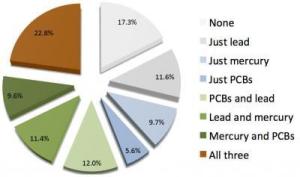
What are the consequences of living with toxic chemicals? Researchers at Brown University tested the blood of over 3,000 women between the ages of 16-49 for levels of mercury, lead, and PCBs. These three chemicals are known to harm brain development of fetuses and babies. The sample was designed to represent the national population of 134.4 million women of childbearing age. Here’s what they found:

  • “Nearly 23 percent of American women of childbearing age met or exceeded the median blood levels for all three chemical pollutants.” (2)
  • “All but 17.3 percent of the women aged 16 to 49 were at or above the median blood level for one or more of these chemicals, which are passed to fetuses through the placenta and to babies through breast milk.” (2)
  • “As women grew older, their risk of exceeding the median blood level in two or more of these pollutants grew exponentially to the point where women aged 30 to 39 had 12 times greater risk and women aged 40-49 [born before these chemicals were banned] had a risk 30 times greater than those women aged 16 to 19.” (2)
  • “Fish and alcohol consumption also raised the risk of having higher blood levels. Women who ate fish more than once a week during the prior 30 days had 4.5 times the risk of exceeding the median in two or more of these pollutants.” (2)

The body burden of multiple pollutants

While these findings are horrifying, they pale in comparison to the stunning finding that “One risk factor significantly reduced a woman’s risk of having elevated blood levels of the pollutants, but it was not good news: breastfeeding. Women who had breastfed at least one child for at least a month sometime in their lives had about half the risk of exceeding the media blood level for two or more pollutants. In other words, …women pass the pollutants that have accumulated in their bodies to their infants.” (2)

This particular study emphasizes the consequences of these pollutants for the children of the women who were tested. What about the women themselves? Surely these pollutants are also affecting their health and well-being. We turn to an outstanding book—Living Downstream– by an ecologist and cancer survivor (so far) for an answer to this question.(3)

First we must acknowledge how little we know about the connection between chemical pollution and its consequences to our health. The damage being done to our bodies by pollutants is not immediate nor is our exposure usually quantifiable which makes cause and effect very difficult to prove. Circumstantial evidence of the connection is therefore easily dismissed as anecdotal: women born in the United States between 1948 and 1958 had almost three times the rates of breast cancer in 1997 than their great-grandmothers did when they were the same age. Coincidentally, pesticide use in the United States had doubled between 1952 and 1997. (3, page 13)

Ironically, although DDT and PCBs were banned forty years ago, the connection between breast cancer and these pesticides was not discovered until after they were banned. The first study was conducted 4 years after DDT was banned on only 14 women with breast cancer. Significantly higher levels of DDT and PCBs were found in their tumors than in the surrounding healthy tissues. It took another 17 years to replicate that study on a statistically significant number of women: 14,200 women in New York City who had mammograms. The 58 women in that sample who were diagnosed with breast cancer had higher levels of DDT and PCB in their blood than women without breast cancer. (3)

It took nearly 50 years to prove that women with breast cancer have higher levels of DDT and PCB in their bodies than women without breast cancer. How long will it take us to learn what damage we are doing to ourselves with the pesticides that we are using now?

We aren’t testing for chemical pollution

Bacterial pollution at Pine Lake, San Francisco.  February 2012
Bacterial pollution at Pine Lake, San Francisco. February 2012. Courtesy Save Sutro

In San Francisco, the Department of Public Health tests the water bodies in the city for bacteria. In February 2012 they closed Pine Lake to the public because of bacterial levels. This incident prompted us to ask about San Francisco’s testing of water bodies. We learned that testing for bacteria is the ONLY test conducted in San Francisco. The watershed of Twin Peaks and Glen Canyon into Islais Creek was sprayed with pesticides over 30 times in 2011 by the Natural Areas Program, yet the water in the creek was not tested for pesticide levels. Islais Creek flows into the bay.

The need for more testing of water bodies was recently recognized by the European Science Foundation. (4) They conducted a poll of 10,000 citizens from 10 European countries which found that pollution is the top concern of the public among all concerns regarding the marine environment.

The public has good reason for their concern. There are presently about 30,000 chemicals available on the European market with production volume exceeding one ton per year. The volume of these chemicals entering rivers, streams, estuaries, and seas is increasing and potentially damaging marine organisms, ecosystems, and processes. Yet the testing of waters for these chemicals lags far behind the increasing number of chemicals being introduced to the environment.

We are on a pesticide treadmill

The tests required to put new chemicals on the market are minimal. The testing of pollution levels in the environment is also minimal. Yet, we continually introduce new pesticides about which we know little. Why? We speculate about the motivation for introducing new pesticides into the environment:

  • As the patents on pesticides expire, the manufacturers must introduce new pesticides in order to maintain their profit margins.
  • The longer a pesticide is in use, the more likely its target is to build up a resistance to it. Hundreds of weeds are resistant to available herbicides. Hundreds of insects are resistant to available insecticides.
  • The less the public knows about a pesticide, the less likely they are to be afraid of it and the less likely they are to object to its use..

Why is this issue relevant to Million Trees?

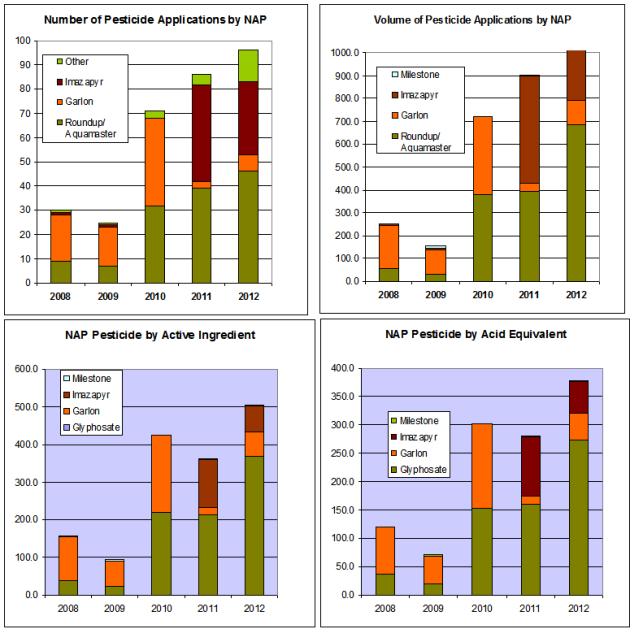
Our regular readers might wonder what this has to do with the mission of Million Trees to inform the public of the destruction of non-native trees for the purpose of creating native plant gardens. The connection is that the use of pesticides by these projects is skyrocketing as the war on non-native plants escalates.

Volume of pesticide use by San Francisco's "Natural Areas Program."  Courtesy San Francisco Forest Alliance
Volume of pesticide use by San Francisco’s “Natural Areas Program.” Courtesy San Francisco Forest Alliance

Those who work for these projects and those who support them defend their use of pesticides in our public parks by telling us they are following the rules, and the rules guarantee no harm will be done by the pesticides. What they don’t seem to understand is that many of the pesticides—and other chemicals—that we now know are harmful to us and the animals that we live with, were legal when they were used. They were legal because we did not know yet that they were harmful.

It took decades for us to understand that the pesticides we were using were harmful. We see no reason to believe that the pesticides we are using now will not also prove to be harmful. By the time we learned how harmful they are, a great deal of damage had already been done. And although many were banned decades ago, they persist in the environment and in our bodies. Therefore, we object to the frivolous use of pesticides in our public parks. Using pesticides for the purpose of killing vegetation solely because it is non-native is irresponsible, given the potential damage they can do to humans and wildlife.

*******************************

(1) National Academy of Sciences, “Clean-up of some U.S. contaminated groundwater sites unlikely for decades,” November 8, 2012

(2) Marcella Remer Thompson, Kim Boekelheide, “Multiple environmental chemical exposures to lead, mercury, and polychlorinated biphenyls among child-bearing-aged women: Body burden and risk factors,” Elsevier, November 16, 2012

(3) Sandra Steingraber, Living Downstream, Addison-Wesley, 1997

(4) European Science Foundation, “Chemical pollution in Europe’s Seas: The monitoring must catch up with the science,” March 21, 2012