Dana Milbank: The evolution of a native plant advocate

Dana Milbank is a political columnist for the Washington Post.  Like many Americans, Milbank moved his family from urban Washington D.C. to a derelict farm in the foothills of the Blue Ridge Mountains in Virginia, seeking refuge in nature from urban confinement imposed by the Covid pandemic.  So began his war on nature, dictated by native plant ideology.

In a series of columns, WaPo readers observed how his battle against non-native plants developed:

  • The first installment of his “restoration” saga described the over-grown property that he believed he was obligated to tame:  “an entire civilization of invasive vines and weeds had cruelly exploited the inattention [of previous elderly owners].”  The vines were “murdering defenseless native trees.”   He hired a crew to clear brush, until the cost challenged his budget.  Then he bought equipment and tried to do it himself.  He concluded that he could not “restore order” to his land without using herbicides.  Even then, he was doubtful of ultimate success:  “Clearly, I won’t be defeating these invaders.  At best, I’ll battle them to a temporary truce, holding them at bay until I lose the will to fight them.”  Like many city-slickers, Milbank has an unrealistic vision of what nature looks like when allowed to take its course.
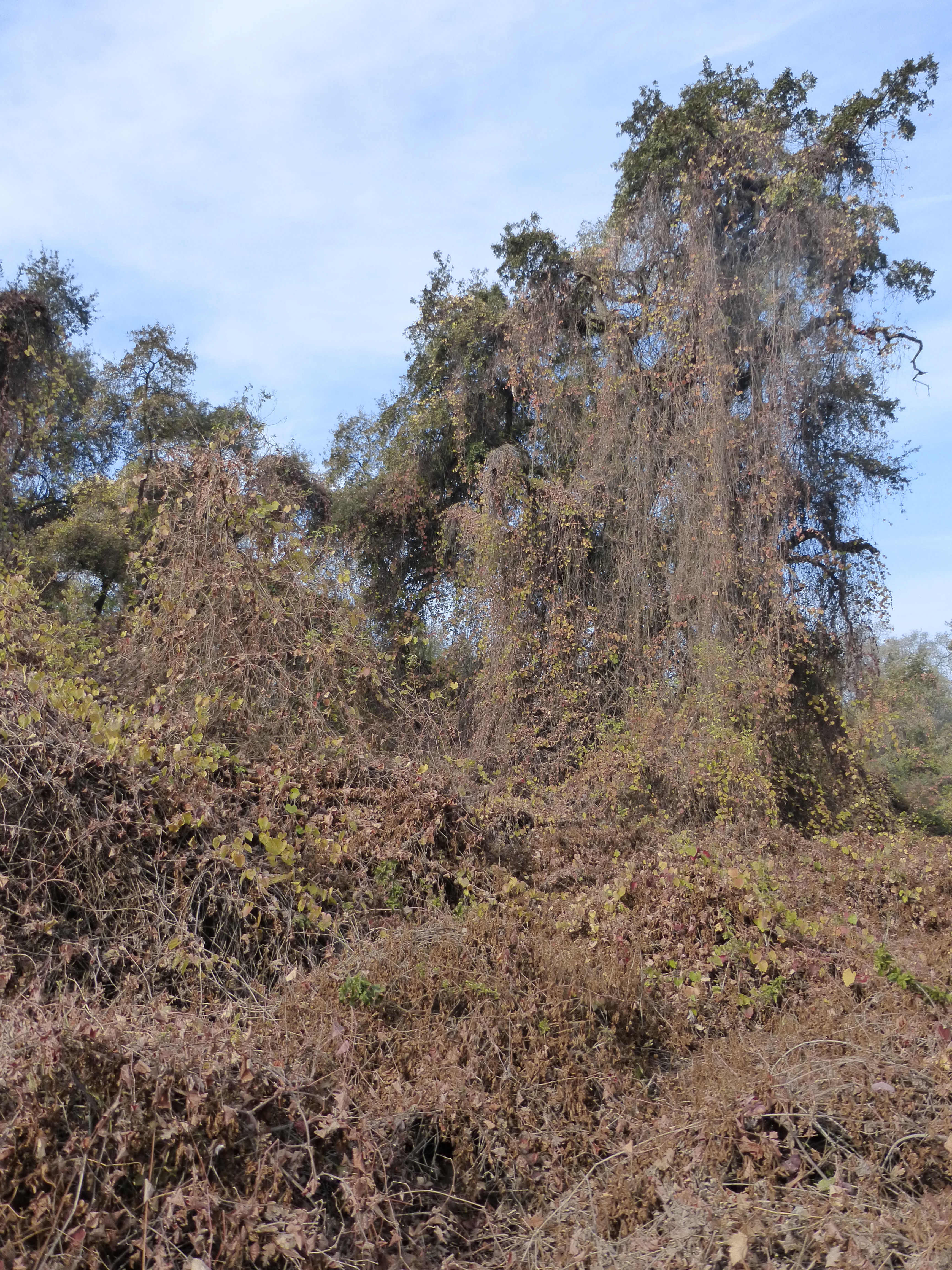
Kaweah Oaks Preserve, Visalia, CA.  November 2013.  California Wild Cucumber, also called manroot (Marah fabacea), climbing over a native valley oak.  Both native and non-native plants can be “invasive.” 
  • In the second episode of Milbank’s battle plan, deer were his target:  “I will be wielding my gun against a brutal foe—one that destroys our forests, kills our wildflowers, sickens humans and threatens the very survival of birds, mammals, insects and amphibians.  I am becoming a deer hunter.”   Where top predators, such as wolves and bears, have been eliminated by humans, there is an over-population of deer who browse vegetation, depriving other animals of the food and cover they need.  Again, Milbank has his doubts about the effectiveness of hunting deer on his property:  “I can’t pretend that my hunting will make a dent in the deer population.” 
  • After taking Virginia’s Master Naturalist Program, Milbank’s third episode expresses his regrets as a gardener:  “I’ve been filling my yard with a mix of ecological junk food and horticultural terrorists” and he warns urban and suburban gardeners that their gardens are “dooming the Earth.”  He takes aim at cultivars in general and many specific species of introduced plants.  Conservation Sense and Nonsense explains why most of these accusations are exaggerated, if not, patently false. 
  • In Milbank’s column, “How I learned to love toxic chemicals,” he expresses frustration about how hard it is to eradicate non-native plants:  “I was losing, badly, to the invasive vines and noxious weeds…I’d cut them back, but they would return in even greater numbers.”  He fully embraces the use of herbicides to escalate his war on nature:  “I have become a reluctant convert to chemicals.”  He acknowledges that glyphosate is toxic, but he claims that the cut-stump application method he uses is “surgical.” He wears protective clothing, including a respirator, which is not required by the product label or California law for glyphosate applications.  He is encouraged by Doug Tallamy, who calls herbicides “chemotherapy.”  Conservation Sense and Nonsense explains why herbicides are doing more harm than good to the environment and everything that lives in it.  

Throwing caution to the winds

In the latest installment of Milbank’s crusade against non-native plants, he tosses caution about herbicides aside. He hires a drone to spray a hayfield with glyphosate in preparation for creating a meadow of native grasses and forbs:

“To save the birds, I brought in this big bird: a 10-foot-square, Chinese-made drone with 8 propellers, capable of carrying 10 gallons of fluid, in this case glyphosate, to kill the grass in my hayfield. (It might seem counterintuitive to douse a field in herbicide to help nature, but conservationists broadly endorse the practice.)”
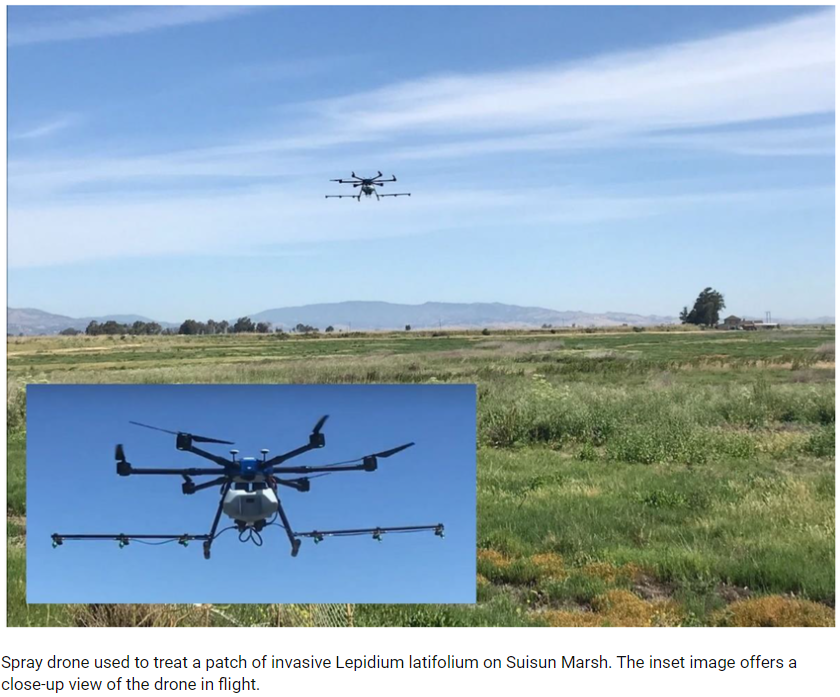
Herbicides are often sprayed from drones to eradicate non-native plants considered “invasive.” Source: https://www.researchgate.net/figure/Spray-drone-used-to-treat-a-patch-of-invasive-Lepidium-latifolium-on-Suisun-Marsh-The_fig3_372867398https://www.researchgate.net/figure/Spray-drone-used-to-treat-a-patch-of-invasive-Lepidium-latifolium-on-Suisun-Marsh-The_fig3_372867398

Milbank has abandoned his cautious use of herbicide and is now aerial spraying from a drone 30 feet over his head, while he watches, without wearing any protective gear:

“Shanley, in shorts, sneakers and fishing shirt, plopped in a lawn chair in the shade of my barn and, using a control pad with two joysticks, sent the drone into the sky… In a moment, the beast was airborne and, from a height of about 30 feet, spraying death on my hayfield. It sprayed the fescue. It sprayed the Johnson grass. It sprayed the foxtail. It returned, flew over the barn — and sprayed me with glyphosate. Programming error. “Sorry about that,” Shanley said. My eyes burned for two days.”

If he had been wearing safety goggles, as required for glyphosate applicators in California, he would have been spared. Milbank has the right to poison himself, his land, and the animals that live on his land.  Although the applicator may be breaking laws (he would be in California) by not wearing any protective equipment, Milbank isn’t doing anything illegal. 

If I weren’t reading his story in the mainstream media with a national following, I wouldn’t be writing about what he’s doing. I’m writing about Milbank’s dangerous use of herbicides because he has a big audience and his audience displays their ignorance of the dangers in over 1,400 comments.

The reader comments on Milbank’s latest article are uniformly positive, as were comments on his earlier installments about his war on nature.  Most comments are short expressions of unqualified praise, such as “You are doing holy work,” or “God bless you.”

A handful of comments (including mine) express concern about the indiscriminate use of glyphosate.  The few dissenting readers are blasted by Milbank’s supporters.  Some of their responses betray ignorance of herbicides: 

  • It’s not Round Up; it’s a safe herbicide.”  In fact, Milbank says he’s using glyphosate, which is the active ingredient in Round Up.
  • “He said nothing about dousing. It looks like a selective approach. In some cases, there is no practical alternative.”  In fact, Milbank says explicitly that he’s spraying 10 gallons of herbicide 30 feet over the ground from an aerial drone.  Does that sound selective?

The reader comments claiming that glyphosate is harmless brought to mind a recent article about the army of paid apologists for pesticides.  The pesticide industry, in collaboration with the US government, has “established a ‘private social network’ to counter resistance to pesticides and genetically modified (GM) crops in Africa, Europe and other parts of the world, while also denigrating organic and other alternative farming methods. More than 30 current government officials are on the membership list, most of whom are from the US Department of Agriculture (USDA).”

The most common defense of Milbank’s herbicide spraying was that it only needs to be done once, with an occasional follow up prescribed burn.  Milbank doesn’t actually claim that herbicide only needs to be sprayed once, but his supporters wish to believe that.  Here are a few actual attempts to convert non-native grass to native grass that illustrate that such a conversion is unlikely to be possible, even after a persistent, long-term attempt.
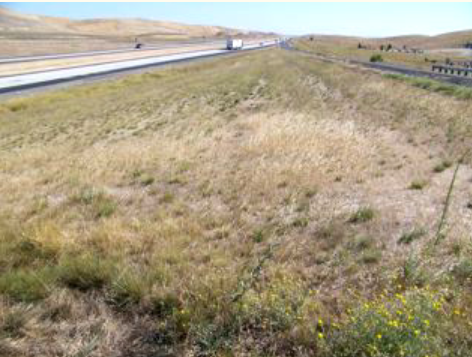
Dunnigan plot in August 2011, after 9 years of effort, described below. Source: https://www.ecoseeds.com/road.test.html
  • A team of academic scientists at UC Davis attempted to convert non-native grasses to native grasses on 2 acres of roadside.  At a cost of $450,000, they tried every available method (herbicides, plowing, plug planting, mowing, burning) for 9 years.  When they ran out of money, they declared success, which they defined as 35% native grasses that they expected to last for no more than 10 years. (See above)
  • The Invasive Spartina Project in the San Francisco Bay has been trying to eradicate non-native spartina marsh grass with herbicide for 20 years at a cost of $50 million.  The project was recently granted another $6.7 million to continue the project for another 10 years.  The project has killed over 600 endangered birds (Ridgway rails) in the San Francisco Bay because of the loss of habitat. 
  • One of the presentations at the 2022 conference of the California Native Plant Society was about a 20-year effort at the Santa Rosa Plateau Ecological Reserve to convert non-native annual grassland to native grassland, using annual prescribed burns.  Many different methods were used, varying timing, intensity, etc.  The abstract for this presentation reports failure of the 20-year effort:  “Non-native grass cover significantly decreased after prescribed fire but recovered to pre-fire cover or higher one year after fire.  Native grass cover decreased after prescribed fire then recovered to pre-burn levels within five years, but never increased over time.  The response of native grass to fire (wild and prescribed) was different across time and within management units, but overall native grass declined.”  The audience was audibly unhappy with this presentation.  One person asked if the speaker was aware of other places where non-native grass was successfully converted to native grass.  The speaker chuckled and emphatically said, “NO.  I am not aware of any place where native grasses were successfully reintroduced.”
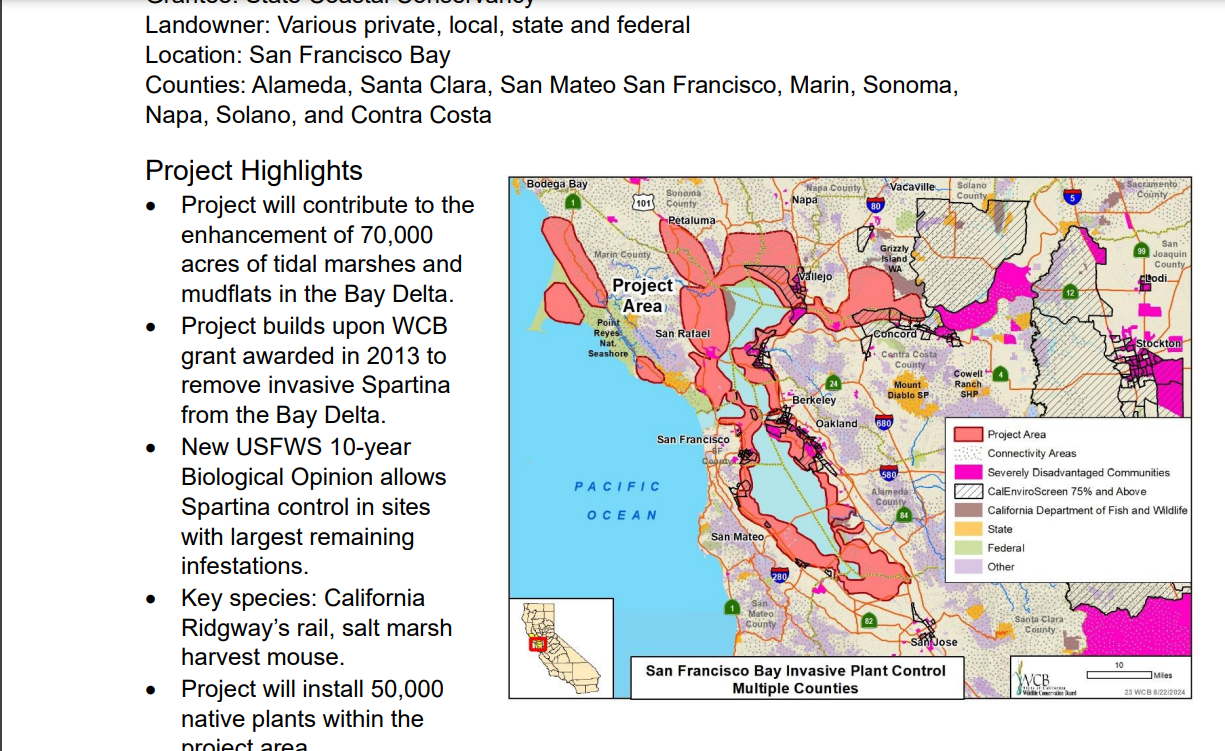
This map of the San Francisco Bay shows where herbicides have been sprayed on non-native marsh grass for 20 years. It is a BIG project!

Anyone with a little knowledge of how herbicides work, would know that glyphosate kills only the top-growth of an actively growing plant.  Glyphosate won’t kill the seed bank of Milbank’s hayfield, which he says has been growing there for decades, perhaps as long as 100 years.  That’s why glyphosate must be applied annually as the seed bank continues to produce new top-growth annually.  If Milbank plants native plants after the initial spraying, they will be killed by subsequent spraying because glyphosate is a non-selective herbicide, which kills whatever it touches, both native and non-native plants. Perhaps Milbank knows this, but his readers don’t.  It might explain why Milbank is not particularly optimistic about the prospects of achieving his goal of a native meadow:  “Will it work? I have no idea. It could become the field of my dreams…Or it could be a costly and time-consuming failure.”

Only two of Milbank’s readers mention the damage that herbicide does to the soil, making future plantings even less likely to survive.  One of those comments is from a farmer who has reason to know this important information: 

The number of things you screwed up, from possibly destroying that old man’s life, family, and farm, to messing up the winter food supply with a cascading effect for farms in your region, to obliterating a small farm, were appalling until you got to the part where you killed your soil microbes with poison. You actually killed topsoil with the idea you were going to grow healthy plants! If I were to write a caricature of a [sub]urbanite transplanted to a farming community and with the best intentions absolutely destroying everything, couldn’t have done any better than you have with your self-congratulatory actions. Farms are complex systems embedded in even more complex natural systems. Farms interact with and depend on each other. It’s where food comes from. When you kill one, you hurt all the others. You also hurt animals and plants that depend on the farm. Creating a farm, and a farming community, is hard. Destroying one is easy, and you just did it.”

This comment brought to mind a recent study about the damage that pesticides do to the soil.  A meta-analysis of 600 studies “…published in the journal iScience found that soil pollution was the leading cause of declines among organisms living underground. The finding has surprised scientists, who expected farming intensification and climate change to have much greater impacts.”  The co-author of the study said, “Above ground, land use, climate change and invasive species have the greatest impact on biodiversity, so we assumed that this would be similar below ground,” Victoria says. “Our results show, however, that this isn’t the case. Instead, we found that pesticide and heavy metal pollution caused the most damage to soil biodiversity. This is worrying, as there hasn’t been a lot of research into the impacts of soil pollution, so its effects might be more widespread than we know.”

A familiar story

Dana Milbank’s plans to transform a derelict farm into a native plant garden are the mirror image of the native plant movement in the San Francisco Bay, the region where I live and have observed failed native plant “restorations” for over 25 years:

  • Native plant “restoration” projects in the Bay Area began over 25 years ago based on the mistaken assumption that if non-native plants were destroyed, native plants would magically emerge without being planted.  In other words, nativists originally believed that the only obstacle to native plants was the mere existence of non-native plants.
  • After 25 years of applying herbicides repeatedly, there are no more native plants in the San Francisco Bay Area than there were 25 years ago.  The soil has been poisoned by herbicides and climate change and associated drought makes native plants progressively less well adapted to current environment conditions.
  • Despite the obvious failure of these “restoration” attempts, they continue unabated because vast sums of public money are available to keep them going.  Dana Milbank will run out of money eventually, but the public coffers are never empty.  Milbank is 56 years old.  When he gets too old to do the work or when he dies, whatever he has accomplished will quickly revert to its previous unmanaged state.  Nature will prevail and his brief conceit that humans can control nature will be history. 
  • The public is unaware of how much herbicide is used by public land managers because application notices are not required for most pesticides.  In California, for example, if the manufacturer of the pesticide claims that the pesticide will dry within 24 hours, application notices are not required by law.  Glyphosate is one of many herbicides for which application notices are not required.  Some land managers post application notices anyway, but many do not.  The public is also ignorant of the damage that pesticides do to the environment and everything that lives in it. 
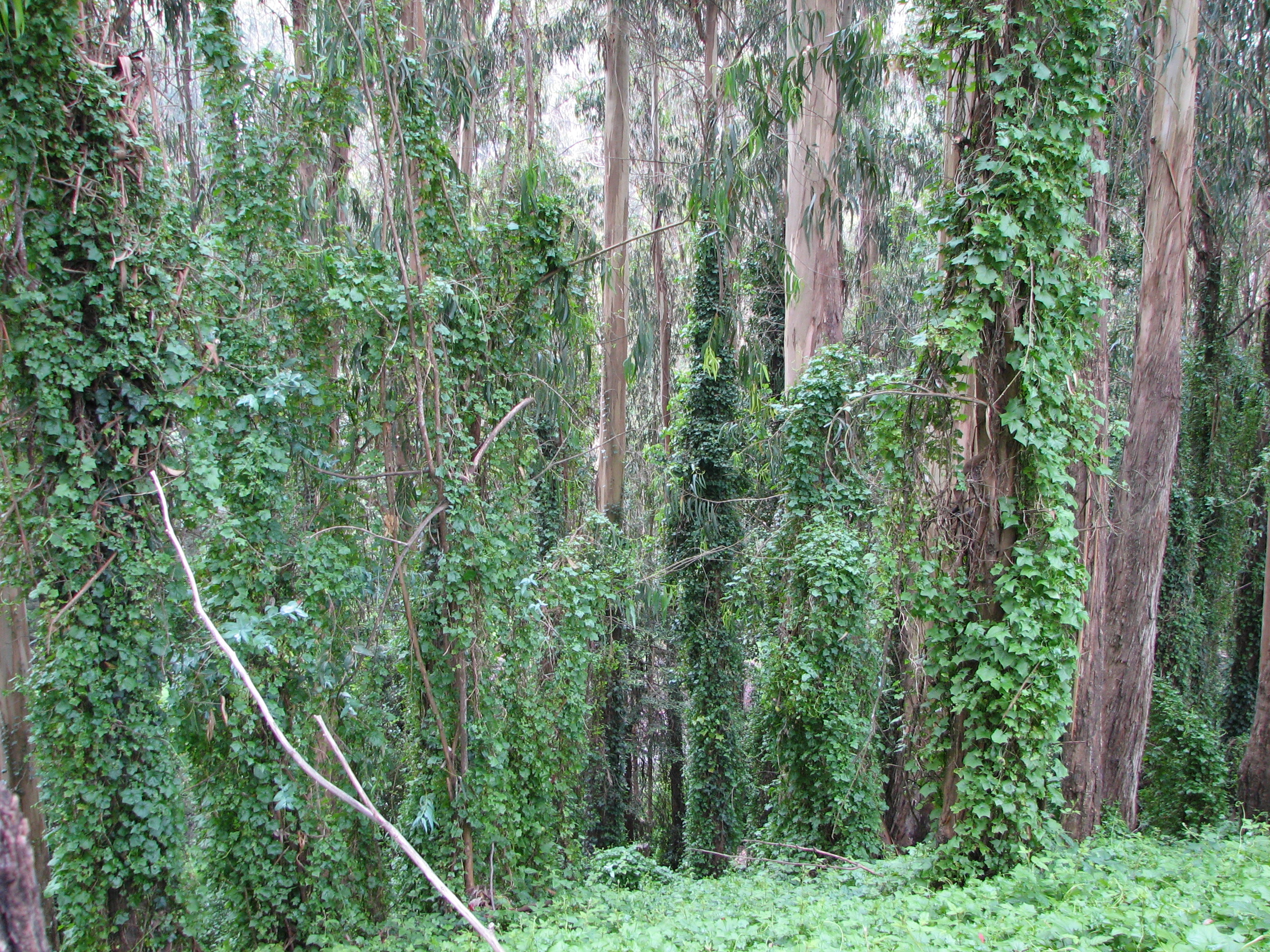
Dana Milbank: “How I learned to love toxic chemicals”

Dana Milbank is a political commentator for the Washington Post.  Like many city dwellers, Milbank moved his family from Washington DC to the Virginia countryside during the Covid pandemic. 

His new home inspired him to become a native plant advocate with the usual corresponding hatred of non-native plants.  He announced his new hobby of killing non-native plants in April 2023, as described in this response to his article by several defenders of the natural world as it exists, rather than as some might wish it to be.

In a more recent article, Milbank expressed his frustration at the failure of his early efforts to destroy non-native plants on his property without using herbicides: “When last I wrote about my battle of the brush, I was losing, badly, to the invasive vines and noxious weeds that had turned forest and field at my Virginia home into an impassable jungle. I’d cut them back, but they would return in even greater numbers.”

And he explained how he “learned to stop worrying and love chemicals.”  He is now both a native plant advocate and a promoter of herbicides (specifically glyphosate) which is typical of most native plant advocates. 

He justifies poisoning both his property and the Shenandoah National Park near his home by turning to advisors who tell him what he wants to hear, people who make their living using herbicides to eradicate non-native plants. 

Of course, renowned native plant guru, Doug Tallamy, is one of his advisors.  Although Tallamy advised residential gardeners against using herbicides in his book, Nature’s Best Hope, published in 2020, he has now changed his mind about herbicides.  In Milbank’s article, Tallamy says that herbicides are an “essential tool:”  “‘I think of it as chemotherapy,’ said Doug Tallamy, a University of Delaware entomologist and guru of the native-plant movement. ‘We have ecological tumors out there. If we don’t control them, we have ecological collapse. We have the collapse of the food web.’”

Poisoning the soil

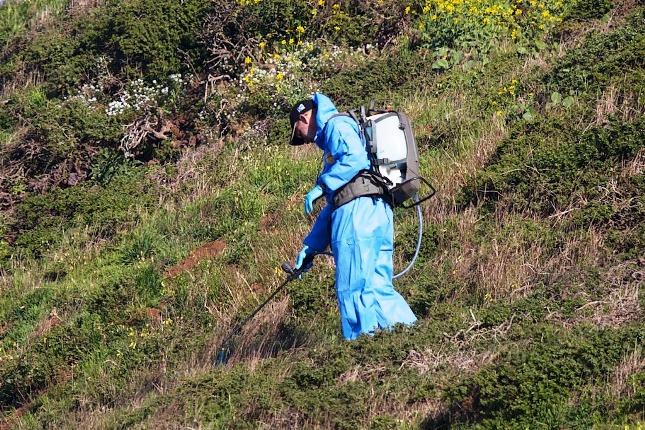
Milbank admits that glyphosate (Roundup) is toxic and he wears protective gear when applying it, including a respirator (which is not required for glyphosate applications by California’s pesticides regulations).  He describes his application technique:  My preferred technique is ‘hack and squirt.’ With my hatchet, I cut gouges around the circumference of the invading tree, then spray the poison inside. For smaller invaders, I can chop the whole thing down and apply the chemical as a ‘cut stump’ treatment.

I read most of the over one thousand comments on Milbank’s article to determine the public’s reaction.  Although many commenters express reservations about the use of herbicides, the majority of commenters are supportive of the use of herbicides.  The manufacturers of pesticides are definitely winning the public relations battle regarding chemical safety.  When supporters reply to doubters of herbicide use, they defend Milbank’s application technique as “surgical.” 

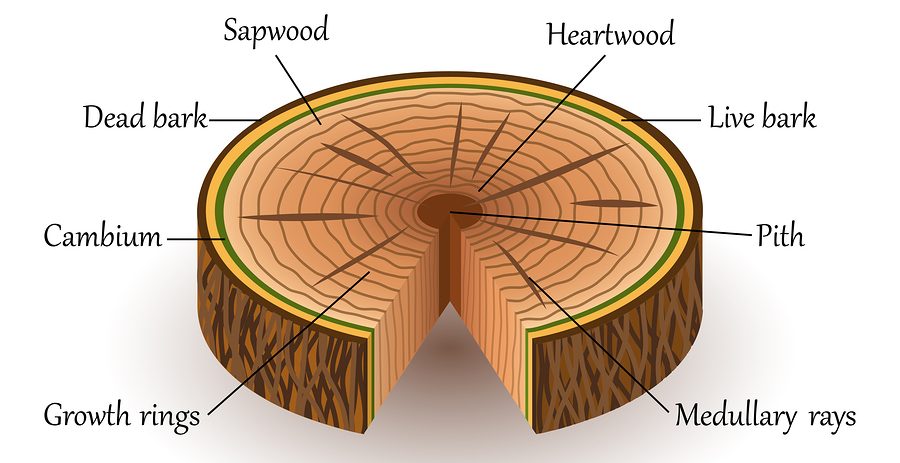
Cut stump and hack and squirt application methods are less likely to disperse chemicals in the air, but they increase soil contamination.  These application methods work by applying herbicide shortly after the woody plant is cut, while the cambium layer (between the bark and the heart wood) is still functional. The cambium layer delivers the herbicide to the roots of the plant to kill the roots. The application may appear to be “surgical” from the standpoint of above-ground contamination, but the damage is being done in the soil, the plants growing in the soil, and the animals that eat those plants. 

Source: https://www.acompletetreecare.com/blog/what-are-the-layers-of-a-tree-trunk/

There are many consequences of poisoning the soil:

  • Because the roots of plants are intertwined as well as connected to one another by fungal networks in the soil, non-target plants are harmed and often killed.  It is not possible to poison one plant without poisoning others. HERE is an example of a forest of native trees that was damaged by spraying herbicide under the trees.
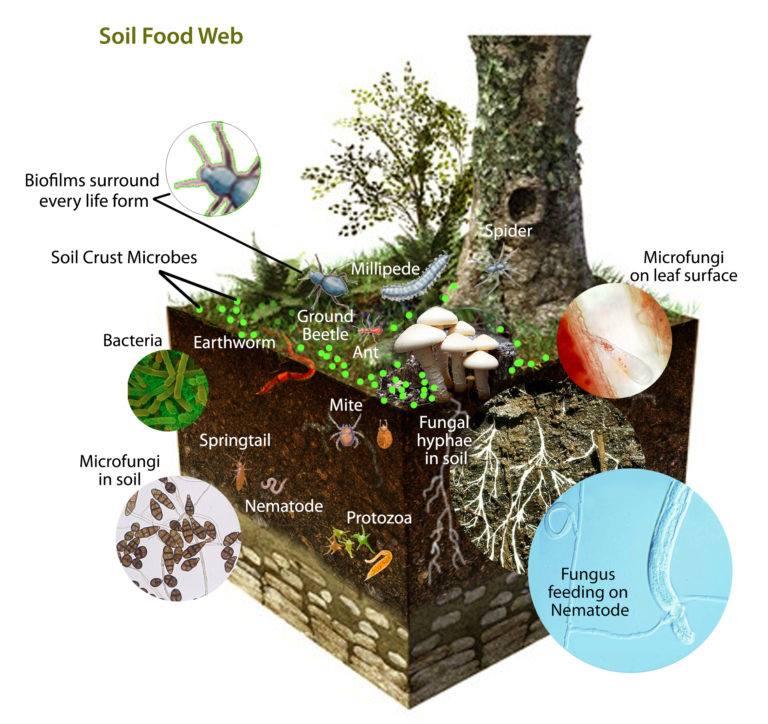
  • Herbicides kill beneficial microbes and fungi in the soil that contribute to plant health. (1) For example, fungal networks that are killed by herbicides transport moisture and nutrients from the soil to the plants.  Whatever vegetation remains or is planted in the future is handicapped by the loss of this living support system.
  • Glyphosate binds minerals in the soil, preventing essential nutritional minerals such as iron and manganese in the soil from being taken up by plants. (2)  Glyphosate is so widely used that it is found in the blood and urine of most of the population, including children.  Could glyphosate be a factor in widespread iron-deficiency anemia in adolescent girls and young women? (3)
  • Glyphosate is a well-known anti-microbial agent.  These effects raise concerns regarding glyphosate’s influence on human health and behavior through secondary means, such as our gastrointestinal microbiome, given what is now known regarding the gut microbiome and its influence on human health and disease. (4,5)
Source: https://symsoil.com/soil-food-web-soil-cities/

Who are the climate change deniers?

Milbank repeats his accusation that those who believe the threat of non-native plants is exaggerated, are climate change deniers.  He turns to the Executive Director of the federal Invasive Species Council for confirmation, who calls the threats of non-native plants “settled science.”  Science is, by definition, never settled.  Science is a process, not a conclusion.  Every scientific hypothesis is constantly tested and usually refined or overturned as new knowledge and methods are available.   Many scientists are testing the hypotheses of invasion biology and questioning their validity in a changing climate. 

The only issue about invasion biology that is “settled” is that it has created a multi-billion dollar “restoration” industry that relies on and benefits the manufacturers of pesticides, as well as creating vested interests that perpetuate the industry.

Milbank also quotes one of his advisors who claims that native plants are better adapted to the changed climate than non-native plants:  “The natives have the best ability to adapt — they’ve been adapting for tens of thousands of years in these areas — so they’ve got the ability to change as the climates and the landscapes have been changing.”  This statement seems comical, given that the topic is the extreme difficulty of eradicating non-native plants and the fact that they are out-competing native plants.  There is zero evidence that native plants are better adapted to the changed climate than the non-native plants that have replaced them.  500 million years of geologic history on Earth has informed us that when the climate changes—as it has many times–the vegetation changes. 

All plants, whether native or non-native, convert carbon dioxide to oxygen and store carbon. Destroying them contributes to greenhouse gases causing climate change by releasing their stored carbon into the atmosphere and reducing the capacity of the landscape to absorb more carbon in the future.  To deny that fact, is to be a climate change denier.

Reality trumps unrealistic hopes

Milbank describes the landscape he hopes to achieve with the help of herbicides.  It is the landscape that existed in the distant past, in a different climate, before the environment was altered by the activities of humans.  I am reminded of one of the presentations at the most recent conference of the California Native Plant Society, an event where the audience hopes and the speakers douse the audience’s hope with the reality of their unsuccessful efforts.  The presenter described a 20-year effort at the Santa Rosa Plateau Ecological Reserve to convert non-native annual grassland to native grassland, using annual (sometimes bi-annual) prescribed burns.  Many different methods were used, varying timing, intensity, etc.  The abstract for this presentation reports failure of the 20-year effort:  “Non-native grass cover significantly decreased after prescribed fire but recovered to pre-fire cover or higher one year after fire.  Native grass cover decreased after prescribed fire then recovered to pre-burn levels within five years, but never increased over time.  The response of native grass to fire (wild and prescribed) was different across time and within management units, but overall native grass declined.” The audience was audibly unhappy with this presentation.  One person asked if the speaker was aware of other places where non-native grass was successfully converted to native grass.  The speaker chuckled and emphatically said, “NO.  I am not aware of any place where native grasses were successfully reintroduced.” 


(1) “Glyphosate kills microorganisms beneficial to plants, animals, and humans,” Beyond Pesticides, October 2021.
(2) “Glyphosate, a chelating agent—relevant for ecological risk assessment?” Environmental Science and Pollution Research International, 2018
(3) “Prevalence of Iron Deficiency and Iron-Deficiency Anemia in US Females Aged 12-21 Years, 2003-2020,” Journal of American Medical Association, 2023
(4) “Is the Use of Glyphosate in Modern Agriculture Resulting in Increased Neuropsychiatric Conditions Through Modulation of the Gut-brain-microbiome Axis?” Frontiers in Nutrition, 2022
(5) “Toxic Effects of Glyphosate on the Nervous System: A Systematic Review” International Journal Molecular Science, 2022

Pesticide use in public parks in the San Francisco Bay Area

San Francisco Forest Alliance (SFFA) is a 501(c)4 not-for-profit organization with a mission of inclusive environmentalism. SFFA fights to protect our environment through outreach and providing information. SFFA opposes the unnecessary destruction of trees, opposes the use of toxic herbicides in parks and public lands, and supports public access to our parks and conservation of our tree canopy.

With permission, Conservation Sense and Nonsense is republishing SFFAs annual report on pesticide use by San Francisco’s Recreation and Park Department.  The report separates pesticide use in so-called “natural areas” from other park areas and finds that most pesticides are used in “natural areas.”  Conservation Sense and Nonsense is grateful to SFFA for compiling and reporting this important information. 

Conservation Sense and Nonsense follows pesticide use by the East Bay Regional Park District (EBRPD), where the pattern of pesticide use is similar to San Francisco’s Recreation and Park Department.  EBRPD has restricted spraying of glyphosate pesticides in developed areas of the park while continuing to use pesticides in naturalized areas to eradicate non-native plants.  In other words, most pesticide use in the public parks of the San Francisco Bay Area is devoted to eradicating non-native plants.

Conservation Sense and Nonsense


As we usually do, we compiled the pesticide usage data for San Francisco Recreation and Parks Department for 2021.  (We exclude Harding Park – but not the other golf courses – from this analysis because it’s externally-managed under a PGA contract to be kept tournament-ready at all times.) We’re pleased to note that SFRPD has reduced its pesticide usage in comparison to 2020 and 2019. 

NATIVE PLANT AREAS USE MORE OF THESE TOXIC HERBICIDES

But this is not true of the Natural Resources Division (this includes PUC areas managed in the same way – i.e. use of toxic herbicides against plants they dislike). Their usage has risen and is the highest it’s ever been from 2016.

The Natural Resources Department (NRD, formerly the Natural Areas Program or NAP) is the entity that is trying to bring “native” plants to more than a thousand acres of our parks, cuts down trees and restricts access to people and their pets.  NRD, which accounts for perhaps a fourth of the land area, used over 70% of the pesticides measured as active ingredients in fluid ounces.

NRD – and PUC lands that they are managing the same way – continued to increase their use of triclopyr since the new pesticide Vastlan has been designated Tier II (More Hazardous) instead of Garlon, which was Tier I (Most Hazardous). In both herbicides, the active ingredient is triclopyr. They also increased their usage of imazapyr, and continued to use Roundup, though in smaller quantities than before.

Here are the two earlier graphs lined up to show the comparison. The Native Plant areas used more herbicides in 2021 than they had ever used in the last six years – or that the other SFRPD departments together used in the same time. Their failure to reduce usage in 2021 is in stark contrast to the more than 50% drop in the other SFRPD.


SFRPD Other (i.e. other than the Native plant areas) uses mainly Polaris (imazapyr) and Clearcast ( ammonium salt of imazamox). The native plant areas, NRD / SFPUC, use large amounts of triclopyr, (Garlon and Vastlan), as well as some glyphosate (Roundup).

A FAILING STRATEGY

The NRD’s continually growing usage of the herbicides is a sign that this strategy is failing. They have been using hazardous chemicals on some 50 target species of plants year after year. Theoretically, the point of using toxic herbicides on unwanted species is to allow the desired species to replace them.  Instead, the growing usage of these chemicals shows that if anything, the situation is only made worse.

This stands to reason; “invasive” plants are successful because they are better adapted to current conditions. If they are destroyed with herbicides, the replacement is likely to be the next best adapted (thus, invasive) species. Given 50 target species, the bench is deep. This leads to a vicious cycle of hazardous herbicide use, clearly visible in the graph above.

PESTICIDES COME TO SHARP PARK 

For many years since we started compiling these data, Sharp Park has been off-limits for pesticides. We’ve seen very minimal usage – maybe 3 or 4 times over all the years. It’s home to the red-legged frog, and the San Francisco garter snake.

In 2021, that changed. In the space of one year, pesticides were applied 9 times. We did anticipate this would happen as NRD extended its grip on this park.

TIER HAZARD RATINGS

San Francisco’s Department of the Environment (SFEnvironment) assigns Tier hazard ratings to the various pesticides it uses. Tier III is Least Hazardous, Tier II is More Hazardous, and Tier I is Most Hazardous.  Over the years we have been following this usage, we have seen various chemicals being moved from one Tier to another. Milestone was moved from Tier I to Tier II; Glyphosate (Roundup, Aquamaster)  from Tier II to Tier I; and triclopyr (Garlon, Garlon 4 Ultra, Turflon, Vastlan) from Tier I to Tier II (for Vastlan and Turflon). Avenger was moved from Tier II to Tier III, which we think makes sense and makes analysis easier. We analyze the usage of Tier I and Tier II herbicides.

REDUCE OR ELIMINATE HERBICIDE USE

SF Forest Alliance has been trying to encourage SFRPD to reduce or eliminate Tier I and Tier II herbicide use. Some years ago, it appeared that pesticide usage was declining, especially after the Roundup revelations. When we wrote our Pesticides report for 2016, the other areas of SFRPD had slashed their herbicide use; the NRD accounted for 74% of pesticide usage. The 2021 data have renewed our hope that SFRPD’s other departments will adopt a cautious approach to the use of toxic herbicides. Unfortunately, this does not appear true of the nativist departments, NRD / PUC.


Every year, the San Francisco Forest Alliance also makes public comment at the annual review of San Francisco’s Integrated Pest Management program.  Conservation Sense and Nonsense is grateful for SFFA’s vigilance of pesticide use in San Francisco’s public parks.  Below is an excerpt from SFFA’s public comment to the Commission on the Environment regarding San Francisco’s IPM program.

Conservation Sense and Nonsense


Once again we are sending our comments emphasizing the self-evident truth that high toxicity herbicides are dangerous, unnecessary, and should never be used…

Below are the points we have repeated year after year for many years:

  • Herbicidal chemicals are more toxic, more persistent, more mobile and more dangerous than their manufacturers disclose;
  • The aesthetic or ideological “danger” from “weeds” is not a risk to health and welfare;
  • Scientific studies associate exposure to herbicides with cancer, developmental and learning disabilities, nerve and immune system damage, liver or kidney damage, reproductive impairment, birth defects, and disruption of the endocrine system;
  • There is no safe dose of exposure to those chemicals because they persist in soil, water, and animal tissue, so even low levels of exposure could still accumulate and harm humans, animals, and the environment;
  • Especially vulnerable individuals include infants, children, pregnant women, the elderly, people with compromised immune systems and chemical sensitivities;
  • Toxic runoff from herbicides pollute streams and groundwater, and therefore the drinking water sources;
  • Herbicides are harmful to pets and wildlife – including threatened and endangered species, plants, and natural ecosystems;
  • Herbicides are harmful to soil microbiology and contaminate soil into the future, reducing biodiversity in sensitive areas…

San Francisco Forest Alliance, July 11, 2022

Environmental Protection Agency acknowledges that herbicides harm wildlife

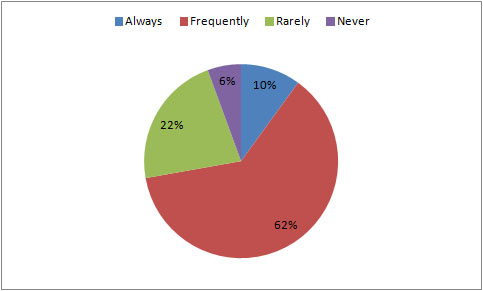
“Restoration” professionals aggressively defend their use of herbicides because it is their preferred method to eradicate non-native plants.  Herbicides are the primary method of killing non-native plants because it is the cheapest method.  When the California Invasive Plant Council conducted a survey of land managers about the methods they use, they learned that 62% of those surveyed reported using herbicides regularly.  Only 6% of land managers said they don’t use herbicides.

The public usually accepts this poisoning of their parks and open spaces because they believe that wildlife benefits from the eradication of non-native plants.  Although there is little scientific evidence that supports that opinion, it is widely considered the conventional wisdom.  Now we have scientific confirmation that wildlife is harmed by the herbicides used to kill non-native vegetation.  That new evidence is the focus of today’s report on the Conservation Sense and Nonsense blog.

EPA Biological Evaluation of Glyphosate and Atrazine

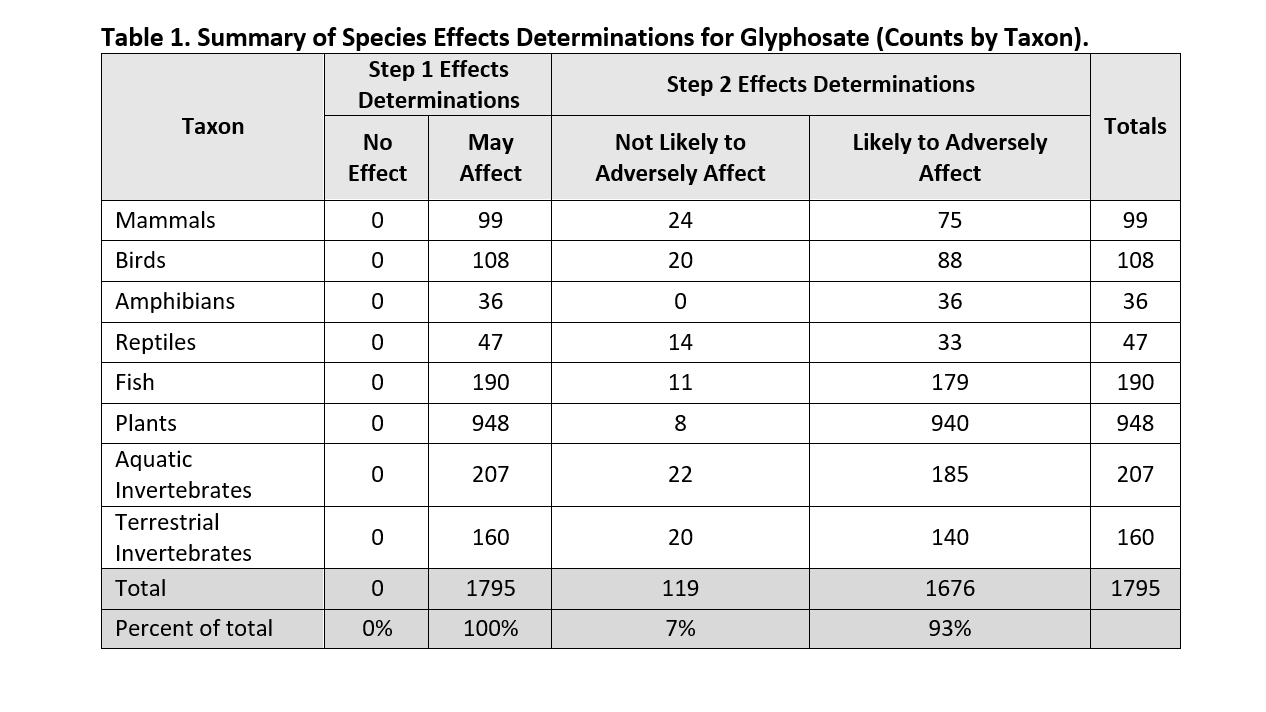
The U.S. Environmental Protection Agency has published the final version of its biological evaluation of the most commonly used herbicide by the managers of our public lands, glyphosate.  EPA reports that glyphosate is “likely to adversely affect” 93% of legally protected endangered and threatened plants and animals.  EPA also published similar findings for atrazine that is available HERE. 

Source: EPA biological evaluation of glyphosate

This evaluation is the result of a long-fought battle with the EPA.  The settlement of a lawsuit brought by Center for Biological Diversity and Pesticide Action Network in 2016 required the EPA to conduct this evaluation.  A draft of the biological evaluation was published about one year ago and the final version one year later confirms the findings reported by the draft version.  Thank you CBD and PAN for your persistence!

Significance of EPA’s biological evaluation

The public tends to believe the law protects all wildlife, but that is not the case. The fact is, legal protection only applies to species designated by US Fish & Wildlife Service as threatened or endangered.  If a project is known to kill wildlife, there is no legal recourse unless the species has been officially designated as endangered or threatened. 

The more herbicide we use, the more likely wildlife is to become endangered and therefore eligible for endangered status.  Monarch butterflies are a case in point.  Their dwindling population is attributed to the widespread use of herbicides on weeds that provide nectar and pollen needed by all pollinators, including monarchs.  Monarchs and bees are also directly harmed by insecticides such as neonicotinoids.    

Hence, the EPA’s responsibility to conduct a scientific evaluation of the effect of herbicides on wildlife applied only to legally protected species.  However, it is essential to understand that the finding applies equally to all plants and animals, whether they are legally protected or not because the physiological processes of all species are similar.  For example, all legally protected amphibians are “likely adversely affected” by glyphosate, according to the EPA’s biological evaluation.  We must assume that all amphibians—whether protected or not—are also adversely affected by glyphosate.

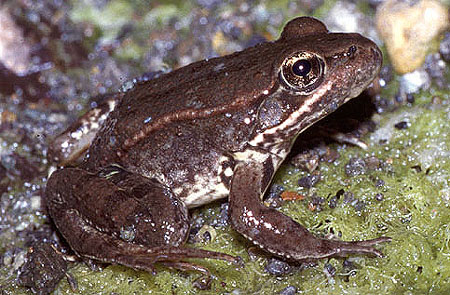
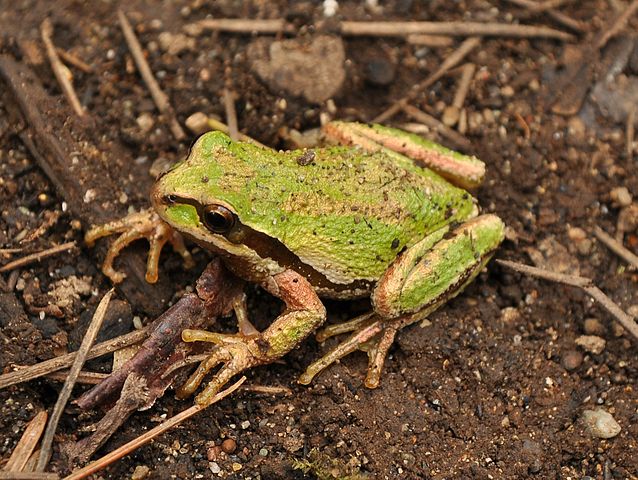
California red-legged frogs are legally protected as an endangered species. Source: USGS
Pacific chorus frogs are not legally protected because they aren’t designated as threatened or endangered. Attribution

What’s to be done about pesticides that harm wildlife?

According to Sustainable Pulse the next official step is:  “The EPA’s evaluations now go to the U.S. Fish and Wildlife Service and National Marine Fisheries Service in the final step of the consultation process to determine what on-the-ground conservation measures are needed to minimize harm to these species and ensure these pesticides do not push any endangered species towards extinction” 

Defenders of wildlife and the public lands on which they live should not stop there.  These are the logical consequences of the fact that the most widely used herbicides should not be used on our public lands:

  • Where pesticides have been banned, they are often accompanied by exemptions for ecological “restorations.”  For example, when rodenticides were banned in California in 2020, exemptions were made for projects claiming to “restore” habitat.  When UC Berkeley banned the use of glyphosate on lawns and playing fields, they exempted glyphosate use off-campus to “restore” habitat.  When East Bay Regional Parks banned glyphosate for use in developed areas such as parking lots and picnic areas, they exempted glyphosate use to “restore” habitat.  These exemptions should be rescinded because they are harmful to wildlife living on undeveloped public land.  Wildlife does not live on parking lots and playing fields.  Wildlife lives in undeveloped areas vegetated with both native and non-native plants. 
  • The State of California recently granted a 3-year exemption from CEQA requirements for environmental impact review for projects claiming to “restore” habitat. Available HERE; see (11) This exemption should be revised so that projects that use pesticides are not eligible for exemption from CEQA requirements. 
  • Native plant advocates and “restoration” professionals must quit claiming that projects using herbicides will benefit wildlife, because clearly, they DON’T!

Pesticides are the primary tool of the “restoration” industry

Over 20 years ago, my initial reaction to native plant “restorations” was horror at the destruction of healthy trees.  It took some years to understand that pesticides are used by most projects to prevent the trees from resprouting and to control the weeds that thrive in the sun when the trees are destroyed.  Herbicides are a specific type of pesticide, just as insecticides and rodenticides are also pesticides.

Because pesticide application notices are not required by California State law for most of the herbicides used by “restoration” projects, the public is unaware of how much herbicide is needed to eradicate non-native vegetation, the first step in every attempt to establish a native plant garden.  California State law does not require pesticide application notices if the manufacturer of the herbicide claims that their product will dry within 24 hours.

Herbicides used to eradicate non-native plants

In 2014, the California Invasive Plant Council conducted a survey of 100 land managers to determine what methods they use to kill the plants they consider “invasive.”  The result of that survey was a wakeup call to those who visit our parks and open spaces.  62% of land managers reported that they frequently use herbicides to control “invasive” plants.  10% said they always used herbicides.  Only 6% said they never use herbicide.  Round Up (glyphosate) is used by virtually all (99%) of the land managers who use herbicides.  Garlon (triclopyr) is used by 74% of those who use herbicide.

Pesticide use by land managers in California. Source California Invasive Plant Council

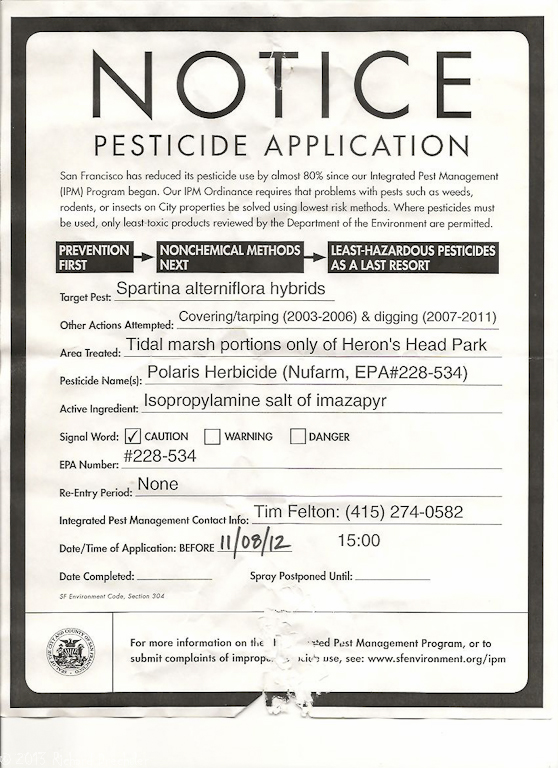
Land managers in the Bay Area use several other herbicides in addition to Garlon and Round Up.  Products with the active ingredient imazapyr (such as Polaris) are often used, most notably to kill non-native spartina marsh grass.  Locally, the San Francisco Estuary Invasive Spartina Project (ISP) “defines a need for a zero tolerance threshold on invasive Spartina in the San Francisco Bay.” 2,000 acres have been repeatedly sprayed with herbicides on East and West sides of the San Francisco Bay since the project began.  The result of this project has been bare mud where the imazapyr was aerial sprayed from helicopters the first few years of the project with annual spot spraying continuing 15 years later.  Imazapyr is very mobile and persistent in the soil.  That is the probable reason why attempts to replace the non-native species with the native species were unsuccessful. The loss of both native and non-native marsh grass has eliminated the nesting habitat of the endangered Ridgway rail, decimating the small population of this endangered bird in the Bay Area.

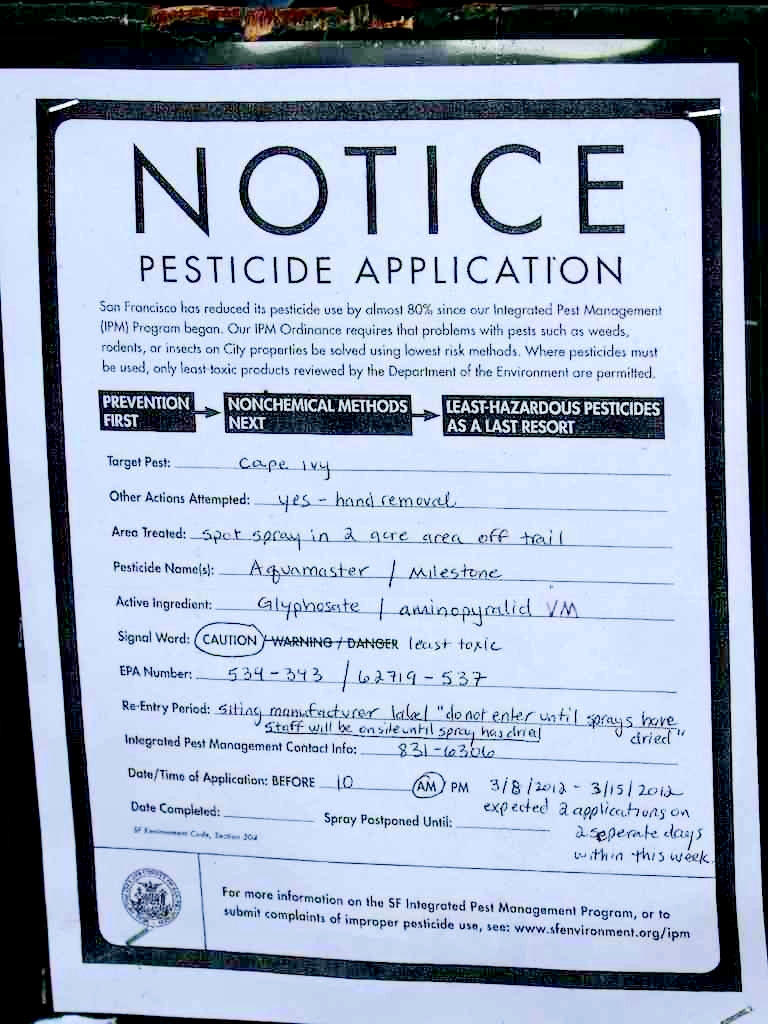
Pesticide Application Notice, Heron’s Head, 2012

Aminopyralid (brand name Milestone) is also used.  Although it is considered less toxic than other herbicides, it is the most mobile and persistent in the soil.  New York State banned the sale of Milestone because of concern about contaminating ground water.

With this knowledge of widespread use of herbicides by land managers, we followed up with specific land managers in the Bay Area to determine the scale of local herbicide use.  East Bay Regional Park District significantly reduced their use of Round Up for facilities maintenance in 2018, in response to the public’s concerns after multi-million dollar product liability settlements of lawsuits from users who were deathly ill after using glyphosate products.  In 2019, the Park District announced that it would phase out the use of Round Up in picnic areas, camp grounds, parking lots, and paved trails.

Source: East Bay Regional Park District

At the same time, the Park District restated its commitment to using herbicide to control plants they consider “invasive.”  Unfortunately, the Park District’s use of herbicide for “resource management projects” has skyrocketed and is by far its greatest use of herbicides.  “Resource management project” is the euphemism the Park District uses for its native plant “restorations” that begin by eradicating non-native vegetation such as spartina marsh grass and 65 other plant species.

These trends in pesticides used by East Bay Regional Park District continued in 2019.  Glyphosate use continued to decline by 82% since reduction strategies began in 2016.  Use of Garlon (active ingredient triclopyr) to control resprouts of non-native trees and shrubs increased 23% since 2017.  Use of Polaris (active ingredient imazapyr) to eradicate non-native spartina marsh grass increased 71% since 2017.  “Resource management projects” have been renamed “ecological function.”

San Francisco Recreation and Parks Department (SFRPD) reduced use of herbicide briefly in 2016, after glyphosate was classified as a probable carcinogen.  However, herbicide use has since increased, particularly in the 32 designated “natural areas” where SFRPD is attempting to “restore” native plants by eradicating non-native plants. In 2019, SFRPD applied herbicides 243 times, the most since 2013.  Of these, 144 applications were in the so-called “natural areas” (this includes properties of the Public Utility Commission, San Francisco’s water supplier, managed in the same way; i.e., eradicating plants they don’t like).  Though the “natural areas” are only a quarter of total city park acres in San Francisco, nearly half the herbicides measured by volume of active ingredient were used in those areas.

Data source: San Francisco Recreation and Parks Department. Graphic by San Francisco Forest Alliance

San Francisco’s Parks Department has been using herbicides in these areas for over 20 years.  Plants that are repeatedly sprayed with herbicides eventually develop resistance to the herbicide, just as over use of antibiotics has resulted in many bacteria that are resistant to antibiotics.

Spraying Garlon on Twin Peaks in San Francisco, February 2011

UC Berkeley recently announced a temporary ban on the use of glyphosate on playing fields and similar landscaped areas.  The use of glyphosate to kill non-native plants considered “invasive” was specifically exempted from UC’s temporary ban.

The more pressure the public puts on land managers to restrict the use of herbicides, the more vociferous native plant advocates have become in defense of herbicides.  In October 2017, California Invasive Plant Council published a position statement regarding glyphosate that justified the continued use of glyphosate, despite its classification as a probable human carcinogen by the World Health Organization.

Mounting public pressure to ban the use of glyphosate has also pushed land managers to try newer herbicides as substitutes (e.g., Axxe, Lifeline, Clearcast).  Less is known about these products because less testing has been done on them and we have less experience with them.  It took nearly 40 years to learn how dangerous glyphosate is!

Why are we concerned about herbicides?

The World Health Organization classified glyphosate (the active ingredient in Round Up) as a probable human carcinogen in 2015.  That decision suddenly and radically altered the playing field for the use of glyphosate, which is the most heavily used of all herbicides.

Since that decision was made, many countries have issued outright bans on glyphosate, imposed restrictions on its use or have issued statements of intention to ban or restrict glyphosate-based herbicides. Countless US states and cities have also adopted such restrictions. Locally, the Marin Municipal Water District (MMWD) made a commitment to not using pesticides—including glyphosate—in 2015.  MMWD had stopped using pesticides in 2005 in response to the public’s objections, but engaged in a long process of evaluating the risk of continuing use that resulted in a permanent ban in 2015.

Several jury trials have awarded plaintiffs millions of dollars as compensation for their terminal medical conditions that were successfully attributed to their use of glyphosate products by product liability lawsuits. There are an estimated 125,000 product liability lawsuits in the US against glyphosate awaiting trial. 

In 2020, plaintiffs in a class-action suit against Monsanto alleging that it falsely advertised that the active ingredient in Roundup only affects plants were awarded $39.5 million.  The settlement also requires that the inaccurate claim be removed from the labels of all glyphosate products: “…[plaintiff] says Monsanto falsely claimed through its labeling that glyphosate, the active ingredient in Roundup, targets an enzyme that is only found in plants and would therefore not affect people or pets. According to the suit, that enzyme is in fact found in people and pets and is critical to maintaining the immune system, digestion and brain function.”

It took lawsuits to establish the toxicity of glyphosate because the “studies” that are used to approve the use of pesticides in the US are done by the manufacturers of pesticides.  The studies are manipulated, often with the active participation of government employees who are responsible for regulating dangerous chemicals.  The lawsuits succeeded by revealing the fraudulent studies used to exonerate glyphosate.

What little research is done on the effect of pesticides on wildlife indicates that pesticides are equally toxic to animals.  New research finds that western monarch milkweed habitat contains a “ubiquity of pesticides” that are likely contributing to the decline of the iconic species:  “’We expected to find some pesticides in these plants, but we were rather surprised by the depth and extent of the contamination,’ said Matt Forister, PhD, a butterfly expert, biology professor at the University of Nevada, Reno and co-author of the paper…’From roadsides, from yards, from wildlife refuges, even from plants bought at stores—doesn’t matter from where—it’s all loaded with chemicals. We have previously suggested that pesticides are involved in the decline of low elevation butterflies in California, but the ubiquity and diversity of pesticides we found in these milkweeds was a surprise,’ Dr. Forister said.”

Damage to the environment

In addition to harming humans and other animals, herbicides used by native plant “restorations” are damaging the soil, undoubtedly contributing to the failure to successfully establish native plants. (1)

  • Both glyphosate (Round Up) and triclopyr (Garlon) are known to kill mycorrhizal fungi that live on the roots of plants and trees, facilitating the transfer of moisture and nutrients from the soil to the plants.  The absence of mycorrhizal fungi makes plants more vulnerable to drought because they are less able to obtain the water they need to survive.
  • Glyphosate is known to bind minerals in the soil, making the soil impenetrable to water and plants more vulnerable to drought.
  • Both glyphosate and triclopyr also kill microbes in the soil that contribute to the health of soil by breaking down leaf litter into nutrients that feed plants.
  • Because herbicides are mobile in the soil and the roots of plants and trees are often intertwined, non-target plants are often harmed or killed. 
Pesticides kill the soil food web.

Despite knowing that glyphosate probably causes cancer in humans and that many herbicides cause significant environmental damage, native plant advocates continue to push land managers to use toxic chemicals to kill non-native plants and trees.  They do so because herbicides are the cheapest method of eradicating vegetation.  They do not have the person-power to eradicate all the vegetation that is being killed by herbicides.  Using herbicides enables native plant advocates to claim larger areas of parkland and open space than they would be able to without using herbicides.


(1) Montellano, et.al., “Mind the microbes: below-ground effects of herbicides used for managing invasive plants,” Dispatch, newsletter of California Invasive Plant Council, Winter-Spring 2019-2020.

Digging In: Nativists aggressively defend their use of herbicides

The trial of DeWayne Johnson vs. Monsanto began early in July.  This is the first trial of about 4,000 lawsuits against Monsanto for “product liability.”  Mr. Johnson is dying of non-Hodgkin lymphoma.  He believes that the glyphosate that he sprayed as an employee of the Benicia School District from 2012 to 2015 has caused his terminal cancer.  His lawyer will present evidence at the trial that Monsanto knew the health risks of the glyphosate they manufactured and hid that information from the public. 

This trial could be the turning point that will determine the future of glyphosate in America.  Therefore, this is a suitable opportunity to explain how we got here and why the fate of glyphosate may also determine the fate of the native plant movement.


Update August 10, 2018:  BREAKING NEWS!!!

”A San Francisco jury has found in favor of a school groundskeeper dying of cancer whose lawyers argued that a weed killer made by the agribusiness giant Monsanto likely caused his disease.

“Dewayne Johnson was awarded nearly $290 million in punitive damages and another $39 million in compensatory damages.

“Johnson’s lawsuit against Monsanto was the first case to go to trial in a string of legal complaints alleging the glyphosate-based Roundup herbicide caused non-Hodgkin’s lymphoma.

“He sprayed Roundup and another Monsanto product, Ranger Pro, as part of his job as a pest control manager at a San Francisco Bay Area school district, his attorneys have said.

“He was diagnosed with lymphoma in 2014, when he was 42.

“Monsanto, for its part, vehemently denies a link between Roundup and cancer.

“But jurors at San Francisco’s Superior Court of California, who deliberated for three days, found that the corporation failed to warn Johnson and other consumers about the risks posed by its weed-killing products.

“The outcome of the trial will not have a direct affect on the slew of other Roundup-related suits in state and federal courts. But it could serve as a bellwether for other cases in the queue.”  https://www.nbcnews.com/news/us-news/jury-orders-monsanto-pay-290m-roundup-trial-n899811

This could be the beginning of the end for glyphosate.  There will be many appeals of this decision, but there are also many other lawsuits in line by people who believe they were harmed by glyphosate.  This is a significant step forward.


The story begins

I have followed the native plant movement in California for over 20 years.  I knew that herbicides were used by land managers to eradicate plants they consider “invasive” only because I made the effort to inform myself of what they were doing.  It wasn’t easy to figure out that they were using herbicides because many land managers do not post notices of their pesticide applications and even fewer report their pesticide use to the public.  State law does not require posting of pesticide application notices if the manufacturer claims that the product dries within 24 hours, which exempts most of the herbicides used by land managers, including glyphosate (Roundup) and triclopyr (Garlon).

Pesticide use by land managers in California. Source California Invasive Plant Council

I didn’t know how extensive herbicide use is on our public lands until the California Invasive Plant Council conducted a survey in 2014 of 100 land managers about the methods they were using to kill “invasive” plants. Here’s what we learned from that survey:

  • Ninety-four percent of land managers are using herbicides to control plants they consider “invasive.”  Sixty-two percent are using herbicides frequently.
  • Ninety-nine percent of the land managers who use herbicides, use glyphosate products. Seventy-four percent use Garlon, which is one of the most hazardous herbicides available on the market.  The Pesticide Research Institute says that Garlon “poses reproductive and developmental risks to female applicators.”
  • Foliar spray is the method used most frequently by land managers to apply herbicides.  This method of application has the potential to drift into non-target areas and kill non-target plants.

Chapter Two:  World Health Organization takes a position

In 2015, one year after the Cal-IPC survey was done, the World Health Organization’s International Agency for Research on Cancer (IARC) classified glyphosate as a “probable human carcinogen.”  That decision suddenly and radically altered the playing field for the use of glyphosate, which is the most heavily used of all herbicides.

Since that decision was made, 25 countries have issued outright bans on glyphosate, imposed restrictions or have issued statements of intention to ban or restrict glyphosate-based herbicides, including Roundup.  Countless US states and cities have also adopted such restrictions. Locally, the Marin Municipal Water District made a commitment to not using pesticides—including glyphosate—in 2015.  MMWD had stopped using pesticides in 2005 in response to the public’s objections, but engaged in a long process of evaluating the risk of continuing use that resulted in a permanent ban in 2015.

Chapter Three:  Nativists dig in

The reaction of native plant advocates to this bad news of the dangers of glyphosate has been to dig in and aggressively defend their use of herbicides.

One of the first indications of this reaction was an article about the IARC decision in the Fall 2015 newsletter of the California Invasive Plant Council (Cal-IPC) that concludes:  “In the final analysis, this means that there’s no good reason to stop using glyphosate whether it’s a carcinogen or not.”  If the IARC decision isn’t a good reason, what is?  If the prospect of cancer isn’t a legitimate reason not to use glyphosate, what is?

In its Fall 2016 newsletter, Cal-IPC stepped up the volume.  The Executive Director’s introductory letter stated the highest priorities for Cal-IPC, including, “the increased need for Cal-IPC to publicly support the appropriate use of herbicides.”

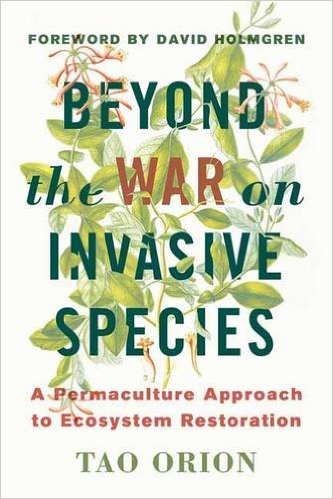
That edition of the Cal-IPC newsletter also includes a review of Tao Orion’s book, Beyond the War on Invasive SpeciesTao Orion is a practicing permaculturalist who shares many of the objectives of native plant advocates. Permaculture is committed to conservation, preservation, and restoration, but practitioners achieve those objectives without using pesticides.  They focus on restoring ecological functions by identifying and correcting the underlying causes of change, such as loss of water resources.

Given Cal-IPC’s commitment to herbicide use, it was unable to find value in Orion’s book.  Much of their criticism seemed unfair.  They said that Orion’s recommendations for using restoration methods such as burning or grazing that don’t require the use of pesticides are preaching to the choir.  They claim that native plant restoration projects are, in fact, doing the same thing.  Yet, the survey Cal-IPC conducted in 2014 says otherwise.  Forty-seven percent of land managers said they “never” use grazing to control “invasive” plants, compared to 94% who said they use pesticides.  Burning was not mentioned by any land manager as a method they use.

The survey and accompanying risk assessment of the herbicides used by those who took the survey was presented at the annual Cal-IPC conference in fall 2014.  It was available on the Cal-IPC website until very recently, when it was scrubbed.  The risk assessment is still available on the website of the Pesticide Research Institute, which conducted that evaluation.

In October 2017, Cal-IPC published a position statement regarding glyphosate, “The Use of Glyphosate for Invasive Plant Management.”  Cal-IPC’s “position on the issue” is:  “Cal-IPC supports the use of glyphosate in invasive plant management as part of an Integrated Pest Management (IPM) approach. When using glyphosate according to the label, with appropriate personal protective equipment and best practices, glyphosate is low-risk for wildlife, applicators and the public.”  Their position is primarily based on their belief that doses of glyphosate used in wildland weed management are too low to be a health hazard.

Several new studies, published after the IARC decision, strengthen the case against glyphosate.  New research suggests that glyphosate is a health hazard at low doses considered “safe” by the EPA.  The Global Glyphosate Study is being conducted by six scientific institutions all over the world. This international consortium of scientific institutions recently published preliminary results of their study: “The results of the short-term pilot study showed that glyphosate-based herbicides (GBHs) were able to alter certain important biological parameters in rats, mainly relating to sexual development, genotoxicity and the alteration of the intestinal microbiome, at the ‘safe’ level of 1.75 mg/kg/day set by the U.S. Environmental Protection Agency (EPA).”  In other words, at doses deemed safe by the US EPA, significant negative health effects were found in animals used in testing.

Another recent study of glyphosate found that the formulated product is considerably more toxic than the active ingredient alone.  US National Toxicology Program recently conducted tests on formulated glyphosate products for the first time. In the past, tests were conducted only on the active ingredient…that is glyphosate alone. The formulated products that are actually applied as weed killers contain many other chemicals, some of which are not even known. The head of the National Toxicology Program Laboratory, told The Guardian newspaper the agency’s work is ongoing but its early findings are clear on one key point. “We see the formulations are much more toxic. The formulations were killing the cells. The glyphosate really didn’t do it,” DeVito said. A summary of the NTP analysis said that “glyphosate formulations decreased human cell ‘viability’, disrupting cell membranes. Cell viability was ‘significantly altered’ by the formulations, it stated.”

Two empirical studies found that low levels of exposure to the weed killer Roundup (glyphosate) over a long period of time can cause liver disease.

Is Cal-IPC aware of these recent studies?  Are the people who apply glyphosate aware of these studies?  Are the employers of these applicators aware of these studies?  Are these applicators the plaintiffs of future product liability lawsuits against Monsanto?

Chapter Four:  California Native Plant Society defends herbicides with fantasies

If you read the publications of the California Native Plant Society (CNPS) or attend their conferences, you know that little mention is made of herbicides by their followers and those who engage in “restoration” projects.  In the past, the best defense was to turn a blind eye to herbicide use.

More recently, the intense opposition to the use of herbicides on public lands seems to have forced CNPS to become actively engaged in the defense of herbicides.  The most recent edition of the Journal of the California Native Plant Society, Fremontia (Vol. 46 No. 1) is a “Special Issue on Urban Wildlands.” The introductory article is illustrated with a photo of Oyster Bay.  I nearly choked on this statement in that article:  “In order to control invasive plants, agencies and volunteers have sometimes resorted to using herbicides as a step in integrated pest control.  While use of herbicides is contentious, the use for spot treatments has enabled small groups of volunteers to successfully eliminate invasive weeds in some areas where future herbicide use will not be needed.” Oyster Bay is being doused with herbicides as we reported in a recent article that is available HERE.

Oyster Bay herbicide applications, May 2018

That same edition of Fremontia also includes several articles in which specific native plant “restorations” are described in detail.  All of the projects use herbicides, often repeatedly and often without successfully establishing native plants:

  • “Bull Creek Ecosystem Restoration Project: Not Quite a Success Story”:  This project began in 2008, after over 10 years of planning.  Bull Creek was reconfigured with bull dozers, eliminating the existing landscape.  Although natives were planted, weeds quickly took over the site.  It was weeded by hand initially and considered a success until the creek bank eroded significantly and the artificial oxbow filled with silt.  But “weeds continued to thrive” because the native plants were irrigated and they resorted to herbicide applications in 2010.  Subsequent failures of native plants were blamed on unauthorized public access and the state-wide drought.  Volunteer weeding has been abandoned.  The future of this project is very much in doubt.
  • “Weed Control Efforts in the Sepulveda Basin”: “Based on more than 20 years of experience with attempting to control various weeds in the Sepulveda Basin, and given the lack of support from the city due to budgetary priorities, it is apparent that without herbicide it will be impossible to control non-native weeds that threaten regional biodiversity.”
  • “Nature in the City: Restored Native Habitat Along the LA River…”:  The site was sprayed with Roundup (glyphosate) several times to remove as much of the non-native seed bank as possible.  Weeding continued throughout the habitat restoration and construction period.”

Did CNPS notice the contradiction between their first article and subsequent articles in the same publication?  Their introductory article claims they rarely use herbicides and when they do it is only temporary.  But subsequent articles about specific projects make it clear that herbicides are routinely and repeatedly used and even then, weeds persist.

Pesticides used in San Francisco’s “natural areas.” Courtesy San Francisco Forest Alliance

In the Bay Area, one of the oldest native plant “restorations” is in San Francisco, where the so-called Natural Areas Program (now called Natural Resources Division) started in 1998.  They have used pesticides consistently since the program began.  The San Francisco Forest Alliance began tracking their use of pesticides in 2008.  In their most recent report, the Forest Alliance informs us that pesticide use in the so-called “natural areas” has increased significantly in the first half of 2018.  This increase was anticipated because the program plan and its Environmental Impact Report were finally approved in spring 2017, after 20 years of being hotly contested.  The approval of the program enabled them to increase the staff of pesticide applicators from one to five.  Most of the increase in pesticide use in 2018 is of Garlon, one of the most toxic pesticides available on the market.  San Francisco’s native plant restorations are a specific example of the long term use of large quantities of herbicide.  You can visit those areas to see for yourself that 20 years of effort and herbicides have not successfully established native plant gardens.

Good luck to DeWayne Johnson

It is difficult to understand how nativists can continue to advocate for the use of herbicides.  It is even more difficult to understand how land managers can continue to use public money to spray herbicides on our public parks and open spaces.  Since they are apparently impervious to scientific assessment of the health hazards of herbicides and blind to the failures of their projects, we can only hope that DeWayne Johnson will prevail in his lawsuit against Monsanto.  We would like to see justice for Mr. Johnson and his family and the bonus will be the legal liabilities and associated economic costs of continuing to use a dangerous herbicide that damages the environment and everyone who lives in it.
The medical establishment takes a stand on GMOs that enable more herbicide use

The majority of the scientific community has, until recently, considered genetically modified (GM) food safe to eat.  The Pew Research Center conducted a survey in which they compared the opinions of scientists regarding GM food to the opinions of the general public.  The scientists in the survey were members of the American Association of the Advancement of Science, an elite group of scientists.  Eighty-eight percent of the sampled scientists considered GM food safe to eat, compared to only 37% of the general public.  This survey was published in January 2015, reflecting recent attitudes toward GM food.

That opinion has changed, at least among some medical professionals, according to an article recently published by the New England Journal of Medicine (NEJM). (1)  NEJM is America’s premier medical journal, with the highest standards of journalistic ethics for the studies they choose to publish.  The article in NEJM was co-authored by a professor of preventive medicine and a professor of crop and soil science.  They conclude that GMOs have enabled huge increases in the use of herbicides by agriculture, posing hazards to public health.  The genetic modification itself is not to blame.  Rather it is the increased use of herbicides that are a matter of concern.

The authors trace the sequence of events that changed their opinion of GM foods from benign to a public health hazard.

What is “genetic modification?”

Genetic modification of plants and animals occurs naturally and has as long as life has existed on Earth.  When two closely related species interbreed, the result is a hybrid, which sometimes persists in nature and often ultimately results in a new species.  For example, there are hundreds of species, sub-species, and varieties of Manzanita in California because it is a species that freely hybridizes.  Sycamore trees are another plant that hybridizes freely.  Historically, such hybridizing events were not considered harmful.

Genetic modification is not fundamentally different from selective breeding in which humans have been engaged since the advent of agriculture and domestication of animals thousands of years ago.  Individual plants and animals with characteristics considered valuable were bred by humans to enhance the usefulness of plants or animals to humans.  Ancestor plants of corn were barely edible, but corn has become one of our staple foods as a result of breeding.

DNA analysis greatly enhanced the ability of humans to genetically modify plants and animals to make them more useful to humans.  Now scientists can import DNA into plants and animals from virtually anywhere in the biosphere.  Some of those modifications have been very beneficial, such as increasing crop yields, or enabling plants to survive in warmer climates, etc.  In 2000 and 2004, the American Academy of Sciences evaluated GM foods and concluded that they did not pose any unique hazards of human health.

Genetic modification becomes the enabler of herbicides

So what has changed that makes the medical establishment decide that GM foods are a matter of concern?  Beginning in the 1990s genetically modified crop seeds were developed that enable the crop to tolerate unlimited amounts of herbicide, particularly glyphosate (AKA Roundup).  Ninety percent of corn and soybeans grown in the United States is grown from these seeds.  Consequently, glyphosate use in the United States has increased from .4 million kilograms in 1974 to 113 million kilograms in 2014.

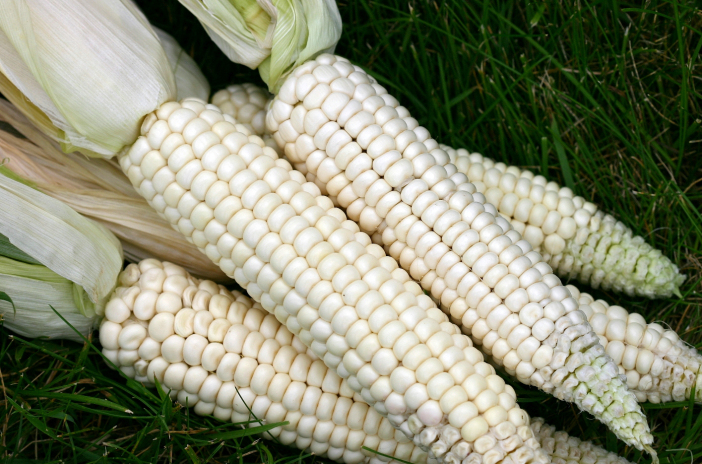
Rare ears of organic corn.  Courtesy A Really Small Farm
Rare ears of organic corn. Courtesy A Really Small Farm

Unfortunately, weeds are smarter than we are.  The more herbicide we use, the smarter the weeds get.  The evolutionary pressure of the chemical onslaught on the weeds has produced glyphosate-resistant weeds on nearly 100 million acres in 36 states.  There is always enough genetic variation in any large population of plants and insects to ensure that a few individuals will survive whatever we spray on them.  Those survivors will breed to produce the next generation, which ensures that the next generation will be more likely to survive the next onslaught of chemicals.  Over time, the population of weeds and insects capable of surviving our chemicals gets bigger and stronger.

One bad decision begets another

You might think we would abandon this chemical warfare in favor of a less poisonous, more effective long-term strategy.  You would be wrong because you’re not thinking like a corporation which manufacturers chemicals and the seeds that ensure their use.  Of course, their strategy is to make the chemicals stronger and stronger.  That strategy might make sense if we weren’t living on the same planet with all that poison or eating the food that has been sprayed with them.

The medical profession draws the line

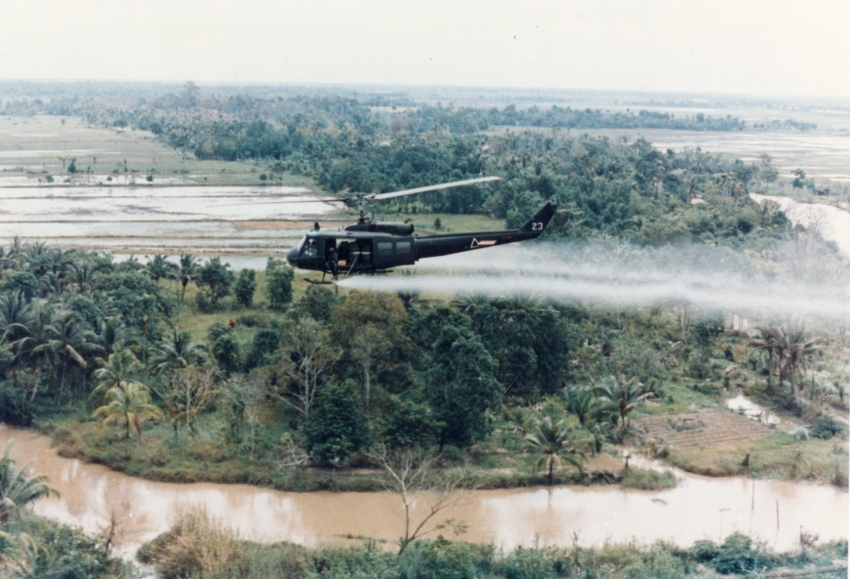
In response to herbicide-resistant weeds, the manufacturers of pesticides have developed a new herbicide which combines glyphosate and 2,4D into a product called “Enlist Duo.”  You may recognize 2,4D as one of the ingredients in Agent Orange, used during the Vietnam War to defoliate the battle field and incidentally to poison our troops and generations of Vietnamese.  Enlist Duo was approved by the Environmental Protection Agency in 2014.  In 2015, the World Health Organization (WHO) classified glyphosate as a “probable human carcinogen” and 2,4D as a “possible human carcinogen.” 

US Army helicopter spraying Agent Orange over Vietnam. Public Domain

This escalation of chemical warfare on America’s food supply has sent some members of the medical community over the edge:

“These developments suggest that GM foods and the herbicides applied to them may pose hazards to human health that were not examined in previous assessments.  We believe that the time has therefore come to thoroughly reconsider all aspects of the safety of plant biotechnology.  The National Academy of Sciences has convened a new committee to reassess the social, economic, environmental, and human health effects of GM crops.  This development is welcome, but the committee’s report is not expected until at least 2016.” (1)

In view of these concerns, the authors of the article in NEJM advise the EPA to withdraw its approval of Enlist Duo, a decision which “was made in haste…based on poorly designed and outdated studies and on an incomplete assessment of human exposure and environmental effects.” The authors also suggest that we “revisit the United States’ reluctance to label GM foods.”  They suggest that it is time to join 64 other countries around the world that require labeling of GM foods.


(1) Philip J. Landrigan, M.D., and Charles Benbrook, Ph.D., “GMOs, Herbicides, and Public Health,” New England Journal of Medicine, August 20, 2015.

Merchants of Doubt: Why isn’t our government regulating pesticide use?

A few months ago, we had a long email “conversation” with a reader who is opposed to the destruction of our urban forest, but does not believe that pesticides are harmful to the environment. He is an intelligent and well-informed person and we were intrigued by some of the arguments he used.  We read and considered every resource he sent in support of his opinion.  Then we read the resources suggested by our collaborators with greater knowledge of pesticides.

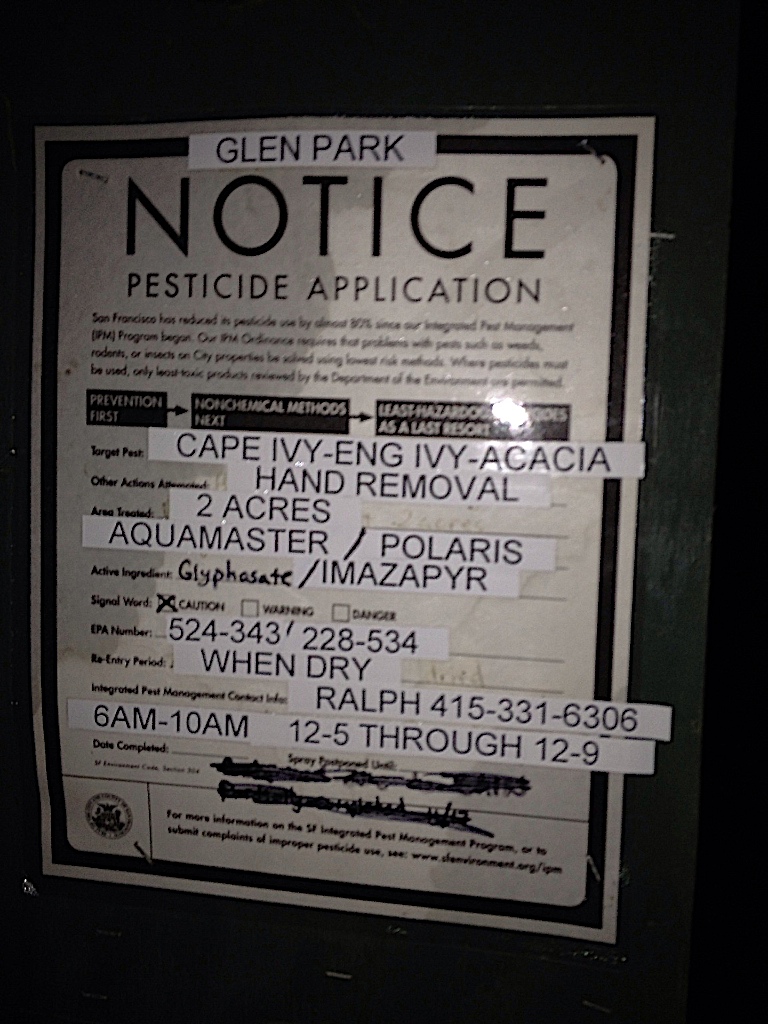
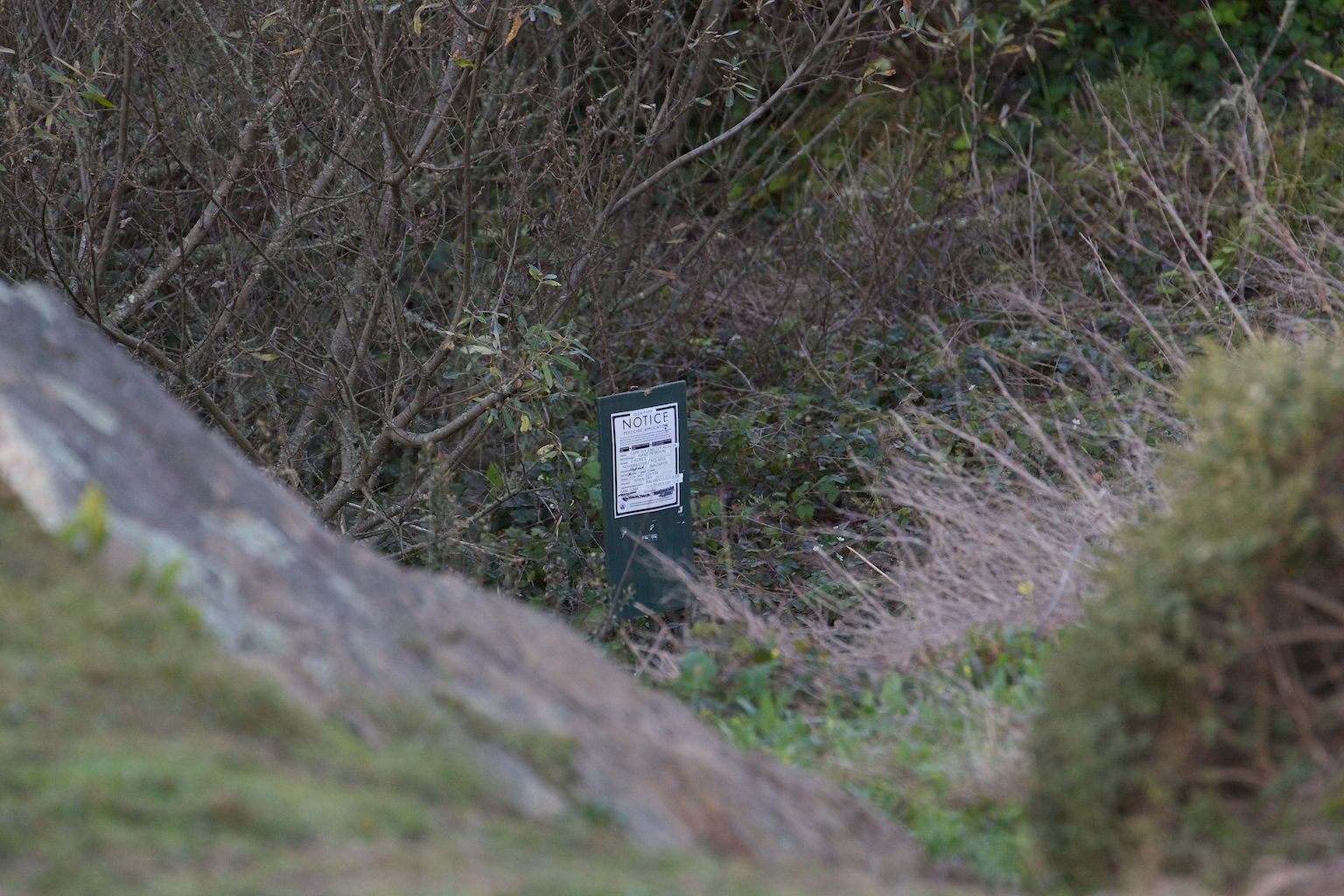
Glyphosate application, Glen Park, San Francisco.

We have decided to report some of what we learned because of the recent decision of the World Health Organization (WHO) to classify glyphosate as a “probable human carcinogen.”  Glyphosate is the herbicide used most often by land managers to eradicate plants they consider “invasive.”  It is also considered the least toxic of the many herbicides they use.  Some countries are reacting to the WHO decision by banning use of glyphosate.  The Marin Municipal Water District has announced that it will quit using glyphosate (and other herbicides) to eradicate non-native plants on Mt.  Tamalpais.  The City of San Francisco recently announced that it has reclassified glyphosate from Tier II (more hazardous) to Tier I (most hazardous)Why isn’t our federal government or our land managers in the East Bay questioning the use of this pesticide?  Our reading in the past few months answers this question. 

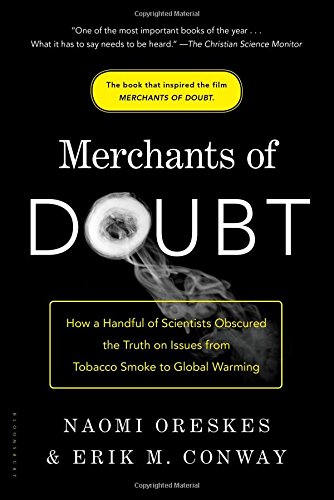
Merchants of Doubt

Merchants of Doubt (1) is about a small group of people (mostly men) who have influenced public policy in the past 60 years by undermining the science upon which these policies should be based.  They were physical scientists who were involved in the development of weapons during WW II and the Cold War that followed.  As such they were deeply committed to militaristic solutions to international threats and they perceived communism as America’s greatest enemy.  It follows that they were equally committed to our capitalist economic system which is the antithesis of communism.  They perceived government regulation of business interests as a threat to capitalism.  Here are some of the public policy issues in which they have been influential:

  • Merchants of DoubtAfter WW II many scientist who participated in the development of nuclear weapons became advocates for arms control because they predicted dire consequences of their use, such as the nuclear winter that would decimate life on Earth. The Merchants of Doubt stepped forward to undermine the effort to disarm the nuclear arsenal by attacking the predictions of their opponents.  They played a similar role during the Reagan administration when most scientists did not consider the Strategic Defense Initiative (AKA Star Wars) technically feasible.   With the backing of the Merchants of Doubt, the development of SDI was funded despite the fact that it is unlikely to be useful in actually defending against nuclear missile attack.
  • In 1953, laboratory tests on mice were the first scientific evidence that smoking causes cancer. The manufacturers of cigarettes engaged in a “massive and ongoing fraud to deceive the American public about the health effects of smoking” (1) and their efforts were aided and abetted by the Merchants of Doubt who provided much of the “scientific” cover that delayed the regulation of cigarettes for decades.   When laboratory tests and epidemiological data indicated that second hand smoke is more toxic to innocent bystanders than to those who smoke, the Merchants of Doubt stepped forward again to delay the bans on smoking that are now in place in most public places.
  • The Merchants of Doubt have played a similar role in preventing or delaying government action to address several environmental issues: acid rain which was killing the world’s forests; depletion of ozone in the atmosphere which results in an increase in the incidence of skin cancer; and currently climate change. 

How could such a small group of people be so influential when the science of these issues is so conclusive?  Here are some of the reasons why the Merchants of Doubt were successful in delaying and in some cases, preventing government regulations to address these issues:

  • Science is rarely conclusive. It is primarily a process of hypothesis testing, and retesting until the weight of evidence is sufficient to outweigh uncertainty.  If doubt is continually put on the scale, certainty is harder to achieve.  That was the strategy of the Merchants of Doubt.  They didn’t need to disprove the evidence.  All they needed to do was to cast doubt and keep demanding that more evidence was required to overcome uncertainty.  In most cases, doubt was overcome eventually, but the Merchants of Doubt were successful in delaying public policy on most of these issues for decades.  Climate change remains our biggest issue for which there is insufficient public consensus to enable public policy to address it.  The economic interests vested in the industries contributing to climate change are so big, wealthy, and therefore influential that it remains to be seen if or when we will finally be able to address the causes of climate change.
  • The media has participated in the promulgation of doubt.  The “fairness doctrine” requires that responsible journalists and broadcasters represent dissenting views.  For example, every time there was a broadcast about the health dangers of smoking, tobacco companies and their allies demanded equal time.  We no longer see such “balanced” coverage of smoking.  The evidence is so overwhelming that government regulation was finally achieved and advertising of tobacco products is strictly limited.  We seem to be moving in that direction on media coverage of climate change, but we still see dissenting views reported at a time when scientific evidence no longer justifies the representation of that viewpoint.
  • The most disturbing reason why the Merchants of Doubt were successful was that government was actively collaborating with them. They were represented on government panels, review bodies, task forces, etc.  This often put them in a position to disarm, distort, or censure scientific opinion on all of the issues in which they were actively engaged.

A word about conspiracy theories is required.  We are generally deeply suspicious of conspiracy theories.  We realize that this brief summary of a 274-page book with 75-pages of citations and footnotes, written by two science historians probably sounds like a conspiracy theory.  The fact that the Merchants of Doubt (who are identified in the book*) weren’t much more than a handful of people may seem particularly fanciful.  We can only say in defense of our summary that you should read this book before reaching the conclusion that it is not possible for a small group of influential people to control public policy to the extent that Merchants of Doubt informs us they did.  The authors of Merchants of Doubt make a convincing case.  There is also a documentary movie (available for rental on Netflix) based on the book, which should help you decide if you find their report credible.

Pesticide regulation in the US

Silent springYou may be wondering what all this has to do with pesticides, so let’s turn to that issue.  The story of pesticide regulation in the US begins with the publication of Silent Spring in 1962, in which Rachel Carson informed us that the widespread use of DDT by agriculture was having a devastating effect on wildlife, particularly birds.  She was immediately attacked by the manufacturers of pesticides as a “hysterical female,” but after 10 years of research which proved her point, DDT was finally banned for agricultural use in the US in 1972, shortly after the creation of the Environmental Protection Agency.  Fifty years later, DDT remains one of the few pesticides banned in the US for agricultural use.

You might think that is the end of the story for DDT, but you would be wrong.  The Merchants of Doubt created foundations to carry their message and receive tax-deductible “donations” from the corporations they are protecting.  In 2007, these foundations launched a belated attack on the banning of DDT.  For example, The Competitive Enterprise Institute—which was instrumental in defending tobacco– says on its website, “Millions of people around the world suffer the painful and often deadly effects of malaria because one person sounded a false alarm…That person is Rachel Carson.” (1)  This accusation was repeated by several other “foundations” and published by the mainstream press.  Michael Crichton, the author of novels portraying global warming as a liberal hoax, quotes one of his fictional characters as saying, “Banning DDT killed more people than Hitler…It was so safe you could eat it.”  Apparently fictional characters also have fictional digestive systems.

Why the belated attack on Carson decades after the issue has been resolved to the public’s satisfaction?  “In the demonizing of Rachel Carson, free marketers realized that if you could convince people that an example of successful government regulation wasn’t, in fact, successful—that it was actually a mistake—you could strengthen the argument against regulation in general.” (1)

There is no truth to this accusation that banning DDT caused millions of deaths by malaria:

  • The ban of DDT in the US did not obligate any other country to ban DDT. In fact, many countries continued to use DDT long after the US banned it. 
  • By the time DDT was banned in the US, it was no longer effective on many insects, including the malaria-carrying mosquito for which DDT was used most heavily during WWII. Insects have short lives and huge populations.  Therefore, they evolve much more quickly than most animals.  This is one of the strongest arguments against pesticide use, yet the public does not seem to understand that the more pesticide we use, the more quickly they become ineffective. Both insect and plant pests evolve resistance to pesticides quickly. 
  • Malaria control was not achieved solely with pesticides. Draining swamps and wetlands, removing standing pools of water, using window screens and bed nets, etc. have proven more effective than widespread spraying of pesticides.

Preview

A small group of people with scientific backgrounds have succeeded in confusing the public about many critical issues that threaten our health and our environment.  Their desire to prevent government regulation has trumped their commitments to science.  In any case, they are presuming to judge scientific issues outside their expertise.  They did not have the credentials to deny the reality of climate change, for example, yet they were given the podium by our government and our media.

In our next post, we will look at some of the specific arguments used to disarm criticisms of pesticide use and respond to them with the help of an excellent book, Pandora’s Poison by Joe Thornton.


*Individuals identified by Merchants of Doubt as purveyors of misinformation intended to prevent regulation of environmental and health risks:  Frederick Seitz, Robert Jastrow, William Nierenberg, S. Fred Singer and others playing smaller roles.

(1) Naomi Oreskes and Erik Conway, Merchants of Doubt, Bloomsbury Press, 2010

Glyphosate (AKA Roundup) is damaging the soil

Glyphosate application, Glen Park, San Francisco.

The use of the herbicide, glyphosate (AKA Roundup) has skyrocketed since genetically modified seeds were introduced which enable farmers to spray their crops with unlimited amounts of glyphosate without damaging their crops.  We have been reading with increasing alarm the mounting evidence of the damage that is being done to the environment by this indiscriminate use of glyphosate as well as evidence of the impact on human health.  We’ve been holding out for an unimpeachable source to inform our readers of this evidence because our critics often accuse us of being alarmist. 

On Friday, September 20, 2013, the New York Times published an article about the damage that is being done to agricultural soil by glyphosate use.  When the Times reports on an issue, that information has entered the media mainstream.  Here are the issues reported by the Times regarding glyphosate use:

  • Farmers who do not use herbicides report that their crop is often damaged by aerial drift and water runoff from their neighbors who use herbicides.
  • “Superweeds” that are resistant to any herbicide are becoming more numerous.  Million Trees reported on this issue recently.  The reaction of the Environmental Protection Agency to these superweeds was to increase the amount of glyphosate that can be legally used on agricultural crops.  This is a very unfortunate response to the problem in our opinion and will surely prove to be self-defeating in the end.
  • The herbicide binds with minerals in the soil—manganese, calcium, boron, etc.—to reduce run off.  The herbicide is competing with the plant for these minerals which the plant needs for its growth.  These minerals are also important to human nutrition.  If the plant contains fewer minerals, its nutritional value is reduced. 
  • This binding of the minerals in the soil is changing the physical quality of the soil, making it very hard and difficult to cultivate.  Farmers report that plowing their fields sprayed with glyphosate has become increasingly difficult.  If the roots of the plant can’t penetrate the soil, the growth of the plant is retarded.
  • The herbicide is killing fungi and microbes in the soil.  These plants and creatures also benefit crop plant growth by facilitating the transfer of nutrients from the soil to the crop plant.
  • Another study reports that glyphosate residues in the food we eat are also interfering with the operation of the microbes in our bodies.  Many of these microbes are beneficial to us, especially essential to our digestion.  If you have had a course of antibiotics, you may have had the opportunity to experience the discomfort of losing beneficial microbes in your gut.  Antibiotics often kill both the bacteria that make us sick and the microbes that are essential to your digestive health.
  • Most of the genetically modified crops are corn and soy.  These crops are widely used as animal feed.  We speculate that if these crops are harmful to humans, they are probably also harmful to animals. 

Cornfield
Cornfield

The manufacturer of glyphosate, Monsanto, has refuted these observations.  You can read the New York Times article if you are interested in their version of the story.  We close with the words of a farmer who tried Monsanto’s genetically modified seeds.  After several years of spraying his crop with glyphosate he has returned to conventional seeds and he is no longer spraying glyphosate:  “Although a neighbor told him that he would go broke growing conventional crops, Mr. Verhoef has no plans to go back to genetically engineered varieties.  ‘So far so good,’ Mr. Verhoef said, ‘I’m not turning back, because I haven’t seen anything that is going to change my mind about glyphosate.’”  We consider this farmer a more credible source of information than Monsanto.

Ivy Eradication: A Comedy of Errors

When the concert meadow in San Francisco’s Stern Grove was renovated in 2005, at a cost of $15 million, we were surprised that ivy was planted as the ground cover because ivy grows rampant in Stern Grove, shrouding many of the trees.  But, hey!  Who are we to question the choices of horticultural professionals? 

Ivy planted in Stern Grove, 2005

Now ivy is being sprayed with herbicide–presumably with the intention of killing it–by San Francisco’s Natural Areas Program in other parks in San Francisco, so one wonders if the staff who plant it are aware of the future of the ivy they plant.  Seems like another case of man creating problems which he then must solve.  Perhaps full employment is the objective, rather than the creation of a beautiful garden.  But we digress.

Ivy climbing trees in Stern Grove

Combining pesticides

Many members of the public are of the opinion that all pesticide (herbicides, insecticides, etc.) applications are inappropriate in a park that has been designated as a “natural area.”  Last year, the public complained about the spraying of Garlon in the natural areas by the Natural Areas Program because it is classified by the city’s Integrated Pest Management (IPM) policy as “Most Hazardous.”  Consequently, the Natural Areas Program significantly reduced its use of Garlon in 2011. 

For the most part they have substituted a mixture of glyphosate and imazapyr for Garlon. Is this an improvement?  Maybe not.  Although glyphosate and imazapyr have a lower hazard rating of “More Hazardous,” the Natural Areas Program increased their pesticide applications in 2011 at least 20% compared to 2010.  But more importantly, little is known about the toxicity of imazapyr and nothing is known about the toxicity of combining glyphosate and imazapyr.(1)  Imazapyr was approved for use in California in 2005, so only the minimal tests required by law have been done on it.

The manufacturer’s labels for these herbicides suggest that combining them is not an approved use.  The label for Aquamaster (glyphosate) does not include imazapyr on the list of pesticides with which it can be safely combined.  And the Polaris (imazapyr) label says it should not be combined with another pesticide unless it is expressly recommended by the manufacturer of that pesticide.

The “Aquatic Pesticide Application Plan for the San Francisco Estuary Invasive Spartina Project” is cited by San Francisco’s IPM program as the evaluation upon which it based its decision to add imazapyr to the list of pesticides approved for use in San Francisco in 2010.   The evaluation explained why imazapyr is being combined with glyphosate by the non-native Spartina eradication project. 

Imazapyr is apparently slow acting.  It can take some months before it kills the plant on which it is sprayed.  Glyphosate, on the other hand, is fast acting.  The plant on which it is sprayed begins to yellow and die within a few weeks.  Glyphosate is therefore used by the Spartina eradication project to provide quicker feedback to those spraying the herbicide.  They know within a few weeks if they have sprayed in the right place.  They don’t have to wait for the next season to spray again if necessary. 

Pesticide Application Notice, Glen Canyon Park, December 2011

 However, glyphosate should be applied to perennial broadleaf plants during their reproductive stage of growth, when they are budding in the late spring and summer, according to the manufacturer.  In Glen Canyon Park, a mixture of glyphosate and imazapyr was sprayed on ivy in December 2011, clearly not the recommended time period for spraying.  A month later, there is no indication that the ivy was damaged by this spraying.  This suggests that there was no point in combining glyphosate and imazapyr in this application.  The public was exposed to the unnecessary risk of combining these herbicides, with no potential benefit of taking that risk.


Pesticides accumulate and persist in the soil

Was it appropriate for the city’s IPM program to use the evaluation of imazapyr for the Spartina project as the basis of their decision to approve its use by the Natural Areas Program?  We don’t think so.  The circumstances of the Spartina project are substantially different from those of its use by the Natural Areas Program.

Imazapyr is used to eradicate non-native Spartina in a tidal estuary.  For that reason the evaluation of its use assured the public that this herbicide would not accumulate in the environment because it would be flushed away from the ground by the tide twice each day. 

The evaluation also said that when imazapyr was used in a pond or stable water source, it persisted in the ground for a longer period of time.  In fact, that’s exactly how imazapyr is being used by the Natural Areas Program.  It has been used at Lake Merced and at Pine Lake, both stable water sources.  It is also being used in Glen Canyon Park, which is a watershed. 

We don’t assume that imazapyr is being used safely to eradicate Spartina.  However, even if it is, it does NOT follow that it is safe for use in watersheds that are not tidal, such as those being sprayed by the Natural Areas Program. 

Collateral damage of pesticides

Glyphosate is a non-selective herbicide.  That is, it kills any plant it is sprayed on at the right stage of its growth.  But imazapyr is far more insidious as a killer of plants because it is known to travel from the roots of the plant that has been sprayed to the roots of other plants.  For that reason, the manufacturer cautions the user NOT to spray near the roots of any plant you don’t want to kill.  For example, the manufacturer says explicitly that imazapyr should not be sprayed under trees, because that tree is likely to be killed, whether or not that was the intention. 

Pesticide Application Notice under willow trees in Glen Canyon Park, December 2011

Much of the ivy that was sprayed by the Natural Areas Program in Glen Park in December 2011 was sprayed under willow trees.  The willow trees are native, so it seems unlikely that they intended to kill them.

Resistance to pesticides

The Federal Drug Administration recently banned some use of antibiotics in domesticated animals because the bacteria antibiotics are intended to kill are developing resistance to the antibiotics.  This resistance is becoming increasingly dangerous to humans who are also the victims of those bacteria.  Antibiotics are being rendered useless by overuse on domesticated animals.  When humans need them, they won’t work because bacteria have developed a resistance to them.

Likewise, plants and animals are also capable of developing resistance to pesticides.  Glyphosate is the most heavily used herbicide in agriculture.  Recent research indicates that weeds are developing resistance to glyphosate

The manufacturer of imazapyr says explicitly that repeated use of this herbicide is likely to result in resistance to it over the long term:  “When herbicides with the same mode of action are used repeatedly over several years to control the same weed species in the same application site, naturally occurring resistant weed biotypes may survive…propagate and become dominant in that site.”   So, does it make sense to use imazapyr on a plant as persistent as ivy? 

The GGNRA reported spending $600,000 over 3 years trying to eradicate ivy from 127 sites.  They were successful in only 7 of the sites.(2)  Obviously eradicating ivy is not a one-shot deal.

If ivy must be eradicated, pesticides do not have to be used to do it.  The Audubon Canyon Ranch in Bolinas Lagoon reported “qualified” success using hand-pulling methods on 5 acres over 5 years “utilizing 2375 volunteer hours.”  Biannual monitoring of resprouts will be required for the foreseeable future.  It’s a big commitment, but at least it is safe. 

All risk, no reward

Congratulations to any reader with the patience to slog through this tedious list of apparently incompetent use of pesticides by San Francisco’s misnamed Natural Areas Program.  We reward your persistence with this summary:

  • Combining pesticides is risky business because the toxicity of such combinations has not been tested.  Therefore, when there is no benefit in doing so, these combinations should be avoided.
  • A pesticide that is appropriate for one purpose is not necessarily appropriate for another.  In this case, imazapyr may not accumulate and persist in a tidal estuary, but it is more likely to do so in a stable watershed.
  • The Natural Areas Program may be killing plants it does not intend to kill by using herbicides indiscriminately.
  • Herbicides should not be used repeatedly on the same plants in the same locations because the plants will develop resistance to those herbicides. 
  • If the Recreation and Park Department is planting ivy in one park and destroying it another, could it be such a bad plant that it is worthwhile to expose the public to toxic pesticides?  We don’t think so, but if we are wrong, then ivy should be removed by hand without using pesticides.

(1) “Aquatic Pesticide Application Plan for the San Francisco Estuary Invasive Spartina Project,” August 2010, page 32.

(2) Liston, Heather, “Reuniting old adversaries can beat back exotic invaders,” California Wild, Winter 2006