A happy ending for the “Africanized” bee

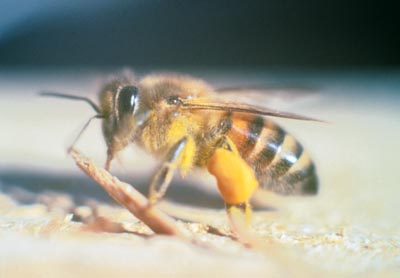
Africanized honeybee  USDA
Africanized honeybee USDA

Bees were imported from Africa to Latin America in the 1950s by Brazilian researchers.  They planned to breed them with European honeybees to improve honey production because the African bees were believed to be hardier than their European cousins.  When the bees escaped from the laboratory, researchers learned that the African bees were also more aggressive than European honeybees.

When African bees began to spread throughout Latin America, they became one of the first media-promoted panics about “invasive” species.  The media reported that the bees were capable of swarming and killing people and animals and they predicted that the bees would eventually spread throughout the United States.

Like most of the media-promoted panics about “invasive” species, predictions about Africanized bees were eventually discredited.  The “invasion” stopped in Texas because cold winters prevented their movement further north.  And the extreme aggressiveness of the bees also proved to be an exaggeration, partially because interbreeding with the European honeybee moderated the behavior of the African bees.

The benefits of new species

Scientific American reports that after 60 years of interbreeding, bee researchers say the original goal of an improved bee species for Latin America has been achieved.  Hybridized bees have benefited from some of the characteristics of their African cousins.

  • Africanized bees are more resistant to parasites because they groom themselves more often than European bees.
  • Africanized bees are more aggressive foragers and are capable of finding nectar and pollen sources where European bees would not.

This interbreeding was accomplished by the bees themselves“…it is not even accurate to call them Africanized bees anymore.  After decades of a massive and uncontrollable continent-wide wild breeding experiment, the African-Italian hybrid has morphed into a totally new bee unlike either parent species.” (1)

Now bee researchers are trying to breed new varieties of bees that are tailor made for specific conditions.  For example, where humans are stealing honey, a more aggressive bee with more of the characteristics of the African bees may be best suited.  In places where mites are a problem, bee keepers will want a “bee that obsessively cleans itself.”

Personally, we prefer the earlier scenario, in which the bees sorted it out amongst themselves.  We are deeply suspicious of the claims of humans that we are capable of producing better results than nature can accomplish on its own. More often than not, the results of human interference are unintended consequences, if not disastrous.

Does this sound familiar?

This story is a familiar refrain for the readers of Million Trees:

  • New species should not be assumed to be “bad” species.
  • Problems caused by new species are often resolved without our interference.
  • New species often make positive contributions to ecosystems.
  • Methods used to eradicate new species are often futile as well as more harmful than the mere existence of new species.
  • Hybridization should not be viewed as a problem.  Particularly at a time of a rapidly changing climate, hybridization often facilitates natural selection, resulting in a new species which is better adapted to current conditions than its predecessors.

**************************

(1) Erik Vance, “Bee Researchers Make Friends with a Killer,” Scientific American, December 11, 2013
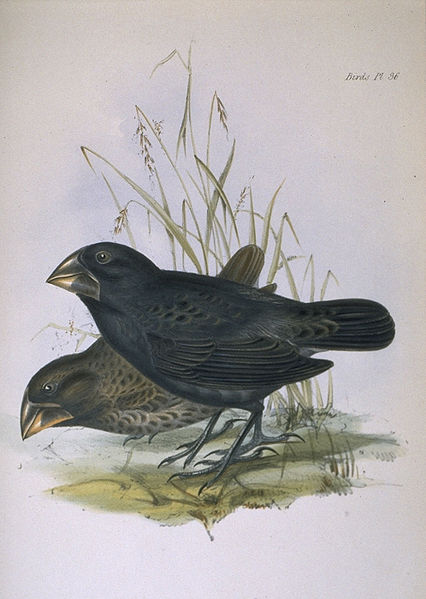
Hybridization is an adaptive strategy for species survival

Large ground finch. Linda Hall Library

We introduced Darwin’s finches to our readers in our previous post.  We told you about the research of Rosemary and Peter Grant on the Galápagos Islands that documented the rapid adaptation of the finches to radical changes in their food sources resulting from extreme weather events.  In this post we will continue the story by telling you about another of the amazing discoveries of the scientists studying the finches over a period of nearly 30 years.

Natural selection resulted in the survival of finches with body sizes and shapes that were best suited to the availability and type of food.  Sexual selection enhanced those physical characteristics during periods in which females had more choice because they were greatly outnumbered by males.  In addition to these adaptations, the birds increased their cross-breeding with other species and the resulting hybrids actually had a survival and breeding advantage over their species “pure” parents.*

In the first five years of the research study, there was little evidence of different finch species interbreeding, known as hybridizing.  On those rare occasions when species interbred, the resulting generation was not as successful as their parents, with respect to finding a mate and raising another generation.

Such lack of success of hybrids is considered the norm in nature.  In fact, many hybrids are sterile, incapable of reproducing.  Think of the sure-footed but sterile mule—the offspring of a horse and a donkey—as the classic example of a hybrid.

After the severe drought of 1977 and the flood of 1983, the Grants began to notice an increasing number of cross-breeding birds.  It seemed that the resulting hybrids were having more breeding success than the pre-drought hybrids and the data confirmed their observation.

This counter-intuitive conclusion required some careful consideration and the conclusion is a valuable lesson in our rapidly changing environment.  The environment on the islands was radically transformed by the severe drought and subsequent flood.  The cactus was overwhelmed by a vine that smothered it.  The plants with big, hard seeds were attacked by a fungus that decimated the population.  The small seeded plants thrived and became the dominant food source.

The rapidly changing environment was causing more rapid evolution and the genetic variability of hybrids was giving them an advantage.  If the environment is changing rapidly in unpredictable ways, the birds could increase the odds of finding a winning strategy by increasing the variability of their genes, sometimes resulting in novel traits.

We cannot and should not, however, anthropomorphize the birds by imputing motives to the selection of a mate of another species.  The starving cactus finch probably observes that a male of another species—a seed-eating ground finch, for example—appears to be more fit than a male of her own species.  She is not thinking of the odds of increasing genetic variability.  Natural selection operates without the conscious effort of species.

The implications of hybridization

We are experiencing a period of rapid change because of the anthropogenic (caused by humans) impacts on the environment, most notably climate change, but surely many other impacts which we don’t necessarily understand.  These would seem the ideal conditions for the hybridization of species which speeds up evolution by increasing genetic variability. 

Unfortunately, one of many strategies of the native plant movement and nativism in the animal kingdom is to prevent hybridization because it is perceived as a threat to native plants and animals.  We have reported to our readers some examples of such attempts to prevent hybridization and there are many more in the literature:

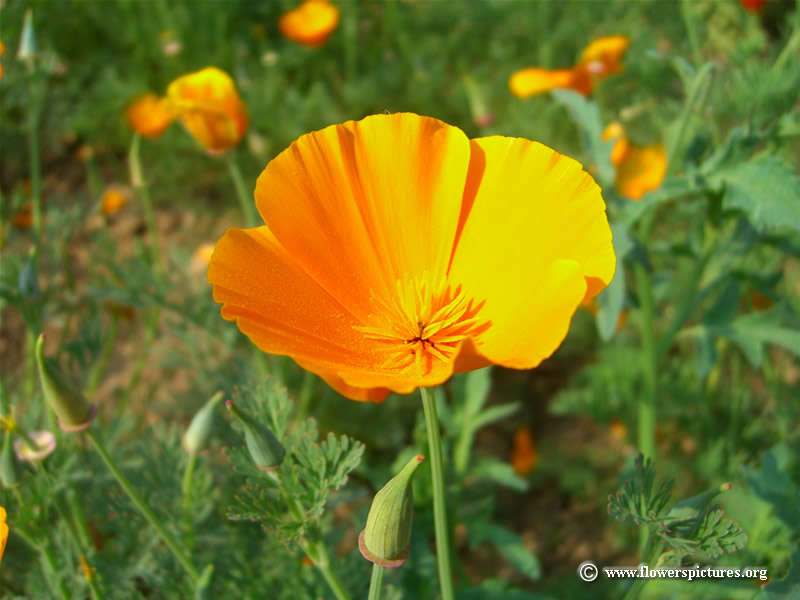
The variety of California poppy being eradicated from the Presidio in San Francisco.

Are efforts to prevent hybridization depriving plant and animal species of opportunities to adapt to the rapidly changing environment?  We don’t know the answer to that question, but we find it a provocative line of inquiry.

***************************

*This information is drawn from:   Jonathan Weiner, The Beak of the Finch, Vintage Books, 1994

Hybridization: “Genetic pollution” or a natural process?

 
Presidio variety of California poppy. NPS photo

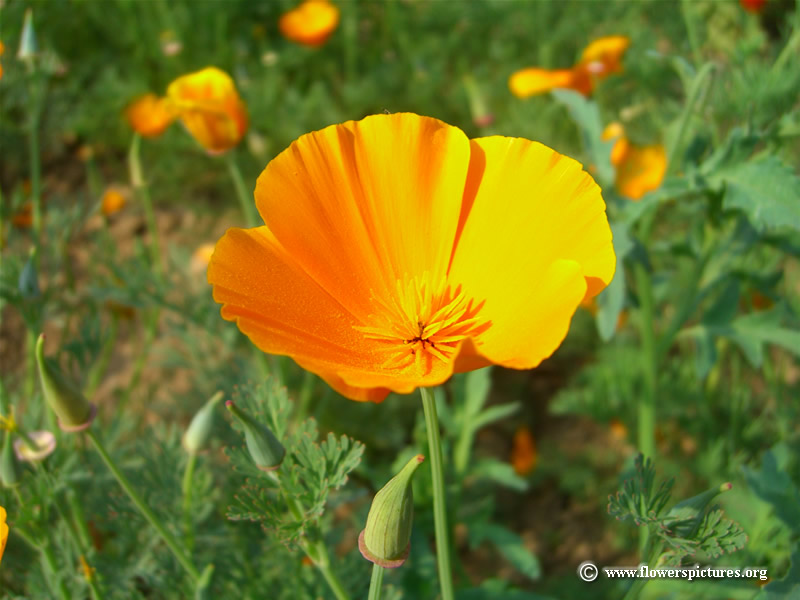
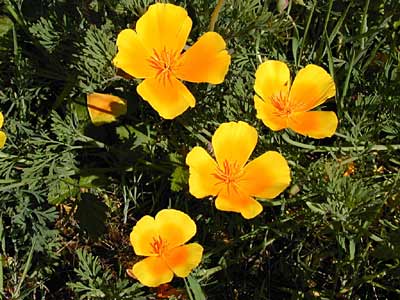
The San Francisco Chronicle’s gossip columnist, Leah Garchik, recently published a story about California poppies in the Presidio.  Apparently, someone planted the “wrong” poppy, or it migrated there.  The poppy that is native to the Presidio is small and yellow.  This “alien” poppy is the large orange poppy that most of us consider the classic California poppy.  The historical record indicates that this classic poppy grew elsewhere in San Francisco, but since it didn’t grow in the Presidio it must be removed because the Presidio’s Vegetation Management Plan “contains the requirement to remove any plants that could jeopardize the integrity of the genetics of native plants in the Presidio.” 

The “wrong” poppy

This incident reminded us of an article published in the newsletter of the local chapter of the California Native Plant Society several years ago, entitled “Contaminating the Gene Pool.”  In this article Jake Sigg instructs gardeners to beware of planting the wrong variety of a native plant because it will cause “genetic pollution.”  The California poppy is one of the examples he gives of a variety of California native being planted in San Francisco that doesn’t belong here.  It isn’t sufficient in his opinion, to plant a California native if that specific variety of the species didn’t historically occur in San Francisco.  He asks gardeners to “think in terms of preserving the genetic integrity of the local landscape.”  And he speculates many negative consequences of selecting the wrong variety, such as “genetic swamping, you’ve got all these foreign genes that are going to overwhelm the native population.”  We were reminded of Mr. Sigg’s vocal opposition to human immigration. 

For the benefit of our readers who aren’t gardeners, we should explain what Jake Sigg and the Presidio are worried about.  In a word, they are worried about hybridization, defined as “to breed or cause the production of a hybrid,” which is defined as “the offspring of two animals or plants of different breeds, varieties, or species.”  Hybridization is as likely to occur between two native plants as two non-native plants, but native plant advocates are concerned about the possibility of a native and a non-native plant producing a hybrid variety that is distinct from the native plant.  Hybridization is not inevitable, but it does occur naturally as well as through human manipulation.  The “From the Thicket” blog recently told the fascinating story of the development of a valuable garden cultivar variety of a favorite California native, ceanothus or California Lilac. 

Aside from the unpleasant association with eugenics, Mr. Sigg’s advice raises several practical questions.  How is the gardener supposed to know exactly which variety of a native plant “belongs” in San Francisco or even in a specific neighborhood within San Francisco, such as the Presidio?  And, in the unlikely event that gardeners might have such esoteric knowledge, where would they get the seeds of this specific variety?  Jake Sigg acknowledges this practical obstacle, but advises gardeners to get their seeds and plants only from the annual plant sale of the local chapter of the California Native Plant Society.  One wonders how many gardeners will follow this rather restrictive advice.

However, the more important question is the scientific question.  Is hybridization an inherently harmful process that always reduces species diversity?    We turn to Mark Davis for a less gloomy view of hybridization.  Like most scientific questions, there is evidence of both positive and negative effects of hybridization on species diversity.  Since you’ve heard the negative view from Mr. Sigg, we’ll let Mark Davis speak for the positive view.  Professor Davis reports in his book Invasion Biology* that “the fossil record generally shows that following the invasion of new species, the number of species resulting from adaptive radiations and evolutionary diversification exceeds the number of extinctions.”   And he concludes his discussion of hybridization and evolution by saying, “…a fair appraisal must also acknowledge that species introductions can enhance diversity as well, through hybridization, and the creation of new genotypes.”

The native plant movement has a narrow view of nature, which we do not share.  Their ideology is based on dire predictions of ecological disaster if we don’t follow their restrictive advice.  And when the managers of public lands choose to follow their advice, the consequences are usually the destruction of plants and animals that we value, in this case a field of California poppies. 


* Mark Davis, Invasion Biology, Oxford University Press, 2009, page 78-82.