Malibu, California: A model for grassroots opposition to pesticides

“How could intelligent beings seek to control a few unwanted species by a method that contaminated the entire environment and brings the threat of disease and death even to their own kind?” – Rachel Carson

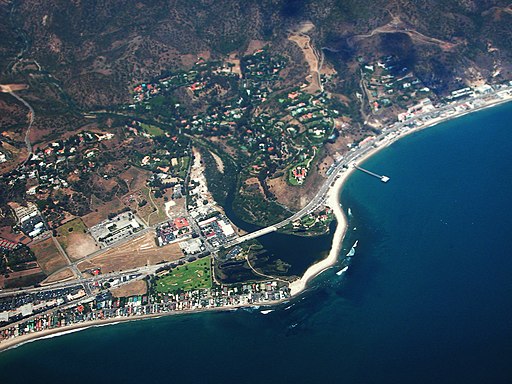
I am pleased to publish a guest article about a grassroots effort to reduce the use of pesticides in Malibu, California, a community of about 10,000 on the coast of Southern California.  Malibu is famous as the residence of Hollywood celebrities and executives and surfers attracted by 21 miles of beaches with world-class surfing conditions. 

City of Mallibu. Wikipedia – Creative Commons

The author, Kian Schulman, and her husband, Joel Schulman, are founding members of the Malibu-based nonprofit Poison Free Malibu, a group that has had much success protecting local wildlife, children and pets in the Santa Monica Mountains and throughout California by educating the public and policy makers about the dangers associated with pesticides.

I hope the impressive accomplishments of Poison Free Malibu will inspire readers to participate in such efforts in your community in 2025. 

Happy New Year!  Best wishes for a more peaceful 2025. 

Conservation Sense and Nonsense

Grassroots Power is a Strong Voice!

In the fight against harmful pesticides, the coastal community of Malibu, California is a model for the power of grassroots activism and persistent community engagement, which has significantly reduced the use of pesticides in Malibu. 

Chemical companies like Bayer (Monsanto), Dow, Syngenta, and others have expanded beyond agricultural markets, targeting “invasive” and “non-native” species in nature preserves with toxic pesticides. The Santa Monica Mountains surrounding Malibu are replete with “invasive species,” targets for eradication with herbicides, downplayed by claims of so-called Integrated Pest Management policies. 

The Santa Monica Mountains are wildfire prone. In December 2024, the Franklin Fire threatened the campus of Pepperdine University in Malibu, burned over 4,000 acres, multiple homes, and displaced many residents.  Various methods of fuels management are available, but herbicide is the primary tool because it is the cheapest method. I ask, “What is the price tag to our health and the entire ecosystem?”  

The Pesticide Problem

The impacts of pesticide exposure on our health are profound. Pesticide exposure has been linked to a rising tide of serious health problems, including cancer, Parkinson’s disease, diabetes, reproductive failures, developmental disorders, and autism. (1)

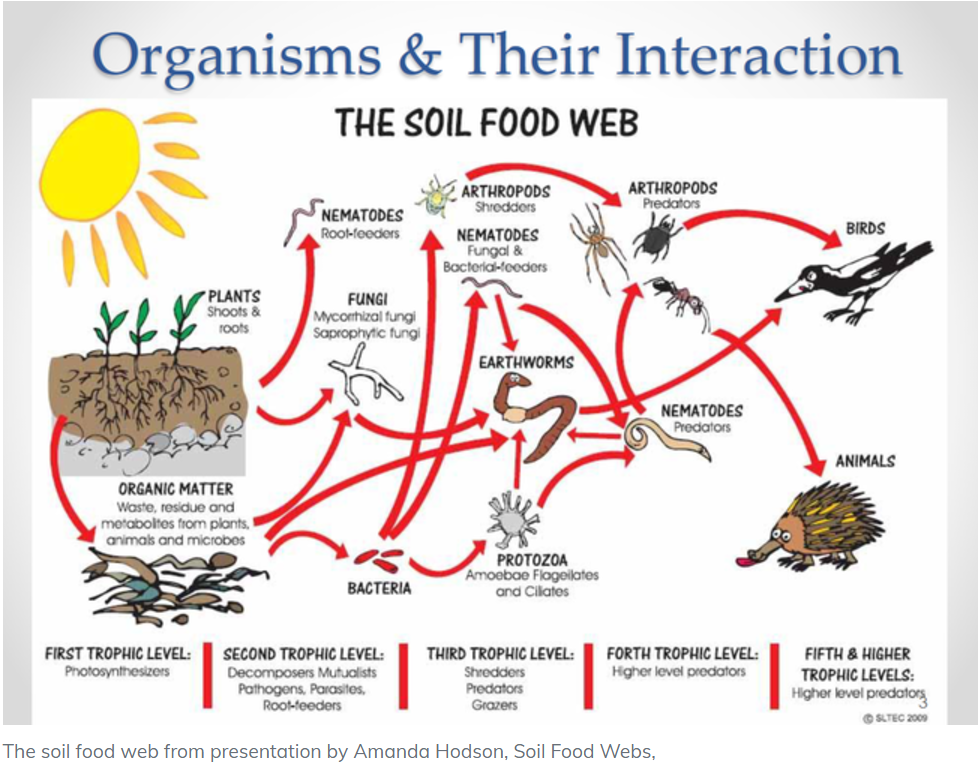
Pesticides and other chemicals can persist in soil for decades, contaminating soil and watersheds with toxic breakdown products.  In 2021, Scientific American published an article about a meta-analysis of nearly 400 studies that examined 275 soil organisms and 294 different pesticides. In 70% of those experiments, pesticides were found to harm the organisms that are critical to maintaining healthy soils.  Tens of thousands of subterranean species of invertebrates, nematodes, bacteria and fungi are filtering our water, recycling nutrients, and helping to regulate the planet’s temperature.  The EPA, which is responsible for approving chemicals for the market, is not presently required by law to test the effects of chemicals on the soil. 

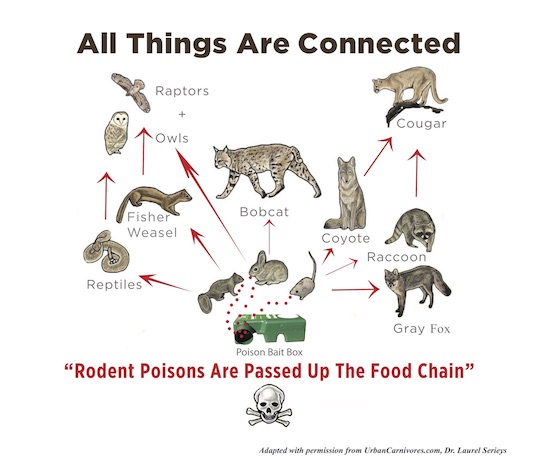
The widespread use of these poisons are also harming wildlife. Rodent poisons used to kill small rodents don’t stop there.  Other non-target animals are often killed as well, either by eating the bait directly or eating the poisoned rodents.  Many top predators, such as mountain lions and bald eagles, have been killed by rodent poisons that work their way up the food chain. 

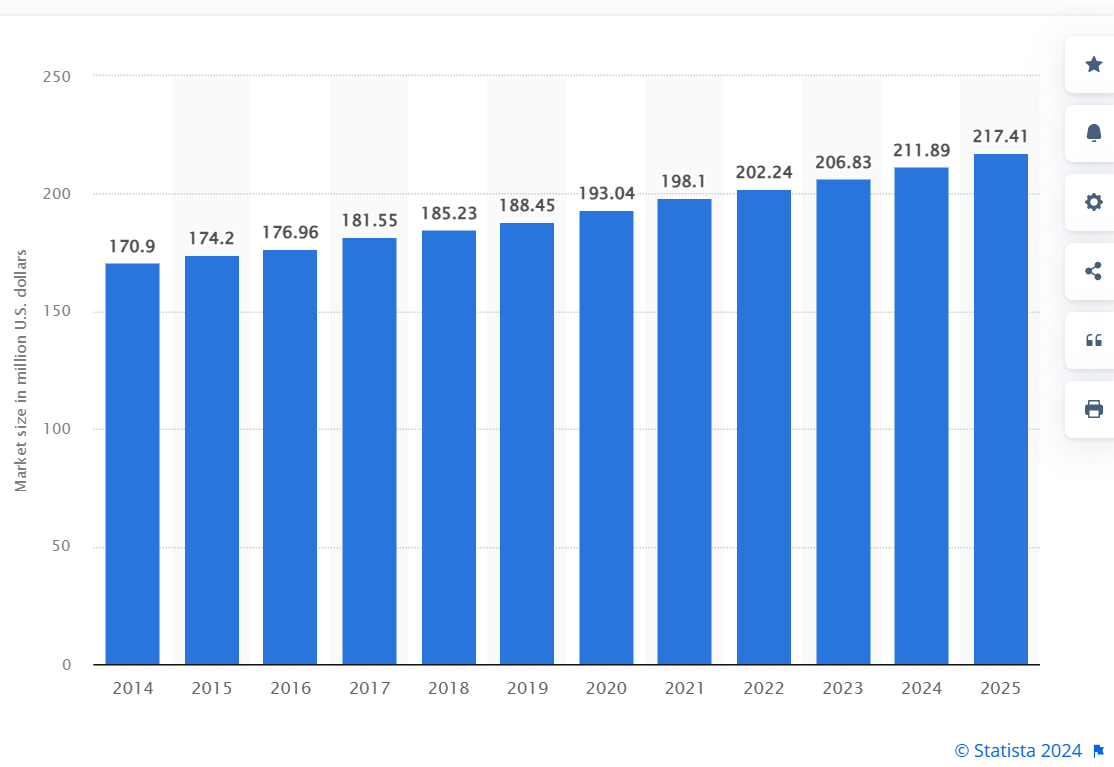
Market size of rodenticides in the US, 2014 to 2025 (in million US dollars)

Malibu’s Transformative Journey

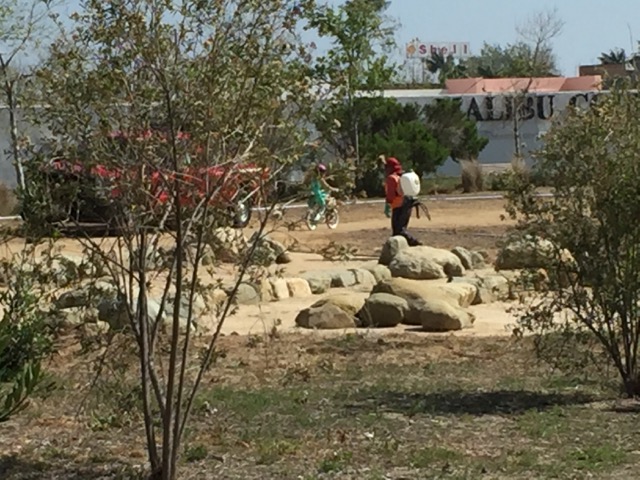
In 2012, local activists began investigating the city’s pesticide use, discovering a shocking reality. Malibu’s parks and public spaces were being treated with a cocktail of toxic chemicals, including glyphosate (RoundUp), 2,4-D, triclopyr (Garlon), pre-emergents and others, often applied in areas where children and pets play.

RoundUp being sprayed in a Malibu public park while child cycles nearby.

Protecting Wildlife

Poison Free Malibu was activated in 2012, after a mountain lion was found dead in a local park with rodent poison detected in the autopsy.  Reducing rodent poison exposure has always been one of our primary objectives.  All top predators of rodents are at risk of rodent poisoning:  “The vast majority of bald and golden eagles in the United States are contaminated with toxic anticoagulant rodenticides…” (2) 

Poison Free Malibu addressed this issue in a variety of ways:

  • We asked local businesses selling rodent poisons to quit selling them.  No stores in Malibu now sell rodent poisons.
  • We asked businesses and organizations to remove bait boxes from their premises. 
  • We approached 10 neighboring cities to suggest that they pass resolutions banning the use of rodent poisons in their communities.  Animals are on the move, so broader protections are needed for them.
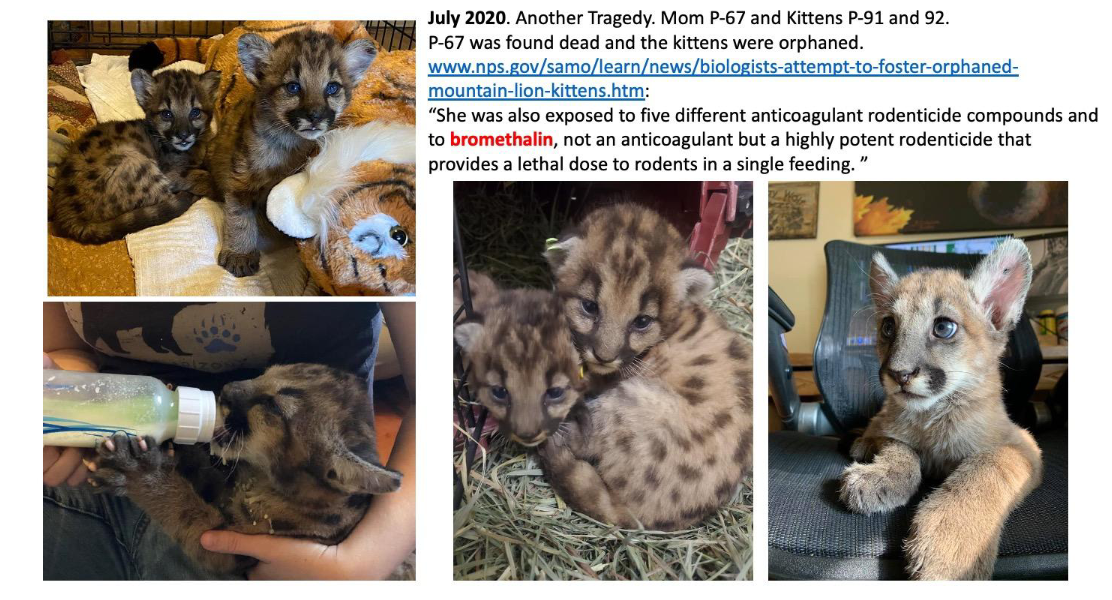
  • We helped pass three state bills to prohibit the use of 3 specific rodent poisons in California.  Unfortunately, these laws have exceptions, including one for using rodent poisons on off-shore islands to kill rodents. The pesticide industry was quick to respond to the new restrictions by promoting other, still allowed but extremely dangerous rodent poisons such as bromethalin and cholecalciferol.  Both of these have NO antidote, endangering wildlife and pets. According to the National Park Service, bromethalin was detected in 10 out of 16 mountain lions tested in the Santa Monica Mountains from July 2020 to August 2022.
  • We helped to pass a Dumpster Lid Lock Ordinance in Malibu.  In both commercial and residential areas, this ordinance was key to eliminating rodent issues.

Changing Public Policy

As we learned about the extensive use of a wide range of pesticides in Malibu it became clear that a broader effort was needed.  We petitioned our city for an Earth Friendly Management Policy, which bans the use of all toxic chemical pesticides in EPA 1, 2, and 3 categories of toxicity.  The city now relies on organic solutions, environmental enrichment, and “Expel, Deter, and Repel” tactics.

There is a National Park and a State Park in Malibu that also use pesticides on our public lands.  We had to negotiate directly with those organizations that are not subject to our city policies.  Following numerous meetings with State and National officials, we reached an agreement to establish hand weed-pulling events. This initiative has proven highly successful.

Public Education

The support of the public is needed to achieve changes in public policy.  Educating the public about the dangers of pesticides is therefore an important part of our strategy:

  • We reached out to school systems, other local cities, and counties, to bring these issues to their attention. Many have adopted pesticide-free policies, most recently Ojai just on December 10, 2024.
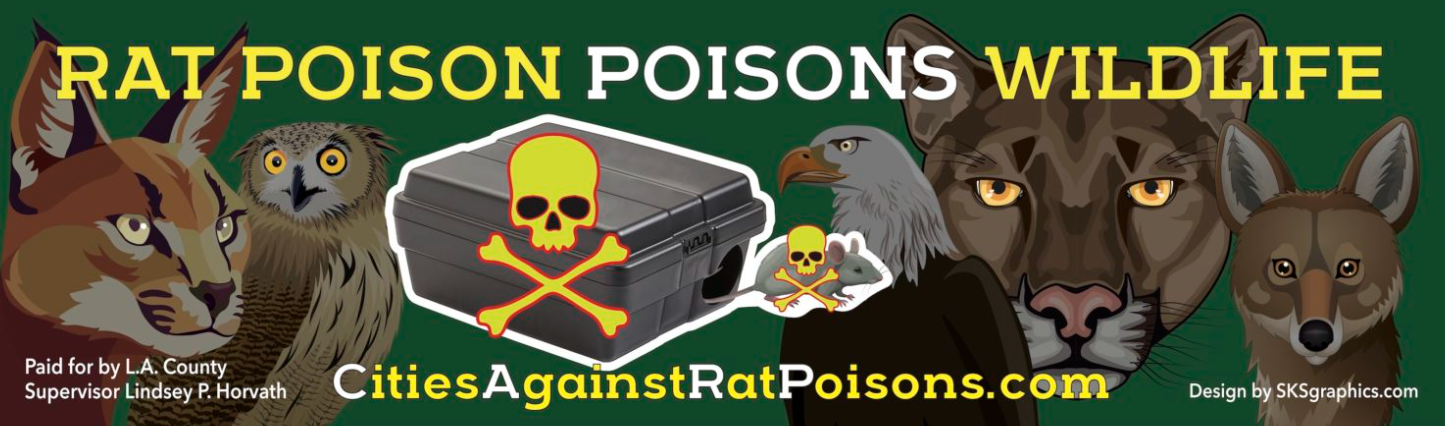
  • We received grants from our city and county to help us with our outreach efforts, such as developing coloring books, distributing hundreds of yard signs, and putting up billboards throughout Los Angeles.

Not the end of the story

Despite these many important accomplishments, our work is never done.  Legislative hurdles to our progress exist because of opposition from various government agencies, such as the Wildlife Conservation Board, the Department of Pesticide Regulation, the Environmental Protection Agency, CalTrans, and the California Department of Food and Agriculture.  There is regrettable opposition from many non-profit organizations that champion the use of pesticides to kill so-called “invasive” species, such as the California Invasive Plant Council and the American Chemistry Council, a trade association representing manufacturers of chemicals.

Our work is never done, but the grassroots movement in Malibu proves that collective action can transform seemingly insurmountable challenges into opportunities for positive change.

Kian Schulman, RN, MSN
Director, Poison Free Malibu
Contact: PoisonFreeMalibu@gmail.com | 310-456-0654
Website: PoisonFreeMalibu.org


(1) “Wide Range of Diseases Linked with Pesticides,” Pesticides and You, Summer 2010

(2) https://beyondpesticides.org/dailynewsblog/2021/04/study-finds-eagle-populations-experiencing-widespread-rodenticide-exposure/

Nature’s Best Hope? Nope!

On November 16, 2024 I attended a conference at the Oakland Museum of California, where I live, sponsored by Bringing Back the Natives Garden Tour and featuring Doug Tallamy as the key note speaker.  The conference was sold out.  Two hundred enthusiastic native plant gardeners attended the conference.  Although a native Coast Live Oak is the crown jewel in my garden, I don’t consider myself a native plant advocate.  I listened quietly.

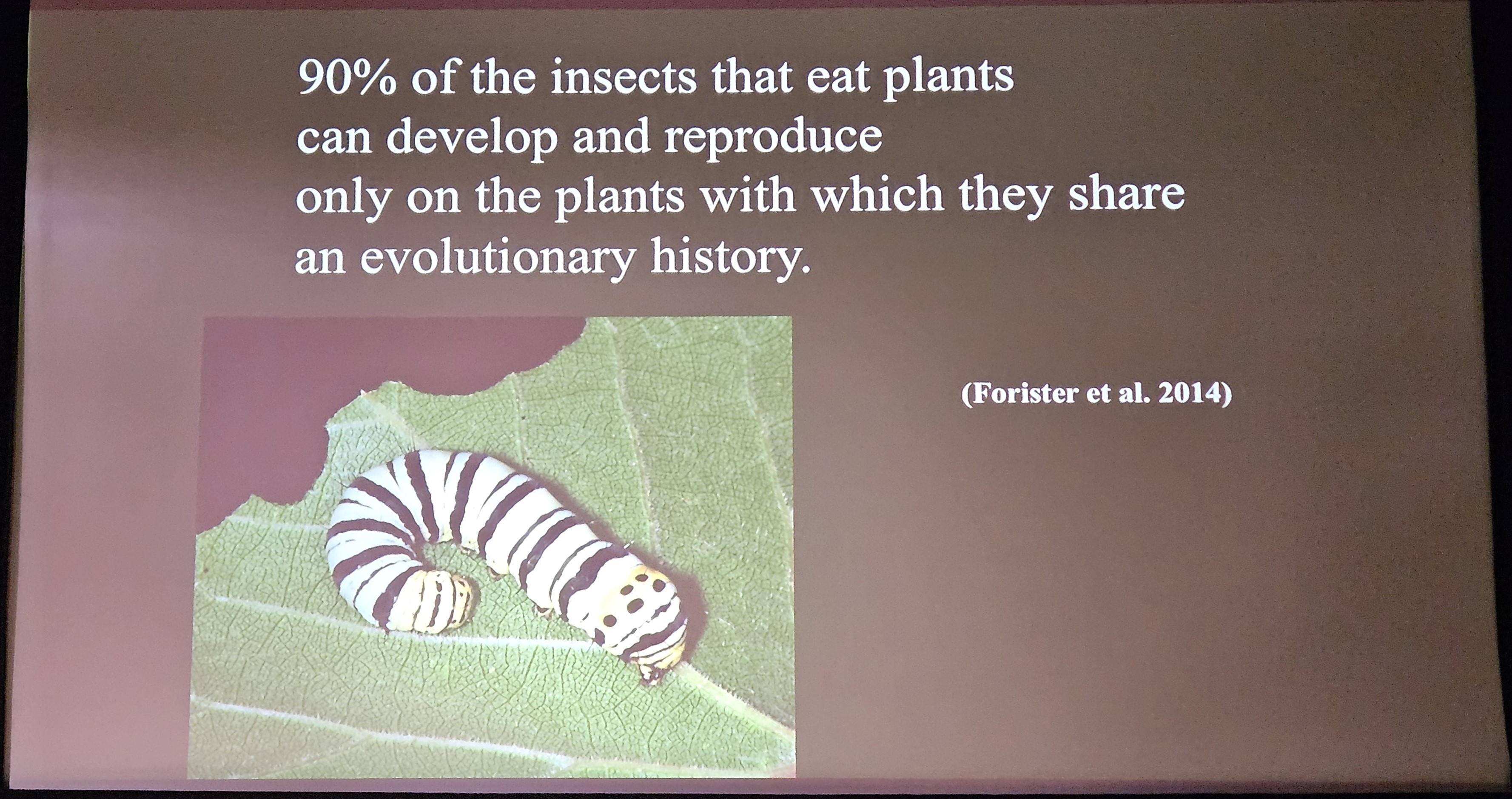
I have heard Doug Tallamy speak several times and I have read his books, so there were few surprises in his talk, except for this slide:

The cited study for this slide was published by Matthew Forister (and others).  Professor Forister is an academic entomologist who is a specialist in lepidoptera (moths and butterflies).  I have read several of Forister’s studies and I respect his research, so I was surprised that he would reach the conclusion claimed on Tallamy’s slide. 

I read the study (available HERE) and I was unable to find a conclusion in the study that was consistent with Tallamy’s interpretation of it.  Hmmmm, I said to myself, does Tallamy’s slide accurately represent Forister’s study? 

I asked Claude.ai to compare the study with Tallamy’s brief summary of the study.  Claude’s response was: 

“After carefully reviewing both the original study and Professor Tallamy’s summary slide, I find that his statement represents a somewhat oversimplified interpretation of the study’s findings…While Professor Tallamy’s statement captures the general spirit of the research – that most insect herbivores are specialists – it appears to be a simplified interpretation that makes stronger and more specific claims than what’s directly supported by the study’s data. The “90%” figure and the explicit connection to evolutionary history, while perhaps derived from other research, aren’t directly demonstrated in this particular study.”

Forister’s study found a continuous distribution between specialists and generalists, not a strict dichotomy, as Tallamy’s slide claims.  For example, an insect that is confined to plants in a genus is more specialized than an insect that is confined to a plant family.  Insects that are confined to a single plant species are extremely rare because they are often an evolutionary dead end. 

Professor Forister’s study is interesting.  It found that dietary specialization of insects varies by latitude and that specialization is greatest near the equator, where diversity of plant species is greatest, creating more opportunities for ecological niches in which specialized insects can find what they need with less competition.   

The same principle applies in the temperate zone, where we live.  That is, greater diversity creates more opportunities for insects to find what they need.  The scientific definition of biodiversity includes both native and non-native species.

The relationship between plant species in the Apiaceae family and the anise swallowtail butterfly evolved in the distant past, eons before individual members of the family evolved into different genera and species.  The association between an insect and its host plant is chemical rather than being a connection to a specific plant species.  In other words, anise swallowtail butterflies co-evolved with fennel. 

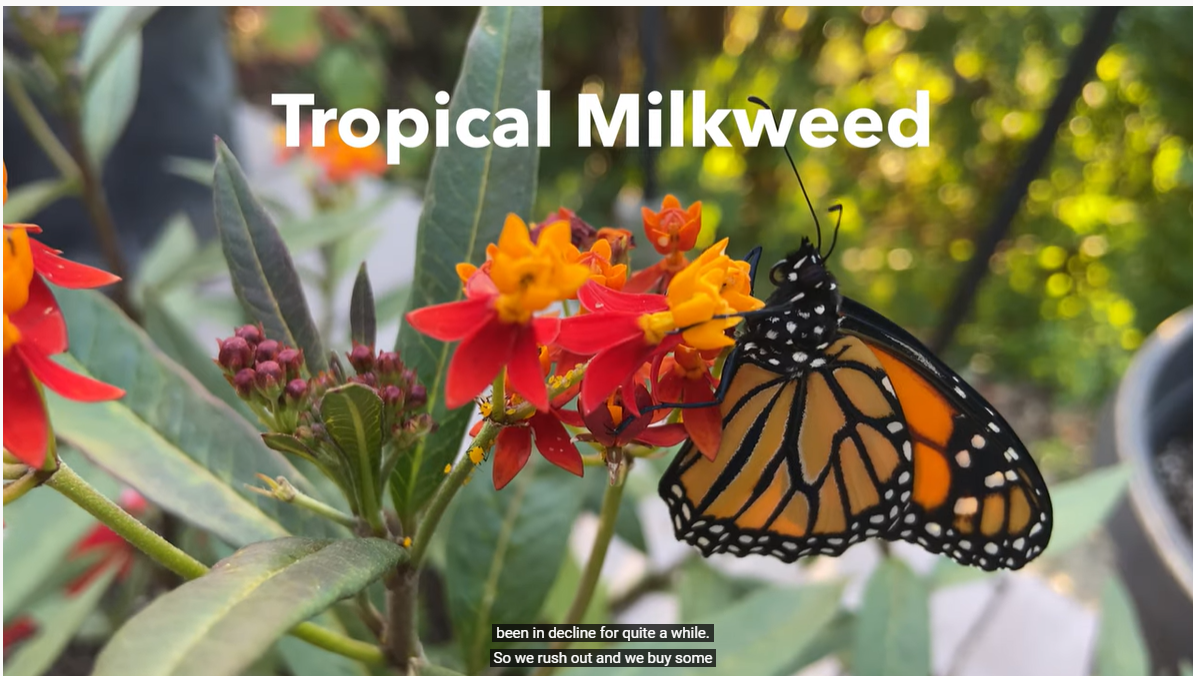
Likewise, monarch butterflies co-evolved with tropical milkweed, which is native to Mexico and Central America.  Both tropical milkweed and local native plants in the same genus contain the chemical that monarchs seek, a chemical that renders it unappealing to its predators because it makes them sick.  Again, this similarity is fortunate because tropical milkweed is evergreen and local natives are deciduous, making it available for monarchs to breed in winter months in a warming climate. Winter breeding of monarchs is recent and may not benefit the monarch population because fewer food sources are available in winter months. (2)

With the help of genetics, we can understand why individual members of a family of plants are closely related.  Plants and animals with a common ancestor are dispersed around the globe in a variety of ways, of which many are natural and long precede the advent of humans around 300,000 years ago.  Plants are carried by ocean currents, rivers, wind, storms, birds, animals, etc. 

When plants arrive in a new home, they quickly begin to change, partly because of random genetic drift and partly because they respond and adapt to the specific environment in which they have landed.  Over time, the change in the plant becomes great enough to be considered a new species, but its chemical properties remain similar to its ancestors in most cases.  Exceptions abound because nature is complex and our understanding is limited.

Why does it matter?

I attended this conference because native plant advocates are unhappy about Oakland’s Urban Forest Plan.  I support the plan because it will improve Oakland’s urban forest by addressing hazardous tree conditions, expanding the forest with diverse tree species, and more equitably distributing Oakland’s forest resources to neighborhoods that have been short-changed in the past.  I expected the plan to be discussed at the conference.  It was.

Native plant advocates want Oakland to plant more native trees and fewer non-native trees.  Opinions vary, of course, but some want a forest of exclusively native trees because of their belief that native trees support wildlife and non-native trees are not useful to wildlife.  There are many reasons why a diverse urban forest best serves Oakland and every animal that lives here:

  • The pre-settlement vegetation of Oakland was 98% grass, shrub, and marshland.(1) There were only 10 species of trees that are native to Oakland:  coast live oak, bay laurel, coast redwood, madrone, big leaf maple, holly leaf cherry, toyon, willow, buckeye, redbud.  There are now over 500 tree species in Oakland.
  • The goal of the Urban Forest Plan is to increase the population of street trees.  Most of the trees that are native to Oakland are not suitable as street trees.  Some are too big.  Some are shrubs rather than trees.  The branching habit of some native trees are too low to be street trees, which must not obstruct sidewalks or streets. 
  • Some shrubs can be pruned into trees, but that would be very costly and Oakland is broke!  A shrub that has been severely pruned into a tree is not stable.
  • Growing conditions where trees are needed in Oakland are often not suitable for native trees. That’s why they didn’t grow there prior to settlement.  Oakland’s urban forest is predominantly non-native because they are adapted to our growing conditions.
  • Climate change requires a diverse urban forest because a more diverse forest is more resilient.  Sudden Oak Death has killed millions of oaks throughout California for the past 25 years. We can’t predict which tree species will survive the warming climate.  Therefore, we must hedge our bets by planting a diverse forest.

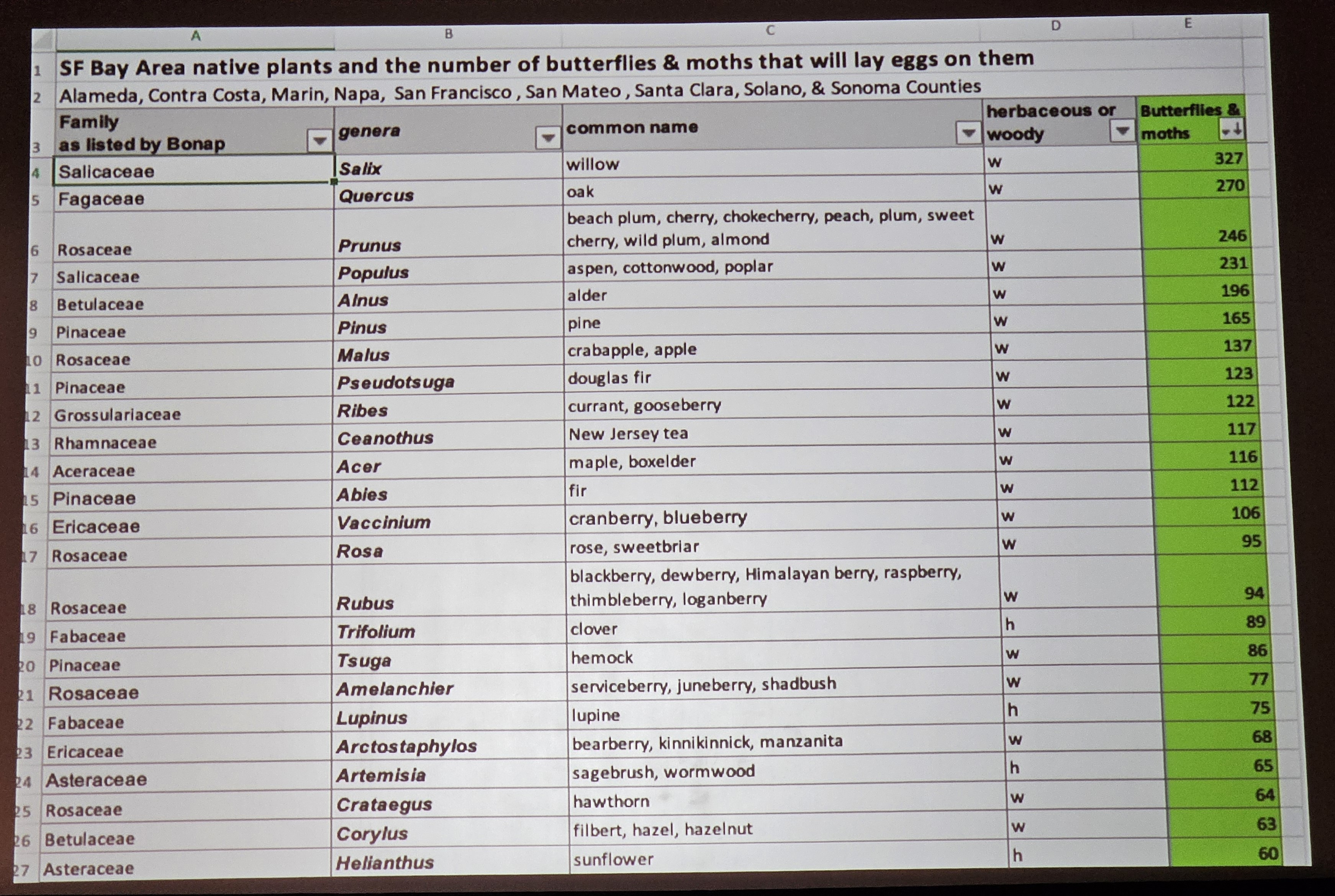
As expected, the first question the audience asked of Doug Tallamy was why Oakland Tree Services is telling native plant advocates that Oakland can’t plant exclusively native trees because they aren’t adapted to the challenging conditions that street trees face.  Doug Tallamy replied that Oakland’s Tree Services is mistaken.  He showed this slide of the many native alternatives that he believed would be suitable street trees:

This list is predominantly shrubs.  Some are not native to Oakland.  Some plants native to Oakland are missing from the list. At least one—Himalayan blackberry—is a notorious invasive non-native that most public land managers have been trying to eradicate for decades.  Himalayan blackberry is, however, an extremely useful plant for wildlife.  The list is a mixed bag, but it won’t create an urban forest.  

Update:  The Public Works & Transportation Committee of the City of Oakland approved the Urban Forest Plan for Oakland today, December 10, 2024.  Eleven people spoke in support of the plan.  No one spoke against the plan.  

Dan Kalb, City Council representative for District 1, asked why Oakland is planting non-native trees, which he claimed are breaking sidewalks and destroying the foundations of people’s homes by sending their roots into their yards.  David Moore, the head of Tree Services, handled these questions well and Kalb did not pursue the issue further. No speaker objected to non-native trees in Oakland.  

I have a native Coast Live Oak in my front yard, which damaged the foundation of my home, destabilizing the house and doing extensive damage inside the house.  To save the tree, we had to repair the foundation by suspending the new foundation over the roots from two steel-reinforced piers that are 10 feet deep at each end of the foundation.  In other words, although there is some variation in the configuration of tree roots, the variation is unrelated to the national origin of the tree species. 

Given the budget deficit in Oakland, it was necessary to reduce the goal of the plan to maintain the tree canopy rather than increase it.  No one objected to that change in the goal.  We all understood that the change was necessary.

On the bright side

I enjoyed two presentations by native plant gardeners who transformed their yards from barren places into lovely native plant gardens.  One started her project by digging up concrete covering her back yard.  The other began by digging up a front lawn.  Of course, their new gardens are an improvement over their predecessors.  They are more beautiful and they serve more wildlife. 

However, would these new gardens be even more beautiful and useful to wildlife if they were more diverse?  Would they be more resilient as the climate continues to change in unpredictable ways?  Maybe.

Thankfully, there was little talk of destruction in either of these inspiring presentations.  One exception was an anecdote about the visit of a native plant advocate to the garden of a fellow gardener.  The gardener asked his visitor where agapanthus in his garden is from.  When told it was from South Africa, he promptly pulled it out of the ground. The audience was very amused by the story.

When traveling in distant places, I don’t want to know which plants are native.  Don’t ask, don’t tell.  It’s a pleasant break from the “good” plant, “bad” plant dichotomy. 

Tallamy advised against using insecticide, but he made no mention of using herbicides. 

I have no quarrel with these gardeners.  I firmly believe that everyone should be free to plant whatever they wish in their gardens.  I respect everyone’s plant preferences and I ask that they respect mine. 

However, our public parks and open spaces belong to everyone and our tax dollars are used to maintain them.  I ask only that public land managers quit destroying healthy trees and landscapes, especially with herbicides. 


(1) David Nowak, “Historical vegetation change in Oakland and its implications for urban forest management,”  Journal of Arboriculture, September 1993

(2) Professor Emeritus Arthur Shapiro sent the following “qualifiers” in an email.  The article has been revised accordingly.  “…a couple of qualifiers. First, zelicaon cannot breed all year because it has a seasonal pupal diapause (dormancy) in winter which is photoperiod—T mediated. Its native wetland hosts (Cicuta and Oenanthe) support breeding March-October. It is unclear that it had any native hosts at all in upland, dry habitats. It was probably a tule marsh species in pre-European CA (below about 4000′), just as its close relative machaon is a fenland species in the U.K. Second, monarchs didn’t breed in winter until recently, again because of photoperiod-T induced reproductive (adult) diapause. Tropical milkweed has been cultivated in CA for well over a century but was not bred on in winter, even in SoCal. I hypothesize that warming T is responsible for the change. It is NOT advantageous to breed in winter. Because curassavica is the only plant available, it gets reused over and over again and becomes contaminated with high levels of an infectious protozoan parasite that causes significant morbidity and mortality. The butterfly might be better off if it didn’t try to breed in winter.” November 21, 2024.

Effective, Humane Wildlife Removal and Safe Solutions for Coexistence

Humane wildlife removal is essential for anyone facing unwanted animal guests in their home. This approach focuses on safely relocating wildlife without causing harm, ensuring your peace of mind and the animals’ well-being. You may encounter raccoons in your attic or squirrels in your walls, and knowing your options can help resolve these situations effectively.

Understanding the importance of humane methods can guide your decision-making process. Many traditional removal techniques can lead to stress, injury, or even death for wildlife, which poses ethical concerns. By choosing humane wildlife removal, you protect the local ecosystem and create a safer environment for yourself and the animals.

As you navigate the complexities of wildlife interactions, you must consider the benefits of humane practices. Educating yourself will empower you to make choices that align with your values while ensuring effective solutions to wildlife issues.

Principles of Humane Wildlife Removal

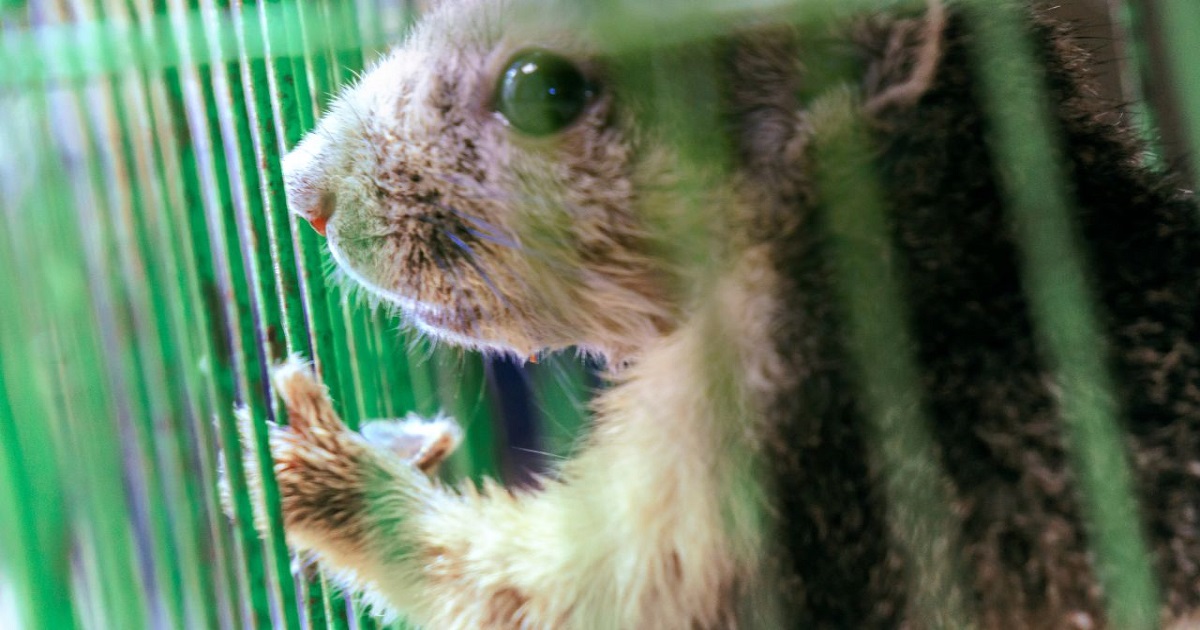
Squirrel

Humane wildlife removal focuses on ethical practices and effective methods for managing animal populations without harm. Understanding these principles is crucial for environmental sustainability and animal welfare.

Ethical Animal Control

Ethical animal control prioritizes the well-being of wildlife while addressing human-animal conflicts. It involves assessing the situation to determine the most appropriate response, ensuring the chosen method minimizes stress and suffering for the animals involved.

Key practices include:

Assessment: Evaluate the specific circumstances, including identifying the species and their behavior.

Relocation: If necessary, relocate animals to suitable habitats away from urban areas, ensuring they can access food and shelter.

Monitoring: Follow up on relocated animals to ensure they adapt well to their new environment.

Choosing ethical methods helps maintain ecological balance while respecting the lives of all creatures.

Non-Lethal Pest Management

Non-lethal pest management utilizes strategies that deter or remove animals without causing harm. This approach emphasizes prevention and humane removal techniques.

Important methods include:

Exclusion: Seal entry points to prevent wildlife from accessing your property.

Habitat Modification: Change the environment to make it less attractive, such as removing food sources or shelter.

Repellents: Use eco-friendly substances that deter animals without harming them.

Implementing these practices fosters a respectful coexistence with wildlife, reducing conflicts and maintaining biodiversity in the area.

Methods and Techniques

Racoon in Central Park (where he probably isn’t doing any harm). Source: Wikipedia

Using humane techniques is essential when dealing with wildlife removal. This approach minimizes animal stress and ensures safe relocation or exclusion from your property. Below are effective methods for removing raccoons, squirrels, and opossums and safe practices for wildlife exclusion.


Update: There are regulations regarding trapping and relocating wild animals in California. Thanks to a reader who brought these regulations to my attention. This is a summary of those laws done by Google, using AI:

“In California, trapping and relocating wildlife is generally illegal. However, there are some exceptions and circumstances where relocation may be a better option than killing the animal. Here are some regulations regarding trapping and relocating wild animals in California:

  • Trapping license. Only a licensed trapper can trap animals. Traps must have a state-issued and registered trap number.
  • Trapping methods. Leg-hold traps are prohibited, except for government agencies to protect human health and safety. Poison is also not permitted.
  • Trapped animals. Trapped animals must be released immediately on site or killed by the trapper. If the animal is not released, it must be killed by shooting if local ordinances, landowners, and safety permit. Government employees can use chemical euthanasia.
  • Relocation. Written permission from the state is required to relocate trapped animals. Some say that relocating wildlife is often ineffective and can be detrimental to the animal. For example, relocating a squirrel in the winter could be fatal because it would no longer have access to its food cache. However, relocating an opossum, which often has no fixed home range, might be more acceptable.
  • Nuisance wildlife. Nuisance wildlife that is trapped cannot be bought or sold. The pelts of animals caught in body-gripping traps also cannot be sold

Raccoon Humane Removal

Raccoons are known for invading attics and basements. To remove them humanely, follow these steps:

Live Traps: To capture the raccoon safely, use a large, baited live trap. Common baits include fruits, cat food, or peanut butter.

Check Traps Frequently: Inspect traps multiple times daily to prevent stress or injury to the trapped animal.

Relocation: After capture, relocate the raccoon to a suitable habitat at least 10 miles away, avoiding urban areas.

Prevent Access: Seal entry points with materials like hardware cloth or strong metal sheeting to prevent future invasions.

Squirrels: Humane Removal Methods

Squirrels can easily find their way into homes and may cause damage while searching for food or nesting sites. To manage their removal humanely, consider the following techniques:

Live Traps: Live traps are an effective and humane method for capturing squirrels. Place them where you’ve noticed squirrel activity, such as near nests or feeding sites. Check the traps frequently to minimize stress for the captured animal.

Baits: Use appealing baits like peanut butter, sunflower seeds, or fruits to attract squirrels to the traps. These tasty options can help ensure that the traps are successful.

Seal Entry Points: To prevent squirrels from entering your home, identify and seal any cracks or gaps larger than a quarter-inch. This proactive measure can help keep them out and reduce the likelihood of future encounters.

By employing these humane removal methods, you can effectively manage squirrel populations while ensuring their welfare.

Opossum Humane Removal

Opossums are generally non-aggressive but can create a mess in your yard. Here’s how to remove them humanely:

Live Traps: Like raccoons, use live traps baited with cat food or fruits.

Monitor Traps: Check traps frequently to minimize stress and provide food and water if the capture lasts longer than a few hours.

Release: Release them in a wooded area away from residential neighborhoods to allow for their natural behaviors.

Keep Outdoor Spaces Clean: Remove pet food, garbage, and fallen fruit from yards to reduce attracting opossums.

Safe Wildlife Exclusion

Exclusion is a proactive approach to keeping wildlife away from your property. Consider these methods:

Inspect and Seal: Regularly inspect your home for entry points and seal any holes or gaps with durable materials.

Use Humane Deterrents: Utilize natural repellents like cayenne pepper or vinegar around entry points. Motion-sensitive sprayers can also startle wildlife.

Outdoor Maintenance: Keep yards tidy by trimming bushes and removing debris. Store food in sealed containers.

Regular Monitoring: Continuously check for signs of wildlife presence to address issues before they escalate.

Implementing these methods ensures effective, humane wildlife removal, protecting your home and the animals involved.

Wildlife Awareness and Control

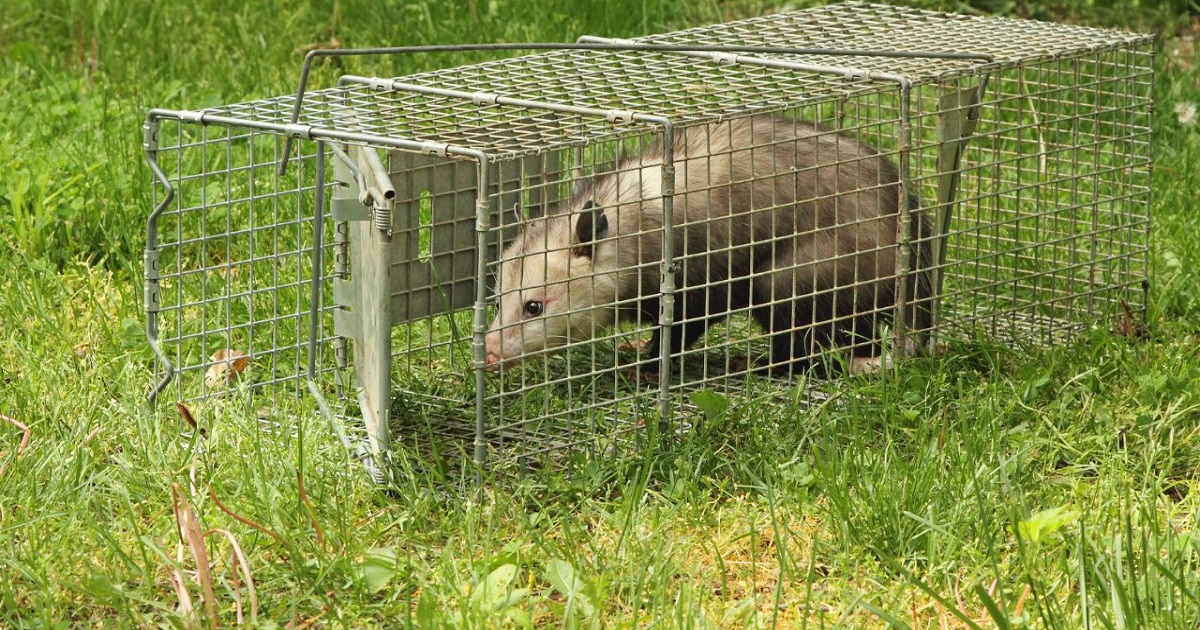
Opossum

Being aware of local wildlife dynamics can significantly reduce the risk of infestations. Employing safe wildlife exclusion methods ensures that animals are kept at bay without harming the ecosystem or the creatures themselves.

Preventing Infestation

To prevent infestations, it’s essential to identify and eliminate food and shelter sources around your property. Here are key strategies:

Secure Garbage: Use tightly sealed bins to deter animals from scavenging.

Seal Entry Points: Inspect your home for gaps in windows, doors, and vents. Use materials like steel wool or caulk to close these openings.

Remove Attractants: Regularly clean up fallen fruit, birdseed, and pet food to minimize draw for wildlife.

Trim Vegetation: Keep shrubs and trees away from structures to eliminate accessible pathways.

Implementing these steps fosters a less inviting environment for wildlife, reducing potential conflicts.

Promoting Coexistence

Promoting coexistence involves understanding wildlife behavior and utilizing humane animal deterrents. You can achieve this by:

Using Natural Repellents: Certain scents, like citrus or vinegar, can deter animals without harming them.

Installing Fencing: A well-placed fence can help keep larger wildlife at bay while allowing smaller beneficial creatures to pass.

Educating Neighbors: Share information about wildlife awareness with your community to build a collective approach.

By adopting eco-friendly pest solutions, you protect your property and respect local ecosystems. This balance leads to a healthier environment for both wildlife and humans.

Closing Thoughts

Humane wildlife removal is essential for both safety and environmental balance. When dealing with unwanted wildlife, remember that effective solutions prioritize humane practices.

Choosing a reliable service makes a significant difference. Critter Stop specializes in humane wildlife removal, ensuring efficient and ethical techniques. Their commitment to customer satisfaction is evident through numerous positive reviews. 

If you’re facing issues like ant infestation in your bedroom, contacting Critter Stop should be your first step. You can reach them at (214) 234-2616 for a free inspection. Making the call protects your home and promotes a responsible approach to wildlife management. Remember, professional assistance often leads to long-lasting results. Trust Critter Stop for high-quality work and great customer service.

Sam Patrick
Critter Stop
Dallas-Fort Worth, TX


Disclaimer:  Conservation Sense and Nonsense has published this article as a guest post.  It is not a paid advertisement.  Although the article is consistent with the mission of Conservation Sense and Nonsense, its publication does not constitute an endorsement of Critter Stop because we have no personal experience with Critter Stop and we have not researched the quality or effectiveness of their services.
-Webmaster, Conservation Sense and Nonsense

Environmental Protection Agency acknowledges that herbicides harm wildlife

“Restoration” professionals aggressively defend their use of herbicides because it is their preferred method to eradicate non-native plants.  Herbicides are the primary method of killing non-native plants because it is the cheapest method.  When the California Invasive Plant Council conducted a survey of land managers about the methods they use, they learned that 62% of those surveyed reported using herbicides regularly.  Only 6% of land managers said they don’t use herbicides.

The public usually accepts this poisoning of their parks and open spaces because they believe that wildlife benefits from the eradication of non-native plants.  Although there is little scientific evidence that supports that opinion, it is widely considered the conventional wisdom.  Now we have scientific confirmation that wildlife is harmed by the herbicides used to kill non-native vegetation.  That new evidence is the focus of today’s report on the Conservation Sense and Nonsense blog.

EPA Biological Evaluation of Glyphosate and Atrazine

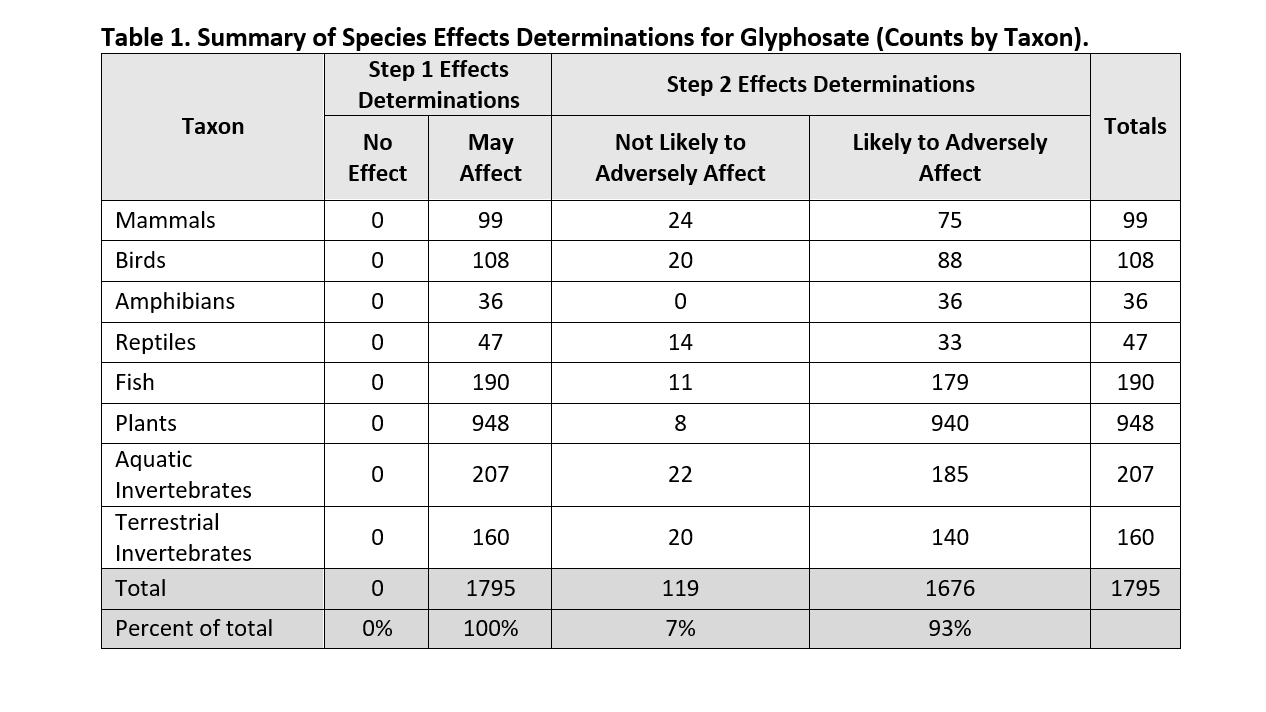
The U.S. Environmental Protection Agency has published the final version of its biological evaluation of the most commonly used herbicide by the managers of our public lands, glyphosate.  EPA reports that glyphosate is “likely to adversely affect” 93% of legally protected endangered and threatened plants and animals.  EPA also published similar findings for atrazine that is available HERE. 

Source: EPA biological evaluation of glyphosate

This evaluation is the result of a long-fought battle with the EPA.  The settlement of a lawsuit brought by Center for Biological Diversity and Pesticide Action Network in 2016 required the EPA to conduct this evaluation.  A draft of the biological evaluation was published about one year ago and the final version one year later confirms the findings reported by the draft version.  Thank you CBD and PAN for your persistence!

Significance of EPA’s biological evaluation

The public tends to believe the law protects all wildlife, but that is not the case. The fact is, legal protection only applies to species designated by US Fish & Wildlife Service as threatened or endangered.  If a project is known to kill wildlife, there is no legal recourse unless the species has been officially designated as endangered or threatened. 

The more herbicide we use, the more likely wildlife is to become endangered and therefore eligible for endangered status.  Monarch butterflies are a case in point.  Their dwindling population is attributed to the widespread use of herbicides on weeds that provide nectar and pollen needed by all pollinators, including monarchs.  Monarchs and bees are also directly harmed by insecticides such as neonicotinoids.    

Hence, the EPA’s responsibility to conduct a scientific evaluation of the effect of herbicides on wildlife applied only to legally protected species.  However, it is essential to understand that the finding applies equally to all plants and animals, whether they are legally protected or not because the physiological processes of all species are similar.  For example, all legally protected amphibians are “likely adversely affected” by glyphosate, according to the EPA’s biological evaluation.  We must assume that all amphibians—whether protected or not—are also adversely affected by glyphosate.

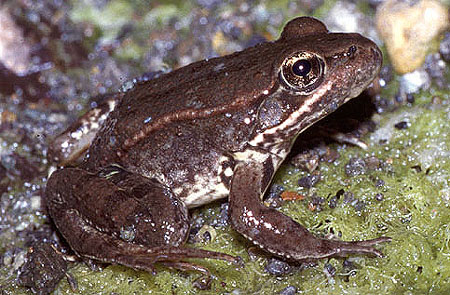
California red-legged frogs are legally protected as an endangered species. Source: USGS
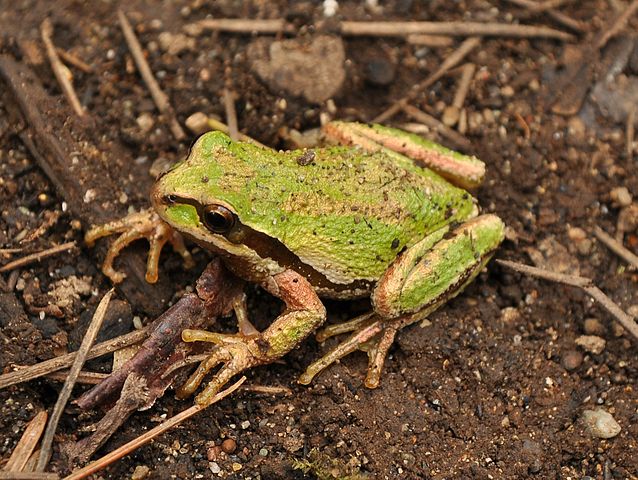
Pacific chorus frogs are not legally protected because they aren’t designated as threatened or endangered. Attribution

What’s to be done about pesticides that harm wildlife?

According to Sustainable Pulse the next official step is:  “The EPA’s evaluations now go to the U.S. Fish and Wildlife Service and National Marine Fisheries Service in the final step of the consultation process to determine what on-the-ground conservation measures are needed to minimize harm to these species and ensure these pesticides do not push any endangered species towards extinction” 

Defenders of wildlife and the public lands on which they live should not stop there.  These are the logical consequences of the fact that the most widely used herbicides should not be used on our public lands:

  • Where pesticides have been banned, they are often accompanied by exemptions for ecological “restorations.”  For example, when rodenticides were banned in California in 2020, exemptions were made for projects claiming to “restore” habitat.  When UC Berkeley banned the use of glyphosate on lawns and playing fields, they exempted glyphosate use off-campus to “restore” habitat.  When East Bay Regional Parks banned glyphosate for use in developed areas such as parking lots and picnic areas, they exempted glyphosate use to “restore” habitat.  These exemptions should be rescinded because they are harmful to wildlife living on undeveloped public land.  Wildlife does not live on parking lots and playing fields.  Wildlife lives in undeveloped areas vegetated with both native and non-native plants. 
  • The State of California recently granted a 3-year exemption from CEQA requirements for environmental impact review for projects claiming to “restore” habitat. Available HERE; see (11) This exemption should be revised so that projects that use pesticides are not eligible for exemption from CEQA requirements. 
  • Native plant advocates and “restoration” professionals must quit claiming that projects using herbicides will benefit wildlife, because clearly, they DON’T!

The Truth About Animals…or not?

In The Truth About Animals, Lucy Cooke chose thirteen animal species to explore our changing relationship with animals by telling the story of how our perception of animals has changed in over two thousand years of written history.  Misconceptions about animals have always been a reflection of human culture.  Although scientific methods of studying animals have improved our understanding, we should assume that the “truth” continues to elude us because we cannot altogether escape our tendency to anthropomorphize animals.  We project our own motivations onto animals which often prevents us from accurately observing their behavior outside our own judgmental framework.  We have selected a few examples from Lucy Cooke’s book to illustrate these issues.

Sloth is one of the seven deadly sins

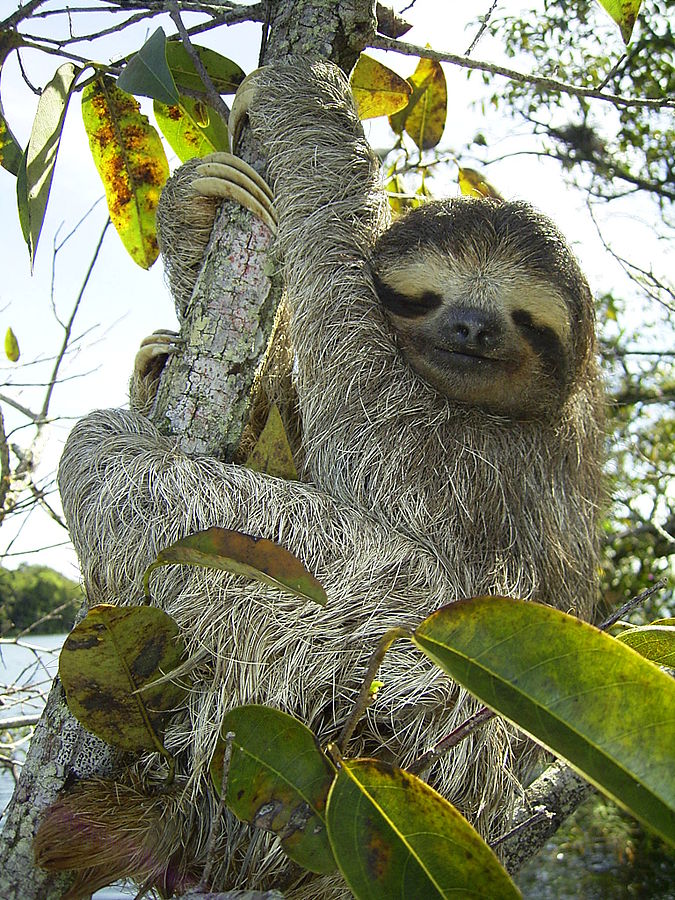
Three-toed sloth in Panama

Human society values hard work, which has prevented us from seeing the sloth as a respectable citizen of the animal world.  In fact, we named the sloth with the intention of insulting it for its lazy life style.  Although the sloth sprawls helplessly on the ground, in the trees, where it lives, it can move from branch to branch with surprising grace and agility, although slowly.  They have fewer muscles than would be needed to move upright on the ground which enables them to hang in the trees while using little energy.  Early explorers to the New World judged the sloth from their perspective as ground dwellers rather than from the sloth’s perspective in the trees.  The sloth’s reputation is not enhanced by being dirty and smelly.

The sloth eats leaves but lacks teeth to chew them.  The leaves are slowly broken down by bacteria in the sloth’s gut and the slowness of digestion is in sync with its slow metabolism and low body temperature.  Sloths have survived for about 64 million years, far longer than the mere 300,000 years of the ancestors of Homo sapiens, proving that they are well adapted to where they live.  The sloth is a survivor, the ultimate test of the success of a species.

Penguins:  Paragons of family values or not?

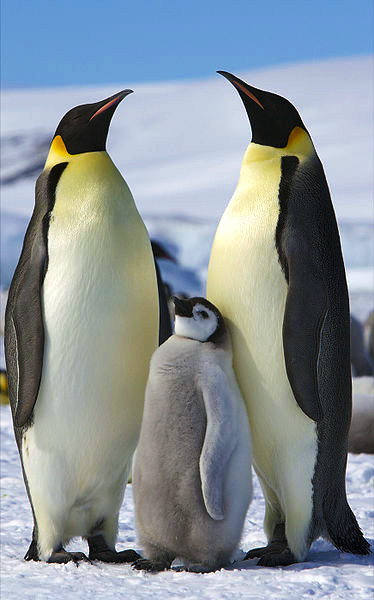
Emperor penguin family. Creative Commons

People love penguins, primarily because they are cute.  We like their torpedo shaped pint size and the dapper tuxedo they wear.  Neither their shape nor their outerwear were designed to appeal to us.  They are flightless birds that are extremely efficient catchers of fish.  Their wings propel them through the water at speeds of over 30 miles per hour.  Their feet are propellers, steering their quick maneuvers in pursuit of fish.  On land, they are awkward waddlers, which we find endearing.

Their white fronts are less visible to predators in the water when viewed from below with the glare of the light above them.  Their black backs also hide them from being seen in the water from above.

The movie March of the Penguins greatly increased the popularity of penguins partly because it featured a particular species of penguin, the emperor penguin, that is a dedicated father.  The emperor colony trudges deep into the frozen wastes of Antarctica to lay their eggs and hatch their chicks.  When the egg is laid, father penguin puts the egg on top of his feet to keep it off the frozen ice and sits gingerly on it to keep it warm.  Mother penguin promptly leaves because her energy is depleted by producing the egg.  She goes to sea to fish and restore her energy to return 2 months later.  Then they take turns raising the chick and feeding it.

March of the Penguins tried to sweeten the idealized penguin family by claiming that they are monogamous.  In fact, 85% of penguins choose different mates every year.  The time frame for raising the penguin chick is perilously short, allowing no time to hunt for last year’s mate among thousands of lookalikes.

But not all penguin species are scrupulous family members.  Adélie penguins exchange rocks for sex with unattached males.  The rocks are needed to elevate nests above frigid water that can drown eggs and chicks.  And the rocks are at a premium where the penguins nest, so mother penguin makes a deal for the safety of her nest.

Adélie penguins engage in other scandalous sexual behavior that was observed by a scientific expedition in 1911-12:  “They were ‘gangs of hooligan cocks’ whose ‘passions seem to have passed beyond their control’ and whose ‘constant acts of depravity’ run the gamut of masturbation, recreational sex and homosexual behavior to gang rape, necrophilia, and pedophilia.  Chicks were ‘sexually misused by these hooligans,’ including one who ‘misused it before the very eyes of its parent.’  Stray chicks were crushed and ‘very often suffer indignity and death at the hands of these hooligan cocks.’” (1) When the scientific expedition published its report of their findings, these dirty bits were deleted from the publication and kept under lock and key in the museum until being discovered in 2009.

If animal behavior was unseemly in the eyes of early scientists, the public didn’t need to know about it.  I think we can safely assume that there is less such censorship by scientists today, partly because there is greater tolerance for the vast range of sexual behavior among humans.

The mystery of migration


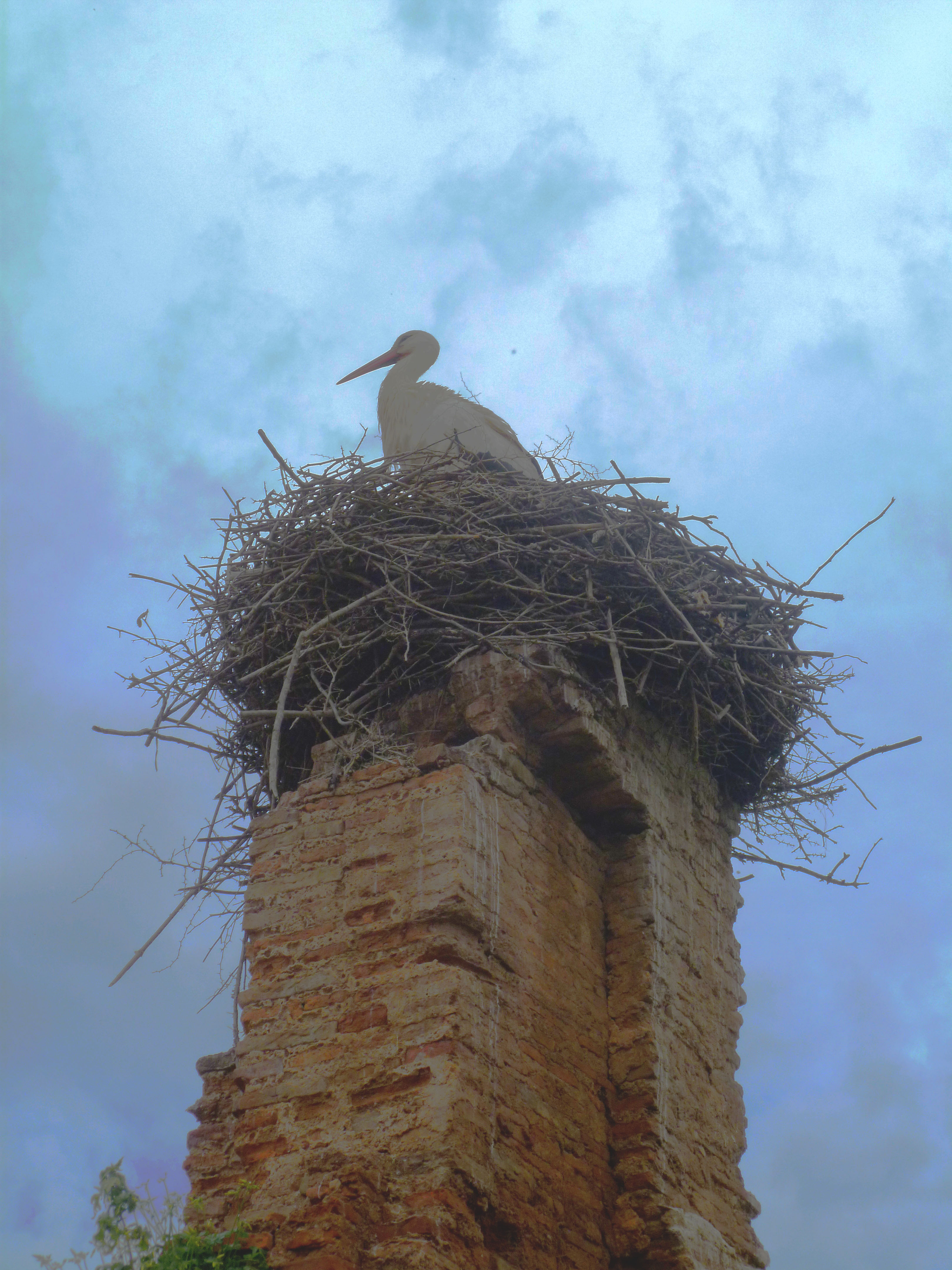
Nesting stork in Morocco, 2013

Ms. Cooke chooses the stork to tell the long story of unraveling the mysteries of migration.  The stork arrives in Europe in early spring which historically coincided with the annual baby boom.  Nine months earlier, on June 21st summer solstice was celebrated with great festivals during which many children were conceived.  This coincidental arrival of storks and babies resulted in the stork becoming a symbol of fertility and childbirth.  A young couple consulting a doctor about their disappointment in not having a child were surprised when told that the stork nesting on their chimney was not a substitute for the sexual encounter they had thought was unnecessary.

Theories about where the storks went when they left their huge nests of sticks were no less imaginative.  In the 17th century an Oxford-educated physics scholar proposed the theory that the storks migrated to the moon:  “’The stork, when it hath bred, and the young fully fledged…all rise together, and fly in one great flock…first near the earth, but after higher…till at last this great cloud…appears less and less by distance, till it utterly disappears.  Now, Whither should be creatures go unless it were to the moon?’”  (1)

This theory was considered an advance over earlier theories.  In the 3rd Century BC, Aristotle had several theories about bird migrations.  His “transmutation” theory suggested that winter robins become redstarts in summer and summer warblers become blackcaps in winter.  His alternative theory was that some birds hibernate in winter.  Actually, the poorwill is the only known hibernating bird. In western North American deserts the poorwill hides in a torpor, avoiding winter food shortages.

Aristotle is the originator of another, particularly persistent hibernation theory.  His belief that swallows spent the winter months at the bottom of lakes and rivers, like fish, is found in “scientific” publications into the 19th century:  “’It appears certain that swallows become torpid during the winter, and even that they pass the season at the bottom of the water in the marshes.’”  (1)

That theory was tested in the 18th century in a series of grisly experiments that cost the lives of many hapless swallows, reminding us that animal rights are a very recent development in science.  On the other hand, we should empathize with early scientists who had little knowledge of the world outside their narrow range of mobility, given limited transportation.  As our world expands so does our knowledge of it.

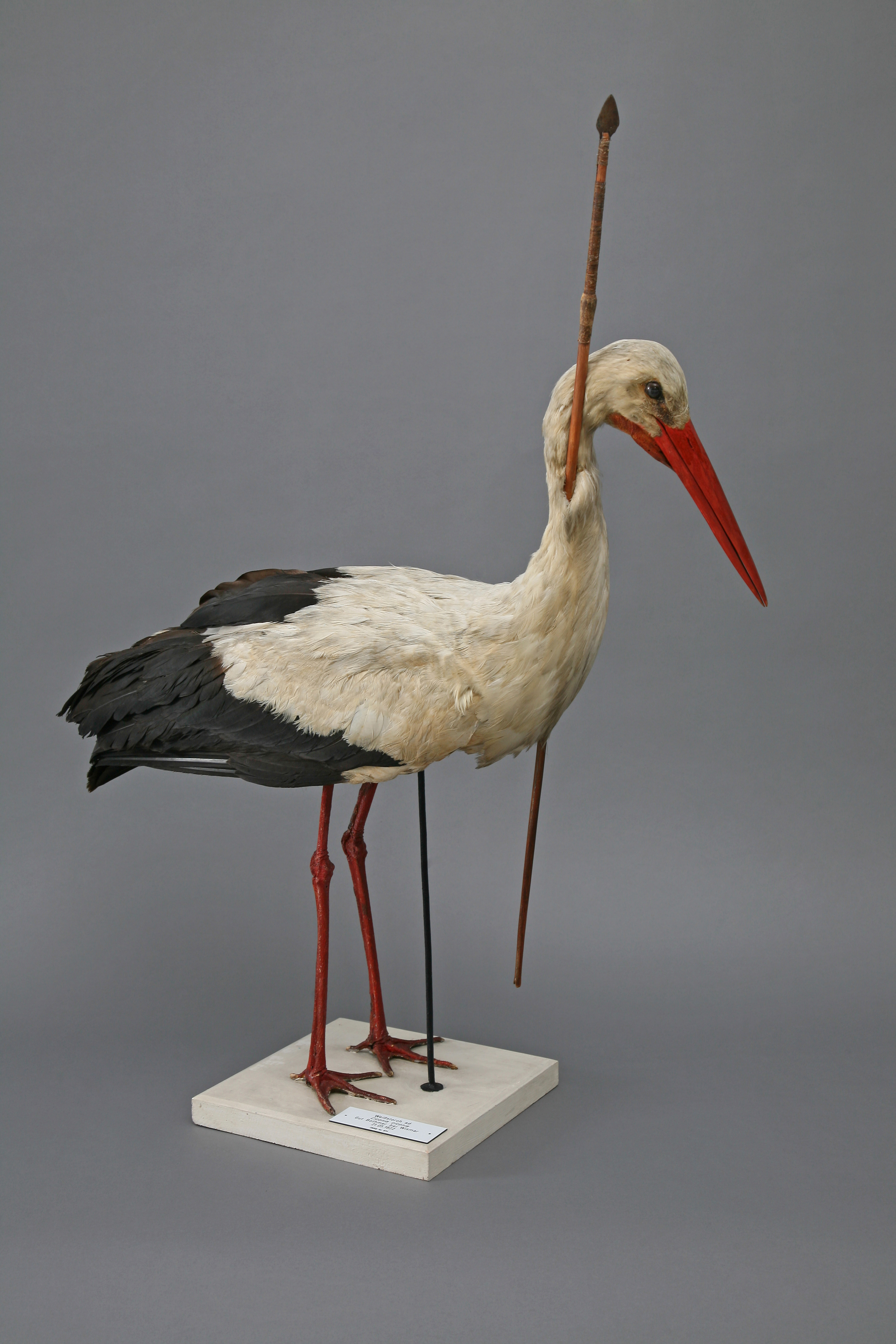
Pfeilstorch (Arrow Stork)

Ms. Cooke believes the breakthrough in solving the migration mystery occurred in the 19th century when a stork arrived for nesting season with a huge wooden spear lodged in its neck, providing “irrefutable evidence that birds migrate over Africa.”  Ironically, as our knowledge of migration improves, the migration itself is rapidly failing because of anthropogenic (caused by humans) change.

  • Hunting of birds increases as the human population increases and episodically during famines caused by war and crop failures.
  • When farmers in Africa started using pesticides, many storks were killed when they ate poisoned grasshoppers and other large insects.
  • Pollution and drainage of wetlands for farmland caused a sharp decline in Europe’s stork population in the 20th Century:  “The last breeding pair was seen in Belgium in 1895, in Switzerland in 1950 and in Sweden in 1955.” (1)
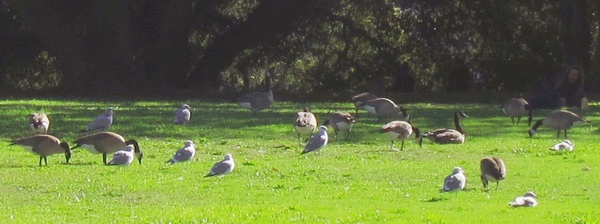
  • Some migrating birds have quit migrating because the gardened landscapes of humans are more hospitable year around than their winter homes. Flocks of Canada geese are seen year around in the parks and open spaces in the Bay Area.

Canada geese, Lake Merritt, Oakland, California. Oakland Wiki

Ms. Cooke laments:  “[Swallow] numbers along with those of dozens of long-haul bird migrants across Europe, Asia and America, are in perilous decline, thanks to the combined effect of global warming, habitat destruction, hunting and pesticides.  Some scientists have suggested that long-haul migration could soon become a thing of the past.  These amazing avian vanishing acts, which puzzled us for so many generations, could themselves magically disappear, just as they’ve finally been demystified.  (1)

Progress, but humility is still needed

Ms. Cooke concludes that although we know more about animals than we did two thousand years ago, we are undoubtedly still making mistakes and must continually refine our understanding“The quest for truth is a long and winding road, littered with deep potholes.  Thankfully our methods are less brutal than those of our eye-popping past, but we are still stumbling along in the dark and making mistakes.  With the rise of efforts to discredit science, there has never been a greater need for truth.  Yet, wrong turns are an essential part of all scientific progress, which demands blue-sky thinking as it seeks out each new horizon in understanding.  As long as our egos or dogmatic beliefs are not to blame, we should not be afraid to continue to make wondrous mistakes…” (1)

Science is a process that is never done.  We celebrate new discoveries, but we must never think of them as the end of the story.  Our minds must always be open to new information if we are to continue to make progress as humans.


  1. Lucy Cooke, The Truth About Animals: Stoned sloths, lovelorn hippos, and other tales from the wild side of wildlife, Basic Books, 2018

The impact of native plant “restorations” on wildlife in our parks

Public land managers in the San Francisco Bay Area are destroying non-native trees and vegetation in our public parks and open spaces because of their preference for native plants.  These projects are harmful to wildlife because they destroy habitat, eliminate food sources, and spray herbicides that are harmful to wildlife.

Bev Jo is a frequent visitor to all of the parks of the Bay Area.  She knows our parks and the wildlife that lives in them.  She cares deeply about our wildlife.  We are publishing an excerpt of her comment to East Bay Regional Park District about the damage being done to wildlife, as a result of killing non-native trees and vegetation.

East Bay Regional Park District is in the process of selecting the projects that will be funded by the renewal of the parcel tax, Measure CC.  Measure CC will be on the ballot for renewal in November 2018 and will provide funding for “park improvements” for the next 15 years.  YOU can have some say about those projects by making your suggestions to the park district by the end of December.  Send your suggestions to publicinformation@ebparks.com.


Once upon a time, people in the San Francisco Bay Area were thrilled to live in a place where so many exquisitely beautiful and edible plants from all over the world could survive. It’s not a tropical region, but sub-tropical, so there are limits to what grows here and it depends on the area.  But, still there is so much magnificent variety here that cannot live in other parts of the US.

People loved to plant what they missed from their homelands. In our small yard, the previous Lebanese owner had planted a Greek Bay Laurel, Olive, Sour Orange, Apricot, Nectarine, Apple, Pear, and Plums. Our poor neighborhood that was once mostly barren dry grass and juniper hedges, now has so many beautiful herbs and plants that just taking a walk is like a trip to a botanical garden. There also has been an increase in birds and other native animals.

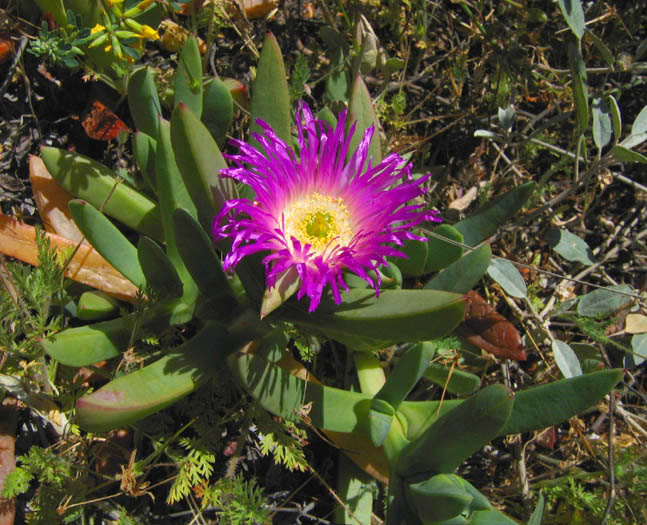
Ice Plant (Carpobrotus), NPS Photo

Visitors used to be stunned that even the California freeways could be beautiful, with South African Ice Plant in glowing bloom and large trees and shrubs that bloom throughout the year to help clean the air from the traffic and soften the noise.

And then, something very disturbing happened. A movement began to spread that many of us recognized as being frighteningly similar to the racist hatred against immigrant people, but this time it was about nature, in the guise of being for nature. Most of the luminous Ice Plant has been eradicated. Flowering plants, including edible herbs, who most rational people would revere for their beauty and ability to survive in an increasingly dry land are being called “trash” and killed.

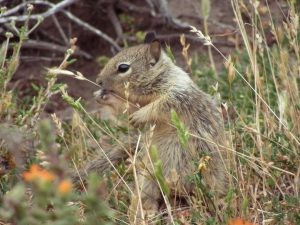
Ground squirrel

It’s not just innocent plants who are being reviled and killed, but animals are also being poisoned, trapped, and shot for no rational reason. The killing frenzy even includes important keystone native animals, like the California Ground Squirrel.

Why do we have to see parks we have loved for decades ruined, with most of the trees cut down for no reason other than that they are the “wrong” species, especially when many of the “right” (native) species are dying from global warming, disease, and insect infestation? Most parts of the US, as well as the world, treasure trees and are planting more, but not the Bay Area.  Even while temperatures are increasing horrifically–and anyone can easily feel the twenty degrees difference between being in the sun versus being under trees–we are cutting down our trees.

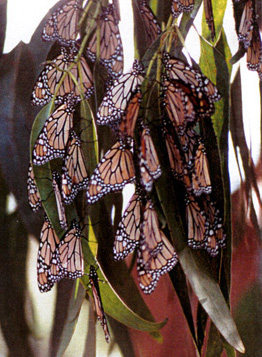
Monarch butterflies over-winter in California’s eucalyptus groves

With so much of the land in the Bay Area covered by concrete, asphalt, and buildings, shouldn’t we value and love every tree we have? Aren’t the trees who most help native animals even more important to protect?  Of course I’m talking about the majestic Blue Gum Eucalyptus. In spite of myths saying no native animals use Eucalyptus, they are clearly crucial to the survival of the Monarch Butterfly. Their flowers are an important food source for hummingbirds, and they are the preferred nesting tree for large raptors, like Golden and Bald Eagles, Great Horned Owls, and Buteos.  Raptors haven’t been indoctrinated in the nativist cult. They just want the safest nest for their babies. A survey in Tilden Park found 38 different plant species beneath the canopy of Eucalyptus forests, compared to only 18 in Oak woodlands.

Monterey pines are also villainized, even though they are native, with fossil records throughout the Bay Area. They give throughout their life cycle, as they irrigate other plants with their extensive fog drip.  They enrich the soil more than most other trees, and feed and shelter a diverse population of animals, including woodrats. The woodrat’s intricately constructed pyramid nests provide homes for many other species like mammals, reptiles, amphibians, arthropods, etc. The pines are a self-replenishing forest, continually creating baby trees, while their dead snags are perfect granary trees for acorn and other woodpeckers, as well as being lookouts for hunting birds. Visit Monterey pines to see the rich wildlife around them, from kingfishers to tree creepers. In one small area of local pines, it’s possible to find over forty mushroom species.

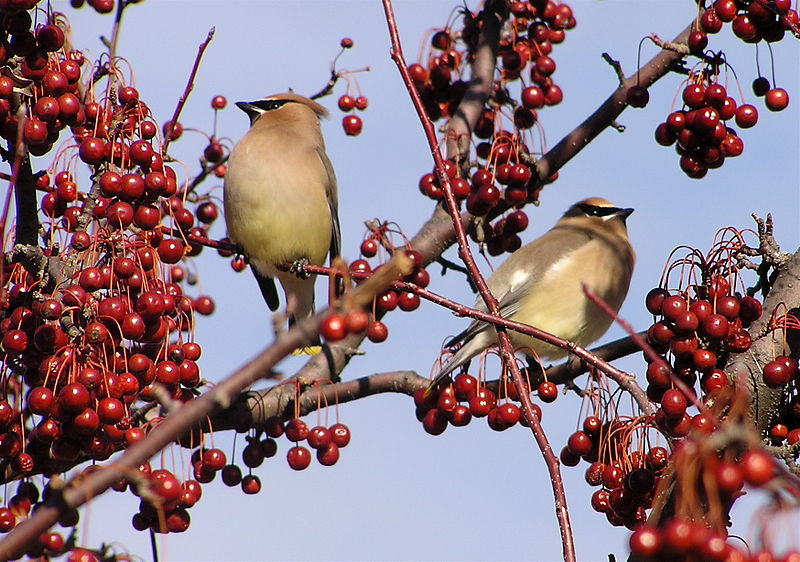
Cedar waxwings in crab apple

The advantage of having plants from all over the world is that someone is always blooming, fruiting, and setting seed. One of our most beloved, but not often seen birds, the Cedar Waxwing, travels in flocks from one berry-bearing shrub or tree to another. I have seen Waxwings eating non-native Cotoneaster, Ligustrum, and Pyracantha berries, and only once native mistletoe. Almost all our birds are benefiting from non-native species, for nesting and food.

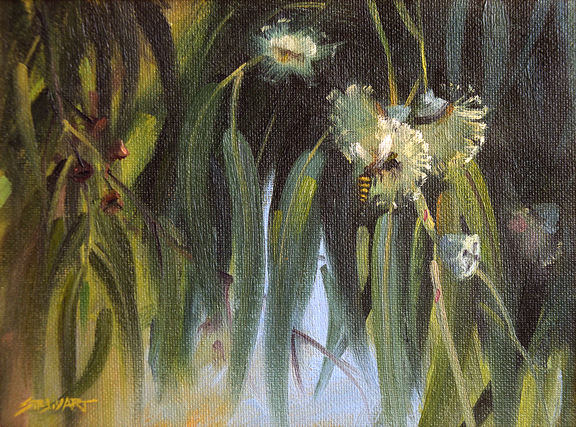
Our most common spider species, so essential for a healthy eco-system, are non-native. Honeybees are forgotten in the vendetta against non-natives, but they are European and valuable as the chief pollinators of our agricultural crops. They are another example of a beloved species who survives because of the many non-native plants we have. Eucalyptus provide valuable food for honeybees during the winter, when little else is blooming in California.  And bees help plants reproduce, which provides more food for native animals, not to mention fruit and vegetables for humans.

Eucalyptus and bee. Painting by Brian Stewart with permission.

As the park district plans future projects for funding by Measure CC, I ask that the projects quit destroying non-native trees and vegetation, particularly by using herbicides.  Our wildlife needs these plants.  The park district does not “improve” the parks by killing plants and animals.

Bev Jo
Oakland, CA

If animals love non-native trees, why don’t humans?

We are please to publish a guest post by Bev Jo, a fellow friend of our urban forest.  This is how Bev Jo describes her intimate relationship with nature and the creatures who live in nature:

“As a marginalized human, I identify with and feel protective of plants and animals who are feared and hated for no rational reason.

I was taught to fear spiders, but when I was eight I realized I couldn’t live in such terror, so decided to change. After observing and learning about spiders, fear turned to love. I’ve handled or petted so many spider species, scorpions, etc. with no problem. Without fear of nature, the entire world opens up. I’ve since had wonderful communication with wild species, from fish to spiders, insects, scorpions, rattlesnakes, raccoons, rats, skunks, and opossums. I’ve also learned to befriend plants like Poison Oak.

One of my goals is to help others overcome their fear of nature, so I regularly lead nature hikes. I want to tell everyone, please don’t let fear or hatred lead you to kill anyone, plant or animal.”


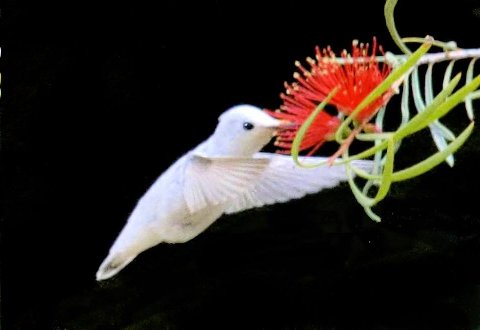
Rare leucistic female Anna's hummingbird, at the Santa Cruz botanical gardens, eating from an Australian Grevillea, June 6, 2016. By Raymond Chu
Rare leucistic female Anna’s hummingbird, at the Santa Cruz botanical gardens, eating from an Australian Grevillea, June 6, 2016. By Raymond Chu

I’ve heard the propaganda meant to terrify us into hating beautiful exotic trees and plants because they supposedly harm wildlife, cause fires, and degrade ecosystems. Yet I know the harm caused by other myths and I love plants. I appreciate how many species grow in the Bay Area, from botanical gardens and elaborate landscaping to city street trees and simple yards in neighborhoods. The diversity here is amazing.

I’ve also noticed that few native trees are well-suited as street trees and in landscaping, while many introduced species are beautiful to see in our semi-tropical area. People have learned that if they want to attract birds, butterflies, etc. they need to plant non-natives, which continue feeding animals throughout the year because there is always something in bloom.

On a friend’s street, I was astounded to hear the sound of birds like nothing I’ve heard elsewhere because of a few Australian bottlebrush trees pruned into a lollypop shape, which isn’t attractive, but provides safe homes for countless birds.

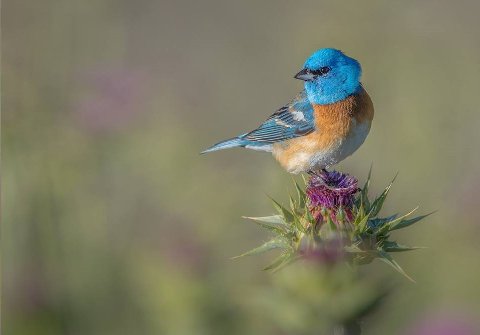
Lazuli bunting at Rancho San Antonio on milk thistle, April 2016. Courtesy Greg Barsh

Hummingbirds seem to be increasing as people plant more of these trees, exotic sages, and other plants. The list of non-native plants that nurture birds in our cities is astounding. And some of these plants are adapting to our environment and native animals.

While many of our native trees are dying from human-introduced and caused diseases and insect infestations, we are lucky to live in an area with such plant diversity. Even if all the oaks die from Sudden Oak Death, and conifers die from bark beetle infestation, we still have a wonderful variety of healthy, mature trees which are immune to those diseases and infestations.

I recently learned that in the Midwest where I grew up, the ash tree I so loved as a child is being killed by an insect infestation caused by humans.  So, combined with other diseases, a large part of the US east of the Mississippi might eventually be treeless.

Hummingbird in eucalyptus flower. Courtesy Melanie Hofmann

Our plant diversity ensures we will continue to have beautiful trees in the Bay Area – except for the danger from a few humans motivated by an irrational hatred of non-native plants. Even while we are dealing with serious drought, these fanatics want to kill the trees which are the most likely to survive, while other parts of the world are desperate to save the trees they have.

The nativists (who, of course, are predominantly non-native) are using xenophobic politics.  They are hypocritical because they want to keep their fruit trees, vegetable and herb gardens, and exotic ornamentals as well as their pets and non-native domesticated animals while they demand that wild non-native animals be killed. And of course they won’t remove themselves. Nor are nativists demanding the elimination of California’s extensive agricultural industry that is based on growing non-native species for the rest of the US, nor the non-native honeybees essential for pollination.

The myth of fire risk is the con for destroying our parks but nativist ideology is also being used by the East Bay Regional Park District (EBRPD) and UC Berkeley as the rationale for getting millions of dollars in FEMA money to kill at least 400,000 healthy non-native trees and poison our public lands. The Sierra Club has sued to kill even more trees.

East Bay Regional Park District (EBRPD) is also hypocritical because they landscape their headquarters with primarily non-native species such as eucalyptus, olive, and Hedera canariensis (ivy). UC Berkeley, whose goal seems to be to turn our forested East Bay hills into highly flammable barren dry grasslands and more construction, has similarly landscaped their entire campus with exotic trees. It’s only the animals that are being deprived of the plants they need for shelter, nesting, and food.

One of the myths is that the exotic trees do not help native animals but many animals have adapted to and need eucalyptus.   Raptors, like golden eagles, hawks, and great horned owls prefer to nest in Blue Gum eucalyptus because they are very tall trees with an open canopy, safer for young raptors to learn to fly in than the shorter, dense coast live oak and bay laurel forests. I had no idea how vulnerable these raptors were until I read about juvenile peregrine falcons dying from hitting branches as they were learning to fly. It’s easy to think of such graceful birds as having good flight control, but they don’t when young. Even watching California condor adults trying to safely land on cliffs and trees was a revelation because they had to struggle so hard.

After seeing red-shouldered hawks nesting in sycamores at Sunol Regional Wilderness, I realized how similar those trees are in appearance to eucalyptus: tall, open, and easy to navigate. But sycamores don’t grow in many places, while eucalyptus can grow anywhere. I’m guessing many of our raptors have expanded their range because of eucalyptus. Even in our relatively barren Oakland urban neighborhood, we see nesting red-shouldered hawks only because of one stand of magnificent eucalyptus.

A Quest documentary on KQED interviewed EBRPD’s Wildlife Manager Doug Bell who explained that golden eagles in the Bay Area are declining because they can’t reproduce quickly enough to counter the high numbers killed each year by the wind turbines at Altamont.    The film shows golden eagles nesting in eucalyptus, yet nothing was said about EBRPD cutting down eucalyptus. If people care about golden eagles, how can anyone want to kill the tree that most ensures their survival?  If more eucalyptus were planted on the many now-barren grassland hillsides, would we be able to stabilize golden eagles’ population?

Remember that EBRPD is the same agency that responded in writing to our questions about their toxic pesticide, Garlon, by calling it “Garland.” (Try looking up epidemiological studies on “Garland.”) Garlon is the herbicide that is sprayed on the stumps of eucalyptus trees after they are destroyed to prevent them from resprouting.

European honeybee on Eurasian Himalayan blackberry, which provides so much food for humans and wild animals. By Bev Jo

We have also been told by EBRPD employees that glyphosate is completely safe, even though it’s classified by World Health Organization as a probable human carcinogen.  It is banned in many countries and some US cities, and is in our bodies, against our will.

EBRPD had recently planned aerial spraying of Briones Regional Park to kill the beautiful little yellow star thistle, which blooms like sunshine on the dry, desolate hillsides in summer. When we objected, they gave us ridiculous reasons, such as helping the boy scouts camp or preventing bicyclists’ tires from being punctured. Why not just stay on the designated trails rather than erode the park and run over animals? When a friend suggested using goats, they actually said it was too steep for goats!  EBRPD has temporarily stopped the spraying plan, “for now.” Their massive amount of pesticide spraying next to the bay, reservoirs, and creeks is horrifying and unnecessary.

Marin Municipal Water District is able to maintain their enormous open space without using herbicides by mowing or just leaving the plants to die back when the rains stop.

When EBRPD said that all their pesticides were EPA approved, I responded “so was thalidomide.” Their spokesman had no idea what that was, so I said “so were all the pesticides now banned, like chlordane, which Rachel Carson wrote about.”

Then I was told that they are protecting endangered animals by their spraying. No, they are killing them. I’ve seen a California newt dying a terrible death after crawling through a sprayed area. I’ve seen yellow-billed magpies collecting nesting material from sprayed areas.

We can only imagine what other animals are being harmed. We have not heard any rational explanation for spraying poison next to endangered ridgeway rail habitat at Martin Luther King Jr. Shoreline Park. The May-June parks EBRPD newsletter implied their plan to kill trees and spray poison would somehow help the endangered Alameda whipsnake. Nothing we were told by the EBRPD representatives made sense, including that their applicators are well-trained.

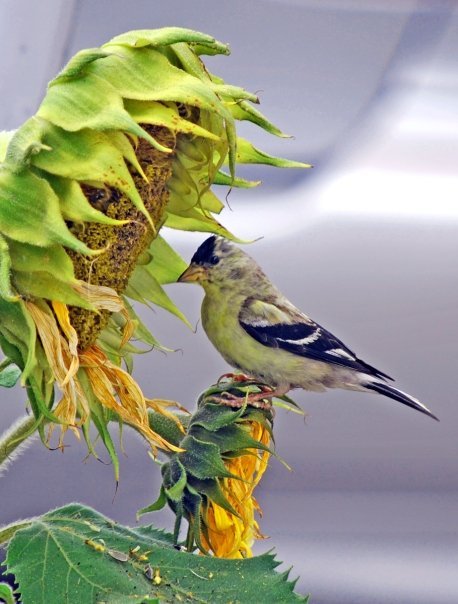
Native Goldfinch with non-native sunflower which provides important seeds for native birds. By Melanie Hoffman.
Native Goldfinch with non-native sunflower who provides important seeds for native birds. By Melanie Hoffman.

Even plants which are rarely seen and are sold in specialty produce stores, like the beautiful artichoke relative, cardoon (artichoke thistle), with its electric blue flower, are being sprayed, leaving the non-native grasses and poison hemlock to spread. The nativist fanaticism is extreme when tiny forget-me-nots are pulled off fragile steep hillsides, as happened at Huckleberry Botanical Regional Preserve, causing erosion.

Do they really think that people prefer seeing enormous swaths of ugly, poisoned earth, as seen at Del Valle Regional Park that had just been lush, velvety green? Why not just let the green go brown naturally as it does every year? They don’t care about the increased fire hazard from the burnt, dry, poisoned plants they leave behind.
One of the ironies about the nativists is how little they seem to know. I went on one of their nature hikes at twilight to see the soaproot lily/amole (now in the genus Chlorogalum), because they said it only bloomed at night. Yet soaproot blooms in the daytime all over the Bay Area and I could show it to anyone, any time. The only other mass of wildflowers in that dry, brown hillside, were edible wild mustard, which these nativist “naturalists” called “trash.”  On another paid wildflower hike to a preserve, the nativist kept belaboring which species were terrible because they are non-native (like the “expert” herself), and misnamed several of the species we were there to see. This land is now a heavily grazed pasture, so we’re lucky to see any flowers at all.

These are some of the experiences I’ve had with nativists. I wouldn’t care that they know so little about plants except that they are wielding the power to destroy the trees, wildflowers, animals, and entire ecosystems that we love and should be caring for.

Once our beautiful forests are destroyed, the wildlife will die from hunger and loss of habitat and we will be left with flammable, ugly hillsides covered in poisoned stumps.

We should nurture and love rather than kill the exotic plants we are lucky to have.  They provide cleaner air and offset global warming.  They are doing so much for so many species, including us.

Bev Jo

Lesson Learned: Don’t prune trees during breeding/nesting season

This article is reposted with permission from CoyoteYipps, a blog about San Francisco’s urban coyotes. It is a timely reminder that spring is breeding/nesting season for birds. 

There isn’t a hard-and-fast rule about when birds breed, build their nests, and raise their nestlings.  The general “rule” in the Bay Area is that most birds are nesting between February and August.  However, as the climate changes, we should expect outliers and we should be watchful for them. 

This story illustrates that pruning trees during nesting season is risky business.  We commend the author of this story for correcting a serious mistake and bringing this story to a happy ending.

We attended the Western Conference of the International Society of Arborists in Anaheim, California last week.  One of many excellent presentations we heard was about what arborists need to know about taking care of trees without harming wildlife. 

The presentation was made by an employee of HortScience in the San Francisco Bay Area.  HortScience is the arboriculture company that does most of the evaluations of trees for San Francisco’s Recreation and Park Department.  They are therefore influential in determining the future of the Bay Area’s urban forest.

HortScience has developed a protocol for arborists to avoid harming wildlife when they are working on trees.  The draft protocol is available HERE.  The author of the protocol is taking public comments on the draft until the end of May:  ryan@hortscience.com.  When the protocol is completed, HortScience plans to offer training to arborists to help them protect the birds in our urban forest.

We hope that people who are knowledgeable about birds will look at the draft and make suggestions for improving it to be most effective.  Thanks for your help to protect the birds in our urban forest.


MY HUMMINGBIRD ADVENTURE by LAUREL ROSE

I learned a valuable lesson this weekend: Do Not Prune or Remove Trees in Spring!  

Over the past couple years, I’ve been removing a row of unattractive honeysuckle trees along the fence line to let more light into our shady yard and plant some ferns & other foliage. The trees all had long skinny bare trunks with foliage starting at about 15- 20 feet up so all I could see was fallen leaves on top of compacted dirt and 8 pencil-thin tree trunks.

skinny trees (copyright Laurel Rose)

This weekend 7 and 8 were scheduled for removal. After getting 7 out of the ground, root and all, my friend and & I were getting ready to start breaking the trunk & branches down to 4 foot size segments required by the city for the green waste bins. I had a hand saw and my friend was using my mini electric chain saw for the job. I kept a safe distance in a far corner of the yard and we got to work. 2 branches into it, the chainsaw turns off and I hear “Oh Noooo! Oh my god! Nooo!” then, “chirp, chirp chirp”!

Tiny hummingbird nest on a twig
This is how I found the nest (copyright Laurel Rose)

The tree had a hummingbird nest camouflaged and expertly woven very securely onto a few twig size branches. Both my friend and I love & respect nature so we were a little frantic and horrified at the thought of nearly chainsawing through this little womb-like nest cradling 2 chicks. I found a little box and cushioned it with soft material scraps and toilet paper and placed the nest inside very carefully. It took a good hour for us to calm down and stop focusing on how thoughtless we had been to choose April to remove a tree. Even ugly trees with sparse foliage provide habitat and serve a s food source. My friend, a somewhat burly guy named Terry but whose friends call him “Bubba” was on the verge of tears telling me, “I searched for a nest before sawing off each branch. . .” . Even if one of us has noticed it, it did not resemble a typical storybook nest.
I called every organization and person I could think of for help on that Saturday evening: Golden Gate Audubon Society, Wild Care, and Janet. I was able to listen to a recorded instructions for caring for a injured chick. I kept them inside for the night in a warm dark spot away from my curious little dog who likes to be a part of everything I do whenever possible. As soon as it was light outside, I placed the box up high in the area where the tree had been. Within 20 minutes, mom showed up and fed her hungry babies and I watched as she gathered nectar from the flowers overhead on tree number 8 (which will stay in my yard).

Baby hummingbird (copyright Laurel Rose)
DAY 1: a few hours after discovery

We estimated the age to be between 2 & 3 weeks and were told that hummingbird chicks leave the nest at 23 days old. A couple days before this happens, a stronger chick pushes the weaker out of the nest and it dies because mom will not feed it on the ground. The reason this happens is because the nest is very small and is needed as a “launching pad”. Once the other chick takes flight, mom will continue to feed her baby for several days, teaching how and where to find all the best nectar & bugs before she chases it away to find its own territory. Since they are in a box, neither one will be pushed out of the nest and mom will continue to feed them both. I’m not sure if this may have any negative or unforeseen consequences but I like that idea!

Two hummingbird chicks in the nest
Two hummingbird chicks on the first day

Two Hummingbird chicks
Second Day – Hummingbird chicks

Box put up to rescue hummingbird nest
A safe space for a hummingbird nest

Day 2: I secured a new box in the other Honeysuckle tree because we were having some very windy days.


Box fastened into tree to rescue a hummingbird nest
Box fastened well against the wind

Day 3: I wasn’t sure if Mama was feeding her chicks with the new placement of the box with a different type of access, but I caught her in the act (see video below)


Mama hummingbird entering box to feed chicks in rescued nest
Mama hummingbird entering to feed the chicks – click for video (copyright Laurel Rose)

Hummingbird chick near fledging

Day 4: They changed so much from one day to the next

Two hummingbird fledglings

Day 5: Just before I left late Thursday morning, I went to check on the chicks and snapped this photo. They looked like they were ready to spread their wings. I might have made them a little nervous putting the camera up so close but wondered if they were contemplating their first flight.

Hummingbird chicks just before departing nest

When I came home in the early evening, the first thing I did was check the box and it was empty. I stood there for several minutes wondering how such a tiny creature with only 23 days of life can survive on their own. That’s when I heard chirping above and looked up- there was mama with 1 chick shoulder to shoulder on a branch.

hummingbird sitting in chain link fence
Hummingbird sitting in chain link fence

hummingbird-in-wire-2I looked around for the other chick and had noticed what I thought was a leaf caught in one of the links on the fence, but a closer look told me otherwise.

Maybe the little guy didn’t feel quite ready, or maybe he wanted to say goodbye. He let me get real close and looked at me with that one little eye as I said some encouraging words and slowly reached in my back pocket for my camera. I snapped one photo and he flew to the branch up above where his family was.

Today would be Day 8. I’ve been seeing what I believe to be this same little chick hanging out in the honeysuckle tree where the box was. A few hours ago, I observed the mama arrive and feed the chick patiently waiting on a little branch.

If you would like to invite hummingbirds to your yard I would not recommend those feeders with sugar water because they must be cleaned every 3- 4 days or they can make the hummingbirds very sick. It’s much better and healthier to provide their natural food sources and plant things like honeysuckle, sage, fuchsia, Aloe vera and other long tubular flowers that provide both nectar as well as habitat for insects that serve as protein. Hummingbirds also need a place to perch during the day & sleep at night that offers some protection from wind & rain- usually trees. You can also hang a perch up high in a tree near the flowers and you can encourage nesting by providing materials by hanging a “Hummer Helper” you can purchase and fill with store bought material or even dog and cat hair — the “Hummer Helper” is actually just a “suet feeder” which you can buy for a lot less. The best time to start is May. The Hummingbird Society has a lot more tips and information on their website.

*One last note about trimming trees- the safest time is in the Fall during the months of September- December

Mopping up the last load of Sierra Club propaganda

This is the last in a series of rebuttals to the Sierra Club’s “pre-buttal” to a letter from a Sierra Club member to members of the San Francisco Bay Chapter of the Sierra Club about the Club’s support for deforestation and pesticide use on our public lands.

The truth about how much herbicide will be used

Sierra Club misrepresents volume of herbicide use:  “If used, herbicide would be applied in minute quantities under strict environmental controls.”  (1)

Courtesy Hills Conservation Network

East Bay Regional Park District (EBPRD) informs us in the Draft Environmental Impact Statement (DEIS) for the FEMA project in the East Bay Hills that it intends to use 2,250 gallons of herbicide on its project acres to destroy non-native vegetation and prevent the trees they destroy from resprouting.  You can see the detailed table of their intended herbicide use for yourself by looking at the DEIS. (2)  On what planet would 2,250 gallons be called “minute quantities?”

EBRPD intentions were to “thin” non-native trees, not destroy them all.  The Sierra Club has sued EBRPD to force them to destroy ALL non-native trees on their project acres.  If the Sierra Club lawsuit is successful, EBRPD will be forced to destroy MORE trees than it wanted to destroy.  That means it will be forced to use EVEN MORE herbicide than it intended to use, i.e., MORE than 2,250 gallons.

EBRPD is only ONE of the three public land owners that are participating in the FEMA project.  The other two public land owners (UC Berkeley and City of Oakland) intend to destroy ALL non-native trees on their project acres.  That means they will have to use EVEN MORE herbicide than EBRPD intended to use per acre of project area.

Sierra Club fabricates an argument we have not made:  “Comparing this use of herbicide to the regular broadcast spraying of farmland elsewhere is a misrepresentation of fact.” (1)

This is a red herring, intended to confuse you with an argument that no one has made in opposition to this project.  We have not likened pesticides used for these projects with agricultural use of pesticides.  We aren’t being given a choice between agricultural pesticides and pesticides in our parks.  The Sierra Club is asking us to accept additional pesticides in our parks on top of the agricultural pesticides we are already exposed to and over which we have no control.  Since many pesticides accumulate in our bodies over our lifetimes, additional pesticide exposure results in greater toxicity and potential for damage to our health.

Horticultural fiction

Sierra Club fantasizes about the post-project landscape: “Concerns about not planting trees to replace those being removed miss the mark. Replanting is not necessary. (1)

Knowledgeable organizations do not share the Sierra Club’s fantasy that native trees will magically emerge from 2 feet of eucalyptus wood chip mulch to colonize the bare ground.  Here is a partial list of the environmental consultants, governmental agencies, and environmental organizations that have refuted this fiction:

  • URS Corporation is the environmental consultant initially hired to complete the environment impact review of the FEMA projects. Their report said:  “However, we question the assumption that the types of vegetation recolonizing the area would be native.  Based on conditions observed during site visits in April 2009, current understory species such as English ivy, acacia, vinca sp., French broom, and Himalayan blackberry would likely be the first to recover and recolonize newly disturbed areas once the eucalyptus removal is complete.”
  • The US Forest Service evaluated the FEMA projects. This is their prediction of the post-project landscape: “a combination of native and non-native herbaceous and chaparral communities.”
  • The California Native Plant Society predicted the post-project landscape in its written public comment on the Draft Environmental Impact Statement (DEIS) with this rhetorical question: “What mechanism is being instituted by FEMA in this DEIS to guarantee a commitment of money and personnel for management of greatly increased acreages of newly created annual weedy grassland?”
  • The Audubon Society predicted the post-project landscape in its written public comment on the DEIS: “There is no support for the conclusion that native vegetation will return on its own.  This plan may not result in an increase in native trees and plants…Heavy mulching will delay or prevent the growth of native species.”

Trees were destroyed here by UC Berkeley over 10 years ago. The landscape is now non-native annual grasses. This is the typical outcome of tree removals on sunny hills without a water source.

Sierra Club and Claremont Canyon Conservancy (CCC) repeatedly refer to Site 29 on Claremont Blvd as a model for the FEMA projects.  They fail to acknowledge that Site 29 is not representative of most FEMA project areas because CCC planted native trees (primarily redwoods) on Site 29 and the microclimate of Site 29 is not typical of other project areas.  Site 29 is a riparian corridor—there is a creek running through it—so there is more available water than in most project areas.  It is also protected from wind and sun by hills on north and south sides of the site.  CCC has not made a commitment to plant native trees on 2,000 acres of the FEMA project areas and even if it did, it could not expect the same results in radically different microclimates such as sunny, windy ridge lines with no available water source.

Fundamentals of carbon storage

Sierra Club does not understand the fundamentals of carbon storage:  “Carbon sequestering and erosion control will not be reduced by removing eucalyptus trees… Indeed, reducing the fire danger by removing the eucalyptus will do much to prevent the release of tons of carbon that occurs during a wildfire. [x]” (1)

Sierra Club continues with the fiction that non-native trees will burn while native trees will not.  There is no evidence behind that story, and much evidence to the contrary.  The numerous wildfires throughout California each summer demonstrate that native trees and shrubs are extremely flammable—easily ignited and burning vigorously once ignited.  Native trees, shrubs, and grasses also release their stored carbon when they burn.  The NSF article cited by the Sierra Club in support of its bogus statement does not suggest that prospectively destroying forests is a means of preventing carbon loss.

Destroying eucalyptus trees will release hundreds of thousands of tons of carbon stored in those trees. That’s a simple, inarguable fact.  There are no plans to replace the eucalyptus with “native trees.”  A small portion of the carbon released by eucalyptus destruction may be recaptured by the grasses and shrubs that will grow in place of the eucalyptus, but the net loss of stored carbon to the atmosphere from the eucalyptus is huge and permanent.  Further, the eucalyptus would have continued to store even more carbon if left in place.  That future carbon sequestration is also lost.

The DEIS for the FEMA-funded projects tries to minimize the loss of stored carbon from destruction of eucalyptus by quantifying only carbon loss from the destruction of tree trunks, ignoring leaves, branches, roots, understory, forest floor litter, and soil.  But even they acknowledge, “…the planned growth of oak and bay woodlands and successional grassland containing shrub islands would not sequester as much carbon as the larger eucalyptus and pines and the denser coastal scrub that would be removed.”  (DEIS 5.6-11)

Killing habitat needed by wildlife

Sierra Club does not know who lives in our urban landscapes:  “Native landscapes provide habitat for much more diverse ecosystems.” (1)

There are many studies that find that our non-native landscape provides valuable habitat and no studies that say otherwise:

  • Most California natives in cultivation are of no more butterfly interest than nonnatives, and most of the best butterfly flowers in our area are exotic.” (3)
  • “[T]he science does not support the supposition that native plantings are required for biodiversity…it is clear that an automatic preference for native trees when planning in urban areas is not a science-based policy.” (4)
  • “Three types of trees were used most frequently by roosting monarchs [in California]: eucalyptus (75% of the habitats primarily Eucalyptus globulus), pine (20% of the habitats primarily Pinus radiata), and cypress (16% of the habitats primarily Cupressus macrocarpa)” (5)
  • “In the first half of the 20th century, the Anna’s Hummingbird bred only in northern Baja California and southern California. The planting of exotic flowering trees provided nectar and nesting sites, and allowed the hummingbird to greatly expand its breeding range…Anna’s Hummingbird populations increased by almost 2% per year between 1966 and 2010, according to the North American Breeding Bird Survey…Thanks to widespread backyard feeders and introduced trees such as eucalyptus, it now occurs in healthy numbers all the way to Vancouver, Canada.” (6)
  • Red-tailed hawk nesting in eucalyptus. Courtesy urbanwildness.org
    Red-tailed hawk nesting in eucalyptus. Courtesy urbanwildness.org

    “Fourteen of 27 nests in 1994 and 38 of 58 nests in 1995 were in exotic trees, predominantly eucalyptus. Nesting and fledging success were higher in exotic trees than in native trees in both years, owing in part to greater stability and protective cover.  Most nest trees in upland areas were exotics, and even in riparian habitats, where tall native cottonwoods and sycamores were available, Red-shouldered Hawks selected eucalyptus more often than expected based on availability.”  (7)

  • A study that compared species diversity and abundance of plants, invertebrates, amphibians, birds, and rodents in eucalyptus forest with oak-bay woodland in Berkeley, California reported this finding: “Species richness was nearly identical for understory plants, leaf-litter invertebrates, amphibians and birds; only rodents had significantly fewer species in eucalypt sites.  Species diversity patterns…were qualitatively identical to those for species richness, except for leaf-litter invertebrates, which were significantly more diverse in eucalypt sites during the spring.” (8)

We could provide many more citations from studies that consistently find that our existing non-native landscape is essential to wildlife and that destroying it will be harmful to wildlife, particularly considering the enormous amount of herbicide that will be used.  We ask this common-sense, rhetorical question, “How could destroying most of our landscape provide a more diverse ecosystem?”  It defies logic.

Environmentalism gone awry

If the Sierra Club would replace a few of its lawyers with a few scientists, perhaps we would not be having this debate.  Environmentalism has gone astray because it is not knowledgable about some basic scientific issues, such as carbon storage, the toxicity of herbicides, and the habitat needed by our wildlife.  Climate change is the environmental issue of our time.  If an environmental organization does not understand the fundamentals of carbon storage it is not capable of doing its job.  The Sierra Club must improve its knowledge of the Bay Area environment or it will fade into irrelevance in the struggle to protect that environment.


(1) http://sierraclub.org/san-francisco-bay/hillsfacts

(2) See Table 2.1 in Appendix F: http://www.fema.gov/media-library-data/1416861356241-0d76d1d9da1fa83521e82acf903ec866/Final%20EIS%20Appendices%20A-F_508.pdf

(3) Arthur Shapiro, Field Guide to Butterflies of the San Francisco Bay and Sacramento Valley Regions, University of California Press, 2007

(4) Linda Chalker-Scott, “Nonnative, Noninvasive Woody Species Can Enhance Urban Landscape Biodiversity,” Arboriculture & Urban Forestry, 2015, 41(4): 173-186

(5) Dennis Frey and Andrew Schaffner, “Spatial and Temporal Pattern of Monarch Overwintering Abundance in Western North America,” in The Monarch Butterfly Biology and Conservation, Cornell University Press, 2004.

(6) Cornell Ornithology Laboratory https://www.allaboutbirds.org/guide/annas_hummingbird/id

(7) Stephen Rottenborn, “Nest-Site selection and reproductive success of urban red-shouldered hawks in Central California,” J. Raptor Research, 34(1):18-25

(8) Dov Sax, “Equal diversity in disparate species assemblages:  a comparison of native and exotic woodlands in California,” Global Ecology and Biogeography, 11, 49-52, 2002.