Invasion Biology: The way forward

We’re following up on our previous post in which we reported that empirical studies do not support the hypotheses of invasion biology.  In that case, six hypotheses of invasion biology were tested by empirical studies and largely failed.  Furthermore, more recent studies are less supportive than older studies, indicating declining support for the assumptions of invasion biology.

Now we are going to tell you about a new publication by another team of scientists who challenged other assumptions about invasive plants and also conducted their own original research of one of the most basic assumptions of invasion biology:  that invasions are facilitated by disturbance.
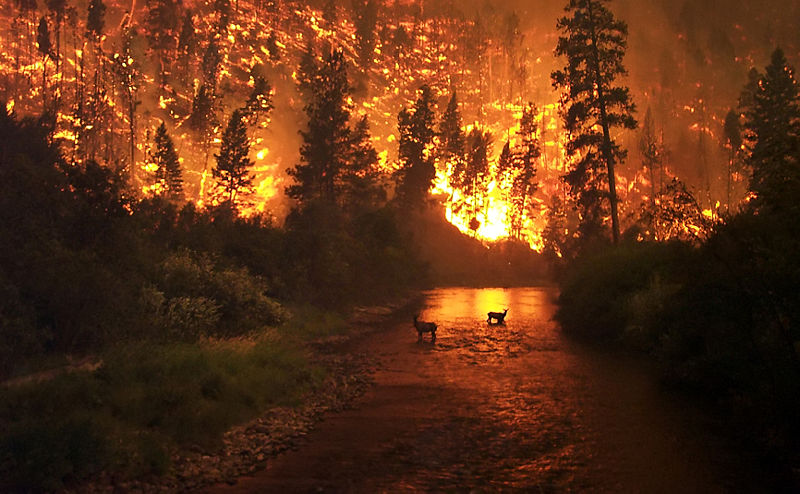
Wildfire, Bitterroot National Park, 2000. Wildfires are a type of disturbance that has increased with global warming and drought.

We introduced our readers to the leader of this research team, Professor Angela Moles, in a recent post about the mounting evidence that attempts to eradicate non-native species are futile.  Professor Moles (University of New South Wales, Australia ) gave a TED (Technology, Entertainment, Design) presentation in which she reported that introduced species have changed significantly since their introduction and that if they weren’t yet new species, they soon would be.  She proposed that non-native plants in Australia be granted citizenship.

Professor Moles collaborated with 21 scientists all over the world (Uganda, Indonesia, Mexico, USA, Australia, New Zealand, Japan, Argentina, Estonia, New Zealand) in the study that resulted in a recently published article entitled, “Invasions:  The trail behind, the path ahead, and a test of a disturbing idea.”  *

The trail of invasion biology

As the title suggests, the article begins by reporting that after 30 years and 10,000 publications, invasion biology has tested many assumptions and found inconsistent evidence to support them:

  • The search for traits of introduced plants that predict invasiveness has been a dead end:  “…it is not currently possible and will probably never be possible to predict which species are likely to become problem invaders on the basis of traits alone.  We therefore suggest that this is one area of invasion biology that merits less attention in the future.”
  • Invasion biology predicted that lack of genetic variability would hinder evolutionary adaptation in introduced species.  This assumption has not been supported by empirical studies:  “…rapid evolution has been repeatedly demonstrated in introduced populations, and the predicted reduction in genetic variance has not been observed.” 
  • Rapid evolution of introduced species has been well established by empirical studies:  “We have reached the point where additional case studies demonstrating rapid evolutionary change in introduced species are unlikely to have a major impact on our understanding of invasions.”  New research questions are needed.
  • There is little evidence to support the assumption that introduced plant species will cause extinction In native communities:  “…there are astonishingly few documented cases of native plants being driven to extinction by competition from introduced plants.  There is no evidence for any native species in the United States being driven to extinction even within a state, by competition from an introduced plant species.”

The way forward in invasion biology

Professor Moles and her team then tell us why invasion biology has not been able to prove the assumptions on which the theory is based.  The theory of invasion biology was based on untested assumptions that have been accepted as true although there is no empirical evidence to support them.  The goal for the future of invasion biology should be to identify these assumptions that have been accepted as dogma, test them, and abandon those that are not consistent with empirical facts. 

The authors of this study also, “…join a growing chorus, suggesting that our approach to invasion biology has been too simplistic.”  Studies have tended to focus on the features of introduced plants in isolation.  A more fruitful line of inquiry will consider the complex interactions between newly introduced species and their new environment:

“Rather than focusing on one factor at a time, we need to find ways (including multivariate analysis) to synthesize information about the recipient habitats/ communities, the characteristics of both resident species and the invaders, demographic processes, propagule pressure [measure of the number of species released into a region in which they are not native], the differences between current conditions and those with which the resident species evolved, evolutionary change to both native and introduced species, plasticity and feedbacks and interactions between different species and processes.”

You might say, “Phew! That sounds like a daunting task.”  And so it is, but this team of scientists takes it on with an elaborate and complex study of one of the most basic assumptions of invasion biology:  that disturbance facilitates plant invasions.

Does disturbance facilitate plant invasions?

“Disturbance is thought to facilitate invasion by simultaneously opening new ground for colonization, decreasing the competition from resident native species and releasing pulses of resources.”  The definition of “disturbance” has varied in different studies, but generally includes fire, grazing, agriculture, erosion, wind, and flood.  Empirical tests of this theory have produced mixed results.  Even when the results have been positive, they have not persisted over the long-term.

Because disturbance is a natural feature of all ecosystems, native species have adaptive features that enable them to respond to natural disturbances.  Therefore, the research team theorized that it is not disturbance per se which creates opportunity for invasions by introduced species, but rather changes in the disturbance regime.  Their research study was therefore designed to distinguish between the level of disturbance and changes in the level of disturbance.

Given the international composition of their research team, they were able to select 200 sites in eight countries.  They selected only those sites for which the natural patterns of disturbance were known.  Their research methods were statistically complex and a detailed description of them is beyond our comprehension and probably many of our readers, but we encourage those with the necessary scientific knowledge to read the article which is available on the internet.

Their analysis of these 200 sites led them to the conclusion that the change in disturbance regimes was far more predictive of the success of invasions than the level of disturbance but that both variables explained only 7% of the variation in the percent of cover or species richness contributed by introduced species.

In other words, one of the most basic assumptions of invasion biology did not pass an empirical test of its validity.  Invasions by introduced plants are largely unexplained by disturbance.

Post Katrina New Orleans. Floods are another type of disturbance that is likely to increase with climate change.

The future of invasion biology

Science is rapidly revising the assumptions of invasion biology.  We strongly believe that it is just a matter of time before science informs us that introduced species are here to stay and that this is not the terrible news we have been led to believe.  It is inevitable that this information will filter slowly from the scientific community to the community of native plant advocates.  We hope that they hear and accept this good news before our non-native trees are destroyed.

********************

*Moles, Angela, et. al., “Invasions:  The trail behind, the path ahead, and a test of a disturbing idea,” Journal of Ecology, British Ecological Society, 2012, 100, 116-`127.  All quotes are from this article

Support for hypotheses in invasion biology is uneven and declining

“Support for major hypotheses in invasion biology is uneven and declining” is the title of a paper recently published in NeoBiota* co-authored by seven scientists from all over the world (Germany, USA, Spain, Canada, Czech Republic).  The title captured our attention because it is consistent with our viewpoint.

The international team of scientists analyzed 371 empirical studies which tested six major hypotheses in invasion biology.  They found that empirical evidence for these hypotheses is uneven and declining.  The hypotheses that were tested by the studies were:

  • Invasional meltdown:  the presence of invasive species facilitates invasion and survival of additional new species.
  • Novel weapons:   invasive species with traits new to an exotic habitat have a competitive advantage over native species.
  • Enemy release:  introduced species have a competitive advantage in the exotic range because they are released from their enemies in the new environment.
  • Biotic resistance:  More biologically diverse ecosystems are more resistant to invasion.
  • Tens rule:  10% of newly introduced species escape to the wild; 10% of those naturalize in the wild; 10% of those become invasive.
  • Island susceptibility:  Invasive species are more likely to become established and have major ecological impacts on islands than on continents.

The scientists counted the number of studies that support, question/oppose, or are undecided/inconclusive about each hypothesis.  They also compared the number of supporting studies when the hypothesis was new with the number of supporting studies published recently to determine the decline in support for the hypothesis.  Here’s what they found:

Hypothesis n % of supporting studies % of decline in support
Invasional meltdown

30

77%

41%

Novel weapons

23

74%

25%

Enemy release

106

54%

10%

Biotic resistance

129

29%

5%

Tens rule

74

28%

10%

Island Susceptibility

9

11%

25%

Although support is strongest for the invasional meltdown hypothesis, recent studies are less supportive than early studies, indicating substantial decline in support.  Declining evidence of invasional meltdown is consistent with the fact that exotic species are eventually integrated into the food web which reduces their populations, stabilizing their spread. There is apparently little evidence that islands are more susceptible to invasion than continents and few studies have been done to test the hypothesis.

Declining support for scientific hypotheses has been observed in many disciplines, particularly medicine, ecology, and psychology.  The scientists who study this phenomenon theorize that the decline is attributable to some combination of these factors:

  • Over time the amount of available long-term data increases.
  • The best examples which are the strongest cases for the hypothesis are most likely to be studied first.
  • Publication bias favors new hypotheses and those for which the results are conclusive.

The NeoBiota paper also observes that the empirical evidence supporting each hypothesis varies by taxonomic group (plants, invertebrates, vertebrates) and habitat type (terrestrial, freshwater, marine).  For example:

  • The novel weapons hypothesis has been tested only for plants in terrestrial habitats.
  • Support for the invasional meltdown hypothesis is even across taxa and habitats.
  • Support for biotic resistance is strongest in marine habitats.

Where is invasion biology headed?

The authors of the NeoBiota paper are not suggesting that invasion biology be abandoned.  Rather their goal is to redirect scientists in the field to more productive efforts, such as:

  • Where a hypothesis cannot be generalized to all taxa and habitats specify exactly where it is applicable.
  • Rather than focusing on newly introduced species, focus on the interaction of a those species with their new environment. 
  • Discard those hypotheses that don’t work.

Based on our fifteen years of experience studying the native plant movement and its theoretical underpinnings in invasion biology we wholeheartedly support the advice of the authors to focus scientific efforts on the interaction of new species with their new environment.  We strongly believe that the success of newly introduced species is based largely on changes in the environment into which they are introduced.  In other words, invasions are more a result of changes in the environment than on the characteristics of the introduced species.

We also endorse the advice that scientists be more specific about the applicability of the assumptions of invasion biology.  We have seen the damage done by sweeping generalizations about how ecosystems operate in the hands of hobbyists.  Nature is complex and we do not necessarily understand all the factors operating in a given environment.  We hope that scientists will lead the way to the public’s more nuanced understanding of ecosystems. 

************************************

*Jeschke, Jonathan, et. al., “Support for major hypotheses in invasion biology is uneven and declining,” NeoBiota, 14: 1-20 (2012)

More vandalism in our public parks

We recently reported the history of vandalism by native plant advocates in public parks in San Francisco such as cutting down trees as well as killing trees by girdling them.  We were prompted to recount this history by a recent study reporting the probable intentional and unauthorized introduction of Australian insect pests of eucalyptus. 

Now we must report a more recent incident in San Francisco’s parks.  A park visitor observed and photographed a “volunteer” spraying herbicide on non-native plants early in the morning (6:30 am).  The herbicide that he was spraying is not included in the city’s list of approved pesticides.  We are reprinting with permission the story of this incident published recently by the San Francisco Forest Alliance (with 3 edits in brackets).

Native plant advocates are treating San Francisco’s parks like their personal property, destroying plants they don’t like and endangering the public with pesticides that are not approved for use in the city.

******************************************

Some time back, we’d posted an article about the puzzling brown spot in Glen Canyon Park, around a rock near a trail. It looked like herbicide use, but regular visitors to the park hadn’t seen the signs SF Rec and Park must post before spraying herbicides. Also, as the picture below shows, it was close to a trail. Both the Natural Areas Program and the Department of the Environment had said there would be no spraying for 15 feet on either side of a trail. We asked them what was going on, and got no answer.

Now we know.

A “volunteer” was spotted spraying the area early one morning.We’d heard anecdotal reports, but this time, an actual incident was reported to us with evidence of unsupervised use of unapproved products without warning notices, and without public records, in a place where pesticides are not supposed to be sprayed.

Rock formation in Glen Canyon Park

These pictures show the pesticide being used in precisely the area we were concerned about.

So in addition to the recorded herbicide use by the Natural Areas Program, there’s unrecorded and unquantified toxins being used in Glen Canyon by sympathizers.

The herbicide in use – at least on this occasion, as far as we could gauge [by reading the label on the pesticide being sprayed by the person who was seen spraying] – was Roundup Ready-to-Use Plus. The product is described on sale websites as not “pet and livestock-friendly.”

It is not on the Department of the Environment’s approved list of pesticides for use on city-owned properties.

WHAT IS ROUNDUP READY-TO-USE PLUS?

[ETA: This is an actual photograph of the person seen spraying herbicide in Glen Park.]
This product contains Glyphosate (the main ingredient in all types of Roundup products, which we’ve described in an earlier article). It also contains Pelargonic Acid, which the University of Florida IFAS extension described as “like diquat.”

About pelargonic acid, the Material Safety Data Sheet (linked here as a PDF) says “Potential for mobility in soil is very high.” This means it doesn’t stay where it’s sprayed. It moves around.It also says it is slightly toxic to marine organisms – fish and amphibians.

Besides glyphosate and pelargonic acid, Roundup Ready-to-Use Plus contains “other ingredients” that the manufacturer, Monsanto, does not (and is not required to) reveal.

HOW MUCH TOXIN IN GLEN CANYON?

This makes it clear that no one actually knows how much (or what) pesticides are being sprayed in Glen Canyon.

The Natural Areas Program (NAP) sprayed this park at least 6 times in 2011. Clearly, sympathizers are also spraying it with unapproved products not safe for pets and wildlife, without posting warning notices, and without keeping any public records. It’s likely that they are spraying even more frequently than the NAP [judging by the many dead spots scattered around the park for which no signs were posted] – which is apparently turning a blind eye to the problem.

The NAP is based on community “stewardship.” Evidently, this has encouraged its “volunteers” to take matters into their own hands and work unsupervised in ways that threaten our environment.

Hybridization is an adaptive strategy for species survival

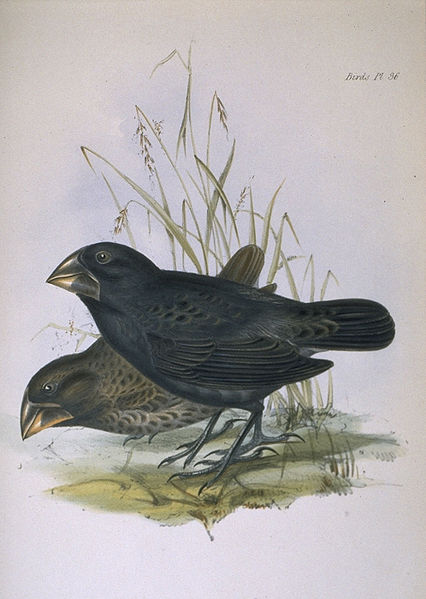
Large ground finch. Linda Hall Library

We introduced Darwin’s finches to our readers in our previous post.  We told you about the research of Rosemary and Peter Grant on the Galápagos Islands that documented the rapid adaptation of the finches to radical changes in their food sources resulting from extreme weather events.  In this post we will continue the story by telling you about another of the amazing discoveries of the scientists studying the finches over a period of nearly 30 years.

Natural selection resulted in the survival of finches with body sizes and shapes that were best suited to the availability and type of food.  Sexual selection enhanced those physical characteristics during periods in which females had more choice because they were greatly outnumbered by males.  In addition to these adaptations, the birds increased their cross-breeding with other species and the resulting hybrids actually had a survival and breeding advantage over their species “pure” parents.*

In the first five years of the research study, there was little evidence of different finch species interbreeding, known as hybridizing.  On those rare occasions when species interbred, the resulting generation was not as successful as their parents, with respect to finding a mate and raising another generation.

Such lack of success of hybrids is considered the norm in nature.  In fact, many hybrids are sterile, incapable of reproducing.  Think of the sure-footed but sterile mule—the offspring of a horse and a donkey—as the classic example of a hybrid.

After the severe drought of 1977 and the flood of 1983, the Grants began to notice an increasing number of cross-breeding birds.  It seemed that the resulting hybrids were having more breeding success than the pre-drought hybrids and the data confirmed their observation.

This counter-intuitive conclusion required some careful consideration and the conclusion is a valuable lesson in our rapidly changing environment.  The environment on the islands was radically transformed by the severe drought and subsequent flood.  The cactus was overwhelmed by a vine that smothered it.  The plants with big, hard seeds were attacked by a fungus that decimated the population.  The small seeded plants thrived and became the dominant food source.

The rapidly changing environment was causing more rapid evolution and the genetic variability of hybrids was giving them an advantage.  If the environment is changing rapidly in unpredictable ways, the birds could increase the odds of finding a winning strategy by increasing the variability of their genes, sometimes resulting in novel traits.

We cannot and should not, however, anthropomorphize the birds by imputing motives to the selection of a mate of another species.  The starving cactus finch probably observes that a male of another species—a seed-eating ground finch, for example—appears to be more fit than a male of her own species.  She is not thinking of the odds of increasing genetic variability.  Natural selection operates without the conscious effort of species.

The implications of hybridization

We are experiencing a period of rapid change because of the anthropogenic (caused by humans) impacts on the environment, most notably climate change, but surely many other impacts which we don’t necessarily understand.  These would seem the ideal conditions for the hybridization of species which speeds up evolution by increasing genetic variability. 

Unfortunately, one of many strategies of the native plant movement and nativism in the animal kingdom is to prevent hybridization because it is perceived as a threat to native plants and animals.  We have reported to our readers some examples of such attempts to prevent hybridization and there are many more in the literature:

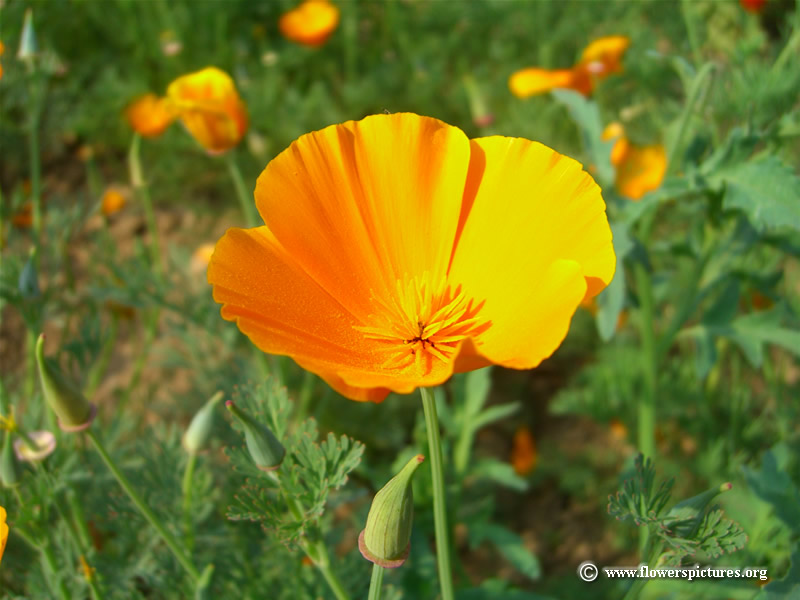
The variety of California poppy being eradicated from the Presidio in San Francisco.

Are efforts to prevent hybridization depriving plant and animal species of opportunities to adapt to the rapidly changing environment?  We don’t know the answer to that question, but we find it a provocative line of inquiry.

***************************

*This information is drawn from:   Jonathan Weiner, The Beak of the Finch, Vintage Books, 1994