Are non-native plants “ecological traps” for birds? — Part II

We previewed this post last week in our response to Doug Tallamy’s belief that some bird species require caterpillars for their survival.  We are continuing our critique of a claim that non-native plants are “ecological traps” for birds.
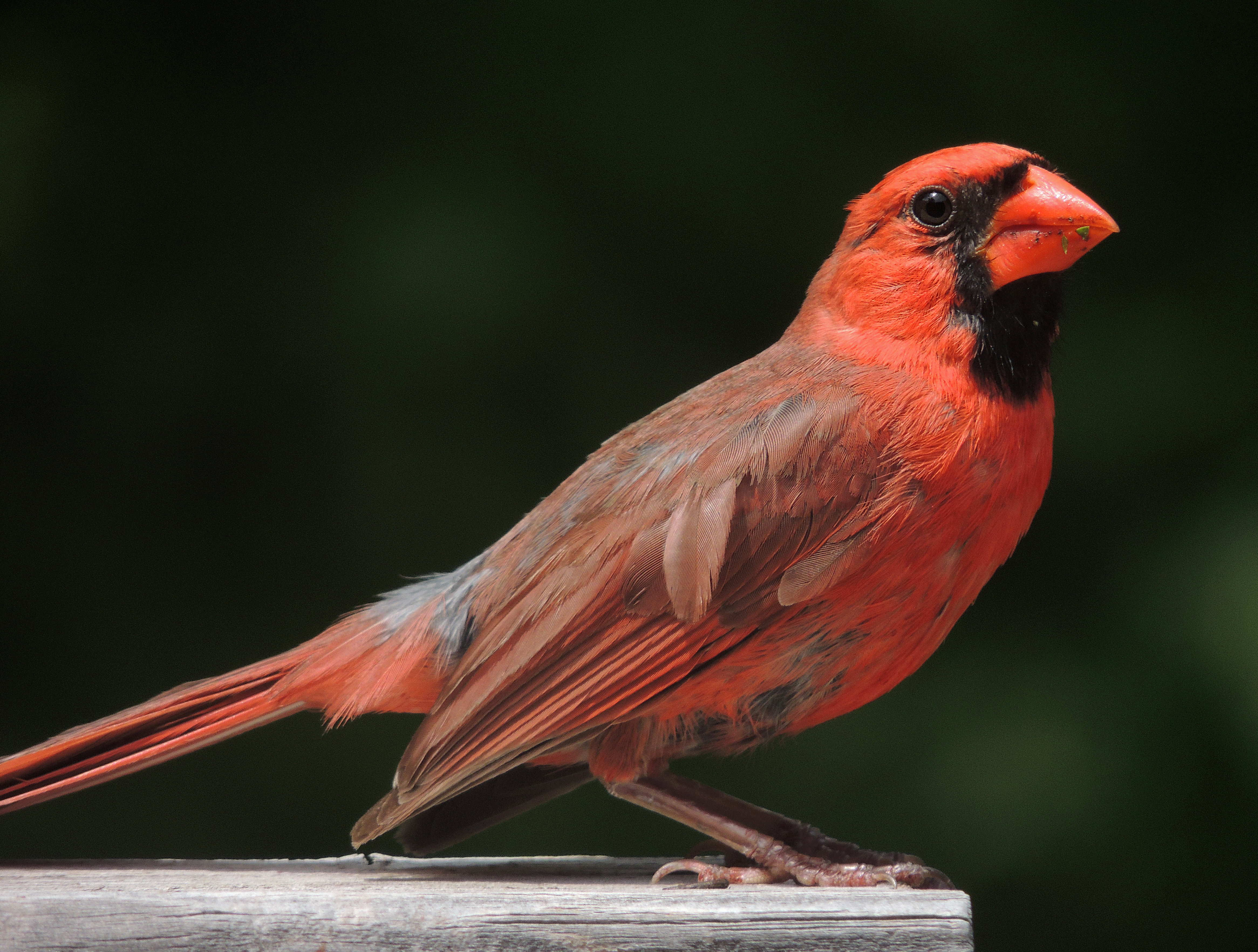
Northern Cardinal, Male.  Creative Commons - Share Alike
Northern Cardinal, Male. Creative Commons – Share Alike

In “Nonnative plants:   Ecological Traps,” Amanda Rodewald is quoted as saying that non-native honeysuckle significantly reduces the nesting success of cardinals by increasing nest predation:

Typically in the wild, male cardinals that are in the best condition grab the best territories and nesting spots and breed earliest in the year. They also successfully rear more young than their less-fit competitors—an example of natural selection at work. But this pattern changes when honeysuckle invades a forest. Because honeysuckle leafs out sooner in spring than most plants, the fittest cardinals rush to mate and nest in the shrubs’ dense foliage. But instead of a gain in reproductive success, these birds pay a price. The early nesters in honeysuckle rear 20 percent fewer young than those that nest in native plants.”  (1) (emphasis added)

She speculates that the probable reason for this reduced success is nest predation which she believes is greater earlier in nesting season because there are fewer nests.

We don’t know if Ms. Rodewald was accurately quoted in her interview or if she has changed her mind.  However, Ms. Rodewald has published a study which says exactly the opposite:

“…these results provide no evidence that urban forests were acting like ecological traps for cardinals.  Instead, cardinals in urban and rural forests had similar numbers of nesting attempts, young fledged over the breeding season, and apparent annual survival rates.  Thus, these findings do not support the idea that urban forests in Central Ohio represent ecological traps for synanthropic understory birds” [birds that live in artificial habitats created by humans].  (2)

Urban forest sites in her study contained far more exotic vegetation than rural forest study sites:  “Understory woody vegetation was over 50% more dense, with nearly 3 times greater numbers of exotic shrub stems than rural forests.”  Exotic vegetation in this study was described as predominantly honeysuckle and multiflora rose.  There was no statistical relationship between the number of nesting attempts and the composition of the landscape:  “There were no significant differences in either the number of nesting attempts among years or between [urban and rural] landscapes.” (2)

This study offers several possible explanations for the reproductive success of cardinals in urban forests dominated by exotic shrubs:

  • “…urban forests in this study contained denser understory vegetation than rural forests.” 
  • Therefore, there is “…increased cover provided by exotic shrubs in the urban forest.”
  • “…winter microclimates may be particularly important for resident birds…cities may be favorable thermal climates for birds because cities may act as ‘heat islands.’”
  • Urban sites…probably provided more food sources for wintering birds.  Urban forests had nearly 3 times more fruit and nearby birdfeeders than rural forests.  Cardinals… were regularly seen feeding on fruits of exotic shrubs (e.g., honeysuckle, multiflora rose).  Previous studies have indicated that supplemental food sources…can improve overwinter survival rates, body mass, and nutritional condition…Such changes in winter food and microclimate may explain increases in species richness and abundance of birds wintering in urbanizing landscapes around Columbus. Ohio.”

In her published study, Ms. Rodewald also contradicts her statement that greater nest predation in honeysuckle is the cause of reduced reproductive success of cardinals.  In her published study, she says, “…high rates of nest predation frequently documented in urban landscapes do not necessarily translate to reduced productivity or survival.”

Ms. Rodewald’s statement that early nesting in honeysuckle is more likely to result in predation is also contradicted by another study.  (3) Although this study was conducted in Ithaca, New York, the study site was also dominated by honeysuckle.  This study found that the most fit cardinal males bred earliest in the nesting season and their nesting success for the entire nesting season was therefore greater than pairs starting later in the season:  “These results confirm that an earlier breeding date is associated with producing more offspring in a season regardless of any possible effect vegetation density may have on nest initiation date.” (3)
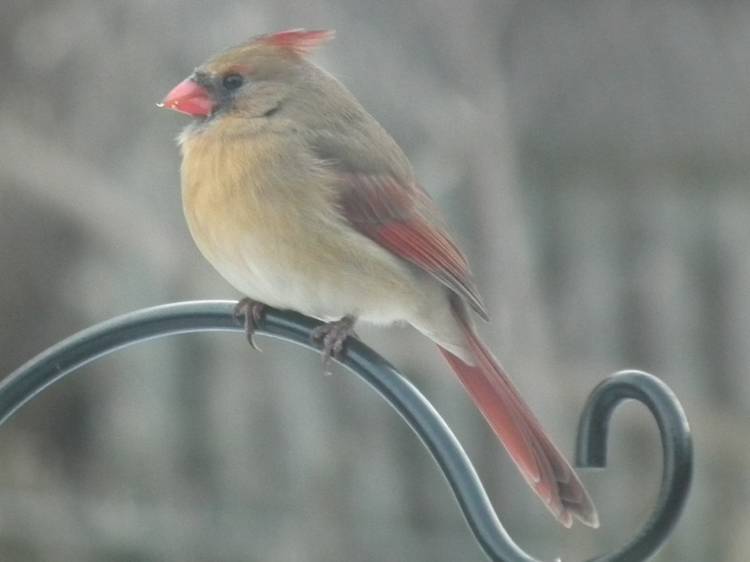
Northern Cardinal, Female.  Creative Commons - Share Alike
Northern Cardinal, Female. Creative Commons – Share Alike

Ms. Rodewald’s published study is consistent with a similar study:  “Predation on Northern Cardinal nests:  Does choice of nest site matter?”  This study was also conducted in Ohio in a mixed landscape of both native and non-native shrubs.  Non-native shrubs were predominantly honeysuckle and multiflora rose, as they were in Ms. Rodewald’s study.  This study was trying to find a relationship between predation and the location of nests.  Many hypotheses were tested relative to these variables:  height of nest, concealment of nest, accessibility of nest, common vs. rare shrub location, proximity to habitat edge, distance to human activity.  It found no such relationship:  “Several hypotheses to explain differences between the location of the successful and failed nests were tested.  None of these explained why the contents of particular nests were taken.”  (4)
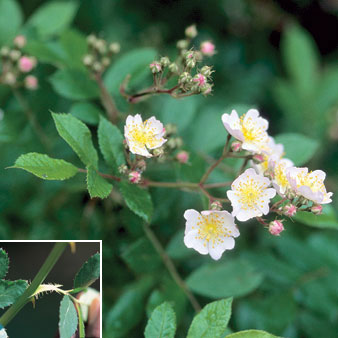
Multiflora rose.  NPS
Multiflora rose. NPS
Although cardinals had the choice of nesting in native or non-native shrubs in this 80 hectare bird sanctuary (Aullwood  Audubon Center and Farm), 65% of the 121 nests in this study were in non-native honeysuckle or multiflora rose.  The study tested for an association between plant species and probability of nest success by dividing all nests into two categories, one for the two dominant species of non-native plants and the other for all other plant species:  “The probability of success was not associated with [plant] species category.”  (4)

Only 25% of the 121 nests were successful.  Although that sounds like a low success rate, it is consistent with other sources of information about reproductive success of cardinals:  “Northern Cardinals have a very low nesting success rate with only 15–37% of their nests succeeding in fledging young.” (5)

This publication (4) had a very interesting theory about why nest location is unrelated to nesting success.  The cardinal is unusual in having a very long nesting season from April to late-September.  They have as many as 6 broods.  When a nest fails, they start building a new nest in another location within 5-7 days.  The female chooses the nest.  Essentially, she is rolling the dice.  She makes a nearly random choice of nest site and her long-term odds of nest success is primarily because she rolls the dice many more times than other species of birds:  “We propose that a high incidence of predation by a rich guild of nest predators precludes the existence of predictably safe nests for cardinals.  Instead, the cardinals appear simply to be well-adapted to renest rapidly in response to the near randomness of nest predation.”  There are trade-offs for every potential nest location.  For example, a low nest is more accessible to ground-dwelling predators such as snakes or rodents while a nest high in a tree is more accessible to nest parasites such as cowbirds.  So, the cardinal mom takes her chances by making different choices and her eventual success is largely a question of luck.

Looking for “ecological traps”

We have been unable to find evidence that non-native plants are “ecological traps” for birds.  When we find such claims, we turn to scientific literature for evidence.  We find many studies begin with hypotheses which predict ecological harm done by non-native plants.  But we have yet to find empirical studies that reach that conclusion.   

The article we have critiqued in this post is a case-in-point.  It starts with the report that the population of cardinals has exploded where honeysuckle has invaded.  Despite that fact, the article concludes that the cardinal population is somehow harmed by honeysuckle.  One wonders how the authors of that article reconcile this contradiction.  Doesn’t the increased population speak for itself?

In any case, in the absence of evidence of harm, we do not believe that the destruction of existing landscapes can be justified, particularly since doing so requires large amounts of herbicide.  Given the probability that the herbicides are harmful to animals, particularly soil microbes and insects, how can such destruction be justified?
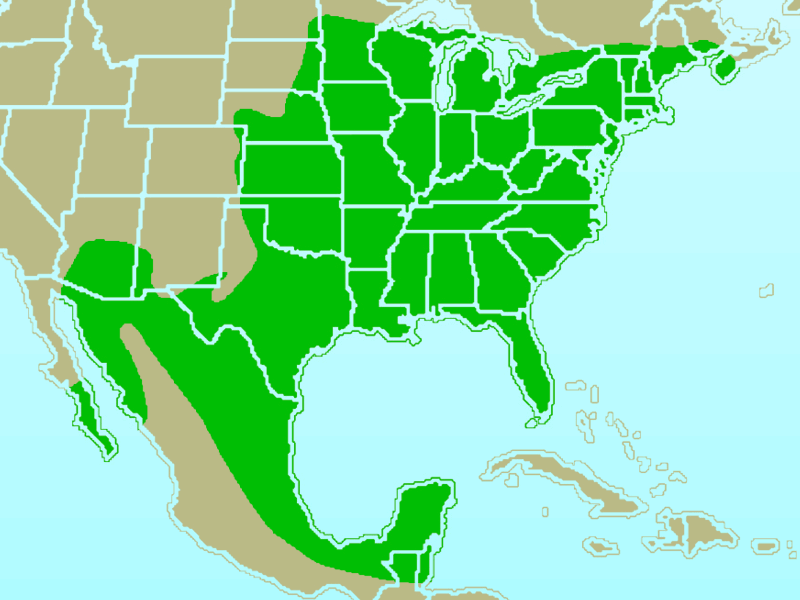
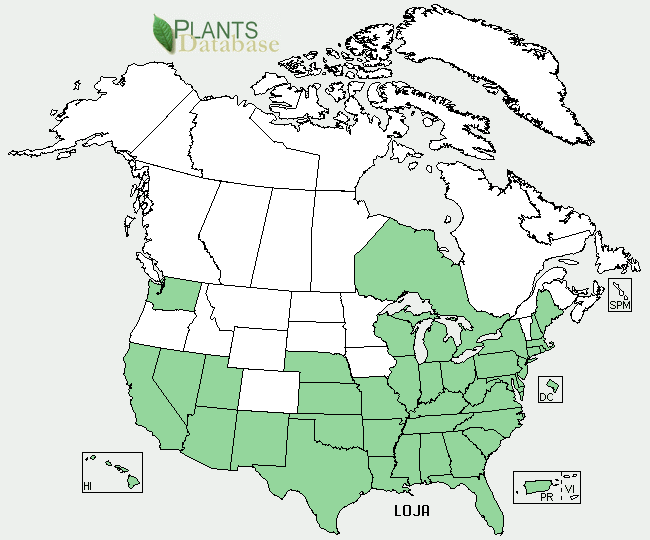
Range map of Northern Cardinal.  public domain
Range map of Northern Cardinal. public domain
Range map of Japanese honeysuckle.  USDA
Range map of Japanese honeysuckle. USDA

************************

(1)    John Carey, “Nonnative Plants: Ecological Traps Offering alluring habitat for songbirds, exotic plants may actually decrease the animals’ long-term survival and fitness,” National Wildlife Federation, January 14, 2013

(2)    Lionel Leston, Amanda Rodewald, “Are urban forests ecological traps for understory birds?  An examination using northern cardinals,  Biological Conservation, 131 (2006), 566-574

(3)    L. LaReesa Wolfenbarger, “Red coloration of male northern cardinas correlates with mate quality and territory quality,” Behavioral Ecology, Vol. 10 No. 1 (1999), 80-90

(4)    Tamatha Filliator, Randall Breitwisch, Paul Nealon, “Predation northern cardinal nests:  Does choice of nest site matter?,” The Condor, 96, 761-768, 1994
(5)    Wild Birds Unlimited

Are non-native plants “ecological traps” for birds?

One of the reasons why native plant advocates want the managers of our public lands to destroy non-native plants and replace them with native plants is that they believe native plants provide superior habitat for birds.  However, empirical studies do not support this belief, as we have explained in earlier posts.  Today we will examine an article recently published in an advocacy magazine, making the claim that non-native plants are “ecological traps” for birds:  “Nonnative Plants: Ecological Traps Offering alluring habitat for songbirds, exotic plants may actually decrease the animals’ long-term survival and fitness” (1)

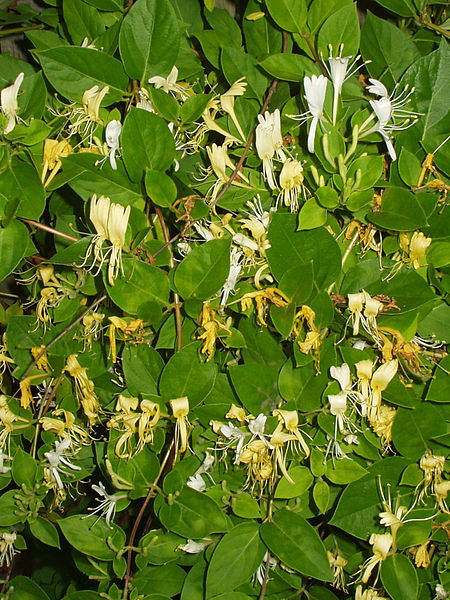
Japanese honeysuckle.  Attribution William Rafti
Japanese honeysuckle. Attribution William Rafti

The article begins auspiciously with the good news that populations of some bird species have increased significantly in recent decades because of the spread of non-native plant species which are valuable sources of food:  “…a 2011 paper, published in the journal Diversity and Distributions, concluding that the number of fruit-eating birds such as cardinals, robins and catbirds tripled during the past three decades in parts of central Pennsylvania due to the spread of nonnative honeysuckles.”  (1)  And then the article attempts to contradict this good news by turning to the usual nativist caveats.

Generalists vs. Specialists

Nativists claim that the animal kingdom is divided into generalists and specialists.  The generalists are theoretically omnivores—they have a varied diet—and so depriving them of native plants will not prevent their survival.  Specialists, on the other hand, are dependent upon a narrow range of plant or animal species for survival.  We are expected to believe that specialists far outnumber generalists and that we doom them to extinction when one particular species of native plant or animal is unavailable to them.

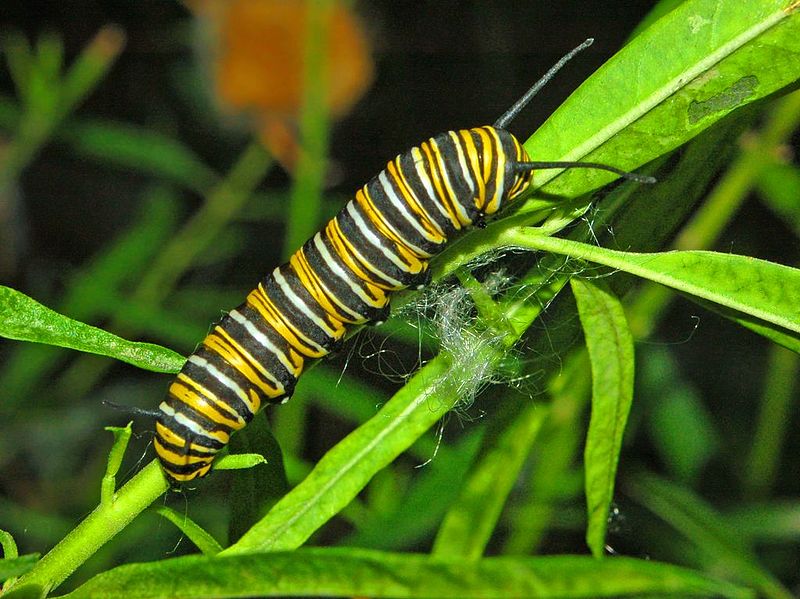
Monarch butterfly caterpillar - Creative Commons - Share Alike
Monarch butterfly caterpillar – Creative Commons – Share Alike

Doug Tallamy is the purveyor of the generalist vs. specialist overstatement.  We have critiqued his assumptions in an earlier post.  In a nutshell, there are few mutually exclusive relationships in nature because they are a risky evolutionary strategy.  The plant or animal that is dependent upon one other species is significantly less likely to survive in the long term than an animal with more dietary options.  The perception that there are immutable relationships between insects and plants also underestimates the speed of adaptation and evolution, particularly of insects with large populations and short lifespans.

For example, a bird that eats insects usually eats all manner of insects as well as spiders.  They are not dependent solely upon caterpillars as Mr. Tallamy seems to believe:  “…warblers and chickadees rely on caterpillars for 90 percent of their diet during the breeding season, eating hundreds per day. ‘That’s a lot of insects,’ Tallamy says. ‘If you don’t have those insects, you don’t have the birds.’” (1)

According to Cornell Ornithology Lab–America’s most prestigious research institution for birds–warblers and chickadees have a much more varied diet than Mr. Tallamy believes.  (We chose specific species with ranges and abundant populations in Delaware where Mr. Tallamy lives.  However, the diet of all species of chickadees and warblers are similar.)

  • Black-capped Chickadee:  “In winter Black-capped Chickadees eat about half seeds, berries, and other plant matter, and half animal food (insects, spiders, suet, and sometimes fat and bits of meat from frozen carcasses). In spring, summer, and fall, insects, spiders, and other animal food make up 80-90 percent of their diet. At feeders they take mostly sunflower seeds, peanuts, suet, peanut butter, and mealworms.” (2)
  • Orange-crowned Warbler:  “insects and spiders.” (2) Most insects are not caterpillars and many are not herbivores.
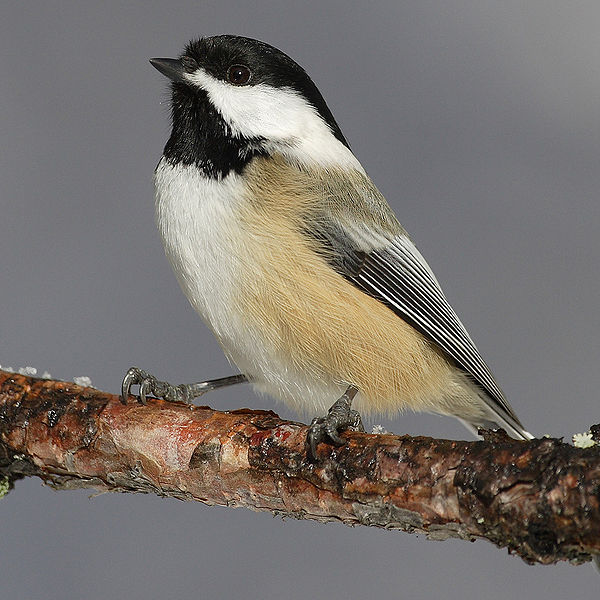
Black-capped Chickadee - Creative Commons - Share Alike
Black-capped Chickadee – Creative Commons – Share Alike

No evidence that insects require native plants

Mr. Tallamy is focused on caterpillars because they are herbivores, that is, they eat plants.  Just as he believes that the birds need native plants, he also believes that plant-eating insects need native plants.  However, Mr. Tallamy disproved his own theory about an immutable relationship between native plants and insects when he supervised a graduate student whose thesis concluded: 

Erin [Reed] compared the amount of damage sucking and chewing insects made on the ornamental plants at six suburban properties landscaped primarily with species native to the area and six properties landscaped traditionally.  After two years of measurements Erin found that only a tiny percentage of leaves were damaged on either set of properties at the end of the season….Erin’s most important result, however, was that there was no statistical difference in the amount of damage on either landscape type.” (3)

This empirical study, supervised by Mr. Tallamy, was unable to find evidence that there are more plant-eating insects in a native garden than in a landscaped garden of non-native cultivars.  Yet, Mr. Tallamy continues to claim that insects require native plants and birds require those insects for their survival:  “Tallamy’s research shows that birds also may be harmed indirectly because nonnative plants affect insects. He has found that the number and diversity of plant-eating insects, especially caterpillars, drops dramatically when exotic plants invade…[Tallamy said,] ‘My prediction is that birds that specialize on insect herbivores will take a bigger hit than those that eat other insects,’” (1)

The study by Mr. Tallamy’s student about the relationship between native plants and insects is not the only empirical evidence that his assumption is incorrect.  We have published several articles about local studies that have found no such relationship:

Native plant advocates have also offered “evidence” of insect populations in the local eucalyptus forest.  UCSF produced a video to promote their original plan to destroy most of the eucalypts on Mount Sutro (now on hold indefinitely).  An arborist shows us eucalyptus leaves that have been chewed by insects.  He claims that a drastically thinned forest will be healthier because it will have fewer insect predators.  So, there are insects in the eucalyptus forest when it suits native plant advocates’ purposes and there are no insects in the eucalyptus forest when it does not.  They want more insects when they are advocating on behalf of birds and they want fewer insects when they are demanding that trees be destroyed.  It’s rather confusing.

Insects ARE important to birds

We agree with Mr. Tallamy that insects are very important to birds because they are a major source of food, especially during the nesting season when their high-protein content is vital to nestlings.  Therefore, we believe that Mr. Tallamy should join us in making climate change our highest environmental priority.  Because insects are cold-blooded, they are particularly vulnerable to the extreme weather conditions associated with climate change.  They cannot adjust their body temperature as warm-blooded animals can in response to such fluctuations in temperature.  A recent study predicts devastating consequences for insect populations in coming decades:  “Our predictions are that some species [of insects] would disappear entirely in the next few decades, even when they have a fairly wide distribution that currently covers hundreds of kilometers.” (4)

We believe that a single-minded focus on native plants is misguided because in a rapidly changing climate the entire concept of “native” becomes meaningless.  Just as insects are unlikely to survive radical changes in temperature, the ranges of native plants must change if species are to survive.

Stay tuned for Part II

In our next post, we will continue our critique of the article that theorizes that non-native plants are “ecological traps.”  We will tell our readers about the published research that contradicts statements in the article about predation of cardinal nests in non-native honeysuckle.  The author of one of the studies is quoted in this article, saying something completely different than her own published study.  It’s an intriguing contradiction.

**********************************

(1)    John Carey, “Nonnative Plants: Ecological Traps Offering alluring habitat for songbirds, exotic plants may actually decrease the animals’ long-term survival and fitness,” National Wildlife Federation, January 14, 2013

(2)    Cornell Ornithology Laboratory, Guide to Birds

(3)     Tallamy, Doug, “Flipping the Paradigm:  Landscapes that Welcome Wildlife,” chapter in Christopher, Thomas, The New American Landscape, Timber Press, 2011

(4)    “Extreme weather caused by climate change decides distribution of insects, study shows,”  Science Digest, February 20, 2014

“Feds Target Egrets and Owls for Eradication”

We are publishing a guest article by Sydney Ross Singer, Director, Good Shepherd Foundation.  Dr. Singer has been a tireless defender of non-native species in Hawaii, where he lives.  Nativism in Hawaii is even more destructive than similar projects in the San Francisco Bay Area.

***********************

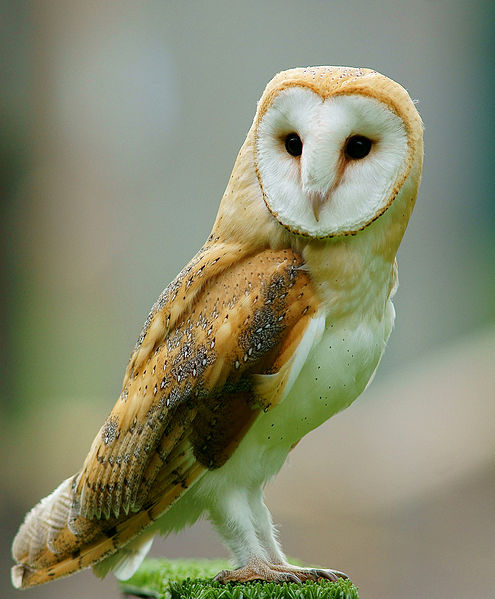
Barn Owl.  Creative Commons 2.0 Generic.
Barn Owl. Creative Commons 2.0 Generic.

Tens of thousands of innocent Owls and Egrets will be executed in Hawaii by the US Fish and Wildlife Service unless President Obama issues a pardon.

Cattle egrets and barn owls are an important part of Hawaii’s environment, consuming large amounts of rodent and insect pests as they were meant to do when first introduced by the government to these islands back in the 1950′s. They are protected by international migratory bird treaties, and are admired and prized by people wherever they are found.

Unfortunately, they are now being targeted for destruction statewide by the same invasive species eradicators who are killing our other introduced wildlife.

Egret.  Creative Commons Share Alike.
Egret. Creative Commons Share Alike.

Currently, whenever there is a conflict between egrets or owls and endangered species or airports, there have been permits required for their control in the local area where they are a problem. The US Fish and Wildlife Service has proposed lifting this permit requirement to allow the egrets and barn owls to be killed anywhere they are found, even if they are not causing any problems. It is killing the innocent today to prevent a potential problem in the future.

This is a reminder of ethnic cleansing and genocide. It is not what our great nation is about.

This slaughter of innocent egrets and owls is a crime against nature and against the people who live with and admire these magnificent birds. Making matters even worse, one of the methods that will be used to kill the birds is to attract them to slaughter areas by broadcasting their bird calls. Owls will be attracted from miles away to be shot. Egret colonies will be massacred for no reason other than their existence in Hawaii.

This “final solution” for the egrets and owls, not only controlling them where they are a problem but everywhere they live throughout the Hawaiian Islands, can only be stopped by President Obama issuing a stay on their execution. It is the Federal Government’s Fish and Wildlife Service that wants to allow unlimited open season on these birds. It is up to the President of our country to intervene on the behalf of these innocent, magnificent creatures.

Please help spread the word. Sign our Change.org petition. And visit our website http://www.DontKilltheBirds.org. Together we can help save these wonderful birds from needless slaughter.

************************

Photos and bold emphasis added.

Needlessly exterminating animals

As much as we dislike the destruction of plants and trees simply because they are not native, the extermination of animals is far more disturbing.  There are presently two such proposed projects in the news to which the public has reacted angrily.  We will start with the project in the San Francisco Bay Area which plans to kill ground squirrels and gophers in a public park in Berkeley.  In this case, the animals are native.  They will be killed because public land managers have decided they MIGHT be a problem in the future. 

The squirrels and gophers of Cesar Chavez Park in Berkeley

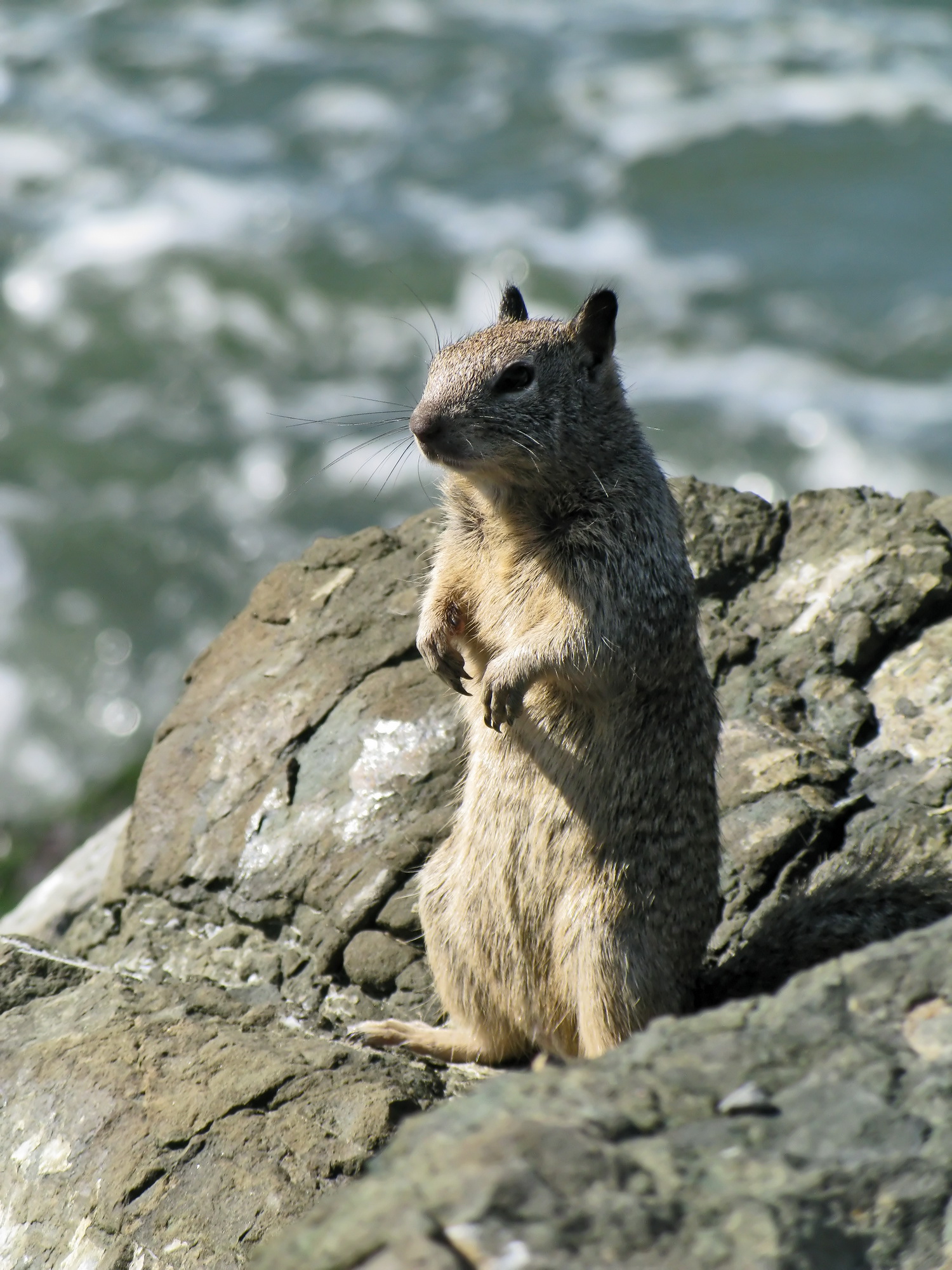
California Ground Squirrel at the Berkeley Marina.  Creative Commons - Benefactor 123
California Ground Squirrel at the Berkeley Marina. Creative Commons – Benefactor 123

Cesar Chavez Park is the former garbage dump of the city of Berkeley, built on landfill.  When the dump was closed in the 1990s, the garbage was not removed.  It was capped with clay which was intended to contain whatever toxins were in the garbage.  Then two feet of soil was put on top of the clay so that vegetation could be planted in the park.  Small animals moved into the park, as we should expect.

The population of squirrels and gophers is now considered too big by land managers.  Although there is no evidence that the burrows of the animals have penetrated the clay cap, the officials who are responsible for the water quality of the bay are apparently concerned that they MIGHT burrow through the clay cap:   “…they are getting perilously close to the clay cap that covers the landfill. If the rodents penetrate that barrier, dangerous toxins like gasoline, lead, iron, herbicides and pesticides, could leach into the bay. So the city needs to reduce the animal population to lessen the risk, according to city spokesman Matthai Chakko. ‘We haven’t had any of the materials inside the landfill escape into the bay and we don’t want that to happen,” said Chakko. “We are trying to solve a problem before it happens.’” (1)

The population explosion is being blamed on park visitors feeding the squirrels.  Squirrel-feeders have been interviewed by the media.  They defend their right to feed the squirrels, which is a source of pleasure for them.  It should not be too difficult to understand that many people prefer feeding squirrels to killing them.  (However, we do not encourage people to feed wildlife in public parks and open space because the animals usually pay the price.)

Some media sources also blame off-leash dogs for exacerbating the problem.  The San Francisco Chronicle claims that off-leash dogs dig into the animals’ burrows, making them larger.  There is a small, legal off-leash area in the center of the park.  We have walked around the perimeter of this park many times.  Although we have seen dogs being walked on-leash on the trail around the park, we have never seen an off-leash dog outside the legal off-leash area.  Another media source reports that most of the burrowing animals live on the outer edge of the park which is consistent with our observation.  Furthermore, making the burrows larger at the surface, doesn’t get them any closer to the clay cap two feet below the surface.  Therefore, the scenario imagined by the Chronicle is not consistent with the facts.  (1)

Action alert (update):  The Berkeley City Council will reconsider the extermination of squirrels and gophers at Cesar Chavez Park at their meeting on March 25, 2014.  Please come to speak for these animals.  Here is a link to an article in the Oakland Tribune with more information (scroll down to the second item in the article):    http://www.insidebayarea.com/news/ci_25298598/citywise-santanas-oakland-payout-tops-200k?IADID=Search-www.insidebayarea.com-www.insidebayarea.com

Scapegoating animals for problems we cause

This project is similar to many others to which we object:

  • There is no evidence that there actually IS a problem.  These animals should not be killed without such evidence.
  • IF there is a problem, it is one created by humans:  We should have predicted the presence of burrowing animals when we closed this dump.  An impenetrable cap on the garbage should have been installed.  If an impenetrable cap was not physically possible, the garbage should have been removed.  IF feeding the animals is contributing to the population surge, humans are the problem, not the animals.  We do not assume that feeding the animals is, in fact, contributing to the problem.  It sounds like more finger-pointing to us.  (However, we agree that people should not feed wildlife in public parks because the wildlife usually pays the price for the pleasure of humans.  We suggest that people channel that impulse into a sanctioned form of animal welfare such as volunteering in your local animal shelter or wildlife rescue organization.)
  • There is no evidence that dogs are contributing to the problem either.  They are yet another scapegoat for a problem created by humans….IF, in fact, there IS a problem.  
  • Humans have a very short-term perspective on nature.  We often perceive problems in nature that are short-term and we over-react to them because we have a desire to control nature.  In fact, surges in animal populations usually resolve themselves without our interference when the animals exhaust available resources.  Humans often do more harm than good when we attempt to control nature and these attempts are usually futile because nature is far more powerful than we are.
  • We should set priorities when we address environmental issues.  Untold thousands of chemicals are being drained into the bay every day according to the San Francisco Regional Water Quality Control Board:  “’However, there are a number of chemicals that are showing up not too far from levels of concern, and that’s the bad news,’ said Tom Mumley. assistant executive officer of the San Francisco Regional Water Qaulity Control Board,  ‘There’s a really big, long list of chemicals that we haven’t measured yet, or we don’t have good thresholds to interpret whether the concentrations out there are something to be alarmed about or not,’ said Jay Davis, a senior scientist at the San Francisco Estuary Institute. More than 100,000 chemicals are registered or approved for commercial use in the United States.” (2)  While we merrily pour toxic chemicals down our drains and spray our public lands with pesticides, does it make any sense to worry about the POSSIBILITY that a few squirrels could be burrowing into a former garbage dump?

Update March 27, 2014:  Berkeleyside (an excellent on-line news source for Berkeley) reports that the Berkeley City Council put the plan to kill ground squirrels and gophers at Cesar Chavez Park on hold indefinitely, pending further study.  Berkeleyside reports that the Water Quality Board notified the City Council in writing that they did NOT order Berkeley to kill the animals, contrary to the claims of the Berkeley officials proposing the plan.  There is absolutely NO doubt that this decision is a direct result of thousands of people contacting Berkeley to protest the plans.  It pays to speak up, folks!

The swans of New York

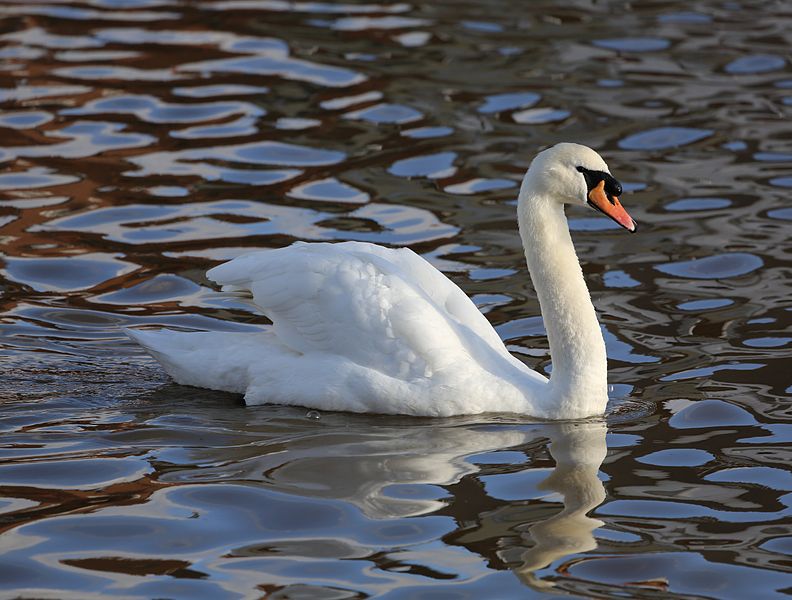
Mute Swan.  Creative Commons - Share Alike
Mute Swan. Creative Commons – Share Alike

The State of New York has announced its intention to exterminate all mute swans in the state.  The mute swans were introduced in the 1880s because at that time people thought them beautiful.  Now some people have apparently changed their minds.  People calling themselves bird-advocates have decided that because mute swans aren’t native to the United States, they must be killed.

According to an op-ed in the New York Times, this bizarre plan to kill this and other non-native species of birds originates with the Audubon Society and other organizations advocating on behalf of birds (apologies for the contradiction). They succeeded in revising the Migratory Bird Act in 2004, to remove protections from all non-native birds in the United States.  This policy was based on an ASSUMPTION that the mere existence of non-native birds is a threat to native birds.  Like all similar projects to exterminate a non-native species, the State of New York provided no evidence that the mute swans are a threat to native birds.  The proposal merely stated that the swans are “aggressive” and that they eat aquatic vegetation.

Since there are only about 2,200 mute swans in the State of New York, one wonders how much of a problem they could be.  They are called “invasive,” as are most non-native species, but their small population suggests this is an exaggeration.

The op-ed in the New York Times was written by Professor Hugh Raffles (New School).  Readers of Million Trees may remember him as the author of another eloquent op-ed about the fallacies of invasion biology using the American “melting pot” as a metaphor.

The comments on his op-ed about the swans are revealing.  There is almost no support for killing the swans.  Here is one of the few supporting comments from a typical nativist, using the usual arguments about how there MIGHT be a problem in the distant future:  “Not-so-weird” says A century is not nearly enough time for wetlands to adapt to the presence of a new species. Thousands or millions of years would be more appropriate. As we wait to see what happens, we could lose any number of native species whose ecosystem services we have yet to fully understand or appreciate. The science does not need to be complete for the safest, most responsible course of action to be removing mute swans from our wetlands in the most humane way possible.”    It’s difficult to imagine our environment thousands or millions years from now, but we doubt that mute swans will be a concern in the unlikely event that there will be humans around to worry about them.

Don’t we have enough problems?

There is no shortage of real, serious problems in our environment.  One wonders where our public servants find the time to dream up problems that don’t exist.  We suggest that they put their over-active imaginations to rest and focus on solving existing problems rather than fabricating them.  And while they’re at it, we would appreciate it if they would quit pointing fingers at animals when diagnosing problems most of which are caused by the actions of humans.

***************************

(1)    Frances Dinkelspiel, “Berkeley to kill squirrels, gophers to protect bay,” Berkeleyside, February 19, 2014

(2)     Stephanie Lee, “Report:  Some levels of chemicals in SF Bay near levels of concern,” San Francisco Chronicle, October 28, 2013