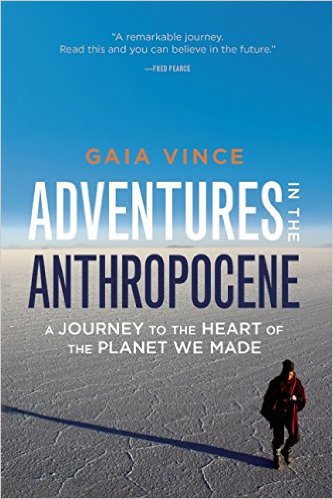
Adventures in the Anthropocene

Adventures in the AnthropoceneAdventures in the Anthropocene:  A Journey to the Heart of the Planet We Made is, indeed, a journey. (1) Its author, Gaia Vince, traveled the globe for two years to witness first-hand the impact of human civilization on the planet.  It is an even-handed account, in which grim realities are described but are balanced with optimistic predictions of the innovations that will ultimately enable us to cope with them.

Ms. Vincent takes us to remote corners of the Earth where undeveloped communities are further impoverished by climate change and related changes in the environment.  Rising temperatures and reduced rainfall have forced many agricultural communities off their ancestral lands and into a more marginal existence.  In Bolivia, for example, former farmers have been displaced into brutal mines where life span is typically shortened by health and safety hazards.  Some Pacific and Indian Ocean islands have been drowned by rising sea levels, forcing mass evacuations onto those that remain.  Their protective reefs are dissolving in the increasingly acidic ocean.

Meanwhile, enterprising people are responding to threats their communities are facing.  In the Indian Himalayas, for example, artificial glaciers are being created to replace those that are melting.  Glaciers were the irrigation system that enabled agriculture in marginal conditions.  Torrential downpours caused by climate change are frozen on dammed, flat plains to create artificial glaciers that perform the same function.  In a remote village in Nepal, a villager returns from his Western education to bring his impoverished community into the 21st century by creating a wi-fi network that provides internet access.  The internet brings education to a village that could not afford teachers.  It is powered by a small hydroelectric generator in a glacial stream.  The stream is expected to disappear when the glacier melts in a decade or two, a problem yet to be solved.

These stories and a multitude of others are both sobering and inspiring, but we will focus on the issues relevant to Million Trees.

Harvesting fog with trees

The coast of Peru is one of the driest places on the earth.  There are places in Peru where no rain has been recorded.  The city of Lima is near the coast and its climate is similar to San Francisco.  There is little rain, but there is a great deal of fog.  Lima, like many cities in undeveloped countries, is surrounded by shanty towns in which poor people build make-shift shacks and live without modern services such as water, power, and sewage systems.

Demonstrating once again, that poverty is sometimes the mother of invention, the people of one of these shanty towns are attempting to grow a forest on their sand dune.  The trees are being irrigated with water harvested by huge fog nets, which are also supplying the community with drinking and washing water.  Within four years, the community expects the trees to be large enough to harvest the fog without the help of the fog nets, “producing a self-sustaining run-off that will replenish ancient wells and provide water for the community for the first time in 500 years.” (1)
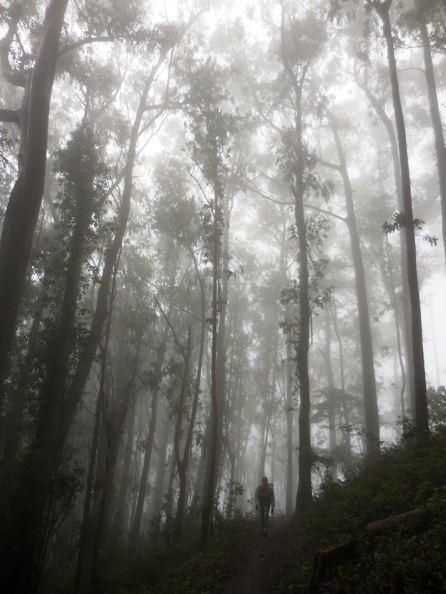
Sutro forest on a typical summer day. Courtesy Save Sutro Forest.

This is a familiar scenario to the readers of Million Trees.  Fog drip in the eucalyptus forests in San Francisco has been measured at over 16 inches per year.  In the driest months of the year, soil moisture in San Francisco’s eucalyptus forest has been measured at over 10%, while soil moisture in grassland was only 2% and 4% in shrubs.  (2)

The value of forests and the dangers of deforestation

Each chapter of Adventures in the Anthropocene is devoted to a different ecosystem.  Each ecosystem is introduced with a description of the importance of that ecosystem and the way in which is it being compromised by the activities of humans in the Anthropocene.  Here are a few excerpts from the chapter about forests, which will be familiar to the readers of Million Trees.

  • “Forests play an important role in local and global climate. The world’s forests absorb 8.8 billion tonnes of carbon dioxide each year through photosynthesis—about one-third of humanity’s greenhouse gas emissions.”
  • “…their canopies provide shelter from the sun and wind, making forests much wetter, cooler environments than surrounding treeless areas. This nurtures streams and rivers, provides habitat for a range of amphibians and other life, helps cool the regional and global atmosphere, and recycles water.”
  • “Although forests help create the climate, they are also exquisitely sensitive to it—and the smaller a forest gets, the less resilient it is. When trees are chopped down, sunlight enters in the gap and dries the soils. Drought upsets the forests’ delicate water cycle—trees start to die and the entire ecosystem can tip from rainforest to grass-dominated savannah.”
  • “Deforestation emits carbon dioxide from soils and decaying plant matter, and is responsible for around 20% of all carbon dioxide emissions.”

One point bears repeating because it is relevant to our local version of deforestation.  In some cases, native plant advocates have succeeded in their demand to destroy 100% of our urban forest because it is predominantly non-native.  In other cases, they have only been able to convince land managers to “thin” the forests, although “thinning” does not seem an accurate description of destruction of 90% of the trees.  In any case, we should all understand that the ultimate likely outcome of the “thinning” strategy is an eventual clear-cut because “when trees are chopped down, sunlight enters in the gap and dries the soils….trees start to die and entire ecosystem can tip” from forest to grassland.  The drying of the soil is only one factor in this prediction.  The remaining trees also will be vulnerable to wind throw.  And the herbicides used to prevent the destroyed trees from resprouting are mobile in the soil and are likely to damage the trees that remain.  Plans to “thin” the forest are either based on ignorance or are a strategy designed to achieve the same goals as a clear-cut with less public opposition.

Are invasive species a problem?

We were gratified that there was barely a mention of “invasive” species in the detailed accounts of the impact of human civilization on the planet.  The conventional wisdom that “invasive” species are one of the primary causes of species extinction is waning and this book reflects that fact. 
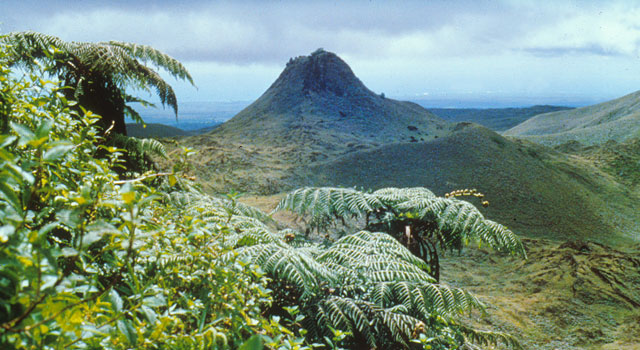
Galapagos Islands
Galapagos Islands

The pros and cons of introduced plant species are debated in the context of the Galapagos Islands, where biodiversity is worshipped because it was instrumental in Darwin’s theory of evolution.  Ms. Vince interviewed the conservationist who has been battling invasive plant species on the Galapagos for 20 years.  He recently decided that attempts to eradicate introduced plants are futile and he now calls them native plants.  His surrender to this reality is controversial, but he is resolute.  He is supported in this decision by scientists who have studied novel ecosystems and find ecological value in them.  The rebuttal to such defense of novel ecosystems is that the globalization of ecosystems is homogenizing the world’s biota.

Ms. Vince concludes that proponents of eradicating non-native plants are losing the battle against the “McDonaldization” of nature:  “From the Galapagos to Hawaii, conservationists are switching tack and starting to embrace the introduced species of Anthropocene ecosystems…” because “In some places, invasives have enhanced the landscapes, reducing erosion, providing handy cash crops or food and habitat for other wildlife.”

We can only hope that our local version of “conservation” in the San Francisco Bay Area will catch up with this new realistic perspective in time to save our urban forests from being needlessly destroyed.

Epilogue

The final chapter of Adventures in the Anthropocene is an epilogue, which takes place in 2100 in London.  The author’s son muses at the age of 87 about which of his mother’s many predictions occurred in the 21st Century.  As we would expect, it was a tumultuous century, one in which drastic changes were made to accommodate the changing climate.

We notice that 22nd Century vegetation of London is tropical:  “Now, carpets of sedges and mosses fill the spaces, interspersed by grasses grazed by capybara, and the planted fig and mango trees, noisy with wild birds.”     We marvel that people claiming to be environmentalists are blissfully unaware of the fact that the native plants they are demanding we restore are not adapted to current climate conditions, let alone the climate foreseen in the near future.

We conclude with the final paragraph of Adventures in the Anthropocene, because it is the most optimistic prediction in this excellent book:

…the world has become a kinder place.  The terrible wars, the famines, the terrorism, extremism and hate, the drownings and deaths of hundreds of thousands of migrants the humanitarian crises…they seem to be over now…The great global mix-up of people that has occurred as a result of climate migration, urbanization, and online networks has produced a new, socially mobile, egalitarian society.  The world’s giant cities force people to live together in close but diverse communities, and it has generated a spirit of cooperation.”

We look forward to a time of greater equality for humanity as well as for the natural world, when the meaningless and unnecessary distinction between native and non-native will be retired from our vocabulary.


(1) Gaia Vince, Adventures in the Anthropocene:  A Journey to the Heart of the Planet We Made, Milkweed Editions, 2014

(2) Kevin M. Clarke, et. al., “The influence of urban park characteristics on ant communities,” Urban Ecosyst, 11:317-334, 2008
Wise words about fire hazards

The Hills Conservation Network has published a new petition addressed to the mayor and city council members of the City of Oakland:

“To Mayor Libby Schaaf and all members of the Oakland City Council:

We request you stand up for the community, the environment, the trees and all the animals who live in the urban forest. Clear-cutting pine, eucalyptus and acacia and then dousing the hills with a decade of TOXIC herbicides is a bad idea. Species neutral fire prevention, backed by good science that focuses on ground fuels is where FEMA money should go”

That petition is available HERE.

This is a very astute comment by a recent signer of the petition:

“I work with a recently retired fire chief and spoke at length with him about this tree cutting plan. He has decades of experience with urban, suburban and forest/wildland fires. He was clear that cutting the trees WILL INCREASE the fire hazard because ALL wildland fires START in dry grass/underbrush, not in trees. Fires spread to trees  ONLY when they are allowed to get out of control. This is not a new concept. That is why the underbrush is cut in forests.

I lived in Montclair during the firestorm. Those of us here then know the real reasons the fire got out of control: A) The original small GRASS fire was not fully put out or watched; B) many hoses could not be hooked up so there was NO water in a number of places; C) they fought it house to house rather than setting – as they did days later- a perimeter to stop it; D) there were NO evacuation orders; E) the streets are narrow and in many places the fire trucks could not get through because of the parked cars.

After the fire there were specific plans to widen the roads, allow parking on only one side of narrow roads, change the hydrant connections, limit the size of homes as well as many other preventative measures. The streets are the same and it appears other lessons from that fire have not been learned.

Ours is a FOREST environment. The solution to forest fires is NOT to clear cut the forest.

I also lived in Lake Tahoe. A forest fire started near our home. The fire department had a full perimeter set up within 15 minutes and fought the fire in from the perimeter to keep if from spreading. It was out in 30 minutes. THEY are TRAINED to fight these types of fires. The Oakland Fire Department was NOT. Hopefully they are now.

I also lived in Reno Nevada where there is only scrub brush and grass. I lived through the worst fires imaginable during those years. I have never seen such fast spreading, out-of-control fires as those created by dry grass and scrub brush. It was MUCH harder to put out, must faster moving and YES those fires burn many homes just as quickly.

The Eucalyptus in our hills keep the ground WET, YEAR ROUND, just feel under them, even now, in this drought because they collect and drip the moisture from the air. They also PREVENT the highly dry grass from growing. They are very dense and not fast burning, Pine are especially resistant to fire. All around our hills are mosses, ferns, molds and damp soils because of the Pine and Eucalyptus forests. This moisture is key to protecting our forest.

If these trees are cut down they cannot be put back when the reality of the error is recognized. If you truly wish to restore the area to its ‘natural’ state then either replant redwoods or perhaps flood with sea water to bring it back to ‘what it was.’

This planned tree cutting will live in history as one of the most devastating destructions of a unique, beautiful and rare environment. This is an area that hundreds of thousands of folks visit for its serenity, wildlife, and forest shade.

It is has also been the cherished home to many of us residents for decades; a home we choose in large part because of the trees.”

Million Trees and the San Francisco Forest Alliance also published a petition to the Sierra Club about their support for deforestation and poisoning of our urban forests in the San Francisco Bay Area.  Here is one of the comments that was posted by a signer of that petition:

Tyehimba Peyton from Lathrop, CA signed this petition on Aug 25, 2015.

“I am a retired Oakland Fire Department Fire Chief and believe that removing the trees does not reduce, but in fact increases fire danger to the Oakland hills.”

It is a fiction that native plants are less flammable than non-native plants.  All the fires raging in Western states this summer are occurring in native vegetation.  They start in dry grass, which ignites easily and they move rapidly through the dry grass.  When they reach shrubs, they generate more heat.  Trees are rarely involved unless it is a wind-driven fire.  Anyone with knowledge of fires in California and without a nativist agenda knows that the planned projects in the East Bay Hills will increase fire hazards, not decrease them.

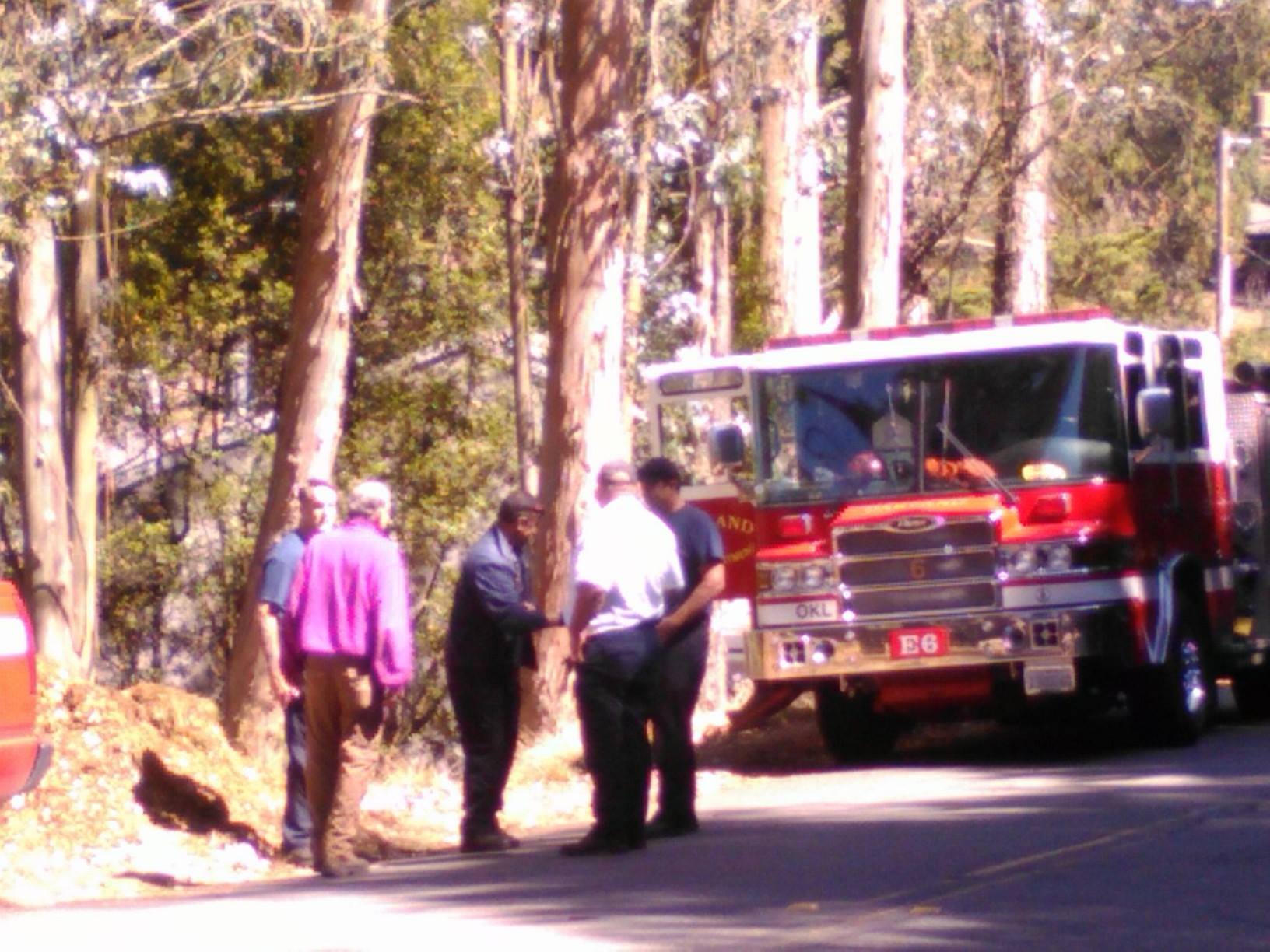
Fire truck called to hose down steaming pile of wood chips, September 3, 2015
Fire truck called to hose down steaming pile of wood chips, September 4, 2015

Save the East Bay Hills recently reported on their Facebook page an incident, which demonstrates that creating huge piles of dead wood chips will also contribute to fire hazards.  The planned projects will chip the hundreds of thousands of trees they intend to destroy and spread them on the ground.  These huge piles of wood chips have the potential for spontaneous combustion as illustrated by this incident:

“Today on Skyline Blvd. in Oakland, we witnessed an incident that demonstrates just how much the plan to cut down 400,000 trees in the East Bay Hills and spread their chipped remains in thick carpets will imperil the welfare of hills residents by vastly increasing the risk of fire.

At noon, just down the street from Redwood Regional Park, Oakland Fire Chief Vegetation manager, Vince Crudele, and several firefighters were called to the scene after a neighbor reported that a large mulch pile from a pine tree that was recently cut down had begun steaming. Firefighters hosed down the mulch pile with water to cool it and explained to us that the steam was the result of heat from the composting debris. 

This, of course, begs the question: if the heat from just one tree composting (on a very cool day) is sufficient to warrant the intervention of the Oakland Fire Department, what is going to happen when thick piles of mulch from many thousands of trees and spanning thousands of acres begin to compost in direct sunlight and on hot days? Or, more to the point, how on earth is the current “fire abatement” plan a fire abatement plan?

In fact, it isn’t. It is, according to former Oakland firefighter and Chief of Fire Prevention for the Oakland Army base, ‘a land transformation disguised as a wildfire hazard mitigation plan.. [that] will endanger firefighters and the general public.’

Please sign our petitions to prevent this dangerous plan from being implemented.

Beyond the War on Invasive Species

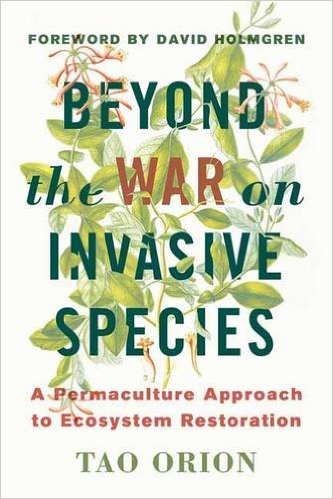
Tao Orion is the author of Beyond the War on Invasive Species:  A Permaculture Approach to Ecosystem Restoration, the latest in the rapidly growing literature about the futile and destructive attempts to eradicate non-native species.  Ms. Orion will give a workshop at a PLACE for Sustainable Living on Thursday, September 17, 2015:

“Rethinking Invasive Species from a Permaculture Perspective”

Thursday, September 17, 2015, 6-8 pm

PLACE for Sustainable Living

1121 64th St, Oakland, CA 94608

Donations $12-$25 requested

Update:  This is the answer PLACE for Sustainable Living gave to a question about wheelchair accessibility:  “It is not wheel chair accessible yet – we have carried wheelchair persons up the steps with their wheelchairs – we can arrange for that. And the yard is filled with chipwood, wheel chairs have rolled over fine, but not sure if everyone in them can push through. Our friend, male, can push through fine.”  Please contact PLACE for Sustainable Living directly if you have specific questions about accessibility.  (addendum dated 9/10/15)

Update #2:  Ms. Orion’s presentation has been cancelled because the venue is not wheelchair accessible.  CUIDO (an organization which represents disabled people) asked that it be moved to a facility with wheelchair accessibility or cancelled.  Such a facility could not be found, so it has been cancelled.  

Update #3:  Some adjustments have been made in plans for Ms. Orion’s presentation which are apparently acceptable to at least some members of the disabled community.  Ms. Orion has therefore decided against cancelling it.  Sorry for the confusion.

Ms. Orion is visiting the Bay Area from the Willamette Valley in Oregon, where she has a small farm in the country.  She has a degree in agroecology and sustainable agriculture from UC Santa Cruz and she has studied at the Columbines School of Botanical Studies in Eugene, Oregon.  She teaches permaculture design at Oregon State University and a non-profit sustainable-living educational organization.  She has also worked as a permaculture designer for ecological restorations.

Beyond the War on Invasive Species

Beyond the War on Invasive SpeciesThe first chapter of Ms. Orion’s book is a breakthrough because it is an explicit indictment of pesticides used by so-called “restoration” projects.  Although previously published books were critical of invasion biology and the ecological industry it spawned, pesticides were barely mentioned in them.  In contrast, it is primarily the use of pesticides in ecological “restorations” that convinced Ms. Orion that the war on invasive species is doing more harm than good.

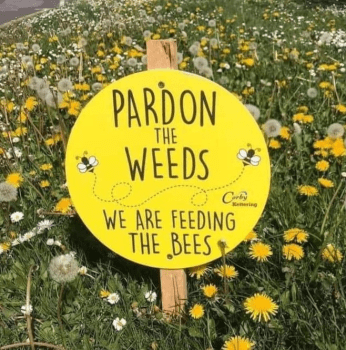
Concern about unwanted plants – AKA weeds – is as old as human engagement in agriculture, that is, thousands of years old. And most of the plant and animal species now considered “invasive” were introduced by humans to serve a variety of purposes, including aesthetics, such as mute swans and multiflora roses.  Some of these introduced plants and animals had unintended consequences such as competing with native plants and animals for available resources.  Concern – even regret – about these introductions has increased greatly in the past 25 years.  Attempts to manage these introductions has escalated from import limitations to fines and penalties and finally to attempts to eradicate plants and animals with pesticides.

The role of the pesticide industry in the escalating war on “invasive” species

Ms. Orion turns to the public record to make the case that the current focus on eradicating introduced species using pesticides was influenced by business interests.  She points out that the federal Invasive Species Advisory Committee is a consortium of academic, professional, and business interests, including at least two people who are employed by manufacturers of pesticides.  They make invasive species management policy recommendations to the National Invasive Species Council (NISC), created by Executive Order in 1999.  The federal government is spending over $1 billion annually on research and control of “invasive” species, including pesticide applications.

National Invasive Species Council

The NISC is modeled after the California Exotic Pest Plant Council, created in 1992.  That Council is now known as the California Invasive Plant Council (Cal-IPC).  Cal-IPC brought together representatives from government agencies and non-profit environmental organizations, as well as manufacturers of pesticides and spray equipment:  “Monsanto has sponsored Cal-IPC since its inception and both DuPont and Dow AgroSciences have also supported the group.”  (1)

The first annual conference of Cal-IPC in 1993 featured an employee of Monsanto, Dr. Nelroy Jackson.  Jackson’s presentation to Cal-IPC stated that “chemical weed control is the optimal method for control and removal of exotic plant species during…most native habitat restoration projects.” 

Jackson’s involvement in escalating attempts to eradicate introduced species is troubling, but is not the only example of such collaboration between the “restoration” industry and the manufacturers of pesticides.  The Weed Science Society, which advocates for “research, education, and awareness of weeds in managed and natural ecosystems,” has employees of Dow Agrosciences, Syngenta, and Dow Chemical on its board of directors.  Those manufacturers of pesticides, as well as Monsanto, Bayer Crop Science, Dupont, and BASF Corp are also donors to the weed society, at the highest levels of donations.

The manufacturers of pesticides also influence the “restoration” industry by investing and participating in the consulting firms that write environmental impact reports for ecological “restoration” projects, such as Tetra Tech (which wrote the draft Environmental Impact Report for San Francisco’s so-called Natural Areas Program).

The manufacturers of pesticides influence public policy regarding ecological “restoration” by making large tax-deductible contributions to many land-grant universities that conduct research on agriculture:  “A 2012 Report from Food and Water Watch found that nearly 25% of funding for agricultural research at public universities comes from private companies.”  (1) This is one of many reasons why there is so little research done on non-chemical approaches to ecological restoration.

As disturbing as this collaboration between the government and the pesticide industry is, the evidence of the relationships between trusted non-profit environmental organizations and corporate interests is even more so.  Nature Conservancy, National Audubon Society, and Ducks Unlimited all have close relationships with the manufacturers of pesticides and receive funding from them.

Ms. Orion then describes the use of pesticides by the “restoration” industry.  She also describes some of the damage pesticides are known to do, such as killing microbes in the soil and binding minerals in the soil.  She describes the persistence and mobility of pesticides in the environment.  She describes the inadequacy of testing and regulation of pesticides in the United States.  These issues are well known to the readers of Million Trees, so we won’t repeat them here, but new readers can click on the blue links to visit posts about those issues.

All introduced species are presumed to be harmful

Ms. Orion’s next chapters are more similar to the books that precede hers.  There are several examples of specific “invasions” that illustrate the point that “invasive” species are usually symptoms of changes in the environment, rather than causes of those changes.  Attempting to eradicate them does not reverse the changes in the environment and often causes more environmental damage.  “Invasive” species are often performing valuable ecological functions that are not understood until they are eradicated.  We have reported many examples of these issues and won’t repeat them here.  However, Ms. Orion’s telling of the history of Asian Carp in the Mississippi River and the Great Lakes was new to us and is well worth a retelling.

Song dynasty painting attributed to Liu Cai (c.1080–1120). Contains various types of fish and other marine animals, such as goldfish, perch, catfish, carp, minnows, bass, and shrimp.

Asian carp has been a mainstay in the diet of the Chinese for several thousand years, according to their historical literature.  Asian carp are well adapted to aquaculture techniques, so they have the potential to replace or supplement other sources of protein.  They were introduced to the Midwest in the early 1800s and they spread throughout the Mississippi River many decades ago.  Although they are prevalent in the Mississippi River, they have not driven any native fish to extinction.  Yet, despite their usefulness and the lack of evidence that they have caused any harm, they suddenly became the latest invasion crisis when it was feared they would soon enter the Great Lakes.  A government fisheries biologist put that fear into perspective:

“We are trying to keep invasive Chinese carps out of the Great Lakes, to protect an invasive (yet purposefully stocked) Pacific salmon fishery, which was stocked as a management tool to control hyper-abundant alewifes, another invasive fish species, because the native piscivore, the Lake Trout, was nearly wiped out by another invasive species, the sea lamprey, because people built the Welland Canal around Niagara Falls to promote intercontinental shipping deep into the Great Lakes basin.” (1)

It makes the head spin to follow the “logic” of this sequence of events, which we paraphrase, “we solved one problem by creating another, then we solved that problem by creating another…ad infinitum.“  This is an ecosystem that has been radically altered by man, including reversing the flow of the Chicago River which connects the Mississippi River to the Great Lakes to solve Chicago’s sewage problems.   The water is warmer, polluted with agricultural runoff, and there is no longer a seasonal, cleansing water surge.  These changes in the environment set the stage for the arrival of Asian Carp in the Great Lakes.  The habitat for native fish has been radically altered such that removal of Asian carp from the river is an irrelevant, inconsequential improvement of habitat needed by native fish.

Despite what would seem overwhelming evidence that Asian carp could be a valuable food source and that being rid of them is unlikely to benefit anyone, here is a brief list of what has been done so far to try to prevent them from entering the Great Lakes:

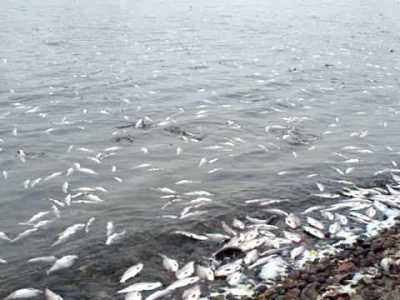
Fish kill using rotenone. http://www.encyclopedia.com/doc/1E1-X-rotenone.html
  • US Army Corps of Engineers constructed a submerged electric fence to shock and kill the fish as they enter the Great Lakes. The fence cost millions of dollars but is largely ineffective.
  • The Illinois Department of Natural Resources dumped 2,200 gallons of rotenone into sanitary and ship canals feeding into the Great Lakes. This poison kills all gilled animals. The result:  “Among the tens of thousands of dead fish, researchers found one Asian carp.” (1) This fiasco cost $3 million.
  • Other researchers have suggested a system of strobe lights and bubble and sound barriers to stop the northward migration of Asian carp.

Permaculture philosophy

Ms. Orion’s closing chapters reflect her training in permaculture design.  She considers the tending of the wild by Native Americans a model for ideal stewardship of the land.  And she advocates for land management strategies that reflect the realities of our changed environment and are sustainable into the future.  We will let her speak for herself:

“Holistic restoration planning requires an honest accounting of what has come to pass as well as a comprehensive view of what we can do about it.  The problems are complex, and the solutions are likely to be more so…Navigating from a paradigm that views invasive species as scourges to one that looks at them as opportunities for deeper ecological and economic engagement will take time and commitment, especially because the old paradigm is so entrenched politically, economically, and academically.  The tide is shifting though, as more and more of us are coming to realize that the herbicide-based eradication approach to restoration is outmoded—a futile attempt to regain an imagined past—and we need to be focusing our time, resources, and energy on adapting to the future.” (1)

Please show your support for Tao Orion and her book by attending her workshop on Thursday, September 17th.


(1) Tao Orion, Beyond the War on Invasive Species:  A Permaculture Approach to Ecosystem Restoration, Chelsea Green Publishing, 2015 

The medical establishment takes a stand on GMOs that enable more herbicide use

The majority of the scientific community has, until recently, considered genetically modified (GM) food safe to eat.  The Pew Research Center conducted a survey in which they compared the opinions of scientists regarding GM food to the opinions of the general public.  The scientists in the survey were members of the American Association of the Advancement of Science, an elite group of scientists.  Eighty-eight percent of the sampled scientists considered GM food safe to eat, compared to only 37% of the general public.  This survey was published in January 2015, reflecting recent attitudes toward GM food.

That opinion has changed, at least among some medical professionals, according to an article recently published by the New England Journal of Medicine (NEJM). (1)  NEJM is America’s premier medical journal, with the highest standards of journalistic ethics for the studies they choose to publish.  The article in NEJM was co-authored by a professor of preventive medicine and a professor of crop and soil science.  They conclude that GMOs have enabled huge increases in the use of herbicides by agriculture, posing hazards to public health.  The genetic modification itself is not to blame.  Rather it is the increased use of herbicides that are a matter of concern.

The authors trace the sequence of events that changed their opinion of GM foods from benign to a public health hazard.

What is “genetic modification?”

Genetic modification of plants and animals occurs naturally and has as long as life has existed on Earth.  When two closely related species interbreed, the result is a hybrid, which sometimes persists in nature and often ultimately results in a new species.  For example, there are hundreds of species, sub-species, and varieties of Manzanita in California because it is a species that freely hybridizes.  Sycamore trees are another plant that hybridizes freely.  Historically, such hybridizing events were not considered harmful.

Genetic modification is not fundamentally different from selective breeding in which humans have been engaged since the advent of agriculture and domestication of animals thousands of years ago.  Individual plants and animals with characteristics considered valuable were bred by humans to enhance the usefulness of plants or animals to humans.  Ancestor plants of corn were barely edible, but corn has become one of our staple foods as a result of breeding.

DNA analysis greatly enhanced the ability of humans to genetically modify plants and animals to make them more useful to humans.  Now scientists can import DNA into plants and animals from virtually anywhere in the biosphere.  Some of those modifications have been very beneficial, such as increasing crop yields, or enabling plants to survive in warmer climates, etc.  In 2000 and 2004, the American Academy of Sciences evaluated GM foods and concluded that they did not pose any unique hazards of human health.

Genetic modification becomes the enabler of herbicides

So what has changed that makes the medical establishment decide that GM foods are a matter of concern?  Beginning in the 1990s genetically modified crop seeds were developed that enable the crop to tolerate unlimited amounts of herbicide, particularly glyphosate (AKA Roundup).  Ninety percent of corn and soybeans grown in the United States is grown from these seeds.  Consequently, glyphosate use in the United States has increased from .4 million kilograms in 1974 to 113 million kilograms in 2014.

Rare ears of organic corn.  Courtesy A Really Small Farm
Rare ears of organic corn. Courtesy A Really Small Farm

Unfortunately, weeds are smarter than we are.  The more herbicide we use, the smarter the weeds get.  The evolutionary pressure of the chemical onslaught on the weeds has produced glyphosate-resistant weeds on nearly 100 million acres in 36 states.  There is always enough genetic variation in any large population of plants and insects to ensure that a few individuals will survive whatever we spray on them.  Those survivors will breed to produce the next generation, which ensures that the next generation will be more likely to survive the next onslaught of chemicals.  Over time, the population of weeds and insects capable of surviving our chemicals gets bigger and stronger.

One bad decision begets another

You might think we would abandon this chemical warfare in favor of a less poisonous, more effective long-term strategy.  You would be wrong because you’re not thinking like a corporation which manufacturers chemicals and the seeds that ensure their use.  Of course, their strategy is to make the chemicals stronger and stronger.  That strategy might make sense if we weren’t living on the same planet with all that poison or eating the food that has been sprayed with them.

The medical profession draws the line

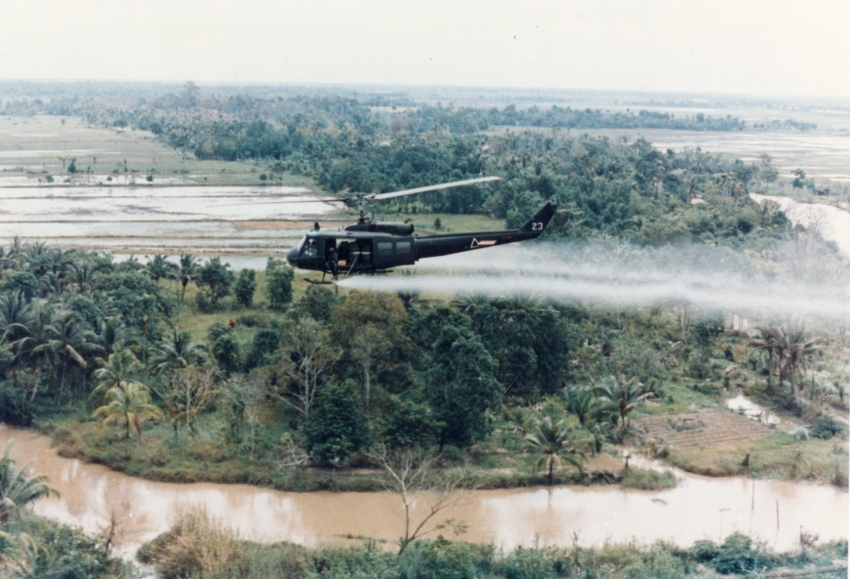
In response to herbicide-resistant weeds, the manufacturers of pesticides have developed a new herbicide which combines glyphosate and 2,4D into a product called “Enlist Duo.”  You may recognize 2,4D as one of the ingredients in Agent Orange, used during the Vietnam War to defoliate the battle field and incidentally to poison our troops and generations of Vietnamese.  Enlist Duo was approved by the Environmental Protection Agency in 2014.  In 2015, the World Health Organization (WHO) classified glyphosate as a “probable human carcinogen” and 2,4D as a “possible human carcinogen.” 

US Army helicopter spraying Agent Orange over Vietnam. Public Domain

This escalation of chemical warfare on America’s food supply has sent some members of the medical community over the edge:

“These developments suggest that GM foods and the herbicides applied to them may pose hazards to human health that were not examined in previous assessments.  We believe that the time has therefore come to thoroughly reconsider all aspects of the safety of plant biotechnology.  The National Academy of Sciences has convened a new committee to reassess the social, economic, environmental, and human health effects of GM crops.  This development is welcome, but the committee’s report is not expected until at least 2016.” (1)

In view of these concerns, the authors of the article in NEJM advise the EPA to withdraw its approval of Enlist Duo, a decision which “was made in haste…based on poorly designed and outdated studies and on an incomplete assessment of human exposure and environmental effects.” The authors also suggest that we “revisit the United States’ reluctance to label GM foods.”  They suggest that it is time to join 64 other countries around the world that require labeling of GM foods.


(1) Philip J. Landrigan, M.D., and Charles Benbrook, Ph.D., “GMOs, Herbicides, and Public Health,” New England Journal of Medicine, August 20, 2015.