Cal Fire grant has created fire hazards in the East Bay Hills

Hoping to get the public’s attention, I will begin this story with its ending.  This is the concluding paragraph of my formal complaint to Cal Fire about its grant to UC Berkeley for a project that has increased fire hazards in the East Bay Hills, caused other significant environmental damage, and created conditions for further damage:

“In conclusion, the grant application for this project makes a commitment to reducing greenhouse gas emissions that is based on the assumption that a biofuels plant will generate electricity from the wood debris.  Such a plant has not been built and UC Berkeley apparently does not intend to build such a plant.  Other claims made in the grant application about carbon storage are based on inaccurate claims about carbon storage.  Grant guidelines state, “Failure to meet the agreed upon terms of achieving required GHG reduction may result in project termination and recovery of funds.”  In other words, Cal Fire should terminate this project and recover any funds that have been remitted to UC Berkeley.  The project is a misuse of grant funds because it will increase fire hazards and increase greenhouse gas emissions.  Without imputing motives, on the face of it, the grant application looks fraudulent.”

I published an article about this project last week that I invite you to revisit if you need a reminder of a project that has clear cut all non-native trees 100 feet on the north side of Claremont Ave. in Berkeley, leaving equally flammable native trees in place on the south side.  Huge piles of wood chips and logs are stacked along the road that were supposed to have been disposed of by generating electricity in a biofuels plant.  No such biofuels plant exists and there are no plans to build it.  The disposition of these potential bonfires is at the moment unknown.

The source of the funding for Cal Fire grants is California’s carbon cap-and-trade law that is intended to reduce greenhouse gas emissions, primarily carbon emissions.  Therefore, the grant application required the applicant to prove that the project would reduce greenhouse gas emissions to qualify for the grant.  The grant application submitted by UC Berkeley claimed to meet this requirement by making a commitment to use the grant to build a biofuels plant. The biofuels plant would have generated electricity by burning wood fuel instead of burning fossil fuels. In fact, the project has significantly increased greenhouse gas emissions by destroying large, mature, healthy trees.  The carbon the trees have stored throughout their lifetimes is now being released into the atmosphere as the wood debris decays along the roadside.

UC Berkeley made other inaccurate claims about carbon storage in order to qualify for the grant:

  • Statements made in the grant application about carbon loss and storage by planting oaks are not accurate:
    1. Coast Live Oaks (CLO) do not live for “hundreds of years,” as erroneously claimed by the grant application. USDA plant data base says CLOs live about 250 years in the wild.  However, that estimate of longevity does not take into account that Sudden Oak Death has killed over 50 million oaks (CLOs and tan oaks) in California in the past 15 years.
    2. Blue Gum eucalyptus lives in its native range 200-400 years. It has lived in California for 160 years, where it has fewer predators than in its native range.
    3. The grant application states that carbon storage will be increased by “changing species composition to hardwoods.” In fact, eucalyptus is also a hardwood tree, making this an inaccurate, discriminatory distinction.
    4. Above-ground carbon storage in trees is largely a function of biomass of the tree. Therefore, larger trees store more carbon.  It follows that carbon storage is not increased by destroying large, mature, healthy trees and replacing them with saplings of smaller trees, such as oaks.  The carbon lost by destroying mature trees is never recovered by their smaller replacements with shorter lifespans.
  • Plans to plant oaks where non-native trees have been clear cut willfully ignore the realities of the accelerating epidemic of Sudden Oak Death (SOD) in the East Bay Hills. According to the press release for the 2020 SOD Blitz, “…overall the rate of SOD infections increased in the wildland urban interface, in spite of reduced rainfall. This is the first time in 13 years of SOD Blitz survey that infection rates increase in spite of reduced rainfall, suggesting SOD is becoming endemic at least on the Central coast of California.”  As Cal Fire knows, dead trees are a greater fire hazard than living trees.
  • The grant budget commits the grantee (UCB) to pay “volunteers” to plant oaks.  That budget line item is described in the budget narrative as being funded by volunteer, non-profit organizations over which UC Berkeley has no authority. A “volunteer” is, by definition, not required to perform the assigned task.  It follows, that calculations regarding carbon storage resulting from this project are not ensured by the project because the planting of oak trees is not ensured by the project.  The “cost” of this line item in the budget seems more theoretical than real.
  • Planting young trees will require frequent irrigation that is not funded by the grant. Given continuing and worsening drought, planting young trees without making a commitment to irrigating them is throwing good money after bad.  Rainfall to date is 26% of the previous year.  Rainfall the previous year was less than half the year before that.  Oaks are not more drought tolerant than eucalyptus that are native to an equally dry climate.

The grant application also displays ignorance of trees and the functions they perform in the environment. 

  • The trees that remain on the north side of the road are now more vulnerable to windthrow because they have lost protection from their neighbors on their windward side. Trees develop their defenses against the wind while they grow in response to the wind to which they are exposed.  In California, most wildfire events are associated with high winds, making windthrow and wildfire probable simultaneous events.
  • The run off from the eroded hillside will undoubtedly pollute the creek on the south side of the road with sediment and road run off.
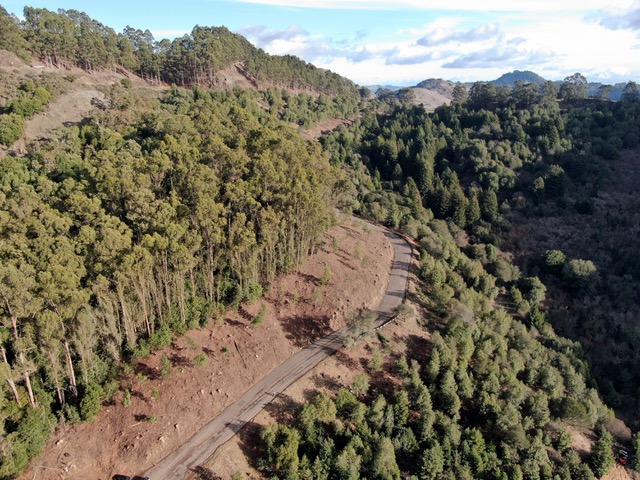
Claremont Ave. west of Grizzly Peak Blvd, December 2020. Photo by Doug Prose.

The project is not a suitable evacuation route
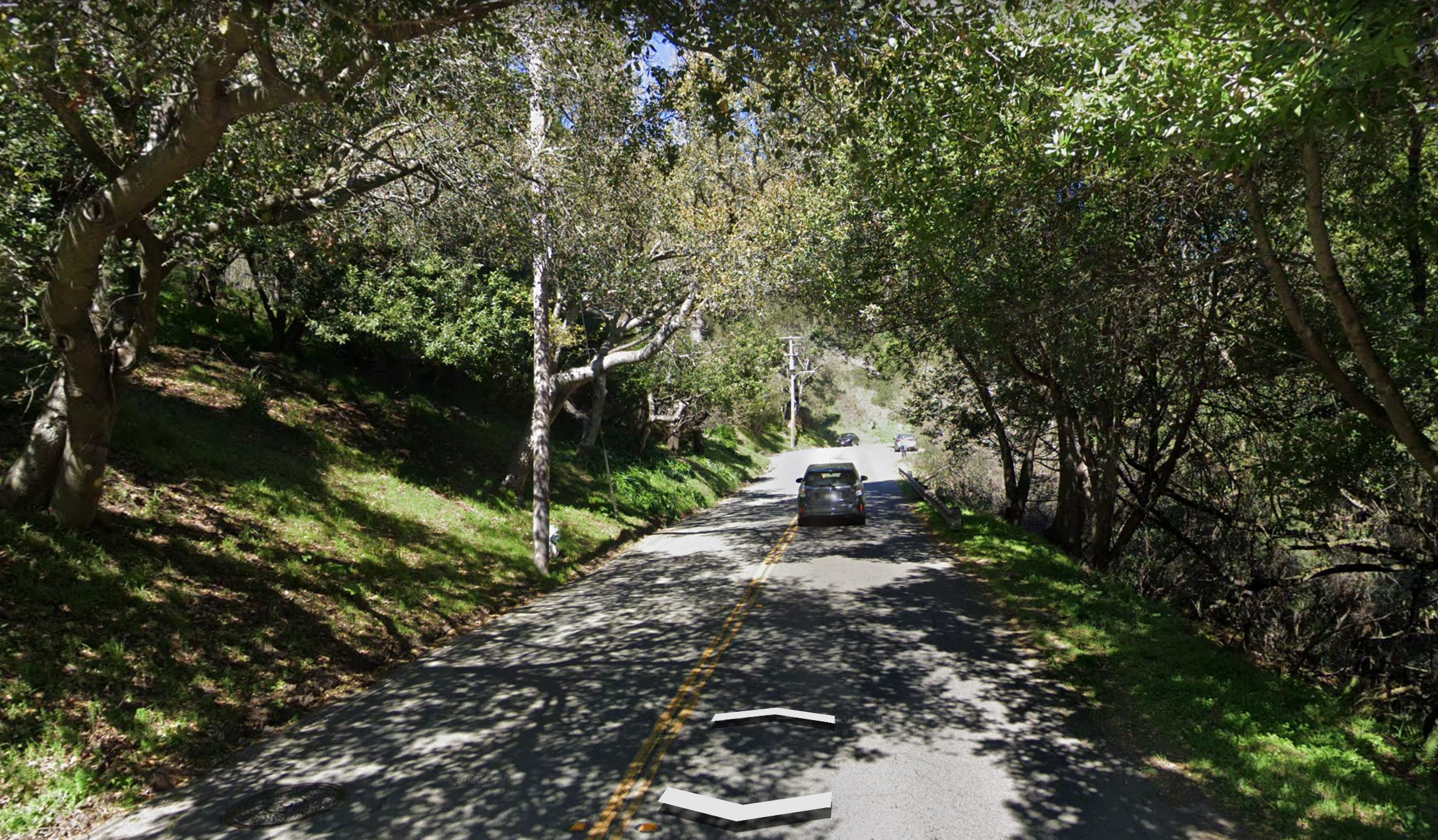
Claremont Ave, west of the Cal Fire/UCB project is a residential neighborhood, heavily wooded with native trees that overhang the road.   Source Google Earth.

The justification for this project was to provide an evacuation route. It is a premise that makes little sense. There are no residences east of Grizzly Peak Blvd, where the project begins. The residential community on Claremont Ave. is downhill, west of the project. If the residential community needs to evacuate, it won’t be fleeing up hill. Residents will need to flee downhill, through a tunnel of native trees. The roadside through the residential community is heavily wooded in native oaks, bays, and buckeyes. High voltage power lines overhang the road.  Nothing has been done to clear that road for possible evacuation.  This residential community would benefit from the creation of a safe evacuation route, not the pointless project that was done.
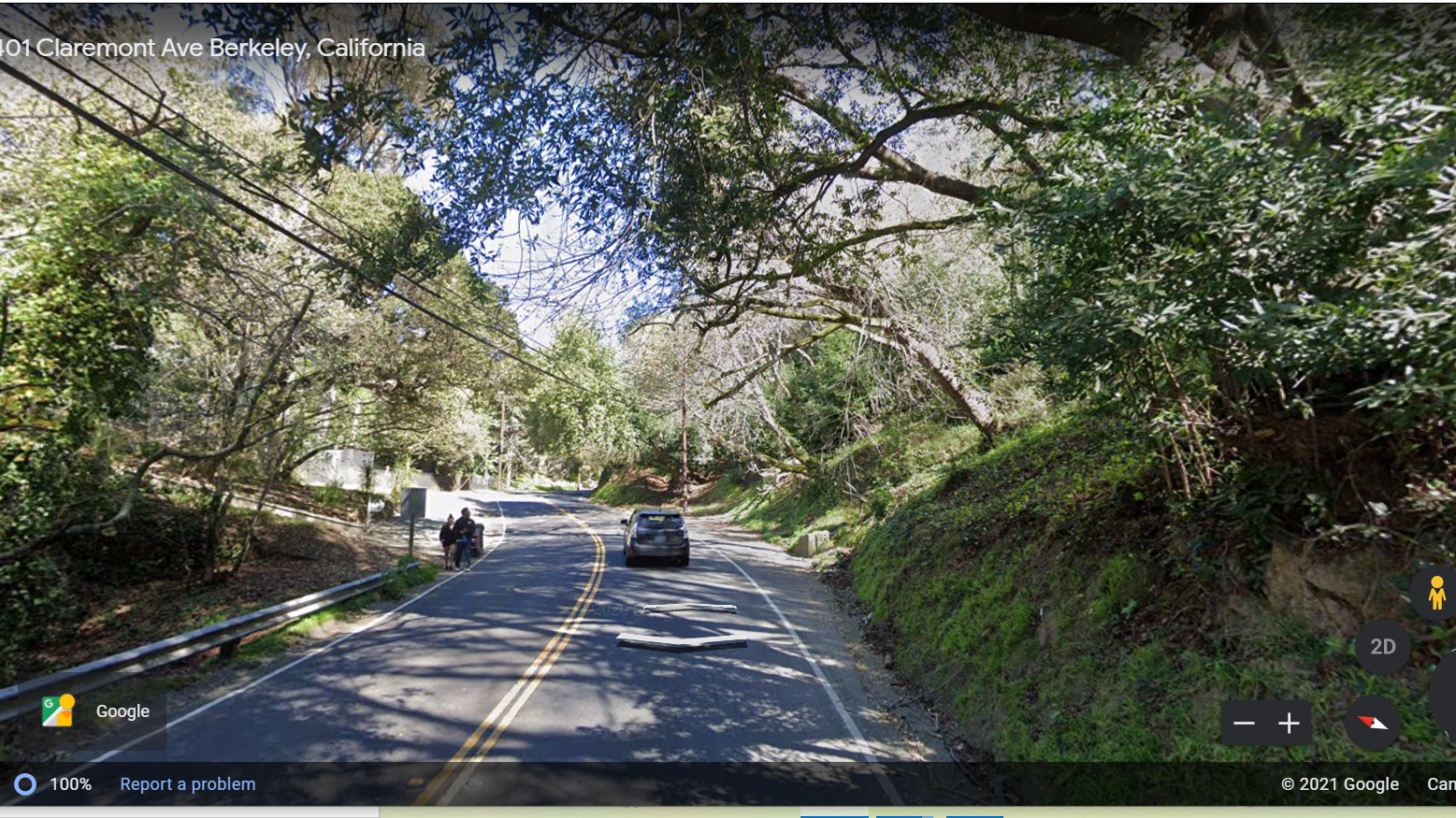
Claremont Ave, west of Cal Fire/UCB project is heavily wooded with native trees that overhang the road.  There are also high-voltage power lines hanging over the road.  Source Google Earth.

What’s next?

I received the following promising reply from Cal Fire by the end of the day I sent the complaint:  We are in receipt of your email dated 1/14/2021 in regards to a Fire Prevention Grant awarded to the University of California Berkeley (UCB).  We will promptly begin investigating your concerns and allegations of UCB non-compliance with the grant’s guidelines and contractual agreement.  I will respond to you within 30 days with the results of our findings.  CAL FIRE takes the grant assistance programs very seriously so we will investigate thoroughly.”

What’s done cannot be undone.  The best we can hope for is that the strategy used to reduce fuel loads on Claremont Ave. won’t be used elsewhere.  My primary goal is to prevent this destructive approach from being used on 300 miles of roadside in Oakland, as the supporters of the UCB project on less than one mile on Claremont Ave are demanding.

Governor Newsom has proposed that the State budget should invest an additional $1 billion in reducing fire hazards in California.  The proposal includes $512 million for landscape-scale vegetation projects.  Cal Fire will probably administer those grants.  It is critically important that Cal Fire improve its evaluation of grant applications to avoid funding disastrous projects such as the project done by UC Berkeley on Claremont Ave.  There are many worthwhile projects that deserve funding, such as providing the residential community on Claremont Ave a safe evacuation route.  
Final chapter for Oakland’s Vegetation Management Plan? Maybe not.

The draft Environmental Impact Report (DEIR) for Oakland’s Vegetation Plan (OVMP) has been published.  When the DEIR is approved and funding is identified, implementation will finally begin after a process that began four years ago.  The plan and its EIR are available HERE.  The deadline for public comments on the DEIR is January 22, 2021.  The email address for submitting public comments is DEIR-comments@oaklandvegmanagement.org

The primary purpose of the plan is to reduce fire hazards in High Fire Hazard Zones in Oakland by reducing fuel loads on about 2,000 acres of public land and 300 miles of roadside.  Although there were many issues, the primary battle lines were drawn by these issues at the beginning of the process and they remain:

  • On one side, some people were concerned by the scale of tree removals that were considered and the herbicides that would be needed to control the resprouts of the trees after removal. If the plan as proposed is approved, herbicides will be permitted in places where they were prohibited in the past.
  • On the other side, some survivors of the 1991 Oakland wildfire and native plant advocates who are their allies, want all non-native trees to be destroyed and replaced with native plants. They are not satisfied with plans to thin trees around structures and roadsides.

The consequences of destroying Oakland’s urban forest

The survivors of the 1991 fire in Oakland asked that the OVMP be radically revised at a public hearing about the OVMP DEIR on December 16, 2020.  They called their version of a vegetation management plan Alternative 5.  It is an alternative that does not exist in the DEIR.  These are the major elements of what they asked for:

  • They ask that all non-native trees be destroyed everywhere in the treatment areas. They ask that the trees be clear-cut rather than thinned, as proposed by the plan. They ask that tree removals not be confined to defensible space around structures, as proposed by the plan.
  • They ask that removed trees and non-native vegetation be replaced with native trees and vegetation.
  • They ask that roadside clearance of vegetation occur 100 feet from both sides of the road rather than 30 feet as the OVMP proposes.
  • They expressed concern about dead trees. They are apparently unaware of the epidemic of Sudden Oak Death that has killed 50 million native oaks in the past 15 years and is spreading rapidly.

The OVMP DEIR is responsive to some of these concerns. 

  • The OVMP DEIR makes a commitment to seeding areas that are steep and barren after vegetation removal with seeds of native plants. The purpose of this seeding is to minimize the potential for erosion.
  • The OVMP DEIR makes a commitment to replant trees removed in riparian areas as required by Oakland’s ordinance to protect creeks.
  • The OVMP makes a commitment to remove all dead trees in treatment areas. Sudden Oak Death (SOD) is the probable cause of the dead trees described at the public hearing.  SOD has been found in many treatment areas in the plan:  Garber Park, Shepherds Canyon, Dimond Canyon Park, Joaquin Miller Park, Leona Heights Park, Knowland Park, and Sheffield Village. (OVMP DEIR 3.4-87)

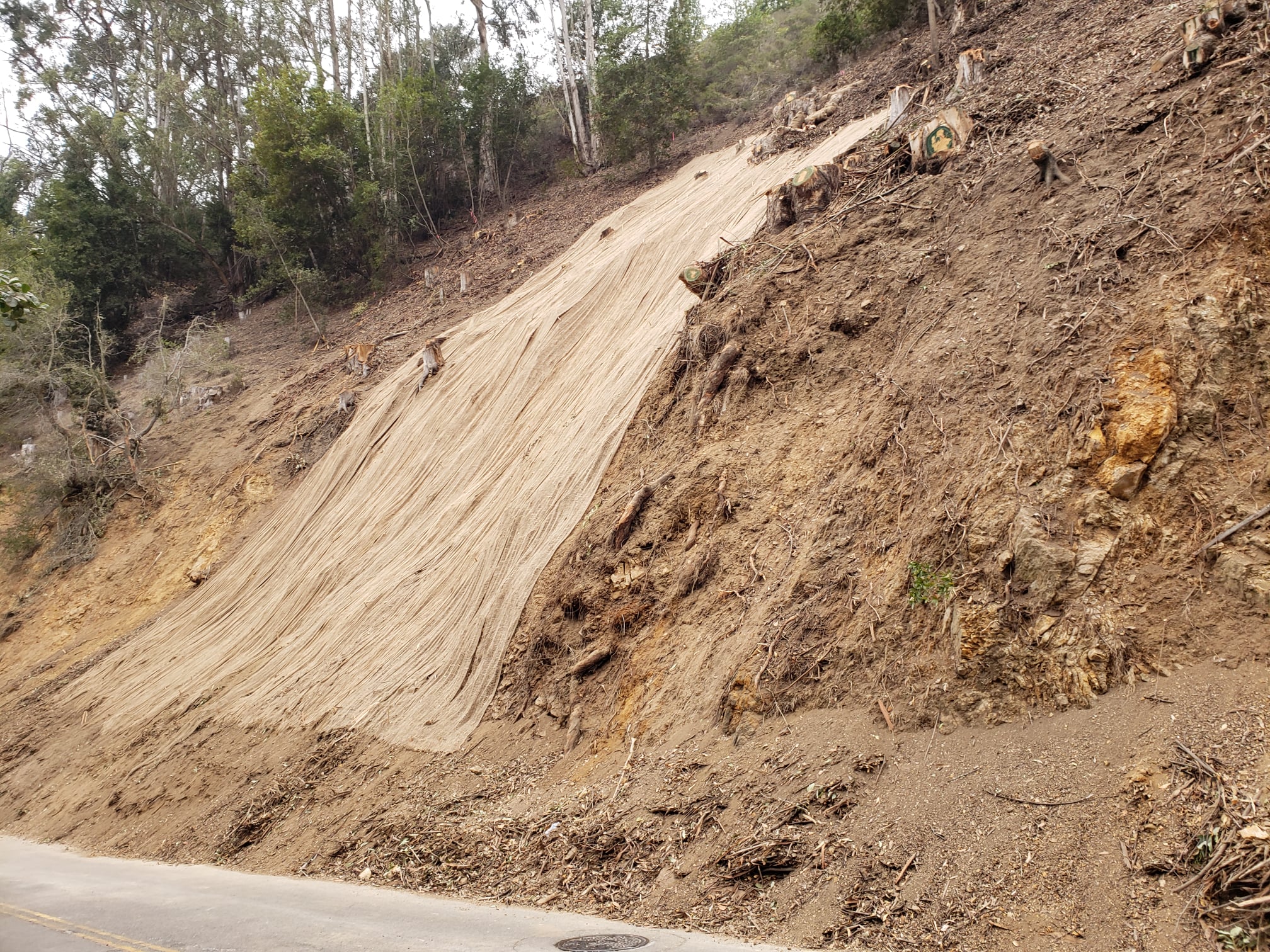
Increasing roadside clearance to 100 feet would increase the acreage of roadside tree removals and vegetation required by the OVMP by 233%.  The consequences of such extensive removals can be seen on Claremont Ave, west of Grizzly Peak.  These removals were done by UC Berkeley.  Catastrophic erosion after intense rainfall looks inevitable.

Claremont Ave, West of Grizzly Peak Blvd. November 2020

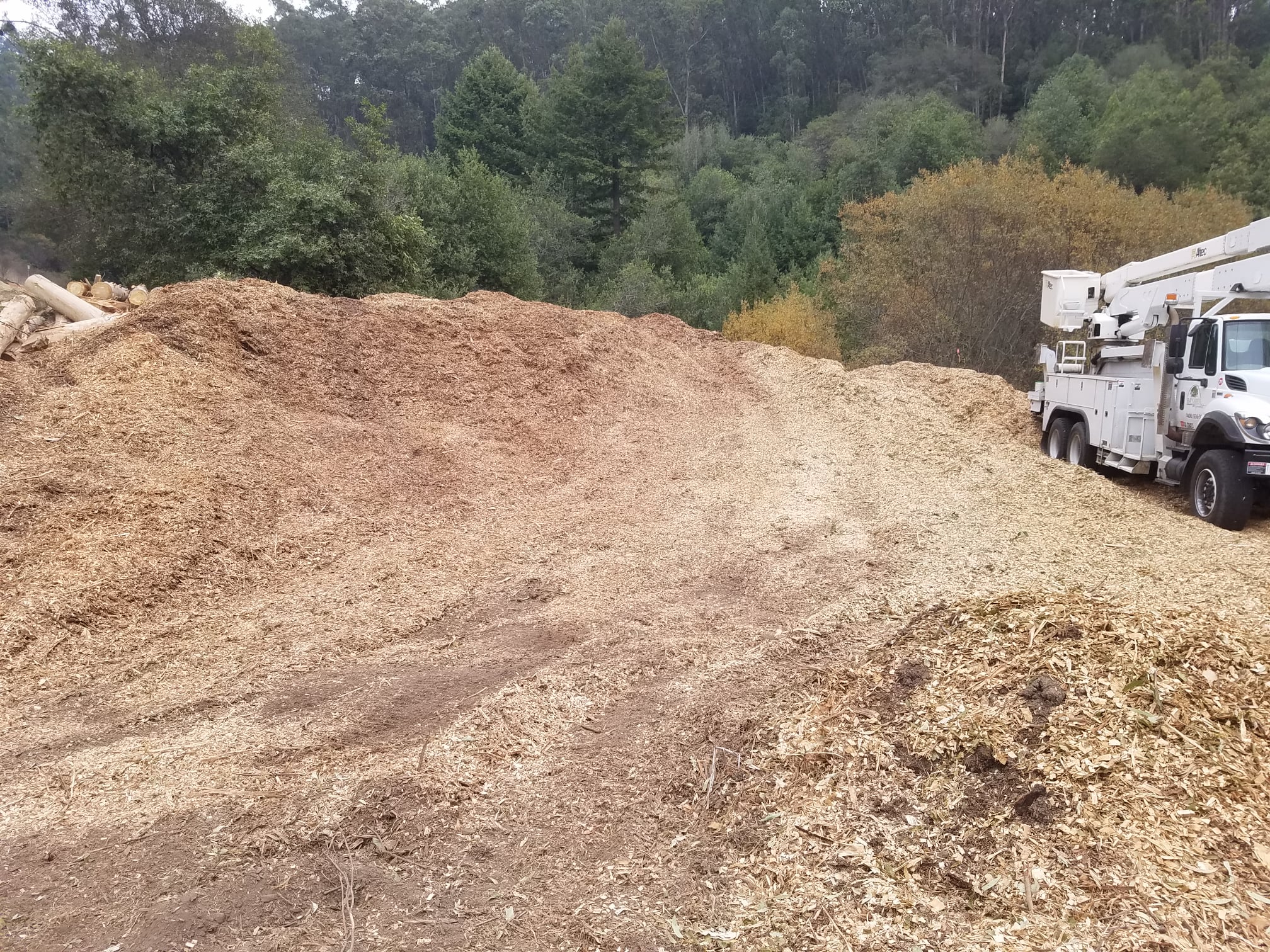
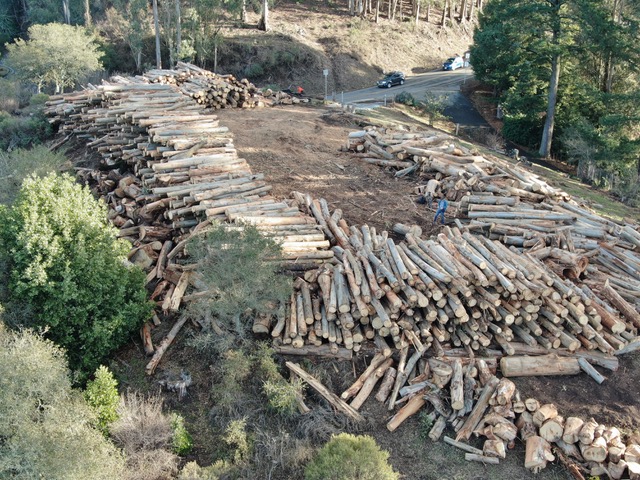
Huge piles of wood chips and logs must be disposed of.  Such piles of wood chips are known fire hazards until they are spread or disposed of.  The wood chip piles resulting from roadside clearance on Claremont Ave cannot be spread because the quantity exceeds available land.  UC Berkeley has made a commitment to build a biofuels plant to burn the wood chips to generate electricity for campus facilities.  The OVMP does not make a commitment to build a biofuels plant to properly dispose of wood chips and it mandates a limit of 6 inches of wood chip mulch on the ground. Please look at these pictures of some of the wood debris created by clearcutting less than one mile of roadside on Claremont Ave.  Then consider that the OVMP proposes to treat 300 miles of roadside.  Multiply these piles of wood chips and logs by 300 to consider the consequences of “Alternative 5.”

Update:  Since publishing this article, I have learned that UC Berkeley has NOT built a biofuels plant to dispose of the wood debris to meet Cal Fire grant requirements for reducing greenhouse gas emissions.  Nor does UC Berkeley intend to build a biofuels plant.  The disposition of the wood debris from this project has not yet been determined.  This is the final paragraph of my formal complaint to Cal Fire about this project:  “In conclusion, the grant application for this project makes a commitment to reducing greenhouse gas emissions that is based on the assumption that a biofuels plant will generate electricity from the wood debris.  Such a plant has not been built and UC Berkeley apparently does not intend to build such a plant.  Other claims made in the grant application about carbon storage are based on inaccurate claims about carbon storage.  Grant guidelines state, “Failure to meet the agreed upon terms of achieving required GHG reduction may result in project termination and recovery of funds.”  In other words, Cal Fire should terminate this project and recover any funds that have been remitted to UC Berkeley.  The project is a misuse of grant funds because it will increase fire hazards and increase greenhouse gas emissions.  Without imputing motives, on the face of it, the grant application looks fraudulent.” The full story of how this project has violated grant guidelines as well as the description of the project itself in the grant application is told HERE.  January 18, 2021 

One of many piles of wood chips, Claremont Ave, November 2020
One of many piles of logs, Claremont Ave., December 2020. Photo by Doug Prose, courtesy Hills Conservation Network.

Oakland does not want a biofuels plant because it will significantly increase pollution.  Sierra Club Magazine reports that “The manufacturing of biomass-energy wood pellets requires drying the logged material in a wood-fired process, then pressing the dried wood into pellets—and every step emits significant amounts of air pollution. According to the Environmental Integrity Project study, the emissions from the facilities include fine particulate matter, nitrogen oxides, carbon monoxide, and volatile organic compounds. Wood-pellet manufacturing emits a form of soot and dust called PM 2.5, which can pass deep into the lungs and depress lung function, worsen asthma, and cause heart attacks. Volatile organic compounds, when exposed to sunlight, transform into ozone, which is especially dangerous to children and the elderly.”

This aerial view of the clear cut on Claremont Ave makes it clear that this is a native plant “restoration,” not fire hazard mitigation.  The north side of the road has been clear cut 100 feet from the road where the trees were non-native.  There has been no comparable clearance on the south side of the road where the trees are native.  The native trees are predominantly native bay laurels that are known to be highly flammable.  The leaves of bay laurel contain more oil than the leaves of eucalyptus and the branches grow to the ground, providing a fire ladder to the tree canopy.  If fire hazard mitigation were the goal of this project, both sides of the road would have been treated the same.

This picture of the Claremont Ave project was taken from the west December 2020.  Photo by Doug Prose, courtesy Hills Conservation Network.

The cost of Alternative 5 would be prohibitive. The plan would need to be rewritten and a new EIR prepared.  The first plan took four years to prepare; the second will take nearly as long after new funding is secured for it. Funding for implementing the OVMP has not been identified.  The City of Oakland is currently running an annual budget deficit of $62 million.  Budget cuts are planned to address the deficit, including 10 mandatory furlough days for police and firemen.

One of many reasons why I love my home, Oakland, is its deep commitment to equity.  If Oakland had the resources to fund restoration of approximately 2,000 acres of public land and 300 miles of roadside to native vegetation, it is unlikely to spend those resources in the wealthiest communities in Oakland on a project that would bring little benefit for the poorest communities in Oakland.  Oakland’s Equitable Climate Action Plan (ECAP) is a case in point.  Its forestry section is devoted to planting trees in the poorest neighborhoods that suffer the most air pollution and have the fewest trees, as it should be.

I am sympathetic to the survivors of the 1991 Oakland fire as well as to those who have been injured by chemicals to which they were exposed.  Fire survivors have had a traumatic experience that has irrevocably altered their perception about the causes of wildfire.  There are also other survivors of the 1991 fire who watched native redwoods and oaks burn.  Their understanding of wildfire is therefore different, but it is more consistent with the wildfires of the past 5 years that have occurred in predominantly native vegetation.  Native vegetation in California is fire adapted and fire dependent.  Non-native vegetation is not inherently more flammable than native vegetation.

Public Policy requires compromise

Thinning of non-native forests and herbicide treatment to prevent resprouting is not without risks.  We will lose some of our protection from wind.  The trees that remain will be more vulnerable to windthrow.  There may be some erosion in steep areas.  The herbicide that is usually used to prevent resprouts (triclopyr) kills tree roots by traveling from the freshly cut stump through the roots of the tree.  The roots of trees are intertwined with the roots of their neighbors that are often damaged by the herbicide and sometimes killed.  The herbicide kills mycorrhizal fungi that live on the roots as well as microbes in the soil.  Their loss reduces the health of the soil, handicapping the survival of remaining and new plants. This damage to soil is one of many reasons why native plant “restorations” are frequently unsuccessful after scorched earth eradications. Both triclopyr and imazapyr are on the list (California Code of Regulations 6800) of pesticides that have “the potential to contaminate groundwater” because they are very mobile and persistent in the soil.

I accept these risks in the interests of reducing fire hazards.  I have asked for a few tweaks to the plan, including continuing to prohibit foliar spraying of herbicides in public parks and open spaces.  These are the compromises that must be made to make public policy.  We cannot paralyze ourselves by letting the perfect be the enemy of the good.  Oakland needs a Vegetation Management Plan that is effective, affordable, and safer than other alternatives.  That’s what the Oakland Vegetation Management Plan is. 

Doug Tallamy’s Blame Game

The fact that insect populations are declining in many places around the world is well known, but the reasons for the decline are not well known.  Where there is uncertainty, there is speculation and where there is speculation, there is debate.

Doug Tallamy recently stepped into that debate by publishing a review article about insects and their use of plants.  The article is a mind-numbing list of studies that find both positive and negative relationships between insects and non-native plants.

Tallamy contends those studies add up to support for his belief that non-native plants are bad for insects and native plants are good for insects.  He suggests that declining populations of native plants should be considered one of the reasons for declining populations of insects, but then he goes one step further. Tallamy suggests that non-native plants are responsible for declining populations of native plants.  It follows that Tallamy blames non-native plants for the disappearance of insects.

My interpretation of the studies in Tallamy’s review is different.  The studies tell me that there is too much variation in insect-plant relationships to generalize about the relative value of native vs. non-native plants to insects.  A more accurate conclusion would be that sometimes insects make a successful transition from a native to a non-native plant—especially in the absence of a native in the same lineage—and sometimes they don’t…or at least they haven’t yet.

Anise swallowtail butterfly is one of many insects that have made a successful transition from a disappearing native plant to an introduced non-native plant in the same lineage. Prior to that transition, swallowtails were able to lay eggs only once a year, when the native was available. The introduced non-native is available year around, which enables the swallowtail to lay its eggs year around. Courtesy urbanwildlife.org

Since evolution is a process and not a historical event, these insect/plant relationships will continue to change.  There are many studies that document such transitions and Tallamy cites some of them in his review.  Tallamy assumes insects will be forever handicapped, if not killed, by whatever deficiencies there are in the non-native substitute.  I assume the insect is more likely to adapt and eventually evolve to cope with those deficiencies.  Both our assumptions are just guesses.  Tallamy considers nature immutable, while I consider it dynamic.  Where Tallamy sees doom and gloom, I see opportunity.

Professor Art Shapiro’s (Distinguished Professor of Evolution and Ecology, UC Davis) assessment of Tallamy’s review article is less equivocal than mine.  Keep in mind when reading his assessment that he is far more knowledgeable than I am:

  1. “There is little evidence known to me of alien plants (‘invasives’) competitively displacing natives in ‘communities’ except in highly disturbed environments, except in the case of ‘ecological engineer’ species like Japanese honeysuckle, Himalayan Blackberry, climbing fern in Florida, Purple Loosestrife, etc. — things that drastically alter the ground rules for structuring the vegetation by smothering or prompting fire.

  2. “The use of natives and non-natives by insects has a long and venerable history, going back to T.R.E. Southwood and his comparisons of insect faunas on British trees to Godwin’s history of the British flora, Azevedo’s student study at SF State, etc. — demonstrating overall that enemies accumulate in time on naturalized aliens, but it may be a very slow process if there is no phylogenetic or chemical bridge to their colonization. Experiments using haphazardly-selected species to examine acceptability are basically silly, and very easy to ‘stack’ if one knows one’s phytochemistry.

  3. “As I have repeatedly pointed out, ‘weed’ eradication would lead rapidly to the extirpation of nearly all of the non-tree-feeding urban and suburban butterfly fauna in lowland California (and many other places).”

Why are insect populations declining?

A 2017 study revealed a shocking 76 percent decline in the biomass of flying insects over 27 years in protected areas in Germany.  The German study does not offer specific explanations for the significant decline in insects, but it speculates about probable cause: Agricultural intensification (e.g. pesticide usage, year-round tillage, increased use of fertilizers and frequency of agronomic measures) that we could not incorporate in our analyses, may form a plausible cause. The reserves in which the traps were placed are of limited size in this typical fragmented West-European landscape, and almost all locations (94%) are enclosed by agricultural fields. Part of the explanation could therefore be that the protected areas (serving as insect sources) are affected and drained by the agricultural fields in the broader surroundings (serving as sinks or even as ecological traps). Increased agricultural intensification may have aggravated this reduction in insect abundance in the protected areas over the last few decades.”  Presumably “protected areas” in Germany are not landscaped with non-native plants, rendering the use of this study to corroborate Tallamy’s hypothesis irrelevant.

A comprehensive review of 73 reports of declining insect populations around the globe was published in 2019. These studies report the reasons for declining populations: “The main drivers of species declines appear to be in order of importance: i) habitat loss and conversion to intensive agriculture and urbanization; ii) pollution, mainly that by synthetic pesticides and fertilisers; iii) biological factors, including pathogens and introduced species; and iv) climate change. The latter factor is particularly important in tropical regions, but only affects a minority of species in colder climes and mountain settings of temperate zones.” The “introduced species” are usually insects rather than plants.

In a Yale e360 article about Tallamy’s review, one commenter offers his opinion that the over-population of deer and their preference for eating native vegetation is likely a greater threat to native plants than the existence of non-native plants that provide an alternative source of food for deer, thereby reducing predation of native plants.  Tallamy seems to agree that deer are a problem for native plants, while rejecting deer as a greater threat to native plants than the existence of non-native plants.

The list of reasons for declining insect populations is long and will probably get longer as more research is done.  If the existence of non-native plants is on that list, it is unlikely to be higher on a prioritized list than the pesticides that are being used to eradicate non-native plants.  The more herbicide that is used to eradicate non-native plants, the more harm is done to insects.

EPA Biological Evaluation of glyphosate is a black eye for native plant “restorations” that use herbicide

The Environmental Protection Agency has finally published its Biological Evaluation (BE) of the impact of glyphosate products (all registered formulations of glyphosate products were studied) on endangered animals (mammals, birds, amphibians, reptiles, fish, invertebrates) and plants. The BE reports that 1,676 endangered species are “likely adversely affected” by glyphosate products. That is 93% of the total of 1,795 endangered species evaluated by the study. Of the total of 792 critical habitats of endangered species, 759 (96%) were “likely adversely affected” by glyphosate products.  Most of those critical habitats probably contain predominantly native plants that are clearly not benefiting from herbicides used to kill their competitors.

Both agricultural and non-agricultural uses of glyphosate products were evaluated by the BE. Although only endangered plants and animals were evaluated by the BE, we should assume that all other plants and animals are likewise harmed by glyphosate because the botanical and physiological functions of plants and animals are the same, whether or not they are endangered. Herbicides, specifically glyphosate products, are used by the majority of projects that attempt to eradicate non-native plants. As a result, the crusade against non-native plants is undoubtedly a far more important factor in the decline of insect populations than their mere existence.

Why are native plant populations declining?

There are many reasons why native plant populations are declining, but there is little evidence that non-native plants are the cause of declining populations of native plants. Many of the causes of declining insect populations are also causes of declining populations of native plants. A recent study reports that 65 taxa of native plants in the US and Canada are thought to be extinct. The study did not report a single case in which the extinction was caused by the existence of non-native plants. Sixty-four percent of extinct plants were single-site endemics. The same drivers cited by recent insect studies appear on the list of causes of plant extinctions. Nearly half of the extinctions occurred more than 100 years ago, long before introduced plants were considered an issue.

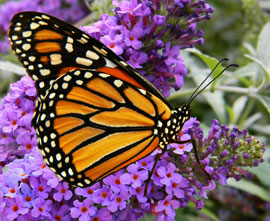
Butterfly bush is a host plant of Variable checkerspot butterflies. It is also an important source of nectar for butterflies and bees. It is being eradicated on public land because it is not a native plant. butterflybush.com

My New Year’s Wish

Nature is too complex to be reduced to a single cause for changes in the environment.  Human knowledge is insufficient to identify all of the causes.  That’s why we make many mistakes when trying to fix a perceived problem in nature.  Our own priorities influence our evaluation of changes in the environment.  We should not automatically assume that a change is a problem or that it must be reversed.

The existence of novel ecosystems is a case in point.  They can as easily be seen as positive or negative.  If a native plant or animal is no longer adapted to changes in the environment, such as climate change, we should be grateful that a non-native substitute is capable of tolerating the change.  Where some see enemies, others see friends.

I wish you all a very happy New Year in 2021.  I can’t wish 2020 a fond farewell.  I can only say good riddance!  I am hopeful for a more peaceful year, one in which we befriend our enemies and work together for a better world for nature and for humanity.  I am grateful for your readership.