Plans to eradicate mice on the Farallon Islands with rodenticide were approved by the California Coastal Commission (CCC) two years ago, on December 16, 2021. Although CCC approval was contingent on a few conditions intended to reduce the inevitable death of non-target birds and marine animals, it is unclear if CCC will be able to enforce the conditions. Plans seem to be moving forward behind closed doors, so Conservation Sense and Nonsense continues to be concerned about this project.
First a brief reminder of the project and our objections to it. House mice were introduced to the Farallon Islands over 100 years ago by ships visiting the island. There is no evidence that mice harm birds on the Farallons. The mice are an integral part of the food web, eating primarily vegetation and supplementing that diet with insects during summer months when vegetation is sparse. The mice are also the prey of hundreds of thousands of birds that live on the islands as well as birds that stop over on their migratory routes. The mouse population varies throughout the year, dwindling during winter months and increasing in the fall. When the mouse population declines, food sources for their predators also decline. That’s when burrowing owls are said to prey on the nestlings of ashy storm petrels. Though the mice are blameless, the project proposes to kill them all based on the assumption that burrowing owls will not overstay their migratory stop over if food sources are significantly reduced. The project is expected to kill hundreds—perhaps thousands—of non-target birds who will eat poisoned pellets directly and/or poisoned mice.
The project has always seemed absurd and nothing we’ve learned about it in the past 2 years has made it seem otherwise. Our last article of 2023 will report new information learned since the project was approved.
Contamination of the food web
Robert Boesch is a retired Pesticide Regulator for the Environmental Protection Agency, region 9 and the Hawaii Department of Agriculture. Presently, he is Visiting Colleague at University of Hawaii at Manoa. Based on his research and experience, he has written a discussion paper about island eradications using rodenticides, which he has shared with the California Coastal Commission and many other agencies and organizations. This entire discussion document is available below as a footnote and this is his summary of “Eradication Programs Eliminating Invasives and their Predators and Scavengers!”
- Eradication programs for mice and Polynesian Rats are planned for the Farallon Islands, Midway and Wake Island.
- Brodifacoum, a potent, persistent and bioaccumulative anticoagulant poison is the toxicant. [This is the rodenticide that will be used on the Farallon Islands to kill mice. There are no rats on the Farallons.]
- Brodifacoum residues have been detected in almost all fish that were collected following treatment of Palmyra, and trace levels were found in 10 percent of the fish after treatment of Wake.
- Brodifacoum residues in fish caught at Wake increased from trace levels to detectable residues over 3 years.
- Diphacinone is a greater threat of secondary poisoning to mammals than brodifacoum.
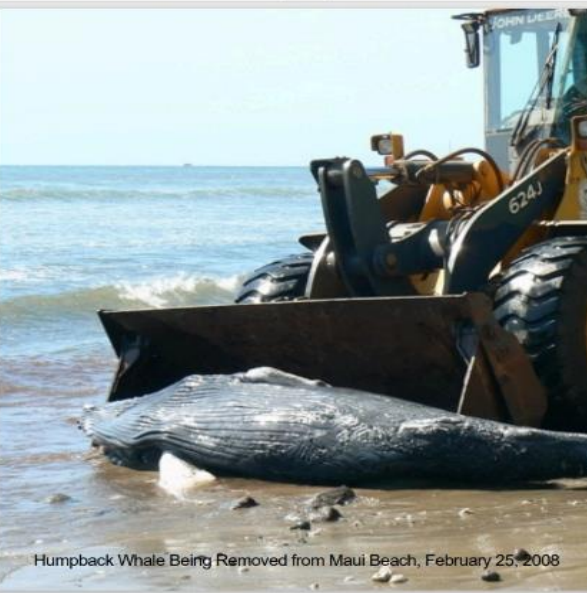
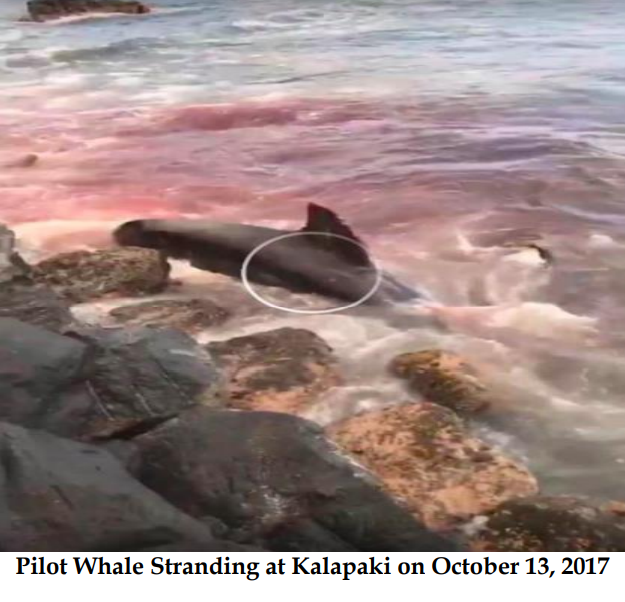
- Strandings of whales, some hemorrhaging, occurred within 60 days following anticoagulant bombardment.
- Unusual mass strandings of hemorrhaging dolphins occurred in San Diego and Hawaii years after anticoagulant bombardment.
- There is very little known about the fate of anticoagulant residues in the oceans.
Our knowledge of contamination of the food web caused by rodenticide drops on islands is limited because monitoring is usually short-term and frequently done by the same contractors who implemented the project, with little motivation to report the extent or persistence of contamination. For the same reasons, we have limited knowledge of how successful the projects are.
Track record of island eradications
About 1,200 island eradications have been done all over the world over the last 30 years. Our evaluation of the proposed project on the Farallon Islands is based on the success or failure of those projects.
The aerial application of rodenticide to kill rats on Anacapa Island in 2001-2002 was the first of its kind in North America. The project was also unique because it was complicated by the need to spare a population of endemic native deer mice on Anacapa. Over 1,000 native mice were captured before the aerial application of rodenticide and released back on the island after the poison was no longer effective. Although post-project monitoring reported successful eradication of rats, they were not confident that all of the mice that were left on the island had been killed. (1)
Attempts to eradicate mice have been consistently less successful than attempts to eradicate rats. A study of 139 attempted eradications of animals on 107 Mediterranean islands in eight countries found that eradication projects targeted 13 mammal species. The black rat was the target of over 75% of the known attempted eradications in the Mediterranean Basin. The most widely used technique was poisoning (77% of all eradications), followed by trapping (15%) and hunting (4%). Techniques were largely target-specific.
The average failure rate of the projects was about 11%, but success was defined only as the death of animals living on the islands at the time of the project. However, this percentage varied according to species. The failure rate of house mouse eradication was 75%. Reinvasion occurred after 15% of eradications initially considered successful. (2)
Island eradications considered initially successful, are often failures in the long run. A recent visitor to Anacapa Island has reported seeing two dead rodents as her escorted group was leaving the island. One was identified as a deer mouse. The other rodent was not identified. Have rats returned to Anacapa? Are native deer mice still being killed by residues of rodenticide? (3)
The eradication of rats on Anacapa Island is relevant to the planned project on the Farallon Islands because rats were killed, but mice were saved. Although the Anacapa project considered rats a threat to birds, it did not consider mice a problem. Rats were killed, but mice were saved by trapping and removing them from the island before the rodenticide was dropped. Mice on the Farallon Islands are not a threat to birds. They will be killed only because they are non-native.
Mice are members of the food web
Mice on the Farallon Islands are as much a part of the food web as they are on Anacapa Island. They are prey of the birds and they are mainly predators of vegetation. On the Farallon Islands, mouse predation of vegetation is considered a problem, but on Anacapa Island it is not considered a problem. On the Farallon Islands, the study of the diet of mice reports that mice also eat insects when vegetation becomes scarce in the fall. (4)
The study of the mouse diet on the Farallons also reports that 63%-80% of the vegetation on the Farallons is non-native. That’s why Roundup (glyphosate) has been used on the Farallon Islands every year since 1988. Between 2001-2005, an average of 226 gallons of herbicide were used annually (5.4 gallons per acre per year), according to the annual report of the Farallon National Wildlife Refuge. (5)
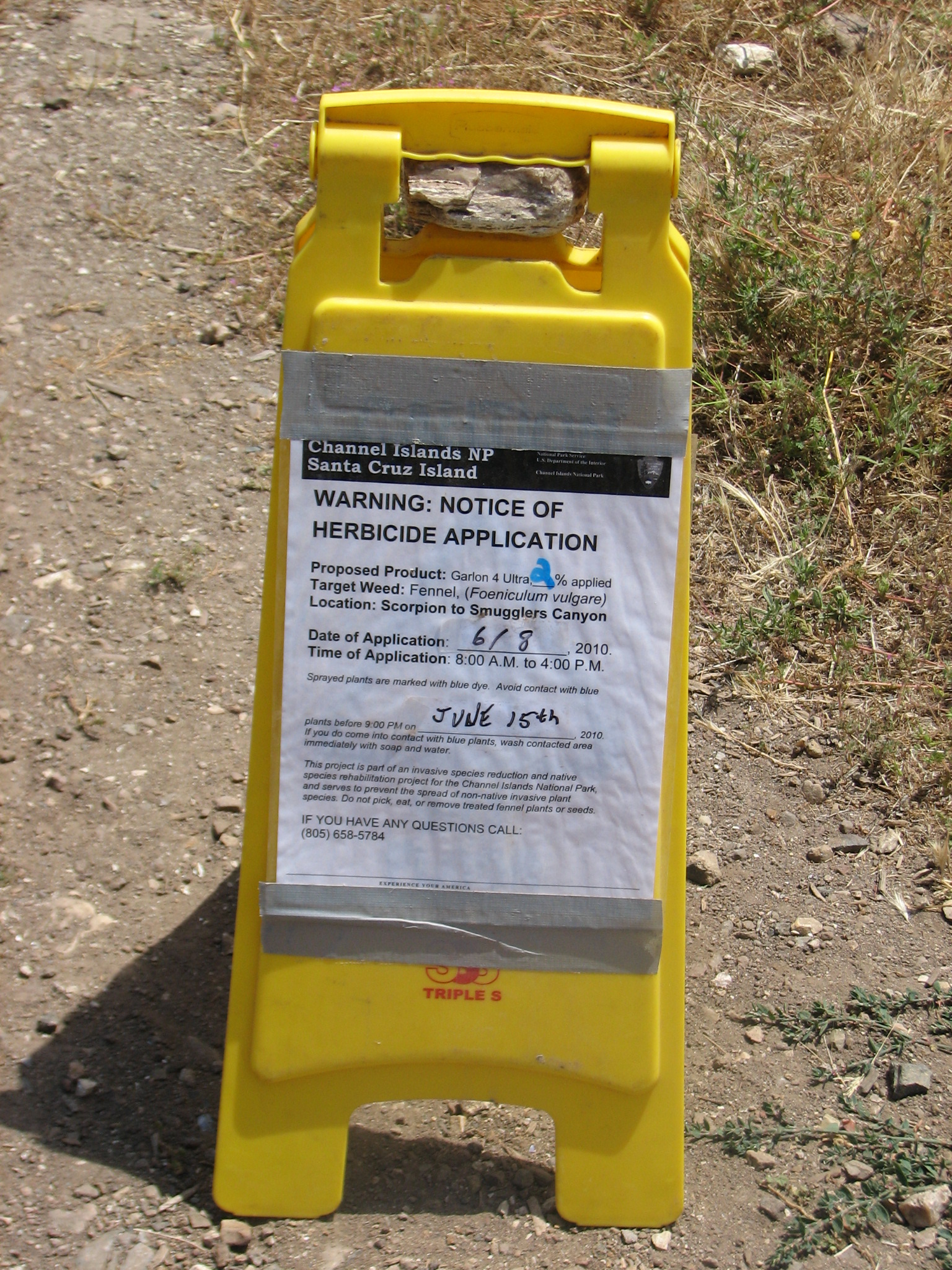
I took this photo on Santa Cruz Island in 2010, while visiting with an escorted group.
The Farallon Islands have never been inhabited and there has been no public access to the islands for over 100 years. Non-native plants were not brought to the Farallons by humans. Their seeds were brought by birds in their stomachs, in their feathers, on their feet and by wind and ocean currents. Non-native plants dominate vegetation on the Farallons partly because non-native plants are eaten by birds. The plants are members of the food web and their eradication is depriving birds and other animals in the ecosystem of food. If non-native plants were not being eradicated with herbicides, it probably would not be necessary for mice to eat insects, which are not their preferred food. We can safely assume that herbicides are harmful to the animals that consume plants that have been sprayed. (6)
Consequences of fiddling with the food web
There were also feral cats on the Farallons before they were killed. Predictably, the population of mice increased after the cats were killed. When 6,000 feral pigs were killed by sharp shooters on Santa Cruz Island, Golden Eagles substituted for that plentiful food source by preying on the rare, native Channel Island Fox. Golden Eagles were captured and relocated to the mainland. The fox population was restored to the island by a captive breeding problem. The same could be done on the Farallons to eliminate the only known threat to ashy storm petrels. The small population (approximately 6-10) of burrowing owls that are the only known predators of the petrels could be trapped and removed to the mainland as the Golden Eagles were on Santa Cruz Island.
Restoration plans for any ecosystem should begin with a thorough analysis of the food web. Plucking single species of plants and animals out of complex ecosystems without understanding their role in the food web results in unintended and harmful consequences.
The Farallons project is based on mistaken assumptions
The Farallons project is based on the mistaken assumptions of invasion biology. Most of the vegetation on the island is being killed with herbicide because it is non-native. The vegetation is clearly essential to all the animals living on the island, but invasion biology asks us to believe that it is not, solely because it is non-native. If the mice are killed on the island, it is only because they are non-native, not because they are harmful to birds. They are an important source of food for the birds, but invasion biology asks us to believe they are not, solely because they are not native. These assumptions are wrong, yet 50 years of nativist ideology still has a death grip on our public lands.
This deadly dogma is losing its grip, but apparently too slowly to prevent the destruction of the food web on the Farallon Islands. I always attend the conferences of the California Invasive Plant Council (Cal-IPC) and the California Native Plant Society (CNPS) to give native plant advocates every opportunity to convince me of their ideology. Consistently, I find more support for my contrarian viewpoint than I do for invasion biology. A presentation about the salt marsh harvest mouse at the Cal-IPC conference in October 2023, is an example.
California Department of Fish and Wildlife collaborated with UC Davis to study the food preferences of salt marsh harvest mouse (SMHM), an endangered native animal that lives in the wetlands of the San Francisco Bay. It has always been presumed to be entirely dependent on native pickleweed for food and habitat. The legally mandated recovery plan is based on that mistaken assumption.
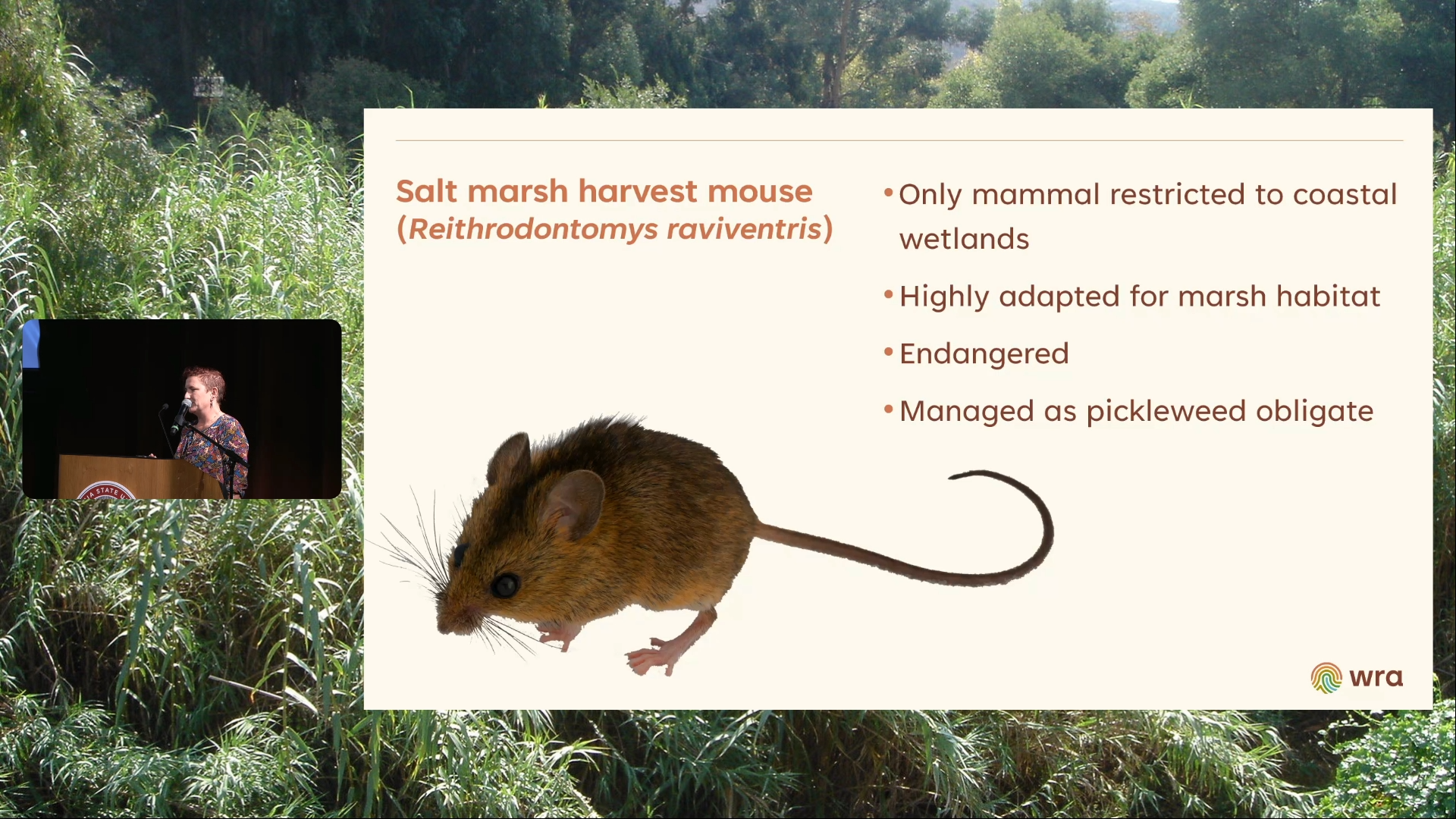
Presentation to California Invasive Plant Council conference in October 2023
The study reported to Cal-IPC shows clearly that SMHM is NOT dependent on pickleweed for either food or habitat. SMHM is an extreme omnivore. SMHM ate 39 species of native and non-native plants as well as insects in empirical trials. In fact, it ate EVERY plant it was offered. A fecal study of SMHM living in the wild confirmed that finding. Fecal analysis found SMHM had eaten 48 native and non-native plant genera as well as some insects.
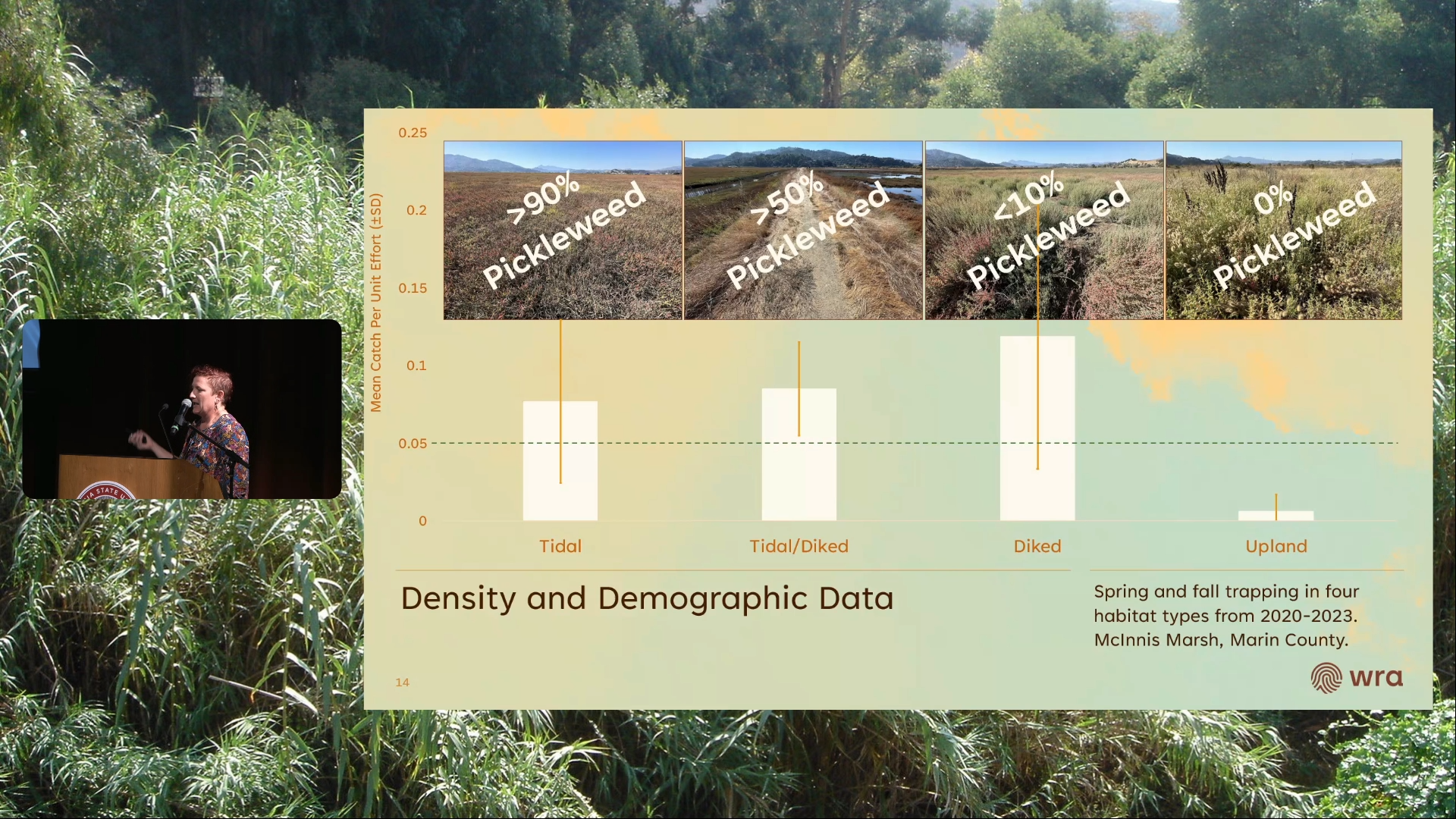
Presentation to California Invasive Plant Council conference in October 2023
SMHM have no preference for native plants for either food or nesting habitat. The most SMHM’s captured in the study were found where there was less than 10% pickleweed.
This was an absurdly simple experiment in which SMHM were captured and fed a variety of plants. It could have been done by anyone with little knowledge or fancy equipment. Why does this foolish mistake, caused by nativist bias, matter? Because “restoration” projects all around the San Francisco Bay have been eradicating non-native plants, claiming it would benefit the endangered SMHM.
For example, the spartina eradication project has been hunting for and poisoning hybrid spartina marsh grass for nearly 20 years, as well as planting pickleweed for SMHM. Since herbicides are used to kill non-native plants before pickleweed is planted, there’s little doubt that SMHM populations were harmed by the eradication of their food and shelter, if not directly harmed by the pesticides that are used.
Nativism in the natural world is not benefiting wildlife. Rather it seems to benefit only the army of “restorationists” who earn their living killing harmless plants and animals. As long as they continue to receive public funding for their projects, they have job security because they have spent over 20 years trying to do something that cannot be done. Evolution moves inexorably forward. The puny efforts of humans to regress landscapes to arbitrarily selected historical standards cannot change the forward trajectory.
There were two presentations about difficulties with native plant restorations on Anacapa and Santa Rosa Islands at the CNPS conference in October 2022. More than 20 years after non-native iceplant, rabbits, and rats were killed on Anacapa, native flora and fauna are still described as degraded, “Due to the cumulative and severe impacts to the soil and native seedbank, native vegetation communities have not recovered on their own…” On Santa Rosa Island the “restoration” community has installed artificial fog fences to replicate a historical cloud forest to improve survival of native chaparral plants. (7)
Alternatives to rodenticide drop on Farallon Islands
It is not necessary to kill mice on the Farallon Islands because they are not harmful to birds. If non-native vegetation weren’t killed with herbicides, there would probably be enough vegetation for omnivorous house mice as well as birds. Both mice and vegetation are being killed only because they are non-native. If the nativist ideology were removed from the agenda, dumping rodenticides on mice and herbicides on non-native vegetation would not be necessary.
If the protection of ashy storm petrels really were the goal of the proposed project on the Farallon Islands, the most obvious solution would be to remove the small population of burrowing owls that are the only known predators of the petrels. Keep in mind that ashy storm petrels are not considered threatened or endangered and that two applications for protected status have been denied. (8)
There is a non-lethal alternative to reducing populations of rodents using rodenticides that kill non-target birds and other animals. Academic scientists at Arizona State University have developed birth control for rodents that can be used on the Farallons to reduce the population of mice. (WISDOM Good Works)
In Summary
Killing house mice on the Farallon Islands with rodenticide is unnecessary and will be harmful to the ecosystem and its inhabitants because:
- Aerial dropping 1.5 tons of rodenticide will poison the entire ecosystem, killing hundreds of non-target birds and marine animals.
- House mice on the Farallon Islands do not need to be killed because they are food for birds and they are harmless.
- If burrowing owls are killing nestlings of ashy storm petrels, they could be removed and relocated.
- The nearly 40-year attempt to kill non-native vegetation with herbicide should be stopped because the vegetation is a vital element in the food web of the Farallon Islands.
Happy Holidays and thank you for your readership.
- https://www.cambridge.org/core/journals/oryx/article/eradication-of-black-rats-rattus-rattus-from-anacapa-island/F1E46767D0EEC9A6357D414DD84ABE28
- https://onlinelibrary.wiley.com/doi/abs/10.1111/mam.12190
- https://myricopia.com/2023/11/21/anacapa-island-conservation/
- https://www.biorxiv.org/content/10.1101/2022.02.23.481645v1.full
- https://drive.google.com/file/d/1XoPcS104SeOUIyfbPT_NbardctNyWAgs/view
- https://www.nrdc.org/sites/default/files/opinion-glyphosate-20220617.pdf “As to ecological risk, it finds potential risks to animals and plants and ‘requires’ mitigation in light of those risks, laying out specific language for glyphosate product labels.”
- https://www.nps.gov/chis/learn/nature/cloud-forest.htm
- https://www.endangeredspecieslawandpolicy.com/u-s-fish-and-wildlife-service-denies-endangered-species-act-protection-for-ashy-storm-petrel


 Conservation Sense and Nonsense