The Forever War on Non-Native Plants

I spoke to California’s Wildlife Conservation Board at their August 2024 meeting about the Invasive Spartina Project. I asked the Board not to fund the eradication of non-native spartina and its hybrid, using herbicide. This project, which began 20 years ago, had cost over $50 million by 2023. (1)  Non-native spartina, native to the East and Gulf coasts (2), provides crucial habitat for Clapper rails (3), closely related to our endangered Ridgway rails.
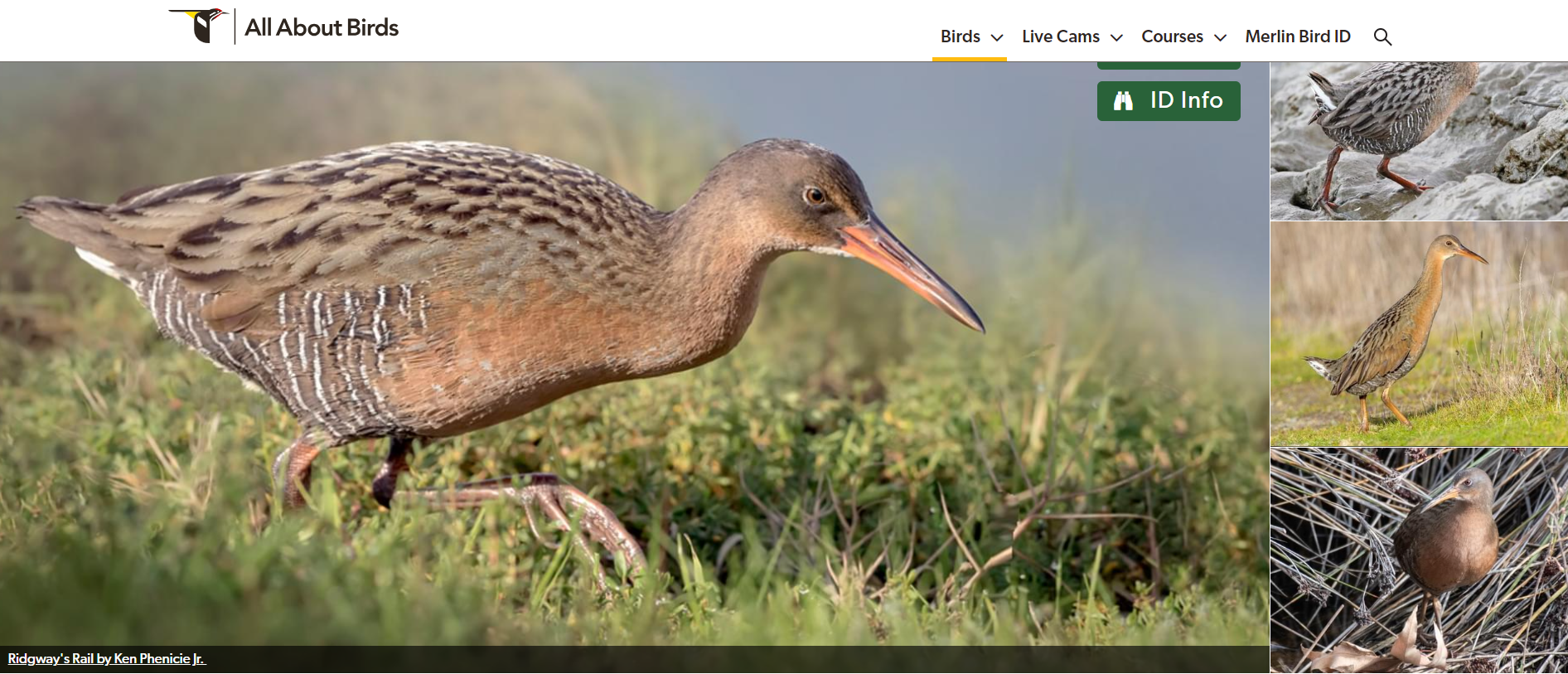
Source: Cornell Laboratory of Ornithology

Non-native spartina grows taller, denser, and doesn’t die back in winter as native spartina does. Because early aerial spraying of herbicide eradicated most non-native spartina by 2010, Ridgway rail populations declined by 50% due to habitat loss. (4)

The project was temporarily paused in 2014 to plant native marsh plants and stabilize rail populations. When the project was resumed in most places the rail population continued to decline from 2018-2023. There were approximately 1,200 Ridgway rails in the Bay estuary before the project began. (5)  The most recent survey in 2022 found about 500. (6)

Native pickleweed was planted based on the mistaken assumption it would benefit endangered salt marsh harvest mice.  Recent studies show there are more mice in areas with less pickleweed and they eat both native and non-native plants. (7)
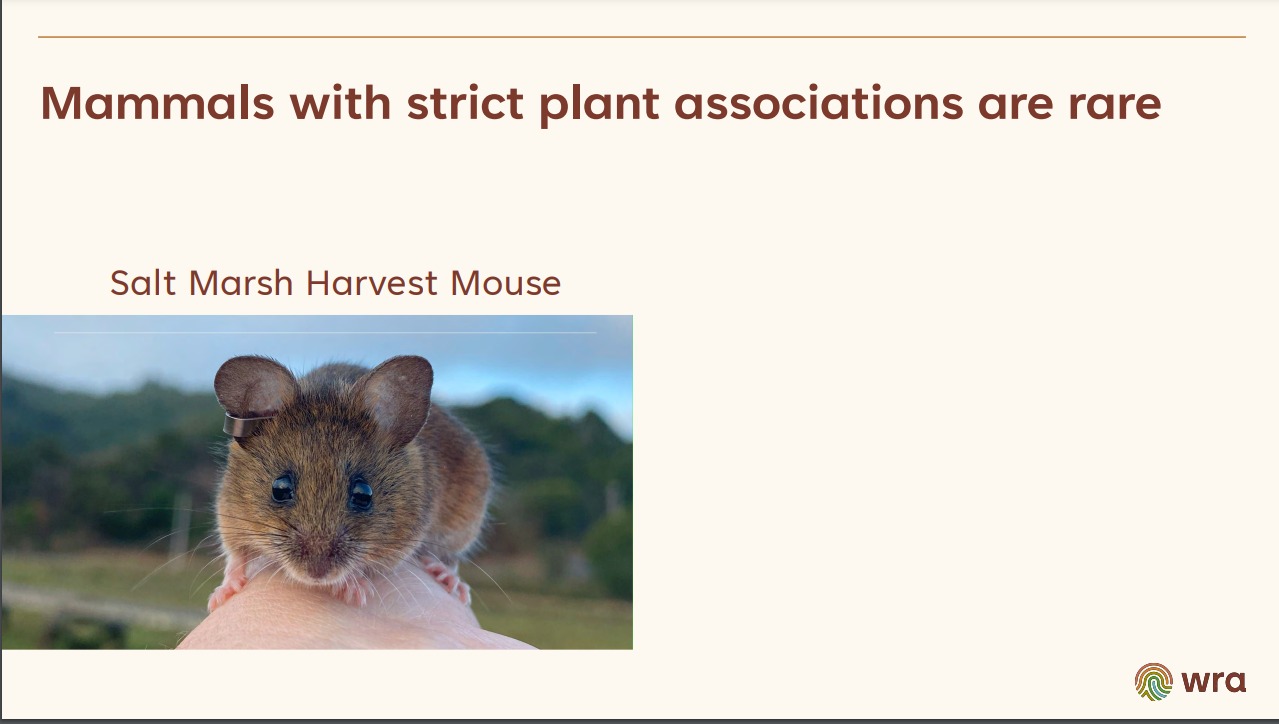
For the past 10 years, the focus has been on eradicating a hybrid of spartina, though it is indistinguishable from native spartina and 7,200 genetic tests were required from 2010 to 2022 to identify it. Hybridization is a natural evolutionary process that supports natural selection. (8)

Hybrid spartina could help to protect the Bay’s shoreline as sea level rises and extreme storm events cause erosion.  Where it is eradicated, gaps in vegetation are difficult to revegetate because the herbicide (imazapyr) that is used is very mobile and persistent in the soil. Imazapyr is also a non-selective herbicide that kills both native and non-native plants growing closely together, as they do in the San Francisco Bay Estuary. (9)

Although others spoke with me, there were an equal number of people who spoke in favor of granting nearly $7 million to continue the project for another 10 years. Some of the funding is granted to California Invasive Plant Council to administer the grants. Several of those speakers (including Marin Audubon) actually claimed that the project is benefiting endangered Ridgway rails, despite the fact that the project has killed at least 600 of them by destroying their nesting habitat and probably contaminating the food they eat, such as crustaceans and mollusks.

You might wonder why an organization such as Marin Audubon, which is committed to protecting birds, would advocate to continue a project that has killed at least 600 endangered birds, until you remember that Marin Audubon is also supportive of the project that plans to kill 500,000 barred owls. Marin Audubon also wants the Barred Owl Management Strategy to be mandatory instead of voluntary as proposed by USFWS.
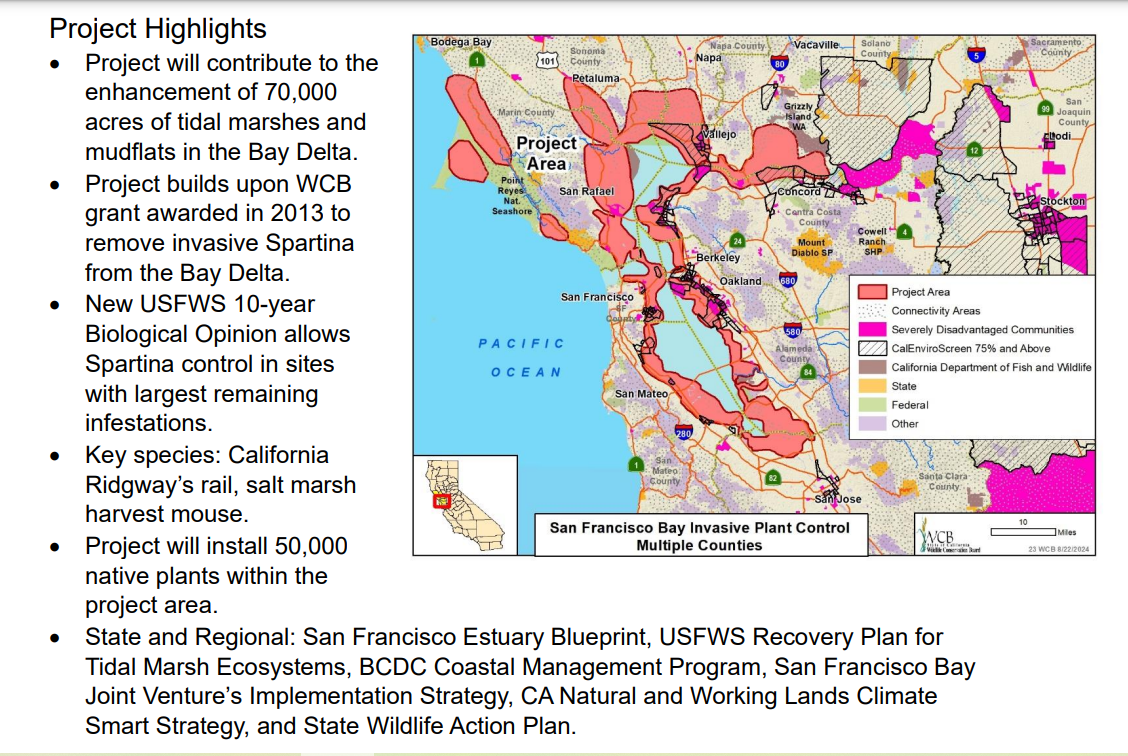
Source: Staff Report for Invasive Spartina Project, WCB Board Meeting, August 22, 2024

The Wildlife Conservation Board approved grants to the Invasive Spartina Project with one dissenting vote. The dissenting Board member voted, “Hell, NO!” Her term on the Board will end after the May 2025 meeting.  She does not expect to be reappointed.  Her departure will be the end of the effort to prevent the Wildlife Conservation Board from granting funds to projects that use pesticides.  It’s another dead end for those who advocate on behalf of wildlife and against the use of pesticides on public lands.

Funding sources to continue the Invasive Spartina Project are the Greenhouse Gas Reduction Act and Climate Change Resilience fund. These funding sources are as inappropriate as the project itself.  Destroying vegetation does not reduce greenhouse gas emissions.  Destroying non-native vegetation that grows taller, denser, and doesn’t die back in winter does not make our shoreline more resilient as sea-levels rise and winter storms become more intense.

Invasive Spartina Project is typical, not unique

The Invasive Spartina Project is typical of other “restoration” projects in California that have been trying, unsuccessfully, to eradicate non-native plants for 20 years and more.  Thanks to the California Invasive Plant Council (Cal-IPC), we now have survey data that tells us where these projects have been done and for how long. (10)

Cal-IPC sent more than 300 survey questionnaires to “practitioners” who had registered for Continuing Education credits for Cal-IPC classes and “land manager staff of organization throughout California.”  Over 100 practitioners replied to the survey.  This graph depicts their replies to the question, “Approximately how many total years have you applied herbicides throughout your career?”
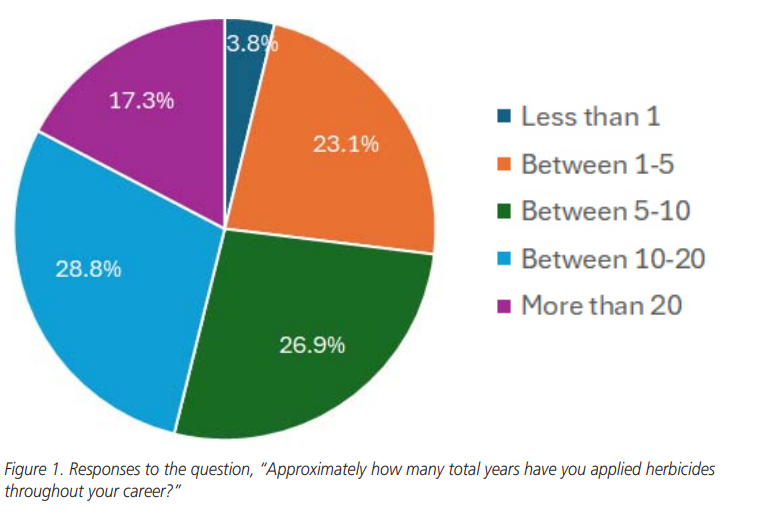
Source: California Invasive Plant Council

Clearly, the Invasive Spartina Project is one of many “restoration” projects that have been applying herbicides for 20 years or more.  And the Invasive Spartina Project has secured State funding to continue spraying herbicides for another 10 years.  Spraying herbicides on public lands has created stable, life-long employment for an army of weed warriors. 

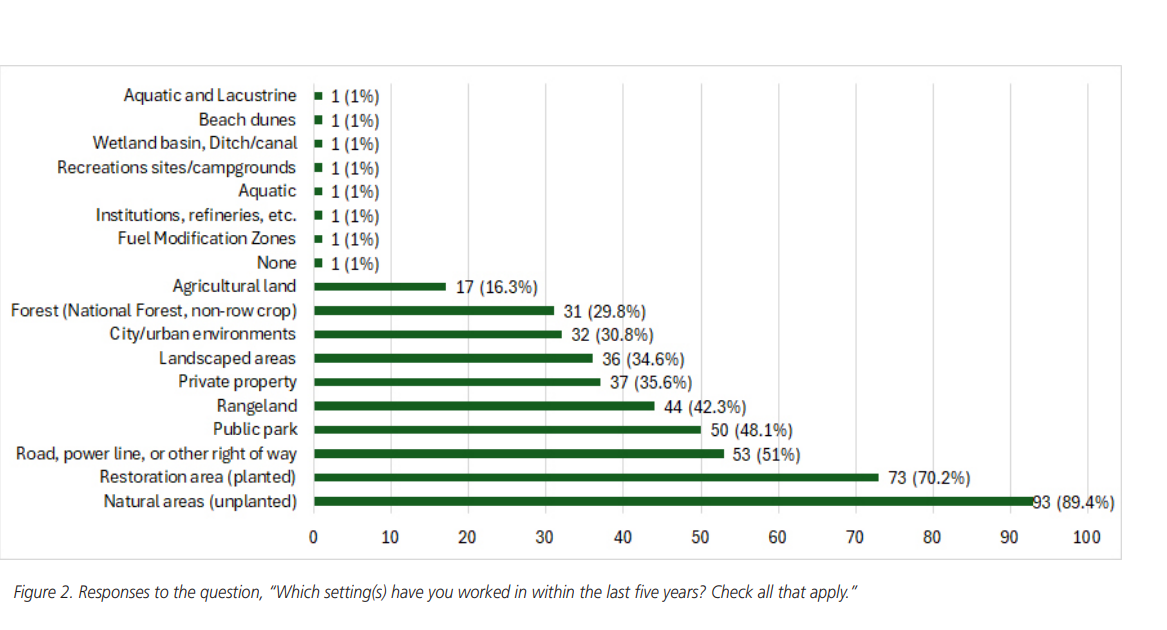
The survey also tells us where herbicides are being sprayed:
Source: California Invasive Plant Council

Virtually all (89%) herbicide applicators are spraying herbicides in “natural areas”—which we assume are wildlands—where no attempt has been made to plant native plants.  Most projects are more destructive than they are constructive. Nearly 50% of herbicide applicators are spraying in public parks.  70% of herbicide applicators spray in “restoration areas,” presumably to sustain the native plants that were planted.  If they are using non-selective herbicides, such as glyphosate and imazapyr, they are probably killing native plants too.

There are many other revelations in this survey and the details are available in the Cal-IPC publication (10):

  • Only 1.9% of respondents had not used herbicides or been part of a project that used herbicides.
  • The top three application methods were spot spraying (100%), cut stump (87%), and broadcast spray (70%).
  • 40% of respondents were not calibrating their herbicide use.  “Calibration is the process of adjusting and measuring the amount of pesticide that a piece of equipment will apply to a target area. It’s an important step in the pesticide application process to ensure that the equipment is applying the correct amount of pesticide at the right rate and in a uniform manner.” (Google search)
  • 28% of respondents had never received calibration training.  20% of respondents said they did not calibrate their herbicide application because “they did not know how.” Cal-IPC often claims that herbicides are being applied “judiciously.” If you don’t know how to apply herbicides, you are unlikely to apply them “judiciously.”

The Forever War on Non-Native Plants

Cal-IPC’s survey of “restoration” practitioners confirms our observations of their efforts in the past 25 years in the San Francisco Bay Area:

  • Attempts to eradicate non-native plants are a Forever War that has poisoned our public lands without eradicating non-native plants or restoring native vegetation, in most cases.
  • The war is futile because it is attempting to stop evolution, which is trying to help flora and fauna adapt to the changing climate and environment.  Humans cannot stop evolution, nor should we try.  The Forever War is a losing battle against evolution, which has sustained life on Earth for 3.7 billion years, without human “assistance.” 
  • The plants that we are trying to kill are also adapting to the poisonous war we pointlessly wage against them.  They have evolved and will continue to evolve resistance to the poisons we spray on them. Herbicides are less effective than they were 40 years ago and they will be continuously less effective. 
  • We are poisoning ourselves and other animals in our futile attempt to kill the plants that feed them.  Claims that wildlife eat only native plants is a fiction and a lie that sustains an industry with vested economic interests in that myth.
  • Many pesticide applicators are not properly trained or they are not following legally mandated instructions for pesticide applications on product labels. They are hurting themselves when they don’t wear legally required personal protection equipment. They are hurting the environment and everyone who lives in it when they use too much pesticide because they have not calibrated their applications as required by the product label. When they don’t post pesticide application notices in advance of their applications, they deprive the public of the opportunity to protect themselves by avoiding the area.  Even when they do, such signs would not be helpful to wildlife.
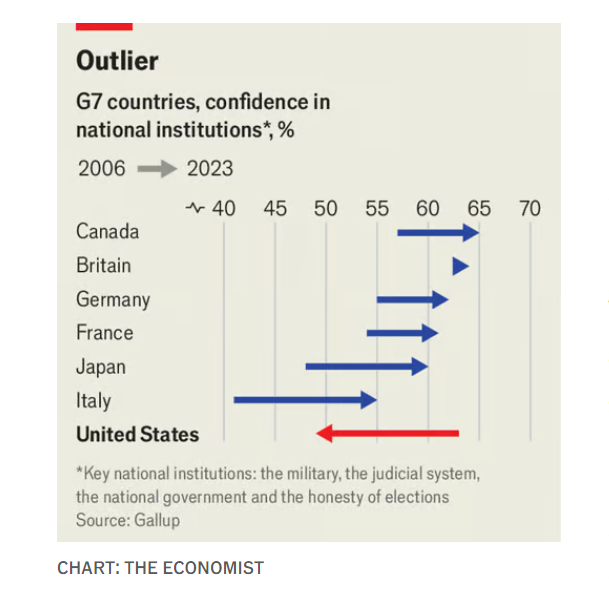
  • The money that is wasted on this Forever War could be used to address a multitude of other pressing needs.  For example, the lead pipes in Oakland that are delivering drinking water contaminated with lead to children in our public schools could be replaced with a fraction of what has been spent to eradicate non-native spartina marsh grass in the past 20 years. (11)  It’s no wonder that the public does not trust the American government:
Source: Economist Magazine

References:

  1. San Francisco Estuary News, “The Battle for Native Cordgrass,” Jacoba Charles, March 2023
  2. USDA Plant Database:  Spartina alterniflora  When the Invasive Spartina Project began, the USDA Plant Database  map of this species indicated that the species was introduced on the West Coast.  The current version of the map shows that this species is now native to the West Coast.
  3. Clapper rail, Cornell Laboratory of Ornithology  Status of Clapper rail is “Low Concern”
  4. Adam Lambert et.al., “Optimal approaches for balancing invasive species eradication and endangered species management,” Science, May 30, 2014, vol. 344 Issue 6187
  5. “Effects of Predation, Flooding, and Contamination on Reproductive Success of California Clapper Rails (Rallus Longirostris Obsoletus) in San Francisco Bay,” Steven E. Schwarzbach, Joy D. Albertson, Carmen M. Thomas, The Auk, 1 January 2006
  6. 2023 California Ridgway’s Rail Surveys for the San Francisco Estuary Invasive Spartina Project  (page 9)
  7. “Evaluating the plasticity of a ‘specialized’ rodent in a highly-invaded estuary,” Katie R. Smith, et.al.,  Presentation to California Invasive Plant Council Symposium, October 2023
  8. San Francisco Estuary Invasive Spartina Project   2021‐2022 Monitoring and Treatment Report (Appendix II, page 3)
  9. Journal of Pesticide Reform: https://assets.nationbuilder.com/ncap/pages/26/attachments/original/1428423389/imazapyr.pdf?1428423389#:~:text=Imazapyr%20can%20persist%20in%20soil,aerial%20and%20ground%20forestry%20applications
  10. Dispatch, Newsletter of California Invasive Plant Council, Spring 2024  (page 10-11)
  11. “In 2018, Oakland Unified School District (OUSD) estimated that it would cost $38 million to fix lead contamination in its schools. This included $22 million to replace water lines and $16 million to replace drinking water and sink fixtures. The OUSD blamed the aging infrastructure for the high lead levels and sought help from the state and federal government.” (Google Search)
Seeking Compassionate Conservation

Peter Keilty is a reader of Conservation Sense and Nonsense because he shares my interest in a constructive approach to conservation that is less deadly and destructive than current approaches often are.  Peter has written an article about the need for a more compassionate approach to conservation, which he has kindly offered as a guest post for Conservation Sense and Nonsense. 

Peter grew up in Belfast, Northern Ireland, which he sarcastically describes as a “hotbed of religious tolerance and progressive values.”  He moved to New York City in 2004 to pursue a legal career and has lived part of the year in the small city of Bee Cave, near Austin, Texas since 2012. 

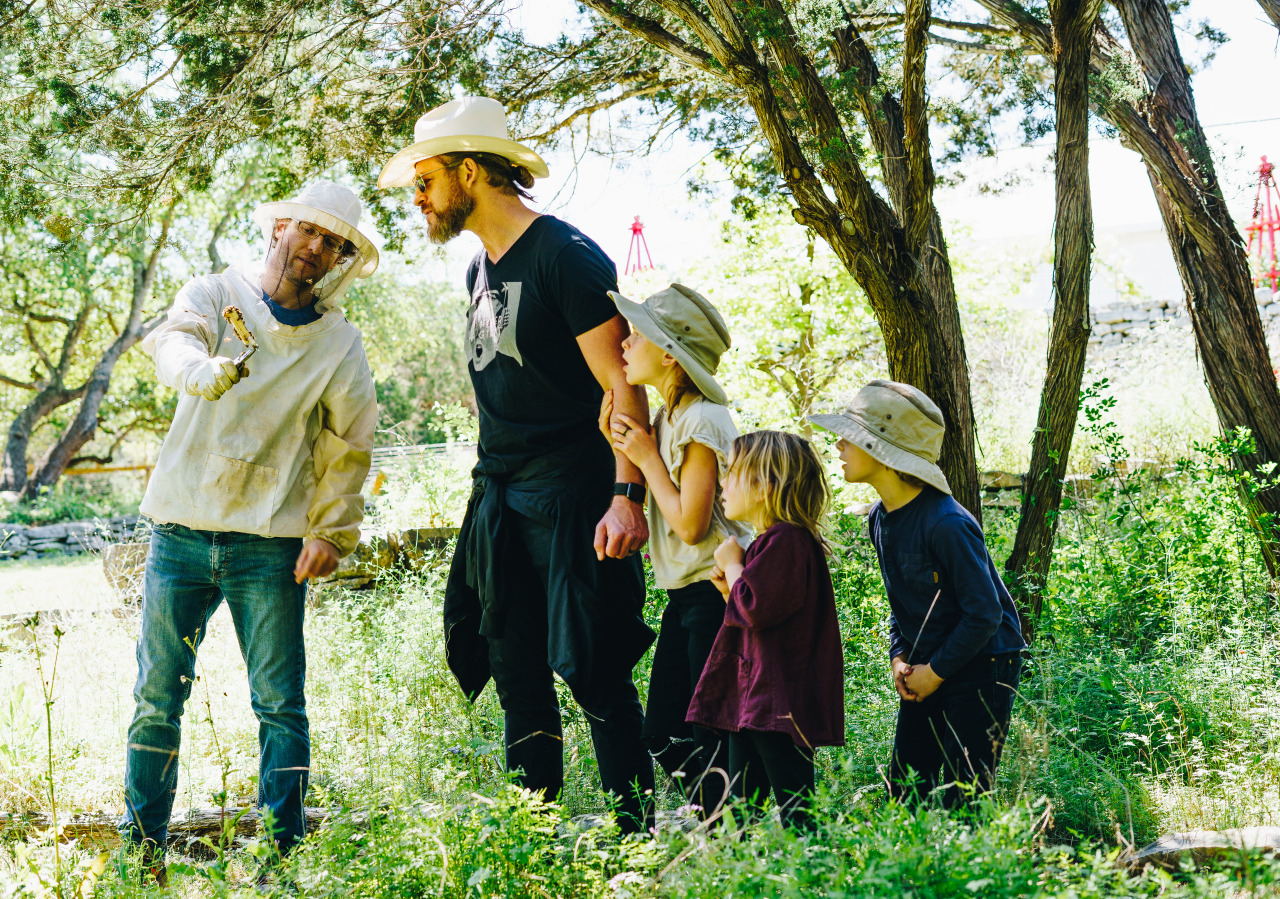
Peter Keilty talking about bees with a family. Source: Bees for All

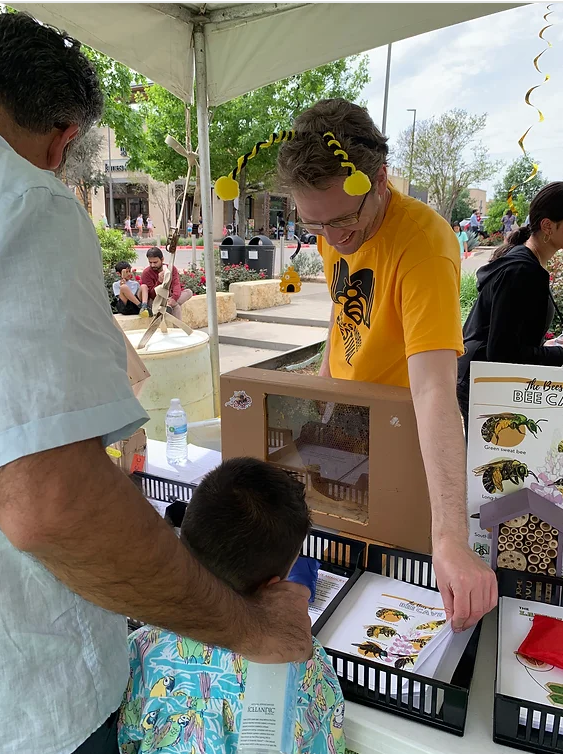
His childhood experience in beekeeping inspired him to return to that interest when bee colony collapse became a public concern.  He keeps a honeybee hive on his small rural property primarily as a teaching tool to tell children about bees and how to help them by not using pesticides in their gardens, for example.  He takes his show on the road to the annual Books and Bees Festival in Bee Cave. 

Peter Keilty at Books and Bees Festival. Source: Books and Bees Festival

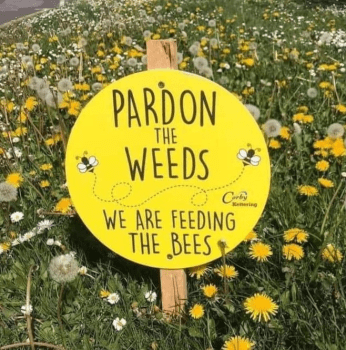
Peter helped to convince the city of Bee Cave to pass a resolution that gives bees and pollinators honorary citizenship to encourage people to rethink their relationships with animals.  He also does some pro bono legal work in the realm of animal personhood and the rights of nature. 

Peter Keilty is a passionate defender of wildlife and he walks the talk. I am grateful that he has selected Conservation Sense and Nonsense for publication of his article about the need for a more compassionate approach to conservation.

-Conservation Sense and Nonsense


(Don’t) Kill Them With Kindness

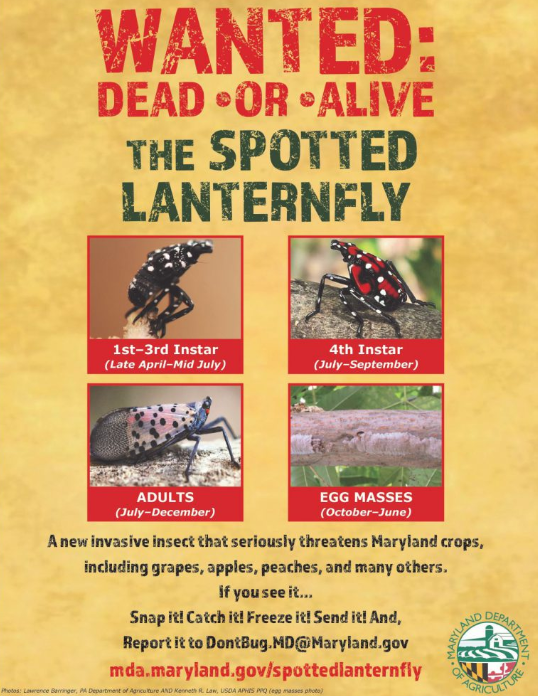
Crouching over her fresh kill, a little girl inspected the wreckage of a life ended. “I got it, Mommy!” she triumphed. Her mother congratulated her in the distracted way of an exhausted parent, before leading the child away. It was 2023 in New York City and the much-maligned lanternfly was at the forefront of public consciousness. Its “invasion” promised destruction not only to valuable crops, such as grapes, but also to the nation’s hardwood forests. If you like wine and trees, we were told, these guys are bad news. At the time I worried that the official response would be the mass application of pesticides, which would have posed significant collateral damage to other insects. Thankfully, this didn’t come to pass, but the long-term effects of the squash-on-sight policy, touted as a solution, could turn out to have a half-life much longer than any insecticide.

The public, rather than taking to the task grudgingly or – a boy can dream – with a measure of regret, jumped in feet-first. Bug-squishing competitions [1] became the norm and an app, Squishr, helped the smartphone generation “turn bug squishing into a game”. Many urban children’s first meaningful encounter with a wild creature may have been through the act of killing – even the youngest were taught not to spare a thought for this latest arrival, whose unwanted presence on our shores rendered its life worthless. That this generation might not grow into bug-loving adults seems more than possible, and the lesson it has imparted – the devaluation of lives based on national origin – is more insidious still.

Source: Maryland Department of Natural Resources

The fervor barely had time to die down before studies, led by Penn State [2], began to indicate that lanternflies do not pose significant risk to hardwood forests or even to homeowners’ ornamental trees. The public’s bloody work to save native trees on public lands had been unnecessary, but private agriculture was grateful. Every hateful, non-native bug ground underfoot had bought some time for their valued, non-native crops. Studies and articles on the issue or cruelty, however, were harder to locate. I initially put this down to the nature of the animal in question – not only an interloper but also a bloodless, hard-shelled insect. Surely we would not kill fellow mammals with such impunity.

Under New Zealand’s Predator Free 2050 initiative the public are engaged in a nationwide effort to “despatch” stoats, possums and even the UK’s most cherished animal, the hedgehog. As an archipelago that evolved without mammals, Aotearoa (the country’s indigenous name) became dominated by a varied suite of bird life, many of whom had no defenses against wily mammals, due to their flightless nature. The country has set itself the, some conservationists argue, highly unrealistic target of eliminating every one of these predators in a matter of decades. As a young nation, it is argued that this mobilization has helped consolidate their national identity by uniting them against a common group of “enemies,” much like in wartime. Ecologist and Kiwi Jamie Steer [3] is one of the few dissenting voices among his country folk. He has observed that the country’s crusade against introduced species which displace natives does not apply to all “invaders” – deer, ducks and trout are not targeted for extermination since they provide jobs and revenue. Unlike those who take a contrarian position to advance powerful interests, Mr. Steer has gained nothing from making his observations public – rather, he has faced ostracism by his peers, as well as verbal abuse and threats from members of the public. Author Laura McLauchlan [4], too, felt a dizzying level of cognitive dissonance when researching hedgehogs in both the UK and her native New Zealand. In England, her care for the creatures brought respect and acceptance from the community. Back home she was mocked and chided for daring to suggest that the annihilation of a long-established animal may not be the only way to move forward.

How could it be that questioning environmental orthodoxy, to ask if we might incorporate elements of compassion, could open someone to mockery and threats of physical violence? Attitudes toward the environment, although shaped by science, still require a certain level of belief. Once beliefs become entrenched, we feel invested in them and are loath to consider that there may be viable alternatives. James Murray of Business Green, writing for the Guardian [5] stated that: “Some environmentalists are guilty of the worst excesses of religion. There is a tendency to drown out legitimate criticism in the most forceful of terms (and) and inclination toward proselytization that can alienate many people…” Some of my encounters have been similarly fraught, especially in the no-holds-barred variety of discourse that is common online. When suggesting alternatives to the language used in comments about non-native species such as “they deserve murder” and “smash them with prejudice” the responses ran the gamut from dismissing me as a “hippie” to suggesting my mental health was not in order – “I hope you get better” read one comment, dripping with faux-concern.

Perhaps in response to such views, there now exists a nascent movement dubbed “compassionate conservation” which prioritizes kindness and views it as a strength, rather than a weakness. It is “an interdisciplinary field which promotes the treatment of all wildlife with respect, justice and compassion” [6] by combining conservation and animal welfare, two disciplines long viewed as being at odds. In any conservation action there will necessarily be winners and losers, and it has been an ongoing frustration for me that I operate in a field with no concrete “right” decisions. In choosing kindness as a compass point to guide our actions, however, it may be possible to navigate our dealings with other species while causing the least amount of harm.

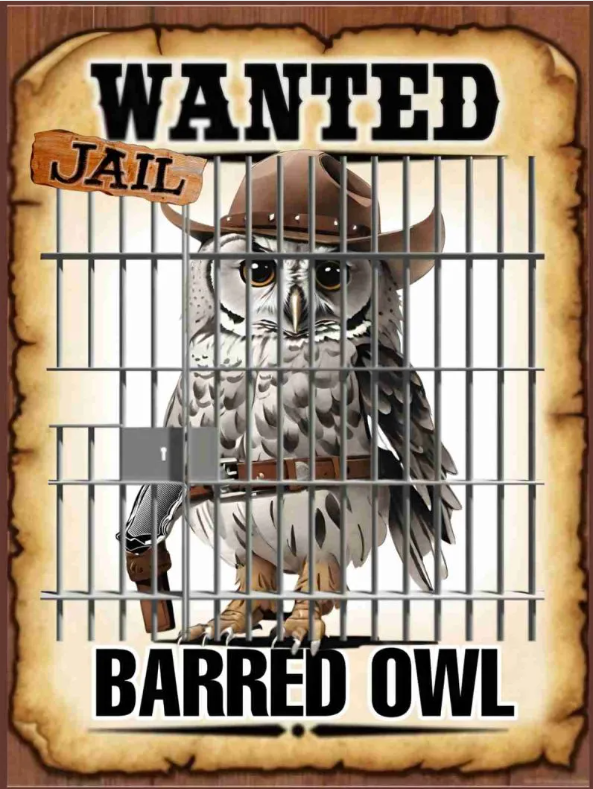
“Kindness” can be interpreted in many ways. For some, it could mean refusing to allow imperiled species to wink out of existence. For others, it could be tolerance or even acceptance of our other-than-human neighbors, regardless of their national origin. Actions such as glorifying the act of killing, prioritizing strict genetic purity or placing populations over the suffering of individuals, however, are unlikely to fall under its aegis. The US Fish and Wildlife Service (I use the word “service” reluctantly) has drawn widespread criticism for its plan to kill almost half a million barred owls in order to help spotted owls, which are being crowded out of their home range. Both animals are native to the United States, but the barred owl has been able to migrate west and encroach on its smaller relative. Perhaps due to the extreme charisma of owls, as well as the sickeningly high number of planned kills, this proposal has drawn outcry regardless of its, presumably, well-meaning intent. “Sparred” owls, the hybrid offspring of the two species, are also devalued due to their “impure” nature and are routinely “culled” – a word which hides behind a veneer of kindness.

Source: Animals 24-7

Valuing populations over individuals has no analogy in the human world, save for in some of the darkest periods of our history. We do not console ourselves over the loss of thousands of human lives to war or disease by noting that, nonetheless, a “robust” population of that racial or ethnic group still survives.

Valuing genetic purity or denouncing the admixture of different races evokes disgust when it is applied to our own species, and yet it is a cornerstone of modern conservation. When we place value on populations rather than individuals it is easy to justify cruelty to achieve our goals. Journalist Emma Marris argues that animals care nothing for genetic “purity” or even the continuation of their species as a fixed, unchanging snapshot in time – their worries, like ours, are focused on raising their young and making it through the day. It is unlikely an animal would ever view its death in a positive light, despite whatever lofty justifications we might make.

A kindness-centered approach to conservation will garner attacks from many directions. It will draw derision for its softness, perhaps even femininity, in that it demands that the element of suffering be factored into decisions of policy. It will be called vague, and too open to interpretation, and yet it provides a powerful compass in navigating an uncertain world, where doing our best for an animal might not actually be the best thing for that creature. Kindness applies not only in respect to how we treat our other-than-human kin, but also in our willingness to enter into respectful, open- minded discourse with each other about the future of these creatures. Being able to communicate without clinging to unhelpful beliefs will be crucial in forging a healthy future. In a complex world we can never know if we are doing quite the “right” thing, but decisions which prioritize kindness may temper our actions and help avoid cruel and, ultimately, ineffective measures. Kindness is truly viral, and it freely transfers from our interactions with other species to our dealings with each other. After all, can you think of a time that you practiced kindness and it steered you wrong? Lending money to family members does not count – that one is on you.

Peter Keilty
beesforall@gmail.com


Footnotes:

1. https://council.nyc.gov/joseph-borelli/2022/10/28/as-spotted-lanternflies-continue-to-plague-staten-island-residents-invited-to-insect-stomping-event-on-sunday/

2. https://www.psu.edu/news/research/story/invasive-spotted-lanternfly-may-not-damage-hardwood-trees-previously-thought/

3. https://independent.academia.edu/JamieSteer/

4. McLauchlan, Laura. 2024. Hedgehogs, Killing and Kindness. MIT Press.

5. Murray, James. 2012. Environmentalism is Not a Religion. The Guardian.

6. https://www.uts.edu.au/research-and-teaching/our-research/centre-compassionate-conservation/about-us/what-compassionate-conservation#:~:text=Compassionate%20conservation%20is%20an%20interdisciplinary,respect%2C%20justice%2C%20and%20compassion.


Update: According to the NY Times, the population of spotted lantern flies has virtually disappeared from many neighborhoods in NY City.  NYT doesn’t give the campaign to literally stomp-out lantern flies credit for this disappearance of lantern flies.  They offer a few other explanations, but none is more credible than this explanation for the waxing and waning of so-called “invasions” from the book, The Light Eaters:

“Natural systems are really complex. [There are always many variables operating simultaneously in nature.] Every single shift in these variables appears to cause a shift in the makeup of the neighborhoods.  A species that was formerly a minority becomes dominant, a dominant species suddenly becomes rare.  No single species wins for very long, and never long enough to take over or eliminate their neighbors…This isn’t survival of the fittest in the traditional sense.  Or rather, it is survival of the fittest, but “fittest” here doesn’t mean what we thought it meant—it’s not about whoever manages to demolish their neighbors.  This is more like survival for a while, until something changes.”

Humans need to be more patient with nature to solve problems for herself.  Instead of a full-on killing campaign, usually fueled by pesticides, humans need to step back and watch nature heal itself.

Webmaster, Conservation Sense and Nonsense
September 22, 2024