Professor Joe McBride defends the forest on Mount Davidson

With great pleasure we share with our readers the following letter from Professor Joe R. McBride to Phil Ginsburg, the General Manager of San Francisco’s Recreation and Park Department, expressing his criticism of the plans of the Natural Areas Program to destroy 1,600 trees on Mount Davidson.

 Joe McBride is Professor of Environmental Science in the College of Natural Resources at University of California, Berkeley and an expert on urban forestry in the San Francisco Bay Area and around the world.  He is the author of many studies of urban forests, several of which he cites in his letter to the General Manager.  He is particularly expert on the failure of trees caused by extreme wind conditions. 

Professor McBride kindly accepted the invitation of several neighbors of Mount Davidson to read the plans of the Natural Areas Program (SNRAMP) for Mount Davidson and tour the mountain with them to evaluate those plans within the context of the actual conditions there.  The neighbors and all lovers of the urban forest are extremely grateful to him for his time and willingness to share his expertise and decades of experience with us to help us save this beautiful forest from being needlessly destroyed.

*************************

June 29, 2013

Mr. Phil Ginsburg
General Manager
San Francisco Recreation and Park Dept.
San Francisco, CA 94117

Re: Significant Natural Resource Areas Management Plan for Mt. Davidson Park

Dear Mr. Ginsburg,

I am writing to express my concern over the plan for removal of trees on Mt. Davidson.  This concern is based on the historical importance of the trees, their contribution to San Francisco landscape, and several specific aspects of the Significant Natural Resource Areas Management Plan for San Francisco. As a Professor of Urban Forestry at the University of California I have for many years studied plantations of trees in the city and compiled several reports for the U.S. Army, National Park Service, Presidio Trusts, and the Golden Gate Conservancy concerning the condition and management of eucalyptus, Monterey pine, and Monterey cypress stands.  My concern over the proposed management plan for Mt. Davidson is based both on my experience in urban forestry and on my experience as a citizen of the Bay Area who has enjoyed the urban forests of San Francisco for many years.  These concerns are elaborated in the following paragraphs.

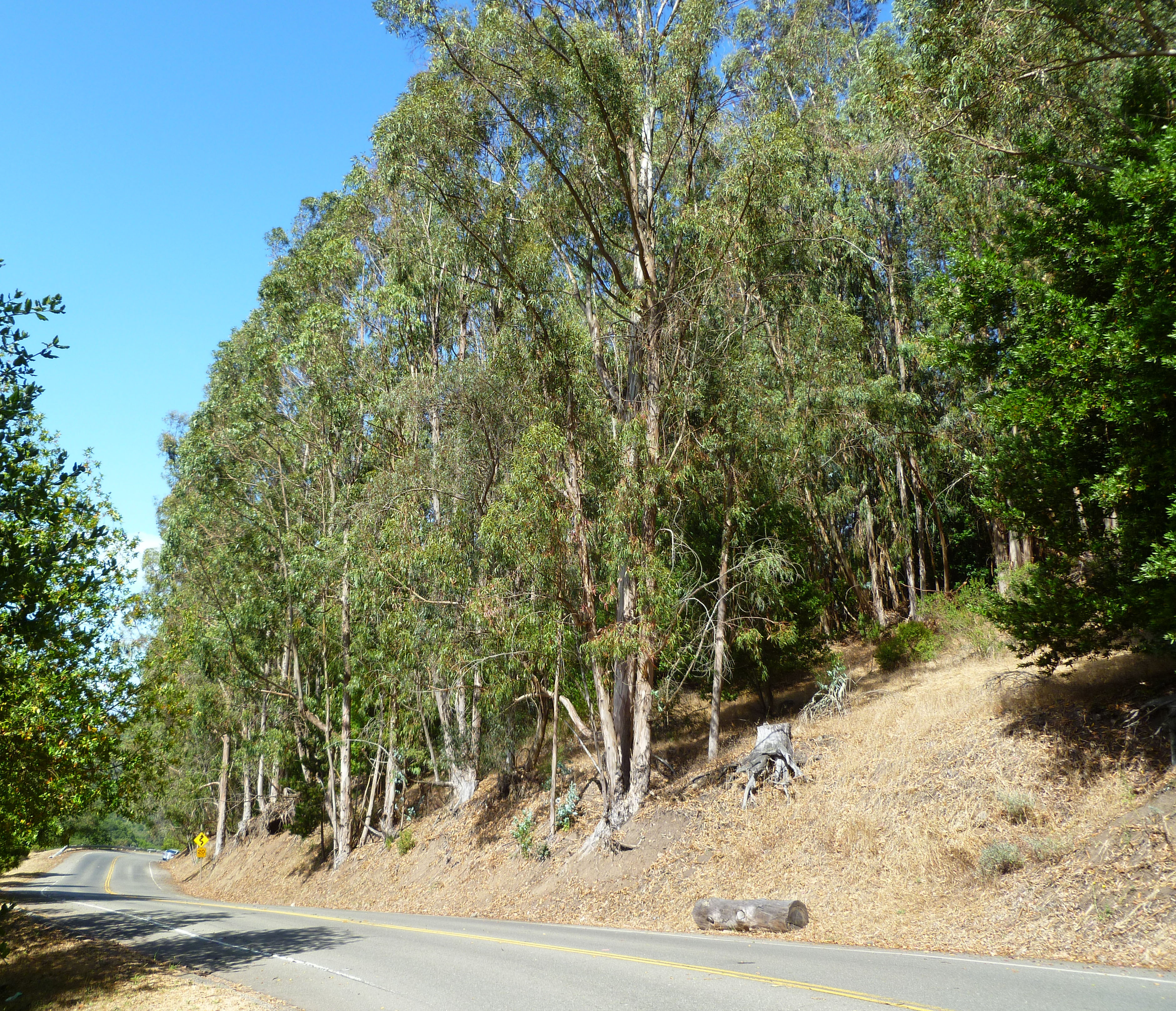
The eucalyptus and Monterey cypress on Mt. Davidson were planted under the direction of the former Mayor of San Francisco, Adolph Sutro.  He was also responsible for planting other areas in the city that have subsequently become city parks.  The plantations he established have served to protect park users from the wind, provide wildlife habitat, and in some cases define the visual character of the San Francisco landscape.  They present an important historical heritage that I think should not be discarded lightly.  I found no mention of the historical significance of the Mt. Davidson forest in justification for the proposed management in the Natural Areas Resource Management Plan for San Francisco.  San Francisco might review the vegetation management plan developed by the Presidio Trust for the National Park Service to see the approach taken at the Presidio to maintain and manage historically significant forest plantations.

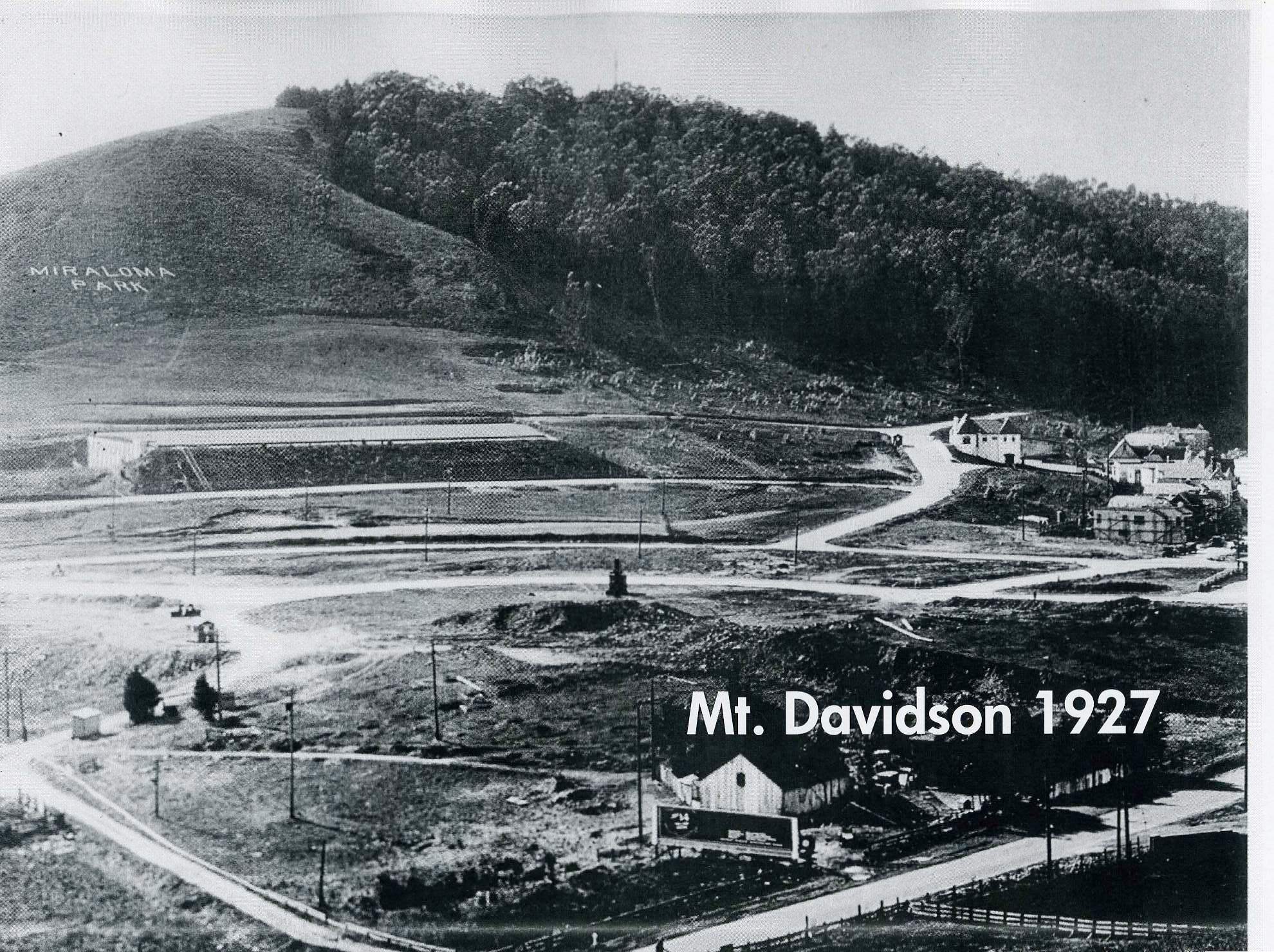
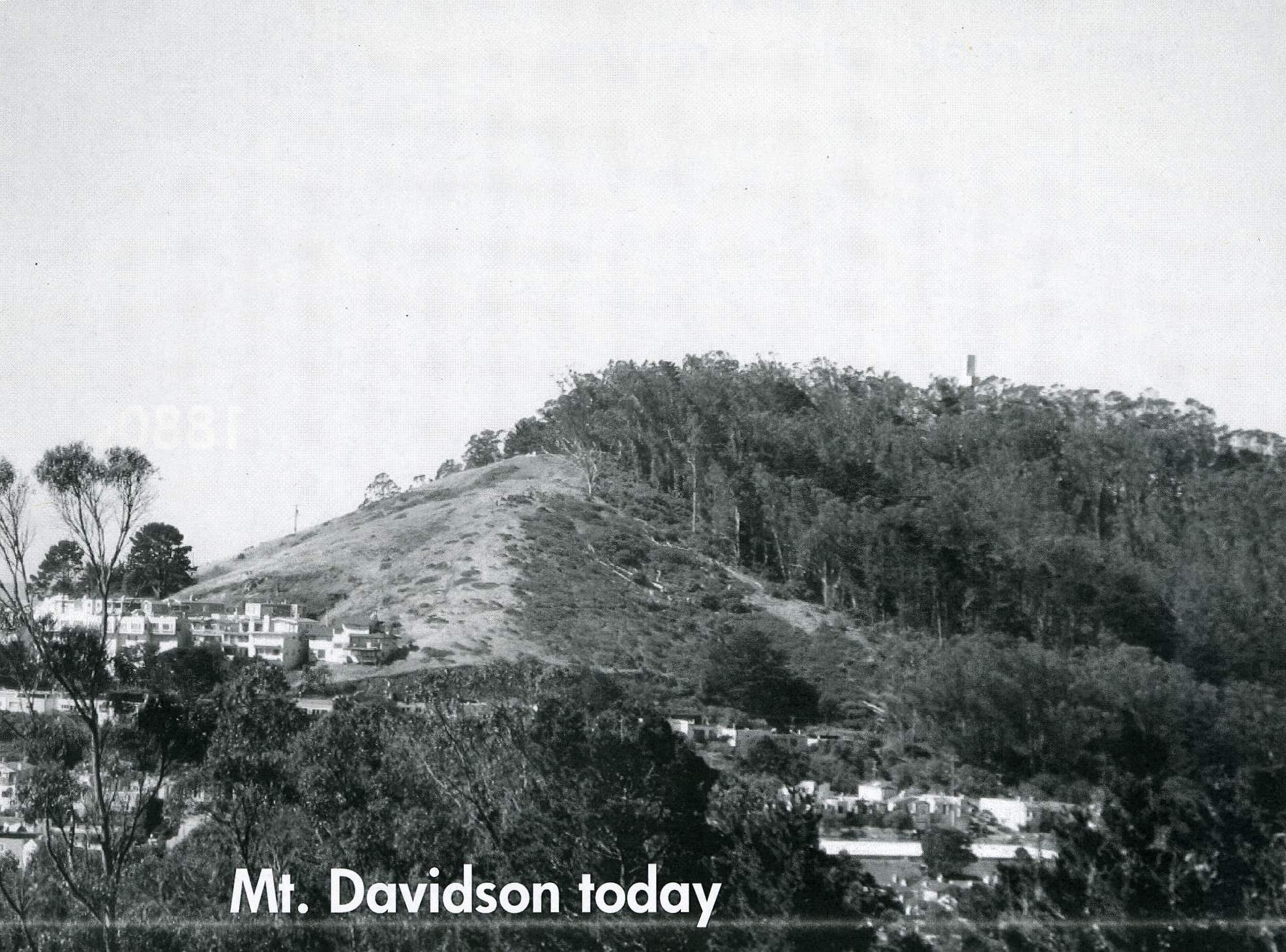
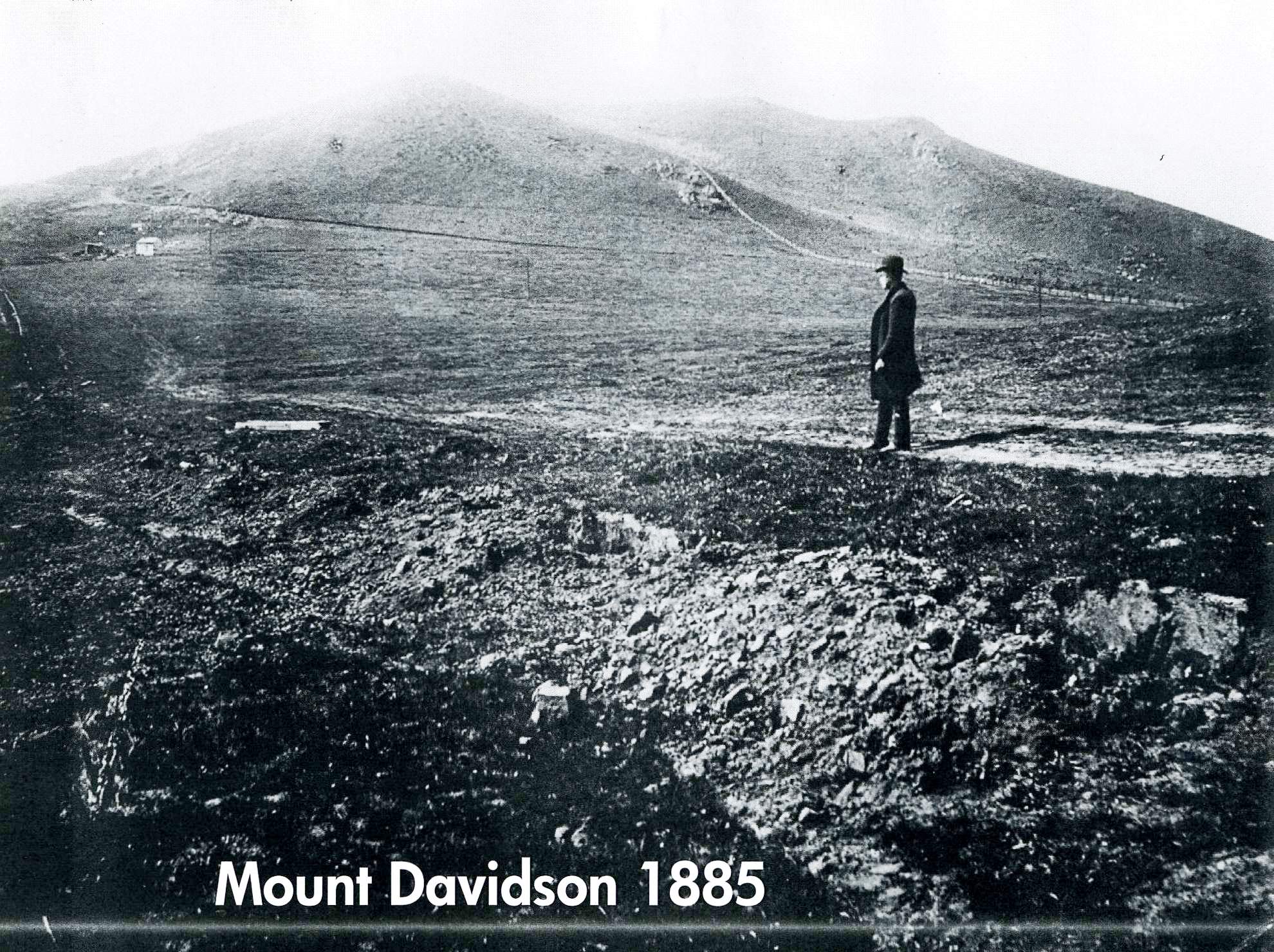
From a number of vantage points in San Francisco one can see several of the city’s hilltops covered in plantations of eucalyptus and Monterey cypress.  These plantations stand in contrast to the architecture that surrounds them.  They have been part of the San Francisco landscape for over one hundred years.  Eucalyptus plantations are as much a part of the California landscape as the coastal grassland, chaparral, and oak woodland plant communities for many people growing up in the Bay Area.  I did not find the visual value of the eucalyptus and Monterey cypress plantations on Mt. Davidson addressed in the plan.  I was, however, alarmed by the use of the term ”invasive forest” in reference to eucalyptus plantations.  This is a pejorative term that should not be applied to eucalyptus plantations.  I have found little evidence of eucalyptus invading adjacent areas of grassland or other native vegetation types in the San Francisco Bay areas in studies I conducted in open space areas (McBride, Sugihara, and Amme, 1987; McBride, Cheng, and Chorover, 1989; Cheng and McBride, 1992; Russell and McBride, 2003).  Comparison of photographs of Mt Davidson taken in the 1920s and 1950s show no evidence of the eucalyptus invading the adjacent grassland area (Proctor, 2006).  These photographs indicate that a stable boundary exists between the eucalyptus plantation and the adjacent grassland.  I see no justification for the establishment of a stable boundary between the eucalyptus and grassland habitats as called for in the “Site Improvements” section of the Significant Natural Resource Areas Management Plan. Mt Davidson 1885
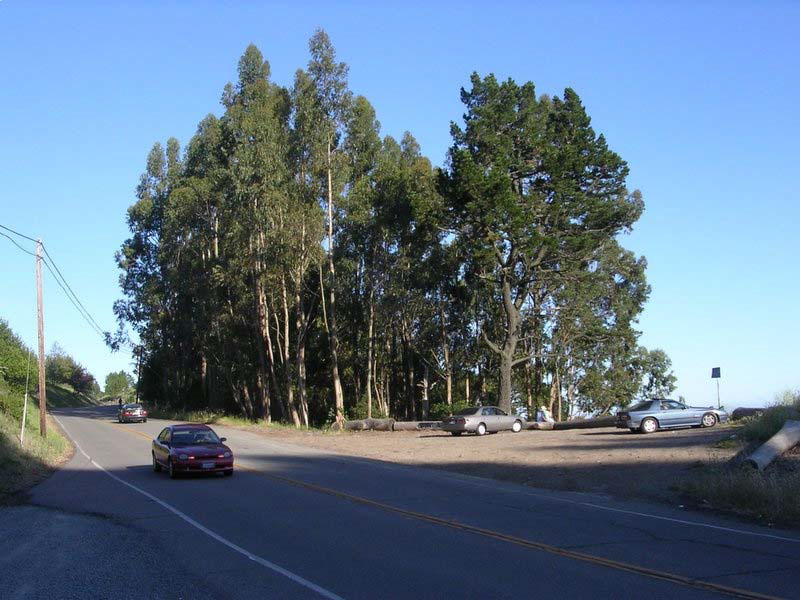
MD 1927 RPD presentation        MD 2010 RPD

My concerns over the management plan for the eucalyptus and Monterey cypress plantation on Mt. Davidson are based on portions of the Significant Natural Resources Areas Management Plan : 5. General Recommendations, 6.2 Mount Davidson, Appendix F Urban Forestry Statements.  I am concerned with the justification for tree removal and the proposed levels (%) of trees to be removed.

Justification for Tree Removal

The primary justification for tree removal in the documents is the restoration of native habitat.  Various statements are made concerning the minimal amount of habitat within the eucalyptus urban forest.  This assumption is not supported by any data or reference to publications on this topic.  Stebbins (1976) concluded that eucalyptus plantations in the East Bay were far richer habitats for vertebrates than either redwood or Monterey forest and that they vie with ‘dry’ chaparral and grasslands in species diversity and ’attractiveness’ to vertebrate species.

The general recommendation to maintain a basal area between 200 and 600 square feet per acre is appropriate.  However, a conflict exists at Mt. Davidson where some stands (MA-1c) within the plantation currently have basal areas less than 200 square feet yet the plan proposes the removal of 82% of the trees.  I think there is a problem with the use of tree density measured in eucalyptus stands in Glen Canyon Park in developing the proposed cutting of trees at Mt. Davidson.  The point-quarter survey mentioned in Appendix F (Urban Forest Statements) of the Significant Natural Resources Areas Management Plan indicates a tree density of 353 trees per acre.  Three eucalyptus plantations measured in the Golden Gate National Recreation Area had tree densities of 50, 98, and 726 trees per acre (McBride, Cheng, and Clausen, 2004).  These numbers demonstrate the wide range of tree densities found within eucalyptus plantations in San Francisco.  I estimated the tree density in stand MA-1c from Google Earth images of Mt. Davidson to range from 24 to 33 trees per acre.  Trees in this stand average about 24 inches in diameter.  Trees of this size with a density of 33 trees per acre would have a basal area of a little over 100 square feet per acre (103.6 square feet).  No trees from the area designated MA-1c could be removed if the basal area recommendation was followed.  The same would apply to stands MA-2e and MA-2c where recommendations are for removal of 23% and 31% respectively.  I think a major shortcoming of the Plan is that lack of stand-specific tree density data.

Various sections of the Significant Natural Resource Areas Management Plan justify tree removal as a means of allowing re-vegetation with native understory vegetation.  Species commonly found in the understories of native forests and woodlands of the Bay Area are adapted to the low light intensity of these forests and woodlands.  Removing the eucalyptus overstory up to 82% as proposed for area MA-1c will expose the ground surface to light levels that most native understory plants will not be able to tolerate.  The management plan also points out that removal of eucalyptus will result in the promotion of growth of existing exotic understory species.  These will no doubt, compete with any native species for the site.  The suggestion that these exotic species will be controlled by manual removal and the use of herbicides indicates the City is prepared for a large investment of time and labor to combat these plants.  Projects to eliminate exotic understory plants at the Presidio after overstories of Eucalyptus and Monterey cypress have been removed have proved to be very expensive and only partially successful.

The Significant Natural Resource Areas Management Plan states that the proposed forest management will not result in long-term changes in recreational use of the natural areas.  I cannot agree with this conclusion.  The proposed cutting of trees will increase the windthrow and wind breakage of the remaining trees.  Trees that have grown up together in a plantation have buffered each other from the wind.  When individuals are exposed by the removal of surrounding trees they are very vulnerable to the wind.  This is well documented in studies of native forests and forests which have been thinned or opened for subdivision development (Franklin and Forman, 1987; McBride, 1999, 2002, 2003; Sinton et al, 2000).  The tree fall and wind breakage hazard to walkers using the Mt. Davidson area after the proposed tree removal and thinning would, I believe, seriously compromise the use of the area for recreational purposes.  The existing forest plantations currently contribute to the use of Mt. Davidson by walkers because of the reduction in wind velocity by the trees.  Forest plantations studied at the Presidio and at Lands End significantly reduce wind velocity and protect people walking from uncomfortable wind chill effects (McBride, 2002; McBride and Leffingwell, 2003).  Choice of coastal bluff trails at the Sea Ranch made by walkers is often dependent on the amount of protective cover from the wind provided by areas planted with Monterey cypress.  The exposure of Mt. Davidson to winds from the ocean will result in a less pleasant recreational experience if trees are removed.

There is an assumption in the Significant Natural Resource Areas Management Plan that minimal impact will occur to species such as hawks and owls as a result of tree removal because the overall acreage of the forest will remain high.  This is not a valid assumption for two reasons.  First, hawks and owls choose specific trees for nesting and perching.  These trees are chosen on the basis of their position in a forest stand and the structure of the tree.  Nests are used by some species year after year so that the removal of a nesting tree can present a major problem for the specific bird using the tree.  Avoiding the cutting of nest trees during the nesting season, but felling of these trees after the nesting season is a major impact that should not be part of the management plan.  It is also important to not remove trees surrounding nesting trees.  Most recovery plans for rare and threatened tree nesting birds require a protected area with a minimum radius of 300’ around a nesting tree.  No trees can be removed within this zone.

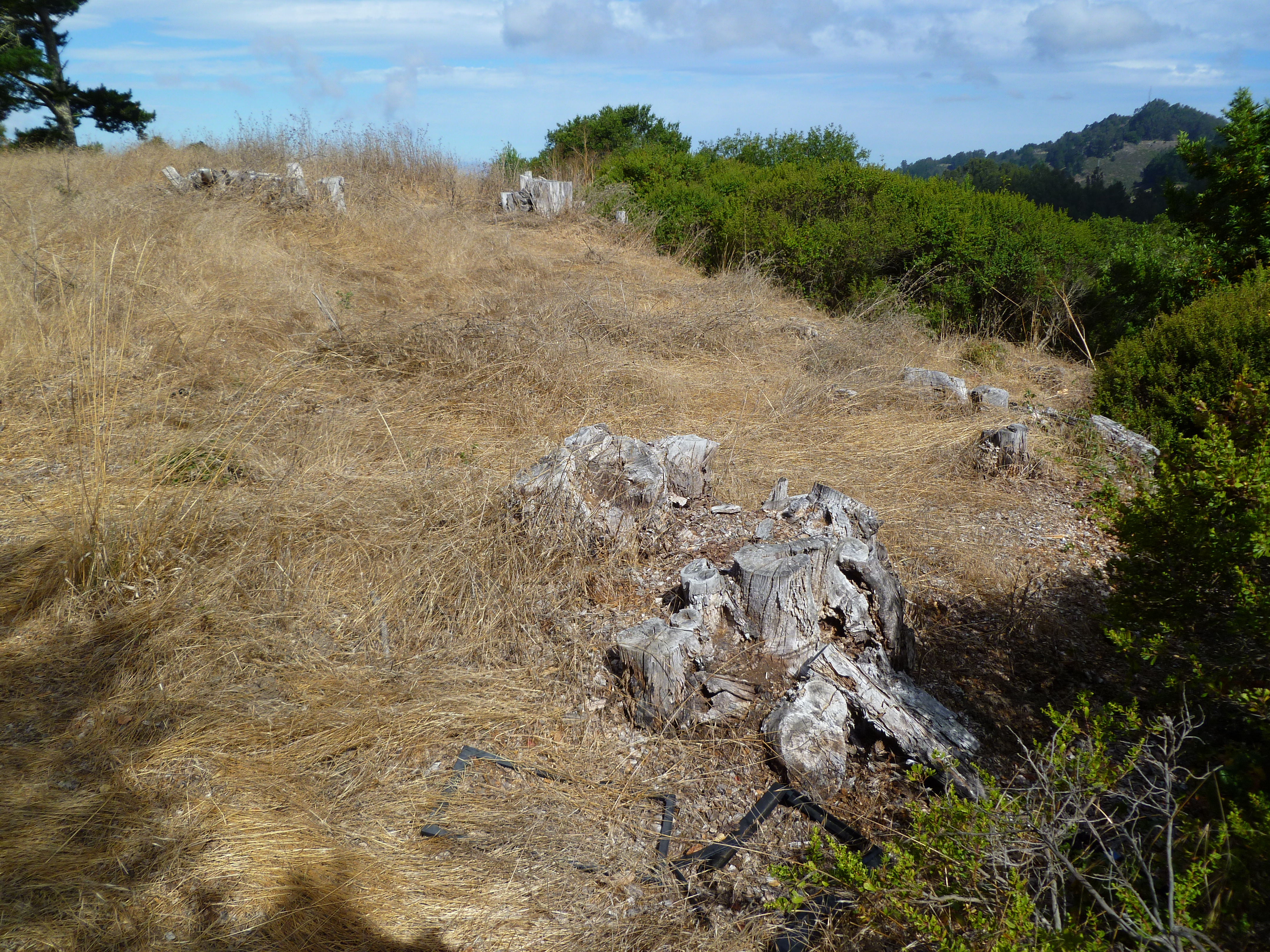
In the “Site Improvements” section of the Significant Natural Resource Areas Management Plan it is suggested that the management proposals will improve the health of the eucalyptus forest.  It is suggested that tree thinning will promote a more healthy forest.  This certainly is true in densely stocked forest stands, but I did not observe conditions in the eucalyptus plantations where tree density required thinning.  Several standing dead eucalyptus trees are present at Mt. Davidson, but the standing dead trees I examined had all been girdled.  It was evident that some individual or individuals have had a vendetta against eucalyptus trees and had girdled trees in the past.  I did not see any indication of natural mortality in the overstory of the plantations.  Concern has been raised over the potential for ivy to grow up the trunks and eventually smother the eucalyptus trees.  I have not observed this taking place in eucalyptus plantations in the East Bay.  Ivy (English and Algerian) may climb the trunks of trees, but in my experience it does not have the capacity to grow over the smaller limbs and branches.  There were a couple of eucalyptus snags completely covered by ivy at Mt. Davidson, but these snags were the result of girdling of the trees snags, not the growth of ivy.  The ivy, Cape ivy, and the Himalayan blackberry in the under story of the eucalyptus plantation are restricting establishment of eucalyptus seedlings.  I do not see this as a problem at the current age of the plantation.  Perhaps in another hundred years an examination of the plantation could establish the need for regeneration.  At this time in the life of the Mt. Davidson plantation I do not consider the lack of regeneration a problem.  Removal of the exotic understory species at this time would reduce the habitat quality of the plantation, especially the removal of Himalayan blackberry that provides a valuable food source for many species.

I conclude that the Significant Natural Resource Areas Management Plan for the removal and thinning of different portions of the eucalyptus plantation on Mt. Davidson is not justified.  The plantation serves an important role in the history and visual characteristics of the city.  Trees and the existing understory provide habitat for wildlife and wind protection for walkers.  The justifications for the management prescriptions have not been properly developed.  Furthermore, the cost of removal of the trees seems unjustified in view of other priorities in the San Francisco budget.

Sincerely,
        
Joe R. McBride
Professor

CC:  Mayor Edwin M. Lee
City and County of San Francisco Board of Supervisors
San Francisco Recreation and Park Commission
San Francisco Planning Commission
San Francisco Urban Forestry Council
Park, Recreation and Open Space Advisory Committee
Bill Wycko, Environmental Review Officer (Case No. 005.1912E)

Literature Cited

Cheng, S. and J.R. McBride. 1992. Biological Assessment of Mills Creek Riparian Corridor. Report to the California Department of Parks and Recreation. Monterey Co., CA 89p.

Franklin, J. and R.T.T. Forman. 1987. Creating landscape patterns by forest cutting: ecological consequences and principles. Landscape ecology 1:5-18.

McBride, J. R. 1999. Identification of areas of high windthrow potential at the Sea Ranch. McBride and McBride. Consulting Landscape Ecologists. Berkeley, CA.

McBride, J. R. 2002. Presidio of San Francisco Wind Study, First Phase.  Report to the Presidio Trust. San Francisco, CA. 35 p.

McBride, J. R. 2003. Re-evaluation of the windthrow problem at The Sea Ranch. Report to the Planning Department. The Sea Ranch, CA. 6 p.

McBride, J. R. and J. Leffingwell. 2003. Effects of Forest Stands on the Microclimates of the Presidio. Report to the Presidio Trust. San Francisco, CA. 27 p.

McBride, J.R., N. Sugihara and D. Amme. 1987. Vegetation Assessment. In: D. Boyd (Ed.)  Environmental assessment for Eucalyptus Removal on Angel Island. California Dept. Parks and Recreation, Sacramento, CA. pp 23-45

McBride, J.R., S. Cheng and J. Chorover. 1989. Natural Resources Assessment – Jack London State    Park. Calif. Dept. Parks and Recreation. Sacramento, CA. 432 p.

Proctor, J. 2006. San Francisco’s West of Twin Peaks. Charleston, SC: Arcadia Publishing.

Russell, W. H. and J. R. McBride. 2003. Landscape scale vegetation-type conversion and fire hazard in the San Francisco Bay Area open spaces. Landscape and Urban Planning 64:201-208.

McBride, J. R. , S. Cheng, and J. Clausen. 2004. Vegetation management Strategy for Lands End, GGNRA. Report to the Golden Gate National Park Conservancy. San Francisco, CA

Sinton, D. S. et al.  2000. Windthrow disturbance, forest composition, and structure in the Bull Run Basin, Oregon. Ecology 81(9): 2539-2556.

Stebbins, R. 1976. Use of habitats in the East Bay Regional Parks by free-living vertebrate animals. August 1975. In “Vegetation Management Principles and Policies for the East Bay Regional Park District”.  East Bay Regional Parks District. Oakland, CA.
“Invasion Biology: Critique of a Pseudoscience”

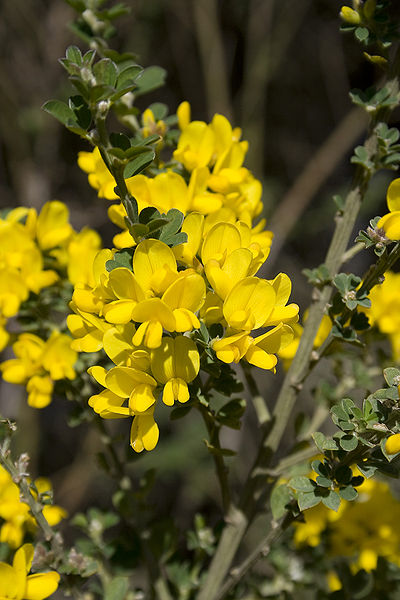
Broom is the likely occupant of East Bay public land now shaded by non-native trees that will be destroyed the FEMA projects.  Share alike.
Broom is the likely occupant of East Bay public land now shaded by non-native trees that will be destroyed by the FEMA projects. Share Alike.

Invasion Biology:  Critique of a Pseudoscience is a book by David Theodoropoulos. (1)  He explains in the preface of the book, how he arrived at the conclusion that invasion biology is a pseudoscience and why he felt compelled to explain that conclusion in his book.

Theodoropoulos was from an early age a lover of nature and he always spent much of his time outdoors, observing nature.  He recalls noticing decades before writing his book that some plant species—such as broom—tended to occupy disturbed ground such as roadsides.  He was also aware that introduced species of plants were contributing to biological diversity.  Putting those two observations together, he concluded that plants that are introduced and dispersed by the activities of man are integrating into ecosystems and increasing biodiversity.

As the hysteria about “alien invasions” began to mount in the 1990s, Theodoropoulos could not reconcile this anxiety with his observations of nature.  He read the studies that supported invasion biology and found their scientific methods and their conclusions unsatisfactory.  He concluded that the fear of introduced plants was motivated by “psychological factors” that are not supported by scientific evidence. 

As he shared his observations with others, he was subjected to abusive attacks by proponents of invasion biology, which ultimately compelled him to write his book to defend his opinion of invasion biology.  He explains why he wrote his book:

“During the past decade ‘invader’ fears have reached a fevered pitch, with  a constant barrage from the media fanning the flames, and a huge volume of literature has been published, produced by scientists with a self-interest in promoting this ideology.  Corporate and bureaucratic interests have intruded, pushing their agendas of profit and control.  Finally, the use of invader fears to justify total human control of the natural world has shown that the ideology has reached a dangerous place.”   (emphasis added)

David Theodorpoulos will be speaking in the East Bay on Sunday, July 14, 2013.  Here is the announcement of this event by its sponsor East Bay Pesticide Alert:

INVASION BIOLOGY

OR INTEGRATION BIOLOGY?

Who is behind the deforestation and pesticiding of the East Bay Hills, from Richmond to Hayward?


**Slideshow with narration, followed by discussion**

DAVID THEODOROPOULOS

Conservation Biologist and Author:

Invasion Biology: Critique of a Pseudoscience

+ Update from Save Mt. Sutro Forest


SUNDAY, JULY 14, 2013, 6:30PM (doors open 6PM)

Historic Hall, Berkeley Fellowship of Unitarian Universalists

1924 Cedar (one block east of MLK, Jr. Way)


Hear about Invasion Biology from a different perspective of non-native species, based on Evolutionary Biology, and find out about the native plant restoration movement’s connection to the pesticide industry.

**Please refrain from using scented products prior to attending **Wheelchair accessible

Co-sponsored by East Bay Pesticide Alert (dontspraycalifornia.org) (see wildfire pages) & Social Justice Committee BFUU (bfuu.org)

***********************

We have read Mr. Theodoropoulos’ book and we have heard him speak.  We can highly recommend both his book and his talk as informative and interesting.   We can also recommend the speaker about the Sutro Forest in San Francisco.  If you are not aware of how widespread the destruction of non-native plants and trees is, you will want to hear about the plans to destroy over 30,000 trees on Mount Sutro in San Francisco.  Please come to learn about the destructive consequences of projects that are attempting to convert our diverse landscape into native plant advocates’ fantasy of what it looked like 250 years ago.

Update:  A video of this presentation is now available here.

***********************

(1)    Avvar Books, 2003

The Environmental Protection Agency evaluates the Environmental Impact Statement for FEMA projects in the East Bay

The Environmental Protection Agency (EPA) has published its comment on the Draft Environmental Impact Statement (DEIS) for the FEMA projects in the East Bay.  It is available here: FEMA DEIS – public comment – EPA.  We are pleased to tell you that the EPA shares many of our concerns about the environmental impact of these projects and they consider the evaluation of those impacts by the DEIS inadequate.  The EPA has rated this project “Environmental Concerns – Insufficient Information.”  These are the definitions of those terms:

  • “Environmental Concerns:  The EPA review has identified environmental impacts that should be avoided in order to fully protect the environment.  Corrective measures may require changes to the preferred alternative or application of mitigation measures that can reduce the environmental impact…”
  • “Insufficient Information:  The draft EIS does not contain sufficient information for EPA to fully assess environmental impacts that should be avoided in order to fully protect the environment…”

EPA says, “The project could result in degradation of natural resources”

The EPA shares our opinion about the probable outcome of the proposed project:

“The document assumes that areas will naturally regenerate, once rid of non-native species.  We are concerned that some of the aspects of the project would result in degradation of natural resources and may not provide for natural regeneration.  Further, while the DEIS includes a discussion of climate change, it does not include a detailed discussion of the potential impact of climate change on the Project area.  Current research indicates that climate change could impact the amount, timing and intensity of rain and storm events; increase the length and severity of the fire season; modify the rate and distribution of harmful timber insects and diseases; and aggravate already stressed water supplies.  A significant change in the weather patterns could have important implications for the management of the Project area.”

FEMA proposed project on the right. Claremont Blvd. westbound.

The EPA recommends that the final EIS take into consideration the impact that climate change will have on the success of the project.  For example, as plants and animals move in response to climate change, they may no longer be viable in their historic ranges, which this project attempts to replicate.  Ironically, the project contributes to climate change by releasing tons of greenhouse gases that cause climate change.  The DEIS does not acknowledge or analyze these factors.

Completed project 10 years later

A completed project 10 years later. Southbound Grizzly Peak Blvd.

EPA says, “We note that extensive use of herbicides is proposed”

Yes, indeed, this project will require thousands of gallons of herbicide and we are delighted that the EPA has noticed this as well as the serious deficiencies of information in the DEIS regarding herbicide use:

  • There are many different formulations of Roundup with different properties, yet the DEIS does not identify which formulation of Roundup will be used.   Therefore we cannot evaluate its toxicity.
  • The DEIS does not clearly state which herbicide products will be used for what purpose and in what locations.
  • The DEIS does not clearly state the method of application of herbicides.
  • The DEIS does not acknowledge that both triclopyr and imazapyr “can migrate through the soil” which will damage the native trees and vegetation this project claims to promote.
  • The DEIS evaluates the impact of herbicides only on endangered species which may or may not be the most sensitive species to herbicides.  The final EIS must evaluate the impact of herbicides on the most sensitive species of animals, whether or not they are endangered.

The EPA is equally concerned about the impact of herbicides on human health and safety.  It therefore notes the following deficiencies in the DEIS in that regard:

  • Reports of toxicity of herbicides in the DEIS are incomplete and inaccurate.
  • The DEIS does not acknowledge the “possibility of people and or animals entering the treated areas and coming in contact with herbicides already applied.”  The Final EIS (FEIS) should therefore “clarify that there is potential for human exposure even if the chemicals do not move from the application site.”  Further, “The FEIS should include a mitigation measure to remove fruiting or other edible vegetation.”

The EPA also noted many of the troubling inaccuracies and contradictions in the DEIS that were also a concern to us:

  • The DEIS claims as “mitigation” the requirements on the labels of the herbicide products that will be used.  These are mandatory requirements for legal use of the products, not voluntary measures that can be described as “mitigation.”
  • Likewise, the DEIS claims that requiring applicators of herbicides to wear protective clothing is a “Best Management Practice.”  Wearing protective clothing is required for legal application of herbicides, not a voluntary measure.
  • Several contradictory statements are made in the DEIS regarding maximum wind speeds beyond which herbicides should not be applied.
  • The DEIS claims that the “Lowest Observed Adverse Effect Levels” of herbicides can be estimated from an experimentally derived “No-observed Adverse Effect Level” without providing any supporting reference.  The EPA asks, basically, where does that claim come from?
  • The EPA points out inconsistent and incorrect use of the phrase “Certified Pesticide Applicator.”  That may seem a small quibble, but it means that we have no idea what the qualifications will be of the people who will apply herbicides.
  • The DEIS announces that a specific adjuvant or surfactant will be used without telling us anything about the properties of that product.  The adjuvant or surfactant is the inert ingredient in a formulated herbicide product that delivers the active ingredient (the poison) to the plant.
  • The DEIS uses an outdated EPA study about the effect of glyphosate on rabbits to report the toxicity of the product on rats.  Whoops!  Old data about the wrong animal!  Picky, picky.

EPA asks, “Are the trees being removed for development?”

The EPA has apparently noticed that the DEIS mentions the long-term plans to build on some of the project areas of UC Berkeley.  Therefore, it wants to know if that’s why the trees are being destroyed: 

“Given that development is not included in the purpose and need for this Project, it is unclear whether the trees in these overlap areas would be removed for construction purposes regardless of whether they are removed as part of the proposed Project or not.”

Government is doing its job!

We are amongst the slim majority of voters who believe that government has an important job to do.  We are often disappointed by government, but we aren’t inclined to kill it because it is sometimes incompetent.  We are therefore very pleased to tell our readers that the EPA has apparently read the DEIS published by its sister/brother agency, The Federal Emergency Management Agency.  Although they did not identify many of the important issues in the DEIS, they identified some of them.  For that we are grateful as well as hopeful that the sponsors of these destructive projects will be forced to at least modify them, if not abandon them altogether.  Thank you, EPA!

Harassment by native plant zealots

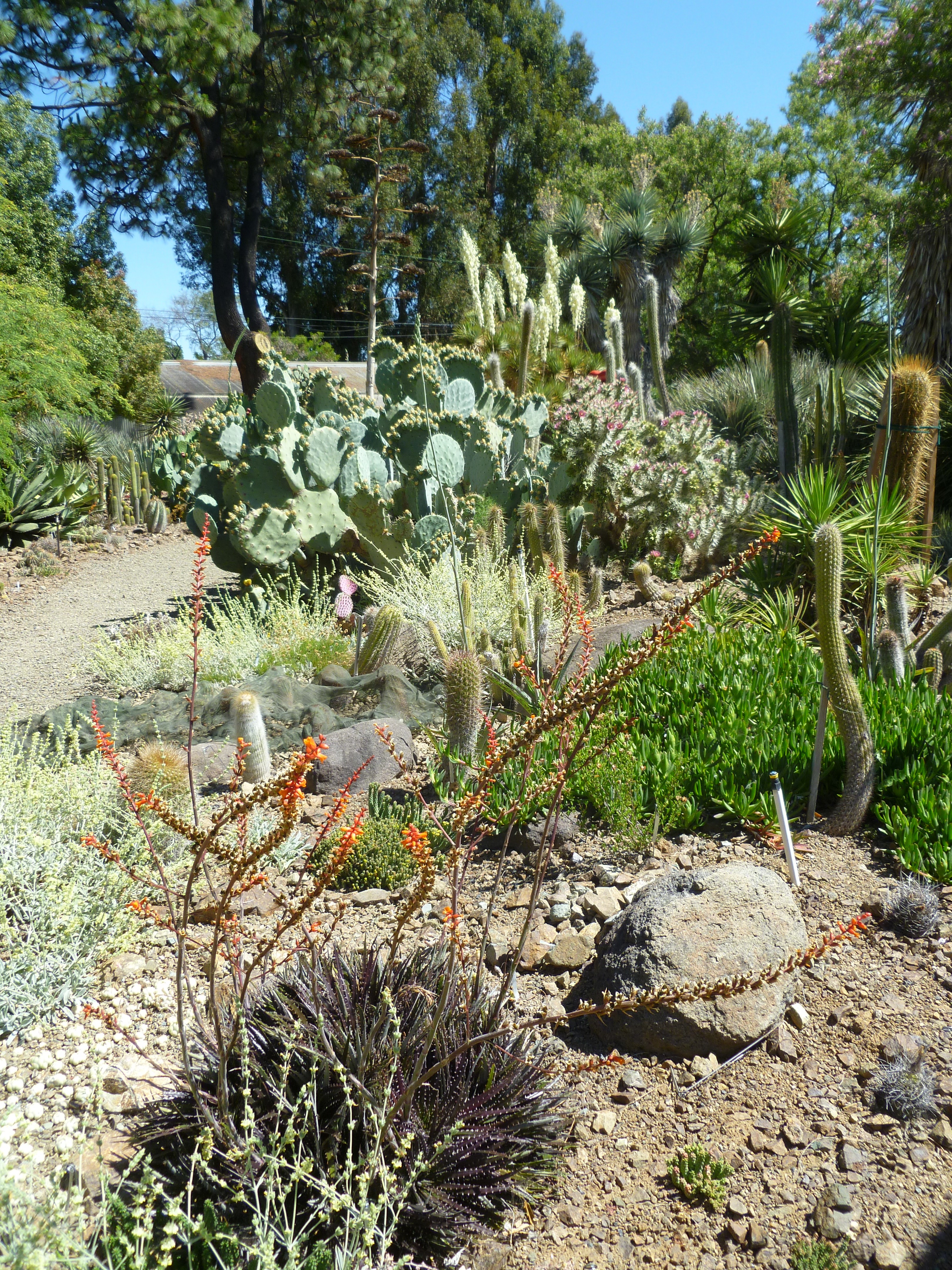
Ruth Bancroft Garden is a mix of native and non-native plants

The following exchange of emails was recently posted to the faculty email list at City College of San Francisco.  The first email was sent by a student at City College to the President of the Board of Trustees of the College and the Chancellor.  (Written communications to public employees are in the public record.) The second email was sent by the Chairman of the Environmental Horticulture and Floristry program at City College. 

“On Wed, Apr 24, 2013 at 12:03 AM, Denise Louie,  email address redacted

Hello President Rizzo, Chancellor Scott-Skillman and Sustainability Committee members,

 Today I spoke with Environmental Horticulture instructor Gus Broucaret while his class was removing plants outside the Environmental Horticulture building.  He indicated his plan was to replant similar non-native plants.   I pointed out that the CCSF Sustainability Plan calls for planting native plants and urged him to reconsider his plant choices.  If no one has done so, I suggest you request that all Environmental Horticulture faculty and staff be asked to follow principles of the Sustainability Plan.  That includes planting [local] native plants, removing and avoiding invasive plants, conserving resources like water, and the like.

 At the same time, I heard that a native plant installation had been designed for the front of EHD.  The plan was drafted and did go through certain review processes, only to have been shelved.  I suggest you ask the EHD chair to present the written plan for a native plant installation in front of EHD, so that interested stakeholders may see it and discuss it further. It is entirely possible to create a local native plant landscape that yields cut flowers, berries and greens for flower arrangement classes.

The online CCSF employee directory does not show an email address for Mr.  Broucaret, so I intend to call him to inform him of my mention of his name in this email.

 Thank you,
 Denise Louie
 Member, Sustainability Committee”


“Steven Brown, email address redacted 4/25/2013 3:12 PM

This is absolute harassment and illegal behavior.

Denise Louie has no business interrupting instructors during class times, period. She has done so several times now.

This student doesn’t know anything about what she is talking about. And she does not represent the sustainability committee.

My instructors have all been advised to call the campus police if she interrupts them.

She has been removed from our department in the past and has had instructions not to be here.

I have filled out paper work many times to try to end this harassment.

I had no idea this incident had occurred until now.

I am extremely upset about this and will be looking into hiring an attorney to sue the school for not taking steps to prevent this behavior. This harassment has gone on for three years now!

We have cooperated with the sustainability plan which is a guide. Title five is law, the Ed code is law.

This has to stop”

The Chairman of the Environmental Horticulture & Retail Floristry program is featured in a video about the program on the CCSF website.  In that video, he explains that “Horticulture is the decorative use of plants…We teach our students how to use plants in an urban landscape and how to maintain that landscape.”  This suggests that students in that program can expect to learn about both native plants and the thousands of species of non-native plants that are planted in our gardens.  A horticulture program that uses exclusively native plants would not provide its students with the education they need to be gardeners. 

In the 15 years in which we have been engaged in the effort to prevent the destruction of our non-native urban forest we have witnessed and been subjected to harassment from native plant zealots.  We have been threatened and accused of wrongdoing of which we are innocent.  Therefore, we sympathize with the Chairman of the CCSF horticulture program. 

At the same time, we acknowledge that there is a wide range of both opinion and behavior amongst native plant advocates, just as there is a wide range within the community of their critics.  We do not wish to paint native plant advocates with a broad brush.  We only wish to remind them that such attempts at intimidation do not reflect well on their community.

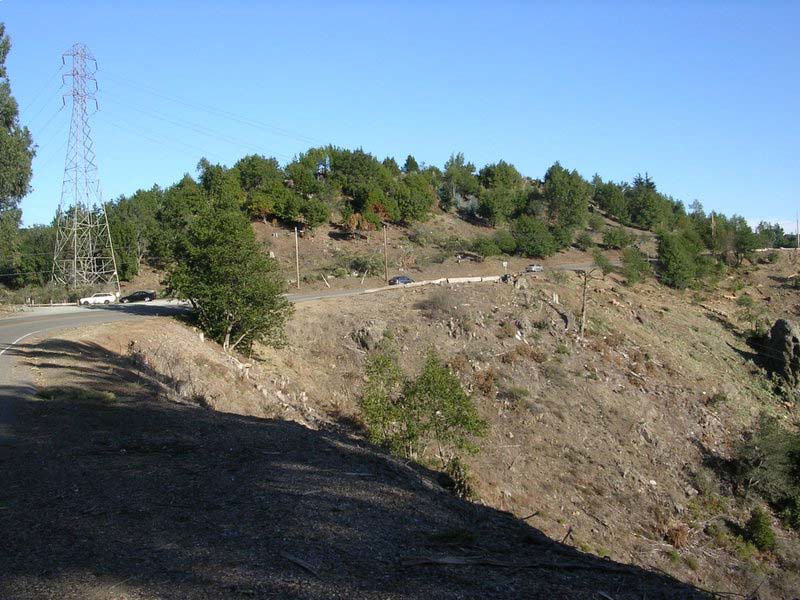
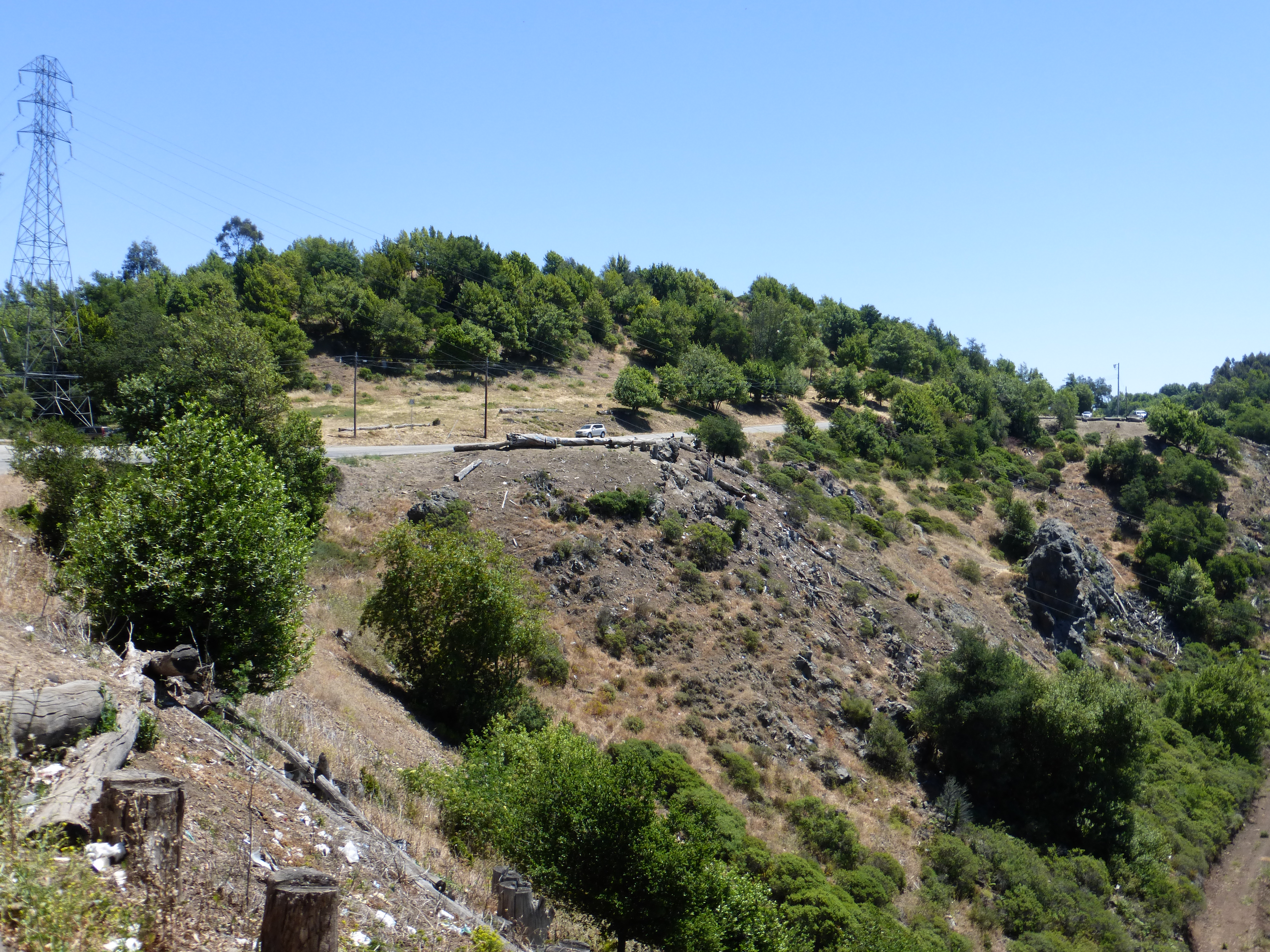
Above and below the middle ground are trees that will be destroyed by the FEMA project.  The middle ground is a preview of the landscape these projects hope to achieve.   Photo taken from Skyline Blvd, south of Claremont Blvd, looking north to Frowning Ridge.
Above and below the middle ground are trees that will be destroyed by the FEMA project. The middle ground is a preview of the landscape these projects hope to achieve. Photo taken from Grizzly Peak Blvd, south of Claremont Blvd, looking north to Frowning Ridge.

We received many more comments than usual during the public comment period for the FEMA projects in the East Bay Hills.  We posted many of the comments we received from supporters of the project.  We did not post comments from those who called us names and/or threatened us.  When we refused to post those comments, the threats and name-calling escalated, making it even less likely that we would post their inflammatory comments. 

Another theme in the dialogue with native plant advocates, which was repeated by some media coverage of this episode, is their deep state of denial of the strength of the opposition to the destructive projects they demand.  They repeatedly portray critics of these projects as a “tiny band” and similar minimizing descriptions. 

They are very mistaken.   The primary supporter of the FEMA projects, The Claremont Canyon Conservancy, claims in its public comment (available on CCC’s website) to represent 500 families.  Yet, the Conservancy’s on-line petition supporting the FEMA projects has less than 500 signatures.  In contrast, the petition which criticizes the FEMA projects has over 5,700 signatures.    The opposition to these projects has overwhelmed the support, which will surely be reflected in the public comments.  As these projects get bigger, greater numbers of trees are in jeopardy, and the devastating consequences are more apparent, the opposition will also get bigger and noisier.  We will eventually be heard. 

Media coverage of FEMA projects: The good, the bad, and the ugly

Anise Swallowtail butterfly in non-native fennel

The public comment period for the FEMA project in the East Bay that proposes to destroy nearly half a million trees will close on Monday, June 17, 2013, at midnight.  If you want to express your opinion of these projects, it’s time to do so.  Detailed information about the projects and how to comment on them is available HERE.

The projects have drawn quite a bit of media coverage, starting with Beyond the Chron blog in mid-May and quickly picked up by many other internet sources of information.  Most of those internet sources referred their readers to the Million Trees blog for more information.  In May we had over 12,000 visitors to our articles about these projects.

Both the Oakland Tribune and the San Francisco Chronicle covered the story.  The Tribune coverage was appallingly inaccurate and biased.  The Chronicle coverage was more balanced than it usually is about native plant restoration projects, which the Chronicle usually supports without reservation.

The winner of the booby prize for balanced and fair reporting of the projects goes to the Sierra Club Yodeler which expressed its unqualified support for the projects at the same time it demonstrated total ignorance of the projects (or chose to misrepresent them):

  • Sierra Club said, We want to avoid past mistakes, when agencies simply stripped off vegetation and then walked away, leaving the land clear for exotic and even more-flammable vegetation.”  This is precisely what these projects plan to do…destroy everything then walk away without planting anything.
  • Sierra Club said, The Park District is now implementing that program, and we are monitoring the progress.”  If they are monitoring that program, why don’t they know what the Park District is doing?
  • Sierra Club said, The preferred alternative involves application of the herbicide glyphosate (trade name Roundup) to the stumps to prevent re-sprouting. There is no practical way to eliminate eucalyptus infestations without herbicide, and glyphosate is relatively low in toxicity.”  The Sierra Club is simply wrong.  These projects will use Garlon (with active ingredient triclopyr) and/or Stalker (with active ingredient imazapyr)—not glyphosate (Roundup)–to prevent the trees from resprouting.  Both products are rated by the EPA as more toxic, more persistent, and more mobile in the soil than glyphosate.  Glyphosate (Roundup) will be foliar sprayed on non-native vegetation.  Recent studies report that glyphosate (Roundup) is not a benign pesticide.

There are some scathing comments on the Yodeler article from people who know enough about the project plans to inform the Club that they have run off the rails…into the weeds!!  The Club seems not to have noticed this attempt to set them straight.  When someone called them weeks later to ask about the projects, they repeated the same misinformation to the caller.

(Update:  One of our readers informed the Sierra Club of the inaccuracy of its Yodeler report about the FEMA projects in the East Bay (see comment below).  We are pleased to report that the Sierra Club has revised its Yodeler report on June 19, 2013.  It now acknowledges that native plants will not be planted by these projects.  Consistent with the Draft Environmental Impact Statement for these projects, the Yodeler now claims that native plants will be “recruited” into the areas in which non-native plants and trees will be destroyed. 

We think that is an unlikely outcome of these projects and FEMA’s environmental consultant agrees with us about that (explained here).  However, at least the Yodeler article is now consistent with the written plans for the project. 

The Yodeler also acknowledges the use of Garlon to kill the roots of the trees that will be destroyed.

Thanks to our readers for alerting the Sierra Club to the inaccuracy of their description of this project.  We are sorry that the Sierra Club continues to support the project now that they have a better understanding of the written plans. 6/19/13) 

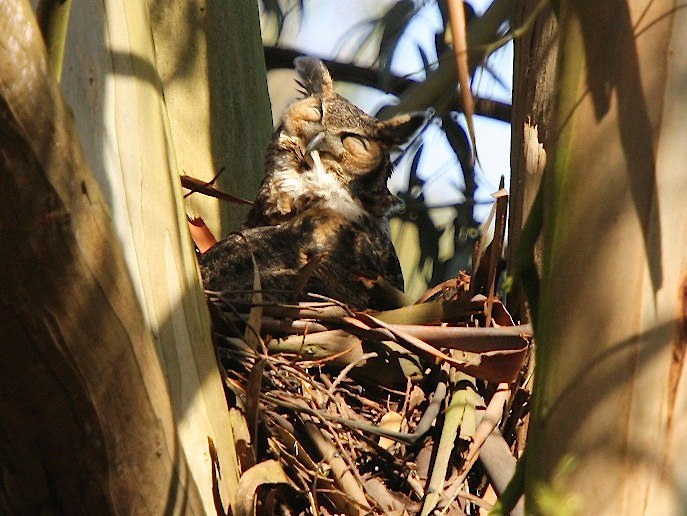
Owl nesting in eucalyptus, courtesy urbanwildness.com

On the positive side of the ledger, we commend the East Bay Express for its article about these projects.  The author deserves credit for actually reading about the projects before she wrote her report!!!  She read the letter from FEMA’s environmental consultant which we reported to our readers here.  In a nutshell, the consultant said that UC Berkeley’s project could increase fire hazards by leaving a 2-foot wood chip mulch on the ground and that conversion to a native landscape was an improbable outcome of the project since nothing will be planted.

Song Sparrow in non-native wild radish

Our personal favorite for coverage of this project is Nathan J. Winograd’s article, “Biological Xenophobia:  The Environmental Movement’s War on Nature,” which was published by the Huffington Post.   Mr. Winograd is highly qualified to express his opinion of these projects.  He has devoted his personal and professional life to the welfare of animals. He is best known for his advocacy for “no-kill” shelters for our animals.  He was the lawyer for the SPCA in San Francisco when the GGNRA started to destroy non-native trees and fence the public out of their properties to protect their fragile native plant museums.  So, he has been a long-time observer of the destructive and restrictive consequences of native plant projects.  He was prompted to write this article by this latest round of destruction, that is, the FEMA projects in the East Bay.

Here are a few choice phrases from Mr. Winograd’s excellent article:

“Invasion biologists believe that certain plants and animals should be valued more than others if they were at a particular location ‘first.”  When the species that were there ‘first’ are in the same habitat with a species that came later, they assert that the latter should be eradicated.”

 “And the nativist movement is getting worse and increasingly violent, both in rhetoric (fish they don’t value are called ‘missiles with fins’) and in deeds.  At a time of climate change, in a country that needs more trees, not less, nativists in the San Francisco Bay Area are proposing the clear cutting of upwards of half a million trees on San Francisco’s Mount Sutro and in the Oakland and Berkeley hills as part of their ongoing war against the Eucalyptus.  After the trees are clear-cut thousands of gallons of toxic herbicides, will be spread throughout wildlife corridors in order to prevent resprouting.”

An authentic environmentalism would not advocate that humans seek out and destroy living things for simply obeying the dictates of the natural world, such as migration and natural selection. It would not condone the killing of those plants and animals who find themselves in parts of the world where, for whatever arbitrary reason — be they economic, commercial or aesthetic — some humans do not want them to be. An authentic environmentalism would not exacerbate suffering, call for killing and seek the destruction of natural places.”

“Indeed, “invasion biology” is a faux environmentalism, used to disguise the ugly truth about what is really motivating its adherents: an intolerance of the foreign that we have rejected in our treatment of one another, a biological xenophobia that seeks to scapegoat plants and animals for the environmental destruction caused by one species and one species alone: humans.”

There are nearly 500 comments on Mr. Winograd’s article and they are as interesting as the article itself.  They are a microcosm of this debate between nativists and those with a more cosmopolitan view of nature.  We aren’t disinterested observers, so our opinion of the comments of nativists may not be entirely objective.  However, we find many of their comments condescending and uninformed, a contradictory mix of sentiments.

We thank our readers for informing themselves about the FEMA projects and we hope that you now have the information you need to write your public comment by the deadline, June 17, 2013.  Here is where you can send your comment:

  1. Via the project website: http://ebheis.cdmims.com
  2. By email: EBH-EIS-FEMA-RIX@fema.dhs.gov
  3. By mail: P.O. Box 72379, Oakland, CA 94612-8579
  4. By fax: 510-627-7147

These public lands belong to you and the money that will be used to implement these projects is your tax dollars.  So, please tell the people who work for you what you think of these projects.

Guest article about FEMA projects by a student of the forest

A few days ago we received a comment from a fellow tree-lover and student of the forest that deserves our attention.  He visited the project areas that may soon be cleared of all non-native trees and expressed his opinion of this planned devastation.  With his permission, we are posting his comment as an article.

His name is Deane Rimerman and he describes himself as “Hybrid Car Geek, PNW Landscape Restorationist, Web Builder, Arborist, Writer, Poem Performer, Life-long Photographer & Audio Engineer” on his website.  

************************************

Frowning Ridge before "vegetation management"
Frowning Ridge before “vegetation management”

Yesterday I toured the Oakland hills for the first time since I visited it a week after the 1991 fires. That torched landscape turned me into a lifelong student of the forest. So after my visit back to those hills yesterday I started reading everything I could about these FEMA plans!

In the interest of providing the most value I’ll focus on what’s not been mentioned yet in the debates I’ve read on this website thus far. Primarily it revolves around moisture and the value of tall standing trees for the purpose of capturing fog drip during the dry season.

I once worked with a forester named Rudolph Becking on studies that show 200 foot tall old growth redwoods can capture up to 7 inches of fog drip during the dry season. The biggest tallest eucalyptus,and pines, invasive or not also have the ability to do this. And if we’re talking about fire safety don’t we want to increase humidity in soil and in the air during the hottest driest times of the year? If the answer is yes, that can be done by protecting sites that are most exposed to fog in the dry season.

Frowning Ridge after 1,900 trees were removed from 11 acres in 2004

Also eucalyptus are huge water users only when they are young and exposed to full sun, but like most trees, once in a closed canopy forest they consume far less water during the dry season compared to open canopy forests.

Point being, we need to maintain landscapes that don’t dry out because plant and tree diversity won’t thrive and really aggressive invasive weeds will take over if we don’t intentionally map out and seek to protect the highest existing levels of soil moisture. The SF Bay Area climate is very arid.  If a time of drought were to coincide with this fire hazard removal plan, we could have a mass die-off native species and an even greater shift to drought tolerant non-native weeds that will eliminate most biodiversity.

And regardless of drought, desert like alterations to the landscape is what happens when we lose too much shade and moisture all at once. Many native plants growing under semi-shade conditions right now can’t survive if all the non-natives are clearcut or near clearcut as proposed in this plan.

Also what is missing from this landscape is lots of tall dead trees that act as bioreactors for flora fauna and rhizo diversity. Tall dead trees are like a bank account for future healthy soil, homes for so many birds and bugs too. There is a great poverty of standing deadwood on this landscape, yet no significant mention of snag retention and snag creation in this plan.  If we cut down all the largest live and dead standing trees there will be no large downed log recruitment for another century and that would be a misguided tragedy that will further impoverish the soil.

In a word: DIVERSITY.  You don’t have to cut down all the trees to increase diversity. We could have thousands of us spending every winter in these hills replanting hundreds of different species of native plants, as well as clearing weeds away from existing native plants in a low-impact site-specific way.  This of course is a labor intensive approach and humans have been manipulating these hills for thousands of years in very labor intensive ways.

In my view we’ve neglected these lands for too long and it’s about time we get back to all of us working together as volunteers meant to cultivate a garden of biodiversity with an eye toward carbon absorption and keeping as high as possible soil moisture and air moisture in order to prevent catastrophic fires.

But instead in this plan we see the usual lazy, super aggressive approach in which a forester, whose job is to cut down forests, is asked to solve our problems. And without any site-specific observation of fog drip and areas of high soil moisture in the dry season we log the forests as quickly and cheaply as possible thinking if we do it severely enough we won’t ever have to come in and fix anything ever again.

The homeowner version of these two approaches is akin to one homeowner who makes their landscape beautiful with hard work and lots of hands-on low impact cultivation of plant and tree diversity without herbicides. And then we have the other lazy homeowner who hates his yard and weedwacks his yard to bare ground every other year thinking once he does it one more time (and even more severely this time with extra herbicide) he won’t ever have to do it again.

And habitat-wise, if we inoculate eucalyptus and pine with heart wood rot to create cavities for habitat we will help fuel the whole food chain, not to mention create homes for myriad species.

And to all the folks who say these hills were mostly shrub oak and grassland I say that natural ecosystems in this region were mosaics of conifer and hardwood woodlands amongst mosaics of shrublands and small grassy meadows and it was all maintained by humans who for thousands of years used fire to maximize productivity in traditional cultivation areas. Those cultivation practices were based on specific sites where species grew best. The current plan as proposed is the antithesis of this. The current plan treats the whole landscape as if there’s very little variability of moisture levels and species compositions.  It’s as if the planners know more about growing corn in Iowa than they do about growing an ecosystem in the arid San Francisco Bay Area.

Frowning Ridge 2013
Frowning Ridge 2013

Lastly, the Monterey Pine is entirely native to a landscape that’s less than 100 miles away. And yes some of these pines might be a hybridized New Zealand variety but so what?

I’ll have more to say on all this soon… Maybe a whole website or book perhaps? 🙂

****************************

Remember that public comments are due by June 17, 2013.  You may submit written comments in several ways:

  1. Via the project website: http://ebheis.cdmims.com
  2. By email: EBH-EIS-FEMA-RIX@fema.dhs.gov
  3. By mail: P.O. Box 72379, Oakland, CA 94612-8579
  4. By fax: 510-627-7147

These public lands belong to you and the money that will be used to implement these projects is your tax dollars.  So, please tell the people who work for you what you think of these projects.


FEMA projects in the East Bay deny carbon loss

Hummingbird in eucalyptus flower.  Courtesy Melanie Hoffman
Hummingbird in eucalyptus flower. Courtesy Melanie Hofmann

Our readers know that one of many reasons why we object to the destruction of healthy trees is that they are sequestering and storing carbon which is released as carbon dioxide into the atmosphere when the trees are killed and as wood decays.  Carbon dioxide is the predominant greenhouse gas that is causing climate change.  We believe that addressing climate change should be considered our highest environmental priority.

Although we like native plants and would like to conserve them, they will not survive in their historical ranges in a changing climate.  Therefore, native plant advocates should join us in making climate change a higher priority than destroying our existing landscape in places where native plants may no longer be adapted if that destruction contributes to climate change.

Federal and State policies and laws have been adopted to address climate change and the main point of an environmental impact study is to assure the public that the project complies with all laws.  Therefore, the Draft Environmental Impact Study (DEIS) for the FEMA projects in the East Bay that will destroy tens of thousands of healthy trees stands on its proverbial head trying to deny that carbon loss resulting from these projects will not violate these laws.  These projects are described in detail HERE.

The point of this article is to inform the public of some of the flaws in the DEIS with respect to its analysis of carbon loss resulting from these projects.  (This will not be a complete list of omissions and errors in the DEIS regarding carbon loss.  A complete list would be too technical and lengthy.)

Only 15% of carbon storage in the existing forest has been quantified by the DEIS

The DEIS quantifies only two sources of carbon dioxide emissions resulting from this project:  the fossil fuels used by motorized equipment during the project and the trunks of the trees greater than 5” in diameter that will be destroyed.  Calculating loss of stored carbon based solely on the trunks of the trees that will be destroyed excludes the following sources of stored carbon in the forest:  the understory, the forest floor layer (e.g., duff and litter), the bark, roots, and branches of the trees, and the soil.  RA Birdsey of the US Forest Service reports (1) that only 15% of total carbon stored in forest ecosystems in the United States is contained in the trunk:

Allocation of carbon in forest ecosystems and trees

                              US Forests, 1992

1%

Foliage

5%

Roots

15%

Bole (trunk)

9%

Other wood above ground

29%

Tree

61%

Soil

8%

Forest floor

1%

Understory

99%

Total

Although the soil will remain when the trees are destroyed, there is scientific evidence that there will be some loss of soil carbon as a result of this project“…a major forest disturbance, such as a clearcut harvest, can increase coarse litter and oxidation of soil organic matter.  The balance of these two processes can result in a net loss of 20% of the initial carbon over a 10-15 year period following harvest.” (1)  The destruction of all non-natives trees on 400 acres of UC Berkeley and the City of Oakland properties and 90% of the trees on 1,600 acres of East Bay Regional Park District, surely qualifies as a “major forest disturbance” which will result in loss of carbon stored in the soil of the forest.

The DEIS pretends there is no carbon loss from prescribed burns

East Bay Regional Park District plans to chip the trees that are destroyed and distribute them on 20% of the project areas to a depth of 4-6 inches.  They plan to burn the wood that cannot be distributed on the ground without exceeding these limits.  This excess wood will be burned in piles.  In addition to pile burns, EBRPD also plans to conduct broadcast burns for the purpose of destroying non-native vegetation and vegetation debris considered potential fuel for a fire.

The DEIS does not quantify the carbon that will be released by these burns, citing an EPA policy of 1996:  “It should be noted that the emission of CO₂ from burning has not been calculated since the removal of the vegetation would allow new vegetation to grow, eventually consuming at least a portion [of] the CO₂ released during burning, as noted in EPA emission factor guidance (EPA 1996)”

This EPA policy regarding CO₂ emissions from prescribed burns has been revised to include carbon emissions from prescribed burns.   In response to climate change, the EPA established an “Emission Inventory Improvement Program” (EIIP) in 1997.  Since then, the EIIP has continuously expanded and improved the National Emissions Inventory (NEI).  The NEI for 2008 is available on the EPA website.  It includes reporting of CO₂ emissions resulting from prescribed burns.  Data for each type of emission is available on the internet.  It can be sorted by state.  The 2008 NEI reports that the State of California emitted 2,156,547 tons of carbon dioxide from prescribed burns in 2008.

Obviously, the DEIS is mistaken in its outdated claim that the EPA excludes emissions from prescribed burns from calculations of greenhouse gas emissions.  Furthermore, whether or not the carbon released by prescribed burns must technically be reported, that carbon is, in fact, released to the atmosphere.  Such a legalistic quibble ignores the fact that carbon released by prescribed burns has the same harmful environmental consequences as any other carbon release.   

Loss of the ability of the existing forest to sequester carbon in the future is not quantified

In addition to the grossly underestimated loss of carbon stored in the existing forest ecosystem, the DEIS does not quantify the loss of the ability of the existing forest to sequester carbon in the future.  The DEIS acknowledges that the post-treatment landscape will be less capable of sequestering carbon than the existing landscape:

“The proposed and connected actions would also be self-mitigating to some degree in the absence of a wildfire, because native vegetation would partially replace the non-native vegetation removed. However, the planned growth of oak and bay woodlands and successional grassland containing shrub islands would not sequester as much carbon as the larger eucalyptus and pines and the denser coastal scrub that would be removed.”  (DEIS 5.6-11)

The DEIS cannot claim that legal thresholds for carbon loss are not violated without quantifying this decrease in the ability to sequester carbon.

Blue gums live in Australia from 200 to 500 years. (2)  They live toward the longer end of the range in milder climates such as the San Francisco Bay Area.   Most Blue Gum eucalypts were planted in the East Bay between 1886 and 1913, according to David Nowak of the US Forest Service. (3)  Therefore, they are not more than 130 years old.  They can be expected to continue to sequester carbon for at least 100 years and perhaps 300 years.

The native trees that the proposed projects claim will occupy the ground now occupied by non-native trees are significantly smaller than the existing trees.  Since carbon sequestration and storage are proportionate to biomass, the native trees will not compensate for the loss of the ability of the existing forest to sequester carbon.  The DEIS reports in Table 4.7-1 that the oak-bay woodland in the project areas is storing only 8.97 metric tons of CO2 per acre, compared to 325.91 metric tons per acre in the eucalyptus forest and 184.61 metric tons per acre in the Monterey pines.

Furthermore, the predominant native tree is being killed by Sudden Oak Death (SOD) at an epidemic rate, so its future is both unlikely and unknown.  SOD exists in the project areas, which is reported HERE.

Misinterpreting or misrepresenting science

The DEIS sets up a straw man to support its claim that the FEMA projects will not increase carbon dioxide emissions by offering a false choice between theoretical carbon loss from a wildfire vs. carbon loss from destruction of the non-native forest.  This false choice violates both federal and state law regulating environmental impact studies because the measure of environmental impact as defined by those laws require that the study compare the existing, baseline condition to the potential impact resulting from the proposed project.  In other words, the existing condition is the forest that exists now, not a theoretical forest that has been destroyed by fire.

Adding insult to injury, the DEIS tries to prove its theoretical straw man by misinterpreting or misrepresenting scientific studies:

“Studies indicate that if a wildfire occurs, the proposed type of vegetation management sequesters more carbon in the long term than leaving the sites untreated. Two wildfire modeling studies indicated that thinning would reduce damage caused by wildfires, allowing faster regrowth after a fire (Hurteau and North 2010; Wiedinmyer and Hurteau 2010). The Wiedinmyer and Hurteau (2010) study included the use of prescribed burning as a treatment method.” (DEIS 5.6-11)

In fact, these studies don’t say what the DEIS claims they say:

In “Prescribed fire as a means of reducing forest carbon emissions in the Western United States,” (4) the authors compare carbon loss from prescribed burns with carbon loss from wildfires in the same locations and reach the conclusion that prescribed burns result in less carbon loss than wildfires without prescribed burns.  However, the prescribed burns they are considering were restricted to the understory and did not include any trees:  “The fraction of fuel consumed in prescribed fires was applied only to the surface fuel fraction (including herbaceous, fine, and coarse fuels of the total fuel loading model…); no live or standing dead trees are assumed to burn in prescribed fires.”  Therefore, this study is not applicable to the proposed project which intends to burn the remains of hundreds of thousands living trees which will obviously release far more carbon into the atmosphere than the prescribed burns in this study as well as reduce carbon sequestration into the foreseeable future.

In “Carbon recovery rates following different wildfire risk mitigation treatments,” (5) the authors compare several different methods of fuel reduction with respect to how long it takes for the forest to recoup the carbon loss from those methods.  It finds that the forest is unable to recoup the loss of carbon when the destruction of the overstory canopy is the method used because of the large amount of carbon stored in large trees:  “Overstory tree thinning treatments resulted in a large carbon deficit and removed many of the largest trees that accumulate the most carbon annually, thereby increasing carbon stock recovery time.”  In fact, this is precisely the method that will be used by the proposed project.  Therefore, this study makes the point that this project will permanently reduce the ability to sequester carbon by destroying large trees that will not be replaced.  In other words, this study contradicts rather than supports the assumptions of the DEIS regarding carbon storage.

In “High-severity wildfire effects on carbon stocks and emissions in fuels treated and untreated forests,” (6) the authors compare carbon loss from wildfires in a thinned forest (both loss from treatment and loss from subsequent wildfires) with carbon loss from wildfires in the same locations without thinning.  They conclude that such thinning results in more total carbon loss than wildfires without such thinning in the short run.  However, because more trees remain after wildfire in a treated forest, the ability of the forest to sequester carbon in the long term can recoup much of the loss of the treatment.  The forests they are considering have average densities of 1536 stems per hectare and thinning is limited to stems of less than 18 inches in diameter.  This study is therefore not relevant to the proposed project because the forests in the proposed project are significantly less dense and are being completely destroyed by UCB and Oakland and more drastically thinned by EBRPD compared to the study.  In other words, a much greater percentage of total carbon storage will be lost by the proposed projects in the short run because a higher percentage of total trees will be destroyed, including all large trees which store more carbon than smaller trees.  In addition much more capability to sequester carbon will be lost in the long run because few trees will remain.

All of these studies have in common that they have measured all sources of carbon in the forest:  carbon in the soil and roots, in the branches and leaves, in the understory, in the duff and leaf litter.  In contrast, the DEIS quantifies only the amount of carbon stored in the trunks of the trees.  All other sources of carbon are ignored.

It’s time to send your public comment on these projects

Remember that public comments are due by June 17, 2013.  You may submit written comments in several ways:

  1. Via the project website: http://ebheis.cdmims.com
  2. By email: EBH-EIS-FEMA-RIX@fema.dhs.gov
  3. By mail: P.O. Box 72379, Oakland, CA 94612-8579
  4. By fax: 510-627-7147

These public lands belong to you and the money that will be used to implement these projects is your tax dollars.  So, please tell the people who work for you what you think of these projects.

***********************************

(1)     “Carbon Changes in US Forests,” RA Birdsey and LS Heath, US Forest Service Gen. Tech. Report RM-GTR-271, 1995

(2)     Eucalypt ecology: Individuals to ecosystems, by Jann Elizabeth Williams, John Woinarski ,Cambridge University Press, 1997

(3)     David Nowak, “Historical vegetation change in Oakland and its implications for urban forest management,” Journal of Arboriculture, 19(5), September 1993,

(4)     Christine Wiedinmyer and Matthew Hurteau, “Prescribed fire as a means of reducing forest carbon emissions in the Western United States,” Environmental Science Technology, 2010, 44, 1926-1932

(5)     Matthew Hurteau and Malcolm North, “Carbon recovery rates following different wildfire risk mitigation treatments,” Forest Ecology and Management, 260 (2010) 930-937

(6)     Malcolm North and Matthew Hurteau, “High-severity wildfire effects on carbon stocks and emissions in fuels treated and untreated forest,” Forest Ecology and Management, 261 (2011) 1115-1120

Environmental consultant evaluates UC Berkeley’s FEMA project

We described the projects that will destroy tens of thousands of trees on public lands in the San Francisco East Bay in recent posts available here and here.  In this post we will focus on the projects on the property of the University of California, Berkeley (UCB) which will destroy 60,000 54,000 trees on 284 acres, cover 20% of those acres in 2 feet of chipped wood, and spray hundreds of gallons of herbicides on the stumps as well as foliar spray non-native vegetation.

The first consultant that was hired by FEMA to conduct the environmental impact review was URS Corporation.  We know that URS Corporation was the consultant at the time of the scoping process in 2010 because we spoke to their representatives at that meeting.  We were able to obtain the evaluation of UCB’s project by the URS Corporation with a public records request (Freedom of Information Act, AKA FOIA).  In this post we will tell you what URS said about UCB’s project in a letter to FEMA dated May 27, 2009.  FEMA posed 6 specific “issues” and we will briefly describe how URS evaluated these issues.  (The issues are quoted verbatim from that letter.)

Issue 1:  Evidence that the supposed habitat restoration benefit will occur, since no plans for revegetation is included in this grant.

URS agrees with UC that the “project will provide better growing conditions for plants in the understory because the plants will have increased access to resources (e.g., sunlight and soil nutrients).”  But they emphatically do not agree with UCB that the post-treatment landscape will be exclusively native:

French broom in Oakland, CA.  Beautiful but hated by native plant advocates.  Share alike
French broom in Oakland, CA. Beautiful but hated by native plant advocates. Share alike

“However, we question the assumption that the types of vegetation recolonizing the area would be native.  Based on conditions observed during site visits in April 2009, current understory species such as English ivy, acacia, vinca sp., French broom, and Himalayan blackberry would likely be the first to recover and recolonize newly disturbed areas once the eucalyptus removal is complete.  These understory species are aggressive exotics, and in the absence of proactive removal there is no evidence to suggest that they would cease to thrive in the area, especially the French broom which would be the only understory plant capable of surviving inundation by a 2-foot-deep layer of eucalyptus chips.”

URS also observes that wood chip mulch is unlikely to encourage native revegetation over non-native revegetation:

“As written, the current plan assumes native vegetation will reclaim the treatment areas but does not include any plans for native revegetation.  Instead, in order to ‘reduce undesirable weed invasion’ and thus encourage the development of native grasslands, chaparral, and bay/redwood communities, UC plans to apply chip mulch to the ground…It is not clear how the mulch would prevent the proliferation of invasive species while simultaneously encouraging the growth of existing native species.  Despite thorough research, we were unable to find documentation of the ability of exotic chip mulch to suppress undesirable species while encouraging favorable species.”

Issue 2:  Relative fire risk of current vegetation versus chip dominated landscape:  there is no scientific evidence to support the project as proposed.

Although URS agrees with UC that eucalypts are a fire hazard, they question that the eucalypts are more flammable than distributing their dead wood on the ground as wood chips, branches and logs: 

“However, the comparative risk between eucalyptus in the form of a dense standing forest versus the form of a 2-foot-deep mulch layer on the ground is not well documented.  Studies have shown that mulch layers actually can pose a fire risk depending upon the type of material, the depth of the mulch, and the climate of the mulch site….Fire Engineering Magazine recommends that, to reduce the potential for fire in mulch, one should recognize that mulches high in oils ignite more easily and that mulch fires start more readily in hot climates where rain is scarce…Eucalyptus material is high in oils, and the East Bay Hills are subject to long annual periods that are hot and dry.” 

Chips of destroyed trees, UC Berkeley project.  Photo courtesy Hills Conservation Network
Chips of destroyed trees, UC Berkeley project. Photo courtesy Hills Conservation Network

Issue 3.  Potential for introduction of chaparral-dominated landscape and issues associated with fuel-driven fires versus climate-driven fires.

URS notes that the post-treatment landscape is unknown.  However, if UC is right in predicting the return of a native landscape, this is URS’s evaluation of the fire hazard in a native landscape:

“…grasslands fuels burn cooler and faster than eucalyptus material, yet they are easier to ignite and carry fire quickly across a landscape.  Chaparral is one of the most hazardous wildland fuel types in California due to the woody, persistent nature of the plants.  A chaparral-dominated landscape in the post-treatment project area would create a fire hazard profile with its own suite of risks and concerns for fire protection, including flame lengths that far exceed those of the other possible vegetation types.”

URS concludes the analysis of this issue by repeating its concerns regarding the flammability of wood chip mulch: 

“…it may be inaccurate to assume that the chip layer, given its depth, can be ignored as a potential fuel source.  However, such a deep chip layer may have the potential to not only sustain a localized burn but to connect fuels in vegetation types located adjacent to the treatment areas.”

Issue 4.  Justification of two species (Monterey pine and acacia) targeted for removal are a risk.

URS does not believe that Monterey pine and acacia will contribute to fire hazards in the post-treatment project areas:

“The UC inaccurately characterizes the fire hazard risk posed by the two species however…Monterey pine and acacia trees in the treatment area only pose a substantial fire danger when growing within an eucalyptus forest [where they provide fire ladders to the eucalyptus canopy].  In the absence of the eucalyptus overstory, they do not pose a substantial fire hazard.”

Issue 5.  Complete analysis of other practical alternatives…

URS agrees with UC that the cost of annual clearance of ground litter would be prohibitive.  They also agree that “creating strategic fuelbreaks” would not be effective.  However, they say that “thinning targeted species rather than removing all and regularly clearing the understory” should be considered a viable alternative to the proposed project. 

Issue 6.  Document chips will decompose in 3 to 5 years.

UCB’s project intends to distribute wood chips on the forest floor to a depth of 2 feet.  UCB claims that the wood chips will decompose in 3 to 5 years.  URS does not think this is a realistic assessment:

“…literature search did not identify any studies documenting decomposition rates in eucalyptus mulch deeper than 4 inches, which notably is the maximum recommended depth for landscaping…Best scientific judgment suggests that a deeper chip layer would decompose more slowly than a shallow chip layer because it would be more insulated from moisture and less of its surface area would be in contact with decomposing bacteria and fungi found in the soil.”

UCB has ignored the advice of FEMA’s consultant

We have read most of the Draft Environmental Impact Study (DEIS) for this project.  It is about 3,000 pages long, so we won’t claim to have digested it entirely.  However, we can say with some confidence that UCB has ignored most of URS’s scathing criticism of their project.  The only concession that we can see is that UCB now says they will cover only 20% of the project with 2 feet of wood mulch.  However, they intend to cut the remainder of the wood into pieces 2-3 feet long and leave them lying around on the remaining 80% of the project area.  That doesn’t seem like a significant improvement, with respect to fire hazard.  Dead wood is dead wood and tons of it will be lying around when tens of thousands of trees are destroyed.

Why was the Environment Impact Study written by different consultants?

Given that URS was obviously telling UCB something they didn’t want to hear when the process of preparing an environmental impact study began in 2009, we aren’t surprised that URS was not involved in the final preparation of this document.  According to the Draft Environmental Impact Study, the consultants who prepared the report are entirely different.  (DEIS, Section Eight)  URS Corporation is conspicuously absent from the list of preparers of the DEIS.

We rarely subscribe to conspiracy theories.  We usually find incompetence a more realistic explanation for the strange things that happen in our messy world.  However, in this case, let’s just say that this change in the consultants who prepared the DEIS smells bad. 

Please tell FEMA your opinion of these projects

Comments on this document must be submitted by June 17, 2013.  You may submit written comments in several ways:

 These public lands belong to you and the money that will be used to implement these projects is your tax dollars.  So, please tell the people who work for you what you think of these projects.

Please sign the petition of the Hills Conservation Network in opposition to these projects which is available HERE.


FEMA projects could result in a treeless landscape in the East Bay

Although we are often accused of being “euc-lovers” by native plant advocates, we actually prefer native oaks to eucalypts.  Unlike native plant advocates, we don’t think our preference justifies the destruction of eucalypts.  Because of our fondness for oaks, informing our readers of the rampant spread of Sudden Oak Death that is killing our oaks is not a pleasant chore.  But we want the public to understand that when we destroy all of our non-native trees, we may be dooming ourselves to a treeless landscape.  

Hundreds of thousands of non-natives will be destroyed by FEMA projects

The projects of UC Berkeley, the City of Oakland, and the East Bay Regional Parks District (EBRPD) that are being evaluated for FEMA funding will destroy hundreds of thousands of non-native trees, as reported here.  According to the Draft Environmental Impact Study (DEIS) that claims to evaluate those projects, “Oak-bay woodlands total 320.6 acres in the proposed and connected project areas and represent the second largest vegetation community identified in the proposed and connected project areas.” (DEIS 4.2-17)  Also, the “vegetation management goals” for the Recommended Treatment Areas (RTAs) in EBRPD’s FEMA applications are predominantly oak-bay woodland.   Thirty-seven of the 47 (80%) RTAs in the EBRPD’s FEMA grant application are destined to be oak or oak-bay woodland when this project is implemented.

Sudden Oak Death in the East Bay

The pathogen (Phytophthora ramorum) that causes Sudden Oak Death (SOD) was reported on the UC Berkeley campus in 2002. (1)  At that time it also existed at the UC Botanical Garden, which is proximate to UC Berkeley’s FEMA projects. By 2011, the SF Chronicle reported that the infestation of SOD was spreading rapidly in the East Bay and had been found in North Berkeley, the Claremont district in Berkeley and the Montclair area in Oakland.  That article predicted that 90% of the native live and black oaks in California will be dead within 25 years. (2)  There is no known cure for oaks that are infected with SOD.  A preventative treatment is recommended, but it is expensive and is therefore not being used on our public lands.

One year later, based on the sampling done by thousands of volunteers participating in the 2012 SOD Blitz, the California Oak Mortality Task Force reported these findings: (3)

  •  “The USDA FS 2012 annual aerial detection survey for California mapped 376,000 new dead oak (Quercus agrifolia) and tanoak (Notholithocarpus densiflorus) over 54,000 acres in areas impacted by SOD.”
  • “Most of the Bay Area locations sampled had increased levels of infection, with the East Bay infestation found to have transitioned from a newly arrived status (in 2011) to epidemic levels on California bay laurel (Umbellularia californica) (in 2012).”

We participated in the 2013 SOD Blitz in the East Bay on April 27, 2013.  This volunteer effort is led by Matteo Garbelotto who is a scientist at UC Berkeley studying Sudden Oak Death.  He has organized the SOD Blitz throughout Northern California to determine the spread of the disease.  Hundreds if not thousands of citizens attend his workshops to learn how to identify the disease and take leaf samples of native bay trees for testing in Garbelotto’s laboratory.  Oaks aren’t sampled because that requires cutting into the bark of the tree which can damage the tree if not done properly.  Based on previous studies, bays that are infected with the pathogen are assumed to infect oaks within 200 feet of infected bays.  So, based on the SOD map that identifies infected bays in the East Bay, we should assume that all oaks within 200 feet of those infected bays are doomed to die eventually. 

 SOD Map2

This is a detail of an area south of Lake Anza and west of the Tilden Botanical Garden from the SOD Map which is available on the internet.  Infected bay trees identified by the 2012 SOD Blitz are indicated with red triangles. This small portion of the SOD Map shows that 6 infected bay laurel trees were found in 2012 in four of the FEMA project areas:  TI010, TI020, TI011, and TI1012.  This is not a complete list of the infected bays in all project areas.  It is only an illustration of how the DEIS could have reported the existence of SOD in the FEMA project areas.

The oak woodland in the East Bay is called the oak-bay woodland for a reason.  The oaks and bays grow together, in close proximity.  Although bays are hosts of the SOD pathogen, they are not killed by it.  However, bays are considered the primary vector of the disease to the oaks which are killed by it:  “Bay laurels are not thought to die from P. ramorum infection, but these trees are a major source of inoculum for the pathogen and appear to play an important role in spreading disease to other plants in California.” (4)  For that reason, property owners and managers of public lands are being advised by scientists to remove bay laurels growing in proximity to oaks:  “Scientifically-tested recommendations for managing forests impacted by P. ramorum are still in development, although at least three promising directions have emerged:  application of systemic fungicides, forest thinning to remove susceptible hosts, and targeted removal of the main carrier, California bay laurel, near coast live oak.” (5)

To summarize these reports:  the spread of SOD in the East Bay has reached epidemic proportions and is expected to kill most of the oaks.  Meanwhile, one of the few treatments being recommended by scientists to limit the spread of the disease is to remove bay laurels that grow near oaks.  The future of the oak-bay woodland in the East Bay is indeed dim. 

The cause and the consequences of SOD

Scientists studying SOD have determined that the spread of the disease is facilitated by warm rainy days, most likely to occur in the spring.  And models of climate change, predict just such conditions in the future. (6)  How ironic that the destruction of hundreds of thousands of trees in the East Bay will contribute to climate change by releasing hundreds of thousands of tons of carbon dioxide to the atmosphere.

SOD researchers have also reported that SOD deaths are increasing the risk of severe wildfire:

“Not only does SOD alter fuel quantity in these forest types, but it can also change the arrangements of fuels, posing serious challenges to firefighter response in infested stands. After trees die from the disease, they can remain standing with dry, dead leaves for several years, greatly increasing the likelihood of crown fire under extreme weather conditions. Likewise, the increased fuels on the forest floor can take a long time to break down, posing a long-term fire hazard and additional risks to firefighters. In many cases, modeled wildfire conditions in SOD-impacted forests exceed safety thresholds for hand crews, calling for changing suppression tactics and strategies, such as more heavy equipment, aircraft use, and indirect lines.” (7)

 Putting our heads in the sand

The DEIS makes no mention of Sudden Oak Death.  Seven written public comments submitted during the scoping process expressed concern about SOD, but the DEIS ignores the issue.  (A word search of the 3,000 page DEIS finds SOD and Sudden Oak Death only in the Scoping Report (DEIS Appendix K1), not in the study itself.)

Since the scoping process in 2010, we now have overwhelming scientific evidence that Sudden Oak Death is rampant in the East Bay, that it is spreading rapidly, that its spread is associated with climate change, and that it is increasing the risk of severe wildfire, yet the DEIS ignores these serious threats to the oak-bay woodlands.  This omission verges on incompetence, if not negligence.  One wonders why the government bothers with a public comment period such as the scoping process, when the public’s concerns are obviously ignored.

If the consequences of Sudden Oak Death in the oak-bay woodland in the project areas are not adequately explained by the Final EIS, FEMA should assume that it will be legally challenged by the taxpayers.  At the very least, taxpayers need to know if there will be any trees left in the East Bay hills, either native or non-native.  If the expansion of oak woodland increases the risk of wildfire, funding of these FEMA grants would be entirely inappropriate.

Please sign the petition in opposition to these projects which is available HERE.  Please send FEMA your public comment about these projects by the June 17 deadline.  Information about how to submit public comments in available HERE.

UPDATE:  The final version of the EIS has added a section about Sudden Oak Death, with this introductory paragraph:

“If SOD is present within the proposed and connected project action area, vegetation treatment could exacerbate SOD by causing it to spread to unaffected areas. A protocol for fuels treatment in areas with SOD was developed using information from U.C. Berkeley Forest Pathology and Mycology SOD workshops. The summary includes identification, mapping, and isolation of infected trees.”  (page 5.1-34 Available HERE)

The final EIS confirms that the entire project “could” spread Sudden Oak Death.  Then it describes how that spread can be “mitigated” by using certain methods designed to limit that spread.  This is the technique used throughout the EIS to essentially dismiss our concerns.  It acknowledges potential problems, then waves them away with elaborate “protocols” which even if they are effective, are unlikely to be followed by people in the field who are usually ignorant of them.

 **************************

(1)     http://www.universityofcalifornia.edu/news/article/3880

(2)     Fimrite, Peter, “Sudden oak death cases jump, spread in the Bay Areas,” San Francisco Chronicle, October 2, 2011

(3)     “Sudden Oak Death and Phytophthora Ramorum, 2011-2012 Summary Report, California Oak Mortality Task Force

(4)     UC Davis IPM Online:  http://www.ipm.ucdavis.edu/PMG/PESTNOTES/pn74151.html

(5)     Janice Alexander, Christopher Lee, “Lessons Learned from a Decade of Sudden Oak Death in California:  Evaluating Local Management,” Environmental Management, 2010, 46:315-328.

(6)     Kliejunas, J.T. 2011. A Risk Assessment of Climate Change and the Impact of Forest Diseases on Forest Ecosystems in the Western United States and Canada. Gen. Tech. Rep. PSW-GTR-236. Albany, CA: U.S. Department of Agriculture, Forest Service, Pacific Southwest Research Station. 70 p. (4/12)

(7)      Valachovic, Y.S.; Lee, C.A.; Scanlon, H.; Varner, J.M.; Glebocki, R.; Graham, B.D.; and Rizzo, D.M. 2011. Sudden Oak Death-Caused Changes to Surface Fuel Loading and Potential Fire Behavior in Douglas-fir-Tanoak Forests. Forest Ecology and Management. 261:1973-1986. (3/12)

The last public meeting for the FEMA projects in the East Bay is Saturday, May 18, 2013 – video available

This is one of many trees in the East Bay that have already been destroyed because it is not native.

We have just received a link to a video about the FEMA projects in the East Bay hills. (Available here) The video was created by someone who attended the second public meeting on Tuesday, May 14, 2013. 

We don’t agree with everything he says, but we certainly agree with his main point:  VERY FEW MEMBERS OF THE PUBLIC IN THE EAST BAY KNOW ABOUT WHAT IS PLANNED FOR THEIR PUBLIC LANDS.  THEY ARE NOT AWARE THAT TENS OF THOUSANDS OF NON-NATIVE TREES WILL BE DESTROYED.

We join the creator of this passionate video in urging you to attend the last public meeting about these projects which will take place on Saturday, May 18, 2013, 10:00 a.m. – 12:00 p.m., Claremont Middle School, 5750 College Avenue, Oakland, CA  94618.

For more information about these projects and other ways in which you can comment on the plans please visit this Million Trees post.  Written public comments are due by June 17, 2013.

Update:  The San Francisco Forest Alliance has posted a report about this hearing which is available here.  

Update 2:  A video of the hearing is now available here.