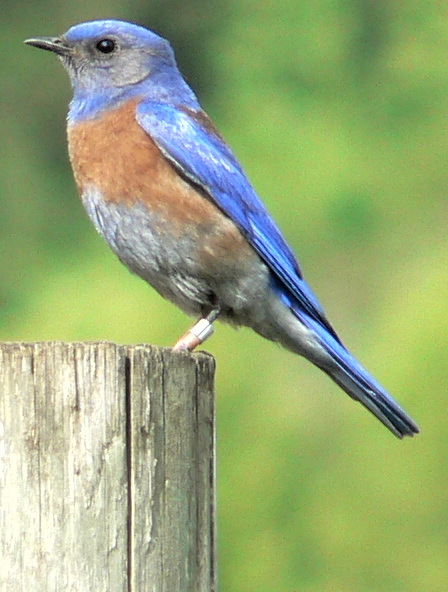
Bluebirds are nesting in Golden Gate Park!

Western Bluebird. Creative Commons

The community of serious birders is very excited about the Western Bluebirds that are raising their chicks in Golden Gate Park:  “This afternoon, I went to check up on the Western Bluebirds nesting near the Bison Paddock [in Golden Gate Park].  I’m thrilled to report that I saw two youngsters poking their heads out of the nest hole, and both parents assiduously feeding.”  (1)  According to the San Francisco Breeding Bird Atlas, Western Biuebirds have not been reported breeding in San Francisco since 1936! (2)

However, the birding community is less thrilled about where the Bluebirds chose to build their nest:  in a cavity in a eucalyptus tree created by a woodpecker that had nested there previously.  Adding insult to injury, this particular eucalyptus tree is also adjacent to the off-leash dog play area in Golden Gate Park:  “The nest is in an old woodpecker hole in a big eucalyptus that overhangs the dog run at the back of the paddock.”  (1)

The nesting Bluebirds have violated two sacred tenets of the local birding community, i.e., that birds don’t use non-native plants and trees and that birds are harmed by dogs. 

Do our birds use non-native plants and trees?

We are often impressed by the efforts of native plant advocates to convince us that birds don’t use non-native plants and trees.  There seems to be no end to the inventive arguments they use to convince us our belief in the value of non-native plants is misguided.  We recently had an on-line dialogue with a native plant advocate who responded to our citation of a study that reported equal numbers of species of plants and animals in the understory of eucalyptus forest and oak woodlands by saying that the animals found in the eucalyptus forest were “on their way to the oak woodland.” 

One of the most famous birders in San Francisco led a walk on Mt. Davidson last weekend that was sponsored by the local chapter of the California Native Plant Society.  When this walk was announced to the public, the birder promised to “discuss how birds preferentially use native plant communities over introduced plants.”  Since Mt. Davidson is heavily forested exclusively with non-native trees (eucalyptus, Monterey pine and cypress), we wondered how he was going to successfully make that point.  He didn’t.  These are the birds he reported seeing on Mt. Davidson during that walk and the San Francisco Breeding Bird Atlas tells us where these birds are found:

  • Band-Tailed Pigeon      “…inhabits oak woodlands and coniferous forests”
  • Olive-sided Flycatcher   “…prefers wooded canyons”
  • Western Wood- Pewee    “…found in a variety of woodland and forest habitats”
  • Hairy Woodpecker    “…preferring well-forested habitats…”
  • Swainson’s Thrush   “…prefers well-shaded moist canyons and humid, dense forest”                     

In other words, he set out to prove that the birds on Mt. Davidson prefer native plants, but all the birds he reports having seen are there because of the non-native forest.  He makes no mention of this in his report of what he has seen.  He apparently walks away from this experience with his beliefs unshaken by reality. 

Are birds harmed by dogs?

Native plant advocates claim that dogs are extremely damaging to the environment.  That they harm birds is only one of many accusations.  Here’s a typical quote about dogs from a reader of Jake Sigg’s Nature News:  “Considering the hugely negative environmental impact that dogs cause (holes dug, plants torn up, dog poop everywhere, dogs running into playgrounds, dog foods made from huge numbers of ocean fish) I feel that if dog owners wish to speak on matters related to dogs they should first license their dogs to support the fix-up of the damage caused by dogs in our City parks & streets.”  

When a dog owner walked away from a Park Ranger after a confrontation about his off-leash dog, the ranger shot him in the back with a taser.  Since this incident occurred in a place where off-leash recreation had been permitted as recently as one-month before, many people believed the Ranger’s action was a bit extreme.  Not so in the community of native plant advocates.  Here’s a quote from a regular reader of Jake Sigg’s Nature News:  “All hail the ranger with the Taser!  Finally, a national park employee doing her job…We should build a bronze statue of this ranger.  I hope that one electrical shock makes all dog owners think.”

Yes, indeed.  It does make us think.  It makes us think that there is a great deal of conflict in our public parks and that much of it seems to be on behalf of the animals who can’t speak for themselves.  What would the Western Bluebirds nesting in a eucalyptus tree next to an off-leash dog run tell us?  Might they advise us to “Chill!  We can take care of ourselves.  You need not fight amongst yourselves on our behalf.  We will find a suitable home.  We don’t care if a tree is native or non-native if it provides the shelter we need.  Nesting near the dogs hasn’t harmed us or our chicks.”

We wish the birds could speak for themselves. 

**************************************

(1) SF Birds email list by subscription only

(2) “San Francisco Breeding Bird Atlas,” San Francisco Field Ornithologists, June 2003.
“Do Not Destroy: Trees, Art, and Jewish Thought”

We treated ourselves to a visit to an exhibit at the Contemporary Jewish Museum in San Francisco, entitled “Do Not Destroy:  Trees, Art, and Jewish Thought.”  The title is taken from a commandment in the Torah (Deuteronomy 20:19):

“When in your war against a city you have to besiege it a long time in order to capture it, do not destroy its trees, wielding an ax against them.  You may eat of them but you must not cut them down.  Are trees of the field human to withdraw before you into the besieged city?  Only trees that you know do not yield food may be destroyed…”

This admonition is expanded by modern Jewish thought to encompass man’s responsibility to protect all of nature from harm.  The tree is a universal symbol of all nature. 

The Jewish Museum invited over 50 international artists to create original works of art inspired by the Jewish holiday which honors trees, Tu B’Shevat.  One of these works of art was awarded first prize by a public popularity contest. 

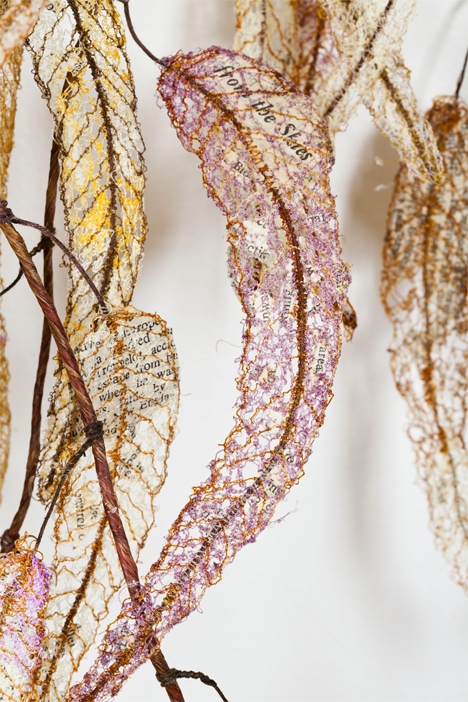
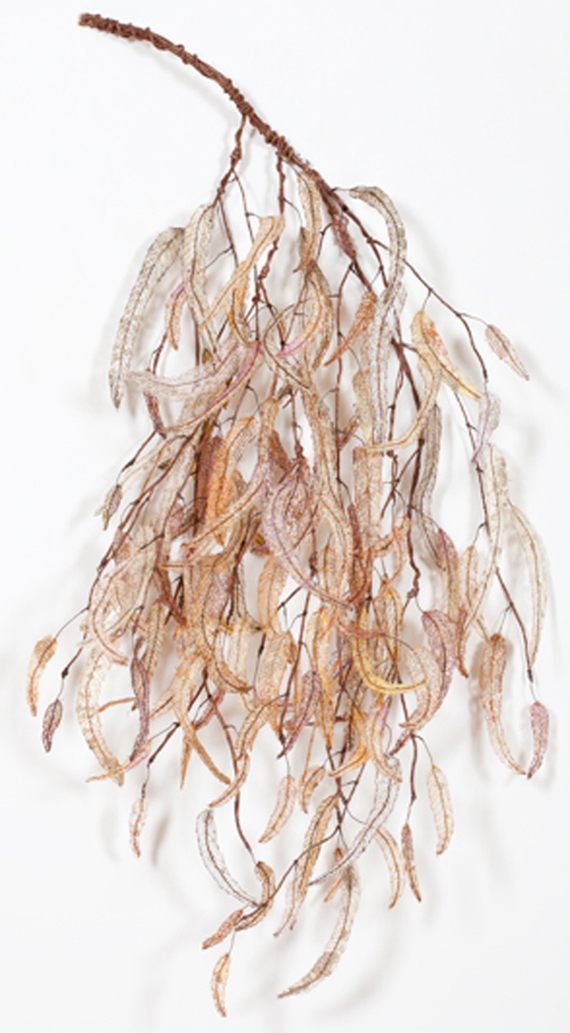
“Fauxliage: No Birds Sing” by Lisa Kokin. with permission. Photograph by Lia Roozendaal

At first glance, the viewer sees a branch of a eucalyptus tree with its graceful sickle-shaped leaves in a skeletal state, seemingly long-since dead. 

We must look more closely to appreciate the symbolic message of this evocative piece.  The leaves are in fact made of the pages of Rachel Carson’s Silent Spring.   Silent Spring was published in 1962, so we are celebrating the 50th anniversary of the publication of this ground-breaking book.  The pages have been shredded and wired together with thread and wire to create the delicate skeletal frame of each leaf. 

“Foliage: No Birds Sing” Detail with permission. Photo by Lia Roozendaal

The poetic justice of this piece took our breath away.   Silent Spring forever changed the public’s perception of the pesticides that were used in the environment at that time.  Rachel Carson informed us that these pesticides—particularly DDT—were killing our birds, silencing our springs when birds should be singing as they claim their nesting territories and attract their mates.  Although DDT was banned long ago, and many birds have recovered from the damage it caused, new pesticides have been developed and are being used to kill eucalyptus and many other non-native plants and trees.

 We have no way of knowing the artist’s intention in creating this work of art, but we commend her for celebrating the beauty of the eucalyptus and for the deeply ironic reference to the pesticides being used to kill them.  The public’s vote for first prize for this beautiful piece is evidence that there are many fans of the much-maligned eucalyptus.

[Edited to add:  We have received this comment from the artist, Lisa Kokin:  “The only thing that struck me was the sentence that begins, ‘We have no way of knowing the artist’s intention…’  It seems a bit paradoxical, given that you do understand why I chose Silent Spring to embed in the piece.  It is my concern about the environment and its destruction by corporate greed that motivated me to use Carson’s book and create a piece that speaks of that destruction in a poetic, rather than didactic, way.”]

We urge all lovers of trees to visit this exhibit which will continue until September 9, 2012.  And we ask native plant advocates to consider the commandment of the Torah and the Old Testament:  Do Not Destroy our Trees!

Formidable odds against reintroduction of Mission Blue butterfly

Mission Blue butterfly. Wikimedia Commons

The Mission Blue butterfly is a federal endangered species which existed historically on Twin Peaks in San Francisco.  San Francisco’s Natural Areas Program has been trying to reintroduce the Mission Blue to Twin Peaks for several years, so far with limited success.  Visit the Save Sutro website for a detailed description of these efforts which began in 2009.

The “Recovery Action Plan for the Mission Blue Butterfly at Twin Peaks Natural Area” acknowledges the difficulty of this undertaking.  It cites a study of 226 attempts to reintroduce butterflies where they have been extirpated (locally extinct).  These attempts lasted an average of 15 years.  Only 29 of the attempts were ultimately successful.  So what are the odds of success on Twin Peaks?

Identified obstacles to success

The federal Endangered Species Act requires that a recovery plan be written for each endangered species.  These recovery plans are a valuable source of information about each endangered species, the factors that resulted in their endangered status, and the plans to promote the recovery of the population.  From the recovery plan for the Mission Blue, we learn of several issues that make its reintroduction problematic at best:

  • The Mission Blue is dependent upon just 3 species of lupine for its development.  Two of these exist on Twin Peaks, but the predominant species is infected with a fungal pathogen which flares up during warmer, wetter weather.  The small population of Mission Blues on Twin Peaks crashed in 1998 when the fungal pathogen killed many of the lupines. 
  • The lupine is crowded out by scrub species if natural disturbances such as fire do not prevent natural succession from grassland to scrub such as native coyote brush.
  • Non-native species of plants are also competitors of the native lupines and their growth is encouraged by higher levels of nitrogen in the soil found in urban environments as a result of the burning of fossil fuels. 

The Natural Areas Program cannot control these factors:

  • There is no known cure for the fungal pathogen that is killing lupine.  In wetter years, it is likely to kill some of the lupine on Twin Peaks again, as it has in the past.
  • The Draft Environmental Impact Report for the Natural Areas Programs says that prescribed burns will not be conducted in the “natural areas.”  Prescribed burns are conducted by the State parks department periodically on San Bruno Mountain, where a viable population of Mission Blue butterflies exists.  This method of preventing natural succession to scrub in order to maintain a population of the butterfly’s host plant will not be an option on Twin Peaks. 
  • We should probably assume that existing automobile traffic in San Francisco will continue to contribute to nitrogen in the soil for the foreseeable future.  Higher levels of nitrogen will promote the growth of the non-native vegetation that competes with the native lupine upon which the Mission Blue depends.

Unidentified obstacles to success

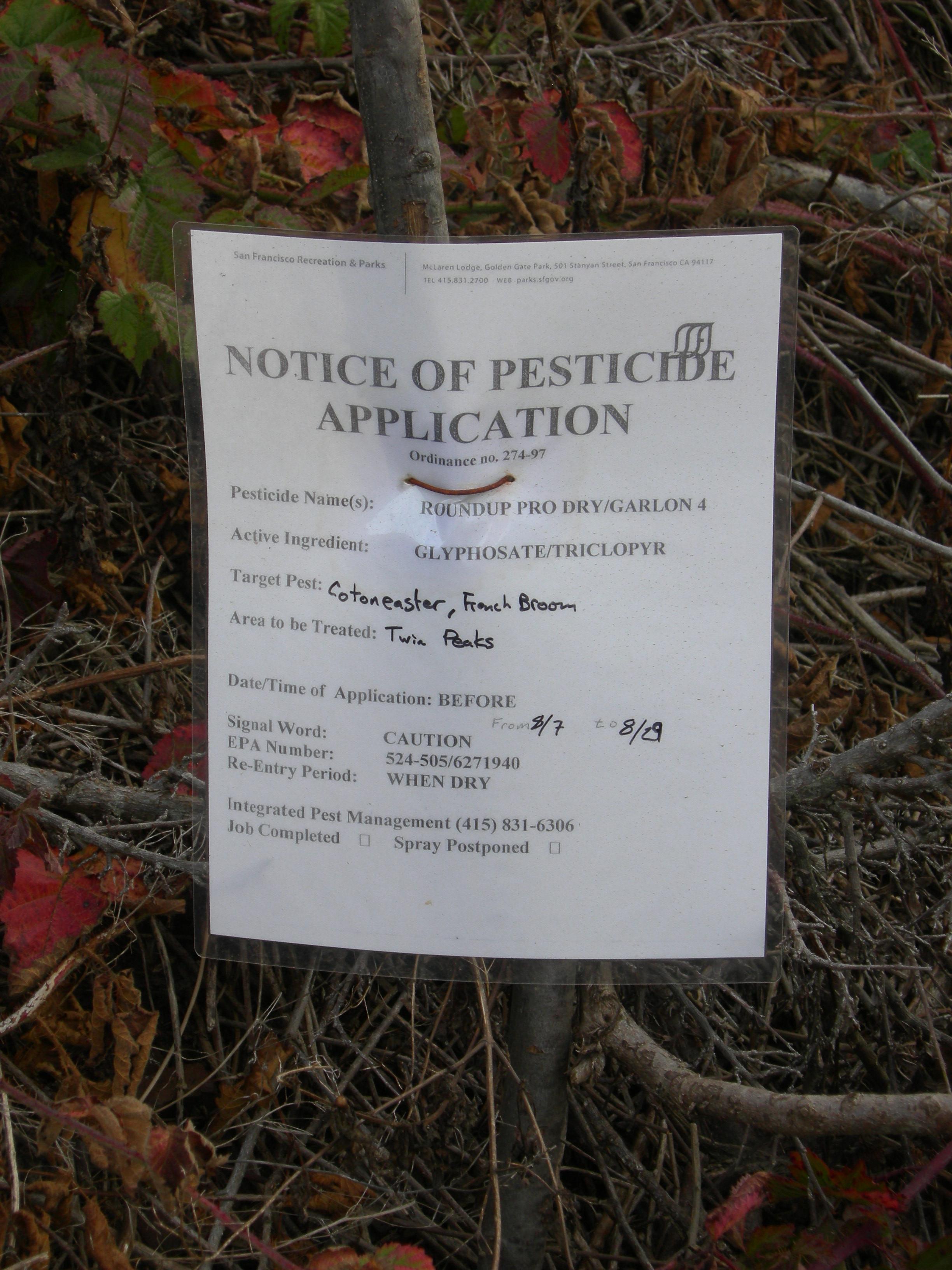
Pesticide Application Notice, Twin Peaks

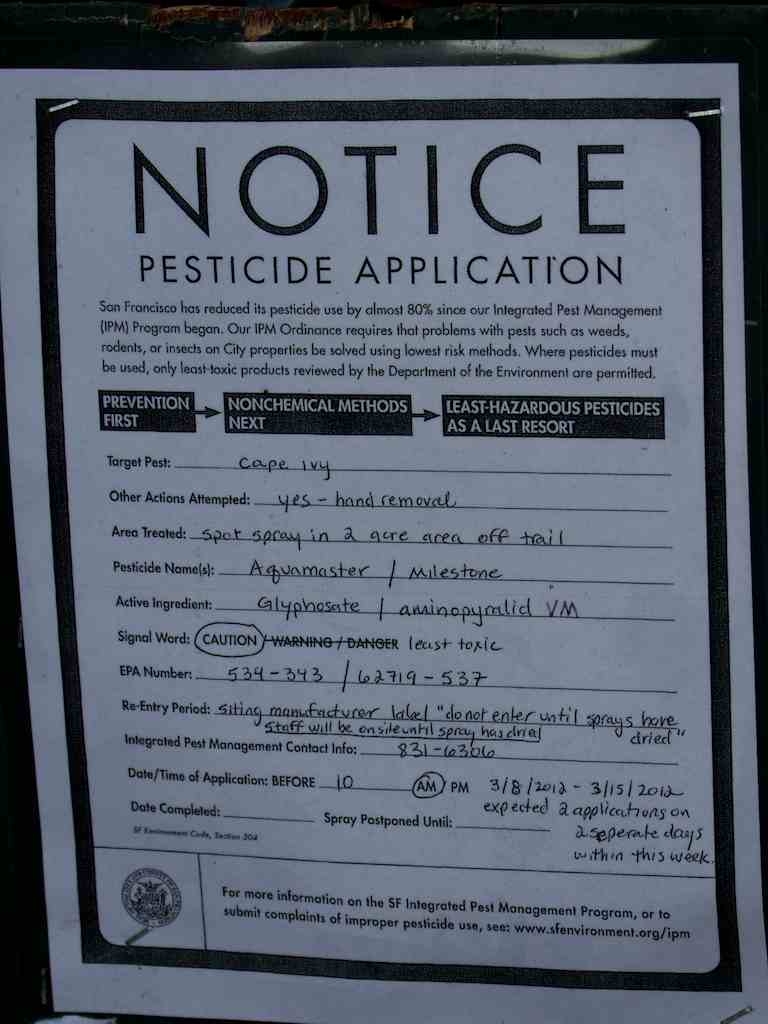
In addition to the issues that have been identified by federal and local recovery plans, the Natural Areas Program has introduced a new threat to the Mission Blue.  Herbicides are being used on Twin Peaks to control non-native vegetation.  Twin Peaks was sprayed with herbicides 16 times in 2010 and 19 times in 2011.  Are these herbicides a factor in the limited reproductive success of the Mission Blues that have been reintroduced to Twin Peaks?

A recently published study reports that the reproductive success of the Behr’s metalmark butterfly was significantly reduced (24-36%) by herbicides used to control non-native vegetation.  Two of those pesticides are used on Twin Peaks, imazapyr and triclopyr.  Triclopyr was used most often on Twin Peaks in 2010 and imazapyr in 2011.

The study does not explain how this harm occurs.  It observes that the three herbicides that were studied work in different ways.  It therefore speculates that the harm to the butterfly larva may be from the inactive ingredients of the pesticides which they have in common, or that the harm comes to the larva from the plant which is altered in some way by the herbicide application.  Either theory is potentially applicable to the herbicides used on Twin Peaks and consequently harmful to the Mission Blue.

Native plant advocates would like us to believe that the herbicides used to eradicate non-native plants are not harmful to animals, including humans. In fact, they don’t know that. The truth is that no one knows if herbicides are harmful to animals because there is almost no research that would answer this question.  The tests required by law by the Environmental Protection Agency to put new chemicals on the market are very limited.  The honeybee is the only insect on which the EPA is required to test chemicals before they are put on the market.  No tests are required for butterflies or any other insect. 

US Fish & Wildlife funded the research on the Behr’s metalmark butterfly which suggests that herbicides are harmful to butterflies.  US Fish & Wildlife is also the co-sponsor and co-funder of the reintroduction of the Mission Blue butterfly on Twin Peaks.  Will US Fish & Wildlife advise the Natural Areas Program that herbicide use on Twin Peaks should be stopped? 

In a more perfect world we would have the wisdom to stop using pesticides until we had some scientific evidence that they are not harmful to us and the animals with which we share the planet.

The Natural Areas Program harms wildlife by violating its Streambed Alteration Permit

It’s spring.  Have you noticed that the birds are singing?  This is the time of year when they are most vocal.  They are staking out their nesting sites and attracting their mates with their songs.  They are quieter when they have laid their eggs as they try to avoid detection.  Migratory birds are also passing through, on their way to their breeding homes.  The food they find along the way is important to their survival on their long and physically challenging journeys from their winter to their summer homes.

Subscribers to Wildcare recently received an email newsletter reminding them that pruning trees and shrubs at this time of year is dangerous for the birds that are hiding their nests in them.  Wildcare is a local organization which treats sick or injured animals and educates the public about “how to live peacefully with wildlife.” 

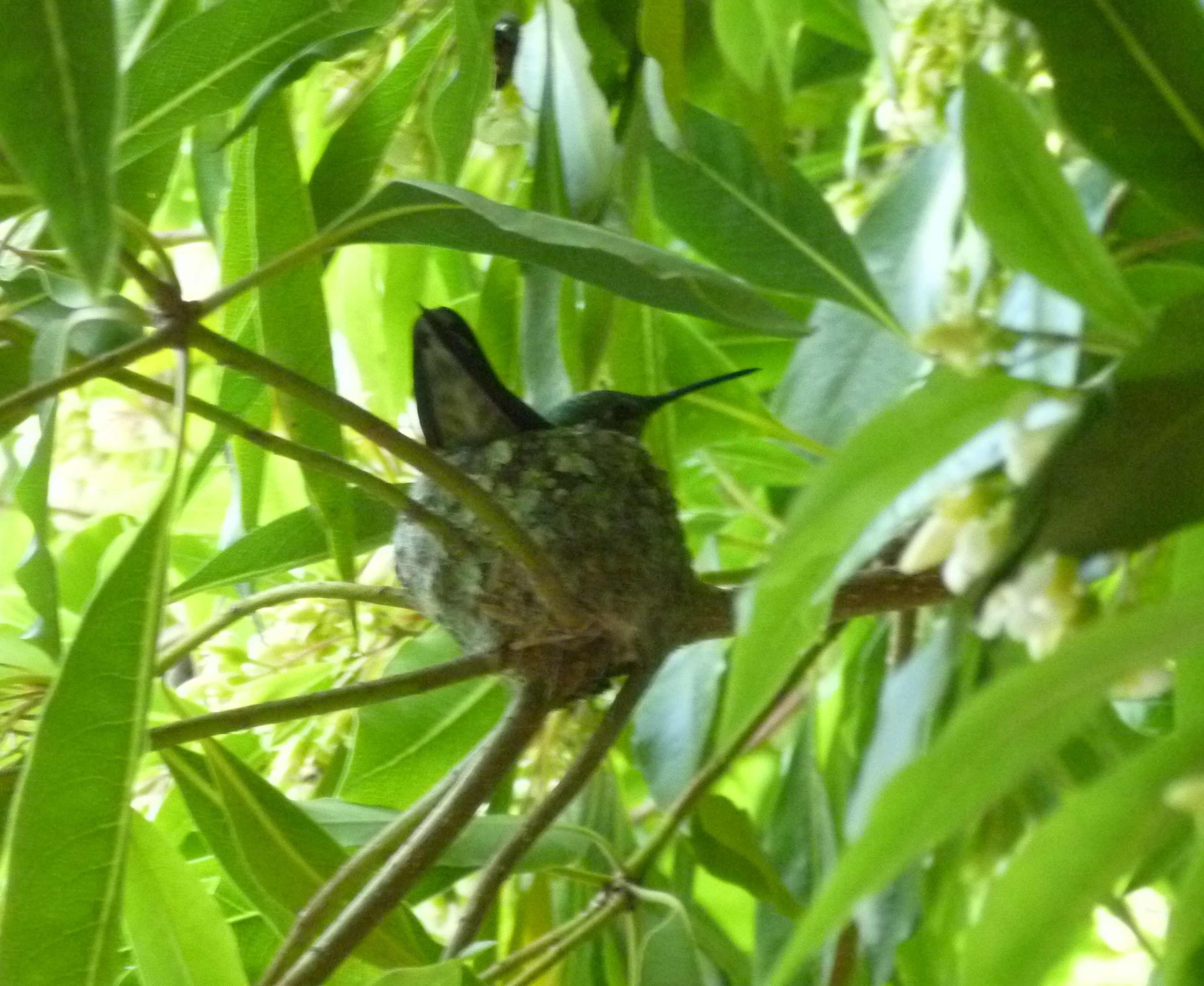
Hummingbird nest in Pittosporum, March 2012

We were recently reminded of the vulnerability of birds at this time of year in our own yard when a hummingbird selected our flowering, non-native Victorian Box tree (Pittosporum undulatum) to build her nest.  Her nest was completely invisible to us, but we spotted her darting in and out of it as she built her nest.  We were able to take this picture of her sitting on her nest by crawling into the understory of the tree.

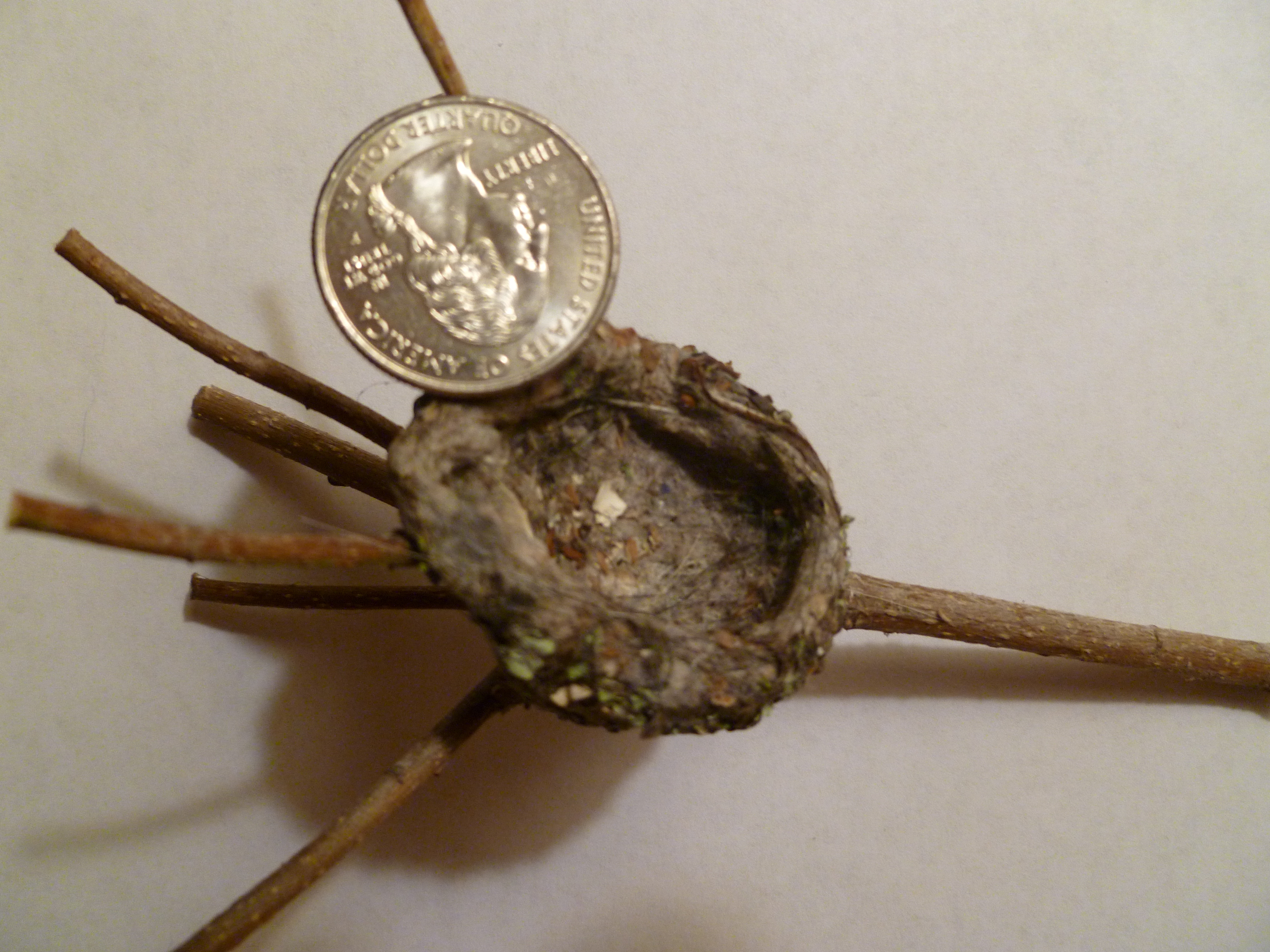
Hummingbird nest is not much bigger than a quarter!

Then disaster struck.  An early spring storm tore a huge branch from the tree and sent her nest tumbling to the ground.  We watched with heavy hearts while the hummingbird made anxious, noisy flights into the fallen branch.  When she gave up, we carefully lifted the fallen branch to find her tiny, empty nest.  As sad as this event was in our lives and hers, at least we knew that the failure of her nest was no fault of ours.   San Francisco’s Natural Areas Program cannot say the same of their destructive project in Glen Canyon Park.

The Natural Areas Program violates their Streambed Alteration Permit

Destroying vegetation with chainsaws in Glen Canyon Park, November 2011

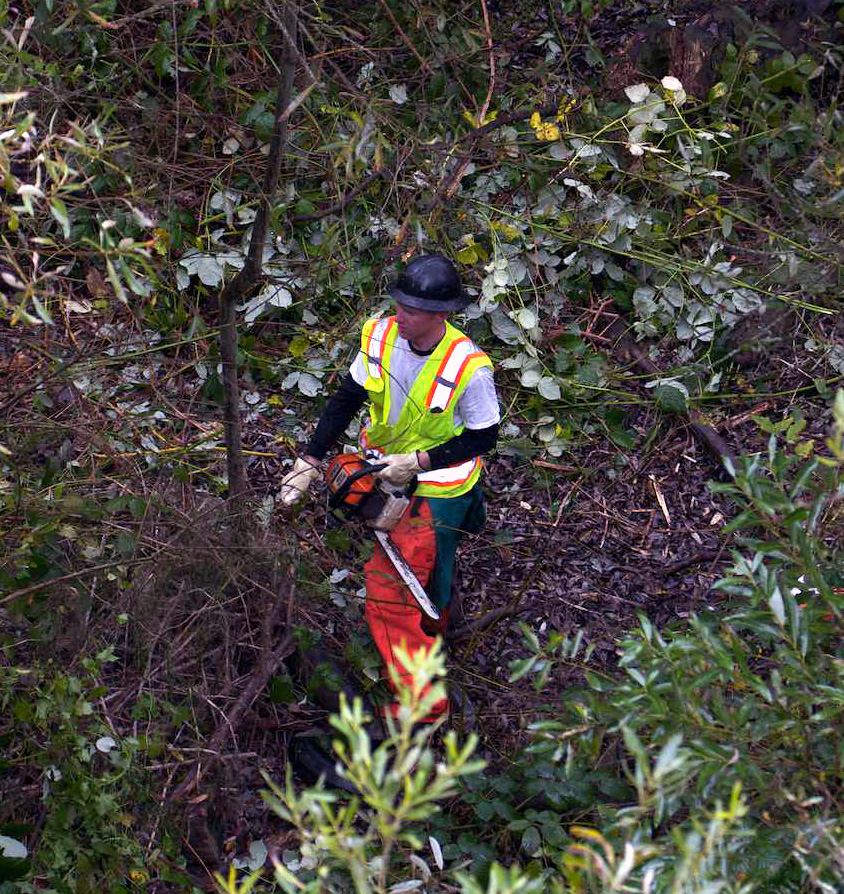
The Natural Areas Program began to destroy the non-native vegetation in Glen Canyon Park in San Francisco in November 2011.  In addition to destroying valuable habitat with chainsaws, they also sprayed herbicides.  The San Francisco Forest Alliance (SFFA) protested this destructive project many times but it has continued unabated to as recently as April 27, 2012, when they pruned trees and sprayed herbicides.

Earlier in April, SFFA learned from a public records request that this project violated a legal commitment to the California Department of Fish & Game.  The Natural Areas Program made the following commitment to mitigate harm to wildlife in Glen Canyon Park in its Streambed Alteration Permit:

It is the policy of RPD’s Natural Areas Program that no new projects will begin during the breeding season (December to May).  Follow up work in previously cleared areas may be done during the breeding season, however, because areas will have been cleared previously. Wildlife will not likely be using these areas for breeding.  This protocol has been effective in reducing impacts to breeding wildlife.”

SFFA brought this violation of its commitment to the attention of the General Manager of the Recreation and Park Department immediately.  The head of the Natural Areas Program said that the violation was necessary because the grant funding for the project was about to expire.  To avoid losing the funding for the project, the birds and animals of Glen Canyon Park were subjected to this destructive project during their breeding and nesting season. 

SFFA has brought this violation to the attention of the California Department of Fish & Game.  Their regulations require them to enforce the terms of the Streambed Alteration Permit, including the mitigation of potential harm to wildlife.  Violations of the terms of the permit are subject to “civil penalties” according to the regulations:  “A person who violates this chapter is subject to a civil penalty of not more than twenty-five thousand dollars ($25,000) for each violation.” 

One month after SFFA informed California Department of Fish & Game of the violation, nothing seems to be done about it.  In fact, weeks after SFFA sent this information to Fish & Game, another episode of destruction occurred in Glen Canyon Park on April 27, 2012.

The consequences of native plant “restorations” to wildlife

We will never know how many birds and animals were harmed by the destruction in Glen Canyon Park.  The management plan for the Natural Areas Program tells us (Appendix D) there are 18 species of birds that are found in and/or breed in Glen Canyon Park that are considered “Species of Local Concern.”  That is, the Audubon Society considers them rare in San Francisco. 

We also know that migratory birds will find less food in Glen Canyon Park this year than they have found in the past as they pass through San Francisco on their way to their breeding homes.  Many of the flowering and berry producing non-native plants that have thrived in Glen Canyon Park in the past have been destroyed by this destructive project, which is described by the Natural Areas Program in its Streambed Alteration Permit application as “…the ‘Scorched Earth’ method, in which all above-ground vegetation including natives, are removed.”  

Ironically, this project was partially funded by a grant program of the State of California entitled “Habitat Conservation Fund.”  We believe this project was a grotesque misuse of this fund.  The wildlife of Glen Canyon Park did not benefit from this project.  In fact, we believe they have been harmed by it.

The Sparrow Wars: America’s first “invasive species”

The public’s mania about “invasive species” often seems new to us.  It’s not.  In Peter Coates’ provocative book, American Perceptions of Immigrant and Invasive Species, we learn about one of the first episodes of public concern about an introduced species in American history, known as the “sparrow wars.”

English sparrow. US Fish & Wildlife photo

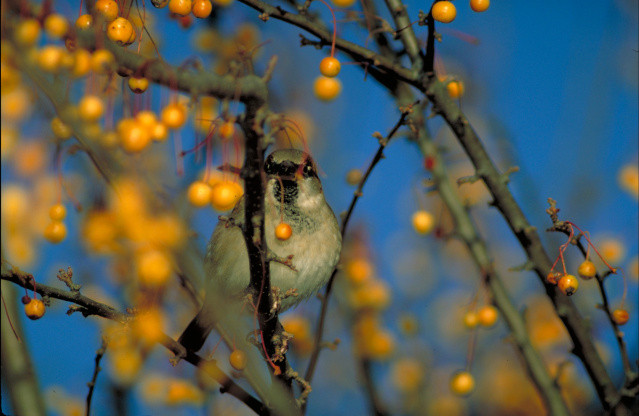
Like many introductions of non-native species of plants and animals, the English sparrow (AKA house sparrow) was introduced to perform a practical function.  Elm trees on the East Coast were being defoliated by a voracious native caterpillar.  In 1852, The English sparrow was brought to America to rescue the trees from the caterpillars.  The sparrows thrived and were soon reviled by ornithologists who considered them alien invaders.

The debate between ornithologists and those with a more cosmopolitan view of nature is reported at length by Coates.  Long story short, the debate is reminiscent of what we hear today from nativists:

  • They feared that the English sparrow would compete with native species for food and habitat and that native species would lose this competition.
  • They considered native birds superior to the English sparrow which was considered dirty and a promiscuous breeder.
  • The English sparrows were city dwellers and were considered the bird equivalent of ghettoized immigrants.
  • The English sparrows were criticized for not eating enough of the caterpillars they were imported to eat.  They weren’t doing the job they were hired to do!

This debate raged on amongst birders for decades according to the historical record reported by Coates.  However, we no longer hear birders complain about the English sparrow, although we hear them complain about many other birds.

Update:  This post requires an update.  The New York Times published an op-ed in which a woman describes in horrific detail the monomaniacal attempts of her mother to exterminate all house sparrows in their neighborhood based on her belief that their eradication would benefit blue birds.  It is a blood-curdling story that contradicts my naïve belief that after nearly 200 years, the house sparrow has been accepted in America. 

Modern equivalents of the “sparrow wars”

Cherry-headed conure. Attribution: Share Alike

Birders in San Francisco are currently complaining about the cherry-headed conures, more commonly known as the parrots of Telegraph Hill.  They believe the parrots are depriving native birds of food and nesting places.  They object to their presence in a place where they “don’t belong.”

We were introduced to this mindset by an ominous encounter with a birder in Florida who is typical of the nativist viewpoint of the avian world.  The sound of gunfire drew us to a man with a shot gun on the lawn of our motel.  Starlings were falling around him, where he quickly finished them off with a vigorous stomp of his booted foot.  We were unfamiliar with the hatred of non-native species at that time and asked him why he was killing the birds.  He seemed stunned to be questioned.  He explained, as though speaking to retarded children, that the starlings were “trash birds” that must be killed.  Following a basic rule of survival, we walked away from a person wielding a gun.

Why was the English sparrow redeemed?

Returning to the English sparrow, why are they no longer the target of hostility from  birders?  We speculate that one reason may be that they have been here for a long time, nearly 200 years.  Just as human immigrants are often the target of prejudice and discrimination when they first arrive, they eventually become a routine part of our world.  We rarely think of the Irish or other Europeans as immigrants in America.

Another reason is that the population of English sparrows is actually declining:  “Since 1966 its North American population has declined by 2.5 percent annually.” (1) However, there is still an estimated population of 150 million in North America.

Ironically, the population of English sparrows is declining significantly in Britain, its ancestral home, where only 13 million are estimated to remain.  In 2000 the British press was full of stories about the sudden decline of their iconic bird, “Responding to the strong sense that an essential part of the nation’s natural heritage…was disappearing…”

The lessons of the sparrow wars

These are familiar themes to the readers of the Million Trees blog:

  • Some people fear newcomers to their world, whether those newcomers are people, animals or plants and that fear can result in destructive hatred.
  • Newcomers usually fit in eventually.  What is initially perceived as a threatening “invasion” rarely turns out to be a problem in the long run.
  • Because nature is dynamic, the new home of an introduced species sometimes becomes the only home of that species.  The movement of species is another way to ensure their survival.  In fact, there is a new movement amongst citizen “scientists” to move rare species which are threatened by changed climate conditions into new locations.  This is called “assisted migration.” (2)

 —————————————————————-

(1) Peter Coates, American Perceptions of Immigrants and Invasive Species, UC Press, 2007.  All quotes are from this book.

(2) Emma Marris, Rambunctious Garden, Bloomsbury, 2011.

Low doses of pesticides are also hazardous to our health

We are reprinting, with permission, an article on the Save Sutro website about recent research reporting that even low doses of chemicals can be harmful to our health.  This research has serious implications for the pesticides being used by the many “restoration” projects in the San Francisco Bay Area.  This article is focused on pesticide use by San Francisco’s misnamed Natural Areas Program.  In fact, every manager of public land in the Bay Area that engages in native plant “restorations” uses pesticides to eradicate non-native species. 

*******************************

When we speak up against the Natural Area Program’s frequent pesticide use, its supporters frequently tell us that – compared with say commercial agriculture – the Natural Areas Program (NAP) uses small amounts of toxic chemicals. “The dose makes the poison,” they argue.

But it’s not true.

For now, we’ll leave aside the question of whether it’s reasonable to compare NAP to  commercial agriculture (where fears of chemicals are driving a growing Organic movement). What we’d like to talk about today is recent research about pesticides, specifically, endocrine disruptors. Here’s a quote from the abstract of a study by a group of scientists:

“For decades, studies of endocrine-disrupting chemicals (EDCs) have challenged traditional concepts in toxicology, in particular the dogma of “the dose makes the poison,” because EDCs can have effects at low doses that are not predicted by effects at higher doses….

“…Whether low doses of EDCs influence certain human disorders is no longer conjecture, because epidemiological studies show that environmental exposures to EDCs are associated with human diseases and disabilities. We conclude that when nonmonotonic dose-response curves occur, the effects of low doses cannot be predicted by the effects observed at high doses.”

[Ref: Hormones and Endocrine-Disrupting Chemicals: Low-Dose Effects and Nonmonotonic Dose Responses, Vandeberg et al, in Endocrine Reviews, March 2012]

WHY WE’RE CONCERNED

The NAP uses several pesticides rated as “Hazardous” or “Most Hazardous” by San Francisco’s Department of the Environment. But the one they’ve favored is glyphosate — better known as Roundup or Aquamaster.

It’s strongly suspected of being an endocrine disruptor.

Here’s a 2009 study: Glyphosate-based herbicides are toxic and endocrine disruptors in human cell lines.

Another study, also published in 2009, looked at puberty and testosterone: Prepubertal exposure to commercial formulation of the herbicide glyphosate alters testosterone levels and testicular morphology. The abstract of the study ends with this sentence, “These results suggest that commercial formulation of glyphosate is a potent endocrine disruptor in vivo, causing disturbances in the reproductive development of rats when the exposure was performed during the puberty period.”

And here’s a study published in 2007, reflecting the research of a group of scientists from Texas A&M: Alteration of estrogen-regulated gene expression in human cells induced by the agricultural and horticultural herbicide glyphosate

THE NATURAL AREAS PROGRAM DEFENDS PESTICIDE USE

Most people weren’t aware that pesticides were being used in so-called “Natural Areas.” The notices were small and well below eye-level. You had to be looking for them, which isn’t likely for most people out hiking or jogging by, or keeping an eye on small kids. In recent months, the labeling has improved, with taller posts and clearer information.

Now that people are beginning to notice, they’re also objecting. The response we hear most often is “Why would they use herbicides in a natural area?”

So the NAP has started posting explanations, justifying its use of toxic herbicides justifiable against “invasive plants.”

These plants, they say, are “a handful of non-native species” that are “displacing the rich biodiversity of native flora and degrading our natural heritage.”

WHY WE DISAGREE

We have several problems with this statement.

  • If it’s a “handful,” the NAP must have very big hands. From the pesticide application records, we’ve counted nearly twenty-five different plant species under attack by chemicals — including a couple that aren’t actually non-native.
  • There’s no evidence that all these plants are invasive and that they’re “displacing the rich biodiversity.” Native plants and non-native plants thrive together in natural mixed ecosystems. NAP can never eliminate all the non-native plants; the best it can achieve is a different mix, precariously maintained through intensive gardening.
  • There’s also no evidence it’s working. Using chemicals to kills things is cheap and easy, but it leaves a gap where something else will grow. Given that San Francisco’s environment has changed greatly since the 1776 cut-off used to define “native” plants, it’s not going to be those plants. Rather, what will naturally grow back will be the most invasive plant at the site. An excuse for more herbicides.
  • The NAP is destroying habitat in its quest to kill native plants. Many of the plants destroyed are bushes that provide cover and nesting places, or flowering plants that offer nectar to butterflies, bees and other pollinators and the birds and animals that feed on them. The “native flora” don’t necessarily provide much of either, even if they can be successfully gardened.

The valuable functions performed by our urban forests

We are reprinting, with permission, an article on the website of the San Francisco Forest Alliance about the many ecological functions performed by our urban forests and the plans of the Natural Areas Program to destroy over 18,500 mature, healthy trees.  Please visit the website of the Forest Alliance to read about their efforts to save the urban forest in San Francisco from needless destruction.    

**************************************

Urban trees are hugely important, not just for their beauty, but for environmental reasons. The [Natural Areas Program’s] NAP’s SNRAMP plans to cut down 18,500 trees (and a whole lot more under 15 feet in height, plus whatever is lost to wind-throw when the wind-break of the other trees is gone).

Source: USDA Report, Assessing Urban Forests Effects and Values, 2007

What are these 18,500++ trees doing for us? Here are nine ways in which urban forests help us.

  • The Nature Conservancy's Carbon equivalence graphic

    Storing Carbon. Trees store carbon and keep it out of the atmosphere. The bigger the tree, the more it stores. CLICK HERE for a 3-minute video from the Nature Conservancy about the carbon stored by a red oak tree that’s 18 inches in diameter. Eucalyptus may store even more, because it grows taller than a red oak and is more dense (Eucalyptus, around 50 lbs/cu ft; red oak, about 41).

  • Providing Oxygen. Trees produce more oxygen than they use. When they’re felled, they decay and use oxygen instead of making it.
  • Trapping and removing air pollution. Tree leaves capture air pollution, and help clean our air. The trapped pollution stays on the leaves or falls to the ground – where we don’t have to breathe it.
Golden Gate Park - in the beginning (abt 1880)
  • A windbreak. In its pre-European state, San Francisco was a place of windblown sand that got into everything from railway tracks to people’s lungs. With a city and a major park atop the former dunes, we don’t have to worry about sand so much, but the wind still sweeps across our city. The eucalyptus forests and other trees act as a windbreak, and improve the micro-climates not only of the forest, but of surrounding areas.
  • Buffering noise. Trees absorb sound, in much the way that fabrics and soft materials do. Once they’re felled, everything becomes noisier. Thinning a forest lets in the sounds of the city and its traffic. When Laguna Honda Hospital felled some 200 trees in conjunction with its new building, neighbors in Forest Knolls and Midtown Terrace noticed increased noise.
  • Slowing runoff. When it rains, the roots of the trees, and the duff made by their shed leaves and the understory beneath them, soaks it up like a sponge. Then it slowly lets it out again, allowing plants and vegetation to use it over time, replenishing ground water, and fighting erosion. (If you want to see the difference – drive by Christopher, below Mount Sutro, during heavy rain – and then drive up Twin Peaks Boulevard. The latter’s like a river when it’s pouring.) [See “Rainfall Interception” data from USDA]
  • Preventing erosion. Many of these trees grow on very steep slopes, and below them are our neighborhoods. Their roots function now like a geo-textile, holding the slopes in place – particularly in forest areas, where the roots are intermeshed and intergrafted. On Twin Peaks, where the vegetation is thinner, landslips occur every season of heavy rain. In Forest Knolls, clearing of slopes below the houses has resulted in landslides requiring months of tarping to stabilize them. This is a particularly insidious problem; it may take 6-8 years for the root system to die and decay, and by then the homeowner may not even know or recall that trees once held the slope together.
  • Provide habitat. Trees provide cover, places to perch and hide, and food by way of nectar and leaves and the insects attracted to the trees. Eucalyptus, in particular, flowers in winter providing nectar for bees, butterflies, and birds – and attracting birds that prey on these insects. It’s a nesting site for owls and hawks and feral bees, and a hunting ground for birds small and large. Our city would have far fewer birds, animals, and bees without these trees.
  • Boost property values. People like trees. Homes near forested areas are valued by owners and potential buyers. Realtors often mention these settings in their listings. Some studies show mature trees nearby can add up to 30% to property values.

New Orleans: A case study in the resilience of nature

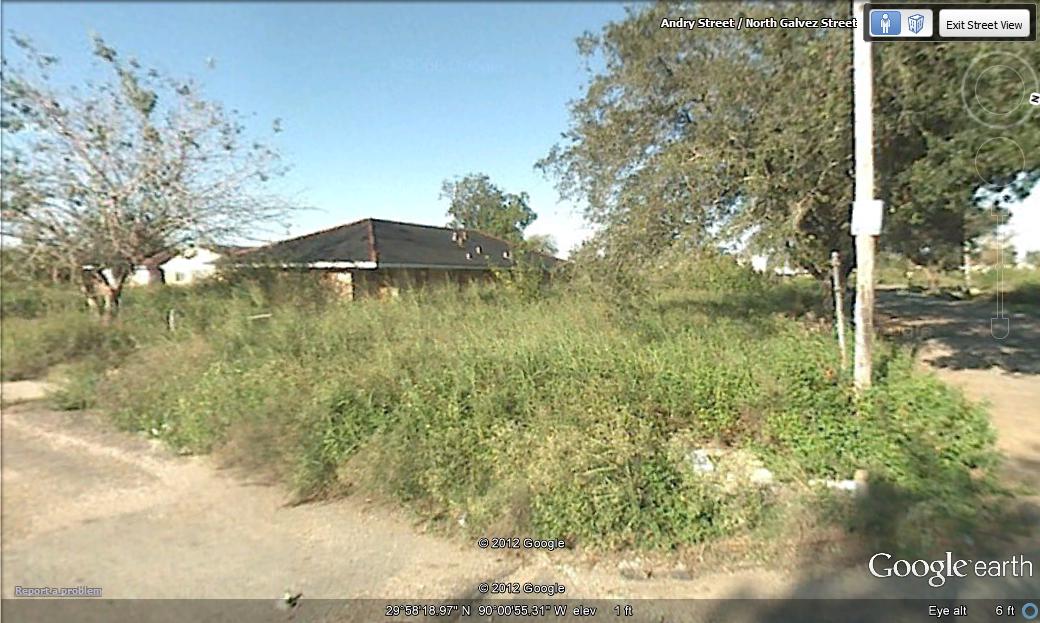
In August 2005, the city of New Orleans was hit by a devastating hurricane, dubbed Katrina, and a subsequent storm surge that destroyed much of the city and killed many of its residents.  The Lower Ninth Ward of New Orleans was one of the hardest hit areas of the city because it was the location of two breaks in the levee and is also at a lower elevation than less damaged neighborhoods.

The population of New Orleans reached its peak of 627,525 in 1960.  A year after Katrina, the city’s population had plummeted to about 200,000.  Six and one-half years later, the population is estimated to be 356,000. 

Neither the loss of population nor the return was spread evenly throughout the city.  The Lower Ninth Ward lost 75% of its population since 2000 because the damage was greatest there and its previous inhabitants did not have the resources to restore their properties.  For the same reasons, there are few services in the Lower Ninth Ward, such as a supermarket, or a police or fire station, making it a less attractive place to live.

Andry St & North Galvez St, New Orleans

The New York Times Magazine recently published a feature about the Lower Ninth Ward aptly entitled, “Jungleland.”  The article reports that nature has returned to the Lower Ninth Ward of New Orleans without the help of man and now resembles a dense jungle, more heavily populated by animals than people. 

Nature returns to the Lower Ninth Ward

The Lower Ninth Ward is a case study in the resilience of nature.  It is being intensively studied by ecologists as an example of how nature recovers from natural disasters, such as the volcanic eruption of Mount St. Helens and the earthquake and tsunami in Japan one year ago.  What all these disasters have in common is that they wiped the ecological slate clean.  Everything growing and living in these places was swept away to bare ground.

The Lower Ninth Ward was built on fertile ground because it was the repository of sediment from the Mississippi River for millennia before it was protected by levees and built upon.  This is also a part of the country that enjoys a warm climate and plenty of rain.  These factors undoubtedly contributed to the robust and rapid regrowth of vegetation in the Lower Ninth Ward.

The regrowth is almost entirely non-native.   Before the land was cleared for plantations in the mid-1700s the native vegetation was reeds and brambles along the river, hardwood forest behind the river, giving way to cypress and palmetto swamp in the interior.  “Today there are few species native to the land, other than several kinds of sedge and aquatic grass.  Only a handful of palm, live oak, and bald cypress survived the storm.” * 

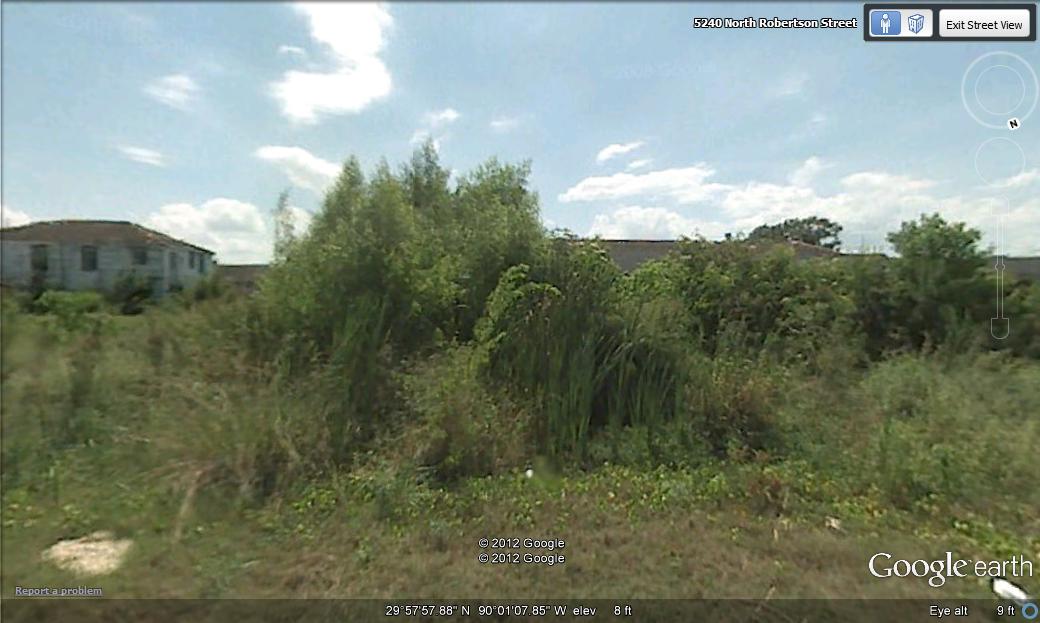
North Robertson St., New Orleans

The current vegetation is described as: “A variety of species, some exotic, have moved in, among them crepe myrtle, black willow, and golden rain trees laced with vines.  The undergrowth is a chaotic mix of weeds as high as basketball hoops, and flowering shrubs like lantana, oleander and oxalis.”     

Last fall, the city of New Orleans launched a new campaign to reclaim the Lower Ninth Ward.  The city engaged a crew to clear the vacant lots of trash and vegetation in an effort to make the neighborhood more attractive to potential homeowners and investors.  At the rate of 20 lots per day, it takes the crew three months to clear the vegetation.  Then they begin again, because within three months the vigorous vegetation has reclaimed the vacant lots.

Birds return to the Lower Ninth Ward

An ornithologist from the University of New Orleans visited the Lower Ninth Ward with the author of the Times article.  He was permitted to visit the area for the first time one month after the storm, when attempts to find residents who hadn’t survived the storm were considered complete.  At that time he reported complete silence.  There was no birdsong in the Lower Ninth Ward. 

The birds that were common before the storm, such as mourning doves and house sparrows, are slowly beginning to return in small numbers.  There was a significant increase in the population of raptors, such as hawks, falcons, and shrikes.  The ornithologist speculated that an increase in the rodent population was responsible for this increased population of raptors, which he described as “supernatural.” 

The ornithologist accompanying the journalist waded into thickets covering several vacant properties, “pishing” as birders do to attract the birds to them.  We will let the ornithologist speak for himself as he rapturously reports to the journalist the many birds he sees and hears:

“’’I’ve gone whole winters without seeing a field sparrow in the New Orleans vicinity.  Field sparrows, swamp sparrows, simply do not winter in residential New Orleans…Orange-crowned warbler!’ He shouted back at me. ‘Ruby-crowned kinglet!’”

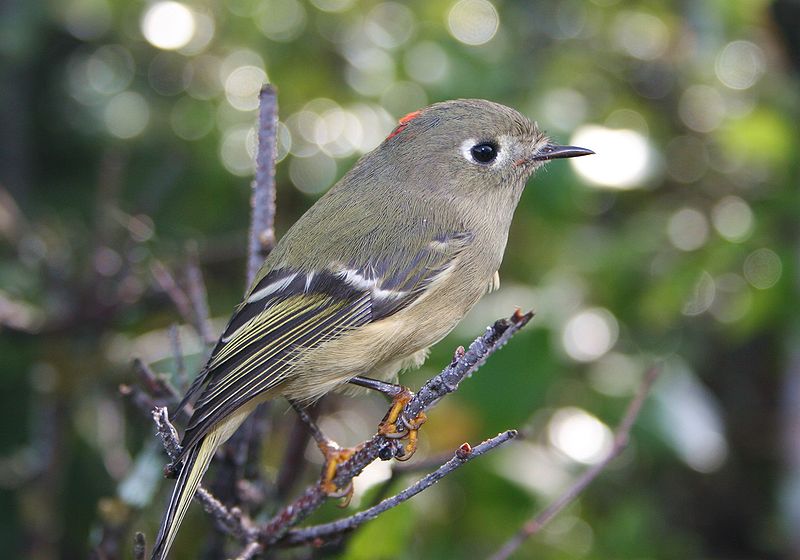
Ruby-crowned kinglet

The journalist following the ornithologist couldn’t keep up:  “It was no longer possible to distinguish which calls were his and which the birds’.  He walked around a stand of 15-foot Chinese tallow trees, the green and crimson leaves waving mournfully in the wind.  And then he was gone.  The wilderness just swallowed him up.”   

Lessons learned in New Orleans

The recovery of nature in New Orleans is an ecological experiment that was not fabricated by scientists. Man did not manipulate the outcome.  And this is what nature is telling us:

  • Native plants do not magically return when existing vegetation is wiped clean to bare ground
  • Birds do not care if the vegetation is native or non-native.  They will inhabit either.
  • Since the diet of many birds is predominantly insects, we should assume that the insects have also returned to the Lower Ninth Ward and that they are feeding on non-native vegetation.

These lessons are not consistent with the native plant ideology which equates the existence of non-native plants with “ecological collapse.”  Nature is thriving in New Orleans without the benefit of native vegetation.

——————————————– 

* Nathaniel Rich, “Jungleland,” New York Times Magazine, March 25, 2012.  All quotes from this article

Is there a relationship between patriotism and the preference for native plants?

Drawing from a book by Andrea Wulff (1), we recently told our readers about the enthusiasm of the British for exotic plants from all over the world, particularly American plants.  Andrea Wulff has recently published a second book (2) which informs us that while American plants made the journey to Europe, this botanical transfer was not reciprocated by early Americans. 

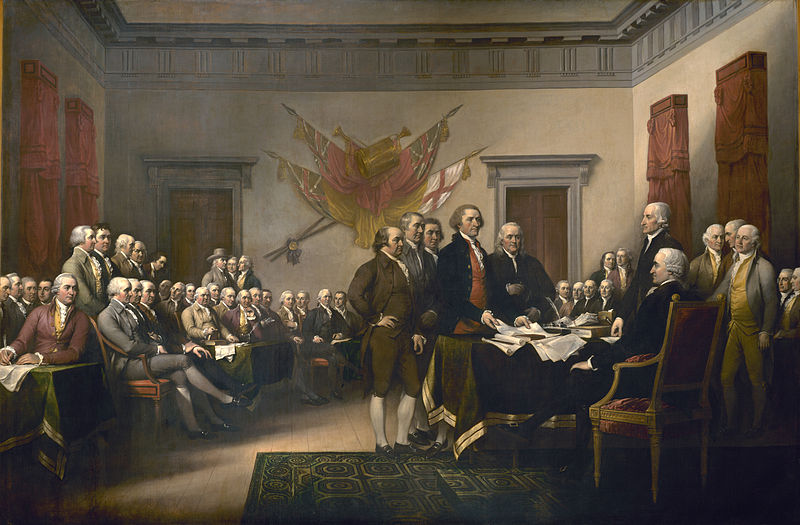
Signing of Declaration of Independence, painting by John Turnbull, 1819

Our founding fathers were reluctant politicians, but devoted gardeners and professional farmers.  Although they grew many non-native plants for food and other practical purposes, they used almost exclusively American trees and shrubs when landscaping their properties.  The historical record suggests that this was a conscious choice on their part and a reflection of their patriotism.

Although George Washington was able to visit his home at Mount Vernon only once during the eight-year Revolutionary War, his correspondence suggests that it was always much on his mind.  As the city of New York prepared for the onslaught of British troops and warships in 1776, Washington wrote to his estate manager by candlelight, “Only American natives should be used, he instructed, and all should be transplanted from the forests of Mount Vernon…Washington decided that Mount Vernon was to be an American garden where English trees were not allowed.

As a farmer, Washington was innovative and practical.  He experimented with various methods of fertilizing and crop rotation.  He imported food crops and fruit trees from all over the world.  But when landscaping for ornamental purposes, he planted exclusively American plants which “…carried a symbolic message that this new nation would be independent, self-sufficient and strong.”

Shortly after Americans won their independence from Britain, our second and third presidents, John Adams and Thomas Jefferson, went to Britain hoping to negotiate a trade treaty with their former rulers.  This was a frustrating and ultimately unsuccessful effort, but while waiting in vain for a response to their proposal, Adams and Jefferson toured many of the famous gardens of England.  They were both avid gardeners and farmers and could think of no better use of the idle time imposed upon them.  They were proud to learn that the most lavish private gardens of England were composed predominantly of American trees and shrubs.  As we reported in our earlier post, these plants had been laboriously imported to England earlier in the 18th century.

Returning home, their horticultural choices were similar to Washington’s.  They made utilitarian choices when farming, but their ornamental choices were exclusively American.

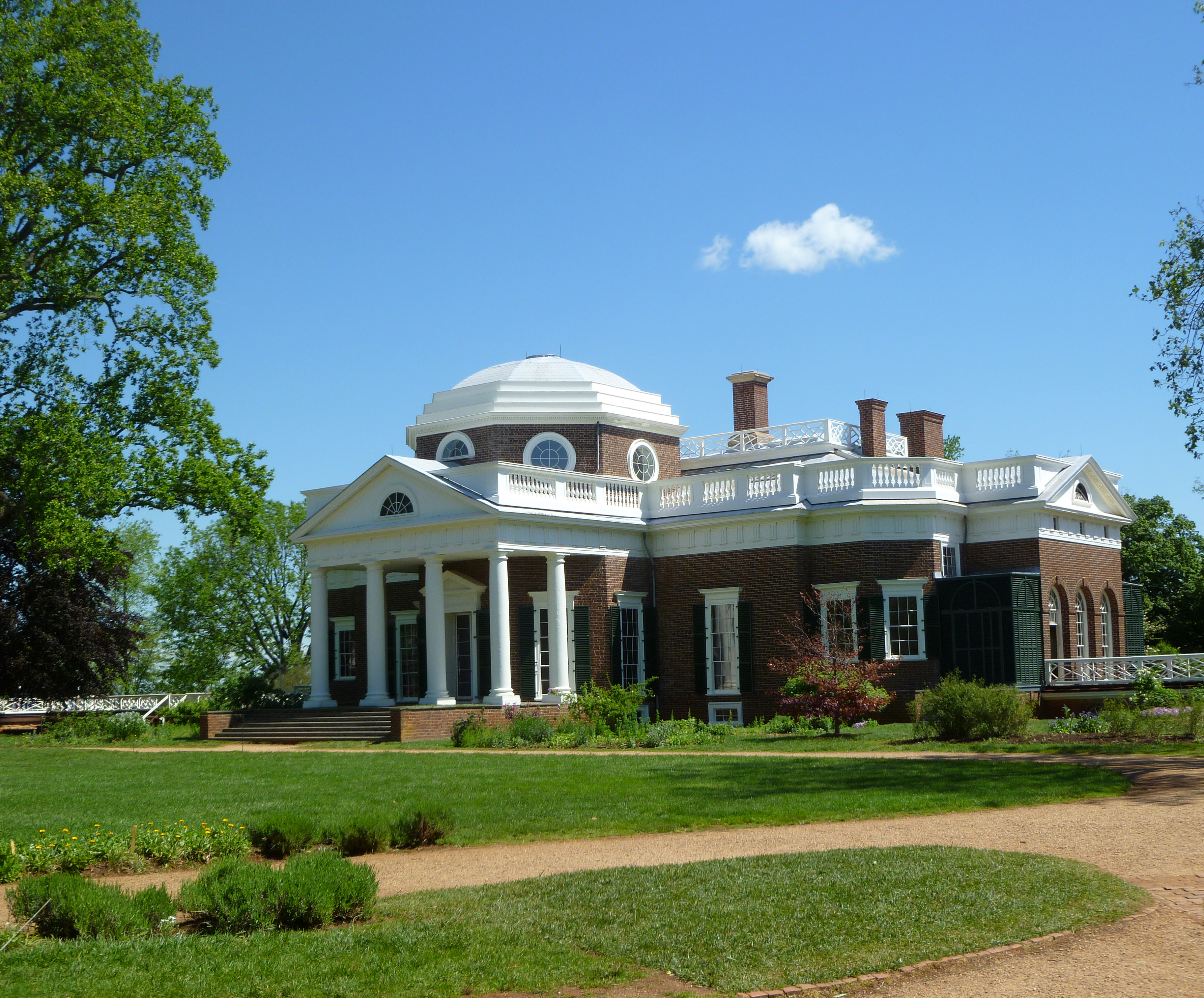
Monticello, Thomas Jefferson's home

 Jefferson brought vegetable seeds from all over the world to his vegetable garden.  He kept meticulous records which enable us to marvel at the international population of vegetables in his garden during the first year of his retirement from the presidency:  “African early peas,” “Windsor beans,” “solid pumpkin from S. America,” “long pumpkin from Malta,”, “Lettuces Marsailles,” “Chinese melon,” “Spanish melon,” “Broccoli Roman,” “Kale Malta,” “Kale Delaware.” 

As the first American president to spend his entire term in residence in the White House (actually not yet named the White House), he was responsible for designing its first landscape:  “He envisaged an all-American garden…planted  ‘exclusively with Trees, shrubs, and flowers indigenous to our native soil.’”  When returning home to Monticello, he made the same ornamental choices for his own property.

Peter Coates, a British historian, examines the historical record of American fears regarding non-native species of plants and animals in his book, American Perceptions of Immigrant and Invasive Species (3), looking for a relationship between nationalism and those fears.  Although he finds many examples of similarity in the language used to describe human and non-human immigrants, he ultimately concludes that human xenophobia is not necessarily the source of anxiety about non-native plants and animals. 

One of the episodes in the historical record which Coates reports, is a long correspondence between Charles Darwin, the British scientist and his American counterpart, Asa Gray.  They engaged in a chauvinistic rivalry about the hardiness of their native plants.  Darwin jokingly asked, “Does it hurt your Yankee pride…that we thrash you so confoundedly?  I am sure Mrs. Gray will stick up for your own weeds.  Ask her whether they are not more honest, downright good sort of weeds.”  Gray replied that his wife, “allows that our weeds give up to yours,…[they are] modest…retiring things, and no match for the intrusive, pretentious, self-asserting foreigners.”

In this exchange, Darwin and Gray are referring to a botanical conundrum:  “The asymmetry between the preeminence of Eurasian weeds in North American and the weak presence of North American weeds in Eurasia has engrossed botanists on both sides of the Atlantic since Darwin and Gray’s exchanges.”  (3)  It is an intriguing question which we have considered in earlier posts, but cannot answer. 

The historical record suggests that there is an element of patriotism in Americans’ preference for our native plants and trees.  On the other hand, maybe our plants and trees are just more handsome!  But when plants perform a function—such as feeding us—Americans revert to their utilitarian ideals, abandoning natives if introduced plants are superior. 

*********************************

 (1) Andrea Wulff, The Brother Gardeners, Alfred A. Knopf, 2008

(2) Andrea Wulff, The Founding Gardeners, Alfred A. Knopf, 2011

(3) Peter Coates, American Perception of Immigrants and Invasive Species, UC Press, 2006.

Scientists reject the notion of “Balance” in nature

"Delicate Balance of Nature" Painting by N. Robert Wagstaff, Maui, Hawaii

The recently published book by Emma Marris, Rambunctious Garden,* is getting the attention it deserves from conservationists and the managers of public lands.  If you read widely in this field, as we do, you won’t find much new in her book, but you will find a comprehensive and comprehensible overview of the emerging scientific consensus that it is time to revise the assumptions of invasion biology.

If you haven’t the time or inclination to read this book, you can take a short cut to two recent interviews with Ms. Marris, published by the American Society of Landscape Architects and the magazine of the Nature Conservancy.  The published interview by the Nature Conservancy is another indication that this prestigious organization is shifting its emphasis to embrace the realities of nature as we know it, rather than as we imagine it was in the distant past.

Ms. Marris methodically revisits the original assumptions of invasion biology and offers us the growing evidence that they have not been confirmed by the science that tested them in the field.  In a recent post, we reported that the assumptions that ecological “niches” are exclusive and therefore new species will displace former occupants, are not consistent with the fact that introduced species far outnumber the loss of native species.  In fact, there is little evidence that introduced species have resulted in extinctions. 

“Nature has no ‘Balance’ for us to keep”

Matt Ridley, in his weekly column “Mind & Matter” for the Wall Street Journal, invites us to revisit the concept of the “balance of nature” with the help of Ms. Marris’ book.  Mr. Ridley is a British scientist who has written many popular books about human genetics and evolution. 

In our interminable debate with native plant advocates, we find that the concept that nature achieves an equilibrium state that is, by definition, balanced, is central to their ideology.  Their argument is that man has disrupted this balance and that he is therefore obligated to right this wrong.  Furthermore, when this balance has been achieved, theoretically, nature sustains itself without further interference from man. 

This is a powerful narrative with much intuitive appeal.  Particularly for those who feel some guilt for the damage that man has inflicted on nature, the obligation to heal those wounds is strong.  However, the scientific evidence is mounting that there is no such thing as a “balance” of nature, as Mr. Ridley tells us in his column:

Academic ecologists have abandoned such a static way of thinking for something much more dynamic.  For a start, they now appreciate that climate has always changed, and with it, ecology.  Twenty thousand years ago the spot where I live [in the UK] was under a mile of ice.  Then it was tundra, then birch forest, then pine forest, then elder, linden, elm and ash, then most recently oak, but beech was coming.”

Mr. Ridley goes on to lament that although science tells us that a stable balance in nature cannot be achieved, particularly at a time of rapidly changing climate, the notion still dominates practical conservation management, which he describes as:  “preserve this rare species, maintain this habitat structure, freeze in time this ecological moment, return this degraded land to a particular state, whatever the weather and whatever the novel arrivals of exotic species.”  These goals sound very familiar to those of us who follow the various “restoration” projects on our public lands in the San Francisco Bay Area. 

We are grateful to Ms. Marris for bundling the recent science that dismantles the mistaken assumptions of invasion biology into a readable package that is being reported by the mainstream press.  We anticipate that the public will eventually realize that the destructive native plant “restorations” in which the managers of our public lands are engaged are unnecessary and ultimately futile. 

It’s just a matter of time!

*******************************************

“Emma Marris, Rambunctious Garden, Bloomsbury, 2011