Kollibri Terre Sonnenblume and his writing partner, Nikki Hill, are co-authoring a book tentatively entitled “Don’t Blame the Messenger: A critique of the ‘invasive plant’ narrative.” Kollibri has published a draft chapter of their book on his Substack, “Speaking for the Trees, No Matter Where They’re From.” The chapter is foundational to their book and serves as a teaser for the rest of the book. More chapters of the book will be available to paid subscribers of Kollibri’s Substack, “Speaking for the Trees.”
Many thanks to Kollibri and Nikki for this important contribution to our understanding of invasion biology as an ideology based on many conundrums and contradictions.
Conservation Sense and Nonsense
What is an “invasive” plant?
What is an “invasive” plant? Colloquially, some gardeners call any plant that thrives and spreads with little or no care “invasive.” They cast the term on both “weeds” and on ornamental nursery plants that have the temerity to spread outside their apportioned area. Such gardeners are seeking to uphold a particular aesthetic and their impulse to design and direct can yield results ranging from elegant to cloying. If this were the only way that people used the word, “invasive,” it would be harmless, and there would be no need for this book. However, the label is applied far beyond this narrow context.
Going to the dictionary for the meaning of “invasive,” Merriam-Webster provides: “relating to, or characterized by military aggression.” The Cambridge Dictionary defines “invade” as: “to enter a country by force with large numbers of soldiers in order to take possession of it; to enter a place in large numbers, usually when unwanted and in order to take possession or do damage; to enter an area of activity in a forceful and noticeable way.” For “invasive” it says: “moving into all areas of something and difficult to stop.”
That’s clear enough. But what is the official definition of an “invasive species,” whether plant or otherwise?
The short answer is that there is none.
The longer answer is that there are many definitions crafted by various policy-makers, non-governmental organizations and advocacy groups. Here are a few:
- US federal government: “an alien species whose introduction does or is likely to cause economic or environmental harm or harm to human health.”i
- The United Nations Environmental Program: “introduced species that become established in a new environment, then proliferate and spread in ways that are destructive to human interests and natural systems.”ii
- The International Union for Conservation of Nature (IUCN): “animals, plants or other organisms that are introduced by humans, either intentionally or accidentally, into places outside of their natural range, negatively impacting native biodiversity, ecosystem services or human economy and well-being.”iii
- Convention on Biological Diversity: “species whose introduction and/or spread outside their natural past or present distribution threatens biological diversity.”iv
These definitions might seems straightforward at first glance, but a lot of ambiguity emerges as we unpack them.
The key words—“harm,” “destructive,” “negatively impacting,” “threatens”—beg the question of what constitutes “harm.” As we shall explore in this book, that’s not at all simple to answer in terms of ecological interactions. It’s even more difficult to identify what is “likely to cause” harm, as the feds put it. As invasion biologists have discovered, attempts to predict the results of species introductions based on the attributes of the species, for example, don’t have a very successful track record.
Also, if “harm” is being alleged then the possibility of benefit must also be admitted, a point completely ignored not just in these definitions but in most discussions or media coverage about “invasives.”
Economic concerns or “human interests” are named first by the US and UN, which might surprise people who think of the issue of “invasive” species as solely environmental. But commercial interests have had a strong hand in drafting the official policies that guide the “management” of “invasive” species. As we discuss in a later chapter, Monsanto and other nasty entities played a central role in the shaping US federal policy around “invasive species” because they profit from the sale of toxic pesticides used in their control. As for measuring the bottom line, one might assume that economic harm is readily quantifiable, but that’s also quite tricky, as we explain in the chapter “Lies, Damned Lies, and Statistics.”
“Alien” and “introduced” are synonyms for “non-native” (as are “exotic” and “non-indigenous”). The very concept of a “native plant” is a recent invention, though, and is another subject of contested deliberation, which we detail in “A Brief History of Invasion Biology.”
What is a fairly straightforward question in the Western Hemisphere—was it here before 1492?—is less clear in other regions. In the UK, some point to the Roman invasion of two millennia ago as the cut-off date (perhaps in part because that’s when bed bugs were introduced). In the case of Pacific islands like Hawai’i, some scientists designate species brought by Polynesians before the age of settler-colonialism as “non-native” but others limit it to European-introduced species. British colonization of the Australian continent commenced in 1788 (though the 1606 landing of a Dutch East India Company ship is the first documented European arrival) but some scholars label the dingo, introduced by Aboriginal people 4000 years ago, as non-native.
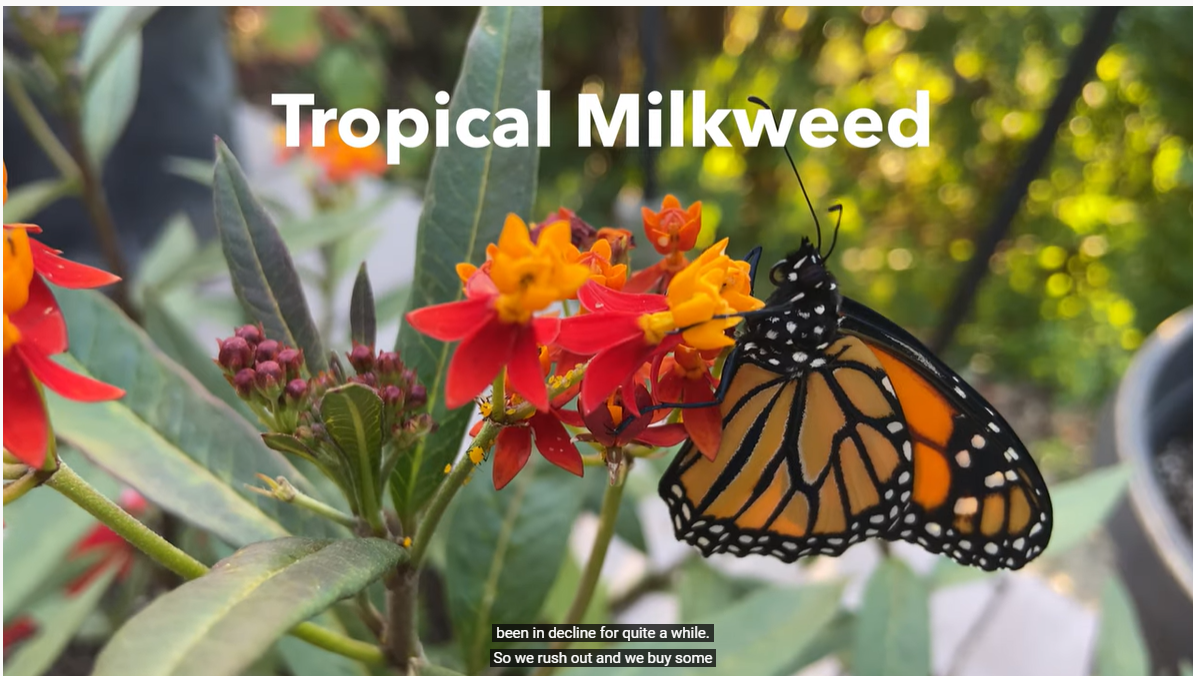
Political boundaries with no ecological significance can be a basis for defining nativeness, which also highlights the fact that nativeness is a scale-dependent factor. Tropical Milkweed (Asclepias curassavica) is native to North America from Mexico southwards but is called “invasive” in the United States (even though its pre-Columbian native range may have included southern Florida). Yet it’s also accurate to describe the species as “native to North America.” If a climate-induced, natural range shift of a species crosses the border of a country or a province will it be counted as non-native, but not otherwise?
Finally, how far does a species have to travel to be “out of range”? The endangered Monterey Cypress (Cupressus macrocarpa) is, according to journalist Andrew Cockburn, “a frequent target for the chain saws of the San Francisco Recreation and Parks Department—even though two small stands in Monterey, just fifty miles south, are cherished and protected as natives.”v Meanwhile, a 500 mile drive north of its relict range, a large specimen planted by European settlers near Brookings, Oregon, in the 1850’s is an officially designated “Heritage Tree,” which we personally hope grants it safety because we’ve seen it and it’s majestic.
“Introduced” is shorthand for “introduced by humans either intentionally or accidentally.” It doesn’t include the actions of animals, weather, or other more-than-human agents in transporting species. It also doesn’t usually include indigenous humans, not because their own actions in moving around species haven’t been significant or are considered qualitatively different than those of settler-colonialists, but simply because they are generally not considered at all. This narrative omission is meaningful because it narrows the realm of possibilities for both human activity and human nature, a point we will be returning to in depth in later chapters.
In some cases, the non-native requirement has been dropped entirely. The State of New York includes the native Cup Plant (Silphium perfoliatum), on their “Prohibited and Regulated Invasive Plants” list because they characterize its growth as “aggressive.”vi
This cursory sweep of these definitions demonstrates that we only need to scratch the surface of what is presented as a black and white issue to reveal a lot of gray area.
As we relate in detail later, similar accusations of “encroachment” by native flora are currently playing out with horrific results in the western US, where healthy woodlands of Pinyon-Juniper—declared a “native invasive” by somevii—are being razed to expand rangeland for cattle.viii
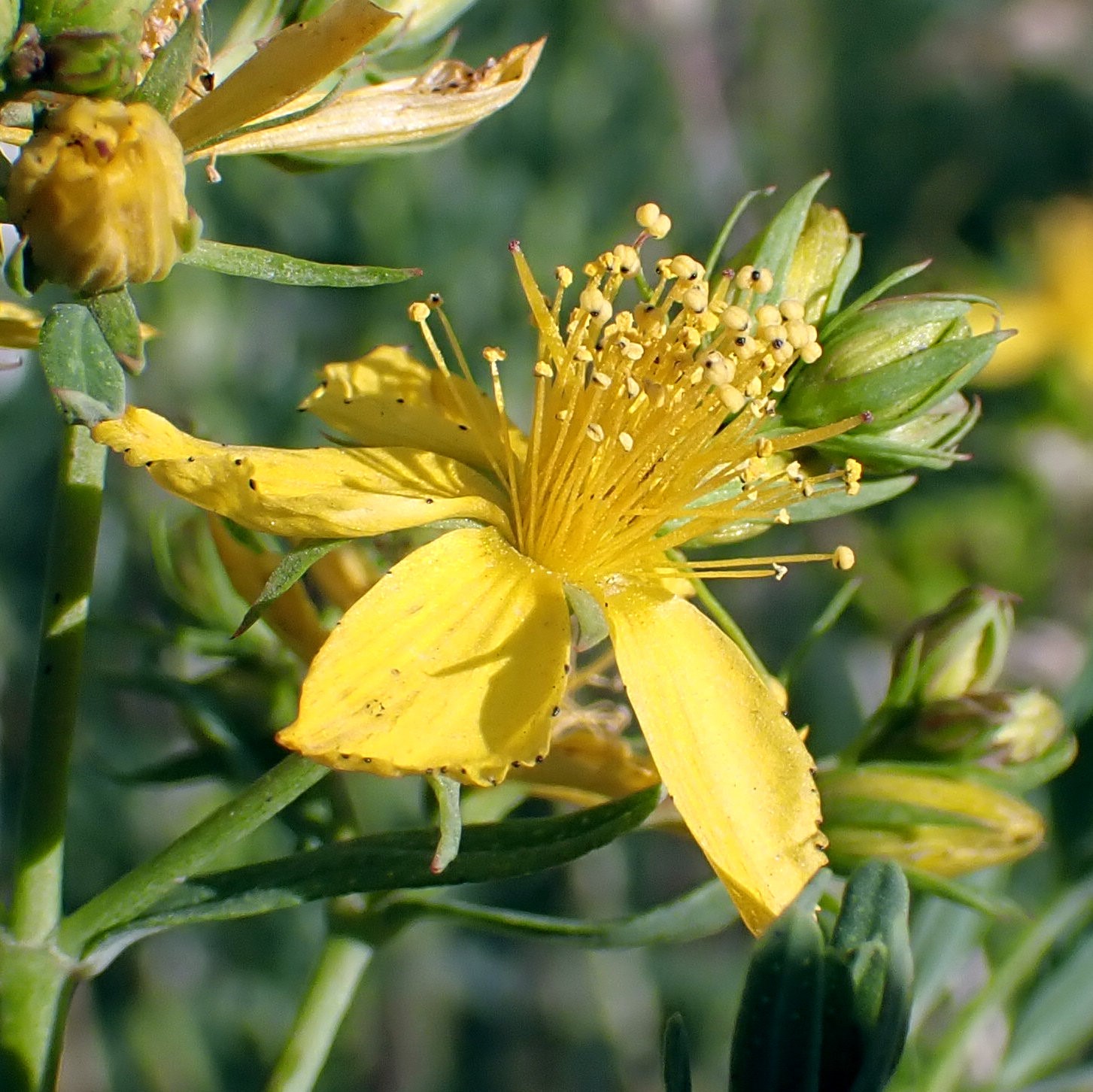
Further muddying the picture, the term “noxious weeds” is often used interchangeably with “invasive species” by organizations and individuals alike. The USDA has a list of “Introduced, Invasive, and Noxious Plants.”ix The designation of “noxious weeds” is typically decided by local government entities in support of conventional farming and ranching, so a particular plant—native or introduced—will be added because of its purportedly negative effect on domesticated crops or animals. Thus, St. Johnswort (Hypericum perforatum) is bad because it can cause phototoxicity in sheep, Chervil (Anthriscus sylvestris) because it might carry a rust fungus that can affect cultivated carrot seed crops, and Pigweed (Amaranthus palmeri) because it grows in cornfields. Note that in the first two cases the plant or animal species supposedly threatened are themselves not native, and are products of a system—industrial agriculture—that is severely detrimental to the environment wherever it is practiced. Though Corn (Zea mays) is native, the ultra-hybridized and genetically-modified varieties grown today are so far from what indigenous people tended in Three Sisters arrangements that one could question if it’s even the same plant anymore. All three of these “weeds” also happen to be edible or medicinal for humans, so it’s a matter of priorities rather than usefulness that they’re slapped with a negative label and their eradication actively pursued. The primary motivation of noxious weed management is economic, not ecological—despite recent glosses of “sustainability” or “conservation” applied by some of its adherents—and more often than not involves pesticides.
What about science? How does invasion biology itself define “invasive?”
Scientists are well-known for disagreeing about definitions, and “invasive” is no exception. One biologist summed up the discussion by stating that there is “no indication that the field [will] be able to achieve uniformity in language in the near future.”x
These are some of the concepts that have been used or proposed for “invasive”:
- a species that successfully establishes itself in a new place
- such a species that establishes and has impact
- such a species whose impact is negative
- such a species that establishes and has impact
- a species that, regardless of impact, establishes and spreads rapidly
- a species that does any of the above which is non-native and introduced by humans
- a species that does any of the above which is non-native, regardless of how it was introduced
- a species that does any of the above which is native
These can’t all be true at once, obviously. There are too many contradictions. The science also suffers for dearth of agreement. One researcher noted that the “lack of consensus regarding the definition of invasive alien species (IAS) and vagueness around the demonstration of their impacts limits knowledge and research in this field.”xi
Whether or not to use the word “invasive” at all is an ongoing debate in invasion biology. Historically, some scientists used the word “invade” and “colonize” to merely describe the movement of a species into a new area, or just the establishment of a species in a recently opened area, like after a fire, flood or landslide. But many scientists now recognize that, these days, the word has indisputably negative connotations which have implications not just within the field but for social discourse. Writes biologist Mark Davis, in his book, Invasion Biology:
I have never liked the term ‘invasion’ and think the field would have been much better off had it never been adopted, along with its accompanying military metaphors. Although the usage of military language may help to attract a group of highly motivated supporters, this same language may help foment a strongly confrontational approach, making it much more difficult to negotiate and resolve conflicts.xii
More on the discussions within the field of invasion biology about terminology follow later.
A “confrontational approach” has certainly been a feature of too many discussions about introduced plant species. We have both been saddened to watch as native plant forums online, once a place to good-naturedly share photos and get IDs, have become toxic places where the word “invasive” is wielded like a club. Hateful rhetoric is the hallmark of dogma, not reason or thoughtfulness, and unfortunately it has been metastasizing in too many circles. We wonder how different the attitudes would be if “invasive” had never been used and we’d only ever had something neutral like “introduced” or nostalgic like “pioneer.”
What’s not defined as “invasive” is just as important as what is
Excluded from virtually everyone’s definition are the hundreds of non-native domesticated plants important to agriculture. This is highly significant given that over one fifth of the land in the lower 48 states of the US is cropland. That’s nearly 400 million acres of what was originally habitat for many, many native plant species. The excuse of “We need to eat!” doesn’t fly here; only 20% of that cropland is devoted to growing food directly for people; the majority of the remainder is for ethanol production, export industries, and livestock feed.xiii
These stats should put the “invasive” dialogue into perspective. Picture the Midwest’s horizon-to-horizon corn and soy crops, California’s vast rice fields and almond orchards, or Oregon’s expanses of grass seed. These monocrops of non-native plants displaced prairies, forests and wetlands brimming with native flora and fauna. They are maintained with toxic pesticides and fertilizers, unsustainable water use, heavy machinery, fossil fuels, and oppressive labor practices. They dominate more than just their local geographical footprint, sucking in resources from distant places. According to the “invasive plant” narrative, the only “invasives” in these abused landscapes are the weeds coming up in the ditches or between the rows, a perspective we find perverse.
Other exemptions apply to the “invasive” label. As the US Department of the Interior’s Invasive Species Advisory Committee points out: “Kentucky bluegrass would be considered an invasive species in Rocky Mountain National Park in Colorado, but considered non-invasive a mere 60 miles away at a golf course in Denver.”xiv If anything is “invasive,” how is it not the golf course itself? In the arid Coachella Valley of southern California, over 140 irrigated golf courses represent the complete destruction of the desert habitats that they replaced, and are a significant draw on the region’s precious water.
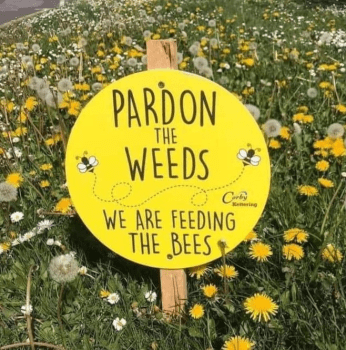
The topic of golf courses leads us to another big omission: lawns, which in their emerald-green ideal are monocultures of non-native grass. If lawn grass were categorized as an irrigated crop in the US, it would be ranked number one in land area and water use.xv Yet it is the Dandelion that sprouts up in the front yard that’s “invasive.”
The “invasive plant” narrative is not ultimately about logic or facts. It’s about beliefs and prejudices, so a more relevant question than, “What is the definition of an ‘invasive’ plant?” might be, “What is meant by ‘invasive’?” What does the word signify? From what cultural foundations does it spring and what narrative edifice does it help perpetuate? There’s the narrative—that some plants are bad because they’re foreign—and then there’s the why of the narrative, which we delve into in Part 3, “Culture.”
“Bad plant”
In sum, the term “invasive plant” is thrown around so carelessly these days that, in common usage, it doesn’t really mean anything beyond some vague notion of “bad plant.”
But there are no “bad plants.” There are just particular plants that particular people in particular places at particular times have considered undesirable for particular reasons. That’s a lot of particulars. Too many to brand a whole species of plant with a pejorative label like “invasive” or “noxious” as if that’s its entire, intrinsic nature. Does it make sense to weed a garden? Of course. But that’s no reason to elevate our subjective calls—useful as they might be in a particular place and particular time—to the level of a universal constant, and to manufacture an army of villains in doing so. That just encourages our own misguided tendencies and puts off the day when we resume healthy connection and relating with life on this planet.
A very real invasion commenced in 1492, and with it came what some Anishnaabe tradition-bearers call “invasive land-ethics,”xvi a concept we explain in “Introduced Plants, Settler-Colonialism, Indigenous Perspectives and Decolonization.” These ethics drove the cutting of forests, draining of wetlands, mining of mountains, plowing of prairies, damming of rivers, and slaughter to near extinction of Buffalo, Prairie Dogs, Beavers, Bears, Cougars and Wolves. These misbegotten ethics are unequivocally real and are active threats to the planet’s environment. Without addressing them, the destruction will only worsen.
In the meantime, the “management” of “invasive plants” routinely has its own negative effects, which we detail in the next chapter.
Kollibri Terre Sonnenblume
Citations:
iExecutive Order 13112 – Section 1. Definitions, February 3, 1999. https://www.invasivespeciesinfo.gov/executive-order-13112-section-1-definitions
iiUnited Nations Environmental Programme. “Invasive Alien Species—A grwoing threat in regional seas” https://wedocs.unep.org/bitstream/handle/20.500.11822/13623/invasive_alien_brochure.pdf
iiiIUCN. “Invasive Alien Species” https://www.iucn.org/our-work/topic/invasive-alien-species
ivConvention on Biological Diversity. “What are Invasive Alien Species?” https://www.cbd.int/invasive/WhatareIAS.shtml
vCockburn, Andrew. “Weed Whackers: Monsanto, glyphosate, and the war on invasive species” Harpers (September 2015). https://harpers.org/archive/2015/09/weed-whackers/
viNew York State Department of Environmental Conservation. NYCRR part 575 Invasive Species Regulation. (September, 2014). https://www.dec.ny.gov/docs/lands_forests_pdf/isprohibitedplants2.pdf.
viiAnsley, R. “Managing Native Invasive Juniper Species Using Fire” Weed Technology 19 (Jul 2005):517-522 DO – 10.1614/WT-04-098R1.1 http://www.bioone.org/doi/abs/10.1614.
viiiFite, Katie. “The Terrible Destruction of Pinyon-Juniper Forests” Counterpunch (December 28, 2018). https://www.counterpunch.org/2018/12/28/the-terrible-destruction-of-pinyon-juniper-forests/.
ixUSDA https://plantsorig.sc.egov.usda.gov/java/noxious?rptType=Federal
xDavis, Mark. “Invasion Biology.” (New York: Oxford University Press, 2009), p. 3.
xiFachinello MC, Romero JHC, Chiba de Castro WA (2022) Defining invasive species and demonstrating impacts of biological invasions: a scientometric analysis of studies on invasive alien plants in Brazil over the past 20 years. In: Giannetto D, Piria M, Tarkan AS, Zięba G (Eds) Recent advancements in the risk screening of freshwater and terrestrial non-native species. NeoBiota 76: 13–24. https://doi.org/10.3897/neobiota.76.85881
xiiDavis, 2009.
xiiiMerrill, Dave and Leatherby, Lauren. “Here’s How America Uses Its Land” (Bloomberg, July 31, 2018). https://www.bloomberg.com/graphics/2018-us-land-use/.
xivUS Department of the Interior Invasive Species Advisory Committee. “Invasive Species Definition Clarification and Guidance” April 27, 2006, p. 3. https://www.doi.gov/sites/doi.gov/files/uploads/isac_definitions_white_paper_rev.pdf.
xvCristina, Milesi & Elvidge, Christopher & C, J. & D, B. & Nemani, Ramakrishna & E, S.. (2012). A strategy for Mapping and Modeling the Ecological Effects of US Lawns.
xviReo, Nicholas J., Ogden, Laura A. “Anishnaabe Aki: an indigenous perspective on the global threat of invasive species,” Sustainability Science (2018) 13: 1443-1452. https://doi.org/10.1007/s11625-018-0571-4.




 Conservation Sense and Nonsense