The evolving goals of ecological “restorations”

We are publishing a “progress report” from a member of our tree team who attended a Weed Management Workshop on June 3, 2017.  This report suggests that the goal of local ecological “restorations” may be more realistic than they were in the past and potentially less destructive. 


Friends,

I attended a Weed Management Workshop this morning that was co-sponsored by East Bay Regional Park District and the California Invasive Plant Council.  It was attended by about 70 people, representing many of the “stewardship” organizations engaged in native plant “restorations.”  The main speakers were Doug Johnson, Executive Director of the California Invasive Plant Council and Pam Beitz, a member of the Integrated Pest Management staff of the East Bay Regional Park District.

The primary purpose of the workshop was to recruit new volunteers for the many “restoration” projects in the East Bay.  Similar workshops will be offered in Mill Valley (June 17), San Jose (June 24), and Portola Valley (July 15).  Since volunteers do not use pesticides or heavy equipment, those methods of eradicating “invasive” plants were not discussed. [Information about remaining workshops available HERE.]

Although the usual accusations about the negative impact of “invasive” plants were discussed, the speakers made several acknowledgements about limitations on their objectives that represent significant progress in the 25-year debate about invasion biology.

In the spirit of encouragement, I will tell you about a few of them.

Doug Johnson set the tone at the beginning of the workshop when he said, “Non-native plants aren’t evil.  It’s important not to get ideological about this.”  The audience did not react negatively to his appeal to base judgments about non-native plants on their ecological function and impacts on ecosystems.

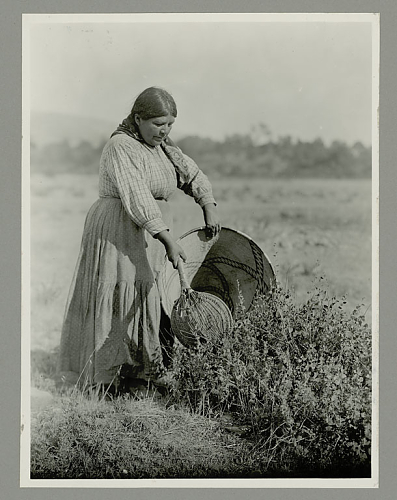
Pomo gathering seeds, 1924. Smithsonian photo archieve

Pam Beitz acknowledged that the historical landscapes, which “restorations” attempt to recreate were, in fact, manmade.  She provided several observations from Kat Anderson’s Tending the Wild to illustrate that point.  Native Americans intensively gardened the landscape to foster the plants they needed for food, shelter, and tools.  The implication of that history of our landscape is that ecological “restoration” must make a permanent commitment to managing the landscape. [HERE is an article on Million Trees about “Tending the Wild.”]

Beitz said the goal of these weed management projects is to eliminate “invasive” plants from a small enough area that it can be managed for the long term.  She said it is no longer considered feasible to eradicate “invasive” plants.

In answer to the question, “Why manage the wildlands?” Beitz said, “Because we are driven to alter our environment.”  She also said that human disturbance maximizes biodiversity, citing a study by Joe Connell that found the greatest diversity where there are intermediate levels of disturbance.  This is a radical departure from the earlier view that the most effective conservation eliminates all human activities.

There were also many representatives of local “restoration” projects who described their projects and recruited more volunteers.  Some of their presentations indicated the shifting emphasis of native plant “restorations.”

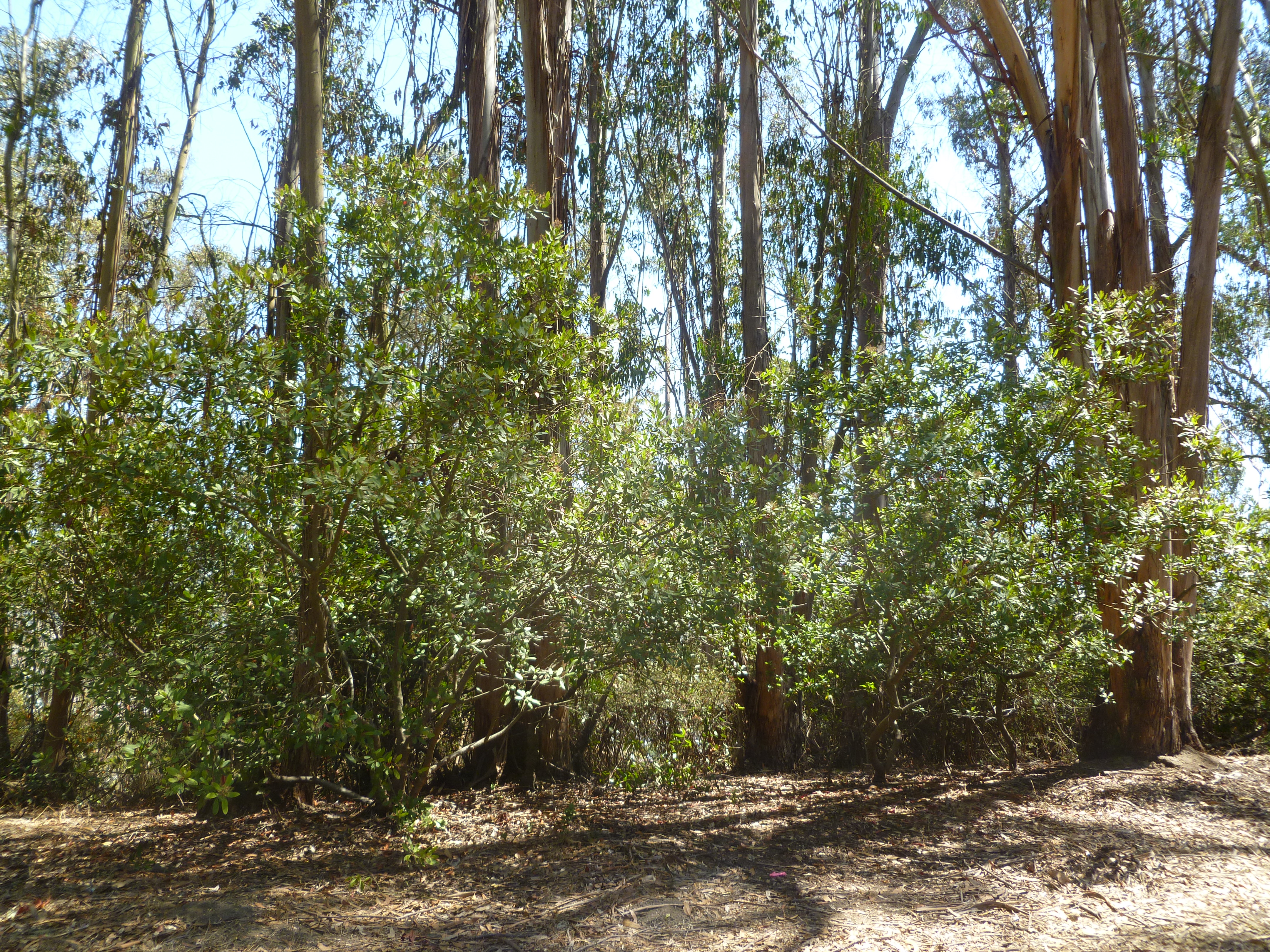
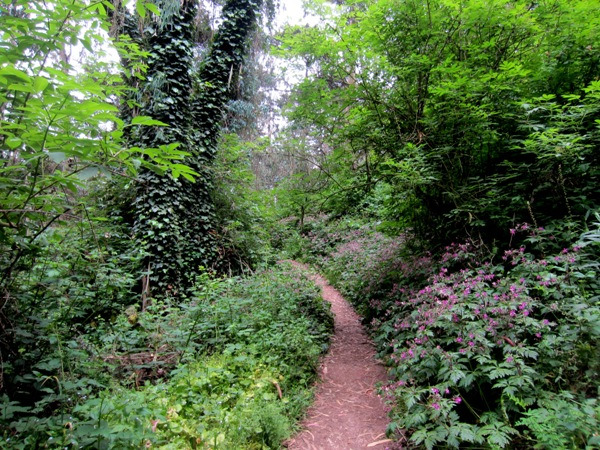
  • Margot Cunningham of Friends of Albany Hill said that 50% of the 300 plants on Albany Hill are natives, despite the fact that it is heavily forested in eucalyptus, and that many of those native plants are growing under the eucalypts.  She said there are 100 species of butterflies and moths and that monarchs roost in the eucalyptus trees.  There are 80 species of birds.  Her organization is trying to eliminate plants they consider invasive, such as ivy. [HERE is an article on the Million Trees blog about Albany Hill, which corroborates the view of Friends of Albany Hill.]  

    Native toyon under eucalyptus on Albany Hill
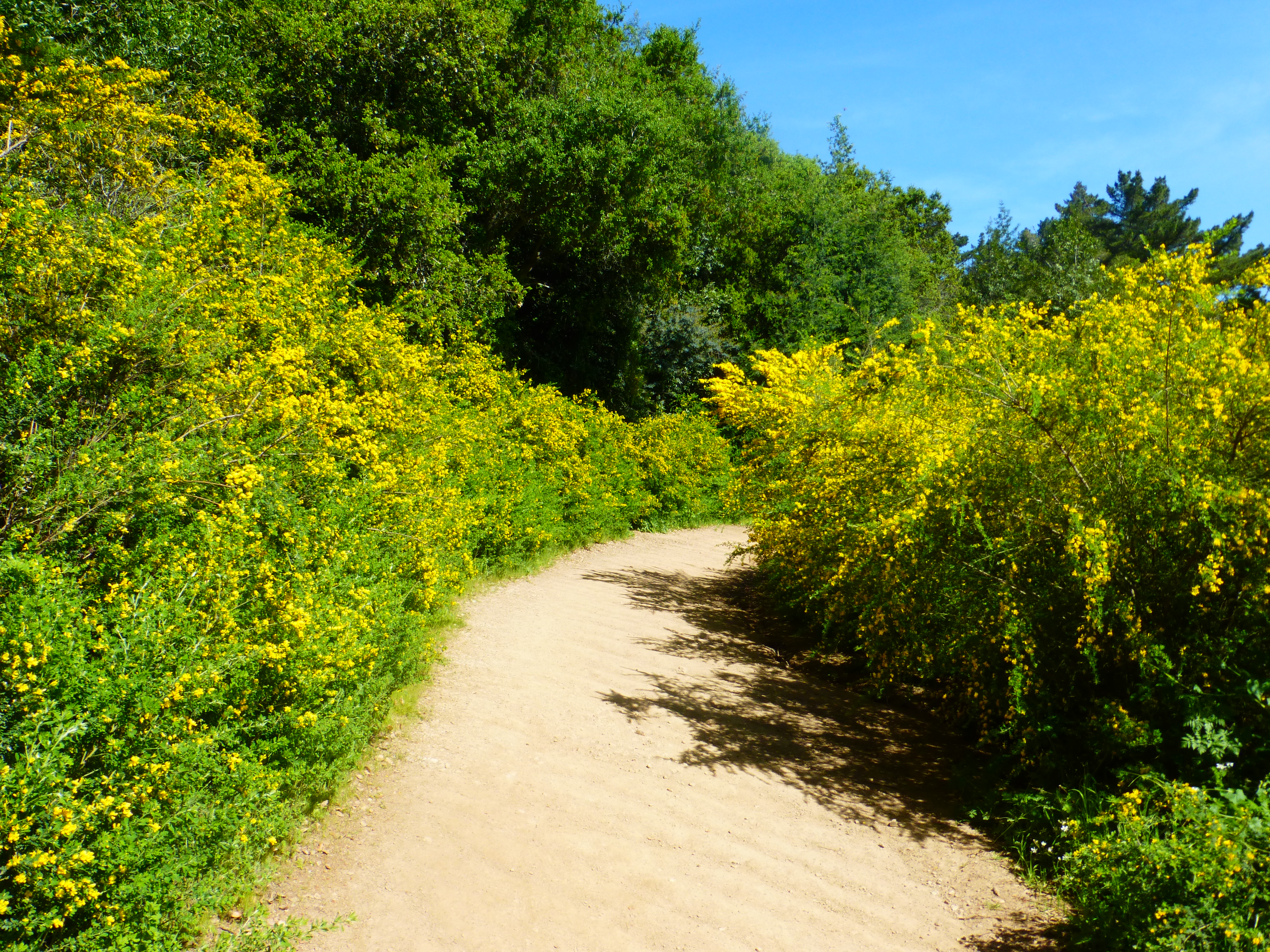
  • Wendy Tokuda is one of the most prominent native plant advocates in the East Bay.  She described several of the projects she has been working on for about 10 years, such as trying to eliminate broom along 3 miles of a trail in EBRPD.  She emphasized the importance of focusing one’s effort on a small enough area that the goal can be both attained and sustained. [HERE is an article on the Million Trees blog about the 10-year attempt to eradicate broom on a trail in the East Bay Regional Park District.]  
Broom on EBRPD trail after 10 years of effort, April 2017
  • Friends of Five Creeks said, “In a city, stewardship is forever.”

I have been following the native plant movement for over 20 years.  I believe this workshop articulated some significant departures from their original agenda:

  • There is a new understanding that the historical landscape was created by humans.
  • Any attempt to recreate the historic landscape will require a permanent commitment to manage the landscape.
  • Because of the scale of such an undertaking, it is not realistic to transform all open space to pre-settlement conditions.  Projects must be scaled to match available resources.

Anonymous member of the tree team


The observation that humans are “driven to alter our environment” struck a chord.  We are in the camp that prefers not to interfere with the workings of nature any more than necessary because we believe that human knowledge is inadequate to presume to make better management decisions than natural processes.  There are pros and cons to every change in nature.  Some plant and animal species will benefit and some will be harmed.  It’s like flipping a coin.  I prefer to put the coin in the hands of nature, rather than the hands of humans.  However, we understand and are sympathetic to the human desire to “help” nature. 

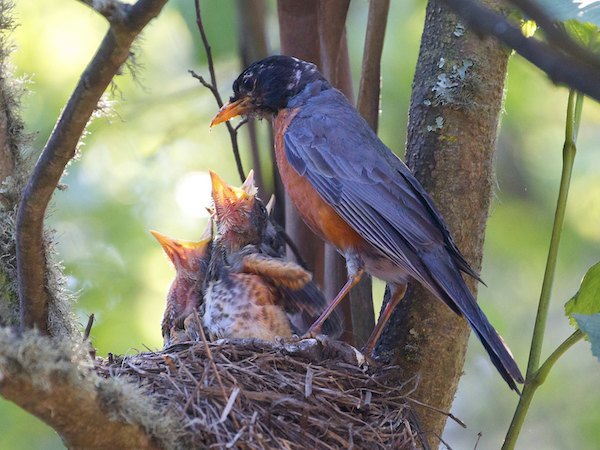
Robin and chicks. Courtesy SF Forest Alliance

A recent article in the New York Times provided a good example of how the good intentions of humans often lead to intrusions into the natural world.  The author explained how she became the self-appointed guardian of birds nesting in her garden.  Her small dog was a predator of fledgling birds.  She felt obligated to identify all the nests in her garden so that she could keep her dog indoors when the birds left the nest. 

When her dog died, she discovered that she could not give up that role.  If one bird was competing with another for a nesting spot, she found herself choosing sides, although she knew she had no business choosing winners and losers in the natural world:   “It is wrongheaded to interfere in nature when something is neither unnatural nor likely to upset the natural order.  I can’t help myself…It’s humiliating, all the ways I’ve interfered.”

We know that volunteers in “restoration” projects mean well.  Since they don’t use pesticides or have access to the heavy equipment needed to destroy trees, we don’t argue with them directly.  Our advocacy for the preservation of our urban forest is aimed at the managers of our public lands because we are as much the owners of those lands as anyone else and our tax dollars are used to fund their projects.

Million Trees

Where is the invasion biology debate headed?

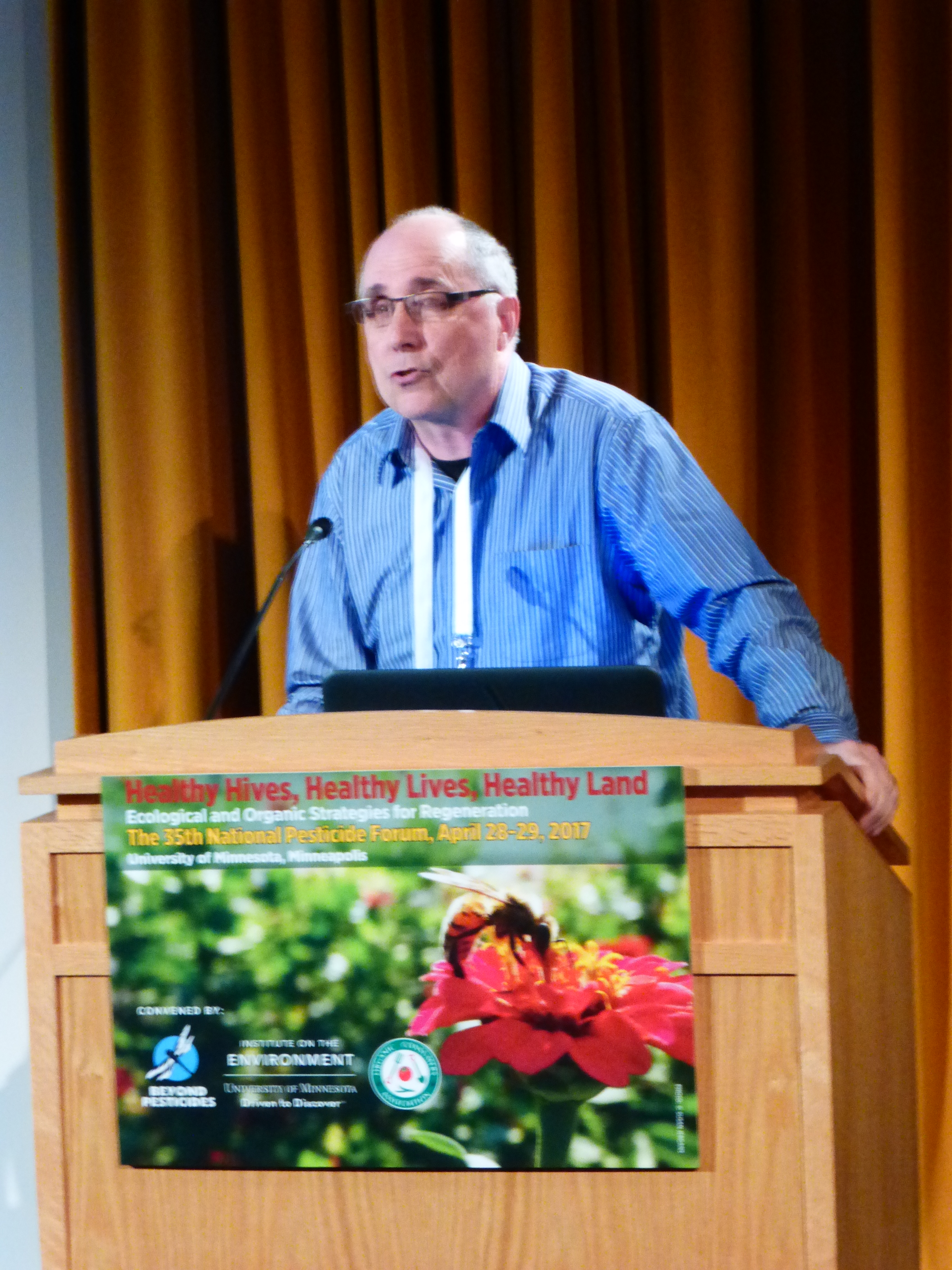
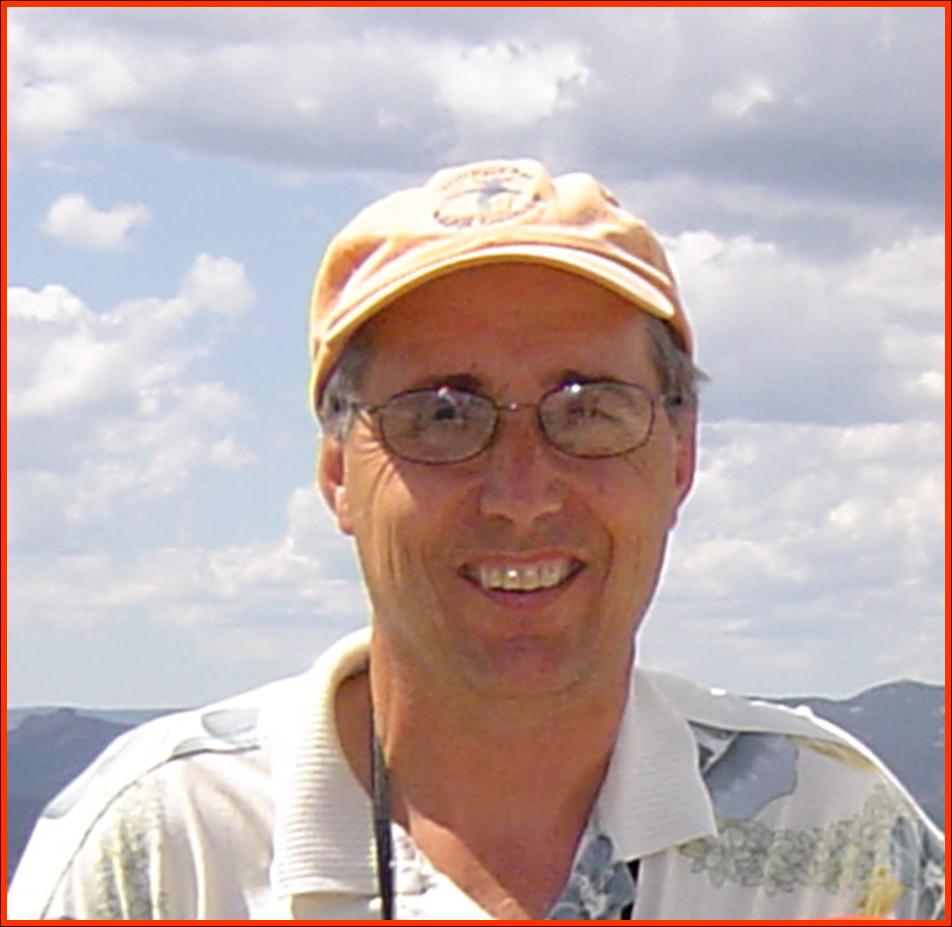
Mark Davis speaking at Beyond Pesticides conference, April 2017

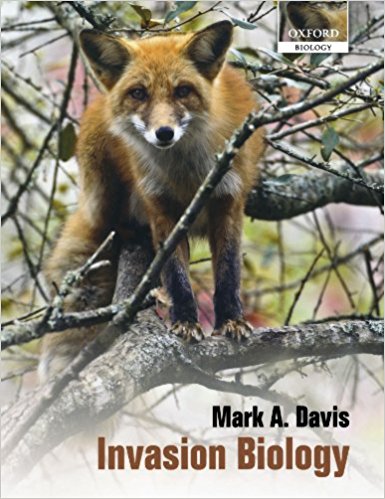
Mark Davis is Professor of Biology at Macalester College in St. Paul, Minnesota.  He is one of the first academic ecologists to publicly express skepticism of invasion biology.  His book, Invasion Biology, was published by Oxford University Press in 2009.  It was the first critique of invasion biology written by an academic scientist. Professor Davis cites the many empirical studies that find little evidence supportive of the hypotheses of invasion biology. 

In 2011, Nature magazine published an essay written by Professor Davis and 18 coauthors entitled, “Don’t Judge Species on their Origins.”  This essay suggested that conservationists evaluate species based on their ecological impact, rather than whether or not they are natives.  The essay initiated an intense debate in the academic community of ecologists that continues today. 

Professor Davis spoke at the Beyond Pesticides conference in Minneapolis at the end of April 2017. (Video available HERE) He described invasion biology as an irrational ideology that is based on nostalgia for the past and a belief that wildlands are being damaged by “alien invaders.”  In fact, the perceived damage is largely in the eye of the beholder, depending largely on one’s membership in a group benefiting from the nativism paradigm, such as chemical manufacturers, conservation organizations, government agencies, and employees.  Some academic careers are also at stake.  Futile attempts to re-create historical landscapes always have the potential to make things worse.  In many instances, it is more sensible to change one’s attitude about the changing landscape than trying to change nature.

We invited Professor Davis to write a guest post for publication on Million Trees.  We asked him to express his opinion on these questions: 

  • Has the status of invasion biology changed much since Nature published your essay 2011?
  • Has increased knowledge of climate change had an impact on the status of invasion biology in academia?
  • What do you think is the future of invasion biology both as an academic discipline and as public policy?

Professor Davis’s guest post addresses these questions.  We are grateful to Professor Davis for his many contributions to our understanding of the fallacies of invasion biology and for his thoughtful guest post.

Million Trees


Competition to define nature

In the past few years, a new perspective has been taking hold in the field of ecology.  Referred to as ‘ecological novelty’ it emphasizes that many factors are producing ecologically novel environments.  Climate change (which includes changes in temperatures and patterns of precipitation), increased atmospheric carbon dioxide, which affects photosynthetic rates, increased atmospheric deposition of nitrogen (the whole earth is being fertilized due to the increased nitrogen we are pouring into the atmosphere), and the introduction of new species are all rapidly changing our environments.

A strength of the term ecological novelty is that unlike the invasion vocabulary it is simply descriptive.  It simply states that ecosystems are changing and are different than they were in the past, even the recent past.  It says nothing about whether this change is good or bad.  In this paradigm, species can be referred to as novel species, new arrivals, or long-term residents.

The less biased ecological novelty paradigm differs dramatically from the more ideological nativism paradigm.  It differs in the language it uses and it differs in the implied direction that land management should proceed.  More generally, it forsakes the normative atmosphere that permeates restoration ecology, conservation biology, and invasion biology, all of which have been substantially guided by the nativism paradigm.

The Sutro Forest in San Francisco is a good example of a novel ecosystem. It is a thriving mix of native and non-native species. Much of it will be destroyed by the irrational belief that native species are superior to non-native species.  Million Trees

Currently, invasion biologists are trying to discredit ecological novelty as a valid or valuable perspective.  This is hardly surprising since the ecological perspective would displace the nativism paradigm, and many stakeholders have much to lose if the nativism paradigm were abandoned, e.g. chemical companies, restoration and management companies, local, state, and national agencies, to name just a few.  Not surprisingly, articles trying to shore up invasion ecology and to keep it relevant have been common in recent years.

While the public may not be aware of it, there exists a heated competition to define natureWhich side wins will significantly determine how nature is managed.  Given that the redistribution of species is only going to increase in upcoming decades, it is hard to imagine that people will still be so preoccupied with origins by the middle of the century.  Like the notion of wilderness, the nativism paradigm is more of a twentieth century concept, while the construct of ecological novelty is more fitting for the twenty first century.

Undoubtedly, nativist groups will still exist and will still be preoccupied with trying to restore their vision of the past.  But, due to the number of species being moved to new regions, much more attention likely will be given to the function of species than their origins, if only for pragmatic reasons.  For people coming of age now, cosmopolitanization is the new normal, both with respect to people and other species.  We will still carry our predispositions to divide the world into us and them, but it should be clear to most that the nativism perspective will be obsolete and that beyond the creation of museums, restoring the past will not be possible, whether a city or a forest.

Currently Earth is the only planet we know of where life exists.  In this context, the desire and practice of declaring some species as aliens, exotics, or invaders seems sadly provincial and even unseemly.  Roman playwrite Publius Terentius Afer (aka Terence) wrote in his play Heauton Timorumenos, “Homo sum, humani nihil a me alienum puto”, or “I am human, and nothing of that which is human is alien to me.” To those who still see such value in distinguishing native from alien species, I say, “I am of the planet Earth and nothing of that which is earthly is alien to me.”

Mark Davis

Status report on the invasion biology debate

Mark Davis, Macalester College

Mark Davis is Professor of Biology at Macalester College in St. Paul, Minnesota.  He is one of the first academic ecologists to publicly express skepticism of invasion biology.  His book, Invasion Biology, was published by Oxford University Press in 2009.  It was the first critique of invasion biology written by an academic scientist. Professor Davis cites the many empirical studies that find little evidence supportive of the hypotheses of invasion biology. 

In 2011, Nature magazine published an essay written by Professor Davis and 18 coauthors entitled, “Don’t Judge Species on their Origins.”  This essay suggested that conservationists evaluate species based on their ecological impact, rather than whether or not they are natives.  The essay initiated an intense debate in the academic community of ecologists that continues today. 

Professor Davis spoke at the Beyond Pesticides conference in Minneapolis at the end of April 2017. (Video available HERE) He described invasion biology as an irrational ideology that is based on nostalgia for the past and a belief that wildlands are being damaged by “alien invaders.”  In fact, the perceived damage is largely in the eye of the beholder, depending largely on one’s membership in a group benefiting from the nativism paradigm, such as chemical manufacturers, conservation organizations, government agencies, and employees.  Some academic careers are also at stake.  Futile attempts to re-create historical landscapes always have the potential to make things worse.  In many instances, it is more sensible to change one’s attitude about the changing landscape than trying to change nature.

Mark Davis speaking at Beyond Pesticides conference, April 2017

We invited Professor Davis to write a guest post for publication on Million Trees.  We asked him to express his opinion on these questions: 

  • Has the status of invasion biology changed much since Nature published your essay 2011?
  • Has increased knowledge of climate change had an impact on the status of invasion biology in academia?
  • What do you think is the future of invasion biology both as an academic discipline and as public policy?

Professor Davis’s guest post addresses these questions.  We are grateful to Professor Davis for his many contributions to our understanding of the fallacies of invasion biology and for his thoughtful guest post.

Million Trees


Competition to define nature

In the past few years, a new perspective has been taking hold in the field of ecology.  Referred to as ‘ecological novelty’ it emphasizes that many factors are producing ecologically novel environments.  Climate change (which includes changes in temperatures and patterns of precipitation), increased atmospheric carbon dioxide, which affects photosynthetic rates, increased atmospheric deposition of nitrogen (the whole earth is being fertilized due to the increased nitrogen we are pouring into the atmosphere), and the introduction of new species are all rapidly changing our environments.

A strength of the term ecological novelty is that unlike the invasion vocabulary it is simply descriptive.  It simply states that ecosystems are changing and are different than they were in the past, even the recent past.  It says nothing about whether this change is good or bad.  In this paradigm, species can be referred to as novel species, new arrivals, or long-term residents.

The less biased ecological novelty paradigm differs dramatically from the more ideological nativism paradigm.  It differs in the language it uses and it differs in the implied direction that land management should proceed.  More generally, it forsakes the normative atmosphere that permeates restoration ecology, conservation biology, and invasion biology, all of which have been substantially guided by the nativism paradigm.

The Sutro Forest in San Francisco is a good example of a novel ecosystem. It is a thriving mix of native and non-native species. Much of it will be destroyed by the irrational belief that native species are superior to non-native species.  Million Trees

Currently, invasion biologists are trying to discredit ecological novelty as a valid or valuable perspective.  This is hardly surprising since the ecological perspective would displace the nativism paradigm, and many stakeholders have much to lose if the nativism paradigm were abandoned, e.g. chemical companies, restoration and management companies, local, state, and national agencies, to name just a few.  Not surprisingly, articles trying to shore up invasion ecology and to keep it relevant have been common in recent years.

While the public may not be aware of it, there exists a heated competition to define natureWhich side wins will significantly determine how nature is managed.  Given that the redistribution of species is only going to increase in upcoming decades, it is hard to imagine that people will still be so preoccupied with origins by the middle of the century.  Like the notion of wilderness, the nativism paradigm is more of a twentieth century concept, while the construct of ecological novelty is more fitting for the twenty first century.

Undoubtedly, nativist groups will still exist and will still be preoccupied with trying to restore their vision of the past.  But, due to the number of species being moved to new regions, much more attention likely will be given to the function of species than their origins, if only for pragmatic reasons.  For people coming of age now, cosmopolitanization is the new normal, both with respect to people and other species.  We will still carry our predispositions to divide the world into us and them, but it should be clear to most that the nativism perspective will be obsolete and that beyond the creation of museums, restoring the past will not be possible, whether a city or a forest.

Currently Earth is the only planet we know of where life exists.  In this context, the desire and practice of declaring some species as aliens, exotics, or invaders seems sadly provincial and even unseemly.  Roman playwrite Publius Terentius Afer (aka Terence) wrote in his play Heauton Timorumenos, “Homo sum, humani nihil a me alienum puto”, or “I am human, and nothing of that which is human is alien to me.” To those who still see such value in distinguishing native from alien species, I say, “I am of the planet Earth and nothing of that which is earthly is alien to me.”

Mark Davis

Unseen City: A tribute to urban nature

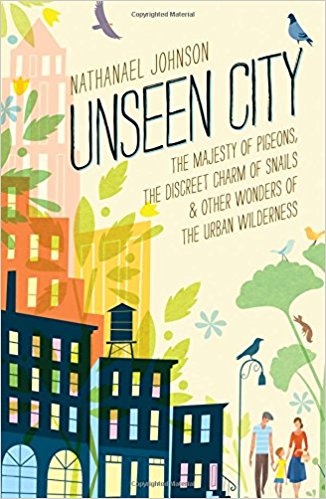
It was pure pleasure to read Unseen City (1).  Unlike most nature writing, Nathanael Johnson asks readers to notice and appreciate the urban nature that we tend to take for granted.  Ironically, the plants and animals that we see every day and in great numbers do not get the attention they deserve.  Most nature writing tends to focus on rare and remote species to which we have little access and often laments their absence where we live.  Conservationists often advocate for expensive programs to reintroduce rare species to urban centers where they haven’t lived for decades, if not centuries.

Johnson’s focus on the ordinary species around us is refreshing.  We were happy to take a break from the usual hand-wringing about loss of biodiversity and instead enjoy the richness and beauty of the nature we have.  It is our loss when we ignore the nature we have. Johnson’s intense focus on urban species reveals that they are every bit as interesting as the rare species we seldom see.  Johnson’s approach to nature is analogous to the optimist’s “glass-half-full” approach to life.

Another appealing aspect of Johnson’s approach is that his story is told from the perspective of a young father, introducing his toddler daughter to the mysteries of nature.  One of our primary concerns about the museumification of our parks by native plant advocates is that children are being deprived of the opportunity to interact with nature.  Being required to stay on trails or observe from behind fences is no way for children to appreciate the complexity and beauty of the natural world.  Johnson takes his daughter deep into the weeds to experience nature in a physical, tactile way. 

A few examples of the homely creatures in our cities

Johnson wrote his book while living in San Francisco and then in Berkeley.  So, the species he encounters and studies are those with which we are all familiar.  Here are some of the creatures he tells us about, with a few of the interesting things we learn about them.

  • Pigeons are reviled by many serious bird watchers. In fact, they are remarkable creatures in many ways.  They mate for life and they are extremely devoted parents.  They tend to nest in the same place and their ability to find and return to that nest from long distances is one of the reasons why humans have formed intense relationships with them.  There is a long tradition of keeping homing pigeons that are raced by their keepers in competitions that occur all over the world.  The pigeons are taken long distances from their nests and then timed on how long it takes them to return home.  Johnson tells remarkable stories about how pigeons overcome challenging attempts to prevent them from finding their way home.
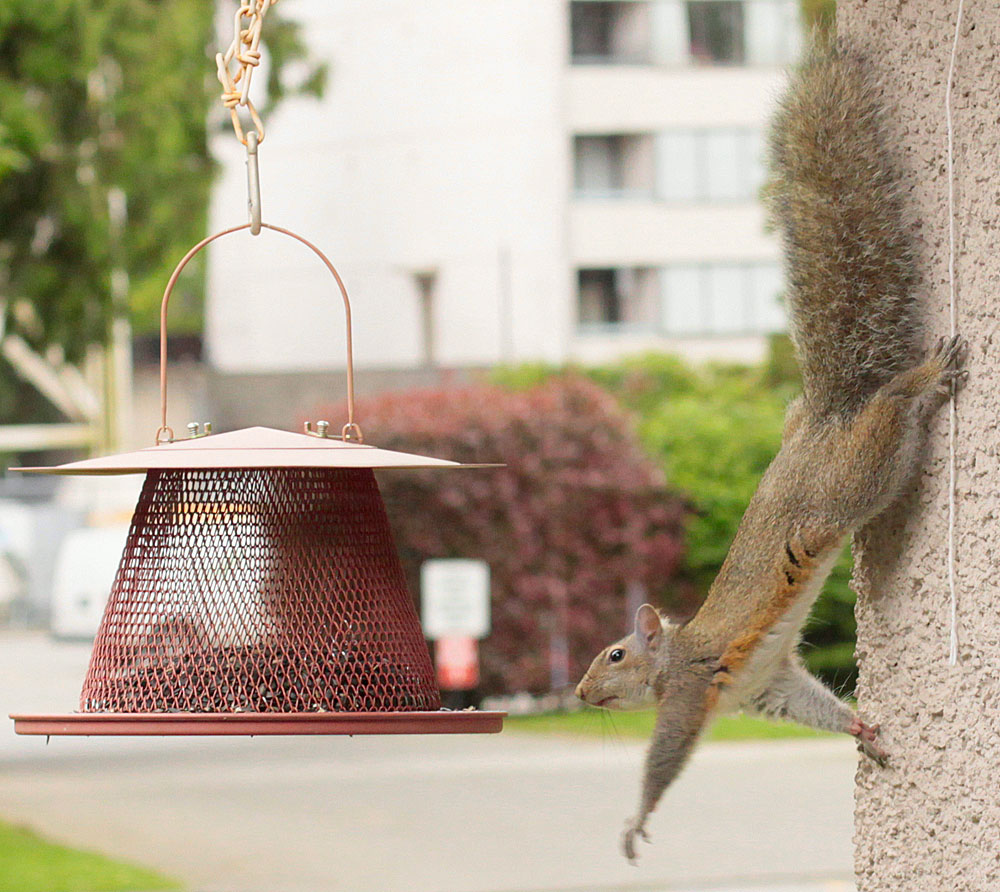
  • Eastern grey squirrel. Creative Commons

    Squirrels are both extremely agile and very resourceful. Here is an example of how squirrels defeated an attempt to keep them out of a bird feeder: “…squirrels had to climb up through a vertical pipe, leap onto a blade of a spinning windmill, cling to it, and then sail off on the right trajectory to land on a platform.  Then they had to go paw over paw upside down along a suspended chain that passed through a series of spinning disks, negotiate a revolving door, run through a slack canvas tube, and keep their balance while crossing a pole covered with slick spinning rollers.  From there, it was a six-foot jump to another tunnel, through which they had to ride a sliding vehicle made to look like a rocket ship by pushing it along with their paws.  Finally, there was an eight-foot jump to the food.” (1)  I retell this to story to spare our readers the pointless effort of trying to prevent squirrels from raiding their bird feeders.

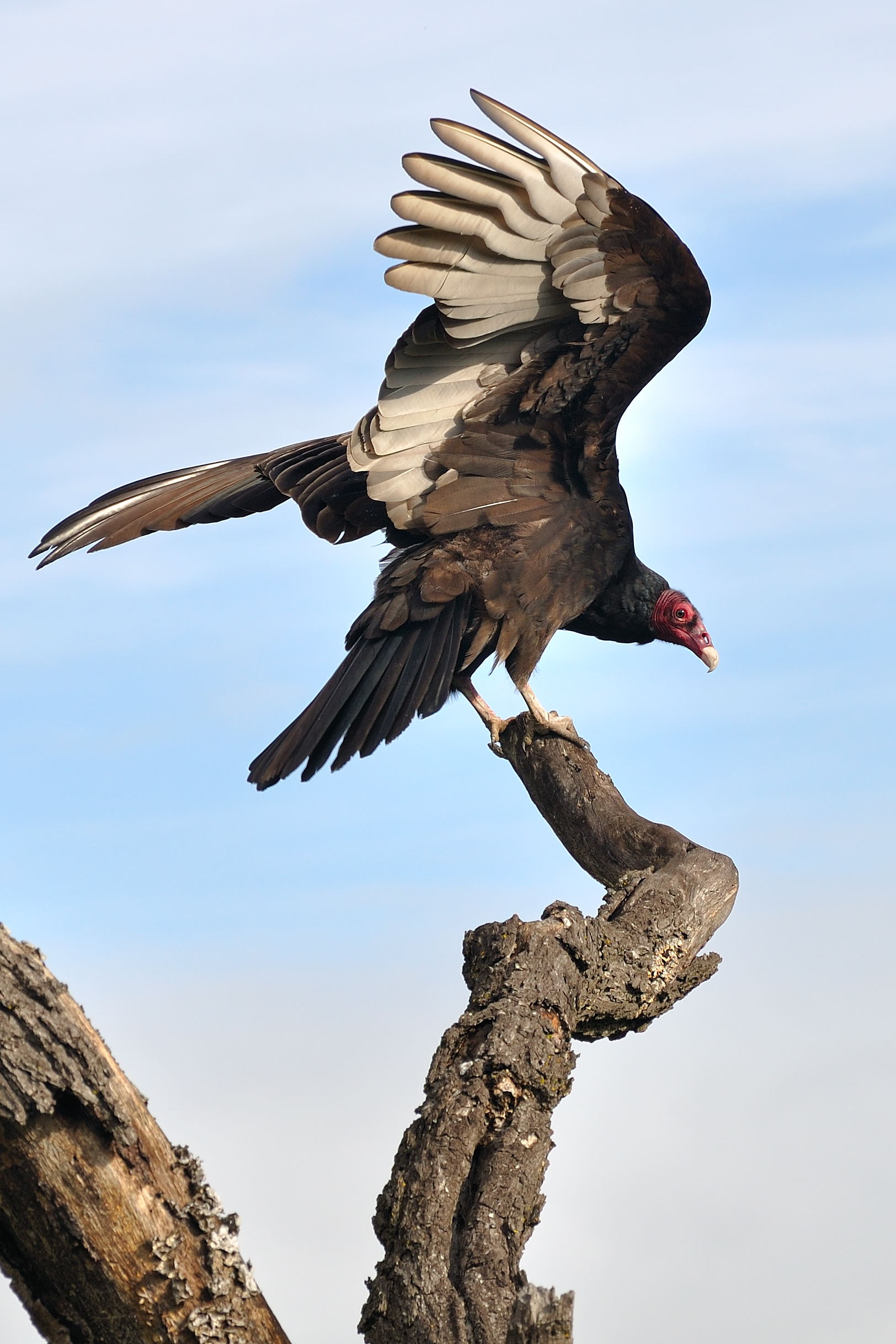
  • Turkey vulture in San Jose, California by Dan DeBold. Creative Commons

    The turkey vulture is another underappreciated bird. They eat primarily dead animals and many of those animals died of diseases or toxic chemicals and are rotten and maggot infested when they are finally found (by smell) and eaten by the vulture.  The digestive and immune system of the vulture is capable of detoxifying chemicals and killing bacteria and viruses in the dead animal.  In other words, the vulture is cleaning up the remains of dead animals.  India has learned the value of vultures the hard way.  They killed many of their vultures with an anti-inflammatory drug they were feeding to their livestock.  When their vulture population dwindled, they were buried in dead animals, many dangerously diseased and toxic.  We eradicate animals at our peril because we often don’t understand the roles they are playing in the ecosystem.

Defending novel ecosystems

In addition to asking his readers to appreciate the positive qualities of the creatures in our cities, he also asks us to reconsider the deep prejudice against them that has become the conventional wisdom.  Plants and animals that people believe were transplanted by humans into places where they did not exist in the distant past are considered “alien invaders” that dominate their predecessors, driving them out and reducing biodiversity.

This narrative, which originated in academic science as “invasion biology” in the 1960s, has become a popular story with the media, which is always attracted to scary stories.  The media is significantly less interested in the peaceful resolution of their horror stories.  With few exceptions, an introduced species that initially seems to be a problem eventually fades into the woodwork to become just another player in the ecosystem.  Johnson uses the Argentine ant as one of many examples of an introduced species that spread rapidly, but 20 years later has nearly disappeared.  In other cases, a species initially considered an unwelcome intruder becomes a valuable asset, such as zebra mussels which filter pollution from lakes and have become a source of food for diving birds.

Novel ecosystems are the future

Johnson concludes his book with this reminder that novel ecosystems have been created by human disturbance and that we should be grateful for the plants and animals that are capable of surviving our abusive treatment of the planet:

“The species that I’ve written about here are, at best, invisible, and at worst, reviled.  We honor least the nature that is closest to us.  As Courtney Humphries put it in Superdove, ‘We create and destroy habitat, we shape genomes, we aid the worldwide movement of other species.  And yet we seem disappointed and horrified when those plants and animals respond by adapting to our changes and thriving in them.’

“Because they are associated with human disruption, the organisms that spring up from our footprints look like corruptions of nature.  But I’ve come to see it the other way around:  These species represent nature at its most vital and creative.

“Nature never misses an opportunity to exploit a catastrophe.  When humans bulldoze and pave, nature sends in a vanguard of species that can tough it out in the new environment.  These invasive species are not nature’s destroyers, but rather its creators.  They begin setting up food webs, they evolve and diverge into new species.  Because humans purposefully import exotic plants—along with the insects, seeds, and microbes we accidentally bring in from around the world—cities are remarkable centers of biodiversity.  These creatures crossbreed, hybridize, eat one another, form cooperative relationships, and evolve.  And so, at a time when thousands of species are at risk of extinction because of our destruction of wilderness, new species are springing up in the new habitats we have created.” (1)

Worshipping the rare at the expense of the common

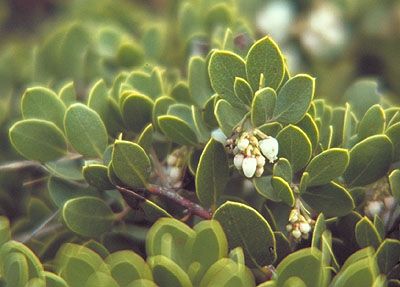
The ONLY known Raven’s manzanita plant is in the San Francisco Presidio. Its exact location is a secret to protect it.

Vast sums of money are being spent in often futile attempts to reintroduce rare plants and animals to urban environments where they have not lived for a long time.  The National Park Service and San Francisco’s Natural Resources Division are having little success with their efforts to reintroduce Mission Blue butterflies.  After over 30 years, the National Park Service has still not successfully germinated endangered Raven’s manzanita from seed.  These fruitless efforts are not just wasteful of resources, they also inflict damage on the environment by using pesticides and setting fires to eliminate competition and destroying trees to increase sunlight on rare plants and host plants of rare insects.

The veneration of rare plants and animals is often at the expense of the plants and animals that are adapted to present environmental conditions.  In Unseen City Nathanael Johnson invites us to place greater value on the ordinary creatures who are capable of living with us.  We can treat them with the respect they deserve by not destroying them in pursuit of a fantasy landscape populated by fantasy creatures that are not capable of surviving the changes we have made in the environment.


  1. Nathanael Johnson, Unseen City: The majesty of pigeons, the discreet charm of snails and other wonders of the urban wilderness, Rodale Wellness, 2016

The Ecological “Restoration” Industry: Follow the money

Matt Chew is one of many professional academics that criticize invasion biology.  Unlike most, he emphasizes explaining the weaknesses of eco-nativism using scientific, historical, and philosophical methods, depending on the issue.  This has made him a useful collaborator and resource for like-minded but primarily science-oriented colleagues. Million Trees is deeply grateful for his willingness to speak publically about the fallacies of invasion biology, including the generous gift of his time in writing this guest post for us.

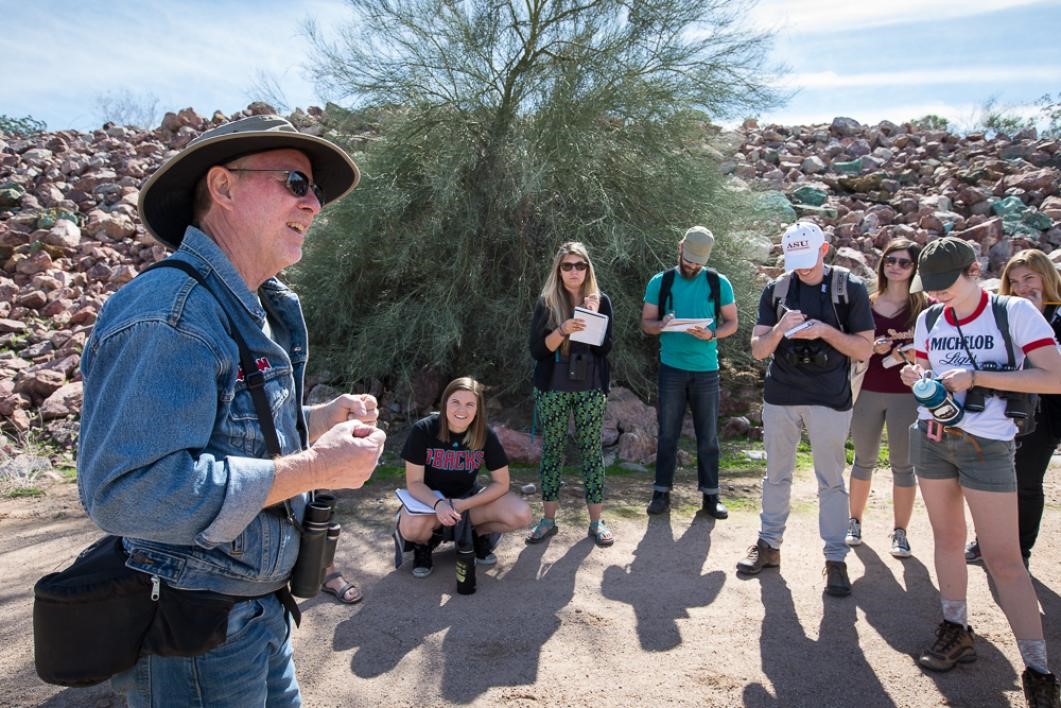
Dr. Chew is a faculty member of Arizona State University’s Center for Biology and Society and an instructor in the ASU School of Life Sciences.  He teaches courses including the History of Biology, Biology and Society, and a senior conservation biology course in “novel ecosystems,” described HERE on the university’s “ASU Now” news website.

He was also a speaker at the 2013 annual conference of Beyond Pesticides.  A video of his presentation is available HERE (go to 24:40).  He says that “invasive” plants are convenient scapegoats that are presenting a marketing opportunity for the manufacturers of pesticides. Invasion biology is at the core of the greening of pesticides.

In his guest post, Matt helps us to understand how he chose to pursue a multidisciplinary critique of one topic rather than adopting a single disciplinary approach and identity. He began his professional career as a practicing conservation biologist, experiencing firsthand the sometimes startling disconnects between laws, policies, aspirations, public expectations, and realities “on the ground.” 

We celebrate April Fool’s Day with Matt Chew’s article.  When we waste our money on ecological “restorations” the joke is on us!

Million Trees

Matt Chew with his class in novel ecosystems

Those familiar with my academic work know I invest most of my efforts documenting and explaining the flaws and foibles of “invasion biology.” But I got into this messy business as a practical conservation biologist, a natural resources planner “coordinating” the Arizona State Natural Areas Program during the late 1990s. I found the toxic nativism of natural areas proponents morbidly fascinating, and the practical politics of natural areas acquisition and management morbidly galling. I chose to follow my fascination. But as “Death of a Million Trees” marks the end of its seventh year as a WordPress blog, and in light of recent decisions by Bay Area authorities, it’s time for a galling reminder:  Follow the money.

Authorities responsible for suburban fire suppression and recovery necessarily view stands of living trees as liabilities. They can’t see the forest for the fuels. The prospect of eliminating them merely drives their value further into the negative. That it must be subsidized is ironic because eucalyptus and Monterey pine are plantation grown in many countries for timber or pulp. But they aren’t traditional sources of California wood products and a glut of more familiar drought-killed trees awaits salvage far from finicky neighbors.

So condemned trees can’t just be disappeared by pointing them out to eager loggers. “Concept planning” can be fairly vague, but “action planning” must be very specific. A job this big requires both general and sub-contracting. It requires hiring and training and supervising. Capital equipment will be acquired, maintained and repaired. Affected areas must be surveyed and material volumes estimated. Before trees can be felled, access routes must be surveyed and created. After trees are felled they must be sectioned, staged, loaded and hauled away for disposal. More often they are shredded in place. At every step, someone pays and someone profits.

Where “ecological restoration” is the objective, stumps must be pulled or blasted and roots must be excavated. The eucalyptus seed bank will need to be eliminated or rendered inert. Perhaps even a century’s accumulation of organic topsoil will need amending, or removing and replacing to reconstitute prehistoric substrates. Seed suppliers and nurseries will be contracted to provide plant “native” materials. After the armies of tree-fellers and stump-blasters will come waves of laborers, tractors, diggers, spreaders, and planters in an endless relay of trucks. Ecological restoration is farming, all the more so in proximity to a cityscape arrayed in exotic plants. If all goes well and the rain falls in judicious quantities at auspicious times, planting will be followed by perpetual weeding. At every step, someone pays and someone profits.

It’s hardly surprising that FEMA has no intention of underwriting restoration on that scale. Their plans envision minimally spreading shredded wood, leaving a layer up to two feet deep to gradually decompose, and hoping whatever oaks and other present understory plants they haven’t accidentally fractured or flattened will thrive in the sudden absence of big trees. Two feet of material will gradually compact, but assurances that it will rot into organic soil within a few years are pretty optimistic. Whether and when it will support anything resembling a native plant assemblage is dubious. Meanwhile, some viable stumps will require recurring treatment with the herbicide du jour and occasional supplemental felling. It’s not a reset-and-forget strategy. It’s just the first step of a long and contentious cycle of interventions. And of course, at every step, someone pays and someone profits.

Whenever public property and expenditure is concerned there should be an open procurement process with a clear data trail. A call for proposals is written and published, bids are received, contracts awarded, and work commences. But we can be certain that by the time the prospect of deforesting the Bay Area was openly discussed by policymakers, potential bidders were positioning themselves to influence the shape of the emerging policy and take advantage of it. And various interest groups who saw deforesting the hillsides as a means to their ends became a de facto coalition of advocates. Some acted more openly than others, and some to greater effect. But prominent nonprofit organizations expect returns on their investments. Nothing happens unless someone pays and someone profits.

Some of the premises underlying the logic of the program will inevitably be faulty. Should it falter at any step due to unforeseen events (e.g., meteorological, horticultural, ecological, economic or political), contingencies will be implemented… if funds are available. There are only three certainties. Firstly, no action occurs unless someone pays and someone profits. Secondly, nature, within which I include all aspects of human society, is complex and capricious. No one can predict with much certainty how a post-deforestation landscape will look or function. Finally, a coalition of the discontented will emerge and agitate for improvements that require someone to pay, and allow someone to profit.  As Nancy Pelosi recently reminded us, “we’re capitalist and that’s just the way it is.”   

Matt Chew


The forest is greater than the sum of its parts

hidden-life-of-treesThe Hidden Life of Trees was written by a German forester, Peter Wohlleben.  After completion of formal academic training as a forester, he took a government job managing a 3,000 acre public forest.  After 20 years of managing that forest for timber production with chainsaws, bulldozers, and insecticides, he decided about 10 years ago that he could not continue damaging the forest he had fallen in love with.

He resolved to manage a forest for the benefit of the forest, rather than for economic benefit.  In fact, he was able to do both.  The community for which he had been managing its forest for timber, decided to change its mission to forest preservation: “So, 10 years ago, the municipality took a chance. It ended its contract with the state forestry administration, and hired Mr. Wohlleben directly. He brought in horses, eliminated insecticides and began experimenting with letting the woods grow wilder. Within two years, the forest went from loss to profit, in part by eliminating expensive machinery and chemicals.” (1)

The forest educates the forester

In the decades that Mr. Wohlleben has cared for the forest, he has learned a great deal about the trees, and more importantly how the trees function as a community in the forest:  “…in nature, trees operate less like individuals and more as communal beings. Working together in networks and sharing resources, they increase their resistance.” (1)

In The Hidden Life of Trees, Mr. Wohlleben tells us how the trees communicate and share resources in the forest. When foresters interrupt these functions by artificially spacing out the trees, they can disconnect the trees from their networks, depriving them of their natural resilience mechanisms.

How do trees communicate?

Creative Commons. Photo by Steve Garvie.

Scent is one of the means of communication between trees.  On the African savannah Acacia trees are one of the favorite food of giraffes.  When the giraffes start munching on the Acacia, the tree pumps a powerful toxin into its leaves that makes it unpalatable to the giraffes.  The scent of that toxin is wafted to neighboring Acacia trees, which triggers them to start pumping that toxin into their leaves, making them unpalatable before the giraffes even get to them.  If the distance between the trees is increased beyond the range of the scent message, the Acacias are unprepared for the giraffes when they arrive after being repelled by the toxic defense of their distant neighbors.

Hope Jahren tells a similar story in Lab Girl about the role of scent in the defense of an entire forest in an infestation of tent caterpillars in a research forest in Washington.  The initial attack of the caterpillars defoliated entire trees and fatally damaged others.  The wounded trees emitted a powerful acid that made the caterpillars sick.  The scent of that acid warned healthy trees a full mile away.  The spread of the caterpillars throughout the forest was halted by this scent message, making the healthy trees equally unpalatable to the caterpillars.

The underground communication and defense system

The roots of trees radiate out from the trunk forming a perimeter of roots that is often twice as big as the canopy.  In the forest, the root systems of neighboring trees often intersect and grow into one another.  The trees in the forest are also connected underground by a web of fungi that connect the roots of a tree to its neighbors.  These connections transmit signals from one tree to the next, “helping the trees exchange news about insects, drought, and other dangers.” (2)

Photosynthesis. Creative Commons

This network of roots and fungi is also how trees share resources in the forest.  Every tree in the forest lives in a slightly different environment such as the nutrients in the soil, the physical composition of the soil, the available light, etc.  Despite these differences in available resources, researchers at the Institute for Environmental Research in Germany discovered that the trees distribute available resources throughout the forest so that every tree was photosynthesizing* at the same rate. That is, every tree in the forest was sharing an equal amount of the sugar produced by photosynthesis:  “Their enormous networks act as gigantic redistribution mechanisms.  It’s a bit like the way social security systems operate to ensure individual members of society don’t fall too far behind.”  (2)  (The scientist who documented this sharing of resources by trees gave a TED talk about her research, which is available HERE.)

Wohlleben’s analogy, suggesting that the sharing economy of the forest is comparable to our social safety net is thought provoking.  Let’s think about it.  Are the trees being generous to their neighbors in the forest by alerting them to dangers and sharing resources with them?  No, because by benefiting their neighbors, the trees also benefit themselves:  “This is because a tree can be only as strong as the forest that surrounds it…Their well-being depends on their community, and when the supposedly feeble trees disappear, the others lose as well.  When that happens, the forest is no longer a single closed unit.  Hot sun and swirling winds can now penetrate to the forest floor and disrupts the moist, cool climate.”  (2)

Challenging the conventional wisdom

If the trees in the forest benefit by being close to one another, why do the local managers of our public lands keep telling us that “thinning” the forest will be good for the forest?  Wohlleben tells us that the conventional wisdom that thinning the forest is good for the trees originates with the timber industry:  “In commercial forests, trees are supposed to grow thick trunks and be harvest ready as quickly as possible.  And to do that, they need a lot of space and large, symmetrical, rounded crowns.  In regular five-year cycles, any supposed competition is cut down so that the remaining trees are free to grow.  Because these trees will never grow old—they are destined for the sawmill when they are only about a hundred [in Germany]—the negative effects of this management practice are barely noticeable.”  (2)

Our urban forest is not “destined for the sawmill,” so thinning the urban forest does not benefit either the trees that remain or the forest as a whole.  The “thinning” strategy being used by the managers of our public lands is damaging both the forest and the environment:

  • The trees that remain are damaged by the pesticides that are used to kill the roots of their neighbors when they are destroyed. The pesticides that are sprayed on the stumps of the destroyed trees kill the roots of the tree and also travel through the interconnected root systems to damage the trees that remain.
  • The trees that remain are subjected to more wind when their neighbors are destroyed, which increases the potential for windthrow and therefore public safety hazards.
  • The forest is less capable of retaining moisture when shade is reduced, which also stresses the trees that remain.
  • Valuable habitat for wildlife is lost when trees are destroyed.

The Hidden Life of Trees informs us that the forest is greater than the sum of its parts.  Every tree contributes to forest health just as every member of society contributes to the well-being of our communities.


*Photosynthesis is the process used by plants to convert light energy into chemical energy that is stored in carbohydrate molecules, such as sugars.  The sugars are the fuel that enable plants to live and grow.  (Wikipedia)

  1. “German Forest Ranger Finds That Trees Have Social Networks, Too,” New York Times, January 29, 2016. 
  2. Peter Wohlleben, The Hidden Life of Trees: What They Feel, How They Communicate, Greystone Book, 2016 (originally published in German in 2015)

Lab Girl: A tribute to the challenges of science

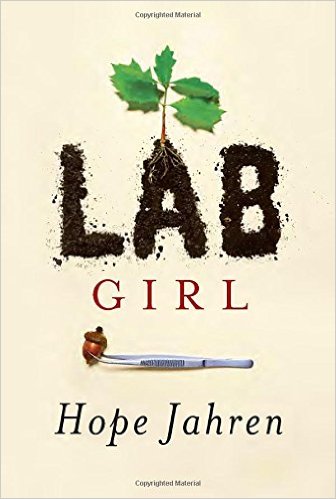
lab-girlLab Girl is a memoir of a scientist, Hope Jahren.  Jahren is a geobiologist, which is the scientific discipline that “explores the interactions between the physical Earth and the biosphere [global ecosystems].” (1) She describes the arduous journey from curious student to full-fledged scientist.  That transition involved physically demanding collection expeditions, digging deep into the soil for the samples that informed her research into the complex relationships between the soil and the plants that live in it.  Then long, tedious hours in the laboratory are required to analyze the soil and plant samples to develop the hypotheses needed to explain those relationships.  Finally, complicated laboratory tests are needed to test the hypotheses.

If you don’t already have a deep respect for the demands of science, Lab Girl will help you to appreciate the dedication of the scientists engaged in the process of refining our scientific knowledge.  At a time in our social history when science is being questioned by those with political agendas, Lab Girl is an antidote to skepticism about science and scientific expertise.

Familiar Themes

Jahren alternates chapters about her career with chapters about the plants she studies.  As we might expect, Jahren has a profound respect for trees and so her book is relevant to the mission of Million Trees.  She eloquently makes many of the same observations we make on Million Trees.  Here are a few:

On the value of observation and the complexity and changeability of nature:

“Time has changed me, my perception of my tree, and my perception of my tree’s perception of itself.  Science has taught me that everything is more complicated than we first assume, and that being able to derive happiness from discovery is a recipe for a beautiful life.  It has convinced me that carefully writing everything down is the only real defense we have against forgetting something important that once was and is no more, including the spruce tree that should have outlived me but did not.” (2)

On the importance of fungi to forest health:

“Underneath every mushroom is a web of stringy hyphae that may extend for kilometers, wrapping around countless clumps of soil and holding the landscape together.  The ephemeral mushroom appears briefly above the surface while the webbing that anchors it lives for years within a darker and richer world.  A very small minority of these fungi—just five thousand species—have strategically entered into a deep and enduring truce with plants.  They cast their stringy webbing around and through the roots of trees, sharing the burden of drawing water into the trunk.  They also mine the soil for rare metals, such as manganese, copper, and phosphorous, and then present them to the tree as precious gifts of the magi.” (2)

Placing blame for “invasive” weeds where it belongs:  ON US!

“A plant that lives where it should not live is a weed.  We don’t resent the audacity of the weeds, as every seed is audacious; we resent its fantastic success. Humans are actively creating a world where only weeds can live and feigning shock and outrage upon finding so many.  This mixed message is irrelevant:  there is already a revolution taking place in the plant world as invasives effortlessly supplant natives within every human-modified space.  Our impotent condemnation of weeds will not stop this revolution.  We aren’t getting the revolution we want; we are getting the one that we triggered. (2)

On the future of our forests:

“Every year since 1990 we have created more than eight billion new stumps.  If we continue to fell healthy trees at this rate, less than six hundred years from now, every tree on the planet will have been reduced to a stump.  My job is about making sure there will be some evidence that someone cared about the great tragedy that unfolded during our age.” (2)

And that is the job of Million Trees as well…to make this record of fighting to preserve our urban forests.  We echo Hope Jahren’s final message in Lab Girl:  “Here is my personal request to you:  If you own any private land at all, plant one tree on it this year.  If you are renting a place with a yard, plant a tree in it and see if your landlord notices.  If he does, insist to him that it was always there.  Throw in a bit about how exceptional he is for caring enough about the environment to have put it there.” (2)

Hope for 2017

We have had some big disappointments in 2016, and it isn’t easy to find something useful to do to improve the political climate in our country.  Planting a tree is something positive that many people are in a position to do.  When you feel discouraged about the future of our country, go visit your tree and pat yourself on the back for making an investment in the future of our country.

Happy New Year

fireworks-colors-100701-02


  1. https://en.wikipedia.org/wiki/Geobiology
  2. Hope Jahren, Lab Girl, Alfred Knopf, 2016

An epilogue to the saga of the San Francisco Natural Areas Program

On December 15, 2016, the San Francisco Planning Commission approved the Environmental Impact Report for the Natural Areas Program and the Recreation and Parks Commission approved the management plan for the Natural Areas Program.  The public hearing was over 6 hours long and is available for viewing HERE.  Although we watched the hearing, we won’t try to summarize it here because readers can watch it if they wish.  Rather we will comment on a few conspicuous observations about the hearing.

The most noteworthy feature of the hearing was that virtually all of the supporters of the EIR and the Natural Areas Program were allowed to speak first.  Critics of the program were called on last.  If you have spoken at such a hearing, you know that speakers submit a speaker’s card on which they indicate their support or opposition for the agenda item when they arrive.  Typically, speakers are called in the order in which they arrive at the hearing.  This usual procedure was apparently not followed in this case.

The main disadvantage of not being called upon in the order in which speakers arrive is that when a hearing is 6 hours long, many people with other responsibilities—such as work or family obligations—are forced to leave before their names are called.  In the case of this hearing, I heard a number of names called of people whom I knew to be critics of NAP, who did not speak, presumably because they waited their turn but weren’t called in the order of their arrival.

Another conspicuous feature of this hearing was that the vast majority of speakers in favor of the EIR and the management plan either work directly for the program or are affiliated with it.  Many supporting speakers were representatives of non-profits that conduct similar projects or they bring children into the parks to “educate” them about native plants.  Their presence at the hearing was therefore a work responsibility which enabled them to spend an unlimited amount of time at the hearing.

This is an illustration of the biggest obstacle to the realization that nativism is a destructive agenda based on outdated scientific hypotheses for which there is no empirical evidence.  In a word, “restoration” ecology is now a multi-million dollar industry in which many people are employed.  Therefore, there is vested economic interest in continuing such efforts whether or not they are successful or beneficial.

Criticisms of the Natural Areas Program and its EIR

The speakers who opposed the approval of the management plan and its EIR were members of the general public who are neighbors of the so-called “natural areas.”  They mentioned the destruction of trees (and the subsequent loss of sequestered carbon) and the use of herbicides as their primary objection to the plans.  Another important issue was the restrictions on recreational access such as the closure of 10 miles of trails and the requirement that all access be confined to the trails that remain.  These are issues with which our readers are familiar, so we won’t elaborate.

Comments based on personal experience with specific “natural areas” seemed most effective.  One fellow said he had participated as a volunteer in several big plantings of native plants in a natural area.  The plants died each time and presently few plants have survived several attempts to “restore” this so-called natural area.  This experience had led this speaker to conclude that attempts to “restore” this park to native plants were futile.

A neighbor of Glen Canyon Park showed pictures of the impact on her neighborhood of the destruction of trees in the park several years ago.  Her neighborhood has lost its windbreak and therefore dust from the bare ground is blowing into their homes.  Their beautiful view of the trees has been replaced by bare ground.

The Natural Areas Program began 20 years ago and has been fully staffed and funded since its inception.  Therefore, it should be judged by what it has accomplished.  It has closed trails, destroyed trees, and built fences.  It has repeatedly destroyed vegetation with herbicides and planted those areas with native plants.  The native plants have died, in some cases several times in 20 years.  In other words, it has little useful to show for 20 years of investment of effort and money.  Since it has not been successful after 20 years, it seems insane to invest another 20 years of money and effort.  Remember that one definition of insanity is doing the same thing over and over and expecting a different outcome.

Support for the Natural Areas Program

We hesitate to use the word “lie” to describe the justifications for the Natural Areas Program, but after listening to hours of testimony by its supporters, we will use that word to describe a few of their claims:

  • The most effective lie is that all the trees they destroy will be replaced with native trees. In fact, no such commitment is made in the management plan, which says explicitly that the natural areas will be converted to grassland and dune scrub.  This “replacement” fiction is mentioned in the EIR.  However, the EIR makes no commitment to planting the replacement trees in the areas or even the same parks where the trees are destroyed.  This important caveat to the commitment to replace the trees was not mentioned by any of the speakers in support of the plans, including NAP’s leadership.  In the case of the 15,000 trees that will be destroyed at Sharp Park, calling those removals anything other than a clear-cut is a lie.
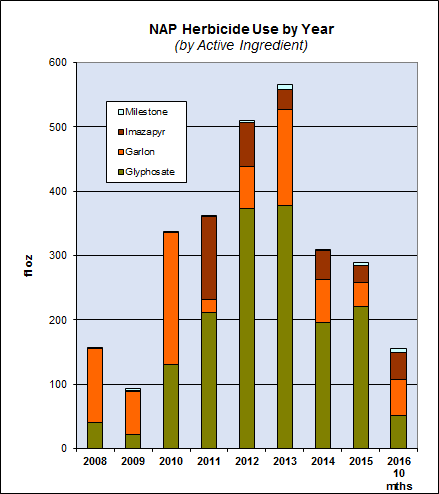
  • Inaccurate descriptions of NAP’s use of herbicides also qualify as lies. The executive director claimed during the hearing that only 2.67 quarts of “active ingredient” were used in the natural areas in 2016. In fact, public records requests inform us that NAP used 1 gallon (4 quarts) of active ingredient from January 2016 to October 2016.  The “active ingredient” is only a fraction of the amount of the formulated product.  The “inert” ingredients in the formulated product are often considered hazardous.  In other words, reporting only the volume of active ingredient underestimates the amount of herbicide being applied.  The number of pesticide applications done by NAP is another way to evaluate the magnitude of pesticides used by NAP.  From January 2016 to October 2016, pesticides were applied in the natural areas 111 times, which is 85% of all pesticide applications in park areas other than Harding Park (which is a golf course maintained to professional competition standards with contractual obligations regarding turf maintenance).  A full report of NAP’s pesticide use is available HERE.

    Courtesy San Francisco Forest Alliance
    Courtesy San Francisco Forest Alliance
  • Claims that the forest in the natural areas will be “managed” for forest health are false. The management plan says explicitly that the trees will be removed for the purpose of expanding native plant gardens that require full sun.  These areas will not be “thinned” as supporters claim.  Rather they will be removed along the leading edge of the forest in order to create more unshaded ground for planting native plants.  The health of the trees is not the criterion for their removal.  These tree removals will not benefit the forest.

However, most of the statements made by supporters are not lies.  Rather they are faithful repetitions of an ideology that most of them probably believe.  Here are a few examples:

  • Nativists believe that native animals require native plants. There is no empirical evidence to support that belief.  All empirical studies find equal numbers of insects, birds, amphibians, etc., using non-native plants.
  • Nativists claim that native pollinators require specific native plants. With few exceptions this belief is mistaken.  The monarch butterfly, for example, is as willing and able to use one of the many non-native species of milkweed as it is a native species.  Some butterflies require a specific genus of plant as its host, but a genus is typically composed of hundreds of species of which many are not native.
  • Nativists believe that the immutable relationship between specific animals and specific plants has evolved over “thousands of years.” They are mistaken.  Animals adapt much more quickly to changes in the environment.  Many changes in plants and animals have been observed over a period of years, rather than a period of centuries, let alone millennia.

Many of the supporters of the NAP plans mentioned that native plants would somehow mitigate climate change.  This is a mysterious notion that I cannot explain.  If we are destroying tens of thousands of trees that store tons of carbon, how can we claim this will reduce climate change?  The grassland that is the goal of these “restoration” projects will store a small fraction of the amount of carbon stored by the trees.  Is this absurd claim a reflection of ignorance about carbon storage?  Or is it a strategy intended to confuse the public?  Whatever the motivation, the claim that native plants mitigate climate change is NOT true.

The nativists apparently do not understand that the ranges of native plants and animals have changed in response to changes in the climate and they will continue to change.  They aren’t stopping climate change by planting native plants.  In fact, climate change requires that the concept of “native” be redefined.  That’s why their projects are unrealistic and futile because they are based on a climate that no longer exists.

The epilogue

The San Francisco Forest Alliance has announced its intention to appeal the certification of the Environmental Impact Report to the San Francisco Board of Supervisors.  This appeal will be heard sometime in 2017.  You will be notified of the hearing if you will subscribe to the Forest Alliance website:  http//sfforest.org.

Meanwhile, the Forest Alliance will ask the City of San Francisco to prohibit the use of the most toxic herbicides in the city’s parks.  There will be two public hearings regarding the city’s pesticide policies and practices:

  • Monday, December 19, 2016, 5 pm. This is a public hearing by San Francisco’s Integrated Pest Management (IPM) Program.  Details about that hearing are available HERE.
  • Tuesday, January 24, 2017. The Commission on the Environment will consider the recommendations of the IPM Program at this hearing.  The Forest Alliance will publish the details of that hearing when they are available.

Best Wishes for a BETTER 2017

The certification of the EIR and the approval of the NAP management plan is not the holiday gift that we were hoping for.  In fact, the entire year of 2016 wasn’t much of a gift to those who believe government has an important and valuable job to do.  We look forward to a better year in 2017 and we wish our readers all the best for the New Year.

christmas-holly-4

The final episode in the 20-year saga of San Francisco’s “Natural Areas Program”

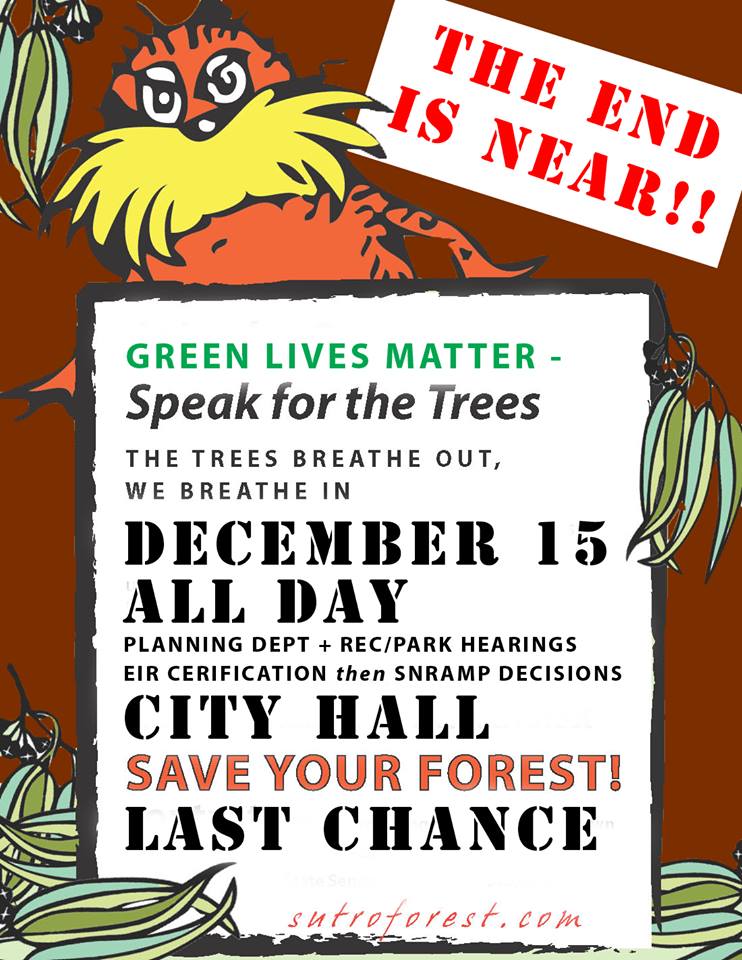
the-end-is-nearOn December 15, 2016, the San Francisco Planning commission will hold a public hearing to consider certification of the Environmental Impact Report for the Natural Areas Program. If the EIR is certified, the Recreation and Park Commission will consider formally adopting the management plan for the Natural Areas Program at the same hearing.  The Recreation and Park Commission will have the option of adopting one of the alternatives to the management plan.  The San Francisco Forest Alliance will ask that the Maintenance Alternative be adopted by the Recreation and Park Commission because it is the “environmentally superior” alternative which will destroy the least number of trees and use the least amount of pesticides. 

If you can attend this hearing and make public comment, please contact the SF Forest Alliance (sfforestnews@gmail.com) for the details about where and when the hearing will take place.  If you can’t attend the hearing, please consider sending an email to the Recreation and Park Commission (recpark.commission@sfgov.org) by Monday, December 12, 2016 (the deadline for submission of written public comments to be included in the agenda packet of the commissioners). 

We lived in San Francisco for nearly 30 years and our local park was designated a “natural area” in 1997.  Based on our experience with the Natural Areas Program, we have sent the following email to the Recreation and Park Commission.  We hope that our letter will help you write your own public comment.


Subject:  Approve the Maintenance Alternative for SNRAMP

Dear Recreation and Park Commissioners,

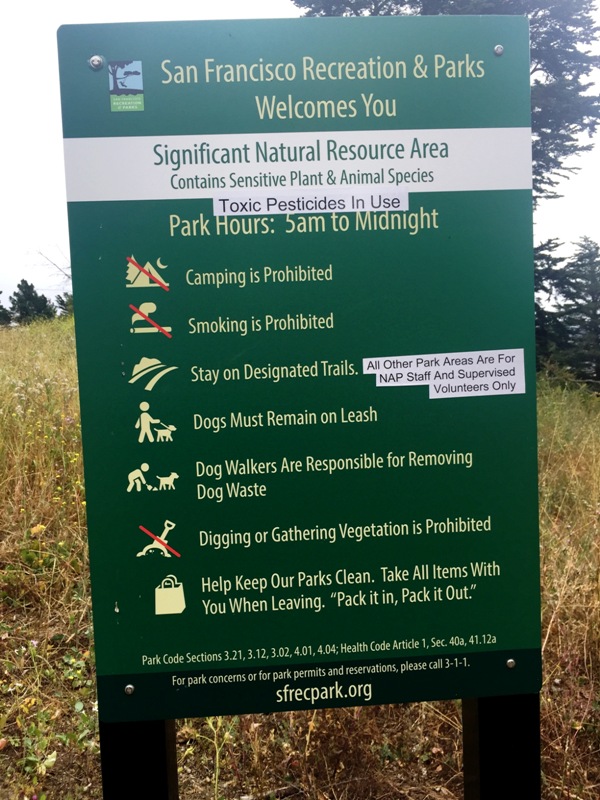
Since the Natural Areas Program was created 20 years ago, hundreds of healthy trees have been destroyed and over one thousand trees died slowly after being surreptitiously girdled by vandals calling themselves native plant advocates in the 32 so-called “natural areas.”  Hundreds of gallons of herbicide have been sprayed on harmless plants, many that provided valuable habitat and food for wildlife.  Trails have been closed and big signs installed instructing park visitors to stay on the trails that remain. Fences have been installed in some parks to enforce those restrictions.

This sign in a "natural area" has been altered to express the public's opinion of the Natural Areas Program. Courtesy San Francisco Forest Alliance.
This sign in a “natural area” has been altered to express the public’s opinion of the Natural Areas Program. Courtesy San Francisco Forest Alliance.

After all that destruction and restriction, what has been accomplished?  Non-native plants have been repeatedly eradicated in the “natural areas” and native plants were planted.  These native plant gardens have repeatedly failed:  the native plants die and the non-native plants return, in some cases many times.  Native trees have been planted in a few “natural areas” but most have died, despite being irrigated during an extreme drought.  After wasting millions of dollars and the associated labor, there is little to show for that investment after 20 years.

Therefore, I am writing to ask the Recreation and Park Commission to vote to adopt the Maintenance Alternative as provided by the Environmental Impact Report that was 10 years in the making.  The Maintenance Alternative would enable the Recreation and Park Department to continue to take care of the “natural areas” they have already created, but it would prevent further tree destruction, further restrictions on recreational access, and require fewer pesticide applications.

Besides the obvious lack of success of the Natural Areas Program after 20 years of effort, there are many other reasons why it would be wise for the Recreation and Park Department to quit throwing good money after bad money.  Here are some of those reasons:

  • The Natural Areas Program was predicated on the mistaken assumption that native plants are superior to non-native plants as habitat for animals. In fact, in the past 20 years multitudes of empirical studies have been conducted that prove that wildlife has no preference for native plants.  Wildlife is just as likely to use non-native plants as they are native plants.
  • The Natural Areas Program also assumed that greater biodiversity would be achieved by eradicating non-native plants. They were mistaken in that assumption as well.  Studies have been conducted all over the world in the past 20 years that find no decrease in plant biodiversity resulting from introduced plants.
  • The climate has changed since Europeans arrived in the Bay Area in 1769 and it will continue to change. The plants that existed here in the distant past are no longer adapted to current conditions.  The ranges of native plants and animals must change if they are to survive in the long run.  Therefore, demanding that historical landscapes be re-created serves no useful purpose.
  • The native trees of California are dying by the millions. The US Forest Service informs us that 102 million native conifers have died in the Sierra Nevada in the past 6 years.  University of Cambridge recently published a study about Sudden Oak Death in which they reported that 5 million oak trees have died in California since 1995 and that the epidemic is “unstoppable.”  There are SOD infections in Golden Gate Park and the Arboretum.  The US Forest Service tells us that Coast Live Oaks will be virtually gone from California by 2060.  A study of redwoods predicts that its native range will shift north into Oregon by the end of this century.  In other words, if we want trees in California, many of them will have to be non-native trees adapted to a hotter, drier climate. 
  • Environmental conditions in a densely populated urban area such as San Francisco are also incompatible with the unrealistic goals of the Natural Areas Program. The heat island effect of urban areas exacerbates climate change.  Increased levels of soil nitrogen caused by the burning of fossil fuels promotes the growth of weeds.

The Natural Areas Program was a good idea that has outlived its usefulness.  We may try to keep it alive for sentimental reasons, but expanding it would be rewarding failure.  Please adopt the Maintenance Alternative.

Thank you for your consideration.

stop-destroying-trees

California’s Urban Greening Grant Program: An opportunity to speak for the trees

In September 2016, the State of California passed a law that allocated $1.2 billion to create a cap and trade program to reduce Greenhouse Gas (GHG) emissions.  The California Natural Resources (CNR) Agency was allocated $80 million to fund green infrastructure projects that reduce GHG emissions.  The CNR Agency is creating an Urban Greening Program to fund grants to cities, counties, and other entities such as non-profit organizations in URBAN settings.  75% of the funding must also be spent in economically disadvantaged communities.

These grants must reduce GHG emissions using at least one of these specific methods:

  1. Sequester and store carbon by planting trees
  2. Reduce building energy use from strategically planting trees to shade buildings
  3. Reduce commute, non-recreational and recreational vehicle miles travelled by constructing bicycle paths, bicycle lanes, or pedestrian facilities.

Clearly, planting trees is one of the primary objectives of this grant program.  That sounds like good news for the environment and everyone who lives in it until you read the draft program guidelines which are available HERE.

Unfortunately, as presently drafted, the grant program will NOT increase California’s urban tree canopies, because the program requires the planting of “primarily” native trees.   That requirement is explicitly stated several times in the draft guidelines, but there are also places in the draft where the reader might be misled to believe the requirement applies only to plants and not to trees.    Therefore, I asked that question of the CNR Agency staff and I watched the public hearing that was held in Sacramento on October 31st.  CNR Agency staff responded that the requirement that grant projects plant “primarily” native species applies to both plants and trees.

The good news is that the grant program guidelines are presently in draft form and the public has an opportunity to comment on them.  If you agree with me that we need our urban forest, you will join me in asking the CNR Agency to revise their grant program guidelines to remove restrictions against planting non-native trees.   Public comment must be submitted by December 5, 2016.  Send comments to:  Urban Greening Grant Program c/o The California Natural Resources Agency Attn: Bonds and Grants Unit 1416 Ninth Street, Suite 1311 Sacramento, CA 95814 Phone: (916) 653-2812, OR Email: urbangreening@resources.ca.gov Fax: (916) 653-8102

Here are a few of the reasons why limiting trees to native species will not increase tree canopies in urban areas in California:

Many places in California were virtually treeless prior to the arrival of Europeans.  Non-native trees were planted by early settlers in California because most of our native trees will not grow where non-native trees are capable of growing.  According to Matt Ritter’s California’s Guide to the Trees Among Us, only 6% of California’s urban trees are native to California:

urban-trees-origins

Draft guidelines for the Urban Greening grants refers applicants to the California Native Plant Society for their plant palette (see page 24 of guidelines).  If applicants use this as the source of their plant palate, they will find few trees on those lists.  This is another way to understand that if you want trees in California, most of them must be non-native.

Most California native trees are not suitable as street trees because of their horticultural requirements and growth habits. 

  • The approved list of street trees for the City of San Francisco includes no trees native to San Francisco.  There are many opportunities to plant more trees in San Francisco because it has one of the smallest tree canopies in the country (12%).  The US Forest Service survey of San Francisco’s urban forest reported that 16% are eucalyptus, 8% are Monterey pine, and 4% are Monterey cypress.  None of these tree species is native to San Francisco.
  • The approved list of street trees for the City of Oakland includes 48 tree species of which only two are natives. Neither seem appropriate choices:  (1) toyon is a shrub, not a tree and the approved list says it will “need training to encourage an upright form.”  It is wishful thinking to believe that toyon can be successfully pruned into a street tree; (2) coast live oak is being killed by the millions by Sudden Oak Death and the US Forest Service predicts coast live oaks will be virtually gone in California by 2060.

coast-live-oak-current

coast-live-oak-2060

Climate change requires native plants and trees to change their ranges if they are to survive.  One of the indicators of the impact of climate change on our landscapes is that 70 million native trees have died in California because of drought, insect infestations, and disease.  The underlying cause of these factors is climate change.

  • 66 million native conifers have died in the Sierra Nevada in the past 4 years because of drought and native bark beetles that have spread because winters are no longer cold enough to keep their population in check.  Update:  A new survey of California’s trees now reports that 102 million trees are now dead.  That’s one-third of California’s trees.  62 million trees died in 2016 alone, which is an accelerating rate of death.  These trees are still standing and they pose an extreme fire hazard.  These are NATIVE TREES being killed by a combination of drought and NATIVE BARK BEETLES.  
  • 5 million native oaks have died since 1995 because of Sudden Oak Death. A study of SOD by University of Cambridge said in spring 2016 that the SOD epidemic is “unstoppable” and predicted that most oaks in California would eventually be killed by SOD. The Oak Mortality Task Force reported the results of its annual survey for 2016 recently.  They said that SOD infections increased greatly in 2016 and that infections that were dormant in 2015 are active again.  This resurgence of the pathogen causing SOD is caused by increased rain in 2016.
  • Scientists predict that redwood trees will “relocate from the coast of California to southern Oregon” in response to changes in the climate.

If you care about climate change, please join us in this effort to create a grant program that will expand our urban forests and reduce the greenhouse gas emissions that are causing climate change.  Restrictions against planting non-native trees must be removed from grant guidelines in order to increase our tree canopies in California’s urban environments. 

Update:  Final guidelines for California State Urban Greening grant applications were published on March 1, 2017, and are available HERE.  That program will distribute $76 million to cities that reduce greenhouse gas emissions by planting trees or reducing fossil fuels emissions.  The deadline for grant applications is May 1, 2017.  There will be a workshop for applicants at the Lake Temescal Beach House (6500 Broadway, Oakland) on March 27, 2017.

Final guidelines are improved from the draft guidelines.  Draft guidelines would have required applicants to plant only native trees.  The State agency received 62 public comments on the draft.  27 of those comments asked that the guidelines be revised to permit planting non-native trees as well as native trees.  One of the 27 comment letters was signed by 33 tree-advocacy non-profit organizations. 

Final guidelines reflect the public’s opposition to prohibiting the planting of non-native trees, which would have severely limited the number of trees that would survive.  Native trees have specific horticultural requirements that limit the places where they can be planted.

Final guidelines now say that only “invasive” trees cannot be planted by grant projectsIf the granting agency uses the classification of the California Invasive Plant Council to determine “invasiveness,” applicants would not be allowed to plant 15 specific tree species.  However, the California Invasive Plant Council is revising its inventory of “invasive” plants, so we don’t know if the number of “invasive” trees will be increased by that revision.

Update #2:  The California Invasive Plant Council has published the proposed revision to its list of “invasive” species.  There were about 200 plants on the existing list.  Now they propose to add another 99 species.  Ten of those species are added based on their current impacts in California.  One of the ten is a tree (glossy privet).  87 of the species are proposed for addition “based on risk of becoming invasive” in the future in California.  Twelve of the 89 potentially invasive plants are trees. 

There were 15 trees on the original list of “invasive” species.  That means that the revised list of “invasive” trees will now include a total of 28 trees that cannot be planted by Urban Greening projects that are applying for grant funds. 

The revised inventory of “invasive” plants was just published.  Public comments can be submitted on the proposed revisions by May 8.  The proposed revisions and how to make comments on the proposal are available HERE

Personally, I object to the introduction of a new category of 89 plants that are not presently having any “impact” according to Cal-IPC but are predicted to in the future.  These revisions will increase the inventory of “invasive” plants by 50%.  It represents a significant escalation of the crusade against non-native plants in the California. 


Nativist bias is not entirely absent from the revised guidelines for the Urban Greening program.  Applicants are required to explain why they plan to plant non-native trees.  However, applicants are also required to have a certified arborist or comparable horticultural expert certify that the plant list is appropriate to the planting location.  Hopefully, that will prevent the wasteful planting of native trees where they will not survive.