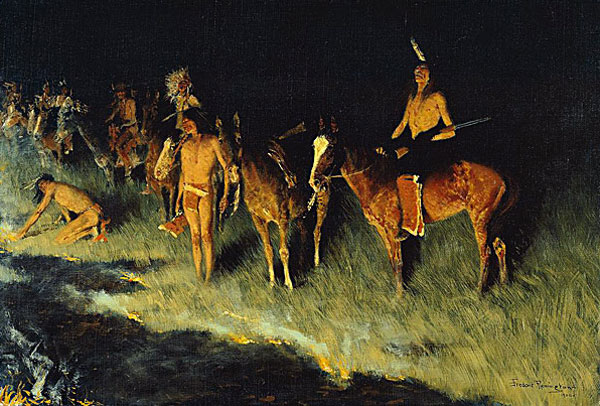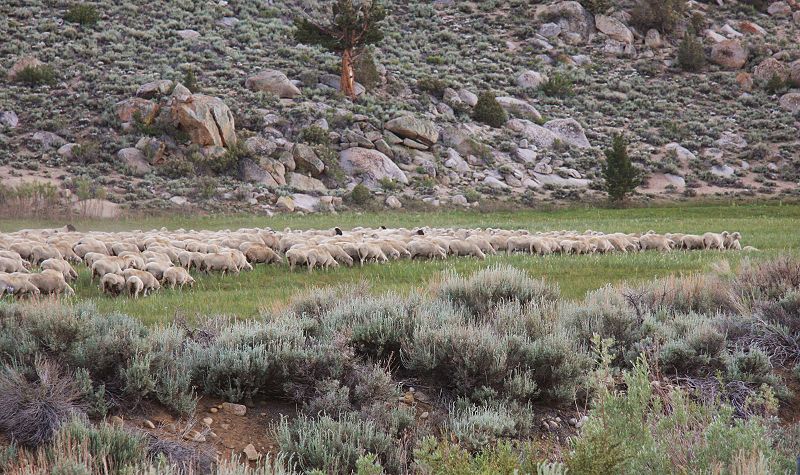
A novel definition of “wilderness”

As our readers know, we troll the websites of supporters of the native plant movement, looking for clues about the basis for belief in that ideology.  We hope that our understanding will enable us to provide the scientific information to our readers that will reveal the fallacies of nativism. 

The following comment on the San Francisco Forest Alliance website alerted us to a new theme in this debate:  native plant advocates seem to believe that we can and should return our urban parks to “wilderness.”

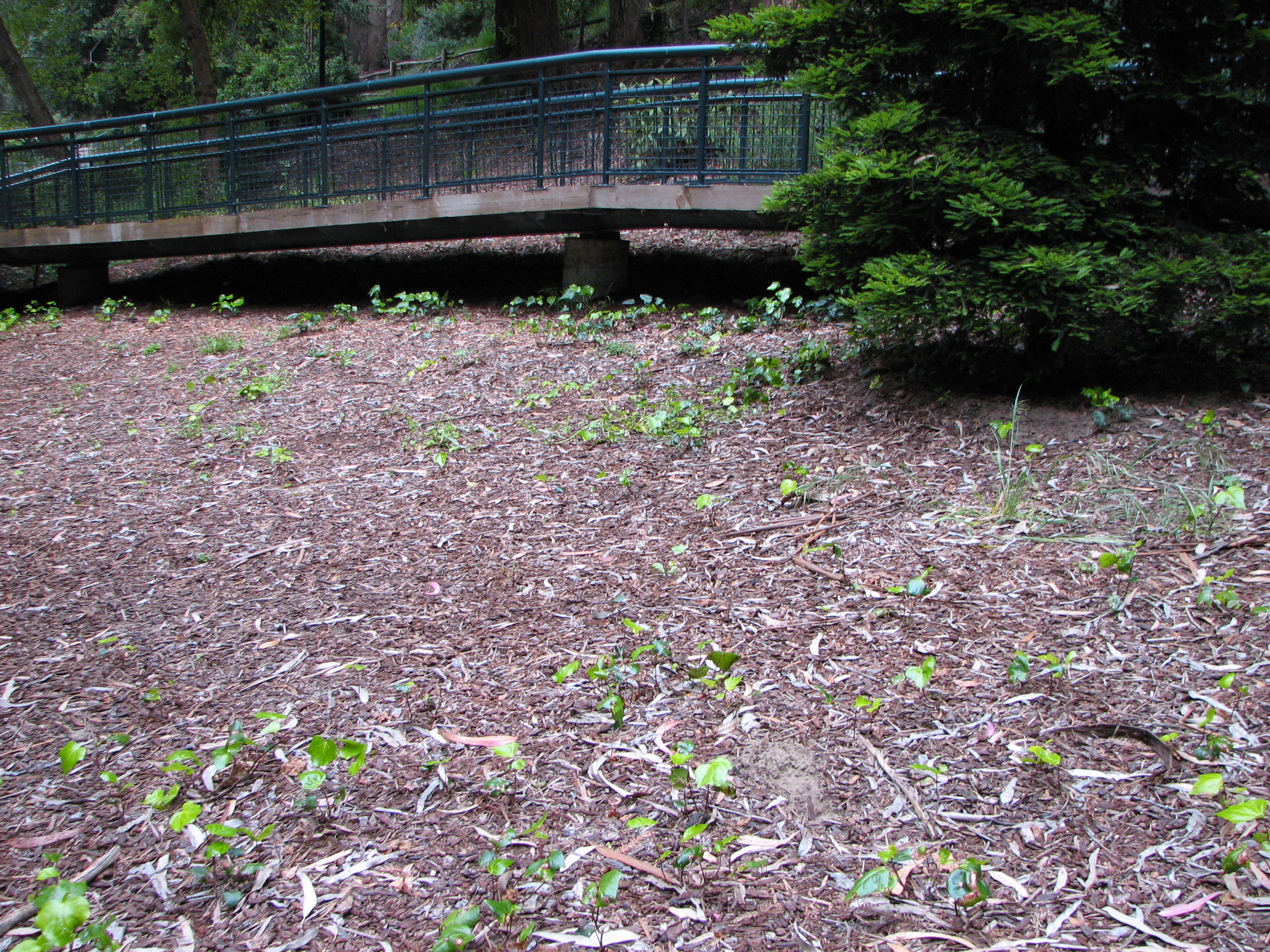
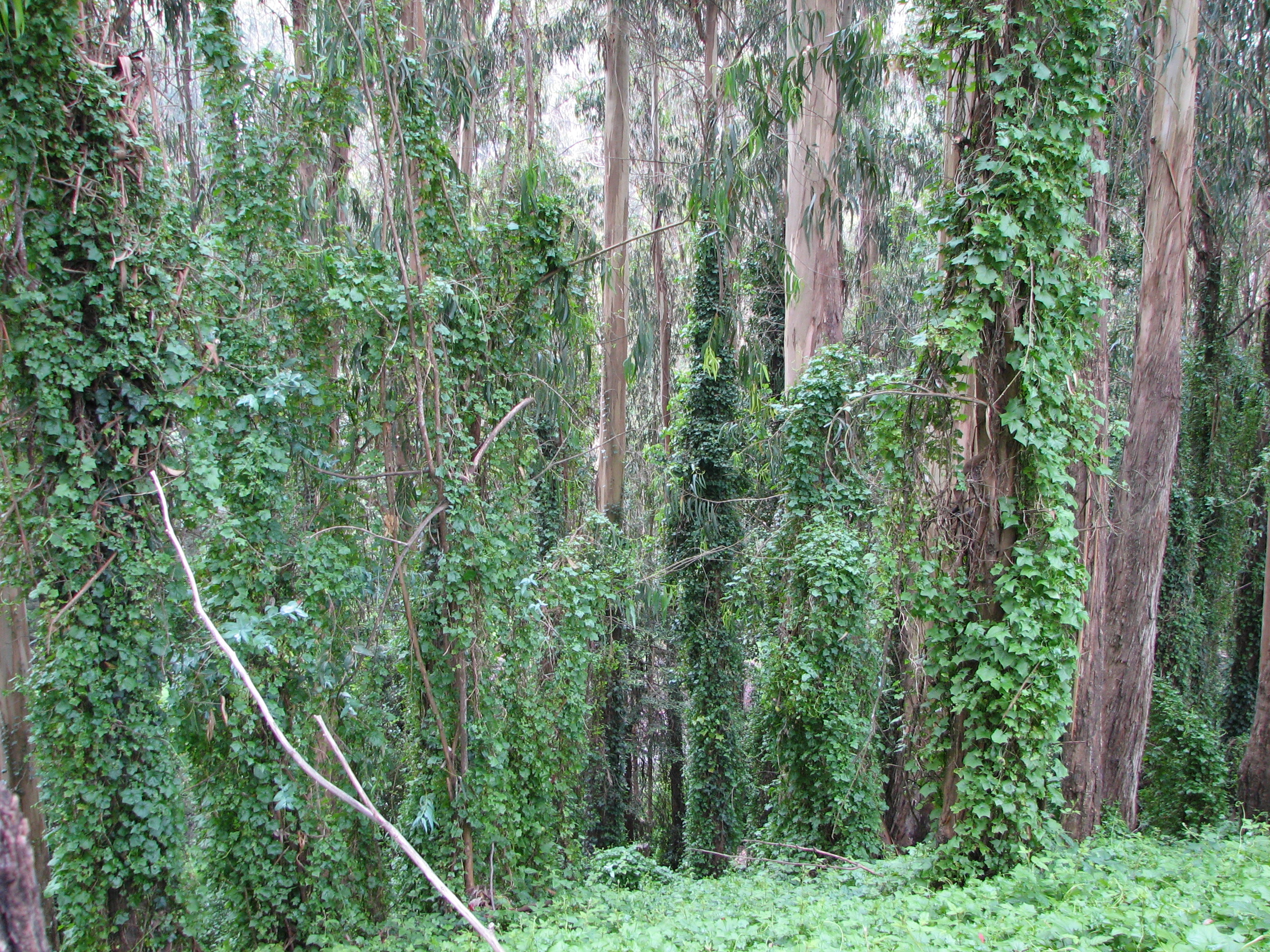
“It is interesting that your post shows the trail side covered with English ivy, and possibly a fallen eucalyptus or two. Each of these is a non-native element. Any and all exotic species present in the canyon destroy the wilderness aspect of Glen Canyon Park.

Please note the term “wilderness”. It implies natural, native flora and fauna; the wild plants and the bird and animal populations that support one another. That is what we want to have if we want a wild retreat. A morass of garden escapes and foreign invasive species is to be deplored. Let’s progress toward returning the area to a REAL wilderness. Do not let the concept that a plant’s becoming established in an area is a sign of its becoming native to the area. It remains an invasive element, a weed. It disrupts and destroys the normal habitat of native plants, animals, and insects in its surroundings.

It will be a huge and long term task, but we can restore the entire canyon to a truly wilderness state. Lets get started!”

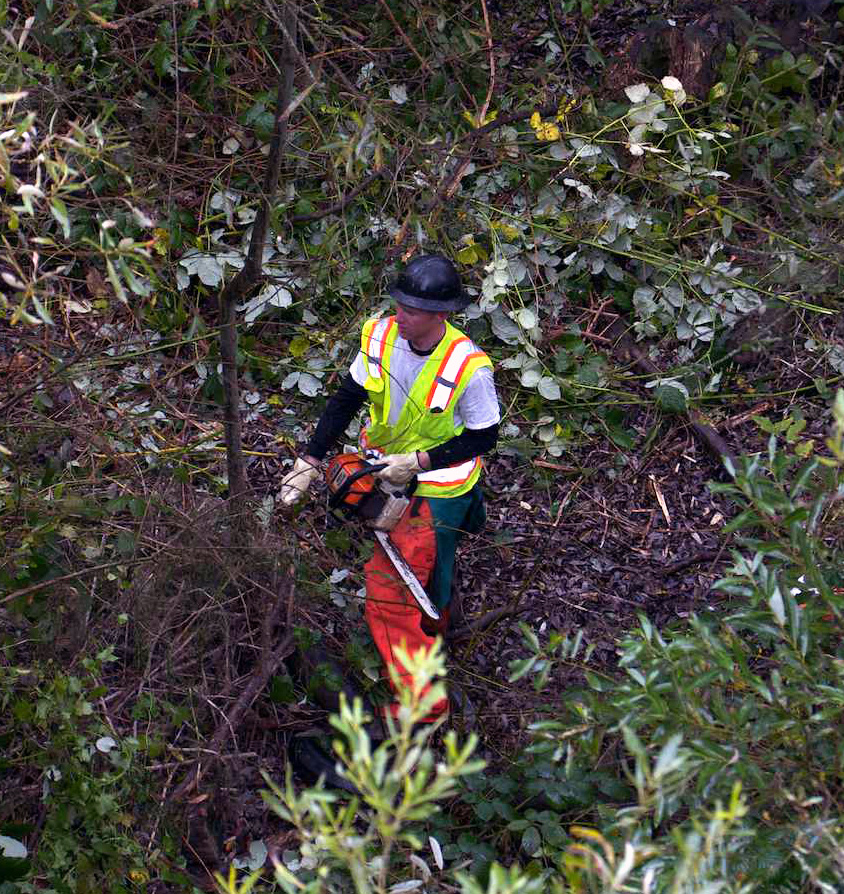
Chainsaw massacre in Glen Canyon, November 2011

In this particular native plant advocate’s view, wilderness is composed exclusively of native plants.  Everything else must be eradicated.  If chainsaws and pesticides must be used repeatedly in perpetuity, so be it.  All this destruction is justified by the glorious goal of “wilderness.”  This wilderness is apparently not disturbed by chainsaws and pesticides.  Presumably they must be ignored to achieve the glorious goal.

We rarely indulge in sarcasm on Million Trees.  We hope our readers recognize it when they see it.

Conservation Refugees: The misanthropy of ecological “restorations”

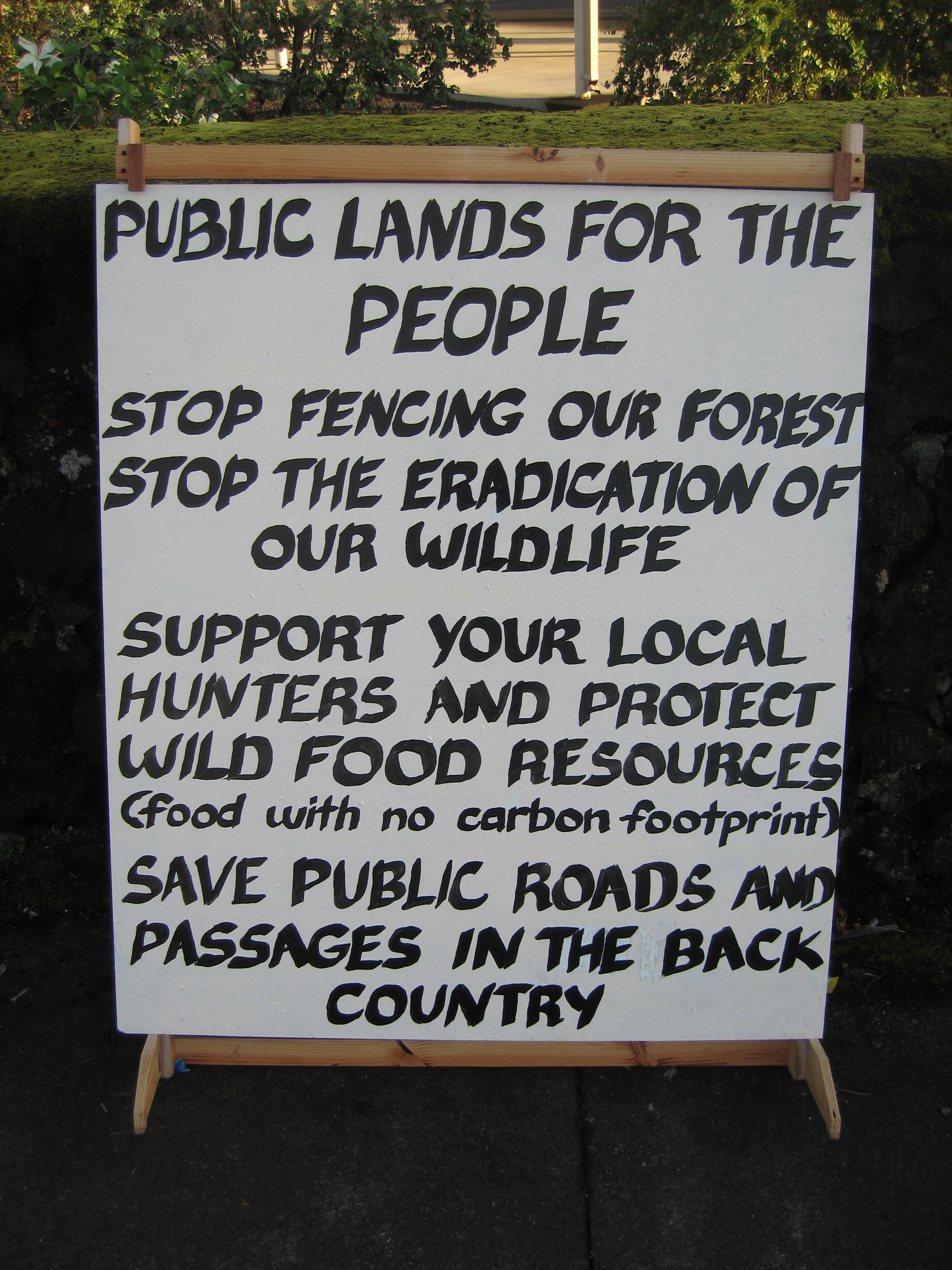
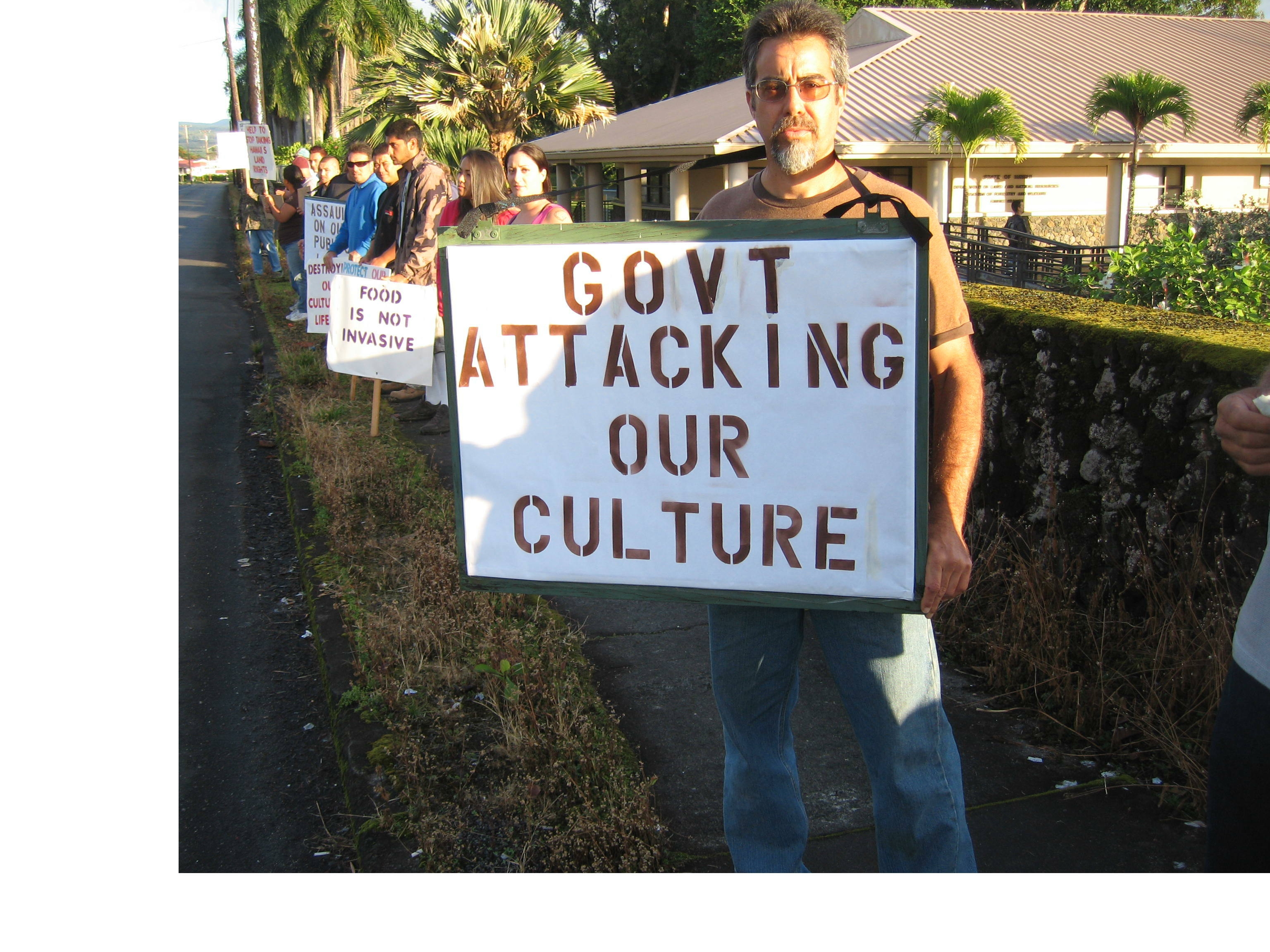
Hawaiians protest confiscation of public lands

We recently told our readers about the controversial “restoration” projects in Hawaii.  Now our colleagues in Hawaii have sent us photographs of a public protest in Hawaii and The Hawaii Reporter tells us why they are protesting.  Hawaii’s Department of Land and Natural Resources (DLNR) is fencing the public out of another 17 square miles of prime forest on the Big Island.  All the non-native animals—sheep, goats, pigs—will be exterminated and all their non-native food—strawberry guava, passion fruit, etc—will be eradicated in that fenced enclosure.   The people who hunted the animals and gathered fruit in the forest are protesting the loss of this source of food. 

In addition to the loss of food, the protestors also object to the loss of an activity that is central to the Hawaiian culture of foraging and hunting for food.   DLNR’s response to that particular complaint is that the historical record indicates that Hawaiians didn’t hunt prior to the arrival of Europeans because they raised animals as their own. 

In other words, not only does DLNR wish to stop the biological clock, they also wish to freeze-frame the Hawaiian culture to a pre-European standard.  They don’t seem to have considered that the Europeans essentially confiscated the land of the Hawaiians when they arrived, which deprived the Hawaiians of the land needed to raise animals.  That’s too bad.  The Hawaiians are not allowed to hunt now because they didn’t hunt 250 years ago.   As absurd as creating botanical museums seems to us, the suggestion that culture must also be prevented from evolving strikes us as utterly ridiculous.

Hawaiians protest loss of access to public lands

Conservation Refugees

Hawaii’s cost of living has always been one of the highest in the country because virtually all of its food must be imported.   And now Hawaiians are being deprived of an important source of food by the confiscation of public lands.  Will these Hawaiians join the ranks of the millions of conservation refugees all over the world who have been displaced in the name of conservation?

We were introduced to conservation refugees by Mark Dowie in 2004.  He told us that the belief that wilderness is not compatible with human community originated with John Muir, who demanded that Native Americans living in Yosemite be removed from the valley.  Native Americans were also removed from Yellowstone when the National Park was created.  These Native Americans were the first conservation refugees, but not the last.

Dowie told us that the worldwide official protected areas—parks, reserves, wildlife sanctuaries, biodiversity corridors—had expanded from 1,000 in 1962 to 108,000 in 2004.  The total number of indigenous people displaced by the creation of these protected areas is not known because most countries make no attempt to quantify the impact.  In Chad an estimated 600,000 indigenous people became conservation refugees when the amount of protected areas increased from 0.1 to 9.1 percent of total national land in the 1990s.  India admits to creating 1.6 million conservation refugees as a result of creating new protected areas and the Indian government estimates that 2 or 3 million more will be displaced in this decade.

Dowie visited some of the communities that have been displaced by the confiscation of their ancestral land.  The loss of their land is also the loss of their way of life.  Hunters/gatherers are deprived of their source of food.  Likewise, farmers lose their croplands.  They wander into shanty towns where they lack the skills to survive in the modern world.  They create shabby squatter camps on the perimeter of their homeland where they live without sanitation or water.  The fabric of their communities is shattered.

Emma Marris* observes the irony of these evictions of traditional cultures which have tended these remnants of the wilderness for generations.  These places were targets for conservation because they had been preserved by traditional cultures that had learned to co-exist with nature.  This is how they are rewarded for their stewardship of the land.

What is accomplished?

What is gained when Hawaiians are thrown out of their public lands, depriving them of a source of food?  Are these projects successful?  Are the plants and animals that existed in Hawaii several hundred years ago returning to the fenced reserves that have been created for them?

Emma Marris visited one of these projects in Hawaii.  A small test plot was cleared of all non-native plants, requiring the removal of about half of all the vegetation.  That process took about a week per thousand square feet and then “epic bouts of weeding thereafter.”

 The theory was that the removal of all the non-natives would enable the natives to thrive without the competition for sunlight and water.  Five years later, there is little evidence that native plants have benefited from the eradication of all non-native plants:

“Disappointingly, the mature native trees had grown very little.  As [the project directors] put it, ‘The native trees may either be responding to the treatments very slowly and still undetectably, or they may be unable to respond at all.’”

The directors of this project also told Marris, “I think that people that are interested in protecting Hawaii’s flora and fauna have resigned themselves to it being in postage-stamp sized reserves.”   Apparently Hawaii’s Department of Land and Natural Resources hasn’t gotten this message.  They are now creating another 17 square mile reserve with the intention of eradicating everything non-native in it.  Nothing is likely to be accomplished by all that death and destruction and some Hawaiians will also go hungry.

The slippery slope of nativism

Perhaps we should be grateful that the “restoration” projects in the San Francisco Bay Area aren’t depriving us of our homes and our livelihoods.  We are just being fenced out of our public parks.  We are just losing our trees.  Our public parks are just being poisoned with pesticides.

But we watch these projects all over the world and we listen to the demands of local native plant advocates and we wonder where this is headed.  In San Francisco, for example, native plant advocates are demanding that all of the public lands in the city be managed as “natural areas.”  In addition to destroying the trees in our parks, would we lose the trees on all our public properties?  We also know that native plant advocates want plant nurseries to quit selling to the public the approximately 200 plants that they have categorized as “invasive.”  Will we lose the right to plant what we want in our own backyards?  Given what we see happening around the world, it doesn’t seem farfetched. 


* Emma Marris, Rambunctious Garden, Bloomsbury Publishing, 2011

Response to Nature in the City

Nature in the City (NIC) is one of many organizations that support native plant “restorations” in San Francisco as well as the principle entity which engages in them, the Natural Areas Program (NAP) of the Recreation and Park Department.  NIC is consistently critical of anyone who questions the value of these restorations, but in their most recent newsletter they confront our objections directly.  Although we don’t presume to represent the many constituencies which are critical of the Natural Areas Program, we are responding in this post to NIC based on our knowledge of the issues. (The NIC newsletter is in quotes and is italicized.  Our response is not italicized.)

“Natural Areas in 2012

Last fall saw the the [sic] Planning Commission public meeting for the Draft Environmental Impact Report (DEIR) for the Significant Natural Resource Areas Management Plan.  Some time later this year, the City will issue a Final Environmental Impact Report, which may be appealed by opponents of the Natural Areas Program.

Unfortunately, a handful of people are still propagating misinformation about the rationale, values, and intention of ecological restoration, management and stewardship, and of the City’s celebrated Natural Areas Program.”

Webmaster:  Critics of the Natural Areas Program cannot be described accurately as a “handful of people.”  We now have four websites(1) representing our views and there have been tens of thousands of visits to our websites.  Comments on our websites are overwhelmingly supportive of our views. Our most recently created website, San Francisco Forest Alliance, lists 12 founding members.  That organization alone exceeds a “handful of people.”

Our objections to the Natural Areas Program have also been reported by three major newspapers in the past month or so (San Francisco Examiner, Wall Street Journal,  Sacramento Bee).

 Many critics of NAP have been engaged in the effort to reduce its destructive and restrictive impacts on our parks for over 10 years.  Scores of public meetings and hearings have been held to consider our complaints.  We consistently outnumbered public speakers in support of NAP until 2006, when the NAP management plan was finally approved by the Recreation and Park Commission.  Although we were outnumbered for the first time, there were over 80 speakers who asked the Recreation and Park Commission to revise NAP’s management plan to reduce its negative impact on our parks.

The public comments on the NAP DEIR are the most recent indicator of the relative size of the groups on opposite sides of this issue.  These comments were submitted in September and October 2011.  We obtained them with a public records request.  The Planning Department reported receiving about 400 comments.  In analyzing these comments, we chose to disregard about half of them because they were submitted as form letters, even though they were from dog owners who were protesting the loss of their off-leash privileges in the natural areas.  We also leave aside the comments from golfers whose only interest is in retaining the golf course at Sharp Park.  In other words, we set aside the majority of the comments critical of the NAP management plan in order to focus on those comments that demonstrate a comprehensive understanding of the impact of NAP on the city’s parks.  Of the comments remaining, those critical of NAP and its deeply flawed DEIR outnumbered comments in support of the NAP DEIR about three to one.  We urge NAP supporters to read these public comments to learn about the wide range of criticisms of NAP, including pesticide use, destruction of trees, recreational access restrictions, loss of wildlife habitat and more. 

We will challenge NIC’s accusation that we are “propagating misinformation” within the context of their specific allegations:

“Contrary to the many myths that continue to percolate, the Natural Areas Plan and Program seek to do the following (among other worthwhile endeavors):

1.       Protect and conserve our City’s natural heritage for its native wildlife and indigenous plant habitats and for the overall health of our local ecosystem;”

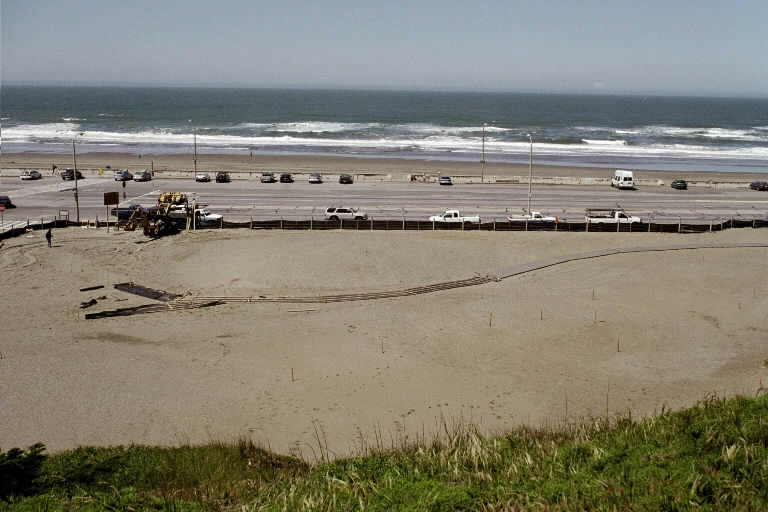
Webmaster:  Since the majority of acreage claimed as natural areas by NAP 15 years ago had no native plants in them, there is little truth to the claim that NAP is protecting our “natural heritage.”  The so-called “natural area” at Balboa and the Great Highway is typical of the “natural areas.”  There is photographic evidence that it was built upon for about 150 years.  It was the site of Playland by the Beach before it was designated a “natural area.”  Sand had to be trucked onto the property and disked down 18” into the construction rubble, then shaped into dunes by bulldozers before native plants could be planted on it. 

Natural Area at Balboa & Great Highway under construction

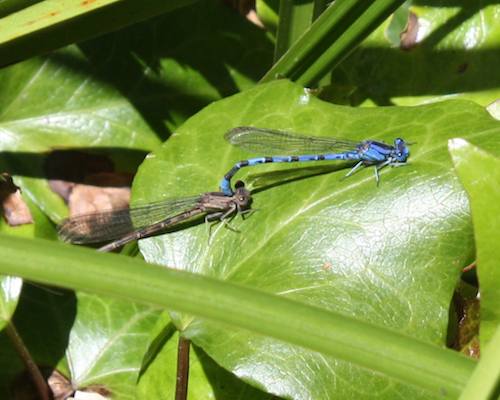
We don’t make any distinction between “native wildlife” and any other wildlife currently living in our city.  We value them all.  Most are making use of existing vegetation, whether it is native or non-native.  They do not benefit from the loss of the blackberries that are their primary food source or the loss of the thickets or trees that are their homes.  We do not believe that wildlife in San Francisco benefits from the destructive projects of the Natural Areas Program.  See photos of insects, birds, and other wildlife using non-native plants in the natural areas here.

Damselflies mating on ivy, Glen Canyon Park

We do not think an ecosystem that has been sprayed with herbicides qualifies as a “healthy ecosystem.”  NAP sprayed herbicides at least 86 times in 2011.  Their use of herbicides has increased over 330% in the last 4 years.  NAP uses herbicides that are classified as more toxic than those most used by other city departments.  Last spring, 1,000 visitors to Glen Canyon Park signed a petition, asking the Natural Areas Program to stop using pesticides in their park.  This petition was given to Scott Wiener, the Supervisor representing the district in which Glen Canyon Park is located.

These are statements of fact that can be easily verified by the public record.

2.       “Educate our culturally diverse city about the benefits of local nature and about helping with natural areas stewardship in your neighborhood;”

Webmaster:  Although we value education, we do not consider the staff of NAP and/or its supporters qualified to provide it.  We hear them make statements that are demonstrably not true, such as “grassland stores more carbon than trees.”  We see them spray herbicides in the dead of winter that are supposed to be sprayed in the spring when the plants are actively growing.  We watch them plant things where they won’t grow, such as sun-loving plants in deep shade and plants in watersheds where they will soon be drowned by seasonal rains.

And we also have had bad experiences with the volunteers who are called “stewards” by NAP, but sometimes act more like vandals.  We see them spraying herbicides that they aren’t authorized to use.  We see them hacking away at trees that haven’t been designated for removal.  NAP is not providing the necessary guidance and supervision to the volunteers many of whom seem to consider themselves the de facto owners of the parks. 

3.       “Manage the City’s wildlands for public access, safety and the health of the “urban forest.””

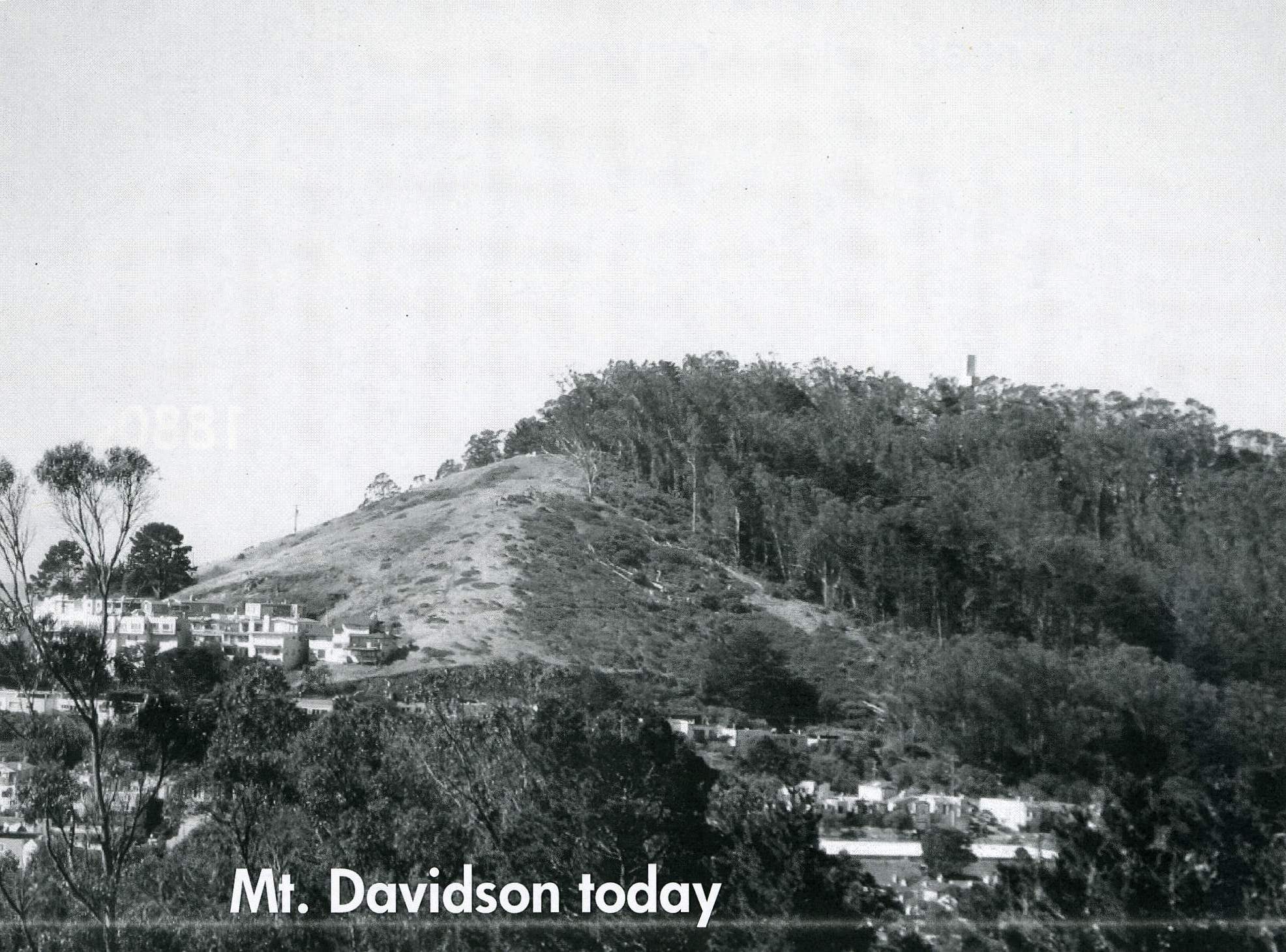
Webmaster:  We do not oppose the removal of hazardous trees.  However, we also know that most of the trees that have been designated for removal by the NAP management plan are NOT hazardous.  They have been selected for removal solely because they are not native and are perceived to be obstacles to the reintroduction of native plants.  Claims to the contrary are inconsistent with the management plan as well as our experience in the past 15 years.  (Watch video about the destruction of 1,600 trees over 15 feet tall planned for Mt. Davidson.)

“We hear occasional complaints about public access and tree removal. Three simple facts are thus:

1. Every single natural area in the City has at least one trail through it, where one can walk a dog on a leash;”

Webmaster:  The loss of recreational access in the natural areas is real, not imagined.  The following are verbatim quotes from the NAP management plan:

  • “Approximately 80 percent of the SFRPD off-leash acreage is located within Natural Areas.” (page 5-8).  The NAP DEIR proposes to close or reduce the size of several off-leash areas.  The DEIR provides no evidence that these areas have been negatively impacted by dogs.  It also states that all off-leash areas in the natural areas are subject to closure in the future if it is considered necessary to protect native plants.  Since NAP has offered no evidence that the proposed immediate closures are necessary, one reasonably assumes it will offer no evidence if it chooses to close the remainder of the 80% of all off-leash areas in San Francisco located in natural areas.  We know from the DEIR public comments that NAP supporters demand their closure.
  • Public use in all Natural Areas, unless otherwise specified, should encourage on-trail use… Additionally, interpretive and park signs should be installed or modified as appropriate to include “Please Stay on Trails” with information about why on-trail use is required.”  (page 5-14)   In other words, the only form of recreation allowed in the natural areas is walking on a trail.  Throwing a ball or frisbee, having a picnic on the grass, flying a kite, climbing the rocks are all prohibited activities in the natural areas.  And in some parks, bicycles have been prohibited on the trails by NAP. 
  • “Finally, this plan recommends re-routing or closing 10.3 miles of trail (approximately 26 percent of total existing trails).” (page 5-14)  So, the only thing visitors are allowed to do in a natural area is walk on the trails and 26% of all the trails in the natural areas will be closed to the public.

2. “The act of removing (a small subset of) non-native trees, e.g., eucalyptus, that are in natural areas has the following benefits:
   a. Restores native habitat for indigenous plants and wildlife;
   b. Restores health, light and space to the “urban forest,” since the trees are all crowded together and being choked by ivy;
   c. Contributes to the prevention of catastrophic fire in our communities.”

Webmaster:  Destroying non-native plants and trees does not restore indigenous plants and wildlife. Native plants do not magically emerge when non-native plants and trees are destroyed. Planting indigenous plants might restore them to a location if they are intensively gardened to sustain them.  However, in the past 15 years we have seen little evidence that NAP is able to create and sustain successful native plant gardens.  Native plants have been repeatedly planted and they have repeatedly failed. 

NAP has not “restored” the health of the urban forest.  They remove trees in big groups as they expand their native plant gardens.  They are not thinning trees.  They are creating large openings for the grassland and dune scrub that they plant in the place of the urban forest.  Every tree designated for removal by the NAP management plan is clearly selected for its proximity to native plants.  It is disingenuous to suggest that NAP’s tree removal plans are intended to benefit the urban forest.

Of all the fictions fabricated by native plant advocates to justify the destruction of our urban forest, the claim that its destruction will “prevent catastrophic fire” is the most ridiculous.  The native ecology of California is highly flammable.  Most fires in California are in native chaparral.  According to San Francisco’s hazard mitigation plan, there has never been a wildfire in San Francisco (2) and one is unlikely in the future because the climate is mild and moist.  When it is hot in the interior, it is foggy in San Francisco.  The hot winds that drive most fires in California never reach San Francisco because it is separated from the hot interior by the bay.  San Francisco is surrounded by water, which moderates its climate and virtually eliminates the chances of wildfire. The tall non-native trees precipitate moisture from the summer fog, which moistens the forest floor and reduces the chances of ignition.  In the unlikely event of a wind-driven fire, the trees provide the windbreak which would stop the advance of the fire. 

3. “The overall visual landscape of the natural areas will not change since only a small subset of trees are planned to be removed over a 20-year period.”

Webmaster:  In addition to the 18,500 trees over 15 feet tall which NAP proposes to destroy, the NAP management plan also states its intention to destroy non-native trees less than 15 feet tall.  In other words, the future of the forest will also be killed.  The intention is to eliminate the urban forest in San Francisco’s parks over the long term.  Yes, this will take some time, but the long-term intention to eliminate the forest is clear.

“Please feel free to email steward@natureinthecity.org if you would like more clarification about the intention, values and rationale of natural resources management.”

Webmaster:  We urge our readers to take NIC up on this offer to provide  ”more clarification” of its spirited defense of the Natural Areas Program. 

  • Do you think NIC is deluded about there being only a “handful of people” that are critical of the Natural Areas Program?
  • Did you notice that NIC does not acknowledge the use of herbicides by NAP?  Do you think that a fair representation of criticism of NAP can omit this issue?
  • If you visit a park that is a natural area, do you think NAP has demonstrated in the past 15 years what NIC claims it is accomplishing?
  • Do you think NIC has accurately described recreational access restrictions in the natural areas?
  • Do you think that San Francisco’s urban forest will be improved by the destruction of 18,500 mature trees and countless young trees?

(1) Save Sutro Forest, Urban Wildness, San Francisco Forest Alliance, Death of a Million Trees

(2) “The California Department of Forestry and Fire Protection (CAL FIRE) has no record of any wildfire in San Francisco.” San Francisco Hazard Mitigation Plan, 2008, page 5-18.

Ivy Eradication: A Comedy of Errors

When the concert meadow in San Francisco’s Stern Grove was renovated in 2005, at a cost of $15 million, we were surprised that ivy was planted as the ground cover because ivy grows rampant in Stern Grove, shrouding many of the trees.  But, hey!  Who are we to question the choices of horticultural professionals? 

Ivy planted in Stern Grove, 2005

Now ivy is being sprayed with herbicide–presumably with the intention of killing it–by San Francisco’s Natural Areas Program in other parks in San Francisco, so one wonders if the staff who plant it are aware of the future of the ivy they plant.  Seems like another case of man creating problems which he then must solve.  Perhaps full employment is the objective, rather than the creation of a beautiful garden.  But we digress.

Ivy climbing trees in Stern Grove

Combining pesticides

Many members of the public are of the opinion that all pesticide (herbicides, insecticides, etc.) applications are inappropriate in a park that has been designated as a “natural area.”  Last year, the public complained about the spraying of Garlon in the natural areas by the Natural Areas Program because it is classified by the city’s Integrated Pest Management (IPM) policy as “Most Hazardous.”  Consequently, the Natural Areas Program significantly reduced its use of Garlon in 2011. 

For the most part they have substituted a mixture of glyphosate and imazapyr for Garlon. Is this an improvement?  Maybe not.  Although glyphosate and imazapyr have a lower hazard rating of “More Hazardous,” the Natural Areas Program increased their pesticide applications in 2011 at least 20% compared to 2010.  But more importantly, little is known about the toxicity of imazapyr and nothing is known about the toxicity of combining glyphosate and imazapyr.(1)  Imazapyr was approved for use in California in 2005, so only the minimal tests required by law have been done on it.

The manufacturer’s labels for these herbicides suggest that combining them is not an approved use.  The label for Aquamaster (glyphosate) does not include imazapyr on the list of pesticides with which it can be safely combined.  And the Polaris (imazapyr) label says it should not be combined with another pesticide unless it is expressly recommended by the manufacturer of that pesticide.

The “Aquatic Pesticide Application Plan for the San Francisco Estuary Invasive Spartina Project” is cited by San Francisco’s IPM program as the evaluation upon which it based its decision to add imazapyr to the list of pesticides approved for use in San Francisco in 2010.   The evaluation explained why imazapyr is being combined with glyphosate by the non-native Spartina eradication project. 

Imazapyr is apparently slow acting.  It can take some months before it kills the plant on which it is sprayed.  Glyphosate, on the other hand, is fast acting.  The plant on which it is sprayed begins to yellow and die within a few weeks.  Glyphosate is therefore used by the Spartina eradication project to provide quicker feedback to those spraying the herbicide.  They know within a few weeks if they have sprayed in the right place.  They don’t have to wait for the next season to spray again if necessary. 

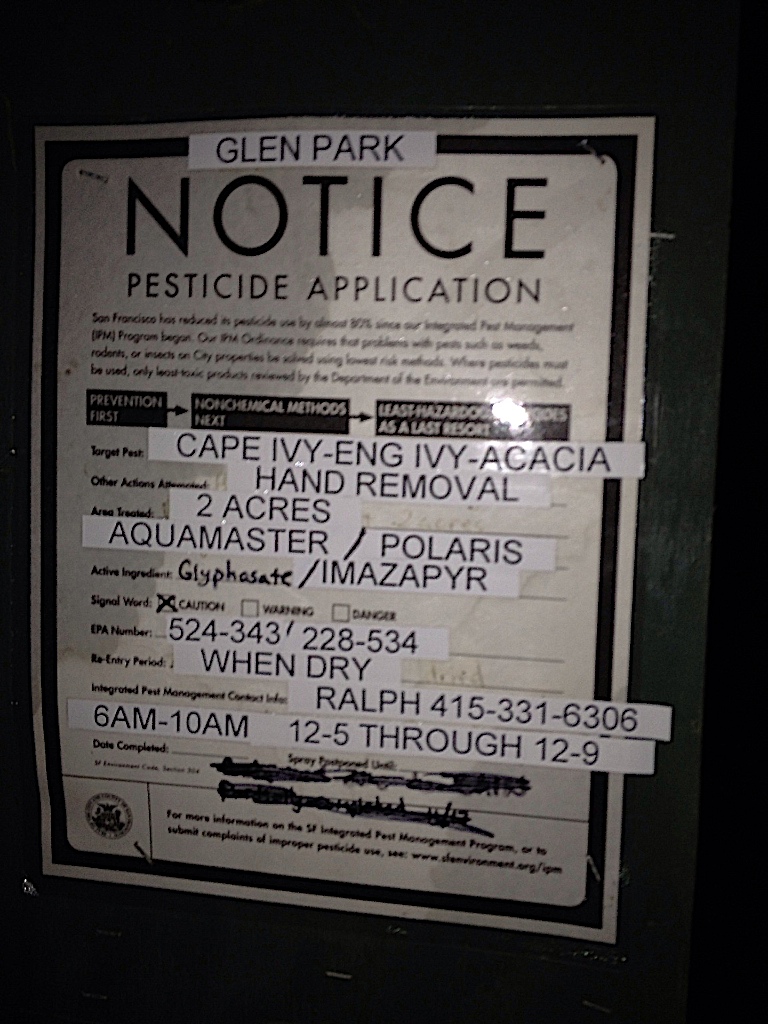
Pesticide Application Notice, Glen Canyon Park, December 2011

 However, glyphosate should be applied to perennial broadleaf plants during their reproductive stage of growth, when they are budding in the late spring and summer, according to the manufacturer.  In Glen Canyon Park, a mixture of glyphosate and imazapyr was sprayed on ivy in December 2011, clearly not the recommended time period for spraying.  A month later, there is no indication that the ivy was damaged by this spraying.  This suggests that there was no point in combining glyphosate and imazapyr in this application.  The public was exposed to the unnecessary risk of combining these herbicides, with no potential benefit of taking that risk.


Pesticides accumulate and persist in the soil

Was it appropriate for the city’s IPM program to use the evaluation of imazapyr for the Spartina project as the basis of their decision to approve its use by the Natural Areas Program?  We don’t think so.  The circumstances of the Spartina project are substantially different from those of its use by the Natural Areas Program.

Imazapyr is used to eradicate non-native Spartina in a tidal estuary.  For that reason the evaluation of its use assured the public that this herbicide would not accumulate in the environment because it would be flushed away from the ground by the tide twice each day. 

The evaluation also said that when imazapyr was used in a pond or stable water source, it persisted in the ground for a longer period of time.  In fact, that’s exactly how imazapyr is being used by the Natural Areas Program.  It has been used at Lake Merced and at Pine Lake, both stable water sources.  It is also being used in Glen Canyon Park, which is a watershed. 

We don’t assume that imazapyr is being used safely to eradicate Spartina.  However, even if it is, it does NOT follow that it is safe for use in watersheds that are not tidal, such as those being sprayed by the Natural Areas Program. 

Collateral damage of pesticides

Glyphosate is a non-selective herbicide.  That is, it kills any plant it is sprayed on at the right stage of its growth.  But imazapyr is far more insidious as a killer of plants because it is known to travel from the roots of the plant that has been sprayed to the roots of other plants.  For that reason, the manufacturer cautions the user NOT to spray near the roots of any plant you don’t want to kill.  For example, the manufacturer says explicitly that imazapyr should not be sprayed under trees, because that tree is likely to be killed, whether or not that was the intention. 

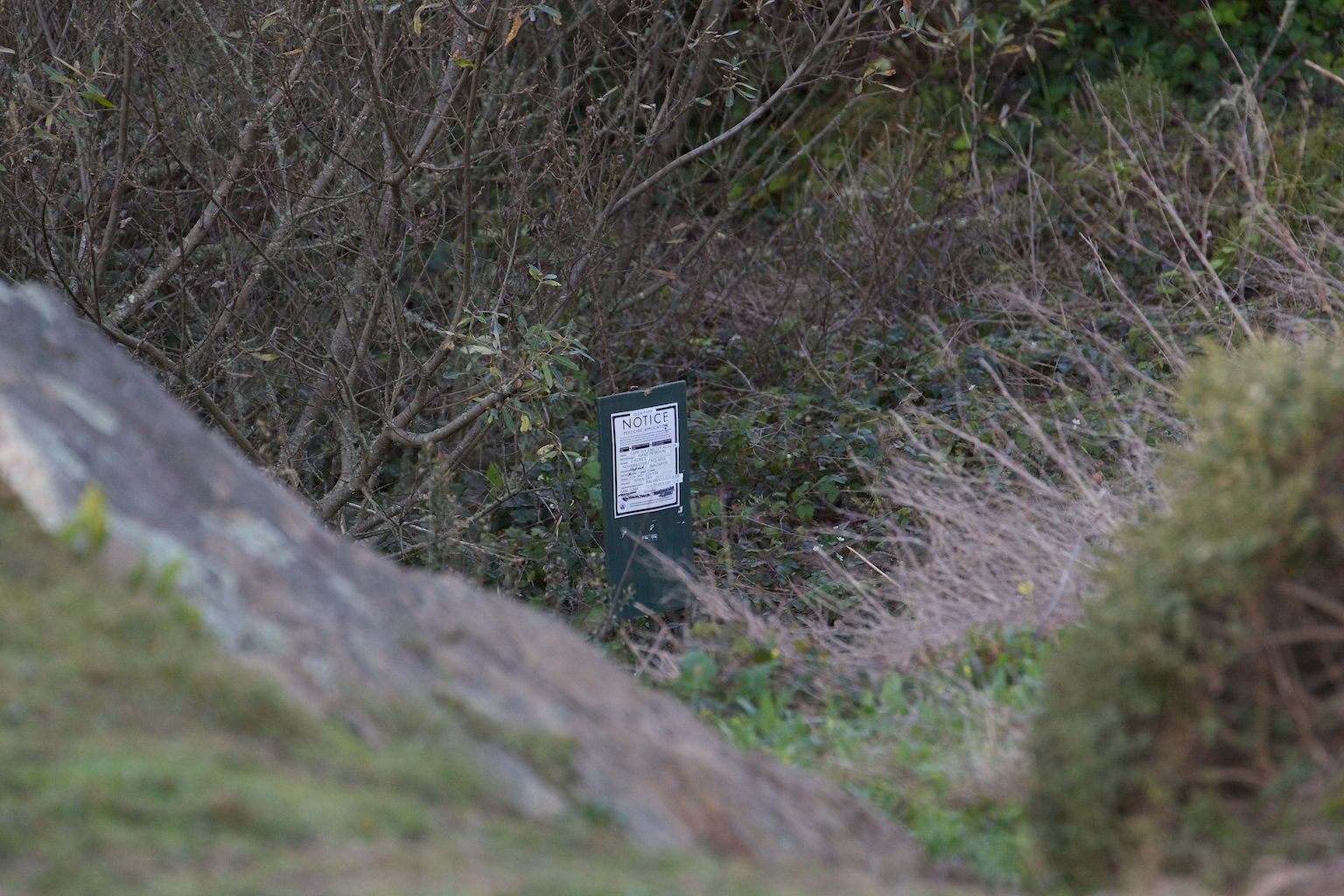
Pesticide Application Notice under willow trees in Glen Canyon Park, December 2011

Much of the ivy that was sprayed by the Natural Areas Program in Glen Park in December 2011 was sprayed under willow trees.  The willow trees are native, so it seems unlikely that they intended to kill them.

Resistance to pesticides

The Federal Drug Administration recently banned some use of antibiotics in domesticated animals because the bacteria antibiotics are intended to kill are developing resistance to the antibiotics.  This resistance is becoming increasingly dangerous to humans who are also the victims of those bacteria.  Antibiotics are being rendered useless by overuse on domesticated animals.  When humans need them, they won’t work because bacteria have developed a resistance to them.

Likewise, plants and animals are also capable of developing resistance to pesticides.  Glyphosate is the most heavily used herbicide in agriculture.  Recent research indicates that weeds are developing resistance to glyphosate

The manufacturer of imazapyr says explicitly that repeated use of this herbicide is likely to result in resistance to it over the long term:  “When herbicides with the same mode of action are used repeatedly over several years to control the same weed species in the same application site, naturally occurring resistant weed biotypes may survive…propagate and become dominant in that site.”   So, does it make sense to use imazapyr on a plant as persistent as ivy? 

The GGNRA reported spending $600,000 over 3 years trying to eradicate ivy from 127 sites.  They were successful in only 7 of the sites.(2)  Obviously eradicating ivy is not a one-shot deal.

If ivy must be eradicated, pesticides do not have to be used to do it.  The Audubon Canyon Ranch in Bolinas Lagoon reported “qualified” success using hand-pulling methods on 5 acres over 5 years “utilizing 2375 volunteer hours.”  Biannual monitoring of resprouts will be required for the foreseeable future.  It’s a big commitment, but at least it is safe. 

All risk, no reward

Congratulations to any reader with the patience to slog through this tedious list of apparently incompetent use of pesticides by San Francisco’s misnamed Natural Areas Program.  We reward your persistence with this summary:

  • Combining pesticides is risky business because the toxicity of such combinations has not been tested.  Therefore, when there is no benefit in doing so, these combinations should be avoided.
  • A pesticide that is appropriate for one purpose is not necessarily appropriate for another.  In this case, imazapyr may not accumulate and persist in a tidal estuary, but it is more likely to do so in a stable watershed.
  • The Natural Areas Program may be killing plants it does not intend to kill by using herbicides indiscriminately.
  • Herbicides should not be used repeatedly on the same plants in the same locations because the plants will develop resistance to those herbicides. 
  • If the Recreation and Park Department is planting ivy in one park and destroying it another, could it be such a bad plant that it is worthwhile to expose the public to toxic pesticides?  We don’t think so, but if we are wrong, then ivy should be removed by hand without using pesticides.

(1) “Aquatic Pesticide Application Plan for the San Francisco Estuary Invasive Spartina Project,” August 2010, page 32.

(2) Liston, Heather, “Reuniting old adversaries can beat back exotic invaders,” California Wild, Winter 2006

Nativism: The Hawaiian case

The case for native plant and animal restorations is strongest on islands.  They contain the most endemic species, unique to those places.  More extinction has occurred on islands than on the mainland of the United States because species that evolved in isolation are more vulnerable to new competition than species that have evolved with more competition.  Theoretically, if man were able to eradicate non-native species of plants and animals, it would be easier to prevent re-invasions on an island.  Consequently the Hawaiian Islands are a hot-bed of nativism.

The efforts to eradicate many species of plants and animals in the Hawaiian Islands are just as controversial there as they are here in the Bay Area.   Here is a sampling of the legal, environmental, and ethical questions raised by these eradication projects:

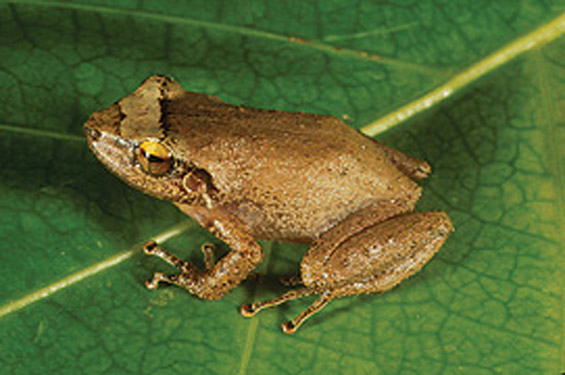
  • Coqui frog

    The coqui is a tiny frog that was inadvertently introduced to Hawaii from Puerto Rico in the 1980s.  There are no native frogs in Hawaii, so efforts to eradicate the coqui aren’t predicated on the usual claim that it will out-compete its native counterpart.  In this case, those who launched this campaign claimed that the frog will eat all the insects on the islands, depriving other animals of this food source.  The proposal was to spray highly concentrated caffeine in the forests occupied by the frog.  No tests were conducted to determine what effect this would have on any of the plants or other animals that would be sprayed in the process.

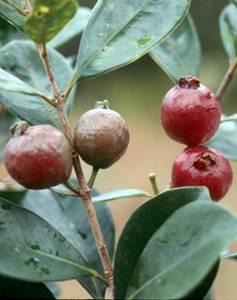
    Strawberry guava, USDS
  • The strawberry guava was introduced to Hawaii as a fruit tree, just as virtually every fruit tree in America was.  The proposal was to eradicate the strawberry guava with biocontrol, which means an insect was introduced that would theoretically feed solely on the strawberry guava.  The theory of biocontrol is more appealing than the reality, which in practice has often introduced new predators that are more difficult to control than the original target.  This eradication effort was also controversial because the strawberry guava is a valuable source of food for all animals in Hawaii, including humans.
  •  Mangroves are coastal forests that are considered valuable nurseries for marine life.  In Hawaii some have been eradicated with herbicides.  The skeletal remains of the mangrove are left to rot in the water, creating an eyesore and a graveyard for the animals that lived there.

                                                Animals are caught in the middle

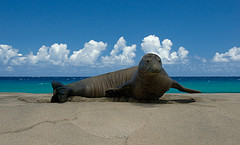
The endangered monk seal has been caught in the middle of the nativist debate in HawaiiBecause it is endangered, government biologists are obligated by law to try to prevent its extinction.  The monk seal has therefore been introduced to places in the Hawaiian Islands in which it hasn’t previously lived, based on the belief that it will have less competition in these areas.  This introduction of the monk seal into new territory has made it vulnerable to two diametrically opposite sides of this debate.  The monk seals are being bludgeoned to death by someone who doesn’t want them there.  Is it a fisherman who believes the legal protections provided for the endangered seal will threaten his fishing rights?  Or is it one of the nativists who are saying that the seals “don’t belong here?”

Monk Seal, Hawaii Wikimedia Commons

Dr. Sydney Singer is a medical anthropologist who lives in Hawaii.  He is in the forefront of the opposition to the eradication of non-native plants and animals, particularly the toxic methods used by the projects.  He has written a tongue-in-cheek quiz for Hawaiians to get at the bottom of that vexing question about what “belongs” in Hawaii.  With Dr. Singer’s permission, we share this quiz with our readers:

What belongs in Hawaii?

“A NOAA[National Oceanic and Atmospheric Administration]report released last year showed 35 percent of those surveyed at beaches and popular fishing areas on Kauai and Molokai believed the [monk] seals aren’t native to the islands.

This raises a critical question for our legislators to consider as invasive species eradicators come to the public trough for more money to kill plants and animals that “don’t belong in Hawaii”.

How can we tell what does and doesn’t “belong” in Hawaii? Here is a quiz.

 From the following list, pick the item that best matches your personal prejudice:

  • Any plants or animals that were brought to Hawaii by human beings, including by the Hawaiians, don’t belong here.
  • Any plant or animal brought by the Hawaiians is okay, but those brought by any other culture are bad and don’t belong here. However, alien biocontrol agents, such as insects and fungi which attack plants and animals that don’t belong here, do belong here.
  • Any plants or animals that are useful, beautiful, or in some other way make our lives better belong here, but those that are noxious or poisonous don’t belong here.
  • How do I know?  I’m from New Jersey. I’m just glad to be alive and be living here.

This question is especially important for the invasive species committees and their army of eradicators poisoning, trapping, shooting and infesting our islands to kill species that they have decided “don’t belong.” And now, following their lead, members of the public are killing endangered Monk seals.”

                                                                  The elusive “baseline”

What is Dr. Singer trying to tell us with these rhetorical questions?  He is reminding us that every living creature in the Hawaiian Islands came from somewhere.  When the islands emerged from the sea as volcanoes they were completely barren.  They were slowly populated over millennia by plants and animals brought by the wind, by the sea, by birds and animals.  Humans arrived on the islands over 1,000 years ago when Polynesians came by boat from neighboring islands.  And Captain Cook and his crew were the first Europeans to arrive in the islands in 1778.  Each of these “invasions” brought new creatures.  Many of those creatures are now extinct. The historical food web cannot be recreated because some pieces are missing and some pieces are unknown. So, how can we arrive at a “baseline” which we now attempt to replicate?  It’s a conundrum that illustrates the fundamental absurdity of the entire concept of restoring historical ecology.

Prejudice destroys more eucalypts

We don’t usually talk about tree destruction projects on private land.  We focus on public lands because, as taxpayers we’re paying for those projects and we consider ourselves the owners of public land.  We also respect private property rights.  We’ll make an exception to that general rule today to tell you about the eradication of eucalypts at the Mountain View Cemetery in Oakland, California.

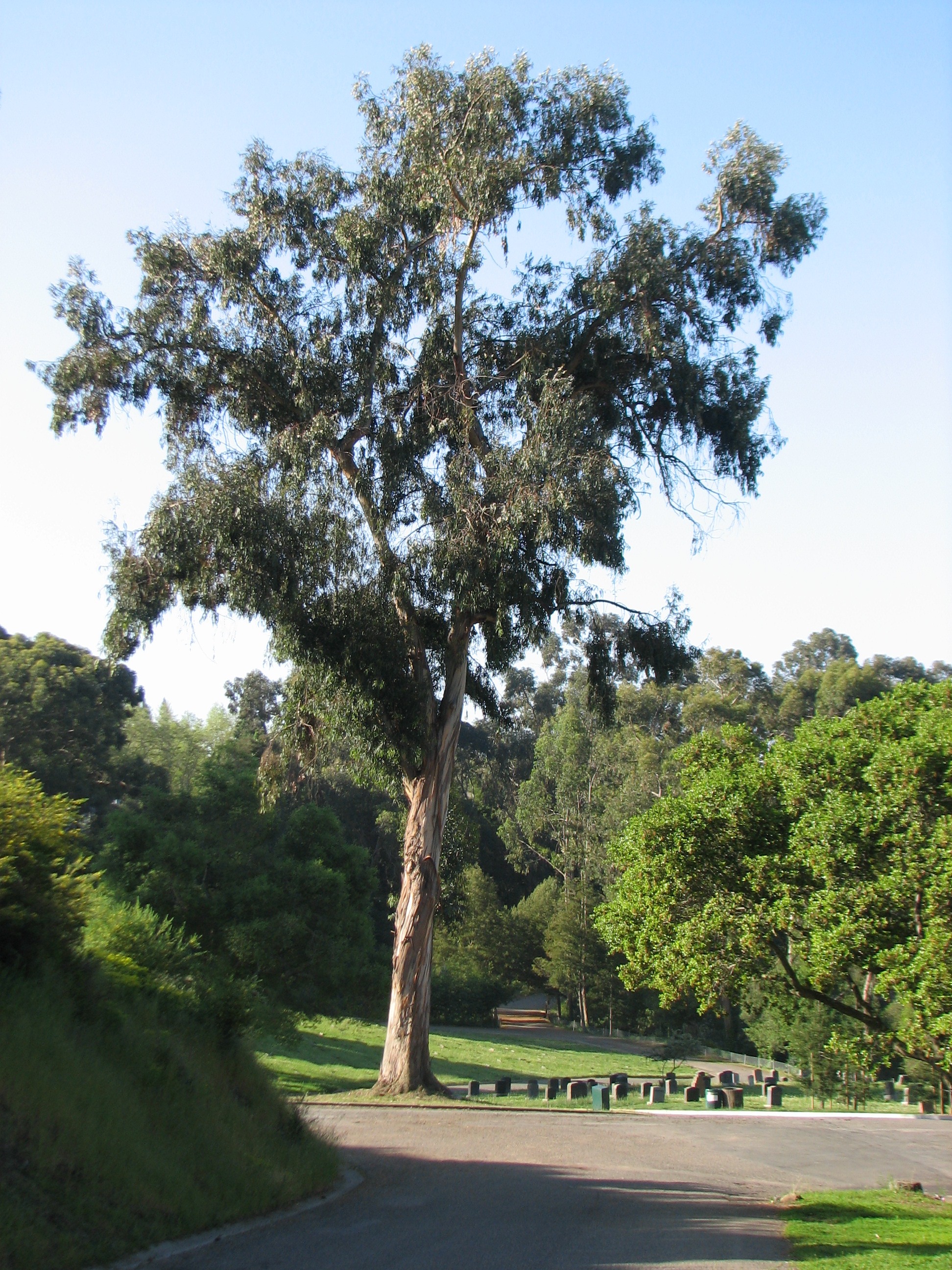
We learned about this project from one of the cemetery’s periodic mailings to its neighbors.  They informed their neighbors that they planned to plant more trees because they observed that fewer shrubs grew under the canopy of trees.  They also said they “prefer to plant using what grows well in the Bay Area climate with minimal water and intervention.”  Finally, they concluded in what seemed a non sequitur, “We intend to remove unwanted eucalyptus trees that border the cemetery.  Although they provide a useful neighborhood screen and help to architecturally define our outdoor landscape, eucalyptus is a damaging pest to the cemetery.”

Eucalyptus, Mountain View Cemetery

Having received this warning, we weren’t surprised when the eucalypts began to disappear from the cemetery.  The lone specimens in prominent areas in the cemetery seem to us a terrible loss.

Few trees grow more successfully than eucalypts in the San Francisco Bay Area.  They require no supplemental water.  They live for several hundred years in Australia and have grown here for over one-hundred years.  They are not invasive.  We don’t think they deserve to be called a “pest.” 

Gone, but not forgotten

The Mountain View Cemetery was planned by Frederick Law Olmstead in 1863 and building began shortly thereafter.  Although there are native Coast Live Oaks and Redwoods, according to an arborist docent they were all planted after the cemetery was built.  This is as we would expect because, “Vegetation before urbanization in Oakland was dominated by grass, shrub, and marshlands that occupied approximately 98% of the area.  Trees in riparian woodlands covered approximately 1.1% of Oakland’s preurbanized lands…”* 

The vast majority of trees in the cemetery are not native.  The original tree-lined avenue through the center of the cemetery was planted with Magnolias by Olmstead.  There are many stunning specimens of non-native trees:  Dawn Redwood, Copper Beech, Ginkos, etc. 

Ginko in the fall, Mountain View Cemetery

Eucalyptus is not our favorite tree.  We would probably choose to plant many other species before we would consider planting eucalyptus.  However, the decision to plant a tree is very different from the decision to destroy a tree.  We see no justification for destroying mature, healthy trees sequestering thousands of tons of carbon.  The prejudice against eucalyptus remains a mystery to us.

Edited to add:  The Oakland Tribune reported on March 4, 2012 that many neighbors of the Mountain View Cemetery object to the destruction of the eucalyptus trees.  The Tribune reported that the neighbors are concerned about the loss of habitat for birds.   The cemetery claims  they are destroying the eucalyptus because they are flammable.  As we have said many times on Million Trees, this is one of many fabricated fictions used by native plant advocates to justify the eradication of non-native plants and trees.    


*Nowak, David, “Historical vegetation change in Oakland and its implication for urban forest management,” Journal of Arboriculture, 19(5): September 1993

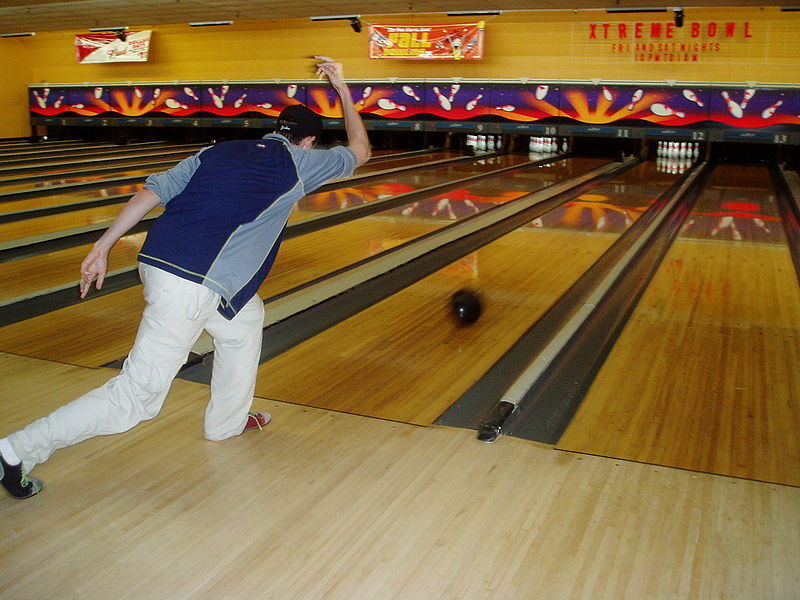
Bowling Alone with the Sierra Club

In 2000 Robert Putnam’s (Harvard University) masterpiece of American social science, Bowling Alone* was published.  He reported the significant decline of all forms of civic participation in American society and politics from the P.T.A. to voting.  Religious participation is the notable exception to this trend. 

We are deeply concerned about the increasing isolation of Americans from one another and we believe that the polarization of viewpoints, particularly in politics, is one of the consequences of this trend.  Only the highly motivated extremes of opinion are still engaged in the civic dialogue.  The middle ground is no longer represented in the debate.  However, we will focus on the topic that is relevant to Million Trees, that is, the implications for the environmental movement. 

Bowling Alone. Attribution: Xiaphias

Membership in environmental organizations reached its peak in 1995, according to Bowling Alone after decades of enormous growth since the 1960s.  This peak was consistent with public opinion regarding environmentalism.  In 1990 three-quarters of Americans considered themselves “environmentalists.”  By the end of the decade, that percentage had dropped to only 50%. 

The growth in membership was achieved by the use of a new marketing tool known as direct mail.  Think about it.  How many invitations do you receive in the mail from non-profit organizations, asking you to contribute to a wide-range of worthy causes?   Typically these organizations spend between 20-30% of their budgets on such fund raising and the rate of return on these solicitations is only 1-3% of the cost depending upon the quality of the mailing list.  Using this technique, Greenpeace tripled its membership between 1985 and 1990 to 2.35 million.

What does “membership” mean?

After tripling its membership, Greenpeace lost 85% of its members in the next 8 years.  The drop-out rate after the first year is typically 30% in these organizations.  

In fact, most contributors to these organizations don’t even consider themselves “members” in the usual sense of that word.  The commitment to the organization doesn’t extend far beyond writing a check.  Only 8% of contributors to the Environmental Defense Fund, for example, described themselves as “active” in the organization. 

These organizations are therefore distinctly different from their historical antecedents.  Participants in the civil rights movement frequently put their lives on the line.  The social lives of Rotary Club members revolved around the Rotary lodge. 

Since few people are active participants in environmental organizations, they have become “bureaucratized,” meaning they are run by and for paid professionals.  Most members have little idea what policies the professional staff has adopted on their behalf. 

The Sierra Club

In 1989, a survey of Sierra Club members determined that only 13% of its members had attended even one meeting of the Sierra ClubThe Bay Area Chapter of the Sierra Club claims to have 10,000 members, but chapter leadership of a group (the chapter is broken into many geographical groups, such as the San Francisco Group)was elected by as few as 59 votes.  The top vote-getter in the Club’s most recent election received 327 votes in a Chapter-wide race, but only one chapter group (Northern Alameda County) had more candidates than there were available seats.  In other words, there was no competition for most of the leadership seats. 

Yet, the incumbents in these leadership positions are free to determine the local policies of the Sierra Club.  Here are a few recent examples of positions taken by the Bay Area Chapter of the Sierra Club:

The opinion of the membership is not asked when these policy positions are taken by the leadership.  However, if members read the chapter’s quarterly newsletter (The Yodeler) they have the opportunity to learn about them after the fact.

The influence of the Sierra Club

We believe that the influence of the Sierra Club exceeds the size of its membership.  The Sierra Club endorses candidates for political office.  These endorsements are highly sought after because politicians believe that the endorsement confers the votes of its membership.  This belief was recently tested in the race for mayor of San Francisco. 

State Senator Leland Yee sought and received the endorsement of the Sierra Club in his bid for mayor of San Francisco.  In the past, he had been critical of the Natural Areas Program.  His stated reason for that criticism was that the veneration of native plants was offensive to his roots as an immigrant.  In particular, the Chinese community suffered horrendous discrimination in California in the 19th Century.  The rhetoric of the native plant movement is reminiscent of the xenophobia from which the Chinese community has suffered historically. 

It seems unlikely that Senator Yee’s emotional reaction to nativism changed when he sought the endorsement of the Sierra Club, but he had to disavow that opinion in order to receive the Club’s endorsement.  He did so because he believed that the votes of Sierra Club members would help him to be elected mayor of San Francisco.  His bet did not pay off.  He did not win.  In fact, he came in fourth. 

We hope that political candidates in the future will heed this warning.  The Sierra Club may have many “members” but that membership does not necessarily confer votes.  The vast majority of “members” have no commitment to the policy positions taken by the Club.

An appeal to Sierra Club members

There were over 4,000 public comments on the Environmental Impact Study for the Dog Management Plan of the Golden Gate National Recreation Area (GGNRA).  The Dog Management Plan proposes to eliminate about 80% of existing off-leash areas, which are now only 1% of the 74,000 acres of GGNRA property.  The Sierra Club supports that plan.  There were thousands of comments from people with dogs who are presently enjoying the small areas now available to them for off-leash recreation.  Sixty-four of those people said they are Sierra Club members.  That’s enough members to elect someone to a leadership position in the Club.

If you are a member of the Sierra Club, here’s what you can do to influence the Club’s policies:

  • Inform yourself of the policies of the Sierra Club. 
  • If you don’t agree with those policies, we urge you to vote in the election of officers to the leadership positions in the Sierra Club.
  •  If you don’t know the policies of the candidates, ask them. 
  •  If there are no candidates that represent your viewpoint, find candidates who do.
  • If you can’t find a candidate you can support, it’s time to vote with your feet.
  • If you leave the Club tell them why. 

Quit Bowling Alone!

Attribution: GNU Free Documentation

*Putnam, Robert, Bowling Alone:  The Collapse and Revival of American Community, Simon & Schuster, New York, 2000.  All quotes in this post are from Bowling Alone unless otherwise noted.

Pangaea: The first but not the last globalization of ecology

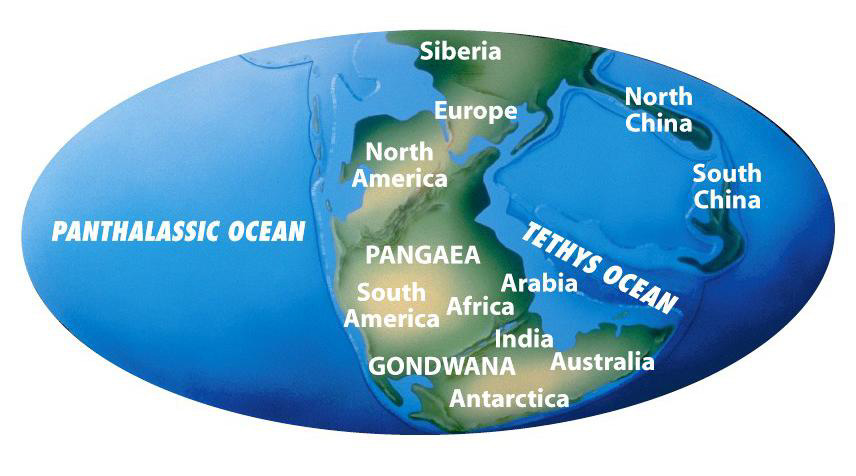
The continents have been sliding about on the Earth since it was “created”(1) approximately 4.5 billion years ago.  Although geologists tell us that the continents came together and broke apart several times prior to the formation of the supercontinent geologists call Pangaea, this is the geologic period of most interest to us because life forms were sufficiently complex by that period that we can recognize their modern counterparts.

The supercontinent Pangaea

Pangaea is said to have been assembled about 237 million years ago, during the Early Triassic Period, shortly after the great Permian extinction, the period of the most extensive extinctions of plant and animal species in the history of the Earth.   Pangaea began to break apart about 50 million years later, but the African and South American continents remained fused–into a continent dubbed Gondwana–until about 100 million years ago. (1)

During that period of nearly 160 million years, many new life forms emerged and others died out.  Cone-bearing plants replaced some spore-bearing plants before Pangaea formed and dominated the Earth during much of Pangaea’s existence.  The first true mammals, flowering plants, birds, lizards, and salamanders appeared before the break up of Pangaea was complete.

What are the implications of the development of new species of life on Earth at a time when there was a single, unified continent?  That is the question we are considering today.  Obviously, the transport of plant and animal species into new territories is facilitated by their proximity.  Seeds are more easily transported by wind and animals if they need not cross barriers such as oceans, as they must today.   As a result there was greater homogeneity of species during the geologic periods of Pangaea.  And species diversified rapidly when Pangaea broke up into the 7 continents of today. (2)  These diversified species have common ancestors. 

Even after Pangaea began to break up into separate continents, there were land bridges between some of the continents during periods of glaciations when water was locked into ice, draining the oceans.  Animals could travel over these land bridges from one continent to another, often bringing plant species with them, usually unwittingly.  That’s how the first humans in North America and ultimately South America traveled from Asia about 13,000 years ago at the time of the last ice age.

The common ancestry of many plants and animals is one of many reasons why the concept of “native” is ambiguous and is often debated.  We will consider a few examples in which the designation of a particular plant as native or non-native seems debatable.

Is the Dawn Redwood native to California?

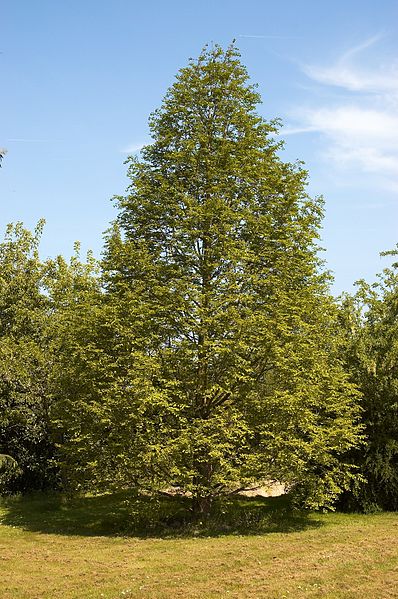
Dawn redwood (Metasequoia glyptostroboides) is closely related to our redwood trees, Coast Redwood and Giant Sequoia.  Dawn redwood is unique in being a conifer that is also deciduous (loses its foliage in winter), unlike our redwood trees which are evergreen.  Dawn redwoods were until recently considered native to remote regions of China where they are considered “critically endangered.”

Dawn redwood in spring. Wikimedia Commons

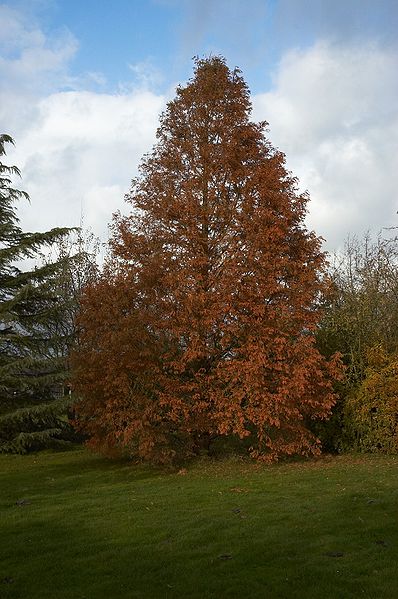
However, scientists at the Museum of Paleontology at UC Berkeley tell us that there is fossil evidence that dawn redwoods grew in California about 40 million years ago.  Dawn redwoods now grow successfully in the Bay Area.  There is a famous specimen in front of McLaren Lodge in Golden Gate Park, headquarters of San Francisco’s Recreation and Park Department.  Every autumn, when the tree turns red, park staff receives calls from the public expressing their concern that the beautiful tree is dying.

Dawn redwoods died out in California during the last ice age because the climate was cooler than dawn redwoods could tolerate.  So, now that the climate has warmed again, and dawn redwoods are back, why not welcome them as a “return of the natives?”  That’s the kind of flexibility that makes sense to us, particularly in a time of rapidly changing climate.

Dawn redwood in autumn. Wikimedia Commons

Unfortunately, we don’t find such flexibility in the native plant ideology.  Dawn redwoods are rare both in California and in China from which it was reintroduced, and it is therefore not one of the trees that native plant advocates demand be eradicated.  Monterey pine and Monterey cypress are not so fortunate.  These are also trees for which fossil evidence suggests that they lived in San Francisco in the distant past and their native range is less than 150 miles down the coast in Monterey.  Both tree species are also considered threatened in their native range.  Yet, native plant advocates demand their eradication in San Francisco.

This is an example of the rigidity of the native plant ideology that has earned them the reputation of fanatics.

Does Rhododendron ponticum “belong” in Britain?

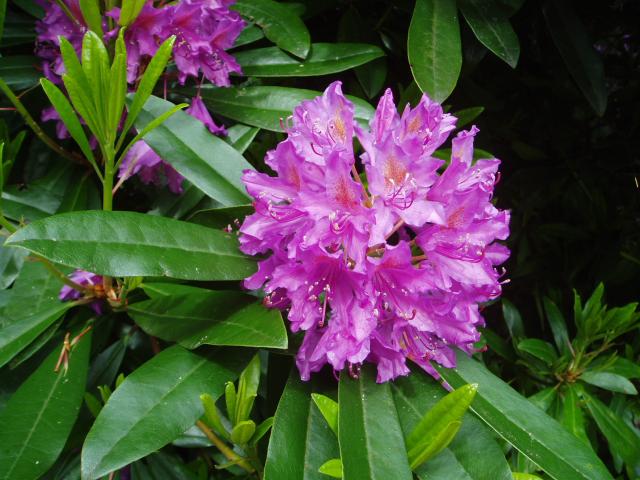
We told our readers in a recent post that Rhododendron ponticum is one of only about a dozen plants in Britain that are considered “invasive.”  It is a stunningly beautiful plant which is being aggressively eradicated in Britain.  Richard Mabey in Weeds:  In Defense of Nature’s Most Unloved Plants offers this explanation for why this particular plant is “invasive” in Britain:

“The next most serious weed is probably rhododendron which, unusually, has the ability to invade existing ancient woodland, especially in the west of Britain.  This may be because, if one employs a very long time scale, it is not strictly an alien.  The species that forms impenetrable thickets in western Britain is Rhododendron ponticum, whose pollen remains have been found in deposits in Ireland dating back to the last interglacial.  The species was plainly accustomed to growing in Atlantic woodland and may have retained a genetic “memory” of how to cope with this habitat and its competing species.  But it didn’t grow spontaneously in Britain for the next 30,000 years, and all the current feral colonies are regarded as originating from garden escapes.”(3)

Rhododendron ponticum. Wikimedia Commons

Once again, we wonder if “welcome home” isn’t a more appropriate response to this beautiful plant.  We find the definition of “native” as arbitrary as the definition of “invasive.”  Both seem to be terms used by people who abhor change.  And in a rapidly changing world, does such resistance to change make any sense?  We don’t think so. 


(1) The use of the word “created” implies no particular origin of the earth, merely its beginning.  https://www.usgs.gov/faqs/what-was-pangea-0?qt-news_science_products=0#qt-news_science_products

(2) Crosby,Alfred, Ecological Imperialism, 2nd Edition, Cambridge, University Press, 2004

(3) Mabey, Richard, Weeds:  In Defense of Nature’s Most Unloved Plants, Harper-Collins, 2010

Eradicating non-native plants is taking the food out of the mouths of birds

Plants have many different strategies to ensure their reproductive success.  Sometimes they are passive participants in their propagation.  Charles Darwin studied the dispersal of the seeds of plants and reported a particularly stunning example:  “He raised more than eighty plants from the mud-ball gathered round a wounded French partridge’s leg.”*  He also raised plants from seeds found in the stomachs of birds, which brings us to today’s topic:  the non-native plants which are eaten by birds are categorized as “invasive” plants and are therefore doomed to be eradicated.

We often puzzle over the list of nearly 200 non-native plants on the list compiled by the California Invasive Plant Council (Update:  Now nearly 300 in 2020).  We know from horticultural experience and scientific studies that at least two of the trees on this list are not invasive.  Aerial photographs of open space in the Bay Area taken over a period of 60 to 80 years, proves that neither the eucalyptus nor the Monterey pine forests are spreading. 

Cotoneaster lacteus. Jackson Nursery, UK

There are also several species of non-native shrubs which produce berries on the list of “invasive” plants that we know don’t spread in our gardens:  English holly trees, Cotoneaster, and Pyracantha.  So, why are they on the hit list?  The garden columnist in the San Francisco Chronicle recently told us why in answer to a question about planting a non-native holly tree for Christmas foliage in the garden:

Berries are a little harder to come by if we follow the advice of native plant specialists who are concerned about escape of holly, cotoneaster and pyracantha into nearby wildlands, particularly in coastal counties. Birds that eat the fruit and deposit seeds are the culprits.” 

Pyracantha. Wikimedia Commons

In other words, native plant advocates don’t want gardeners to plant non-native plants that produce berries that birds eat because they don’t want the plants to spread.  Obviously, their dedication to native plants trumps whatever concern or interest they might have in the welfare of birds.  Native plant advocates frequently claim that their “restorations” will benefit wildlife.  Clearly the eradication of berry-producing shrubs does not qualify for such a claim.

The loss of food and habitat for the wildlife that lives in our public lands is only one of many issues in the debate about native plant “restorations.”  But for bird lovers, this is a high priority.  In this regard, we were struck by one of the public comments that was recently submitted on the Draft Environmental Impact Report for the Natural Areas Program.  This self-identified “birder” said this about the radical “restorations” in San Francisco:

“Restoration areas such as Land’s End, El Polin Spring, Crissy Field are seldom spoken about anymore by birders or others looking for populations of wildlife.  Since the vast majority of the city’s resident bird species feed, roost and breed in trees, they leave, starve or are predated when their habitat is destroyed.”

Cedar Waxwings in crab apple tree. Wikimedia Commons

As the Cedar Waxwings pass through the Bay Area on their annual migration, we see them eating the berries in our holly tree.  They remind us that the eradication of non-native trees benefits neither animals nor birds, nor insects.  Who benefits from these destructive projects besides the people making their living at it?  It’s a mystery.


* Mabey, Richard, Weeds:  In Defense of Nature’s Most Unloved Plants, HarperCollins, 2010, page 29