Bowling Alone with the Sierra Club

In 2000 Robert Putnam’s (Harvard University) masterpiece of American social science, Bowling Alone* was published.  He reported the significant decline of all forms of civic participation in American society and politics from the P.T.A. to voting.  Religious participation is the notable exception to this trend. 

We are deeply concerned about the increasing isolation of Americans from one another and we believe that the polarization of viewpoints, particularly in politics, is one of the consequences of this trend.  Only the highly motivated extremes of opinion are still engaged in the civic dialogue.  The middle ground is no longer represented in the debate.  However, we will focus on the topic that is relevant to Million Trees, that is, the implications for the environmental movement. 

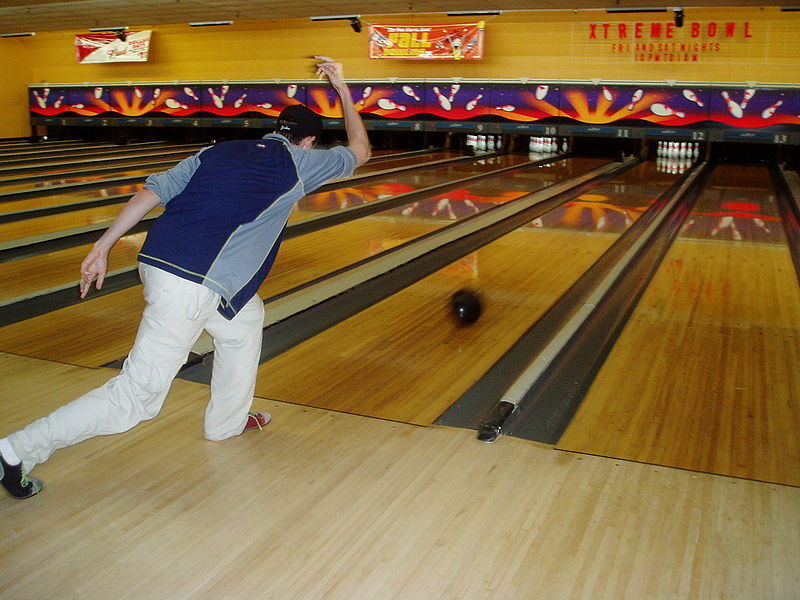
Bowling Alone. Attribution: Xiaphias

Membership in environmental organizations reached its peak in 1995, according to Bowling Alone after decades of enormous growth since the 1960s.  This peak was consistent with public opinion regarding environmentalism.  In 1990 three-quarters of Americans considered themselves “environmentalists.”  By the end of the decade, that percentage had dropped to only 50%. 

The growth in membership was achieved by the use of a new marketing tool known as direct mail.  Think about it.  How many invitations do you receive in the mail from non-profit organizations, asking you to contribute to a wide-range of worthy causes?   Typically these organizations spend between 20-30% of their budgets on such fund raising and the rate of return on these solicitations is only 1-3% of the cost depending upon the quality of the mailing list.  Using this technique, Greenpeace tripled its membership between 1985 and 1990 to 2.35 million.

What does “membership” mean?

After tripling its membership, Greenpeace lost 85% of its members in the next 8 years.  The drop-out rate after the first year is typically 30% in these organizations.  

In fact, most contributors to these organizations don’t even consider themselves “members” in the usual sense of that word.  The commitment to the organization doesn’t extend far beyond writing a check.  Only 8% of contributors to the Environmental Defense Fund, for example, described themselves as “active” in the organization. 

These organizations are therefore distinctly different from their historical antecedents.  Participants in the civil rights movement frequently put their lives on the line.  The social lives of Rotary Club members revolved around the Rotary lodge. 

Since few people are active participants in environmental organizations, they have become “bureaucratized,” meaning they are run by and for paid professionals.  Most members have little idea what policies the professional staff has adopted on their behalf. 

The Sierra Club

In 1989, a survey of Sierra Club members determined that only 13% of its members had attended even one meeting of the Sierra ClubThe Bay Area Chapter of the Sierra Club claims to have 10,000 members, but chapter leadership of a group (the chapter is broken into many geographical groups, such as the San Francisco Group)was elected by as few as 59 votes.  The top vote-getter in the Club’s most recent election received 327 votes in a Chapter-wide race, but only one chapter group (Northern Alameda County) had more candidates than there were available seats.  In other words, there was no competition for most of the leadership seats. 

Yet, the incumbents in these leadership positions are free to determine the local policies of the Sierra Club.  Here are a few recent examples of positions taken by the Bay Area Chapter of the Sierra Club:

The opinion of the membership is not asked when these policy positions are taken by the leadership.  However, if members read the chapter’s quarterly newsletter (The Yodeler) they have the opportunity to learn about them after the fact.

The influence of the Sierra Club

We believe that the influence of the Sierra Club exceeds the size of its membership.  The Sierra Club endorses candidates for political office.  These endorsements are highly sought after because politicians believe that the endorsement confers the votes of its membership.  This belief was recently tested in the race for mayor of San Francisco. 

State Senator Leland Yee sought and received the endorsement of the Sierra Club in his bid for mayor of San Francisco.  In the past, he had been critical of the Natural Areas Program.  His stated reason for that criticism was that the veneration of native plants was offensive to his roots as an immigrant.  In particular, the Chinese community suffered horrendous discrimination in California in the 19th Century.  The rhetoric of the native plant movement is reminiscent of the xenophobia from which the Chinese community has suffered historically. 

It seems unlikely that Senator Yee’s emotional reaction to nativism changed when he sought the endorsement of the Sierra Club, but he had to disavow that opinion in order to receive the Club’s endorsement.  He did so because he believed that the votes of Sierra Club members would help him to be elected mayor of San Francisco.  His bet did not pay off.  He did not win.  In fact, he came in fourth. 

We hope that political candidates in the future will heed this warning.  The Sierra Club may have many “members” but that membership does not necessarily confer votes.  The vast majority of “members” have no commitment to the policy positions taken by the Club.

An appeal to Sierra Club members

There were over 4,000 public comments on the Environmental Impact Study for the Dog Management Plan of the Golden Gate National Recreation Area (GGNRA).  The Dog Management Plan proposes to eliminate about 80% of existing off-leash areas, which are now only 1% of the 74,000 acres of GGNRA property.  The Sierra Club supports that plan.  There were thousands of comments from people with dogs who are presently enjoying the small areas now available to them for off-leash recreation.  Sixty-four of those people said they are Sierra Club members.  That’s enough members to elect someone to a leadership position in the Club.

If you are a member of the Sierra Club, here’s what you can do to influence the Club’s policies:

  • Inform yourself of the policies of the Sierra Club. 
  • If you don’t agree with those policies, we urge you to vote in the election of officers to the leadership positions in the Sierra Club.
  •  If you don’t know the policies of the candidates, ask them. 
  •  If there are no candidates that represent your viewpoint, find candidates who do.
  • If you can’t find a candidate you can support, it’s time to vote with your feet.
  • If you leave the Club tell them why. 

Quit Bowling Alone!

Attribution: GNU Free Documentation

*Putnam, Robert, Bowling Alone:  The Collapse and Revival of American Community, Simon & Schuster, New York, 2000.  All quotes in this post are from Bowling Alone unless otherwise noted.

Pangaea: The first but not the last globalization of ecology

The continents have been sliding about on the Earth since it was “created”(1) approximately 4.5 billion years ago.  Although geologists tell us that the continents came together and broke apart several times prior to the formation of the supercontinent geologists call Pangaea, this is the geologic period of most interest to us because life forms were sufficiently complex by that period that we can recognize their modern counterparts.

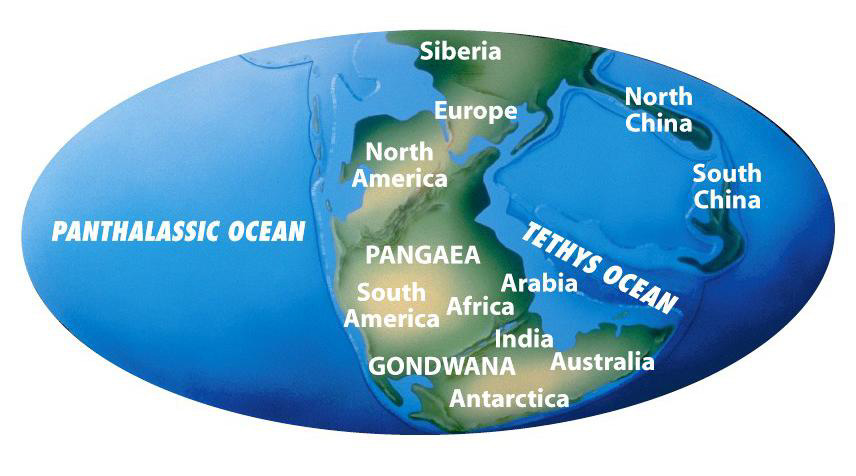
The supercontinent Pangaea

Pangaea is said to have been assembled about 237 million years ago, during the Early Triassic Period, shortly after the great Permian extinction, the period of the most extensive extinctions of plant and animal species in the history of the Earth.   Pangaea began to break apart about 50 million years later, but the African and South American continents remained fused–into a continent dubbed Gondwana–until about 100 million years ago. (1)

During that period of nearly 160 million years, many new life forms emerged and others died out.  Cone-bearing plants replaced some spore-bearing plants before Pangaea formed and dominated the Earth during much of Pangaea’s existence.  The first true mammals, flowering plants, birds, lizards, and salamanders appeared before the break up of Pangaea was complete.

What are the implications of the development of new species of life on Earth at a time when there was a single, unified continent?  That is the question we are considering today.  Obviously, the transport of plant and animal species into new territories is facilitated by their proximity.  Seeds are more easily transported by wind and animals if they need not cross barriers such as oceans, as they must today.   As a result there was greater homogeneity of species during the geologic periods of Pangaea.  And species diversified rapidly when Pangaea broke up into the 7 continents of today. (2)  These diversified species have common ancestors. 

Even after Pangaea began to break up into separate continents, there were land bridges between some of the continents during periods of glaciations when water was locked into ice, draining the oceans.  Animals could travel over these land bridges from one continent to another, often bringing plant species with them, usually unwittingly.  That’s how the first humans in North America and ultimately South America traveled from Asia about 13,000 years ago at the time of the last ice age.

The common ancestry of many plants and animals is one of many reasons why the concept of “native” is ambiguous and is often debated.  We will consider a few examples in which the designation of a particular plant as native or non-native seems debatable.

Is the Dawn Redwood native to California?

Dawn redwood (Metasequoia glyptostroboides) is closely related to our redwood trees, Coast Redwood and Giant Sequoia.  Dawn redwood is unique in being a conifer that is also deciduous (loses its foliage in winter), unlike our redwood trees which are evergreen.  Dawn redwoods were until recently considered native to remote regions of China where they are considered “critically endangered.”

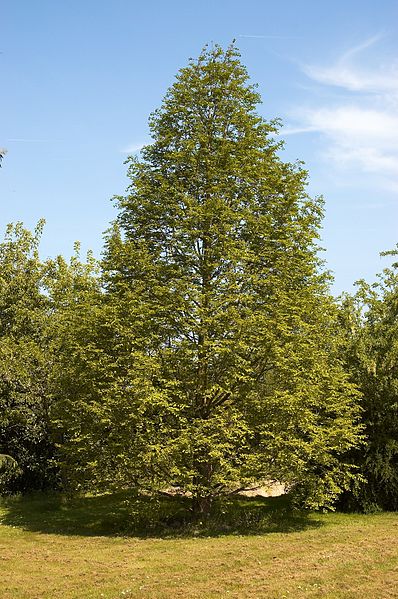
Dawn redwood in spring. Wikimedia Commons

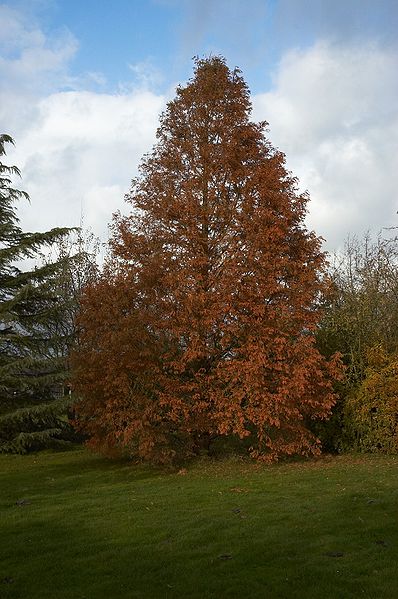
However, scientists at the Museum of Paleontology at UC Berkeley tell us that there is fossil evidence that dawn redwoods grew in California about 40 million years ago.  Dawn redwoods now grow successfully in the Bay Area.  There is a famous specimen in front of McLaren Lodge in Golden Gate Park, headquarters of San Francisco’s Recreation and Park Department.  Every autumn, when the tree turns red, park staff receives calls from the public expressing their concern that the beautiful tree is dying.

Dawn redwoods died out in California during the last ice age because the climate was cooler than dawn redwoods could tolerate.  So, now that the climate has warmed again, and dawn redwoods are back, why not welcome them as a “return of the natives?”  That’s the kind of flexibility that makes sense to us, particularly in a time of rapidly changing climate.

Dawn redwood in autumn. Wikimedia Commons

Unfortunately, we don’t find such flexibility in the native plant ideology.  Dawn redwoods are rare both in California and in China from which it was reintroduced, and it is therefore not one of the trees that native plant advocates demand be eradicated.  Monterey pine and Monterey cypress are not so fortunate.  These are also trees for which fossil evidence suggests that they lived in San Francisco in the distant past and their native range is less than 150 miles down the coast in Monterey.  Both tree species are also considered threatened in their native range.  Yet, native plant advocates demand their eradication in San Francisco.

This is an example of the rigidity of the native plant ideology that has earned them the reputation of fanatics.

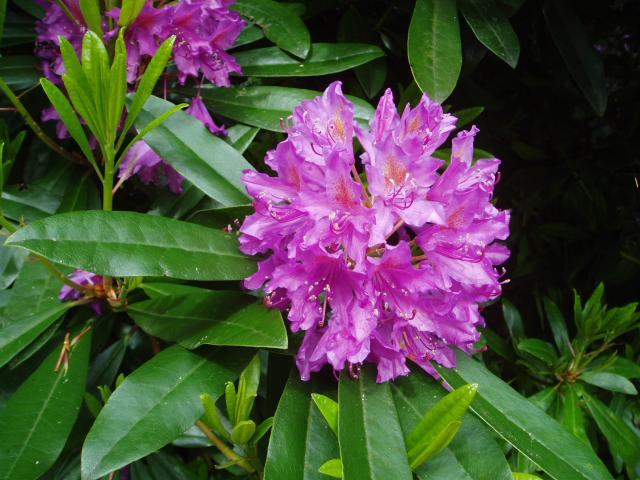
Does Rhododendron ponticum “belong” in Britain?

We told our readers in a recent post that Rhododendron ponticum is one of only about a dozen plants in Britain that are considered “invasive.”  It is a stunningly beautiful plant which is being aggressively eradicated in Britain.  Richard Mabey in Weeds:  In Defense of Nature’s Most Unloved Plants offers this explanation for why this particular plant is “invasive” in Britain:

“The next most serious weed is probably rhododendron which, unusually, has the ability to invade existing ancient woodland, especially in the west of Britain.  This may be because, if one employs a very long time scale, it is not strictly an alien.  The species that forms impenetrable thickets in western Britain is Rhododendron ponticum, whose pollen remains have been found in deposits in Ireland dating back to the last interglacial.  The species was plainly accustomed to growing in Atlantic woodland and may have retained a genetic “memory” of how to cope with this habitat and its competing species.  But it didn’t grow spontaneously in Britain for the next 30,000 years, and all the current feral colonies are regarded as originating from garden escapes.”(3)

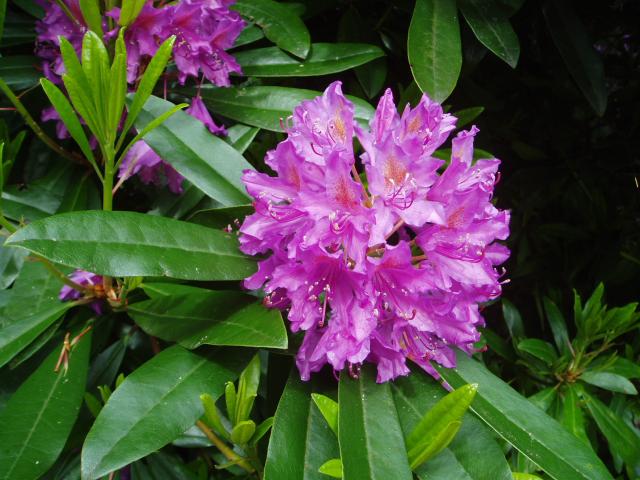
Rhododendron ponticum. Wikimedia Commons

Once again, we wonder if “welcome home” isn’t a more appropriate response to this beautiful plant.  We find the definition of “native” as arbitrary as the definition of “invasive.”  Both seem to be terms used by people who abhor change.  And in a rapidly changing world, does such resistance to change make any sense?  We don’t think so. 


(1) The use of the word “created” implies no particular origin of the earth, merely its beginning.  https://www.usgs.gov/faqs/what-was-pangea-0?qt-news_science_products=0#qt-news_science_products

(2) Crosby,Alfred, Ecological Imperialism, 2nd Edition, Cambridge, University Press, 2004

(3) Mabey, Richard, Weeds:  In Defense of Nature’s Most Unloved Plants, Harper-Collins, 2010

Eradicating non-native plants is taking the food out of the mouths of birds

Plants have many different strategies to ensure their reproductive success.  Sometimes they are passive participants in their propagation.  Charles Darwin studied the dispersal of the seeds of plants and reported a particularly stunning example:  “He raised more than eighty plants from the mud-ball gathered round a wounded French partridge’s leg.”*  He also raised plants from seeds found in the stomachs of birds, which brings us to today’s topic:  the non-native plants which are eaten by birds are categorized as “invasive” plants and are therefore doomed to be eradicated.

We often puzzle over the list of nearly 200 non-native plants on the list compiled by the California Invasive Plant Council (Update:  Now nearly 300 in 2020).  We know from horticultural experience and scientific studies that at least two of the trees on this list are not invasive.  Aerial photographs of open space in the Bay Area taken over a period of 60 to 80 years, proves that neither the eucalyptus nor the Monterey pine forests are spreading. 

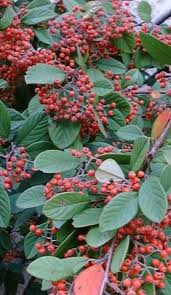
Cotoneaster lacteus. Jackson Nursery, UK

There are also several species of non-native shrubs which produce berries on the list of “invasive” plants that we know don’t spread in our gardens:  English holly trees, Cotoneaster, and Pyracantha.  So, why are they on the hit list?  The garden columnist in the San Francisco Chronicle recently told us why in answer to a question about planting a non-native holly tree for Christmas foliage in the garden:

Berries are a little harder to come by if we follow the advice of native plant specialists who are concerned about escape of holly, cotoneaster and pyracantha into nearby wildlands, particularly in coastal counties. Birds that eat the fruit and deposit seeds are the culprits.” 

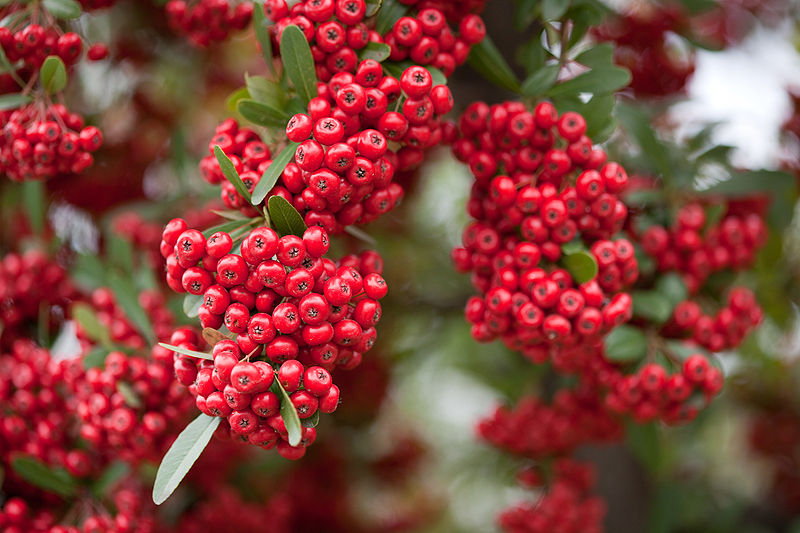
Pyracantha. Wikimedia Commons

In other words, native plant advocates don’t want gardeners to plant non-native plants that produce berries that birds eat because they don’t want the plants to spread.  Obviously, their dedication to native plants trumps whatever concern or interest they might have in the welfare of birds.  Native plant advocates frequently claim that their “restorations” will benefit wildlife.  Clearly the eradication of berry-producing shrubs does not qualify for such a claim.

The loss of food and habitat for the wildlife that lives in our public lands is only one of many issues in the debate about native plant “restorations.”  But for bird lovers, this is a high priority.  In this regard, we were struck by one of the public comments that was recently submitted on the Draft Environmental Impact Report for the Natural Areas Program.  This self-identified “birder” said this about the radical “restorations” in San Francisco:

“Restoration areas such as Land’s End, El Polin Spring, Crissy Field are seldom spoken about anymore by birders or others looking for populations of wildlife.  Since the vast majority of the city’s resident bird species feed, roost and breed in trees, they leave, starve or are predated when their habitat is destroyed.”

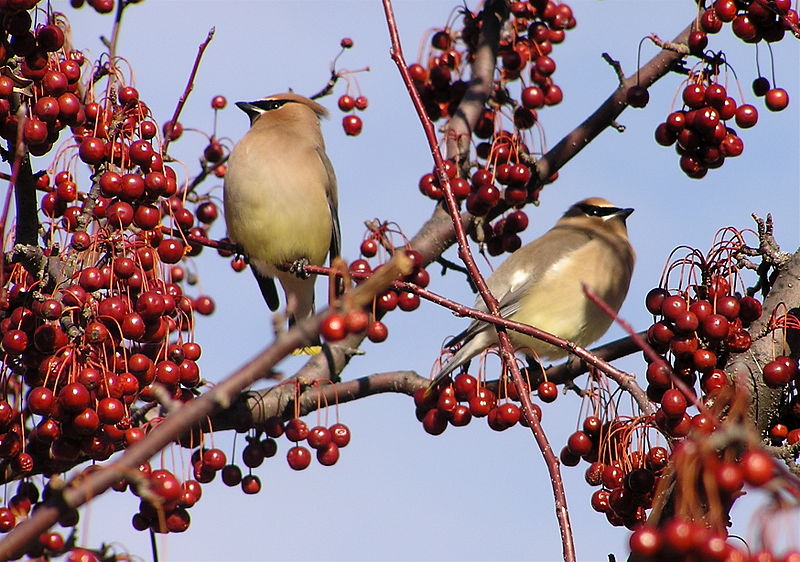
Cedar Waxwings in crab apple tree. Wikimedia Commons

As the Cedar Waxwings pass through the Bay Area on their annual migration, we see them eating the berries in our holly tree.  They remind us that the eradication of non-native trees benefits neither animals nor birds, nor insects.  Who benefits from these destructive projects besides the people making their living at it?  It’s a mystery.


* Mabey, Richard, Weeds:  In Defense of Nature’s Most Unloved Plants, HarperCollins, 2010, page 29

Some “alien invasions” are a bust!

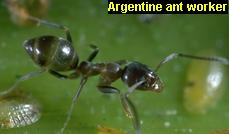
The Argentine ant is one of a gazillion non-native species that have been labeled “invasive species.”  Like most non-native species, they are considered aggressive competitors of native ants.  The usual tools are employed to eradicate them, e.g., pesticides. 

Argentine ant. UC Davis

But wait!  Now scientists are suddenly noticing that the Argentine ant is disappearing from some of their colonial haunts.  Scientists in New Zealand have recently reported the disappearance of the Argentine ant from 40% of sites they populated in the past and their populations have shrunk significantly where they are still found.  Native ants have “reinvaded” the areas vacated by the Argentine ant.  The scientists reporting this finding “concluded the species naturally collapses after 10 to 20 years.”

The scientists in New Zealand don’t claim to know why the populations of Argentine ant have disappeared.  They speculate that a virus is to blame.  They don’t claim “pest control” deserves credit for the disappearance which is estimated to have cost $53 million (NZ$68) per year since the Argentine ant was originally found there in 1990. That’s right, New Zealand spent approximately $53 million per year trying to eradicate the Argentine ant, which apparently is disappearing on its own.

This is apparently not an isolated phenomenon.  An entomologist at UC Davis reports that the Argentine ant has been declining in California as well.  How much pesticide was poured on Argentine ants before they showed the good grace to just disappear?

The Africanized Bee:  Another scary story that didn’t materialize

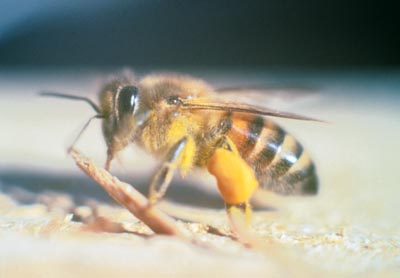
Another example of an “invasion” that seems to have resolved itself is the Africanized bee.  Do you remember about 15 years ago when the media created a panic about the Africanized bee?  We were told that it was spreading rapidly from Latin America, headed our way and that it was so dangerous that it was capable of swarming people and animals and stinging them to death! 

Africanized honeybee USDA

What happened to that particular “alien invasion” story?  Professor Gordon Frankie (UC Berkeley), our local expert about bees, was asked that question in a lecture he was giving to Cal Alumni in October 2011.  He said that the Africanized bee didn’t turn out to be as aggressive as it was originally thought to be and that it didn’t spread as far or as fast as predicted.

Does “Invasion Biology” make more problems than it solves?

Some months ago we created a Google alert for “invasive species.”  Now we are treated to a daily barrage of scary “alien invasion” stories from all over the world.  We wonder how many of these “invasions” will eventually prove to be benign.  We wonder how much money will be spent, how many animals will be killed, how much pesticide will be poured on our public lands, before we figure out that we need not be afraid of everything that is new in the environment.  We wonder how many people are making their living on these eradication efforts and what role they play in frightening the public into funding their projects and tolerating the destruction they inflict on the environment.

Weeds: In Defense of Nature’s Most Unloved Plants

We would like to tell our readers about a charming little book about weeds, by the same name.  Weeds:  In Defense of Nature’s Most Unloved Plants, by Richard Mabey, contains an eclectic collection of information about the weeds of Britain, their origins, the history of their use–including as medicine, the role they have played in literature, and much more.

First, we venture a definition of weeds, though any definition is likely to be controversial.  The concept of “weed” originated with agriculture, some 5,000 years ago in the Old World*, when man began to distinguish between those plants that are edible or otherwise useful and those that are not.  And so, plants that are not perceived as useful or turn up in the wrong place, were defined by man as “weeds.” 

It’s a shifting concept, because a plant that was useful historically, either because it was believed to be a cure for some malady, or was otherwise useful, might be replaced by some superior remedy.   Such a changing concept of the value of particular plants is a central theme to the book as well as to the Million Trees blog.  We often invite our readers to consider that much of the current interest in native plants is a horticultural fad that is likely to change in the future as it has in the past.

We also often question the designation of hundreds of non-native plant species as “invasive” in California, a designation that makes them a target for eradication.   Mabey’s book about weeds helps us to put this designation into perspective.  Britain obviously has a much longer history of trade with its neighbors on continental Europe, which increased the potential for the introduction of non-native species.  Yet, despite Britain’s longer history of ecological globalization, Mabey tells us that only about one dozen species of plants are presently considered invasive in Britain compared to hundreds in California. 

Rhododendron ponticum, one of only a dozen plants considered invasive in Britain. Wikimedia Commons

Mabey defends several of the non-native plants considered invasive in Britain.  He believes that some are merely responding to the disturbance of native vegetation by the activities of man.  Nature hates a vacuum.  When native vegetation is no longer adapted to the changed soil, water, and air quality conditions created by man, any plant that will grow in these new conditions is preferable to bare ground.  Plants—including weeds—help the soil absorb rainwater into the ground which would otherwise run off the land, silting streams and causing erosion.

There is much food for thought in this little book.  It invites us to compare our list of nearly 200 plants in California that have been officially designated as “invasive” to a short list of only a dozen plants in Britain.  What accounts for this big difference?  Different conditions or different attitudes?  We don’t know the answer to this question, but we think it is a question worthy of consideration.


* Crosby, Alfred, Ecological Imperialism, Cambridge University Press, 2009

A rare sighting of a Summer Tanager in San Francisco

We are reprinting a post from the Save Sutro Forest blog about a rare sighting of a Summer Tanager in San Francisco.  With permission and with minimal edits necessary to change the source of the pictures of  tanagers, we share this story with our readers.  Please visit the story on the Save Sutro Forest website to see photos of the actual female bird that was seen in San Francisco.

***************************************

One of the more interesting groups to watch, if you like birds, is the Yahoo group SF Birds. (Anyone can read it, but you must join to post in it. [ETA: It’s apparently been changed to a members-only group; only members can read it.]) It has over 1,000 members at this writing, but a smaller dedicated group of local birders use it to communicate the whereabouts of rare-in-San Francisco species. Often, someone follows up with links to beautiful photographs. That’s where we found the story of the Summer Tanager.

Male Summer Tanager. Wikipedia Commons

THE SUMMER TANAGER VISITS SAN FRANCISCO

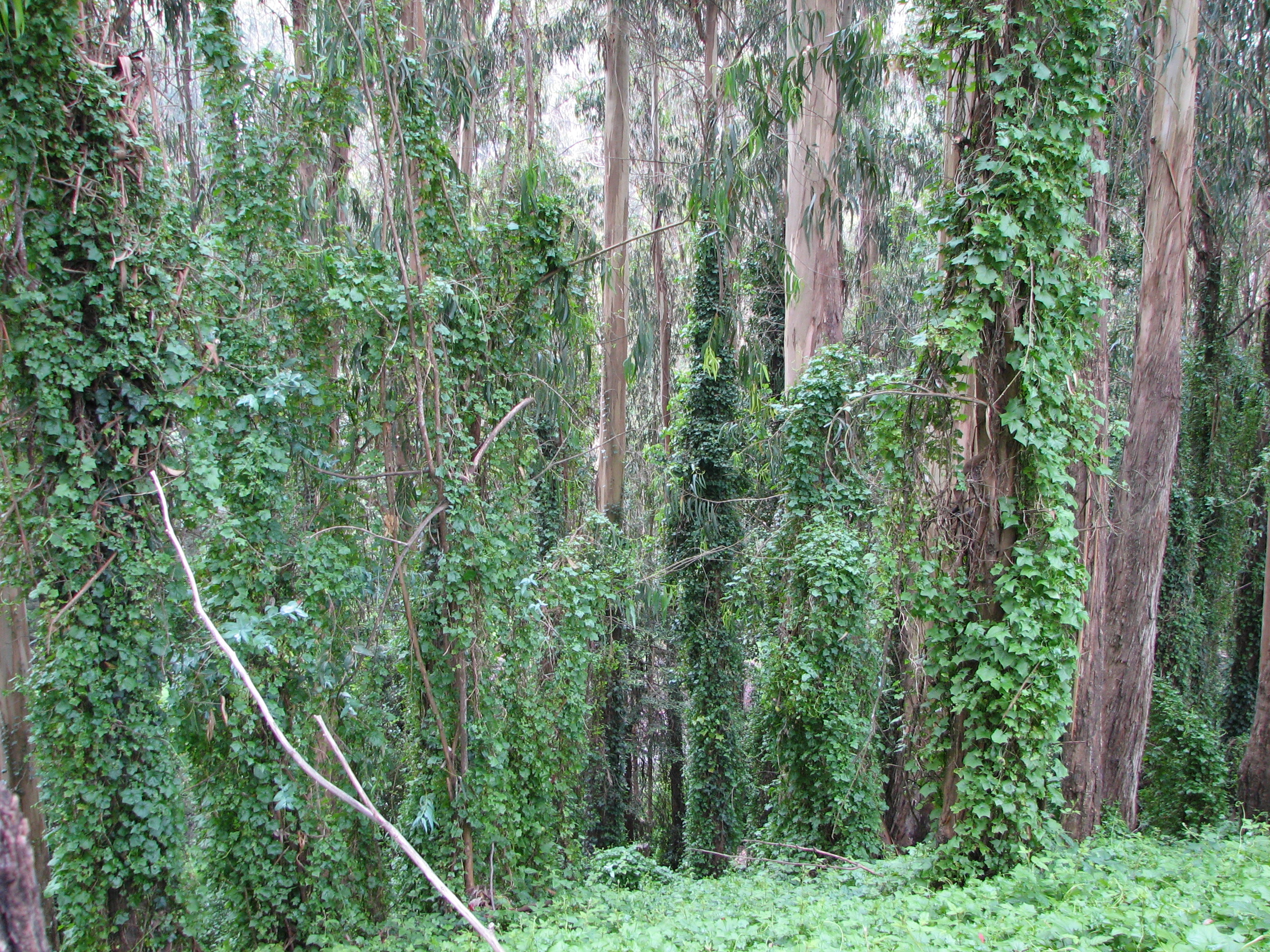
This is a small songbird that’s a rare winter visitor to San Francisco. The males are a bright red color, the females and immature males are yellow. They feed on insects (bees, wasps and so on) and berries. Recently, birder Alan Hopkins reported seeing a female Summer Tanager in Golden Gate Park: “… you will find English Ivy growing up some trees. The tanager was catching bees that are feeding on the ivy.

Of course, other birders followed up. Steven Tucker wrote: “…the Summer Tanager was where Alan described it. There are 2 huge columns of ivy adjacent to one another; the tanager was often in the right-hand clump or in the Eucalyptus trees around it.

Then birder Mark Rauzon posted some wonderful pictures of this little bird in his Zenfolio portfolio. “I found it by it’s ‘churrip’ call at 1:30pm, Monday in the ivy covered Eucalyptus … It was bee-eating and occasionally dropping down to eat blackberries, where I had this face to face encounter.” (The pictures here are reproduced with his permission. They’re copyright. Anyone who wants to use them should check with him at mjrauz@aol.com )

NON-NATIVE PLANTS AS HABITAT

It’ll come as no surprise to birders that non-native plants provide habitat. After all, many of the posts in the SF Bird group describe birds in flowering eucalyptus trees, either for the nectar or the insects attracted to the nectar. (We hope that any birders who still believe eucalyptus trees suffocate birds will check this article, Another Eucalyptus Myth: Bird Death) They mention birds in the blackberry bushes, which provide not only food by way of berries and insects, but excellent cover. Like the notes above, they mention birds hiding in ivy.

In our article Interwoven and Integrated: Non-native and Native Species in Life’s Web, we described how native species and non-native species are part of the same functional habitat. This is another example.

  • The eucalyptus (non-native) provides support for the ivy (non-native)
  • which attracts insects (both native and non-native),
  • which become food for the Summer Tanager and other birds (mostly native).

The blackberry bushes work in much the same way; they attract insects, they provide berries, and they provide hiding places. So does eucalyptus – it flowers through the year, and particularly in winter, provides sustenance to birds and insects. It also provides nesting spots and cover.

Pointing this up was the most recent post [ETA:  No longer available to non-members] on the Summer Tanager, from Richard Bradus: “…an immature Red-tailed Hawk alighted, drawing an even dozen Ravens in pursuit. As they rose and flew off the bushes came alive, and out popped the female Summer Tanager. It made a few sorties from the ivy then, after devouring a particularly fat insect (bee?), it retreated to cover.

*******************************************************

Million Trees Webmaster:  People who like birds pay attention to where they are and know they make good use of non-native plants and trees in San Francisco.  We had two old English holly trees in our yard in San Francisco which were probably planted around the same time our house was built in 1908.  They were visited every year by a flock of Cedar Waxwings, one of the most beautiful birds I have seen in the United States.  Their arrival each year was announced by the high-pitched, thin whistle of their call.  Then we could watch them with binoculars from our second story as they feasted on the berries of the holly trees.  It was an annual treat both for us and for the Waxwings as they passed through San Francisco.  Would they find enough to eat if there were no non-native trees and plants?  I don’t know, but I DO wonder.

Cedar Waxwing. Wikimedia Commons

Quibbling with the terminology of invasion biology

We believe the key word in Invasion Biology—invasion—is overused and that the adjective—invasive—is used indiscriminately to describe non-native plants, whether they are invasive or not.  We have already told our readers about photographic evidence of open space in the Bay Area taken over decades which proves the eucalypts and Monterey pines are not expanding their range.  Yet, these are two of the nearly 200 species of non-native plants on the California Invasive Plant Council’s list of “invasive species.”

Now we will use another non-native species as an example of how invasiveness is exaggerated by invasion biology.  Apparently many earthworms in the United States are non-native.  That’s because much of the population of native earthworms was wiped out by the glaciers that receded about 10,000 years ago. 

When Europeans began to colonize the country 500 years ago, earthworms were one of many species of plants and animals that they brought with them.  Like many non-native species, earthworms were transported unwittingly, first in the ballast of ships and then in the soil that accompanied plants that were purposefully transported.  In modern times, most earthworms are said to be introduced into new areas primarily by fishermen who use them as bait and then dispose of their surplus bait by throwing them on the ground.

Some 500 years later, invasion biologists are concerned about the impact that non-native earthworms are having on the ecology that evolved without earthworms.  Since glaciers did not extend as far south and west as California and the Bay Area, we don’t know if there are native earthworms here.  So, as you read about the impact that earthworms are said to have on the northern hardwood forests of the Great Lakes Region (Minnesota, Wisconsin, Michigan) and the northeast, you can’t assume that these observations apply locally.

The last period of glaciation in the United States

Since the hardwood forests of the northern and eastern states of the country evolved without earthworms for about 10,000 years, the duff (organic matter) on the forest floor is essential to the sustainability and health of the understory as well as the regeneration of the forest.  Earthworms digest the duff, incorporating it into the soil, and thereby deprive the native plants and trees of the nutrients that they depend upon for germination and survival. 

Although we accept that non-native earthworms may be having a negative impact on the native forests in these areas, we don’t think it is appropriate to call the earthworms invasive because they aren’t moving.  They exist only where man has introduced them.  Genetic studies have determined that isolated populations of non-native earthworms are unrelated to one another.  Their location in urban areas and around lakes and streams where fishermen visit implies that the earthworms are dispersed by man.  And they move very slowly, one-half to 1 kilometer (5/8th of a mile) every 100 years!*

Yet, those who study the earthworms and the managers of public lands who are trying to prevent the further introductions of earthworms consistently describe the worms as “invasive.”  Granted, it is a quibble, but we think this is a misleading description because it implies that the earthworm is to blame for whatever damage is being done to the native ecology when the blame clearly belongs to man.  The earthworms aren’t going anywhere.  Wherever they are found, they were put there by man.  The earthworm is another scapegoat for the harmful activities of man. 

On the bright side, invasion biologists and land managers aren’t trying to eradicate the non-native earthworm.  They are merely trying to educate fishermen to dispose of their surplus worms in the trash, rather than leaving them on the ground.  They concede that it’s impossible to get rid of earthworms where they now exist.  So, at least the soil isn’t being poisoned with pesticides in a futile attempt to return the land to its wormless history.

Once again, we urge invasion biologists to be more discriminating with their designation of “invasive species.”  We believe this term should only be applied to species that are expanding their ranges rapidly and that are actually causing damage in the environment.  Given the impact of climate change, native species are as likely to become invasive as non-native species.  If the term is used more accurately and less often, fewer efforts to eradicate hundreds of plant and animal species would be required.  Therefore those eradication efforts that are truly necessary would be less destructive and more successful.  The field of invasion biology would be more credible and enjoy more public support.

————————————————

* Hale, Cindy, “Evidence for human-mediated dispersal of exotic earthworms:  support for exploring strategies to limit further spread,” Molecular Ecology, (2008) 17, 1165-1169

Nativism is shooting us in the foot

A few months ago, we told you about one of the many projects to eradicate a plant species that is considered non-native.  In this case, smooth cordgrass (Spartina alterniflora) is native to the East and Gulf coasts of the US, but is considered non-native on the West Coast, despite the fact that it has been here for over one hundred years.  About $12 million was spent in the past 10 years on this effort, and the projection is that another $16 million will be spent in the next 10 years.

California Clapper Rail. British Wikipedia

When we told you about this project, we speculated that it was having a negative effect on an endangered species, the Clapper Rail.  The non-native Spartina provides cover that is superior to the native variety of Spartina.  It grows more densely and it doesn’t die back during the winter months, as the native variety does.  We also pointed out that the Clapper Rail is abundant on the East and Gulf coasts and is only considered endangered on the West Coast. 

Since we told you about this eradication project, we’ve learned a few things about the Clapper Rail that we hope will interest you, as it does us. 

  • This seems to be another case in which native plant advocates are looking for a scapegoat, when they should be looking at themselves.  Native plant advocates would like you to believe that the Clapper Rail is endangered on the West Coast because of the introduction of non-native red fox.  The red fox is yet another creature that nativists wish to eradicate in the Bay Area.  Apparently it has not occurred to them that the red fox is native to the East Coast, where the Clapper Rail is thriving.  Hmmm, that seems like a bit of contradiction, No?
  • We have learned of the displacement of Clapper Rails from marshes in which the non-native Spartina in being eradicated.
  • The Point Reyes Bird Observatory, a nationally recognized institution that conducts research on birds, has concluded that the Spartina eradication project is having a negative effect on the Clapper Rail.

Evidence that eradication of Spartina alterniflora is harmful to Clapper Rails

In July, a Clapper Rail was seen and photographed at Heron’s Head in southeastern San Francisco.  There was quite a bit of excitement about this sighting because a Clapper Rail had not been seen in San Francisco for decades.  That excitement dissipated when we learned more about where this bird came from, which provided a probable reason for the move. 

The Clapper Rail was wearing a radio collar that had been put on him and 109 other rails by the USGS to track their movements.  He had moved from Colma Creek, 11 km south of Heron’s Head, which is one of nearly 200 Spartina “control sites” in the San Francisco Estuary.  The bird sighted at Heron’s Head is one of three Clapper Rails that have left Colma Creek since 2007, when the radio collars were placed.  The Spartina control project has been going on for nearly 10 years, so we have no way of knowing how many Clapper Rails were displaced prior to 2007.

In October 2011, the Point Reyes Bird Observatory issued the first-ever “State of the Birds Report for San Francisco Bay:”  “Based on decades of monitoring, 29 partners detail the actions needed to keep birds and their habitats thriving as sea levels rise and extreme storm events increase due to global climate change.”  This report acknowledges the role that the Spartina eradication project plays in the continuing decline of the population of Clapper Rails in the Bay Area:

The Clapper Rail’s rebound during the 1990’s was possibly due to fox control but also coincided with the rapid invasion of a tall non-native plant (invasive Spartina).  This invader benefited rails because it provided nesting habitat and protection from predators and high tides.  Beginning in the mid-2000s, the rail population declined sharply, due in part to the removal of invasive Spartina, which threatens tidal flat and marsh ecosystems as a whole.  This recent decline may be leveling off, but the future of Clapper Rails in San Francisco Bay remains tenuous.”

This is another example of the harmful obsession with non-native plants, which seems to trump other considerations, such as the welfare of the animals that benefit from the plants.  As is often the case with such eradication projects, Spartina is being eradicated with an herbicide, imazapyr.  This is a new herbicide about which little is known.  The analysis which was done to justify its use in the Spartina eradication project admits that no studies have been done on its effect on shorebirds, including the endangered Clapper Rail.  The Material Safety Data Sheet mandated by the Environmental Protection Agency tells us that imazapyr is “not readily biodegradable.”  So, in the event that we eventually learn that this herbicide is harmful to shorebirds and/or to us, we can be assured that it will still be in the environment, in the nearly 200 sites in the San Francisco Estuary on which it is currently being sprayed.  Imazapyr is also being sprayed–sometimes from helicopters–in hundreds of places along the West Coast, including in other states.  (A new post on Save Sutro reports more alarming information about imazapyr.)

The cost of nativism

This is an example of the harmful effects of attempting to eradicate non-native species.  It reminds us of a recent editorial in the New York Times about the new law in Alabama which is considered the most extreme anti-immigration law in the country.  The opponents of immigration are delighted with the new law.  The farmers of Alabama are warning us that they cannot replace the immigrants who are fleeing the state. Most of the work in the country’s agriculatural fields and orchards is being done by immigrants.  These are jobs that Americans are no longer willing to do.  This is just one of many unintended consequences of such xenophobic extremism.   We consider the Spartina eradication project another example of nativism run amok.

Our cosmopolitan viewpoint embraces ALL nature

Song Sparrow in non-native wild radish

Many passionate, well-informed comments were sent to San Francisco’s Planning Department about the Draft Environmental Impact Report (DEIR) for the Natural Resources Areas Management Plan (SNRAMP).  Today we’re celebrating the end of the comment period by telling you about one of our favorite comments.

This comment was written by a talented photographer of wildlife in San Francisco’s parks who prefers to remain nameless.  She has exhibited her photos in several venues around town, including San Francisco’s Main Library.  She wrote her comment primarily on behalf of the wildlife that lives in our parks and she illustrated it with beautiful photographs of the birds, insects, amphibians, reptiles, and mammals that she has photographed nesting, hiding, hunting, roosting, slithering in non-native plants and trees.

Garter snake in eucalyptus leaf litter

We will share the heart of her comment with you.  The soul of her comment is her photographs which were all taken in the parks of San Francisco.

“NAP is actually harming the environment by destroying trees, established habitat, and established ecosystems which include our existing wildlife. NAP wants to recreate our environment as one of native grasses which might have existed in the area in 1776 — in very delimited spaces this seems fine, but they should not be taking over our parks which have evolved on all levels since that time. The grasses were native to a sand-dune ecology, but that is no longer the case within the city, and the grasses provide no protective habitat to the animals which now occupy these spaces — animals which are not on NAP’s “specified” or “endangered” lists. There has been an alarmingly high rate of failure when “endangered” species have been introduced — this is because they are no longer suited to this environment which has evolved and changed since 1776. NAP is a political program, not a program based on science, and one which is hampering people’s enjoyment and use of their parks.”

Anise Swallowtail butterfly in non-native fennel

Although we have been engaged in this debate about destructive native plant “restorations” in the Bay Area for many years, we are still shocked by some of the arguments used to defend them.  Nature in the City is one of many organizations in San Francisco which considers itself an “environmental” organization.  In its latest newsletter, recruiting comments in support of the Environmental Impact Report, Nature in the City characterized critics of the Natural Areas Program and the DEIR as the “anti-nature forces.”  As we have said before, “environmentalism” has been stolen from us by the native plant movement, which we firmly believe is doing more harm than good to our environment. 

Frog hiding in pond plants

When was “nature” redefined exclusively as “native?”  We didn’t get that memo.  We are committed to preserving the habitat of all animals that live in San Francisco, whether the animals are native or non-native or the habitat that shelters and feeds them is native or non-native.  How does that make us “anti-nature?”

Honeybee in non-native wild mustard

Natural Areas Program violates San Francisco’s pesticide policy

As the deadline for written comments on the Draft Environmental Impact Report on the Natural Resource Areas Management Plan approaches (October 31, 2011), we are reprinting with permission a post from the Save Sutro website about the many violations of San Francisco’s pesticide policy by the Natural Areas Program. 

Anyone with the time and patience to read the 600+ page EIR knows that it does not provide us with any information about the volume of pesticides used by the Natural Areas Program.  Instead, it claims that the pesticides used by the Natural Areas Program will have no impact on the environment because they are following the rules; therefore, by definition there can be no negative impact on the environment.  This seems a non-sequitur to us.  But, even if we accepted this illogical premise, the fact is, they AREN’T following the rules.  Save Sutro tells us about the many violations of the city’s pesticide policy by the so-called Natural Areas Program.

Details about how to submit your public comment by October 31 are provided at the end of this post.

*************************

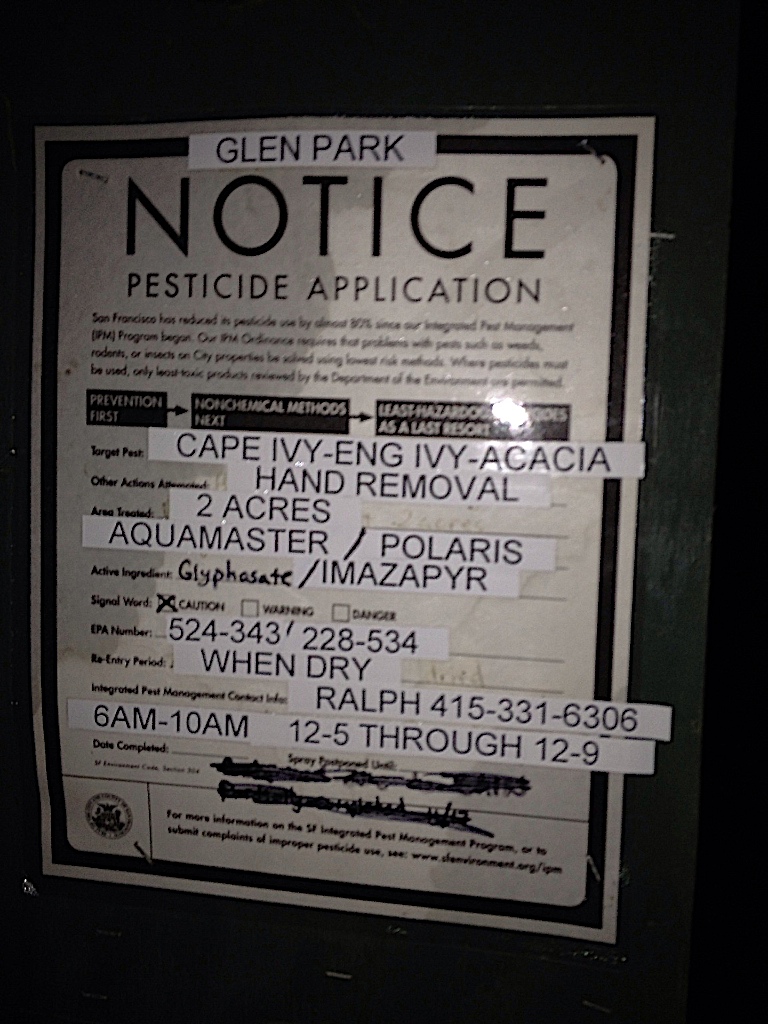
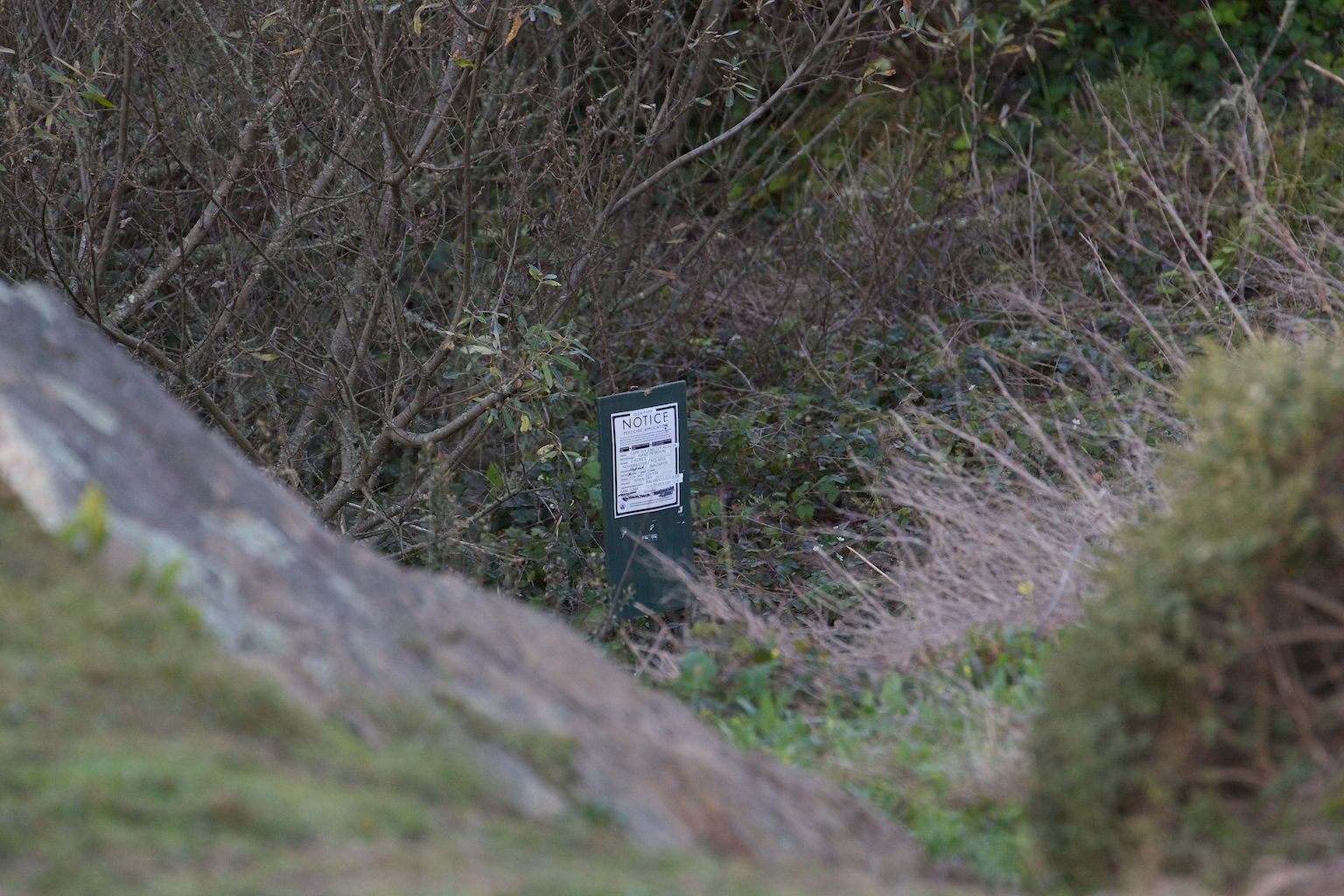
As we noted in our previous post, the San Francisco Natural Areas Program seems to be using increasing amounts of toxic pesticides. From time to time, we’ve posted information here about pesticide use in the Natural Areas Program (NAP) lands. Roundup, Garlon, Imazapyr in Glen Canyon, at Pine Lake, on Twin Peaks, Mt Davidson, in the Interior Greenbelt — usually with a photograph. (Search this site on any pesticide name to see other relevant posts.)

What our readers have pointed out to us is that many of these violate the rules of the San Francisco Department of the Environment (SF DoE). We really appreciate SF DoE regulating toxic pesticides. They’re our second line of defense, when the Environmental Protection Agency seems all too ready to approve first and question later (or not question later). But they can only be effective if their rules stick.

What do we mean, violations? Well, here are a few, all from 2009 and 2010. Were there others? We don’t know.

A BUNCH OF VIOLATIONS

Missing dates on notices. The signs for pesticide spraying are meant to warn people — both the NAP staff and the general public with their kids and pets — that toxic chemicals are in use in an area. It’s pretty well-designed; it requires the dates the application is planned, how it will be applied, and then when it’s been used and when it will be safe to go back in there. But as with every precaution from seat-belts to poison symbols, it only works if it’s used. From the time we started collecting notices (pictures, not the actual notices), we often found key data missing: the date and time of the actual application. That means it’s never clear when (or whether) the pesticides were used and whether it’s safe to re-enter.

Using pesticides before they’re approved. In 2009, when we published a photograph someone sent us of Imazapyr usage at Pine Lake in Stern Grove, other readers were surprised. How come? SF DoE hadn’t approved it for use, had it?

They hadn’t.

It’s been approved only in 2011, as a Tier II pesticide.

Using pesticides where they’re not approved. In November 2010, we saw a notice that said they were spraying Aquamaster (glyphosate, same active ingredient as Roundup) “near shoreline” of Lake Merced. The target plant was “ludwigia – aquatic weed.” Also known as water-primrose, this grows in the water and presumably that’s what they were after. Except… Lake Merced is red-legged frog habitat. Use there is restricted: “Note prohibition on use within buffer zone (generally 60 feet) around water bodies in red-legged frog habitat.” (Glyphosate is death on frogs.) This was a lot less than 60 feet.

Spraying when they shouldn’t be spraying. According to the SF DoE, here’s how Roundup should be used: “Spot application of areas inaccessible or too dangerous for hand methods, right of ways, utility access, or fire prevention…OK for renovations but
must put in place weed prevention measures. Note prohibition on use within
buffer zone (generally 60 feet) around water bodies in red-legged frog habitat.” But according to all the notices (and the records) they’ve been using a backpack sprayer.

Spraying Garlon without a respirator. The signs said Garlon. The SF DoE regs said that this Tier I pesticide was for “Use only for targeted treatments of high profile or highly invasive exotics via dabbing or injection. May use for targeted spraying only when dabbing or injection are not feasible, and only with use of a respirator. HIGH PRIORITY TO FIND ALTERNATIVE.” The person spraying wore a blue “space-suit” — but no respirator. (Don’t know who it was, whether a Parks employee or someone from contractor Shelterbelt. Whoever, please be careful. The regs are there for a reason.)

Poorly maintained data. Pesticide use is recorded, and again the records are pretty specific. The serial number of the use, and the date. The chemical used, its trade name and chemical name and its EPA number. Where it’s been applied, and what it’s targeting. Who applied it. Analyzing these records would give a pretty good idea of who’s using what, where and why. But… the records aren’t complete, or at least they don’t appear to be. We’ve found notices in the field with no corresponding database entry.

IMPLICATIONS FOR THE DEIR

We understand how these violations occur. We don’t attribute adverse motives to NAP; they’re not going through the books thinking, which rule shall we break today? Remembering all the restrictions, maintaining records and filling in signs is tedious, and it’s easy to forget in the press of work. Even NASA makes mistakes.

Still, the objective of the rules is to keep us all safer and reduce the use of toxins as far as possible. With good reason, we don’t think the NAP is able to comply.

As readers will be aware, the Draft Environmental Impact Report (DEIR) for the San Francisco Natural Areas Management Plan is now open for public comment. What the DEIR says is: “Pesticide and herbicide use in the Natural Areas would be in accordance with the SFRPD’s Integrated Pest Management (IPM) Program and San Francisco’s Integrated Pest Management Ordinance...”

Seriously? Can they even do it?

——————————————————————————

[Edited to add:

For readers who are interested in commenting on the DEIR:

“A public hearing on this Draft EIR and other matters has been scheduled by the City Planning Commission for October 6, 2011, in Room 400, City Hall, 1 Dr. Carlton B. Goodlett Place, beginning at 1:30 p.m. or later. (Call 558‐6422 the week of the hearing for a recorded message giving a more specific time.)”

Public comments will be accepted from August 31, 2011 to 5:00 p.m. on October 17 31, 2011. [Please note, the deadline has been extended.] Written comments should be addressed to Bill Wycko, Environmental Review Officer, San Francisco Planning Department, 1650 Mission Street, Suite 400, San Francisco, CA 94103. Comments received at the public hearing and in writing will be responded to in a Summary of Comments and Responses document.”

“If you have any questions about the environmental review of the proposed project, please call Jessica Range at 415‐575‐9018.”]