Exterminating Animals: Wasted lives and money

While we object to the needless destruction of non-native plants and trees, we are even more concerned about the destruction of non-native animals.  Using the same justification, namely that non-native animals out-compete native species of animals, native plant advocates and their allies are equally committed to the eradication of non-native animals.  The list of targeted animals is long: e.g., non-native frogs, turtles, fish, bees, foxes, opossums, squirrels, deer, pigs,etc.  When populations of native animals increase in urban areas, they are called “subsidized predators” and added to the death list: e.g., raccoons, skunks, etc.  A native animal can land on the death list if its range expands, such that it becomes a competitor for a preferred, rare native animal.

First we will indulge in a brief digression on behalf of the non-native European honeybee, one of the few species of bee in the United States that produces honey.  If that’s insufficient reason to defend its existence, let us consider that the European honeybee is responsible for pollinating about one-third of all agricultural crops and orchards in our country(1).  Even without eradication efforts, the honeybee is in trouble.  In the past several years, about one-third of all hives have failed each year from multiple factors summarized as “Colony Collapse Disorder.”  Despite the obvious value of this non-native creature, it is being eradicated by the Nature Conservancy on its “restorations” in the United States because it is non-native and it is considered a competitor to native bees, which are not capable of pollinating many agricultural crops or making honey(2).  This seems to us a classic case of nativism shooting us in the collective foot.

Now we will turn to two efforts to exterminate animals that were both appallingly destructive, but more importantly, ineffective and clearly a waste of both lives and taxpayers’ money.  The first example is historical, illustrating that man’s efforts to manipulate nature to serve his purposes are not new and undoubtedly can be traced as far back as the historical record can take us.

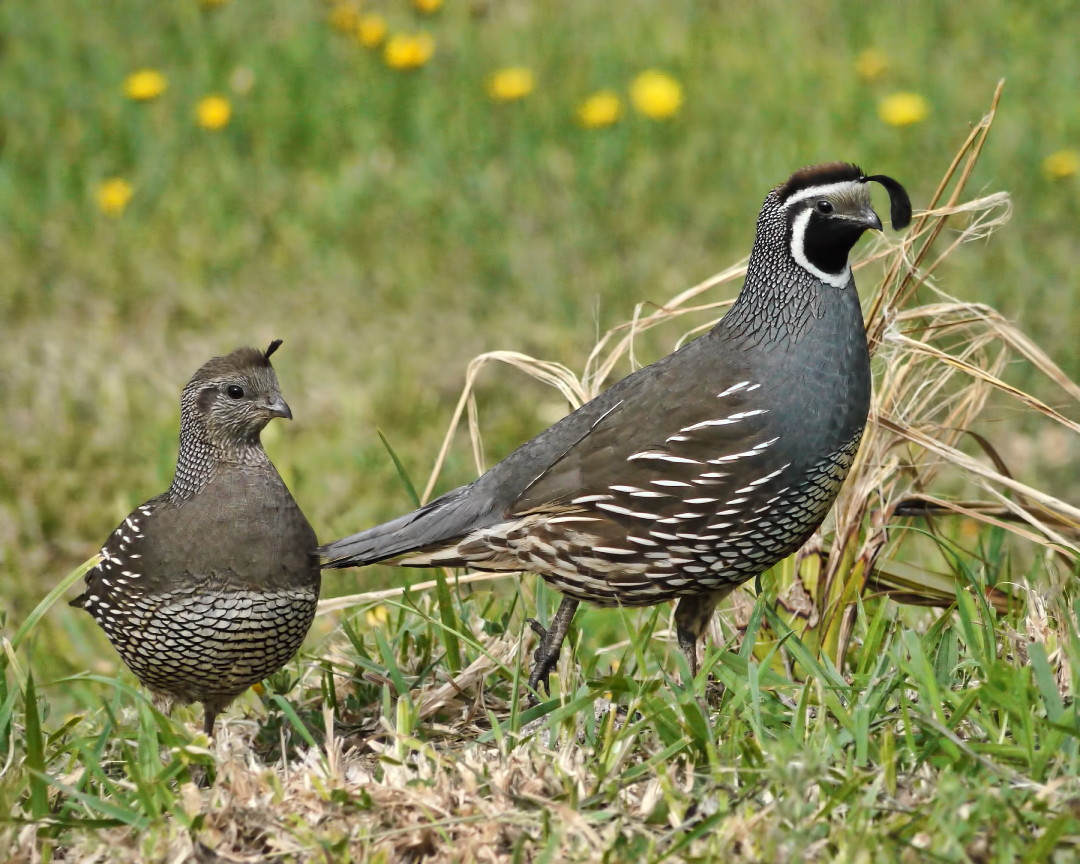
California Quail, Wikimedia Commons

In this case, we will look at the efforts of the California Division of Fish and Game to increase the population of quail(3).  Quail are native to California, but their population exploded with the arrival of Europeans whose agricultural and grazing practices increased the food supply of the quail.  The population of quail in California reached its peak during the period 1860 to 1895 and thereafter began to decline as non-native annual grasses began to dominate the non-native herbaceous and leguminous plants that preceded them.  Since man’s view of nature is rather narrow in time, limited by his brief lifetime compared to the more slowly moving forces of nature, the California Division of Fish and Game perceived the decline in the quail population as a problem requiring remediation.  One of their proactive efforts was to exterminate all animals believed to be predators of the quail.  This “predator control” effort was summarized for one six-month period as follows:

“…between January 1 and July 1, 1931, [deputies of the Division of Fish and Game] have destroyed…:  38 coyotes, 33 bobcats, 684 house cats, 35 foxes, 43 coons, 8 weasels, 2 opossums, 1 badger, 5 wild and unclaimed dogs…365 sharp-shinned and cooper hawks, 3972 blue jays, 293 magpies, 81 crows, 49 butcher birds, 2 great horned owls, and 47 snakes.”(4)

The Division of Fish and Game hired an army of 45 full-time men in 1948 to continue this war on the perceived enemies of quail.  This extermination effort was not abandoned until 1957, when the Division of Fish and Game concluded that the quail population was not benefitting from this animal holocaust and that reduced food sources and cover, resulting from changes in land uses and consequent vegetation types was the reason for the declining quail population.  In other words, hundreds of thousands of animals lost their lives over a period of over 25 years for no reason whatsoever.

So, did we learn anything from that experience?  Clearly not.  Today there are nearly as many programs to eradicate non-native animals as there are non-native species.  We choose the brown-headed cowbird as an example of modern eradication efforts because it is occurring in California (5).

Although the brown-headed cowbird is native, it is perhaps one of our most reviled birds because it is a nest parasite, which means that it lays its eggs in the nests of other birds.  Their egg is usually larger than the eggs of the “host” bird and it hatches earlier than its nest-mates.  The result of these advantages is that the off-spring of the nest owner usually does not survive, but the cowbird chick survives to repeat this trick.  Because the range of the cowbird has been expanding, it has been blamed for the declining population of songbirds.

But does the cowbird deserve to be blamed for the decline in the songbird population?  Professor Stephen Rothstein (Department of Ecology and Evolution, UC Santa Barbara) says, “NO.”  He tells us that the range of the cowbird is not larger than its historic range.  At the time of the megafauna (e.g., wooly mammoths), about 15,000 to 20,000 years ago, cowbirds probably occupied their current range.  When the megafauna disappeared, the range of the cowbird shrank.  As in the case of the quail, we look to man for the explanation for why its range has expanded again:  the introduction of large grazing animals by Europeans has provided the cowbird with a substitute for its prehistoric food source.

Professor Rothstein tells us of several efforts to exterminate cowbirds on behalf of declining populations of songbirds and concludes that although songbird populations may have recovered in some cases, the extermination of cowbirds is not the likely explanation for their recovery.

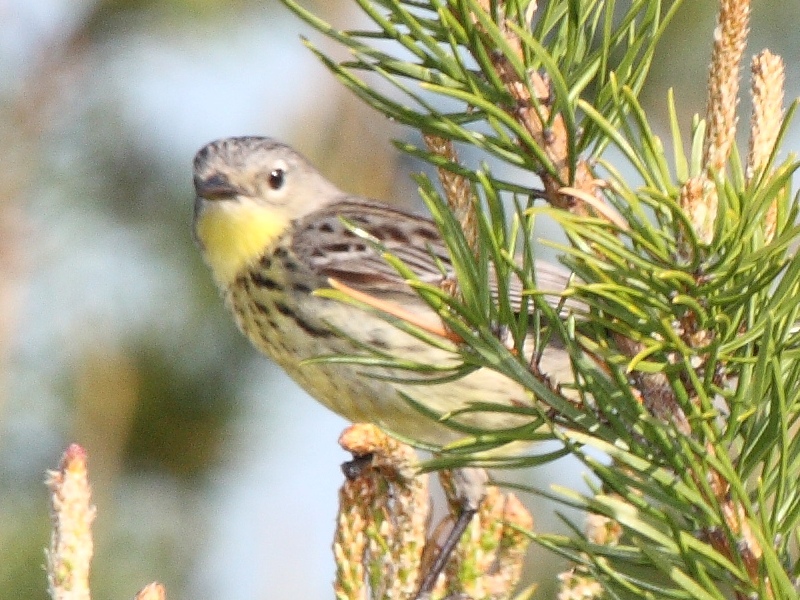
Kirtland’s Warbler, female, Wikimedia Commons

The recovery of the Kirtland’s Warbler in Michigan is a case in point.  The warbler’s nesting habitat was well known to require periodic fire.  Yet, the scientific managers of this recovery project preferred to kill cowbirds rather than to risk human life and property by not suppressing fire.  Nearly 125,000 cowbirds were destroyed in a portion of a small peninsula in Michigan during the period 1972 to 2002.  Although nest parasitism declined significantly, the population of Kirtland’s warbler did not increase until over 20 years later after a large accidental forest fire.  In other words, the cowbird is a scapegoat for the choices made by man, in this case the suppression of fire.

Like the predator control project on behalf of the quail, cowbird extermination projects create jobs.  The Kirtland’s Warbler project continues to cost about $100,000 per year, although there is no evidence that the warbler is benefiting from it.  Rothstein speculates:   ”The money spent on cowbird control every year may total more than one million dollars.”   This creates a profit motive which Rothstein says results in a “control lobby” that advocates for continuing the program whether or not it is effective.  He believes that this money would be put to better use by addressing the underlying problems, such as habitat loss to development or reduced water levels that change vegetation types, as in the case of the declining population of the Southwestern Willow Flycatcher.

These are familiar themes to the readers of Million Trees:

  • That native plant advocates and their allies frequently confuse cause and effect, e.g., cowbirds are not responsible for declining songbird populations.
  • That man finds it convenient to scapegoat plants and animals for changes in the environment that are caused by man.
  • That people who make their living in these misguided “restoration” efforts have a vested interest in their continuation whether or not they are effective
  • That the waste of money and scarce resources prevents us from addressing the real issues
  • That choosing to replicate nature at some specific point in historical time is illogical because nature is constantly changing, not always in response to the actions of man

Postscript:  Here is a link to a radio story about another episode in the attempt to save the Kirtland’s warbler.  After killing 125,000 cowbirds (according to the ABA article), US Forest Service changed its mind about why the population of Kirtland’s  warblers was dwindling.  They decided that the problem was that the warbler required young trees of a specific species, which is germinated by fire.  So, they set a prescribed burn that caused a wildfire on a windy day, burning over 20,000 acres, destroying 41 homes, and killing a young man who worked for the Forest Service.  The population of Kirtland’s warblers rebounded.  Now the Forest Service says they must continue to kill cowbirds and set prescribed burns every year forever if the Kirtland’s warbler is to survive.  This radio program poses the question:  does this make sense?    


(1) http://en.wikipedia.org/wiki/Bee

(3) A. Starker Leopold, California Quail, University of California Press, 1977. (N.B. A. Starker Leopold is Aldo Leopold’s son.)

(4) Ibid.

(5) Rothstein, Stephen, “Brown-headed Cowbird, Villain or Scapegoat?,” Birding [journal of American Birding Association], August 2004, 374-384.

Biodiversity: Another eucalyptus myth busted

Native plant advocates use many arguments to justify the destruction of non-native species and we have debunked many of those arguments here on Million Trees.  Now we will examine the claim that non-native species must be destroyed because their mere existence reduces biodiversity by out-competing native plants and animals.  Because eucalyptus trees are one of the primary targets for eradication, we will focus on the specific claim that the eucalyptus forest is a “biological desert.”   We are frequently told that “nothing grows” under the eucalypts and that they are not providing food or habitat to insects, birds, and other animals.

Professor Dov Sax (Brown University) tested these claims while a student at UC Berkeley.  He studied the eucalyptus forest in Berkeley, California, and compared it to native oak-bay woodland.  He found little difference in the species frequency and diversity in these two types of forest.
 
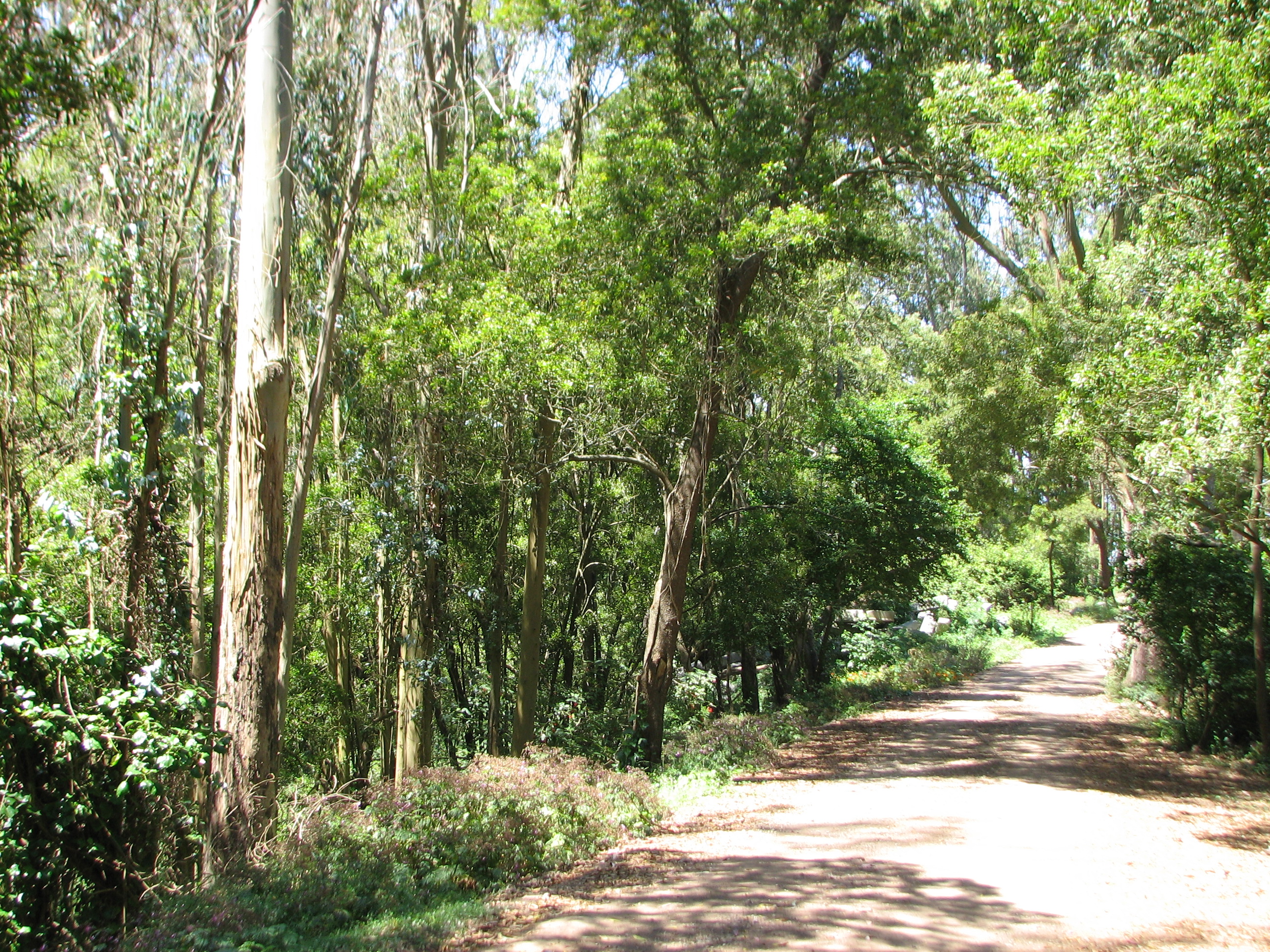
Eucalyptus forest and its thriving understory, Mt. Sutro, June 2009


He studied six forests of about 1 hectare each, three of eucalypts and three of native oaks and bays.  The sites were not contiguous, but were selected so that they were of similar elevation, slope, slope orientation, and type of adjacent vegetation.  He conducted inventories of species in spring and autumn.  He counted the number of:
  • Species of plants in the understory
  • Species of invertebrates (insects) in samples of equal size and depth of the leaf litter
  • Species of amphibians
  • Species of birds
  • Species of rodents

 He reported his findings in Global Ecology and Biogeography*:

“Species richness was nearly identical for understory plants, leaf-litter invertebrates, amphibians and birds; only rodents had significantly fewer species in eucalypt sites.  Species diversity patterns…were qualitatively identical to those for species richness, except for leaf-litter invertebrates, which were significantly more diverse in eucalypt sites during the spring.” 

Professor Sax also surveyed the literature comparing biodiversity in native vs non-native forest in his article.  He reports similar findings for comparisons between non-native forests and local native forests all over the world:

  • In Spain, species of invertebrates found in the leaf-litter of eucalyptus plantations were found to be similar to those found in native forests, while species richness of understory plants was found to be greater in the native forests.
  • In Ethiopia the richness of understory species was found to be as great in eucalyptus plantations as in the native forest.
  • In the Mexican state of Michoacán, species richness and abundance of birds were found to be similar in eucalyptus and native forests.
  • In Australia species richness of mammals and of soil microarthropods were found to be similar in native forests and in non-native forests of pine.

The only caveat to these general findings is that fewer species were found in new plantations of non-natives less than 5 years old.  This helps to illustrate a general principle that is often ignored by native plant advocates.  That is, that nature and its inhabitants are capable of changing and adapting to changed conditions.  In the case of non-native forests in the San Francisco Bay Area, they have existed here for over 100 years.  The plants and animals in our forests have “learned” to live in them long ago. 

  
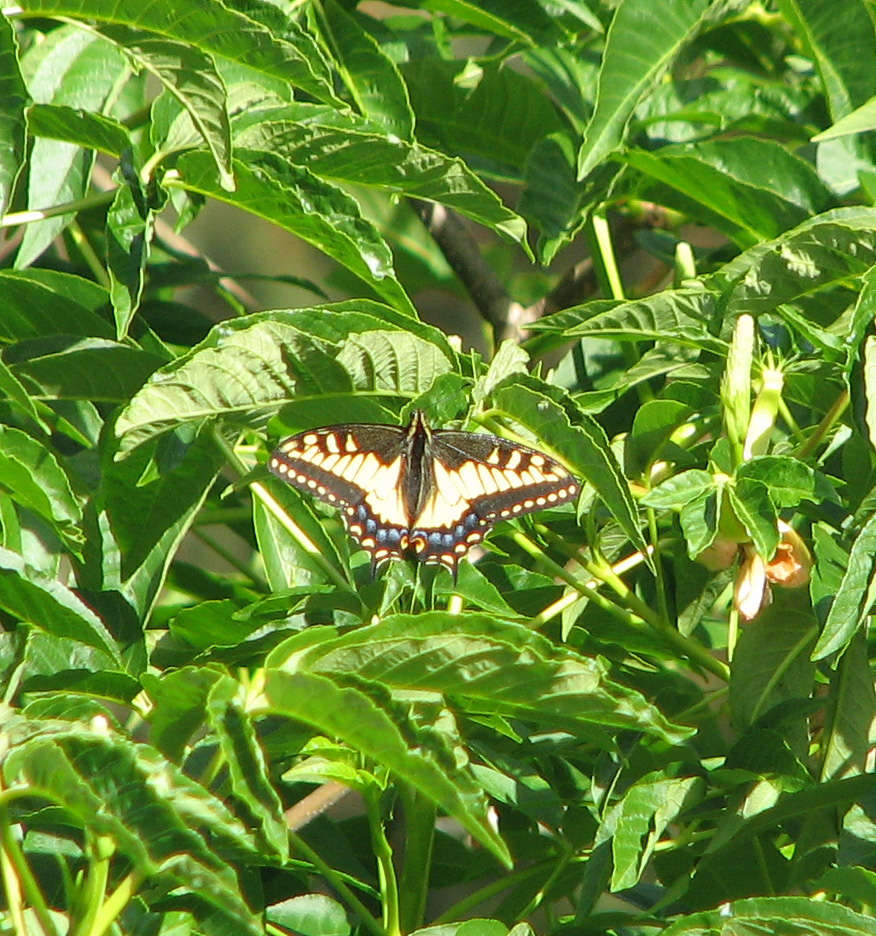
Anise Swallowtail, Mt. Sutro, March 2010

We recommend that you visit the SaveSutro website   for a description of the richness of the non-native forest that thrives on Mount Sutro in San Francisco.  It is the perfect illustration of these scientific principles.  We can discuss scientific principles in the abstract, but there is no substitute for a walk in the forest to confirm with our eyes what science tells us.


*Dov Sax, “Equal diversity in disparate species assemblages:  a comparison of native and exotic woodlands in California,” Global Ecology and Biogeography, 11, 49-52, 2002.


Lies and Intimidation: SaveSutro receives apparent legal threat

The SaveSutro webmaster received a letter last week from a law firm representing the Sutro Stewards, apparently threatening to take legal action if the webmaster did not make the changes on the SaveSutro website that they demanded.  Please visit the SaveSutro website for the details of this apparent threat and the explanation of the SaveSutro webmaster about the posts in question, which makes it perfectly clear in our opinion, that such threats are unfair and without legal merit.

Although we consider this apparent threat of legal action against the SaveSutro webmaster appalling, we are not in the least surprised by it.  It is consistent with our long experience as critics of the destructive aspects of native plant “restorations.”  We have witnessed the heckling of critics at public hearings, even extending into the hallways of City Hall, where a critic was pursued by a name-calling native plant advocate.  We have heard a respected scientist from a reputable university accused of being “arrogant and condescending” by a native plant advocate reacting to the scientist’s assessment that local native plant restorations are not based on science and are unlikely to be successful.  After such public hearings, we have been called “nature haters” in a letter to the commissioners at the hearings and in media publications by native plant advocates pursuing their interests.

The “nature hater” accusation strikes us as being particularly ironic.  We have a more inclusive view of nature, even extending to humans who are as much a part of nature as any other animal or plant in our view.  We are unwilling to scapegoat immigrants for environmental problems and we consider “population control” inconsistent with the principles of our free society.  We are not comfortable with arbitrary divisions of nature into “good” and “bad” plants and animals.  And when these arbitrary classifications are extended to justify killing “bad” nature in the service of “good” nature, we are often horrified.  One native plant advocate, defending the use of toxic herbicides to kill non-native plants, explained that non-native plants are a “cancer on the land” and that native plant advocates are merely using “chemotherapy” to “cure” the environment.  Such a characterization of non-native plants makes us cringe.  And so, calling us “nature haters” seems to us an extreme case of psychological projection of the motives of native plant advocates onto the motives of their critics.

Unfortunately, such attacks are often successful with critics of native plant restorations because we have little at stake, besides our love of nature.  Many of us prefer to walk in peace in our park rather than to subject ourselves to the unpleasantness of advocating for its preservation.  Neither the SaveSutro webmaster, nor the MillionTrees webmaster receives any compensation for the information we provide to the public about the native plant movement.   We have only the satisfaction of knowing that we are performing a public service, while learning much interesting information about nature.

In contrast, many native plant advocates and their allies are earning their living from their involvement in the native plant movement.  Some are leaders or employees of non-profit and advocacy organizations such as the Sutro Stewards, Sierra Club, and Audubon Society.  Others are public employees of municipal, regional, or federal public lands, engaged in “restorations” and related activities.  Finally, there is an army of contractors servicing these organizations by taking down large trees with heavy equipment and spraying pesticides for organizations that don’t wish to expose their employees to the toxins.  They have much more at stake and they are therefore much more highly motivated.  So we should not be surprised at the lengths to which they are willing to go to protect their employment.

We will now tell the story of two businesses that were attacked by native plant advocates and their allies who tried to put them out of business.  They were not so easily intimidated because they had more to lose.  They fought back with facts and they were both vindicated, illustrating that although native plant advocates may have the upper hand strategically, they generally do not have the upper hand when it comes to the facts on the ground or the scientific principles to evaluate those facts.

In 2002 the Center for Biological Diversity (CBD) appealed a US Forest Service decision that renewed Arizona rancher Jim Chilton’s grazing permit on the Montana Allotment, a parcel of federal land in southern Arizona.  CBD included in their appeal, descriptions and photographs that purported to show extreme environmental degradation caused by Chilton’s grazing practices.  CBD’s allegations were also spread via a press release and their website, which included the photos.  Chilton responded that the photos were falsely labelled, often being of land not in his grazing allotment, including cows that were not his, and deliberately misled people about his management of land.

The US Court of Appeals said that the knowing misuse of this photograph was sufficient for the jury to find malice in the misrepresentation Source: Chilton Ranch website

One photo, taken of private land not in Chilton’s allotment, showed two cows lying on a dry, barren field, with a caption suggesting Chilton’s cattle caused the damage.  In fact, that field had hosted a three week long May Day festival about two weeks before the photo was taken.  Five to six hundred people attended the festival, some camping there. Several hundred cars, all-terrain vehicles, and recreational vehicles had used the location during the festival.  The CBD photographer knew this because he had attended the festival.

Chilton demanded the photos be taken down from CBD’s website.  CBD refused, and here they made their big mistake:  Chilton had the means to resist them.  He filed a defamation suit, and won.

The superior court judge and jury awarded him $600,000, including $500,000 punitive damages.  CBD appealed through the Arizona Court of Appeals (2006) and the Arizona Supreme Court (2007), but each level affirmed the decision:  CBD had lied about Jim Chilton in an attempt to throw him off the land he legally grazed by permit.

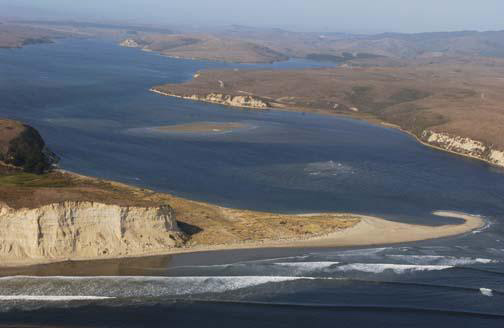
Kevin Lunny and his family operate the Drakes Bay Oyster Company (DBOC) at Drakes Bay in Marin County.  The National Park Service (NPS) wants him out of there.  To justify their position several NPS officials made public statements, and NPS published “Drakes Estero: A Sheltered Wilderness Estuary,” claiming scientific proof that the DBOC damaged the environment of Drakes Bay.  In particular, NPS alleged that DBOC caused sedimentation, damaged native eelgrass, caused a major decline in the harbor seal population, introduced exotic organisms, and adversely affected the species diversity of the bay.  Mr. Lunny, with the help of biologist Corey Goodman, disputed these NPS claims.

Following the intervention of Senator Dianne Feinstein, a committee of the National Academy of Sciences (NAS), composed of eleven eminent biologists from around the country, studied what was known scientifically about oyster culture in Drakes Bay.  In 2009 they issued a 128 page report, “Shellfish Mariculture in Drakes Estero, Point Reyes National Seashore, California.”    Their conclusion included:  “…the agency [NPS] selectively presented, over-interpreted, or misrepresented the available scientific information…” and, “…exaggerated the negative and overlooked potentially beneficial effects of the oyster culture operation.”  (p 72-73) This is the flat, understated way scientists write.  In everyday English, they found that NPS was using phony “science.”

The alleged disturbance of harbor seals by DBOC boats in Drakes Bay was particularly hotly contested.  Although the NAS committee found no evidence of DBOC disturbing the seals, they expressed a desire for more evidence, due to the “he said – she said” nature of volunteer monitoring reports.  They suggested time and date stamped photographs to document NPS claims. (p 47)  What they weren’t told by NPS was that NPS had such photographs.  NPS  had two and a half years of time and date stamped (once per minute) photographs of the operation of DBOC near the seals.  Those photographs were only revealed following a Freedom of Information Act request from Dr. Goodman.  The photographs show no disturbance of the seals by DBOC boats, and disturbances that NPS volunteers alleged were caused by DBOC boats were actually caused by kayaks.  (Point Reyes Light, Oct 21, 2010)  That is, NPS hid the clear-cut evidence that showed claims of harm caused by DBOC were false.

Drakes Estero. NPS photo

It remains to be seen if these revelations of fabricated “science” will save the oyster farm beyond 2012 when their lease ends.  However, if NPS chooses to close it down anyway, they will be unable to justify their decision by claiming that the oyster farm is damaging the environment.

We are confident that science will eventually prevail and we hope that the tide will turn before most of our trees, plants, and animals are destroyed.

Mark Davis, “A Friend to Aliens”

Mark Davis, Professor of Biology at Macalester College is interviewed in the February issue of Scientific American.  He tells us that invasion biology must distinguish between change and harm when labeling non-native species as “invasive,” a term which he believes should be used only in those rare cases when the non-native species pose “health threats” or economic harm.  With the exception of isolated places, such as islands, Mr. Davis tells us that non-natives have not been the cause of extinctions of native species.

 He believes it is irresponsible to label non-native species as “invaders” if they do not cause such harm because attempts to eradicate them are wasteful of scarce resources and often harm the environment more than the mere existence of non-natives.   He advises us to learn to live with those species that are not harmful. 

 He also points out that the eradication of non-natives is often futile and is likely to become even more futile in the future as global travel and commerce increase and the climate continues to change.  All species are going to move, both natives and non-natives and in fact, natives are as likely to cause problems in their expanded range as the non-natives in those regions.  He offers the example of the mountain pine beetle in Western coniferous forests, which is killing half the timber forest in British Columbia as it expands its range, probably in response to increasing temperatures.

Mr. Davis was also interviewed by Environment 360, a publication of Yale University, in November 2009.  In that interview, he is joined by Dov Sax, assistant professor of biology at Brown University, one of the growing number of biologists who are questioning the assumptions of invasion biology.  He provides a local example  of exaggerated claims of invasiveness:  “Dr. Sax says he began to question exotic species orthodoxy as an undergraduate at the University of California, Berkeley.  A professor leading a field trip described the Bay Area’s abandoned plantations of Australian eucalyptus trees as a “biological desert.”  Says, Sax, ‘There was all kinds of stuff growing in there.  I found there were really a similar number of species in both [native oak and eucalyptus] woodland types.  Exotics weren’t always doing the awful things people seemed to think they were doing.’” 

 
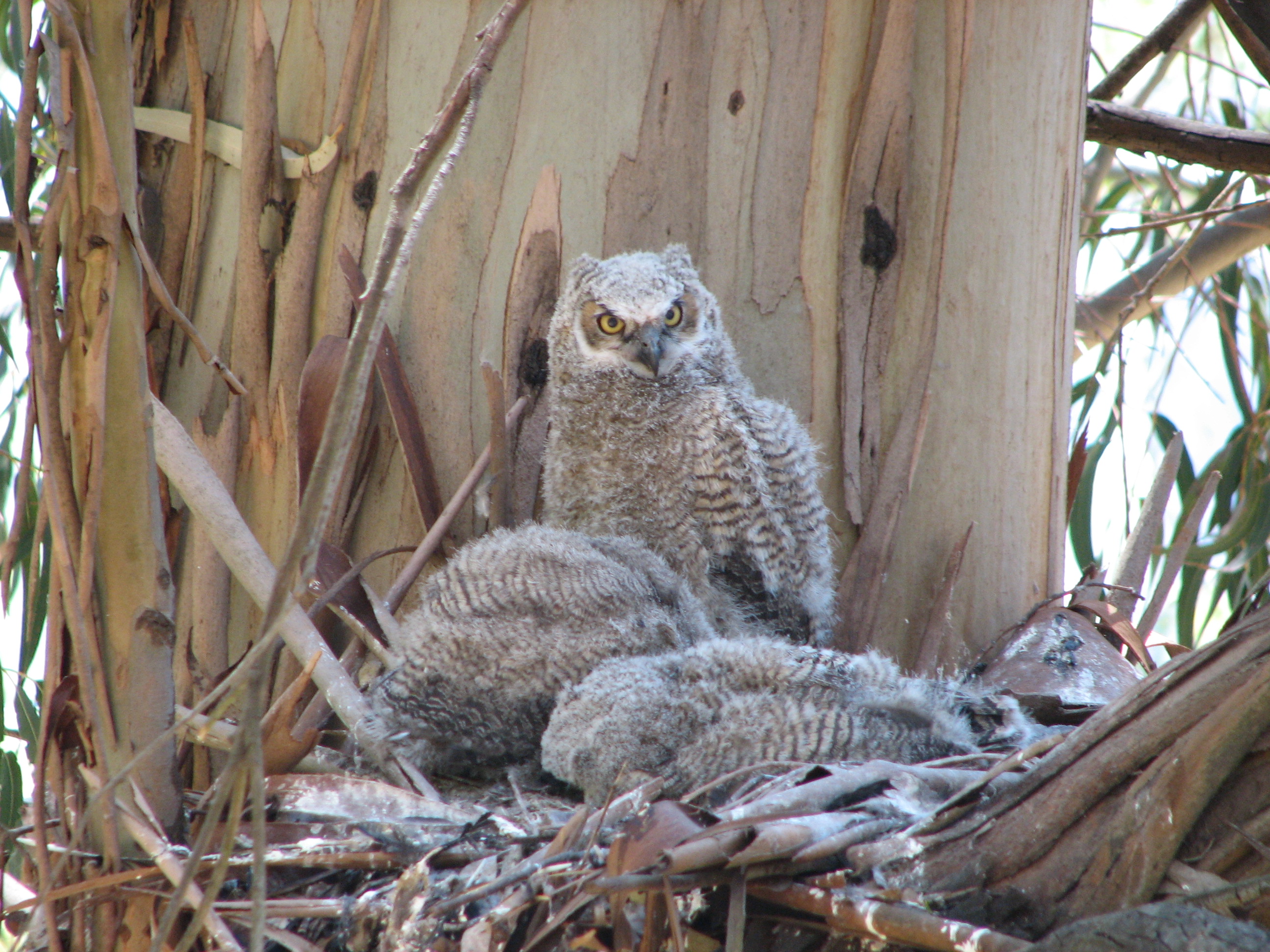
Owlets in eucalyptus, Claremont Canyon, Oakland

We attended a few lectures of an undergraduate course at UC Berkeley that fit with Dr. Sax’s experience.  Students in this undergraduate course were required to “volunteer” in a variety of different “restoration” projects in the Bay Area.  One of the projects on the property of UC Berkeley focused on the eradication of eucalypts.  The leader of this project and supervisor of the students who chose his project had an undergraduate degree in “natural resources” and an MBA in “operations management.”  He made a number of unsubstantiated claims to justify the eradication of eucalypts, but the most flagrantly stupid statement was this:  “The carbon sequestered in non-natives doesn’t count.  Only the carbon sequestered in natives counts.”  This statement has no scientific meaning.  We assume it is intended as a philosophical statement.  In any case, students aren’t learning any science from such a statement. 

Critics of native plant ideology are accustomed to criticism from true believers and Mark Davis is no exception.  In an interview available on the Macalester College website, Mr. Davis says he,  “…received rebuttals that, he felt, veered toward ad hominem attacks on his inexperience in the field.”  But he has not backed down and has come to view this debate as an example of the “values and age-old religious attitudes toward nature [that] frame scientific study and debates more than most scientists would acknowledge.”  He concludes that interview with this observation:  “People can get addicted to paradigms.  Then paradigms become an ideology.  Belief and conviction are very difficult adversaries since they are little affected by data and evidence.”   

Destruction of eucalyptus threatens bees

The Pt Reyes Light received a Letter to the Editor in response to its series about the destruction of eucalyptus trees.  The author of the letter explains that eucalypts are one of the few sources of nectar during the winter, that the nectar is vital to the survival of bees over the winter, and that the bees are essential to California agriculture.  The letter was published in the Light on January 6th and is reprinted here with permission:

Think before you cut

Dear Editor,

The recent articles in the Light regarding the Park’s and other’s plans to eradicate eucalyptus from California fail to take into consideration one critical aspect of the need for eucalyptus in the continuation of agriculture in the state.

The common honeybee was introduced to California in the mid-19th century, around the same time as Blue Gum Eucalyptus. Each spring and summer, honeybees gather huge amounts of nectar from flowers and store it in the form of honey so they will have enough food to make it through the winter, when the weather is too cold and rainy and flowers are too few to provide food for the bees. 

In autumn, each hive greatly reduces its number of bees in order to survive the winter on the honey they stored. This is done by the queen laying fewer eggs and thus not replacing the bees that naturally die. Hives of 40,000 to 50,000 bees in summer drop to 10,000 bees in winter.

During December and early January, bees hover in a tight cluster, keeping each other warm and living off the stored honey.  In early January the Queen again lays eggs in ever-increasing numbers each day; larvae and then newly-hatched bees must be fed huge amounts of honey to support rapid growth. The demand for honey increases exponentially and if honey stores are not enough, the hive can starve to death just before warmer, drier weather and its tons of flowering plants arrives. 

But in California we have periods of sunny, warm days, in January and especially February. These allow bees to forage for nectar to supplement depleted stores in their hives and insure their continuation.  But what is blooming in January and February, when bees are in desperate need of nectar plants? Acacia, almond, ceonothus, manzanita, mustard, rosemary and some fruit trees bloom for short periods of time, but their small number and smaller sizes do not always guarantee enough blossoms. And any hard rain or wind can destroy whatever blossoms there are. 

Eucalyptus, on average 100-feet high and 30 to 50-feet wide, has tens of thousands of nectar-filled blossoms per tree.  It blooms throughout California from late January through mid-May, ensuring an abundant supply of nectar for hives at the time of their most critical need.

Prior to the arrival of the honeybee in California, the state population was 1 million people and agriculture consisted of wheat, barley, cattle and sheep, all of which could easily survive without honeybees.  Today, with California growing much of the fruits, nuts and vegetables for the U.S., the honeybee is an intricate part of the continuation of agriculture. With the current problem of Colony Collapse Disorder, the fate of the honeybee is already precarious. Cut down all these Eucalyptus trees and the fate of thousands of hives of bees, and thus the continued pollination of our food crops, may be in serious jeopardy.  Think before you cut them down.

Cathleen Dorinson, Pt Reyes Station

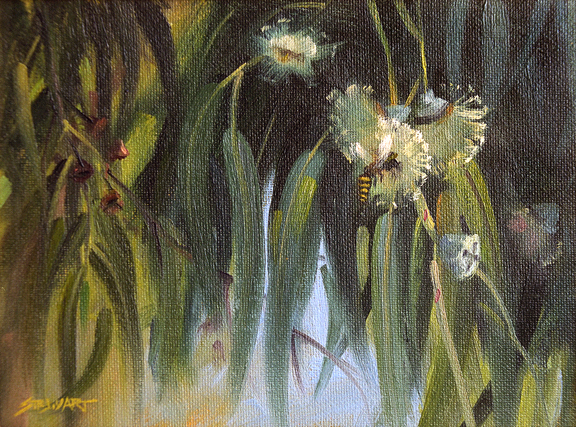
Eucalyptus and Bee, painting by Brian Stewart
Research on Colony Collapse Disorder has identified reduced supplies of nectar as one of many factors in the failure of about 30% of commercial hives per year in the past few years.  Bees, already weakened by chronic exposure to pesticides and reduced food supplies, are unable to recover from the fungi, viruses, and parasites that are rampant in the “global diaspora of organisms.”

eucalyptus honey

Because of the role of pesticides in the death of bees, the eradication of eucalyptus exposes bees to  double jeopardy:  the loss of a major food source during the winter and exposure to the pesticides that are used to kill the roots of the eucalyptus trees.

Garlon with the active ingredient triclopyr, is the pesticide used by most managers of public lands to kill the roots of the eucalyptus after the trees are cut down.  Eucalyptus is a vigorous resprouter.   Unless the stump is poisoned immediately with a toxic pesticide, it will return ten-fold after it is cut down, or in the unlikely event that it burns down, or after a freeze deep and long enough to cause the tree to die back.

Garlon is known to be toxic to bees.  The Marin Municipal Water District quit using all pesticides on its properties in 2005 in response to public protests.  It hired a consultant to evaluate 5 pesticides for potential use in the future.  The risk assessment published in 2008  stated that Garlon was the most toxic of the 5 pesticides studied and that it was the most toxic to bees. The Marin Municipal Water District is presently seeking approval to begin using Roundup again.  It does not propose to use Garlon.

The so-called Natural Areas Program in San Francisco, which is responsible for the care of approximately 1,000 acres of park land ironically called “natural areas” uses Garlon heavily.  About 75% of its pesticide applications (by volume and frequency) are of Garlon.  Could this be a factor in the collapse of several beehives recently reported in San Francisco?

The East Bay Regional Park District used 34 gallons of Garlon in 2008.  How many more gallons of Garlon will be used by these managers of public lands when they cut down the hundreds of thousands of eucalyptus trees which they have proposed to destroy in their official plans?

Once again, we can’t make sense of the destructive actions of those who are damaging nature in the name of “restoring” nature.  In our view, it is a fundamental contradiction.

Pt Reyes Light sheds light on eucalyptus myths and an arborist adds context

The Pt Reyes Light is one of the last bastions of investigative reporting in the Bay Area.  Following its tradition of digging deep into the actions of its biggest neighbor, the Pt Reyes National Seashore (PRNS), it has recently published two hard hitting articles about the massive destruction of eucalyptus on the properties of the National Park Service in Marin County.  This two-part article, “Myth of the eucalyptus blight,” is available here and here.

The Light reports that the Pt Reyes National Seashore is destroying between 400 and 600 eucalypts per year.  Its neighbor, the Golden Gate National Recreation Area, is engaged in the same eradication effort.  The Light repeats the PRNS justification for this destruction and reports the evidence that the justification is fabricated.  This justification is based on myths propagated by native plant advocates to frighten the public into supporting the destruction.  The myths and their negative impact on our environment are reported and refuted elsewhere on the Million Trees blog:

 There is also much new information in the Light articles, particularly in the quotes of a certified arborist from Berkeley, California, Mark Bowman.  Mr. Bowman adds context and clarification to the Light article for the readers of Million Trees.*

In response to the claims that the “shreddy” bark of the Blue Gum eucalyptus provides a fire ladder to its canopy and casts embers long distances from its great height, Mr. Bowman says,

“There are many mitigating factors such as the age and the amount of wind the trees receive which would determine how much bark litter would remain on the tree or be scattered on the ground.  In general, the bark that sheds doesn’t reach all the way to the top.  It usually tapers off before it reaches the first branches.  As a rule of thumb it tends to be most noticeable on the lower 20 feet or so of the trunk and collects around the tree base, which makes it rather easy to pick up if you are worried about fire safety.  This may be news to some folks, but there is no such thing as a maintenance free tree unless it is made out of plastic.  If you are going to purchase a home in or next to the forest, then you shouldn’t assume you have the right to cut it down; after all you do have a choice to live elsewhere if you consider that environment too extreme for one reason or another.”

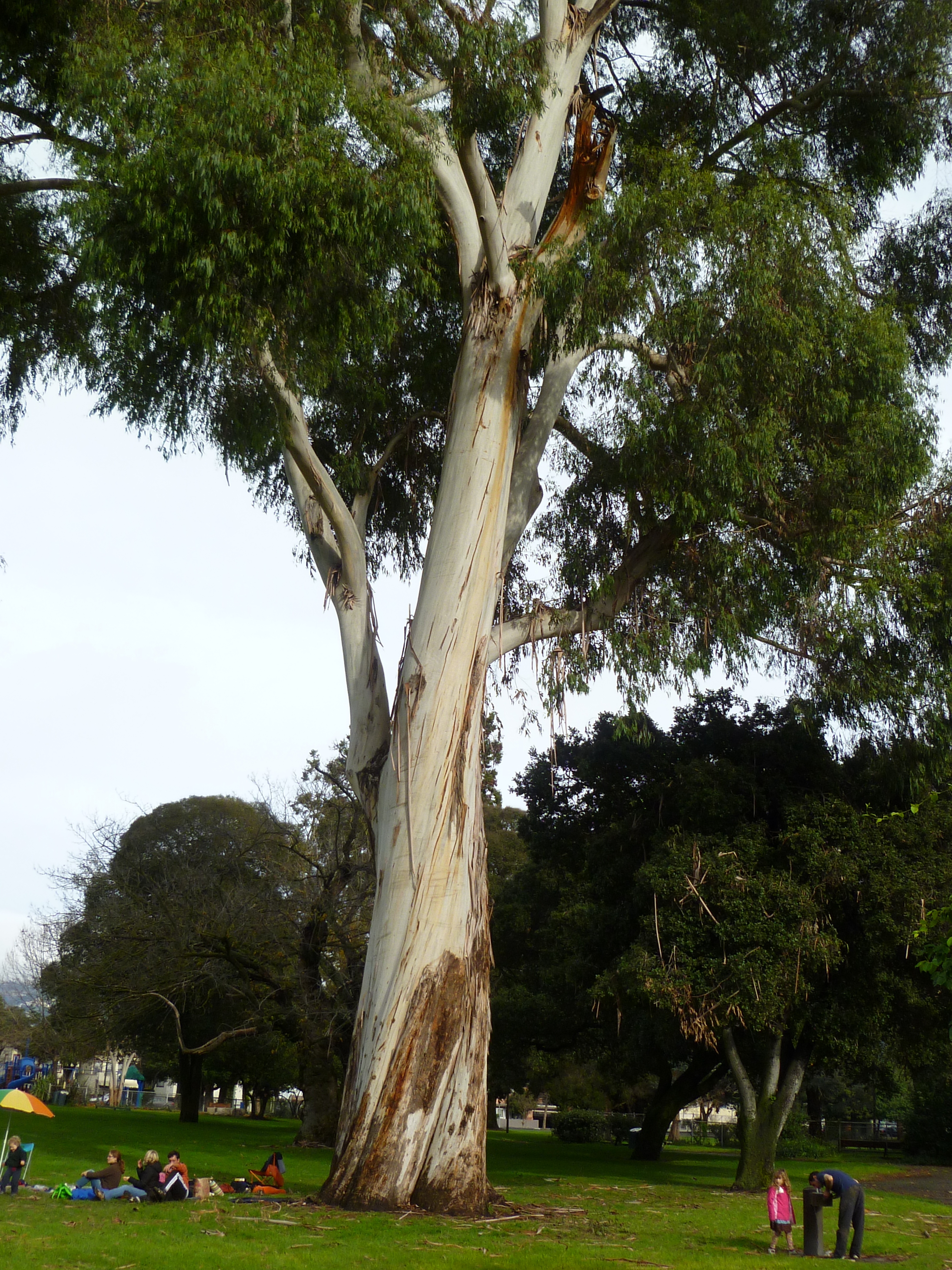
Eucalyptus, shreddy bark low on the trunk, smooth bark higher on the trunk, Mosswood Park, Oakland, CA
 
As an arborist working in that neighborhood, Mr. Bowman is familiar with the area of the 1991 fire in the Oakland-Berkeley hills.  He says that the eucalypts were a casualty of that fire, not the cause of it:

“I took care of a property next door to where the fire started and, as I recall, that neighborhood on Charing Cross and Buckingham was comprised predominantly of pine and native oaks, not eucalyptus.  If my memory is accurate, then it appears the fire department could not halt the burning of native oaks, dry grass and pines located in that steep terrain in the beginning, before the fire became that inferno, so I don’t understand why eucalyptus is getting this bad rap as a fire starter.  There was plenty of blame for that tragedy to go around:  the homeowners who failed to maintain their properties; the city, county and state who failed to maintain theirs; and the fire department who failed to put out the blaze the day before.  When a fire ignites due to low humidity, hot dry Santa Ana winds, massive amounts of dry grass, shrubs and trees coupled with the steep terrain, there is nothing that is going to stop it but luck.  The fuel for that inferno had been obviously accumulating for years on both public and private lands.  I saw the smoke that day when I was driving along Grizzly Peak Blvd., and the first thing that came to mind was that ‘it finally happened.’  Anyone who worked in that area in the aboriculture and landscaping fields knew it was inevitable, and never once did I think that the eucalyptus trees were the issue; 20 years later I still don’t.  I want to state that I have no expertise in fighting fires; however  when a fire gets to the point that even homes being saturated with water burn, then obviously the trees burn too.  The fire could care less what species of tree is in its path or whether it was here before 1750 or not. The simplest and cheapest solution to this problem is for:  (1) owners of both public and private lands to maintain and clean their properties of dry grass, shrubs and leaf litter and; (2) insist that public agencies in charge of fire prevention use the laws and enforcement codes already on the books for those who fail to comply.  Let’s use a little common sense, that way the trees won’t burn.   This “native plant is superior” mentality is going to end up being a big taxpayer and/or rate payer fraud with no significant benefits and (more to the point) many guaranteed unintended consequences if this movement is allowed to come to fruition.  Grab a hold of your wallet folks.”

Mr. Bowman says that eucalyptus is no more likely to uproot or shed its branches than any other tree of comparable size:

“From a structural standpoint, Blue Gum eucalyptus has no inherent weakness on any below ground or above ground parts endemic to the species which would make it more prone to failure than any other large tree.  I have seen no scientific proof, nor do I have any hands on evidence that would lead me to believe that the cellular structure of this species is any more prone to failure from tension, torsion or compression forces than any other species.  Just because a large tree may look intimidating in the eyes of some people doesn’t mean it is dangerous, yet there are plenty of tree industry people all too happy to take advantage of that fear.  Every tree has its own individual and unique characteristics.  It is imperative when you are looking for advice to not take the word of the “Free Estimate” people you talk to without getting a second opinion.  Obtain a consultation from someone who has no conflict of interest in that they are not there to try and sell you on their service.  Removing eucalyptus or any other tree can be very expensive and sometimes completely unnecessary.  I’ve been in business for over 30 years and that experience has proved to me repeatedly that there is an awful lot of hopefully well intentioned but all too often misinformed people giving advice.  The best advice would be to consult with an arborist who does not have a vested interest in performing tree work.”

In fact, thinning the eucalypts can in some instances make those that remain more dangerous than they would otherwise be:

“Here again, there are many mitigating factors and situations which have to be taken into account but sometimes leaving them alone can be the best option.  There is no doubt that selective thinning of any tree species will reduce the fuel load in case of fire, but at the same time there is a myriad of potential unintended consequences when you undertake this approach:  (1) exposing the trees left behind to wind forces their root systems haven’t developed a resistance to, thus making them more prone to blow down; (2) introduction of wood decay organisms and parasitic fungi; (3) invasion of grasses and small understory plants that are more easily ignited, and (4) erosion of steep slopes previously stabilized by the roots of the trees.   Since I have mentioned unintended consequences a number of times, perhaps we should learn something from that old adage, ‘If it ain’t broke, don’t fix it.’”

Ironically, the PRNS staff interviewed by the Light actually agrees with Mr. Bowman that destroying the eucalyptus may not accomplish anything.  He observes that areas cleared of eucalypts are populated with shrubs that can be equally flammable:  “Just getting rid of them doesn’t necessarily solve anything.  It’s like swapping one problem for another…Even if it’s a native component, it might be less desirable.” 

So, why are we destroying these trees?  Clearly we are doing more harm than good.  The results are not less flammable.  The trees that remain are more dangerous than they were before their neighbors were removed.  And the landscape is doused with toxic herbicides. 

 Perhaps the answer to that question is in the answer to this question:  Who benefits from the eradication of non-native trees?  The chemical companies that manufacture the pesticides used to kill the trees.  The people who make their living destroying trees.  The people making their living “restoring” native plants.  The employees of the California Invasive Plant Council.  etc., etc. 

It’s a growth industry, funded by your tax dollars.  In the past two years tree destruction on federal lands (GGNRA and PRNS) has been funded by the federal economic stimulus program.  How does destroying trees stimulate the economy?  Might this money have made a more lasting contribution to our economy if it had been spent  repairing or improving our infrastructure?  


* Quotes from Mr. Bowman were made directly to Million Trees.  Not all these quotes appear in the Light articles.  Quotes of PRNS staff are from the Light.

Invasion Biology: Confusion about cause and effect

We have said before on Million Trees that eradicating non-native plants will not result in the return of native plants because the underlying conditions that supported those native plants have changed and they are no longer competitive within their historic ranges.  In those earlier posts we have focused on higher levels of CO₂ and the resulting climate change as the environmental variables to which non-natives are better adapted.  Changes in water quality and flows have also resulted in changes in animal and plant populations and we will provide a few specific examples in this post. 

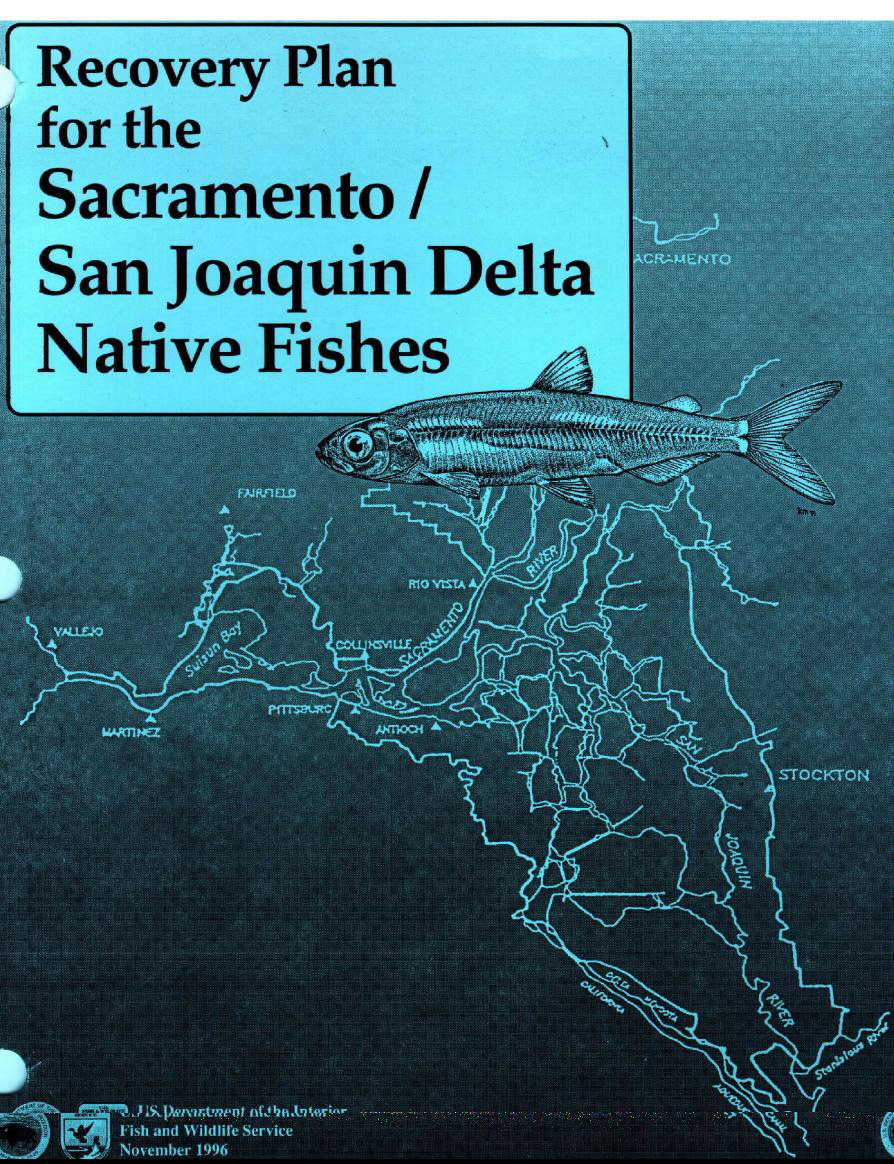
Water levels in the Sacramento River delta have been hotly debated for decades and that debate has recently heated up as a commission gets close to making recommendations that will be legally binding.(1)  On one side of the debate, the cities of Southern California and agriculture throughout the state want more water from the delta.  They have been getting a lot of it for decades, but they want much more of it.  On the other side of the debate, environmentalists object to exporting “our” water because they believe that the decline in the populations of native fish such as smelt and salmon is a direct result of the reduction in water flow from the delta to the ocean via the San Francisco bay.   They object to further diversion of delta water and have legally challenged historic levels of water diversion using the Endangered Species Act. 

USFWS Recovery Plan for Native Fish in the Sacramento River Delta

The non-native bass in the delta are the proverbial red herring in this debate.  Those who want yet more water diverted to agriculture claim that the bass are to blame for the declining salmon population.  They demand that the bass be eradicated and they predict that the salmon population will recover once their non-native competitor is removed.(2)  

The diversion of fresh water flow from the delta reduces the speed of the flow of the water, making it turbid and brackish as the ocean water overwhelms the fresh water from the Sacramento River.  The warmer temperature of the water also promotes the growth of water weeds and algae.  The bass benefit from these conditions, but the salmon do not.  Eradicating the bass will not change these underlying conditions.  Salmon populations are unlikely to rebound unless these underlying conditions are changed.

This is not an isolated example of the fallacy of invasion biology.   There are as many examples of similar arguments as there are non-native animal and plant species now occupying spaces previously occupied by natives.  Native plant advocates and their allies want non-native turtles eradicated because they believe they are responsible for declining populations of native turtles.  They want to eradicate non-native bull frogs which they believe would benefit the native red-legged frogs.  Etc., etc., etc., ad nauseum.

And there are as many examples of how such eradication strategies may not benefit natives as there are demands for eradication efforts.  Here are just a couple. 

The Tamarisk or saltcedar tree is one of hundreds of non-native trees that are considered invasive by native plant advocates.  Here’s a description of an expedition on the Colorado River to eradicate Tamarisk that was published by the Sierra Club magazine.(3)

“’Kamikase!’  The most enthusiastic team members start to yell…and fall upon the larger plants with samarai fervor…’Kill tammys!’  someone yells.  ‘Boy, that was satisfying.’ says a fellow tammy warrior…”  And these are their tools of the trade:  “…a veritable armory of tamarisk-killing tools, 32 gallons of herbicide, more than 40 cases of beer…and a Virgin Mary votive candle that…the camp cook has christened with a label reading, ‘Our Lady of Biodiversity.’”

Herbicide is being used in one of the country’s most important watersheds, yet there is no evidence that the Tamarisk is harming the environment:

  • One study found the “mean values for 22 of 30 soil, geomorphology, and vegetation structure traits did not differ significantly between saltcedar and Fremont cottonwood stands.”(4)
  • The same study found that saltcedar increased floristic biodiversity.
  • Another study stated, “As for the claim that salt cedar has little or no value to insects, birds, and mammals, that has been obliterated by available data.”(5)
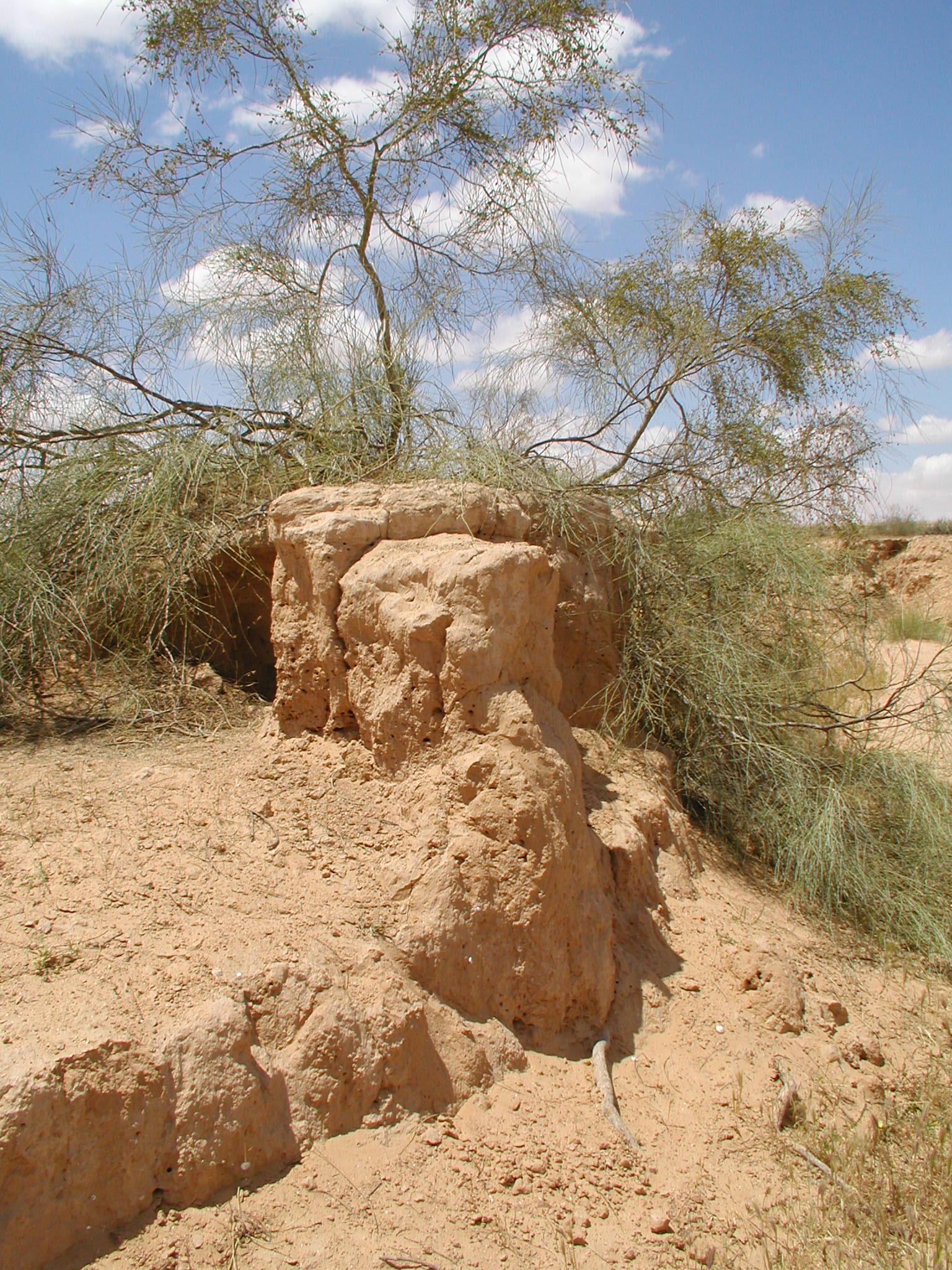
Tamarisk in natural habitat in Isreal, taken by Michael Baranovsky, Wikimedia Commons

But more importantly, eradicating the saltcedar is not likely to result in the return of the native cottonwoods because the natural flood cycle upon which the cottonwood depends has been altered by man.  The saltcedar thrives in the reduced water flow.  Unless the water flow is restored, the native trees will not return no matter how many saltcedar are destroyed.  Not only are we wasting our time and effort trying to eradicate saltcedar, we are also poisoning our water in the process.

In our final example, cause and effect were not confused, and a restoration was successful.   The Yuba Pass area in California is one of the most important migratory bird routes in the state.  The breeding population of Willow flycatchers disappeared from one of the wet meadows east of the pass.  The native willows upon which the flycatcher is dependent were disappearing from the meadow because channels caused by man along the edge of the meadow diverted water out of the meadow and dried it up.  Ponderosa pines and sage, which prefer the drier conditions, were taking over the meadow.  If native plant advocates had been in charge of remediating this situation their reaction may have been to eradicate the “invading” pines and sage.  That would have been fruitless effort; conditions in the meadow were suitable for pines and sage, not for willows.   But in this case biologists provided a more sophisticated solution.  They eradicated no plants.  They redirected the water from the channel back into its original slow flow through the meadow.  The meadow is again wet, the willows are now thriving, and the Willow flycatcher has returned.

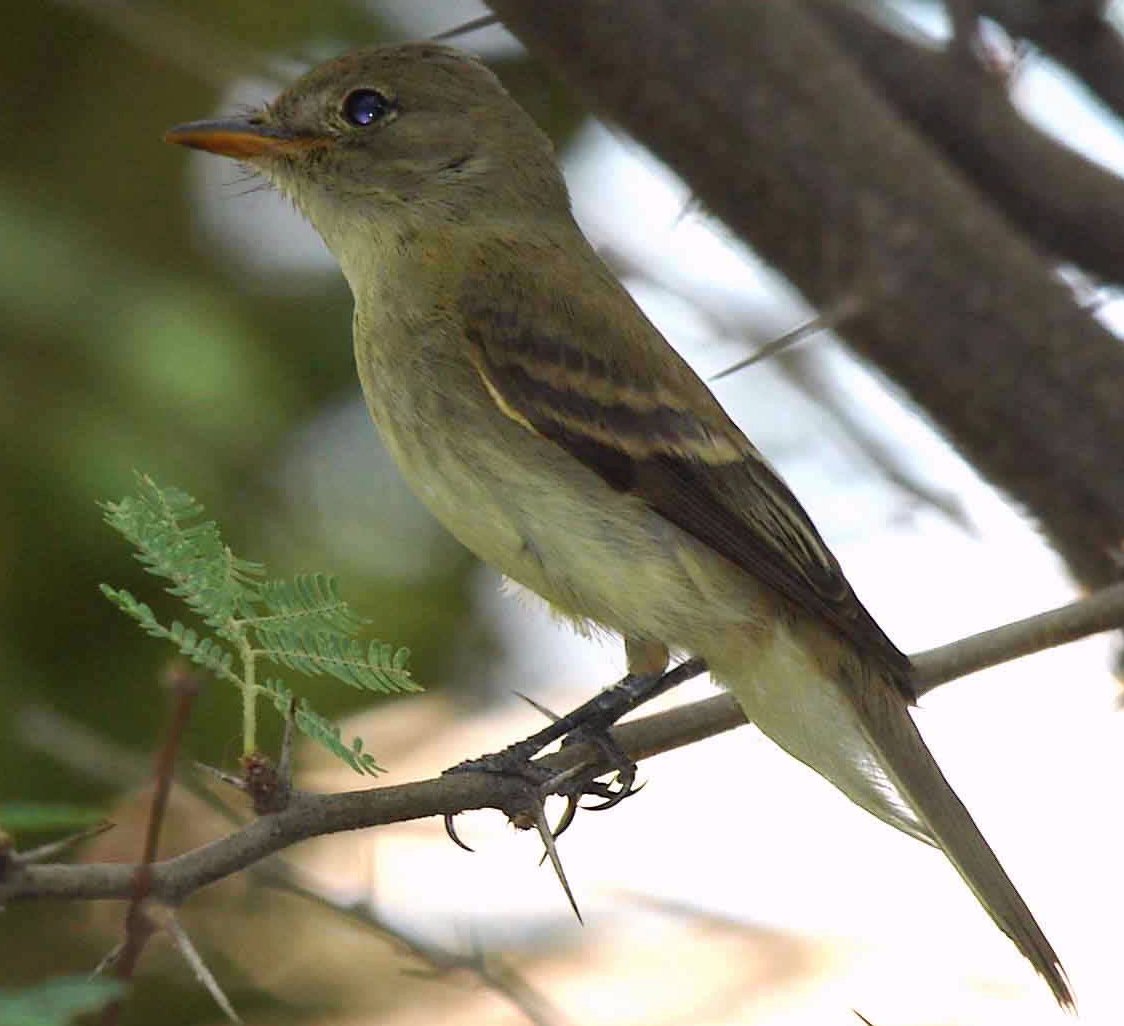
Willow flycatcher, USFWS

“Invasion biology” is an ideology, not a science.  It frequently confuses cause with effect.  A proper diagnosis of what may superficially appear to be an “invasion” requires an understanding of the complexity of nature.  Most often the underlying reasons for an “invasion” are man-made conditions such as pollution and competition for scarce resources that are extremely difficult to fix.  It may be convenient to scapegoat a plant or animal for what man has caused, but it is unlikely to reverse the conditions that create an opportunity for a non-native plant or animal that is better adapted to those new conditions.


(1) “Delta plan may do more harm than good,” Oakland Tribune, 11/5/10

“Effort Falters on San Francisco Bay Delta,” NY Times, 12/15/10

(2) http://www.sfgate.com/cgi-bin/article/article?f=/c/a/2010/12/11/EDG21GN1MJ.DTL

(3) http://www.sierraclub.org/sierra/200407/grand_canyon.asp

(4) Stromberg, JC 1998, “Dynamics of Fremont cottonwood and saltcedar populations along the San Pedro River,” Journal of Arid Environments, 40:133-155

(5) Anderson, BW 1998, “The Case for Salt cedar,” Restoration and Management Notes, 16: -130-134, 138

Stephen Jay Gould examines the concept of “native plants”

The native plant ideology is inconsistent with the basic principles of evolutionary theory and has dangerous political implications which have been applied in the past.  In his article (“An Evolutionary Perspective on Strengths, Fallacies, and Confusions in the Concept of Native Plants”), published by Arnoldia, the journal of Harvard University’s arboretum, Stephen Jay Gould describes the concept of “native plants” as “a notion [which] encompasses a remarkable mixture of sound biology, invalid ideas, false extensions, ethical implications and political usages both intended and unanticipated.”(1)

First, who is Stephen Jay Gould and why should we care what he thinks about the ideological construct of “native plants?”  Professor Gould taught geology and paleontology at Harvard University and biology and evolution at New York University, while also working at the American Natural History Museum in New York.  His most significant achievements as a scientist were in the field of evolutionary theory.  He is one of the most frequently cited scientists in the field of evolutionary theory.  But he is best known as a writer of essays and best-selling books on natural history for the general public.  Incidentally, he had a life long interest in civil rights and he brought that interest to his scientific inquiries with his abiding opposition to the use of pseudoscience to promote racism or sexism.(2) It is that interest that led him to his analysis of the concept of “native plants.”

Native plant advocates believe in the inherent superiority of native plants.  This belief is based on an assumption that native plants “belong” in a particular place and that their presence in the proper location represents an “optimal” landscape for that place.  This belief is based on a lack of understanding of the concept of natural selection. 

As Gould explains, “Natural selection does not preferentially lead to plants that humans happen to regard as attractive.  Nor do natural systems always yield rich associations of numerous, well-balanced species.  Plants that we label ‘weeds’ will dominate in many circumstances…weeds often form virtual monocultures, choking out more diverse assemblages than human intervention could maintain.”   The mechanism of natural selection does not produce the optimal adaptation, but only the adaptation that is better than its competitors at any particular point in time, which is why introduced plants are frequently more competitive than their predecessors deemed “native.” 

The argument that native plants “belong” in a particular place is equally fallacious because it assumes that the plants are there because they are best suited to conditions in that location.  In fact, plants are “products of a history laced with chaos, contingency, and genuine randomness.”  Plants have been moved—and continue to be moved—about the planet by weather, by birds and animals, including humans.  “’Natives’, in short, are the species that happened to find their way…not the best conceivable for a spot.”  (see video, “The Fallacy of Native Plants“)

A closely related argument used by native plant advocates to justify their crusade against non-native plants and trees is that the natives have “co-evolved” with other species of plants and animals and that they therefore fit together like some magic puzzle, implying that if the native plants disappear, native animals will also disappear because they are dependent upon the plants.  Gould says, “this notion, however, popular among ‘new agers,’ must be dismissed as romantic drivel.” 

Gould credits the native plant movement for efforts to preserve biodiversity, a goal that is defeated if other plants are simultaneously eradicated by their efforts.  He counsels native plant advocates to balance their efforts to achieve an inclusive biodiversity and we share that view.  We encourage native plant advocates to preserve the plants they prefer and plant more if they wish, but to quit destroying the plants they do not prefer.

But Gould does not come to this topic solely from his knowledge of the principles of evolution and his desire for the public to correctly understand its mechanisms.  He is also concerned about the “slippery slope” of nativist ideology from application to plants to application to humans.  This is not a theoretical anxiety on his part.  It is based on historical precedents. 

Wikimedia Commons

In Nazi Germany and in the United States around the same time, horticultural theories abounded about the superiority of native landscapes and those theories were inextricably linked to the belief that non-native humans were also inferior.  For example, “In 1942 a team of German botanists made the analogy explicit in calling for the extirpation of Impatiens parviflora, a supposed interloper:  ‘As with the fight against Bolshevism, our entire Occidental culture is at stake, so with the fight against this Mongolian invader, an essential element of this culture, namely, the beauty of our home forest, is as at stake.’”   And similar sentiments from an American horticulturalist, Jens Jensen, “’The gardens that I created myself shall…be in harmony with their landscape environment and the racial characteristics of its inhabitants.  They shall express the spirit of America and therefore shall be free of foreign character as far as possible…Latin spirit has spoiled a lot and still spoils things every day.”

Having debated many times with native plant advocates about their plans to eradicate non-natives, and listened to their justifications for those plans, we know that no counter argument inflames them more than the suggestion that their plans are reminiscent of similar efforts to eradicate human non-natives.  However, for the vast majority of the public who have not engaged in this debate, we provide the scientific evidence that the native plant movement is an ideology not based on scientific principles which has been associated in the past with horrific discrimination against non-native humans. 

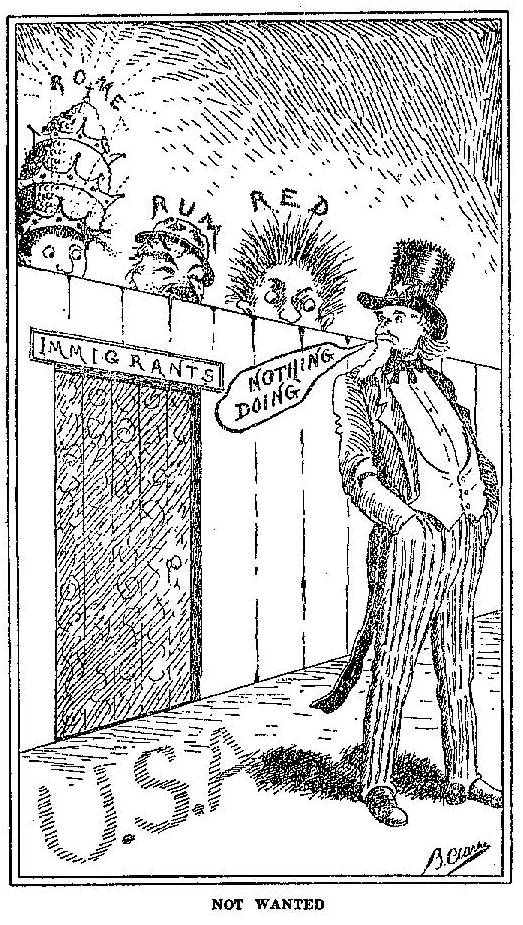
"The New Case Against Immigration: Both Legal and Illegal" Book cover in the public domain

 We cannot dismiss these historical precedents as irrelevant at a time when anti-immigration sentiments are rampant in our society.

————————————————————————

(1) All quotes are from “An Evolutionary Perspective….” 

Another Eucalyptus Myth: Bird Death According to Audubon

As we have said in other posts on Million Trees, those who demand the destruction of non-native trees justify their demand by making many critical claims about them.  One of the most disturbing of these claims is that eucalypts kill birds.  Reprinted here with permission is an excerpt from an article in the April 2010 newsletter of the Hills Conservation Network which debunks this myth.

The Hills Conservation Network is a group of residents in the Oakland-Berkeley Hills who advocate for fire safety without clear-cutting non-native trees.  Most of the members of the network are survivors of the 1991 fire in their neighborhood.  Some lost their homes.  Some lost members of their family.  They are highly motivated to improve fire safety in their neighborhood and they strongly believe that fire hazard mitigation can be achieved without destroying all non-native trees. 

Please visit their website  to see other issues of their newsletter which is a valuable source of information on the subject of fire hazard mitigation.  You may subscribe to their free on-line newsletter by sending an email to inquiries@hillsconservationetwork.org.

**********************************************************************************

BIRDS AND BLUE GUM: LOVE OR DEATH?

Brochures distributed by various agencies in northern California state that the flowers of eucalyptus trees kill birds. According to these brochures, birds feeding on insects or on the nectar of eucalyptus flowers may have their faces covered with “gum” and die of suffocation. Luckily for the birds, according to one brochure, most of them prefer native vegetation, and avoid eucalyptus groves.

These stories are, of course, extremely upsetting to all of us who love birds.

The bird-suffocation story began with a 1996 article by Rich Stallcup, a legendary birder who writes for the Pt. Reyes Bird Observatory. In the PRBO Observer, he reported that, on one day in late December, he counted, in one eucalyptus tree:  20 Anna’s Hummingbirds, 20 Audubon Warblers, 3 Orange-crowned Warblers, 10 Ruby-crowned Kinglets, a few starlings, 2 kinds of orioles, a Palm Warbler, a Nashville Warbler, a warbling Vireo, and a summer Tanager.

That was an unusually large number of birds, even for Stallcup to see in one tree, but what most surprised him, he says, is what he found under that blue gum eucalyptus tree: a dead Ruby-crowned Kinglet, its face “matted flat from black, tar-like pitch.”

Years before, Stallcup recalled in the article, he had found “a dead hummingbird with black tar covering its bill” under eucalyptus trees. This was all Stallcup needed to come up with his theory about what had happened.

This theory is now stated as fact in restorationist literature and it is stated three times as fact in the “Wildfire Plan”/EIR issued by the East Bay Regional Park District in August 2009.

Stallcup theorizes that North American birds are different from birds indigenous to Australia. He speculates that North American birds such as kinglets, warblers, and hummingbirds have evolved short, straight bills while Australian birds evolved long, curved bills. Thus, he says, when American birds with short bills seek nectar or insects on eucalyptus flowers, they have to insert their whole head into the blossom, so they get gummy black tar all over their faces.

Misleading illustration from Stallcup article

We have great respect for Stallcup’s ability to identify birds.  But we have a few problems with his theory.


Australian Weebill. Credit: Stuart Harris

1. A bird-loving friend who has photographed birds in Australia points out that Australian field guides show birds with a wide variety of bill length and curvature.  When he was in Australia, he saw birds with small bills just like American kinglets and warblers.  “How do you suppose the Australian Weebill got its name?” our friend asked.  Many of us not so familiar with Australian birds have seen parakeets and other small small-billed parrots native to Australia. Weebills  and many other American and Australian birds with small bills forage on eucalyptus leaves or flowers.

To see more birds of Australia, go to this terrific website. It features photos of many small-billed birds. 


Blue gum eucalyptus flowers on tree, March, 2010. Credit: John Hovland


2. Where’s the gum? The flower of a blue gum eucalyptus tree has no gum, glue, or tarlike substance on it or in it. The gum in “gum trees” refers to the sap or resin that, in some species, comes from the trunk. Other species of gum trees, such as the sweet gum (Liquidambar) are common sidewalk trees in Berkeley and Oakland. The flowers on the blue gum eucalyptus are white or cream-colored with light yellow or light green centers. There is no black, sticky, gummy or tarry substance in or on the living flower. In fact, both the Ruby-crowned Kinglet and the Australian Weebill are leaf-gleaners. They take insects off leaf surfaces, not from flowers. If the kinglet had gum on its face, the gum did not come from a eucalyptus blossom.

3. A euc flower looks most like a chrysanthemum, with longer petals. Unlike a morning glory, the euc flower is not shaped like a tube that a bird would need to poke its bill into to get nectar or insects. A hummingbird is more likely to pick up a sticky substance from inside a cup-shaped tulip, poppy, or any of the tiny tube-flowers such as California fuchsia, Indian paintbrush, watsonia, or honeysuckle that hummingbirds love. Common sense tells us that no bird, even a tiny one, could suffocate while feeding on a euc flower or leaf.


Watsonia, Willow Walk, Berkeley, 2010. Credit: John Hovland

4. We have all seen hummingbirds poking their beaks into tube-like flowers. If you peel back these tube-like flowers, you will sometimes find a sticky substance on your finger.  You’ve probably seen birds, especially tiny hummingbirds, sipping from these flowers. How do they escape getting nectar on their faces? An article in the NY Times proves truth is stranger than the fiction of suffocated hummingbirds. The article explains that a hummingbird gets nectar from a flower by wrapping its tongue into a cylinder to create a straw about ¾ inch long extending from its bill. This means that a hummingbird’s face does not touch the surface of a flat type of flower such as the flower of a blue gum eucalyptus.

After Stallcup wrote his article in 1996, it was accepted by birders and eucaphobes all across America. In January, 2002, Ted Williams, wrote about the “dark side” of eucalyptus in his opinion column called “Incite” for Audubon Magazine

Stallcup, he wrote, had told him he had found 300 dead birds over the years “with eucalyptus glue all over their faces.” Williams wrote that the bird artist, Keith Hansen, who illustrates Stallcup’s articles, had found “about 200 victims.”(How did one kinglet and one hummingbird in 1996 add up to 500 victims by 2002 even though few if any other people have seen even a single victim?)  Williams and Hansen also describe the suffocating material as “gum.”

Williams, in that same over-the-top column, dares to contradict Stallcup, claiming that he has heard only one Ruby-crowned Kinglet in a eucalyptus grove, and has never actually seen any birds in eucalyptus trees. Yet he repeats (and exaggerates) Stallcup’s story about eucalyptus suffocating birds. The National Park Service, U.C.,  EBRPD, and the Audubon Society   have spread Williams’ interpretation of Stallcup’s story—apparently without questioning any part of it.

Stallcup and Williams are bird-lovers and writers. They are not scientists. David Suddjian, a wildlife biologist, has read Stallcup’s theory about birds suffocating on the “black pitch” of eucalyptus flowers, but in his article, “Birds and Eucalyptus on the Central California Coast: A Love-Hate Relationship,” he casts doubt on Stallcup’s claim that the kinglet (and other birds) could have been suffocated by eucalyptus flowers. Here is an excerpt from his article:

“. . . in my experience and the experience of a number of other long-term field ornithologists, we have seen very little evidence of such mortality.  It has been argued that the bird carcasses do not last long on the ground before they are scavenged. However, when observers spend hundreds of hours under these trees over many years but find hardly any evidence of such  mortality, then it seems fair to question whether the incidence of mortality is as high as has been suggested. Not all bird carcasses are scavenged rapidly, and large amounts of time under the trees should produce observations of dead birds, if such mortality were a frequent event. . .more evidence is needed.”

The Suddjian article is not generally favorable to eucalyptus trees. However, Suddjian notes that more than 90 species of birds in the Monterey Bay Region use eucalyptus on a regular basis. Additionally some rare migratory birds bring the total to 120 birds seen in euc groves. These include birds that use eucalyptus trees, leaves, seeds, or flowers for breeding, nesting, foraging, and roosting. A complete list of birds that depend on eucalyptus trees is too long to include here. We encourage you to click on the link to the Suddjian article so you can look for the names of the various bird species and note how they use—and depend on—eucalyptus trees.

Lynn Hovland

***********************************************************************************

Million Trees Webmaster:  Shortly after this urban legend surfaced over 10 years ago, I had an opportunity to ask a local scientist about it. While attending an open house at the California Academy of Sciences in San Francisco, I was able to talk to the head of its ornithology division at the time.

He started by saying that although he had never seen a dead bird in a eucalyptus forest, there weren’t as many birds there because the eucalypts don’t offer as much food for birds as other vegetation types. (Those who bird in the eucalyptus forest without a nativist bias don’t agree with this generalization about a lack of birds, however.) He also said he hadn’t heard the claim.

Then, the scientist said that the story didn’t seem consistent with bird anatomy. He said that birds are capable of lifting their feet to their heads and clearing whatever might be accumulating there with their toes.   

Ten years and many walks in the eucalyptus forest later, we have yet to see a dead bird, but the myth lives on.

Jared Diamond’s History Lesson for Us

In Collapse:  How Societies Choose to Fail or Succeed, Jared Diamond reviews the histories of societies that have failed in climates as diverse as Polynesia and the Arctic North.  He identifies a handful of factors that were instrumental in those failures, but only one of those factors is shared by all the examples he describes:  deforestation.

In every case deforestation reduced agricultural productivity by causing soil erosion and reducing rainfall.  The roots of trees hold soil in place and absorb rainfall which would otherwise wash over the surface of the soil, flushing it into watersheds where it increases turbidity and destroys fisheries.  The rainfall that is absorbed by the roots of trees is transpired by the leaves into the air where it rejoins the water cycle to be returned to the land as rainfall.  When the trees are destroyed, the water cycle is interrupted in that location and rainfall is reduced. 

In some cases, the loss of trees had a more immediate, observable effect on the society.  On Easter Island, for example, the loss of trees quickly meant the loss of their main source of food:  fish.  Easter Island was the most easterly of the islands inhabited by Polynesians.  It was far from any other island.  Therefore, when their trees were gone and their boats eventually fell apart and could not be replaced, they had no means of fishing from their rocky shores.  (see video)

Likewise, the Norse population in Greenland eventually starved to death when they could no longer grow the hay needed to keep their cows alive.  In this frigid climate, they had used all of their trees as fire wood for warmth and to pasteurize the milk that was their principle food source.  As their fuel source diminished, they burned the peat that fed their cows. 

In both cases, as well as in others, these societies made choices that eventually contributed to their demise.  The failure of their societies was not inevitable.  On Easter Island, for example, the Polynesians chose to cremate their dead, unlike other Polynesians who bury their dead.  And they devoted much of their time, effort, and resources to building the gigantic stone tributes to their ancestors.  These stone sculptures were carved in quarries and then transported many miles by rolling them on logs.  These cultural uses of wood were not essential to the islanders’ physical survival.

Easter Island, Wikimedia Commons

In Greenland, the Norse brought the cows from their homeland that were central to their culture.  Their lives were devoted to keeping their cows alive by spending the brief summer growing the hay to feed the cows during the long winter in the huge stone barns in which the cows were protected from the extreme cold.  The milk had to be boiled to prevent it from spoiling.  As they depleted the wood needed to boil the milk, they simultaneously destroyed the land needed to grow the hay to feed the cows by burning the peat and causing erosion. 

Meanwhile, the Inuit neighbors of the Norse made other choices that enabled them to survive in the harsh climate.  They hunted whales and seals that were their principle food as well as the source of oil that heated their homes.  The Norse considered the Inuit enemies with whom they did not interact or trade.  Therefore, they were unable to learn these survival skills from them. 

Diamond contrasts these histories with those of cultures that have made other choices.  One of the most dramatic examples is the island of Hispaniola, shared by the nations of Haiti and the Dominican Republic.  Haiti is almost entirely deforested and its ability to feed itself is destroyed by erosion.  In contrast, the Dominican Republic is heavily forested because of a strong commitment to its forests made by its leadership.  There are intervening factors, to be sure, but the deforestation of Haiti is a major factor in its impoverishment. 

Diamond’s book intends to challenge us to look at the choices we are making for our own society.  He asks and answers the rhetorical question, “Why did these societies make choices that contributed to their failure?”  The short answer to that question is that long-term goals were sacrificed to short-term goals and that entrenched cultural practices were incapable of responding to changed conditions.  When you are freezing cold today, you might choose to burn your last tree even if it means you don’t have any wood tomorrow.  And when your entire diet is based on milk you can’t conceive that eating whale blubber may be a better choice for your long-term survival.

Million Trees sees these poor choices made by failed societies as similar to the poor choice that is now being made here in the Bay Area to destroy our non-native trees because we prefer native plants and trees. 

We live in a place in which there were few trees prior to the arrival of Europeans.  The landscape goal of native plant restorations is therefore grassland, scrub, and chaparral.  Native trees are unlikely to survive in most of the places which are now forested by non-native trees.  Native trees are being killed by Sudden Oak Death and bark beetle. Their historic ranges are changing in response to climate change.    Releasing carbon sequestered in the trees and eliminating that source of carbon storage in the future will contribute to the greenhouse gases that result in climate change.  Erosion is a likely consequence.  Rainfall could be reduced by the absence of trees.  Denuding our landscape of non-native trees is likely to result in a barren, weedy mess.

Grizzly Peak Blvd is being undermined by erosion resulting from clear-cutting of non-native trees

We urge native plant advocates to re-examine their demands for the destruction of non-native trees and plants in light of the changing climate which is exacerbated by deforestation.  As Jared Diamond says as he concludes his book, “The other crucial choice illuminated by the past involves the courage to make painful decisions about values.  Which of the values that formerly served a society well can continue to be maintained under new changed circumstances.”  

We do not ask that native plant advocates abandon their preference for native plants.  We encourage them to plant more native plants.  We ask only that they quit destroying those that are not native.